


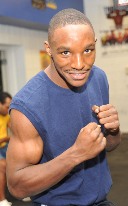
Devon Alexander “The Great” says he is his own worst critic. He’s lucky that position is filled. Because if Alexander were accepting applications for his Worst Critic position, this week he might be inundated with resumes.
Sifting through such applications, Alexander would likely find critics long on enthusiasm as they are short on expertise – just like the folks who’d already anointed him boxing’s next prodigy and tuned in to Saturday’s fight expecting a coronation that did not come.
What did come, however, was an entertaining fight Alexander won with heart, chin and activity. Saturday on HBO’s “Boxing After Dark” program, at Scottrade Center in his hometown of St. Louis, Alexander outhustled Ukrainian Andriy Kotelnik to win by three scores of 116-112. How consequential were those scores? Their reading drew the loudest applause of the night.
I had it for Alexander, too, but by a slimmer margin: 116-115. I gave him rounds 1, 2, 5, 10 and 11. Rounds 3, 6, 8 and 9 went to Kotelnik. And I scored rounds 4, 7 and 12 even.
It was a fight that posed a fundamental question of preference. If you like activity, you scored it for Alexander. If you like craft, you scored it for Kotelnik – who landed more, meaningful punches than Alexander despite throwing a fraction as many.
Well, I like activity. I favor ineffective aggressiveness only slightly less than I favor its effective cousin. Rewarding busier fighters, over the long haul, leads to better fights. It encourages those who are busy to remain busy. And more importantly, it tells those who are not busy to keep fights out of the judges’ hands. Both make for good results.
I almost didn’t get a chance to score Alexander-Kotelnik live. Comedian Ron White was playing downstairs at the Majestic Theatre. And after watching Alexander’s fight with Juan Urango in March, I was not expecting a coronation.
White is a native Texan, a breed of persons you grow fonder of the more time you spend round them. He’s been practicing his craft for 26 years, while only being famous for about eight of them. On stage, he is comfortable. He relaxes. His persona is well-aged. White fears no sudden call for improvisation.
Alexander, meanwhile, seems not yet to have been allowed proper aging as a professional. He has the biography – kid from a dangerous neighborhood adopted by a trainer who’s a retired cop – that storytellers never tire of telling, even as their audiences wither under the repetition. He has fast hands, and one enormous technical flaw.
It’s his jab. No, not the way he pushes it sideways like someone who’s watched too many Apollo Creed highlights or worked in Cleto Reyes bag gloves for more than a week (a column of its own). Rather, it’s what happens to the left hand in his southpaw stance while his right hand is out flicking. It’s the sort of thing that happens when a youngster hears the word “snap” too many times, as in “Snap that jab!”
You see this in the gym. A kid comes to the bag or mitts ready to snap those jabs. But generally, that requires a cocking of some kind. The kid either drops his lead glove first – like a baseball hitter hitching his swing – or he pushes his opposite hand away from his face, as Alexander does. It is incumbent upon a trainer to stop whatever else is going on, at that moment, and tell the kid to get his guard back in place.
How did the rest of us miss this during Alexander’s last fight? That’s the very question I asked a respected peer in Dallas the night before Pacquiao-Clottey, six days after Alexander stopped Urango. His explanation? Writers who have never boxed are spellbound by hand speed.
From a foundation of quick hands, that is, there’s almost no edifice of acclaim for a prizefighter they cannot erect. They start to see accuracy, power, footwork, defensive wizardry, and finally, greatness. Along the way, they stop looking for flaws.
Kotelnik sure wasn’t spellbound by Alexander’s hand speed Saturday, and he found plenty of flaws. He did not exploit Alexander’s questionable defense often as he should, no, but he exploited it enough to give a lot of Alexander enthusiasts pause. He also gave Alexander’s trainer Kevin Cunningham pause. Cunningham began the night as a fire-breathing motivator and ended it with a much quieter mien.
“Listen to me, man, listen to me, hey, you gotta listen to me, man, listen to me,” said Cunningham for the first half of Alexander’s one-minute break after the eighth round. “You’re getting suckered into some bullshit.”
That he was. Ultimately, though, Alexander got through the fight with the one part of his arsenal which does seem verifiably great: His chin. Alexander took a number of clean shots in the championship rounds but never relented. His first impulse was to fire back at his inquisitor. You can’t teach that, and it probably won him some new admirers.
Then came the standing ovation the nervous St. Louis crowd gave the judges’ decision. Then came the last of the night’s bad decisions when – in what seemed to be a tactic better planned than most, Saturday – Alexander borrowed from his trainer a shirt that read “Bradley U Next” during his post-fight interview. Timothy Bradley, the recognized champion at 140 pounds, is the opponent Alexander wants next.
Bad idea, Devon. Bradley would go right through Alexander’s defense and test that excellent chin at least thrice as often as Kotelnik did. Bradley’s a more effective puncher who has better footwork than Alexander, is at least as well conditioned, and is more accustomed to winning ugly.
For the time being, Alexander needs to eschew the greatness track and get back on the Andre Berto track, blasting former champions from smaller weight divisions and outpointing predictable South Americans for good money. Lucky for him, he’s on the right cable network to do exactly that.
Bart Barry can be reached via Twitter.com/bartbarry