¡Puro Duran!

By Bart Barry
PuroDuran
Tuesday the WBC’s official Twitter account posted a picture of Roberto Duran embracing the late Esteban De Jesus, a picture I retweeted excitedly. Saturday, May’s edition of The Ring magazine arrived, and while it bore a cover photo of Timothy Bradley and Manny Pacquiao beneath a title that read “The Rematch Issue,” it might well have included a subtitle like “The Roberto Duran Appreciation Issue.” On page 20, Anson Wainwright captured Marvelous Marvin Hagler thrice citing Duran in his “Best I Faced” feature, declaring Duran the best Hagler faced in three of 10 categories, including its most important. On page 80, Thomas Hauser published the results of a 26-expert poll that, when asked to determine the greatest modern lightweight, found definitively in favor of “Las Manos de Piedra.”

The photo of Duran hugging De Jesus has a spontaneous sheen to it belied today by a realization nobody might have had, in April 1989, a smartphone with which to snap it. A camera was present when Panama’s greatest celebrity, some months after decisioning Iran Barkley to become the WBC’s middleweight champion, visited the bed of Puerto Rican Esteban De Jesus – the man who gave Duran his career’s first loss, in Madison Square Garden in 1972, and dropped Duran on the canvas for the first time in Duran’s professional career too, in round 1, a feat De Jesus repeated 2 1/2 years later in their rematch, a fight Duran won by 11th round knockout.

Four years later, Duran and De Jesus fought a third time, and Duran, concluding his reign of terror over the lightweight division – his record was 62-1 (51 KOs) when he vacated the WBC and WBA titles and moved to welterweight – stopped De Jesus in round 12. Before the fight Duran said he did not like De Jesus “for a lot of reasons” but then, once pressed, conceded to Sports Illustrated’s Pat Putnam, “mostly because he is the only man ever to beat me.” De Jesus, a bad man by any workable definition, got the better of Duran in prefight quotes, imparting gratitude for what he declared evidence of Duran’s squeamishness:

“I tell him that I will fight him in the street anytime for nothing,” De Jesus said. “He ignored me. For this I am glad, because I need the money.”

De Jesus murdered a man named Roberto Cintron Gonzalez 3 1/2 years later, 16 months after retiring from boxing, and was still in a Puerto Rican prison when symptoms of the AIDS virus led to a gubernatorial pardon allowing him to return to his family to die from a disease it is believed he acquired from sharing needles with a brother who also died of the AIDS virus. It is important, for context’s sake, to revisit for a moment the pre-Magic Johnson era in which Duran comforted De Jesus. It is not nearly enough to say little was known about how the disease was spreading; I recall distinctly my parents, educated and openminded folks in a suburb of Boston, deciding to forego anniversary meals at their favorite restaurant, cancelling a 10-year tradition, because the restaurant was gay-owned, and well, what if one of them inadvertently came in contact with the food?

It is impossible Duran knew any better how the HIV virus was spread, and yet there he is in as aggressive a display of humanity as one might find in a decade of searching. There is no politician’s curled lower lip or straight-armed show of hand-holding compassion. It is Manos de Piedra, instead, his arm thrust beneath his former opponent’s withered body to wrap him in a lover’s desperate embrace and ensure Esteban wherever death took him, he would go swaddled in his friend Roberto’s arms.

The photo, and the text of my retweet of it – “¡Puro Duran (Pure Duran)!” – sent me spiraling back in the 15rounds archives for Roberto Duran’s Magical Realism, a column I wrote nearly eight years ago when Duran’s shortlived tenure as a promoter, the ‘R’ in DRL Promotions, brought the Panamanian to Phoenix for an inaugural press conference that comprised more fighters than media in a fortuitous twist that allowed The Arizona Republic’s irreplaceable Norm Frauenheim and me an opportunity to converse with Duran, nearly as good a raconteur as a fighter, through more than 40 minutes of absurd and absurdly engrossing stories. Norm was through his third decade at the craft by then and didn’t hesitate to call the encounter with Duran a highlight of his time covering boxing. I was not yet in my 15th month of boxing writing but suspected something time has confirmed: The conclusion of those 40 minutes, at which I wore the scent of Duran’s cologne for the number of times he embraced me, held euphoric a moment as boxing writing would provide.

It is Duran’s enormous humanity that makes one feel ownership of his career even at a distance from it as large as mine. When I opened the plastic wrapper of The Ring on Saturday afternoon, anxious to see whom Marvelous Marvin Hagler, my all-time favorite fighter, told Anson Wainwright was the “Best I Faced,” I did not even remember Hagler and Duran had fought and expected various allusions to Thomas Hearns and Sugar Ray Leonard. To see Hagler call Duran – whom Hagler faced very near the top of Marvelous’ powers as middleweight champion, in Duran’s 82nd prizefight, one that happened 25 pounds above Duran’s prime weight and came after a 5-3 stretch that saw Duran decisioned by someone named Kirkland Laing – the “Best Overall” Hagler faced induced in me a brief and totally unexpected spike of euphoria, one whose height exceeded its brevity.

Sixty pages later, Thomas Hauser’s “Greatest Modern Lightweight” poll found Duran running away with the prize, scoring 23-percent better than runner-up Pernell Whitaker, 34-percent better than Floyd Mayweather and more than 100-percent better than Manny Pacquiao and Juan Manuel Marquez. Combined.

Or as the legend likes to put it: “¡Roberto Duran es extraordinario!”

Bart Barry can be reached via bart.barrys.email (at) gmail.com


Why I will be in Las Vegas in April

Pacquiao_workout_140314_007a
By Bart Barry
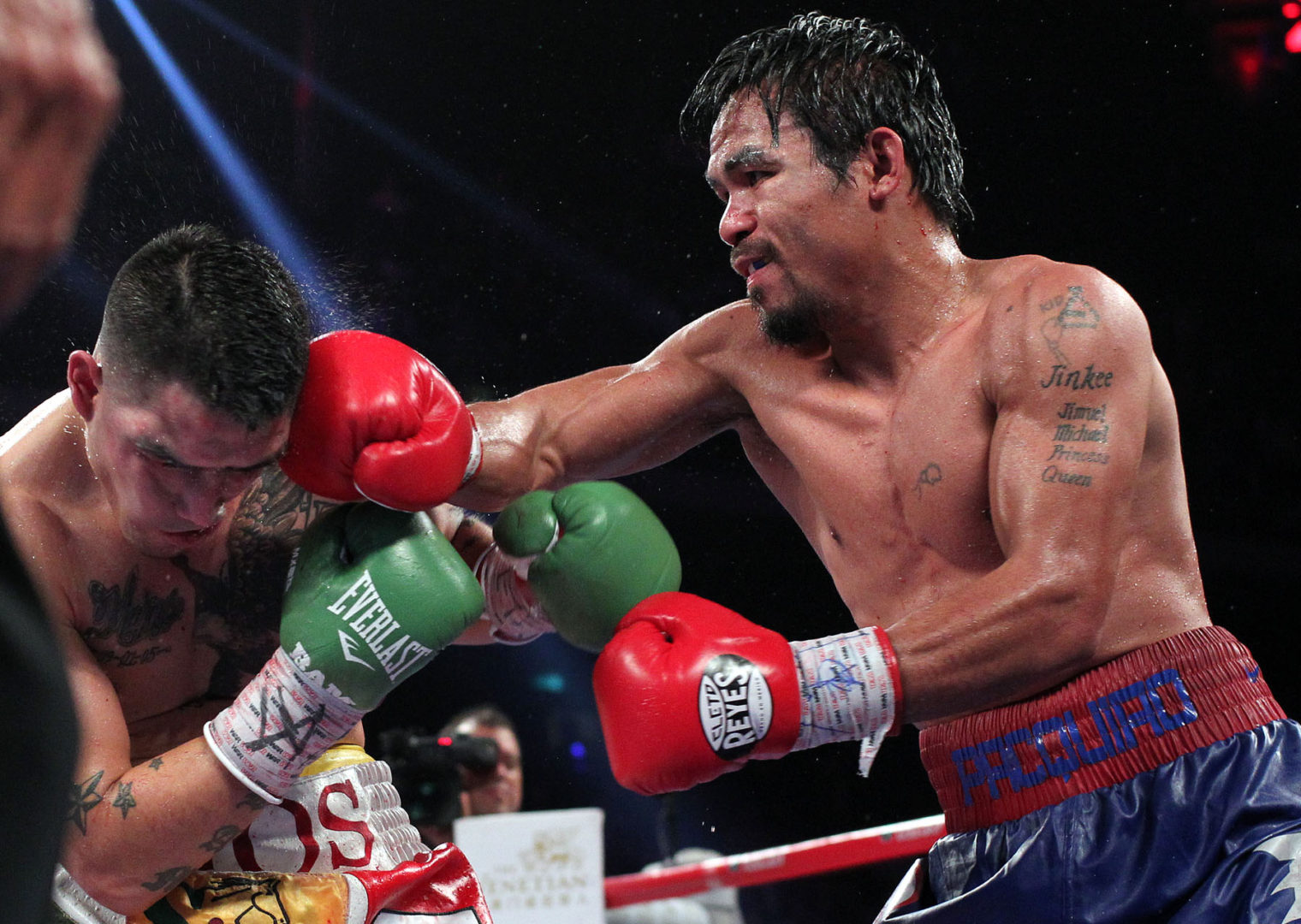
A few weeks back I did something I rarely do: I made plans to attend a Las Vegas fight, Timothy Bradley versus Manny Pacquiao on April 12, without having much of an idea why. What follows, then, is an effort to understand better my interest in this event.

If there was a hint of the overrated about Pacquiao going into his first match with Bradley in June 2012 at MGM Grand, a hint that became still more than a clue six months later as Pacquiao laid on the same blue mat, facedown and motionless, there is a similar if somewhat more subtle hint of the overrated about Bradley as we head to April 2014. I believed in his third match with Juan Manuel Marquez, Pacquiao was credited with punches that didn’t land, footwork that didn’t exist, and power that didn’t remain. Is that why I scored close rounds for Bradley in June 2012? Sure, yes, guilty.

In retrospect, that match might have gone either way but should have gone to no man widely. And yet. Spurred by an irresponsibly lopsided broadcast, complete with an unofficial scorecard that told few truths, a large number of persons to this day think the decision for Bradley was farcical. It was not.

While Manny Pacquiao looked considerably better in his final conscious rounds with Marquez six months later, able to land punches more cleanly, certainly, than he’d been able to land them on Bradley in June or Marquez in any of the 35 rounds that followed his three-knockdown blitz of the Mexican master way back in 2004, the probability is that Marquez was more open to be punched because Marquez – perceiving with a preternatural predatory precision – took note of Pacquiao’s eroded reflexes, married those to a powerfully newfound belief in his illgotten new physique, and looked to make offensive ploys he’d not have dared pursue in their 2008 rematch. It’s not that Pacquiao was suddenly a much better fighter for a few rounds in December 2012 than he’d been in June or the previous December – his defense hadn’t improved a jot, as evidenced by gloves unnaturally folded beneath his body in perfect serenity at the end of round 6 – just that Marquez was emboldened by how much less Pacquiao was then than the guy he’d spend 108 minutes being punched by in bygone fights.

There is an argument to be made Pacquiao’s reflexes dulled sometime during his Silly Season, the two-year stretch, 2009-2011, between his match with Miguel Cotto and his third fight with Marquez. The reduced competition did this, yes, along with an improved risk-to-reward ratio and the decadence that wrought, but there may have been, too, the sockdolagers Margarito put on his body and, perhaps most to the point, the brutality of Pacquiao’s sparring with campmate Ruslan Provodnikov.

“Siberian Rocky” is in a different class; veteran writers will describe the way a world champion sounds on handpads as opposed to a career challenger, but much of that is show, and none tells of a chin. The sound of Provodnikov’s fists on Mike Alvarado’s body in October, though, was in a different class and far more telling than handpad tricks because, well, Provodnikov had to throw those punches under the rational assumption a world titlist might endeavor to punch him at the exact same moment, and assumptions like that scumble one’s commitment.

Provodnikov is relevant, here, because he is the one man, apart from Marquez, whom Pacquiao and Bradley have in common, and while Marquez iced Pacquiao in a special sort of way, one would almost prefer the cutting of the lights to what excruciating happenings must compose rounds opposite Provodnikov on a blue mat. Almost always the term “most feared” is a marketing slogan applied by someone who has never fought to a client who never makes big fights, but Provodnikov should be called most feared by any and all; he is the man who shortens careers and changes men, compromising the very fabric of their identities, and if Timothy Bradley never again sells it out to fight like a noble fool, Provodnikov will be the reason why.

To beat Pacquiao again, Bradley will not need to engage at nearly the maniacal level he engaged Provodnikov. Las Vegas judges are already sympathetic to Bradley, as evidenced by his winning more October rounds against Marquez in Las Vegas than he deserved, and they will look thrice as closely at how many of Pacquiao’s actual punches actually land in an actually effective way this time, thrice as closely as HBO’s broadcast crew did the first time the two men fought.

Another note about that, and the effect it takes: I was a member of boxing’s laity in 1999 when Felix Trinidad decisioned Oscar De La Hoya in what I remembered from that time to be perhaps the most egregious superfight robbery since Julio Cesar Chavez’s 1993 draw with Pernell Whitaker. Apropos of a retrospective I worked on last week for a magazine piece timed to coincide with Trinidad’s June induction in the IBHOF, I reviewed the fight and was flabbergasted by the bias of its commentary – a piece of work that comprised one veteran broadcaster calling every Trinidad right cross “another left hook by Oscar!”, and a former heavyweight world champion finding himself so enamored of De La Hoya’s jab that he eschewed speaking Trinidad’s name altogether in the match’s opening half. One’s sense of the match 15 years later is that a draw was fair, but if not a draw then tie-goes-to-the-puncher, and De La Hoya’s skittering flight from Trinidad in the final six minutes subverted his claims on any lasting dissent. So different was the tone of that match in Puerto Ricans’ eyes that in December, at the press conference announcing Tito’s selection to the Hall, Trinidad was asked sincerely if he thought De La Hoya even belonged there (Trinidad stated empathically that he did).

The cost to attend superfights anymore is prohibitive, I know – even for credentialed media – so do not consider this a remedy for bias’ woes, but I will be at MGM Grand on April 12 because I’m interested in the descent of Pacquiao’s career and the prime of Bradley’s, and frankly, I do not trust what I see on pay-per-view broadcasts.

Bart Barry can be reached via bart.barrys.email (at) gmail.com


Canelo takes El Perro to the pound (and Tony Weeks keeps him awake)

By Bart Barry
Canelo Alvarez
Saturday in Las Vegas the redhead anointed by one very powerful Mexican television network as the man most likely to continue his country’s outstanding pugilistic tradition, mainly on the virtue of his unique hair color and pigmentation, victimized, via 10th round technical stoppage, a hopeless fellow Mexican in a dog collar. In preventing the man in the dog collar from fighting any further, the match’s outstanding referee did what a trainer and team of evaluating Nevada neurologists should have done long before. For this act of mercy, the outstanding referee was treated to bald derision from morons.

The redhead, of course, was Saul “Canelo” Alvarez – a prizefighter who, had he appeared on Shobox with a last name like O’Brien, Friday, instead of a Mexican-themed pay-per-view broadcast on Saturday, would not have caused more than an obligatory second glance. The man in the collar was Alfredo “El Perro” Angulo. The outstanding referee was Tony Weeks. And the morons were a myriad, though only one had a microphone.

The horse sense of the generally Mexican, generally intoxicated crowd congregated in the MGM Grand Garden Arena being what it was, the boos were misplaced, or perhaps misinterpreted, but they were an accurate reflection of what becomes increasingly plain about Cinnamon Alvarez: He is not that good. Canelo is an A-list guy in a B-list era, as was made plain by his inability to win convincingly a minute against Floyd Mayweather on Mexican Independence Day weekend, or fell a pre-ruined man like Angulo despite hundreds of clean shots to do so.

Saturday’s match was not competitive. Did Tony Weeks stop it too early? Only for sadists and those who pander them. For those interested in fair competition, Weeks might have stopped “Toe to Toe” after the second minute of its first round when, already, Angulo’s head was getting sent shoulderwards by Canelo’s hooks, and coming off his shoulder in a motion somewhat less elastic than a verb like “snap” should connote.

In the fight’s opening 30 seconds, Alvarez threw a left-hook lead Angulo did not know was coming and hadn’t an idea how to counter with any but the absorption method he and trainer Virgil Hunter apparently perfected in training camp, a method, acceptably nicknamed rope-till-a-dope, wherein a fighter allows himself to be punched hard as possible by an opponent, in the lunatic hopes striking a man repeatedly on the chin with one’s fist will be more taxing for the attacker than his victim. And the lighter the victim punches in the opening minutes, the better this method works, it appears, as Angulo moved his arms perfunctorily enough in round 1 to be salsa dancing, as if his hands were in motion to accessorize whatever his feet and hips did.

Not sure what folks said while y’all watched the fight, but round me were a trainer, a former amateur fighter, and a professional basketball player, and before 90 seconds were done in the main event, there was nothing but disbelief, expressed in phrases hopping about like “Are you kidding?” and “Really?” and “My God!” OK, the last was mine, and it came when I saw how uninhibited Alvarez was in his punching, how oblivious he was of Angulo’s volition, much less his power, as Alvarez stretched his arms wide as an eagle taking flight while throwing the hook and stepped into his cross like a pitcher delivering a full windup to the plate.

Then the second round came and Alvarez landed a right-uppercut lead, a punch that began near his right hipbone, traveled across his chest, traveled across Angulo’s chest, and struck “El Perro” flush on the inch of flesh just beneath his chin, all, before Angulo detected the punch and so much as blinked his consent. Should Tony Weeks have stopped the fight in the 10th? We’re not being serious. Boxing ought to incorporate a mercy rule like little league baseball: The moment one man is so overmatched his opponent has the chutzpah to throw, let alone land, a right-uppercut lead, the judges quietly rise from their stools and walk to the parking lot.

That a group of fans, deep in their cups, expressed displeasure with Weeks’ intervention is exactly no indictment of Weeks, and yet, there was Showtime’s postfight performer trying to get to the bottom of the malcontents’ discontent, and bless Weeks for giving Jim Gray the Major League Baseball treatment, whether it was for Pete’s sake or his own, leaving his new boss at NSAC to feign seriousness concerning Angulo’s incoherent protest afterwards. That’s not an English-as-second-language issue, either; Angulo speaks Spanish in a halting, laboring, frustrated way that argues convincingly his Saturday fight with Canelo should have been stopped in the fifth round of Angulo’s 2011 match with James Kirkland – a loss Angulo attributed to then-trainer Nacho Beristain’s distraction with training Juan Manuel Marquez.

The truth of what actually caused Angulo’s extended stay in a California immigration detention facility shortly after that Kirkland fight likely will never be known, though in our 20-minute conversation 15 months ago, he struck me as a person to whom life happens much more that what a violent criminal the detention facility was designed for. He has a nervous, high-pitched giggle, surprisingly effeminate, that disarms any inquisitor, and he’s quite good at sweet openers that lead quickly to acidic criticisms, as he did to Tony Weeks after Saturday’s match. Angulo might be punchy, but he’s far from stupid. There’s no way he or Virgil Hunter actually thinks he was on the precipice of anything but a terrible ending when Weeks’ mercy did what Hunter should have done rounds before, stopping the sort of winding-down vacuousness no fan pays to see, however much he enjoys the luxury of booing another’s consciousness afterward.

Mexico’s anointed star won by technical stoppage, Saturday, and nary a centile of Americans cared at all. Had Mexico’s anointed star put Angulo on a stretcher, in a coma, or in the ground, live from Las Vegas, today would feel considerably different for anyone reading this. Thank Tony Weeks for sparing us another such examination of conscience.

Bart Barry can be reached at bart.barrys.email (at) gmail.com


Mexican veterans, (former) Soviet newcomers, and autodidacts

Orlando_Salido
SAN ANTONIO – In this city’s Alamodome on Saturday, before Mexican Julio Cesar Chavez Jr. could whup Austin’s Bryan Vera and position himself for a match with undefeated Kazakhstani Gennady Golovkin, Mexican Orlando Salido took undefeated Ukrainian Vasyl Lomachenko to school and found him wanting, decisioning him by split scores of 113-115, 116-112, 115-113. Salido also forced upwards a number of tardily raised eyebrows about the propriety of his vacated title even being available to such an untested challenger.

What was lost on most, prefight, and understandably so, was the injury to Orlando Salido’s pride the Lomachenko match inflicted. There were other matters that needed consideration, of course: Vasyl Lomachenko was in pursuit of an ambiguous sort of history, one that came with editorial disclaimers galore of the sort that sparks proportionate debate among insiders as yawns among fans; the ongoing invasion of boxers from the former Soviet Union was set to continue; and Orlando Salido didn’t care enough to defend the WBO title, one he won from Orlando Cruz in 2013 after losing it to Mikey Garcia in 2013 after winning it from Juan Manuel “Juanma” Lopez in 2011, to come within 2 1/2 pounds of the featherweight limit.

For the second time in about as many months, one is put to remembering Mexican Marco Antonio Barrera’s 2001 victory over Englishman Naseem Hamed, or at least the disproportionate attention the business of boxing paid the sparkly object that was “Prince Naseem” at the expense of a former world champion and possessor of 52 professional victories. Lomachenko was polished to be another of our sport’s sparkly objects, a man of incomparable sparring prowess, one who emerged from behind an Iron Curtain that exists, anymore, solely in the collective imagination of what ageing generations still buck giddily round allusions to the Cold War.

Salido had earned his featherweight title, though, and if he was unable to retain it at Friday’s weighin that did not change what natural resentment he harbored for a rival and boxing infrastructure that allowed a man in only his second fight since turning “pro” the sort of title-challenging opportunity Salido was not afforded till his 34th prizefight. In some sense, it is not unlike what distrust and faint derision an autodidact feels for a degreed colleague, whichever their field. One man toiled in obscurity, often doing a number of coincidental other jobs in the hopes of someday having but one, learning his craft quietly and passionately, delaying indefinitely a wholly unguaranteed reward, while the other enjoyed an academy’s protection and comfort, longer in others’ expectations, yes, but much much shorter in risks.

If Salido and an army of other veteran fighters did not give voice to what resentment they surely felt for Lomachenko – going from headgear, spongy gloves and a cutiepie points system straight to a title challenge, via a 12-minute way station named Jose Ramirez in October, and getting a chance to wear a world championship belt without first navigating others’ elbows and heads and shoulders and skinned gloves and irregular calendars and hometown favoritisms – they surely felt the resentment in their collective marrow and cheered unsilently at home for Salido. Or as the Mexican journalist to my left said about the entire idea of the fight, after round 4, when it appeared Salido had a very real chance of beating Lomachenko: “¡Que insulto!”

That sense of insult was expressed best and most graciously by the aforementioned Juanma Lopez, a man twice vanquished by Salido, who nevertheless called Salido in his Alamodome dressing room before Saturday’s match.

“I’m with you 200-percent,” Juanma told his surprised former rival. “Go win the fight!”

And it was a fight for Salido, from the opening bell, in the sort of personal sense December’s match with American Adrien Broner was a fight for Argentine Marcos Maidana. Salido fouled Lomachenko continuously. He used a rangefinder hook to Lomachenko’s protective cup in the first round, and when that went undetected by referee Laurence Cole, he drove the knuckles of his right fist, bolo-style, at the front of Lomachenko’s left hipbone whenever Cole meandered over to break them. Salido’s awareness of Cole’s positioning was fantastic and very much better than Cole’s awareness of Salido’s positioning, which is a special sort of indictment when one considers Salido was extrapolating Cole’s position while calculating, at once, the acceleration and trajectory of another man’s onrushing fists.

Lomachenko had little idea what to do with Salido for much of the fight. The Ukrainian’s defense of Salido’s body blows, and later Salido’s mere feints, was a jackknifing sort of motion that involved throwing his abdomen backwards to where his spine had been and causing a forward-folding that anticipated no chance of retaliation. Salido might not have seen such amateurishness since he was a teenager in Sonora, if ever, but 54 previous fights told him one thing: This man is not in a position from which he can strike me. The American journalist to my right, happily enough my favorite Monday columnist, recognized early the surprising fact Lomachenko did not know how to use an uppercut to discourage Salido’s attack on his abdomen (and hips, and cup, and thighs, and right knee).

Lomachenko deserves plaudits, nevertheless, for comporting himself like a fighter, realizing in round 1 he was in a state where fights are often barely sanctioned things and reserving his complaints only for Salido’s most egregious infractions. After the fight, one that ended with Lomachenko very nearly stopping Salido, who made a four-limbed poncho of himself when hurt in the final 90 seconds, reveling in what lawlessness governed the small blue patch of Texas territory policed by Sheriff Cole, Lomachenko shrugged away questions of Salido’s tactics with an appeal to the profession both chose.

Sometime before Lomachenko’s 0 had to go, Saturday’s press section rippled with news that, mourning the recent death of his father, undefeated Kazakhstani middleweight titlist Gennady “GGG” Golovkin would be unable to make his unofficially scheduled next match, affording Julio Cesar Chavez Jr., in town primarily for Friday’s weighin, one chance at least to proctor for Golovkin the sort of stern test Salido gave Lomachenko. GGG’s legion of enthusiasts should welcome it.

Bart Barry can be reached at bart.barrys.email (at) gmail.com


Diaz prevails, Najera entertains, and Saucedo disappoints (somewhat) in South Texas

Diaz_Robles_140301_001a
SAN ANTONIO – Houston lightweight Juan “Baby Bull” Diaz, a former world champion, found across from him in Saturday’s sixth and final off-television match a motivated opponent with a workable gameplan and little respect for Diaz’s resume. It was no matter – Diaz dispatched of him with time anyway.

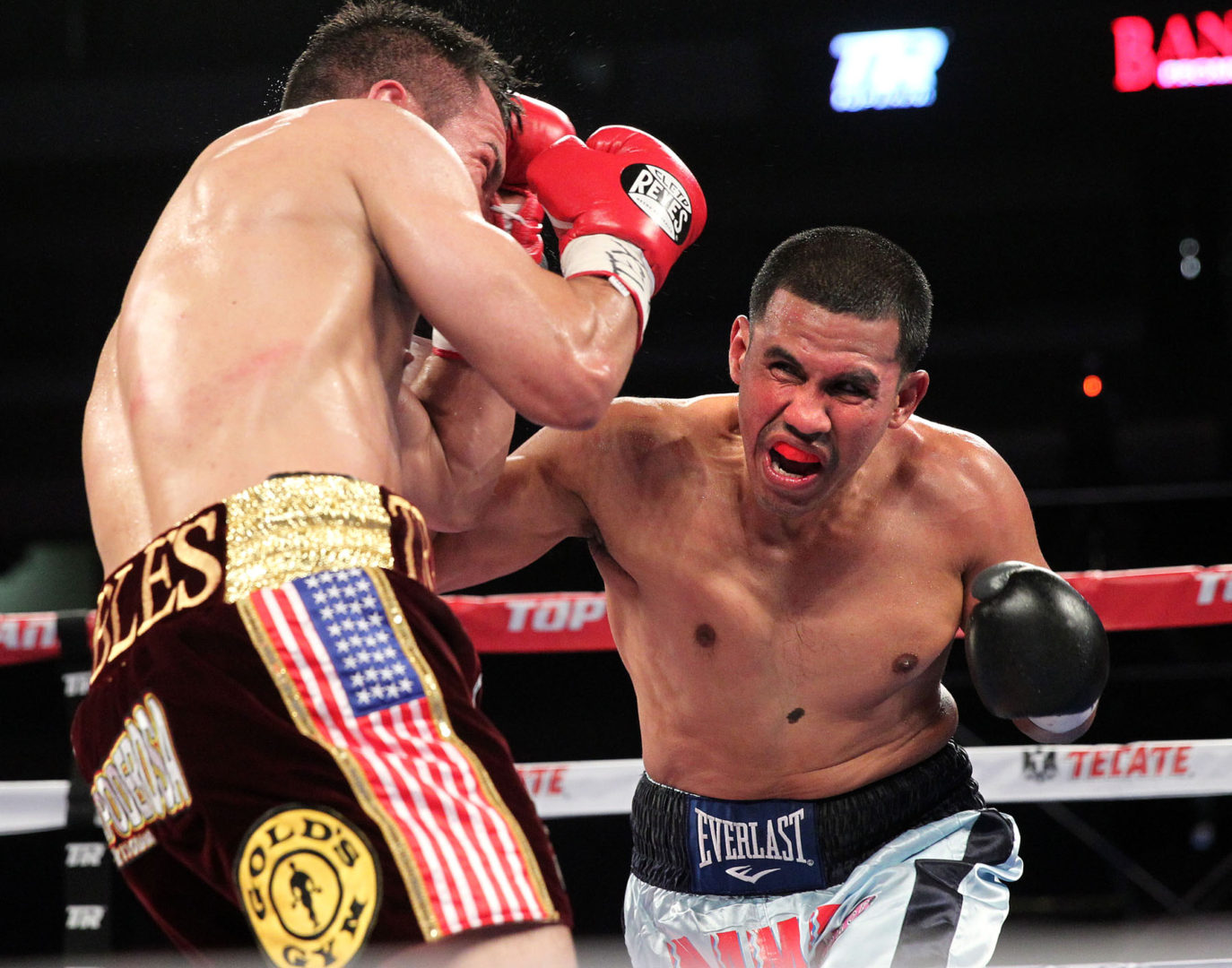
Diaz (39-4, 19 KOs) whacked and wore-down Mexican Gerardo Robles (18-13, 9 KOs), snatching his will and decisioning him easily if not quite easily as official scores indicated: 100-90, 99-91 and 99-91.

After a spirited first round from Robles, one in which the rambunctious Mexican alternately countered and led Diaz with surprising effect, Diaz came off his stool in the second and reestablished the proper order of things, lashing Robles with signature hooks and activity, and reducing Robles’ activity considerably. Once order was returned Diaz then went to work on Robles like so many once-strong men before him, breaking the Mexican’s spirit with constant activity and relentless violence.

Though Diaz never managed to imperil Robles – and though Diaz found his own legs stiffened in the seventh, in an exchange that sent the Houstonian to the canvas but was ruled a slip by referee Jon Schorle – Diaz closed space, controlled time, and generally took the fight away from his less-experienced opponent.

Diaz is not what he once was, no, and hasn’t been since his first fight with Juan Manuel Marquez, but he is still entertaining, and still acquitting himself honorably every time he steps in a prizefighting ring.

Valdez_Sanchez_140301_001a
Saturday’s fifth match saw undefeated Mexican featherweight Oscar Valdez (9-0, 8 KOs) score a controversially concluded technical knockout victory over Dallas’ Samuel Sanchez (5-6-1, 1 KO), a limited opponent there for the beating, a beating that was concluded somewhat prematurely at 2:03 of round 3, much to Texas fans’ bemusement.

NajeraAY1J2416
Local lightweight Ivan “Bam Bam” Najera acannot help himself, for there are two things in a prizefight he loves to do: Devour opponents’ right hands, and make an intense and intensely suspenseful match with every man he faces.

The fourth bout of Saturday’s eight-fight Alamodome card saw Najera (13-0, 9 KOs) win yet another firefight, this time with a fellow Texan, McAllen’s Angel Hernandez (8-2, 4 KOs), a man Najera dropped with a gorgeous counter left hook in round 1 and then got dropped by with a stiff right cross in round 2. And then after that, it was like every other Najera fight, with both men landing repetitively throughout, and Najera remaining undefeated by unanimous scores of 78-72, 77-73 and 77-73.

Tough and entertaining as he is, Najera continues down a path of making caveman-like spectacles that promise no longevity. He is aware of everything in and around a prizefighting ring, it seems – even taking time to blow a kiss to a ringside female journalist during Saturday’s fourth round – everything that is, except the glove an opponent wears on his right fist. Of right hands, Najera is seemingly oblivious, dropping his own left hand through every fight, and getting cracked continually by most every right thrown his way.

So long as he lasts, though, Najera is the stuff of which local attractions are made.

ALEX SAUCEDO VS. GILBERTO VENEGAS
Undefeated Oklahoma welterweight Alex Saucedo has stalled in his development. Once a darling of insiders, Saucedo has been moved perhaps too prudently and now finds himself getting hit far too hard by journeymen types who do not move backwards or go down when first struck.

Saturday’s second match saw Saucedo (13-0, 9 KOs) win most every minute of his six round match with Illinoisan Gilberto Venegas (12-13 4 KOs), and win a lopsided decision judges scored unanimously, 60-54, 60-54 and 59-55. But those scores tell nothing of the two or three flush Venegas left hands that snapped Saucedo’s head leftwards. This match was a step-up affair for Saucedo – and against a .500-fighter, that is something of an indictment.

UNDERCARD
Saturday’s third fight saw undefeated California welterweight Jose Zepeda (19-0, 17 KOs) go directly through overmatched South Carolinian Johnnie Edwards (15-7-1, 8 KOs), stopping him at 2:10 of round 2, in a fight that showed nothing but questionable merit.

The evening began with a competitive if light-hitting scrap between undefeated Houston featherweight Jerren Cochran (11-0, 4 KOs) and Mexican Aduato Gonzalez (11-10, 4 KOs), a match that saw Gonzalez dropped in round 5 and bleeding throughout though game to the end. Judges scored the match unanimously for Cochran: 59-54, 59-54 and 60-53.

Cochran, whose punches are accurate not hard, showed certain class but remained surprisingly susceptible to looping overhand rights thrown blindly by his limited opponent.

Opening bell rang on a cavernous Alamodome at 5:17 PM local time.


Chavez makes weight; Salido looks hopeless

NEWS-Vera-MediaDay4-2-25-14-1024x670.jpg
SAN ANTONIO – What may well prove to be the most suspenseful moment of Saturday’s Chavez Jr.-Vera II card happened a day early when, framed by a clever prop, Mexico’s former middleweight titlist “Son of the Legend” Julio Cesar Chavez Jr. made the super middleweight limit by a half pound. In so doing, Chavez demonstrated an often-absent professionalism, and returned the need to prove one’s professional merits to Austinite Bryan Vera’s corner.

Saturday’s fight, a rematch of Chavez’s controversial decision win in September, may well turn out to be a savage thrashing of a Texan in Texas. Unless Vera’s approach to defending has improved more than Chavez’s approach to weightloss, in the last five months, Vera is likely to need his corner’s help both early and late.

Early Friday afternoon at a makeshift stage outside the host venue Alamodome’s south entrance, an apparently motivated Chavez (47-1-1, 32 KOs) made weight easily, weighing 167 1/2 pounds and confirming, officially, an easy-make of the weight he foreshadowed hours earlier in a photo on his own Instagram page. Austin’s Bryan Vera (23-7, 14 KOs), who made an identical 167 1/2 and enjoyed a considerably larger organic following than Chavez – as opposed to a less-authentic contingent of Chavez fans waving overhead wooden noisemakers and cheering at a volume that belied their collective scarcity – looked on amusedly at a large placard the Chavez camp unveiled as Chavez took the scale.

“Voided” read the red stamp across the fake check that represented what $250,000 fine Chavez was contractually obligated to pay Vera in the event of Chavez’s missing weight, a thing he managed to do a few times before their first fight. “168 LBS. MAX” read the Memo portion in the bottom left corner of the fake check, and Chavez alternately smiled and grimaced ferociously as he enjoyed more of the good-natured banter that has marked the promotion of this rematch. If “Son of the Legend” and Vera share any feelings of mutual animosity, none was displayed Friday.

Less enthusiastic about his visit to the scale was co-main-event Mexican Orlando “Siri” Salido (40-12-2, 28 KOs), the WBO featherweight titlist whose main role Saturday was to provide undefeated Ukrainian Vasyl Lomachenko (1-0, 1 KO) a world title in only his career’s second match. Salido will not be able to serve that role, exactly, as after marking 128 1/4 pounds, more than two pounds over the featherweight limit, and looking dry and gray as a result of his having tried, Salido did not make any effort to lose any further weight, losing his title officially about 30 hours before he could have it beaten out of him by Lomachenko.

Other notables making weight Friday were Houston’s former lightweight world champion Juan “Baby Bull” Diaz (38-4, 19 KOs), who will fight Mexican Gerardo Robles (18-12, 9 KOs), and Oklahoma’s Alex “El Cholo” Saucedo (12-0, 9 KOs), who will in all probability decimate Illinois welterweight Gilberto Venegas (12-12, 4 KOs).

Finally, though, Saturday’s most probable decimation will come in its main event. While Chavez and Vera looked nearly comparable in size Friday afternoon, Chavez’s long frame is expected to add 15 or so pounds to it before opening bell rings on his rematch with Vera. Boxing is ever an unpredictable entity, but one hopes if Chavez is able to body Vera with his left shoulder early, cornering the Austinite and lashing him with overhand rights, Vera’s corner will not be stubborn or proud as its charge – and will stop the fight too early, rather than too late.

First bell is scheduled to ring at Alamodome at 5:00 PM CT. 15rounds.com will have full undercard coverage from ringside.


The Legend’s Son returns to returning

Chavez_Lee_120612_001A
SAN ANTONIO – Mexican “Son of the Legend” Julio Cesar Chavez Jr. returns to this city sometime in the next few days, returns to a local scale sometime Friday afternoon, and returns to an Alamodome ring Saturday night against Austin’s Bryan Vera. The middle spectacle, Friday’s, should prove the week’s most suspenseful, and if Chavez somehow misses weight also its most tragic. If Chavez makes weight, evincing proper preparation for his rematch with the profoundly limited Vera, though, let us hope Saturday’s match does not end tragically.

But for that possibility, this is all a bit tired, isn’t it? The “Road to Chavez Jr. vs. Vera II” promotional piece felt obligatory as a husband’s trip to the mall. Gone are the mildly alluring touches of collaring whichever journalists were in town for whichever other event, to give aficionados a chance at least to see admired writers mention, in very short clips, why they think this fight may be compelling (with the flashed and handsome exception of our site’s intrepid editor at 1:21). Instead we get HBO’s commentary team rehashing what they said the night of the first fight with what they’ve digested since, in promotional spots that boast all the journalistic panache of actors from this season’s cast of “Dexter” holding their fists aloft while advising viewers they’ve been buzzed – and if that is a mashup, as the kids are calling it, of two different networks’ original programming concepts, it’s honestly arrived at because no enterprising mind should keep 2014’s thus-far-banal prizefighting offerings compartmentalized.

That promises to change, at least in spirit, Saturday, when this city opens its gracious arms to a rematch of a not particularly compelling 2013 match, one that finds Chavez once more collecting his father’s back wages from his promoter or his network or his Mexican fans, a collective that must be dwindling.

Into the curiousness of this arrangement meanders Junior, never hurried, marking promoter Top Rank’s return to a city whose venues it has not graced in the 23 months since Kelly Pavlik used the force to smash apart Aaron “Jedi” Jaco in the debut of Leija-Battah Promotions, an outfit that looked a temporary license-holding company for Las Vegas- and Los Angeles-based promoters, alike, before evolving, quickly and audaciously, into something more and better. What consequently drove the local promoter from Top Rank after one show is anyone’s guess, but it was a thing that did carry consequences, as Top Rank has since made medium-sized Texas shows in Houston, Dallas, Corpus Christi and Laredo but not Alamo City, a place where Son of the Legend began to become more than a mascot by decisioning John Duddy in 2010 at Alamodome, the venue where his father, The Legend, set an attendance record still standing.

There’s no telling how ticket sales might be going for Saturday’s show for a couple reasons: First, there isn’t an engaged local promoter endeavoring to recoup its large investment by blitzing inboxes with promotional tidbits, and second, with most of the money for this fight coming exclusively from HBO, there’s not nearly the same urgency there was round this time last year when, openly snubbing his proximate rival, Mexico’s Saul “Canelo” Alvarez declined to fight on Floyd Mayweather’s May undercard – firing the starter’s pistol on a frantic effort to find a venue, and accompanying local entrepreneur, to host Alvarez on short notice. What resulted, an April match between Alvarez and New Mexican Austin Trout, brought nearly 40,000 fans to Alamodome, an attendance figure that established in a bold stroke Alvarez’s coveted standing as Mexico’s most popular prizefighter. Alvarez then sprinkled cinnamon in his promoter’s gears in September, winning perhaps 90 seconds of his 36-minute match with Mayweather.

Displaying his father’s relentlessness and talent for smashing microscopic fissures into gaping wounds, then, Chavez Jr. snatched the corona right off Alvarez’s bowed redhead by icing his countrymen’s bruised national pride, 14 days later, with a victory over Bryan Vera that is remembered, still, for its preparation, savagery and workrate.

Oh, if ever a sentence were typed round derisive giggles.

Instead of doing something memorably good or even forgettably bad, Son of the Legend chose that inauspicious time to hold a pound-auction at the Friday weighin, having done the considerate thing, he explained for HBO’s “Road to” cameras, and informed the Vera camp ahead of time he would weigh, well, something higher than what 168 pounds he was legally obliged to make. Then Son of the Legend made a lionlike contender of Bryan Vera, a good guy of good work ethic and giver of a goodish impersonation of Colorado’s Mike Alvarado, were Alvarado not a once-great high school athlete.

Wait, Vera a “contender”? Yes, contender: As Son of the Legend reminded viewers, apropos of his figurative hunger – unmistakable in its modesty for Junior’s literal hunger – he was a “world champion” once, wearing proudly the garish, gold-and-whipped-pea strap the WBC stole from lineal middleweight champion Sergio Martinez in 2011, making Chavez technically a champion and making Vera technically a contender – cute a reminder as any that Vera outworked television’s original “Contender,” Sergio Mora, in August 2012 at the converted Alamodome venue called Illusions Theater, in a Leija-Battah-promoted rematch of Vera’s finest hour, a controversial 2011 decisioning of Mora in Fort Worth, an hour not nearly fine as Vera’s decisioning of Chavez Jr. in a September match official judges, alone, scored widely for Son of the Legend.

We circle back to Saturday, then, meandering round the subject like a pothead in peach underwear doing living-room laps for roadwork – so great is his hunger as world champion – to address briefly a match that should not be competitive, and, one prays, will not end tragically for Vera. Whatever long list of bad habits Vera’s trainer Ronnie Shields credits himself with red-penning from the Austinite’s dossier, he sure as hell did nothing for Vera’s plunging right hand, a hand Vera holsters at his waist before throwing either glove at opponents. That flaw portends nothing good for Vera.

I’ll take Chavez, then, KO-11, in a terribly lopsided spectacle even Junior’s legion of detractors will wish had been stopped after nine.

Bart Barry can be reached at bart.barrys.email (at) gmail.com


Visiting “Age of Impressionism” while reading “Juan Diaz and the Age of Impressionism”

Juan Diaz
HOUSTON – Returned to Texas’ largest city and the fourth-largest city in our country, a day before a day we celebrate the father of our country’s birthday by acknowledging all the presidents’ birthdays in a single day because federal holidays, if mismanaged, might force the private sector to pay time-and-a-half, I looked across boxing’s landscape, barren yet again, and thought making a reciprocal tribute of sorts to a tribute of sorts was a workable idea. To wit:

This city’s Museum of Fine Arts’ “Age of Impressionism” is an exceptionally good exhibition that has little to do with boxing but may be instructive in its parallels to boxing writing, a discipline that requires a weekly entry even though nary a meaningful thing is yet to happen in prizefighting this year, as we enter 2014’s eighth week. And so, afforded a chance to celebrate Presidents Day, I made a Friday decision to spend Saturday and Sunday at Museum of Fine Arts’ outstanding exhibition, one I initially partook of in December and was prompted to revisit by a guest piece Kelsey McCarson wrote for us Tuesday.

In “Juan Diaz and the Age of Impressionism,” McCarson juxtaposes Juan Diaz and Pierre-Auguste Renoir, among others, in a way I’d not considered, or at least not quickly as I’d considered juxtaposing McCarson and other fine young boxing writers, Jimmy Tobin in particular, with mid-19th-century Paris’ Salon de Refusés, a groundbreaking show in 1863 that came about when works by Impressionism’s predecessors – Gustave Courbet, Édouard Manet and Camille Pissarro, most notably – got rejected by the Paris Salon, the French state’s annual recognition of its best painters, and held an exhibition of rejects that was successful enough to erect a bridge between an academic style Manet mastered and an entirely new movement whose greatest practitioner, Claude Monet, initially found himself accused by Manet of stealing the great man’s name. McCarson and others who write regularly and seriously about our beloved sport, and take the craft of writing seriously, have been denied entry in the Boxing Writers Association of America, our craft’s equivalent of the Salon, and might be well advised to form their own association of rejects – an idea McCarson toys with on Twitter.

This city’s Juan Diaz remains one of my most favorite fighters I’ve covered, though I cannot think of a painter or movement to whom I would readily liken his style. He’s not an Impressionist, he’s not experimental enough, and he’s not an academic or Renaissance type, either, as his use of offense as defense offends purists’ sensibilities. He might be a Modernist or Surrealist but for his never effecting stylistically radical devices; he’s not endeavoring to interpret anything so much as strike his opponent often as he can.

The worst part of visiting an art museum is its patrons. Most are not interested in seeing art so much as being seen seeing art – Kelsey McCarson and his wife, of course, being noble exceptions – and the audio tours and white-plate explanations museums proffer do not palliate this. Viewing others viewing “The Age of Impressionism” shows all too clearly what is wrong with fields like art history, where future curators expend many times more time memorizing biography than practicing technique.

What makes unique the Impressionist painters, Monet and Eugène Boudin, especially, but also Renoir when he is best, as he is in MFAH’s current exhibition, is not that they painted outside or quickly or with fewer layers than Renaissance masters but that they offered an original rebuttal to the invention of photography, not an effort to imitate it. Perhaps the best piece in MFAH’s exhibition is Monet’s “Spring in Giverny,” a landscape done in light pastels. It is best, and Monet is his movement’s best artist, because it improves proportionate to the time one spends before it.

Writing about Renoir’s “Sunset at Sea,” McCarson partially captures why: “Isn’t this completely unlike any picture even the most advanced camera could help you collect?” It is exactly that because it is binocular, using the requisite imperfection of images pieced together with data from two different points, à la human sight, and not monocular, as photography is. Impressionism captures a moment, and in any moment, a human eye is unable to see with its fovea, the part that perceives fine detail (the part of the eye with which you are able to read no more than two of these words at a time, regardless of font), more than a comparatively tiny percentage of what its eye perceives. All the rest is perceived in the periphery and necessarily coarse.

Human peripheral vision is marvelous and comprises what stimuli necessarily compose our senses of things. Peripheral vision, and the brain’s handling of its coarse data, are what the Impressionists were after, and for this reason, as one’s eyes fatigue, causing their neurons to misfire, the best of Monet and Renoir’s works begin to dance on the canvas, coming to life the same way, and for the same reason, Leonardo’s “Mona Lisa” smiles when you look her in the eyes but not the mouth.

The first work in MFAH’s “Age of Impressionism,” somewhat ironically, is a large portrait by William Adolphe Bouguereau, an academic painter whose later work “Admiration” received the highest award in the 1900 Paris Salon, 37 years after the first Salon de Refusés. And today, Claude Monet’s name is known even to philistines, while Bouguereau’s is lost to all but connoisseurs – something the BWAA’s membership committee might note.

Bart Barry can be reached at bart.barrrys.email (at) gmail.com


Bling and blast: Maldonado stops Nater after four

SAN ANTONIO – Albuquerque welterweight Fidel Maldonado has the bling – sparkly purple trunks, gold trimmed, matching tights and safety-green boots – and occasional flashes of power, but ultimately a Monday Night Boxing main event in a Cowboys Dancehall bullring will likely mark the peak of his televised accomplishments.

If that is the case, Maldonado’s (18-2, 15 KOs) corner stoppage of Puerto Rican John Nater (13-5, 10 KOs), effectively a replacement for the man who replaced Maldonado’s original opponent, Steve “Two Pound” Forbes, should lead the highlight reel of Maldonado’s career, with Monday’s conclusion – referee Jon Schorle stopping the match before the fifth round of a Leija-Battah Promotions main event – being the most of what Maldonado can ask for.

After some foul-filled opening moments Monday, Maldonado clinched Nater then brought savagery his way in round 3, whupping the Puerto Rican in clinches and catching him with a surprisingly effective left-cross counter, thrown from the New Mexican’s southpaw stance, in the round’s final minute. The fourth saw more of the same, including a second trip to the blue mat for Nater, whose corner sagaciously concluded matters before any more damage might be done.

Maldonado appears three parts glittery special effects for every one part fighting prowess, but with his promoter needing to fill Monday night slots, there’s no reason to think he’ll not get a few more moments on Fox Sports 1.

ERROL SPENCE VS. PETER OLOUCH
While the rest of his 2012 Olympic teammates seemingly have stagnated in the professional ranks, Texas welterweight Errol Spence (11-0, 9 KOs) has continued to improve, throwing his punches with greater leverage, bettering his footwork and hitting to hurt, not merely score points. African Peter Olouch (12-7-2, 6 KOs) found out all about Spence’s capacity to hurt, in Monday’s co-main event, getting knocked cold at 1:39 of round 4.

Spence attacked Olouch from the match’s opening round, using well-leveraged punches thrown from his southpaw stance to concuss the lanky African with most each blow that landed. After sending Olouch to his knees in the first minute of the fourth, Spence finished the job with a left hybrid cross-uppercut, surprising as it was concussing for being so concussing. Olouch dropped, and no 10-count was needed, though assistance was needed for Olouch, about three minutes’ worth, before the African regained his feet and left the ring of his own power.

TERRELL GAUSHA VS. GEORGE SOSA
Cleveland middleweight and former U.S. Olympian Terrell Gausha (13-2, 6 KOs) fought in Monday’s first televised match and looked decisively mediocre while winning a one-sided decision over Pennsylvania journeyman boxer George Sosa (13-6, 13 KOs).

After an opening few rounds in which Gausha did not succeed at imposing or defending himself, in the fourth, after being buckled by Sosa’s aggression more than his accurate punching, Gausha landed a number of stout punches, too, taking advantage of a suddenly squeamish Sosa. The Pennsylvanian,-though, was squeamish for a reason: His left glove had slipped off his fist and had to be refitted and retaped.

Once the men returned to even terms, Gausha was more sound than fury, yelping as he threw power punches that affected Sosa only slowly, and the fight devolved into an attritional affair with Gausha hurling inaccurate punches that occasionally landed, and Sosa looking forward exclusively to the final bell.

Official scores all went to Gausha: 80-72, 80-72 and 79-73.

Gausha appears to have increased his muscle mass and perhaps improved his conditioning, but the fact remains he does not appear to have improved as a prizefighter. He has eschewed the activity he employed effectively in the amateurs to load-up on power punches as a pro. It is not an effective tack for him to have taken, as he lacks the speed and accuracy to deploy such power.

Undefeated since turning professional or otherwise, Terrell Gausha fights more amateurishly today than he did as an amateur.

TRAVELL MAZION VS. JUSTO VALLECILLO
Before that, Austin junior welterweight Travell “Black Magic” Mazion (7-0, 6 KOs), a student of noted trainer Ann Wolfe’s and a man who, standing over six feet tall and weighing round 140 pounds, looks like a young, inexperienced, and perhaps anorexic Thomas Hearns, made decisive work of local opponent Justo Vallecillo (6-16, 3 KOs), stopping the wholly overmatched Texan with a trio of righthands at 1:37 of round 3.

Immediately following Mazion’s victory, he and trainer Wolfe danced a series of celebratory verses in the center of the ring, choosing to celebrate Monday evening before setting to work on Mazion’s habit of floating his chin in retreat, one hopes, on Tuesday morning.

JOSEPH RODRIGUEZ VS. JESUS GARZA
Monday’s fifth match saw local undefeated junior lightweight Joseph “Texas Mongoose” Rodriguez (5-0, 2 KOs) beat in rugged style fellow Texan Jesus Garza (2-4-1), of Dallas, by official scores of 40-36, 40-36 and 40-35. Rodriguez may not punch with particular ferocity, but he brings physicality and activity enough, along with a nifty tendency to throw a pivoted right uppercut when inside, to make fellow San Antonians cheer him without fear of disappointment.

Attendance was stellar in Cowboys Dancehall bullring for a Monday night.


Malignaggi gets his Taub

Paulie Malignaggi
SAN ANTONIO – A small band of boxing media and bystanders gathered Sunday afternoon near an entrance of the Home Depot Center in Alamo Heights, an incorporated city in this city’s central-north quadrant, to see the weigh-in for Monday’s “Golden Boy Live!” show in the bullring of a local cowboy dance hall named, unerringly, Cowboys Dancehall. At least one of us was there because a Saturday blast email from Leija-Battah Promotions promised Paulie Malignaggi would host. Yet there was Jesse James Leija playing emcee.

Halfway through the roster for Monday, there was a slight rustling, and then, sporting a black sweatsuit of some crushed fabric or other, along strolled the 2013 winner of the Boxing Writers Association of America’s award for excellence in broadcast journalism, an award named after Sam Taub, a fellow New York commentator. Malignaggi’s eyes bulged in the nearest thing he has to a signature look, and his gestures, just as customarily, pushed through whatever it is that delimits energy and anxiety. Leija hurriedly handed boxing’s best broadcast journalist a microphone – whereupon Malignaggi announced he didn’t know anything about hosting the event, he’d just got off a plane, and he was exhausted.

It was a frank declaration with a staccatissimo delivery, and vulnerable. Just like Malignaggi’s best commentary.

The very thing that makes Malignaggi’s career knockout ratio slight is, in large part, what makes his insights on the air timely and exceptional. Malignaggi does not punch hard, and he did not punch particularly hard even before his chronically injured hands were so prone to injury. His smallish frame and surgically reconstructed right fist, both, contribute to his acclivity for icing opponents, especially at the championship level, but they also evince a courage that is easy, quite easy, too easy, to miss after a Malignaggi promotion comes to its end with an opening bell – after he finishes playing a caricaturist’s Yankee Fan, and sets about swapping blows, usually in a weirdly tassled trunk or eccentrically coifed do.

If journalistic compulsion has stayed me from ever exactly cheering against Malignaggi, I confess, it has hardly strained its binds in keeping me from cheering him on. Not until I prepared in January for a magazine piece that had nothing to do with Paulie Malignaggi did I pause long enough to realize how much my distaste for his pre/postfight persona had kept me from properly appreciating a fighting style every bit courageous, in its way, as any volume puncher’s.

Malignaggi needs more wiles than even that guy, really; he doesn’t move forward into opponents’ space and discomfit them. He courts their aggression even while knowing he hasn’t a punch, or reliable enough hands, necessarily, to keep-off him men who, first and foremost, endure human fists expertly hurled. Malignaggi must read other men’s bodies, and compile that data and send its resulting queries to his repository of foiling techniques, and incorporate whatever algorithm returns him, many times faster than a man possessed of a weighty punch. When he’s on the air watching what aggression he has watched for tens of thousands of rounds in gyms, he can’t help himself: He sees what happens many times faster than men who’ve never had their consciousnesses on the line in front of millions, and he says what he sees many times clearer than other pugilist-broadcasters.

Malignaggi is a talker, a social creature, a man who likes to be seen and talked to and challenged to explain himself; he is comfortable in a public role – he talks over an interviewer in a voracious desire to assert a new point or clarify an old one, in a way few prizefighters do – he wants to share himself and his mind. This is much of the rest of his talent for broadcasting; most fighters, whatever they tell themselves about their prescript and preheated shtick, know from experience in elementary schools they have little to contribute but autobiography, and untimely reticence recurs when their microphones greenlight.

Malignaggi, conversely, must be quieted – he has lots to share and a desire to share it – and in a very short amount of time, he has married this need to quiet himself with what proclivities for abnegation mark a man who makes weight to make money, and made himself, according to my peers in the BWAA, boxing’s very best broadcaster in 2013.

When I spoke to Malignaggi last month, the usable material of our interview didn’t exceed five minutes – still plenty – but we spoke for 47 in the sort of meandering way social creatures do, unscripted, vulnerable, free to differ in good faith, and it caused me to conclude our conversation by imparting an anecdote well-suited to close this column.

In 2008 I had the good fortune of exercising in the same L.A. Boxing gym in which cruiserweight contender B.J. Flores trained. Flores shares much of Malignaggi’s garrulousness, but where Malignaggi’s upbringing, New York, liberates him to disagree with a man even if he doesn’t dislike him, Flores’ Midwestern upbringing makes him more likely to be agreeable, and this makes his commentary, at times, vibrate with the low-growling hum of salesmanship. Both, though, are men who, unlike their peers, could have succeeded in fields where intellectual merit civilly delivered composed their essential parts. Apropos of a recent Malignaggi outburst – Texas judging maybe? – I told Flores in concise a way as I could muster I did not like anything about Paulie Malignaggi, and the following interaction resulted.

B.J.: Have you ever met Paulie?
Bart: No.
B.J.: You need to meet him.
Bart: Why would I need to do that?
B.J.: It’s impossible to meet Paulie and not like him. He’s a good man. Meet him.

It took seven years to prove, but I’m happy to say Flores was right. Congratulations to Paulie Malignaggi on winning the 2013 Sam Taub award for Excellence in Broadcast Journalism.

Bart Barry can be reached via bart.barrys.email (at) gmail.com


An adieu to viciousness

Victor Ortiz
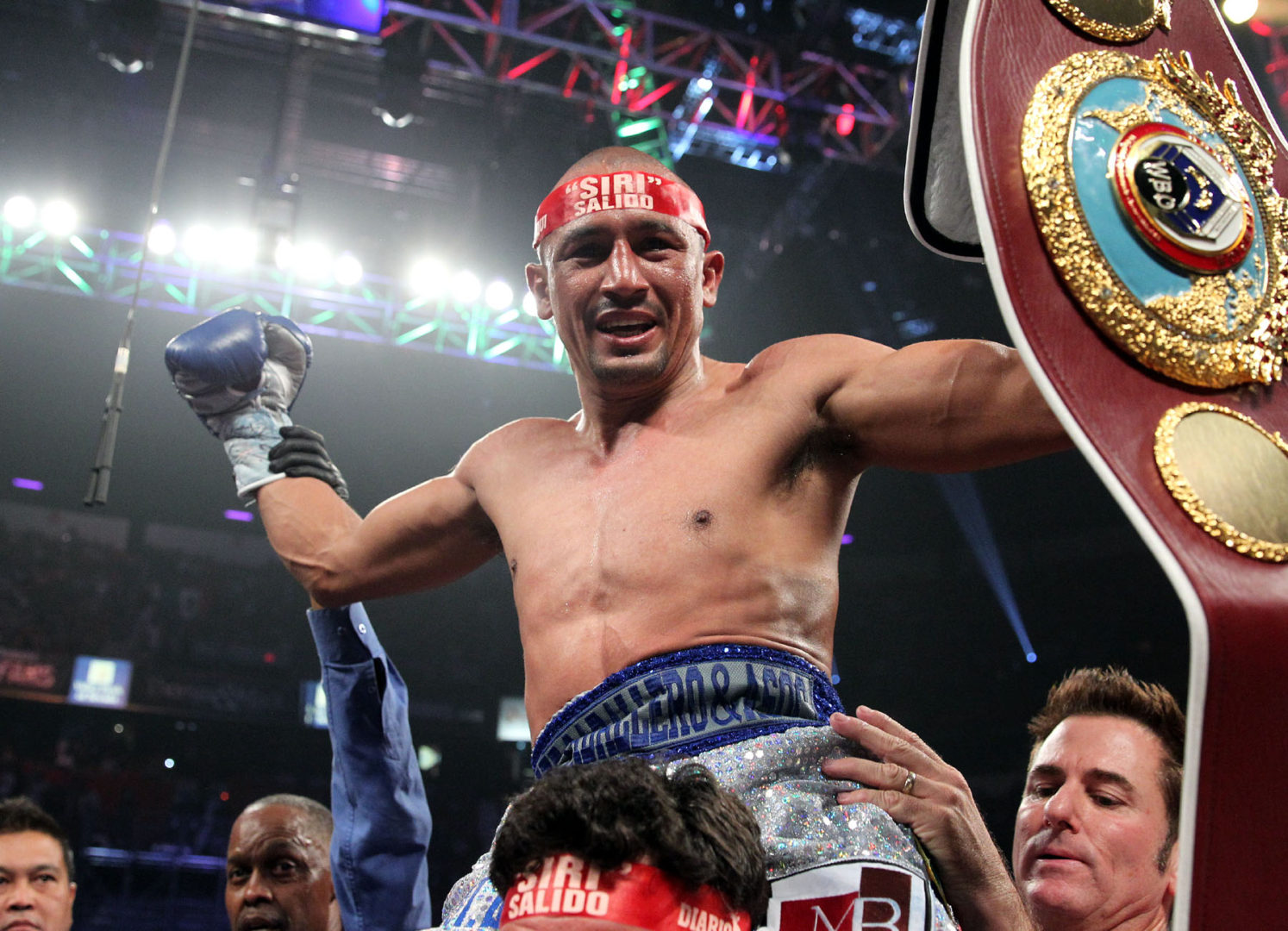
The meaningful part of American welterweight “Vicious” Victor Ortiz’s odd career ended Thursday night in an off-Broadway show with an off-Broadway opponent, about seven miles off Broadway, when Ortiz’s vicious tendencies got him corkscrewed in the blue mat of Brooklyn’s Barclays Center by a second-round right hook from Brooklyn southpaw Luis Collazo, while Ortiz’s own late-arriving right hook was still arriving. It was an ending sad in its own goofy, unpredictable way.

It was not a symmetrical close to a career that has made little sense over the years, but it was a close just the same – for a welterweight titlist does not need a Fight of the Year to best Andre Berto, go winless for the next three years, get his mouth wired shut by a junior welterweight, and then get penanced by Luis Collazo, without his empire needs erecting outside the fight game.

Ortiz was once the brightest prospect in the brightest stable in boxing; he shared top billing with Juan Manuel Lopez seven years ago on a ShoBox card in Phoenix’s Dodge Theater, a card whose photos were accompanied by a caption that read “Top Rank’s New 1-2 Punch.” Lopez, a man later described as a “world class dissipater” by someone who’d know, had a comparatively fulfilling career, despite shortening it with hard living, while Ortiz got himself alternately remembered for telling Staples Center he did not deserve to get beat up, getting his lights vengefully cut by Floyd Mayweather, getting his jaw broken by Josesito Lopez, and getting his face lubed while dancing with the stars.

Ortiz inadvertently leaped, Julio Cesar Chavez Jr.-like, from a dear place in aficionados’ hearts to a ridiculous one. He should not have said what he did to HBO’s viewers after finagling his way out a 2009 match with Argentine Marcos Maidana, telling them that, comfortable as he was with prizefighting’s rewards, he did not approve of its risks, but he never recanted, remaining defiantly defiant about it with those whose ticket and pay-per-view purchases enriched him, saying recently as March: “Sorry I’m not sorry.”

He speared Floyd Mayweather a couple years after losing to Maidana then kept apologizing till Mayweather punched him to make him stop, scoring for “Money May” a second knockout since 2005, and leading to a historic conference call in which an as-yet-unrehabilitated Oscar De La Hoya endeavored to out-crazy Ortiz’s loony then-manager, Rolando Arellano, while Ortiz, a transplanted-Kansan surfer, played the dude-of-reason before a disbelieving press corps, a member of which would live-tweet the call was “the worst idea in the history of bad ideas.” Nine months after that debacle, Ortiz auditioned for a chance to make a superstar of Mexican Saul Alvarez, returning to Staples Center, where he never failed to draw, for a match with a four-loss 140-pounder named “Josesito.” Lopez broke Ortiz’s jaw and led him to a hospital-bed revelation about building the “Vicious” brand away from boxing, with a 1-2 combo of celebrity dancing and skincare endorsement.

That was the last time I spoke with Victor. It was a 27-minute phone interview for a 500-word magazine piece about his pending appearance on “Dancing with the Stars” – an interview noteworthy for several reasons, the most of which was its promptness and courteousness. Ortiz’s small management team scheduled an early morning phone call, replying to an initial inquiry almost immediately, and Ortiz not only answered the call on its first ring but did so after doing roadwork without a fight on his 2013 calendar. Ortiz was not merely honest in the sincere way we tell celebrities we want them – “real” being the catchall modifier so prized by kids these days – but lucid, friendly and eloquent.

I mentioned, by way of introduction, a weighin-day bus ride he and I shared to Alamodome in 2007, and he cheerily recalled our conversation and his opponent’s name, before imparting the 20-year-old kid I’d sat beside that afternoon in San Antonio would likely be “disappointed” in his career, though supportively so: “He’d probably be like, ‘Hey man, you’re doing all right for yourself.’”

He sure wasn’t doing all right for himself Thursday at Barclays Center across from Luis Collazo, a man able to stop Ortiz (29-4-2) quicker than any opponent since Collazo stopped Richard Heath (1-1) nine years ago. Perhaps that does not set the hands on the Collazo clock properly as this will: In September, fighting in a San Antonio dancehall bullring, Collazo won a 10-round decision over someone named Alan Sanchez that was so aesthetically displeasing a 20-year boxing columnist on press row not only called it “one of the five worst fights I’ve covered” but felt strongly enough about the matter to impart this very judgment to Collazo himself, who, despite being covered nearly to the centimeter with tattoos, still affected sheepishness in a reply treating his quality of opposition.

Both men in that exchange, as it happened, were right. Collazo proved quite capable of excitement against Ortiz, reminding viewers of the excellent spectacle he made with Andre Berto five years ago, round about the time Berto made his first metaphorical appearance on posters that read “Protected Child” – pinups on which the Haitian Olympian remained until Victor Ortiz unpinned him in 2011. Maybe it was symmetrical, in a b-level-irony sort of way, then, Collazo was the man to end his promoter’s hopes of making Ortiz once more Showtime-ready.

It is tempting to treat Ortiz’s career as a cautionary tale, with its initial precociousness, manufactured homeless-in-Kansas narrative, promoter hopping, loopy outbursts and spectacular losses. Such temptations should be foregone, though. Ortiz came in every fight a picture of fitness, gave his version of events publicly in unfiltered a way as possible, and never, not once, made a boring prizefight – or as his 2007 self might have said through his 2013 self: “Hey man, you did all right.”

Bart Barry can be reached via bart.barrys.email (at) gmail.com


Garcia is ready to be redeemed by Gamboa

Mikey Garcia
Saturday in the little room at Madison Square Garden, Oxnard’s Mikey Garcia made another admirably professional showing, this time in the super featherweight division, against another wholly outmatched opponent, this time in the form of Mexican Juan Carlos “Miniburgos” Burgos, on HBO – a network quite supportive of Garcia. This match readied the table for a war in the summertime between Garcia, a technically flawless counterpuncher, and the Cuban chloroform dispenser named Yuriorkis Gamboa.

We’ve been here before, haven’t we? HBO is aflutter with the possibility of matching an undefeated marquee name from the Top Rank stable with the fantastically flawed but still undefeated Gamboa, a prizefighter whom the network has been building for some while now with enthusiasm irregular as Gamboa’s chin. It was four years ago, nearly to the day, on Jan. 23, 2010, that HBO’s “Boxing After Dark” program featured Gamboa on the same card as undefeated Puerto Rican Juan Manuel Lopez. Gamboa laid waste to Rogers Mtagwa, who’d brought “Juanma” within a sip of drowning in the deep waters of their title match four months prior, Lopez retired Steven Luevano, and HBO aroused its viewership with overtures of Gamboa-Lopez in the very near future.

Bob Arum, head of Top Rank, promoter of both men, addressed HBO’s anxious viewership thusly: “I know what people want, and they can go f–k themselves.”

Lopez and Gamboa continued to circle one another, recycling opponents. Then in March 2011, Gamboa solicited from poor Jorge Solis a concession no one, certainly not Manny Pacquiao, hit hard as Gamboa. The moment was ripe for Lopez-Gamboa to not-happen for a second year. What suspenseful bleating the non-event was about to incite, though, got muted 21 days later when Lopez got flattened by Orlando Salido and all thoughts of what Arum anticipated would be “the biggest featherweight fight of all time” instead moved inexorably toward a day when, in an attempt to make Gamboa’s 2012 match with someone named Michael Farenas enticing, rapper-cum-promoter Curtis “50 Cent” Jackson would chant unevenly over background vocals while being lowered from Top Rank’s video apparatus above an MGM Grand ring erected for what became Juan Manuel Marquez’s razing of Manny Pacquiao and Top Rank’s 2013 top line.

Since a Lopez fight with Gamboa by then made no sense, especially not after Juanma again got stopped in his 2012 rematch with Salido, Top Rank seasoned Lopez for a feeding to Mikey Garcia – a young fighter already supplanting his temperamental stablemate, Nonito Donaire, as the future of Top Rank, even before the flashy Filipino got undressed by a Cuban named Guillermo Rigondeaux who is much, much better than his fellow islander Gamboa. This brought things limping to Dallas in June where Juanma took the scale on a makeshift dais in American Airlines Center’s concourse and looked a perfect 125 1/4-pound feast for Garcia.

Ah, but Mikey’d been doing some off-menu grazing and missed the match’s contracted weight by a clean two pounds. For once Arum was sincerely irate. He sat silently in the middle seat of the first row of chairs, shoulders hunched and so tight – as John Updike once put it – if you’d have tapped him he’d have rung like a gong. One of Top Rank TV’s microphoned models filmed Father’s Day greetings onstage while Garcia ostensibly tried to make weight, and when she misread Arum’s first refusal to say something mirthfully paternal to her network’s viewers and asked again, she got a reply whose words and temperature were akin to Arum’s January 2010 greetings to HBO viewers.

Garcia came back a couple hours later, dry as he’d left, signed a piece of paper and left again. Arum announced the main event cancelled, and like that, much sheen came off the Garcia bust. Mikey stretched Juanma in four the following night – the fight back on! – then stopped Roman Martinez in Corpus Christi five months later.

Garcia is no longer held in the esteem he was previously, which is neither unfair nor particularly tragic, as more than a few aficionados looked askance at the bizarre stoppage of his fight against Orlando Salido a year ago – when the fight was called-off and sent cardsward because Mikey’s nose was broken, an occurrence more common in prizefights than goals in soccer games. Saturday’s dull decision over “Miniburgos,” now 0-1-2 in his last 18 months, did little to restore Garcia’s luster.

Enter Gamboa. There probably could not be a better opponent for Top Rank’s Garcia-restoration purposes than “El Ciclon de Guantanamo” – a guy with no discernible defense, reflexes not quite quick as he thinks they are, and hours of titillating knockout-reel footage for HBO’s documentarians to mine. By the time “Countdown to ‘Gamboa’s Guantanamo: Extraordinary Rendition’” completes its fifth replay and opening bell rings, casual fans, glancing with anticipatory horror through partially covered eyes, will be both admiring and surprised Little Mikey was courageous enough even to toe the line for a second round. And when Garcia starches Gamboa in the later rounds – and likely not late as we think – when he finishes a job most of Gamboa’s recent opponents have started, we’ll have little choice but to admit Garcia is what we secretly hoped he was, and begin accusing Floyd Mayweather Jr. of ducking him.

The serious folks in the room, meanwhile, will bite our tongues, knowing contemporary boxing could still do much worse for its face than Mikey Garcia.

Bart Barry can be reached at bart.barrys.email (at) gmail.com


The Legend’s Son comes back to home (too)

Vera_Chavez_PC
SAN ANTONIO – Thursday, Mexican “Son of the Legend” Julio Cesar Chavez Jr. strode across the Alamodome stage to a podium that would conceal, for once, a fairly lean version of Junior, a version of him that surprisingly looked within 20 pounds of his next match’s contracted fighting weight, six weeks out, a match that will be a rematch with Austin’s Bryan Vera, a man who likely deserved a better result than what he received in September and will more than likely deserve better than the savage beating he collects March 1.

“And thank you, Texas,” Chavez said in accented English, to close. “Because this my home too.”

Chavez appeared chastened. Years back, Argentine Sergio Martinez, incensed his WBC belt was unfastened from his waste and bestowed upon Chavez by the late Jose Sulaiman – a man ever more beloved in Mexico, for codifying the country’s importance in prizefighting, than in the United States – arrived at a postfight press conference in Houston after Chavez beat up and beat down Peter Manfredo who, personably enough, indulged bystanders’ curious requests to hear him say “fugettaboutit” after he was stopped and announced a stop to his career (a retirement that lasted, stereotypically enough, nary a twelvemonth), to challenge Chavez in his finest hour, and Martinez was uncharacteristically dismissive too. He asked rhetorically if he wouldn’t knock Chavez out easily. At the time it seemed quite probable.

Fewer than 10 months later, Chavez nearly ended Martinez’s reign as a world champion, coming preposterously close to becoming the linear middleweight champion, affixing himself to a bloodline of Marvelous Marvin Hagler and Carlos Monzon and Sugar Ray Robinson and Harry Greb, in a fight that changed both men, shortening Martinez’s career and the lucid years of Chavez’s life. Lost in the justifiable contempt aficionados reserve for Chavez is any consideration for the consequences of the sustained whupping he took from Martinez’s fists, and the incredible number of punches he took square and unmolested to his cranium – each punch nearly the force of what single blow put Paul Williams prostrate on a blue mat in Atlantic City.

Chavez wishes to be taken seriously, by himself and others, one hears from men who should know, and certainly should know better if it is not so – men who’ve seen, fallen victim to, or perpetrated, every hustle yet known in our beloved sport. Chavez does take boxing seriously, they say. If this is so, and again some suspension of disbelief is required, he may now be suffering from a combination of genetics and a damaged brain.

Boxing has rarely come upon a more naturally unsympathetic figure than Chavez; Adrien Broner and Floyd Mayweather, of course, have as large a percentage of attendees at their matches cheering their demise, yes, but those men worked hard to cultivate odious public personalities, and those men, too, remain for the most part popular within their own ethnicity. Chavez, conversely, now holds a unique place in boxing’s landscape as a man who, through no overt effort of his own – through no detectable effort of any kind, one might say – has transformed an entire ethnic enclave, Mexican-American, from a default sort of projected affection, the son of my hero is my friend, to another thing entirely. Chavez is aware of this even without his father reminds him, though Chavez Sr. appears the kind of dad who might be willing to grunt just such a suggestion to a filial epigone like Junior, privately.

Senior’s popularity has a variety of sources, but an occasionally overlooked one is historical: Mexico collapsed in an epic sort of way in 1994 – and such a collapse injured cruelly a proud and surprisingly innocent country, one whose residents, when called upon by their government to help La Patria recover its economic footing, sent gifts and sundries varied as live chickens to Mexico City – and for the next number of years, Chavez Sr. was, as one Mexican journalist put it at what became Chavez Sr.’s final fight, “the only thing that went right for us.” Junior was a part of that Mexico more than Americans, and most Mexicans, care to realize.

Watch the ringwalk that preceded Chavez Sr.’s worst professional moment to that point, his official draw in 1993 with Pernell “Sweat Pea” Whitaker, a singular boxer whom shot commentator Ferdie Pacheco continued to call “Peewee” through the pay-per-view broadcast. Who sits atop one of the entourage’s shoulders, looking down on his father while the legend sings along to the Mexican national anthem before a record-setting crowd in this city’s then-four-month-old Alamodome? It is Junior’s unmistakable chubby-cheeked visage one sees, a face portending a lifetime of weight struggles regardless of profession, spreading tentatively beneath a red headband like his dad’s.

“Son of the Legend” has been part of boxing his entire life, the number of those memories a fair auditor would call euphoric barely outnumbering those classifiable as euphoria’s opposite, and he understands, as Freddie Roach recognized in the first week as his trainer, “the geometry of the ring.” He probably believes he beat Bryan Vera in September, potshotting him the way Sergio Martinez amassed a lopsided lead on Chavez himself the year before, and knowing, as television didn’t show, Chavez’s punches were many times harder and flusher than Vera’s. He also knows how many people hold him in contempt and knows he now deserves it in a way he probably did not before. He is much better than Bryan Vera, and if he is motivated and conditioned – and again, he appeared reasonably trim Thursday – he may put a tragic type of beating on Vera, who for all his activity, is not nearly strong or elusive enough to dissuade Chavez in an emergency.

For once Texas should not worry about judges but ringside medical officials willing to intervene if Vera’s corner comports itself too courageously on March 1.

Bart Barry can be reached via bart.barrys.email (at) gmail.com


Procrastination’s affirmer: Notes from the craft

Bottles
SAN ANTONIO – This week I began painting glass jugs instead of writing. Reading, socializing, Twitter, documentaries, laundry – all of these, it turned out, were not effectively enough keeping me from writing, despite many years of service in the enterprise. A vigorous new distraction came to the fore. The perfect week for it, too; a 2,000-word cover feature due in a few days, novel 8 stalled at 92,000 words, and this column needing to be written, read, colored, shortened, lengthened, and read thrice more.

A local supermarket put its organic apple juice in exquisite glass bottles some months back, bottles so lovely I could not bring myself to refuse them, and so they accumulated on the counter till a visiting friend told me about a YouTube video of a bachelorette party – there’s your muse! – that had colorful acrylics poured and baked in mason jars. Now a lengthy process is hatched, a tidy sum is sunken, and bottles five and six sit drying as these words happen.

“If anything can stop you from writing, let it.” That is about the best advice I’ve yet come across concerning this craft. I read it somewhere and don’t recall who said it, so I’ll put it in quotes and attribute it away from myself. Then I’ll google it and find it was in a book that attributed the quote to “an editor named John Dodds.” It’s advice I occasionally impart and more often credit myself with imparting to younger writers.

It speaks to the compulsion required to do this thing, it speaks to the lack of affirmation, it speaks to how disproportionately longer it takes to write something than it does to read it, and quite often in an inverse sort of proportion to that disproportion; the worst writing, what often takes the longest to endure reading, gets written fastest, which is not nearly tragic, from a writer’s perspective, as that proportion’s inverse and what it says to writers who whale away at their prose, flensing it till nary a transition remains from one idea to the next, then go back over it thrice more, under the auspices of once more, before reading it aloud, sighing, shrugging and filing it – triumph free.

That is not the worst of it usually. The next morning is the worst of it, when the writer first sees his inadequate effort through the eyes of a reader and panics at how terrible it is. A few hours pass, an email or two comes in, if he’s lucky, and he’s able to decide it’s not quite awful as imagined. By midweek, in fact, he’s often forgiven himself, which is good because the idea for next week’s piece is already overdue and the next deadline is bearing down, as it will do. A few weeks later, or anyway at year’s end, the writer returns to that inadequate effort of his, and if he truly worked at it when he wrote it, he is surprised how good it was. That leads inevitably and instantly to a brand new horror: What happened to me? why can’t I write that well anymore? will I ever recover that guy’s vocabulary or insights?

It’s good a time as any to write this column because it’s the time of year members of the Boxing Writers Association of America try to determine what pieces of theirs to submit for the BWAA’s writing contest, and putting aside the legitimacy of any contest that judges art, those writers who do the craft right, those writers admired by their peers, should have to struggle with this choice because they wrote hard as they could every time and didn’t write a few pieces much better than others to target hypothetical judges for contest time.

The other night, haunted by calls I’d not made for that long feature and questions I’d procrastinated preparing for interviews because prepared questions were my trigger for making the calls whose making I dreaded – which, as an aside, is an amateurish mistake, and an idiocy, and thrice the idiocy from any writer who has commented often enough to remember: “I’m always glad I’ve made the call by the time I hang-up” – I closed the dark screen of my laptop, set it on the sofa and found “Deceptive Practice,” a documentary about prestidigitator Ricky Jay, and marveled at his ability and willingness to spend 14 daily hours shuffling a deck of cards. No sooner, though, does a craftsman marvel at another’s compulsion than he begins a spiral of self-loathing at his own comparative half-assery.

A month ago, during fightweek for Maidana-Broner, I had the pleasure of walking home from the Friday weighin with my favorite Monday columnist, and when conversation turned to the nature of column writing, somewhere right about Houston Street & Soledad, we began interrupting one another and completing the other guy’s sentences about the tariff a column like this exacts from its writer. The collapsed marketplace for good writing – how much did you pay to read this? – takes each day more of what remains of the dilettantes, leaving mostly the quixotic and compelled.

This craft is not about having “something to say”; that’s a cliché and simplification made by people who couldn’t do what we do. It’s about other, better things that include this: Euphoria at a process that places a certain chunk of one’s identity in a hermetically sealed compartment that, for its seeker, can be durable a refuge as exists. So let’s end here: I first came across the word “prestidigitator” while reading Henry Miller in 2000, and you’re damn right it felt good finally to use the word in print, and correctly, nearly 14 years later, up in graf 7.

Bart Barry can be reached at bart.barrys.email (at) gmail.com


Portrait of 2013’s most enjoyable week, part 2

MEW2013
Editor’s note: For part 1, please click here.

The seven-day stretch in mid October that began the Saturday Timothy “Desert Storm” Bradley decisioned Juan Manuel “Dinamita” Marquez found contrasting studies of how pain is treated, how humiliation is considered, and how vulnerability is concealed or exploited otherwise. Bradley, capable as any prizefighter of emoting when asked a fair question, showed no vulnerability to Marquez, striking instead an uncharacteristically arrogant mien, one intended to disarm boxing’s apex predator. And it worked insofar as Marquez found nary an opening, geometrical, physical or psychological – nary a fissure in Bradley’s expressive countenance, a dark and intense face on a head he self-deprecatingly calls too large (when not driving it in opponents’ chins or foreheads).

Ruslan Provodnikov and Mike Alvarado both admitted, in a wondrous for rare bit of prefight candor, they were afraid of being badly hurt or killed in a prizefight, the sort of concession Bradley might make privately but Marquez was and ever will be incapable of making – for reasons cultural, traditional and perhaps biological. After Provodnikov laid waste to Alvarado, though, one almost wondered if the Russian possessed actually a fraction the empathy of his prefight demeanor, if he didn’t, at least for a 48-minute stretch a couple times each year, cease seeing men set across from him as fellow sons/brothers/fathers/friends and merely sides of beef that, curiously enough, could be made to emit whimpering sounds when knuckled just right.

*

The seven-day stretch in mid October that began the Saturday Timothy “Desert Storm” Bradley decisioned Juan Manuel “Dinamita” Marquez showed that if one puts away his prejudices and looks often and close enough at art of any kind, from its finest manifestations in Rembrandt or Velazquez to its fallenest manifestations in pornography like Stagliano’s, he finds wonderment and originality, he finds better men than himself treating troubles like his own, and he finds, desperately and essentially, a form of solace.

If Andy Warhol and Fernando Botero had little in common, they had an uncommon sense of color, even for visual artists, to unite them along art’s rocky sort of continuum, and it was a sense of color Warhol quite possibly permitted Botero to use some years later, for as much as the Colombian credits his influences to Pablo Picasso it remains true that Picasso, intellectual always before beautiful and cynical always and always, appears less in the vibrancy of Botero’s paintings than does Pittsburgh’s father of fashion art.

If DAM’s shape was ostentatious, finally, its structure comprised none of the conspicuous consuming that is modern America’s specialty; it was Libeskind’s proper recognition that while largeness of scale assures no greatness, architectural greatness often does desire awesomeness.

*

The seven-day stretch in mid October that began the Saturday Timothy “Desert Storm” Bradley decisioned Juan Manuel “Dinamita” Marquez brought a celebratory air for Provodnikov and Bradley, men who made an incredible spectacle with one another seven months before, bringing them finally the victories both deserved, and with those victories a codification of their status in prizefighting’s impassioned, subjective, weird, hyperbolic ratings, an ongoing appeal to orderliness that proves man must have hierarchy even when he hasn’t an inkling why.

The clarity of Colorado’s air sets its vistas in a visual space that might better be called hyper-definition than high-definition, akin to the early HDTVs with whites that blitzed viewers and induced aching brains if not temporary blindness, and when one exits the western mouth of Eisenhower Tunnel, a blossoming of sun-reflected snowy whiteness after 1 1/2 miles of gray darkness, he wonders aloud if this mightn’t be the sole place in the world a visual experience of such arresting magnitude can happen.

Mike Alvarado, the Coloradoan who lost on his stool against Ruslan Provodnikov that Saturday night in an unlikely suburb north-northwest of Denver, wore open and suppurating facial lacerations to camp for his March rematch with Brandon Rios, lacerations courtesy of a mishap with his flesh and shards of a glass bottle and at least one other man’s rage, and reminded those who followed his career how unlikely a happy ending will be for “Mile High.” A reminder that came once more, two hours after the main event in Broomfield, when I returned to Ramada Denver Midtown, a recently re-acquired and -signaged property, luxurious 30 years and gaggles of property managers ago, where the frontdesk attendant, young, pretty, edgy, pierced – Denverstyle – told me: “Alvarado? I know Mike! My friends partied with him.”

*

The seven-day stretch in mid October that began the Saturday Timothy “Desert Storm” Bradley decisioned Juan Manuel “Dinamita” Marquez made Marquez once more threaten retirement, once more price his way out a lucrative rematch with Manny Pacquiao, once more remind his adorers genius is divisive, not unifying or transferable, and a force that renders a man like Marquez many more times admirable than likable, a man to observe and delight-in but never invite for a beer.

Timothy Bradley ended 2013 finally esteemed like a man with his resume should, regardless of what bigotry aficionados routinely show volume punchers. Ruslan Provodnikov appeared in a California ring across from Bradley in March a wholly unknown entity and finished October as the third piece of a triumvirate of former-Soviet fighters now used to scare disobedient young boxers before bedtime: “GGG”, “Krusher”, “Siberian Rocky”.

Mike Alvarado, finally, found what solace might be had from an adoring hometown, a prudent choice, and a vindicating fulfillment of what natural gifts oddsmakers long had him tragically wasting.

And I had the great good fortune of more time spent within our craft’s fraternity, both in Nevada and Colorado, a fraternity that, at its best, is a mutual-admiration society.

Bart Barry can be reached at bart.barrys.email (at) gmail.com
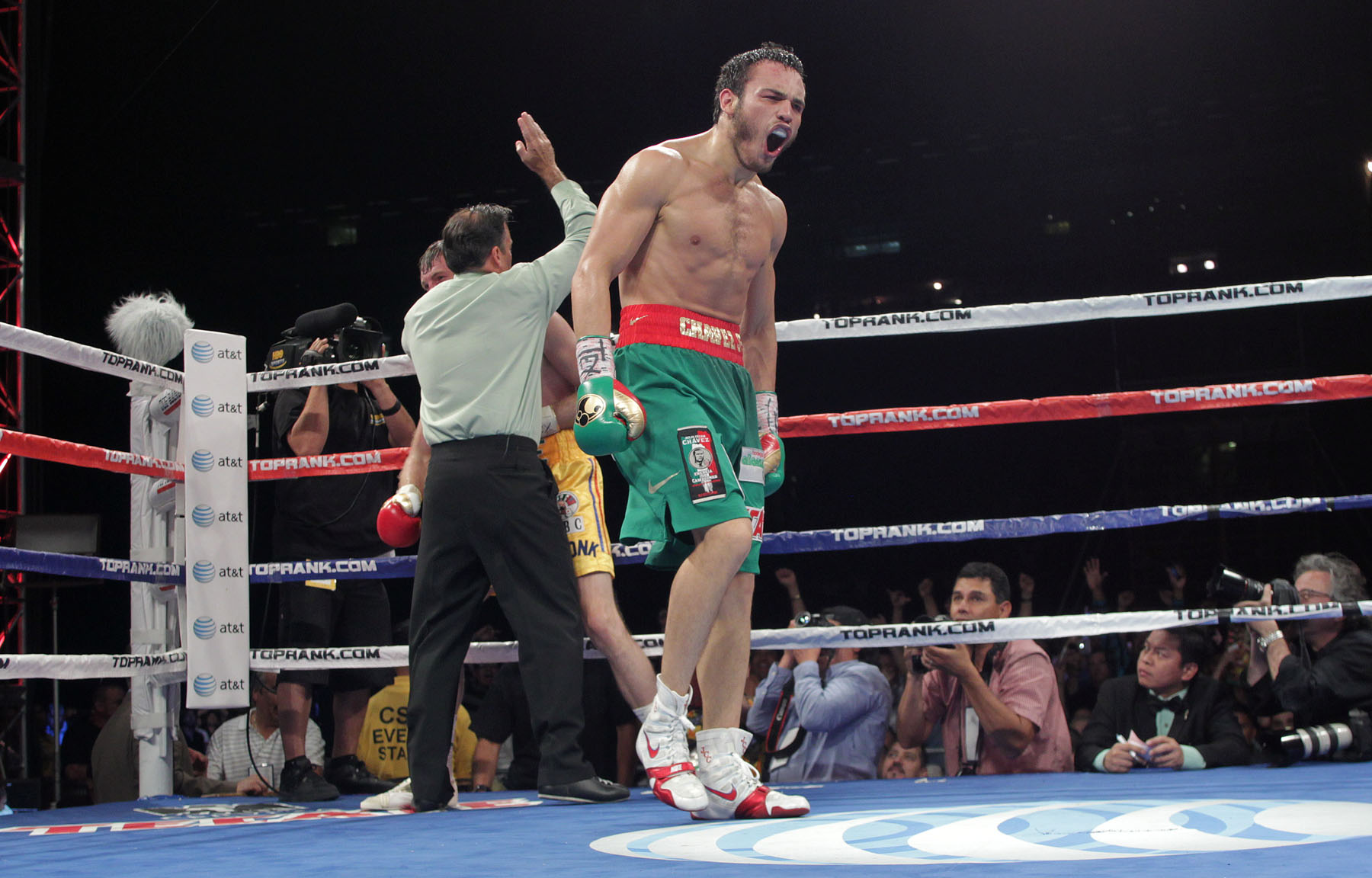


Portrait of 2013’s most enjoyable week, part 1

MEW2013
The seven-day stretch in mid October that began the Saturday Timothy “Desert Storm” Bradley decisioned Juan Manuel “Dinamita” Marquez in Thomas & Mack Center ended with a more brutal stoppage victory over “Mile High” Mike Alvarado at 1stBank Center in Broomfield, Colo., a GPS-defying suburb of Denver, than even sadists anticipated, and transformed Ruslan “Siberian Rocky” Provodnikov into prizefighting’s looniest bogeyman, the sound of whose punches still carry for those at ringside that night an especially unforgettable brand of acoustic menace.

The Bellagio Gallery of Fine Art in Las Vegas featured a display of American pop-star Andy Warhol’s finest Western-themed works, including a pair of Dolly Parton portraits excellent as they are obscure, and Denver Art Museum proved itself an architectural marvel more even than anticipated.

Desert Storm, Dinamita, Siberian Rocky, Mile High, BGFA and DAM – they made Oct. 12-Oct. 19 my favorite week of 2013.

Fightweek has changed for boxing writers, changed dramatically and with dramatic rapidity, from the celebratory sort of thing that began on Monday afternoons and included free room and board at the host casino, to a pay-it-yourself model. It is but one more unpleasant turn for a profession whose best days will not return, though with one ancillary benefit: When a writer is compensated only for what words he produces within an arena, his time is his own when he is without the arena.

Saturday in Las Vegas began with a long-awaited lunch at Wynn’s Botero – a restaurant named after Colombia’s foremost living artist – continued to Bellagio’s Warhol display, crescendoed with three judges’ deciding for Timothy Bradley and concluded with another wonderful postfight meal among mentors and friends.

Friday in Denver began among the confounding angles of Polish architect Daniel Libeskind’s masterwork, DAM’s Frederic C. Hamilton Building, and continued to an overcrowded downtown weighin, where Mike Alvarado’s scale struggles afforded an hour with boxing’s best matchmaker, Bruce Trampler, and matchmaking’s greatest character, Jim Smith, anticipating fantastically a Saturday morning drive westward and Provodnikov’s Saturday night triumph.

*

The seven-day stretch in mid October that began the Saturday Timothy “Desert Storm” Bradley decisioned Juan Manuel “Dinamita” Marquez provided a resilient sort of joy, a kind Bradley might appreciate, joy by way of resilience, followed by the shocking clarity of Colorado light, pristinely dry for being ever cold, and an overwhelming form of violence no prizefighter recognizes as his own till he becomes its prey.

Before Juan Manuel Marquez stormed to his dressing room yet again while boxing’s malcontent knowers filled online forums with certainty, there came an unusual occurrence to ringside in Las Vegas: Silence among writers between the closing bell and reading of scorecards. Some had opinions of who’d won the 12-round contest, but none had anything like television’s certainty.

As Saturday became Sunday, I sat in Zoozacrackers, Wynn’s deli, across from Thomas Hauser and beside Norm Frauenheim, and I gratefully marveled, as I try often to do, at what an unpredictable but absurdly wonderful – and absurd and wonderful – thing is life.

Promoter Bob Arum, too, was surprised by the way Nevada’s judges found for Bradley in a fight that saw more ineffective aggressiveness and inactivity than expected, but like many others he had a job to do between the overstuffed walls of Diego’s Mexican Food & Cantina the following Friday, promoting alongside Banner Promotions’ Art Pelullo at a weighin the fire marshal closed a half hour before Alvarado missed weight by a pound and Provodnikov struck his signature bellowing-most-muscular pose, and Arum’s job hardly comprised an expression of grief for the surly Mexican who flattened Top Rank’s 2013 revenue projections with a single right hand in Las Vegas 11 months before.

Saturday’s main event began with a look of acute squeamishness and pain, an actual wince, from Mike Alvarado, an aptly tatted and troubled representative of Denver’s rugged and weird interior, and ended with Alvarado, many times more intelligent and athletically gifted than his detractors or rap sheet know, broken on his stool and making an unexpected and prudent decision not to defend his 140-pound title from Provodnikov in their match’s championship rounds.

*

The seven-day stretch in mid October that began the Saturday Timothy “Desert Storm” Bradley decisioned Juan Manuel “Dinamita” Marquez marked a vindication for both Bradley and Provodnikov, the Russian who lost a fight-of-the-year decision to Bradley in March while likely reducing Bradley’s future lucidity and life expectancy and proving the Californian as spirited and well-conditioned an athlete as this era will know. Bradley, a man unfairly and ceaselessly maligned for collecting a decision win over Manny Pacquiao 16 months before, received the benefit of most every doubt against Marquez, immobilized by what upper-body musculature absurdly topped Marquez’s 144 1/2-pound physique, surprising Marquez with elusiveness and a counter left hook in their final 15 seconds of belligerence, once that sent Marquez stumbling backwards and Bradley’s gloves prematurely and unadvisedly high in the air.

Enamored as he was of a stalactite-like shape for his titanium-plated edifice at DAM, Daniel Libeskind, one fears, followed contemporary architecture’s tendency to see contemporary art as clutter, detritus detracting from what answers architecture provides light’s riddle – composed of particles or waves? – and made an exhibition hall too exhibitionist to exhibit anything but its own enchantingly crinkled cants.

One needn’t travel 50 miles west of Denver to see vistas unique in all the world, and these vistas begin with Idaho Springs, Colo., a spot placed first on a list of recommended Centennial State destinations by the matchmaker placed first on lists compiled by his peers, and so I went to behold the Rockies and their majestic clarity.

I had watched Mike Alvarado for 7 1/2 years by the time he got brutalized by Ruslan Provodnikov, first covering Alvarado’s own brutalization of Maximo Cuevas in the light of a searing Tucson sun as it set over the empty parking lot of Club Envy in 2006, but not until I saw Alvarado reduced to a frightened target did I realize how much affection I’d developed for him.

And how much I fear news will come of his tragic end before this decade is out.

***

Editor’s note: Part 2 will be posted next Monday.

***

Bart Barry can be reached at bart.barrys.email (at) gmail.com
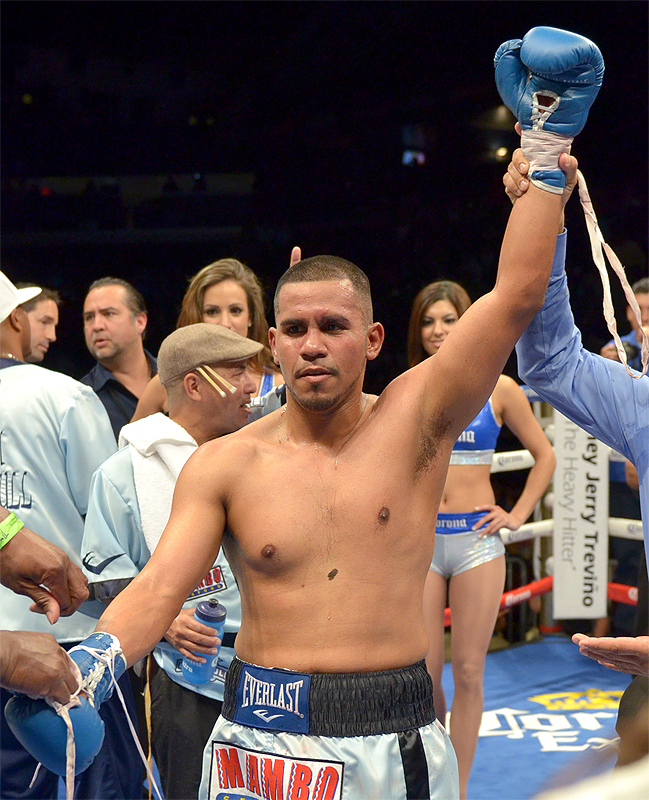


Adam Berlin: The struggle of the art

both_members_club_book_cover low res
My introduction to Adam Berlin’s writing came 4 1/2 years ago when he wrote for this site an account of Joshua Clottey’s preparations for a match with Miguel Cotto. I did not complete half Berlin’s piece before emailing our editor and asking him to throw whatever courtship we might at Berlin – a bio, an archive, a picture, whatever – beginning my plea with: “Adam’s a hell of a talented writer.”

After reading the final 18 pages of Berlin’s third novel, “Both Members of the Club” (Texas Review Press; $12.95), I set the book down, smiled and nodded: Told you so.

There’s a tendency in readers’ minds, even the minds of experienced readers, even what minds do the double duty of belonging to a reader and a writer, to treat first-person narrators as autobiographers; one takes the pronoun I, marries it to the author’s back-cover photo and swims along. Adam Berlin’s third novel feels more deeply autobiographical, though, than what tendencies a first-person narrator already encourages, especially when one reads its two predecessors – “Headlock” and “Belmondo Style” – before approaching “Both Members of the Club.”

All three of Berlin’s novels employ the first-person, more immediate than the third-, causing a reader to see Berlin, ageing with remarkable grace through his 14 years since “Headlock,” first as a bar-bouncing former collegiate wrestler named Odessa Rose, body-beautiful and heterosexual as he wishes to be, then as a late-adolescent track runner, nascently gay, named Ben Chiziver. Berlin’s narrator in his third novel, Gabriel, is, like so much in the book, a creation spun from the best elements of his first two works.

Gabriel is an aspiring actor who alludes several times to paid sexual acts performed on men, a model vain and attractive enough to pose nude for aspiring draftsmen in art classes while straight enough to allow jealousy over an evening’s tryst between his best friends, a female artist named Sam and a prospect-cum-journeyman prizefighter named Billy Carlyle, to undo an early lifelong loyalty oath formed by the three in a troublesome placed called Smythe House, a foster home of troubled youth – the reader is left to infer.

In a November interview with fellow boxing writer Lyle Fitzsimmons, Berlin states: “There was a call for short novels for a university-sponsored competition, so I took my 400-page manuscript and . . . I stripped the book down to the required page limit, 120 pages, and sent in the manuscript.” Berlin likens this effort to what stropping a prizefighter does to his body, but it is an analogy perhaps too facile; to remove 70-percent of his bodyweight, the way Berlin had to remove 70-percent of his manuscript, a middleweight would have to begin camp above 500 pounds and cleave entire chunks of flesh from his skeleton.

That is a workable analogy for what Berlin did – “Both Members of the Club” has entire chunks of plot cleaved from its pages – and its author’s cleaving makes Berlin’s third book his best by an appreciable margin. “Headlock” tells its reader too much, in the style of every first novel. “Belmondo Style” allows its reader to infer more and become a co-conspirator with its author. “Both Members of the Club” neither tells its reader more than a 1/3 what its narrator knows nor tells its reader it’s not telling him more.

If a writer can appraise another writer’s work by counting the number of passages he notes, and then setting that passage-count against its page-count, Berlin’s third novel is several times better than his first. There was a gratuitousness to the violence described in “Headlock” and to a lesser extent “Belmondo Style” that Berlin forgoes in “Both Members of the Club,” leading to, among other accomplishments, as good a first-person treatment of what it is like to be in a prizefight, a chopped salad of body parts and euphoria and familiarity and concussion, a reader can encounter.

Berlin showed a talent for excavating horror in his first novel and honed it in his second, with passages like: “I couldn’t move and I knew his hand was under my balls, holding the lighter, the flame going up and up and in. It felt like it was going in. The last thing I remembered was the cold pain. Then I drifted off, numb and spiraling, like I was leaving me behind, running away, but I wasn’t running.”

In Berlin’s third novel, the horror that often precedes a profession of hurting other men is explored, too, but subtly, deftly: “It’s his memory but mine too, mine from his telling, and I see it, see the men finally paying, not like money for me, not like money for Sam, but paying, his father first, the man from the foster home second, Billy giving, Billy beating, adult legs skidding against floor, trying to slide away, crawl away and Billy hitting, hitting, blood so dark, so slippery, so much of it.”

That’s writing, inviting empathy with a clarity achieved through grammatical roughness, which is different from “writing” – the sort of thing “writers” do when they use special effects to obfuscate, to keep secret the limited range of their mastery. Some of Berlin’s best prose in his third novel treats Billy Carlyle’s scars – “Sun through the window polishes the scar tissue above his eye” / “There’s no scar tissue above his eye, his face smooth as potential” – and it’s no wonder, as Billy Carlyle’s story feels more like Berlin’s, even, than his first-person narrator’s does.

The triumphant MFA golden boy of “Headlock” is gone – lost maybe to critical reviews, maybe to a dying industry, maybe to other experiences – and replaced by a guy who attracts you by not-caring if you’re interested, one who doesn’t have to tell you there are things he’s not telling you. Such are the layers and textures time and practice alone provide. Adam Berlin’s “Both Members of the Club” is an achievement.

Bart Barry can be reached at bart.barrys.email (at) gmail.com


The Problem, with schadenfreude

Adrein Broner
SAN ANTONIO – In the weeks to come, it will likely be discovered Adrien Broner suffered from a fatal strain of the deadlywhatever virus in his training camp, did his ringwalk with a right hand broken on the pads in his dressing room, crushed all five of his left knuckles in the first round, suffered invisible lacerations over both eyes in the fourth, and talked through a jaw shattered during round 8. Believe little of it.

Adrien Broner proved merely that he was a fighter in losing to Marcos Maidana at Alamodome on Saturday, a fighter not quite special as Amir Khan – so adjust the seriousness of your reactions accordingly.

If you are reading this column the sensation you have right now, the one you’ve been enjoying for at least 30 hours, is schadenfreude, the pleasure one experiences at another’s misfortune, so perfectly captured in German that English lexicographers decided merely to employ the 19th century’s equivalent of copy+paste. The schadenfreude felt by so many about Broner’s misfortune is evidence not just of “The Problem’s” increasingly odious public persona, a sort of gallivanting idiot defined by the aggrandizement other idiots bestowed on him, but also the lingering suspicion, now confirmed, Broner was two parts media creation for each part talent.

He has reflexes, power, accuracy and considerable upper-body strength, which is another way of calling Broner a great athlete but not a great prizefighter for a number of reasons but chiefly this: He does not have a ring IQ like the great ones, and he is not able to make adjustments like them either. Broner is an imitator, not one who innovates, and not a particularly able one, either – as Broner’s inspiration, Floyd Mayweather Jr., and Mayweather Jr.’s mentor, Floyd Mayweather Sr., must have cringed each of the dozens of times plodding Marcos Maidana touched their self-anointed protégé with left-hook leads, a punch with which Maidana might fell Mayweather once every 10 years, starting in about 10 years.

The genuine misfortune experienced Saturday by Adrien “The Problem” Broner, field commander of “Band Camp,” self-vender “about billions,” brought genuine pleasure to a large number of South Texans, too, men who favor fighters of Mexican origin first, fighters of Latino origin second, and fighters who humble loudmouthed American upstarts always. “El Chino,” so named because of the shape of his eyes more than any genealogical rigor shown by fellow Argentines, was an adopted South Texan for every second of what 36 minutes he battered Broner, largely because he began battering Broner in the fight’s very first seconds and didn’t relent doing so.

Maidana fought Broner exactly the way folks hoped he would, exactly the way noncombatants imagine they would do it if given just 30 seconds with Broner, punching “The Problem” constantly, fouling him whenever he could get away with it, slugging with him like he hated him because he did hate him. The shtick Broner was taught to use in his relentless self-promotion is foreign to a man like Maidana in a way ethnic sensibilities cannot anticipate. The Argentine watched Broner’s crass presentation with about one third the humor Joe Frazier showed Muhammad Ali’s creation of the act, and like Frazier, Maidana proved himself a man possessed of a unique sort of fighting style that does not suffer if marinated in spite.

Maidana was a smarter fighter than Broner prepared for, too. So often when Broner began a rally of any kind, needing two seconds of Maidana inactivity to trigger an assault, Maidana jabbed his gut or head, or rushed him, arms flailing, and kept punching till either a telling blow landed or Broner pushed him off – and no, it was not lost on nearly anyone in Alamodome how much of Broner’s defense, and offense, relied on extending his forearms more than his fists, in one more awkward homage to Mayweather.

Maidana is not a true welterweight, his best days came at 140 pounds, but he is still the hardest-punching and strongest man Broner has faced, the first opponent Broner was unable to impose his physicality upon, though he did try. What few moments Broner succeeded against Maidana came when “The Problem” stomped forward and caused Maidana to move backwards. But there again, Maidana was wilier than scouting reports predicted; “El Chino” often took steps backwards voluntarily, and then followed them with jabs to Broner’s body or left-hook leads to his head, punches Maidana himself probably didn’t think would land, certainly not so flush, but threw more to coil and cock the clubbing overhand right with which he merrily continued to strike the back of Broner’s inanely placed head.

Then there was the well-placed and reciprocal 11th-round humping Maidana gave Broner’s backside, clowning the clown in a way reminiscent of Marco Antonio Barrera’s spiteful driving of a half-nelsoned Naseem Hamed’s face in a turnbuckle after undressing “The Prince” for 34 minutes in 2001. Difference was, much as Barrera disdained Hamed, the Mexican had to content himself with simply outclassing the media creation across from him; Maidana experienced no such lukewarmness of satisfaction, walloping Broner thoroughly as he did, thrusting the top of his head in Broner’s face like a spear in the eighth, hitting him on the break and watching Broner flop on the blue canvas like a third-rate thespian, or a Bernard Hopkins, in the hopes referee Laurence Cole would rescue him from having to fulfill the last four rounds of his contractual obligation. Cole is what he is, but he is also a Texan, and Texans don’t abide gamecocks that strut and plume better than they peck; if Broner expected Cole to disqualify Maidana for fighting dirty it was but one more miscalculation in a night of plenty.

Here is the place one traditionally walks back some inflammatory clause or other, hedging on a character too strong for the moment, but there will be none of that today. The schadenfreude Broner induced in others is now his to bear. The most charitable emotion his current plight inspires is indifference.

Bart Barry can be reached at bart.barrys.email (at) gmail.com
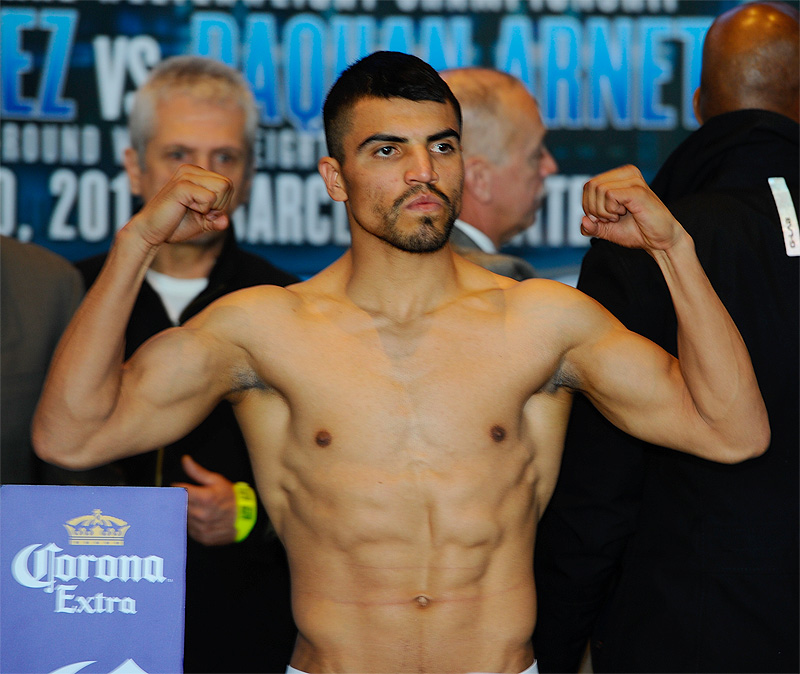


Broner and Maidana make weight, and Broner promises flat-line

Broner_Maidana
SAN ANTONIO – Friday afternoon in the western part of this city’s downtown area, Cincinnati welterweight Adrien “The Problem” Broner (27-0, 22 KOs) and Argentine Marcos “El Chino” Maidana (34-3, 31 KOs) each came in under the weight limit for their Saturday title match at Alamodome, with Broner marking 144.4 pounds and Maidana weighing 146.2.

Lingering rumors about Broner’s weight, of his being too heavy, were wrong. Rumors of his being a box-office heavy might prove to be as well.

Popular as he is on television and for as much presence as he shows in planned media events, Adrien Broner does not seem to be drawing much of a crowd in South Texas – certainly no crowds like those Saul “Canelo” Alvarez drew in April. While there were some who braved the raw temperatures to gather at Market Square and watch Broner make weight, Friday, there was more of a media presence than a presence of fans.

After being partially pushed out the way by a characteristically quiet and surly Maidana, Broner made his weight, jumped off the scale and gave interviewer Steve Farhood a prognostication.

“Easy money,” Broner said. “If he comes in with any dumb shit, I’m a flat-line him.”

While the “Danger Zone” card is stacked as its promoters say it is, a toys-for-tickets drive and $10 entrance fees to Alamodome on Saturday have insiders wondering how much of a draw an African American from Cincinnati and an Argentine are proving to be, especially this close to Christmas.

If the main event needs support, though, it is getting plenty of it, with a co-main between Florida welterweight Keith “One Time” Thurman (21-0, 19 KOs) and Mexican Jesus Soto-Karass (28-8-3, 18 KOs). Friday each fighter came in below the welterweight limit – Thurman at 145.8 pounds and Soto-Karass at 146.2 – and Thurman, probably the card’s most likable personality, shared what he told Soto-Karass during their staredown and then added an insight.

“He’s tough,” Thurman said of his Mexican opponent. “My grandma’s tough too.”

The Saturday fighter most likely to entice South Texas’ partisan-Mexican fanbase, California super bantamweight Leo Santa Cruz (25-0-1, 15 KOs), took the scale as well in preparation for his title match with Puerto Rican Cesar Seda (25-1, 17 KOs), in a match aficionados expect Santa Cruz, who weighed 121.4 pounds, to win by brutal stoppage over Seda, who weighed 121.6.

“It’s my personality,” Santa Cruz said, when asked why he is always grinning. “I’m always happy.”

Alamodome doors open early on Saturday at 3:00 PM local time. Opening bell for “Danger Zone” will ring at 3:30. 15rounds.com will have full ringside coverage.


Guillermo Rigondeaux: At the start of an audacious run that might prove historic

Rigondeaux_Agbeko _131207_001a
Saturday Cuban world champion Guillermo “The Jackal” Rigondeaux reduced Ghanaian super bantamweight and former bantamweight titlist Joseph King Kong Agbeko, no quotes, to an inactive and pacifistic mess, decisioning the African by extraordinarily unanimous scores of 120-108 (12 rounds to 0), 120-108 (12 rounds to 0) and 120-108 (12 rounds to 0). Agbeko, once the very picture of a volume-punching craftsman adept at stealing others’ wills, got uppercutted by Rigondeaux often enough early enough to throw a metaphoric white towel on the match at its halfway point and leave it there.

It takes a special sort of audacity to deploy an uppercut from range in a championship prizefight. Howsoever one chooses to throw it, the punch must begin with a hand perilously lowered, placing an unusual defensive onus on footwork. It is a punch one is taught never to throw moving forward, an instruction a young fighter needn’t hear more than once – hard enough as it is to switch his feet and body weight correctly to throw the punch even when it is a logical counter and available, like when a volume punching opponent repeatedly sets his chin over his front knee, as every volume puncher is wont to do whether by audacity, carelessness or necessity, and charges the uppercut, head lowered.

The uppercut is a punch rarely thrown accurately by the slower fighter in a match, and even more rarely thrown by slow fighters. When thrown as a back-hand counter, the punch needn’t travel far, relying as it does on the opponent’s weight and leverage – rushing into it and impaling his chin on the point of its middle knuckle – and the effectiveness of its shortened leverage can be taught a young fighter by nearly placing his back elbow on the face of its corresponding hipbone, and moving them as one, ensuring both a proper weight transfer and a necessarily restricted range of motion.

To throw the uppercut with one’s lead hand generally makes an up-jab of it, a narrowed glove whose thumb faces its thrower from trigger to contact, and ought be followed with a cross or something from the back else its thrower will expose himself unjustifiably. But to throw the back-hand uppercut as lead? That requires the audacity of a madman in the moment it is thrown, regardless of its employer’s precision. Juan Manuel Marquez used a right-uppercut lead to snatch the fighting spirit right out Rocky Juarez in their 2007 super featherweight match, sending Juarez dejectedly shuffling to his corner between rounds wondering how slow and classless he had to look to Marquez, during “Dinamita’s” mastery period and well before his reinvention-of-physique, to prompt the Mexican to consider such a lunatic ploy, much less snap his head upwards with it.

It was the very sort of audaciousness Guillermo Rigondeaux used against Joseph King Kong Agbeko, Saturday, in as one-sided a championship match as has seen a 12th round in years. It didn’t begin that way, either, and Agbeko, despite what Rigondeaux reduced him to, and despite his debut at 122 pounds coming in only his second prizefight since losing a rematch to Abner Mares 24 months ago, did not begin timidly as one recalls, either.

Agbeko, as high-class a volume puncher as the sport had in 2009, when he decisioned Vic Darchinyan and got decisioned by Yonnhy Perez – back when Agbeko’s aesthetically daring ringwalks included a gorilla mask, shackles and a blonde keeper, in a nod to the middle name, King Kong, Agbeko claims is written on a Ghanaian birth certificate probably having a different birth year than what “1980” Agbeko also claims – began the open of Saturday’s match in proper form, throwing a righthand lead or two at his southpaw opponent. Almost instantly, or at least instantly enough to overwrite in our memories what time passed before its appearance, Rigondeaux snapped a left uppercut from his southpaw stance, a back-hand uppercut counter, that snatched the fighting spirit from Agbeko with a frightful economy.

This was not a larger or stronger man unbuttoning a lesser man, a spent cutiepie American suddenly confronted by someone who hit harder and was quicker too, but rather an evenly matched champion unraveling a former titlist from Africa, a continent from which no prizefighter ever ran his way to America. Agbeko, the man who unmanned Darchinyan when the “Raging Bull” was finished stretching Mexico’s slickest boxer, Cristian Mijares, and Mexico’s toughest showman, Jorge Arce, three months apart, got stung three times by Rigondeaux in the fight’s second and third minute and spent what 33 minutes followed doing anything he could not to be stung again – and getting stung again and again.

Legend has it Joe Frazier said to a young Marvelous Marvin Hagler, “You have three strikes against you: You’re black, you’re a southpaw, and you’re good.” Aficionados looking for an explanation of fans’ and opponents’ continuing avoidance of Cuban Guillermo Rigondeaux – a man whose ancestors arrived in the Western Hemisphere the same way African Americans’ did – might take Frazier’s three strikes against Hagler and add a fourth: You don’t speak English. Something like this, though not exactly this, is what Rigondeaux alluded to in footage from an HBO prefight interview, Saturday, when he said all was always harder for Cuban fighters, men whose leader made a habit of making international laughingstocks of American leaders for about 50 years, because they did not need to get hit frequently as Mexicans.

Statements like that, actually, should benefit Rigondeaux, fighting as he does in a division populated with other Latinos, and subsequently lots of Mexicans – men whose aggressiveness and stylistic deficiencies mesh perfectly with the Cuban’s extraordinary offensive arsenal. Too, Rigondeaux should benefit from HBO’s patronage and promoter Top Rank’s matchmaking mastery. Provided he follows the course plotted him and stays what greedy impulses plague men, Guillermo Rigondeaux may well be starting the sort of five-year run, 2013-2018, that makes a prizefighter into a legend.

Bart Barry can be reached at bart.barrys.email (at) gmail.com


Kovalev the thankless kolumn krusher

Sergey Kovalev
NEW ORLEANS – If this town is not a traditional place for giving thanks, an American ideal rendered ever more vestigial with each year’s business-hours alterations and doorbusting sins, its greed consuming what greed wrought even on the single day generations of Americans once marked with a cessation of their profit motive, it is nevertheless a place where circumstances placed me on Thanksgiving 2013, and so. But expect no turkey leg this or pilgrim that or cranberrying of the other; if this column is stuffed with anything, it will be art and Sergey Kovalev.

For he is the man who stole another HBO show Saturday, in a co-main event match with Ismayl Sillakh that went off in main-event-champion Adonis Stevenson’s adopted and adapted hometown of Quebec, a co-main event match Kovalev made a stage of, ruining a multicultural Ukrainian standard bearer with a conqueror’s zeal and without four minutes of trying.

If you are a person who writes about our beloved sport weekly and needs to hit a word count before filing, you might want to have a backup plan for those three or so weeks every year you write about Sergey “Krusher” Kovalev, because he cares not a whit for carrying an opponent long enough to give you adequate action from which to fashion meaningful commentary. And from what we know of him from what we’ve seen in 2013, he probably would taunt you for missing that word count, given his druthers, or more probably taunt you for fearing you might miss it, and taunt you in a crooked stream of Russlish or Englian utterances till he had you a blubbering, wordless mess.

But if you are better at this craft than most of Kovalev’s recent opponents have been at theirs, you should have a secondary or tertiary tack, a subject to treat like the lineal champion of Kovalev’s light heavyweight division, a man, Adonis “Superman” Stevens, who despite seeming uniquely crazy before any overmatched opponent in a staredown, proves remarkably lucid, sober even, when offered a chance to offer to throw hands with Kovalev – or barring that, at least you should have spent your Thanksgiving in a city dark and conflicted and mysterious as this one.

Some words about the darkness round here: Away from the pissing places for which this city’s Bourbon Street is equal parts famous and notorious is a culturally rich metropolis, quite dark after sunset as if still recovering electricity from Katrina, and layered with a deeply held resentment concealed by a substantial glaze of Southern gentility and grace. The Sydney and Walda Besthoff Sculpture Garden, on the grounds of the wholly underrated New Orleans Museum of Art, is a recovered and teeming and lovely place to spend an afternoon or two, filled as it is with water and works by an international roster of sculptors who recovered contemporary art from wherever American painters like Warhol and Pollack dumped it decades ago.

Sergey Kovalev, meanwhile, dashed through Ismayl Sillakh in round 2 of their Saturday fight like Sillakh, for whose wares we were given the hard sell by Max Kellerman because Roy Jones believed in them enough to promote Sillakh and get himself temporarily recused from the broadcast, was so much wet tissue paper. Kovalev did not appear to hurt Sillakh with any right crosses in the first, but he did appear to think he had, and so, when he threw the same in the second and connected with Sillakh only partially, he then stood in a neutral corner and dictated to the Ukrainian, in Russian, surely not Sillakh’s first language but one that should burst his ears with imperial implication, he would knock him out were the Ukrainian masochistic enough to rise.

And Sillakh did, too, and Kovalev did, too too, fooled by his own power into taking Sillakh’s stability and consciousness with a right cross and crossed over left cross before Sillakh’s crossed eyes, beneath his own crossed feet, before Kovalev could make a suitably sadistic show of it – which one genuinely senses Kovalev genuinely trains to do, nursing not so much hatred of an opponent but appreciation for his own cruelty: I do not be mad at opponent because that making him human. Argentine Lucas Matthysse was celebrated as “The Machine” because of the impersonal way he ruined opponents with a placid mask on his handsome Welsh face. Kovalev is very much more a Krusher, because that cognomen requires a direct object, machines do not, and leads with letters that recall nothing so much as the Kremlin, the architecturally daring capital of the former Soviet Union, an imperial behemoth that krushed resistance from Kyrgyzstan to Ukraine.

Adonis “Superman” Stevenson, the Haitian-born Quebecer who marches to the ring in a Kronk-yellow bellyshirt cape accompanied by the euphonious waves of a John Williams score, stalked, sustained and sapped Tony Bellew in Saturday’s main event, stopping the overmatched Brit with left hands as well-placed, if not -timed, as Kovalev’s right hands in the co-main. But as trainer and writer Joel Stern aptly foretold on Twitter last week: “Kovalev and Stevenson this weekend in a double header that will set up a future Kovalev and Stevenson double header.”

One feels this matchup already headed the way Juanma vs. Gamboa went some moons ago, though without a prickly single-promoter issue to cite; if Stevenson and Kovalev do not fight it will be HBO’s fault for offering Stevenson either too much money to fight others or not enough to fight Kovalev, and one is hard pressed to see how the network should stumble badly enough to land in either those scenarios. If Superman and Krusher do fight, it should create a short classic, one that sees Kovalev stunned almost instantly by a Stevenson left cross and Stevenson beaten unconscious before the fourth round concludes. It is a fight that must be made before the new regime at HBO Sports becomes another old regime at HBO Sports.

Bart Barry can be reached at bart.barrys.email (at) gmail.com
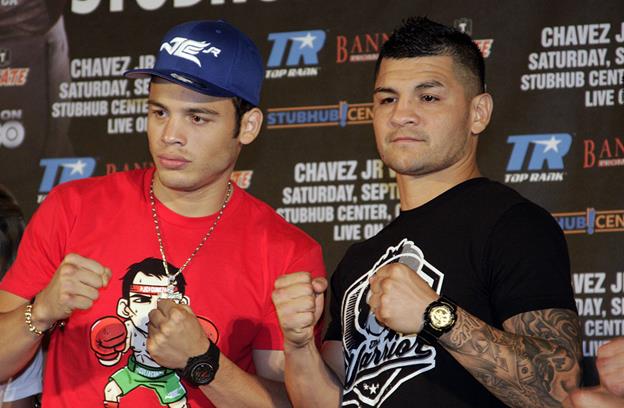


Manny Pacquiao as Macau, in Macau

Pacquiao_Rios_131124_005a
Saturday at Venetian Resort in Macau a passable imitation of Filipino welterweight Manny Pacquiao whacked about American Brandon Rios in a passable imitation of a Las Vegas superfight. Pacquiao won 11 rounds unanimously while looking less powerful and less precise – the margins by which he feels comfortable making an opponent miss have widened since December last, understandably – and less joyful than the man who once made prizefighting his enchanting spectacle.

Symmetrically enough, Manny Pacquiao looked like nothing so much as Macau, the knockoff host city of his first pay-per-view event in China. Pacquiao was not new in any way, not the labeling or haircut or faith tradition or commitment to extirpating poverty with yellow gloves; he was not the same-old Pacquiao so much as the same, old Pacquiao – much as Macau is nothing new but a taupe version of the Las Vegas strip, as if the deities of Nevada, Steve Wynn and company, picked the seventh day both for resting and constructing Macau, finding in their original blueprints a need to revise only scale, calculating quite rightly no one in China who’d seen Las Vegas would want anything but Las Vegas, and no one with a choice would pick Macau.

Pacquiao was a labor to watch at times, such a labor in fact Pacquiao’s body language afforded Roy Jones his chance to make a first insightful comment in 2013, remarking that Pacquiao appeared to be enduring his work more than whistling through it as Rios did, whistling even as Pacquiao’s fists whistled into every spot on his face. Pacquiao did not look spectacular Saturday. He fought like a talented guy who needs to fight for a paycheck and may have to for a long time yet, conserving his vigor and casting immediate glances the referee’s way soon as Brandon Rios, given the choice to fight every instant or be hurt quite badly by a man many times his better, hit him with a free hand during clinches.

The moment of Pacquiao’s rebuttal to the first incidence of this was probably the match’s most telling, as the Filipino did not remove himself, bounce enthusiastically, slam his gloves together, raise his hands, smile, then leap in the fray with a historic enthusiasm for combat – at all. Pacquiao affixed a grimace on his face and snapped left crosses from his southpaw stance hard as he possibly could, investing every punch with whatever he knows and everything he senses about the physics of leverage, trying to terminate Rios’ effrontery with something ferocious, concussing and spectacular. It was in some sense Pacquiao’s rendition of Floyd Mayweather’s reaction to being butted by Victor Ortiz.

It was the reaction of a man who now feels most every punch and finds himself forced even by an opponent limited as Rios into moments of empathy instead of so much seemly sympathy it once spilled from the corners of his mouth in gentle smiles for what men he stiffened. In his prime, a prime that is now passed, Pacquiao showed such sympathetic joy – “I’m sorry either of us has to go through this but since we agreed one of us did, it’s fantastic to be me and not you!” – an observer sometimes forgot Pacquiao was in a fight at all.

A sense of joy is what one now misses most during a Pacquiao fight; he is a very good and innovative Filipino southpaw, a Manny Pacquiao imitator still better at the act than those whom promoter Top Rank used to stage during Friday casting calls on Pacquiao weekends, but he shows nary the same enthusiasm or novelty. Today Pacquiao fights like taglines for others’ matches, “Revenge!” or “Something to Prove!” or “This Time It’s Personal!”; gone is the otherworldly quality he shone, the awe he felt others experiencing, the awe he too felt in rare moments of autobiographical reflection.

Pacquiao beat up Rios much the way he beat up Antonio Margarito three years ago in a fight friend and colleague Norm Frauenheim quite insightfully suggests was the one that changed Pacquiao’s trajectory – when has he looked sensational since? – and Frauenheim suggests this because he was with a comparatively small cadre of media at the postfight press conference, somewhere underneath Cowboys Stadium an hour after Jerry Jones said good riddance to boxing, when Pacquiao admitted the body shot Margarito touched him with in the sixth changed things: “I’m lucky to have survived that round.”

Rios won as many unanimous rounds against Pacquiao as Margarito did, and if Rios’ orbital bone is still intact unlike Margarito’s it is likely more attributable to Pacquiao’s diminished power than Rios’ defensive mastery, an approach to self-protection that reduced to his hoping to counter the fifth flush shot in a combination, which required hoping his opponent didn’t get bored with striking him after four clean shots – the way Pacquiao did several times Saturday. Rios was typically defiant after losing 11 rounds on sympathetic scorecards, chiding those who predicted Pacquiao would make a heavybag of him moments after Pacquiao made a heavybag of him.

Pacquiao did nothing Saturday against former 140-pound titlist Brandon Rios to make anyone think he might finally beat Floyd Mayweather, a man who had less trouble with 154-pound titlist Saul Alvarez in September. Instead, to make the sort of money he now expects and probably needs, Pacquiao will have to try his luck in a rematch with Timothy Bradley or his chin in a fifth fight with Juan Manuel Marquez, and if either those matches lands in Macau it’s doubtful anyone in Las Vegas will miss it.

Bart Barry can be reached at bart.barrys.email (at) gmail.com


The joy of Andre Ward

wardjansanders206
American super middleweight Andre Ward is the sole prizefighter I routinely review in slow motion, the only active world champion whose subtleties bring a continuing euphoria of discovery to me. Ward is, in his way, our sport’s most unpredictable fighter, and most complicated fighter – or did you think he cleaned out the once-competitive 168-pound division some other way?

Saturday found Ward at Citizens Business Bank Arena somewhere in California, unfastening Edwin Rodriguez, a man who, between the ordeal of his prematurely born children and voluntary participation in antidoping tests (whatever his surplus of bacne should otherwise indicate), has enjoyed years on our sport’s good-guy circuit, while fighting nobody. Saturday Rodriguez fought somebody, and even after missing weight by two pounds Friday, Rodriguez lost about 35/36 of the fight, or at best 11/12.

Andre Ward continues to improve, and that brings from the front of one’s mind a retrospective request that sends it on a skittering search for the last time a fighter fractionally as accomplished as Ward improved regularly as Ward does. One wishes to say Manny Pacquiao, from the introduction of “Manila Ice,” the righthand activated for his 2005 match with Erik Morales, an improvement and nickname that introduced many to trainer Freddie Roach’s fresh wit – when he found Shakespeare and lost an entire audience at a prefight press conference, warning Morales: “Beware the ‘Ice’ of March” – but one just as quickly thinks of the Pacquiao who fought his third match with Juan Manuel Marquez six years later, got summarily undressed in rounds 7 through 11, and tactically looked little better than his 2005 self.

Fighters improve in obscurity, like craftsmen of every kind, and obscurity is hard to encounter or embrace once a fighter begins to earn million-dollar purses. What improvements happen, generally, are feats of conditioning that enjoy characteristically dubious origins. Every other time a fighter’s new trainer says adjustments galore have been made, adjustments galore have not been made, even if words galore have been spoken to the fighter and media about adjustments galore, and reversions to form are inevitable.

Ward prides himself on being formless, in a nod to combat-fighting legend Bruce Lee, and one would quickly call that Ward’s greatest strength, if Ward didn’t have so many strengths. Ward does not do any one thing much better than any other thing, but whereas the cliché usually follows that he’s not great at one thing but good at everything, Ward is great at everything. He is Floyd Mayweather if Mayweather had spent the last decade matching himself with men who believed they might beat him. Every Ward opponent believes he can beat Ward, somehow, and that is extraordinary when one watches Saturday’s fight in slow motion – as Edwin Rodriguez is an order of magnitude below Ward’s station and could not have won a clean round against Ward had he missed weight by 20 pounds instead of two.

In a prizefighting ring, even at 168 pounds Andre Ward would beat most American heavyweights quite easily. Are those men physically stronger? Most, yes, but not by nearly so much as we tell ourselves, and Ward’s balance and understanding of his own body and other men’s bodies would quickly offset the physical advantages even much larger men might enjoy when the opening bell rang. What is lost quite often by television but incredibly apparent at ringside is Ward’s superior footwork, especially in clinches; it appeared in this column 14 months ago but warrants repetition: Ward frees his hands with his feet. He churns his feet, which churns his hips, which moves his shoulders and brings his hands out of other men’s grasps, often no matter how tightly they hold.

In this way, Ward is already superior to Mayweather, who utilizes clinches strategically, too, but does not fight out of them – breaks, occasionally, yes, but not clinches – so much as use them to sap an opponent of his poise till a referee’s intervention. When Mayweather is on, every defensive maneuver is a prolonged offensive one, but once Mayweather’s right knuckles start to throb under the leather and foam of his glove, his defensive moves become exactly and strictly that. Ward never finds himself in this position and certainly never gets put there by others. Though Mayweather is many times the fighter – read: the willing participant in a savage spectacle that requires being struck repeatedly to the head as a tariff for striking others more repeatedly – than his newly arrived fans and critics understand, it has been many years since he thrilled in the physical-confrontation element of prizefighting the way Ward does, many years since Mayweather so easily avoided the urge to take another man’s punches personally.

Edwin Rodriguez, introspective enough to realize a lottery ticket was needed to have a chance against Ward, sprinted from his corner at the opening bell Saturday and tried nearly to tackle Ward who dissuaded him both with parrying and with punching. Once the clinches began, Rodriguez struck Ward repeatedly behind the head, and Ward just as repeatedly retaliated and appeared happy to continue retaliating, howsoever worked best, until referee Jack Reiss interfered; it was a treatment of ref-as-annoyance that we rarely see anymore from favorites in prizefights. Much later in the match, after both men received warnings for infractions and lost two penalty points each, Rodriguez caught Ward again on the brainstem, and when Ward withdrew to reset and attack anew, Jack Reiss asked if he was OK, and Ward answered “Yeah” in a way that sounded surprised and annoyed by Reiss’ implication.

If middleweight titlist Gennady Golovkin is fractionally good as his advocates increasingly believe, a day will come when a Ward-Golovkin match will be anticipated by aficionados, if not gangsta rappers, more than Mayweather-Pacquiao was, and Ward and Golovkin will fight, and quite possibly more than once. Ward will win, and when he emerges victorious, he will attain, and eventually be recognized as having attained, a level of greatness for which Floyd Mayweather was ever temperamentally unprepared.

Bart Barry can be reached at bart.barrys.email (at) gmail.com


Nonito Donaire as fighter

Nonito_Donaire
CORPUS CHRISTI, Texas – There is a gorgeousness to the seashore that is difficult to debase, and yet this town nearly does it, lining its bay and neighboring stretches with gray oil rigs, not what cute rockinghorses play acupuncture on the state’s bare terrain, but edifice-like seascrapers that block the horizon in a way sometimes impenetrable. You see them on I-37 South, after two hours’ driving from San Antonio, and you go quickly from wondering when the hell you’re going to get there to worrying you are there. And you are there.

If this steamy spot, humid enough to make you sweat on its seawall even at midnight on November’s second Saturday, is not nearly the tourist-friendly locale its lodging prices anticipate, it is not a bad place at all for a prizefight, and even an apropos venue for the wonderful violence “Filipino Flash” Nonito Donaire and Vic “Raging Bull” Darchinyan visited on one another, Saturday, in a 10-round titleless scrap Donaire won by brutal stoppage in the ninth.

Donaire showed us he is a fighter – that was the thought that came to mind at the end of his rematch with Darchinyan, one that was significantly more competitive than hoped. Donaire was a skittish, super-talented but still skittish, young man when he iced Darchinyan more than six years ago and genuinely shocked the tiny world of aficionados in 2007 by running the so-called Raging Bull into a fit of his own menace, and a gorgeous left hook, that uncovered an unknown vulnerability in Darchinyan.

Donaire was in only his 19th professional match, and Darchinyan (28-0, 21 KOs) was about to make the seventh defense of his IBF flyweight title, four months after mercilessly beating little Victor Burgos to a coma, nine months to the day after blitzing and breaking Donaire’s older brother Glenn in six rounds. Donaire successfully endured 13 1/2 minutes of Darchinyan rage, a surprise to most, then put a counter left hook on Darchinyan, a southpaw in full self-hurl, left hand and body cocked in a defensively indefensible way. When Donaire put that left hand on him with precision and grace he sent the bully of all boxing bullies stumbling drunkenly about, down then up then down then legless then down again, smiting the mean little bastard Darchinyan was, a man whose spirit manifested itself perfectly in the sharp-featured scowl and hatred-contorted grimace he made whenever he punched the hell out of men best as he could.

Darchinyan, then, was a man whose promoter at the time, Gary Shaw, had to remind him to show an iota of decorum while paramedics tried to save Burgos’ life a few feet away, salvage what vital signs remained after Darchinyan finished savaging for 34 1/2 minutes an opponent who looked three weightclasses mismatched for a live-television tragedy that remains, today, an enduring companion for the word “preordained.” When Donaire iced that man, he did boxing, and humanity too, it seemed, a plethora of favors. Darchinyan, a bully to the last, accused officials of conspiring against him with an early stoppage – rather than thank what two sets of ropes twice kept him from careering into snack bars a hundred feet away.

Donaire became instantly an aficionado’s fighter, left his promoter soon thereafter and with Top Rank’s help squandered heaps of goodwill by appearing on “Pinoy Power” pay-per-view telecasts, occupying for a dwindling number of fans the ethnic on-deck circle while Manny Pacquiao was at bat. Donaire came out of hiding in 2011 in a most spectacular way, dropping with gorgeous precision, on HBO, Mexican Fernando Montiel, a prodigy of matchmaking who dropped a lackluster decision to Jhonny Gonzalez in 2006 but reemerged 57 months later as one of the sport’s most-feared men, somehow, just in time to get chloroformed by Donaire in five minutes. And HBO commentators stamped the moment with a hysterical overreaction that is become their trademark, declaring Donaire a prodigy of the first order.

Donaire squandered that goodwill, too, and quickly, with an attempt to leave promoter Top Rank just as its investment in him was about to go in the black. That got Donaire matched on HBO against Omar Narvaez, a Patagonian with no plans to get Montieled and all the wherewithal and toughness to ensure the increasingly prettified Filipino could make nothing of their 36 minutes together, turning in an aesthetic spectacle atrocious enough for a B-Hop execution. Donaire spent 2012 garnering incredible praise for voluntarily submitting to anti-doping tests and blasting through decreasing competition before being conclusively outclassed by Cuban Guillermo Rigondeaux in April – a promotional nightmare from which HBO and Top Rank still stubbornly refuse to awake.

All of which led to Saturday’s spectacle against Vic Darchninyan, Donaire’s second opponent of the year who hadn’t plans to lose to him and may have held him in contempt, too – or in Darchinyan’s case, loudly and plainly held Donaire in contempt in the pit of the Armenian’s charred soul. Along the way, too, too, Darchinyan remembered he once outboxed Mexican Cristian Mijares, then one of our sport’s craftiest wizards, and struck an oddly prudent posture in the opening minutes. But Darchinyan was outfighting and outboxing Donaire through eight rounds, Saturday – at ringside, I had Darchinyan up by three points, and two judges had a wider margin still – when Donaire golfed him with a counter hook he’d set the entirety of his fortune on. After that, he fixed a Darchinyan-like scowl on his mug and pounded the Raging Bull like he’d paid for it.

It was Donaire as fighter, a version we’d not before seen and might not see again, but a sight that wholly justified a five-hour roundtrip from San Antonio to this scruffy seaport.

Bart Barry can be reached at bart.barrys.email (at) gmail.com
Photo By Chris Farina / Top Rank


The “Axe Man” cometh: Nicholas Walters chops down Alberto Garza in four

Nicholas Walters
CORPUS CHRISTI, Texas – Jamaican featherweight Nicholas Walters calls himself the “Axe Man,” and in the opening round of Saturday’s final off-television fight, Walters showed exactly why, blasting Mexican Alberto Garza with shots square to the belly for whose power Garza appeared wholly unprepared. Those body shots began a performance eclipse for the Mexican that Walters completed soon after.

Jack-knifing a Mexican prizefighter in a title match is no mean feat, and yet Walters (23-0, 19 KOs) turned the trick with nearly every body shot he landed on Garza (25-6-1, 20 KOs), dropping him in round 4 with a punch that was on the belt-line and clean but ruled a low blow, and stopping him with a right cross to the head a few seconds later. The official line went: Walters by knockout at 1:57 of round 4.

Afterwards, an elated Walters made a number of menacing gestures for television’s benefit, all while smiling, and then went to Garza’s corner to check on his devastated opponent. Promoter Bob Arum, too, appeared elated, leaning over the top rope to say about Walters to those gathered at ringside: “He hits hard!”

REST OF UNDERCARD
The penultimate off-television match of the nine-fight card saw Detroit super featherweight Erick De Leon (6-0, 2 KOs) easily decision Phoenix’s Jesus Aguinaga (1-2) by three scores of 40-36.

Oscar Valdez
Saturday’s fourth match featured highly touted Mexican featherweight Oscar Valdez (8-0, 7 KOs) against Floridian Jesus Lule Raya (6-7, 1 KO), a man who did not know what his record did and who slugged-back at Valdez and took the Mexican prospect’s very best shots before succumbing to a Valdez right uppercut at 2:38 of round 5. Julio Cesar Chavez Sr., ringside as part of TV Azteca broadcasting duties, expressed impassioned praise for Valdez, raising his distinctive voice to shout over the din about Valdez’s technique and precision.

Before that came a six-round scrap between undefeated local bantamweight Oscar Cantu (6-0, 1 KO) and undefeated Georgian Roberto Ceron (3-1, 1 KO), two light-hitting prizefighters who nevertheless entertained the American Bank Center crowd with six spirited sets and a knockdown Cantu scored in round 4, en route to unanimous-decision scores of 60-53, 59-54 and 59-54.

The evening’s second bout saw highly touted Mexican welterweight, fighting by way of Oklahoma, Alex “El Cholo” Saucedo (11-0, 8 KOs) beat down Steven Hall (6-5, 6 KOs), a rugged Englishman who has made nearby San Antonio his home while enchanting its boxing fans. From the opening minute it was apparent Hall hadn’t ammunition enough to keep Saucedo at bay, with “El Cholo” turning over fully his every hook and counter, while Hall was only able to soldier on and collect a preordained beating that mercifully ended at 0:11 of round 3.

Before that California featherweight “Vicious” Victor Pasillas (6-0, 3 KOs) stopped overmatched Kentuckian Salvador Perez (2-3-2) with a nifty right-hook counter at 0:30 of round 2.

Opening bell rang on a sparsely occupied American Bank Center at 5:25 PM local time.

Photos by Chris Farina / Top rank


A new sort of pressure fighter

Gennady Golovkin (208x138)
Saturday on the small stage at Madison Square Garden, before a crowd of 5,000 – in a city of 8.3 million – a throng one euphoric commentator described as both “electric” and “jumping,” Kazakhstani middleweight titlist Gennady “GGG” Golovkin scored a corner stoppage over Brooklyn’s Curtis “Showtime” Stevens at the end of round 8, after dropping Stevens in round 2, and battering him for what 18 minutes followed. It was another fearsome beating administered another barely ranked opponent, by Golovkin, a beating to inspire still more fearless commentary.

One must wonder if Gennady Golovkin’s interpreter tells him what expectations now rest their weight on the boyish Kazakhstani’s juicy deltoids, the hope a television network now kindles that he will be an all-time great, whatever defensive limitations he might have, however late their campaign for his greatness started. If Golovkin is going only on his perception of what is said to him by HBO talent in fighter meetings, in English, a language he does not yet speak coherently – “OK, man, I respect box, I respect everybody,” he said after Saturday’s fight, “I respect everybody athletes, I respect everybody sports, you know, this is a sport for me, first, hey man, going to home just tell your parents just, ‘Hi, I come back, thank you’” – he may not grasp yet the gravity of others’ expectations, of the investment, financial and reputational, boxing’s most powerful network now makes in him. Golovkin likely does not, or he would fight with greater urgency than he showed Saturday against Curtis Stevens, a chinny man he struck nearly 300 times en route to a corner stoppage quite similar to the one he scored on Gabriel Rosado in January.

Golovkin (28-0, 25 KOs) just required 96 seconds longer to bring Stevens to justice than did Marcos Primera (20-28, 13 KOs), a man who has not won a single contest since stopping Stevens more than seven years ago, evidence of nifty matchmaking at least. That Golovkin’s official promoter, K2, has as its figurehead Wladimir Klitschko implies a cautious approach to matching a man whose unofficial promotional company, HBO, finds an extraordinary number of openings every telecast and ring announcement to mention Golovkin’s record-breaking knockout percentage as champion, which would be more meaningful, if not quite meaningful, if Golovkin actually were the middleweight champion, or at least if there were not already a lineal middleweight champion who was not Golovkin and whose reign as champion did not precede Golovkin’s by four months. Or does it violate decorum to mention such a thing in the throes of this, our fourth orGGGy of 2013?

Asked to call-out a postfight opponent, Golovkin wisely chose a limited fellow titlist already promised to another network and a champion already promised to Miguel Cotto. Good boy: when spring of 2014 finds Marco Rubio or Max Bursak on the bill, it will demonstrate only that Golovkin is so feared neither Peter Quillin nor Sergio Martinez had the courage to ply limited wares before Golovkin’s marketplace of pain – an absurdity in the case of Martinez, a man who fought but once at 160 pounds before decisioning the lineal middleweight champion of the world, before spearchiselling a guy, Paul Williams, who held boxing’s Most Avoided title after decisioning that moment’s Most Feared titlist, Antonio Margarito. Much as it may warm this instant to project fear on Martinez’s inactive fighting spirit, it’s not likely a guy who needed 500 punches to stop Rosado and Stevens on their feet makes “Maravilla” sleep fitfully on his leopard-skin satins.

So here’s a callout worth making: Andre Ward. Before we say once more about a guy who this year laid waste to two career 154 pounders, at middleweight, before April Fools’ Day, he will “fight anyone from 154 pounds to 168,” we might at least give him a tryout with Julio Cesar Chavez Jr., whom, it says here, Saturday night’s Golovkin would need 1,200 punches to stop, or else put him directly in the ring with Ward, a prizefighter who, we might remember for the sake of comparison, is 22 months younger than Golovkin.

The year Golovkin captured a silver medal in the Olympics, Ward won gold. And in the 25 months Ward beat Mikkel Kessler, Allan Green, Sakio Bika, Arthur Abraham and Carl Froch, winning the Super Six tournament, Golovkin beat Mikhail Makarov (10-0), Milton Nunez (21-1-1), Nilson Julio Tapia (14-2-1), Kassim Ouma (27-7-1) and Lajuan Simon (23-3-2). For all Golovkin’s prowess in sparring sessions, it is instructive to recall in the moment Golovkin was racing through Simon, Ward was preparing to beat Froch – as proper a juxtaposition of the words “untested” and “tested” as exists in prizefighting from 154 pounds to 168.

Golovkin is entirely effective at beating up men who retreat and nearly as effective at causing their flight. But even Curtis Stevens, whose eyes rolled grotesquely sideways when a Golovkin left hook bounced his head off the blue mat in round 2, was able to neutralize at least temporarily Golovkin’s attack, and place a few decent shots of his own, by muscling forward to a range at which Golovkin does not seem nearly comfortable as he is at middle distance.

Andre Ward is the current best in our sport at getting to an opponent’s chest, discomfiting him, and removing all traces of menace; in a match with Golovkin, Ward would clinch, headbutt, shoulder and infight, and he would snatch the spirit from Golovkin the very way Bernard Hopkins did to Felix Trinidad, at the very moment Trinidad was both more dominating and more tested than Golovkin is now. Or perhaps he would not; perhaps Ward, too, would succumb to Golovkin’s relentless fiststorm, justifying fully half the credit Golovkin enjoys for what fantastical beasts his partisans currently see him hypothetically slaying.

Bart Barry can be reached at bart.barrys.email (at) gmail.com



Golovkin and Stevens, and a battle to test those untested

Gennady Golovkin
Saturday on Madison Square Garden’s small stage Kazakhstani middleweight titlist Gennady “GGG” Golovkin will fight American Curtis “Showtime” Stevens, on HBO, in a match of the two middleweights most likely to rend with thoughtless ferocity any overmatched unfortunate set across from them. That is, somebody stopped by, say, Vanes Martirosyan at 154 pounds, as Stevens’ last opponent was, ought tremble at rumors of GGG’s approach. And any man knocked-out by Sergio Martinez last year, as Golovkin’s last opponent was, would do well not to be on Showtime’s side of town when night falls.

OK, the leavening of this match with a pinch of facetiousness was overdue, and so there it is, with a concession directly afterwards: Saturday’s fight will be quite entertaining as it happens, in a manner more suspenseful than dramatic, and should end with one man, more likely Stevens, unconscious before its 36th minute completes. Our sport needs more of that, much more, not less, and who cares, then, if Saturday’s champ is unproved and his challenger more so?

That Gennady Golovkin is untested is not a valid reason to dislike him or distrust his abilities. He appears to have a plethora of them and appears, too, to have come along at a fine time, one in which the depth of the middleweight division is hopelessly shallow. Golovkin has risen in all minds to no worse than second best in one of our sport’s storied divisions by beating up Matthew Macklin (1-2 in three fights before Golovkin), Nobuhiro Ishida (1-2 in three fights before Golovkin) and Gabriel Rosado (in his middleweight debut).

There is even talk among serious individuals of calling Golovkin’s rampage through Macklin and Ishida and Rosado – three guys Marvelous Marvin Hagler probably could have beaten in a handicap match, one on three, and Bernard Hopkins would have unmanned in one night, stopping Ishida on the undercard, decisioning Rosado in the co-main and inviting a red towel from Macklin’s corner in the main, all while donning a differently ridiculous mask for each – three quarters of enough to be considered 2013’s fighter of the year, if he is able to beat Stevens on Saturday. Golovkin is nearer his 32nd birthday than his 31st, and that may explain this urgency to place his name among boxing’s best, because it certainly has nothing to do with the strength of his opposition or even, to pause for honesty, his supposedly withering power.

Golovkin is technically sound and accurate, his footwork fine but not otherworldly, his defense average, but he is a friendly gent with a telegenic smile and a chance of graduating from the Manny Pacquiao School of English Conversation, with honors, before 2015. For goodness’ sake, though, here for comparison, is whom (Olympic gold medalist) Oscar De La Hoya had fought by the time he was the same age (Olympic silver medalist) Gennady Golovkin is: Genaro Hernandez, James Leija, Julio Cesar Chavez (twice), Pernell Whitaker, Ike Quartey, Felix Trinidad, Shane Mosley (twice), Arturo Gatti, Fernando Vargas and Yory Boy Campas. That is another way of imparting De La Hoya was already a Grammy-nominated, first-ballot hall-of-famer about to begin the silly season of his career at the age Golovkin is yet to fight an opponent who ranks with one of the names above.

Beating Curtis Stevens, which Golovkin is expected to do even in Stevens’ New York City, the collection of boroughs in which the Brooklynite once terrorized a few no-hopers of his own, will do little to elevate future historians’ estimation of GGG, though losing to Stevens, or even getting his chin checked by a guy once chin-checked by Marcos Primera, will cause no small discomfort for a gathering army of Golovkin partisans who describe the savagery of the Kazakhstani’s attack in terms frightful enough to remind readers of Lucas Matthysse – before September.

There is a standard enjoyed by Golovkin that is a wee bit inexplicable, too, in an era that sees every elite athlete tacitly suspected of PED use, as search engines looking to sate inquiries that marry Golovkin’s name with acronyms like VADA or WADA or USADA return nothing substantive. If our concern is with the perilous effects of pharmaceutically enhanced fists slamming against standard-issue craniums, should we not begin with a man widely considered the boogeyman’s boogeyman – or did athletic programs in the former Soviet Union, of which Kazakhstan was a part, eschew performance-enhancing drugs so spectacularly?

Aficionados desperately wish to discover an unknown entity, and be the ones to say they did, a sparring-session ghoul in need of only one chance at yesterday’s paper champion, just one, to set right the injustices that burn aficionados’ stomachs when they lie down at night, and such a beast’s necessary quotient of mysteriousness is aided, not obstructed, by taciturnity or simple incomprehension of what is asked him. Golovkin has all such ingredients in a batch of accomplishments that do not yet merit his name in a sentence with Sergio Martinez’s unless and until Martinez himself puts it there. Or have we learned nothing from the RJJ and Money eras, and what ultimate dissatisfaction comes of awarding hypothetical victories?

One cannot say yet what happens when Golovkin is hurt in a prizefight, though perhaps Saturday will reward our forbearance with a stiff left-hook counter or accidental headbutt, but if Golovkin’s next four opponents come no closer to revealing it than his last four, let us still our tongues about Floyd Mayweather’s handicapping before the muse again makes us sing Gennady Golovkin’s praises.

Bart Barry can be reached at bart.barrys.email (at) gmail.com
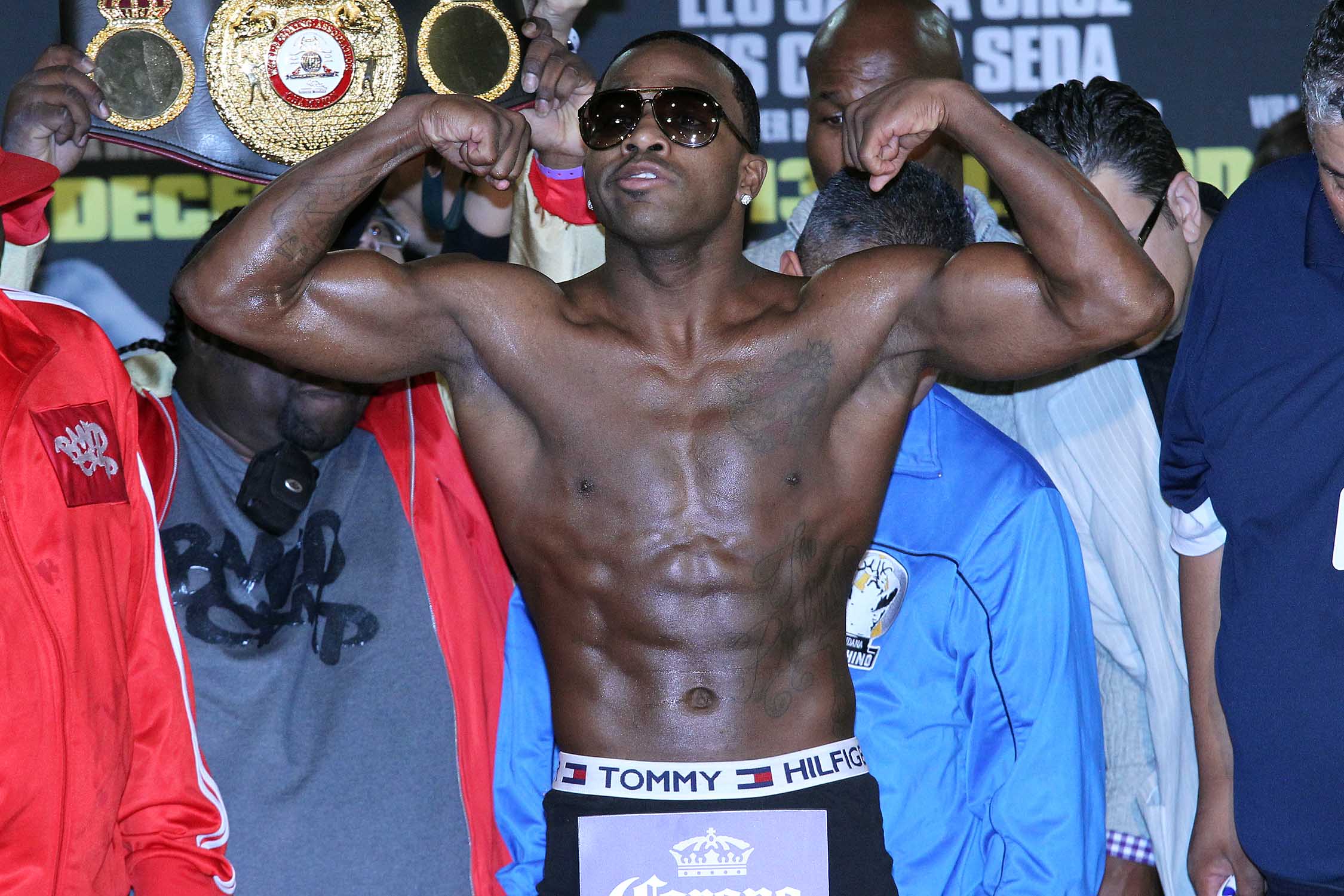


Mike Alvarado, and the brutal beating administered him by an amiably off-kilter Siberian

download
DENVER – Afterwards, when “Mile High” Mike Alvarado, still adorned in throwback-Broncos orange and blue, an egg-shaped contusion over his right eye, claimed he considered his own health before round 11, before somehow indicating to referee Tony Weeks he could not continue, from his stool, he was being honest but not telling the truth about how his match with Russian challenger Ruslan Provodnikov ended in KO-10. What Alvarado hoped to do with such a claim, instead, was regain a dash of control from a moment of combat that snatched it from him verily and placed his vanquisher, an amiable, off-kilter Siberian, near the very top of boxing’s tacitly kept Most Feared list.

At the conclusion of round 10, after a closing 10 seconds in which every punch Provodnikov struck him with, wherever he struck him, visibly pained Alvarado, making him wretched and fragile, Alvarado stumbled to the nearest corner, the wrong one, draped himself over the turnbuckle and began a search for handlers. Shann Vilhauer, Alvarado’s chief second and a man who used the moments after his charge was stopped either to fire a parting shot in claiming Alvarado devised a strategy for himself Vilhauer did not approve, or try to keep himself in the inevitable makeover-training sweepstakes – “back to basics!”, “remind Mike how he got here!” – had to throw a net of words and arms over Alvarado to haul him across the ring to where a man of any lucidity whatever should have gone unassisted.

Vilhauer was trapped in a moment, a combination of thinking his man was unstoppable by others (Brandon Rios, remember, never felled Alvarado) and worrying his future income stream would be stopped by stopping a match that stopped needing to continue at least 70 seconds before, and so he went about his between-rounds chores like nothing much had happened. Tony Weeks brought adult supervision to the moment, forcing his way deeper and deeper in Alvarado’s corner, forcing Alvarado’s attention for the prizefighting equivalent of “blink once for no and twice for no.”

The end brought Provodnikov unfiltered glee and most of the other 7,000 or so folks gathered at 1stBank Center a thing that tilted reliefways in a disappointment-to-relief balance. Though 1stBank Center is not in this city proper, it is in a suburb of this rough, weird, enjoyable metropolis, a place whose young residents seem not potheads so much as shroomers, residents of a place that set for itself this goal while extending Denver Art Museum: Erect the first great building of the 21st century. And with architect Daniel Libeskind’s awkward genius, city planners’ audacity, and nearly as many obtuse angles as titanium panels, DAM met its mark with the Frederic C. Hamilton Building.

Provodnikov beat to spiritually unrecognizable this city’s native son, a Denver cowboy, a fearless hombre from the 303, tatted and rapsheeted, one who wore open, bottle-shard facial wounds while he unmanned Brandon Rios in March – the sort of person who needlessly carries within himself a very dark place and visits regularly with those who know its coordinates. Provodnikov found the dot of fragility within such a man’s soul, the camouflaged doorway that hides a cavern filled to bursting with betrayal and violation and vilest injustices, and then smashed that dot till it became a hole gaping enough to put an eight-ounce glove through.

The fight’s fortune was told in its first minute, Saturday, when Alvarado’s demeanor was far too stiff for a titlist in his 36th prizefight, and Provodnikov’s demeanor was not nearly stiff enough for a man gone to another’s hometown in pursuit of a first meaningful title. Provodnikov’s first right cross made Alvarado wince in a way that made Alvarado’s intelligent face – and it is that, however he’s learned to mask it – impart a thought like: Yup, this is going to be bad as feared. That Alvarado’s back was to his corner when that wince came is all that might explain Shann Vilhauer’s later contention Alvarado, buried in an avalanche of his own press clippings (and cheers to that quaint analogy), was wrong to devise a defensive strategy in training camp.

Alvarado knew instantly he would not be able to win any fair exchange with Provodnikov, a man whose vicious assault of Mile High Mike bore no sign of animosity whatever, a man who probably would have gone so far as to stop punching Alvarado had the champ told him he needed a few seconds pause to weigh options, a man Pacquiao-esque in his enchantment with knuckles sunken in flesh. An instant after Alvarado’s instant calculation was complete Provodnikov got word, an instant message of sorts, Alvarado was removing from consideration fully half the offensive tactics for which Provodnikov prepared, and by round 2 the Russian was marching straight at Alvarado, feet squared in the international symbol for “I’m willing to be hit!”

Alvarado, a famous athlete in these parts, tried to switch identities on the fly, becoming a southpaw, hopping forwards with lead uppercuts, belligerently dropping his left hand in homage to the righthand-feasting way that got him stopped by Brandon Rios a year ago. It confused Provodnikov, some, enough anyway to let Alvarado get a few licks in, with this caveat: Provodnikov knew if he could merely touch Alvarado 10 or so times every three minutes, he would break Alvarado before 36 of them were up.

A right cross to Alvarado’s body in round 8 pained him too deeply to smile or shrug at; had someone stopped the match at that instant, before the two knockdowns, before the six minutes of assault that succeeded them, it would have served a buffet of vicarious rage to boxing’s legion of malcontents but not altered the outcome. Alvarado was, after that punch, indulging a profoundly masochistic impulse, not fighting. Bless Tony Weeks for temporarily sparing the man from his troubled self.

Bart Barry can be reached at bart.barrys.email (at) gmail.com
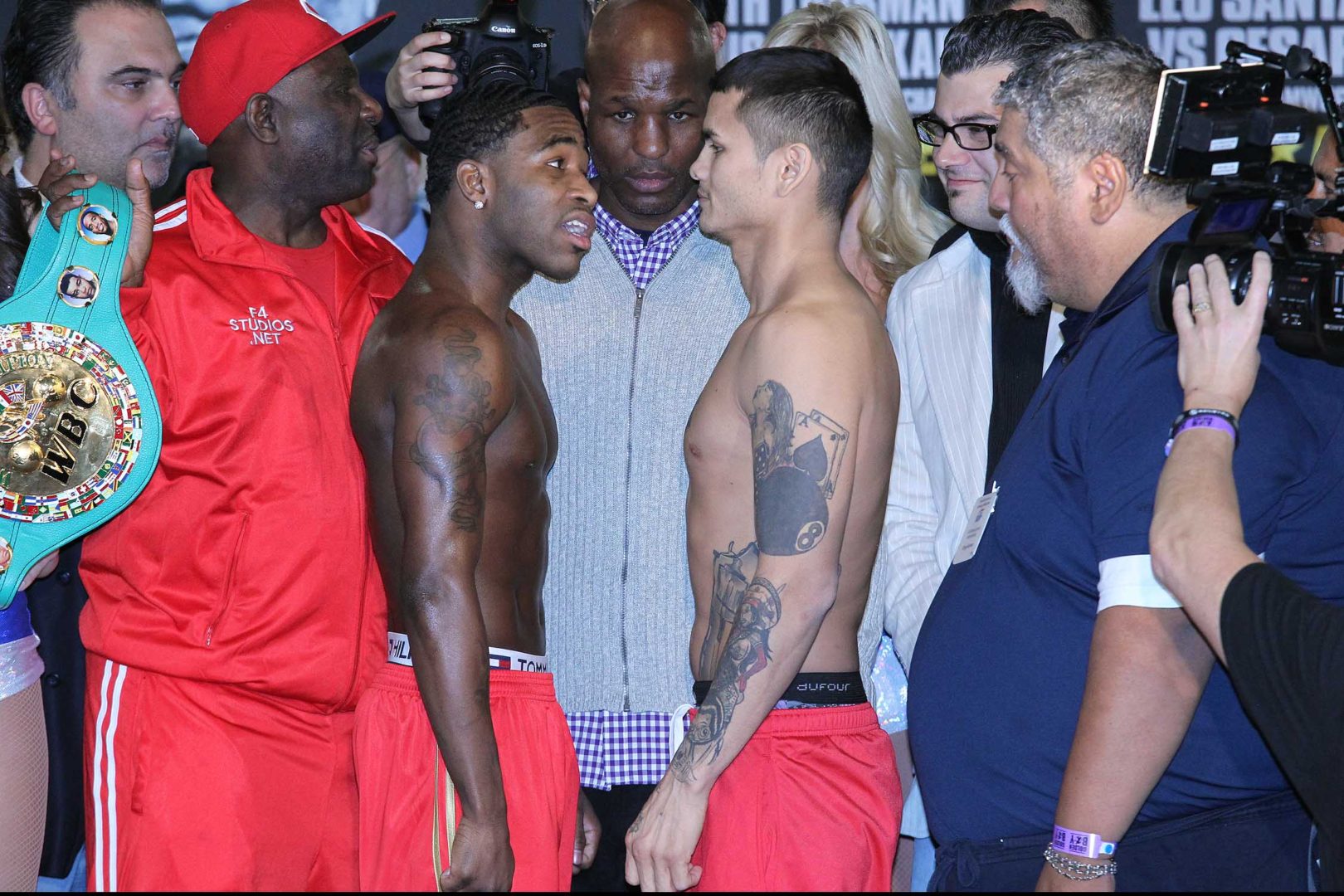


Denver destruction: Provodnikov does it the right way in 10

DENVER – Among boxing’s myriad of adages is the one that says you must beat the champ – meaning beat the champ down – to take his belt. Russian Ruslan “Siberian Rocky” Provodnikov did exactly that to American light welterweight champ “Mile High” Mike Alvarado, stomping into Alvarado’s hometown and breaking his spirit.

Saturday at 1stBank Center, Provodnikov (23-2, 16 KOs) did the previously unthinkable before a soldout crowd of more than 7,000 Coloradoans, all on hand to cheer Alvarado (34-2, 23 KOs), punching the Coloradoan to a point of submission, dropping him twice and making him thrice refuse referee Tony Weeks’ inquiries about fitness to continue after round 10.

“I asked Mike two or three times, ‘Do you want to continue?’” Weeks said afterwards. “And Mike answered each time, ‘No.’”

“That’s how you become a world champion!” an elated Provodnikov said through his translator. “I went to his hometown. It was a tough fight, I knew it was a tough fight. That is now you become a world champion.”

From the very first round, one man’s punches told more than the other’s. Alvarado, who began tight, hands too high, skips too skittish, was moved sideways by Provodnikov’s hooks, even when Alvarado blocked them. Right hands from the Russian appeared to make Alvarado’s face wince before the first 90 seconds were complete.

“He’s the hardest puncher I’ve ever faced,” Alvarado said after being beaten.

Alvarado collected himself and made rounds 2 through 7 considerably more competitive than the first, switching styles almost constantly, from orthodox to southpaw, from uppercut specialist to defensive specialist, dropping his lead hand at times, leaping in with lead uppercuts at others. The boxing approach ultimately did not serve Alvarado.

“It just wasn’t Mike’s night,” said his trainer, Shann Vilhauer. “He was too defensive. He’s been reading his own clips since the (Brandon) Rios fight, thinking he’s this great boxer. This guy was tailor-made for him, but he was too defensive.”

In round 8, what appeared to that point a competitive scrap became a destruction, as Provodnikov’s fully committed punches cracked the façade of Alvarado’s poise. Twice Alvarado went down, waited for Tony Weeks’ count to near 10, touched his own chest then rose to fight on.

But by the 10th round, Alvarado, a large egg-shape swelling his right eye shut, was a broken man, walking at the round’s completion to the wrong corner, having to be fished from across the blue mat by trainer Shann Vilhauer. Referee Weeks went to the corner behind them and confirmed Alvarado had neither the will nor the ability to continue.

“I made him not want to fight me anymore, and that is the best outcome I could think of,” said Provodnikov. “After the eighth round, I just needed to stay calm.

“Mike Alvarado. He’s a real man, a real world champion.”

JUAN DIAZ VS. JUAN SANTIAGO
When Juan “Baby Bull” Diaz is at his best, every round bears a close resemblance to its predecessor. In Saturday’s co-main event, Diaz was at his best.

Making the second appearance in a nascent comeback, Diaz (38-4, 19 KOs) decisioned local lightweight Juan Santiago (14-11-1, 8 KOs) by lopsided unanimous scores of 97-93, 99-91 and 100-90.

“It felt great,” Diaz said of his victory afterwards. “I needed the rounds. It was a good fight.”

Diaz fought in his typical, self-possessed way, never overcommitting to any advantage, never fretting at an eaten punch, focusing on his opponent’s chest, measuring the patterns of his torso, relentlessly punching, regardless of effect. Saturday, though, he did a bit more jabbing than has been his custom.

“I believe that I have one of the best jabs in boxing,” Diaz said. “It’s undiscovered, but I believe tonight it showed.”

Diaz spun his shoulders, every left hook to the body opening the possibility of a right to the head, until Santiago, like so many men before him, lost his effect. For a beaten man, though, Santiago did not fight with reservation – often finishing rounds with a flurry and greeting his local fans with a raised left glove. Nothing Santiago did was enough; he was outclassed from the beginning but did his job, giving Diaz’s continuing comeback, and new jab, a firm chin to slam against.

“When I fight the best guys in boxing, (the jab) will come in handy,” Diaz said.

UNDERCARD
The final non-swing portion of the undercard saw two local welterweights do battle, as Denver’s Daniel Calzada and Longmont’s Carlos Marquez made the sort of entertainingly violent match that can happen when limited local fighters, guys who’ve seen one another round the gyms for years, fight for bragging rights, not titles. Each guy fought without regard for personal safety for all six rounds of a match Calzada won by majority decision: 57-57, 59-55, 58-56.

Accompanied to the ring by his famous uncle Acelino “Popo” Freitas, undefeated Brazilian super featherweight Vitor Jones de Oliveira (1-0-0-1, 1 KO) – and man whom Banner Promotions publicist Marc Abrams says “will transform boxing” – brought early and merciless ruin to local fighter Martin Quezada (2-8, 2 KOs) in Saturday’s fourth fight.

Possibly the best four-round fight in recent Colorado history happened before that, when local super featherweight David Escamilla (3-0, 1 KO) matched up with Mexican Jair Quintero (2-1-1), in a back-and-forth affair that saw each man rocked and winded at various moments of their 12 minutes of combat. Ultimately, the local prizefighter prevailed by three unanimous-decision scores of 39-36, but the match was closer than its scorecards would indicate.

The evening’s second match saw undefeated Puerto Rican super featherweight Starling Cordero (7-0, 3 KOs) race out his corner and race directly through overmatched Mexican Abraham Rubio (3-2-1, 1 KO), stopping him at 1:39 of round 1, after dropping him once and striking him with a large number of uncontested blows.

Saturday began with a heavyweight mismatch between Iowan Donovan Dennis (9-1-0-1, 7 KOs) and Hugo Arceo (3-1-1, 3 KOs), of nearby Boulder, and ended with one too many felled mouthpieces for Arceo, giving Dennis the win by knockout at 2:33 of round 3. Despite being staggered once in the second round, Dennis generally clobbered Arceo, dropping the face-bloodied Coloradoan, and his mouthpiece, numerous times.

Opening bell rang on a sparsely occupied 1stBank Center at 5:28 PM local time.


Alvarado and Provodnikov make weight, and ready to make something sensational

Mike Alvarado
DENVER – The crowd was over capacity at the weighin, and so was light welterweight “Mile High” Mike Alvarado, the hometown favorite. A little bit of vigilance got the crowd back under capacity, and it worked for Alvarado’s weight too.

Friday at Diego’s Mexican Food & Cantina, a medium-sized eatery in the center of this city, Alvarado (34-1, 23 KOs) and Russian challenger Ruslan Provodnikov (22-2, 15 KOs) each made weight, eventually, for their Saturday title fight at 140 pounds. Provodnikov needed only one try to weigh 139.8. But Alvarado marked 141.1 on his first try, a pound over the contracted weight for their title match, left the restaurant, returned two hours later and marked 139.8.

Vulnerability is an odd thing to express in the leadup to a match considered by those who should know a certain candidate for 2013 fight of the year, one that pits Alvarado, whose match a year ago this week with Brandon Rios led 2012 fight-of-the-year polling till December, and Ruslan Provodnikov, whose March match with welterweight champion Timothy Bradley leads this year’s polling, but vulnerability is the very element both men showed in a recent episode of “Face Off with Max Kellerman” – admitting to fear and consciousness of how much their profession imperils them.

Odder still, this profession of fear, as neither man fights like he is aware there are consequences for collecting another man’s punches to the body and head. Alvarado is athletically gifted as any prizefighter, capable, that is, of employing reflex and coordination to offset other men’s offenses, serving thrice the abuse he collects, but he eschews prudence at most turns, planting instead and trading with men who haven’t another recourse. He did not do this at the beginning of his career, when he was on a short list of his promoter’s favorite prospects, but he does today because he is now 33 years-old, no longer fleet of foot as before, and watching what appear to be few grains of sand in an hourglass before his fighting- and lifestyles do him in.

Provodnikov understands the science of prizefighting, too, and understands them well enough not to employ them when to do so might surely benefit an opponent. Provodnikov figures to be the larger man in Saturday’s match, coming, as he is, down from 147 pounds to contest Alvarado’s light welterweight title.

But Alvarado struggled more mightily to make weight, needing almost exactly the allotted two hours after Friday’s official weighin to come in below 140. It is unlikely weight will affect either fighter; both men looked healthy and good from Friday’s cantina, a venue that was warm with bodies and entirely overstuffed with them as well, causing employees to begin citing fire marshals and capacity restrictions 15 minutes before the first fighters took the scale. Diego’s was long, not wide, and with barely a full door from which celebrities might escape, those unable to maneuver their ways inside had the consolation of HBO’s broadcasting crew and former champions like Juan Diaz and Acelino Freitas forced to pass within arms’ reach, availing themselves to many more photos than likely planned.

Boxing comprises many fights that should entertain but might not, last week’s match between Timothy Bradley and Juan Manuel Marquez was a timely example, but Saturday’s fight is not one of those. Rather Alvarado-Provodnikov is a rarest spectacle: A fight that cannot help but be excellent before a partisan and boxing-starved crowd.

Doors open at 5:00 PM local time. 15rounds will have full ringside coverage.