“BOX: The Face of Boxing” by Holger Keifel with Thomas Hauser


Photographer Holger Keiffel has chronicled the living face of boxing in lush black and white portraits which glare off the page, offering a stark but heroic glimpse into the heart of the cruelest sport through the men who have learned its cruelest lesson:

Boxing, ultimately, is Tragedy. Only the how and the when of it remain to be seen.

It shows in their faces, and it is faces that Keiffel focuses on: “I don’t style,” he says. “I document. I want an honest face.”

Keiffel got what he wanted. Boxers fresh from the fight, and many long retired— managers, trainers, promoters, writers, refs and TV announcers— all assembled in close to 200 pages and over 300 photographs accompanied by well chosen quotes from the ringmen themselves.

The younger boxers, often covered in tattooed talismans of one sort or another, gaze defiant, but show a tempered promise born of loss and perhaps the toll of the boxing “business” itself. The course not fully run, many seem to be whistling in the graveyards of their own pyrrhic sacrifice.

The older boxers, many of them former champions, show an unapologetic splayed nose pride in having fought the fight—despite knowing the answer to the tragic questions—their own how and whens already a part of boxing’s well documented history.

And maybe therein lay the quiet dignity in the faces of men like Jake LaMotta, Joe Frazier and Jose Torres. The notion that marked as they may be, they have also left their mark.

Boxer Vito Antuofermo quips in the quote which accompanies his rugged but handsome mug: “Someone counted them all up and told me that I had 345 stitches in my face. That’s a record or something.” But it is not the only record he holds. Antuofermo is the former Middleweight Champion of the World. A pedigree shared with the likes of Billy Conn, the Sugar Rays— Leonard and Robinson— Jake LaMotta, Marvin Hagler, the great Stanley Ketchel, and elite boxers who answered the 160 pound question all the way back to the late 1800’s Jack “The Nonpareil” Dempsey, and beyond. Antuofermo beat the man who beat the man….

With each of us given a lifetime to do what we will, few can boast of such accomplishments.
In the quote which accompanies an alarmingly older but fashionably clad Joe Frazier, he says
“That night at Madison Square Garden; fifteenth round when I put Ali down. I stood where no one else ever stood.”

You can see it in his face.

The photos were taken at times in studio, but most often on the fly at “press conferences, weigh-ins, and fights, using a Mamiya RZ camera with no computer gimmickry.” The book is described by Thomas Hauser, the award winning boxing writer who penned Muhammad Ali’s official biography and contributed text to Keifel’s handsome volume (Chronicle Books, 29.95), as “the most important collection of boxing portraits ever assembled.” I’d have to agree. For the boxing fan, the book is an indispensible nugget of almost voyeuristic eye candy. But more than that, like all great portraiture, Keifel’s work is an intimate study in what it means to be human.

But if boxing is, as Joyce Carol Oates has noted, “a celebration of the lost religion of masculinity, all the more trenchant for its being lost,” this is what it looks like.

Pebsham School’s farewell.

Bexhill Observer (Bexhill, England) July 26, 2007 ON an afternoon when a gift-bearing model helicopter can drop from the ceiling anything can happen.

School assembly on the last day of summer term is a special occasion in any school.

At Pebsham Community Primary School Tuesday afternoon had added significance.

Not only was the school saying goodbye to its Year 6 leavers but to two popular teachers.

Assembly which started with a hearty rendering of the Pebsham School Song “We are the children of Pebsham School…” ended with an action-packed YMCA – retiring teacher Sue Targett’s favourite number.

Paul Girardot’s long-held ambition is to fly in a helicopter. When he was invited to untie a cord a model helicopter dropped from between ceiling drapes. In it was his farewell gift – a ticket for a flight. here cool maths games

A day which had started for the Year 6 leavers with a service at nearby St Michael’s church, conducted by the Rev David King, ended with their shirts being signed by their school friends.

An exchange of cards is an end-of-term tradition at Pebsham and budding artists had been hard at work.

There were cards aplenty for leavers of all ages and “No. 1 Teacher” sashes for the departing staff members.

Chairman of governors Jeremy Betts said of Mr Girardot: “He has worked really, really hard. He is leaving to be deputy head of a school in Oxfordshire.

“You have done tremendously well so our sincere congratulations and best wishes for your future and thank you for all you have done for Pebsham School.” In turn Mr Girardot announced a gift for the school. Soon a giant chess set would be delivered, an educational aid he hoped they would all enjoy.

“I just want to say thank very much to everyone I have worked with and all I have taught because this is such a lovely school.” The chairman explained that Mrs Targett was moving to live near her family after having taught at the school since soon after it opened. see here cool maths games

He told her: “We are going to miss you terribly. We thank you for everything you have done for us .” Presentations included flowers and a wicker basket packed with gifts.

Headteacher Pat Strickson said of Mrs Targett: “She has been so supportive of our school for so long.

“When I came to the school three years ago she told me ‘You have got to really LOVE it…’ “And I do – what a lovely place and what lovely children we have. We are going to miss her greatly.

“Thank you for everything you have done for all of us.” Summing-up her 40 years of teaching, Mrs Targett said: “I decided I wanted to spend my days having fun in a school with lots of children … I want to thank you all. The whole purpose of being a teacher is being with children – and you have been wonderful children. We are in a beautiful place with wonderful people to help you and a fabulous headmistress.” Her presents for school Kestrels and Wrens classes were boxes of maths games.

The Year 6 leavers went home with lasting mementoes of their time at Pebsham School, their art work framed and signed and the words of Mrs Targett’s favour ite school prayer ringing in their ears.


A League is Born


In what may be the most ambitious move in boxing since an Attorney General told Frankie Carbo that the sport would be better off without him, a world league has formed.

And it pays. Scheduled to begin in November of 2010, it calls itself the World Series of Boxing (WSB) and with 12 teams scattered across the globe in places like Azerbijan, China, Los Angeles, Paris, India and Milan it may, unlike its Americentric baseball namesake, actually live up to that billing.

There are three divisions: Europe, Asia and the Americas, with four teams in each—though the exact location of the would be teams has been somewhat fluid. Sites in London, New York, Chicago and Boston have fallen through, but the current lineup of American cities does include Los Angeles, Miami, Mexico City and Memphis, Tennessee.

Boxers in the WSB are required to sign three year contracts and salaries are said to range around $25,000 per year, with an additional $5,000 for each win, $1000 for each loss—though there is talk of adjustments to take account of the cost of living differences across the world that sound like significantly less dollars if you live in Bombay: “We have been struggling to regulate salaries and a salary cap. India’s money is worth different from the United States and France. It will be about $25,000 a year not including prize money per boxer,” said a Mr. Ivan Khodabakhsh, the Chief Operating Officer of the WSB in a recent interview. There is also talk in some of the dailies about a pay ceiling of $300,000—but it is not clear to me how one would get there from here—unless the championships pay big.

Participation is limited to boxers who have yet to fight a pro bout, and, with the league owned primarily by the International Boxing Association (AISA)— the governing body of Olympic boxing—perhaps not surprisingly, participation will not exclude a league boxer from later fighting in the Olympics. The league is a for profit affair— or at least it seeks to be.

The bouts are scheduled for 5 rounds, three minutes apiece without headgear. Scoring is on a ten point must system and will be visible after each round. There will be no draws and Olympic anti-doping rules will be in effect.

The four teams in each division are scheduled to engage each other (teams or not, no one “plays” boxing) four times during the course of the regular season, which will run from November 19th to March 19th—which equals out to twelve matches over the course of 14 weeks. The top two teams from each division enter the playoffs, culminating in a championship match scheduled in the Chinese city of Macau—gambling capital of The East.

The league will also hold individual championships—7 rounds— at each of its only five weight classes. That’s right, only five: bantamweight , 54kg/ 119lbs; lightweight 61kg/135lbs; middleweight 73kg/160lbs; light heavyweight 85kg/187lbs; and heavyweight 91kg/201+ lbs. The five individual champions will be awarded automatic berths into the Olympics.

Having seen Olympic boxing, or more pointedly, the judging in Olympic boxing, I’m a little reluctant to throw my proverbial hat into the league’s ring. But truth be told, I’ve seen judge’s cards in a number of pro fights these last few years that might have made even Frankie Carbo blush. Having said that, if there were a match anywhere closer to Newark, New Jersey than Memphis, Tennessee I’d find a way to get ringside.

Exercising what the poet Keats called “negative capability,” or the capacity for accepting uncertainty and the unresolved (yes, I’m thinking about the judges again), I find myself intrigued and heartened by the prospect of the WSB.

Even beyond the fact that winning will be at least five times better than losing for a boy wearing gloves, the league has a number of things to recommend it— not the least of which is that it’s the culmination of an idea uttered back in the 1950’s by the denizens of Stillman’s Gym and the Neutral Corner, the famous New York boxing bar a few blocks down from Stillman’s.

The great A.J. Liebling wrote:

“The immediate crisis in the United States, forestalling the one high living standards might bring on, has been caused by the popularization of a ridiculous gadget called television. This is utilized in the sale of beer and razor blades. The clients of the television companies [advertisers], by putting on a free boxing show almost every night of the week, have knocked out of business the hundreds of small-city and neighborhood boxing clubs where youngsters had a chance to learn their trade and journeyman to mature their skills. Consequently the number of good new prospects diminishes with every year, and the peddlers’ public is already being asked to believe that a boy with perhaps ten or fifteen fights behind him is a topnotch performer. Neither advertising agencies nor brewers, and least of all the networks, give a hoot if they push the Sweet Science back into the period of genre painting. When it is in a coma they will find some other way to peddle their peanuts.”

Fifty some-odd years later with Liebling’s coma circuit complete, the Heavyweight Champion of the World is fighting only on the internet here in the United States. Peanuts peddled decidedly elsewhere.
And the managers, trainers and ex-fighters at Stillman’s and the Corner? Liebling writes:

One school of savants holds that if the television companies are going to monopolize boxing they should set up a system of farm clubs to develop new talent. Another believes the situation will cure itself, but painfully. ‘Without the little clubs, nobody new will come up,’ a leader of this group argues. ‘The television fans will get tired of the same bums, the Hooper will drop, the sponsors will drop boxing, and then we can start all over again.’”

And maybe that’s what the World Series of Boxing is: a system of farm teams looking to start all over again.

Rocky Graziano’s manager, Irving Cohen, put it well: “Fighting is like education. The four-round fights are elementary school. Six rounders is high school. Feature bouts is college, but nowadays without the small clubs we got too many boys in college without sufficient preparation.”
So maybe we can look at the WSB as a kind of global prep school— teaching sweet science.


Floyd Mayweather, Charlie Goldman and a Ring Education


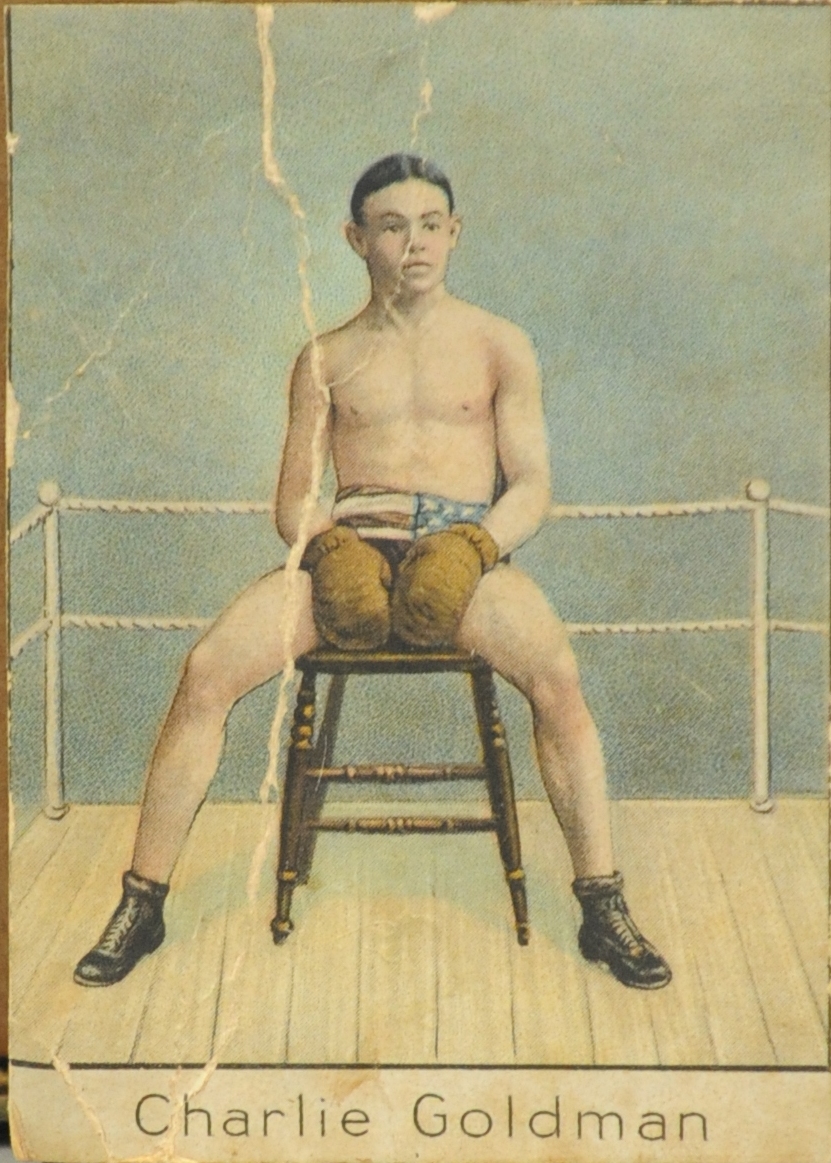
We are, in a sense, in between bouts at the moment and I find myself thinking about Charlie Goldman and the rantings of Floyd Mayweather, Jr. Best known as Rocky Marciano’s trainer, Goldman fought as a bantamweight and pushed his mashed nose into more than 400 fights back around the early 1900’s.
Sporting a derby hat and always good for a quote, when asked about women and marriage, Goldman replied that he preferred to live “a la carte.”

In a picture which graced a trading card from the Mecca Cigarette Company, 1910, Goldman looks small and tired as he rests, legs splayed, on the stool in his corner—which is propped on what appears to be a wooden plank floor. It is not surprising that he looks tired, roughly 22 years old in the card, by his own account Goldman began to box professionally at the age of nine. A citizen of Brooklyn, he fought Terrible Terry McGovern’s brother in a series of three round smokers orchestrated by Sam Harris—George M. Cohan’s partner in the theatre. Of the fights, Goldman is quoted by the great A.J. Liebling as saying: “We learned a lot that way… they always had a bet going so you had to take it serious.”

Liebling goes on to give a bit more of Goldman’s chronology: “By the time he was fourteen he was traveling around the country, arranging his own fights and collecting his purses whenever possible.”
With what were said to be brittle hands (who can know, 400 fights!), Goldman never won a championship himself. He did, however, train five.

When asked about the problem of a lack of “artistic competence” in boxing, many during Marciano’s reign blamed TV, which had killed the farm system of the neighborhood fight clubs. Goldman, however, told Liebling that

“It is compulsory education,” he says. “You take a kid who has to stay in school until he is sixteen, he is under a disadvantage. All the things he should have learned to do when he was young he has to start at the beginning. How to move his feet, slip a punch, throw a hook—like finger exercises on the piano. A fighter shouldn’t have to think about those things, he should think about how to use them. A kid learns them before he begins to think about girls, they are the most important things in the world to him. Sixteen is too old, especially the way kids are today.”

Norman Mailer, speaking of the great boxers of his era, wrote of a kind of non-intellectual or kinesthetic intelligence—a brilliance of the body—a knowing of the nerves. Mailer also suggested that intellectual learning could impede that bodily brilliance— books and words essentially getting in the way of synaptic cognizance.

Or perhaps it’s just a zero sum game: time doing homework is not time in the ring, and vice versa.
Either way, Floyd Mayweather, Jr. has been boxing since he was 7. And it is, perhaps, safe to say that his recent comments about Manny Pacquiao prove that outside the ring, he simply was not the victim of a compulsory education.


Margarito, Capetillo and the Not So Long Arm of the Law


With all due apologies to T.S. Eliot and Carlos Acevedo, boxing is the cruelest art. But it is also, strictly speaking, a series of assaults and batteries— with the law suspended for the moment between two consenting adults who wish to prove a point.

As Antonio Margarito, suspended from boxing by the California State Athletic Commission, prepares now to face Manny Pacquiao in Texas, it seems worthwhile to spend a minute or two considering the law as it relates to boxing, and how it didn’t relate to Margarito and his trainer, Javier Capetillo. I say this because I’m still not entirely sure why at least Capetillo has not faced criminal charges. More specifically, assault with a deadly weapon.

Before his fight with “Sugar” Shane Mosley for the Welterweight Championship in California, Mosley’s trainer discovered what was later found by the California State Athletic Commission to be a “plaster-like substance” on the knuckle pads of both of Margarito’s hand wraps. The knuckle pads were seized by the Commission and Margarito’s hands were re-wrapped in time for him to be beaten to a pulp by Shane Mosley. No harm, no foul? Not at criminal law. If you shoot at someone and miss, the law doesn’t reward you with a free ride for bad aim. Attempt is a crime.

As a disclaimer, although I’ve passed the New York Bar I have not taken the California Bar and have no intention of doing so. But much of law reduces to Common Law, and despite some terminology differences and statute interpretation particular to each state, a general analysis is possible. So here we go.

The Law

Assault and battery are both tortious offenses (i.e., you can be sued for doing it if the other party experiences damages) and criminal offenses (i.e., the state can press charges against you for doing it). In some instances it can be both.

Within the consent of the boxers to not file suit, and the consent of the state to not press charges, are the agreed upon rules. Between the boxers this is contract, between the state and the boxers this is law. Which is to say, all that stands between boxers and lawsuits and jail time and fines are their contracts with each other and the rules of boxing. One contracts to fight another man under certain conditions (e.g., at a certain weight, in a certain size ring, wearing certain size gloves and under a certain set of rules). To go outside the contract in a big way (“a material breach”), is to lose the protection of the contract and, perhaps, the protection (or the suspension of the suspension) of the law.

Notable examples of boxers who have gone outside the rules and have been criminally punished are Luis Resto and his trainer, Panama Lewis, who both saw the inside of a prison for taking the stuffing out of Resto’s gloves in a bout with the once promising, but that night beaten and virtually blinded Billy Collins, Jr. ; and James “The Harlem Hammer” Butler, who, after losing a decision in 2001 punched his then celebrating opponent with a taped but gloveless fist. Occurring after the final bell, Butler was led out of the arena in handcuffs and charged in New York with felony assault to the second degree.

In both of these instances, the parties went outside both the contract and the rules in a manner sufficient to trigger both the ability of the injured party to sue and the state to press charges. Collins had agreed to fight Resto with certain ounce gloves. In ripping the stuffing out of the gloves, Lewis and Resto voided the contract and, in violating the rules in so egregious a way, lost the protection of the law and committed assault and battery, which in New York was charged as a type of “Assault” as well as possession of a deadly weapon—the gloves. “The Harlem Hammer” punched without gloves and outside the allotted time of the bout, no longer protected by contract or rules.

Both offenders in these cases caused damage to their opponents; generally, one must have damages capable of redress to sue. Because no one was struck or threatened with the “plaster-like” hardened fists and Mosley ultimately won the bout, there are no damages (except perhaps to Margarito’s reputation and a generalized damage to the sport of boxing) —thus no lawsuit.

But some further explanation of just what assault and battery means in a criminal context might be in order. Different states use the words differently, but California essentially follows the old Common Law form. Without getting into degrees and “aggravated” status, according to the California Penal Code Sect. 240. “An assault is an unlawful attempt, coupled with a present ability, to commit a violent injury on the person of another.” (emphasis added).

According to CPC Sect. 242. “A battery is any willful and unlawful use of force or violence upon the person of another.”

The classic definition of battery is “the use of force against another, resulting in harmful or offensive contact.”

Which is to say, generally, that assault is the attempt and battery is the actual contact. Or, germane to this discussion: you can assault someone without actually hitting him. And unlike in the lawsuit context, you need not have inflicted damage on another.

The last weapon in our legal arsenal for the moment regards just that, weapons and/or dangerous instrumentalities:

CPC 245. (a) (1) Any person who commits an assault upon the person of another with a deadly weapon or instrument other than a firearm or by any means of force likely to produce great bodily injury shall be punished by imprisonment in the state prison for two, three, or four years, or in a county jail for not exceeding one year, or by a fine not exceeding ten thousand dollars ($10,000), or by both the fine and imprisonment.

Arguably, outside of the protection of the law in the ring, a boxer’s fists alone might qualify under this statute for the increased penalty. But certainly, a set of brass knuckles would qualify under the statute as either/or. Having said that, I do not see much legal distinction as to impact between brass knuckles and plaster of paris knuckle pads in a boxing match. And remember, you don’t actually have to hit someone to have “assaulted” him.

And there it is—call it what you will, attempted battery or “assault with a deadly weapon.” Loading boxing gloves with “a plaster-like substance” in anticipation of their use in a boxing match would seem to qualify. The only thing that seemingly stood in the way of a criminal beating that night was Sugar Shane Mosley’s observant trainer and the time it would have taken to walk into the ring.

Proof

But of course, in the criminal context one must prove guilt beyond a reasonable doubt. Not any doubt, but a reasonable doubt. The Commission revocation hearing used the “clear and convincing evidence to a reasonable certainty” standard— which is more than preponderance of the evidence (i.e., 51%), and less than beyond a reasonable doubt (i.e., beyond the reasonable doubt of a reasonable man).

In addition, however, in the criminal context, generally, one must show intent (sometimes “recklessness” or “negligence” will do, but in “attempt crimes” intent is generally the touchstone). Intent in this matter would essentially mean that Margarito and/or his trainer knew that the hand wraps had been exposed to a hardening agent, or as the CSAS found, “a plaster-like substance,” and proceeded to go forward to fight.

The Defense

Not knowing is a defense. But just saying you “didn’t know” is not enough to dispense with intent—it is a question for the jury (or judge, if there is no jury) to decide. It is what is called “a question of fact.” The answer or decision is based upon the credibility of the accused and the surrounding evidence. In the case of Panama Lewis and Luis Resto the court found that despite their assertions—they had to have known. And again, they both went to prison in addition to being banned from boxing.

Hardened knuckle pads, however, are not the same as gloves with the stuffing ripped out. And more than a few reputable boxing trainers, including Freddie Roach, Emanuel Steward, and Nazeem Richardson—the trainer who actually discovered the hardened knuckle pads—have publicly stated that it would be possible for a trainer to place hardened pads within a boxer’s hand wraps without the boxer knowing it. It is also possible, because the knuckle pads aren’t necessarily prepared in front of the boxer (according to the CSAS Capetillo told conflicting stories about where he prepared the knuckle pads) that any treatment of the pads could not seen by the boxer.

That sound you just heard was reasonable doubt creeping in as to Margarito.

But having said that, the CSAS found Margarito to not be a credible witness. According to the Commission :
“…the Commission found Mr. Margarito’s claims that he was unaware of the foreign and illegal substance found in his fist wraps and that it was entirely the fault of his trainer, to not be credible. In short, by assuming no responsibility or knowledge of wrongdoing, Petitioner’s testimony at the hearing was evasive, inherently improbable, in most respects, and, in certain specific instances, disingenuous in the extreme.”
They may also have mocked his shoes.

But part of the Commission’s finding was based on their belief that an experienced professional boxer could not have not known that his hand wraps contained knuckle pads with a plaster-like substance on them. At least that part of the finding would seemingly become suspect when subjected to the expert trainer’s views.
Capetillo is, perhaps, another story. The Commission characterized his testimony as follows:

“Respondent testified that he was nervous and that he used the wrong knuckle pads in both of Margarito’s hand wraps. Respondent testified that the adulterated gauze pads must have been thrown into his trainer’s bag by another boxer during a training session at Respondent’s gym.”

“Respondent testified inconsistently as to when he prepared the knuckle pads used in wrapping Margarito’s hands stating both that the pads had been prepared in advance and also that they were prepared at Staples Center.”

The Commission then stated:
“Respondent testified that he made an innocent mistake and did not cheat but instead twice reached into his trainer’s bag and twice grabbed the wrong knuckle pad. Although the Commission does not find Respondent’s testimony on this issue to be credible even if Respondent’s acts were the result of a mistake such a mistake would still violate Commission Rule 323 and would still bring discredit to boxing pursuant to Rule 390.

Because of the serious physical consequences which could have resulted to the other boxer from the use of boxing gloves loaded with illegal knuckle pads, the appropriate penalty is revocation.”

The Commission is not alone in finding Capetillo less than credible. Manuel Steward stated:

“When I get in the dressing room before a fight, one of the first things I do is make two knuckle pads and put them on the table. I don’t put them in my bag. I leave them out on the table, and so does every other trainer I know of.

So, I have a hard time believing that Capetillo took the wrong knuckle pads out of his bag by mistake.”
The Evidence

And what did the California Commission find as to the knuckle pads? Upon physical examination:

“The thin gauze pads were determined, after examination by the Commission, to have been adulterated with a white plaster-like substance.”

And by laboratory analysis? The Commission states:

“One adulterated pad was sent to the California Department of Justice Forensic Laboratory in Sacramento where it was examined and would be processed for testing. The pad was photographed under 6x magnification. The photographs show a white flaky substance on the pad and within the interstices of the gauze itself.” (See photo above and think about what gauze looks like—white squares with nothing in them).

CALIFORNIA DEPARTMENT OF JUSTICE BUREAU OF FORENSIC SERVICES
SACRAMENTO CRIMINALISTICS LABORATORY
4949 Broadway, Room F-201 Sacramento, CA 95820
Phone No. (916) 227-3777 FAX No.• (916) 227-3776

PHYSICAL EVIDENCE EXAMINATION REPORT
Suspect: Margarita, Antonio; Capetillo, Javier Offense: None
Victim: State of California Offense Date: January 24, 2009

March 19,2009

SUMMARY
Calcium and sulfur, two elements found in plaster of Paris, were found on the submitted gauze pad
EVIDENCE
The following evidence was submitted to this laboratory by Athletic Inspector Che Guevara of the
California Department of Consumer Affairs on January 17,2009:
Item # 1 Description
gauze pad
EXAMINATION
The submitted gauze pad was examined using a stereomioroscope. A white solid material was seen
adhering to and between the gauze fibers. Calcium and sulfur were detected in samples of the white solid using an X-ray fluorescence [XRF] spectrometer. The elements calcium, sulfur and oxygen are found in plaster of Paris [calcium sulfate -CaS04J. These three elements are also found in substances’ other than plaster. Oxygen is not detectable by XRF. (CSAS, P.27-28, PDF)
Conclusion
So why again is at least Capetillo not being charged?
The California State Athletic Commission report, findings and briefs can be found here.
http://www.dca.ca.gov/csac/about_us/meetings/20100818_agenda.pdf


Billy Conn, Chad Dawson and that Other Part of Valor


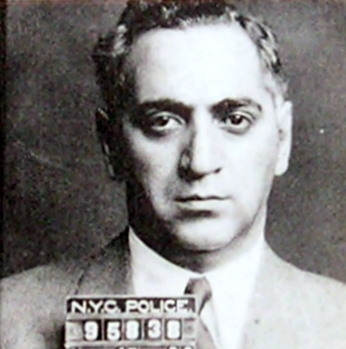
It may be unfair to mention Billy Conn and Chad Dawson in the same sentence. But I just read Frank Deford’s masterful rendering of Conn in “The Boxer and the Blond,” and I can’t help make the comparison.

Conn was Light Heavyweight champion of the world. All that stood in the way of Conn being Heavyweight Champion was himself. The steel mill refugee fought Joe Louis, maybe the greatest heavyweight in the history of the sport (ask your father, or Bert Sugar), on June 18, 1941. A Pittsburgh native, Conn’s hometown baseball Pirates actually stopped their game in the middle so the crowd at the ballpark could listen to the fight. They had to. Otherwise no one would have come. Weights? Forget what promoter “Uncle” Mike Jacobs, the Bob Arum and-then-some of his time, reported to the Press. DeFord assures that Conn weighed in at 169, Louis 200. A later report from ESPN marked it as 169, 204.

Louis was more than a 3 to 1 favorite. But scheduled for 15, at the end of 12 rounds Conn had come to dominate the champion. Conn boxed, moved, slugged a little, and weathered a nasty cut. But after taking off the first few rounds to scout his opponent as he always did, Conn was up 7-5, 7-4-1, 6-6 on the judges’ cards. In the 12th round Conn hit Louis with a series of punches culminating with a left hook that rocked and staggered the champ and left him hanging on for dear life. In the corner, after the round, Louis’ long-time trainer let loose with the smelling salts and told the champ that he was losing—that he’d have to knock Conn out to win. According to Deford, the corner was only saying what everyone in America knew. Louis was beaten.

But Conn, emboldened by The Punch, went into the next round no longer satisfied with the prospect of a win. Amidst frantic protests from his corner, he told his trainer he wanted a knockout and then stood in the middle of the ring and slugged —until he didn’t. Conn failed to make the count at 2:58 of the 13th round.

Billy Conn and Joe Louis became very good friends afterwards, and Conn told Deford: “I told Joe later, why didn’t you just let me have the title for six months?’ All I ever wanted was to be able to go around the corner where the guys are loafing and say ‘Hey, I’m the heavyweight champeen of the world.’”

Louis replied: “’I let you have it for twelve rounds, and you couldn’t keep it. How could I let you have it for six months?’”

After the fight in the dressing room, Conn famously said, “What’s the sense of being Irish if you can’t be dumb?”

In the first century A.D., Julius Caesar is said to have remarked on an early encounter with Conn’s ancestors, whom he had seen knee deep in ocean attacking the waves with a sword like the fierce Irish Champion of lore, Cuchulain. “They fight just to fight,” Caesar said. Although it took England, Rome never did attempt to invade Ireland.

In a meaningless tune-up bout prior to the Louis fight, 27,000 fans showed up to watch Conn beat someone named Billy Knox in Pittsburgh. It was 1941, and the country was still in the midst of the Great Depression.

Unable to draw a crowd in his home state of Connecticut, Chad Dawson’s bout for the Light Heavyweight Championship was held in Montreal, Canada—the home town of his opponent, Jean Pascal. The doctor stopped the fight on an accidental head butt gash in the 11th round. It went to the cards and Dawson, cut bad, lost a unanimous decision. But he might have won. Having hurt a seemingly gassed Pascal, the fight that Dawson had squandered throughout the night was there for the taking. But he failed to punch; he failed to fight.

Unlike Billy Conn, who lived to 75 years old and died a legend—or even Joe Frazier, Mike Tyson or Tomasz Adamek, no one will ever accuse Chad Dawson of being Irish. Bad Chad’s primary objective throughout the bout remained just one side of the time honored equation: to not be hit. During the fight against Pascal, HBO commentator Larry Merchant asked with more than a trace of frustration and disgust: “Does Dawson ever just stand his ground and fight on the inside? Look at this.”
I’d just as soon not. No one can force another man to risk himself; but no one can force another man to buy a ticket either.

Boxing needs to Irish up.

Photo credit, Shizzy9989


Sadam “World Kid” Ali, Next Champion of the World?


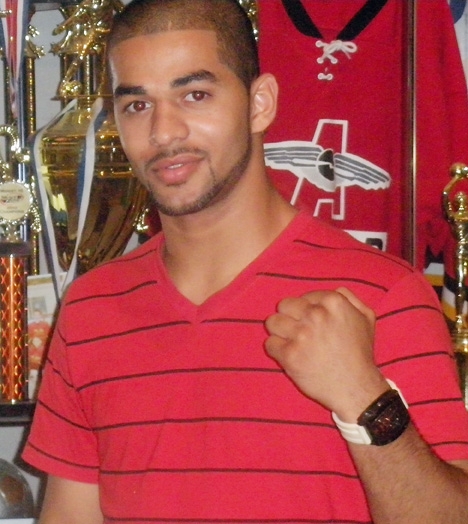
The first time I heard the name Sadam Ali it was in fear. And a sort of wide-eyed resignation. I was walking into a weigh-in at the Prudential Center in Newark and had struck up a conversation with a boxer who was entering the doors the same time I was. When I asked him who he was and who he’d be facing he looked at me in disbelief. Slightly skittish, he seemed to not understand how the opponent who now consumed his every thought was not on my mind too. “Sadam Ali,” he said, pausing a moment to look me over again and see if I really was that stupid. “The Olympian,” he added with a stammer and a pained look as he had to hear from his own mouth the shibboleth he’d been trying to avoid. He walked away with his shoulders sagged under the weight of “The World Kid” Ali. Since his three round dismantling of Julius Edmonds on ESPN’s Friday Night Fights, Sadam “World Kid” Ali is having trouble finding fights. The 21 year old boxer glides through the ring—fast, fluid and effective— with what can only be described as Promise. Boxing fans talk openly of the beauty of his style.

As an amateur, Ali was PAL National Champion, Under-19 National Champion, two-time New York City Golden Gloves Champion, and two-time National Golden Gloves Champion. The first Arab-American to represent Team USA in the Olympics, he turned professional in January of 2009 and after 8 fights is still undefeated. Half his bouts have ended in knockouts. He is a tall and respectful young man with an easy smile and a look of determination. I caught up with him and one of his four coaches, at Havoc Boxing’s well matched card in Brooklyn’s Aviator Sports Center. He may be the World’s Kid, but his voice is all Brooklyn.

Q: You’re 8 and 0. And in your recent fight on ESPN’s Friday Night Fights on the Zab Judah undercard, commentator and boxing trainer Teddy Atlas talked throughout the bout about how smart and versatile a boxer you are—and the right uppercut that knocked Edmonds down in the first round was featured as part of ESPN’s Boxing Highlights for July. Do you think that has something to do with you not being able to find an opponent for tonight?

SA: Yeah. [laughs] If anyone saw that fight that could be why. We just couldn’t get anyone for tonight. It’s always been a little hard, but after doing so well on national television it got harder. Now, to step into the ring with me, opponents want more.

Q: You’re next scheduled to fight on the Adamek vs. Grant undercard at the Prudential Center in Newark on Aug. 21, do you have an opponent for that match yet? Any idea of who you’d like to fight after that?

SA: We’re working on that right now and we’ll definitely have an opponent. It’s going to be a great night of fights with a packed house—and there’s no way we’ll miss that opportunity. As far as who I’d like to fight, anyone my team puts in front of me. I’m ready.

Q: Since turning pro in January of 2009, you’ve weighed in between 141 and 151 pounds. How much weight do you typically gain back after a weigh-in?

SA: Usually around 6 or 7 pounds, but lately a little less. I like to go in hungry. Eat just enough to be strong and fast.

Q: At what weight division are you most comfortable fighting, and in what division do you see your future?

SA: Anywhere between 140 and 147 pounds. I fought once at 151 but that was because the only opponent we could get weighed in at 154, light middleweight. I ate a bunch right before the fight just to put on some weight. I beat him in a unanimous decision, but I’m more comfortable in the 140s. As for which division I’d prefer, I really can’t say. It just really all depends on where the opportunities are.

Q: What are some of the most important things you’ve learned since turning pro? And what do you hope to accomplish in boxing?

SA: Boxing is about hitting and not being hit. Adapting. The boxing greats knew that. I learned a lot in the amateurs, I had over 200 fights. But I also learned a lot going pro, and still have a lot to learn. Pro has twists …. like smaller gloves and no headgear to get in the way. And anything can happen at anytime. I still have to throw a lot of punches. But I’m aware that anything can happen.

Accomplish in boxing? Insha’ Allah [“God willing”], I’m going to be a World Champion, a super star making a lot of people proud. I’m World Kid Ali – I see myself entertaining the world. I want to bring boxing back to the world— back to life.

Q: Some of the all time great boxers were defensive fighters, Benny Leonard, Sugar Ray Leonard, Muhammad Ali in his early prime, and Willie Pep, who was said to have once won a round without throwing a punch. Who are some of your favorite fighters?

Coach : The Kid can bring life back to boxing. He’s got that—defensive ability—but like those greats you mentioned, he has the ability to switch up. To bring the fight from outside, to move and slip, but also to come forward and throw. Take the fight inside. You have to switch it up—a lot of boxers don’t know that.

SA: My favorite boxers? Muhammad Ali, definitely. Prince Naseem Hamed when I was little— he made me want to start boxing–and to become a World Champion. And Floyd Mayweather—he has everything you need to be a World Champion. He can punch, he has speed. He has heart, he can adapt and he can take a punch– he has a chin.

I have a lot to learn. I have a lot of heart and can change it up. I’m there to hit and not get hit. Not that i’m afraid of being hit. But hitting and not getting hit – that’s smart boxing, that’s the heart of boxing.

Q: You fight as “World Kid Ali.” Your parents are originally from Yemen, you were born in Brooklyn and became the first Arab-American to represent Team USA in the Olympics. What is the significance of the colors of your boxing trunks?

SA: My trunks are red, white and blue and red, white and black, the colors of the American Flag and the colors of the Yemeni Flag. It’s the two countries I represent and it means a lot to me—and for the people who know it’s there, I think it means a lot to them too.

Q: You are said to be a religious young man. How do you balance your religious requirements with your profession?

SA: It’s hard sometimes, but it’s all I’ve ever known. I grew up in a very religious household and I’ve been boxing since I was eight years old. But it’s also a joy and a blessing. God means a lot to me. I pray. And whatever success I’ve had is His.

Q: You recently opened The Sadam Ali Boxing and Fitness Center in Brooklyn, where trainers are offered free of charge to amateurs. Why?

SA: I want to give back to the community as much as I can. I’m happy to be in the position I’m in in life, and when kids come in it’s really a beautiful thing. We have to charge a monthly fee for membership, but a lot of places charge extra money for coaches and trainers. We don’t do that. It’s good for the community and it’s good for boxing.

Coach: Just opening a gym in that neighborhood was good for the community. A lot of kids in Brooklyn come from difficult situations—a lot of boys without fathers and positive role models. Just the streets. But when they come in to the gym, they see all of the Kid’s trophies and medals— and him— working hard doing something with his life—going after his dreams in a positive way— and now they look up to Sadam Ali as role model.

SA: [Laughs] The other great thing about owning a gym is that I can train now anytime I want.


Michael Grant, Stand In, Vs. Tomasz Adamek at Newark’s Prudential Center

A one-time Next Big Thing in professional boxing, Michael Grant has been to the top of the hill, but only to look. His stay wasn’t long, and he did not descend as its king. Instead, like Jack in the nursery rhyme, he tumbled down—repeatedly— at the point of Lennox Lewis’ right hand. Canvassed three times in the first round, he failed to rise by the count of 10 in the second. That championship bout, all two rounds of it, took place in April, 2000.

In fights to follow, Grant (46-3, 34 KOs) was knocked down and out by both Jameel McCline and the once promising Dominic Guinn. At 6’ 7” Michael Grant has a long way to fall. Against McCline he broke his ankle on the way down (first round, very first punch). Against Guinn he was knocked down four times in 7 rounds, the last from a clean left hook that landed Grant almost motionless in a big hulking mass on the floor.

He tasted canvas nine times in a total of 10 rounds in these three losses. He is now 37 years old.
A gifted athlete, Grant played football prior to boxing. But football is not boxing. And given the helmets, a propensity to fall when punched in the head does not pose a particular hindrance to a football player. For a boxer, it is fatal.

Michael Anthony Grant has an Achilles Chin. Training can’t change that.

But power and hope are the last things to go on a heavyweight, and there is no reason to believe that he does not have a puncher’s chance. Eddie Mustafa Muhammad is Grant’s latest trainer. Michael Grant has told anyone who would listen that he’ll win.

Since losing to Guinn in 2003, Grant has fought and won a total of eight times. Beating the likes of Wallace McDaniel (8-21-1, 4 KOs), Billy Zumbrun (23-12-1, 13 KOs) and Demetrice King (15-18, 13 KOs). He did not fight in the calendar years of 2006 or 2009. If nothing else, he is well rested. In May of this year Grant scored a technical knockout in the first round over Kevin Burnett (13-4-1, 8 KOs). Grant weighed in at 257 pounds for that fight, only 7 pounds more than the weight at which he fought Lewis.

On Aug. 21 Michael Grant will face former WBC light heavyweight and IBF and IBO cruiserweight champion of the world, Tomasz Adamek. The two men will square off in a scheduled 12 rounder in Newark New Jersey’s Prudential Center. The fight will be available on Pay Per View. Adamek (41-1, 27 KOs) is relatively new at heavyweight, but coming off an impressive victory earlier this year over the powerful 250-plus pound brawler, Cristobol Arreola (28-2, 25 KOs).

Before that, Adamek scored wins at heavyweight over Jason Estrada (16-3, 4 KOs) and the old Polish workhorse, Andrew Golota (41-8-1, 33 KOs). In his fight against Arreola, Adamek weighed in at 217 pounds and proved that he could fight against Big.

Against Michael Grant, Adamek looks now to show the world that he can fight, and win, against Tall.
The two-headed heavyweight champion of the world, brothers Wladamir and Vitali Klitschko, is tall. Wladamir is 6’6 ½” and Vitali is an inch taller at 6’7 ½”. They have a reach of 81” and 80” respectively. Michael Grant is 6’7” with a freakishly long reach of 86”. Adamek is 6’1 ½” with a reach of 75”.

When David Haye stepped out of his scheduled fight with Vitali Klitschko in the Fall of 2009, Adamek got the short notice call. His team declined at the time (wisely I think), with Arreola instead taking the fight against Vitali—and the loss. But having got the notice, Adamek has worked. He had weighed in at 199 pounds against Bobby Gunn back in July of 2009, and weighed in at 214 in his win against Golota in October that same year—and picked up something called the IBF International Heavyweight Championship belt for his troubles. On the scale in Newark against the former Olympian Jason Estrada in February of 2010 he weighed 220; against Arreola in April, he weighed a quick 217. The addition of Ronnie Shields as trainer has paid big dividends. Adamek wears his new weight well. Ask Arreola.
Adamek has stated in no uncertain terms that he wants a shot at a heavyweight title. Any Klitschko or David Haye—any time, any place.

Consider this fight against Grant a test run, or maybe even a dress rehearsal. But consider it. Adamek can bang, and he can box. He’s got heart and he can also take a punch. On Aug. 21 we’ll see if he can fight tall. My guess is he can. And Michael Grant? This may well be his last chance to fetch a pail of water in the heavyweight division.