Happy New Year? Four reasons to hope for one

By Norm Frauenheim-

A promising year ends, but the promise will go as stale as cheap champagne if fights we talked about in 2017 don’t happen in 2018.

Here are just four on a wish list that will make the New Year one to celebrate or just another one to forget:

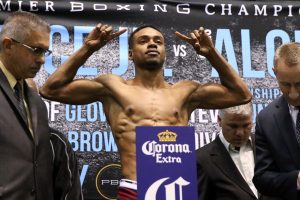
Terence Crawford versus Keith Thurman, or Errol Spence, or Shawn Porter, or Kell Brook.

Crawford, the vote here for the Boxing Writers Association Fighter of the Year, jumps from 140 to welterweight in the most intriguing move in a New Year.

After a likely shakedown cruise in his division debut against Australian Jeff Horn, Crawford becomes a threat to anybody at the top of the division.

Guess here: He’s better than anybody at 147 right now. That’s also a reason to be cautious about whether any welterweight fight on this wish list actually happens. Thurman, Porter and perhaps Brook will find ways to avoid the feared Crawford. The biggest bout at welterweight in a long time looks to be Crawford-Spence, but Spence, 27, appears to be a year from his prime. Check back 12 months from now. Crawford-Spence might at the top of the wish list for 2019.

Vasiliy Lomachenko versus Mikey Garcia

I keep hearing all of the reasons why this fight won’t happen. Please, if it doesn’t, it is just a further condemnation of a business still ruled more by ego and grudges than good sense.

Top Rank continues to express resistance to the fight, presumably because it is still angry at the way Garcia left the game’s promotional giant. But the good news – and Garcia’s best friend in all of this – is Lomachenko himself.

Throughout last year, Lomachenko has never backed away from his desire to fight Garcia. Invariably and repeatedly, the fight the forthright Ukrainian says he most wants is Garcia. In an ongoing effort to win over boxing’s key demographic, Lomachenko understands he needs to fight the Mexican-American.

But there’s something else, too. It’s also a fight that has been in the forefront of the public imagination for at least a year. It matches Lomachenko’s many-angled creativity against Garcia’s fundamental efficiency. Make the fight, please.

Anthony Joshua versus Deontay Wilder

If the heavyweight division comes back, it’s a sure sign that the business is back and healthy.

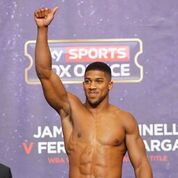
In one corner of the world, heavyweight boxing is rock concert-like show. Joshua and his dramatic victory over Wladimir Klitschko played out before 90,000 at Wembley Stadium in London last April. Can the UK enthusiasm go global? Yeah, it could with Joshua against American Deontay Wilder.

Pieces for Wilder-Joshua later in 2018 are falling into place with talks for Joshua-versus-Joseph Parker and Wilder-versus-Luis Ortiz, both in March. A reason for caution, however, lurks in Wilder-Ortiz. It could undo any chance at Joshua-Wilder.

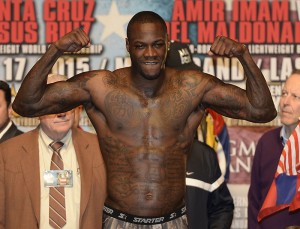
The clever Ortiz is a threat to Wilder’s unbeaten record in a dangerous fight. Then again, they’re all dangerous for Wilder, who has flaws in his fundamental skillset. Yet, Wilder’s big right hand and overall athleticism are an equalizer that is as powerful as it is unpredictable. Entertaining, too.

Gennady Golovkin versus Canelo Alvarez

The rematch has to happen, right? It ended in a draw in May. It was controversial in some corners. Mostly, it was an unsatisfying end to a bout that had been preceded by a drumbeat of hype that promised definitive drama.

Maybe, there was drama. But there was nothing definitive about it. For Canelo, a rematch is another opportunity to correct mistakes from an uneven performance, one booed by many of his Mexican fans.

For GGG, it’s a chance at delivering some proof. He was angry after the scores to the May draw were announced. He said he won. In a rematch, he can do exactly that.

A reason for caution is that a deal has yet to be done. Neither middleweight has anywhere else to go. GGG and Canelo have unfinished business. Finish it in 2018, or the public just might be finished with them.


Forget The Rest: 2017 will be remembered for Joshua-Klitschko

By Norm Fruenheim-

It’s been a year full of lots of things.

Full of it, perhaps, if 2017 will be remembered for the spectacle-over-substance display of Floyd Mayweather Jr. entering the ring in a bandit’s mask for his money grab against Conor McGregor.

That single, most-watched event over the last 12 months was embarrassing for the obscene hype it generated and the gullibility it exposed in the four-plus million pay-per-view customers who paid for the show.

The guess here is that it will be forgotten and never be repeated, although the latter might be hoping for too much.

If it wasn’t exactly a great year, it was a promising one because of Terence Crawford, Vasiliy Lomachenko, Mikey Garcia, Errol Spence, Gennady Golovkin, Canelo Alvarez and the ongoing move away from the pay-per-view business model.

The promise was played out in one terrific fight — Anthony Joshua climbing off the deck for an 11th-round stoppage of Wladimir Klitschko on April 29 in London. It’s Fight of the Year, of course.

There are other nominees, but none are contenders in a 2017 that will forever be known for a fight significant on so many levels.

There was the crowd at London’s Wembley Stadium — 90,000, boxing’s biggest since World War II. It was a classic between heavyweights, a division that had begun to look as old as the newsreel footage of WW II battles.

But there it was, all over again and available on live stream, with the kind of drama that plays well in any era. It was timeless. Klitschko gets up from a fifth-round knockdown. Joshua gets up in the sixth, clearly hurt and yet survives. Klitschko is down again, twice in he eleventh and back on his feet after both before a succession of Joshua punches forces a stoppage.

It was a classic reminder of how good the heavyweights have been and can still be. As we await 2018’s opening bell, there is relevance and some of the aforementioned promise in all of that. Decades and a piece of Evander Holyfield’s ear have come and gone since anybody talked about the heavyweights.

But on the list of fights that fans want to see, Joshua-versus-American Deontay Wilder is right there, alongside Garcia-Lomachenko, a Golovkin-Canelo rematch and Crawford against any of the top-ranked welterweights.

Will it happen? Hard to say. At the negotiating table, Joshua’s popularity among UK fans is as powerful as Canelo’s ability to draw Mexican fans.

A sure sign of that came in a follow-up. In October, a crowd of 78,000 showed up in Cardiff, Wales, for Joshua’s victory over Carlos Takam, who had none of Klitschko’s name recognition.

Joshua has yet to create much of a following in the U.S. If an overrated Ricky Hatton proved anything, however, it’s that UK fans travel. In New York or Las Vegas, he’d be the crowd favorite against Wilder.

First, however, it looks as if a couple of things have to happen. There are ongoing negotiations for Joshua to fight Joseph Parker of New Zealand, perhaps in March. There are also talks for Wilder to finally face Cuban Luis Ortiz, also in March.

Of the two, Wilder faces the biggest danger. The clever Ortiz has enough skill to beat Wilder. It depends on which Ortiz shows up. Wilder’s fundamental skillset has always been questioned. But he has always won, mostly with a right as good as any in many years.

If Wilder’s right hand instead of Klitschko’s had knocked down Joshua in April, the guess here is that the Wembley fight would have ended then and there.

But it has to land, and there’s a question about whether Wilder can do that against Joshua, a 2012 Olympic gold medalist. It’s also a question that includes wilder’s right-handed power, a so-called equalizer as unpredictable as it is dynamic.

As a New Year begins, it’s a talking point, a reason for optimism that wouldn’t be there if not for Joshua-Klitschko, Fight of the Year and the best heavyweight fight in at least a generation.


On the Move: Crawford’s jump takes him up scale and to the top of the ballot

By Norm Frauenheim-

It’s a move up, on the scale and to the top of the ballot.

Terence Crawford’s bid to own next year opens with a jump to welterweight and a convincing campaign for Fighter of the Year.

Call it a win-win, at least that’s what it looks like from this corner.

After dominating the 140-pound division, Crawford moves up to 147, with his debut at the new weight probably against Jeff Horn, who followed up his controversial stunner over Manny Pacquiao with an 11th-round stoppage of somebody named Gary Corcoran in Brisbane Wednesday.

If the deal gets done for a bout sometime this spring perhaps in Las Vegas, promoter Bob Arum says Horn has a better chance than anybody will ever give him.

Fair enough. Arum warned everybody that Horn had a chance against Pacquiao, too. But Pacquiao looked to be as unprepared as he is over-the-hill.

Crawford is neither. He’s motivated and near his prime in terms of instinct, athleticism and motivation. Add what appears to be a mean streak, and you’ve got a fighter very hard to stop for at least the next year.

I know, I know, there is Vasiliy Lomachenko, who is being marketed as boxing’s cutting edge of newfound creativity.

His complement of footwork and angles is thing of beauty, to be sure. Still, there’s some debate about whether there’s more form than function to what he does.

Maybe, we’ll get better judge of that against the fundamentally efficient Mikey Garcia.We sure didn’t get to see it against Guillermo Rigondeaux, who quit after six rounds Saturday in a hyped bout that proved to underwhelming.

Don’t blame Lomachenko, who did exactly what he had to. This on is on Rigondeaux, the sad-faced Cuban who surrendered for what was reported to be a bruised hand. Rigondeaux surrendered, perhaps because he knew defeat was inevitable.

Net result: It denied Lomchenko the chance to finish a fight that might have embellished his own candidacy for Fighter of the Year.

For now, Lomachenko is still that proverbial work in progress. Meanwhile, he’s as likable for his footwork as he is for his honesty and quick wit. His post-fight take on his name — “No-mas-chenko” — is a classic.

He continues to say he wants to fight Mikey Garcia, despite Garcia’s biter split with Top Rank, still the Ukrainian’s promoter. Lomachenko’s priorities are in order.

He’s the boss. In the end, the promoter is there to get him fights he wants. And in this case, Lomachenko-versus-Garcia is a fight the public wants to see too.

A year from now, Lomachenko’s clear business agenda and evolving ring style could make him Fighter of the Year.

In the here-and now, however, it’s Crawford, who exercised his dominance in a stunning third-round stoppage of Julius Indongo in August. Unlike Rigondeaux, Indongo was never the story in that one. Only Crawford was.

Now, there’s Crawford’s move to welterweight. There are interesting fights for him at 147. But the guess here is that he would beat Keith Thurman. He’d beat Shawn Porter. He’d blow out Pacquiao. Of all the possibilities at welterweight, the best might be the young Errol Spence. But that one looks to be at least a year away, a year after one that will belong to Terence Crawford.


Lomachenko, Rigondeaux to test each other and the state of the game

By Norm Frauenheim-

Boxing loves comebacks and it looks as if a business always reported to be dying might be poised to make another one.

The perennial patient still has a pulse, thanks this time to Vasiliy Lomachenko-Guillermo Rigondeaux Saturday in a year-ender that follows some promising television numbers.

Last Saturday, Miguel Cotto said goodbye after getting upset by Sadam Ali in a so-called retirement fight. Retirement fights are a bad idea. Terrible advertising, too. But people watched anyway with a HBO audience that peaked at 1,012, 000, according to ratings released this week.

That is boxing’s second-highest rating for premium cable in 2017. It came a week after a peak audience of 900,000 watched the HBO telecast of Sergey Kovalev’s comeback from successive losses to Andre Ward with a stoppage of Vyacheslav Shabranskyy.

Both fights were thoroughly forgettable. But the solid numbers are significant for what they suggest. To wit: Maybe, there’s still a potential audience out there, perhaps re-energized by a move away from pay-per-view and maybe intrigued by a new generation of fighters.

A better look at whether the sport is poised to make another resurrection will play out Saturday in Lomachenko-Rigondeaux on ESPN (9 p.m. ET/6 p.m. PT). The 130-pound bout in The Theater at Madison Square Garden sold out two months ago.

It’s been generating talk for weeks, although it’s been hard to know just who and how many are doing all the talking. The bout, the first ever between a couple of two-time Olympic gold medalists, looks as if it could be a gem. At least, it does for the sport’s usual crowd, said by some to be a shrinking demographic.

When the intriguing fight was announced, there was skepticism about whether a Ukrainian-versus-a-Cuban could ever be much of an attraction for an American audience.

Tactically, Lomachenko-Rigondeaux is loaded with all the elements of a potential classic. It’s old-school Sweet Science, imminent art on canvas. But lots of fans like their fights in a cage these days. Within those old ropes? Still, hard to say.

Lomachenko’s innovative approach to an old and scarred craft against a seemingly ageless Cuban schooled in fundamentals is a clash between new and old. It’s timeless. It also sets the stage for a New Year, meaning new names and fresh faces instead of just more retirement fights.

From this corner, it’s interesting, even fascinating on many levels. But the real question rests in how many are interested. How many are fascinated? How many boxing fans are there? The last couple of weeks add up to reasons to guess there might be more than believed.

The guess here is that the bigger and younger Lomachenko wins a unanimous decision over the 37-year-old Rigondeaux, who is jumping up two weight classes, from 122 to 130.

But the bigger decision will rest in ratings for a fight that will say a lot about the state of the game.


Gold Road: This time it’s for money instead of medals

By Norm Frauenheim-

It’s historical for the continuum that Vasily Lomachenko and Guillermo Rigondeaux represent. Four gold, two each, at four Olympics over 12 years, from 2000 to 2012, are many years, medals and miles, stretching from Sydney, to Athens, then Beijing and finally London.

That they would meet in New York in The Theater at fabled Madison Square Garden on Dec. 9 almost looks like destiny. It’s not, of course. In boxing, only scars are. Still, their path to a 130-pound, ESPN-televised bout from opposite ends of the globe and very different cultures is a big part of the story.

In one corner, there’s Lomachenko, a Ukrainian whose Baryshnikov-like footwork and many-angled style reminds promoter Bob Arum of Ali, and we’re not talking about Sadam. Then, there’s Rigondeaux, a Cuban whose sad, weathered face is the look of a man who appears to be older than his listed 37and yet he glides across the canvas with the foot-and-hand speed of someone much younger.

“What you’re looking at here are two schools of boxing, Cuban and Eastern European,’’ Arum said this week in a conference call.

But who would ever guessed that the better, more marketable, boxer would have come out of the Euro classroom? Seventeen years ago when Rigondeaux won the first of two golds as an Olympic bantamweight at the Sydney Games, the Cubans were as dominant as they were feared. Rigondeaux, the only fighter still active from the medalists at Sydney, wasn’t even the best Cuban of that time. Heavyweight Felix Savon was. Savon won a third gold medal and had everyone buzzing about how he could be the next Ali if not for a regimented Cuban system.

The thinking then was that Cuba’s amateur boxers could one day transform America’s capitalistic version of the craft the way Cubans have impacted the major league baseball. Thus far, however, the Cuban boxers have only struggled, unlike the emerging fighters from Ukraine, Russia and Kazakhstan.

How come? Best guess is that the collapse of the old Soviet Union forced fighters to re-invent themselves and what they had to do to make a living. It was a lesson in individuality and a realistic understanding of what the prize in prizefighting really means. From Gennady Golovkin to Sergey Kovalev, they learned how to fight for money instead of medals. The cutting edge of that evolution is Lomachenko, whose advertised creativity has begun to capture the imagination of North American fans.

Time is a significant difference. Perhaps, the only one. There’s been a whole new generation of fighters since the collapse of the Berlin Wall in 1989 The robotic fighters of the old Soviet system are gone, supplanted first by Golovkin, then Kovalev and finally Lomachenko, who won gold at featherweight in 2008 and gold at lightweight in 2012. In time, maybe the same thing will happen with the Cubans.

For now, Rigondeaux still seems stuck in the old mindset of eluding punches and landing as many as possible for points. The idea is to limit the risk, impress the judges and protect whatever scorecard advantage there is in the late rounds. It wins, but it doesn’t sell.

Arum believes that the clever Lomachenko’s aggressiveness will not allow Rigondeaux to “pile up points” early, thereby preventing him from “stinking it up” late. Maybe, but be forewarned. Junior-middleweight Erislandy Lara, an old Rigondeaux teammate on the Cuban national team, “stunk it up” on Oct 14 in a unanimous decision over Terrell Gausha at Barclays Center in Brooklyn. It was bad enough for fans to exit the building while Lara circled, circled and circled some more in the closing moments of the main event.

A different Rigondeaux is another possibility. Maybe, he sheds that Cuban mindset with dynamic skillset that seems to be there in the lightning-like hands that always look as if they are capable of adding punishment to the points. That would be a surprise. Then again, the journey to Dec. 9 has been full of surprises.


End of the Beginning: A New Year looms amid promising signs in 2017

By Norm Frauenheim-

Three notable fights over nearly five-and-a-half weeks between now and a New Year are the end of what might be another beginning.

Boxing has been here before, of course. It’s a well-worn crossroads full of too many wrong turns. In the aftermath of Sergey Kovalev’s fight to rediscover the force he was before Andre Ward in a comeback Saturday against Shava Shabranskyy, Miguel Cotto’s farewell in a symbolic retirement versus Sadam Ali on Dec. 2 and Vasyl Lomachenko-Guillermo Rigondeaux in a Dec. 9 bout loaded with potential intrigue, however, there are reasons to think the battered business has a good chance to recreate itself.

Comebacks, goodbyes and emerging faces have always been part of the attraction. It’s all there, concentrated and undiluted, a little bit like a sport once called life in a shot glass.

For Kovalev, it’s an opportunity to overcome, indeed conquer — defeat’s inherent adversity. That used to define the old legends, but defeat has been avoided at all costs in a Floyd Mayweather era built on the optimum implementation of the risk-to-reward ratio. Can Kovalev come back the way those in the pre-Mayweather years did?

The Russian light-heavyweight is a compelling personality, a dynamic mix of danger and emotions hard to hide. He reportedly spent time in a Greek monastery in an effort to reflect on what had happened, who he has been and where he wants to return. He has a new trainer. He’s made changes around him and perhaps within him. Yet, time doesn’t change. He’s 34. Only against Shabranskyy in an HBO-televised fight in New York will we know if he’s just an aging fighter or resurrected fighter with enough time to rebuild his pound-for-pound credentials.

Then, there’s Cotto. It’s hard to know whether Ali has a chance at his first time ever at heavier weight. I’m not sure it matters. But the bout, also in New York, is significant because it represents a passing of the torch, one generation finally stepping aside for a younger one. In 2017, Timothy Bradley retired. Ward retired. It’s not clear what Manny Pacquiao’s plans are. But it’s safe to say they don’t include Terence Crawford. There’s speculation that the Filipino Senator is weary of politics. Instead of a run at the presidency, there’s talk he’d prefer to take a run at Conor McGregor. He might have to get in line behind Oscar De La Hoya on that one. But if Mayweather’s scripted scam against McGregor did anything, it proved that an aging boxer talking about a bout with the UFC star is in effect a retired boxer.

Then, there’s Lomachenko-Rigondeaux, also in New York Not sure what happens in this bout between Olympic gold medalists, Lomachenko of the Ukraine and Rigondeaux of Cuba. It could wind up being a technical bore. Still, the possibilities are fascinating, in part because it’s the last chance for Rigondeaux to do something dramatic with the talent that has been oh-so evident for oh-so long. He’s got crazy skill, yet he has used it only within the disciplined blueprint of Cuba’s famed amateur system. He takes no chances. That wins medals, but not money.

Ten years ago, who would have ever guessed that a Ukrainian would be seen as the world’s most creative boxer? Then, it seemed as if the Cubans would put some new wrinkles into the old art form. From Erislandy Lara to Rigondeaux, they haven’t. The showman has been Lomachenko. Rigondeaux has the physical stuff to show him tricks of his own, but I’m not sure he has the mindset to execute them.

If not, that still brings us to 2018, with even more talk about Lomachenko against Mikey Garcia’s patience, smarts and efficient ability to deliver fundamental power. Either way, it sets up an intriguing end to what has been an interesting beginning.


Goodbye doesn’t sound like a temporary gesture from Cotto

By Norm Frauenheim-

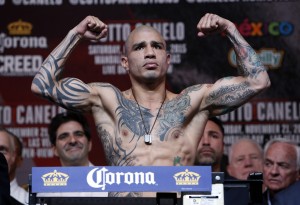
Miguel Cotto vs Canelo Alvarez
PPV Weigh-in 11-20-2015
WBC Middleweight Title
Miguel Cotto 153.5 vs. Canelo Alvarez 155
photo Credit: WILL HART

His face is the portrait of a fighter. It’s a mix of stoicism and toughness. There’s an unblinking gaze that says he has seen it all. He hasn’t, of course. That’s why Miguel Cotto is retiring. He wants to see more of his family and do more for fellow Puerto Ricans in the devastating wake of Hurricane Maria.

At one level, his retirement after a junior-middleweight bout against Sadam Ali at New York’s Madison Square Garden looks to be a lot like how he fought and how he conducted his career. He appears to be leaving the way he entered: On his own terms.

There’s nothing more temporary than a boxers’ retirement, of course. They’re back more often than the tide. But a Cotto comeback would be surprise, even among ex-fighters who can’t quite resist the temptation to answer just one more opening bell.

The ring is littered, metaphorically and literally, with examples. The best current example: Oscar De La Hoya, Cotto’s promoter. De La Hoya says he believes Cotto’s fight on Dec, 2 versus Ali will be his last.

“Obviously, there’s many reasons why a fighter can choose to come back,’’ De La Hoya said.

Yeah, reasons like Conor McGregor.

De La Hoya made the comment during a conference call Wednesday, a day after he called out McGregor on a radio show. De La Hoya said he had been training in private, yet with singular purpose, in hopes of knocking out the UFC star in two rounds.

I’m guessing we’ll see George Foreman versus Steven Seagal before we see De La Hoya versus McGregor. Then again, I never thought we’d see Floyd Mayweather Jr. versus McGregor, either. From a parachutist named Fan Man landing in the ring like the 82nd Airborne to Mike Tyson’s Bite Fight, boxing has been nothing if not the theater of the crazy. Expect anything.

That said, I agree with De La Hoya about Cotto. I don’t expect a trite, often futile comeback from the first Puerto Rican to win titles at four weights. It just would be unlike him. Through his career from junior-welterweight to middleweight, Cotto wasn’t always media-friendly. He didn’t smile much. Didn’t talk much. Yet, his stubborn silence spoke loudly. To wit: He means what he says.

Throughout Wednesday’s conference call, he talked about having no regrets. He said he walks away in peace. When pushed, he said his favorite fight was in 2005 when he got up from a second-round knockdown to score a seventh-round stoppage of Ricardo Torres.

“The one that put Miguel Cotto on the map,’’ said Cotto, who went on to further secure his place on the marquee with victories over Shane Mosley, Zab Judah and, later, Sergio Martinez.

But the guess here is that his place in public memory will always be for how he beat Antonio Margarito in a wicked rematch in 2011 in New York. It was a bout full of all the elements that make boxing so dangerously compelling. It was about a grudge, payback for what Cotto believed was a loss – an 11th-round stoppage — he suffered in 2008 to Margarito.

In Margarito’s next fight, a loss to Mosley, altered hand wraps were discovered before opening bell. The wraps would have augmented Margarito’s power against Mosley. Altered wraps were suspected in Margarito’s upset of Cotto in their first fight. Three years later, Cotto ended the debate with a punishing 10th-round stoppage of Margarito.

When asked about the Margarito fight, Cotto didn’t say much Wednesday.

“Everybody knows what happened in the first fight,’’ he said.

Enough said.


Back In The USA: Kovalev hopes to put a Russian thanks into T-Day

By Norm Frauenheim-

It’s hard to know what Sergey Kovalev knows about Thanksgiving, a uniquely American holiday. But he fights a couple days after Turkey day and if the Nov. 25 bout goes as expected, he’ll come away with a pretty good understanding.

Bolshoe spasibo

That’s Russian for thanks very much. Thanks, Google.

How ever it is pronounced, the guess here is that Kovalev will say it as often as the rest of us eat Turkey sandwiches in the hours and days after the last piece of pumpkin pie.

A victory over Vyacheslav Shabrankskyy in The Theater at New York’s Madison Square Garden in an HBO televised bout will allow Kovalev to hit the reset button and, moreover, forget about a 13-month stretch of controversy and frustration over two losses to Andre Ward.

First, he lost a decision to Ward last November in a bout most people thought he won. Then, he lost an eighth-round stoppage to Ward in a June rematch that was controversial for low blows, what the referee did or didn’t do and who he was or wasn’t.

Then, Ward retired and, by the way, bolshoe spasibo for that. There would have only been a lot of indigestion with a trilogy, mostly for Kovalev, still a compelling light heavyweight who continues to be ranked No. 5 in The Ring’s pound-for-pound edition.

“Right now, I feel all bad things are gone from my mind,’’ Kovalev said this week in a conference call. “Right now I concentrate, and I focus for the future of my boxing career. I’m ready to be again a world champion and collect my belts if somebody will be ready to unify the title.’’

It’s hard to imagine Kovalev thanking Ward in a language that doesn’t include some well-chosen obscenities. But Ward’s retirement did mean he vacated a title, the WBO’s version of the 175-pound belt, that will go the Kovalev- Shabrankskyy winner. That figures to be Kovalev, unless the guy he didn’t recognize in the Ward rematch shows up for opening bell for Shabranskyy. He said he wasn’t himself in the rematch.

Some of that can be blamed on Ward, who took away Kovalev’s deadly jab with his inside tactics while also eliminating some of his leverage by getting underneath him in an effective inside assault. It was as frustrating as it was maddening and it seemed to drain Kovalev’s energy, if not passion, for the task immediately in front of him.

Kovalev said he has adjusted. He has a new trainer, Arbor Tursunpulatov, instead of John David Jackson.

“I’m happy to work right now with my new coach,’’ Kovalev said. “He’s doing a great job and we understand each other because we speak and understand one language. We understand each other and I feel comfortable.’’

He also says he has eliminated the distractions. Distractions are supposed to be an American or maybe Filipino kind of thing. Think of Floyd Mayweather Jr. with bales of cash and a garage full of high-end cars, or Manny Pacquiao with karaoke. Trips back to Russia, however, appeared to knock Kovalev off his regimen, especially in the months before a long-awaited showdown with Ward, who retired unbeaten and at the top of the pound-for-pound debate.

“When I’m doing boxing, I should do boxing,’’ said Kovalev, who also discovered that an American author, Thomas Wolfe, might have been right when he said you can never go home. “Not another business or a lot of flights to come back and forth to Russia to spend free time. Because when I’m in Russia, I don’t have the time, like for locals and doing the boxing. Just a lot of meetings, a lot of businesses, a lot of wrong things.

“I mean, not sport at all. But right now, I’m here in America, and started a new chapter in my boxing career.’’

One victory beyond Ward might put Kovalev back on track to achieving the singular prominence that seemed to be within reach of his dangerous hands.

His promoter, Kathy Duva, thinks so.

“The first fight, I will say for the rest of my life, he didn’t lose,’’ Duva said of Ward-Kovalev 1. “The second one, he was fighting the referee and the fighter, but he lost to the No. 1 fighter in the world. That’s not coming back. You don’t fall too far when you’re that close with a guy who is that good. Ward has a style that is just very, very hard to beat, especially when he’s getting help.

“My feeling about this is that Sergey is must-see TV. Sergey is still one of the most compelling, exciting fighters in the world. Having lost a debatable decision or a debatable stoppage shouldn’t really derail somebody’s career all that much.

“And as things turned out, Sergey is in a position right now to, not only be right back on top, but to be right back on top of one of the most exciting and perhaps the deepest division in boxing.’’

A surprise, as things turn out, and a reason to say Bolshoe spasibo.


Soto Karass knocked through the ropes, but not ready to say no more after Abreu’s KO blows

By Norm Frauenheim-

TUCSON, Ariz. – It was a tough way to say goodbye, so tough that Jesus Soto Karass might want to try it all over again.

Juan Carlos Abreu knocked out any chance that Soto Karass might have had at celebrating a farewell with a victory Thursday night in an ESPN-televised fight at Casino Del Sol.

Abreu delivered a couple of huge lefts, dropping Soto Karass twice in the eighth round and nearly sending him through the ropes, if not into retirement, with the second knockdown in a powerful TKO of the popular Mexican.

For Abreu (20-3-1, 19 KOs), the victory gave him some hope to think that maybe he can still be a welterweight contender. For Soto Karass (28-13-4, 18 KOs), the crushing defeat looked like just another reason to walk away from his 16-plus years throwing – and taking — punches

But Soto Karass wasn’t ready say farewell. After he got up from the crushing finish at 1:07 of the eighth, he stood on the ring’s bottom rope and waved at the crowd almost as if he had won. It wasn’t a gesture of farewell. He was saying thanks.

“Thanks to my fans,’’ said Soto Karass, who wasn’t sure about retirement before opening bell.

He wasn’t sure after referee Rocky Burke had ended it , either

“I will sit down with my manager and my family, talk to them, then decide.’’

It was clear to Soto Karass that his Mexican fans haven’t given up on him. Maybe that’s because he never gives up, at keast not in the ring. It was evident in the early going that it would only be a matter of time before the stronger, more mobile Abreu would catch Soto Karass, who as a boxer is as pedestrian as he is fearless. He just kept moving forward.

“I just got caught, really caught by a punch from a guy who can really punch,’’ he said.

The finishing blows might have come earlier. However, Abreu, a Dominican, said he hurt his right hand in the second round. He said planned to have a physician examine the hand to determine whether he sustained a serious injury.

He said the pain made him cautious from the third round through the seventh. There were moments in the sixth and again in the seventh when it looked as if Soto Karass would simply try to wait him out, perhaps wear him out. In the eighth, the stubbornly persistent Soto Karass walked into the only good hand Abreu still had. Then, it landed once and then a second time, finishing a fight, if not a career.

In the co-main event, junior-lightweight prospect Ryan Garcia (12-0, 11 KOs) came into the ring to classical music. Garcia, of Victorville, Calif., wore black-and-white shorts that could of come out of the 1950s. They were black-and-white. They also were made in honor of the late Jake LaMotta, whose Raging Bull nickname was stitched across the back of the trunks alongside 1922-2017, the years of LaMotta’s birth and death.

It was an old-school look. It was an old-school win, too. Garcia’s power stole the show, overwhelming an overmatched Cesar Valenzuela (14-6-1, 5 KOs). A Garcia left, traveling at blinding speed, knocked down Valenzuela in the first round. Another finished him late in third of a bout referee Tony Zaino ended in the final second of the round.

In the telecast’s opening bout, the judges’ scores made it look easy. It wasn’t. Prospect Hector Tanajara Jr. (11-0, 4 KOs), a Robert Garcia-trained junior-lightweight, endured head-rocking shots and stubborn aggressiveness from Mexican Jesus Serrano (17-5-2, 12 KOs) for eight rugged rounds. In the end, Tanajara relied on his superior reach and bigger body, winning a unanimous decision that was a lot closer than the 80-72, 79-73, 80-72 scorecards.

Best of the Undercard

There were some questionable blows and some real ones. There was a lot of everything. And Mexican German Meraz has seen just about everything. Meraz’ documented record includes 105 fights. Yet he entered the ring with only one draw. Now he’s got two.

Meraz (58-45-2, 35 KOs), of Agua Prieta, danced, smiled, landed punches and took few, yet all of it was only enough for a majority draw with Los Angeles featherweight Rafael Gramajo (9-1-2, 2 KOs) in a wild fight that ended with him ahead on one card, 58-56, and 57-57 on the other two.

The Rest

California bantamweight Cesar Diaz, poised and precise, also improved on a perfect record (6-0, 6 KOs) with a stoppage of Pedro Melo (17-17-2, 8 KOs), a Tijuana fighter who surrendered at 1:10 of the fifth round an injury to his left shoulder.

Junior-welterweight Christopher Gonzalez (1-0), a national amateur champion from Tucson, threw a short hook for what was ruled a second-round knockdown of Jesus Arevalo (2-2) of Sierra Vista, Ariz., and went on to win a unanimous decision in his pro debut.


Let’s Get Ready To Negotiate: Joshua-Wilder on the table with back-to-back bouts

By Norm Frauenheim-

Nobody needs to announce “let’s get ready to negotiate’’ before Saturday’s Carlos Takam-Anthony Joshua fight in the UK and the Bermane Stiverne-Deontay Wilder follow-up on Nov. 4 in Brooklyn.

Talks – and the talking – for a Joshua-Wilder showdown are already underway with the kind of edgy trash that always says a biggie is on the table.

Still, the heavyweight bouts on back-to-back Saturdays can propel the negotiations, or even knock them off the table altogether.

The latter appears unlikely. Neither Joshua nor Wilder looks as though they are facing much difficulty against late subs for the original opponents – Takam for a Kubrat Pulev out with an injury and Stiverne for a Luis Ortiz disqualified for a positive PED test.

Still, upset is always a looming threat in the wake of a sudden shuffle in opponents. The fear is that the respective belt holders – in this case Joshua and Wilder – will suffer an emotional letdown and left without little in the way of motivation. After weeks of training for what one foe does, each suddenly has to shift focus. For the unwary, that can lead to an unprepared fighter.
Meanwhile, for the sub, there’s always an advantage. It’s a cliché to say that they have nothing to lose. But it’s a cliché because it has been exactly the reason for so many of history’s upsets.

Don’t bet on history repeating itself. But don’t blame promoters or even fans for fretting about an upset that could be bad for business. Yep, Lou DiBella, promoter for the the Wilder-Stiverne rematch at Barclays Center, is nervous. Sure, he can be accused of trying to insert some suspense into a fight that doesn’t appear to have much. He’s got to sell tickets and the Showtime telecast, after all.

In Wilder, however, he also has a fighter who isn’t exactly happy about the business or his career, which has gone sideways twice because positive drug tests. Wilder, who is likable because he’s genuine, openly wondered during a conference call Tuesday about whether he would be “better off” doing something else. He said he’d retire if he loses to Stiverne, whom he beat in a 2015 decision.

“It just saddens me,’’ Wilder said. “Man, it just saddens me. It makes me reevaluate my career. It almost made me lose the love of boxing for a little bit as well, too, because of certain things and activities that has been known in this sport with these guys avoiding or wanting to get on bad substances when they know they’re not supposed to be taking it in the first place.

“That’s the thing about it. You take it in the first place, and you make up excuses, and then the blame is pointed at me. It’s starting to sicken me.

“I don’t want to feel this way about boxing because I was once in love with it. It’s starting to make me rethink my career.’’

Second thoughts within a couple of weeks of a bout that could set up a career-defining fight add up to a red flag – a reason to worry.

“In my mind, this is an extremely dangerous fight,’’ DiBella said. “He has been preparing for a career-defining fight against Luis Ortiz — an unorthodox left-handed puncher — a guy that he was really mentally revved up to fight. Instead, he’s winding up with a rematch of a fight against Bermane Stiverne — a guy that’s been in this kind of situation before who’s a legitimate, dangerous heavyweight contender.

“Frankly, in this situation, Bermane Stiverne has absolutely nothing to lose. And he must feel like this is Christmas Day. He was already preparing for a large, right-handed opponent in (Dominic) Breazeale. He was going to be on that same card. It’s now switched over to a fight that you have to think maybe Deontay is a little bit deflated to be forced to fight. But Bermane is the mandatory contender, and that’s the fight that’s going to happen.’’

Amid it all, there is a back-and-forth discussion between Wilder’s camp and Joshua’s camp about a fight that some say could happen in 2018. Wilder is already saying he wants $7 million. Joshua promoter Eddie Hearn countered, saying that there was as much a chance of that as there was of Hearn augmenting his genitals. No telling where the tale of the tape is going on this one.

If the back-back weekend bouts go as expected, the respective crowds and Showtime’s television ratings for each will have a lot of say-so at the table. In terms of box-office, Joshua is already huge. His victory over Wladimir Klitschko at London’s Wembley Stadium in April drew a reported crowd of 90,000. The Takam bout (2 p.m. PT/5 p.m. ET) at Principality Stadium in Cardiff, Wales, is expected to draw between 75,000 and 80,000.

“Wilder hasn’t had any memorable fights,’’ said Joshua, whose ring cred was established when he got up from a sixth-round knockdown to stop Klitschko.

For Wilder, the memorable has only been a frustrating string of cancellations and substitutions. There’s also been fair criticism of his fundamental skill set, despite an unbeaten record fashioned by a right hand thrown with Thomas Hearns-like leverage.

Wilder says he’ll be watching Joshua-Takam Saturday, a week before he has to attend to his own business.

“The ultimate goal is get to Joshua,’’ he said.

Ultimately, it’s the only way to replace those doubts with a chance at something worthy of being memorable.


Hall Of Fame voting: Morales, Vitali Klitschko at the top of the ballot

By Norm Frauenheim-

Erik Morales and Vitali Klitschko are at the head of the 2017 class on the ballot for inductions to the International Boxing Hall of Fame.

Morales, another link in the long line of Mexican greats, should be a lock. From this corner, it would only be a surprise if Morales were not a unanimous choice on ballots due at the end of October.

If he isn’t, voters simply have not looked closely at the ballot or his credentials. Morales won titles at four weights – 122 pounds, 126, 130 and 140. He battled through two memorable trilogies, Marco Antonio Barrera and Manny Pacquiao.

There are nine losses on his 61-fight ledger, but he fought just about everybody. In the end, he stuck around too long and fought at weights too heavy for a fighter who was at his ferocious best as a featherweight.

Vitali Klitschko isn’t the lock that Morales is. At least, not on this ballot. But he was a terrific heavyweight and very much a part of the Wladimir Klitschko reign that would follow after he retired to become mayor of Kiev.

The brothers would never fight each other.
At their best, however, the pick here would be Vitali in a close one. He was tough, smart and resilient, especially in one of only two losses in 2003 to Lennox Lewis in a bout stopped because of cuts.

The rest of the ballot? It’s a tough call. Only three will be inducted. The process asks voters to select five from a list of 32 nominees The best of those include welterweight Donald Curry, light-middleweight Winky Wright, heavyweight Michael Moorer, middleweight Nigel Benn and junior-flyweight Ivan Calderon.

They’re all worthy. Moorer was at his best at 175 pounds. He was 10-0 in light-heavyweight title fights. But he’s remembered mostly for crushing losses to 45-year-old George Foreman and Evander Holyfield.

Benn was a very good middleweight champ best known for upsetting Gerald McClellan in a haunting bout that left McClellan with permanent injuries. He also beat Iran Barkley. But there aren’t many more well-known names on a record that ended in three straight defeats.

On this ballot, the votes go to:

§ Curry, who held titles at 147 and 154 in a career that had him at the top of the pound-for-debate during the mid-1980s.

§ Wright, who might have been the best light-middleweight champ ever in the brief history of a division getting a lot of attention these days.

§ Calderon, a 105 and 108 pound champion in the first decade of the new millennium and the best little guy to answer an opening bell since a couple of other Hall of Famers, Michael Carbajal and Humberto Gonzalez.


Nothing junior about 154 anymore

By Norm Frauenheim-

It’s one of those hyphenated divisions once lost amid the proliferation of them. Call it light, Call it junior. But don’t call it forgettable. Not any more, anyway.

The 154-pound weight class, once a stopping point between welter and middle, is making a memorable impact on the scale, never more so perhaps than Saturday night with three intriguing bouts at Brooklyn’s Barclays Center on a Showtime-televised card.

A division first created in 1962 has some of its own legends. There still might be more money at 160 and 147. But increasingly there’s some history to be made 154, too.

“There are just better fights at 154,’’ said Erislandy Lara, who faces an emerging and unbeaten ex-Olympian, Terrell Gausha, for his WBA title on a card that also includes two other 154-pound title fights — Austin Trout-versus-Jarrett Hurd and Jermell Charlo-versus-Erickson Lubin.

Lara concedes that he is looking up the scale – the pay scale, too – at 160 for a rich rematch with Canelo Alvarez or a shot at Gennady Golovkin. But both figure to be busy with their own rematch of a controversial draw last month.

“I have unfinished business that has to be settled,’’ said Lara, who lost a split decision to Canelo at 154 in July 2014. “He knows who the true winner of our fight was, and he doesn’t want to do that fight again.

“…“If you look at Canelo’s record, there are three marks (a loss, split decision and draw). There’s (Floyd) Mayweather, me and Golovkin. Great fighters fix the wrongs on their record, and Canelo and his team will have to do that sooner or later.’’

For now, however, Lara will have to resign himself to the later. At 154, there are plenty of challenges and paychecks.

“154 is much deeper,’’ Lara said.

It is, and it has been for a while. A who’s who of names have at, one point or another, held a 154-pound title. Here’s Hall of Fame sample: Winky Wright, Sugar Ray Leonard, Roberto Duran, Floyd Mayweather, Manny Pacquiao, Thomas Hearns, Oscar De La Hoya, Pernell Whitaker, Felix Trinidad, Wilfredo Benitez and Shane Mosley.

There’s a reason that Wight leads the list. From this corner, Wright’s reign at 154 marks the beginning of an era when the weight became more than just a portal, a stopping point for moving up or even moving out and into retirement.

At 154, Wright was as good as anybody at any weight from March 2004 through May 2005 with successive victories over Shane Mosley and then a win over Trinidad.

If there was a prize at stake for the best performance on Saturday’s Showtime card (7 p.m. PT/10 p.m. ET), it could be named for him. Call it The Winky Trophy For The Wright Stuff. There’s nothing junior or light about 154 anymore.


Heavyweights still the Ho-Hum division

By Norm Frauenheim-

Wladimir Klitschko retired only two months ago. I’m already starting to miss him.

The more the heavyweights change, the more they stay the same. Sorry for the cliché, but the state of the heavyweight division has become one. It just can’t seem to break out of the mind-numbing cycle that has made it oh-so forgettable.

Klitschko’s retirement in early August was applauded in part because it appeared to open the door for different faces, new opportunity and – above all – renewed drama.

The sense was that the old flagship division would be resurrected. But is anybody really excited about the Deontay Wilder-Bermane Stiverne rematch? Sorry, dumb question. How about Anthony Joshua-Kubrat Pulev? Again, sorry.

Joshua and Wilder are the leading faces in what could be a heavyweight revival. Let’s start with Joshua, who faces Pulev on Oct. 28 in the UK. He has power in his punches and personality. He’s also got some smarts and resilience, both of which he demonstrated in stopping Klitschko in what was the Ukrainian’s final fight in front of a rock-and-roll-like crowd of 90,000 at London’s Wembley Stadium.

The fight last April was terrific. The huge crowd was even better and it probably generated more headlines than the bout itself. It suggests that the heavyweights and perhaps the business were back. Think again. Joshua-versus-Tyson Fury would have been a lot fun. Fury upset Klitschko before Joshua finished him. But the controversial Fury has been under suspension and unwilling to file for a new license with UK regulators. This week, Fury said he would retire. Who knows what he’ll really do?

The only apparent certainty is that Joshua is fighting Pulev, who in 2015 was just another one of those bowling pins that Klitschko knocked out so regularly.

Then, there was the unfortunate shuffle involving the hard-luck Wilder. It is a further sign that the heavyweights have yet to break out of the cycle that has made them irrelevant. At least, Klitschko was worth watching for his astonishing consistency, including a nine-year, seven-month reign as the heavyweight champ.

Without him, we’re left with the familiar disruptions. Wilder’s bout with Luis Ortiz was canceled because Ortiz tested positive for medication he did not disclose.

Ortiz’s management said the medication was for excessively high blood pressure. That begs the question as to why Ortiz has been allowed to fight in the first place. But the medication was also reported to be a masking agent for PEDs, including steroids.

For Wilder, the situation is all-too familiar. His 2016 bout against Russian Alexander Povetkin was canceled when Povetkin tested positive for a PED. Instead, Wilder went on to fight sub Chris Arreola in a fight that left him on the shelf with a torn biceps and an injured hand.

Now, the sub is Stiverne, who agreed this week to the Nov. 4 rematch at Brooklyn’s Barclays Center in a Showtime-televised bout. In Stiverne, Wilder faces a heavyweight whom he beat by unanimous decision in January 2015 for the WBC title. Been there, done that.

Like Joshua, Wilder has a media-friendly personality. He also possesses dramatic power, the best right hand at any weight since perhaps Thomas Hearns. What he lacks is experience. Despite his Olympic bronze medal, he’s late to the game, unlike Joshua, a 2012 gold medalist. Wilder will be 32 years old on Oct. 22. What he desperately needs is experience against skilled fighters, heavyweights like Povetkin, also an Olympic gold medalist, and the clever Ortiz.

But Wilder’s development has stalled by all the junk that seems to plague the heavyweights more than any division in a sport already synonymous with trouble. Wilder’s right hand can knock out anybody. But he has to know how to land it against a heavyweight at a skill level more proficient than Stiverne or Arreola.

“Stiverne will pay for Luis Ortiz screwing up,” Wilder said Thursday.

Maybe, but Wilder might pay a bigger price for not getting the opponent who could prepare him for Joshua and a fight that needs to be great for the sake of a division. And the game.


Re-energized pound for-pound debate full of possibilities

By Norm Frauenheim-

Andre Ward’s surprising retirement, Roman Gonzalez’ sad defeat and the scorecard controversy still brewing over the Gennady Golovkin-Canelo Alvarez draw is re-energizing the pound-for-pound debate and generating renewed optimism about a resilient business known for comebacks.

It’s always best to be cautious about whether another comeback is on the horizon. Adelaide Byrd’s crazy card favoring Canelo by a bewildering eight-point margin on Sept. 16 serves as a clear-and-present warning. It reminds me of an old line from Hall of Fame writer Michael Katz. To wit: Only boxing is killing boxing.

Nevertheless, some intriguing elements are beginning to fall into place for some real momentum going into 2018. Even Adelaide’s Byrd-brain card might prove to be a good thing. It all but ensured that there would be a rematch in what looks to be a headline-grabbing rivalry until at least next May and perhaps beyond. There are plenty of reasons to question — even suspect — Byrd’s scoring. But only a rematch can provide an answer. That’s good for business.

So, too, is the slow, yet still painful move away from the pay-per-view business model. The numbers just can’t be believed any more. The buy rate has been corrupted.

The only relevant number in a Guccifer 2.0 era full of Russian hackers, bots, Trump tweets and pirates is the rip-off rate. The move toward bouts on ESPN and Showtime without the PPV tag is already underway. Early indications are that it is working. It has to.

The idea is to introduce young fighters, fighters from Eastern Europe and Central Asia to an emerging audience of young fans armed with cutting-edge tech and seeking new ways to watch. They’re seeking new fighters, too. Ward was good, even great in an old-school kind of way. At 32-0, he has a Hall of Fame resume.

It also fair to wonder whether he won’t be at least tempted to try his luck at heavyweight, a la Roy Jones Jr. But the guess here is that Ward knows he’s just not big enough to contend with Anthony Joshua, 6-foot-6 and 27, or Deontay Wilder, 6-7 and 31. Ward formally notified the acronyms this week that he was vacating his light-heavyweight titles. Now 33, he’ll look around at the younger generation in a year or two and probably decide to stay retired.

Ward’s retirement creates a vacancy – maybe even a breath of fresh air – at the top of the pound-for-pound debate. He was a terrific boxer, subtle and smart. Yet, he was never a big draw, in part because of inactivity brought on by promotional trouble. He also had something of an artistic temperament, meaning that he approached each bout more as a craftsman than a salesman.

He was fun to watch, but you had to know what you were watching. Same with Roman Gonzalez, a master craftsman who is the lightest fighter to ever occupy the pound-for-pound’s top spot. Gonzalez’ fight to draw a big crowd was complicated by the simple fact that he’s a little guy, a flyweight whose ascent up the scale was stopped by successive losses to junior-bantamweight Srisaket Sor Rungvisai.

There’s a reason for weight classes and that was evident in the Gonzalez defeats. Evident, too, was a fighter who seemed to have lost his way, if not his will, in the wake of trainer Arnulfo Obando’s death.

Time, tragedy, simple physics and circumstance have eliminated them from the top of the argument. In their place, there is a youth movement, at least there is in this pound-for-pound edition.

At No. 1: Terence Crawford. He’s slick, quick, instinctive and appears to have a mean streak. He dominated junior welterweight and the guess here is that he will do the same at welter. There are questions about whether he can draw in locales far from his fans in Omaha. On PPV, no. On ESPN, yeah. Without PPV limits, more fans will get a chance to see just how good he is and how much better he’ll soon be.

No. 2: Mikey Garcia. He’s smart and as efficient as any fighter in a long while. I’m not sure the lightweight champion can beat Crawford at a heavier weight (147 pounds) or junor-lightweight Vasily Lomachenko (more on him later) at his own weight, 135. But it looks as if the economical Garcia does what he has to, which might mean we haven’t seen most of what he can do.

No. 3: Lomachenko. He’s part wizard and part Ali. At least, that’s how promoter Bob Arum and others have portrayed him. At 130 pounds, I’m not sure anyone can beat him, but he faces an intriguing Dec. 9 challenge from Guillermo Rigondeaux, anther master craftsman, yet dismissed as boring. Rigondeaux is jumping up in weight, from 122 pounds, to face Lomachenko in an unprecedented bout between double Olympic gold medalists. Can the Cuban beat the Ukrainian? Maybe not, but he has the skillset to challenge him, or at least show somebody else how to beat him.

No. 4: Golovkin and Canelo in a tie. Or was that a draw? If Canelo learns from the debatable draw the way he learned from a loss to Floyd Mayweather, he should win against GGG, who is 35 and will be 36 at opening bell of the projected May rematch.

No. 5: Joshua. Maybe, Joshua belongs in the second five for now. But he is the possible face of the very future that is apparent in autumn of the year before boxing’s potential comeback. He is drawing huge crowds in the UK. Boxing has always been defined by the heavyweights. No real comeback is complete without one and Joshua might be the one.


Wild Ride: Valdez wins tough decision


TUCSON, Ariz. – Oscar Valdez Jr. wanted to please a crowd that had traveled from his birthplace in Mexico and to the U.S. city where he went to school.

Mission accomplished and then some.

Valdez took his fans on a dramatic ride, thrilling at some turns and dangerous at others. In the end, he and them got to where they expected.

Valdez retained his World Boxing Organization featherweight title with a unanimous decision over Genesis Servania, who proved to be as tough as he was unknown.

“I wanted to show the crowd,’’ Valdez (23-0, 19 KOs) said after the ESPN televised but at Tucson Arena on a Top Rank card that also included super-middleweight Gilberto Ramirez’ dramatic victory over Jesse Hart in another title defense.

It was close, a lot closer than the 116-110, 115-111, 117-109 scorecards might suggest. In the later rounds, however, Valdez, who collected $400,000, managed to keep his distance, stay busy and throw just enough punches to stay in control of the bout and his futures.

“The scores were a little wide,’’ said Servania (29-1, 12 KOs), who collected $55,000. “Let’s do it again.’’

Promoter Bob Arum said he hopes to put together a deal for Valdez to fight Belfast featherweight Carl Frampton, sometime next year.

Meanwhile, Robles wants to get Valdez to become a better listener between rounds. There were a lot of potential distractions for Valdez before opening bell. He voiced his support for the Dreamers, young undocumented immigrants who are fighting to stay in the United States. Arum said he gave about 300 to 400 free tickets to the Dreamers who could document their immigration status.

Valdez also fought in front of a grandfather, Luis Fierro, who was arrested last month on, reportedly for an old traffic ticket. Valdez said he is facing charges that could lead to his deportation. He said got his grandfather out of jail in time to see the fight.

“There were a lot of emotions before this one and Oscar is an emotional fighter,’’ Robles said.

Now, they can talk about what’s next.

Ramirez retains WBO belt

It was exhausting and exhilarating. It was a lot of things. Sometimes, bruising. Sometimes, beautiful. Sometimes, ugly. Always, dramatic.

In the end, it belonged to Ramirez.

Ramirez retained the WBO’s super-middleweight title with a 115-112, 114-113, 115-112 decision over Hart, a Philadelphia fighter whose last name sounds like heart because he has plenty of it.

So, too, does Ramirez (36-0, 24 KOs). The Mexican dedicated his victory to America’s young , undocumented immigrants, so-called Dreamers, some of whom were in the crowd of 4, 103. He dedicated it to the earthquake victims in Mexico City. He also thanked Hart (22-1, 18 KOs), who he knocked down in the second round with a right hand.

“A great show for everybody here and all my people in Mexico,’’ Ramirez said.

Michael Conlan scores powerful stoppage

Michael Conlan’s right is best remembered for an obscene gesture. But there’s more than just a middle finger in that hand. There’s power and it speaks for itself. It landed loudly and decisively, taking out a tough Kenny Guzman of Montana in the second round of the card featuring Servania-Valdez.

“I was a bit reckless early,’’ said Conlan (4-0, 4 KOs), a Belfast featherweight who famously – or infamously — flipped off the judges at the 2016 Olympics.

He was altogether devastating a little later. Poor Guzman (3-1, 1 KO) never had a chance to be offended. He never saw it coming. Conlan, whose next fight is scheduled for Dec. 9 at New York’s Madison Square Garden..

Conlan, a Valdez stablemate in trainer Manny Robles’ gym, had the right high and cocked life the trigger on a gun. Guzman was out the second it landed. He got up and referee Wes Melton ended it at 2:59 of the round.

On The Undercard

The Best: Lithuanian welterweight Egis Kavaliauskas (18-0, 15 KOs) took a lot of punches and landed even more, leaving Mexican Mahonri Montes (32-7-1, 21 KOs) with a bloodied face, a swollen right eye and a bruising seventh round loss by TKO.

For Kavaliauskas, a two-time Olympian, the victory was an opportunity After dominating the bout, he turned the ring inot a bully pulpit.

“Bring on Jeff Horn,’’ he said of the Australian who beat Many Pacquiao in a controversial decision Down Under in July.

The Rest: Lightweight Mikaela Mayer (2-0, 2 KOs), 2016 Olympian from Los Angeles, landed an uninterrupted succession of punches, leaving Texan Allison Martinez (1-3, 1 KOs) dazed, done and defeated at 39 seconds of the third round.

Brazilian junior lightweight Robson Conceicao (5-0, 4 KOs) flashed his Olympic gold-medal credentials, toying for three round with Nicaraguan Carlos Osorio (13-8-1, 5 KOs), who complained of a shoulder injury and quit on his stool before the fourth.

Uzbek junior-welterweight Fazliddin Gaibnazarov 3-0, 1 KO), a 2016 gold medalist and one of three Olympic medalists on the card, scored a unanimous decision over a game, yet overmatched Victor Rosas (9-7, 3 KOs) of Mexico.

Australian welterweight Lenny Zappavigna (36-3, 26 KOs) came back from a 2016 loss with a little but of thunder, scoring a third-round TYKO of Mexican Fidel Monterroza (38-14-1, 30 KOs)


Second Home: Oscar Valdez Jr. back in Tucson with another promise

By Norm Frauenheim-

TUCSON, Ariz. – Oscar Valdez Jr. is at home, his second home, with a promise as a priority.

In his last trip to Tucson in 2015, he promised he’d be back with a world title. He delivered on that one, returning with a World Boxing Organization belt that he won in 2016.

But one promise begets another.

“I’m not planning on losing this here,’’ Valdez said, with the belt in one hand, after he stepped off the scale Thursday at 125.8 pounds for his title defense against unknown Filipino Genesis Servania at Tucson Arena on an ESPN-televised card (7:30 p.m. PT/10:30 p.m. ET).

In a third defense of the belt, Valdez (22-0 19 KOs) is expected to win a bout that could set up a showdown with Belfast featherweight Carl Frampton. Frampton just signed with the company that manages Mick Conlan, a Valdez stablemate who faces Kenny Guzman on the Friday undercard.

Despite an unbeaten record (29-0, 12 KOs), not much is known about Servania, who is fighting in the United States for the first time after fighting mostly in the Philippines and Japan. Servania, who weighed in at 125.4 pounds, had one bout in Dubai

“There was a time when Manny Pacquiao wasn’t known, either,’’ said Valdez, who has generated headlines for Friday’s card by his vocal support for The Dreamer and their fight to stay in the United States.

Valdez promoter Bob Arum is offering 500 free tickets to Dreamers – undocumented immigrants brought to the U.S. when they were kids — who show up at the box office with documentation of their immigration status.

“This is insane, the policy that we now have,’’ Arum said a day after he announced the free tickets. “These Dreamer kids are as American as my grandkids. They were raised in this country. They speak English. They go to American schools. The idea that we would send them back to other countries is ludicrous.

“Americans are supposedly held to higher ethical standards than this. I will fight to the last breath in my body for these kids. They belong in the United States, they can contribute to this country and we have to open our hearts to them because they deserve it.

“They came here – does it matter if their parents came legally or illegally? They were kids when they came here and I think every American has the moral obligation to stand up for these dreams.’’

Up and down the card, there is support for what Valdez is saying and Arum is doing en behalf of the Dreamers.

“My people are good people, people who are just fighting to make living,’’ said Gilbert Ramirez, a Mexican who defends his WBO super-middleweight title against Jesse Hart in perhaps the most intriguing bout on the card.

Ramirez (35-0, 24 KOs) was 167.8 pounds Thursday. Hart (22-0. 18 KOs) tipped the scales at 167.6. Conlan (3-0, 3 KOs), an Irish Olympian, was at 126.6 pounds. His opponent, Kenny Guzman (3-0, 1 KO) was at 125.

The untelevised portion of the card begins at 4:30 p.m. (PT). It can be watched on an ESPN app.


Controversy wins all over again in GGG-Canelo draw

LAS VEGAS – The business wanted a party. Wanted to celebrate. But all it can do today is to try to explain away another controversy, the only promise boxing ever seems to deliver with any kind of reliability.
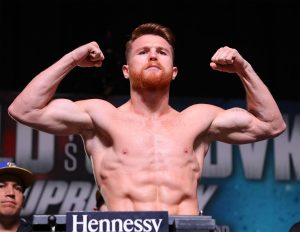
 

GGG might as well stand for Grumble Grumble Grumble.


The judges got in the way of a good fight. Not a great one. Gennady Golovkin and Canelo Alvarez will never be confused with Marvin Hagler and Thomas Hearns. But they’re in the history books anyway, but for all the wrong reasons. They fought to a draw Saturday night at T-Mobile Arena in another pay-per-outrage event.


Canelo promoter Oscar De La Hoya promised rounds of hell. For him, the hell will come in trying to calm the anger over the judging. For instance: What in the hell was Adelaide Byrd watching? She had it 118-110 for Canelo. Carl Moretti scored it 115-113 from Golovkin. Don Trella had it 114-114.


At home and in the very expensive seats, it looked like a much different fight. On the 15 Rounds scorecard, it was GGG, 116-112. Perhaps, it was closer than that. But Golovkin seemed to gain momentum midway through the bout, controlling the pace and landing most of the punches from the sixth through the 11th rounds. According to CompuBox, Golovkin (37-0-1, 33 KOs) landed 49 more punches, 218 to Canelo’s 169.


On any scorecard, Golovkin, still the reigning middleweight champ, also appeared to score heavily in the aggression category. That’s GGG for Going Going Going. He was always going forward. Canelo (48-1-2, 34 KOs) would land thudding body shots and head-rocking uppercuts. Yet after each, the redheaded Mexican looked up and there he was all over again, Golovkin going, going, going forward.


Canelo will see GGG coming forward and into his face in his dreams. He’ll also hear the boos. The predominantly Mexican crowd — populated by Canelo fans — was unhappy at the judging. After all, they had been told this was a real fight. Whet they didn’t know was that the judging would be such a mockery of what Canelo and GGG did. Those punches were real. They were dangerous. The judging was devoid of reality, yet dangerous in terms of how it can further erode credibility in a sport with so little of it.


A rematch, of course, looks to be inevitable.


“Of course, I want a rematch,’’ Golovkin said. “I won the fight.’’


But not the cards, a House of Cards that always seems to make boxing look like a Joker.

Joseph Diaz claims mandatory shot with easy decision

Joseph Diaz faced the unknown, or at least the unexpected.He approached it with caution. He emerged from it with the win he had to have.

He had trained to fight Jorge Lara. Lara withdrew with an injury and he wound up beating Rafael Rivera for a mandatory shot at the WBC featherweight title Saturday night in the last fight before Canelo Alvarez and Gennady Golovkin entered the ring at T-Mobile Arena.

“I feel like I had a good performance overall,” said Diaz (25-0, 14 KOs),  an El Monte, Calif., fighter who won 119-109, 120,108, 119-109 decision over Rivera (251-2, 16 KOs). “I was able to put pressure and dictate the pace of the fight, and be able to enter into a lot of exchanges. Rivera is strong, has good body shots, and had good speed. I think we gave them a good show.”

Diego De La Hoya makes it look easy in dominant decision
It was supposed to be tough. It wasn’t.
Diego De La Hoya made it look easy, continuing his climb into the contending ranks for a 122-pound title with a blowout score victory Saturday over Randy Caballero on the Canelo-Golovkin undercard at T-Mobile Arena.
De La Hoya (20-0, 9 KOs), of Mexico, employed quick feet and quicker hands for a dance that made Caballero (24-1, 14 KOs), of Coachella, Calif., look awkward. The decision was unanimous. But that doesn’t explain just how one-sided it was, especially in bout between fighters unbeaten before opening bell.

The decision was split. The boos were unanimous.

 Lightweight prospect Ryan Martin got both Saturday night in an unpopular, 10-round decision over Francisco Rojo of Mexico City on the Canelo-Golovkin undercard at T-Mobile Arena.
Martin (20-0, 11 KOs), of Chattanooga, had an advantage in reach and hand speed, but he could never get a clear cut advantage over the aggressive Rojo (19-3,12 KOs), who was favored 98-91 on one scorecard. Martin, penalized a point for a head butt in the ninth, won on the other two cards, 96-93 and 95-94.
Vergil Ortiz keeps it perfect with second-round TKO
Dallas super-lightweight Vergil Ortiz (7-0, 7 KOs) made it look easy, improving on a perfect record with a succession of body punches that left Cesar Valenzuela (7-2, 2 KOs) of Phoenix on all fours, exhausted and finished in a second round TKO in the second bout on the non-televised part of the Canelo-Golovkin card.

 Bohachuk goes to 5-0 with TKO win
 Super-welterweight prospect Serhil Bohachuk (5-0, 5 KOs) needed only a hook. It landed in the second round, staggering overmatched Joan Valenzuela 5-9-1, 5 KOs),a Chula Vista, Calif., fighter who sought some refuge along the ropes, but only ran into more punches before it was stopped midway through the round.
 Marlen Esparza opens the show with dominant decision

The arena was empty. But the ring wasn’t.

Flyweight Marlen Esperza was there, full of heart and skill, to open the show Saturday a couple of hours before the pay-per-view telecast of the long-awaited card featuring the middleweight showdown between Gennady Golvkin and Canelo Alvarez at T-Mobile Arena,

Esperza (3-0) who dedicated the fight to the flood-ravaged victims in her hometown of Houston, looked dominated every second of every round for a six-round shutout of Aracely Palacios (8-8, 1 KO) of Mexico.

“Even though my opponent, on paper, looked like she had more ring experience, I’ve been in the ring way more than she had,’’ said Esparza, a 2012 Olympic bronze medalist. “Because I had three-minute rounds, I was able to think a lot more in the ring and was even told by my trainer I had to slow down.

“I couldn’t research much about my opponent, but we knew she was going to be throwing her right often. I’m satisfied with my performance because this was my first six-round fight.”


CaneloGolovkin: The Buzz Is Back

By Norm Frauenheim-

LAS VEGAS – Finally, a fight with a buzz.

It was there, loud and clear, Friday in a way that could be heard in the roar and felt in sharp elbows from fans in a restless crowd jostling for a clear view of two men in their underwear standing on a scale.

More than 9,000 jammed an arena at the MGM Grand to witness a ritual, a weigh-in and stare down. No suspense there. But anticipation was off the scale for the long-awaited Gennady Golovkin-Canelo Alvarez fight (HBO pay-per-view/5 p.m. PT, 8 p.m. ET) at T-Mobile Arena.

They were mostly fans with no chance at seeing the fight live. If you’re thinking about buying a ticket on the secondary market, call your banker or head to the corner pawnshop. On Friday, the cheapest seats were going for $700. But the weigh-in was free. Fans began standing in line at sunrise. They waited for five, six hours, to see what had already been expected. The fighters made weight. Surprise, surprise.

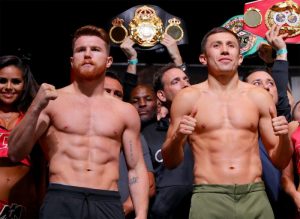
In a middleweight bout so even in so many ways, they were — appropriately enough – even on the scale, too. Golovkin 160, Canelo 160. Not an ounce difference between them. Golovkin looked a little taller; Canelo looked a little wider. Six of one; half-dozen of the other.

It’s a pick ‘em fight and the spontaneous roar from the crowd seemed to say it was happy, perhaps relieved, for an opening bell to a bout without a pre-ordained result. Make no mistake, the weigh-in was a spectacle. They all are. But it wasn’t the empty shell that played out on the eve of Floyd Mayweather Jr.’s scripted stoppage of novice boxer Conor McGregor on Aug. 26.

That was about money, and only money. Money is part, and only part, of Canelo-Golovkin. According to contracts filed with the Nevada Athletic Commission Friday, Canelo is guaranteed $5 million and GGG $3 million. With a percentage of pay-per-view buys, both are expected to wind up with a lot more, especially if the PPV number hits 1.5 million.

Whatever the final take, Canelo (47-1-1, 34 KOs) and GGG (37-0, 33 KOs) are guaranteed only a fraction of Mayweather’s $100 million and McGregor’s $30 million. Mayweather and McGregor laughed all the way to the bank. Canelo and GGG will have to fight their way there.

That’s the expectation. Both fighters say they know that and have planned for it. Both promise a fight that some say might rank alongside some of the best in middleweight history. That’s saying a lot. It was Sugar Ray Robinson’s division. It means Hagler-Hearns and Bernard Hopkins.

All kinds of that hype and more have been offered up during the weeks before Saturday’s fight for Golovkin’s title.

Canelo promoter Oscar De La Hoya, who often sounds as though he’s been watching too many old movies, has promised 12 rounds of hell. GGG trainer Abel Sanchez, more understated and perhaps more realistic, said he expected both fighters to get knocked down. GGG has never been off his feet. Never been beaten either.

Canelo has promised a knockout. He repeated the promise Friday. GGG shrugged his shoulders and flashed his What-Me-Worry smile.

“I have been champion long time,’’ the fighter from Kazakhstan said, almost cryptically.

Those fans, that roaring crowd, needed no interpretation. They were buzzing about a fight, the kind of fight they haven’t seen in a long time.


CaneloGolovkin: One loss, many lessons could be a key difference

By Norm Frauenheim-

LAS VEGAS – Canelo Alvarez has something Gennady Golovkin doesn’t want: A loss.

In a time and place when unbeaten often means perfection, defeat is portrayed as more than a blemish. It’s characterized as that fatal flaw. Avoid it at all costs and that’s exactly what Floyd Mayweather Jr. did in a career that made unprecedented money, which defined his identity as much – if not more – than that 0.

But boxing’s elemental drama is rooted in adversity.

How to deal with it.

How to come back from it.

The game’s enduring legends are often built on what they did after defeat. Muhammad Ali might not be remembered and revered without that 1971 loss to Joe Frazier. Sugar Ray Leonard might not be the cornerstone to the legendary ‘80s without that loss to Roberto Duran in 1980.

For Canelo, dealing with defeat is a story that has been unfolding over the four years before his long-awaited middleweight bout (HBO pay-per-view/5pm PT, 8 pm ET) against Golovkin at T-Mobile Arena.

In his first and only loss, Mayweather toyed with him in a humiliation that angered Canelo’s nation of fans, who complained that he didn’t fight like a Mexican.

It was painful then. It was a lesson later. Throughout, it has been an inexhaustible source of motivation for a Mexican whose dark eyes say a lot more about him than his red hair. Like a spark off flint, they flash.

Call it determination, or anger, or more. But its intensity is unmistakable. It’s as if Canelo (49-1-1, 34 KOs) listens to questions, hears the words and looks through all of the rhetoric like a man still seeking to correct the kind of painful loss he never wants to experience again.

Exactly four years after the Mayweather loss on Sept. 14 2013, Canelo trainer Eddy Reynoso and manager Chepo Reynoso sat at a roundtable Thursday in a MGM Grand ballroom with reporters and talked about it.

“Defeat teaches you more,’’ said Eddy Reynoso, who confirmed what everybody has seen in the steady, patient evolution of Canelo.

A young, cocky kid became a serious student. He had to, otherwise he would have been just another forgettable number on the path to the 50-0 that Mayweather will be selling on those T-shirts and caps.

There’s movement in the upper body. There’s a more consistent jab. There are seven straight victories. There’s a sense, too, that nothing will be easy, especially against the accomplished and reigning middleweight champ, GGG (37-0, 33 KOs), who has never lost and never even been off his feet.

“You learn more from defeat, so there is an advantage because it allows you to become a better fighter,’’ Eddy Reynoso said.

Yeah, Chepo Reynoso said.

“As long as it doesn’t happen too many times,’’ he cracked.

Once, of course, is more than enough. But once also might be prove to an unlikely advantage in milestone bout that in the end might be determined by a fighter who has encountered adversity, embraced the lessons, conquered the demons and learned how to use it.


Canelo-GGG: Saying little, promising a lot

By Norm Frauenheim-

Miguel Cotto vs Canelo Alvarez
PPV Weigh-in 11-20-2015
WBC Middleweight Title
Miguel Cotto 153.5 vs. Canelo Alvarez 155
photo Credit: WILL HART

LAS VEGAS – There’s not much left to say, not that Gennady Golovkin and Canelo Alvarez have ever had a whole lot to say anyway.

Their news conference Wednesday at the MGM Grand was something of a formality in the build-up to their middleweight fight Saturday at T-Mobile Arena. Everybody was polite. There were thanks instead of trash.

On one level, the relative silence was a relief.

Up and down The Strip, there are still echoes of insults Floyd Mayweather Jr. and Conor McGregor exchanged before they met in an August 26 event that included a boxer, a mixed-martial artist and a mixed message.

Mayweather, McGregor and everybody around them might still be talking, if not for all those awkward and yet unanswered questions about what the pay-per-view numbers really were. We don’t know. We may never know.

In Golovkin-Canelo, however, there doesn’t have to be talk – and only talk. Spectacles draw crowds like accidents. But who remembers them? They’re gone faster than a bag of chips and a mild heartburn.

Canelo-GGG is being sold as much more. Substance instead of empty spectacle is the sales pitch for the HBO pay-per-view bout (5 p.m. PT/8 p.m. ET).

“I know it’s going to be a tough fight,’’ said Canelo, the red-headed Mexican who again wore signs of his Irish roots with a full beard that McGregor would have envied. “I know that. I’m prepared for that.’’

Canelo is a man of more punches than words. He doesn’t indulge in overstatement. When he says he is prepared, be forewarned. To wit: Be prepared for a middleweight perhaps as good as any in weight class full of bouts, name and dates that could fill a history book.

There’s no myth in middleweight. No mixed, either. But that’s another story. But there’s always another story about to unfold. At least, Canelo-GGG has that potential. Canelo promoter Oscar De La Hoya says it might be the best since Marvin Hagler-Thomas Hearns.

“Your kids will be talking about Gennady Golovkin-Canelo Alvarez twenty years from now,’’ De La Hoya said.

Unlike his fighter, De La Hoya does indulge in overstatement. As a promoter, that’s part of the job. If Canelo-GGG comes even close to the drama attached to Hearns-Hagler, then the lack of words before opening bell won’t matter.

There will be plenty to say about for many years after.


All In The Family: Another Benavidez fighting to become youngest ever

By Norm Frauenheim-

David Benavidez wants to do what his older brother has already done. To wit: Make a little history. As a noteworthy accomplishment, being the youngest ever with a title is already in the family scrapbook.

Jose Benavidez Jr. pulled it off in 2009 when, at 16, he became the youngest to ever win a national Golden Gloves title.

Eight years later, younger brother David, less than a year removed from his teens, hopes to become the youngest super-middleweight champion Friday (Showtime 10:05 p.m. ET/PT) in a bid for a vacant World Boxing Council belt against Ronald Gavril at Las Vegas’ Hard Rock.

“This opportunity means the world to me,” the 20-year-old Benavidez (18-0, 17 KOs) said. “I’ve been working for this since I was a little kid.’’

Truth is, the younger Benavidez, of Phoenix, is out to prove he’s more of a prodigy than just a kid, especially against an unknown Gavril (18-1, 14 KOs), a 31-year-old Romanian.

There are questions about how Gavril even got into a position to fight for a title vacated by Badou Jack. He’s there because 2004 Olympic bronze medalist Andre Dirrell withdrew because of injury. The 34-year-old Dirrell is well-known, which might be another saying he’s shop-worn. Gavril is more unknown, which might make him a lot more dangerous.

Hard to say. What is known — and known in abundance, however, is that Benavidez has been beating up his elders since he went pro in Mexico at the same age his older brother won one of the biggest prizes of all in the amateur remarks. Sixteen, Sweet 16, if you’re a Benavidez.

Another display of David Benavidez’ power would further solidify his credentials as a mature player at 168 pounds and eventually at every other weight from light-heavy to heavy. He’s only going to get bigger, certainly on the scale and maybe in name recognition.

“Winning the championship would be enough on its own’’ David Benavidez said. “But the opportunity to be the youngest in the sport is a major accomplishment and the biggest of my life so far.’’

For now, David has a bigger name than brother Jose, a major prospect in 2010 and an interim junior-welterweight champion in 2014 with a controversial decision over Mauricio Herrera. But the older brother in the family’s youngest-ever tandem is hoping to work his way back into contention.

Jose Benavidez’ career was interrupted in August 2016 when he was shot in a knee while walking his dog in Phoenix, according to Phoenix police. In the spring, the knee had healed enough for Benavidez to begin running.

Now, he’s ready to resume his career, probably at welterweight. Jose Benavidez visited his promoters Thursday at their Top Rank offices in Las Vegas Thursday to discuss a comeback bout later in the year, possibly in November.


Two fights, two very different legacies

By Norm Frauenheim-

The canvas and ropes will be the same. So will the arena. Only a couple of ounces will separate the gloves. Two events within three weeks look an awful lot a like. But they aren’t.

In fact, they couldn’t be more different. Floyd Mayweather Jr.’s TKO of mixed-martial artist Conor McGregor on Aug. 26 at Las Vegas’ T-Mobile Arena and the looming Gennady Golovkin-Canelo Alvarez middleweight fight in the same building on Sept. 16 are separated by differing perceptions of the same concept.

Legacy.

It’s an overused word these days. Yet, it’s always there. But what exactly is a legacy? Turns out, it’s exactly in the eye of beholder.

For Mayweather-McGregor, legacy means money. The bigger the money, the bigger the legacy. Mayweather and McGregor made GDP-like sums.

For Golovkin-Canelo, the fight is more for their place in history. Mayweather has enough money to buy his piece of history, securing a predictable victory that allowed him to surpass Rocky Marciano with a 50-0 record against a novice boxer.

Golovkin and Canelo have different takes, even between themselves about legacy and what it means. For Canelo, it’s Mexican history and a chance to perhaps fight his way to a spot alongside Julio Cesar Chavez. For GGG, it’s about the middleweights and his fight to be recognized alongside the division’s iconic names.

They’ll make plenty of money, yet probably only a fraction of what Mayweather and McGregor did. But Mayweather-McGregor was, first and foremost, about money. Their event accented the Prize in prizefighting.

For Canelo-GGG, the accent is on the Fighting. Amid all the talk of pay-per-view records that could double or triple Mayweather’s $100-million guarantee, that sounds almost quaint. But it’s a welcome kind of quaint, comforting from at least this perspective.

“I want to win this fight because maybe for me this win will be like a history fight, like (Sugar Ray) Leonard vs. (Mavin) Hagler,’’ Golovkin said Wednesday during a conference call.

Golovkin went on to talk about the great names in the division and some of their own accomplishments. He is about to make a 19th successive defense of his middleweight title. He’s within one defense of matching the 20 straight by Bernard Hopkins, who is a Golden Boy executive in the company that promotes Canelo.

“Right off the top, the interest for me is it’s a huge fight,’’ GGG said. “The story — in the middleweight division, it’s a long story. I don’t know, I remember a lot of great champions, like Carlos Monzon, Sugar Ray Leonard, Marvin Hagler, Bernard Hopkins. Right now, I think new stories, new times for us. So many stories are huge in the middleweight division. To be a champion is huge.’’

There was a time when Mayweather would hear some of those names and argue that he was better than any of them. Out of that argument, he created TBE, The Best Ever, which became another commodity, another way to sell caps and T-shirts. From the man who calls himself Money, it is always about how much he made and less about whom he beat. On one level, he is TBE, as in The Biggest Earner ever.

For GGG, however, the sense is that he wants to be remembered for whom he beat in a career that will put him alongside a gallery of names all worthy of some TBE consideration

“I respect boxing,” GGG said. “If you respect boxing like me, watch my fight.’’

It sounds like a good investment in an old craft respected more for what the fighters did than what they earned.


More fight than farce as Mayweather stops McGregor

LAS VEGAS – In the end, only the spectacle was memorable. The fight was forgettable. Yet in the end, it was indeed a fight instead of the mere farce predicted by so many.


Floyd Mayweather, Jr. won it and with the stoppage he promised Saturday night at T-Mobile Arena in a pay-per-view event expected to set records.


But there was also a victory wrapped in the defeat for Conor McGregor, who was still upright at the time of the 10round TKO and proud as ever after the MMA star’s first professional boxing match against this generation’s best at the more traditional sweet science.


McGregor surprised the boxing pursuits.


Seemed to surprise, Mayweather, too.


He threw jabs nobody had ever seen or even suspected he had. He had Mayweather in retreat fighting off his back foot. In the opening rounds, Mayweather looked exactly like the 40-year-old man who had not answered an opening bell in a couple of years. After six rounds, it looked like an even fight.


But McGregor’s unfamiliarity with boxing became increasingly evident. By the fourth round, there was awkward pawing with his jab. His hands began to drop. All the while, Mayweather’s muscle memory began to exert itself and take control of the junior-middleweight bout.


His found his timing. He rediscovered his sense of range. Then, his right hand began to land, land and land. Suddenly, there was swelling around McGregor’s eyes. In those Irish eyes, there were mounting signs of fatigue.


The end was near, a historical one for what Mayweather vowed was his last fight. In Nevada Athletic Commission-sanctioned bout, Mayweather went 50-0, supassing Rocky Marciano’s milestone.


“Boxing’s reputation was on the line,’’ Mayweather said.


Mayweather’s legacy was, too. He protected that and managed to add a reported $200,000 to his bank account.


“”Our game plan was to take our time, go to him, let him shoot his shots early and then take him out down the stretch,’’ said Mayweather, who ended with it fusillade of right hands that left McGregor holding on and finished at 1:05 of the 10th. “We know in MMA he fights for 25 minutes. After 25 minutes, he started to slow down. I guaranteed to everybody that this wouldn’t go the distance.’’


McGregor wished that it had. Referee Robert Byrd, he said, should have let it go on, all the way through the 12th and final round and on to the scorecards.


“Where was the final two rounds?’’ said McGregor, who collected a $100 million guarantee. “Let me walk back to my corner and compose myself.”


He’ll have plenty of time to do that. His $100-million guarantee is worth a lot of composure.

Gervonta Davis gets only boos in victory

Gervonta Davis lost his title on the scale. He lost respect in the ring.

Davis won the fight, but not much else in an eighth-round TKO of Francisco Fonseca Saturday in the final fight before the Conor McGregor-Floyd Mayweather Jr pay-per-view spectacle Saturday night at Las Vegas’ T-Mobile Arena.
Davis, who was two pounds heavier than the 130-pound mandatory Friday  for a defense of the International Boxing Federation’s title, dropped Fonseca with a punch to the back of the head at 39 seconds of the eighth.
“An illegal punch,” said Fonseca (19-1-1, 13 KOs), a Costa Rica who went to the canvas and stayed there on has hands and knees for several long moments.
Davis 19-0, 18 KOs), a Mayweather promoted fighter from Baltimore, denied there was anything illegal about the blows. He mocked Fonseca in the end by mimicking him, but resting his hands and knees onto the canvas in the same beaten posture. When he stood up, the crowd erupted in boos, which was the only thing he earned.


Jack scores TKO for light-heavyweight title

Things changed quickly for Badou Jack. He made sure of it.

Rocked early, Jack (21-1-3, 14 KOs) recovered quickly and definitively, winning the World Boxing Association’s light-heavyweight title with a fifth-round TKO Saturday of Nathan Cleverly (30-4, 16 KOs).
Jack, a Swedish fighter training in Las Vegas, won his piece of the world title by establishing a quick, precise jab after Cleverly, of Wales, aggressively went after him in the opening two rounds of a pay-per-view bout on the Conor McGregor-Floyd Mayeather Jr. card at Las Vegas T-Mobile Arena.
By the fourth, Jack was in control. By the fifth, Cleverly was slumping on the ropes and finished at 2:17 of the round.

Tabiti wins unanimous decision over Cunningham

Andrew Tabiti’s fast hands initiated a head-to-body attack that the Las Vegas cruiserweight sustained throughout 10 rounds for a unanimous decision over Steve Cunningham of Philadelphia for a minor title Saturday night at Las Vegas T-Mobile Arena.

Tabiti (16-0, 13 KOs) was quicker on his feet and quicker to punch through the a 97-93, 100-90, 97-93 scorecard victory over Cunningham (29-9-1, 13 KOs)in the first pay-per-view bout on the Conor McGregor-Floyd Mayweather Jr. card.

Yordenis Ugas, a 2008 Olympic bronze medalist from Cuba, scored two knockdowns and got up from one for unanimous decision over Puerto Rican Thomas Dulorme (24-3, 16 KOs) in a terrific, 10-round welterweight fight Saturday in the final bout before the pay-per-view portion of the Mayweather-McGregor card at Las Vegas’ T-Mobile Arena.

Ugas looked as if he would overwhelm Dulorme early. He dropped him twice in the second round. Dulorme returned the favor in the seventh, yet wasn’t able to capitalize with the second knockdown he would have needed for the win.
In the card’s third bout, Las Vegas welterweight Juan Heraldez (13-0, 8 KOs) relied superior strength and a disciplined defense, winning a unanimous decision over Mexican Jose Borrego (12-1, 11 KOs), who had had enough power to score a knockdown in the 10th, yet failed to do much through the other nine rounds..

Everybody might be talking about Floyd Mayweather Jr.-Conor McGregor, but nobody was there when the hyped event began.

The show opened to an empty room Saturday at T-Mobile Arena.

There were only a couple of fighters and lots of echoes about three hours before Showtime’s pay-per-view card was scheduled to begin.

London super-middleweight Savannah Marshall (1-0) and Sydney LeBlanc of Lafayette, LA, created the first echoes. Most of them came from Marshall’s punches. She landed one after another, scoring a unanimous decision over LeBlanc (4-4-1).

In the card’s second fight, Fresno super-middleweight Antonio Hernandez (10-1, 2 KOs) was stronger and busier, scoring often enough for unanimous decision over Kevin Newman (7-1-1, 3 KOs) of Las Vegas.


Cheers for McGregor, boos and most of the bucks for Mayweather

By Norm Frauenheim-

LAS VEGAS –The beat went on — and on — Friday in the parade to an event that looks and sounds more like spectacle than sport.

Conor McGregor screamed. His Irish fans screamed. And Floyd Mayweather Jr. did what he has always done. He’s more than just unbeaten.

Mayweather’s ability to generate money is unmatched, if not unprecedented. Boos-for-bucks is a formula that has transformed him into perhaps the high-earning athlete ever.

The boos were there, off the scale, Friday for the ritual weigh-in at T-Mobile Arena where Mayweather is favored Saturday night to extend his 49-0 boxing record to 50-0 against a mixed-martial arts star with zero experience as a professional boxer.

Depending on who and what you believe, McGregor’s chances at derailing Mayweather’s bid at equaling Rocky Marciano’s historical record are the numerical equal of his boxing experience. We’re talking zero. So-called sharps – an oddsmakers’ term for smart bettors — have been descending on the Vegas books over the last 24 hours.

One wagered $1 million Thursday with the chance to win about $182,000 on Mayweather. A second bet of $1.2 million was also reported. More of the same was expected before Saturday’s pay-per-view card (Showtime/6 p.m. PST/9 p.m. EST).

But a zero chance is chance enough for fans who just want to see Mayweather lose, even if it could only happen in the event of an accident, say, an asteroid striking T-Mobile Arena’s roof so that it only collapses on where Mayweather is standing. Hey, bleep happens.

In addition to beating everybody he has ever faced, Mayweather has been generating bucks through boos at almost every turn. Reports are that he could earn $200 million for Saturday night’s event.

Before weighing at 149.5 pounds for the 154-pound show, he ensured some more enmity from the weigh-in crowd by stepping on the scale in Irish green shorts that said Paddy Power across the waist band. The crowd roared in anger and McGregor led the way.

After tipping the scale at 153 pounds, McGregor (21-3 in UFC bouts) pose for the traditional face-off with Mayweather with his mouth open in what looked like a perpetual stream of expletives. It was an Irish temper turned up as high it could go.

“I see a man afraid,’’ said McGregor, who is guaranteed a reported $100 million.

Maybe, but the odds makers are beginning to see something different in a man they think is closing in on some easy money. For him. And them


Mayweather-McGregor: Lots of money, lots of questions, few answers

By Norm Frauenheim-

LAS VEGAS – The Strip is kind of the ultimate fantasy camp. Only the hangovers are real. Everything else is about it is as believable as Donald Trump, whose name adorns one of the countless towers at the other end of a dizzy street from where another fantasy is about to unfold Saturday night.

Floyd Mayweather Jr.-versus-Conor McGregor is supposed to be a fight. Mayweather says it will be. McGregor says it will be. The Nevada State Athletic Commission sanctioned it, so it must be, right?

Yet, suspicions abound, despite all the trappings, including money, more money — did we mention money? – and a media tent almost big enough to hide an aircraft carrier.

I’m seated in that tent right now, across the street from the Luxor, a hotel named for an ancient Egyptian city with a front that includes the sculpted face of a Pharaoh with enigmatic blue eyes that seem to be asking:

What the hell am I doing here?

I can’t say I have an answer. After all, I’m a boxing guy who believes McGregor has about as much of a chance as the first three letters in his first name might suggest. From a UFC star with no reported experience as a pro boxer, it sounds like a Con.

“I’m going to out box this man at his own game,’’ McGregor said Wednesday at the MGM Grand during the final news conference for a 12-round event scheduled for T-Mobile Arena.

Really? That would be about as believable as Mayweather saying he would outkick or out grapple McGregor, whose 21-3 record seems to say that he isn’t quite as proficient at the mixed arts as the 49-0 Mayweather has been at his own.

It just doesn’t add up, although McGregor’s cocksure tone suggests that maybe he’s conned himself into believing he can win as much as he has conned his fans. The money on McGregor has been pouring in like Guinness from a busted tap. Late Thursday, Mayweather was a 4-1 favorite.

In other words, the odds give McGregor a better chance at beating Mayweather than Marcos Maidana, a world-class boxer. Maidana, who as far we know never had to kick anyone to win, was about a 7-1, 8-1 underdog in each of his losses to Mayweather.

Like I said, it just doesn’t add up. McGregor’s chances at beating Mayweather at a skill he has mastered like few ever have appears to be about as likely as the truth and nothing but the truth from that aforementioned guy whose name adorns that gold-trimmed tower at the other end of the Strip.

In a much larger sense, however, McGregor has already won. According to various reports, he could collect $100 million. For him, the task is not to do something stupid. There’s a clause in his contract that prohibits MMA tactics.

In effect, it’s a clause that could take away his instinct. Can he really fight that way? Can any fighter? I’ve always believed in Mike Tyson’s famous line about what happens to well-practiced plans when the first big punch lands. It’s then when a fighter becomes who he really is.

McGregor appears to be imminently hittable. Mayweather’s precise punches will land repeatedly and with power augmented by gloves lighter than usual for the 154-pound division. The Nevada Commission approved eight ounces, instead of the usual 10. McGregor celebrated the move, but the guess here is that he’ll regret it. Mayweather has promised a KO and the lighter gloves will help him accomplish exactly that.

The question is McGregor’s reaction when Mayweather’s punches put him into the dangerous daze between $100 million and instinct. Will he carefully protect the money or become the guy he really is with a kick as instinctive as it would be disqualifying?

The Pharaoh didn’t have an answer for that one either.


Chaos Eclipse: Crawford-Indongo a rare moment when boxing’s bodies will align

By Norm Frauenheim-

Unity and boxing are an unlikely complement. Link them in the same sentence and you’ve got something that looks, feels and sounds like an oxymoron. You know, jumbo and shrimp.

But unity is part of the story Saturday in an intriguing fight for all the pieces to the 140-pound title between unknown Julius Indongo and better-known Terence Crawford in Lincoln, Neb.

A fight for a unified title happens about as often as a solar eclipse, which coincidently – or maybe not – is supposed to happen Monday.
But if heavenly bodies can align once in a while, so can the acronyms in a business that practices chaos as if there were no other way.

There is a way, of course, and Top Rank will attempt to make it work for itself, ESPN (7 p.m. PT/10 p.m ET) and couple of junior-welterweights who are a lot more skilled than they are known.

“It was very difficult,’’ said Top Rank President Todd DuBoef, Crawford’s promoter who worked like a diplomat with all the various organizations for a rare bout with Indongo, a Namibian promoted by Matchroom’s Eddie Hearn of the UK. “We had to work hand in hand with Matchroom, because obviously Matchroom and Indongo had two belts and Top Rank and Crawford had two belts and there were mandatories and everything that was coming into play.

“There were people that we had to appeal to and we said, ‘Hey, this is a rare opportunity that we are able to do this. Let’s try and work together and have a positive solution for the sport.’

“I think we delicately managed it.’’

The winner will be the first champion with four belts – WBC, IBF, IBO and WBO – since middleweight Jermain Taylor 12 years ago. It’s symbolic. But it’s also practical for fighters who have proven themselves within in the ropes, yet are still fighting for name recognition.
For Crawford, that means a chance to strengthen his claim on No. 1 in the pound-for-pound debate.
“Of course,” said Crawford, who holds the WBC and WBO belts. I think I have been doing a lot in the sport of boxing and I have had my name mentioned in the top three.

“I will be looking forward to being the top one, or maybe two after this fight. It just depends on how people look at it. In my eyes I think I am top two already.’’

For Crawford (31-0, 22 KOs), ESPN’s role in the bout also represents a source of motivation, perhaps on a couple of level. For one thing, it’s chance to break out of pay-per-view anonymity.

Crawford, who says he’d vote Andre Ward No. 1 if he couldn’t vote for himself, hopes to introduce himself and pay-per-view claim to larger cable audience. Then, Crawford has a chance to prove ESPN wrong. In the network’s latest pound-for-pound ranking, he’s No. 6.

For Indongo (22-0, 11 KOs), a unified title is about country and even continent.

“Wherever I travel, I will be representing all of Namibia,’’ said Indongo, the IBF and WBA belts holder who is fighting for the first time in the U.S. after attention-grabbing victories over Eduard Troyanovsky in Moscow and Ricky Burns in Scotland. “It’s like I have the whole country of Namibia on my shoulders issued by my president. So I have to rely on the game plan and that is the confidence that I rely on.

“I know that my country and Africa is on my shoulders and when the team travels from Namibia to the fight, I can only focus on the fight. It motivated me a lot.’’

Motivation, perhaps, for a new business model, too.


Hall Of Friendship: Nevada Hall turns old infamy into famous friends

By Norm Frauenheim

LAS VEGAS – Memories, laughs and even a few tears were there. But there was no bitterness. No punches either. The fifth annual Nevada Boxing Hall of Fame dinner was many things, including friendships hard to imagine decades ago.

Sugar Ray Leonard was there to introduce the rival who almost beat him in a defining fight 36 years ago.

But this time Leonard came to praise, not punch Thomas Hearns.

“He’s a guy who has been my dear friend for a long time now,’’ said Leonard, who stopped Hearns in an epic welterweight fight in 1981 on back lot not far from the Caesars Place ballroom where he spoke Saturday night. “”I won that fight.’’

But, Leonard then conceded, his friend paid him back in a forgettable rematch at super-middleweight in 1989.

“He beat my ass,’’ Leonard said.
Hearns smiled at the memory. Smiled at Leonard, too.

“My roughest fight, but now my best friend,’’ said Hearns, the last inductee in a 2017 class that also included Michael Carbajal, Richie Sandoval, the late Ken Norton, Lucia Rijker, the late Salvador Sanchez, Erik Morales, Michael Spinks and his brother Leon.

Then, there was Morales and Marco Antonio Barrera. They are are buddies long after a rivalry as contentious and bitter as any in boxing’s modern history.

But there they were about 15 years later, old enemies in an alliance once as unlikely as ever. Barrera introduced Morales.

“I want to congratulate a great champion and my dear, dear friend,’’ said Barrera, who lost a wild split decision at super-bantamweight to Morales in 2000 and went on to win rematches at featherweight in 2002 and super-featherweight in 2004.

Then, Morales countered with gratitude instead of a hook. Among other things, each inductee was awarded a ring. Morales turned to Barrera and said he wanted to give his ring to his dear friend. In the spontaneous exchange, the ring tumbled out of the box through their hands and onto the floor.

Quickly, they both reached down to recover it. Then, they smiled, this time laughing like old friends instead of sworn enemies.

The dinner also included a few surprises. Rapper Flavor Flav introduced an ailing Leon Spinks, who is best remembered for his 1978 upset of Muhammad Ali.

For Sandoval and Carbajal, the ceremony was a fitting moment. Their careers were linked in 1988. Twenty-nine years later, they were together again, linked by their inductions to the same Hall on the same night.

It was Sandoval who talked Top Rank promoter Bob Arum into signing Carbajal, who had won a silver medal at the Seoul Olympics. Arum was reluctant.

Carbajal, a junior-flyweight from Phoenix, fought in a division that in those days was hard to sell. But Sandoval, a bantamweight, told Arum there might be a big future at a weight as forgotten as it was diminutive.

Turned out, there were also some heavy money at the light end of the scale, too.

Carbajal became the first fighter at 108 pounds to collect $1 million for a 1994 rematch with rival Humberto Gonzalez, who won a controversial decision and went on to collect $1 million in the third step of a trilogy that began with Carbajal getting up from two knockdowns for a dramatic stoppage in The Ring’s 1993 Fight of the Year at the then Las Vegas Hilton.

Their purses still stand as the record for the sport’s little guys. No fighter at 108 pounds, or 112 for that matter, has ever collected $1 million since then.

Top Rank publicist Lee Samuels told the story about how Sandoval persuaded a skeptical Arum to sign Carbajal.

“Michael turned out to be one of the great, great fighters in Top Rank history,’’ Samuels said in his introduction of Sandoval to the dinner crowd. “Thank you, Ritchie Sandoval.’’

In the end, it was that kind of night. There were thanks all around for a fifth Nevada Boxing Hall of Fame class, which also includes publicist Debbie Munch, cutman Rafael Garcia, late matchmaker Mel Greb, late referee Davey Pearly and Dr. Elias Ghanem, a 14-year member of the Nevada State Athletic Commission who died in 2001.


De La Hoya says fans know the difference between what’s real and what’s not

By Norm Frauenheim-

Oscar De La Hoya isn’t losing any sleep worrying about whether the potential pay-per-view audience for Canelo Alvarez-Gennady Golovkin on Sept. 16 will suffer some erosion because of Floyd Mayweather-Conor McGregor on Aug. 26.

Fans know the difference between what is real and what isn’t, De La Hoya, Canelo’s promoter, said during a conference call this week.

“We’re concentrating on our fight,” De La Hoya said Tuesday on a call that included Canelo. “We’re concentrating on our event, our fight. Obviously we have the real fight. We have a serious fight. This is a serious fight, a serious event. Two of the best fighters, fighting each other. And I think that the fans have recognized that.

“…So have the sponsors and a lot of the media people. They’ve recognized that this is the real fight. This is the fight that they want to be at. This is the fight that they want to see. A clear indication is we sold out in ten days.’’

If the quick sellout is a reliable indicator of pay-per-view expectations, Golden Boy Promotions is way ahead of the game with Canelo-GGG, which De La Hoya believes can be the biggest fight in middleweight history, bigger than even Marvin Hagler’s legendary victory over Thomas Hearns in 1985.

According to a report in the Los Angeles Times last week, thousands of tickets remained unsold for Mayweather-McGregor at Las Vegas’ T-Mobile Arena, also the site for Canelo-GGG.

For now, the best explanation for the slow sale rests in exorbitant ticket prices. Ringside seats are $10,000. The cheapest seats were $500. They sold out. According to reports about three weeks before opening bell, as many as 7,000 tickets could still be available. Mayweather didn’t toss that many dollar bills into the air during his international press tour with McGregor.

Lower the prices and a sellout will quickly follow, according to rival promoters. But what if De La Hoya is right? What if fans have decided that the long-awaited Canelo-GGG clash is the only true contest. It’s quickly becoming a pick-em fight, one that could easily lead to a rematch. Or two

Despite betting odds – anywhere from 7-1 to 5-1 – that appear to give McGregor a real chance, the consensus is that Mayweather, the best boxer of his generation, wins easily. McGregor, a UFC star, has never boxed professionally.

If McGregor somehow lands a lucky punch for a stoppage, it might go down as an upset bigger than even Buster Douglas’ 1990 KO of Mike Tyson in Tokyo. Douglas, who had a lot more experience as a boxer than McGregor ever had, was a 42-to-1 underdog.

Nevertheless, Mayweather-McGregor continues to generate a lot of talk on the internet and at water coolers. Not even Canelo could escape it Tuesday. He was asked if would fight McGregor if the Irishman some how won.

“If that miracle was to happen, then it’s a different conversation,’’ Canelo said. “You know, if that miracle was to happen. But I doubt it very much.’’


Back to the Future: Carbajal in Vegas for Hall of Fame induction

By Norm Frauenheim-

LAS VEGAS – Michael Carbajal is back in the city where his fame began.

Carbajal, who got up from two knockdowns for a seventh-round stoppage of rival Humberto Gonzalez in 1993 at the then-Las Vegas Hilton, will be inducted to the Nevada Boxing Hall of Fame at Caesars Palace.

“This means everything to me,’’ said Carbajal, a Phoenix junior-flyweight and one of history’s best little guys. “People know me for that fight.’’

In the non-Nevada resident boxer category, Carbajal joins Thomas Hearns, Michael and Leon Spinks, former four-division titleholder Erik Morales, women’s star Lucia Rijker and the late featherweight champion Salvador Sanchez.

Elected to the Nevada resident boxer category was late former heavyweight champion Ken Norton and former bantamweight champ Richie Sandoval.

Late referee and judge Davey Pearl, public relations specialist Debbie Munch, late Las Vegas promoter Mel Greb, trainer/cut man Rafael Garcia and Dr. Elias Ghanem, the late Nevada State Athletic Commission chairman will also be inducted.

The fifth annual dinner is scheduled for 6 p.m. to 10 p.m. (PT) at The Roman Ballroom.


Righteous Retirement: Wladimir Klitschko picks the right time to say goodbye

By Norm Frauenheim-

It’s time for a change and he knew it. As always, Wladmir Klitschko did the right thing.

That’s how he’ll be remembered in the writing and rewriting of heavyweight history. Klitschko, who retired Thursday, was neither dramatic nor sensational. He was just righteous in a reliable sort of way at a time when the old flagship division had begun to look like a sunken relic beneath the waves of some bygone battle.

When it appeared as if the heavyweights were vanishing, there was always Klitschko winning, setting records, or staging a comeback. He was a pillar, a significant caretaker of a division that maybe can now move back on to a relevant stage with Anthony Joshua and Deontay Wilder. We’ll see.

Whatever happens, Klitschko gave them and the sport that chance with his long, predictable reign at the top of the division.

Will he go down as an all-time heavyweight? Tough to say. We know the numbers, all record-book quality, yet also compiled against collection of nobodies in a division that was at the bottom of a historical decline. We’ll never really know how good he was, mostly because of the business itself.

Evander Holyfield and Lennox Lewis were the best in the division when Klitschko won his belt, yet he never fought either. Blame the business. It suffered for that. So will Klitschko’s ring legacy.

Think of it this way: Put Klitschko into a fantasy tournament with some of history’s greatest heavyweights. Here’s just one Sweet 16: Muhammad Ali, Joe Louis, Jack Johnson, Rocky Marciano, Jack Dempsey, George Foreman, Joe Frazier, Jersey Joe Walcott, Floyd Patterson, Sonny Liston, Larry Holmes, Ezzard Charles, a young Mike Tyson, Holyfield and Lewis. Add Klitschko and you’ve got 16. Put them in brackets. Match them any way you like. Would Klitschko get out of the first round? I’m skeptical. Had he fought Holyfield and/or Lewis, we’d have a better guess.

His nine-year run as the champ, including 18 successive title defenses, is an amazing stat. But boxing isn’t baseball. It’s measured by more intangibles. One punch can knock out all of the analytics. In judging Klitschko, intangibles matter. They did – they do – with Ali.

Foreman has his own take on the classic, cross-generational argument about whom was the greatest: Louis or Ali? Foreman, who lost to Ali in the legendary Rumble in the Jungle, argues that Louis was a greater fighter than Ali. But, he says, Ali was a greater man.

It’s impossible to separate Ali’s stand against the Viet Nam War and his fight for civil rights from his heavyweight era. They are one and the same. Apply the same standard to Klitschko. He has stood up for the Ukraine against Russia alongside his brother and ex-heavyweight champ, Vitali. In retirement, the guess is that he will take on more political fights en behalf his country and what he thinks is right, which is what will always keep him among history’s greats.