Pacquiao is larger than life, but Rios is the bigger guy

Pacquiao_Rios_NYC3
Manny Pacquiao’s larger-than-life persona is intact despite last year’s long fall to the canvas in a stunning reminder that nothing lasts forever. That much was evident a few days ago in a conference call with Brandon Rios.

One of the questions assumed that Pacquiao was bigger than Rios.

No, not now. Not ever.

“If you say that, your eyes are deceiving you,’’ Rios said.

Rios is right, of course. Look at the photos of the two, standing face to face, in news conferences announcing their fight on Nov. 23 in Macao. Rios, listed at 5 feet 8, looks down at Pacquiao, 5-6 ½, in every one of them. Yet in the public imagination, Pacquiao is the bigger guy. It’s a perception created by a celebrity that grew like a monument with dramatic victories that transformed the Filipino into an icon.

Over the last decade, maybe Floyd Mayweather Jr. has been the better fighter, the pound-for-pound choice. But as a people’s champ, it’s Pacquiao. They look up to him, even when he was face-down from a crushing right delivered by Juan Manuel Marquez last December.

For Rios, Pacquiao’s enduring popularity is just one of many challenges, especially if the fight goes to the scorecards. It’s no secret that Pacquiao is the point man in promoter Bob Arum’s attempt to turn China into a boxing market. Pacquiao will be fighting in his home hemisphere. Calculate those odds and you get a pretty good idea why Timothy Bradley wouldn’t go to China for a rematch of his controversial decision over Pacquiao. If Bradley had a chance, he figured it wasn’t in the cards.

The assumption is that Rios-Pacquiao won’t be decided by judges, whose scoring has already made 2013 a controversial year. Rios is there because he’s supposed to make Pacquiao look good. Rios moves forward in the relentless style perfect for a dramatic Pacquiao stoppage. It’s what a comeback needs. It’s what a new market demands.

But there’s a caveat attached to that plot. Yeah, the Pacquiao we remember – the guy who beat Oscar De La Hoya, Ricky Hatton and Miguel Cotto – makes short work of Rios. But the post-Marquez Pacquiao? It’s a question that has to make Arum very nervous.

There’s been a lot of talk about whether Marquez’ knockout punch will have lingering effects. It’s impossible to know until opening bell. In part, that’s why Pacquiao-Rios is the most intriguing fight of the year. But Marquez’ punch was just one among many over the last three years in Pacquiao’s career. Both Pacquiao and Rios say that anybody can get knocked out by a single blow.

The bigger question is whether there has been a cumulative effect from all of the punches Pacquiao endured in fights against bigger guys. The biggest came in one of Pacquiao’s signature victories, a unanimous decision over Antonio Margarito in November, 2010 at Cowboys Stadium in Arlington, Tex. All of the attention was in the way Pacquiao left Margarito’s right eye so horribly disfigured in what was supposed to be a junior-middleweight fight. But in beating Margarito, Pacquiao also took one in body blows from a fighter who outweighed him by nearly 20 pounds at opening bell.

In Pacquiao’s subsequent fights against Shane Mosley, Marquez in a second rematch and Bradley, there were signs of decline. His hands didn’t move quite as fast. Gone was the instinct to finish a hurt foe. Maybe, Marquez’ right hand in their fourth fight just confirmed what many had begun to see. Maybe, it was the final punctuation point to an ongoing narrative.

A lot has been made of Rios’ friendship with Margarito. Rios says he’s different than Margarito. Fair enough, but they are both brawlers and, in the end, that might serve Rios well. Rios is nothing if not tough. In the classic Mexican style, he takes punches to throw them. It would be no surprise if Pacquiao scores an early knockdown. It also wouldn’t be a surprise if Rios gets up, smiles through bloody teeth and begins to turn the bout into a brawl.

How does Pacquiao react then? Does he want another victory at the price of more punishment?

It’s then – and only then — when we’ll know whether Pacquiao is back or in fact finished by punches that preceded the single shot that took down a monument.


Grandma’s Corner: Kathy Garcia manages the good fight–If nothing is going well, call your grandmother. — Italian Proverb.

Google doesn’t know who the Italian was. It doesn’t say how old the proverb is. But I could only think that its wisdom is as current as ever in a battered business that these days could use a grandmother’s counsel, cooking and tough love. Call Kathy Garcia.

She’s 57, half Filipino, half Japanese, 100 percent American and thoroughly devoted to the boxers she manages. Boxing is still a mom-and-pop store at the Garcia home in Salinas, Calif., where Kathy manages income property from an office across the street from author John Steinbeck’s old house when she’s not managing fighters and playing with two grandkids, aged one and two.

These days, two of the fighters, middleweight Paul Mendez and junior-welterweight Darwin Price, share a room in her house, which includes a gym where husband Max and son Sam train them. Don’t be late for meals, turn off the cell phones at the dinner table and make sure you live within your weekly allowance. It’s hard to say no to Granma.

“If you can’t abide by the rules, you’re not for us and we’re not for you,’’ Kathy Garcia said of a family business that goes to work Monday night at the Sports House in Redwood City, Calif., on a Fox 1 televised card (10 p.m. ET/7p.m. PT) with Mendez (14-2-1, 6 KOs) scheduled to fight Louis Rose (8-1, 2 KOs) of Lynwood, Calif., and Price (2-0, 2 KOs) against Omar Avelar (2-9, 1 KO) of Washington State.

Garcia’s rules-and-regs are part-and-parcel of any well-run household. But many fighters, often from broken homes, miss that part of the growing up process. Some seek it. Some don’t. Some rebel.

“Fighters come from tough backgrounds,’’ she said. “I’m not afraid of that. Truth is, what they really need is some love.’’

They get it, although sometimes their response can be a real heart-breaker. Garcia got involved boxing because of her husband’s interest in training.

“I only got involved in 1997,’’ said Garcia, whose father spent the World War II years in an American re-location camp because of his Japanese ancestry.

She watched the kids train and saw that many needed help in managing their affairs. Over the last 15 years, her role evolved into the manager of record for 10 fighters, including Jose Celaya, a junior-middleweight contender who nearly made the U.S. Olympic team for the 2000 Sydney Games. She also managed Eloy Perez, who was knocked last year by Adrien Broner

Celaya spent too much money, Garcia said. Perez tested positive for cocaine. Both broke her heart. But the toughest was Preston Freeman. Freeman had as much raw talent as any young fighter the Garcias had seen.

“He was a young Floyd Mayweather Jr., that kind of talent,’’ Kathy said.

But after going 3-0 as a junior welterweight under the Garcia guidance, the 20-year-old Freeman got homesick for St. Louis, which he left in an attempt to escape the mean streets of his old neighborhood. A younger brother had been filled there. So, too, had a friend.

“His mom told me, ‘Don’t let him come back. He’ll get killed,’ ‘’ Kathy said. “But I couldn’t change his mind. I tried, but he was going home no matter what. I couldn’t keep him here. I got him a ticket. Thirty-six hours after he left, he was gone.’’

Shot and killed in front of a night club at midnight on March 7, 2012.

“Devastating,’’ she said. “Three boxers have broken my heart, but Preston is the one I’ll never really get over.’’

Yet, Freeman’s memory lives on for a grandmother who sees boxing as an opportunity for other kids from tough places.

Mendez fights on. He and Freeman lived and trained at the Garcia house, ate at Kathy’s table. Price, Freeman’s cousin and a former track star at Grambling, arrived after the tragedy and moved into the room that Mendez had shared with Freeman. Families get rocked, but never knocked out.

“For me and Max, this is not about money,’’ she said. “We have other jobs. I mean, if our kids get $1,000 a fight, it’s a good night. We’re doing this to put these kids in a position for bigger fights and a chance to improve their lives.’’

Throughout her decade in boxing, she has witnessed an increasingly divisive business. It’s one that could learn a lot from her. Boxing’s promotional feud is no secret. It’s nowhere near an end either. The Golden Boy-Top Rank stand-off is this century’s version of the Cold War and at – at this rate – it’ll last just about as long.

“It’s in very difficult place right now,’’ she said. “The public doesn’t get the fights it wants to see because of this feud. Fans quit watching and that’s not good for anybody. The public knows Mayweather and Manny Pacquiao. But who else? I knew who Sugar Ray Leonard and Thomas Hearns and Muhammad Ali were in a time when I wasn’t involved in boxing at all. I just think if that if this feud could get settled, everybody would better off. It would create a better future for these young kids.’’

Maybe, it’s time for a Grandma Summit at Kathy Garcia’s dinner table. She might have a hard time telling Richard Schaefer and Bob Arum to turn off their cell phones. But they’d have a harder time saying no to her.


Scary Legend: Alvarado says Ward-Gatti stands alone

gatti01
It’s probably just a scheduling coincidence, but the suggestion is there Saturday night in HBO’s decision to air its beautifully-done Legendary Nights: The Tale Of Gatti-Ward after the Mike Alvarado-Ruslan Provodnikov fight in Denver.

Arturo Gatti-Micky Ward stands alone. Their three-fight rivalry is called a classic because it can’t be duplicated. But that doesn’t mean we can’t hope.

Alvarado (34-1, 23 KOs) is smart enough not to promise one in junior-welterweight bout he knows will be challenging enough against Provodnikov (22-2, 15 KOs), who is already on the ballot for a Fight of the Year contender with his dramatic loss to Timothy Bradley in March. Classics are good for history. But they aren’t easy on careers.

“When I sit here and think about it, it’s kind of scary,’’ Alvarado said when asked about the Gatti-Ward parallel during a conference call. “Those dudes about killed each other. That’s a big step. Those are some big names to categorize ourselves with. It’s an honor to be in that kind of fight. We’ll see what happens. I am ready to perform and show greatness.’’

HBO’s documentary of Gatti and Ward, also junior-welterweights, is a poignant portrayal of two fighters who will be forever tied together by the violence they shared. They were Blood Brothers in the truest sense of the term.

“We could see in front of our eyes this bond starting to form,’’ ringside analyst and philosopher Larry Merchant says during the film. “It was a bond of pain and respect, and it couldn’t be written in a script. It had to be seen live; seen happening in front of our eyes.’’

Alvarado-Provonikov is scheduled to begin at 9:45 p.m., ET/PT. The Ward-Gatti documentary will follow the bout, scheduled for 12 rounds. Other HBO dates for Ward-Gatti film are Oct. 21, Oct. 24, Oct. 26. Oct. 30 and Nov. 3.

NOTES
· One of the best lines in Ward-Gatti came from Kathy Duva, who promoted the late Gatti. “At one point, somebody said he was sort of boxing’s answer to The Grateful Dead,’’ she said. “You had this same group of people that kept coming over and over and over.’’

· Here’s a new guide for the pound-for-pound ratings: If Floyd Mayweather Jr. won’t fight them, they should be ranked. That means Manny Pacquiao stays in this corner’s top five. Also, it probably means Bradley belongs there. After his victory over Juan Manuel Marquez, Bradley said he should be No. 3. He also said he wanted Mayweather. Don’t see that happening. Bradley’s tactical mastery makes him a problematic opponent, even for Mayweather, who probably wouldn’t fight a Top Rank boxer anyway.

· Marquez trainer Nacho Beristain’s sour grapes about Bradley’s split-decision at Las Vegas’ Thomas & Mack Center were insulting and more. They didn’t ring true. When Marquez agreed to the fight, Beristain told Mexican media that he didn’t like the bout. He said Bradley had the kind of style that always gave Marquez trouble. Beristain was right. Yet, he whined anyway. Give me a break.

· During an informal session with media members before Bradley-Marquez on Oct. 14, Gennady Golovkin said he would still like to fight Julio Cesar Chavez Jr., despite Chavez’ messy performance and inability to make the contracted weight, 168 pounds, in a controversial decision over Brian Vera. The weight question is ballooning into issue that could knock Chavez off Golovkin’s list of possibilities. Golovkin says he’ll fight anybody between junior-middleweight (154) and super-middle (168). But he doesn’t want to fight a cruiserweight (200).

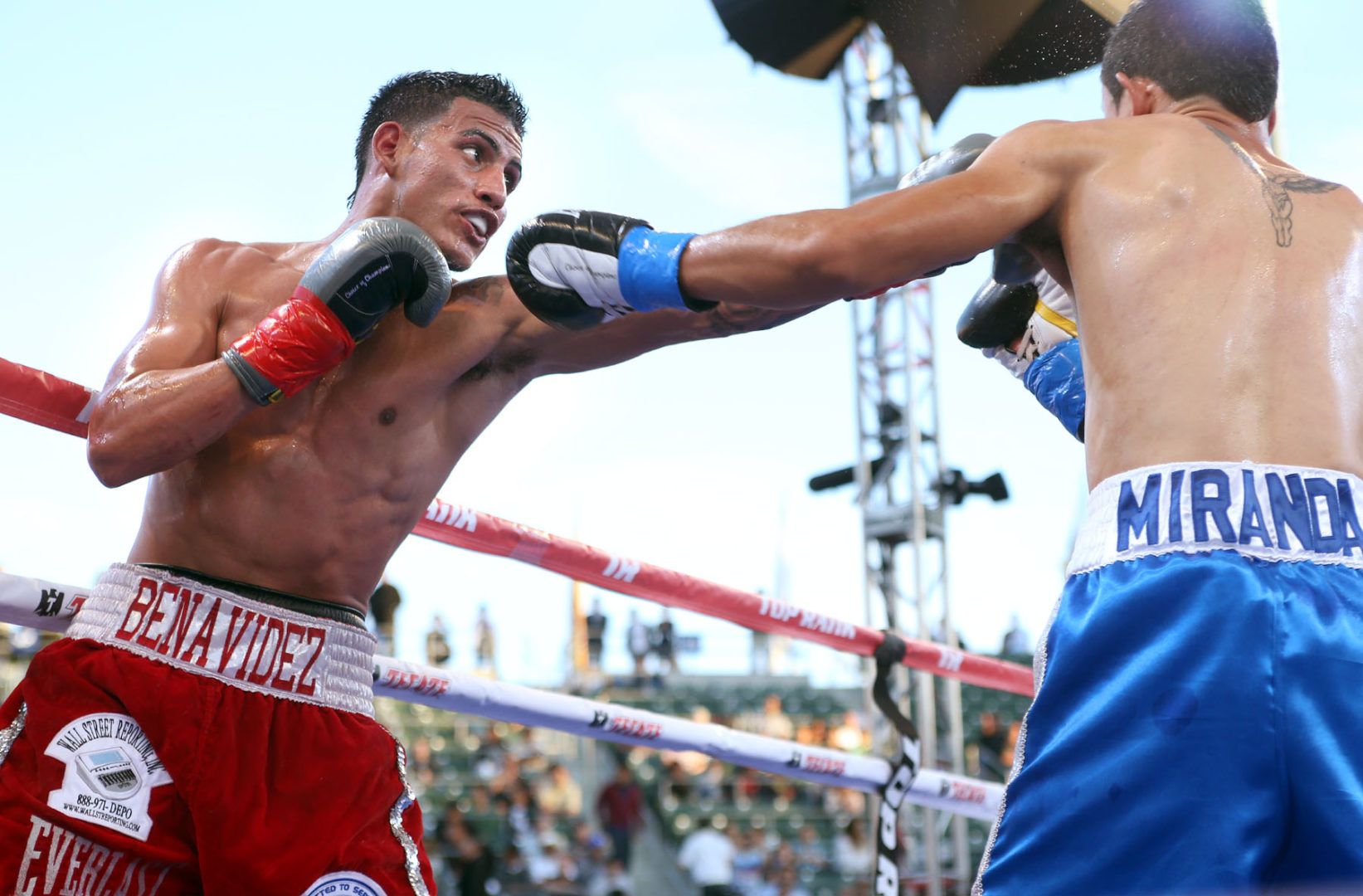
· And Top Rank has scheduled onetime Phoenix prospect Jose Benavidez Jr.,17-0 as a junior-welterweight, for a comeback on Nov. 16 in Laughlin, Nev. An opponent has yet to be determined. Benavidez hasn’t fought since he was rocked in a victory by unanimous decision over Pavel Miranda a year ago in Carson, Calif. It’ll be his first fight since undergoing further surgery on a troublesome right hand.


Bradley’s split decision leaves only debate and uncertainty for him, Marquez and Pacquiao

Bradley_Marquez_131012_002a
LAS VEGAS – Timothy Bradley promised to be like the government. He wasn’t, thank goodness. There was no shutdown. There was only more of the same for Bradley, who can only get a unanimous decision for being a nice guy. His victories are always disputed.

Against Juan Manuel Marquez, the unbeaten Bradley got another one Saturday night at Thomas & Mack Center.

Another split decision. Another debate

What it all means for him and Marquez is hard to say. Let’s just say that, for now and perhaps for quite a while, their respective futures are as uncertain as, well, a split decision.

For Bradley, the narrow victory puts him first in line for a second shot at Manny Pacquiao, who lost to him on split scorecards in June 2012 in decision as contentious as any.

For Marquez, it means a lot of agonizing about judging and what to do next. During an interview in the middle of the ring moments after the scores were announced, Marquez said he was robbed. At 40, the great Mexican faces some serious contemplation about retirement.

Then again, grounds for a rematch were also there in the disagreement on the cards. Bradley was a 116-112 winner on Patricia Morse Jarman’s card. Robert Hoyle had it closer, 115-113, but still for Bradley. It was judge Glenn Feldman’s score, 115-113, for Marquez that will keep the pot stirring about who is next. What’s next.

Pacquiao will have a lot to say about that. More to the point, the real say rests with Brandon Rios on Nov. 23 in Macao, the Chinese re-creation of the Vegas Strip. A Rios’ upset of Pacquiao probably would mean a full-time job in politics for the Filipino Congressman and perhaps work as a ringside commentator for Marquez.

Only Bradley’s ring career is sure to continue. He has said he wants to fight Floyd Mayweather Jr. But Bradley’s promotional rights belong to Top Rank and Mayweather is represented by Golden Boy. In other words, there’s a better chance that Republicans will join Democrats for a few verses of Kumbaya than there is of a Top Rank-Golden Boy agreement on Mayweather-Bradley.

Then, there’s the whole issue of Bradley traveling to Macao, Pacquiao’s new home, for a rematch. Rios is fighting Pacquiao in Macao instead of him, because he said wouldn’t go to China.

With anger still lingering among Pacquiao’s Filipino fans about Bradley’s victory in that split decision more than a year ago, what are the chances of Bradley winning a rematch in Asia?

At least, there’s no debate about that one.


Nothing Heavy: Bradley, Marquez lighter than 147-pound limit in uneventful weigh-in

Timothy Bradley
LAS VEGAS – The Juan Manuel Marquez-Timothy Bradley fight Saturday night is hard to predict. The weigh-in wasn’t.

Marquez and Bradley did the expected, both stepping onto the scale lighter than the welterweight’s mandatory limit, 147, pounds, Friday in an uneventful formality.

Marquez (55-6-1, 40 KOs), the challenger and a slight favorite late Friday, was first to the scale. Amid chants from his Mexican fans at the Encore Theater at the Wynn hotel and casino, Marquez was 144.5 pounds, including a bright silver chain. If he had taken off that chain, he might have been a pound lighter.

Bradley (30-0, 12 KOs), who holds the World Boxing Organization’s version of the welterweight title, didn’t have the chanting fans. But he brought a pound-and-half more to the scale than Marquez did. He weighed 146 pounds.

A lot has been said about Bradley possessing an advantage in size over Marquez, who is attempting to become the first Mexican to win titles at five different weights. On Friday, however, the difference appeared negligible. Both looked sculpted and without a hint of any struggle to make weight.

There had been some question about Bradley, who said the 147-pound weight was a difficult challenge before his bruising decision in March over Ruslan Provodnikov. But Bradley was at 148 pounds Thursday, according to his trainer, Joel Diaz.

The weight was no problem. That’s good thing, because Marquez will be in what figures to be one of Bradley’s toughest fights against one of boxing best tacticians. Bradley has sent out mixed signals as to what his strategy might be. Box or brawl? Marquez, a classic counter-puncher, says he’s prepared to do either. Conventional wisdom has Bradley scoring from the outside and never allowing Marquez to unleash the big punch that put Manny Pacquiao face down on the canvas in December.

Until opening bell in the HBO pay-per-view bout, Bradley’s plans are a guessing game. At least, the weigh-in wasn’t.

The pay-per-view portion of the card is scheduled to begin at 6 p.m. in Nevada (9 p.m. in the East). The undercard features Orlando Salido (39-12-2, 27 KOs), one of Mexico’s archetypical tough guys, against Puerto Rican featherweight Orlando Cruz (20-2-1, 10 KOs), whose gay lifestyle has been the subject of more media attention than either Bradley or Marquez. Salido weighed 126 pounds, the featherweight limit. Cruz, who stepped onto the scale wearing rainbow-colored shorts, was a pound lighter at 125.

The televised undercard also includes amateur star Vasyl Lomachenko, a two-time Olympic gold medalist from Ukraine. Lomachenko is making his pro debut in featherweight bout scheduled for 10 rounds against Jose Ramirez (24-2-2, 15 KOs) of Mexico. Lomachenko weighed in at 125 pounds. Ramirez was at 126.5


Grace Under Pressure: Bradley faces calculated test from Marquez

Bradley_reporters_120606_002a
Timothy Bradley’s story, called a journey by some, can be summed up best by a poignant sight amid the outrage in the wake of his split-decision over Manny Pacquiao. He was in a wheel chair. History is littered with controversial decisions. But the winner confined to a wheelchair at the post-fight news conference? That had to be a first.

It’s an image of a fighter that the world tried to dislike, but just couldn’t. He wouldn’t let that happen. He’s stubborn and vulnerable, all at once. In, the end, he’ll be there, even if he can’t walk to get there. In that wheelchair with badly-injured feet and in front of a restless throng angry at his scorecard victory, Bradley was a defining example of author Ernest Hemingway’s description of courage:

Grace under pressure.

It’s a trait that figures to re-surface sometime Saturday night at Las Vegas’ Thomas & Mack Center in a welterweight clash with Juan Manuel Marquez, a fight fan’s fight, which probably means the cross-over crowd fascinated with Floyd Mayweather Jr.’s obsession with money won’t be watching HBO’s pay-per-view telecast. Too bad. On several levels, Bradley-Marquez ranks as the most compelling bout of the year.

Above all, they are just different personalities. An irony is that they share one thing in common: A victory over Pacquiao. It’s what ties them together. It’s the biggest reason they’re fighting each other. It’s also a reason to watch. Yet, their respective victories over the Filipino Congressman – Bradley by controversial scoring and Marquez by definitive knockout — are as different as they seem to be in so many other ways.

Marquez comes across as shrewd and calculating. There’s almost a manipulative manner to the patient counter-puncher, who waits on the other guy to make a critical mistake. In a game built in part on a good feint, it’s what makes him a great fighter and the favorite to beat Bradley.

Marquez’ agenda for the Bradley bout includes a title in a fifth weight class and a claim on No. 2 in Mexican history, second only to the revered Julio Cesar Chavez. That’s believable enough, especially in the wake of Canelo Alvarez’s one-sided loss to Mayweather and Julio Cesar Chavez Jr.’s continuing exhibition of immaturity in a controversial decision over Brian Vera. Near the top of their favorite game, there’s a vacancy in Mexican hearts. A victory over Bradley would add to a Marquez resume that Mexicans would have to acknowledge and respect.

Harder to believe are Marquez’ comments that he’s done with Pacquiao. At 40, Marquez says he foresees a few more fights in his career. Wouldn’t one with Pacquiao have to be among them? A victory over Bradley would strengthen his leverage in negotiations for a fourth rematch with the Filipino, who faces a problematic challenge of his own on Nov. 23 against Brandon Rios in Macao, the Chinese re-creation of Vegas.

There were reports that Marquez asked for as much $20 million in initial talks for a fifth with Pacquiao. If Marquez finally wins over Mexico as its most popular fighter since Chavez Sr., Mexican demands for another Pacquiao fight will be there. Marquez can then say he’s doing only what his country wants and he’ll do it for $20-million-plus. It’s appears to be a calculated move that might prove brilliant. Like his opponent, Marquez will let the other guy, the Mexican fan, decide his next move.

Contrast that with Bradley. He doesn’t know how to sustain a fake. Can you imagine Marquez showing up anywhere in a wheel chair? Didn’t think so. But Bradley, perhaps honest to a fault, did so in the engaging style that was subsequently played out in his dramatic and dangerous victory over Ruslan Provodnikov in March. In a conference call, Bradley was forthright in discussing the concussion he suffered. He said he saw physicians in New York, Las Vegas and New York. It’s a possible vulnerability. It’s one that Marquez will surely target. It’s also one that makes Bradley engaging and so likable. He’s fearless about who he is. Perhaps even foolish. We’ll see.

But his comments about fighting Marquez more for pride than money ring true. Bradley’s guarantee for Marquez is $4.1 million, according to contracts filed with the Nevada State Athletic Commission. His guarantee for Pacquiao was $5 million. More was there in the potential purse for a Pacquiao rematch, promoter Bob Arum said. But Bradley said no, in part, because he didn’t want to fight Pacquiao in China.

It was an honest assessment of his chances in Asia, Pacquiao’s home hemisphere, where anger at the Las Vegas decision in June 2012 lingers.

Honesty doesn’t always win. It’s not the way to bet either. But it’s worth a few cheers. The guess here is that they will be there Saturday night. Bradley has fought for them. Earned them too.


It’s Unanimous: Judges are losing on the public scorecard

Nobody pays to see judges at ringside with scorecard in one hand and pencil in the other. But it’s the judges, not the fighters, who are dominating talk in a way that can’t be good for business.

Debatable scorecards are part of the game. And, sometimes, the subsequent controversy is even good for it. If the public is arguing, it’s interested. But a succession of lousy decisions and inexplicable scoring is an ominous trend.

In the messy wake of judge C.J. Ross’ 114-114 score for Floyd Mayweather Jr.’s brilliance in overwhelming Canelo Alvarez in Las Vegas and Brian Vera’s unanimously controversial loss on the cards to Julio Cesar Chavez Jr., in Carson, Calif., there is angst about what might happen Saturday in the Miguel Cotto-Delvin Rodriquez fight in Orlando, Fla., and the Wladimir Kitschko-Alexander Povetkin bout in Moscow.

Attention on whether Freddie Roach can revive Cotto’s career and Klitschko’s chase of Joe Louis’ record of 25 successive title defenses has been obscured by questions that shouldn’t matter. But they do, now more than ever. It was even there Tuesday during a conference call with Timothy Bradley for what should be the best in boxing’s Octoberfest against Juan Manuel Marquez on Oct. 12 at Las Vegas’ Thomas & Mack Center.

Worried about the judges?

“There is always a concern,’’ Bradley trainer Joel Diaz said. “This is boxing, and at the end of the day, what’s going to happen is going to happen. Tim is a very elusive fighter and has great speed and great footwork. If it’s up to the judges, we hope they do their job.’’

Good luck on that.

Too many scores just don’t add up any more. The fighters, themselves, can settle it before the decision falls into the judges’ unreliable hands. The knockout is what separates boxing from figure skating or American Idol.

Amid warnings about long-term damage from concussions, however, fewer fights figure to end in a definitive stoppage. Mayweather’s defensive mastery has allowed him to elude punishment and fight on in career that has turned him into the world’s highest-earning athlete.

Mayweather, the self-proclaimed face of the battered game, has more decisions than scars. For Mayweather, there’s been unprecedented wealth in the cards. Young fighters are bound to follow his example.

Even for Mayweather, there was a scare when Ross’ bizarre score was the first of three announced in his majority decision over Canelo. It also was a sure sign that scorecard arithmetic can make just about anybody feel as if they just had their pocket picked. Ask Vera.

Controversy over Chavez Jr.-Vera might lead to a rematch. Vera promoter Artie Pelullo said preliminary talks are
underway, possibly for Dec. 7 or Dec. 14 in Texas, Vera’s home state.

There’s been no word from Chavez Jr. on whether he’d agree to one. However, Pelullo said Wednesday that Chavez Jr. is under pressure from Mexican fans to fight Vera a second time. Chavez Jr.’s popularity in Mexico is at stake, Pelullo said during a conference call.

Pelullo suggested that there will be a rematch because Mexico is holding Chavez Jr. accountable.

Holding judges accountable, however, is a different issue. After reported complaints from Nevada Governor Brian Sandoval, Ross took a leave of absence. If there were any consequences for the Chavez-Vera scores in California, they have yet to be disclosed.

Without accountability, the controversies will continue in Nevada or California or Texas or Florida or Moscow, Pelullo said.

An enforcement of standards and discipline, however, isn’t free. Despite all the screaming about what state commissions and regulatory agencies should do, few real solutions have been offered.

Here’s one suggestion:

Boxing is trying to get drug use under control. After some early controversy, Dr. Margaret Goodman’s VADA, an outside testing agency, has become part of a process accepted by the fighters. It’s not perfect. But it’s a beginning.

Can’t a similar agency under the control of retired judges be created? Give it the authority to review a commission’s assignment of referees. Let it put together a policy of standards and ethics. It would cost money, which means a percentage of the total purse split by fighters and promoters. It’s a fee, another one that would anger Top Rank and Golden Boy and anybody else with an investment in the game.

Without one, however, there might not be a much of purse left for anyone to split.


Fighting to grow up: For Julio Cesar Chavez Jr., it’s the biggest one of all

Chavez_Lee_120612_001A
Put a pair of boxing gloves on Peter Pan and you’ve got Julio Cesar Chavez Jr. A man-child, emphasis on the child.

The real fight for Chavez Jr. is whether he ever grows up. It’s a question that has begun to take on urgency as he enters his late 20s after a series of exasperating, often embarrassing missteps that leave doubt about whether he cares about his craft or his dad’s legacy.

Anybody who has met Chavez Jr. (46-1-1, 32 KOs) knows him to be likable. There’s an adolescent charm about him. He’ll make you laugh, unlike his feared dad, the proto-typical hard man whose meltdown stare could make you look over your shoulder in search for a quick exit to safety. Like him or not, Julio Cesar Chavez Sr. was a serious guy. Through 48 fights, his son isn’t.

That might begin to change Saturday night against Bryan Vera (23-6, 14 KOs) at StubHub Center in Carson, Calif., in an HBO-televised bout. But it’ll take more than just one fight for Chavez Jr. to get beyond a reputation that only got worse last September in his loss to Sergio Martinez.

There was his bizarre training camp, conducted mostly at a Las Vegas home in early-morning workouts. Then, there were 11 one-sided rounds, all in favor of Martinez, before a wild 12th that saw Chavez Jr. suddenly wake up with a ferocious knockdown of Martinez. Chavez Jr. nearly stole the fight with a knockout. It made you wonder what he might have accomplished with some real roadwork instead of a few laps around the couch in the living room of that comfortable Vegas’ rental. Then, there was the subsequent news that Chavez Jr. had tested positive for marijuana. Ah-ha, everyone joked. No wonder he didn’t start working out until about 1 a.m., what with the midnight munchies and all.

For his promoter Bob Arum and loyal cadre of Mexican fans, that dramatic 12th is the flash of brilliance that illuminated his potential. It represented what he could be. But maturity is about staying power. And that’s what has yet to be seen from a very nice kid, yet one seemingly without the requisite accountability that comes with being a grown-up pro.

He says the right things. In a conference call Tuesday, Chavez Jr. said he accepted responsibility for his failed drug test, which initially led to a controversial $900,000 fine levied by the Nevada State Athletic Commission. After Arum took the bully pulpit and condemned the size of the fine, it was reduced to $100,000. Even that seems a little high by today’s standards, laws and PEDs. Voters in Colorado and Washington made pot legal in their respective states. It’s not as if Chavez Jr. tested positive for HGH, EPO or some other chemical acronym. A positive test for marijuana doesn’t put him in Lance Armstrong’s league. Pot is about as much a performance-enhancer as a bacon cheeseburger. Still, it was also a sure sign that his mind wasn’t on the fury he was about to encounter against the disciplined Martinez.

With the inevitable question Tuesday about Chavez Jr.’s positive drug-test, Arum was back on the bully pulpit.

“I want to go on record as saying that there is nothing wrong with smoking pot,’’ Arum said. “There is nothing wrong with marijuana.’’

Colorado and Washington voters agree with Arum, always candid and quick to confront an issue. In some ways, perhaps, Arum is expressing how public opinion on pot has changed over the last 10 to 15 years. Bill Clinton didn’t inhale; Barack Obama did. But Arum might regret the timing of this one. He’s got a fighter who needs to grow up.

Chavez Jr. doesn’t need another excuse to train the way he wants, eat what he wants, or smoke a joint whenever he gets the urge. Excuses are enablers, which have proven to be Chavez Jr.’s toughest opponents.

Even for Vera, there are troubling signs of some of the same. Vera is tough, but lacks the talent so often evident in Chavez Jr. Chavez’ struggle to make weight has led to a reported agreement, –173 pounds instead of the junior-middleweight’s 168 — and 10 rounds instead of 12. It looms as another excuse, a way for Chavez to slip through another loophole that has allowed him to avoid accountability and prevented him for reaching his potential.

In the art of match-making, Top Rank has been brilliant with Chavez Jr., who didn’t start with the bedrock of fundamental skill learned over an amateur career. It has moved him carefully and against opponents who have allowed to him to display power and instinct.

Yet, there’s still an unresolved challenge: Himself, his own immaturity.

If he can’t win that one, does Top Rank or anybody else think he has a chance against Gennady Golovkin, or Andre Ward, or even Canelo Alvarez?

Didn’t think so.


Ross is gone, but the suspicions won’t go away

LAS VEGAS — C.J. Ross finally got one right. She quit.

News on Wednesday that Ross would not be back, at least for awhile, in a judge’s seat was a surprise only because it wasn’t expected. It should have been. But this is boxing, where there is always an explanation for the inexplicable.

Just the fact that she resigned, probably under pressure from Nevada authorities and politicians, offers a partial explanation for how egregious her 114-114 score was for Floyd Mayweather Jr.’s overwhelming victory over Canelo Alvarez Saturday.

It doesn’t explain everything, of course. And that’s the problem. Suspicions linger because of unusual movement in the betting on a draw. The odds dropped precipitously during the week before opening bell. Two days before the fight, I called a friend and told him odds on a draw at the MGM Grand’s sports book were at 10-to-1.

“Huh,” he said, “I can get it online at 28-to-1.”

By Saturday noon — about eight hours before the fight, odds on a draw had fallen to 8-to-1. Weeks before opening bell, there had been suggestions that a draw was a good bet because it would ensure a rematch. Amid evidence that the fight would set revenue records, there were millions of reasons to do it again. Mayweather’s thorough brilliance against an overmatched Canelo all but ensured that it won’t.

But questions about the Ross card leave suspicions. You could hear it among fans at Las Vegas bars late Saturday. You can read it on twitter and web sites today. For the promoters, the talk is reason to worry. It’s bad for business. Some of the crowd that bought pay-per-view or spent $110 on closed-circuits seats at one of the Las Vegas casinos won’t be back. At least not at those prices..

I’m not saying that Ross got paid-off. I’m not saying she is corrupt. I have no evidence of that. If anything, I just happen to think that Ross is incompetent. Her scorecard in favor of Tim Bradley over Manny Pacquiao is evidence of that. But I am saying suspicions are running rampant. They were more than enough to force her out.

In her statement, Ross made it sound as if she were taking a leave of absence. At 64, however, don’t expect to see her with another official scorecard in hand. In comments to the Las Vegas Review Journal, Nevada State Athletic Commission Chairman Bill Brady said he apologized to Nevada Governor Rick Sandoval for any embarrassment to the state.

Ross had to go, no doubt.

But those suspicions? They’re not going anywhere for a while.


Mayweather wins big according to everybody but one judge

Floyd Mayweather
LAS VEGAS – Floyd Mayweather Jr. did the expected. One judge didn’t.

It was brilliant. It was bizarre. It was boxing all over again.

Mayweather didn’t have to explain himself for fulfilling the promises he made in dancing around and all over Canelo Alvarez Saturday night at the MGM Grand. It was called The One. For once, the promoters got it right. Two great fighters didn’t show up. Only Mayweather did in a one sided-display of brilliance that further embellished his undisputed claim on being the best of his generation.

Canelo never had a chance. Not one.

Still, a judge gave him one. C.J. Ross scored it 114-114. Maybe, nobody should be surprised. Ross was also one of two judges who scored it for Timothy Bradley in the controversial split-decision over Manny Pacquiao on Dec. 8.

When Ross’ score was announced, there were gasps from a capacity crowd that was dominated by Canelo fans from Mexico. They also had seen what everybody other than Ross had witnessed.

Two other scorecards ensured that Mayweather had a victory by majority decision. On judge Craig Metcalfe’s card, it was 117-111. Dave Moretti scored it 116-112. On the 15 Rounds card, Mayweather scored a shutout. Outgunned and out-classed, Canelo didn’t win a round on this card.

“I can’t control the judges,’’ Mayweather (45-0, 26 KOs) said after moving in and out while landing punches with sniper-like speed and accuracy.

It was the right answer from Mayweather, who collected a record-setting guarantee of $41.5 million. Still, it didn’t explain Ross’ score. There had been plenty of talk before opening bell about a rematch. A buzz for the junior-middleweight fight was in the air for days. Money was being made. A pay-per-view record for the Showtime telecast was a real possibility. At the MGM Grand’s sports book, one of the popular bets was a draw. Odds on a draw were 10-1 on Thursday and Friday. Early Saturday, they had dropped to 8-1.

Mayweather’s dominance of the fight might have eliminated any appetite for a rematch, despite what Ross’ score might say.

Canelo (42-1-1, 30 KOs) entered the ring 13 pounds heavier than the 152 pounds he recorded at Friday’s weigh-in. He was bigger and looked it, especially in the upper body. The 165-pound Canelo out-weighed Mayweather by about 15 pounds. But that was no advantage for the young Mexican. It only meant he was a bigger target for Mayweather. A stationary one, too.

“I couldn’t connect,’’ said Canelo, who could wind up with a career-high $12 million once he gets his undisclosed share of the television money. “He was just too elusive, too smart and too experienced.’’

Canelo did not dispute the loss. He said he knew he had been beaten.

It’s strange that C.J Ross didn’t.

Danny Garcia said it was his job to take away Lucas Matthysse’s power.

Mission accomplished.

Garcia (27-0, 16 KOs) employed patience and smarts to nullify that proven power for a unanimous decision over Matthysse (34-3, 32 KOs).

Matthysse was the early aggressor. The junior-welterweight dictated the pace as he stalked Garcia, who retained the 140-pound title.

In moving forward, however, Matthysse stepped into a trap set brilliantly by Garcia. First, Matthysse walked into body shots. Then, there were repeated right hands. Not long after a head butt in the fifth round, an ugly mouse appeared below Matthysse’s right eye. It wasn’t clear whether the butt caused the bruise. From the seventh through the 11th rounds, swelling began to close the eye as he continued forward and straight into Garcia’s right.

In the 11th, Matthysse knocked out Garcia’s mouth piece with a right hand. But Garcia still took the round, knocking down Matthysse with a sucession of puches along the ropes.In the 12th, Garcia was penalized a point for a low blow,

By then, however, it wasn’t enough to take the victory away from the Philadelphia fighter.

There was only one way to score the Ishe Smith-Carlos Molina fight: Dull and duller. Molina (22-5-2, 6 KOs) won it, scoring a split decision and taking the International Boxing Federation’s version of the junior-middleweight title from Smith (25-6, 11 KOs). But there weren’t many cheers or boos about the scoring. There were only yawns for zero action in a fight that went to Molina, who prevailed with some aggression in the early rounds.

Mexican welterweight Pablo Cesar Cano (27-3-1, 20 KOs) bloodied Ashley Theopane’s nose, rocked him with a left in the third, nearly knocked him down with a right in the fifth and backed him up for eight of the 10 rounds, yet had to wait and wonder whether he won the first televised fight. Cano did, scoring a split decision. But he didn’t do enough to convince judge Richard Ocasio, whose score was the first announced on a curious card that favored Theopane (33-6-1, 10 KOs), a Mayweather-promoted fighter.

Luis Arias (7-0, 3 KOs), a super-middleweight from Milwaukee, wore Packer green-and-gold into the ring. Then, he made James Winchester (16-9, 6 KOs) of Reidsville, N.C., look like the Jacksonville Jaguars. Arias scored a shutout, winning every round in a six-round unanimous decision in the final bout before the pay-per-view telecast began. Arias was the fourth Mayweather fighter to win.

Ronald Gavril (7-0, 5 KOs) , a super-middleweight from Romania, made it 3-0 through the card’s first three fights for Mayweather Promotions with a unanimous decision over Shujaa El Amin (12-5, 6 KOs) of Flint, Mich. Gavril suffered a bloody nose early in the bout, but he was the busier fighter throughout the eight-round bout.

Chris Pearson, a Mayweather-promoted middleweight from Dayton, followed Bellows’ first-round TKO with an even quicker stoppage. In the opening seconds, Pearson (12-0, 9 KOs) threw a jab that landed like a baseball bat, leaving Joshua Williams (9-6, 5 KOs) of Westerly, R.I. with a badly bloodied nose. About a minute later, it was over. Referee Russell Mora ended it at 1:14 of the opening round.

Floyd Mayweather Jr.’s promotional company got things started with a victory.

“Easy Money,’’ was the chant from one of the few fans seated Saturday in a chilly, empty Grand Garden Arena two-and-a-half hours before Showtime’s pay-per-view telecast was scheduled to begin for the card featuring Mayweather-Canelo Alvarez at the MGM Grand.

Lanell Bellows (6-0-1, 5 KOs), a Mayweather-promoted super-middleweight, made it easy with a first-round TKO of Jordan Moore (3-1) of Logan, W.V.

Bellows put Moore onto his knees with a paralyzing body shot, a right-handed hook, 2:30 after opening bell.


The crowd weighs-in with numbers that hint at more records for Mayweather-Canelo

Mayweather_Alvarez_Slone
LAS VEGAS – It was more of a scene than a weigh-in. More about the crowd than the scale.

The often mundane ritual of fighters in underwear stepping onto a scale was transformed Friday into a rock-and-roll like event that began about five hours before Floyd Mayweather Jr. and Canelo Alvarez even arrived at the MGM Grand.

Fans wearing red wigs in honor of Canelo’s hair and caps with Mayweather’s TMT logo stood in a line that snaked through the hallway leading into the Grand Garden Arena and between the slot machines on the casino floor. About 90 minutes before the fighters were scheduled to weigh in, the place was jammed. A crowd of 12,200 was waiting. Fans who had hoped to see them were turned away.

It was called the biggest weigh-in crowd in boxing history. There are no numbers to prove it or disprove it. But it’s fair to say that it was unprecedented and a huge sign that the Showtime telecast of the Mayweather-Canelo card Saturday night has a real chance at breaking the pay-per-view record of about 2.5 million, set in Mayweather’s 2007 decision over Oscar De La Hoya.

Only the buzz for Mayweather-Canelo was off-the-scale.

At 150 1/2 pounds, Mayweather was a pound-and-half lighter than the mandated 152 for the junior-middleweight bout. The catch weight was the source of some controversy. It was supposed to have put Canelo at a disadvantage. At least, the Mayweather camp thought so. But if Canelo had any trouble making weight, it wasn’t evident. He coolly tipped the scale at 152 pounds. Not a fraction of an ounce more. If in fact he did struggle and was weakened in the process, it might become evident midway through Saturday night’s fight, scheduled for 12 rounds. On the scale, however, Canelo looked comfortable.

“I was born ready,’’ Canelo said, abandoning his usual Spanish for English in his final words before leaving the stage to chants from a predominantly Mexican crowd.

Experience is supposed to be one of Mayweather’s biggest advantages over the 23-year-old Canelo, who is stepping onto boxing biggest stage for the first time. But as opening bell gets close, Canelo has remained relaxed and confident. Nothing appears to intimidate him, not even Mayweather, who tried.
The 36-year-old Mayweather (44-0, 26 KOs) chewed gum and talked at Canelo (42-0-1. 30 KOs) as the two posed, face-to-face, after stepping off the scale. Mayweather held the World Boxing Council’’s specially-made version of the 154 pound belt, which includes seven pounds of gold. At current gold prices, it’s worth about $150,000.
Mayweather, nicknamed Money, grabbed Canelo’s right arm and shoved the belt toward the Mexican challenger. Mayweather wanted him to hold it. Canelo slapped Mayweather’ hand away and walked off.

Golden Boy Promotions CEO Richard Schaefer said Canelo turned to him and said he doesn’t take orders from Mayweather.

“He told me: ‘I’m not going to do what the guy tells me to,’ ’’ Schaefer said.

The fiercely-independent Bernard Hopkins, who was on stage in his role as a Golden Boy partner, was impressed by Canelo’s move.

“Bernard told me: ‘That’s a veteran move,’ ‘’ Schaefer said.

It’s clear Canelo wants no handouts. If he is going to win gold, he intends earn it. Now, the real question is whether he has enough speed in his feet and hands to do so.

“You know how these kids are,’’ said the favored Mayweather, who continued to be about 5-2 pick Friday afternoon at the MGM Grand’s sports book.

In another much-anticipated fight, Lucas Matthysse (34-2, 32 KOs) and Danny Garcia (26-0. 16 KOs) made weight, 140 pounds each, for their junior-welterweight bout. Garcia had to step onto the scale for a second time. In his first trip to the scale, he was half-pound too heavy, because the scale was rocking.

So was that crowd.

NOTES: Unbeaten super-middleweight Andre Ward, a pound-for-pound contender, was on the weigh-in stage among fighters promoted by Golden Boy and Mayweather. Ward’s presence created a lot of speculation about whether is he still trying to break away from promoter Dan Goossen. Ward went to court in an apparent attempt to break with Goossen. And arbiter ruled in Goossen’s favor. “It’s nothing,’’ Goossen said. “He has a signing in town (Las Vegas) tomorrow (Saturday). So he went to the weigh-in. Andre happens to be a boxing fan. He went there and was brought up on stage. He knows these guys, grew up with them. These are good things, not bad.’


Father Knows Best: Angel Garcia says he does

Angel Garcia
LAS VEGAS – It wouldn’t be a big fight card without a crazy dad lurking in somebody’s corner.

Angel Garcia, junior-welterweight champion Danny Garcia’s father and trainer, filled the role Thursday with a noisy stand-up that included God, country, a Latino beat, a couple of comic-book heroes and a condemnation of anybody who doesn’t think his son can beat favored Lucas Matthysse Saturday night at the MGM Grand.

He didn’t comment on Syria. Then again, maybe we just missed that one. After all, there’s only so much time in one news conference and even a good digital recorder has limited space. Let’s just say that as we write this, Angel Garcia is still talking.

“Vegas don’t know nothing,’’ said Angel, who transformed his turn at the podium into a bully pulpit vacant since Ruben Guerrero was there in May before son Robert Guerrero’s loss to Floyd Mayweather Jr. “You don’t know nothing. I know everything.’’

Crazy dads have been part of boxing’s dysfunctional family since at least Floyd Mayweather Sr., who has said little and been notably absent from the stage in the theater leading up to his son’s junior-middleweight fight Saturday night against Canelo Alvarez at the MGM Grand. But if you were expecting some silence with Mayweather Sr. in the background, forget it.

After thanking God, Angel talked about those skeptical of his son’s chances as though they were infidels, or at the very least un-American. He expects a big Latin crowd from Argentina supporting the power-punching Matthysse with Argentine colors, baby-blue and white. Angel Garcia talked about his Latino background. He and his unbeaten son (26-0, 16 KOs) are of Puerto Rican descent. But they are Philadelphia, through and through.

“Danny is an American fighter,’’ Angel said. “He represents the United States, the same country that sends you a welfare check. You sign it, don’t you? Then, you’re an Americanito.’’

Angel promised that the 140-pound titles would remain in his son’s American hands in a bout that might be the most entertaining fight on the Mayweather-Canelo card. There’s been a lot of attention of Matthysse’s knockout ratio. It’s at a head-rocking 86.49 percent. He has 32 stoppages in 36 fights, a record that includes 34 victories and two losses, both by decision. In his last bout, Matthysse generated a lot of attention with crushing third TKO of Lamont Peterson in May.

“His knockout of Lamont Peterson was heard around the world,’’ Golden Boy Promotions CEO Richard Schaefer said.

But Angel Garcia mocked stories about punching power that initially, he said, made Matthysse sound like Superman.

“Then, he knocked out Lamont Peterson and, whoa, Aquaman is back,’’ Angel said.

Matthysse shrugged his shoulders when asked about Angel Garcia’s mix commentary, insults and comedy. It didn’t affect him anyway, he said.

“Not at all, because I don’t understand what he says,’’ Matthysse said in Spanish.

Matthysse, about a 5-2 favorite Thursday afternoon, only promised that he would win. But Angel vowed that his surprising son would not be beaten.

“If he loses, I’ll cut my head off,’’ Angel said.

That might be the only way to silence him.


Who’s The Boss? It sounded a lot like Floyd Mayweather

mayweather2
LAS VEGAS – Floyd Mayweather Jr. and Canelo Alvarez arrived late and stayed late Wednesday at a news conference in a venue that figured to be an appropriate setting. Cirque Du Soleil usually plays at the MGM Grand’s KA Theatre. But boxing’s traditional version of the circus was surprisingly understated.

Mayweather coolly played the CEO role with comments that seemed to say he thinks Alvarez is the junior-partner in a junior-middleweight, pay-per-view fight Saturday night that figures to do some record-setting business.

The 23-year-old Canelo has 42 victories on a 43-fight ledger that includes no losses and one draw. It looks impressive. But Mayweather questioned the quality of opposition. Mayweather made it sound as if the Alvarez record was full of more holes than a block of Swiss cheese. Alvarez beat Matthew Hatton, Ricky’s brother, whom Mayweather beat. Alvarez beat Jose Cotto, Miguel’s brother, whom Mayweather also beat.

“You fight Miguel Cotto’s brother, but you don’t fight Miguel Cotto,’’ Mayweather said in comments after the formal portion of a news conference for pound-for-pound king’s second fight in a Showtime deal worth a potential $250 million. “You fight Ricky Hatton’s brother, but you don’t fight Ricky Hatton.’’

It was a follow-up to Mayweather’s comments at the podium during the formal part of a news conference that started about 40 minutes late.

“If he had faced 42 Mayweathers, he’d be 0-and-42,’’ he said.

Alvarez, who has been as unflappable as he is inexperienced on boxing’s biggest stage, sounded as if he isn’t listening to Mayweather. There were familiar questions about how the 23-year-old redhead will deal with Mayweather’s speed and elusiveness.

“I’m the same,’’ Canelo said. “I’ve got the same qualities.’’

What he won’t have, however, is the same paycheck. Mayweather is guaranteed $41.5 million, a record for one fight, according to several media reports. But there was some dispute Wednesday about Canelo’s purse. Mayweather said Canelo will collect $8 million.

“With no upside,’’ Mayweather said as if he had hired the popular Mexican.

Not true, according to Golden Boy Promotions CEO Richard Schaefer, who said Canelo’s upside is “significant.’’ During the news conference, Schaefer said he talked to Televisa, which will televise the bout in Mexico. He said was told that the network expects the Mexican audience to be between 70 and 80 million.

According to a contract filed with the Nevada State Athletic Commission, Canelo is guaranteed $5 million. But that doesn’t include international revenue. According to various sources and news reports, however, Canelo can expect to earn at least $12 million.


Don’t tell Canelo he has nothing to lose

Saul Alvarez
There’s a theory that Canelo Alvarez has nothing to lose on Sept. 14 in his long-awaited showdown with Floyd Mayweather Jr. The reasons add up. Canelo is 23. He’s about to collect a career-high purse, expected to be between $10 and $13 million. He’s facing a 36-year-old fighter, whose tactical mastery has finally allowed him to prevail in the debate about who is at the top of the pound-for-pound’s mythical ratings. It’s no myth at all. It’s Mayweather and only Mayweather.

A loss for the young and still-unbeaten Canelo could become a valuable lesson in the ongoing education of a fighter who is beginning to look a lot like the pound-for-pound’s heir apparent.

What’s to lose, especially if a competitive performance from Canelo in a narrow defeat on the scorecards leads to a rich rematch?

Dumb question.

At least, it was when it was asked of Canelo during an international conference call.

“I think I have a lot to lose,’’ he said. “This is a fight that is very important to me. I have a whole lot to lose. I just don’t see it that way.’’

There’s pride in the answer. It’s an intangible. It’s just hard to know whether it gives Canelo more of a chance on his first night ever on boxing’s biggest stage and against a fighter who has ruled that stage like personal property. But it is evident that pride motivates Canelo as much as money moves Mayweather, who has been guaranteed a record-setting $41.5 million for the second bout in a Showtime deal worth a potential $250 million. Pride is there, in the tone of Canelo’s words. It’s also there, beneath all of that attention-grabbing red-hair, in stubborn eyes the color of combustible flint.

Be careful, and Mayweather has been. He seems to know that Canelo, although young, is dangerous. Whatever has passed for trash talk in the build-up for the biggest fight since Mayweather’s victory over Oscar De La Hoya in 2007 hasn’t exactly been outrageous.

If anything, Mayweather seems to have kept his rhetorical powder dry. His sharpest words seem to be more intended for De La Hoya, Canelo’s promoter. Mayweather, a promoter in his own right, has never liked De La Hoya. Don’t look for the two to start exchanging Christmas cards any time soon, if ever. Despite that, Mayweather seems to agree with De La Hoya about one thing: Canelo is just beginning to approach his potential.

“He hasn’t shown one bit of what’s he’s capable of,’’ De La Hoya said. “He hasn’t put it all together, because he hasn’t fought Floyd Mayweather, the best pound-for-pound fighter. Mayweather will bring the best out of him.’’

He might. Then again, Canelo’s pride might exert a pressure all its own and result in chances that Mayweather has always exploited with unerring efficiency. That might be the lesson. It also might be a lot to lose. But damaged pride has never needed stitches. It heals faster than a bloodied face. As an intangible, it is potentially powerful enough to give a Canelo a chance on Sept. 14. And if not then, maybe later in a rich rematch.


What, me worried? Mayweather isn’t and maybe Canelo should be

Floyd_Mayweather
Canelo Alvarez keeps getting asked about how he will react to Floyd Mayweather Jr.’s trash talk. It’s a question that assumes the inevitable. Not if. But when. Funny thing is, there’s not been much of the Mayweather trash that seemed to type-cast him a couple of years ago.

The live stream of Mayweather’s media day from his Las Vegas gym Wednesday, projected a CEO-like persona. He was cool, calm and self-assured, almost eerily so, about his 152-pound fight on Sept. 14 at Las Vegas’s MGM Grand. Canelo said all of the right things Tuesday at his own media day from Big Bear, Calif. He talked as if he were reading from a tele-prompter. Nothing that Mayweather says, Canelo promised, will bother him.

Maybe not, but a Mayweather without the expected insults might be a reason for Canelo to sweat. Why? Mayweather doesn’t appear to be worried at all about the 23-year-old Mexican who is about to make his first step on to boxing’s biggest stage.

Much has been said about Mayweather’s evolution over the last couple of years, or at least since his infamous outburst at HBO’s Larry Merchant after his controversial stoppage of Victor Ortiz. He’s appears to have grown beyond the spontaneous, emotional outbursts that always seemed to there, just waiting to erupt. Maybe, his well-documented time last summer in jail is a factor. Maybe, it’s the accumulation of years and the wisdom that comes with them. Maybe, it’s because of his Showtime contract and the responsibility that comes with a potential $250 million. By way, that’s what Amazon founder Jeff Bezos paid for The Washington Post a few weeks ago. That might say more about the state of the newspaper biz than it does about Mayweather. But you get the idea. Mayweather is part mogul and part boxer these days. Trash-talk is for kids. He isn’t one anymore.

Nevertheless, profane insults from Mayweather continue to identify him as much as that precise counter. Hence, Canelo gets asked that familiar question. When trash-talk was as inevitable as his next breath, Mayweather often would explode into uninterrupted streams of it when threatened. Blame it on a streak of insecurity, or a big ego, or quick temper. Whatever the diagnosis, it’s probably still there, even if tempered by maturity. Scratch it with a real threat and an outburst figures to follow. In Canelo, there is no threat, or least that’s what Mayweather’s tone and words suggest.

“Am I fighting a guy who is just a pushover?’’ Mayweather said. “I don’t think so.’’

But, he then said in a matter-of-fact tone, Canelo record – 43 fights, 42 victories and one draw – includes opponents he should have knocked out.

“I’m not talking about A or B fighters,’’ said Mayweather, who praised Canelo as a solid boxer-puncher, yet also said that he went the distance against fighters who rated a C or D on his grade scale.

Between getting a fresh shave for his bald head and bites of a chicken diner, Mayweather talked about a lot more. There were jokes, some philosophy and an opinion that Juan Manuel Marquez deserves to be Mexico’s No. 1 fighter instead of the popular Canelo. But you never heard the flurry of expletives that are symptomatic of that one word: Worried.

He’s not.

Maybe, Canelo should be.


Opportunity Knocks: Mares can enhance his pound-for-pound credentials against Gonzalez

abner-mares
Abner Mares defies traditional categories, perhaps because he’s nimble enough to switch from one to the other quickly and sometimes seamlessly. Within a single fight, he moves from skill to skill, category to category, like an actor changing costumes.

From brawler to boxer, from puncher to careful tactician, Mares has a variety of roles he employs for every situation. His resourceful versatility isn’t exactly a secret anymore, but that doesn’t make it any less problematic for an opponent who can never be quite sure who and what he is facing from round to round.

That leaves experienced and tough Jhonny Gonzalez with a difficult task Saturday at the StubHub Center in Carson, Calif., in the main event of a Showtime-televised card. Facing Mares is a little bit like playing Russian Roullette. At some point, Mares will find a skill that exploits a weakness.

“You can’t really compare Jhonny to my last opponent,’’ said Mares, who beat Daniel Ponce De Leon in May on the undercard of Floyd Maywetaher Jr.’s victory over Robert Guerrero. “Jhonny is more of a thinker than Ponce, who just came to brawl. I know I have to fight him in a very smart way.’’

If there’s one word that best describes Mares (26-0-1,14 KOs), it’s opportunistic. Sure enough, an intriguing opportunity is on the line for him in a featherweight fight against Gonzalez (54-8, 46 KOs). His promoter, Golden Boy CEO Richard Schaefer, grabbed it and introduced it by arguing that Mares should be ranked No. 2 in the pound-for-pound ratings behind Mayweather.

The pound-for-pound debate is a little bit like a video game. It’s a collection of talking points and not much more. But it matters in terms of public perception. It’s Schaefer’s job to campaign for his fighters. In arguing for Mares, Schaefer has managed to get his name into the debate in a way that that figures to generate interest. Translation: A potential boost in television ratings.

The rest is up to Mares, who has held titles at three weights – 118 pounds, 122 and 126. He figures to beat Gonzalez, but now there’s some pressure on him to win impressively in a bid to further enhance his pound-for-pound credentials.

The opportunity is there because of mounting questions about the presumptive No. 2, super-middleweight Andre Ward, whose position has eroded because of inactivity brought on in part by injuries. Of late, most of the news about Ward has come from an arbitration hearing won by his promoter, Dan Goossen.

Meanwhile, another contender, middleweight champion Sergio Martinez, is on the shelf until next year because of knee and hand injures aggravated in difficult decision over Martin Murray in April. Juan Manuel Marquez is scheduled to resume his career on Oct. 12 against Timothy Bradley in his first bout since his December stoppage of Manny Pacquiao. Inactivity isn’t a loss, but it isn’t much of an argument for any fighter trying to hold onto his pound-for-pound status either.

Contrast that to Mares, who beat Eric Morel and Anselmo Moreno in 2012. If he can follow up his ninth-round TKO of Ponce De Leon with a definitive victory over Gonzalez, he can punctuate his pound-for-pound argument in a way that could be hard to counter.


Thanks, but no thanks: Angel Garcia complains about a media gift that figures to motivate son Danny against Matthysse

Danny Garcia
It didn’t take long for Angel Garcia to erupt. He’s complaining to media that his son, Philadelphia junior-welterweight Danny Garcia, isn’t getting a fair shake in coverage of his bout with Lucas Matthysse on the Sept. 14 card featuring Floyd Mayweather Jr.-versus-Canelo Alvarez at Las Vegas’ MGM Grand.

It’s hard to judge whether his apparent anger is real or just an act. There are times when Angel Garcia, his son’s trainer, seems to enjoy throwing a temper tantrum. The more profane, the better. His insults and epithets before his son’s upset of Amir Khan in July, 2012 were enough to wonder whether he’s one of those Philadelphia fans known to boo Santa Claus.

But, come on, Angel Garcia shouldn’t complain about coverage that includes Matthysse on The Ring’s current cover. Angel Garcia, another in the long line of boxing dads behaving badly, should thank the media for a gift that allows him and his son to play the underdog, a role as effective as it is familiar to them. Now that Matthysse has gotten the glossy cover-boy treatment, Angel Garcia has a convenient target and an inexhaustible source of motivation.

Here’s a hunch that The Ring’s cover will show up, pasted onto Danny Garcia’s favorite heavy bag throughout the rest of training camp. It’ll probably make a good dart board when he isn’t training. Angel Garcia might cover the walls in Danny Garcia’s sleeping quarters with Matthysse looking down on him from several angles. Dad wouldn’t want his son to wake up and not be reminded of how badly his honor has been wronged.

It’s an old enough trick to be a cliché, of course. Still, it works. Bernard Hopkins is a master at seizing upon some perceived slight and turning it into controversy that seems to energize him and pay-per-view sales. Politicians use it to demonize their opposition. College football coaches call it bulletin-board material. But it’s the same thing. Alabama is No. 1 again this season, in part because Crimson Tide coach Nick Saban is more frightened of complacency than Georgia or Florida or Texas A&M’s Johnny Football. From Hopkins to Saban, it doesn’t matter whether the enemy is real or a mere straw man. It only matters that there is always some point to prove, some score to settle, some dragon to slay.

Danny Garcia, the grown-up in his relationship with a combustible dad, seems to have an instinctive understanding of the role. He has used it to fashion an undefeated record and ownership of two acronym-sanctioned pieces of the 140-pound title. Yet, he has almost become the understudy, the B-side to Matthysse’ starring role. Garcia addressed it in a matter-of-fact tone Wednesday during a conference call that did not include his dad.

“I’ll defend my titles and I’ll still be champion,’’ Garcia said. “The people who don’t believe, that’s their problem. It’s not supposed to be my time now. But I made it my time.’’

The twice-beaten Matthysse, The Ring’s 140-pound champ, is getting most of the attention and perhaps a nod as the favorite because of a crushing third-round stoppage of Lamont Peterson in May, the Argentine’s last outing. Golden Boy Promotions CEO Richard Schaefer called Matthysse the next Manny Pacquiao. It made you wonder if Garcia was going to be the next Peterson.

A further complication, at least for Angel Garcia, lurked in media reports suggesting that Danny Garcia’s face was frozen in fear at the way Matthysse battered Peterson into submission. From a ringside seat, Garcia witnessed Peterson hit the canvas three times in the violent third.

During Wednesday’s conference call, Leonard Ellerbe of Mayweather Promotions dismissed the idea that Garcia has ever been frightened of Matthysse or anybody else, other than perhaps his dad.

“I know first-hand that Danny has been very, very adamant that he wanted this fight,’’ said Ellerbe, who was privy to conversations with Al Haymon, an advisor to Mayweather and Garcia. “Day-after-day, he was bugging Al Haymon to make that fight. Again, I know first-hand that they (father and son) had been demanding it.

“Besides, there’s no such thing as being scared of each other. Nobody is scared to make money.’’

But sometimes, just a little fear is powerful currency in its own right, especially if it’s a fear of losing. Matthysse was included in Wednesday’s call. But he refrained from saying a provocative word, perhaps because he knows Garcia has gained some emotional momentum in a controversy generated by a dad who has only begun to provoke.


Is there a next great in American heavyweights? Deontay Wilder gets his chance to say there is

deontay_wilder
The search for a great American heavyweight is turning into a job for archaeologists.

Maybe, Deontay Wilder can begin to drag the endangered division out of antiquity and into modernity Friday night against Sergei Liakhovich in Indio, Calif., at Fantasy Springs Casino in a bout that is part of Showtime’s ShoBox series. A perfect element in Wilder’s unbeaten record makes him worth a look. Twenty-eight stoppages in 28 victories add up to power almost impossible to ignore.

Yet, there’s skepticism. Wilder is preceded by Seth Mitchell and Johnathon Banks in the line to claim the leading role as the next great American. Mitchell generated a lot of excitement a couple of years ago. Even reigning heavyweight Wladimir Klitschko, one of the Euro Zone’s most reliable commodities, saw Mitchell as a potential foe, a business partner in his attempt to re-enter the U.S. market.

Yet, Mitchell got bumped from the head of the class by Banks, of all people. Banks, Wladimir’s trainer, beat Mitchell in a crushing, second round TKO last November. Mitchell came back and won the rematch in June by unanimous decision. But the dull bout didn’t eliminate a lot of the questions about him, Banks and – in turn – Wilder.

Increasingly, it looks as if employment as an American heavyweight is an alternative way to make a living.

If not for a knee injury at Michigan State, Mitchell would probably be an NFL linebacker today. Banks, a student of the late Emanuel Steward, might be a better trainer than fighter. They are heavyweights, in large part because there just aren’t many in the U.S. any more. It’s not their fault. It’s just bad timing. The business has moved on from an era when heavyweights were the so-called flagship division. Thanks to Floyd Mayweather Jr., Manny Pacquiao, Oscar De La Hoya, Canelo Alvarez, Juan Manuel Marquez, Gennady Golovkin, Mikey Garcia, Sergio Martinez and whole host of others, fighters have gotten smaller and revenues bigger since then.

The September 14 clash at 152 pounds between Mayweather and Canelo has a chance to break the pay-per-view record set by Mayweather-De La Hoya in a 2007 junior-middleweight fight. A whole new generation of fans has grown up since Mike Tyson and Evander Holyfield, America’s last great heavyweights. In a way that nobody would have predicted, the game is thriving, thank you very much. Bob Arum’s Top Rank is trying to create a brand new market in China with a junior flyweight, Zou Shiming, who at 108 pounds is lighter by more than half of Wilder’s expected weight Friday night.

There are all kinds of theories about what happened to the American heavyweight. They’re either in the NFL, or in line at the dessert bar. Take your pick, but there’s no doubt they are making a negligible impact on the American side of the business scale.

Skepticism of Wilder is rooted in his relative inexperience. Unlike Mitchell, he has some solid amateur experience. He won a bronze medal, America’s only medal, at the 2008 Beijing Olympics. Still, Wilder is a newcomer. He didn’t start boxing until he was 19 in 2005. Instinctive skill acquired by Holyfield and the Muhammad Ali generation was not part of Wilder’s growing-up process.

While other fighters were learning the trade in their mid-teens, Wilder had other dreams at Tuscaloosa Central High School, not far from the University of Alabama campus. He wanted to be a receiver for the Crimson Tide’s famed football team or a forward for Alabama basketball. The birth of daughter with a spinal condition and academics got in the way. Boxing was the alternative.

Can Wilder turn it into something more than Mitchell or Banks has? Yeah, maybe. Depending on what happens against the 37-year-old Liakhovich (25-5, 16 KOs), a Wilder fight against Mitchell and/or perhaps Banks could be interesting.

Then again, it might provide further evidence about a vanishing bit of Americana that works in a museum, but not as a main event.


Legacy: Mayweather, Pacquiao figure to generate debate about what it is and what it isn’t

Floyd_Mayweather
There may never be a Floyd Mayweather Jr.-Manny Pacquiao fight and there’s no reason to review, ad nauseam, all of the things that have made it unlikely. Yet, the two will be linked forever by a debate about an element that defines what they do.

If all goes as predicted on Sept. 14 with Mayweather-Canelo Alvarez in Las Vegas and again on Nov. 23 with Pacquaio-Brandon Rios at Macau in a Vegas re-creation on the Chinese island of Macau, 2013 will end with talk about legacy. What is it? What does it mean? Does it even matter?

It’s a word that gets thrown around often and easily these days, which means it could be about anything and a mouthful of nothing. For all that it matters, legacy could be just another fast-food chain during an era when everybody seems to have a super-sized one.

But Mayweather-Canelo and Pacquiao-Rios have the potential to re-focus the argument, if not re-define the word. Besides, it might be all we have as a way to judge who was the best of his generation.

It breaks down this way:

For Mayweather, the assumption has always been that his legacy hinges on retiring unbeaten. There’s nothing to counter that. He could finish 49-0 if he decides to retire at the conclusion of his Showtime contract.

For Pacquiao, it isn’t an assumption. It’s an urgent bit of reality. He has to beat Rios in a style that says he wasn’t finished at the very second he fell, face-first and lifeless, onto the canvas from Juan Manuel Marquez’ right-handed shot in December. Add to that, Pacquiao is coming off successive losses – first by a controversial decision to Timothy Bradley and then Marquez.

In one of those spontaneous moments of candor that have always made Pacquiao likable, the Filipino Congressman acknowledged that the stakes were high, even daunting.

“I am feeling a little pressure for this fight,’’ Pacquiao said in Macau during a world-wide media tour with enough frequent-flier miles for a free ride on the next trip to an international space station.

The pressure falls more on Pacquiao than Mayweather, mostly because nobody – not even Pacquiao — can be certain about who the Filipino is anymore. Then, there’s Rios, who is as tough as he is wild. The pre-Marquez Pacquiao might have knocked out Rios as surely and dramatically as he did Ricky Hatton in 2009.

But the post-Marquez Pacquiao?

In that gray margin of uncertainty, there’s adversity. Pacquiao has already overcome some in his comeback from a 2005 loss to Erik Morales. He dealt with defeat and conquered the lingering doubt by beating Morales twice in subsequent rematches. But the adversity was never at this level and never in China where he is a key to Top Rank’s designs on a new market.

If Mayweather’s blueprint plays out as intended, we may never know how he deals with defeat. In Canelo, he faces a tough and emerging star. Power in Canelo’s combinations gives him an early chance. But the prevailing guess is that Mayweather is catching him early in his career and few years before his prime. For Canelo, the predicted consolation is a good lesson in a loss, his first. For Mayweather, the fight looks like another step toward an unbeaten career.

Let’s assume all of the early predictions are correct: Mayweather wins a unanimous decision and Pacquiao conquers early uncertainty en route to a definitive victory by late-round stoppage.

Whose legacy counts for more? From this corner, dealing with defeat – coming back from it – is a key to judging a fighter’s career. To wit: Would Muhammad Ali have become the icon he is today had he not had to come back from the 1971 loss to Joe Frazier? Ali’s resilience and character were illuminated in how he subsequently dealt with a crushing loss.

Mayweather has a chance to equal Rocky Marciano’s 49-0 record. He might even surpass it if – as he has hinted – he decides to extend his career by beyond his current Showtime deal. Unbeaten is impossible to ignore. The NFL’s 1972 Miami Dolphins and college basketball’s 1975-76 Indiana Hoosiers are reference points in their own sports.

But adversity, perhaps more than in any other sport, is as much a part of boxing as blood, bruises and scars. It’s part of the drama. Why we watch. A record without a comeback from defeat is somehow incomplete. That explains, in part, why Marciano doesn’t rank higher on all-time pound-for-pound lists.

If Pacquiao deals with the pressures, potential demons and scores a predicted stoppage a couple of months after Mayweather wins a decision, he’ll overtake Mayweather and hold a narrow edge on at least this legacy card. But the devil in the details is a wildcard called Rios, who could make the debate moot and turn Mayweather into the decade’s runaway winner.


PED Culture: It’s no lie, Ryan Braun is an example for boxers who call themselves prize fighters

The furor over major league baseball’s suspension of Ryan – or is that Lyin’? – Braun of the Milwaukee Brewers in the never-ending and ever-widening PED scandal already includes a reported link to one boxer, Yuriorkis Gamboa. Would anybody be surprised if more fighters are mentioned?

Didn’t think so.

Fighters figure to be a footnote to an unfolding story about celebrity athletes whose ability to lie has to be among those things that get enhanced in the bums’ rush to run faster, fly higher, hit harder and get richer.

Enough already has been said about haphazard testing by state commissions. What’s more, there’s still no resolution to controversy about whether the procedure should be outsourced to vigilant agencies that know what to test for and how to test for it. Put it this way: If Lance Armstrong were a boxer, his reign as the pound-for-pound champion would have lasted longer than his Tour de France reign.

But testing technology and protocol don’t really matter. Major-league baseball, after all, is supposed to a have a rigorous, state-of-the-art procedure in place. But did it stop the PED plague? Within a couple of years after Braun tested positive and had a potential suspension overturned by a weekend delay in the specimen’s delivery to authorities, he was back, knocking at the door to Biogensis, a south Florida clinic that advertised anti-aging, yet was simply trying to recreate Balco.

Despite a litany of denials offered beneath a slick veneer that politicians would envy, Braun was cheating all over again, according to a Miami New Times story based on records kept by the Biogensis owner, Anthony Bosch. Braun couldn’t talk his way out of it this time this time. He knew he had been caught.

He accepted his 65-game suspension this week by hiding behind a prepared statement. He had to hide somewhere. It would have been hard to mask a smirk that had to have been there. Braun got away with another one. After all, the Brewers still owe the 2011 National League’s Most Valuable Player more than $100-million dollars on a contract signed two years ago.

Follow the money and the crooked bottom line tells you that PEDs are an investment. A young fighter doesn’t need directions to follow Braun’s path. There will be some accusations, fines and suspensions along the way. But a good fighter who hopes to become great enough to warrant a fraction of Braun’s contracted wealth won’t hesitate to reach for them. Braun is hardly a role model, but he is an example of how it pays to cheat.

It’s safe to assume that PEDs put Braun in a position to land a contract that will make him rich for the rest of his life. If you took a poll of young prize fighters in a dangerous game ruled by the risk-to-reward ratio, how many would say they’d do the same thing? The Biogensis story might tell us that most of them would. PEDs are just the method. But don’t blame the chemistry. Blame the culture.

AZ NOTES
Spotted at ringside: Jose Benavidez Jr. The prospect, unbeaten at junior-welterweight, took a break from his return to the gym on July 20 for a well-matched, entertaining card staged by Iron Boy Promotions at Celebrity Theatre in Phoenix.

Benavidez has been inactive since he was nearly knocked out in the final round of a victory by unanimous decision last October in Carson, Calif. He has since undergone a second surgery to his right hand. He had a pin placed in the small finger.

“It feels fine,’’ Benavidez said as he held up the problematic hand. “I’ve been working and it’s strong. I’ve been working for about three weeks now. I just really want to get back into the ring. How long has it been? Eight, nine months? Whatever it’s been, I just want to get back in there.’’


Matthysse-Garcia: An addition for the Mayweather-Canelo card and a plan for the future

Lucas Matthysse
The announcement Thursday that Lucas-Matthysse and Danny Garcia will fight on the Floyd-Mayweather Jr.-Canelo Alvarez undercard on Sept. 14 is a further sign that the fractured business is moving beyond the usual chaos with a real plan.

Imagine that.

For just about as long as anybody can recall, good fights came together by happenstance, coincidence or dumb luck. But Matthysse-Garcia makes the September card at Las Vegas’ MGM Grand look like a blueprint on what the Golden Boy-Showtime alliance hopes to do in 2014. Mayweather’s contract with Showtime is worth a possible $250 million if he fights five more times. The beginning, Mayweather’s one-sided decision in May over Robert Guerrero, was just the tune-up. With Canelo, Mayweather enters the meat-and-potatoes of the deal.

He’s favored to beat Canelo. The guess here is that Canelo will lose, yet earn a shot at a rematch in a close fight on the scorecards. It’s safe to guess that Showtime is hoping for the same thing. Pay-per-view revenue, a projected record-setter, adds up to a lot of reasons for an encore. It’s a gamble, of course. One big punch can demolish any blueprint, but few expect Canelo to deliver one against the clever, ever elusive Mayweather.

The one-punch danger looms larger for Top Rank, Golden Boy’s bitter rival, in Manny Pacquiao’s comeback against Brandon Rios on Nov. 23 in Macao. Before Pacquiao was knocked out by Juan Manuel Marquez in December, Rios looked as if he might go the way of Ricky Hatton, who in 2009 was stopped by the Filipino Congressman by one of the biggest punches in the last decade.

But that was before a Marquez right landed like a wrecking ball. Now, Pacquiao, also beaten in a controversial decision in 2012 by Tim Bradley, appears vulnerable. A Pacquiao victory looks critical to Top Rank’s hope of success in China.

If Rios finishes what Bradley and Marquez started with an upset of Pacquiao, Top Rank isn’t left with many options. In Matthysse-Garcia, Golden Boy has at least one, if not a couple.

The winner figures to move to the front of the line for a shot at Mayweather, assuming he beats Canelo. Even if Canelo scores an upset, there’s a Mexican and Mexican-American audience that will follow the redhead in even greater numbers. If Pacquiao gets beat, he probably retires and – for a while – takes the Asian market with him.

From now until Sept. 14, it’s safe to say that Mayweather and Canelo won’t talk about Matthysse-Garcia in a junior-welterweight bout with Fight of the Year potential. But Matthysse-Garcia wouldn’t be on the card if that wasn’t a possibility. Canelo was supposed to have fought Austin Trout on the Mayweather-Guerrero card for the same reason.

He moved off the card and fought in San Antonio, beating Trout before a crowd of nearly 40,000. Above all, it was a statement of Canelo’s ability to be a star in his own right. He gained leverage in negotiations. In terms of Sept. 14, however, it doesn’t matter. He’s still fighting Mayweather and he would have, regardless of whether he had beaten Trout in Las Vegas, San Antonio or Guadalajara.

Meanwhile, Matthysse’ unmistakable power gives him an edge over Garcia, who has some defensive liabilities. He can get hit. Just one from Matthysse possesses fight-stopping voltage. That was seen in stunning fashion in Matthysse’s third-round stoppage of Lamont Peterson on May 18 in Atlantic City.

That’s when Golden Boy CEO Richard Schaefer called Matthysse the “new Manny Pacquiao.”

The old one never figured to be in the Golden Boy plan anyway.

AZ Notes
Iron Boy Promotions will stage its eighth card Saturday night at Celebrity Theatre in Phoenix. Lightweight Juan Garcia (18-3, 7 KO) is scheduled for the main event on a 14-fight card. First bell is scheduled for 6 p.m. (PST).


Jose Benavidez, Jr., back in the gym with hopes of resuming his career

Benavidez_Jr_Miranda_121013_001a
Jose Benavidez, Jr., unbeaten as a junior-welterweight, is expected to test a troublesome right hand next week in sparring at a Phoenix-area gym where he has resumed training in an attempt to restore the promise he displayed as a 17-year-old prospect four years ago.

“Everything is going well, real well,’’ Jose Benavidez, Sr., , his father and trainer, said. “The hand is solid.’’

Benavidez (17-0, 13 KOs) left boxing for about 10 months after he won a unanimous decision, yet was badly rocked in an eighth and final round by Pavel Miranda at Carson, Calif., on an October card that featured Brandon Rios’ dramatic stoppage of Mike Alvarado, who in March won a rematch.

A fractured pinkie on his right hand was found after the difficult victory, according to Benavidez Sr. A pin was placed in the finger and the hand was in a cast for two months, he said. Benavidez’ reliance on a precise and powerful jab, his greatest asset, accounted for his 79-73 decision on all three scorecards in the victory over Miranda

“The hand had to heal and I just wanted my son to live a normal life for a while before he decided to come back,’’ the senior Benavidez said. “My son wanted to fight right away. Actually, it was my decision not to fight until he was ready, 100 percent healthy.

“I wanted to see where his head was at, if he still had that hunger. He does. He came to me about two weeks ago and said I’m ready to get back at it. He’s been impressive. Really, I think we’re ahead of where I thought we might be.’’

In at least his last three fights, Benavidez Jr., now 21, fought and won with injuries to his right hand and wrist. He underwent surgery in January 2012. An extra bone in the wrist was causing him pain, according to physicians. According to reports, a laser procedure removed the source of that problem. A damaged tendon also was repaired.

Benavidez, Sr., said Thursday that he has yet to speak to Top Rank about when he might resume his career. First, he said he wants to see how the right hand responds in sparring. Benavidez Sr. said he also is working as his son’s manager. Steven Feder had been the manager for the Phoenix prospect, who is the youngest to ever win a National Golden Gloves title. In early 2009, he was 16 years old when he won at 141 pounds. After he turned 17 that May, Top Rank signed him

There were signs in October that the 5-foot-11 Benavidez had trouble making 140 pounds. His father said he hoped to bring him back at 145 pounds. Then, he said, he could determine whether to continue at junior welter (140) or move up to welter (147).


Cancellation the right thing to do for a fight town that is down, yet never done fighting

Saul Alvarez
PHOENIX – Kudos to Golden Boy Promotions for canceling the Canelo Alvarez-Floyd Mayweather Jr. stop on a multi-city tour last Tuesday because of the wildfire that killed 19 Arizona fire-fighters in Yarnell, just 85 miles northwest of a downtown theater where Canelo and Mayweather were scheduled to appear.

It was the right move. It would have been inappropriate just one day after 19 bodies were transported – van after white van in a mournful procession — to the Maricopa County Medical Examiner’s Office, also in downtown Phoenix.

The show could have gone on, of course. A big lunch-time crowd – at least a few thousand – was the expectation in a city and state with a rich boxing history, a traditional market, battered and abandoned during the last few years by the immigration controversy attached to SB 1070. But boxing tours have a circus-like tone. It is theater that includes the ritual eye-to-eye, nose-to-nose poses between unblinking boxers. Playful trash-talk, chants, cheers and waving flags dot the well-rehearsed plot like familiar confetti. There’s no room for grief and, on Tuesday, that’s the only thing Phoenix and Arizona could feel.

Golden Boy understood that and quickly acted in a way that said more than words ever could with a donation to the 100 Club’s Survivor Fund. Still, even some of the words struck the right tone. They came from Mayweather, known best for trash talk. This time, Mayweather got it right.

“Our hearts and prayers go out to the families of the people who lost their lives in those fires,” said Mayweather, who about a decade ago trained at Central Boxing a few blocks from the state capitol near downtown Phoenix. “This was a terrible tragedy and everyone needs to support them. Never take anything for granted.”

On a personal note, I recall cards that included moments — unforgettable as they are now poignant — that link Arizona boxing to its firefighters. In the final photo of the 19 fallen walking up a hill toward their final fight, I think of kids in Prescott, home for the 19.

Jake Magallanez, a longtime school administrator in Prescott and current president of Arizona’s amateur association, has three sons, Gabe, Adrien and Julien, who were successful boxers in the early 1990s. They fought fires during the day and as amateurs at night. On a Prescott card in early summer, they arrived at a tiny arena still dressed in fire-fighting gear and their faces covered by ash, soot and cinder.

They would change into trunks, replace the helmet with head-gear, fire-retardant gloves with Everlast and walk toward another fight. For me, their black-streaked faces have always served as a collective portrayal of Arizona boxing. It’s one face, often seen on the bigger stage in Hall of Famer Michael Carbajal and retired featherweight champion Louie Espinoza. The look was tough and defiant, somewhat stoic and always ready to fight anyone, anywhere. And anything.

It’s the stubborn part of that look, perhaps, that says the dormant market can be a modern symbol of that mythic bird for which Phoenix was named. It can come back. That potential is a reason Phoenix was included on the Canelo-Mayweather tour. Phoenix and Arizona continue to be a viable market, said Stephen Espinoza, vice president and general manager of sports for Showtime, which will stage the pay-per-view bout on Sept. 14 at Las Vegas MGM Grand.

It was through Espinoza’s urging that Phoenix be included. Espinoza also said Tuesday night during the tour’s finale in Los Angeles that there’s a chance an event will be re-scheduled for Phoenix sometime between now and Sept. 14. Here’s why: Much of the Canelo-Mayweather promotion has been rooted in what happened in 2007 when Mayweather’s decision over Golden Boy President Oscar De La Hoya. Mayweather-De La Hoya set the pay-per-view record, between 2.4 and 2.5 million sales for a Home Box Office bout. The Phoenix market played a major role. In pay-per-view sales for Mayweather-De La Hoya, Phoenix ranks sixth.

Here’s a list of the top 15 markets, acquired from sources who worked in promoting and televising the bout:

1. – New York

2. – Los Angeles

3. – San Francisco

4. – Philadelphia

5. – Chicago

6. – Phoenix

7. – Boston

8. – Houston

9. – San Diego

10. – Las Vegas

11. – Washington, D.C.

12. – Miami

13. – San Antonio

14. – Atlanta

15. — Dallas

It’s a pound-for-pound list of America’s fight towns. Phoenix wasn’t on the tour. Yet in perhaps an ironic twist, the city’s place on the list gained attention and a renewed appreciation out of a cancellation. Golden Boy did it out of respect for those who died and for a tradition still alive in a state and city known for fighters of every kind.


Golovkin fights to keep himself in position for bigger business

Gennady Golovkin
GGG is an acronym still searching for some definition. Gennady Gennadyevich Golovkin has an unbeaten record, boxing’s best knockout ratio, Olympic silver, a good back story and a friendly, somewhat enigmatic smile that seems to say: What, me worry?

What he doesn’t have, however, is a defining fight that stands as a milestone on a career path that many believe is unlimited. An HBO-televised bout Saturday against Matthew Macklin (29-4, 20 KOs) is being sold as one that might provide a look at the substance to the advertised potential in Golovkin (26-0, 23 KOs), whose familiar initials adorn his trunks as if they are there to identify a fighter going global.

Golovkin’s passport and resume are stamped world-class. His 2004 Olympic medal for Kazakhstan, his home and family in Germany, his move into the American market, his piece of the middleweight belt and HBO’s interest in him say it many languages all with the same interpretation.

There’s nowhere Golovkin won’t go. And there’s no one he won’t fight.

Yet, the second part of that equation looked problematic about a year ago. Rival promoters and managers looked at him and saw a party crasher. They said they didn’t know who he was. They complained he was unknown to most of the customers. But, truth is, they had seen enough to know that Golovkin’s sudden arrival could alter their plans to cash in. Sergio Martinez promoter Lou DiBella, Macklin’s promoter, reacted to any mention of Golovkin’s name as if it were day-old goulash not long after Martinez’ victory over Julio Cesar Chavez, Jr., in September.

It was DiBella’s way of saying: Let him pay his dues. Martinez paid them in full and perhaps at a price that has brought him to the end of his brilliant career. He suffered injuries in his victory over Chavez and was injured again in a narrow escape in the rain against Martin Murray in Argentina.

But boxing isn’t baseball. There’s no unwritten rule that a promising talent has to spend time in the minors. The guess here is that Golovkin, a little bit like Los Angeles Dodgers rookie Yasiel Puig, has been ready for the big time for a while.

For Golovkin, the good news is that he seems to have taken an important step in perception. If not an equal to Martinez, his name is being dropped as a worthy challenger. There’s been little argument. Macklin could change that with one big punch.

In part, that danger might put pressure on Golovkin. A misstep against Macklin would be a severe setback just at the point when Golovkin’s career is poised to move onto the big stage. The guess in this corner is that Golovkin will prevail with patience and a brand of power that Macklin has yet to experience.

If styles make fights, this one fits Golovkin like a well-worn victory. Macklin brawls, almost by instinct. At some point, that habit will put him within range of power that accounts for Golovkin’s ability to a stop 88.4 percent of his opponents. It would be interesting to see how Golovkin reacts if rocked by Macklin. But don’t be surprised if that doesn’t happen. Golovkin’s knockout percentage masks boxing ability acquired during his long amateur career. He beat Andy Lee and Lucian Bute at the 2003 World Championships. He beat Andre Dirrell at the Athens Olympics. He learned the craft in a lot of places and a lot ways, all impossible to ignore. Will it lead to a showdown with a vulnerable Martinez or a Chavez Jr. trying to resurrect a battered image?

Maybe, although super-middleweight Andre Ward could enter the picture depending on what happens with promoter Dan Goossen. Ward and Goossen went through arbitration, reportedly because Ward wants out of his contract. If Ward breaks from Goossen and signs with Top Rank’s Bob Arum, Ward is one step closer to getting a fight against Chavez Jr. A victory over Chavez would enhance his marketability with Mexican fans, the key demographic in the boxing market.

There are still a lot of moves to be made. But on boxing’s chessboard, Golovkin is finally a major piece. Against Macklin, Golovkin is in a fight to remain one. That makes it a significant bout, if not a dangerous one.

AZ Notes
Floyd Mayweather Jr. and Canelo Alvarez are in Phoenix Tuesday on a 11-city tour for their Sept. 14 fight at Las Vegas’ MGM Grand in a stop that looms as a test of an Arizona market abandoned by major promoters after the 2010 immigration controversy involving SB 1070.

Golden Boy, which is staging the national tour, left the state after a long, successful series of bouts at Desert Diamond Casino south of Tucson. Despite vanishing cards, however, the state’s pay-per-view sales stayed strong, according to sources aligned to promoters and television. The turnout for Tuesday’s tour stop is another test of whether it’s time to re-enter the market.

Tuesday’s tour stop is scheduled for the Herberger Theater at 222 East Monroe Street in downtown Phoenix. Mayweather and Alvarez are scheduled to meet the fans at 11 a.m.


Heavyweight Calm: Nothing insulting about the Banks-Mitchell rematch

Jonathon_Banks
They may find Jimmy Hoffa before America finds another great heavyweight. It’s almost redundant to call the search futile. Yet it continues Saturday, mostly because Seth Mitchell and Johnathon Banks are good guys. They respect each other, their craft and their audience.

Thank you, gentlemen, for a rematch that serves as a refuge from a main event preceded by the indulgent trash talk that Adrien Broner has spewed without shame or end in the build-up to his welterweight debut against Paulie Malignaggi at Barclays Center in Brooklyn.

The temptation is to boycott Broner. Not because he figures to win. His talent speaks for itself. It’s just all the speaking Broner promises to do after the victory. Anyway, I’ll watch him fight, but skip Showtime’s post-fight interview.

“To each his own,’’ said Mitchell, a former Michigan State linebacker who picked up some of dipolomacy’s finer points while majoring in football and criminal justice. “I’m big a fan of both of them. Adrien Broner and me have a personal relationship. I know Paul Malignaggi but not on a personal relationship level. Both of them are helluva fighters. I can’t speak on how they feel about their fight. That’s just what they do. To each his own. But I know I’m looking forward to a good fight.’’

Banks agreed when asked about rhetoric that has taken on a garbage-like tone in pre-fight proceedings for Broner-Malignaggi.

“Well, it’s almost the same thing that Mitchell said: To each his own,’’ said Banks, who inherited some of the calm-in-the storm poise from his late teacher, trainer and father-figure, Emanuel Steward. “This is their personalities, and I think no matter what, when you have two fighters, you must show their personalities. These guys’ fans, they’re talkers. It’s what they do. It’s their personalities. So, that’s what they’re doing.’’

Mitchell and Banks agree on a lot. It’s as if they understand instinctively that they’re partners in a business that dictates they fight each other. It’s not personal. It’s just punches.

Banks displayed superior instinct for those punches in a surprising second-round stoppage of Mitchell last June. It was a sign, perhaps, of what will happen again Saturday in a sequel postponed in February because Banks fractured a thumb in training. Banks grew up in boxing at Detroit’s Kronk Gym. He moves around the ring like its home. Mitchell is a newcomer. If not for a knee injury at Michigan State, he might be an NFL linebacker today.

But their respective personalities create a compelling rematch. Mitchell understands that he’s still a student. In Banks, he lost to a fighter who also learned the trainer’s trade from one of history’s all-timers in Steward. Banks, who succeeded Steward as Wladimir Klitschko’s trainer, is a teacher.

Their rematch is about how much the student learned in a loss to the teacher.

“I just have to go out there and show you what I’ve learned from that fight, what Johnathon Banks has taught me from that fight,’’ Mitchell said.

Banks, who said he has two different and distinct roles, says he won’t be working as the teacher in the rematch.
“I wear two different hats,’’ Banks said “I wear a training hat and a fighter’s hat. When it’s time for me to prepare for my fight, the training hat goes off and the fighter hat comes on. So, the two don’t connect with one another.’’

They don’t insult anyone either, which on Saturday night’s card stands as pretty good lesson for everyone.


Adrien Broner brushes past the obvious

Adrien_Broner_1
Adrien Broner has used his favorite theatrical prop to comb his hair and stroke his ego, but has yet employed it to brush up on his manners and consistency.

In a wild conference call that included an interruption from Paulie Malignaggi, Broner was asked about fighting Floyd Mayweather Jr. Who doesn’t get that question these days? With the kind of money Mayweather generates, I’m surprised somebody didn’t pick a winner in the Los Angeles Dodgers-Arizona Diamondbacks brawl Tuesday night and then asked whether Mayweather was next. I’m picking Yasiel Puig. But we digress.

Broner channeled his best Greg Poppovich, the San Antonio Spurs taciturn coach, and said:

“Next question.’’

Next what?

“Next question.’’

Okay.

Trouble is, Broner then referred to Mayweather during the rest of a Q-and-A session that didn’t include Malignaggi’s heated promise to beat the bleep out of him on June 22 at Barclays Centre in Brooklyn.

After looking out over the boxing landscape, Broner says he sees only Mayweather and himself. Malignaggi, of course, is next. But Broner made it sound as if Malignaggi will be about as challenging as Al Bernstein or Larry Merchant might be.

“He’s a good talker,’’ Broner said. “He’s got some great talent. He’s a great commentator.’’

The dismissive suggestion is that Broner will force Malignaggi into retirement and into a fulltime gig alongside Showtime’s Bernstein at ringside, where he is proving to be an insightful analyst. To his credit, Malignaggi has other ideas. If you don’t believe him, then remember this: In 2012, he traveled to The Ukraine to fight an unbeaten somebody named Vyacheslav Senchenko. It wasn’t who. It was where. Everybody assumed that a loss was packed into Malignaggi’s luggage. But he won a ninth-round TKO in Senchenko’s home country. To wit: Malignaggi can surprise you.

It’s impossible to know whether Broner will take that important caveat into the ring. At 23, he’s young. His abundant talent has allowed to him roll along untested. He is, after all, called the next Mayweather.

A sure sign of his plans, however, rests in the weight. Broner is jumping a division — from lightweight (135 pounds) past junior-welterweight (140) and straight to welter (147). It’s no coincidence that welter is Mayweather’s weight and probably will be throughout the rest of his 30-month Showtime contract, which could be worth $250 million dollars if he fights four more times after facing Canelo Alvarez on Sept. 14.

It’s also no coincidence that Broner said during the conference call that he “will rule’’ boxing in about a year. If Broner beats Malignaggi and Mayweather fulfills expectations with a victory over Alvarez, you won’t need a scale to see the possibilities. Mayweather-Broner is there.

Golden Boy Promotions CEO Richard Schaefer suggested Saturday after Marcos Maidana’s dramatic stoppage of Josesito Lopez in a welterweight bout at Carson, Calif., that Maidana’s next fight might be against the Malignaggi-Broner winner.

“I didn’t see it,’’ said Broner, who – we’re guessing — was too busy brushing his hair to watch last Saturday’s Showtime telecast. “I heard he got a victory. Maidana is Maidana.’’

Yeah, and Money is money. Mayweather has the nickname and most of the currency. He is the fighter Broner has to face if he really hopes to transform that silly brush into boxing’s ruling crown

Next question.

Canelo-Mayweather stop a step in AZ re-emergence?

The Phoenix addition to a list of 11 cities on the promotional tour for the Mayweather-Alvarez fight on Sept. 14 is confirmation of what everybody within the boxing industry has always known. Phoenix and Arizona have always been an important boxing market, yet the city and state suffered because of the immigration controversy surrounding SB 1070.

Golden Boy Promotions staged many of its early cards in southern Arizona, but withdrew from the state when Mexican fighters were ordered to have work visas instead of tourist visas. That rule was changed a couple of years ago. Mexican boxers can again fight in the state with a tourist visa, which are easier and less expensive to acquire.

But then the controversy over SB 1070 erupted, forcing the cancellation in 2010 of at least one card in Phoenix that would have featured Top Rank prospect Jose Benavidez Jr. At the time, Mexican advertisers did not want their names attached to a card in the state.

Through it all, Phoenix and the rest of Arizona continued to generate big pay-per-view numbers for HBO and Showtime, especially on cards involving Mexican and Mexican-American fighters. Phoenix has been a top 10 market for about as long as there has been pay-per-view, according to promoters and various network officials.


Maidana’s power prevails in TKO over Lopez

Marcos Maidana
CARSON, Calif. – They collided like a couple of weather fronts. One from Argentina. The other from Riverside, Calif. Only one would be left standing. That was the only safe prediction.

In the end, the sudden storm belonged to Marcos Maidana, another force of nature from Argentina.

Maidana got up from one knockdown in the fourth round to score one in the sixth for what led to a technical knockout of Josesito Lopez in a dramatic welterweight fight at the StubHub Center.

Maidana (34-3, 31KOs) landed an overhand right that put Lopez on one knee early in the sixth. Stunned yet resilient, Lopez (30-6, 18 KOs) got up amid huge cheers for the Southern California fighter nicknamed The Riverside Rocky. But the loud crowd of 8,629 at the former Home Depot Center couldn’t protect the hometown favorite from Maidana’s next assault. The Argentine winged successive punches at Lopez at a whirlwind rate. Referee Lou Morett interceded with a stoppage at 1:18 of the round.

“My guts got me this victory,’’ said Maidana, whose inexhaustible power puts him alongside fellow Argentine Lucas Matthysse.

In the fourth, Lopez dropped Maidana with some head-rocking power of his own. Lopez’ delivered it with a right that looked as if it might prove to be the fight’s decisive weapon. By then, however, Maidana had felt enough to know he could survive it with smarts and poise.

“In the second round, he hit me in my head and it was like I was paralyzed,’’ said Maidana, who would have been happy if Morett had let the fight continue.

Lopez was unhappy at the stoppage.

“I felt like it was premature,’’ said Lopez, who led by one point on each of two scorecards. “I was stunned, but I was not down for the count. He landed a couple of good punches, but not good enough to end the fight.’’

With the victory, stays in a welterweight race led by Floyd Mayweather Jr.

“I just want to fight the best,’’ Maidana said after prevailing in a wild fight with one of them.

In a super-welterweight bout, Alfredo Angulo (22-3, 18 KOs) looked tough, stubborn and on his way to a surprising victory over ErislandyLara (17-1-2, 12 KOs), who was down twice – once in the fourth and again in the ninth. Just as it looked as if Angulo would be the winner, however, he was the loser.

A sudden left-right combination from Lara in the tenth ended the super-welterweight bout abruptly. Angulo turned around and took one step toward his corner. He was finished. Referee Raul Caiz, Sr., ended it at 1:50 of the tenth.

Seconds after the stoppage, a huge welt appeared above Angulo’s left eye. Before Angulo was taken to a nearby hospital, the grotesque swelling was believed to have been caused by either a fracture to the orbital bone or by injury to the back of the eye. Angulo complained that Lara had thumbed him.

Despite suffering two knockdowns, Lara led, 85-84, on scorecards held by judges Max DeLuca and Hoyle cards. Marty Denkinhad Angulo leading, 86-83.

ON THE UNDERCARD
THE BEST: Dublin junior welterweight JamieKavanagh (14-0-1, 6 KOs) had green shamrocks on his black socks and power hidden beneath the gloves he wore. That power didn’t stay hidden for long. Through two rounds, Kavanagh rocked Adolfo Landeros (21-32-2, 10 KOs) of Calexico, Calif., with a stinging succession of body shots punctuated by a head-rocking left hook. Landero’s corner threw in the towel between the second and third rounds.

THE GOOD: Johan Perez (17-1-1, 12 KOs) of Caracas, Venezuela allowed Yoshihiro Kamegi (22-1-1, 19 KOs) to walk into his punches for a unanimous decision over the previously-unbeaten welterweight from Sapporo, Japan; junior-lightweight Ronny Rios (21-0 10 KOs) kept his credentials as a prospect intact with sixth-round TKO of Mexican Leonilo Miranda (32-6, 30KOs); Los Angeles bantamweight Edgar Valerio (3-0, 2 KOs) left David Reyes (2-3-1), also of Los Angeles, bloodied and, in the end, beaten by split decision after four rounds of work in the card’s first bout on a warm afternoon under the Southern California sun.

THE FORGETTABLE: Junior-featherweight Manuel Avila ofFairfield, Calif., remained unbeaten (12-0, 4 KOs) with a unanimous decision over Jamal Parram (6-8-1, 4 KOs) of St. Louis; featherweight Joseph Diaz Jr. (6-1, 3 KOs) scored a third-round TKO of Rigoberto Casillas (8-11-1, 6 KOs) and Los Angeles heavyweight Gerald Washington heard boos from a gathering crowd for a unanimous decision over Sherman Williams (35-13-2, 19 KOs) in a fight about as exciting as an afternoon nap.


At The Crossroads: Lopez, Maidana fight for relevancy

Josesito_Lopez
Josesito Lopez has a nickname that is a mixed blessing. He’s called the Riverside Rocky because he came from nowhere. If the nickname sticks, however, so does the nowhere.

Lopez’ fight to knock out a future full of forgettable sequels as the designated opponent in somebody else’s tune-up starts Saturday in a Showtime-televised bout from Carson, Calif., against Marcos Maidana, who doesn’t have the nickname, yet is confronted by the same challenge.

It’s what makes their welterweight bout intriguing. Both are at the crossroads. A variety of things creates a Fight of the Year possibility. But a reliable place to start is at that familiar intersection. Lose, and you’re irrelevant. Win, and you still matter. Options are clear. Stakes are high.

“It’s a very important fight,’’ said Maidana (33-3, 30 KOs) who trained at Robert Garcia’s gym in Oxnard Calif., instead of at home in Argentina for a fight in an outdoor ring at StubHub Center, the former Home Depot Center. “It’s one of the most important fights of my career. Yes, I’ve fought some big names in the past. But this is what’s in front of me. This is the next fight and I have to get past this to be considered for bigger fights and to keep moving up the ladder.’’

Bigger fights at Maidana’s weight lead to a single biggie. Follow the money. Floyd Mayweather, Jr., is at the top of that ladder. For now, Mayweather is busy with a Sept. 14 bout against Canelo Alvarez. If Mayweather does the expected and beats Canelo, he still has four possible bouts on his Showtime contract, worth a potential $250 million. The Maidana-Lopez winner presumably stays in the pool of potential candidates for a shot at career-making payday. It’s no coincidence that Maidana mentioned Mayweather during a conference call.

“Yes, I did say Mayweather,’’ Maidana said through an interpreter.

Lopez didn’t. Then again, he didn’t really have to. The possibility almost goes without saying for any welterweight trying to stay relevant in boxing richest sweepstakes.

“I think we’re two of the toughest fighters at 147 so definitely a victory here would put us near the top, and get us in line to fight some of the best in the world,’’ said Lopez (30-5, 18 KOs), a former junior-welterweight (140). “So, who wins is very important.’’

The fight to stay in line for a chance at Mayweather is the biggest thing that ties Lopez and Madiana together. But not the only thing. Lopez is 28; Maidana is 29. A couple of days separate their birthdays. Maidana was born on July 17 and Lopez on July 19. If a rematch becomes necessary, maybe they could do it on July 18 in 2014.

Each also arrived like Sylvester Stallone’s character in Rocky against the same opponent: Victor Ortiz. Ortiz was supposed to beat then unknown Maidana in June 2009. But Ortiz lost for the first time in a stunner. In what was then supposed to be an Ortiz tune-up for a Canelo showdown last year, Ortiz faced an equally-unknown Lopez. But Ortiz lost a ninth-round stoppage and was left with a fractured jaw that has left questions about whether he’ll ever fight again.

Maidana has gone 7-2 since Ortiz, losing a dramatic decision to Amir Khan in the 2010 Fight of the Year and another decision to Devon Alexander. Lopez is 0-1 after a bout in which he played the role of an opponent in a loss at 154 pounds to Canelo, who scored three knockdowns in winning a fifth-round TKO over the former 140-pounder at Las Vegas’ MGM Grand.

“He had no business in that division,’’ said Maidana, whose feared punching power looms as a critical advantage over Lopez.

He didn’t. Still, Lopez profited in the mismatch with his biggest paycheck, $212,500, according to contracts filed with the Nevada State Athletic Commission. Now, Lopez hopes the experience at a heavier weight against the heavy-handed Canelo will pay off with a victory that could generate bigger fights and further dividends.

“I wouldn’t say the move to 154 was a great decision, but I have no regrets on taking that fight,’’ Lopez said. “I fought one of the best fighters out there. I lost, but it helped me. I think that moving up to154 probably helped me. Now, I feel a little bit better and feel more comfortable at 147.

“I’ve been molded in to 147.”

Molded and perhaps ready to move on.


Risk-to-Reward: Mayweather has Canelo in his calculations

Floyd_Mayweather
Floyd Mayweather Jr.’s brilliant career and shrewd mastery of the risk-to-reward ratio are no coincidence. Mayweather has put himself into history’s pound-for-pound debate and at the top of a pay scale dominated by playmakers, quarterbacks and pitchers because he knows who to fight. And when.

Canelo Alvarez on September 14 at Las Vegas’ MGM Grand is mostly a money move, motivated by disappointing pay-per-view numbers for his one-sided decision over Robert Guerrero on May 4. Reports from various media put the PPV buy rate at 875,000, despite a Showtime prediction that it would exceed one million.

If accurate, that means Showtime sustained a $12 million loss, according to Forbes. Mayweather got his $32.5 million, but probably not much more than that for his first Showtime fight in a contract worth a possible $250 million.

After just one fight in a 30-month deal for as many as six bouts, Showtime and Mayweather are partners, joined at the wallet. Showtime, a CBS subsidiary, wants to recoup losses, probably as fast as possible. And Mayweather, closer to retirement than his prime, wants to max out his income potential.

Canelo serves both masters, especially on a date that coincides with Mexico’s celebration of its independence. Canelo might not be Mexico’s best fighter. That honor still belongs to Juan Manuel Marquez. But the 38,000 fans Canelo drew to San Antonio’s Alamodome in April for his victory over Austin Trout make him the biggest draw among Mexican and Mexican-American fans, the demographic that sustains the boxing business. Canelo sells.

But September 14, announced by Mayweather on Twitter Wednesday night, isn’t only about money. If dollars were the sole motivation, we already would have seen Mayweather-versus-Manny Pacquiao. We haven’t, for reasons repeated into mind-numbing redundancy. No reason to repeat them here. Fifty-million dollars were said to be the potential payday for each during those futile talks. Fifty-million is said to be Mayweather’s potential for Canelo, whose share has yet to be reported.

Why Canelo and not Pacquiao? In calculating risk-to-reward, the guess is that Mayweather has detected flaws that make Canelo easier to beat now than Pacquiao was a couple of years ago.

Much has been made of Canelo’s maturing skillset in his unanimous decision over the left-handed Trout. However, the scorecards – 118-109, 116-111 and 115-112 – might have papered over Canelo’s weaknesses with too wide a margin.

Yes, he displayed newfound head movement. Yet, he often lunged awkwardly in attempting to land against the quick Trout, who is slick, yet possesses none of Mayweather’s calculated precision. Lunge against Mayweather, and Canelo is bound to feel the right hand that landed at will against Guerrero.

Then, there’s the foot speed. Canelo often appears flat-footed, which is what Mayweather said of Guerrero before a bout that is beginning to look like a tune-up. Mayweather has none of the foot speed he had a decade ago, but he still has a lot more than anything displayed by Canelo.

Also, there are signs of fatigue. Against Trout, Canelo appeared to tire late in the sixth round and throughout the seventh. The 36-year-old Mayweather is still able to conserve energy with carefully-orchestrated tactics. That could prove problematic for Canelo, especially late in a 12 round bout.

A lot has been made about a catch-weight, 152 pounds. It might only be cosmetic. But if there’s an effect, it’s only to Canelo, a junior-middleweight (154) who will have to work a little harder to make the mandatory for Mayweather, a natural welterweight.

At opening bell, there’s talk that Canelo could be 170, or 15 to 20 pounds heavier than Mayweather. Maybe, although Mayweather looked to be at least 160 in September 2009 when he easily beat Marquez, who collected an additional $600,000 when Mayweather was two pounds heavier than the contract’s catch-weight, 144. We’ll never know how heavy Mayweather was that night. He refused to step on the scale for HBO not long before entering the ring. But it’s safe to assume Mayweather will be heavy enough on the night of September 14.

The risk appears to be Canelo’s power. The heavy-handed red-head is dangerous, especially with effective combinations. A danger-sign for Mayweather was in the facial bruises suffered when he beat Miguel Cotto in May, 2012 at 154 pounds.

A key might be Canelo’s age. He’ll turn 23 on July 18. Youth, perhaps, will lead him into harm’s way with awkward lunges into Mayweather’s right hand with bursts of energy that will leave him fatigued. But the victory over Trout included evidence that Canelo is on a learning path toward his prime. How fast? Hard to say. But a maturing Canelo means a more dangerous one. Mayweather’s decision might be as simple as the calendar: Fight Canelo now before he gets better and Mayweather only gets older.

A loss to Mayweather in September would hurt, but hardly devastate the young Mexican. A loss is a good lesson and even a yardstick for true greatness in boxing, which more than any sport is about overcoming adversity attached to defeat. Would Muhammad Ali be the legend he is today if he had not come back from a loss to Joe Frazier? Defeat appears to be a chapter Mayweather plans to avoid.

Then again, there’s always the possibility of a rematch, or another opportunity for him, Canelo and Showtime to ride the revenue steam. But that’s another story for another day, perhaps waiting to be told on September 14.


Risk-to-Reward: Mayweather has Canelo in his calculations

Floyd Mayweather Jr.’s brilliant career and shrewd mastery of the risk-to-reward ratio are no coincidence. Mayweather has put himself into history’s pound-for-pound debate and at the top of a pay scale dominated by playmakers, quarterbacks and pitchers because he knows who to fight. And when.

Canelo Alvarez on September 14 at Las Vegas’ MGM Grand is mostly a money move, motivated by disappointing pay-per-view numbers for his one-sided decision over Robert Guerrero on May 4. Reports from various media put the PPV buy rate at 875,000, despite a Showtime prediction that it would exceed one million.

If accurate, that means Showtime sustained a $12 million loss, according to Forbes. Mayweather got his $32.5 million, but probably not much more than that for his first Showtime fight in a contract worth a possible $250 million.

After just one fight in a 30-month deal for as many as six bouts, Showtime and Mayweather are partners, joined at the wallet. Showtime, a CBS subsidiary, wants to recoup losses, probably as fast as possible. And Mayweather, closer to retirement than his prime, wants to max out his income potential.

Canelo serves both masters, especially on a date that coincides with Mexico’s celebration of its independence. Canelo might not be Mexico’s best fighter. That honor still belongs to Juan Manuel Marquez. But the 38,000 fans Canelo drew to San Antonio’s Alamodome in April for his victory over Austin Trout make him the biggest draw among Mexican and Mexican-American fans, the demographic that sustains the boxing business. Canelo sells.

But September 14, announced by Mayweather on Twitter Wednesday night, isn’t only about money. If dollars were the sole motivation, we already would have seen Mayweather-versus-Manny Pacquiao. We haven’t, for reasons repeated into mind-numbing redundancy. No reason to repeat them here. Fifty-million dollars were said to be the potential payday for each during those futile talks. Fifty-million is said to be Mayweather’s potential for Canelo, whose share has yet to be reported.

Why Canelo and not Pacquiao? In calculating risk-to-reward, the guess is that Mayweather has detected flaws that make Canelo easier to beat now than Pacquiao was a couple of years ago.

Much has been made of Canelo’s maturing skillset in his unanimous decision over the left-handed Trout. However, the scorecards – 118-109, 116-111 and 115-112 – might have papered over Canelo’s weaknesses with too wide a margin.

Yes, he displayed newfound head movement. Yet, he often lunged awkwardly in attempting to land against the quick Trout, who is slick, yet possesses none of Mayweather’s calculated precision. Lunge against Mayweather, and Canelo is bound to feel the right hand that landed at will against Guerrero.

Then, there’s the foot speed. Canelo often appears flat-footed, which is what Mayweather said of Guerrero before a bout that is beginning to look like a tune-up. Mayweather has none of the foot speed he had a decade ago, but he still has a lot more than anything displayed by Canelo.

Also, there are signs of fatigue. Against Trout, Canelo appeared to tire late in the sixth round and throughout the seventh. The 36-year-old Mayweather is still able to conserve energy with carefully-orchestrated tactics. That could prove problematic for Canelo, especially late in a 12 round bout.

A lot has been made about a catch-weight, 152 pounds. It might only be cosmetic. But if there’s an effect, it’s only to Canelo, a junior-middleweight (154) who will have to work a little harder to make the mandatory for Mayweather, a natural welterweight.

At opening bell, there’s talk that Canelo could be 170, or 15 to 20 pounds heavier than Mayweather. Maybe, although Mayweather looked to be at least 160 in September 2009 when he easily beat Marquez, who collected an additional $600,000 when Mayweather was two pounds heavier than the contract’s catch-weight, 144. We’ll never know how heavy Mayweather was that night. He refused to step on the scale for HBO not long before entering the ring. But it’s safe to assume Mayweather will be heavy enough on the night of September 14.

The risk appears to be Canelo’s power. The heavy-handed red-head is dangerous, especially with effective combinations. A danger-sign for Mayweather was in the facial bruises suffered when he beat Miguel Cotto in May, 2012 at 154 pounds.

A key might be Canelo’s age. He’ll turn 23 on July 18. Youth, perhaps, will lead him into harm’s way with awkward lunges into Mayweather’s right hand with bursts of energy that will leave him fatigued. But the victory over Trout included evidence that Canelo is on a learning path toward his prime. How fast? Hard to say. But a maturing Canelo means a more dangerous one. Mayweather’s decision might be as simple as the calendar: Fight Canelo now before he gets better and Mayweather only gets older.

A loss to Mayweather in September would hurt, but hardly devastate the young Mexican. A loss is a good lesson and even a yardstick for true greatness in boxing, which more than any sport is about overcoming adversity attached to defeat. Would Muhammad Ali be the legend he is today if he had not come back from a loss to Joe Frazier? Defeat appears to be a chapter Mayweather plans to avoid.

Then again, there’s always the possibility of a rematch, or another opportunity for him, Canelo and Showtime to ride the revenue steam. But that’s another story for another day, perhaps waiting to be told on September 14.