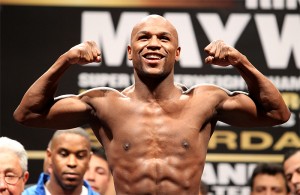
Sergio Martinez: Middleweight champ an undisputed celebrity in Argentina

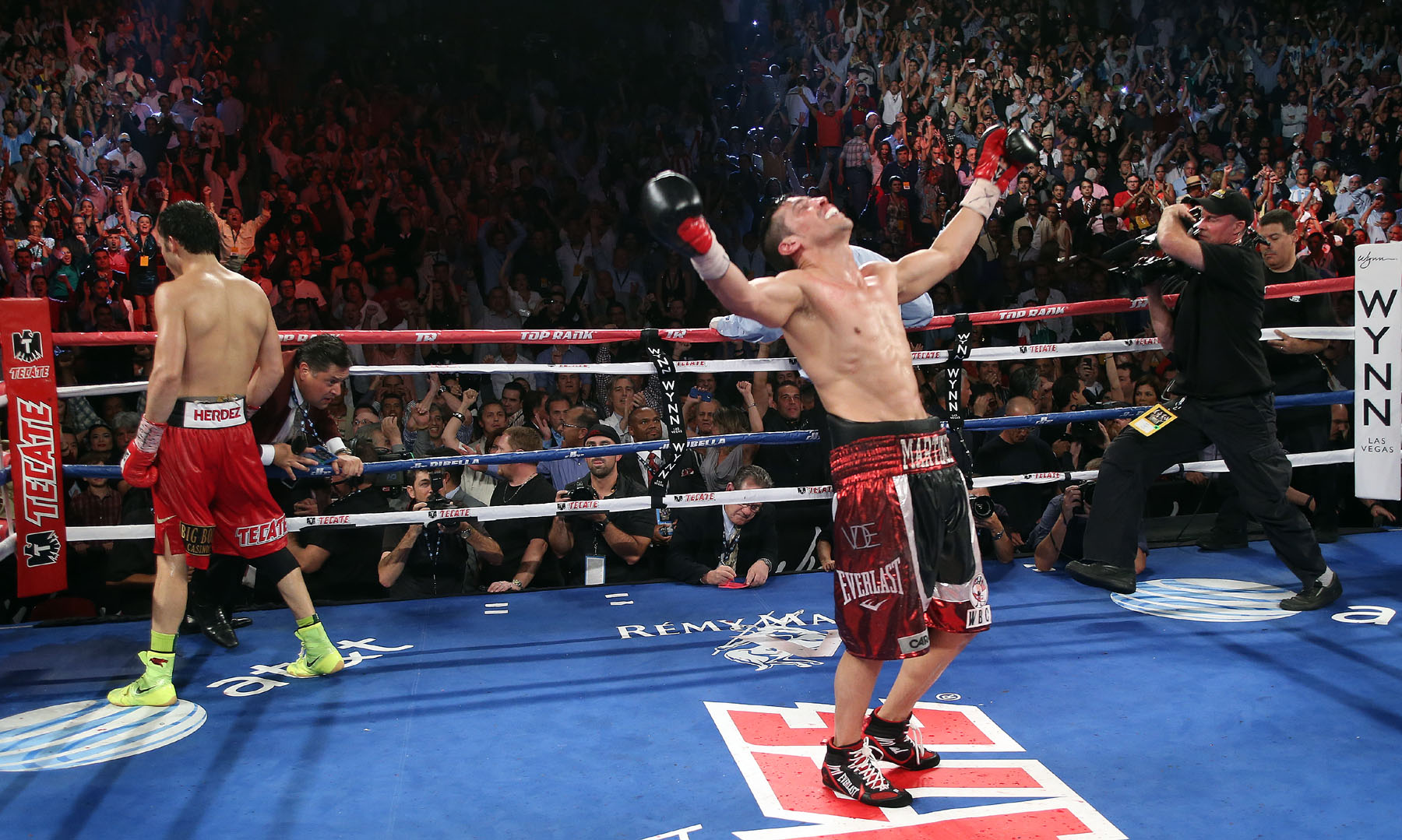
Martinez_Chavez_Jr_120915_005a
In city where almost every other street seems to be named Peron or Evita, promoter Lou DiBella saw a middleweight’s name on cabs, buses and billboards. On DiBella’s trip from the airport to his hotel in Buenos Aires, there it was, again and again.

Sergio Martinez.

Welcome home.

“He’s really like a rock star here,’’ DiBella said.

It’s been eleven years since Martinez last fought in Argentina, a beautiful country with a star-crossed history and boxing tradition undergoing a revival because of those who left to fight elsewhere.

Martinez (50-2-2, 28 KOs) returns Saturday night on HBO (8:30 pm ET/PT) against Martin Murray (25-0-1, 11 KOs) after more than a decade abroad. He lived and trained in Madrid. He fought in the UK. He made a pound-for-pound name in the United States. It was a journey of discovery, a personal quest. Martinez found what he believed was always there on his horizon.

He grew up in Quilmes, south of downtown Buenos Aires in a town known for a brewery, soccer and poverty. He tried soccer. It would have been hard not to. Google Quilmes. Then, look up the list of notable people from the town of about 240,000. Almost all of them are soccer players.

He also dreamed of racing on the international bicycling circuit. But that ended when a prized bike was stolen when he was 15. That theft was part of an upbringing – mean streets, Argentina style – that prepared Martinez for what he would later forge into an instinct within a fighter ranked among the world’s top four, including Floyd Mayweather Jr., Andre Ward and Juan Manuel Marquez. Martinez, the son of a laborer, grew up around neighborhood bullies. He learned how to confront them. Fight them. Identify them.

Over the last four years, you could watch Martinez and detect an unshakable sense of self and confidence in what he can do. He engaged Julio Cesar Chavez Jr. in a wild punching duel in the 12th round last September. It looked like a foolish gamble then. He had an insurmountable lead on the scorecards. But he did it anyway, perhaps because he knew he could survive as he always has. It was an amazing three minutes that seemed to sum up the gutsy nature of a fighter with an unorthodox style.

Don’t look for the insecurities that lead to trash talk. You won’t find them. Don’t look for the complacency that leads to unexpected losses. It’s not there. If it had, it would have appeared and ended Martinez’ ambitions long before anybody in the U.S. of even Argentina knew who he was. He paid his dues, so often that there is widespread respect for him in his homeland. In the wake of his triumph over Chavez Jr., Martinez met Argentina’s president, Cristina Kirchner. When was the last time a U.S. fighter was invited to the White House?

“Sergio is hands down the greatest fighter I have ever promoted,” DiBella said during a conference call not long after he arrived Wednesday in Buenos Aires. “Not only because he is a terrific talent. Not only because he is at the top of the pound-for-pound list, right up there with Floyd Mayweather, but also because of the type of man he is. He is a good human being. He has a great sense of social consciousness. He’s back in his homeland where he’s waited for this opportunity, to fight again in Argentina for many, many years.

“You’re getting a chance to see a Hall of Fame fighter, who, in my mind, is one of the best middleweights who ever lived, and one of the two great middleweights in the history of Argentina.

“You can mention Sergio Martinez in the same sentence as Carlos Monzon at this point and you’re not doing any injustice to Monzon.’’

Over time, Martinez will get the appreciation he deserves. But time also poses a potential problem. He’s 38. According to longtime advisor Sampson Lewkowicz, he promised is dad that he would not fight past 40. He’s also coming off knee surgery for an injury suffered against Chavez Jr. Murray, a tough inside fighter managed by Ricky Hatton, is bound to test that right knee with pressure that will force Martinez to employ lateral movement.

There are also potential distractions. Martinez has fought in Buenos Aires, but never as a hometown hero who has captivated a nation. There were signs of it in September when a small crowd of fans waving the powder blue-and-white Argentine flag celebrated his victory over Chavez by dancing on the floor at Las Vegas Thomas & Mack Center. But that crowd figures to be just a tiny fraction of the 40,000 expected Saturday night at an outdoor soccer stadium.

Martinez is grateful for the attention.

But he promises not to be deluded by it.

“This is not going to be an easy fight, because Murray has lots to gain and little to lose,” he said. “Today, I see Murray in the same situation that I was in four years ago, and it takes a lot of hunger for glory to get here. I have nothing but respect for him.”

Respect for a craft and a country where the lessons began.


Mayweather-Guerrero: A fight for grown-ups

Floyd_Mayweather
LAS VEGAS –Floyd Mayweather Jr. and Robert Guerrero played a lot of roles on back-to-back days facing small mobs armed with cameras, cell phones, and familiar questions. Media days, they’re called. Pack poise and patience. Mayweather and Guerrero brought plenty of both to a task as much a part of the pre-fight ritual as a weigh-in.

There weren’t many hints at what might happen between the welterweights on May 4 at the MGM Grand. A better clue might have been found in a fortune cookie at one of the restaurants that surround the Mayweather Boxing Club in a strip mall that looks like a Vegas re-creation of Beijing’s Forbidden City.

But one role played by each was bigger than all of the rest. Mayweather Jr. and Guerrero were the grown-ups in the room. Somebody has to be, right? It’s an old line heard in every family. It was there, first on Tuesday with Guerrero and again on Wednesday with Mayweather.

Guerrero’s dad and trainer, Ruben, mocked the way his Mayweather counterparts, dad Floyd Sr. and uncle Roger, hold the mitts.

“Patty-cake, patty cake,’’ Ruben said in a dance played to the beat of insults. “They’re a bunch of clowns, a bunch of clowns.’’

Ruben’s circus routine was the flip side to what his son had just done.

Robert talked about dedicating the Mayweather fight to the battle against the blood cancer that threatened wife Casey’s life. He has attached his name to an organization, Be The Match, which connects patients with a donor for life-saving bone marrow. Guerrero even addressed a question about the gun controversy, which has followed him since he was arrested in New York after declaring he had a hand weapon in a lock-box in checked baggage. There are no distractions, said Guerrero, who faces a court date on May 14.

The incident, he said, was behind him “as soon as I got on the plane. …But it’s this: I like to hunt. I’m an outdoors man. I like to hunt and fish.’’

In commitment to a cause and in terms of accountability, Guerrero did the grown-up thing.

The next day, it was Floyd Jr.’s turn. The Mayweathers have become a reality-TV remake of the 1970’s sit-com, All in the Family. The Mayweathers without some dysfunction would be the Bunkers without Archie. In part, it’s why we watch.

A sign of it was there Wednesday when Floyd Sr. showed up. With Roger sitting a few feet away, Floyd Sr., once estranged from his son, talked about his relationship with his brother since Floyd Jr. decided that the two would work his corner.

“So-so,’’ said Floyd Sr., who also asked a handful of reporters to tell Golden Boy Promotions CEO Richard Schaefer to set up a parking-lot fight with Ruben Guerrero. “The only thing I’m saying is this: Sometimes, he comes to the gym and we don’t even speak. I’ll sit right there and he walks right past me. We’re family, man. Speak. That’s what I do. When I come in, I got manners and very good manners. When somebody come by you and you don’t speak? I mean come on, man. It ain’t cool, whether it’s family or just another person.’’

As Floyd Sr., talked, his son interrupted some workout drills, leaned over the ropes and lectured his dad. Floyd Jr. sounded like a stern father.

“We talked about that,’’ Floyd Jr. said to his dad in a pointed warning about off-the-cuff sessions with reporters, even on a day when everything was supposed to be on the record. “It’s about the fighters.’’

There’s talk that Floyd Jr. has displayed some new found maturity since his release from jail after nearly a three-month stretch for domestic abuse last summer. Even Floyd Sr. has noticed.

“He’s more disciplined,’’ Floyd Sr. said. “I’m sure jail had a lot to do with it. When he was in jail, he had lot of time to think about a lot of things.’’

Despite their well-chronicled blow-ups, Floyd Jr. has always thought about his father. At the 1996 Olympics in Atlanta, Floyd Jr. agonized about his dad, who was in federal prison for drug-trafficking. He said he wrote then-President Bill Clinton, asking that his dad be pardoned. He begged the media to help him. He was a 19-year-old kid desperate to be with his father. Seventeen years later, the 36-year-old man, a father himself, has finally re-united with him, although the roles are reversed. The son has become the family’s patriarch

“My dad is a wizard,’’ he said Wednesday in the final interview after an evening full of them.

Part of that wizardry might be in learning how to work and live with his brother, whose struggle with diabetes led to the reunion with his son. There’s a sense that Floyd Jr. will demand that the two get along. It as if the son from a broken family is determined to make everything whole.

“We’ve got trainer No. 1, which is my dad,’’ he said. “We’ve got trainer No. 2, which is my uncle.’’

It’s easy to pick a winner on May 4. A grown-up is a sure thing.


Jackie Robinson’s story is incomplete without a Jack Johnson pardon

Release this weekend of the film 42, Jackie Robinson’s story, is just another reason to wonder why Jack Johnson hasn’t been pardoned.

The movie is about a different time, a segregated America, when Robinson crossed baseball’s color line with the Dodgers in 1947. Reviews are mixed. But there’s no argument about the film’s value as history.

If 42 is a historical lesson, however, Johnson is history unresolved.

Perhaps it’ll take a modern-day Branch Rickey to get Barack Obama’s signature on a presidential pardon urged by Congress in a resolution asking that the first African-American heavyweight champ be cleared of a 1913 conviction.

As hard as it is to hear epithets and insults hurled at Robinson in 42, it’s even harder to explain why Johnson has never been pardoned for a so-called crime. Johnson was known to date white women. He was convicted by an all-white jury for violating a law, the Mann Act, which made it illegal to transport white women across state lines for “immoral purposes.” He spent a year in prison.

Obama had a chance in 2009 to sign the pardon, which has been pursued since 2004 by Arizona Senator John McCain, a former boxer at the Naval Academy whose stubborn tenacity says he never threw in the towel during his Midshipman days.

Department of Justice officials overseeing pardons said then that the process better serves the living. Tell that to Johnson’s great grand kids, many of whom still live in his hometown, Galveston, where they gathered March 31 for what would have been his 135th birthday. They sent a video to Obama, asking for the pardon. Their ancestor’s story is still very much alive, as it is for all of his descendants, who in a historical context include Robinson.

Late tennis great Arthur Ashe once called Johnson the most important African-American athlete in history. There was no bigger event, Ashe said, than Johnson’s victory in 1910 over Jim Jeffries, the original Great White Hope.

“I can just imagine that here I am – black,’’ Ashe told Charles Fountain, a journalism professor at Northeastern University, in a 1988 interview. “Maybe sitting around a pot-bellied stove somewhere in the rural South. And hearing that Jack Johnson has just won the heavyweight championship. I’ve got to feel 10-feet tall. And let’s say that I’m 70 years old. What can I think of in my life that would have made me feel 10-feet tall? There’s nothing to name. This is it.

“Here is the black man going up against the white man. And the black man not only came out ahead. He pulverized him. In public. And destroyed a myth that had been held, maybe for centuries. Maybe since slavery began.”

What Johnson did and his heavyweight successor, Joe Louis, continued in 1938 with a rematch victory over Nazi Germany’s Max Schmeling are monuments in the timeline that leads to Robinson. Robinson was the lone individual whose courage, poise and inexhaustible patience allowed him to confront an American establishment then ruled by a tradition of segregation. He changed minds. Johnson let him know that he could.

There’s also a film about Johnson, a Public Broadcasting Service documentary aired in 2004 and directed by Ken Burns, who has has lobbied for a pardon. The film’s title: Unforgivable Blackness: The Rise and Fall of Jack Johnson.

Still unforgivable.

And unfathomable.


From Carbajal to Zou Shiming: Light on the scale, heavy on history

Bob Arum is relying on a little guy, Zou Shiming, this weekend in Macau where money beckons and China’s untapped market awaits. It’s bold. It’s smart. It’s also not new.

Arum gambled on a little guy for the first time 25 years ago in Michael Carbajal, who in a different time and different hemisphere unlocked a new market.

Then, Mike Tyson and the heavyweights were going away. The sport was in transition, meaning it was searching for a new way to do business. It did, but at an unlikely end of the scale.

There was no money to be made at 108 and 112 pounds. Not then and often not in the years since Carbajal’s Hall of Fame career. Light-flyweights – a redundancy if there ever was one – and flyweights had a better chance at a paycheck if they replaced gloves with saddles and joined the jockey division. But Carbajal proved that one wrong early in his pro career by drawing crowds that suddenly appeared almost like spontaneous combustion.

Arum, who was talked into signing Carbajal after the 1988 Olympics by Richie Sandoval, discovered a market, primarily Mexican and Mexican-American, interested in the little guys. It has been paying dividends for years at weights – bantam, feather and super-feather – once relegated to forgotten spots on undercards. Manny Pacquiao, a former light-flyweight, became a sensation and a world-wide celebrity at feather.

Arum didn’t know what he had then. Nobody did. But the guess here is that the Carbajal experience tells him Zou Shiming can leave a global footprint that outweighs and outlasts traditional expectations from a weight never known to rock the pay scale.

From what he has seen of Zou Shiming, Carbajal is skeptical. He questions whether the Chinese fighter has enough power to make an impact as a pro.

“I don’t think he’s got the power he needs to win a world title,’’ Carbajal said as he sat on the front steps of his 9th Street Gym in an old Phoenix neighborhood where he was born. “He’s got to have that power, that’s all.’’

It’s fair skepticism, repeated often before Zou Shiming’s pro debut Saturday at 112 pounds against Eleazar Valenzuela (2-1-2, 1 KO) of Mexico. The card also includes World Boxing Association/World Boxing Organization flyweight champion Brian Viloria (32-3, 19 KOs) against Juan Francisco Estrada (22-2, 17 KOs) and WBO junior-lightweight champ Ramon Martinez (26-1-2, 16 KOs) against Diego Magdaleno (23-0, 9 KOs). Former heavyweight champ George Foreman, Larry Merchant and Tim Ryan will be at ringside for HBO2 at The Venetian-Macao for a telecast scheduled to air in the U.S. on Saturday, 2 p.m. (ET/PT).

The power question is familiar. It’s asked about most Olympians. Carbajal, a 1998 silver medalist, had to answer it in the initial stage of his pro career. Success in the amateurs, and especially the Olympics, is dictated by almost everything but power.

Shiming’s Olympic achievements are historical. Shiming, who won China’s first boxing medal – bronze – in 2004, won gold in 2008 and 2012 in the same weight class that Carbajal got silver in a controversial decision during the Seoul Games where the ring ropes might as well have been yellow crime tape. That’s where some scorecard alchemy turned Roy Jones Jr.’s gold into silver in a robbery witnessed by a world-wide audience.

Top Rank hired Freddie Roach to teach a pro, power-friendly style to Shiming, who spent more than a decade perfecting an amateur tactic suited best for a computer-based scoring system employed in the wake of the Jones scandal.

“Freddie has taught me a lot – including how to launch power from my legs, how I can give my opponent body shots,’’ Shiming said through a Top Rank publicist during news conferences in Macau and at Roach’s Wild Card Gym in Hollywood, Calif.. “A lot of things. He’s made me more skilled.

“In training camp with Freddie, I have to avoid as many power punches from my sparring partner as I can. I constantly need to remind myself this is not Olympic-style games. This is real. This is professional boxing.’’

A potential complication is Shiming’s age. He’s 31, which is old for fighters in the lightest divisions. Only the fly in the weight class is said to have a shorter shelf life. Carbajal was 32 in his memorable finale, an 11th-round stoppage of Jorge Arce, then 20, in a Tijuana bullring in September, 1999.

In part, Shiming’s age is a reason he appears to be on the fast-track.

“Shiming is going to be a world champion in a short time, possibly inside one year,’’ Roach said. “And I think he can do it in fewer fights than Leon Spinks, another Olympic gold medalist.’’

Spinks upset Muhammad Ali by split decision in February, 1978, his eighth pro fight after the 1976 Montreal Games.

“I think Zou can do it in his sixth professional fight, if not sooner,’’ Roach said.

It’s no coincidence that Viloria, a late-bloomer, is on Saturday’s card. He looms as a potential big name for Shiming in Arum’s plan to create a boxing market in a country where there was none not long ago. Arum was already a longtime promoter when boxing was still illegal in China. Chairman Mao was no fan.

In Shiming, however, there’s a well-known face with medals and credibility. China’s emerging generations know him. Maybe, they’ll follow him in a sport that their parents were ordered to avoid.

“As big a night as it is for me, it’s an even bigger night for the sport of boxing and boxing in China,’’ he said.

If Zou Shiming can pull it off, he might even convince Michael Carbajal with some history that will remind him that sometimes little guys can come up very big.


Alvarado goes from brawler to boxer in upset of Rios

LAS VEGAS – Brandon Rios and Mike Alvarado promised more of the same. Sorry, Alvarado didn’t fulfill his end of the agreement. He couldn’t. If Alvarado had, he would have been left with only the promise of another defeat.

Instead, Alvarado did what Rios and few others thought he could Saturday night in a rematch at Mandalay Bay. He did more than break a promise. He beat a stereotype. He beat what was expected of him. And then he beat Rios.

Once a brawler, not always a brawler.

That was the surprise and the formula employed and sustained by Alvarado (34-1, 23 KOs) through 12 rounds of his second meeting with Rios (31-1-1, 22 KOs) within the last six months. Rios won the first one by a seventh-round TKO on Oct. 13 in a stand-and-fight slugfest in Carson, Calif.

Rios came into the rematch thinking it would be the same because Alvarado was the same. A few punches and the Alvarado seen in October would re-appear in March.

Didn’t happen.

In almost every round, Alvarado delivered a couple of solid right hands in the opening moments. Rios would smile as if to say thanks. But Alvarado never took the bait. He didn’t linger in a target zone where Rios is most effective. Instead, he danced backwards, then sideways throughout the middle of each round. Then, he would finish each round with an exchange of punches.

It was a strategy that convinced the judges. Bill Lerch and Dave Moretti scored it 115-113, each for Alvarado. On Duane Ford’s card, Alvarado won by one point, 114-113.

“My high-altitude training was the key to the fight,’’ Alvarado, of Denver, said in the middle of the ring after the scores were announced.

As expected, both fighters took a lot punishment. Alvarado suffered a huge gash over his left eye. Alavardo was taken to University Medical Center (UMC) after the bout. The ringside physician ordered Rios to go to UMC.

Alvarado’s victory also left each fighter with one win each. A trilogy looks to be inevitable.

“I gave you a rematch,’’ Rios said to Alvarado in the ring. “I deserve a third fight.’’

There’s another promise somewhere in that demand. Don’t expect it to be broken.

On The Undercard
The Best: Jose Ramirez’ nerves never had a chance. Neither did Charlie Dubray.
Ramirez (2-0, 2 KOs), a lightweight and 2012 U.S. Olympian, knocked out the nervousness he felt in his pro debut and then overwhelmed Dubray (1-1, 1 KO) for a first-round TKO. Dubray, of Hastings , Neb., was down twice within 66 seconds after he put in his mouthpiece.

“It’s all coming together,’’ said Ramirez, a farmworkers’ son from Avenal, Calif., who scored a first-round TKO in his debut on the Dec. 8 undercard of Juan Manuel Marquez’ stoppage of Manny Pacquiao. “I was a lot less nervous than in my first fight.’’

The Rest: There were headlines before Breidis Prescott-Terence Crawford, praise for Crawford from Bob Arum after it and boos throughout a dull bout during which Crawford (20-0, 15 KOs), a Nebraska junior-welterweight, made Prescott (26-5, 20 KOs), of Colombia, look stiff, awkward, frustrated and — in the end –defeated by unanimous decision. …Mexican super-featherweight Miguel Berchelt (17-0, 14 KOs) punches at a rate that leaves no time for an answer and Carlos Claudio (15-10-3, 8 KOs) had none in losing a first-round TKO to a Berchelt blitz. …A breeze blew through the Mandalay Bay Events Center from a body shot thrown by Las Vegas welterweight Michael Finney (11-0, 9 KOs), who scored a fifth-round KO with a paralyzing left that knocked the wind out of Osvaldo Rojas (7-3-2, 2 KOs) of Portland, Ore; Connecticut super-bantamweight Tramaine Williams (6-0, 2 KOs), nicknamed the Midget, came up big with a unanimous decision over John Herrera (4-6-1, 2 KOs); Las Vegas heavyweight Brett Rather (3-0) survived a first-round knockdown and endured successive right hands to score a unanimous decision over Juan Guajardo (2-1, 1 KOs) of McAllen, Tex.; Juan Heraldez (5-0, 4 KOs) of Las Vegas scored big points and left nasty welts across the forehead of overmatched Florida junior-welterweight Roberto Lopez (4-5-2) for a unanimous decision; and Denver junior-welterweight Manuel Lopez (2-0, 2 KOs) won a second-round TKO over Jason Tresvan (0-2) of Las Vegas


Bradley says he’s fine after undergoing concussion tests in Las Vegas

Timothy Bradley
LAS VEGAS – Timothy Bradley on Friday said physicians told him he was fine after undergoing tests for a possible concussion at the Cleveland Clinic’s Lou Ruvo Center for Brain Health.

“I’m good,’’ said Bradley, an unbeaten welterweight who worried that he might have suffered a concussion on March 16 in his unanimous decision over Ruslan Provodnikov at Carson, Calif., in an early contender for 2013 Fight of the Year.

Bradley, who was at the weigh-in Friday for the Brandon Rios-Mike Alvarado rematch Saturday night at Mandalay Bay, underwent tests at the Las Vegas clinic where neurologists are conducting a long-term study on possible brain trauma in combat sports. The study has included 103 boxers and 135 MMA fighters.

In a couple of months, Bradley said he hopes to hear about possibilities for his next fight. He also said he intends to stay at 147 pounds.

Bradley picks Rios to beat Alvarado, who lost a seventh-round stoppage in their first fight on Oct. 13, also in Carson, Calif.

“He’s got that dog in him,’’ Bradley said. “If Alvarado stays 100 percent focused, he can win. But, yeah, I’m picking Rios. He’s a problem. If I fought him, I’d just box all night.’’


All In A Brawl: Rios and Alvarado make weight and have fun

Rios_Alvarado weighin_130329_001a
LAS VEGAS – Boxing is Brandon Rios’ playground. Show him a ring. Take him to a weigh-in. Doesn’t matter. He’s like a kid at recess. Friday was the weigh-in for his junior-welterweight encore with Mike Alvarado Saturday night at Mandalay Bay.

Rios jumped on the scale almost as if it were an empty seat on a merry-go-round. He came up a fraction of a pound too heavy, perhaps because of a jarring impact or just an abundance of enthusiasm.

No problem. Rios stepped behind a beach towel, stripped off his shorts and took another turn at the scale. This time, he was perfect — 140 pounds-even. Not a whisper of an ounce less or more. Alvarado also weighed 140.0.

Rios (31-0-1, 22 KOs) smiled, perhaps at the prospect of the bruising brawl he has promised in an HBO-televised rematch of his seventh-round stoppage of Alvarado (33-1, 23 KOs) on October 13 in Carson, Calif. Or, maybe, he heard from a handful of Alvarado fans in the weigh-in crowd. Taunts have to be a favorite on the Rios play list. They are his marching music.

“I love it when you guys talk bleep, just love it’’ said Rios, a 4-to-1 favorite who according to contracts filed with the Nevada State Athletic Commission will collect $1 million Saturday. Alvarado’s purse is $650,000.

Rios loves it almost as much as a brawl. Whether more brawling will be enough for another victory over Alvarado is one reason for the rematch, of course. There’s that and Juan Manuel Marquez’ upset of Manny Pacquiao in December.

Rios had been in line for a rich shot at Pacquiao until Marquez’ right hand got in the way, dropping the Filipino Congressman on to the canvas, face-first. Marquez altered a lot of promotional plans, but didn’t really seem to change anything about Rios, who fights to have fun.


Rios-Alvarado: More resumption than rematch

Rios_Alvarado_121013_001a
Brandon Rios-Mike Alvarado II Saturday night at Las Vegas’ Mandalay Bay might be more of a continuation than it is a rematch. At least, all of the talk seems to promise a resumption of a brawl in Carson, Calif., that ended more than five months ago in a seventh-round TKO victory for Rios.

Make no mistake, Rios and Alvarado might still be fighting if Pat Russell had not ended a bout lacking in subtlety and skillful adjustments, yet spellbinding for its undisguised ferocity. There was some debate then about whether Russell’s stoppage at 1:57 of the seventh was premature. From this seat in Carson, it looked to be well-timed and wise. Moments before Russell intervened, a dazed Alvarado fell forward and into Rios’ chest. Instinct probably would have kept Alvarado on his feet, but only at the price of more punishment.

Nevertheless, Alvarado and his trainer/manager, Henry Delgado, argued then that he should have been allowed to continue. Had the fight gone the distance, it could have wound up as a draw. It was 57-57 on two scorecards. Rios led on the third, 58-56.

In the buildup for Saturday’s HBO-televised fight, Alvarado has repeated the argument, in part because of what he saw in Tim Bradley’s epic decision on March 16 over Ruslan Provodnikov, also in Carson. Russell let that one continue, despite evident signs that Bradley was in real trouble during the early rounds. Even Bradley said he thought he had suffered concussions.

“I thought Bradley got a good opportunity to prove himself, show that heart,’’ Alvarado said during a conference call. “He was knocked out on his feet pretty much. I thought the referee was fair, the more I saw it.’’

Translation: Alvarado is asking for the same chance that Bradley got. Given Russell’s apparent inconsistency, it’s a fair argument. But boxing is only a debate club during news conferences. For those of us fortunate enough to be in ringside seats, we’re only in danger of adding pounds to our ever-expanding cheeseburger bellies during the pre-fight meal.

A tough fight means heightened danger. It also means a tough call is likely. Referee Tony Weeks might have the toughest job of all Saturday night. Rios-Alvarado has taken on a predictable tone. Some blood lust is baked into the expectations. It’s hard to see how the Rios-Alvarado resumption will differ from the style witnessed on Oct. 13. By their own admission, Rios and Alvarado aren’t sweet scientists.

“We have the same type of style,’’ Rios said. “We both go and fight each other. We try to get the job done the only way we know how. We can try to change it up in the gym. But once the bell rings and we get hit, we go back to do doing what we know how to do. That’s the warrior mentality that comes out of us.

“Mike Alvarado is Mike Alvarado. Brandon Rios is Brandon Rios.’

There’s speculation that the prospect for more of the same will be altered by adjustments from Alvarado, who is believed to be more athletic because of his wrestling background. Alvarado has even hinted at possible adjustments. But that might be a pre-fight ploy in an attempt to keep Rios guessing.

“You can always train differently to try to change things up, but I think our styles and the way we approach the ring, it is automatically going to turn into that kind of fight,’’ Alvarado said during the conference call on March 21. “They are the styles we have. We are both warriors. We just fight and whoever comes out on top, that’s just the way it’s going to go.’’

Alvarado apparently got into an unscheduled brawl sometime in early February. Cuts on his right cheek and down the right side of his neck are visible in the video, Road to Rios-Alvarado II.

“It hasn’t hindered me,’’ said Alvarado, who said the cuts are no reason to worry. “It was just a little accident. I was just at the wrong place at the wrong time and it was a little accident.’’

What’s expected Saturday night will be no accident. But it’ll look like one, another one in a chapter that could have fans asking for even more.

What was he thinking? Guerrero wasn’t

It’s a good thing there’s no reliable test for stupidity. Boxing would come up positive every time. The latest example: Robert Guerrero’s arrest Thursday for trying to check baggage that included a handgun onto a flight in New York.

Remember Plaxico Burress? Guess not. Burress, then a New York Giants receiver, wound up doing nearly two years in jail on a 2009 weapons charge in New York. And he shot himself.

Circumstances look to be a lot different. Burress’ gun was concealed and loaded. According to reports, Guerrero informed the airline that he had a hand gun, unloaded and locked in a safe box, according to a joint statement Thursday from Team Guerrero, Golden Boy Promotions and Mayweather Promotions. Guerrero has a California license for the weapon, according to the statement.

Given the national debate over gun control, however, Guerrero could face trouble in New York, where gun laws are more stringent than anywhere else in the U.S. New York Mayor Michael Bloomberg is a vocal proponent of banning guns. If New York is looking to make an example out of someone, Guerrero is in the political cross-hairs. He was all over the New York media during the last few days. His fight on May 4 against Floyd Mayweather Jr. at Las Vegas’ MGM Grand is already in the headlines.

Even if his arrest and arraignment on firearm charges don’t jeopardize the fight, he will have to deal with unwanted distractions He was booked on a flight for Las Vegas, where he had planned to get back into the gym as soon as possible. He was released on his own recognizance, according to the joint statement. His next court appearance is scheduled for May 14, 10 days after the fight.

Mayweather is enough of a problem. He asked for that one. Now, Guerrero has a complicated one that he could have avoided.


Mares and Donaire are the biggest losers in HBO’s no to Golden Boy

abner-mares
It’s hard to imagine how many more times the deck chairs on the Titanic can be re-arranged, but boxing did it ad nauseam this week when Home Box Office slammed the door on doing any more business with Golden Boy Promotions.

If it has really changed anything, please wake me up.

It’s not as if Golden Boy and Top Rank were sending each other cards with best wishes during the Holidays, any holiday. It was a balkanized business before HBO told Golden Boy to drop dead. It still is. But there are a couple of losers, who can’t be too encouraged by a move that seems to harden each side of a feud with no apparent end.

Fans don’t like it. But they get over it. If it’s a good fight, they’ll watch if it on HBO, Showtime or in a parking lot. We’re not talking about Floyd Mayweather Jr. and Manny Pacquiao, either. They had their chances and each, in their own way, managed to back away from the money, or the risk, or the demands for drug testing, or all-of-the-above.

But Nonito Donaire, of Top Rank, and Abner Mares, of Golden Boy, haven’t fought for wages that even approach the kind of money banked by Mayweather and Pacquiao. Unlike fans, they also don’t have a lifetime time to wait around for an opportunity at a career-defining fight.

They’ve been fighting at weights ranging from 116 through 122 pounds. If history is any guide, that adds up to a short shelf life. Mares (25-0-1, 13 KOs) is 27. Donaire (31-1, 20 KOs) is 30.

They want to fight each other. They, more than any other fighter in today generation, have asked their promoters to get it done. But the promoters seem to have put their own egos and agendas ahead of their best interests. Who is working for whom here?

Mares and Donaire could, perhaps should, shout a little louder about what they want, what their careers demand. But would Showtime, HBO, Golden Boy or Top Rank even listen? They’re too busy shouting at each other.

Anybody for the parking lot?


The Right Corner: Freddie Roach still occupies it

Pacquiao_LAX_arrival_120505_004a
Losses are as inevitable as scars. If you don’t have some of both, you probably haven’t done much. Or learned much. Freddie Roach, fulltime trainer and street-corner philosopher, has them, accepts them. Maybe even values them.

“Part of life in boxing is losing,’’ Roach said.

The other part to that equation is what Roach hopes to accomplish Saturday night in Ruslan Provodnikov’s bid to upset Timothy Bradley in an HBO-televised fight at Carson, Calif. Victory is a cure-all that eliminates the noisy contagion so symptomatic of defeat. Lose a few and the cheap shots begin to circle like pests in search of a free lunch

Roach has heard them. His own string of high-profile losses in 2012 attracted them. Amir Khan fell to Danny Garcia. Julio Cesar Chavez Jr. lost every round but the 12th to Sergio Martinez. Then, Manny Pacquiao dropped face-first onto the canvas from a Juan Manuel Marquez right hand that landed like a wrecking ball. Even the one fight that seemed to be a lock for Pacquiao, went the other way on the scorecards and – inevitably — against Roach. Bradley got a split decision.

Is there no end to this losing streak? Hard to tell. But the tone has changed. Whispers about Roach went public. Roach even heard them on a conference call from Bradley trainer Joel Diaz.

“Freddie Roach is not my concern,’’ Diaz said. “My concern is the fighter.’’

Diaz could have stopped right there. But he didn’t. If Roach isn’t Diaz’ concern, he wasted a lot of conference-call time ripping him.

“Freddie Roach was just a name that was created,’’ Diaz said. “I think, Freddie Roach lost the love of the sport. He created a name and it’s out there, but he doesn’t have passion for the sport that he had a few years ago.

“I’ve seen it in the last Marquez fight. I’ve seen it in the fight before, the third fight with Marquez. Freddie Roach is the least of my concern for any fight. I just focus on the fighter. Freddie Roach is always trying to play mind games. Freddie says Tim is going to run. That is just Freddie playing mind games. They don’t know how we are going to fight. He is trying to get under Tim’s skin. At the end of the day, Tim is going to be a winner, and that’s what matters.’’

Whew, no telling what Diaz would say about somebody who does concern him.

In a sure sign that there’s been no erosion in Roach’s wisdom, he didn’t accept the invitation to indulge in some tired trash talk. He’s kept his attention on his Russian welterweight, which is where it should be.

“I could tell him where to go but he doesn’t know me,’’ Roach said “He doesn’t know what I do every day. He doesn’t see me in the gym working with these fighters. I know he’s just saying it to get under my skin. I have a game plan and the right fighters to carry that game plan through. On the 16th (Saturday), we’ll see who’s the better coach or who’s the better man.’’

It’s no secret that trainers are only as good as their fighters. It’s the same with coaches. Phil Jackson without Michael Jordan and Kobe Bryant would have been just been another guy holding a clipboard on an NBA bench. Roach knows that. Diaz might learn that.

“It’s not about the trainers,’’ Roach said. “My fighter is the one who’s going to win the fight, not me. Whatever he says, I don’t care. I don’t have time to be mad at someone. I don’t read anything he says. I just don’t have time for that.’’

Roach doesn’t buy into the redemption angle. But a slice of it is there for the winner. It’s the element that injects some intrigue into Bradley- Provodnikov. A Provodnikov victory means Roach can begin to get beyond 2012. A Bradley win means Bradley can move beyond a victory so controversial that it turned him into a virtual loser.

Of the two, however, the stakes are bigger for Bradley (29-0, 12 KOs). A loss to Provodnikov (22-1, 12 KOs) would only confirm what the public believed about his split-decision in June over Pacquiao in his last fight. It was a coincidental gift created by incompetent scoring.

“Most of the public in the world knew Pacquiao won,’’ said Roach, who didn’t need to be reminded that two judges and Bradley were not part of that consensus. “Just three people and Bradley’s trainer thought Bradley won. So, you have four guys against the world. We’re not worried about that.’’

I’m not sure Provodnikov can beat Bradley. But Roach won the conference call.

AZ NOTES
Two-time Mexican Olympian Oscar Valdez (3-0, 2 KOs) makes his fourth pro appearance Saturday is in a junior featherweight six rounder against Jose Morales (6-4, 1 KO) in a junior-featherweight on the Bradley-Provodnikov card.

Valdez, who fought in the 2008 Beijing and 2012 London Games, has family in Tucson. He grew up in Nogales on the Mexican side of the border with Arizona.


Crazy Comeback: Bradley looking for a win that won’t turn him into a loser

Bradley_NY_arrival_120222_003a
Nothing on Tim Bradley’s resume says his March 16 fight against Ruslan Provodnikov in Carson, Calif., should be called a comeback. He’s unbeaten. He’s got a title. He’s a good citizen. He never retired. Comebacks are for fighters coming off a loss, or rehab, or bankruptcy, or a jail sentence

But here he is, a good guy transformed into a villain in a comeback as bizarre as the scorecards that gave him a victory over Manny Pacquiao in June yet somehow turned him into something he isn’t.

“I don’t get any credit after the Pacquiao fight, whatsoever,’’ Bradley (29-0, 12 KOs) said Tuesday in a conference call. “People talk about me, my style, that I’m boring. Some people talk about my wife, my kids. People sent me death threats after the fight because I won undeservingly. I should have given the belt back.

“A lot of different things went on. I can talk all day about things that people said about me. But it doesn’t matter. None of these people are going to get in the ring with me. People can say whatever they want. It is a free country. So, I am going to say whatever I want, when I want to say it and how I want to say it.

“Those people don’t know me at all. If you get to know me, if you know what I go through, how I train and you still talk crap about me, then you have the problem. No one knows what I go through to prepare for my fights. People need to sell papers I guess.

“I am the nicest guy you will ever meet on the street. Ever.’’

The judges’ scoring in his split-decision over Pacquiao in a welterweight bout has been called the worst. Ever.

But that gives boxing too much credit. Let’s face it, the undisputed title for the worst decision ever is a dead heat in a very crowded field.

The way the public and much of the business treated Bradley, however, was the worst. Ever.

Internet vigilantes, all armed with anonymity, smeared Bradley with impunity and without giving his performance a second look. Did Bradley lose? Yeah, I think so. He suffered foot and ankle injuries. But can anybody remember another bout when the winner showed up at the post-fight news conference in a wheel chair? Didn’t think so. That’s how bizarre the entire night was.

But don’t blame Bradley. He didn’t score the fight. He fought and fought well. Review the tapes and you’ll see how he made Pacquiao look like a fighter in decline. Bradley exposed Pacquiao’s eroding hand speed and provided a preview of what would follow: Juan Manuel Marquez’ knockout of the Filipino in December. For that, Bradley deserves credit, if not a rematch. Instead, he gets death threats from people who aren’t fans. They’re gangsters. Sadly, there are a lot of them

“The result of the Pacquiao-Bradley fight was a very tough result for everybody in the sport and very tough for a lot of people,’’ said Top Rank President Todd DuBoef, who says Bob Arum’s promotional company has made peace with Bradley and his wife, Monica. “Fortunately Tim, Monica and myself have been able to communicate. There was no handbook for what the result of the fight was. No one knew how to handle it.

“We had death threats, Tim had death threats. It was a very spirited blogosphere campaign that we all got sucked into. Fortunately we have a healthy relationship moving forward. We are looking to keep him active and making the biggest fights we can for him.’’

Here’s hoping he wins them in a way that makes him Comeback Fighter of the Year.

Olympic Debut
American Olympic heavyweight Michael Hunter is scheduled to make his pro debut Saturday night on an Iron Boy Promotions card at Celebrity Theatre in Phoenix. Chad Davis (4-10), a Phoenix cruiserweight and heavyweight, is Hunter’s scheduled opponent.

Hunter lost in the opening round at the 2012 London Games to a Russian, Artur Beterbiyev, the 2009 World Amateur champion. Hunter led, 8-7, going into the final round. The Olympic preliminary ended, 10-10, but the decision went to Beterbiyev on a tie-breaking vote from the judges.

The Hunter-Davis bout, a four rounder, is one of 14 fights – 10 pro and four amateur – on a card scheduled to begin at 6 p.m. (MST).

Photo by Chris Farina / Top Rank


Canelo-gram: Canelo sends message to Mayweather that he’s a star in his own right

saulalvarez150
Opponents are like employees to Floyd Mayweather Jr. He talks as if he hires and fires them in his role as boxer, promoter, matchmaker and candlestick maker. But before Mayweather could tell Canelo Alvarez how much his purse would be and what would floors he’d have to sweep to earn it, Alvarez told him to take this job and shove it.

In a sure sign that Canelo has arrived as a star in his own right, he decided not to fight on the May 4 undercard of Mayweather’s bout against Robert Guerrero at Las Vegas’ MGM Grand.

According to various reports, Canelo’s bout against Austin Trout was moved to April 20 in San Antonio because Mayweather would not guarantee him that he’s next, the second act in Mayweather’s new Showtime deal.

Speculation still has Canelo-Mayweather happening on Sept. 14. Part of that, however, had included an assumption that Canelo would appear on the May 4 undercard as part of Mayweather’s supporting cast. But when Mayweather said no to the guarantee, Canelo made other plans.

Somebody more unsure of his credentials and unproven as an attraction might have accepted the denial and quietly resigned himself to a preliminary role. After all, Mayweather’s claim on power has been emboldened by a Showtime contract that, according to some reports, could be worth $250 million. A fraction of Mayweather’s potential income from Showtime could fund a nice retirement. Why offend him?

But Canelo’s move off Mayweather’s card and onto his own indicates that the Mexican junior-middleweight has begun to see himself as an equal. The guess from this corner is that’s how he will negotiate. To wit: Canelo will demand a lot more money that Victor Ortiz and Guerrero ever did. Forget all the predictable trash talk after contracts are safely signed. Guerrero, like Ortiz, is happy for the opportunity.

Unlike any proposed opponent other than Manny Pacquiao on the list of Mayweather possibilities, Canelo has drawing power. He proved at home in Mexico. He confirmed it on Sept. 15 with a record rating for Showtime in a victory over Josesito Lopez at the MGM Grand on the same night that Sergio Martinez beat Julio Cesar Chavez Jr. at Las Vegas’ Thomas & Mack Center on an HBO pay-per-view telecast.

Mayweather has said often and in so many words that he has no equal. In the ring, maybe he doesn’t. But it will be interesting to see if Canelo’s box-office power makes negotiations as futile as they were with Pacquiao. Mayweather likes to dictate more than negotiate. But Mayweather also endangers potential revenue stream for himself and Showtime if he ignores Canelo and the big Mexican audience that he brings to the table.

After his upset of Miguel Cotto, Trout might prove to be a bigger challenge to Canelo than expected. If Canelo prevails, however, the television numbers will be the biggest factor to emerge from April 20.

If they continue to multiply, Mayweather might have to deal with a dangerous business partner, instead of just another carefully-chosen employee.


Money or History: Mayweather’s Showtime deal will define him

floyd-mayweather
Floyd Mayweather Jr.’s jump Tuesday from HBO to Showtime and parent network CBS is a move that will reveal whether he’s more about money or his place in history.

There’s still a lot we don’t know about the deal, but it’s safe to say it will further enrich the fighter with a nickname, Money, that thus far defines him. Forbes is reporting that the 30-month contract could be worth $250 million if he fights as many as six times. On Forbes’ last annual list of top-earning athletes, Mayweather was No.1 with $85 million for two fights – victories over Victor Ortiz and Miguel Cotto.

Barring a string of undisclosed losses at Vegas books, Mayweather doesn’t need the money. What he does need, however, are fights that will substantiate his claim on being the best ever, better than even Sugar Ray Robinson, Muhammad Ali, Joe Louis and Sugar Ray Leonard.

According to several reports, the contract includes a Showtime guarantee of Mayweather’s purses, no matter what the pay-per-view numbers are. It’s not clear if that guarantee is for the full amount, or a percentage. Six fights over the next two-and-a-half years also look unlikely. Mayweather has fought only four times over the last five years. But let’s say he does. And let’s say Showtime guarantees 100 percent of each purse. That’s about $41.66 million-a-fight.

Given Mayweather’s history, there’s danger in that kind of an agreement. He’s a counter puncher in the ring and by nature. Other than NBA and NFL wagers, he’s not known for taking chances. The smallest risk for the biggest reward has always been Mayweather’s formula. With a guarantee already in his pocket, it would be his nature — and human nature — to just protect his undefeated record (43-0, 26 KOs) against opponents who aren’t much of a threat.

If he fights all six times and wins each, he could end the Showtime deal with a victory that equals Rocky Marciano’s 49-0 record. Then, there’s the chance at history, 50-0, and a new network deal as rich, or richer, than the current one.

A lot can, and will, happen between now and then. There’s potential injury. There’s age. Mayweather turns 36 on Sunday. He’ll be 38 when the Showtime contract expires. In his last bout, a unanimous decision over Cotto in May, Mayweather looked as if he had lost some foot speed. The fading Cotto landed punches that left swelling and bruises on a Mayweather face that usually emerges unmarked.

If Mayweather is serious about making history, the damage done by Cotto is a sign that now is the time for him to do it. His Showtime contract opens on May 4 against Robert Guerrero at Las Vegas’ MGM Grand. The surprising Guerrero has turned himself into a credible opponent, but not one with much of a chance against Mayweather. Book makers give him no chance at all. Opening odds against Guerrero were about 11-to-1. History will remember this one only if Guerrero wins.

But we’ll give Mayweather a pass. After a long layoff and nearly three months in jail for domestic abuse, a tune-up is reasonable, especially against somebody as tough and resourceful as Guerrero. Then, however, the test of whether he’s in it for money or history will begin to unfold and ultimately be determined by whom he fights. His career has been built on a record that lacks the rivalries and comebacks that created a Robinson, Ali, Louis and Leonard. All of them encountered adversity and defeat, but each came back in a way that cemented their place among the legends.

A new deal offers Mayweather five chances to cement his own.

Here are the five:

Sergio Martinez. The middleweight champion has said he’s willing to fight Mayweather at 154 pounds. But Mayweather likes to brag that, from 140 to 160 pounds, he can beat anybody. At 160, Mayweather would have a chance to do exactly that.

Manny Pacquiao. Please, already. We’ve been talking about it ad nauseam. Even if Pacquiao’s best is behind him, the fight needs to happen. If it doesn’t, a hole in the Mayweather resume will always be there.

Canelo Alvarez. There’s talk that Mayweather-Alvarez will happen in September. For Mayweather, the sooner, the better. Mayweather’s eroding foot speed might leave him vulnerable to effective combinations from the young Alvarez, who is only going to get better.

Brandon Rios. Mayweather has avoided fighters who are tougher than they are talented. Rios loves to take two, three, four and five punches just to throw one. It’s a dangerous exchange. But there’s no history without one.

Gennady Golovkin. Golovkin needs more name recognition. At least, that’s the theory. During the last year, the middleweight from Kazakhstan has been getting more and more media attention. At least, we know how to spell his last name, even if Martinez promoter Lou DiBella doesn’t want to hear it. For now Golovkin falls into the “Most Avoided” category. That means he’s feared, which also means he’s somebody Mayweather should fight.

But it all depends on what he does with that Showtime contract. Pose, bet and brag about it? Or invest it in a legacy?


Camera Clause: Mora will fight Jesus Gonzales, but only on TV

sergio_mora_image
Los Angeles middleweight Sergio Mora has agreed to fight Jesus Gonzales on April 19 in Phoenix, Gonzales’ hometown, but only if the bout is televised.

No television, no fight, Mora said Thursday night.

“We’ve settled on the money, the weight, the date and place,’’ Mora said. “But I don’t want to go into the other guy’s town, get robbed and it’s not on TV.’’

As of Thursday, there was no television deal for the bout at a still undetermined location in Phoenix.

Mora (23-3-2, 7 KOs) said he hoped to hear within a few days as to whether Fan Base Promotions of Calgary, Canada, has a television deal. Fan Base promoted a Gonzales victory over Francisco Sierra in July 2011 at US Airways Center in a bout televised by ESPN2. An estimated crowd of 5,000 turned out to see Gonzales (27-2, 14 KOs), a former prospect who continues to be popular in Phoenix. Some argue that the live gate was hurt by an early start dictated by the ESPN schedule. The card at the downtown Phoenix arena began at about 5 p.m. on a work day.

There’s no guarantee that television coverage eliminate hometown bias in the judges and/or referee.

“I just want to make sure that the boxers, people in the business and fans know what happened,’’ Mora said.

Mora says he was robbed twice on the scorecards in losses to Brian Vera, a Texas middleweight. A split decision favored Vera in Fort Worth in 2011. Vera got a majority decision in San Antonio in August. Both were telecast by Telefutura. Mora argues he won both. The video won’t reverse either defeat.

“But it’s always there, if you want to see who really won,’’ Mora said.

Gonzales, who plans to be back at 160 pounds after fighting at super-middleweight, is already planning to train in Las Vegas. Jeff Mayweather will work as his trainer.

“I’ll be in training camp next week, in Las Vegas with Jeff,’’ said Gonzales, who hasn’t fought since emerging Adonis Stevenson knocked him out in a devastating first-round stoppage in Montreal a year ago. “I think Mora is a smart fighter, so I really have to be in top shape and sharp, because his goal is to try and make me look bad. I think this fight will put me back in a great position in my career.’’

Mora is also restless for a fight he hopes will re-ignite his career.

“It’s been a long layoff,’’ said Mora, who got a draw in 2010 with Shane Mosley, then a fading legend. “After that big knockout, I think that this would just be another fight for him. Nobody has ever beaten me decisively. I need a win that will put me back on track.’’

And on TV.


Life as art: Tyson’s best role is himself in Law & Order: SVU

miketyson
Makeup hid the facial tattoo, but there’s no disguise for Mike Tyson.

Never will be.

Tyson’s guest appearance Wednesday night on Law & Order: SVU has been called competent by television critics, who know a lot more about the performing arts than anybody in a ringside seat. Tyson plays Reggie Rhodes, a death-row inmate and victim of multiple child rapes.

Tyson’s role is complicated and controversial, mostly because of his rape conviction in 1992. From this ringside seat, there’s nothing new about that. He’s always been complicated and controversial, regardless of whether that role has him between the ropes, on stage, or in prison.

Like boxing promoters, that’s what Law & Order: SVU was selling. Complications and controversy attract an audience. No secret in that formula. Tyson wears both better than ever. Like the Maori tattoo he got in 2003, they look as if they’ve always been there

When NBC announced the episode a few months ago, there were predictable condemnations and a Change.org petition with more than 15,000 signatures demanding that Tyson be removed from the cast. No chance of that. Promoters and producers, alike, understand the value of publicity, controversial or not.

No matter what you believe about Tyson, his new found life on stage is as fascinating as his former one was in the ring. It’s also another contradiction among many in a personality that is predator, prey and everything in between. Tyson can’t act. He just plays himself. Few do it so well. It’s the genuine in him, I think, that makes him so compelling.

In the Rhodes role, Tyson appears in the prison garb he has worn and looks out from behind the bars he has seen. Early in the show, the predator’s anger flashes when he tells detective Fin Tutuola, played by Ice-T, to get the hell away from him. The prey’s vulnerability is there when he tells an attorney and detective about growing up as an abused kid. In the end, he hugs the attorney and a detective who saved him from the executioner’s needle. Within an hour, it’s Tyson in a shot glass, 180 proof.

There are some subtle touches. The Rhodes character is an inmate in an Ohio prison, which is the state where Tyson’s former promoter, Don King, served almost four years on a manslaughter charge committed in Cleveland during the 1960s. The Rhodes character was convicted for a murder in Cleveland, King’s hometown.

Since Tyson’s release in 1995 after three years in an Indiana prison for rape, he has always said he was innocent of the crime. Believe what you want about his conviction. I have no way of knowing what happened on that night in Indianapolis with Desiree Washington.

I do know this: As a writer for The Arizona Republic, I reported in 2001 that Tyson underwent a polygraph in Phoenix that showed he was being truthful when he said he did not commit rape. At the time, he was being investigated for sexual assault in Big Bear, Calif., where he had been training for a victory over Brian Nielsen in Denmark.

According to a transcript of a polygraph conducted on Aug. 8 of 2001, Tyson answered four key questions. Three asked whether the alleged victim was forced into sex, whether she was harmed and whether she was restrained. Tyson answered no to each. In the fourth question, he was asked whether the sex was consensual. Yes, he said.

On the polygraph chart, Tyson scored +24. According to a scale devised at the University of Utah, he needed a +6 to be truthful. A -6 would have judged him a liar.

About 10 days after the polygraph, the San Bernardino (Calif.) County Attorney’s Office dropped the investigation of an incident alleged to have happened in Big Bear in mid-July.

Then, there is Harvard law professor Alan Dershowitz, who cast doubt on Tyson’s 1992 conviction in his 2004 book, America On Trial, Inside The Legal Battles That Transformed Our Nation.

Dershowitz writes that evidence was withheld from the jury. Meanwhile, the jury also heard evidence that Dershowitz says was false. The professor also writes that three witnesses were not allowed to testify. He argues that their testimony would have kept Tyson out of a jail.

If this sounds familiar, it is. Wednesday’s fictional plot includes withheld evidence and altered evidence in a rigged process that resulted in the death penalty for Tyson’s character.

Coincidence? Maybe.

But Tyson’s life has always imitated art.


PED: Performance Enhancing Dangers for a sport that already has too many

Undercard PC_121206_006a
Yuriorkis Gamboa’s name in a Miami New Times story this week about an anti-aging clinic that allegedly supplied performance enhancers isn’t exactly a surprise. Names and suspicions are part of any game these days. Expect more. Many more.

Other than the notable exception of super-bantamweight and Fighter of the Year Nonito Donaire, just about everybody is a suspected PED user. Sure, it’s unfair.

But Lance Armstrong’s two-part series in Oprah’s confessional explains why. Armstrong provides a twisted rationale for all the users with his cynical definition of cheating. If everybody is doing it, it’s not cheating, said Armstrong, who said he consulted a dictionary. It’s just a level playing field, said Armstrong, who apparently forgot to look up ethical.

Travis Tygart of the U.S. Anti-Doping Agency responded by telling CBS’ 60 Minutes that clean athletes know what cheating is. They know that it’s breaking the rules, Tygart said. But do they? Do they really?

I can’t help but think that Armstrong’s sad example is convincing more young athletes than Tygart’s argument is. It’s especially problematic in boxing, increasingly international and forever chaotic. In the United States, commissions don’t have the budgets or expertise to test for the sophisticated variety of PEDS that the Miami New Times reported was available at Biogenisis. The story also included baseball stars Alex Rodriguez of the New York Yankees and Melky Cabrera of the San Francisco Giants. If baseball players are still using despite reports about an effort to end the steroid era, what does that say about boxing? It means heightened suspicions, although there’s reason to think the public doesn’t care much anymore.

As suspicions grow, however, there’s a rush to find the next best thing in the PED arms’ race. With every shooting, more guns are sold. That’s not a level playing field.

At least, it’s not in boxing.

It’s a dangerous one and will probably continue to be until there’s a tragedy that forces somebody outside of the sport to do what nobody within it will. For a sport always in a fight to survive, that might be the biggest danger of all.

AZ Notes
· An exhibition of the Irish side to boxing history opened Thursday in Phoenix at the McClelland Irish Library on Central Avenue, just a few miles of roadwork from Central Boxing and Hall of Famer Michael Carbajal’s Ninth Street Gym. The traveling exhibit, “The Fighting Irishmen: Celebrating Celtic Prizefighters 1820-Present,” includes more than 1,000 pieces of memorabilia valued at more than $340,000. It includes Muhammad Ali’s gloves, robes, bags and photos. Ali, a Phoenix resident during the winter, traces his Irish roots to a great grandfather. The exhibit is scheduled to be in Phoenix through May.

· Likable Jesus Gonzales, a one-time prospect from Phoenix, hopes to get his career back on track against Sergio Mora. Talks have been underway with Gonzales promoter Darin Schmick of Calgary, said Gonzales (27-2, 14 KOs), who hasn’t fought since Adonis Stevenson stopped him in the first round of a super-middleweight bout a year ago in Montreal. “Darin says everything is looking good for April,’’ said Gonzales, who plans to move back down the scale to middleweight. “Nothing confirmed, but it’s still exciting. If it happens, it will be in Phoenix, but the venue hasn’t been picked either. I’m training for the fight and I’m optimistic about the fight happening.’’ Mora (23-3-2, 7 KOs) is coming off a draw with Brian Vera last August in San Antonio.


The Good Fight: Jacobs beats cancer, calls out bullies and obesity

daniel-jacobs
Billy Lyell might have a better chance than bullies and obesity.

Danny Jacobs will fight them all in an ongoing battle that puts some real meaning back into that cliché about going the distance. There’s little on either side of the ropes that Jacobs won’t fight.

Jacobs whipped cancer. He defied doctors who told him he’d never fight again when a tumor was found locked around his spine. It left him partially paralyzed. It could have choked the life out of him. It didn’t. Instead, it has awakened in Jacobs a stubborn willingness to fight anybody, anything.

“I feel like I was meant to do this,’’ Jacobs said Thursday in a conference call that included confirmation he will face Lyell, of Youngstown, Ohio, on Feb 9 at Brooklyn’s Barclays Center in his third bout since he was diagnosed with cancer in May, 2011.

Jacobs’ quest to resurrect his career as a promising middleweight coincides with causes he feels compelled to pursue. He’s calling out bullies who terrorize kids with taunts and threats. He’s calling out the fast-food diets that lead to obesity and ill health.

“I’ve always been a giving kind of person,’’ said Jacobs, who has created a foundation, Get In The Ring, to fight battles he saw so many lose while growing up in Brooklyn’s Brownsville neighborhood. “Obesity was one of those things that nobody in the neighborhood could get past. You need money to buy good food. The people in my neighborhood are poor. They buy the food that they can make last. But it isn’t nutritious. If I can help change that, I’d love to.’’

Then, there are the bullies. Like so many kids, Jacobs was one of their targets. He learned how to stand up to them by going to a gym, where he discovered he had real athletic talent. But few do. He says he reads about scared kids who commit suicide. He’s seen them. He knows them.

“I want to create a program that teaches kids that words can’t hurt them,’’ said Jacobs, whose foundation will also include the ongoing fight against cancer.

It was his own diagnosis that motivated Jacobs to take on his causes with real action instead of mere words.

“I didn’t have health insurance, so I saw how difficult it is for so many people,’’ said Jacobs, who in October scored a first-round stoppage of Josh Luteran in his first bout since surgery and followed up with a fifth-round stoppage of Chris Fitzpatrick on Dec. 1. “I decided that if I could ever help, I would.’’

The remarkable resumption of his boxing career puts a spotlight on the bigger fight to help his community. He was subjected to radiation treatment 25 times over a two-month span. He underwent a nine-hour procedure to remove a walnut-size tumor. In less than two years, he’s back in the ring, where he says he feels as healthy as he ever has. It’s no wonder he has a new nickname. Before the diagnosis, he was called The Golden Child. Now, he’s The Miracle Man.

“I am completely 100 percent,’’ said Jacobs (24-1, 21 KOs), who will fight Lyell (24-11, 5 KOs) on a Showtime-televised card featuring Danny Garcia against Zab Judah. “The cancer is gone. My back feels strong. Absolutely, I feel like things have turned a complete 360 for me.’’

Before the diagnosis, Jacob’s promising career took a hit with a loss in July, 2010 to Dmitry Pirog, who stopped him in fifth-round stunner in Las Vegas. First, there were doubts. Then, there was cancer. In whipping the disease, Jacobs is confident that anything is possible.

By the end of 2013, he hopes to put himself back in contention.

“After a couple of more fights, I definitely would like to be in a fight against the top 10, if not the top 15,’’ said Jacobs, who said he would like avenge the loss to Pirog in a rematch. “I feel like the rust is out.’’

He knows the cancer is.


Arum’s old words say it all for days defined by Armstrong and Te’o

First, Lance Armstrong. Now, Manti Te’o.

The hoax is in, or at least it has become America’s favorite pastime.

How it applies to boxing is anybody’s guess. You would think it would be there often and in all the usual ways. But it isn’t.

It was astonishing to look at Yahoo’s list of history’s top 10 hoaxes and not see a single entry for boxing. For a second, I thought somebody from the World Boxing Council must have put that ranking together. But, no, not a single mention, not one phantom punch or even David Haye’s toe.

Maybe, boxing is beyond repair, the original hoax. Certainly, that’s how most of America’s sports editors treat it. They ignore it, despite an emerging Latin demographic that likes it and would read about it. Instead, those newspaper editors let more readers flee while providing a running account of Armstrong’s every word in Oprah’s confessional. Then, there’s Te’o with his bizarre tale about a fictional girlfriend whom he met or didn’t meet before she died. Please, pass me a PED.

It’s become a sad game of liar’s poker with lots of players and no winners. The more it unfolds, the more I think about Bob Arum, an outspoken man always ahead of his time and probably very happy to be there in these tawdry times. He summed it up years ago:

“Yesterday I was lying. Today, I’m telling you the truth.”

Arum said it in 1981. He has had the comment thrown back in his face ever since. Yet, those old words have never been more current. I keep waiting for Armstrong to tell Oprah the same thing. I expect Te’o’s prepared statement to include them in a footnote, if not the headline.

For athletes in every sport, the days of Armstrong and Te’o will further erode trust. In boxing, there’s never been much of that anyway. Still, there’s been increasing mistrust about illegal drugs. At ringside and in back rooms, the talk spares no one. The assumption is that everybody is using. The accusatory finger has been pointed at Juan Manuel Marquez and Manny Pacquiao. But they aren’t alone. PEDS are like gloves. If you wear them, you’re probably using them.

It’s not fair. But fair is a little bit like the truth these days. It’s gone like yesterday.

Notes, Anecdotes

The first big card of 2013 Saturday night at New York’s Madison Square Garden looms as a potential step toward stardom for featherweight Mikey Garcia and further introduction of Kazakstani middleweight Gennady Golovkin to the U.S. market. Garcia faces a giant killer in Orlando Salido, who twice dimmed Juan Manuel Lopez’ star. Golovkin is in against a tough and determined Gabriel Rosado. A couple of picks: Garcia by unanimous decision; Golovkin by TKO.

Floyd Mayweather Jr. seems more like a South Beach kind of guy. A court side seat for LeBron James and the Miami Heat is is his style. But he showed up Monday in downtown Phoenix at US Airways Center for Kevin Durant and the Oklahoma City Thunder’s blowout of the Suns. There was no news as to why he was in Phoenix, where he trained about a decade ago at Central Boxing, a downtown gym and onetime training camp for Mike Tyson. Mayweather’ s first fight since his release from jail in August has yet to be announced. It looks as if he’ll fight Robert Guerrero on May 4. Phoenx is home to Athletes Performance, which is known for its work in helping pros in every sport improve their strength and conditioning.


Name Game: Broner plans to beat them without knowing them

Adrien_Broner_1
Adrien Broner calls himself The Problem. He had one Thursday. He couldn’t remember his opponent’s name. Or, at least, he chose not to, perhaps because confidence has never been a Broner problem.

“Gavin, Davin,’’ said Broner, who during an international conference call also called his newest challenger Ted. “I really don’t know his name.’’

Might not have to either.

For the record, Broner faces a Welshman named Gavin Rees on Feb 16 in an HBO-televised bout from Atlantic City, N.J. In a fight for Broner’s 135-pound title, Rees might prove to be just another marker on what many believe is a fast track to stardom for the fast-talking lightweight from Cincinnati.

Broner has no doubts about that. No surprise there. Call Broner whatever you like. If it’s cocky, you’ll never be wrong. During Thursday’s call, there was a question from the UK about whether that confidence was arrogance.

“No, it’s not,’’ Broner (25-0, 21 KOs) said. “It’s just the truth. I want to be known as the best guy who has ever laced up a pair of boxing gloves.

“That’s my goal.’’

Broner said it as though that goal is just matter of time. Gavin, Davin, Ted, Manny, Moe & Jack are just guys in the way of what the 23-year-old foresees. With his mix of speed, power and elusiveness, he has been called the next Floyd Mayweather Jr. He and Mayweather are friendly. He’s been seen hanging with Mayweather in Las Vegas. There’s already talk about Broner fighting on the undercard of a Mayweather return projected for May 4, possibly against Robert Guerrero.

“Anything is possible,’’ said Broner, who hold the World Boxing Council’s version of the lightweight championship. “I don’t get hit that much. My fights don’t last that long.’’

Yeah, he said, there’s a “great possibility” he will fight on a card featuring Mayweather’s first bout since his release from jail.

The assumption is that Rees won’t leave Broner with a painful reminder of who he is. Rees, whose brief reign as a junior-welterweight titlist ended in 2008 with a loss to Andreas Kotelnik, promised an upset. Who in a conference call doesn’t? But Rees (37-1-1, 18 KOs) did so with a flourish

“After I knock him out, I’ll brush his hair for him,’’ Rees said in a mocking reference to the hair brush that has become a theatrical prop for Broner, who climbs into the ring as though it were a stage.

Much of what Broner does is playful. He enjoys the spotlight. He reminds reporters that they have his phone number. He’s having fun, yet there’s an understanding that he’s just one big punch away from being turned into a fool. Not knowing your opponent, he concedes, might not be wise.

“The fact that I don’t know him makes even more dangerous,’’ he said.

Nevertheless, Broner has yet to see danger he can’t conquer and won’t court.

“I don’t need to get acquainted with anything he brings,” Broner said of Gavin or Davin. “Whatever he brings I’m going to be ready for. Like I said before, I don’t watch tape on fighters. I don’t study their best moves. I don’t study their best punch. At the end of the day, if you’ve got your best move or your best punch, all of it means nothing if you can’t land a shot.’’

AZ NOTES

Phoenix super-bantamweight Emilio Colon-Garcia is scheduled to begin the New Year with his first bout since a victory last May on Jan. 18 on a Michelle Rosado-promoted card at the Arizona Event Center in Mesa. The card represents a return of boxing to the Phoenix suburb, once home for late junior-welterweight Scott Walker, best known for an upset that ended Alexis Arguello’s comeback. The eight-fight card is scheduled to begin at 7:30 p.m.


New Year, new hopes start with Golovkin-Rosado

rosado_roman_6102rra
An encore of a year loaded with explosive signs of renewal might be a tall order, but chances of one in 2013 are there on the calendar’s opening page with the New Year’s first marquee card featuring Gennady Golovkin in a Home Box Office bout against tough Gabriel Rosado on Jan. 19 at New York’s Madison Square Garden.

Last year will be remembered for the Juan Manuel Marquez punch that knocked out Manny Pacquiao in early December. There’s a lot of talk about Marquez-Pacquiao V. No surprise there. Who wouldn’t want to see another one? But it’s a fight that figures to stand alone. It’s already a classic, probably because no encore is possible. That right hand from Marquez might represent goodbye to a rich era memorable more for what happened than what didn’t in all the futile speculation about Pacquiao-Floyd Mayweather Jr. Time to move on, or at least take a closer look at those who might carry the business into the next era.

Golovkin has the look of somebody who can.

Golovkin’s 2012 was a season of introducing himself to the U.S. market after years of learning and refining his craft in Europe. In Germany, the Kazakhstani middleweight was a name. In 2012, he became a marketable face. In 2013, the guess is that he will take another step in a process. If last year was an introduction, the New Year promises to be one in which he becomes the fighter everybody avoids. By everybody, we mean Sergio Martinez, Andre Ward and anybody else who would have much to lose against Golovkin. On the risk-and-reward scale, Golovkin is still too much of a gamble. But that scale can change with fights and media.

Golovkin isn’t wasting any time. His potential signature on 2013 begins in the New Year’s first month and on the network that looks for stars and creates them. If Golovkin remains unbeaten and HBO’s interest stays in place, it won’t be long before the reward outweighs the risk enough to attract Ward or Martinez into one of the biggest fights since, say, Marquez-Pacquiao IV.

For Golovkin, the immediate task is Rosado, who also has much to gain on Jan. 19. The guess here is that Rosado will challenge Golovkin for a few rounds. But Golovkin’s overall skill set will prove to be too much for Rosado, who has campaigned mostly at 154 pounds. Golovkin was prepared to fight at a catch weight, 158. Rosado said no. The contract was subsequently amended. They’ll fight at the traditional 160. I’m not sure two pounds make much difference, but they were worth their weight in terms of publicity and what they said about both fighters.

Golovkin has always said he’s willing to fight at almost any weight. Two pounds were a concession to Rosado and a confirmation of Golovkin’s willingness to move up and down scale. Rosado’s demand for 160 indicates an old-school determination to do things without gamesmanship as tired as it is annoying.

“I don’t want any excuses,’’ Rosado said Wednesday in a news release.

That’s as good a resolution as any for a new generation that in a New Year has a chance to pick up where last year ended.

ANECDOTES FROM OUTSIDE THE ROPES
· In a sure sign that Jose Canseco has fallen off the financial cliff and can’t get up, the former baseball slugger and steroid accuser/user says he wants to fight Shaquille O’Neal in an MMA bout sometime in 2013.

· By most accounts, the Latin vote was a key to President Barack Obama’s re-election in November. Can’t help but think that the emerging American demographic was also a reason for last year’s rebound in the boxing business, which included a return to NBC and CBS.

· Ray Lewis is retiring after 17 years as a Baltimore Ravens linebacker. Lewis was often mentioned as an example of what’s happened to the heavyweight division. To wit: America’s best heavyweights are all playing in the NFL these days. Lewis might have been a great American heavyweight. But we’re hoping that means he doesn’t announce a comeback in a few months.

AZ NOTES
Michelle Rosado of Phoenix returns to the promotional ring on Friday, Jan. 18 at the Arizona Event Center in Mesa with a card scheduled to include popular super-bantamweight Emilio Colon-Garcia. First bell is scheduled for 7:30 p.m.


Thirteen things to look for in 2013

WARDCut
A New Year begins like the old year. Slowly. But every year between the ropes offers surprises that in 2012 created late momentum and an appetite for more in the next one.

Here are thirteen reasons to fear, love and maybe laugh at 2013:

Andre Ward. News Thursday about his plans for shoulder surgery casts an early pall on the New Year. Ward’s fight with Kelly Pavlik, postponed once and tentatively re-scheduled for Mar. 2, has been cancelled. Ward, a leading pound-for-pound contender, is the face of an emerging generation. He said he hopes to fight twice next year. The business needs to see him more than once.

The super-bantamweights. All of the leadership figures to come from an often forgotten weight class. Nonito Donaire is providing it in his willingness to undergo enhanced drug testing conducted by VADA (Voluntary Anti-Doping Association). In the wake of widespread public suspicions planted by cyclist Lance Armstrong’s elaborate scheme to cheat the testing network, it’s what athletes in every sport should do. Meanwhile, Abner Mares’ voice grows louder with pressure on his promoter, Golden Boy, to make the fight with the Top Rank-promoted Donaire.

Promotional peace. Peace on earth is a better bet, but rapper 50 Cent is in a good position to broker a cease fire in the tired feud between Top Rank and Golden Boy. Who would have ever thought that a rapper would appear to be more reasonable than Bob Arum and Richard Schaefer? But 50 Cent’s pragmatic approach and style suggest that he can get things done. It’s more than noteworthy that 50 Cent, named Curtis Jackson on his promotional license, got super-featherweight Yuriorkis Gamboa out of contractual limbo and into a fight on Dec. 8 on the Juan Manuel Marquez-Manny Pacquiao card. It was promoted by Top Rank, which had sued Gamboa in a move that could have put him on legal ice for years.

Gennady Golovkin. The most intriguing fighter of 2012 becomes the most avoided one in 2013, but the Kazakhstani’s patience and HBO’s interest in him make the middleweight a Fighter of the Year contender in 2014.

Juan Manuel Marquez. He cashes in on the momentum of his knockout of Manny Pacquiao with one, maybe two, fights and then retires.

Pacquiao. The Filipino Congressman deliberates retirement for several months and then decides to fight late in the year with a bout that also serves as a fund raiser for his next political campaign. But Marquez’ crushing right hand on Dec. 8 haunts him, leaves him tentative and robs him of the instinctive aggressiveness that made him so popular for so long. He retires.

Buboy Fernandez. After his MMA-like kick of a Getty Images photographer trying to get shots of a fallen Pacquiao on Dec. 8, the Pacquaio friend and cornerman is ordered to spend a year working for UFC Generalissimo Dana White.

Floyd Mayweather Jr. He looks impressive in beating Robert Guerrero. He then calls out Pacquiao, who does what the public began to do about a year ago. He yawns, moves on and beyond a fight that never was.

HBO’s 24/7. Mayweather hires his dad, Floyd Mayweather Sr., as his trainer and fires him during an expletive-filled flare-up during the series’ second episode.

Al Haymon. The business’ most powerful advisor doesn’t get quoted.

Miguel Cotto. He fights once more. Canelo Alvarez beats him. He retires.

Jonathon Banks. He becomes Deontay Wilder’s rival as America’s latest heavyweight hope. Pressure builds for a Banks-Wilder showdown.

Wladimir Klitchsko. The heavyweight king announces that he’ll leave the Euro zone and re-enter the U.S. market in a bout against the Banks-Wilder winner. If it’s Banks, an interesting story line develops. Banks, Klitschko’s sparring partner, was also Klitschko’s trainer after Emanuel Steward died on Oct 25.


2012: Ten reasons to remember it

Pacquiao_Marquez_111112_007a
How will 2012 be remembered? For a single punch from Juan Manuel Marquez that ended the Manny Pacquiao era? For questions about performance-enhancing drugs? For controversial scorecards? For Emanuel Steward’s death?

Yes, yes, yes and yes.

In the end, however, the year is most noteworthy for a changing of the guard. Pacquiao, Marquez and Miguel Cotto are moving off center stage and toward retirement. Nonito Donaire, Andre Ward, Canelo Alvarez, Brandon Rios, Abner Mares and Danny Garcia are poised to succeed them. The Pacquiao era was a rich one, even without a fight against Floyd Mayweather Jr. It might be hard to duplicate, but that’s up to an emerging generation which is bound to spring its own surprises and create its own drama.

A look back with a 10-count:

Fighter of the Year: Donaire. He’s doing it the right way by staying busy and showing leadership in the face of mounting questions about PEDs. Donaire undergoes rigorous testing, 24/7, beyond the outdated procedure mandated by state commissions. Marquez is a deserving candidate. Without undergoing the same tests, however, he loses votes. Fair? Not really. But that’s the state of the game these days. Donaire understands that. More important, he addresses it

Knockout of the Year: Marquez. Pacquiao may never recover from the right hand that Marquez threw at the end of the sixth round with the tactical brilliance he employed throughout the four-fight rivalry. Despite all the suspicions, Marquez’ test with the Nevada State Athletic Commission was clean. He didn’t need PEDS to knock out Pacquiao anyway. Marquez set it up and Pacquiao set himself up for it.

Promoter of the Year: Bob Arum. At 81, he continues to put together fights that surprise and dominate. Pacquiao’s crushing loss to Marquez on Dec. 8 seemed to sadden him on the night his birthday. But for drama it was a huge hit. He promoted Rios’ seventh-round stoppage of Mike Alvarado in October in a bout that looked as if it was a lock for a Fight of the Year. Just when it looked as if nothing could surpass Rios-Alvarado, Arum pulled off a show-stopper in Marquez-Pacquiao.

Comeback of the Year: Mike Tyson. No kidding. He’s taking his one-man, Broadway show on the road early next year. He was on stage for the Pacquiao-Marquez weigh-in at the MGM Grand in early December. He looked happy and, above all, beyond all the demons that nearly destroyed him a decade ago. Who would have ever predicted that? Not even he would have.

The Rodney Dangerfield Award: Timothy Bradley. Okay, maybe we’re kidding a little bit here. But what does Bradley have to do to get some respect? He didn’t judge the fight that gave him the controversial decision over Pacquiao in June. If anything, he exposed a decline in Pacquiao that perhaps had something to do with the Filipino’s loss in December to Marquez. Whatever you believe, Bradley didn’t deserve to be almost exiled by the business and fans.

The Karl Rove Award: Duane Ford and C.J. Ross. The two Nevada judges favored Bradley over Pacquiao on scorecards that are the equivalent of a Fox News poll, which still has Mitt Romney beating Barack Obama.

Most Bizarre Post-Fight News Conference: Bradley-Pacquiao. Bradley, with injuries to both feet, showed up in a wheelchair. In a sport that has seen it all, it had to be the first time that the guy in the wheelchair was the winner.

Most Intriguing Newcomer of the Year: Fifty Cent. The rapper, otherwise known as Curtis Jackson, displayed some real smarts and likability in his emerging role as a promoter. He’s more visible and willing to deal with the media than Al Haymon, the elusive advisor. He has a better chance to awaken the dormant African-American audience more than anyone.

Most Inspiring Story of the Year: Paul Williams. The former welterweight and middleweight showed up in Las Vegas a day before the dueling cards featuring Sergio Martinez-Julio Cesar Chavez Jr. and Canelo Alvarez-Josesito Lopez on Sept. 15 and a few months after a motorcycle accident left him paralyzed from the waist down. Williams was upbeat and even said he hoped to fight again one day. His body was broken. Nothing about his spirit was.

Slacker of the Year: Julio Cesar Chavez Jr. He nearly scored a knockout in the final round of a one-sided fight dominated by Martinez. Imagine what Chavez, who tested positive for marijuana, might have done if he hadn’t trained haphazardly with workouts that started at 1 a.m., or 2 a.m., or whenever he decided. We know that traces of cannabis showed up in that post-fight drug test. We’re sure that no trace of maturity did.


Donaire’s personal accountability offers a way out of the PED swamp


Personal accountability is the only way out of the deepening PED swamp. Nonito Donaire understands that. Few do.

Donaire was proactive in addressing suspicions he knew would be there when he hired Victor Conte, the BALCO founder who spent four years in prison for his role in the scheme to distribute performance enhancers to Olympic medalists and major leaguers who rewrote baseball’s home-run records. Donaire took the test, takes the test, whenever and wherever.

It’s unfortunate that Juan Manuel Marquez didn’t follow Donaire’s lead. If Marquez had, there wouldn’t be all of those messy questions attached to his dramatic victory last Saturday over Manny Pacquiao at Las Vegas’ MGM Grand. Marquez’ home-run shot in the sixth round knocked out Pacquiao, but none of the PED garbage.

Not taking an Olympic-style test these days is the equivalent of taking the fifth. It’s just another way of saying you don’t want to incriminate yourself.

Marquez likes to call himself an intelligent fighter. But he didn’t think things through when he first hired Angel Heredia, a former Conte associate, and then added muscle to a middle-aged body that Heredia christened “The Hulk.” Heredia and Conte will be in opposite corners Saturday night at Houston’s Toyota Center. Heredia works for Jorge Arce, who fights Donaire for the super-bantamweight title.

Heredia, like Conte, is bound to stir up suspicions. Before his upset of Pacquiao, Marquez said he was willing to undergo testing considered more thorough and rigorous than the procedure administered by the Nevada State Athletic Commission.

Saying it, however, isn’t doing it.

Marquez didn’t.

Instead, he underwent Nevada tests that many believe are easy to circumvent. The Nevada tests will come up clean, Marquez said. It would be a huge upset if they didn’t. In the court of public opinion, however, the negative result won’t allay the suspicions.

During the last year, we have heard testimony and watched news reports of how Lance Armstrong beat the system in international cycling for years. Armstrong always denied doping. He still does. But few believe him. That public skepticism has spread to every fighter who won’t step up and undergo state-of-the-art testing not required by state regulators.

Heredia’s well-documented role with BALCO includes grand-jury testimony in which he says he supplied Olympic track-and-field medalist Marion Jones with performance enhancers. Jones, a woman and the only athlete sentenced to jail in the BALCO scandal, never tested positive. She always denied the allegations. In the end, she was convicted on a perjury charge.

I want to believe Marquez and so do many of my friends. I respect him, his poise and ability to think through a tough fight. Marquez’ physical transformation, Heredia says, is about “science.’’ Maybe so. But wasn’t Frankenstein science fiction?

It’s the fiction part that bothers me. Only updated testing can make it real and that’s a process that starts with the kind of accountability practiced by Donaire.


Pacquiao talks about a fifth fight with Marquez after a sure sign that he should move into the political ring fulltime

LAS VEGAS – An era came crashing down, face first. Jinkee Pacquiao cried. Her husband couldn’t. Manny Pacquiao was unconscious. After the smelling salts were applied and he awakened, he smiled. He might have been the only Filipino in the world to smile then, now and perhaps for a very long time. The Philippines could only weep.

But there might have been some relief in the Pacquiao smile.

Finally, he can move on.

Finally, he can get on with his political career.

Finally, he doesn’t have to answer any more questions about Floyd Mayweather, Jr., and the media doesn’t have to ask them.

Time to turn the page.

But it’s up to him.

After his collision with Juan Manuel Marquez’ right hand Saturday night in the final second of the sixth round of the fourth chapter of their rivalry at the MGM Grand, Pacquiao wasn’t ready to step out of the ropes for good and into a full time career in the political ring.

“I’m going to take a rest and come back,’’ Pacquiao said after Marquez beat for the first time.

He might re-think that tomorrow or next week or next year. A review of the stunning stoppage on video might do a lot to convince him that a fifth fight with Marquez isn’t worth the risk. While the predominately Mexican crowd danced and sang in celebration of Marquez decisive victory, Pacquiao talked about a fifth fight.

“Why not, if the promoters can make it?’’ he said.

Pacquiao promoter Bob Arum echoed the why-not. A live gate of more than $10 million is a pretty good reason to do some more business.

But Pacquiao wore a T-shirt that, unwittingly perhaps, summed it up. Finished Business, it said. It was supposed to be a message about a rivalry that he finished. Instead, it could have said it all for his brilliant career.

Marquez, who had a knockdown scored against him when his left hand hit the canvas from a jarring left in the fifth, foresaw a chance to knock out Pacquiao.

“He was coming in and I felt that I could hit him with a perfect punch,’’ said Marquez, who also knocked down Pacquiao in the third.

That punch landed at a moment when Pacquiao never saw it. His trainer, Freddie Roach, said he got careless, which is another way of saying it time to think about retirement.

Before the bout, Pacquiao got a visit in his dressing room from Mitt Romney, who wanted to be president and failed in U.S. elections last month. Roach, Arum and others in Pacquiao’s entourage have often said the Filipino Congressman has aspirations to be president of his own country.

He might have better chance that than at winning a fifth over Marquez.


No Worries: Pacquiao says he already has felt the kind of power Marquez might have

LAS VEGAS – Evidence of Juan Manuel Marquez’ new found power is circulating like an ominous preview in video of his brutal stoppage of a sparring partner. But Manny Pacquiao hasn’t seen it. Won’t lose any sleep thinking about it.

“I’m not worried about it,’’ Pacquiao said Friday after the formal weigh-in for his fourth fight Saturday night with Marquez at the MGM Grand. “I took Antonio Margarito’s best punch.’’

In the sixth round of a 2010 victory over Margarito at Cowboys Stadium in Arlington, Tex., Pacquiao was rocked by left hook to the body. It was one of the punches Margarito had used with devastating efficiency throughout his career as a brawler.

“I was lucky to survive that round,’’ Pacquiao said then.

In a lesson delivered by Margarito’s left hand, Pacquiao might have experience and confidence to go along with the luck he’ll need against Marquez.

Sellout equals heavyweight standard
Top Rank announced Friday that it had sold out the MGM’s Grand Garden Arena’s 16,000-plus seats for Marquez-Pacquiao. Promoter Bob Arum said the gate would generate more than $10.6 million. More than $10 million in tickets were sold for the third Marquez-Pacquiao fight, also at the MGM Grand.

It’s the first time rematches have done more than $10 million at the gate for each bout since Evander Holyfield beat Mike Tyson in 1996 and beat him again in 1997 at the cost of an ear lobe, also at the MGM Grand.

Notes, quotes
· Tyson was introduced to a noisy, cheering crowd at the weigh-in. The former heavyweight champ asked fans to support his charitable foundation, Mike Tyson Cares. Meanwhile, he’s getting ready to take his Broadway show on a national tour of 36 cities. “I’m like Frankenstein,’’ Tyson said. “A lot of people have put me together.’’

· After stepping off the scale, Pacquiao, a Filipino Congressman and Lieutenant Colonel in the Army Reserve, dedicated Saturday night’s fight on HBO’s pay-per-view television to fellow Filipinos hit by Typhoon Bopha. There were reports Friday of than 500 dead and 400 missing. There 310,000 left homeless.

· Former welterweight rivals Tommy Hearns and Sugar Ray Leonard are in Las Vegas for Chapter IV in the Pacquiao-Marquez rivalry. Hearns picks Pacquiao to win. Leonard played it safe. He didn’t pick anybody.


Beltran gets up from first-round knockdown for a decision over Kim

LAS VEGAS – Sugar Ray Leonard and Thomas Hearns sat at ringside. Manny Pacquiao trainer Freddie Roach worked a corner. It was a good night to get an autograph for everybody but Raymundo Beltran.

Beltran (27-6, 17 KOs) had a job to do Thursday night and he did it in workman-like fashion for a unanimous decision over Ji-Hoon Kim ( 24-8, 18 KOs) at the Mirage on an ESPN2-televised card.

But Beltran, one of Pacquiao’s sparring partners for many years, had to overcome a rocky first round to complete the assignment. Beltran was knocked to the canvas midway through the first by a left from Kim. Before the round ended, Beltran returned the favor, unleashing a short left that dropped Kim.

In the second, Kim, a South Korean, was warned for a low blow that a ringside wise guy said was below the 38th Parallel. Beltran rested, recovered, suffered a cut near his left eye and stole the round with a furious rally in the closing seconds.

Those late moments seemed to sum up Beltran’s strategy. He would fight sporadically, yet effectively when he did. Kim appeared to tire late in the third. He began to drop his hands and Beltran began to capitalize with head-rocking blows. But Kim was as stubborn as he was awkward. Beltran could not finish him in a fight that was dramatic in the beginning, yet deadly dull in the end.

Best of the undercard: Las Vegas super-bantamweight Jessie Magdaleno (13-0, 9 KOs) scored two knockdowns and learned at least a couple of lessons in a bruising, unanimous decision over Jonathan Arellano (13-2-1, 3 KOs) of Ontario, Calif.

“He caught me a few times, but I wanted to go eight rounds,’’ said Magdaleno, who knocked down Arellano in the second round and again in the sixth.

It looked as if Arellano was finished in the sixth. He slumped along the ropes as Magdaleno swarmed him with a cascade of blows. But Arellano would not surrender. In the end, Magdaleno was glad that he didn’t.

“The work was good,’’ he said.

The rest: Super-featherweight Felix Verdejo (1-0), a Puerto Rican Olympian, won his pro debut, winning a four-round, unanimous decisionLeonard Chavez ((1-1, 1 KOs) of Los Angeles; featherweight Evgeny Gradovich (15-0, 8 KOs) of Oxnard, Calif., scored a seventh-round TKO of William Villanueva (10-5-1, 2 KOs) of Albuquerque; and Las Vegas lightweight Robert Osiobe (14-5-4, 6 KOs) survived and eight-round knockdown for a split decision over Jose Roman (14-1-1, 11 KOs) of Garden Grove, Calif.


Roach smiling at Pacquiao’s chances for a decisive win over Marquez


LAS VEGAS – Distractions and Manny Pacquiao have been inseparable for at least a year. But it’s beginning to look as if he has discarded that piece of troublesome baggage.

The distracted Pacquiao was gone Thursday. In his place, there was the engaging personality remembered for entering the ring with the smile of a kid headed to a few rounds on the playground.

“He’s having fun,’’ Pacquiao trainer Freddie Roach said before a formal news conference at the MGM Grand. “When he’s having fun, he’s hard to beat.’’

Little about a rivalry just a few days from a fourth fight, also at the MGM Grand, looks like much fun. Through 36 rounds, Pacquiao has the edge with two controversial decisions and a draw. But instead of celebration, there’s been controversy. Marquez argues the ledger should read 3-0 in his favor.

“He claims he won,’’ Pacquiao said. “He needs to prove something. I wanted to give him that chance. Maybe he can prove something.’’

The momentum, at least, seems to be on Marquez’ side, especially if the rivalry stretches to 48 rounds in an HBO pay-per-view bout. Much of the public agrees with Marquez, enough perhaps to finally swing the scorecards in his favor.

“My motivation is that I want them to raise my hand in the ring,’’ said Marquez, who showed up at the interview session in a crowded lounge off the casino floor looking edgy in a down jacket that was zipped all the way up to his scarred chin. “I don’t want people to just say, ‘You really beat him.’

“I want them to know that I beat him.’’

For Pacquiao, there might be only one way to do that:

By knockout.

But can he? In 2004, Pacquiao knocked Marquez down three times in the first round. Yet, Marquez managed to recover, rally and fight to a draw. Both have moved up the scale, from featherweight to lightweight for the first rematch and 144 pounds for the third fight. Along the way, there’s speculation that Pacquiao lost some power, or at least enough of it to cut his chances at stopping Marquez from good to negligible.

But Roach says Pacquiao was still an evolving fighter in 2004, meaning he didn’t possess the right hand he developed against David Diaz in 2008. Before their third fight in November, 2011, there were Pacquiao’s well-documented distractions, including marital problems and political campaigns.

“I still say Marquez hasn’t seen the best Manny,’’ Roach said. “This time he will.’’

Evidence of that, Roach said, came in training at the Wild Card Gym in Hollywood, Calif. Pacquiao knocked down sparring partners four times. There were zero knockdowns in training for Pacquaio’s controversial loss to Tim Bradley. There were none in camp for his majority decision over Pacquiao about 13 months ago. Pacquiao hasn’t knocked down a sparring partner since training for his 12th-round stoppage of Miguel Cotto in 2009.

“Manny said he wanted to go back to the Manny of 2004,’’ Roach said. “I wasn’t sure that was possible. But he’s had four knockdowns in training. He’s on fire right now.’’

But Marquez has found a way to cool that fire with counter-punching that interrupts pace and prevents the instinctive Pacquiao from getting into a rhythm, an unstoppable roll. There’s also the simple issue of Marquez’ muscle-bound upper-body, thanks to controversial strength coach Angel Heredia.

Heredia, who joined Marquez for the third fight, testified in the Balco case that he provided performance-enhancers to Olympic track-and-field medalists. Heredia’s presence raises inevitable questions. They were there in 2011 and they are back a year later. Marquez, annoyed at all of the questioning, has told the media he is prepared to undergo testing. In the PED swamp, however, there are always rumors and suspicions. Ask Lance Armstrong.

Mexican promoter Fernando Beltran introduced Marquez in a way that only makes you wonder about the relationship with Heredia.

“Built like Hulk,’’ Beltran said.

It might be hard to knock down Hulk. It’ll be harder to knock him out.

But Roach has his own theory.

“You put on a lot of muscle for a reason,’’ Roach said. “If he wants to exchange, that’ll be better for us.’’


Benavidez withdraws from ESPN2 card


LAS VEGAS — Jose Benavidez Jr., unbeaten at junior-welterweight, withdrew from a scheduled bout Thursday night at The Mirage, because of concerns about further injury to his right hand, according to Jose Benavidez Sr., his father and trainer.

“When we come back, I just want us to be back at 100 percent,’’ his dad said.

Benavidez (17-0, 13 KOs) was nearly knocked out in the final seconds of an eight-round bout by Pavel Miranda (17-8-1, 5 KOs) on Oct. 13 at Home Depot Center in Carson, Calif., on a card featuring Brandon Rios’ dramatic stoppage of Mike Alvarado in the likely Fight of the Year.

Benavidez, a Phoenix prospect, escaped with a unanimous decision, scoring almost exclusively with his accurate jab. He also appeared to tire in the seventh round, perhaps because he struggled to make weight, 140 pounds.

“Then, I think we were looking ahead to the next fight,’’ Jose Sr. said. “We didn’t work the right hand in that one, because I think we were thinking about that fight in December. Things have happened so fast since that last fight.’’

Initially, the 20-year-old Benavidez had hoped to fight on the undercard Saturday of the fourth bout between Manny Pacquiao and Juan Manuel Marquez in an HBO pay-per-view event at the MGM Grand. Instead, Top Rank announced a few weeks ago that Benavidez would face Jesus Selig (15-1-1, 9 KOs) on a Dec. 6 card televised by ESPN2. Top Rank was surprised by Benavidez’s withdrawal.

Benavidez, who signed with Top Rank as a 17-year-old, underwent surgery in January on his right hand and wrist after aggravating an injury during a victory over Sammy Santana in November, 2011 on the undercard of Pacquiao’s controversial decision over Marquez in their third fight.

An MRI revealed an extra bone in the wrist, according to physicians. It was causing Benavidez pain. According to reports, a laser procedure removed the source of that pain. A damaged tendon also was repaired.

After a five-month layoff, Benavidez returned to the ring, fighting three times — a six-round unanimous decision over Josh Sosa (10-4, 5 KOs) in May, a fourth-round stoppage of Javier Loya (7-1, 6 KOs) in August and then Miranda.

Plans are now for him to fight again early next year, perhaps in February, his dad and manager Steven Feder said.

“I just told him to enjoy the Holidays, rest and get ready for next year,’’ Jose Sr. said.


Tyson gets ready for a road show with talk about who he was and who he is


Mike Tyson talked Monday about life in the ring, life on the stage and about how surprised he is to be alive at all.

“Hey, I didn’t think I’d make it to 25,’’ Tyson, now 46, said during a conference call for a national tour of his Broadway show, “Mike Tyson: Undisputed Truth.”

It will stop in 36 cities, starting on Feb. 12 in Indianapolis where Tyson was convicted on a rape charge and including Feb. 24 in Phoenix where his daughter died.

In a wide-ranging interview with fight writers and the entertainment press, Tyson was relaxed and philosophical. The Spike-Lee directed show, he said, allows him to talk about circumstances and pressures that led to crazy headlines generated throughout his heavyweight reign. Through the years, he said, he has matured, finding fulfillment through acting and charity work that he never had in boxing.

“I really learned a lot about myself,’’ he said. “I learned I’m an interesting guy. I’m a guy who wants to fit in. I’m not sure where that came from.’’

Boxing is like acting in one way.

“The doubt and the fear of being a failure is there,’’ Tyson said.

But there is a difference.

“You don’t have to go to the hospital afterwards,’’ he said.

True to the show’s title, Tyson says little is out-of-bounds. The 80-minute script includes the pain of losing 4-year-old Exodus, who died in 2009 after a freak accident on a tread mill in Phoenix where Tyson had lived and trained for a few years following his release from prison in 1995.

“I talk about my daughter at the end of the show,’’ said Tyson, whose stop in Phoenix is scheduled for Comerica Theatre, just a few blocks of roadwork from where he trained at Central Boxing. “That’s not a pretty sight.’’

Tyson’s time in Arizona was a snapshot of who he was and how he is remembered.

In 1999, he was handcuffed by law enforcement authorities at Central and returned to jail for a road-rage incident in Maryland.

In 2001, he underwent a polygraph in Phoenix. He has always said he was not guilty of rape in Indianapolis. According to results acquired by The Arizona Republic, Tyson was truthful when he said he did not rape Desiree Washington.

A few years later, he was questioned about his relationship with Dale Hausner, who is currently sitting on death row for a series of murders committed between 2005 and 2006. Tyson said law enforcement came into the gym. They said they asked about Hausner, who had worked as a ringside photographer at Phoenix bouts.

“I was in a picture on his website,’’ Tyson said. “Turns out, the guy was going out and sniping people.’’

Today, Tyson says, he thinks of himself when he hears about the deaths of Hector Camacho, Johnny Tapia and Arturo Gatti.

“All the time, my friend, all the time,’’ he said. “They weren’t as reckless as I was. Reckless out in the open, if you know what I mean. I thought it could be me if I hadn’t made these changes in my life.’’


Cotto’s role is a model for an end to the promotional feud


Just when there seems to be no solution for the Top Rank-Golden Boy feud that has sent boxing past the fistic cliff and into an abyss with no bottom in sight, I think about Miguel Cotto.

He’s not a talker, at least not in the noisy way things are done from the promotional stage. He’s been criticized for that in his dual role as a promoter for his Showtime-televised bout Saturday night against Austin Trout at Madison Square Garden.

But verbiage at high volume has never been what Cotto is all about. Blame him only if you like all the screaming. I applaud him. The Puerto Rican’s quiet, thoughtful nature stands alone, an island amid all the chaos.

It’s anybody’s guess as to whether that will work for him in his evolving role as a promoter.

“There is a balance of being a fighter and a promoter,’’ Cotto said during the final news conference for a bout his company is promoting in association with Golden Boy. “This was an idea my father had and I am happy we are doing a good job of making the company as successful as it is. My father picked three excellent people to run the company. I don’t have to occupy too much of my time to help them with the day to day.’’

With the right people in place, Cotto only has to be the person he has always been.

In a business fractured by petty rivalries and grudges, everybody respects Cotto. Who else can say that? He’s been called tough. But it’s more than just that. Antonio Margarito was tough, but not respected because of suspicions he beat Cotto in 2008 with altered hand-wraps discovered in early 2009 before a loss to Shane Mosley. Cotto’s response to the Margarito loss and subsequent controversy revealed a personal trait everybody admires. He’s accountable.

When questions were raised about whether Margarito wore the disputed wraps on the night of Cotto’s first loss, Cotto said he couldn’t complain. He blamed his camp’s lack of vigilance. He said his corner failed to have anybody in the opposing dressing room when Margarito’s hands were wrapped. There has since been an argument about that. Margarito’s management has said there was a Cotto representative there.

Whoever was or wasn’t there, it is Cotto’s character that stands the test of time. He didn’t whine. Instead, he got the rematch he long sought and resolved his own doubts a year ago by beating Margarito with a stoppage as old-school as the first testament.

Not long after Margarito, Cotto’s contract with Top Rank ended. In May, he fought and lost a unanimous decision to Floyd Mayweather Jr., at Las Vegas’ MGM Grand on a card promoted by Mayweather in association with Golden Boy. Cotto trained during the week before opening bell in Vegas at Top Rank’s gym. He fought on HBO then. He fights on Showtime Saturday night. He has maintained a working relationship with all of the feuding parties in boxing’s great divide.

Why? Because they respect him.

In Cotto, they trust.

I don’t know if that trust is a way to mend fences. I don’t know if it could lead to, say, Nonito Donaire-versus-Abner Mares.

But if Top Rank and Golden Boy are looking for an example, Cotto is a pretty good beginning.

AZ Notes
Top Rank prospect Jose Benavidez Jr. (17-0, 13 KOs) of Phoenix is scheduled to fight Mexican Jesus Selig (15-1-1, 9 KOs) next Thursday night on an ESPN2-televised card at The Mirage in Las Vegas. Benavidez will be fighting as a welterweight, seven pounds heavier than his usual 140. He appeared to tire in his last fight on Oct. 13 when he was nearly knocked out by Pavel Miranda in a junior-welterweight bout in Carson, Calif. He might have struggled to make weight.

Iron Boy Promotions of Scottsdale stages another card Friday night at Celebrity Theatre in Phoenix. Opening bell is scheduled for 5:30 p.m. Eight bouts are scheduled, including a six-round main event between bantamweights Alexis “Beaver” Santiago (11-3-1, 5 KOs) of Phoenix and Jensen Ramirez (2-1-2) of Tucson.