Labor Day: Essay, email, list, query, interview, counterpoint, speech, About us, conclusion

By Bart Barry-

There is ever much thought given to layers and how they might best be created in a thing linear as the written word but some new thoughts on the subject. The layers be supplied by the reader and the rest is anxiety about how uncontrollable be that reader – the bolding and italicizing and capslocking and footnoting, and, to a lesser extent, the rigid overapplication of commas, howsoever grammatically justifiable. Ultimately it appears folly no matter where its writer’s heart.

Hi Mom . . . had these thoughts while enjoying a bout of what turned out to be a virile and viral strain of food poisoning in the Ecuadorian township of Otavalo – who orders a steak medium-rare in South America (possible answer: hardly anybody; the waitress failed thricely to dissuade my prep instructions)? – and its 48 hours of refractory restlessness, a mashup of thoughts and sensations occasioned by zaniness and immobility 18 storeys above Quito. I was staring out a pair of windows, as you know I’m wont to do, and reading a book I found in my borrowed apartment, “Envisioning Information” by Edward R. Tufte, and thinking about my futile chase in words of what visual artists do in a different sort of collaboration with the human eye. The book did nothing so much as convince me graphic artists, like my Quito host, practice applied visual arts the way racecar (a palindrome!) engineers practice applied physics. Along we go . . . Bart

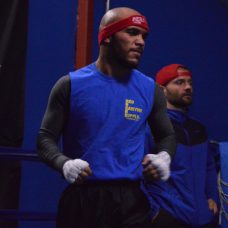
Juan “Baby Bull” Diaz comes first to mind when I think after a boxing incarnation of the Labor Day spirit for these reasons:

1. He applied a template of constant pressure.

1a. If he relented, everything would collapse – his defense, his footwork, his identity.

2. He wore blue.

3. He was workforce, not management.

3a. He punched-in for a full, 36-minute shift.

4. When he was put in a bad system (against Juan Manuel Marquez) the system won.

Marquez doesn’t spring to mind as a Labor Day prizefighter, and yet, how else did he attain such technical mastery but via hundreds of thousands of repetitions, and isn’t that workmanlike?

A Brief Oral History of Why Marquez Was Not Workmanlike . . .

MONEY: I’m the reason he changed his physique, you know?

MEMO: I don’t know about that, but I truly did not hear from him until after you fought him.

MANNY: I went crazy when he hit me to the mat with that loop right hand in our four fight. The punch was not happy. The punch was a lie.

MEMO: But you opened the door to that when you didn’t want to do testing.

MONEY: Only reason people know he didn’t want the test was because of me.

If you posit those who use modern scientific methods to enhance their performance are undeserving of Labor Day recognition you foolishly imply, at least partially, anyone with the same cocktail regimen of whatever these guys ingest would, too, become world champion. And before this finds you on hindlegs asserting it’s all so unfair to those who adhere to whatever arbitrary group happens currently to be enforcing arbitrarily agreed-upon standards, maybe ask a few questions about the testing agencies’ agents’ self-interests and just how pure you’re certain all the publicized adherents are actually. Marquez didn’t need PEDs to be elite and neither did Barry Bonds, but the sort of ambition that brings eliteness is not slumberous. It rarely obeys a threshold and hasn’t an off switch. Which is to imply in an era of PEDs any argument about any athlete not needing PEDs to be elite is self-invalidating.

[Hit to start]
Thank you. Please take your seats. Thank you. (PAUSE) (Spread hands) Congratulations to Prizefighting University’s class of 2018! (((((())))))) When I was asked to give this commencement address, I did a lot of thinking. What might I say to send y’all off from the amateur ranks of boxing and scoring to the (raise crooked fingers in air quotes) hurt business? (Lower hands to podium) Then it came to me. (Pause) Two things, actually, came to me. (Take sip of water) The first was a five-word admonishment from a trainer friend of mine. The second was about layers, levels, what have you. (((((())))))) First the five words. (Raise right hand and count on fingers) You. Ain’t. Gonna. Reinvent. Boxing. (PAUSE) Keep your damn chins tucked and your damn guards high. (((((())))))) Now I’m going to riff a little about layers. (Signal grandly with right hand for TelePrompTer to be powered-off) (((((())))))) Conclusion: The year of your graduation, one way or the other, will see a Ukrainian named Fighter of the Year. Supply your own metaphor.

These thoughts about creating a threedimensional experience with a twodimensional medium like words-arranged-in-paragraphs began in 2001! A few writer friends had a magical vision: To spread goodwill by making the already enjoyable reading experience way different by departing from proven methods. Whether in an effort to hide stylistic shortcomings or in the name of literary revolution (founder’s note: Or boredom!) these writers sought to celebrate a subversive experience for their readers by applying a “rigid standard of ultimate quality, craftsmanship and creativity” like Happy Socks!

In conclusion, whatever happened to labor in America or appreciation of those who do labor – and if you’re reading this from your job on Labor Day, why, that’s the point – things shall certainly worsen before they betteren. Employers flatten and automate, making entrylevel a permanent level, now that leveraged shareholders have replaced customers and workers, and so, and still, if boxing does not repay fully what vicarious expectations – better put: expectations for vicariousness – we lend our beloved sport, it ever holds the possibility a man, some man, may rise from hopeless circumstances, may overcome derogatory socioeconomic factors numerous, and improbably become celebrated and secure while entertaining us. If Oleksandr Usyk, world’s unified and undisputed and undefeated cruiserweight champion, possessed of a quirky workhorse style that requires constant motion and occasional improvisation, does not represent every American everyman’s Labor Day ideal, he represents ideals enough.

Bart Barry can be reached via Twitter @bartbarry



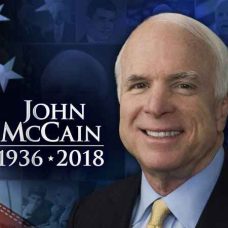
John McCain, The People’s Champ

By Norm Frauenheim-

PHOENIX, Ariz. – They stood in 103-degree temperatures on both sides of Central Avenue Thursday just to see the hearse. They stood in line for three hours in the desert’s relentless, late-summer heat Wednesday just to see his flag-draped casket above Arizona state’s seal at the Capitol Rotunda.

John McCain, the People’s Champ.

I’m not sure McCain would have called himself that. A great sports fan, the longtime Arizona Senator was first and foremost a boxing fan. In my days as a sportswriter who covered everything from the Phoenix Suns to the Olympics, my conversations with him would always wind up with talk about the legends who had captured the public imagination, no matter what the scorecards or promoters or writers thought of them.

McCain — called “the Boxing Senator” by Bob Arum in a story I wrote for The Ring Saturday https://www.ringtv.com/542243-bob-arum-on-the-passing-of-the-boxing-senator-john-mccain-he-was-a-great-american/ — was fascinated by Manny Pacquiao, the last true People’s Champ throughout his astonishing rise from Filipino street kid to four titles in four weight classes. He named his federal boxing bill the Muhammad Ali Act. He led the fight for the pardon of Jack Johnson, the historical icon who became a People’s Champ for later generations who never saw him fight but knew about his role in the civil rights’ fight.

I don’t know exactly why McCain liked boxing. At times, I’m not so sure why I do either. On the politically-correct scale, it ranks somewhere near the bottom for all the cliched reasons. I’m sure many of McCain’s colleagues looked at him and wondered why. I’ve seen it myself from fellow sportswriters who look at boxing as though it’s something that should be scraped off the bottom of a dirty shoe.

But where there’s dirt, there’s drama. In boxing, it’s all there. Better writers have called it life in a shot glass and I think that’s what appealed to McCain. There are sports that are safer. And sports with greater public appeal. But none is as 100-proof genuine as boxing.

For all his flaws, McCain was genuine. In part, that explains why all of those people waited on hot Phoenix streets just for a glimpse of his hearse and his casket. Populism is a dirty word these days. It’s been muddied up, trampled and misused in a daily tweet storm from Washington D.C. Little is believable. Few are accountable. If Donald Trump were a boxer, he’d blame Google for a loss.

But McCain has blamed himself for lots of mistakes, including a failed marriage and his role in the Keating Five in 1989.

Acknowledging mistakes, I think, is fundamental to success in the boxing ring. I’m not sure what kind of a boxer McCain was at the Naval Academy. My guess he was physically limited, yet always there in the end.

To use a cliché, he always found a way, mostly because he was honest with himself, first and foremost. Perhaps, that’s something he learned in that Hanoi Hell Hole, no Hilton, during his five-plus years as a Viet Nam POW. Only he could figure out to survive and do so with his life and honor intact.

Trump has derided his POW experience, saying that he only likes people who weren’t captured. Trump doesn’t know, or conveniently forgets, that McCain was targeted by the North Vietnamese because his father was a prominent admiral, who was given the CINCPAC post – Commander-In-Chief Pacific – not long after McCain’s fighter jet was shot down. They offered him early release. McCain turned it down, knowing North Viet Nam would use it as propaganda that would stain him as a collaborator forever.

Put Trump in the same situation and I’m guessing you’d have seen a Trump Tower in Hanoi a few years later. He’d have been out of Hanoi and back home, saying ad nauseam there was “no collusion, no collusion” with his North Vietnamese captors.

In McCain, there has never been much guessing about how he would fight. Often, there was disagreement with his reasons. With the why. But rarely the how. McCain was about the good fight in a life that ended with crowds who will remember him as their champion, a People’s Champ.


A pleasure to meet you, Mr. Dogboe

By Bart Barry-

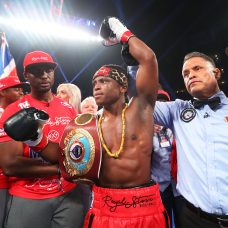
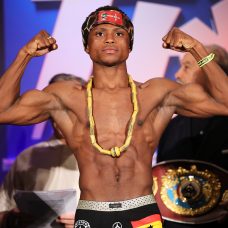
Saturday at Gila River Arena in the greater Phoenix area Ghanaian super bantamweight titlist Isaac Dogboe raced through Japan’s Hidenori Otake in about two minutes of their comain tilt. Those two minutes got so filled so well with courage and technique and menace as to make any who saw them suddenly more interested in querying the Dogboe videovault than staying awake till Sunday morning for ESPN’s mainevent.

Just as baseball scouts celebrate Dominican batters’ promiscuous strikezones by saying “no one walks off the island” so should aficionados acknowledge African prizefighters’ chins by saying “no one runs off the continent” – before you saw Dogboe tested, then, you already knew by virtue of his Ghanaian birthplace he had a chin. But then so did countryman Joshua Clottey.

No, what makes Dogboe special is his audacity. Isaac Dogboe is a bad man. How good it feels to write that without irony or hyperbole or satirical smirk.

It feels like when this column began it needn’t be written often because it was assumed often; Pacquiao, Barrera, Morales, Marquez – none of them was mysterious about his intention in a prizefighting ring. His role was to hurt the other man unto unconscious or the closing bell, whichever came first, but he wasn’t to relent trying to hurt the other man unto unconsciousness till the closing bell clanged. That was his brand. That was his legacy.

For reasons of culture or simple good wiring those men doubted the next morning’s risen sun more than a belief like this: If I fight every man unto unconsciousness, his preferably but mine otherwise, I’ll have done my job and should be beloved. If these men feared pain and mortality much as the next they did not fear humiliation; their professional code of conduct drew for them a straight line. They stood apart from the twitchy brand-obsessed Americans who followed, the men who for reasons of culture or simple poor wiring feared nothing so much as public humiliation and fought like it.

Things are getting better by dint of volume – the more airwaves contracted to provide prizefighting the more committed the search for fighters who follow a code in lieu of building a brand. For this, too, we probably ought thank the PBC, for believing so completely in the power of branding above every other consideration as to show our beloved sport the logical ends of the gambit, for not pausing to glance at a Ghanaian bantamweight like Dogboe during the outfit’s Olympic courtship of an American flyweight like Rau’Shee Warren.

Dogboe might’ve succeeded regardless, Errol Spence has somehow, but Dogboe’s chances of succeeding as a fighter if not a brand were improved by his alliance with Top Rank, an outfit that develops prizefighters best. Everything else belongs to Dogboe. His commitment to punches, so full, is uncommon for a man who places them well as Dogboe does. Saturday’s left hook sent every man jack with internet access to YouTube to see what he missed by way of a bullshit filter that kept him offline in April when Dogboe first entered the collective consciousness of American aficionados. Far too many champions and contenders and prodigies and prospects, even, have been prematurely blazoned these last 10 years for any reasonable man to attribute to anything more reliable than Stockholm syndrome most sudden socialmedia enthusiasms. Too hungry are we for something credible to doubt reflexively (as we should) the publicist-readied origin stories that reach us well before our fighters’ first meaningful tests.

Oh, I know, I know, it’s not careful matchmaking that keeps a fighter from being tested his first halfdecade but rather his otherworldly talent, and that’s why I should care about his stepdad or immigration status years before I know if he’s the whiskers to be entertaining or elite.

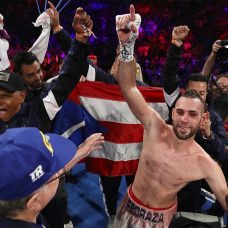
If that reads like an indictment of Saturday’s mainevent it is one, if only partially. After what Dogboe showed, after the obviousness of Dogboe’s presentation, it was ugly hard to appreciate the subtlety of whatever Jose Pedraza and Raymundo Beltran did one another in their sweepstakes drawing for a December cashout against Vasyl Lomachenko. Saturday’s mainevent was, in a word, mediocre. That’s not to besmirch Beltran’s I-485 application to register permanent residence or audit what paternal love got showered on young Pedraza but more to report yet again none of that matters a whit if what happens in the combat itself is dull, and it was.

Aficionados are a generally shameless lot, but just in case, let’s reiterate: Be not ashamed to call a halfhour of grappling punctuated by an uppercut what it is.

For it cheapens what Dogboe did to call what followed it more than that. Perhaps Dogboe’s mother is a real taskmaster, maybe his dad strapped him with the leathery rinds of a studded soursop, or maybe Dogboe fights for his people – you know not of it matters truly because you didn’t need to know any of it to appreciate the hook he pronated on Otake’s chin in round 1, the same hook he pronated on Cesar Juarez’s chin in January. What’s wonderful about that hook is when it’s thrown – against Otake, before Dogboe knew if Otake could cut his lights, and against Juarez after Dogboe knew the Mexican could pepper him if Dogboe snapped his chin on Juarez’s left knuckles.

Which is most of Dogboe’s charm – he imperils himself for our amusement. Is he open for a counter when he launch-land-plants himself for the lead hook? Why, certainly. But Dogboe wagers his consciousness no opponent’ll combine precision and commitment at that same instant fully as he does. More of that, please.

Bart Barry can be reached via Twitter @bartbarry


FOLLOW BELTRAN – PEDRAZA & DOGBOE – OTAKE LIVE

Follow all the action as Ray Beltan defends the WBO Lightweight title against Jose Pedraza.  The action begins at 10:30 PM ET / 7:30 PM PT with the WBO Super Bantamweight title bout between Isaac Dogboe and Hidenori Otake.  Also featured will be a women’s bout between Mikaela Mayer and Edina Kiss.

NO BROWSER REFRESH NEEDED.  THE PAGE WILL UPDATE AUTOMATICALLY 

12-ROUNDS–WBO LIGHTWEIGHT TITLE–RAY BELTRAN (35-7-1, 21 KOS) VS JOSE PEDRAZA (24-1, 12 KOS)
ROUND 1 2 3 4 5 6 7 8 9 10 11 12 TOTAL
BELTRAN 10 9 9 10 9 10 10 10 9 10 8 9 113
PEDRAZA* 10 10 10 9 10 9 9 9 10 10 10 10 116

Round 1 

Round 2 Right from Pedraza…Uppercut..Beltran gets in a left to the body..Cut around the left eye of Beltran..Right from Pedraza..Straight left..Body..Good right from Beltran…Pedraza out-lands Beltran 24-13 in round

Round 3 Body shot from Beltran…Jab from Pedraza..2 more..Left drives Beltran back

Round 4 Beltran lands a left to the body..Pedraza lands a right hook..Right from Beltran..Combination

Round 5 Beltran lands a left hook..Jab…2 chopping rights from Pedraza..

Round 6  Uppercut from Beltran..Beltran out-landed Pedraza 17-8 in round

Round 7  Little swelling under left eye of Pedraza…Lunging left hook from Beltran

Round 8  Beltran lands a right..Hard straight right..Good right hook from Pedraza..Left..2 punches from Beltran..

Round 9 Jab from Pedraza..

Round 10 Uppercut from Pedraza..Right from Beltran..

Round 11 Jab from Pedraza….UPPERCUT AND DOWN GOES BELTRAN..

Round 12 Huge combination from Pedraza at the end of the round that battered the head of Beltran

Beltran landed 137-515      Pedraza landed 160-556

117-110 twice and 115-112 FOR JOSE PEDRAZA

6-Rounds–Super Featherweights–Mikaela Mayer (6-0, 3 KOs) vs Edina Kiss (15-7, 9 KOs)
ROUND 1 2 3 4 5 6 7 8 9 10 11 12 TOTAL
Mayer 10 10 10 30
Kiss 8 9 9 26

Round 1 Mayer lands a jab…RIGHT HAND AND DOWN GOES KISS..Right to the head..Right..

Round 2 Mayer jabbing…

Round 3 Right from Mayer..Jab..4 body shots….KISS QUITS ON STOOL

12-ROUNDS–WBO SUPER BANTAMWEIGHT TITLE–ISAAC DOGBOE (19-0, 13 KOS) VS HIDENORI OTAKE (31-2-3, 14 KOS)
ROUND 1 2 3 4 5 6 7 8 9 10 11 12 TOTAL
DOGBOE* KO
OTAKE

Round 1 Dogboe lands a body shot,..Uppercut and left hook..Left hook lands solid..HUGE LEFT HOOK AND DOWN GOES OTAKE…BIG RIGHT AND OTAKE’S GLOVE TOUCHES THE CANVAS…Big left..and another,,,HUGE COMBINATION AND THE FIGHT IS OVER


Pedraza looks at Beltran and sees another chance at another title

By Norm Frauenheim-

GLENDALE, Ariz. – Jose Pedraza looks at Ray Beltran and sees something he recognizes. Call it opportunity. There aren’t many. After nearly two decades, Beltran finally gets his chance to hear himself introduced as the defending champion.

Pedraza has experienced that moment. But it was fleeting. The belt was gone, almost faster than the celebration. But the lesson remains. This time, Pedraza hopes to take a title that will stick around for a while, too.

“I feel very fortunate,” said Pedraza (24-1, 12 KOs), who will attempt to take the World Boxing Organization’s lightweight title from Beltran (35-7-1, 21 KOs) tonight on ESPN at Gila River Arena. “This is a great opportunity and I am going to take full advantage of it. Everything happens at the right time.”

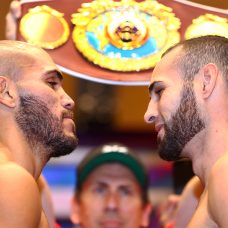
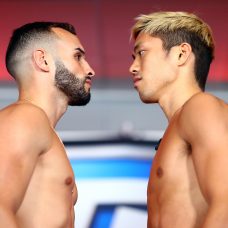
Both fighters made weight Friday. Pedraza was ta 134.4 pounds; Beltran at 134.6

Pedraza, a former junior-lightweight champion, created a mild buzz this week with an impressive public workout at Hall of Famer Michael Carbajal’s 9th Street Gym in downtown Phoenix. He looked agile, athletic and mobile enough to give the 37-year-old Beltran some trouble, especially if the bout goes into the later rounds. Above all, Pedraza has the advantage of youth. He’s 29.

“Another world title would mean a lot to me because not everybody gets the opportunity to be a two-time champion,” said Pedraza, a Puerto Rican who won’t be the favorite of Mexican and Mexican-American fans expected to be in the crowd for Beltran.

Pedraza has won two fights since his lone loss by stoppage to Gervonta Davis in January, 2017. Since then, he’s won two fights and watched his home island struggle to come back from Hurricane Maria.

“For the island, a victory would mean a lot too because we need happiness and positive vibes,’’ he said. “After the first loss, I kept training but the opportunities didn’t come and then Hurricane Maria happened, so that stalled things even more. So, we had to wait to get back in the ring.”

Early signs indicate he can’t wait to step back through those ropes. For the experienced Beltran, that probably means aggressiveness early in an attempt at stoppage before perhaps the eighth. If the bout goes into the final four rounds, Pedraza’s younger legs might carry him to a scorecard victory.

The ESPN telecast includes WBO super-bantamweight champion Isaac Dogboe (19-0, 12 KOs) against Hidenori Otake (31-2-3, 14 KOs) of Japan. At Friday’s weigh-in Dogboe was 121.0 pounds; Otake 121.4. The ESPN telecast is scheduled to begin at 7:30 p.m. PT/10:30 p.m. ET).

The undercard will begin at 3:30 p.m. PT. It can be seen on ESPN+.


Royal Storm: Isaac Dogboe’s global ambitions lead to his first world-title defense

By Norm Frauenheim-

GLENDALE, Ariz. – Isaac Dogboe has royalty in his blood and a warrior in his heart. He’s also got quick wit. It’s an intriguing combination, a mix of charisma and danger. The royalty is said to be in his personal history.

He can trace his ancestry to a ruling family of kings and warlords in a central state of his native Ghana. It’s a good story and better nickname, Royal Storm. But it’s Dogboe’s hands and feet, both of which are as quick as the evident wit, that are creating a buzz about the sudden emergence of a potential star in a sport always in need of another one.

Dogboe (19-0, 13 KOs) is a super-bantamweight with global ambitions, or at least another world crown or two. First, he has to defend his first belt, the World Boxing Organization’s 122-pound title against Hidenori Otake (31-2-3, 14 KOs) Saturday at Gila River Arena on an ESPN card (7:30 p.m. PT/10:30 p.m. ET) featuring WBO lightweight champion Ray Beltran against Jose Pedraza.

In Otake, Dogboe faces a 37-year-old Japanese fighter, who has some wisdom to go along with scars collected over a long career. During a news conference Thursday, Otake was asked how he would fight, and perhaps what he would fight for.

“I’m going to fight for my soul,’’ Otake said through an interpreter.

He’ll have to fight for more than that, Dogboe suggested when it was his turn at the microphone.

“He says he’s going to be fighting for his soul,’’ said Dogboe, who moved to London when he was a kid. “I have no need for his soul. I didn’t create him. I’m only going to knock him out.’’

Otake is still pursuing his first title. He lost a shot at the World Boxing Association version in 2014, falling to Scott Quigg in a unanimous decision in the UK in 2014.

“My opponent is physically strong,’’ Dogboe said. “I’ve been in that same position to fight for a world title. He’s been at his best for a long time and has a good record, so you can’t take him lightly.

“But one thing I say is, 37 years old – I know he’s very strong and in great condition, a man. But if by 37 you’re not a world champion and you think you’re coming to beat me and take a title God has assigned to me, there’s no way that is happening.”

The 23-year-old Dogboe’s swagger and high-voltage energy were on display last April when he got up from a knockdown and scored an 11th-round stoppage of Jessie Magdaleno for his first major title.

It was then that his promoter, Top Rank’s Bob Arum, saw the qualities that could be the latest in the great tradition of Ghana boxing. Arum sees Dogboe and sees another Azumah Nelson, a great featherweight throughout the 1980s and into the 1990s.

“They called Azumah The Professor,’’ Arum said as he turned and looked at Dogboe. “You are following the footsteps of the great Azumah Nelson.’’

Dogboe, already a royal, bowed in thanks.


Beltran still motivated to go the distance in a fight to feel “fully free” and “fully legal”

By Norm Frauenheim-

PHOENIX – Going the distance is more than another cliché for Ray Beltran. It’s life. He’s fought 12 rounds for a title. He’s endured another 12 against feared Terence Crawford. He’s gone 12 and wound up with nothing more than frustration at feeling as though he had been robbed. Within the ropes, there’s always been one more. Bouts start. Bouts end.

Outside those ropes, however, there’s one fight that continues. Beltran is winning that one, too. His U.S. immigration process is further along than it has ever been. His manager, Steven Feder, said Beltran has qualified for his work permit and his travel permit. He’s waiting to receive those documents.

His application includes an important addition for an outstanding accomplishment, the World Boxing Organization’s lightweight title. Now, he’s waiting on a date for an interview with an immigration official, probably in Phoenix where he’ll defend that title Saturday night against Puerto Rican challenger Jose Pedraza at Gila River Arena in suburban Glendale in an ESPN-televised bout.

After the expected interview, Feder says he’s one step from acquiring a green card, a legal title that represents some security in a thoroughly unpredictable world. The long, winding labyrinth through process and bureaucracy appears to be as close to finished as it can be. But don’t tell that to Beltran. For him, it’s an ongoing quest and still a powerful source of motivation.

“I won’t feel like I’m fully free until I’m fully legal,’’ Beltran said Wednesday in 100-degree temperatures at Michael Carbajal’s 9th Street Gym.

Beltran’s first defense of a title he won in February is about a lot of things, of course. At one level, it’s about home. He arrived in Phoenix from his native Mexico in the late 1990s, but left to live in Detroit with late Hall of Fame trainer Emanuel Steward and then to Los Angeles for a long gig as Manny Pacquiao’s primary sparring partner. But he liked life in the desert, even summer those temperatures that had everyone searching futilely for a breeze Wednesday. The heat and the city suit him. He wears a logo with the town’s symbol, a mythic bird, on his shorts and T-shirts.

The message is clear: Phoenix is where Beltran (35-7-1 21 KOs) intends to make a stand for himself and his family against the skilled Pedraza (24-1, 12 KOs). Along the way, he could get a shot at a good payday. Beat Pedraza and it looks as if he might get a career-high check against Vasiliy Lomachenko, Crawford’s main challenger in the pound-for-pound debate.

But turning that dream into reality is still a fight for the 37-year-old, who found himself back in the gym where he sparred with Carbajal before Carbajal finished his Hall of Fame career with an 11th-round stoppage of Jorge Arce in 1999.

Beltran made a vacant title his own in his last outing against Paulus Moses in Reno by going that familiar distance despite an injury to his left hand. The bout was difficult, yet the motivation was never absent. Beltran could hear it from his cornermen, who shouted ‘’Green card, Green card” in the later rounds. A victory over Pedraza, he says, will put him that much closer to a legal title worth more than an acronym-sponsored belt ever could.

“It’s there, right there, but I still have to fight for that green card,’’ said Beltran, who says his next step is to acquire citizenship. “Winning Saturday would be like some insurance on what I’ve been fighting for, fighting for a long time.’’


Column without end, part 17

By Bart Barry-

Editor’s note: For part 16, please click here.

*

QUITO, Ecuador – No telling where this’ll head as its teetotaler writer’s synapses get tickled by the nutrients of a café bombón after what 48-hour involuntary fasting now evidently succeeds any hike he conducts more than 9,000 feet above sealevel. The empty stomach and mindful, not moral, abstinence from any substance stronger than chlorophyll, whose benevolent effect can be noticeably strong at altitude, already do their work: Who knew teetotalism (probably once t-totalism) had nothing to do with tea but rather extra totaling – the same way the Spanish prefix “re” takes the writing of this column from divertido, fun, to redivertido, absurdly so?

This city is lovely gentle by any measure but especially the measure of Andean capitals. Gentler is the word that presents itself more than another here. Among its sierra siblings, somewhere betwixt Bogota’s relentless vice and Lima’s suffocating virtue, Quito balances gently and invitingly, courteously curious, not professionally so as in Colombia, not stonefacedly unso as in Peru, interrogating an American tourist the way you might question a newly arrived and friendly seeming Martian. With one outlier worth noting:

A Venezuelan taxista so distraught with his country’s freefall into monstrous disrepair – 4,000: that’s the number of daily Venezuelan refugee arrivals to Quito everyone cites – he declares, in Spanish, without a sense of hyperbole much less irony or recourse to a plan b: “Trump! Trump is our only solution!”

Gentler is this city but not gentle, as the Andes are not gentle. Nothing soft grows above 10,000 feet. The plants, though plentiful and often gorgeous, make no outstanding effort to shade you from a sun that glares very much in the transitive sense of the verb, taking an object – namely your oncepink flesh. There’s not the same sense of pending elimination one gathers from subzero temperatures so much as a flinchless indifference; you do not exist to the Andes.

Burned and fatigued after four hours and a thousandfoot ascent, wandering dispiritedly away from homebase while wondering about fractals and how the circumference of a volcanic lake, if measured by microscope, might be infinite, you lose any doubt how unimportant you are. Ambivalence is all: I got myself in this ordeal (empowered) and nothing for 3,800 km is careful enough to get me out (powerless) so I can continue (empowered) or not (powerless) but there will be no conscious witness to my plight while I’m still conscious (ambivalent).

Whysoever more ambitious souls than mine freesolo mountains, I realize I punch at hikes well above my weightclass (by recommending bodyweights well below) not because they’re there but because they can be done, primarily because others not only did them but did them so comfortably and found their doing so worthwhile as to return them with infrastructural equipment – stones in Cusco, logs in Cotacachi – to ease others’ ascents. It may not be gratitude, quite, as one oftentimes resents these handmade staircases as they finish with him, but it is at least a small homage to one’s betters.

Writing of which, the tens of hours of idle thinking that mark this trip much as its altitude, the Airbnb vistas chosen to encourage mindless gazing, arrived unexpectedly at the works and thoughts of a Quiteño painter, a British bodybuilder and an American novelist: Guayasamín, Yates and Wallace.

Capilla del Hombre (Chapel of Man), designed by Oswaldo Guayasamín though not completed before his demise in Baltimore, makes Quito every bit what an aesthete’s destination is Donald Judd’s Marfa or Antoni Gaudí’s Barcelona. A stone box the majority of whose contents are subterranean, La Capilla’s cupola depicts in part those indigenous women of the Spanish conquest who perished in South American mines. But “perished” doesn’t approach what happened.

These persons were born in the mines, bred like livestock in the mines, and discarded in the mines, without once they saw sunlight. If it’s a feat anylonger to horrify in the 21st century Guayasamín’s tribute does it; imagining a life considered so disposable as to be denied even natural light touches a place anymore invulnerable to expertly arranged statistics and expertly layered depictions of man’s cruelty.

Whatever his myriad of influences Guayasamín’s works themselves feel like a synthesis of the Mexican Siqueiros’ murals and the Briton Lucian Freud’s portraits.

Thoughts of a Brit good at layering brings us to Dorian Yates, a letter to whom in Flex magazine in 1994 marked my first “published” “work” and whose lat spread was in its time a transcendental grotesquery. What an interesting journey Yates has taken himself on since injuries ended his Mr. Olympia run 21 years ago, and thanks to whatever YouTube algorithms mixed my affinity for Ravishing Rick Rude ringwalks and comedian Norm MacDonald compilations to recommend Yates interviews that’ve filled many of my Andean-dark evenings in Ecuador.

All but one, actually. That evening got filled by an excellent Netflix offering called “The End of the Tour” – a movie about David Foster Wallace, the American writer whose novel “The Pale King” may be the joyleast posthumous work ever published. Wallace, though, as depicted by actor Jason Segel and subsequently confirmed in hours of interviews, had at least as much a capacity for joy as a capacity for postmodern irony (or whatever Wallace’d’ve preferred we call it).

Wallace’s legion of imitators, too, are perfectly if not quite intentionally portrayed by the actor Jesse Eisenberg – anxious little anglers desperate to achieve literary acclaim by footnoting every sentence, written or spoken, with fauxinquisitive annoyances like “let’s unpack that word ‘desperate’” and “what do you actually mean by ‘acclaim’?”

A last observation unrelated to anything above or anything pugilism (no kidding, bud). Spirals figure prominently in the patriotic signage of both Ecuador and Peru, the latter choosing a font like Maya script and the former choosing a versicolor underlined by “ecuador ama la vida (Ecuador loves life)”. Amen to all that!

*

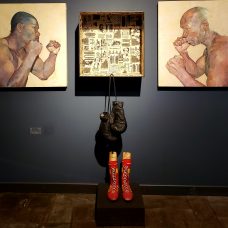
Author’s note: The picture that accompanies this column features a mixedmedia piece, “Vencedor condenado a la derota por agotamiento sucesivo (Victor condemned to defeat by successive exhaustion)”, created by the Ecuadorian artist José Luis Celi and displayed in Museo Nacional de Quito. The scrolls in the boots read “LA DIGNIDAD” and “LA ETICA”.

*

Bart Barry can be reached via Twitter @bartbarry


Ray Beltran at home with a logo that defines him


By Norm Frauenheim-PHOENIX, Ariz. — If life is a logo, Ray Beltran has one that hints at where he’s been, where he’s going and mostly who he is. It’s the Phoenix bird, a symbol of inexhaustible resiliency, with his initials at its heart.

The R is reversed, the young Ray facing left and perhaps looking back on who he was. It backs up to the B, the mature Beltran facing right and looking forward to a career that continues to unfold. In some ways, it represents nearly two decades that have come full circle, a round trip bringing Beltran back to a city he has never really left. The desert town and its mythic symbol are his identity.

He’ll stage a formal homecoming a week from Saturday, August 25, at Gila River Arena in suburban Glendale in his first Arizona bout in more than a decade. It’s no coincidence, perhaps, that it will be his first fight — here or anywhere else — as a defending champion. The title dreams he brought with him to Phoenix in 1999 were finally fulfilled with a unanimous decision over Paulus Moses in Reno for the World Boxing Organization’s belt last February in Reno.

“People know me, know who I am,’’ said Beltran, who faces a tricky challenge against switch-hitting Jose Pedraza of Puerto Rico in an ESPN-televised bout. “They know what’s real, what’s not.’’

If time is any measure, few have been as real as Beltran. At 37, he’s something of a late bloomer. That’s a perilous place to be in an unforgiving craft. But Beltran is there, sure of who he is as a fighter. There have been times when he wasn’t certain. In part, his career has been about figuring out just who he was within the ropes.

It wasn’t exactly an identity crisis. But it was a learning process. When he arrived in Phoenix in 199 with late Hall of Fame trainer and mentor Emanuel Steward, he was called Brown Sugar. That suggested he would be an elusive fighter, finesse first and power second. But he was never really that guy. Instead, he discovered through time, trial and error that his instinctive aggressiveness was his real strength.

That time included about 10 years as Manny Pacquiao’s primary sparring partner. Beltran guesses that he sparred about 3,000 rounds with Pacquiao. To a degree, that meant a lot of role playing. For a while, he’d be Miguel Cotto. Then, Antonio Margarito. Then, Shane Mosley, Then, Juan Manuel Marquez. Then, Timothy Bradley. Then, Floyd Mayweather. A little bit from each can add up to a lot in one. It gives Beltran experience for which there is in match.

There’s also time with Steward, who brought Beltran up from his native Mexico and put him on Phoenix cards he promoted in 2001. Then, Beltran followed Steward to Detroit and the famed Kronk Gym.

“I had nowhere to live, so I lived with Emanuel at his house in Detroit for a year,’’ Beltran says.

Dinner with the Hall of Fame trainer was a lesson plan, Then, there all those rounds with Pacquiao before some of the biggest fights in a new millennium. There’s not much that Beltran hasn’t heard, hasn’t seen. His is a comprehensive resume, one that could get an intriguing addition if he beats Pedraza. A win on Aug 25 probably sets up a title defense against Vasiliy Lomachenko, perhaps in December. That would mean Beltran would be the only fighter to face two of the leading contenders in the pound-for-pound debate. Lomachenko and Terence Crawford are either No. 1 or No. 2 in several of the subjective ratings. Beltran lost a unanimous decision to Crawford in 2014.

His unique experience puts him line to be in a singular position. But he is also there because of the resiliency, the rising-from-the-ashes quality symbolized in the personal logo he designed. Beltran’s 44-fight record includes seven defeats and a controversial draw in 2013 with then WBO champion Ricky Burns in Scotland.

In an era defined by protection of an unbeaten record through optimization of the risk-to-reward equation, a fighter with seven losses is a retired fighter. But there is no modern equation that explains Beltran. Only a logo can.


Top Rank Wins Purse Bid for Maurice Hooker’s Mandatory Defense of the WBO Super Lightweight Title Against Alex Saucedo

December 15, 2012, Houston,Texas — Welterweight Alex Saucedo remains undefeated at 7-0 after stopping Eddie Cordova in the 3rd round , Saturday, at Toyota Center from Houston,Texas. — Photo Credit : Chris Farina – Top Rank (no other credit allowed) copyright 2012

SAN JUAN, Puerto Rico (August 14, 2018) – Roc Nation Sports today announced that Top Rank has won the purse bid for Maurice Hooker’s defense of the WBO Super Lightweight Title against top mandatory challenger Alex Saucedo, submitting a $1.625 million bid to secure the rights to promote the WBO title fight.

Given the outcome, Hooker (24-0-3, 16 KOs) – who is co-promoted by Roc Nation Sports and Matchroom Boxing – will fight Saucedo (28-0, 18 KOs) for the WBO super lightweight title belt fight on ESPN+. Roc Nation Sports, Matchroom Boxing and Top Rank are expected to schedule the bout for either Nov. 16 or Nov. 17 in Oklahoma City.

“I’m very excited to defend my world title on a national platform and show the world what I bring to the ring,” Hooker said. “I feel like this is my time – I’m hungry, I’ve been working hard and I’m ready to make Alex Saucedo my next victim.”

“Maurice has earned all of his accolades and we’re incredibly proud of how he’s represented Roc Nation in the ring,” Roc Nation boxing promoter Dino Duva said. “We look forward to collaborating with Top Rank and Matchroom Boxing to finalize the details of this bout and it’ll be one that boxing fans won’t want to miss.”

When Hooker returns to the ring, it will mark his first bout since he toppled Terry Flanagan on June 9 via split-decision victory to capture the vacant 140-pound championship belt. The 29-year-old achieved the feat in his first career world title fight in Flanagan’s hometown of Manchester, where he earned scores of 115-113 and 117-111 while another judge scored it 117-111 in Flanagan’s favor.

Saucedo is coming off his own victory over Leonardo Zappavigna on June 30 in Oklahoma City, where he won via a seventh-round TKO.

ABOUT ROC NATION SPORTS:

Roc Nation Sports, a sub-division of Roc Nation, launched in spring 2013. Founder Shawn “JAY-Z” Carter’s love of sports led to the natural formation of Roc Nations Sports, supporting athletes in the same way Roc Nation has been working alongside and advocating for artists in the music industry for years. Roc Nation Sports focuses on elevating athletes’ career on a global scale both on and off the field. Roc Nation Sports conceptualizes and executes marketing and endorsement deals, community outreach, charitable tie-ins, media relations and brand strategy. In August 2014, Roc Nation Sports launched its boxing division, a full service promotional company that represents fighters such as WBO Super Lightweight champion Maurice Hooker, WBO Oriental Heavyweight champion Zhang Zhilei, IBF Intercontinental Light Heavyweight champion Meng Fanlong, Junior Younan, Darmani Rock, Tyler McCreary, Tramaine Williams, Wellington Romero and John Bauza. Roc Nation Sports’ roster includes premiere athletes such as Robinson Cano, Skylar Diggins, Kevin Durant, Geno Smith, Victor Cruz, CC Sabathia, Dez Bryant, Yoenis Cespedes, Todd Gurley, Jerome Boateng, Romelu Lukaku, Wilson Chandler, Justise Winslow, Willie Cauley-Stein, Miguel Sano, Melvin Ingram, Rudy Gay, Leonard Fournette, Juju-Smith-Schuster and Josh Hart, among many others


Interim heavyweight title suddenly at stake in BJ Flores-Bryan bout

By Norm Frauenheim-

PHOENIX – An interim title blew into this desert city like debris in a dust storm Thursday with a World Boxing Association version of that heavyweight belt suddenly available to the winner of the BJ Flores-Trevor Bryan bout Saturday night at Celebrity Theatre.

Trevor promoter Don King announced that the interim – aren’t they all? – piece of plastic and tin would be at stake because of litigation involving Manuel Charr and Fres Qquendo.

“These two warriors are both very hungry and they both dream of becoming a heavyweight champion,” King said in a statement from his office in Deerfield Beach, Fla. “This should be a classic battle on Saturday night with the title on the line. We’ll decide the title in the ring, while the courts decide on what they will do with Charr and Oquendo.”

Charr is one of the WBA’s heavyweight champs. If you didn’t know that, please take a bow. There’s only one WBA heavyweight champion worth knowing. He’s Anthony Joshua, the real champ.

Anyway, Charr was expected to defend the WBA’s secondary version of the title against Oquendo on Sept. 29. But if that never comes off, the WBA has a backup belt and another way to charge a sanctioning fee. This is the same organization that had announced a plan to eliminate belts. Make that an interim plan, at least that’s what it looks like in the wake of Thursday’s news.

Both Flores and Bryan enter Saturday’s night’s non-televised card (5 p.m. PT) ranked among the WBA’s top five heavyweights, according to ratings released on Aug. 1. Bryan (19-0, 13 KOs) is at No 4; Flores (34-3-1, 21 KOs) is at No. 5.

Flores, who is as well-known for his work as a television analyst as he is for ring skill, has a hometown advantage. He is from Chandler, a Phoenix suburb. He has been living and training in Las Vegas for the last few years. The 39-year-old former cruiserweight contender will be making his third straight appearance at Celebrity.

The unbeaten Bryan, of Schenectady, NY, has the advantage of youth. He’ll turn 29 on August 23.


Krummy: Moving on from Krusher Kovalev to expressions of euphoria

By Bart Barry-

Sundays like these you spend wondering if this will be it, the last Sunday, the one when the words or at least the impetus to type the words won’t come eventually. Last was scheduled for a thoroughly mediocre weekend of prizefighting and should’ve remained such but for the surprise effect of a Colombian-Canadian light heavyweight who finished what work Bernard Hopkins demonstrated as possible and Andre Ward made manifest.

There was never too much to recommend Sergey “Krusher” Kovalev but cruelty and his promoter, Kathy Duva, who is excellent at her craft and among the final and most-deserving beneficiaries of HBO’s collapsed empire. Kovalev himself was not particularly compelling unless he represented a chance at unification, which we learned last month be among the most-compelling products boxing can deliver, but once such a unification gambit went away with Adonis Stevenson’s departure for another network Kovalev became a frontrunner bully the totality of whose offseason outreach comprised punching a keyring speedbag when HBO cameras reliably panned to him during most every broadcast.

Kovalev won a boring decision over Bernard “The Fighting Quinquagenarian” Hopkins and got copious plaudits for so doing. Then Andre Ward showed the world what was what, and Kovalev rode down the usual rebranding conveyor, firing what cornermen built him and traumatizing overmatched challengers en route to a manufactured title or two. HBO ran out of money not so quickly as it ran out of talent, and so Kovalev benefited alongside his comrade at middleweight, and Danny Jacobs.

Saturday made future benefiting considerably more difficult when Alvarez fragiled Kovalev more clearly even than Ward did, dropping him thricely and yanking the bitch out him unforgettably as Ward did, which is another way of writing: There aren’t enough Vyacheslav Shabranskyys in Christendom to make Kovalev viable again unless he avenges what just happened, and he doesn’t have it in him to do that – Alvarez knowing what he now knows goes through Kovalev quicker next time, as did Ward – and so Krusher’s network is down to a couple middleweights, the super flyweight division and Andre the Giant.

This should be a celebration of Eleider Alvarez, I get that I do, but it’s too late to reverse course and was too late to do so even when a couple disbelieving texts arrived in what felt like the middle of Saturday night.

Since a weekend headlined by Kovalev, Andre Berto and Devon Alexander hasn’t quickened the pulse in a halfdecade, if ever, previous considerations for this column revolved round Lucas Matthysse’s retirement and the man who caused it and why that man continues to fight, and if there’s not 1,000 words of interest round those subjects there’s at least enthusiasm for them where there wasn’t for what preceded them.

Matthysse feels a bit like Kovalev, though it might be the calendar allowing such clumsiness of analogy; excellent in a firefight in which he’s sure he’s the outgunner but fragile in the clutch. Life’s not so symmetrical but if Krusher announces his retirement in a couple weeks the analogy matures to metaphor, and there’s another column written during the slog betwixt now and GolovCanelo 2, though I’ve a plan for just that (see author’s note below).

What’s more interesting are Manny Pacquiao’s reasons for continuing to fight. Before Pacquiao’s successful showing against Matthysse, newsletterman Rafe Bartholomew’s enjoyable “Respect Box” made insightful counterarguments against the Manny-is-broke refrain that was never convincing as its selfinterested proponents believed. Here’s a sample:

“We apply the ‘Joe Louis, casino-greeter’ narrative to Pacquiao, when it’s not a perfect fit, and we have no real way to know how rich or poor he is. The articles about Pacquiao’s finances tend to quote Freddie Roach, Bob Arum, and other Americans with some but not full insight into his situation.”

The first thing many of us noticed about Pacquiao many years ago was the joy he exuded during ringwalks – he was so delightfully eager to fight. Only Felix Trinidad springs to mind as a man so enchanted by the prospect of public combat and the injury and humiliation it might bring. While many of us can imagine the euphoria a victory might cause and imagine the humiliation a defeat might summon very few of us have the experience needed to calculate a quotient that makes one justify the other.

Probably none of us does, not even Manny or Tito. Their secret, then, is to revel in the entirety of the event, to derive euphoria from leaving the hotel room, driving to the arena and touching the toes, taping the hands and watching how nervous others around them are for them in the dressingroom, listening to their names called and punching another man in the face, being punched by him, too, and being nearly unconscious with exertion. That sort of autogenerated presence, addictive, is enough to keep a man sparring till 50 other men in empty gyms – much less thrilling a full and feral arena, a deafening collective of other men momentarily freed from their lives’ every worry. Much less making an entire country suddenly proud.

What replaces that feeling? Certainly not legislative matters or the campaign trail. Certainly not concerns about abstractions over future health. And most especially not watching the digits grow in one’s checking account.

If Manny does not fight on solely for the boundless thrill of it, that thrill, anyone can concede, is a part of why Manny fights on. Would that any man’s passion might make others so euphoric.

*

Author’s note: This column will not appear next week, as its author will be in Ecuador to get krushed by a hike up Rucu Pichincha volcano.

*

Bart Barry can be reached via Twitter @bartbarry


FOLLOW KOVALEV – ALVAREZ LIVE FROM RINGSIDE

Follow all the action from The Hard Rock in Atlantic City as Sergey Kovalev defends the WBA Light heavyweight title against top contender Eleider Alvarez.  The action kicks off at 10 PM ET / 7 PM PT / 3 Am in Moscow with the WBA Light Heavyweight championship between Dmitry Bivol and Isaac Chilemba.

THE PAGE WILL UPDATE AUTOMATICALLY.  NO BROWSER REFRESH NEEDED

12-ROUNDS–WBO LIGHT HEAVYWEIGHT TITLE–SERGEY KOVALEV (32-2-1, 28 KOS) VS ELEIDER ALAVREZ (23-0, 11 KOS) 
ROUND 1 2 3 4 5 6 7 8 9 10 11 12 TOTAL
KOVALEV 10 10 10 10 9 10 59
ALVAREZ* 9 9 9 9 10 9 TKO 55

Round 1 …Jab from Alvarez…Right from Kovalev

Round 2 Jab from ALvarez…Right from Kovalev…left..Left hook

Round 3 Body and head combo from Alvarez..Jab..Bidy from Kovalev..Left hook to body…hard jab..Body..Jab from Alvarez..

Round 4 Combo from Alvarez…Hard right and jab from Kovalev..Good flurry..2 big left hooks…Right from Alvarez..2 rights from Kovalev

Round 5 Good combo from Alvarez..Straight right..Hard right..Jab and left hook..Trading jab..

Round 6 Left from Kovalev..2 body shots..Hard right inside..ALvarez cut under left eye..Hard body shot

Round 7 Right from Kovalev..Counter..Trading jabs…HUGE RIGHT AND DOWN GOES KOVALEVbig uppercut rocks Kovalev..Big right…HUGE LEFT AND DOWN GOES KOVALEV..BIG RIGHT DOWN GOES KOVALEV…FIGHT IS OVER

12 ROUNDS–WBA LIGHT HEAVYWEIGHT TITLE–DMITRY BIVOL (13-0, 11KOS) VS ISAAC CHILEMBA (25-5-2, 10 KOS)
ROUND 1 2 3 4 5 6 7 8 9 10 11 12 TOTAL
BIVOL 10 10 10 10 10 9 10 10 10 10 10 10 119
CHILEMBA 9 9 9 9 9 10 9 10 9 9 9 9 110

Round 1 Hard right from Bivol..Left to body…Hard overhand right….

Round 2. Bivol lands 2 hard left hook..all over Chilemba..Right over top..Right from Chilemba…

Round 3 Left from Bivol..Hard left..Right and left…good exchange..

Round 4 Hard right from Bivol..2 lefts

Round 5 Hard right from Bivol

Round 6 Jab from Chilemba..Left to body..Right from Bivol..

Round 7  Hard counter right from Bivol..Hard right..Jab..Jab followed by a right..Counter right from Chilemba..

Round 8 Left from Chilemba..Right from Bivol

Round 9 Hard left from Bivol..Left from Chilemba..2 hard shots from Bivol

Round 10 Jab from Bivol..Right from Chilemba..Left from Bivol..Straight right…Hard left hook

Round 11 Jab to body by Bivol..Snapping left hook

Round 12 Right to body from Chilemba…Right from Bivol..left..Right from Chilemba..Left from Bivol..

120-108 twice and 116-112 FOR DMITRY BIVOL


Risk Returns: Mikey Garcia willing to take a chance

By Norm Frauenheim-

Mikey Garcia’s pursuit of Errol Spence Jr. in a daunting, two-division jump from lightweight to welter is a welcome counter to Floyd Mayweather Jr.’s business model.

Mayweather mastered risk-to-reward like the ratio was a shoulder roll. He made it look easy. TBE, The Biggest Earner, got the most money out of the smallest risk in history. Mayweather did it so well that now there’s a whole generation of fighters who think they can pull it off, too.

They can’t, of course, no more so than the last generation could fight with the hands -down ring style that made Roy Jones Jr. so unique. The model generated unprecedented millions for Mayweather. But I’m not sure it did much for anybody else in a business defined by risk.

Nearly a year after Mayweather seemingly exhausted the business model with a pay-for-predictable show against MMA star and novice boxer Conor McGregor, Garcia comes along and puts some risk back into a game that lost it in the pursuit of easy money for over-the-top spectacle.

He’s willing to take a chance. Imagine that. Sadly, that’s news in boxing these days.

But Garcia, a promotional free agent since his split with Top Rank, has shown evident independence in a career that he seems determined to shape in his own way. After he re-affirmed his decision to face Spence in his next fight following his one-sided decision over Robert Easter Jr. last Saturday at Los Angeles’ Staples Center for a second piece of the lightweight title, there was skepticism.

Sure, said some the critics, who argued that Garcia has nothing to lose. If Spence wins, he could simply say he lost to a bigger man. True enough, but somehow that argument misses the point. If Spence, a big welterweight, is everything he is supposed to be, the unbeaten Garcia is risking more than his first loss. He’s risking his physical well-being. Life and limb. That’s the real chance here and people will watch because of it.

The guess in this corner is that Garcia has all of the tactical skill and smarts to avoid punches that leave long-term damage. But there’s always a chance that one will land. In part, that’s why people watched Mayweather. They hoped that one punch, unseen and unexpected, would land and shut him up. It never did, of course.

That possibility will be there for Garcia, ever present and more dangerous than it ever was for Mayweather. In effect, Garcia, who started his career at featherweight, is willing to do what Mayweather never was. He’s stepping up, saying he wants to fight one of the most feared fighters of the day. Throughout his welterweight reign, nobody ever heard Mayweather say he was willing to fight middleweight champion Gennady Golovkin.

There’s been plenty of talk that Garcia would – should — exercise the risk-to-reward ratio more effectively against a lighter fighter. For the last couple of years, there was speculation about Garcia versus Vasiliy Lomachenko at either 135 pounds or 140. But lingering issues between Garcia and Top Rank, which promotes Lomachenko, could prevent that one. Besides, Lomachenko is coming off shoulder surgery and probably will work his way through a comeback later this year, perhaps December. Garcia and Spence hope to fight in November.

The other idea was Pacquiao at 140. Garcia family patriarch Eduardo told Mikey’s brother and trainer Robert that they should go after Pacquiao after the aging Filipino’s stoppage of a shot Lucas Matthysse a few weeks ago. A fight against Pacquiao makes sense, fiscally and physically, for Garcia. The Pacquiao name is still a draw.

But Robert said no his father. Robert seemed to know that Mikey understood that a victory over Pacquiao would just be criticized as a win over a legend who is faded is every way but his name.

There would be no risk in that. No legacy as a reward, either.


Mikey Garcia goes linear

By Bart Barry-

Saturday in Los Angeles in a match that unified lightweight titles without undisputing them Mikey Garcia outboxed Robert Easter and decisioned him unanimously, much as oddsmakers, aficionados and Garcia himself expected he would. Then Garcia did something unexpected by requesting a match with one of the world’s two best welterweights. Potent at 135 pounds, Garcia’s punching didn’t march to 140 quite as expected in March, making him something less than a twofisted threat at 147.

Garcia made his shocking callout immediately after beating Easter because he’s aware enough of everything that happens in a prizefighting ring to know how temporarily gullible television makes us and how fully history later erases what enthusiasm accompanied the gullibility, often with a bite. On television you can get yourself likened to Manny Pacquiao and Juan Manuel Marquez by beating Sergey Lipinets, and likened to Diego Corrales and Jose Luis Castillo simply by signing to fight Robert Easter, but you also know if ever you bump into Pacquiao or Marquez and present your Lipinets and Easter scalps they’ll wonder what you’re doing.

Garcia touched Easter early in round 2 Saturday and an alarm sounded on the canvas, a vibratory something both fighters and the referee sensed immediately: “A protected man is here.” Whatever victories brought Easter in a ring with Garcia, however deserving’f celebration they were in their moments, they were not proportionate with his titles, and now everyone had to know. Easter sensed in that moment his ascent was a bit of a ruse, and now the ruse was up, and worst of all, he sensed, Garcia knew it too well to let it go. Easter still had his prohibitive height and reach advantage, prohibitive enough his handlers (who ought’ve known better) failed to notice these last 5 1/2 years his poor footwork and pushy jab, but he’d no chance at intimidating or dissuading Garcia unto victory; Easter was going to lose, the question was how, and what might change after he lost.

Garcia went in Easter with classic boxing, 1-2 3-2 1-2, chastened Easter with every jab, frothed him with every cross. Therein lies most of Garcia’s appeal; he proves what every boxing coach has preached every year since about the time of Odysseus: If you take what you learn your first month in the gym and practice it till perfection then apply it fearlessly, you’ll surprise everyone how far it takes you. A minute into Saturday’s match Garcia feinted Easter out of position by throwing even his rangefinders properly; Garcia measured Easter for counters and realized the task before him might be still easier than he visualized while partying in his dressing room during the undercard.

Easter didn’t yet realize his task was hopeless. He was the taller, busier guy with the fast hands, and everyone told him his combination of speed and reach was otherwordly – so what if he tripped over his feet a little just then?

Then Easter’s righthand started wandering out to do pickoff duty. Garcia hooked round it just to see, and what he saw was Easter yanking on the back of his own head, tweaking the axle, imbalancing the apparatus, making mistakes too big to correct with the bigness of his frame. Easter started moving back like he didn’t know why he was moving back but yet he was moving back. If Easter wasn’t frightened he began to look frightened.

Garcia did things just right; he took Easter’s jabs to the body without moving his hands a centimeter offline: If this gangly dude is willing to shrink to my height to pittypat my belly, amen to that! In round 3 Garcia dropped Easter linearly: 1-2-3. That basic. Everything about Easter’s ascent told him basic couldn’t touch him, and yet basic just dropped him near effortlessly, Easter’s feet a tangled then splayed mess. Do notice how unaffected Garcia was by the act of dropping Easter – he’d said the right things in the leadup and promised Easter was a fellow champ, not a bend in the road, but Garcia’s prerehearsed postfight plans belied most of that.

Round 9 Easter bloodied Garcia’s nose by fighting deep inside but the tactic pained and exhausted Easter while energizing Garcia, and Easter smartly cancelled it for what nine minutes remained. When the results were announced Easter wore what placidity of countenance told most of this story; he stayed buoyant in case his handlers made good on implications he was the money fighter, the future, and anything close should go his way, but relief washed over it all when the result was just and he could relax.

Which is a way of writing none of this is Robert Easter’s fault and shouldn’t be held against him or his other Band Campers who are good athletes doing what any of us might. It’s hard to imagine there being impetus or skill enough to overhaul Easter’s flaws – Kevin Cunningham, after all, never repaired any part in Devon Alexander’s jab and telegraphed delivery – and so there’ll be roundrobins and such between prospects and “the youngest lightweight champion in PBC history” (or however else they market Easter), but whatever greatness Easter attains will be of the sterile, PBC sort, safe and gainful paydays under an unacknowledged ceiling above which actually historic things happen.

Those things might elude Garcia as they have thus far, and it scares Garcia more than Errol Spence does, evidently. Why else suggest Spence afterwards? No one asked for the fight. It makes little sense for either man. A Spence victory makes Errol look like another cherrypicker bully. A Garcia victory, highly unlikely, takes years off Garcia’s career.

Maybe that’s what Mikey’s after. He’s incredibly good at something he’s a little reluctant to do – frankly, challenging Spence is the act of a man who simply has had it with hearing from familiars: “If only I’d have had your talent . . .”

It’s not a cash-out but a legacy-out, a way to preclude what demonic what-ifs keep preternatural-in-their-prime men like Roy Jones still collecting headshots decades later. Better to reach one’s limits whilst feeling limitless than after, better to mark the boundaries of your talent, set your arms in a W and start doing more seriously things you’d rather be doing.

Bart Barry can be reached via Twitter @bartbarry


FOLLOW GARCIA – EASTER LIVE!!

Follow all the action from Staples Center in Los Angeles as Mikey Garcia and Robert Easter, Jr meet in a Lightweight unification bout.  The action kicks off at 10 PM ET with a Junior Lightweight bout between Mario Barrios and Jose Roman.  Next up will be a battle of former Heavyweight world title challengers Luis Ortiz and Razvan Cojanu

THE PAGE WILL UPDATE AUTOMATICALLY.  NO BROWSER REFRESH NEEDED

12-ROUNDSIBF/WBC LIGHTWEIGHT TITLES–MIKEY GARCIA (38-0, 30 KOS) VS ROBERT EASTER JR. (21-0, 14 KOS)
ROUND 1 2 3 4 5 6 7 8 9 10 11 12 TOTAL
GARCIA 9 9 10 10 9 10 10 10 10 10 10 10 117
EASTER 10 10 8 9 10 9 9 9 9 9 9 9 110

Round 1 Easter coming out jabbing..Sharp jab from Garcia..Body from Easter..left..Right from Garcia..

Round 2 Easter works the body..Sharp Jab..another

Round 3 Right from Garcia..Jab from Easter..Good hook from Garcia..good right AND LEFT HOOK AND DOWN GOES EASTER..

Round 4 Jab from Garcia..Cuffing right..Left hook..Sharp Jab..Left to body and left to head..Easter lands a counter left.

Round 5 Right from Easter..Right to body..Jab..Left uppercut/Right from Garcia..Right uppercut on inside..Sharp jab from Easter

Round 6 Jab to body from Easter..Lead right.Jab..Lead left hook from Garcia..Combination…Right..

Round 7 Garcia lands a right…Jab from Easter..Good Jab and right from Garcia..Uppercut from Easter..Left hook from Garcia..

Round 8  Double jab and right from Easter..Counter jab..Garcia lands a left hook..Double left hook

Round 9 Combination from Garcia..Sharp jab..Good exchange..1-2 from Garcia..Counter from Easter..2 hard 1-2’s from Garcia..Lead left hook to the body..right to the body..Hard 1-2 backs Easter up..Big combination in the corner

Round 10 Garcia lands a body shot..Sharp jab..Hard left hook on the ropes..Combination to the head.

Round 11 1-2 from Garcia…Stiff jab from Easter..1-2 from Garcia..Hard 1-2..Lead right from Easter

Round 12 Counter left hook from Easter…1-2 from Garcia..Left hook from Easter..Good left from Garcia

116-111; 117-110; 118-109 FOR MIKEY GARCIA

10 ROUNDS–HEAVYWEIGHTS–LUIS ORTIZ (28-1, 24 KOS) VS RAZVAN COJANU (16-3, 9 KOS)
ROUND 1 2 3 4 5 6 7 8 9 10 11 12 TOTAL
ORTIZ* 10 KO 10
COJANU 9 9

Round 1 2 right hooks from Ortiz..Right to bidy..straight left..Body shot from Cojanu..Body shot from Ortiz

Round 2  BIG LEFT AND DOWN GOES COJANU AND THE FIGHT IS OVER


10 ROUNDS–JR.WELTERWEIGHTS–MARIO BARRIOS (21-0, 13 KOS) VS JOSE ROMAN (24-2-1, 16 KOS) 
ROUND 1 2 3 4 5 6 7 8 9 10 11 12 TOTAL
BARRIOS* 10 10 10 10 10 10 10 10 80
ROMAN 9 9 9 8 9 9 9 8 70

Round 1 Right to body by Barrios..Good exchange..Barrios cut around the left eye..Double jab and counter left from Barrios..Nice left hook..Cut from a punch

Round 2 Roman lands an over hand right..Left from Barrios..Right to body..left ..Counter left..2 Jabs from Roman..1-2..Body from Barrios..Left from Roman

Round 3 Left hook from Roman..2 left hooks from Barrios….Nice Jab from Roman

Round 4 Barrios lands a right..2 lefts from Roman..Right uppercut lead..Body from Barrios..Counter from Roman..Rights rocks Roman…CoMBINATION AND DOWN GOES ROMAN..Body shot from Barrios…Big left

Round 5 Combination from Barrios..Sharp counter right..Body..Right to head

Round 6 Barrios working on inside

Round 7 Combination from Barrios..1-2 down the middle..Body and hard left hook..right cross

Round 8 Lead right from Barrios..COMBINATION AND DOWN GOES ROMAN>.Hard right..Barrage of body punches..Nice sweeping left…..FIGHT STOPPED AFTER ROUND 8…BARRIOS WINS VIA TKO


FOLLOW DIAZ – ITO LIVE

Follow all the action as Christopher Diaz and Myasuki Ito vie for the vacant WBO Junior Lightweight title.  The action begins at 9:30 PM ET with a welterweight contest between Artemio Reyes and Gabriel Bracero

THE PAGE WILL UPDATE AUTOMATICALLY.  NO BROWSER REFRESH NEEDED

12-ROUNDS-WBO JR. LIGHTWEIGHT TITLE-CHRISTOPHER DIAZ (23-0, 15 KOS) VS MYASUKI ITO (23-1-1, 12 KOS)
ROUND 1 2 3 4 5 6 7 8 9 10 11 12 TOTAL
DIAZ  10 9 10 8 10 9 10 9 10 10 9 9 113
ITO 10 10 10 10 9 10 9 10 9 9 10 10 116

Round 1: Left to body from Diaz..Ito lands a nice body shot

Round 2 Nice body shot from Ito..Body shot

Round 3  Left hook from Diaz..Good right..Hard left uppercut..Nice body shot from Ito..Body and head shot from Ito..

Round 4 Mouse under left eye of Diaz..Combination from Diaz…HARD RIGHT AND DOWN GOES DIAZ..Big right from Diaz..Nice body work from Ito

Round 5  Nice left and hard left from Diaz..Hard body shot from Diaz..left and combination

Round 6  Big right counter from Diaz..Right to body from Ito..Short uppercut

Round 7 Nice combination from Diaz..Blood from Right eye of Diaz..

Round 8 Nice left hook from Diaz..Jab from Ito..Nice right..Diaz left eye swelling

Round 9 Right from Ito..Right from Diaz..Nice left hook..Nice left hook staggers Ito..Left hook..Combination from Ito..Jab from Diaz

Round 10  Big right from Diaz and another…Right from Ito

Round 11 Accidental headbutt..Ito lands a uppercut..Good right..3 punch combination..Diaz hsving trouble seeing..Left shakes Ito

Round 12 Short uppercut..Nice combination…Hard uppercut..Nice combination from Diaz

118-109, 117-110 AND 116-11 FOR ITO


10 ROUNDS–WELTERWEIGHTS–ARTEMIO REYES (25-2, 20 KOS) VS GABRIEL BRACERO (24-3-1, 5 KOS)
ROUND 1 2 3 4 5 6 7 8 9 10 11 12 TOTAL
REYES 9 9 9 9 36
BRACERO* 10 10 10 10 KO 40

Round 1 Bracero boxing well..Jabbing

Round 2 Uppercut from Bracero

Round 3  Nice right from Bracero..Nice right..Big counter right

Round 4 Bracero lands a right and body punches..Moving well

Round 5 Bracero lands a big right and a jab…Nice uppercut and a short left hook..BODY AND HEAD SHOT AND REYES TAKES A KNEE…FIGHT IS OVER


Mikey Garcia faces key lesson in a pound-for-pound plan

By Norm Frauenheim-

LOS ANGELES – Mikey Garcia has gone to school in law enforcement. He’s gone to school to learn how to drive race cars. He’s always a student of one pursuit

or another. The learning never ceases, not even in in the craft he has mastered with a fundamental proficiency few ever attention.

A pound-for-pound contender is the equivalent of a boxing PhD. Garcia, a consensus top five in the pound-for-pound debate, is a master of the brutal art, yet he’s still the student seeking to learn more. Do more.

In part, it’s that student in Garcia (38-0, 30 KOs) that helps explain his lightweight unification fight against Robert Easter Jr Saturday night in a Showtime-televised bout (10 p.m. ET/7 p.m. PT) at Staples Center. It’s the next lesson plan in a career — a life — full of them.

“I’m looking for answers,’’ said Garcia, the World Boxing Council champion who hopes to add Easter’s International Boxing Federation version of the title to his collection.

Another belt is like another degree for the decorated Garcia, a already a multi-division champion. Only an undisputed claim on the mythical pound-for-pound crown appears to be missing on Garcia’s resume. The question is how to get it. It’s about politics and punches, timing and tactics. It’s also about finding the right fit, the right weight and the right opponent in a three-way race to the top with Terence Crawford and Vasiliy Lomachenko.

In considering options that might pave Garcia’s way to the top of the pound-for-pound debate, Garcia has looked up and down the scale. Of late, his search has taken him to a challenge of emerging welterweight Errol Spence Jr That might be a pound or several too far for Garcia, who appears to be at his very best at junior-welterweight.

Still, it’s a question and a very good reason for Garcia to fight Easter, whose lanky dimensions are an unusual for his 135-pound weight class. He’s both taller and has a longer reach than Spence. Translation: This is a bout that should provide a few answers and challenges for Garcia.

There’s’ more to Easter than an unbeaten record (21-0, 14 KOs). There unusual height and reach. He’s a lightweight with a welterweight’s tale of the tape. Easter is 1 ½ inches taller than Spence. More important, Easter’s reach, 76 inches, is four inches longer than Spence’s.

“We’ve prepared for it,’’ Garcia said. “Easter’s reach is the key.’’

Key to a fight. And maybe a career.


Turkish delight: Usyk unmans Gassiev on Tivibu Spor

By Bart Barry-

Saturday in Moscow undefeated Ukrainian Oleksandr Usyk became the first unified cruiserweight champion of the world since Evander Holyfield, pitching a 12-round no-hitter against Russia’s Murat Gassiev to win the inaugural season of the World Boxing Super Series. Usyk decisioned Gassiev so lopsidedly not one round went unanimously the Russian’s way. It was a remarkable conclusion to a remarkable run in no way diminished by Americans’ having to watch it on a YouTube stream from Turkey.

Usyk’s was a wonderful performance in consequential of a match as we’ve had in years. What Usyk betrayed through nearly every moment of 36 minutes and Gassiev failed to disrupt more than a pair of times was comfort. There’s an equation of sorts for how a stalking powerpuncher attritions a clever boxer, and it relies mostly on fatigue begotten by discomfiting. If Usyk’s jab and movement looked nervy anxious in Saturday’s opening two minutes they looked strategic gorgeous in the closing round, and the importantest part: They looked nearly the same all through the 32 minutes separating those.

Gassiev may not have landed a single clean shot the entire fight and certainly nothing Usyk didn’t see en route; Gassiev’s few noteworthy blows went through Usyk’s southpaw guard and touched Usyk’s gloves and arms before touching his head.

There was subtlety and awkward wonderment in what Usyk did, and if it was missed by many Americans for the match’s inaccessibility, well, let’s correct what of that we might.

No matter how the opening 2:50 of most rounds went, and most especially the especially consequential middle rounds – when Gassiev had to take anything he learned watching Usyk for five six seven frames and apply his rebuttal – Usyk found a way to punctuate doubt in Gassiev’s mind as the round closed. A wellplaced right uppercut, 5, or uppercut-hook, 6-3, didn’t so much hurt Gassiev as tell him: “I can hit you anytime with anything I want, and I beseech you remember that as your trainer whispers sour nothings in your ear for the next minute.”

Gassiev didn’t get angry, he’s too good and unattached for that, but he got verily discouraged in those pivotal rounds when he expected to begin striking Usyk properly. He trudged cornerwards while Usyk strolled.

And who was there to greet Gassiev when he arrived?

Why, none other than Abel “Plan A” Sanchez, the architect of Mexican Style, a form of prizefighting not one of Mexico’s five greatest prizefighters would recognize. Sanchez’s fighting philosophy appears to rely on, well, not head movement or innovative defense but perhaps initiative – a Sanchez fighter must want to hurt the other man more and oftener, and then everything else sort of works out? To carry such initiative, such enduring and quicksummoned rage, through 36 minutes, is nigh impossible, so a Sanchez fighter must be well-conditioned and attrition his man well before the championship rounds. He must hurt his opponent with every landed punch, and this works because, at the championship level, surely even the least-creative attack must find some purchase sometime in 2,160 seconds of opportunity.

Except Saturday.

In Moscow the Sanchez tactical vision for Gassiev reduced to: Go punch that guy.

Usyk obviously knew what Gassiev would do a third of a second or more before Gassiev did and a halfsecond or more before Gassiev started to do it. If it were a football game Saturday’s fight would evince a stolen playbook; stolen signals, were it a baseball game. Since it’s a fight, though, and there are only so many punches and ways of throwing them, there’s no conspiracy – the verb “to outclass” suffices.

Gassiev recognized it, applauding for Usyk through the reading of the scorecards, but since it might be less apparent to aficionados treated since 2012 to what gullibility has marked Mexican Style’s reception, let’s set the hands unmistakably upon the clock: Usyk outclassed Sanchez at least as much as he outclassed Gassiev.

This was no aberration, either – and a replica preview of how Gennady Golovkin would fare against Billy Joe Saunders, were GGG’s handlers careless enough to make that match (unlikely: Saunders is an actual middleweight).

Usyk is a weird and wonderful gentleman pugilist, dancing ever elegantly to a ballet of his own conjuring. He is physically enormous; let not the title cruiserweight mislead you. And howsoever lightly he appeared to hit Gassiev he is mighty and unwilling to be moved or bullied about the ring. While there’s no doubting Gassiev had power enough to affect Usyk painfully in the first eight rounds of the match – hence Usyk’s abiding vigilance – there’s neither doubting Usyk’s resilience and power of resistance. Out of ideas by round 3 Gassiev’d’ve shoved Usyk where he could were he not routinely chastened by Usyk’s lefthand. Usyk didn’t (doesn’t) hit hard as Gassiev but he sure as hell hit hard enough to dissuade Gassiev.

With frustration came fatigue and with fatigue went Gassiev’s initiative. Even had Gassiev found a way to surprise Usyk after the ninth round nothing about the result’d’ve changed – Gassiev alternately winged wildness or tentatively threw darts, and if Usyk was far too seasoned to be caught by Gassiev’s windups his chin was also far too low to be destabilized by anything less than a combination, and Gassiev threw nary one of those #MexicanStyle.

Let’s close with a few words of gratitude. Thank goodness for the Turks on Saturday. Tivibu Spor, a 24/7 sports unit of Istanbul’s TTNET, delivered for aficionados where no American broadcaster bothered. Much of Saturday’s undercard and every second of its main event happened on Tivibu Spor’s YouTube channel, crisply, cleanly and legally. No logons, no credit cards, no monthly fees, no popups or pirating – just live boxing with commentary blessedly outside our comprehension. One of the talkers was wild for Gassiev, shouting crazily the three times Gassiev threatened Usyk, but otherwise it was a flawless broadcast.

Bart Barry uzerinden ulasilabilir Twitter @bartbarry


OLEKSANDR USYK 198.2 LBS – MURAT GASSIEV 198.S LBS


SAN DIEGO, CALIF. – July 20, 2018 – On Saturday afternoon, July 21st, undefeated cruiserweights with knock-out power, Uysk and Gassiev, will battle for four of the major world titles IBF, WBA, WBC, and WBO. KlowdTV is proud to air the exclusive live United States stream of the finals of The World Boxing Super Series Cruiserweight championship that will pit undefeated fighters Oleksandr Usyk and Murat Gassiev.

The bout will take place in Moscow, Russia beginning at 3 PM ET. “We are very proud to be able to bring this outstanding fight to KlowdTV,” said Robert Herring Sr., CEO of KlowdTV. “I know how much interest there is in the fight by reading all of the talk on all of the websites and social media. The fans have been clamoring for the fight to find a United States distributor, and we hope all the fans tune in on Saturday.”

Usyk (14-0, 11 KOs) of Kiev, Ukraine is WBC and WBO world cruiserweight champion.

The 2012 Olympic Gold Medal winner won the WBO world title with a 12-round unanimous decision over Krzysztof Glowacki on September 17, 2016 in Poland. Usyk defended the title twice with a 9th round stoppage over Thabiso Mchunu and a 12-round unanimous decision over Michael Hunter.

Usyk entered the World Boxing Super series with a 10th round stoppage over former world champion Marco Huck. In his semifinal bout, Usyk captured the WBC World Cruiserweight title with a majority decision over Mairis Briedis on January 27th in Latvia.

Gassiev (26-0, 19 KOs) of Russia, is the IBF and WBA Super Cruiserweight champion.

Gassiev now trains in Big Bear, California under famed trainer Abel Sanchez.

The 24-year-old Gassiev won IBF championship on December 3, 2016 with a 12-round unanimous decision over Denis Lebedev.

Gassiev entered The World Boxing Super Series with a 3rd round destruction of former world champion Krzysztof Wlodarczyk. In his last bout, Gassiev won the WBA World Super Cruiserweight title with a 12th round stoppage over previously undefeated Yunier Dorticos on February 3, 2018.

The weigh can be seen on KlowdTV

The action begins at 3 PM

A full undercard will be shown that includes a world championship bout.

Mairis Briedis (23-1, 18 KOs) vs Brandon Deslaurier (11-1-1, 1KO)-10 Rounds-Cruiserweights

Cecilia Braekhus (33-0, 9 KOs) vs Inna Segaydakovskaya (7-0, 3 KOs)–10 Rounds–for the IBF/WBA/WBC/WBO World Welterweight titles

Fedor Chudinov (17-2, 12 KOs) vs Nadjib Mohammedi (40-5, 23 KOs)–12–WBA International Super Middleweight title

KlowdTV is a 24/7 live streaming service, that has over 31 live channels and 50 music channels.

The fight will be free to anyone who is already a KlowdTV subscriber. For any non-subscribers, the cost will be $9.99 and that will not only guarantee Saturday’s “can’t-miss” fight, but 30 days of KlowdTV.

KlowdTV can be accessed on any device that includes Smart TV’s, Computers, ROKU, Amazon, All IOS devices, phones and Tablets.
The fight card will be streamed live via KlowdTV. Visit www.klowdtv.com for additional information.


From the red carpet to the main stage: Easter might resurrect Garcia’s pound-for-pound quest

By Norm Frauenheim-

Terence Crawford’s pound-for-pound campaign got a strong endorsement Wednesday night in downtown Los Angeles with an ESPY for best fighter.

Mikey Garcia was there for the annual awards dinner across the street from Staples Center where he will continue his own campaign on July 28 against Robert Easter Jr.

Garcia had to wonder how he could get off the red carpet and on to the main stage. He’s where Crawford was a couple of years ago. He’s a consensus pound-for-pound contender. From list to mythical list, he’s in the top five. He’s third on this one, behind Crawford, Vasiliy Lomachenko at No. 2 and ahead of Gennady Golovkin at No. 4.

Garcia’s resume puts him there. He’s unbeaten at 38-0. Thirty stoppages keep him there. He’s won titles in four weight classes. He’s got everything except the victory or two that could put where Crawford was Wednesday night.

Getting there, in large part, is as political as it is pugilistic. There’s a sense that Garcia would already be No. 1 if had fought the right guy. For a while, internet imaginations were inflamed by the possibility of Garcia versus Lomachenko, No. 1 in many pound-for-pound debates and also a lightweight champion currently in rehab for shoulder surgery.

It made sense then. Still does. But Garcia’s divorce from Top Rank a few years ago makes it problematic at best. Lomachenko is a Top Rank fighter. So, too, is Crawford, who once was mentioned as a Garcia possibility when Crawford, a newly-minted welterweight champion was still at 140.

The best way, the only way perhaps, to eventually force a Lomachenko-Garcia is to turn Garcia into a star. That means big numbers at the box office and on television. For now, that brings Garcia to an arena just a few blocks of red carpet from that ESPY dinner the other night.

Garcia is back at home, fighting in Southern California for the first time in more than seven years. Garcia had fought in New York, Texas and Las Vegas.

Along the way, however, his identity as a Los Angeles fighter had been lost. Restoring it is one path toward reawakening and regaining his fan base in southern California.

“He will be the king of LA, then the king of boxing, all of those things,’’ said Richard Schaefer, who is promoting the July 28 Showtime card, which is scheduled for 15 fights. “You will see.’’

Lomachenko has repeatedly said he wants to fight Garcia. But numbers, personality and lingering tensions between Garcia and Top Rank could always get in the way.

Then what? Former welterweight great Manny Pacquiao, back in the headlines after his stoppage last week of Lucas Matthysse in his first KO since 2009, might be a possibility, especially at 140.

Garcia, also a 140-pound champion, says he is mostly comfortable at 135 these days.

“I’m comfortable in both divisions,’’ Garcia, 30, said during a conference call Thursday after Schaefer introduced him as the pound—for-pound best. “There is a little disadvantage at 140 against bigger guys. But I feel good at either.’’

Seemingly, that would eliminate 147. Then again, that might eliminate an option in the quest for the big prize at the end of that red carpet. Garcia hasn’t mentioned Crawford, perhaps because of his issues with Top Rank and/or simply because Crawford’s dramatic emergence is beginning to scare the hell out of just about everybody in the business.

But Garcia has mentioned Errol Spence Jr, another emerging welterweight who appears to be on a collision course with Crawford sometime during the next couple of years.

It’s hard to judge how Garcia, who is as fundamentally as sound as anybody in the current game, would fare against the bigger Spence.

But maybe an early indication of that will be there against Easter (21-0, 14 KOs), also a lightweight champion, yet with a couple of physical dimensions bigger than even Spence. Easter has huge advantages in height and reach over Garcia. The unbeaten Toledo welterweight is 5-foot-11, five inches taller than the 5-6 Garcia. More significant, Easter has a listed reach of 76 inches, eight more than Garcia’s 68.

Compare that to Spence. At 5-9 ½, he’s an inch-and-a-half shorter than Easter. Spence’s reach is listed as 72 inches, four less than Easter.

If – just if – Garcia can find a way over, under and through Easter’s key advantages, then maybe he can deal with Spence, who is ranked among the second five in most pound-for-pound debates.

“I’m willing to talk about fighting anybody,’’ said Garcia, who knows the issues and understands he needs the options.


Arguably the greatest ESPN+ fight in history

By Bart Barry-

Saturday on the ESPN+ app Filipino Manny Pacquiao smelted Argentine welterweight titlist Lucas Matthysse in Malaysia. Saturday on no app whatever undefeated Russian cruiserweight Murat Gassiev will fight undefeated Ukrainian cruiserweight Oleksandr Usyk in Moscow to unify their division. If the latter’s lack of an American broadcaster is bizarre, the former’s broadcaster was indeed apropos.

A temptation at times like these is to hedge one’s SportsCenterish prepositional phrase. Y’all know the drill: “in recent memory” is the way you take credit for boldness one word before you walk things back with a comma. Not today. After Saturday’s 25-minute comain of commercials, junior-dev graphics and overwrought pontification, it’s time someone other than an ESPN employee asserts what so many of us feel.

Manny Pacquiao’s comeback tilt in Kuala Lumpur was the greatest ESPN+ fight in history.

Before its cancellation some years back ESPN’s “Friday Night Fights” consistently presented the weakest boxing on television, the sort of underbudgeted slop advertisers and reputable promoters skirred. Far from appearing on FNF himself Pacquiao wouldn’t consider permitting towelboy Buboy to chiefsecond even Manila minimumweights on the program. Yet here we are in 2018 and Pacquiao’s now fighting on the smartphone equivalent of FridayNightFights.com.

A word or two about that, actually. What the hell are commercials doing on a paid stream? Having charged us $5/month ESPN gave us at least a halfhour of commercials during its otherwise-inexplicable 150-minute prefight Pacquiao promotion, and had its commentary crew act like nothing was the matter. “Two revenue streams!” some pitchman inevitably proclaimed, but that’s all sorts of wrong because most Saturday viewers were on a free trial and won’t be renewing after the three hours of their lives they just gave ESPN+ for seven rounds of desired boxing. “But wait,” they say, “there are all those Muhammad Ali fights that come with your subscription!” – like either they don’t know about YouTube or figure we don’t.

Almost a decade ago one of promoter Top Rank’s leaders talked about a concept he called “brand of boxing” – encouraging his peers to imagine their sport as an ecosystem whose general health be far more important than any one of their events. Today an American aficionado spends monthly $25 for basic cable (ESPN), $10-$15 for Showtime, $5 for ESPN+ and soon $10-$20 for DAZN – and that $50-$65 monthly bill assumes both a savvy cordcutting bent for our aficionado and his cancellation of HBO some time ago. But here’s the brand-of-boxing punchline: That kind of money spent the first week of July, our aficionado looks forward to the year’s best fight this Saturday and finds to his amazement somehow not one of these sundry pay services is televising Murat Gassiev vs. Oleksandr Usyk to crown the rarest thing in our beloved sport – an undefeated, undisputed, unified champion of the world.

A word or two about that, too, actually. Gassiev-Usyk is a fascinating cruiserweight culmination of World Boxing Super Series’ inaugural season. Former Golden Boy Promotions CEO Richard Schaefer is associated with the WBSS and repulsive. There’s no history needed to make that assertion; if we, as men, were taught to trust our intuition the way mothers do, we’d all have heeded our genuine first impressions of Schaefer 14 years ago. But while Schaefer once combined visibility and repulsiveness in a unique way he’s not otherwise repulsively unique and definitely not repulsive enough to keep us from enjoying what exceptional cruiserweight matches WBSS gave us in its semifinal round. But Schaefer or somebody affiliated with him appears to have repulsed American broadcasters sufficiently to keep Gassiev-Usyk off even our smartphones.

Which makes brand-of-boxing, for the next week at least, toxic.

Writing of which, how about that Lucas Matthysse? We already knew power punchers kept prizefighting’s frailest psyches, but Matthysse’s comportment these last few years makes one consider the symmetrical possibility a boxer’s mental hardiness is inversely proportionate to his punching power.

Five years ago while writing The Ring cover story mentioned on Saturday’s broadcast I came across an exquisite Argentine boxing writer named Osvaldo Príncipi whose Spanish prose and presence make him something like South America’s Hugh McIlvaney. During our correspondence he attributed a whole lot of things like Mathysse’s tattoos to a divorce. I felt for Matthysse then; by all accounts the guy does little in his life but love his daughter, play with his dogs, avoid the media and fight.

Saturday’s second knockdown, though, is hard to excuse. It’s one thing to realize you’re in over your head and race towards unconsciousness, but it’s something else entirely to court it so wishfully – to hope a punch cuts the lights, find it didn’t, then in full consciousness genuflect to your opponent. Let’s move on.

Saturday’s iteration of Manny Pacquiao was a pleasant return to what belligerence once endeared him to so many of us. A return to the man who dealt swiftly and disproportionately with anyone who caused him a sting, a man who didn’t collect grievances or connive but rather sought instant redress – that’s who we saw go after Matthysse each of the three times the Argentine did something offensive to Pacquiao. And it was electrifying.

So Pacquiao fights on. One can’t seriously entertain the possibility GGG is a great middleweight – hard stop – and begrudge Pacquiao three or four farewell tours against career 140-pounders like Matthysse or a talented lightweight like Vasyl Lomachenko. In fact, Pacquiao-Lomachenko in Helsinki might make a great Christmas present for ESPN+ subscribers.

Bart Barry can be reached via Twitter @bartbarry

.


FOLLOW PACQUIAO – MATTHYSSE LIVE!

Follow all the action as Lucas Matthysse defends the WBA Welterweight championship against the legendary Manny Pacquiao in Kuala Lumpur, Malaysia.  The action starts at 9 PM ET / 6 PM PT / 9 AM in Malaysia/Philippines and 10 PM in Argentina with 3 more world title bouts that will see Jhack Tepora vs Edivaldo Ortega for the Interim WBA Featherweight title; Moruti Mthalane vs Muhammad Waseem for the IBF Featherweight title and Carlos Canizalez vs Bin Lu for the WBA Light Flyweight title

NO BROWSER REFRESH NEEDED; THE PAGE WILL UPDATE AUTOMATICALLY

12 ROUNDS–WBA WELTERWEIGHT TITLE–LUCAS MATTHYSSE (39-4, 36 KOS) VS MANNY PACQUIAO (59-7-2, 38 KOS)
ROUND 1 2 3 4 5 6 7 8 9 10 11 12 TOTAL
MATTHYSSE 9 10 8 9 8 9 53
PACQUIAO* 10 10 10 10 10 10 TKO 60

Round 1: Left from Pacquiao..Left to body..Right from Matthysse

Round 2 Overhand right from Matthysse..Good jab..double jab/straight left from Pacquiao..Right hook..Jab from Matthysse

Round 3 UPPERCUT AND DOWN GOES MATTHYSSE…Hard straight left..

Round 4  Uppercut and left from Pacquiao..jab from Matthysse..Double jab from Pacquiao..Body shot from Matthysse…

Round 5 Right hook from Pacquiao…Left hook from Matthysse..Body shot from Pacquiao..Combination from Matthysse…SHOT TO TOP OF HEAD AND MATTHYSSE TAKE A KNEE

Round 6 Matthysse hits Pacquiao with a low blow..Hard left uppercut from Pacquiao..Right hook and body shot..Uppercut from Pacquiao…right hook/left hand…

Round 7 Lead left from Pacquiao..UPPERCUT AND DOWN GOES MATTHYSSE..FIGHT S OVER

12 ROUNDS–WBA INTERIM FEATHERWEIGHT TITLE–JHACK TEPORA (21-0, 16 KOS) VS EDIVALDO ORTEGA (26-1-1, 12 KOS)
ROUND 1 2 3 4 5 6 7 8 9 10 11 12 TOTAL
TEPORA* 10 10 10 10 10 10 9 10 TKO 79
ORTEGA 10 9 9 9 9 9 10 9 74

Round 1 Winginh shots..Left to body from Tepora…Right from Ortega

Round 2 Uppercut from Tepora..Left from Ortega..Left from Tepora..1-2 to the body..Right hook from Ortega..

Round 3 Body shot from Tepora..Body

Round 4 Left to body from Tepora..

Round 5 Jabs from Tepora

Round 6  Hard left from Tepora.

Round 7 …2 lefts from Ortega

Round 8 Body shot from Tepora..

Round 9 HARD UPPERCUT AND DOWN GOES ORTEGA…HARD RIGHTS AND LEFT..BIG COMBINATION AND THE FIGHT IS OVER

12 ROUNDS–IBF FLYWEIGHT TITLE–MROUTI MTHALANE (35-2, 24 KOS) VS MUHAMMAD WASEEM (8-0, 6 KOS)
ROUND 1 2 3 4 5 6 7 8 9 10 11 12 TOTAL
MTHALANE 10 10 10 8 10
WASEEM 9 9 9 10 9

Round 7: Nice right from Mthalane..Counter right

Round 9: Mthlane lands a right..Nice counter right

Round 10 Both land right hands…counter from Mthalane…Right..Right at the bell

Round 11 Waseem cut over the left eye..Left From Mthalane..HARD COMBINATION…DOWN GOES MTHALANE

Round 12 Left from from Mthalane…Jab…Good exchenge..Hard right from Mthalane..Left from Waseem

114-113 twice and 116-110 for MTHLANE

12 ROUNDS–WBA LIGHT FLYWEIGHT TITLE–CARLOS CANIZALES (20-0-1, 12 KOS) VS BIN LU (1-0, 1 KO)
ROUND 1 2 3 4 5 6 7 8 9 10 11 12 TOTAL
CANIZALES* 10 10 10 10 9 10 10 9 10 10 10 TKO 108
LU 9 9 9 9 10 9 9 10 9 9 8 100

Round 1 Canizales lands a right..Left..Body..Left to body

Round 2 Right from Canizales…Right..Right

Round 3 Counter left and right from Canizales..Good body shot..Trading uppercut..Left from Lu

Round 4 Combination from Lu..Left to body from Canizales..

Round 5 Body and from Lu…Counter right from Canizales.Right..Straight left from Lu..Right from Canizales..Combination from Lu

Round 6:  Round to body from Canizales..1-2..Left to body..Combination

Round 7 Straight left from Canizales

Round 8 Good combination from Lu..Straight left..2 rights from Canizales..Good exchange..

Round 9 Hard right from Canizales…Hard right..3 punch combination..Hard right rocks Lu..

Round 10  Hard right from Canizales

Round 11:  Canizales lands a hard right..He is hurting Lu..Left and Right DOWN GOES LU

Round 12:  Big right hurts Lue..3 more rights and a jab...HUGE RIGHT AND DOWN GOES LU…FIGHT IS STOPPED


One Bell Too Long: Time for Pacquiao to say so long

By Norm Faruenheim-

Manny Pacquiao is just the latest example of how boxing makes fools out of everybody who sticks around too long. Inevitably, the pro ring collects sad clichés like debris around a clogged drain.

I’m not sure how Pacquiao became just another one. Maybe, he needs the money. Maybe, he’s nostalgic for the good old days, although he might have a tough time recalling them if he continues to fight.

Nearly eight years ago, it was hard to imagine that Pacquiao would be poised for still another fight, this time against Lucas Matthysse in Malaysia on ESPN+ Saturday (9 pm. ET/6 p.m. PT) in the Filipino Senator’s 69th pro bout.

He’ll be 40-years-old later this year, Dec. 17. He’s been fighting for nearly a quarter century. His first recorded bout was Jan. 11, 1995, but that formal record doesn’t include all those other unregulated fights on Filipino back streets for a few pesos, or a meal, or just for the hell of it.

Pacquiao had come so far, so fast, that it was easy to think he would be different. His ascendancy from Filipino street kid, to international celebrity, to national hero was like spontaneous combustion. From karaoke to pro basketball, he’s done it all.

For a few years, much of the world stopped and watched on a night when Pacquiao fought.

He could even stop a war.

I recall his victory in a second rematch with Erik Morales on Nov 18, 2006 at Las Vegas’ Thomas & Mack Center. I was seated next to a Filipino journalist who pointed to his computer and showed me reports from Manila on how a civil conflict on one of the nation’s many islands would cease for as long as the bout lasted. Opposing soldiers wanted to see Pacquiao fight before they resumed their own fight.

The truce lasted only three rounds. The soldiers resumed their fight after he finished his. But it occurred to me that Pacquiao’s dangerous hands were rare weapons. They could knock out opponents and wars. Then, the boxing ring looked to be just a stepping stone for a Fighter of the Year on his way to a Nobel Peace Prize. There was no reason to think he would stick around. There was so much more to do. There was too much ambition. But I was wrong, just another one of those aforementioned fools.

Like so many for so long, another opening bell has become an irresistible siren song for Pacquiao. Guess here is that he needs the money. He always needs the money.

Top Rank’s Bob Arum once said he was the only social welfare system in the Philippines. He bought homes and fishing boats for poor Filipinos who asked. Depending on the source, Pacquiao collected between $120 million and $180 million for his loss to Floyd Mayweather Jr. in 2015. That’s huge money, but not a national budget.

Now, however, Pacquiao is not the attraction he was a decade ago. The beginning of his decline can be traced to one punch in one of his greatest fights. Midway through the sixth round of a November, 2010 fight in front of more 41,000 at Cowboys Stadium in the Dallas Metroplex, Antonio Margarito left him doubled over in pain with a vicious body shot to his left side. Pacquiao went on to win the fight for his eighth world title, scoring a courageous unanimous decision, despite 17-pound disadvantage. But he was never the same, never again the smiling warrior, always as happy as he was fearless.

In the rearview mirror, that would have been the time to think about retirement. But Pacquiao continued, despite that first sign of real vulnerability.

He’s made money, spent money.

He’s won fights and lost a few notable ones – Timothy Bradley, Juan Manuel Marquez, Mayweather and – in his last outing – Jeff Horn.

In the controversial loss to Horn in Brisbane, Pacquiao (59-7-2, 35 KOs) looked like a shrunken version of his former self. He still showed some speed and perhaps enough quickness to win on the scorecards. Matthysse (39-4, 36 KOs) looked shot in his last outing, yet the Argentine had a big punch and power is always the last thing to go Pacquiao’s footspeed might be critical.

The troublesome aspect to the Matthysse bout is talk about Pacquiao’s next move if he wins. There’s already speculation about a bout with lightweight champion Vasiliy Lomachenko, the pound-for pound favorite who is recovering from shoulder surgery. The good news is that there is less talk about Pacquiao against newly-minted welterweight Terence Crawford, whose one-sided stoppage of Horn on June 9 showed just how much Pacquiao has declined. Lomachenko is very good, but Crawford is dangerous, perhaps more dangerous than anybody in the ring today.

Crawford could leave Pacquiao with long-term damage. Lomachenko beats him bad. Those aren’t options. They are a fool’s choice.


An interview with the boxing writer by the boxing writer, parts 1 & 2

By Bart Barry-

Editor’s note: A year ago, bereft of ideas for his weekly column, Bart Barry interviewed himself again about the state of the craft. That went so well, we asked him to do it this week.

BB: Looking better, kid.

BB: It’s the fasting.

BB: Really?

BB: Doubtful.

BB: Yet it persists.

BB: Fasting, Kundalini, cold showers – they’re all of a piece, wethinks. Something gets read about these things’ benefits so they get tried suffered through. Month laters their effect be nighnil, but by now it’s a question of discipline or will.

BB: Fasting –

BB: Breaks up the monotony. Not eating on Mondays or Thursdays makes the week compelling. Half of two days spent under the illusion a bite of food can solve every problem. Their successors followed by ambivalence.

BB: This solved nothing, and it’s wonderful to be free to eat again?

BB: Yes!

BB: No more boxing gym.

BB: Not for quite a while. Miss it not slightly.

BB: What do you miss the least?

BB: The heat the heat. San Fernando that damn heater.

BB: Barbaric.

BB: Fighters make weight, they don’t lose it. Look at Duran.

BB: Is he the purest manifestation of –

BB: Yes.

BB: How goes the craft?

BB: Easier.

BB: Because the quality of subject improved?

BB: Not noticeably but maybe.

BB: Then it’s a venue change?

BB: Not a change of venue but venues changing. As this city grows denser there’s less space less time that makes everyone tenser. Even in the South Texas heat there seem more heels tapping more nervousness more suspense less time less space.

BB: That helps the writing?

BB: Helps the boredom.

BB: When did boredom surpass wordlessness as top concern?

BB: One doesn’t mark these things but it must’ve been when we started writing the column at coffeeshops instead of using them as rewards for having written the column. You write in a hermetically sealed space when you’re afraid you’ll stop because you can’t fill the blank page.

BB: Now it’s a matter of its being unamusing?

BB: But it is exactly amusing. Sunday trips to the coffee shop are the weeks’ best parts that are predictable.

BB: Who excites you the most right now?

BB: David Benavidez.

BB: Why?

BB: There’s something perishable there. An originality, too. I didn’t realize how much I liked him till you asked.

BB: Is it a Phoenix thing?

BB: No nostalgia. In a dozen years there never felt a Phoenix thing – not in the way there’s a San Antonio thing or a Silicon Valley thing or a Boston thing.

BB: When you think of Phoenix boxing, Arizona boxing even, you think of Benavidez?

BB: No. I think of Norm, I think of Desert Diamond Casino, I think of the late Don Smith.

BB: Lately.

BB: February I sat next to him in Corpus.

BB: You conflate him with the Colorado matchmaker?

BB: Invest each with the other. Was a Top Rank card – Zurdo Ramirez. We didn’t recognize each other till we started talking about Norm and the Brothers Benavidez, Jose on the undercard. There’s a guy down here with a local chapter of Veterans for Peace, reminds me of both Don Smiths.

BB: A name you say like a single word.

BB: Like an alias.

BB: Excited about GolovCanelo 2?

BB: No.

BB: Should be a good fight.

BB: Yup. Don’t care about either guy. Both good men. Professionals. Talented. All that. No sense of character with either of them. Their first fight was two good fighters making a good fight.

BB: The fight wasn’t great. They aren’t great.

BB: It feels business cycle more than boxing cycle. We’ve got a redhead Mexican can fight a bit. HBO loves the Soviet Bloc. Golden Boy needs money. Golovkin can’t be the second coming of Hagler till he beats his Hearns. The fight has to be made because it can’t be made. Before anyone can settle into addressing how historically average both guys are we get keelhauled with revenue projections.

BB: And that’s the story.

BB: It’s a reflexive trick sort of halfassed bullying: You don’t know what you’re talking about because look at how much money it’ll make!

BB: What’s the rebuttal to that?

BB: There isn’t one because it’s a different conversation. The person who makes that argument doesn’t want the original conversation or wasting cycles to persuade you or you him.

BB: You wrestle him back?

BB: Nah. He has the energy. You sidle away. What’s the difference?

BB: What are we reading?

BB: Mitochondria.

BB: Why?

BB: No idea.

BB: Here’s a go. There’s a theory out there mitochondria was a predatory bacterium that eventually found symbiosis with a eukaryote, and cancer is a reversion by mitochondria to its original predatory state –

BB: And since Mom just passed away from cancer –

BB: This is a tribute of sorts.

BB: But it isn’t, really, not even a weak one.

BB: Then why do it?

BB: This week?

BB: Aside from calendar, boxing or general.

BB: It goes back to “Las Meninas” by Velazquez, painted, as you know, 41 years after Cervantes writes the second volume of “Don Quijote” in the same city. Cervantes has his fictional characters reading about themselves. Then Velazquez paints himself painting himself. Both do it a little messily, with irony.

BB: In the sense of not-sanitized?

BB: Cervantes is satirizing imposters. Velazquez pretends to be just painting something, that you later discover is a portrait of some royal couple, that you later discover isn’t that at all. The technical mastery is obvious and beside the point.

BB: This is neither.

BB: Neither, yes. This isn’t even Picasso cynically looping and looping till you’re so confused he must be a genius.

BB: Then do it for the ease.

BB: Easier than mailing-in a preview of a Pacquiao fight you don’t honestly care about.

BB: And because of Vermeer.

BB: You determined to make this a two-parter?

BB: If you are.

BB: Across the room from the wood-mounted print of “Las Meninas” is a wood-mounted print of “The Art of Painting” – as you know.

BB: Again.

BB: It’s the crown-thingy on the model’s head. Notice the artist is painting it differently on the canvas than Vermeer painted it on his canvas.

BB: Because of the angle of the artist’s painting.

BB: A tie-in with what Velazquez and Cervantes are up to. Vermeer is painting himself painting a model differently from how Vermeer is painting that same model.

BB: You don’t see any of this in boxing?

BB: Almost. Sometimes. Nearly. Chocolatito hanging the jab near his opponent’s right shoulder so his opponent’s counter, a right cross naturally, bangs his shoulder into Chocolatito’s glove, which bangs into his opponent’s chin.

BB: Punching himself for trying to punch Chocolatito, or Vazquez pinning –

BB: Yes, kinda, Vazquez pinning Marquez’s right arm to Vazquez’s left shoulder to pull Marquez into a right uppercut. Mijares making an opponent miss so wildly so often he injures his shoulder. Marciano and Valero punching their opponents’ arms. Rigondeaux rehearsing a combination, in full, before he throws it.

BB: What about Lomachenko?

BB: He has the timing and space to do it, but where’s the irony? He’s sensational. Technically transcendent. But he’s like what happens in the middle of Vermeer’s studio, where he’s got easel legs and chair legs and the artist’s legs and tiles all juxtaposing so successfully you have to believe him, and know you couldn’t pull it off, and suspect no one else could either.

BB: But is it joyful?

BB: But is it joyful.

Bart Barry can be reached via Twitter @bartbarry
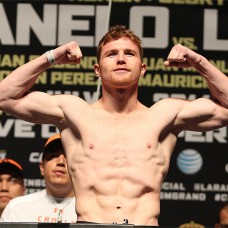


Miles, border and more separate GGG and Canelo, yet one promise makes the rematch

By Norm Frauenehim-

About 1,500 miles and an international border separated two fighters who only have a weight class and mutual contempt in common.

Canelo Alvarez and Gennady Golovkin were in opposite virtual corners – Canelo in Guadalajara and GGG in Big Bear, Calif. — at an unusual news conference last week that could only happen in today’s social-media world. It was social in name only, of course. But that gave it an edge. It was effective, because it was new.

But it’s effectiveness was also rooted in drama as genuine as it is timeless. GGG and Canelo don’t like each other.

They staged their satellite newser Tuesday on the Golden Boy Promotions Facebook page for a big audience that watched because it’s clear they want to unfriend each other in their Sept. 15 rematch (HBO PPPV/8 pm. ET) at Las Vegas’ T-Mobile Arena with more than a key stroke.

The middleweights never smiled. They had a tough time even looking into the cameras throughout the hour-long session. It was awkward enough to almost be painful. Almost.

Real pain, of course, is the inherent promise in the controversial build-up for a rematch postponed by Canelo’s two positive PED tests in February and then testy negotiations that only heightened dislike the rival camps have for each other.

A clipped tone spoke volumes Tuesday. At one point, moderator Mauricio Pedroza asked Canelo for what he had to say to GGG.

“Nothing, we’ll see September 15,’’ Canelo said.

Then, there were moments when Canelo and his corner expressed their anger at GGG trainer Abel Sanchez, whose consistent wit and criticism of Canelo’s tactics in last September’s draw represent some rhetorical jabs in the early rounds of the psychological gamesmanship. Sanchez questions Canelo’s courage.

“I think that on the 15th when Oscar and Canelo are having breakfast, Oscar needs to remind him, he needs to bring his courage to the venue that night because he’s going to need it,’’ Sanchez said Tuesday. “If he intends to knock out Golovkin, he’s going to have to fight him. And if he fights him, he’s going to get knocked out. I said that before. He would have gotten knocked out the first time, but he decided to make it a track meet that night.

“But if he comes to fight and if he comes to knock out Golovkin as he said he’s going to; if he doesn’t defraud the fans again, then he’s going to get knocked out. I’ve said it and I’ll say it again.’’

During the course of the news conference, GGG suggested the fight itself is a path for both sides to regain respect for each other.

“I do have respect to all the fighters, all the athletes, all the champions who fight at this level,” he said. “And I think at the very end, we will find a way to shake each other’s hand, regardless of the outcome, regardless what we think before the fight. As two men, we should be able to stand against each other and shake each other’s hand at the end.’’

But it sounds as if Canelo has other ideas, especially when it comes to Sanchez.

When it was time for questions from the media, there was a reference to what GGG had said about eventually shaking hands.

Question: “This is for Canelo. As a Mexican, do you believe Abel Sanchez deserves a handshake? Can you actually shake Abel Sanchez’s hands?’

Canelo: “He deserves that and much more.”

The chance at much more is selling this one.


Saucedo-Zappavigna: A sacrificial sheep made into a ram

By Bart Barry-

December 15, 2012, Houston,Texas — Welterweight Alex Saucedo remains undefeated at 7-0 after stopping Eddie Cordova in the 3rd round , Saturday, at Toyota Center from Houston,Texas. — Photo Credit : Chris Farina – Top Rank (no other credit allowed) copyright 2012

Saturday on ESPN in Oklahoma City junior welterweight Alex “El Cholo” Saucedo made an adopted-homecoming match against Australian Leonardo “Lenny Z” Zappavigna thrilling in the moment as it was disappointing for Saucedo’s future. Saucedo ultimately prevailed when Zappavigna, blinded by his own blood, got rescued by his corner. Within an hour of the match’s conclusion Zappavigna retired from prizefighting.

Alex Saucedo, meanwhile, is now upon a plateau, or perhaps beneath it. He is not what promoter Top Rank thought he was or hoped he’d become.

The first time I interviewed Bob Arum, 13 years ago, I asked him what was the most important quality a fighter might have. Arum answered in the form of a question: “Does he dissipate between fights?” It does not appear Saucedo does (Juanma Lopez, conversely, was a worldclass dissipator).

If it is essential to Top Rank one of its fighters not forfeit quality when he is not fighting one can easily infer it is doubly better when a fighter gains quality in that same unsupervised stretch. This brings a second, if unspoken, prong to the Top Rank development program: Can we work with his trainer?

Top Rank’s matchmaking staff, best in class, is not particularly fond of the we-grow-together, entrepreneurial-dad model whereby a fighter’s father or fatherfigure acts as chief second during junior’s ascent. Trainer dads be tolerated so long as junior progresses on Top Rank’s aggressive schedule, but once a fighter falls offpace Top Rank is not timid about recommending the pursuit of a new trainer in a new city.

The first time I was ringside for a Saucedo fight, El Cholo’s pro debut on a Son of the Legend undercard in Houston, 2011, hopes were high for the lanky 17-year-old welterweight. Three months later hopes at ringside were even higher in San Antonio for Saucedo’s second professional match. Four months after that in El Paso hopes were still climbing, albeit at a slightly reduced rate. Saucedo’s first year as a prizefighter concluded in Houston on the undercard of Nonito Donaire’s soulsnatching Jorge Arce. Saucedo was by then 7-0 (5 KOs), but the two matches that were not KOs brought some concern given the opponents involved. A pair of matches back in Oklahoma preceded a return to South Texas: Laredo, Corpus Christi, Laredo. Which preceded a return to Alamodome, another Son of the Legend undercard, and openly expressed concerns about Saucedo’s development.

Saucedo costarred on Donaire’s HBO card at the end of 2012 but was an afterthought 16 months later.

“You know any good trainers in Oklahoma?” went one insider’s reply when I mentioned at ringside Saucedo was not where we thought he’d be 13 prizefights in.

I found the mood dispirited enough to stop following closely Alex Saucedo much the same way I stopped following closely Jose Benavidez, who in his third career fight, as part of Pacquiao-Clottey weekend, looked every bit promising in 2010 as Saucedo did 20 months later.

After Saucedo failed to score a knockout in 2016 against three men whose résumés indicated an ability if not a willingness to be stretched a new trainer and region got summoned for Saucedo. Abel “Mexican Style” Sanchez, the great beneficiary of HBO’s manufacture of Gennady Golovkin, became Saucedo’s chief second and evidently decided Saucedo, born in Chihuahua, wasn’t Mexican Style enough and needed a Big Bear residency at the GGG School of Robotic Pursuit where Saucedo could learn at the master’s feet exactly how far a fighter can go with the right combination of careful matchmaking and no head movement.

Reliably enough Saucedo next went down a weightclass then went lunatico on Gustavo David Vittori, an Argentine who made his pro debut 10 pounds below Saucedo’s and didn’t get a chance to leave Argentina till the call came for a Saucedo sacrifice: KO-3. Four months later it was Abner Lopez’s turn: KO-7.

Which brought Saucedo loping to Saturday’s match with Lenny Z, a b-level trialhorse and a-level bleeder. Zappavigna, who made his pro debut as a lightweight, was 32-1 in his native Australia but 5-2 in the U.S., and looked the perfect opponent for Saucedo’s homecoming on ESPN, primetime, a proud man whose face came presliced.

And for most of the match’s opening, things followed their script: El Cholo attacked without too much variety, Lenny Z swelled and readied to bleed. Then round 4 opened and Zappavigna decided to stop pretending he didn’t notice Saucedo’s head remained ever stationary. Zappavigna tagged Saucedo with righthands enough to realize Saucedo wasn’t open to them because he wanted to be but because he hadn’t the defense to have a choice. Then Lenny Z caught Saucedo going Mexican Style with a left hook, and clocked him.

Saucedo stumbled backwards to taste a lefthand hungrily as he’d eaten what right preceded it. Zappavigna went after Saucedo and in so doing showed Mexican Style comes unadorned with footwork or infighting. (Confirmed, not showed, actually; Canelo Alvarez showed this the world last September, no?)

How this was the round of the year in the fight of the year is anyone’s guess. Zappavigna beat Saucedo all round the ring for three minutes and bled profusely from the mere exertion of it. Saucedo bled, too, but did little more than that and survive Zappavigna’s relentless attack.

From there Zappavigna’s face did as it was contracted to do, spilling open and gushing everywhere, until Saucedo did exactly what an undefeated prospect in his 28th prizefight is supposed to do with a retiring journeyman – pillowface his every initiative till a handler flies the pink towel.

Saturday’s match was good and hard but won’t make anyone’s Top 5 list by year’s end, and neither, frankly, will Alex Saucedo at 140 pounds. That’s an endorsement neither of his talent nor his new trainer.

Bart Barry can be reached via Twitter @bartbarry
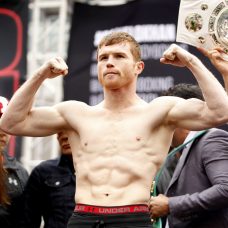


FOLLOW RAMIREZ – ANGULO LIVE!!

Follow all the action as Gilberto Ramirez defends the WBO Super Middleweight title against undefeated Alexis Angulo.  The action begins at 9 PM ET / 6 PM PT with a junior welterweight bout between Alex Saucedo and Lenny Zappavigna.  Also Robson Conceicao takes on Gavin Guaman.

NO BROWSER REFRESH NEEDED.  THE PAGE WILL UPDATE AUTOMATICALLY 

12 ROUNDS–WBO SUPER MIDDLEWEIGHT TITLE–GILBERTO RAMIREZ (37-0, 25 KOS) VS  ALEXIS ANGULO (23-0, 20 KOS)
ROUND 1 2 3 4 5 6 7 8 9 10 11 12 TOTAL
RAMIREZ 10 9 10 10 10 10 9 10 78
ANGULO 9 10 9 10 9 9 10 9 75

Round 1: Jab from Ramirez..

Round 2:  Right to the body…3 punch combination from Angulo..Right..

Round 3: Ramirez lands a left to the body..Combination..Right from Angulo drives Ramirez back..Left from Ramirez..

Round 4 

Round 5 Right from Ramirez..Right from Angulo…Left from Ramirez

Round 6  Left to body from Ramirez…Combination..4 punch combination..Good straight left from distance

Round 7 Hard right from Angulo

Round 8  Ranirez gets in a left

RAMIREZ WINS 120-108 AND 119-109 TWICE

6 ROUNDS–SUPER FEATHERWEIGHTS–ROBSON CONCEICAO (7-0, 4 KOS) VS GAVINO GUAMAN (5-2, 1 KO)
ROUND 1 2 3 4 5 6 7 8 9 10 11 12 TOTAL
CONCEICAO* 10 10 TKO 20
GUAMAN 7 7 14

Round 1:  Body shot from Conceicao..CONCEICAO DROPPED GUAMAN WITH A LEFT…..right hand and down goes GUAMAN

Round 2:  Left from Conceicao..RiGHT HAND AND DOWN GOES GUAMAN,..BIG COMBINATION AT THE BELL AND DOWN GOES GUAMAN

Round 3:  4 punch combination..AND DOWN GOES GUAMAN…HE GETS UP BUT FIGHT IS STOPPED

10-ROUNDS-JR. WELTERWEIGHTS–ALEX SAUCEDO (27-0, 17 KOS) VS LENNY ZAPPAVUGNA (37-3, 27 KOS)
ROUND 1 2 3 4 5 6 7 8 9 10 11 12 TOTAL
SAUCEDO* 10 10 10 9 10 10 TKO 59
ZAPPAVIGNA 9 9 8 10 9 9 54

Round 1 Overhand right from Zappavigna…Right from Saucedo..Counter right

Round 2:  Right backs up Zappavigna..Left hook and right..Right from Zappavigna..Double jab and left uppercut from Saucedo..Left from Zappavigna..Jab from Saucedo…Zappavigna is right eye.

Round 3:  BIG RIGHT AND DOWN GOES ZAPPAVIGNA…Big combination and flurry to the body..Right to body..Right from Zappavigna

Round 4:  Right from Zappavigna..Zappavigna has Saucedo in trouble..lands some vicious rights,..Huge rights…Saucedo bleeding down his face from his right eye…this is a war…

Round 5 1-2 from Saucedo…Left to body..Jab and right on the ropes..3 punch combo on ropes..Big right..Left hook from Zappavigna..Big right

Round 6:  3 punch combo on ropes from Saucedo…Zappagvigna swelling under left eye…Body shot from Zappavigna..Right from saucedo

Round 7:  Doctor checks Zappavigna before round..Big right from Saucedo..Left..Right..Overhand right..Right…FIGHT STOPPED


Never, Never Land: Joshua-Wilder back in the same old place

By Norm Frauenheim-

Boxing is still a heavyweight fight short of completing a comeback that had buoyed a forever-battered business always hoping for a rebound.

But Anthony Joshua-Deontay Wilder proved that not a whole lot has really changed.

Joshua-Wilder remained buried in never, never land amid reports this week that negotiations had failed. For a whole lot of reasons hard to explain and harder to understand, Joshua and Wilder have decided to go their separate ways until at least next April. That’s pretty much the same way they’ve been going for at least the last year.

Welcome to the HoHum division.

It looked as if it might be changing with that lightning bolt of drama on April 29, 2017 when Joshua got off the deck for an 11th-round TKO over Wladimir Klitschko in front of a World Cup-like crowd of 90,000 at London’s Wembley Stadium.

There was promise in watching a historical standard re-surface, looking like the flagship division it once was. There was talk of Joshua fighting in the U.S. in the biggest British invasion since the Beatles.

Instead, there’s just the same old, same old. Plans are for Joshua to fight Russian Alexander Povetkin in a mandatory title defense in September. There’s also talk of Wilder-versus-Dominic Breazeale in the fall.

Both are yawners. Yet, both are dangerous. That’s the trouble with mediocrity. A promising date can always be completely undone by the forgettable. For the casual fans, however, there are only two heavyweights. There’s Joshua. And there’s Wilder.

For the fans who want them –and only them – to fight, Povetkin might as well be a brand of Vodka. He’s not, of course. Povetkin a potential spoiler. In the UK, the guess here is that Joshua prevails.

Like Joshua, however, Povetkin has an Olympic gold medal. He won gold in Athens at a 2004 Games that included Gennady Golovkin’s silver medal at middleweight. Translation: Povetkin knows his way around the ring.

Povetin also has a history of PED use. A positive test led to the cancellation of a May, 2016 bout with Wilder in Moscow. Wilder was willing and able to face Povetkin in Russia. But it’s reasonable to say that the positive test saved the American from a defeat.

Wilder is lots of fun. Wilder, often dismissed one-dimensional, also has the biggest right hand in boxing. The right, an equalizer, has repeatedly saved him from losing on the cards.

It’s a weapon only fool would not fear. Put it this way: Joshua, no fool, got knocked down by a Klitschko right in the fifth. He got up. If Wilder had landed that right, Joshua might have stayed down, flat and finished on Wembley canvas.

Against Povetkin in Moscow, however, Wilder might have had trouble throwing a long punch powered by the leverage he gets from a lanky body.

Unlike Wilder, Povetkin isn’t fun to watch. The Russian’s resume includes a scorecard loss to Klitschko in 2012, also in Moscow. Povetkin tried to smother Klitschko with clinches.

It was hard to watch then. It’ll be hard to watch again. But the tactic will return against Joshua in bout that could smother a chance to watch the only heavyweight fight anybody wants to see.


Pride in great male writing about men

By Bart Barry-

This is not a trigger warning but a preamble. What follows is a consideration of fantastic writing about men, the sort of writing we aspire to do while treating our beloved sport, that happens to be written by a gay man about gay men. This column will attend neither to prurience nor politics. Rather it’s a coincidental product of a Monday falling within LGBT Pride Month after a weekend I spent reading fiction more than watching boxing.

This space once was about writing much as it was about boxing. Though it had floated away from most concerns about description by the time it began in 2005, its author nevertheless fancied himself quite good at description when called upon, since like most writers, his ability to describe objects better than others do was what first got him recognized by a teacher (in this case, Ms. White, fourth grade).

The move away from descriptive writing was not conscious, quite, but happened via a definitely conscious choice to avoid “writing” in the meretricious sense of the term, to avoid those squeamish points in all forms of literature when an author suspends subject to go on a look-at-me-I’m-writing! riff. If memory, unreliable as ever, manages to serve, the move away from descriptive writing happened in Puerto Vallarta, Mexico, 2002, when a visit to a writers club found a bunch of selfcelebrating folks rarely bothering themselves with the unglamorous toil of writing while unrarely sharing brief moments of inspiration that sparked “writing”.

If this reads like an oddly hesitant preamble perhaps it is born of nervousness about treating what follows justly. Well, anyway, off we go:

“. . . as I waited, and looked around at the dozens of bodies, squatting, lying, straining, muscles sliding to the surface in thick-veined upper arms, shoulders bending and pumping, the sturdiness of legs under pressure, the dark stains on singlets that adhered to the sweating channel of the back, the barely perceptible swing of cocks and balls in shorts and track-suits, with, permeating it all, the clank and thud of weights and the rank underarm essence of effort.”

I read that about a month ago and decided I’d not read before the male body or a collection of male bodies so aptly described. That passage happens about 50 pages in to Alan Hollinghurst’s masterfully executed novel “The Swimming-Pool Library”, a firstperson account of a young gay man in London in the early 1980s, remarkable for its profiles and voice and its numerous descriptions like what’s above. What makes these descriptions remarkable is their departure from the way men’s bodies generally get described by straight authors, both male and female.

Straight men describe other men’s bodies like sanitized, actiontaking machines – on the rare occasion a muscle ripples it does so to cause an act: the shoulder vibrated as his left glove struck the opponent’s ribs. Straight women do something similar, though describe qualities of masculinity that are physical mostly by coincidence:

“Mr. Darcy soon drew the attention of the room by his fine, tall person, handsome features, noble mien, and the report which was in general circulation within five minutes after his entrance, of his having ten thousand a year.”

Contrast that with what Hollinghurst does. He sees and smells and hears men in a way crossed between a predator and a food critic.

Would it help our descriptions of prizefighters in the act of prizefighting if we saw them through a lens of sexual attraction? Quite possibly. It would sate, too, any writer’s search for originality. But there is, of course, the rub: Such things are not easily faked since most pathways to forgery betray their takers – you can imagine your favorite fighter is a woman and describe him thusly but imagining him treating you like a woman is another leap entirely, and unless you have both you’re not fooling any careful readers or even careless readers’ intuitions.

Good news. There is some boxing in “The Swimming-Pool Library” to leaven this Pride-month celebration of fine description. Hollinghurst’s narrator attends a night of youth boxing and offers it his often irreverent voice:

“One trio of teenage stylists bawled their encouragement while grinning and chewing, selfconscious, acting manly, caring and not caring.”

and

“After brief deliberations between the ref and the officious, serious judges (this was their life, after all) the unanimous decision was announced.”

and

“The mood here also was one of pure sportsmanship, of candid bustle, like a chorus dressing room.”

There is one more element to this novel, a historical one, that recommends it. Lost in the recent events of European marriage-equality referendums and an American Supreme Court decision is the matter of 16th-century British sodomy laws (inherited round the world) and their successors and their arbitrary and generally cruel enforcement in our lifetimes. In a few episodes Hollinghurst shows how very easily it was to be entrapped and sentenced to jail time for a man who pursued, if he did not consummate, a sexual relationship with another man. Undoubtedly this charged the exciting act of seduction with danger’s energy right up till the moment it didn’t, when, with a thud, a man’s hormonally induced sense of invincibility disbelievingly crashed into disbelief.

And of course no irony is lost on Hollinghurst: How very much serendipitous companionship awaited a gay man sent to prison for gay acts. Or is this merely an empathy offramp taken by a straightmale reader – some way to dull what a profound sense of injustice sometimes happens in us?

Bart Barry can be reached via Twitter @bartbarry