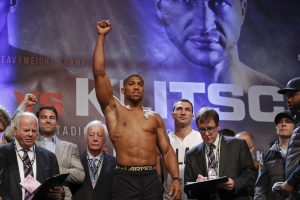
GGG-Canelo II? Still the only fight that makes sense and dollars

By Norm Frauenheim-

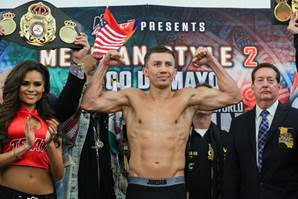
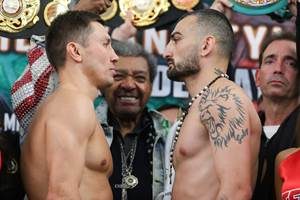
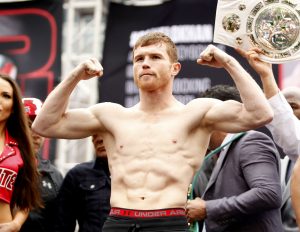
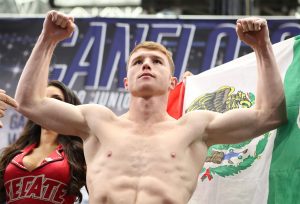
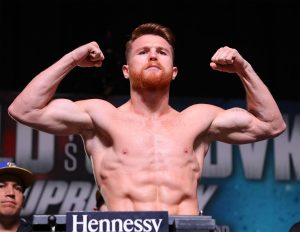
Gennady Golovkin and Canelo Alvarez are linked only by mutual contempt, genuine in tone and intensifying in the wake of the May 5 bout canceled by Canelo’s withdrawal from the rematch before his subsequent six-month suspension for two positive PED tests in February.

After the Nevada Athletic Commission announced an abbreviated suspension of Canelo last week, the prevailing assumption was that the middleweight sequel would happen in September in what would eventually look more like a postponement than a cancellation. Guess here: That’s still a pretty good assumption. Economically, it’s still the fight that makes the most sense. Dollars, too.

But GGG’s anger, rooted in his frustration at scoring in last September’s draw, continues to be loud, clear and amplified by his mistrust in Canelo’s assertion that the PED, clenbuterol, was simply the result of tainted Mexican meat.

There are moments when GGG just sounds as if he’d like to walk away from the prospect of any further business with Canelo.

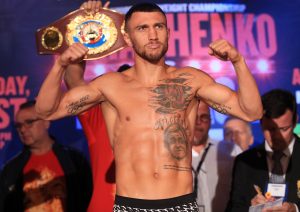
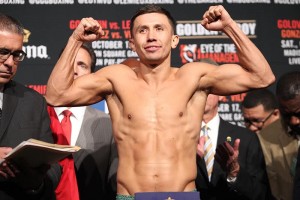
“Canelo?” GGG asked this week in response to a question during a media session for a stay-busy fight against Vanes Martiroysan in a Cinco De Mayo party re-scheduled for StubHub Center in Carson, Calif. “Right now, he is over. Do I want to have the rematch in September? We’ll see. It’s a different deal. The boxing business is crazy. I’ll fight Canelo again. Ask him if he wants to fight me.

“I no longer think about Canelo.’’

It’s pretty clear that Canelo is anxious to fight – make that punish – GGG in September, about a month after his suspension ends. His promoter, Oscar De La Hoya, has been talking almost as if the September rematch is a done deal. It’s not, of course. First, there’s Martiroysan. GGG is a huge favorite. An upset would be a shocker. Then again, Canelo’s positive PED tests were a shocker, too.

The last couple of months are an inconvenient reminder that bleep and head butts happen. GGG has to win easily and cleanly, meaning he has to finish it without suffering an injury – a fracture or cut — that could sideline him beyond the projected September 15 rematch.

If everything happens as hoped, however, GGG will prevail with a victory and without mishap. Then, it’s on to the negotiations, where the real fight awaits. By now, we know the fighters don’t like each other. There’s enough tension there to suggest that the talks will be difficult.

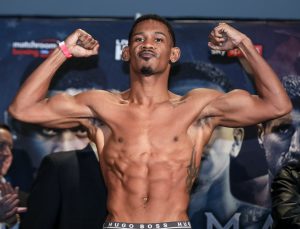
There are options, good ones for each, if no agreement can be reached. One will play out this Saturday with likable Danny Jacobs in his second fight since a debatable loss by unanimous decision to GGG in March, 2017.

Jacobs made Golovkin, 36, look vulnerable, or at least older. Now he faces a mostly unknown, yet unbeaten Pole, Maciej Sulecki (26-0, 10 KOs) in an HBO-televised bout (7 p.m. PT/10 p.m. ET) at Brooklyn’s Barclays Center. At 31, Jacobs is in his prime. If he looks good against Sulecki, he would have a pretty good claim on a GGG rematch for the right to be the world’s best middleweight.

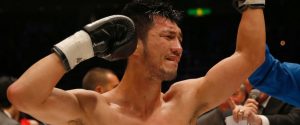
Another option is Jermall Charlo, whose emergence at 160 pounds continued with a stoppage of Hugo Centeno last Saturday. Then, there’s Ryota Murata, an Olympic gold medalist with only 15 pro bouts (14-1, 11 KOs), yet big television ratings in Japan.

Jacobs, however, looms as real threat to both GGG and Canelo. On the business scale, Jacobs represents more risk than reward. Charlo might still be a middleweight fight or two away from climbing into contention. Murata looks like good money and an introduction to the rich Asian market.

With every option, however, there’s no match for the interest, significance or money attached to GGG-Canelo II. Even the current level of mutual contempt is stoking public interest for a September showdown. In the here and now, it’s still the only fight that matters.


Adrien “About Thousands” Broner, but still about 13 of them

By Bart Barry-

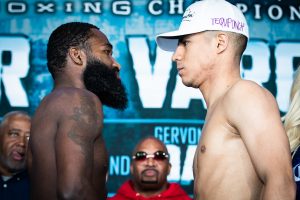
Saturday at Barclays Center overweight Ohio junior welterweight Adrien “About Billions” Broner lost a majority draw to Jessie “The Pride of Las Vegas” Vargas in a pair of unique six-round prizefights the men split, more or less, 6-6. Vargas brought a jab and proper technique, Broner supplied reflexes and a chin, and each man showed plenty of will. Neither man, though, willed himself to a convincing win in round 12, so a draw was just and just fine.

AB was in another excellent fight. That’s not all there is to it, not for this era’s sportsfan and not with a whole lot of blank page between here and column’s end, but that’s what’s important to this and any who should read this.

Broner grates on everyone – lest you think it’s an ethnic thing, look at Sam Watson’s uncharacteristically grim mug leaving the ring Saturday – and if such grating’s not exactly Broner’s appeal it is a sizable part of his staying power, and howsoever unjust it makes the universe, Broner does have staying power. Broner is a ham and a fraud. He’s been those things since we met him on HBO seven years ago, but by virtue of our still watching him seven years later, no matter how maniacal our hopedfor schadenfreude, he is a ham whose hamfattering overcomes its fraudulence in a reflexive way; the object of his hamming is retained visibility no matter how poorly he does at his dayjob. And check this: he’s a perfectly mediocre 6-3-1 (2 KOs) in the last 4 1/2 years and still attracting 13,000 Brooklynites to a catchweight match. He’s got something, in other words, tangible or otherwise, that makes him watchable, the genetic structure of which fully eludes men like Guillermo Rigondeaux and Erislandy Lara – men who follow the rules and bore our pants off.

The day Broner quits on his stool everything dissolves for him, and he absolutely gets this. So long as he gives us the pleasure of his atonement by ordeal every halfyear we inadvertently forgive his criminal acts and bottomless boorishness by paying him in the ratings currency that now rules the American realm. And before any fellow American takes his hindlegs to teeter on principle like a fatigued crossfitter at the stability ball, look around, look at our infatuation with branding, look at our President – in the world’s eyes AB isn’t nearly so much of a caricature as we content ourselves to think he is.

“Not my champion!”

You sure about that, bruh?

In this way Broner’s chin is his best asset; we may not relate to his buffoonery but when we allow our hypothetical selves to be him (and we should, too) we probably conclude like: I’d never wish to arouse so much disgust in so many strangers, but if by chance I did, I would hope I’d make it to the closing bell each time I got tested.

Perhaps by this model featherfisted Jessie Vargas was not the ideal inquisitor, no, but Mikey Garcia was, and Broner toed the line 12 times, then, too. Vargas, himself a mediocre 2-2-1 (1 KO) since 2014, transcended himself a goodish bit Saturday, and had he kept his jab pistoning he’d have won a decision lopsided. Instead he succumbed to who he is and will be: a 144-pound fighter who, on his best night, is equal to Adrien Broner. Every single round Saturday opened with a 10-second forecast of itself. If Vargas landed a jab, he won the round on any honest card. If he did not land an early jab, he made scoring the round the sort of subjective thing that invariably favors a ticketseller.

This was because Broner has no transition, defense to offense. Broner’s defense is a terrible mess concealed by a fabulous chin (which, were it found on an upstanding lad’s pink face, honestly, we’d attribute to incredible conditioning wrought by otherworldy discipline). Broner gets unsettled and imbalanced by other men’s punches so thoroughly he resorts to avoiding them by pocketing his gloves or throwing them overhead while he yanks himself backwards. There isn’t a contortionist the circus over who can throw from such a windup.

That Broner’s perennially overrated new trainer, Kevin Cunningham, installed no patches for this flaw in Broner’s operating system is likely the reason Broner, when asked to list Cunningham’s greatest effects, postfight, named only Cunningham’s giving Broner the chance to thank Broner’s old trainer for his graciousness. However uncouth Broner may be, he has a very high physical IQ – you cannot have his poor form and survive the opponents he’s survived without you read and understand other men’s bodies at least as well as they understand themselves – and Broner intuitively senses his technique is not improved and won’t be by an hysterical disciplinarian like Cunningham.

As an aside, how uncouth is Broner, truly? He appreciates another man’s graciousness, after all, and remains friendly with his former opponents, and holds Jim Gray in contempt.

A quick few words about that: Gray is now the only point of weakness on boxing’s best broadcast crew. Best by a noticeable margin. Al Bernstein has never not been better than Max Kellerman, and Paulie Malignaggi is three times better than an HBO threeway parlay of Jones-Ward-Hopkins, which brings us to Mauro Ranallo. He is hyperbolic at every turn, admittedly, but his heart is in the right place, he cares deeply about the language, and he makes his teammates look good. He is now better than Jim Lampley in the exact proportion Showtime boxing is better than HBO’s.

Bart Barry can be reached via Twitter @bartbarry


FOLLOW BRONER – VARGAS LIVE FROM RINGSIDE

Follow all the action ringside from Barclays Center in Brooklyn as Adrien Broner takes on Jessie Vargas in a battle of former world champions.  In the co-feature, Jermall Charlo takes on Hugo Centeno, Jr. for the WBC Interim Middleweight title.  The action kicks off at 9 pm ET / 6 PM PT with Gervonta Davis taking on Jesus Cuellar for the WBA Super Featherweight championship.

NO BROWSER REFRESH NEEDED.  THE PAGE WILL UPDATE AUTOMATICALLY

12 ROUNDS–WELTERWEIGHTS–ADRIEN BRONER (33-3, 24 KOS) VS JESSIE VARGAS (28-2, 10 KOS) 
ROUND 1 2 3 4 5 6 7 8 9 10 11 12 TOTAL
 BRONER 10   9  10 10   10  9  10 10   114
 VARGAS  9  10 10   9  9  9  10  9  9  10  10  10 114

Round 1: Vargas jabbing..Broner counters with the left..1-2.Jab from Vargas….Jab..

Round 2 Right from Vargas..Right..Right..Right to body and 2 jabs..Body

Round 3 Right from Vargas..Left from Broner..Trading body shots..Jab from Vargas,,2 body shots..Right from Broner..Left hook from Vargas..Sharp right from Broner..uppercut..Good exchange at the end of the round

Round 4 Right from Broner..Good right..Jab from Vargas..Right from Broner..Counter left..Good right from Vargas..Trading hard body shots..Body work from Vargas..Right from Broner..

Round 5 Left to body from Vargas..Chopping right from Broner on inside..Right from Vargas..another..Straight right from Broner..Counter left and right

Round 6 1-2 from Broner..2 lefts from Vargas..right..Counter right from Broner..Left to body..Left to head..Left from Vargas.Right from Broner..Left From Vargas..

Round 7 Right over the top from Vargas..Left..Counter left from Broner..Jab from Vargas..Right from Broner..

Round 8 Flush right from Vargas…1-2 from Broner..Good right..right..Left from Vargas..Left from Broner…Big left from Vargas..Body shot from Broner..

Round 9 Right from Broner..sraight right..Jab..Jab from Vargas..Hard left..Left to body from Broner..Right from Vargas..right and left..Right from Broner..another right./Hard uppercut..great toe to toe action

Round 10 Jab from Vargas…Body shot.Jab..Counter right..Good right from Broner..Straight right from Vargas..Right from Broner, and another

Round 11 Left and hard right from Vargas..Left..Vargas bleeding around the left eye…

Round 12 Left from Vargas..

115-113 BRONER; 114-114 TWICE —FIGHT IS A DRAW

12 ROUNDS–WBC INTERIM MIDDLEWEIGHT TITLE–JERMALL CHARLO (26-0, 20 KOS) VS HUGO CENTENO, JR. (26-1, 14 KOS) 
ROUND 1 2 3 4 5 6 7 8 9 10 11 12 TOTAL
 CHARLO*  9 KO                       9
 CENTENO JR.  10                        10

Round 1 Left from centeno

Round 2 BIG RIGHT AND HUGE LEFT AND DOWN GOES CENTENO AND HE DOES NOT GET UP

12-ROUNDS–WBA SUPER FEATHERWEIGHT TITLE–GERVONTA DAVIS (19-0, 18 KOS) VS JESUS CUELLAR (28-2, 21 KOS) 
ROUND 1 2 3 4 5 6 7 8 9 10 11 12 TOTAL
 DAVIS*  10 10  TKO                    20
 CUELLAR  9  8                      17

Round 1 Jab from Cuellar..Body shot..Left to body from Davis..Straight left..Good counter left..Hard body shots..Cuellar backing up..hard right hook from Davis..Counter left to body

Round 2 Jab from Davis..Hard body shot..LEFT TI THE BODY AND DOWN GOES CUELLAR..Right to body..left to head..Sharp counter left..

Round 3 Hard right hook from Davis..Right to body..Quick jab..Uppercut..3 HARD PUNCHES..STRAIGHT LEFT TO BODY AND DOWN GOES CUELLAR..HUGE COMBINATION AND DOWN GOES CUELLAR…FIGHT OVER


FOLLOW FRAMPTON – DONAIRE LIVE

Follow all the action as Carl Frampton and Nonito Donaire fight for the Interim WBO Featherweight title.  The fight begins at 5:15 PM ET.

NO BROWSER REFRESH NEEDED.  THE PAGE WILL UPDATE AUTOMATICALLY 

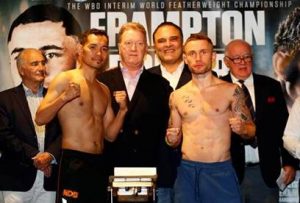
12 Rounds–WBO Interim Featherweight title–Carl Frampton (24-1, 14 KOs) vs Nonito Donaire (38-4, 24 KOs) 
ROUND 1 2 3 4 5 6 7 8 9 10 11 12 TOTAL
 Frampton  9 10  10   10  9 10  10  10  10   10 116
 Donaire 10   9  9 10   9  10 9  9  10 10   113

Round 1: Short left hook from Frampton..Body shot from Donaire..Body shot..Left hook

Round 2:  Hard right from Framptom..Left eye of Donaire is swelling..Right from FramptoN..Right

Round 3 Good right from Frampton..Left hook..Right from Donaire..Right from Frampton

Round 4 Straight right from Frampton ..Chopping right and a body shot…Left to the head..3 punch combination

Round 5 Good jab from Frampton..Right uppercut from Donaire..2 good uppercuts..Good jab from Frampton..Good right

Round 6 Good right from Frampton..Right..Good jab from Donaire..

Round 7 Good left from Frampton..2 Hard uppercuts hurts Frampton..

Round 8  Right and left from Frampton

Round 9  Body shots from Frampton

Round 10

Round 11 Body shot from Donaire..Jab from Frampton..Left..Right and body shot from Donaire..left hook..Big left

Round 12  Right uppercut and left hook from Donaire..Left from Frampton..Left from Donaire..6 punches on ropes from Frampton

117-111 ON ALL CARDS FOR FRAMPTON


The real test of Canelo’s words awaits him

By Norm Frauenheim-

LAS VEGAS – Canelo Alvarez insists he is clean. Now, he has a chance to prove it.

The Nevada Athletic Commission gave him that opportunity Wednesday with a unanimous approval of an agreement that means he will serve a six-month suspension instead of a full year for the banned substance, Clenbuterol, that showed up in two tests in February, subsequently forcing him to withdraw from a Gennady Golovkin rematch scheduled for May 5.

The abbreviated suspension means he can still fight Golovkin in September. For now, the cancellation looks more like a postponement. That was the good news for hotels, cab drivers and bartenders up and down the Vegas Strip. They can still look forward to a Cinco De Mayo-like windfall on Sept. 15, the day before Mexican Independence. Yeah, money is still a factor here. Somebody has to pay for those slot machines.

There’s more, however, to it than just that. But it’s up to Canelo, who says the prohibited drug wound up in his blood stream unknowingly. He told Nevada he did not intentionally ingest the steroid-based substance. He blamed it on tainted Mexican beef. In so many words, he makes it sound as if he were an unwitting part of a corrupted food chain. From the butcher to his plate, he says he never knew he was ingesting a compound that has wound up being a very expensive piece of meat.

There’s plausible deniability in all of this, of course. There’s precedence, too. Mexico’s cattlemen have been using the substance to keep their product lean. Mexican boxers and soccer players have tested positive. Meanwhile, The Nevada Commission, a state agency, is bound by law. It played by the book, including Canelo’s status as a first-time offender and his willingness to cooperate as factors in its unanimous approval.

But the court of public opinion is not constrained by law, much less decorum. It’s been a free-for-all, especially on platforms where snark, suspicion, allegation and profanity are part of the digital disorder. It’s social media in name only. Since Wednesday’s ruling in Las Vegas, Canelo has been a convenient target, one of many. No surprise there. Canelo must have known it was coming.

The surprise here, however, is that he wasn’t proactive in addressing the inevitable criticism.

If he had been, he would have been enrolled in VADA – Volunteer Anti-Drug Testing Agency – before it was announced that the Nevada Commission had voted 5-0 in favor of the agreement for his shorter suspension.

Minutes after the hearing, VADA’s Dr. Margaret Goodman told 15 Rounds and the Los Angeles Times that “he was not enrolled at this time.’’ Sure enough, a check of Canelo’s page on www.boxrec.com showed he was not in the testing program that is aligned with the World Boxing Council. Meanwhile, a notation on GGG’s page shows that, yes, he is enrolled. Just checking.

Maybe, Canelo has already turned in the docs that will enroll him. Maybe, he’s doing so while this is being written. Maybe, it’s just process. Or, maybe, it’s just an oversight. But the maybes are an opening for everybody who just doesn’t believe him. There’s not much presumption of innocence left for anybody anywhere any more. But boxing has never enjoyed that presumption any way. There are no innocents, just the usual suspects.

But Canelo has a rare opportunity, one the Nevada Commission gave him Wednesday. He can provide a record, a clean slate of tests supporting what he said after the positive tests were disclosed. The burden of proof awaits him.


Canelo suspension cut to six months, GGG rematch possible in September

By Norm Frauenheim-

LAS VEGAS — Canelo Alvarez agreed to a six-month suspension and the Nevada Athletic Commission unanimously approved that agreement Wednesday, opening the way for him to fight Gennady Golovkin on Sept. 15 in a rematch that had originally been scheduled for May 5.

The Commission voted 5-0 to accept a signed settlement from Canelo, whose 12-month ban for two positive drug tests was cut in half and will be dated back to the initial test, Feb. 17.

Canelo, who underwent what was reported to be minor knee surgery last week, did not attend the hearing. He was represented on the telephone by attorney Ricardo Cestero.

Canelo, a first-time PED offender, met with Commission Executive Director Bob Bennett and Chairman Anthony A. Marnell a couple of weeks ago in Las Vegas for an hour-and-twenty minutes. Bennett said he answered his questions.

“’He did everything we asked for,’’ Bennett said.

Cooperation from Canelo, who blamed positive tests for Clenbuterol on tainted Mexican beef, allowed the Commission to reduce his ban by 50 percent, according to new rules written by the state regulatory board a year ago.

Golden Boy Promotions, Canelo’s promoter, said it was satisfied with the Commission’s approval of Canelo’s agreement to the reduced ban. Golden Boy’s prepared statement:

“As we have maintained all along, the trace amounts of clenbuterol found in Canelo’s system in February came from meat contamination, and we provided the Nevada State Athletic Commission with a great deal of evidence to support those facts.

“Although most professional sports, international anti-doping agencies and United States boxing commissions treat meat contamination differently from other positive tests, Nevada does not. Canelo and Golden Boy Promotions respect the rules of Nevada and are therefore satisfied with the settlement agreement reached today.

“Canelo looks forward to returning to the ring in September for Mexican Independence Day weekend to represent Mexico and boxing in what will be the sport’s biggest event of the year. He is ready to continue his remarkable record of fighting at the highest level.”

If all goes as planned, Golovkin’s suspension will be over in mid-August and he’ll be able to fight on the weekend celebrating Mexican Independence, presumably at Las Vegas’ T-Mobile Arena. That’s where the Cinco de Mayo fight, the rematch of a controversial draw last September, was supposed to happen. Canelo withdrew on April 3.

But a lot has to happen before Canelo and GGG can meet again. First, GGG has to win what now appears to be an interim fight against Vanes Martiroysan on May 5 at StubHub Center in Carson, Calif., in what looks like a Cinco de Mayo bout for some of his most ardent fans.

“He has been looking good and he really wants to fight well for the fans who are at the grass roots of his popularity,’’ said GGG trainer Abel Sanchez, who attended Wednesday’s hearing. “You worry a little that some of this might be a distraction. But he knows what he has to do.’’

GGG is a huge favorite against Martiroysan, who hasn’t fought in a couple of years. If GGG wins as expected, the next step is a deal with Canelo. That might be more difficult than it sounds

If the rematch returns to Nevada, the state Commission will subject Canelo to testing. At this point, however, no fight is scheduled. Nevada only has jurisdiction over fights within its own borders. Meanwhile, Canelo is not currently subject to VADA, the agency that does testing for the World Boxing Council.

“I do not have him (Canelo) enrolled at this time,’’ VADA’s Dr. Margaret Goodman said after the hearing.

Golovkin is enrolled.

GGG representative Tom Loeffler of K2 Promotions said Canelo would have to join VADA for there to be a deal for a September rematch.

“Absolutely,’’ said Loeffler, who also attended the hearing. “Definitely, that would be a condition.’’


Sunday breakfast with Ryota “HHH” Murata

By Bart Barry-

ESPN2 broadcast a middleweight title fight between Japan’s Ryota Murata and Italy’s Emanuel Blandamura at 0800 ET on Sunday morning. Right network, right timeslot. And if Murata’s next opponent is weak as Blandamura, ESPN has a smartphone app and 0500 spot ready to go, too.

Turns out Sunday morning boxing is unlikely to replace church services in America, but it’s not a terrible thing to do with the seven o’clock (CT) hour if you’re already awake. Logging my second Murata fight, Sunday, convinced me he’s not worth setting an alarm for.

Promoter Top Rank has its reasons for vending any ticketseller, be he Mexican (Julio Cesar Chavez Jr., Salvador Sanchez II) or Chinese (Zou Shiming) or gigantic (Butterbean), though often the reasons feel reducible to a Bob Arum autochallenge – Watch this! – and now ESPN has found the perfect programming slot for such fare. Murata-Blandamura sated a demographic like: Bored Italo-Japanese sportsfan undecided between SportsCenter and an abridged NBA replay.

Nothing inspiring happens during a Murata fight. There is bodypunching, sort of – it reliably happens when Murata misses with his cross – and what robotic offensive determination happens when a man is unthreatened by his opposition. We’ve seen this approach, though, ad nauseum, in HBO’s conjuring of Olympic silvermedalist Gennady Gennadyevich Golovkin. The only obvious difference thus far is the timeslot and commentary.

Teddy Atlas, apparently back from exile, though as yet not allowed ringside, saw a b-level prizefighter Sunday morning and said exactly as much. Howsoever wrongheaded Atlas can be the man is independently wrongheaded. Such independence is refreshing when set against HBO’s tickle-me-Elmo promotion of GGG, one that took a b-level prizefighter matched with c-level opponents and caused a nationwide hyperbole drought.

One is tempted to see comeuppance in the ongoing search for a May 5 Golovkin victim; Golovkin is not an a-side in the pay-per-view sense of the term, and initial attempts to make him one went where they belonged. Now Golovkin and his handlers attempt to find some nohoper desperate enough to take short money on shorter notice.

There has long been something cheap about Golovkin’s ascent. Few serious efforts were made to pay serious men like Andre Ward or Carl Froch enough to give Golovkin what opposition might’ve revealed him worthy of the praise so shamelessly heaped on him, and the first such effort – making Golovkin the b-side against Canelo Alvarez – revealed a talent well shy of generational (no, it doesn’t matter if Golovkin deserved the decision; his inability to hurt an oversold junior middleweight damned the whole enterprise).

This current rash scramble for a sacrificial offering sets the mind racing backwards 15 years to Lennox Lewis versus Vitali Klitschko, a fight for the lineal heavyweight championship of the world made on two weeks’ notice. That’s not a typo. Kirk Johnson withdrew from his June 21, 2003, match with Lewis on June 7, and in a turn of matchmaking that now appears miraculous, Vitali (the Klitschko with a chin), who was scheduled for the undercard, signed to fight Lennox. And Lennox signed to fight Vitali. Lewis was unready for Klitschko, and had he not cut Klitschko to the bone early in the match, Lewis likely’d’ve lost. Lewis did not fight again.

To be charitable, all that likely precludes Golovkin from fighting a fellow titlist like Billy Joe Saunders or Murata in June is money. Saunders fights in June, anyway, and will make weight; Murata just made weight and hardly taxed himself sleepstalking Blandamura. It would be an appropriately vengeful tack for Golovkin to take, writing Canelo out of middleweight-title contention: I make fight Saunders June, I make fight Murata September, I forget Clen-elo.

Here’s the less-charitable reason these fights won’t happen: Saunders undresses Golovkin, and Murata loses to Golovkin but shortens what’s left of the GGG salesblitz.

No, Top Rank is not hurrying to match Murata with anyone who’s won a fight outside his native land – a feat Murata may never accomplish – but Top Rank is savvy enough to take a long payday for Murata in a fight that will be dynamite for a few rounds, rather than see its unidimensional Godzilla decisioned by some other tiertwo journeyman on ESPN.

That’s written in good faith, too: I believe Golovkin-Murata would be spellbinding since neither man believes any other 160-pound man in the world hits hard as he does, and both have prepared their defenses accordingly. Golovkin’s not going to eat a Murata righthand and land a knockout punch in the same second, and Murata’s not going to miss high with the cross just to land the hook; both men would be initially bashful, sure, but as neither man has the dexterity or impetus or chief second to fashion a plan b, Golovkin and Murata eventually would resort to smashing one another until the better man wins. Probably that’s Golovkin, but then, he’ll not be the Olympic goldmedalist in the ring that night, will he?

ESPN could use Golovkin-Murata as a meaningful launchparty for ESPN Plus, and maybe even offer HBO Sports some much needed step-aside money (as LL Cool J put it: “With a third of my deposit / I’ll buy your whole crib, plus the clothes in the closet”). Having a pay-per-view match cancelled on account of a drug test was unfortunate and fully unexpected, so how about we not respond predictably with safetyfirst matchmaking rubbish?

Bart Barry can be reached via Twitter @bartbarry


Mayweather still a media master in Faustian bargain that leads him back into harm’s way

By Norm Frauenheim-

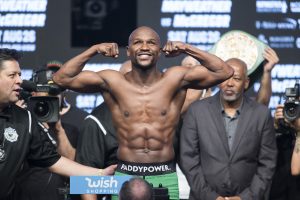
Floyd Mayweather Jr. is as good at staying in the news as he was at staying a top the pound-for debate.

Evidence of that played out all over again throughout this week with speculation that he might make another comeback, this time in mixed martial arts. As usual there were a lot of mixed messages about whether he will or won’t, could or should. Who knows? If last August’s bizarre boxing bout with UFC star Conor McGregor is any guide, it’s safe to say he probably will.

Whether it would be safe to his health is another issue altogether. Remember, he once talked about retiring before a punch – or perhaps a kick to the temple – left him hurt and without the capacity to enjoy all of the unprecedented money he has collected. I’m not sure he really wants to fight again. Against McGregor, he didn’t look to be in the best condition, although he appeared to carry the novice boxer for several rounds before ending it with a TKO in the tenth round.

The guess from this corner is that people are telling Mayweather to stay away from the ring, or the cage, or any other version of harm’s way. Trouble is, he can’t resist the media, a siren’s song that reminds him and everybody else that he is as relevant and rich as ever.

It stokes his ego.

It re-fills his garage and bank accounts.

And it works.

The best and most recent example was the McGregor match. After months of stoking media speculation and criticism, interest was high enough to attract a reported 4.4 million pay-per-view audience in the U.S. That was just short of the record 4.6 million he posted for his decision over Manny Pacquiao. I can’t help but think that Mayweather-Pacquiao II will happen one day in a cage. But that’s another story for another day.

This is about Mayweather and his uncanny ability at manipulating the media. He does at as well as he eluded a punch. A hint here, a shoulder roll there and, before long, what looked like a feint suddenly becomes real. It creates a momentum all its own and inevitably sweeps Mayweather, now 41, back into the dangerous place he vowed to avoid about five years ago. Maybe, Mayweather can duck and dodge strikes, kicks, elbows and knee caps. Maybe, he can command enough money and clout to amend rules in such a way that only a cosmetic cage will make his UFC debut look like the real thing. But, maybe he’s made a Faustian bargain that ends in a disabling blow.

It’s no coincidence perhaps that media attention on combat sports is at a place similar in April to what it was last August. Then, the media focus was on Mayweather-McGregor just three weeks before opening bell to the Gennady Golovkin-Canelo Alvarez draw. Eight months later, circumstances have changed. Boxing has only itself to blame this time. But the names and attention are the same. GGG promoters were scrambling this week to find an opponent for May 5 after Canelo’s withdrawal in the wake of a positive PED test. A news conference was held Thursday. It was announced that there was no announcement.

About three weeks before what would be opening bell, we’re back to where we were in August: Talking about Mayweather. Yeah, there’s McGregor, too. But after the Irishman allegedly caused a near riot at Brooklyn’s Barclay’s Center at UFC media event last week, there were questions about his future.

Video shows him attacking a bus. He was released on $50,000 bond. According to witnesses, he and his crew stormed the backstage, broke a window and injured fellow UFC fighters. He was arraigned on one count of felony criminal mischief and three counts of misdemeanor assault. He was allowed to return Ireland, but has been ordered to appear in court in New York on June 14.

If convicted, he might be spending more than just few a rounds in a cage.


Blonde Ambition

By Jimmy Tobin-

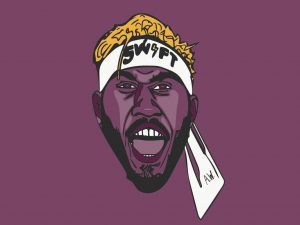
Jarrett “Swift” Hurd defeated Erislandy “The American Dream” Lara by split decision at the Hard Rock Hotel and Casino, in Las Vegas, Nevada, Saturday night, consolidating a little hardware and his claim to the division’s crown. More importantly, Hurd and Lara managed this junior middleweight sorting in a manner befitting a rematch were not one of the brothers Charlo ready to determine the class of the division. Hurd’s reputation for belligerence already precedes him, but incredibly Lara too was responsible for salvaging a mostly dismal card in a mostly vacant arena on mostly Sunday morning.

Why did this card, one that seemed somewhat promising, need salvaging? In the opener, Julian Williams went the distance with pedestrian Nathaniel Gallimore, showing recovery enough in his three fights since being decapitated by the other brother Charlo to become a mandatory for another remarkable beating, this time at the fists of Hurd. In the equally forgettable co-main, James Degale avenged by ugly decision his loss to Caleb Truax, proving that he is barely better than the fighter who lost to Truax in December. As for the version of Degale that drew with Badou Jack? That fighter is no more. And after all this, a Lara fight that began at 12:30am on the east coast?

Yet while rightfully maligned for his brand of inaction, Lara fought Hurd with an aggression he typically spares even his most overmatched opponents. He drew many a proverbial line in the sand, and when Hurd shuffled inexorably through it, threw not to escape Hurd but to punish him. When the punches landed—as they tend to against the ironically monikered “Swift”—and Lara again moved beyond reach, instead of preserving that range he readied himself to impose once more this aggression-tax.

This was not a man sublimating his instincts, mind you, as Wladimir Klitschko did in his valiant defeat to Anthony Joshua. It would be wrong to recast Lara on the basis of his performance Saturday night—he was courageous, yes, but fell short of endearing. Because Lara owed his decision to stand and fight his most imposing opponent yet to age, to the absence of a viable alternative. And, of course, to Hurd, who gladly let Lara draw those lines in the sand, believing full well that at some point the fight Lara dared Hurd to bring would be the only one unfolding—and that that fight, made earnestly as all Hurd fights are, would be too much for a fighter with aging legs and a negative style. There is no choice when options are removed, and even had Lara chosen (rather than been forced) to fight more doggedly, the price of stalling Hurd was clear enough to make a spectator await expectantly the fight’s second half.

It was over the last six rounds that Lara, whatever the camera angle, slowly disappeared, his dimensions seemingly shrinking with his prospects for victory. He became lost under Hurd’s shoulders, pinned away from view behind Hurd’s back. Glimpses of Lara first skipping, and then slipping, and finally tripping away from his looming opponent, revealed a fighter more and more broken the more infrequent his escapes. No surprise then, that the midround moment when they were longest and most clearly separated, when Hurd floored Lara in the eleventh, was the one that delivered Hurd the victory. That knockdown, a protracted crumpling of the legs, not chin, one born of attrition more than power, provided Lara his longest respite.

Yet Hurd did not have his way with Lara, at least not entirely, something that should not be lost in how he carried the action. His way reflects his physicality, his ability to absorb punishment as much as administer it. Because it is near impossible to believe a fighter can be coached to take as many flush punches as Hurd, as though wager of his chin were a calculated risk instead of simply a flaw uncorrected or ignored. Lara hit him hard, cleanly, and for a few rounds with impunity, and Hurd shrugged off convincingly that abuse, though it was difficult to watch him take leather and not think about how every Margarito meets his Mosley. Interviewed after the fight, future Hurd opponent, Jermell Charlo, quite rightly observed that Hurd cannot fight Charlo as he did Lara, that the penalty for closing distance behind his chin that night could be one Hurd might have to wake up from to fully appreciate.

Not that Hurd is likely to heed any such warning. He is not one to deny his opponent’s success because their success has yet to eclipse his own, and perhaps because he interprets their success as proof that every fight, regardless of its beginnings, turns inevitably in his favor. Yet one gets the sense there is less arrogance at work here than honesty, that Hurd appreciates the cost of imposing his advantages and thus sees no reason to deny it. A fighter whose primary and most mischievous tools are left hooks to the body and rear uppercuts doubled, even tripled, and who accepts all consequences of this, is honest. And honesty, a trait especially endearing and uniquely instantiated by volume punchers, is reflected not only in Hurd’s work but in its result: an ass whoopin’.

Hurd’s attempt to grind down the boxer Charlo, to confirm the matchmaker’s formula, will be one to watch. And if it isn’t next, because that makes too much sense, the least they can do is slate it for the day the broadcast starts.


Column without end, part 16

By Bart Barry-

Editor’s note: For part 15, please click here.

*

STOW, Mass. – This town has doubled in density since I grew up here. All the way to 6,000 residents. It’s unkempt today in a way it may ever have been but doesn’t remember that way. The old spots, the yards and houses and ponds, are overgrown. The new houses are imported from Ikea. It was, then, trying to become something more. It is today exactly what it wants to be.

Well aware there was a prizefight Saturday night that included the through-April-at-least consensus favorite for round-of-the-year, but as I’m on Eastern time, not Central, here’s a show of solidarity with my coastal confreres: You send a mainevent off after midnight, you make a Saturday night event into Sunday morning fare, you don’t make the deadline for a Monday column. I know this is the time to write Erislandy Lara accomplished more respect in defeat than through the aggregate of his victories, or something equally symmetrical, a chance to reheat what sentiments Wladimir Klitschko inspired in his farewell defeat last year, but again, you lard a broadcast till the mainevent doesn’t go off the same day as its undercard, and you subvert goodwill a bit.

There were weekend events enough to autoforgive my way past a missed opportunity to write Lara performed courageously, hedgefully enough to leave both erected and mostly intact all previous criticisms of his performances but especially his footwork. Onward, then.

There’s a curious optical thing that happens when you return to a place where you had all the experiences of your youth, decades later. It’s not what happens at the bookends of a championship prizefight that concludes with a knockout – where both men enter like giants and one exits more gigantic still while the other exits a fraction of yourself and a fraction of a fraction of his previous self – but it serves to remind how entirely unreliable be the narrative combination of sight and memory. You see the places of your childhood with very small eyes, necessarily. But you record them like primary symbols: this is what a supermarket is, this is what a road is, this is what a library is. Then you overlay these symbols with a pastiche of new images until what remains of your memory of the originals are words more than pictures. You return to your first zipcode and get startled by how tiny everything is.

Especially if you hail from a small town. Every road you’ve driven since your first year with a license is much larger and straighter and faster than your first road, but because those are roads and your first road was a road your memory has fetched an increasingly larger image with each “road” query until you discover your memory of your first road – which, to be fair, you haven’t had occasion to fetch in decades – has made a fourlane thoroughfare of a winding country stretch zoned at 25 mph. Then you drive some miles to the golfcourse of your first gainful employment, distance enough to’ve been a halfhour bike ride in a bygone era when 14-year-olds unthinkingly commuted to full summer workweeks on their 10-speeds, and you find yourself disappointed nothing has changed, denying you a chance to lament all has changed to a point of unrecognizable.

You want the change. You want the unique experience of believing your experience was unique. And it was, so long as you keep it private (editor’s note: so much for that).

There’s snow on the course, spring having sprung in New England, and one car in the parking lot. You peek in windows, and the club pro invites you in the proshop, which is sanitized-modern and emphasizes nothing nearly so much as the decrepitude into which its surrounding building descended, and you hear yourself making a sentence that must have been impossible the last time you stood there: “Would you believe I worked here 30 years ago?”

Well of course he would. He probably gets this exact visit from a different (or same) nostalgia hunter at least monthly but probably weekly in the summertime.

But he’s generous enough to endure your musing and phonebooking names you stopped knowing you knew decades ago until he realizes with a start he’s reached the end of your intelligence about the previous regime, you’ve started telling stories he heard dozens of times so many years ago they almost feel fresh now, and that’s that. You’re dismissed with a handshake and good wishes in that New England way that is not discourteous but absolutely final. Didn’t miss that.

Museum of Fine Arts, Boston, today is more like Museum of Fine Arts, Houston, than it is like Museum of Fine Arts, Boston, years ago. Museums have replaced malls – the popular ones now boast four restaurants and three giftshops and works organized by celebrity more than merit. They feel like places to see the creatures you’ve seen previously in documentaries (maybe museums now resemble zoos more than malls; or maybe this metaphor is collapsing), which is different from being places of discovery. And if you travel to look at art chances are decent you’ve seen the best works of most famous museums’ permanent collections somewhere else already.

Boston’s roomful of Monets, while wonderful, were viewable at Bellagio Gallery of Fine Art, on the Las Vegas Strip, gasp, a few years back. The collection remains deservedly esteemed nevertheless, and not simply for the famous universities that crenulate it on either side of the Charles River.

Boston has in some ways followed every other American city anyone can name into overpriced theme-parkery. But still and all Updike had the region pegged years ago when he wrote New Englanders are pinchfists in all but education – in education they invest ostentatiously.

Bart Barry can be reached via Twitter @bartbarry


FOLLOW LARA – HURD LIVE

Follow all the action as Erislandy Lara and Jarrett Hurd fight in an IBF/WBA Junior Middleweight unification bout.  The co-feature will be a rematch for the IBF Super Middleweight belt between Caleb Truax and James DeGale.  The card kicks off at 10 PM ET / 7 PM PT with a Junior Middleweight contest between Julian Williams and Nathaniel Gallimore.

NOW BROWSER REFRESH NEEDED.  THE PAGE WILL UPDATE AUTOMATICALLY 

 12-Rounds–IBF/WBA Junior Middleweight Unification bout–Erislandy Lara (25-2-2, 15 KOs) vs Jarrett Hurd (21-0, 15 KOs)
ROUND 1 2 3 4 5 6 7 8 9 10 11 12 TOTAL
 Lara 10  10   10  9  9  9  10  9 10  10   8  113
 Hurd*  9  9  9 10  10   10  10 10   10  9  9  10  115

Round 1: Left from Lara…2 more lefts..Counter left

Round 2 Right from Lara..left..Left to body from Hurd..Combination..Left uppercut and another left..Left..Uppercut from Hurd..right

Round 3 Counter left and right from Lara..Right and left..Good left..Counter right from Hurd

Round 4 Hurd landing a nice combination..Lara looks at Hurd..Nice combination from Hurd..Good right..4 punch combination..Good right

Round 5 Hurd lands a right..Chopping right from Lara..2 rights from Hurd..Left to body and right to Hurd..Combination from Lara..right from Hurd..Right from Lara..

Round 6 Right from Hurd..Left from Lara,,Nice right from Hurd..

Round 7 Good right from Hurd..Short uppercut..Good right from Lara..Left..Uppercut from Hurd..Combination from Lara..Good Hook from Hurd at the bell

Round 8 Body shot from Hurd..Right..Nice combination..Good right from Lara..Good right from Hurd..Nice uppercut..good left to the body

Round 9 5 jabs from Hurd..good straight right..3 Jabs..Good straight left from Lara..Swelling around the right eye of Lara..Body shots from Hurd..Left from lara..2 lefts from Hurd..Nice uppercut..2 shots from Lara..

Round 10 Hurd opening up..Left from Lara..Counter left from Lara,,.Left..Right

Round 11 Nice left from Lara..Body work from Hurd..Big left from Lara

Round 12 5 punches from Hurd..Nice work from Lara on the inside..Uppercut from Hurd..Straight right from Hurd..left from Lara..Uppercuts from Hurd…right to head..Big right from Hurd..2 rights and and a uppercut..left and right from Hurd..combination..Left from Lara..Right from Hurd…SHORT LEFT AND DOWN GOES LARA..2 Uppercuts from Lara

114-113 for Lara; 114-113 Hurd; 114-113 for HURD

12 Rounds–IBF Super Middleweight Title–Caleb Truax (29-3-2, 18 KOs) vs James DeGale (23-2-1, 14 KOs) 
ROUND 1 2 3 4 5 6 7 8 9 10 11 12 TOTAL
 Truax 10   9  10 10  10   9  9  9  112
 DeGale*  10  9  10  9 10  10  10  10   9  10 10   116

Round 1 Good double right from Truax…Hard left from DeGale..

Round 2 Combination from DeGale..Left from Truax..Uppercut from DeGale..Uppercut..Body work from Truax..Good right..Good body shot from DeGale..Right from Truax

Round 3 2 jabs from Truax..Good right drives DeGale into ropes..DeGale cut around the right eye of DeGale..Right from Truax

Round 4 Good right from Truax..Jumping left from DeGale..

Round 5 Double left hook from Truax..Good right..Jab from DeGale..Right from Truax..Body shot from DeGale..

Round 6  Body punches and good left from DeGale..right

Round 7 Right from Truax..Left from DeGale..Truax is cut along the left eye from a headbutt.

Round 8 Left from DeGale.  Right.  Right..Right uppercut..Short right..Left.. Truax cut over his right eye.

Round 9 Good body shot from DeGale

Round 10  Uppercut from Truax..another uppercut…Left hook..Right from DeGale..DEGALE DOCKED A POINT FOR HOLDING..Left and combination from DeGale…

Round 11 Good left from DeGale…Nice right..Combination..Good combination

Round 12 3 Punch combination from DeGale..2 Punch combination from Truax

117-110 AND 114-113 TWICE FOR DEGALE

 12-Rounds–Junior Middleweights–Julian Williams (24-1-1, 15 KOs) vs Nathaniel Gallimore (20-1-1, 17 KOs)
ROUND 1 2 3 4 5 6 7 8 9 10 11 12 TOTAL
 Williams*  10  10  10  9  9  9  10  10 10   10  10  10  117
 Gallimore  9  9  9 10  10  10  9  10  9  9  9  9 112

Round 1 Quick right from Williams..Hard jab..Jab/Right..Right from Gallimore

Round 2: Left hook and right from Williams..Jab ad right hand..Counter right from Gallimore..

Round 3 Jab and right from Williams…Body work..Left to body..4 punch combo..left and uppercut from Gallimore..

Round 4 Combination from Williams..3 body shots..left and right from Gallimore..3 punch combination..Good body shot..Hard left..Right from Williams

Round 5 2 jabs from Williams..Williams cut over the left eye..Combination and right from Gallimore..Uppercut and right and a uppercut

Round 6 Counter left from Gallimore..3 punch combination..

Round 7 Right from Gallimore..Nice left hook from Williams..uppercut

Round 8  Left from Gallimore..Chopping right from Williams

Round 9 Good left from Williams..Combination and big uppercut..2 Body shots from Gallimore..Right..Good right from Williams

Round 10  Good body shot from Williams..uppercut..Body shot..right over the top..Good right from Gallimore

Round 11 7 straight punches from Williams..Right hand..Right and uppercut from Gallimore..Right from Williams and 2 uppercuts..Big left and right..Gallmiore is hurt..Right..left..2 uppercuts..chopping right..Chopping right..staright right..6 punch combination,..Gallimore on shaky legs..

Round 12  4 Punch combination from Williams…Body shot.Double jab and right hand…Uppercut from Gallimore

117-110, 116-112 and 114-114 ..MAJORITY DECISION FOR WILLIAMS


Hearing of the Year: Canelo’s appearance before Nevada Commission is getting all of the attention

By Norm Frauenheim-

It’s not a promising year when the most anticipated moment is a hearing instead of an opening bell.

For now, however, that’s what boxing has at the top of its agenda after a disappointing first quarter and now a second quarter dominated by a Nevada Athletic Commission meeting on April 18 that is expected to determine the length of Canelo’s suspension for two positive PED tests he says were the result of tainted meet.

Much hangs in the balance, including when or even if the Canelo-Gennady Golovkin rematch will happen. It’s off the schedule after Canelo’s withdrawal from a bout originally set for May 5 at Las Vegas’ T-Mobile Arena. For now, it’s a cancellation. But I wouldn’t be surprised if it looks more like a postponement six months from now. Money is still a factor here and there’s still plenty of it.

The guess from this corner is that Canelo’s withdrawal, despite his denial about knowingly ingesting Clenbuterol, will be viewed as cooperation by the Commission. Canelo and Golden Boy Promotions took the reasonable step. Even if they had fought the allegations and retained the right to fight on Cinco de Mayo, there just wasn’t enough time for fans, promoters and Vegas hotels to properly put on the show. The MGM Grand was already offering ticket refunds. HBO had pulled its advertising. Fans were canceling room and flight reservations.

Canelo’s withdrawal was a pragmatic way to hit the re-set button on the middleweight sequel to their controversial draw last September. Perhaps, a cynical way, too. Whatever you think of it, there’s plenty of reasonable speculation that Canelo, a first-time PED offender, will serve a six-month suspension that will be dated back to the first test, Feb. 17. That means he’ll be eligible to fight again on August 18. The rematch could be re-scheduled for Sept. 15, a Saturday on the weekend celebrating Mexican Independence.

But there are no safe assumptions here, especially after a wildly unpredictable three-plus months since New Year’s Day. Terence Crawford’s intriguing welterweight debut against Jeff Horn was postponed from April 14 to June 9 at Vegas’ MGM Grand because of an injury to his right hand. Welterweight champion Keith Thurman postponed his comeback from elbow surgery, scheduled for May 19, because of an injury to his left hand.

Then, there was Anthony Joshua versus Joseph Parker. Other than another-rock-and-roll like crowd for Joshua at Cardiff, Wales, the fight was a dud. Lots of heavyweight hype produced a lot of ho-hums. Joshua won a decision, his first after winning 20 bouts by stoppage. A conservative Joshua fought mostly not to lose. Perhaps, he was playing possum in anticipation of a showdown with Deontay Wilder or Tyson Fury. But fan-friendly, it wasn’t. I said it before and I’ll say it again: Andre Ward must be tempted.

For now, the Fight of the Year is featherweight Oscar Valdez Jr.’s epic show of guts in a decision over Scott Quigg on March 10 at StubHub Center in Carson, Calif. It was riveting. It was scary. It was bloody. The drama unfolded on a night when there were more puddles than patrons at StubHub’s open-air arena. It rained, water mixing with the blood that poured from Valdez’ busted jaw. It was a fight that drained everything from Valdez but his courage.

But it also left questions, ones that might have been avoided had Quigg agreed to do a secondary weigh-in on the morning of the bout. He said no after missing the 126-mandatory by 2.8 pounds the day before opening bell. At fight time, Quigg repeatedly outweighed Valdez by nearly seven pounds.

In Quigg’s thudding punches throughout and in Valdez’ battered face after the carnage, however, it looked like a lot more. It might have happened without the reported weight disparity. Valdez takes chances, a risky style that leaves him wide open for damaging shots. A lighter Quigg might have busted up Valdez anyway. But we’ll never know, and those haunting questions will linger as Valdez battles to recover for what figures to be a challenging comeback for a fighter who has been an emerging star.

If anything, the last three-and-half months have been an almost uninterrupted sequence of moments that exemplify just how vulnerable those stars and their plans really are. I’m not sure a hearing can correct any of that. For now, however, it’s about all we’ve got.


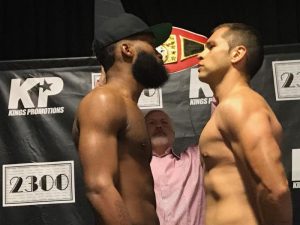
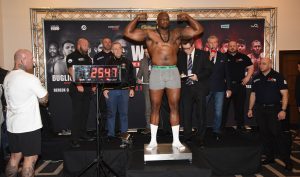
Weights from Philadelphia


Brandon Robinson 167.3 – Oscar Riojas 168.8

Marcus Bates 122.9 – Raeese Aleem 121.9

Colby Madison 247.9 – Guillermo Del Rio 198.8
Poindexter Knight 149.3 – Vincent Floyd 148.3
Joshafat Ortiz 131.5 – Evgueny Metchenov 130.7
Rasheed Johnson 147.3 – Denis Okoth 143.9
Kendall Cannida 178.1 – Carlos Villenueva 173.2

Promoter: King’s Promotions
Venue: 2300 Arena
1st Bell: 7:00 PM ET
TV: Eleven Sports (Delay)

Photos: Marc Abrams / King’s Promotions

Tickets for this great night of boxing can be purchased at www.2300arena.com for $100, $75 and $50

About ELEVEN SPORTS:

ELEVEN SPORTS is available in 70 million homes worldwide in Belgium, Italy, Luxembourg, Poland, Singapore, Taiwan and the United States. Launched in the US in March 2017, ELEVEN SPORTS is dedicated to delivering world-class domestic and international sports and lifestyle entertainment ‘For The Fans’. Sports fans will be treated to a unique mix of emerging and established sports combined to provide engaging and compelling LIVE entertainment, placing the viewer at the very heart of the action.

Like us on Facebook: ElevenSportsUSA
Follow us on Twitter: @ElevenSportsUSA
Follow us on Instagram: ElevenSportsUSA


Destiny still arrives…

By Jimmy Tobin

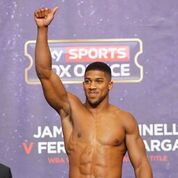
Heavyweight, Anthony “AJ” Joshua won a unanimous decision over Joseph Parker before a capacity crowd at the Principality Stadium in Cardiff, Wales, Saturday night. The scorecards, lopsidedly in Joshua’s favor, reflected clearly the privilege he enjoys across the pond, but were hardly egregious as a tally that would edge the fight to Parker. So let us not bemoan too long judging that, however predictable, however convenient, renders the proper verdict. Joshua-Parker was anything but an entertaining fight, but the right man won, and if that is scant consolation for a dreadful 12 rounds, it is worth remembering that boxing often fails to provide even that justice.

It takes two earnest fighters to deliver a spectacle—no, wait, that is not what Saturday taught us, is it? No, the alchemy of the spectacular includes two parts earnest fighter and one part competent referee—and Saturday proved that by means of negation. Referee Giuseppe Quarterone injected himself into the action with a frequency and timing that left the fighter’s themselves confused. Too often he shimmied between Joshua and Parker, who took barely a step back between them, expressing not quite intent befitting the moment, but indifference enough Quarterone’s involvement as to make that involvement merely intrusive. The least a referee in a dull fight can do is become invisible when aggression percolates through the drudgery. Yet it was at these times that Quarterone was impossible to miss.

But enough about the officiating: it, like the judging, showed a preference for Joshua, but not one he needed to secure victory. Besides, referees, like judges, can be rendered irrelevant by the action. That involves some danger, of course, something neither Joshua nor Parker was particularly compelled to tempt.

Parker found enough success with his jab, his feints, his counters to make Joshua largely holster his weapons. But when the moment came to capitalize on that success, to add a right hand to the double jab, or weave inside behind it, when the moment for daring arrived, Parker passed. If his was a winning strategy, it might conceivably be expected to have won him the fight; yet Parker only fought to win until it became clear that his plan, absent the quantum of spirit demanded by the stakes, was not a winning won—whereupon he settled for a moral victory, handing Joshua his first decision win.

Nor is Joshua absolved of his role in what was his first eminently forgettable fight. He may have opened up enough to wed Parker to his inconsequential mix of jabbing and feinting, but when it was clear that Parker was either content to lose or unable to win, Joshua, perhaps because he was unnerved, perhaps because he was at a loss for how to deliver a stoppage, perhaps because he was content to coast, simply chaperoned Parker to defeat. He must reckon every fight, the future of boxing, not only with his opponent but with the expectations he has engendered and profited from, and on this night fell markedly short of the latter.

Is Joshua suspect then? Hardly. Had he knocked stiff Klitschko, Takam, and then Parker, he would earn, even grudgingly, the respect of his critics. Yet somehow, wins over all three, including stoppages of Klitschko (inarguable) and Takam (suspect) diminish significantly Joshua’s present and potential. Strange that, especially from those who hold Parker in some esteem. There is a chance Joshua benefitted from his history with Klitschko, their sparring sessions instilling in Joshua the confidence to take forcibly the mantle. Takam though has made a few bones begriming idols of late and Parker is fighter enough to trouble anyone in the division.

It would appear then, that Joshua is one of the few fighters denied the charity of a difficult night. He was an accomplice Saturday, yes, and that might be crime enough to deep-six him were he the only champion ever guilty of it, were he not in but his twenty-first fight, were the style matchup not so poor—were he defeated or even clearly hurt. Grant-Golota this was not. How quickly people discredit a fighter for simply winning. Better a return to the days of Tyson Fury? Have you forgotten what a miscarriage of violence his title-winning performance against Klitschko was? And the carnival that was his defenseless title reign?

Such short memories. Boxing, perhaps more than any other sport, makes us prisoners of the moment. Something about the action, the way the image of one man unmaking another (or not) not only refashions our recollection of the past but, often with too little evidence, manipulates our projections into the future. The schedule conspires here as well, for with so many quiet months between fights a fighter’s last performance often becomes his defining one—until, of course, he fights again and that definition changes, until the irons of another moment shackle us to its message. You can see this process at work with Joshua: reverse the order of his last three fights so that he rebounds from his first decision win over Parker to knockout Takam and Klitschko and how easily does Joshua defeat incumbent nemesis, Deontay Wilder? As if Joshua or his future has changed so drastically over the course of a year.

Matchmaking will set Joshua again on his concussive way, because Eddie Hearn understands that the best way to remedy a bad night is to give people something else to talk about and, more importantly, because the list of opponents who can stymie Joshua is short. Soon after Joshua will make the fight everyone wants from him. And the moment that night will imprison us, and perhaps even the fighters, for some time.


Thread count 0: Joshua, Parker, Burr

By Bart Barry-

SAN ANTONIO – This city shouldn’t’ve had to factor in this column. With a soldout heavyweight title fight in a Welsh rugby stadium Saturday there should’ve been no room for a treatment of comedian Bill Burr’s new material. Yet here we are.

The plan, I suspect, was to write all about the incredible spectacle that just happened in Cardiff, an Easter-themed heavyweight resurrection tale about what hopefulness now visits all aficionados but especially those of us who make weekly filings, but instead there came an -egghunt for some way to embellish both Joshua-Parker and Bill Burr and set them together in a messy, vital basket. Neither of them inspired the passion requisite for fashioning 1,000 words from 300-word subjects. And as I write this without knowing how those 1,000 words’ll get achieved, I can’t be certain their combination’ll turn the trick either (but in a meta twist, these 100 or so words of anxiety about getting 1,000 words reduce the trick to 900 [actually 875]).

Saturday’s was AJ’s first mediocre showing on sport’s biggest stage. It’s tempting to write it made a unification match with Deontay Wilder more likely. Let’s succumb to that temptation.

Joshua didn’t show any new physical vulnerabilities, exactly; he’s still a touch chinny and stiff. But Joseph Parker’s jab and counterpunching might’ve excavated a bit of psychological fragility previously unknown to Joshua’s growing legion of American fans (Brits generally seem keener and more-interested observers of their prizefighters and may have noticed this wrinkle years ago). When Parker soldout and went after Joshua, driving forward hastily and perhaps carelessly, Joshua was available to be moved if not always hit.

Moving a heavyweight prizefighter is difficult work – you’re up against an unsurpassable sum of human will and inertia. Joshua went backwards to the ropes several times and revealed his sole strategy for dissuading an onrushing Parker was to set Parker in a leftarm headlock and try to clock him with a right uppercut on the way out. Not a bad strategy against a shorter man. Also not a strategy to try against a taller man. And certainly no way to dissuade a 6-foot-7 lunatic like Wilder.

What I think I sensed in Joshua, and this may all be grasping projection, was a light dusting of Sonny Liston’s aversion to crazy people. Joshua has remarkable composure and grace. Where you look for hints of fear or weakness in many fighters’ ringwalks, a compensatory need to not be overwhelmed by the moment or enjoy it too much, in Joshua you watch to admire its manly comportment, its nonchalance, its unaffectedness. He is being Anthony Joshua. Life for AJ is a meritocracy; he’s the biggest, strongest, bestlooking man in his noble profession so there’s little wonder 80,000 people attend his events.

Deontay Wilder scatters much of that. Joshua’s a better boxer? Sure, like every other guy Wilder has haywired. Joshua is a gold-medalist? Wilder was so shocked by his bronze medal he named himself after it. Joshua casually strides into combat? Wilder anger-thespians his way to the ring in a garish mask.

And if you go straight back when Wilder activates the acid windmill you get bladed like a bather beneath a propeller.

None of these thoughts occurred to me till Saturday. Wilder’s weardown of Luis Ortiz made it possible to imagine there was some reason in the Alabamian’s rhyme, yes, but most of us still imagined Joshua casually 1-2-3ing his way to Wilder’s unconsciousness. I’m less certain now. After how conclusively Parker’s jab stalled Joshua’s pace and aggression I’m slightly open to a Ricardo Mayorga vs. Vernon Forrest scenario – whereby rage, inefficiently applied power, and desperation-of-intent overwhelm craft, reason and preparedness.

*

None of that has a smidgen to do with the dateline above. There’s no symmetry between what happened Saturday evening in Cardiff and what happened at Majestic Theatre’s early show, so let’s not be insulting and pretend there is. Just this: I watched Saturday’s fight in bored silence with a friend the same way I watched Saturday’s standup show in general mirth with a few thousand strangers.

Bill Burr’s latest is not his best. This can be measured by an insightful metric he provided not long ago: When a comedian awakes with a sore throat it means he’s been yelling a lot because his material is not strong as it should be. Burr’s throat was doubtful sore Sunday morning, but it was nearer to sore than his Netflix specials anticipate.

There’s a novel sort of arc Burr employs across an hour of comedy: He ingratiates himself with his audience then insults his audience then rescues the show by reingratiating himself with the audience. It’s a seduction technique that works like a threepunch combination: The closer will always land if you have the balls to commit fully to each maneuver no matter how iffily their predecessors go.

San Antonians proved, by Burr’s onstage admission, both too initially accommodating and too difficult to insult. Not until he did his antihero bit – there’s nothing heroic about being the sailor on an aircraft carrier who points the way to war for fighter pilots – in a place that last year trademarked itself “Military City USA” did Burr’s insults gain much purchase. And even then it was a lone, virtuesignaling voice, offpace enough with the rest of the polite South Texas crowd to feel like a plant. Burr now struggles, when he struggles, for the same reason every comic does: With our current overabundance of information it is increasingly difficult to say something that is both genuinely surprising and genuinely funny.

In order to make a redneck rendition of an AR-15 rifle riff surprising, in other words, you now must spice it with so much twang and obliviousness as to miss spontaneity, by way of caricature.

*

One last thought about our recrudescing heavyweight division. Much as there’s a chance Deontay Wilder crazies his way past Anthony Joshua there’s a chance Tyson Fury crazies his way to a 12-0 shutout of Wilder. Then Joshua outbusies Fury.

All of these fights happen in soldout arenas and stadiums in the U.S. and Europe. And suddenly we have at least a silverish era in the heavyweight division.

Bart Barry can be reached via Twitter @bartbarry


Canelo controversy opens another door for Joshua

By Norm Frauenheim-

Anthony Joshua can strengthen, if not secure, his claim on being the face of a tribal game Saturday against Joseph Parker because of an ongoing mess that leaves a lot of questions about Canelo Alvarez.

Other than mounting controversy, it’s hard to know what’s next for Alvarez, boxing’s pay-per-view leader since Floyd Mayweather Jr.’s exit.

Chances that Alvarez’ middleweight rematch against Gennady Golovkin will happen on May 5 at Las Vegas’ T-Mobile Arena look increasingly unlikely after the Nevada Athletic Commission filed a formal complaint against him on Thursday for testing positive on February 17 and again on Feb. 20.

The Nevada Commission is expected to rule at a meeting re-scheduled for April 18. It had originally been scheduled for April 10.

The complaint appears to be the first step toward a suspension of Alvarez, who says Clenubuterol was found in his system nearly three weeks after the fight was announced on January 29 because of tainted meat he says he ate while training in Guadalajara.

Even before Thursday’s filing, there were plenty of signs that a suspension looms. HBO pulled its ads for the fight. The MGM Grand said it is offering ticket refunds.

Translation: Fewer and fewer people think the fight will happen, at least not on May 5, an annual Mexican holiday that some fans have now dubbed Cinco de Maybe.

According to the complaint, Alvarez faces a suspension of nine to 24 months. It can be reduced by as much as half if Alvarez is deemed to be cooperative and credible. He is expected to speak to the Commission at the April 18 hearing.

The best guess is that the Commission issues a six-month suspension dating back to the first positive test, Feb. 17.

That would mean Canelo would be eligible to fight on August 18, opening up the possibility that the rematch could move to September 18, two days after Mexico’s Independence Day celebration on Sept. 16.

Alvarez and Golovkin fought to a controversial draw last Sept. 16, also at T-Mobile. That one begged for a rematch and still does.

All of this is happening just as the unbeaten Joshua, the IBF and WBA champion, gets ready to defend his belt (Showtime 5 p.m. ET/2 p.m. PT) in Cardiff, Wales, against Parker, also unbeaten and a likeable New Zealand heavyweight with the WBO title.

The Cardiff fight at a soccer stadium is expected to draw a crowd of about 80,000. That would mean Joshua has draw 250,000 customers over his last three fights, including a reported 90,000 at London’s Wembley Stadium for his stoppage of Wladimir Klitschko last April.

Those are numbers that suggest Joshua is already more popular than Canelo.

A sensational performance against Parker would leave little doubt.

Potential erosion in Alvarez’s popularity coincides with UK promoter Eddie Hearn’s plans to introduce Joshua to an American audience, perhaps against Deontay Wilder, who promotes himself better than anybody else has or could.

This week, Wilder has caused a mild storm by refusing to attend Joshua-Parker, apparently because he wouldn’t be allowed to go face-to-face with Joshua after the fight.

Face-to-face, the only Joshua-Wilder meeting that matters is at opening bell. That looks more like a when than an if.

Especially amid a growing flap that leaves fans frustrated and looking for a new, fresh face with a future still untainted by filings, complaints, hearings and possible suspension.


There is no passion in continuity

By Bart Barry-

Saturday British heavyweight Dillian Whyte defended his WBC silver title by twizzlehammering an aged and limited Australian toughman named Lucas Browne in London. Round about the time of that spectacle something far more captivating happened in Washington D.C. But as this is a boxing column:

Knockouts solve most viewer issues. They clear the buffers like a deep breath and cloud all previous criticisms with ingratitude. It’s what heavyweights have, an unfairest advantage, over their diminutive coworkers. In an instant all the grappling and lumbering looks strategic. What was an obvious and unsightly compensation for unathleticism passes through a moment’s crucible into a gatheringplace of possibilities.

Even if there is no way to believe the wild misses and blubbering collisions were tactics addressed on the mitts or slipbag through camp there’s quite quickly no way to checkmate a fan who argues they were: The missed hook lowered the opponent’s head for an uppercut that missed but returned the weight to the front foot from which another missed hook perfectly positioned the jab for a crisp landing that made the opponent blink.

You’ve sparred or been before a heavybag enough to know none of this true, or at least not intentional, but you sense the explanation cycles might be better expended on a subject more promising. Because of the fan’s passion. It’s that. He’s charged by the knockout, and you’re not energetic enough to dissuade him. Maybe you latch on the untruth of his assertion, maybe the conditions of your life are such an unchecked misconception animates you sufficiently to the task of arguing moment by moment frame after frame how wrong he is, maybe, but you don’t persuade him. Because the jolt he experienced when viewing the concussive conclusion may be undone someday by time but not by reason.

The more rational we are the more this bugs us. We take refuge in our knowledge and experience – anyone who’s actually been in a fight knows there’s no way he missed that hook just to miss the uppercut – but our reason brings us much less of a charge the truebeliever’s experience brings him, while our reason brings him no charge whatever.

The written word has a sobriety moving images do not. It’s why, if you’re reading this, you likely find refuge in it. A writer, by way of his chosen medium, is more accountable to the future than a commentator. There’s a metaphor, or a cliche lying in wait, somewhere in the distance between the brain and the fingers being a few times the distance between the brain and the mouth. There’s more time for processing written thoughts than spoken ones, which makes spoken commentary many times the tightrope shimmy writing is. We sense this and allow the spoken word a margin for error we do not afford the written word.

*

Allow me to interrupt this dissertation on how we process commentary to celebrate briefly an extraordinary speech made on Saturday. You’ve probably seen it by now and have your opinion already fully formed – as Americans we don’t do much persuading anymore. But I’m mentioning it because while Whyte’s knockout of Browne affected me enough to watch a couple times, Emma Gonzalez’s speech is something I haven’t stopped watching.

Mine isn’t a political commentary in any sense greater than it’s a commentary on an act of political speech. It’s an aesthetic commentary, instead, on the power of its delivery. To stand before an audience that size and remain silent – to deliver the only sound and image undisarmed by a contemporary existence of beeping and blinking and vibrating – is potent an act of performative presence I can recall seeing.

To those who would say it was manufactured or coached, there is this: Every moving image you’ve ever seen was manufactured or coached. There is manufacture, and there is delivery. Frankly there’s not competence enough on the side of those who would manufacture this moment to believe they had anything to do with its creation – they haven’t manufactured a speaker or coached a candidate able to create a moment such as Saturday’s in at least a decade of constant and expensive trying.

Emma Gonzalez’s speech stands alone as remarkable. That is all.

*

Whyte is not the future, near or distant, of boxing; he was in fact knocked spastic then silly by the future of boxing 2 1/2 years ago. Regardless, he’s now an HBO mainevent a-side for as long as the former “Heart & Soul of Boxing” tries to seduce British promoter Eddie Hearn, who owns the promotional rights to the future of boxing. It’s appropriate as it is unseemly; if Golovkin-”Clenelo” 2 gets cancelled, as is now possible if unlikely, HBO Sports will have the superflyweight division and exclusive rights to Andre the Giant and discouragingly little more.

But if any division can supply mediocrity that is entertaining, it’s the heavyweights. At every moment there is the potential for one man’s unconsciousness, and the strategies are so obvious and the punching so slow even the beginner fan can make rich sense of it all in realtime. Best of all, when you unfactor height, which the fighters mostly do for you, the men fighting one another have the sorts of physiques to which laymen can relate.

From a broadcasting perspective it’s certainly not an ambitious failure. It even may not be a failure. It’s safety-first all the way.

Bart Barry can be reached via Twitter @bartbarry


Heavyweight Restoration: Rebuilding continues with Joshua-Parker

By Norm Frauenheim-

It’s a good time to be a heavyweight. At least, it appears to be. The old flagship division is beginning to resurface with HMS Anthony Joshua’s stunning emergence to UK prominence with numbers impossible to ignore.

No matter how you add them up, Joshua is a force creating worldwide waves of interest in a weight class that just a few years ago looked as if it had sunk into rusting irrelevancy, a relic beyond restoration

If expectations for Joshua’s March 31 bout against Joseph Parker on March 31 in Cardiff, Wales are accurate – and there’s every reason to think they are, Joshua will have fought in front of nearly 250,000 fans over his last three bouts. According to various reports, he will have earned $65 million.

That’s not a relic. That’s relevancy.

Evident momentum suggests it will continue. The bout against Parker (Showtime 5 p.m. ET/2 p.m. PT) for three key pieces to the heavyweight title represents a significant look at where it is and where it’s going. It isn’t Joshua’s biggest fight. That came in his epic stoppage of Wladimir Klitschko last April at London’s Wembley Stadium.

He turned in a mixed performance in a TKO of Carlos Takam in his subsequent appearance in October. It was forgettable, at least that’s what it will be if Joshua resumes what he believes is another step in his ascendancy to a title that has a nice ring to it. Maybe, the undisputed heavyweight title isn’t exactly what it used to be, but it still represents a crown jewel in sports history.

There’s no secret to how Joshua, the IBF and WBA belt holder, hopes to get there. First, Parker for the WBO title. Then, American Deontay Wilder for the WBC belt in what could Joshua’s first fight in the United States.

Joshua promoter Eddie Hearn sounded optimistic about the chances for Wilder-Joshua, saying a couple of days before Oscar Valdez’ bloody victory over Scott Quigg March 10 in Carson, Calif., that he thought it could happen later this year.

In the here-and-now, however, the key is Parker. Victory is a must and prohibitive betting odds say that’s a lock. More important, perhaps, is how he wins. That’s not fair to the likable and durable Parker, of course. But the primary questions before opening bell March 31 are about Wilder and Joshua.

“You’ve got to remember that a lot of that talk about me and Wilder started in 2017 after he beat Bermane Stiverne,” Joshua said this week in a conference call. “But I haven’t spoken much about it. I’ve got great people in my corner that handle the business while I focus on the handling of my boxing technique.

“We reached out to Deontay Wilder’s team before the fight with Joseph Parker was made. And once that fight didn’t happen, I put Wilder aside and focused solely on Parker.

“I’m not the one overlooking Joseph Parker and I’m not the one hooting and hollering about what’s happening next. I’m really focused on Parker because, as you know, if I don’t get past Parker, it slows down the train and derails everything we’re trying to achieve in terms of becoming the undisputed heavyweight champion of the world.”

Can Parker surprise? Impossible to say. He’s durable, likable for his forthright manner and has a compelling story. He’s from New Zealand, a Kiwi born in Auckland to Samoan parents. He’s known as Parker to fight fans and Lupesoliai La’auliolemalietoa to the people in his parents’ home village, Faleula. He grew up boxing. His father, Dempsey, was named after American heavyweight great Jack Dempsey.

He grew up wanting to be like David Tua, the last good New Zealand heavyweight. But he’s a long way from home. New Zealand is known for the All Blacks, kind of the New York Yankees of worldwide rugby. Parker has a chance to show the Northern Hemisphere that there’s more to boxing in New Zealand than Mike Tyson’s Maori tattoo. But in front of a Joshua crowd that is bigger than some armies, nobody disputes how big that challenge really is.

“As we know, there’s no secret about it,’’ said Parker trainer Kevin Barry, who believes Parker is more mobile and quicker than Joshua. “This is the biggest test that Joe’s had in front of him. But I also believe that this is the biggest test that Anthony Joshua’s had in front of him. We are expecting a much better Anthony Joshua than the one that fought Klitschko.

“I think there’s a lot of improvement in him just as there’s a lot of improvement in Joe. We’re anticipating that the styles of both these guys are going to make for a real fan-friendly fight and a very exciting fight.”

Among the many unpredictable elements, however, here’s another one: Parker is coming off surgery to both elbows. He quietly underwent the twin procedure in December. He has told New Zealand media that he feels stronger. Surgery restored his power, he and Barry say.

But nobody will really know until opening bell against an emerging heavyweight with power, momentum, the crowd and a plan to go global. Fair or not, Parker just looks like a guy in Joshua’s way.


Back in Canelolandia, meating every plate

By Bart Barry-

TLAQUEPAQUE, Mexico – Thirty kilometers northnortheast of San Agustín de Tlajomulco de Zúñiga, and the meat here is delicious. It may well be the tainting that makes it so, but such tainting can doubtful be sensed by an instrument blunt as the human tongue else the fighting pride of Jalisco, the flamehaired horseman heartbreaker recently humiliated by a positive PED test whose announcement and subsequent coverage got heavily seasoned – bien condimentado – by the word “trace”, never would’ve ingested what plenteous amounts of meat and particularly liver can lead to such damnable positivity.

After another halfweek in Canelolandia and time to reflect during flights to and fro I’m ready to give Saul Alvarez the benefit of the doubt (which I didn’t realize till about a sentence ago). Not because any elite athlete defaults to notguilty in anyone’s mind anymore and not necessarily either because I can barely care less about the matter of athletes, fundamentally entertainers, taking substances that enhance their performance (and imagine what disappointing spectacles we’d’ve suffered and been suffering were other entertainers tested by antidoping agencies – adios to Hendrix and Cobain, Stallone and Schwarzenegger, Dickens and Sartre, Freud and Monroe), but because getting caught marks such a fault of professionalism it seems too far outside Alvarez’s character.

Canelo’s myriad of detractors will admit, heck probably declare, he is more calculating than he is nearly anything else. He calculated his way to the final bell with their hero in September, after all, surviving by dint of his wiles 36 minutes of terror with the most transcendentally dangerous middleweight (and junior middleweight and super middleweight, let us not forget) of the last 25-100 years. He didn’t stand and trade with GGG, at risk to his interests and reputation, because he had a strategy that opposed doing so, and regardless of what transpired in the hot blood of combat, he didn’t revise a single prefight calculation.

If Canelo had a strategy for disarming Golovkin he most surely had a strategy for passing drug tests.

So we return to the P in PEDs and posit there’s been no dramatically nonlinear improvements in Canelo’s performances since we saw him patrolling Queer Street with Jose Miguel Cotto eight years ago. Canelo has improved about the way you’d expect a champion to improve in the prime of his career. Which is another way of imparting th’t if Canelo is using PEDs today he’s probably been using them a very long while.

I’m agnostic on this possibility, agnostic by way of ambivalence – it says here no natural athlete is talented enough to dominate a PED era in any sport or ever has been – but it further supports the probability Canelo’s positive test was innocent as his apologists immediately claimed.

One minute of googling Clenbuterol and Mexican meat (I’m assuming; I spent nearly twice that) reveals an authority no less PED-dependent than the NFL warned its athletes almost two years ago about Mexican meat. It’s the secondary-smoke of protein sources, apparently, this beef, as its cattlemen enhance their livestocks’ dinnerplate performance till Mexican carne asada hits the tastebuds like Barry Bonds pulling a 100-mph Eric Gagne fastball 50 feet foul into McCovey Cove. It would seem an athlete would have to consume copious amounts of this beef to fail a doping test, but there are a couple counterarguments to that, too: 1. If anyone would consume copious amounts of animal protein it would be a professional athlete in training, and 2. Just how sensitive have these tests become, after all?

There is a militant faction of sports journalism that can answer that very question even without internet access, yes, and I’m just fine being counted outside its ranks. It’s dreadful tedious. One of the overlooked elements of the Money May era that made it so awful were the hours all of us wasted arguing about PEDs. It looked deep brutal arbitrary – though, to be fair, anabolism does appear the one place an objective line ever got drawn – and deciphering the days’ news and testing developments brought out the Pecksniffian worst of everyone the subject touched. And that’s before one inadvertently began weighing the heavyhanded moralizing at the root of every accusation and counteraccusation – the unspoken assumption not any of us or anyone we respected would do anything so craven as take drugs to make ourselves better at our crafts or rich.

I can’t keep a straight face on that count: I wrote openly about experimenting with ephedrine and modafinil to improve my performance in this very column, without a penny on the line either way.

The enduring irony of our enduring PED anxiety is that none of the greatest beneficiaries of these drugs was caught by testing agencies – their labs got busted, their teammates wrote books, their wives ordered drugs be delivered to the home they shared, their strength and conditioning coaches appeared in infomercials and got recognized by other strength and conditioning coaches.

I don’t know if Canelo Alvarez is above cheating to win, but I do believe he is above getting caught. This area in Mexico whence Canelo hails isn’t sloppy or slapdash as other parts of the country, it isn’t about yelling ¡Fiesta! at sloshed tourists; it’s buttoned down serious with residents that are surprisingly tall and standoffish, more Catalonia than Cancun.

“See? This is just the sort of subjective criteria idiots use to defend their idiotic theories. Try science, moron!”

Yes, I suppose so. But I remain obdurately unpersuaded. Or as they might say round here: Ultimamente, pues, ¿Qué me importa?

*

Author’s note: The picture that accompanies this column features a mural by the Tapatío artist Carlos Mesie Rodriguez Balp.

*

Bart Barry can be reached via Twitter @bartbarry


Fighting On: Oscar Valdez’ career-defining victory puts him into a battle to overcome injuries

By Norm Frauenheim-

For 48 minutes, Oscar Valdez Jr. showed more courage than you’ll see in a career. Six days later, I can only worry that maybe it was a career. Valdez’ epic battle in the rain against Scott Quigg at StubHub Center left him with broken teeth and a busted jaw. Only the heart wasn’t knocked out of place.

It was the kind of fight that can leave more than just scars. Truth is, it was more than one fight. There were several within the 36 minutes of exhausting punches and the one-minute between each three-minute battle. Those 60 seconds between rounds offered no refuge, no peace. Valdez spit up blood that fell into a pool faster and deeper than rain into puddles. The rain evaporated. The blood did not.

In the moments before the bell tolled and sounded a resumption of the conflict from round to round – from the second to the 12th, I wondered whether the carnage could continue. It could. It would. It still does. Now, Valdez sits with his jaw wired backed together. The fans and ESPN’s cameras are gone. The business has moved on. He’s left with pain, rehab and inevitable doubts about what kind of fighter he’ll be when he returns.

Valdez, who underwent the medical procedure on Monday, will be back, of course. But questions about whether that repaired jaw can hold up will be there. So, too, will questions about whether the wild fight exposed some newfound cracks in the psyche. The guess in this corner is that the psyche, like that heart, withstood the battle. But somebody will test it. Boxing is predatory art. Always has been.

Still, I wonder if this one could have been different. The controversial weigh-in leaves questions about whether Valdez could have avoided some of the damage he sustained in retaining his WBO featherweight title in winning a brutal decision over Quigg on March 10.

On the day before opening bell, Quigg came in nearly three pounds – 2.8, to be exact – above the limit, 126. He forfeited a chance to win the title and paid a 20 percent penalty of his documented purse, which in this case was a $100,000 contract filed with the California Commission. It’s believed Quigg’s real purse was about five times as big. The filing with California didn’t include UK money. But only the California number mattered, meaning Quigg forfeited at least $20,000, $10,000 of which went to Valdez. According to various sources, Quigg also agreed to pay an additional sum to Valdez, whose purse was $430,000, including Quigg’s penalty. The amount of the additional payment was never disclosed.

Whatever it was, it wasn’t enough, especially if the damage sustained by Valdez was enough to curtail a long career with potential for a lot more money. Quigg paid, but didn’t weigh.

Valdez manager Frank Espinoza demanded Quigg weigh in on the morning of the bout. Espinoza wanted the UK featherweight at 136 pounds. But Quigg, who said his road work was limited by a stress fracture suffered about month before the bout, and his promoter Eddie Hearn refused. At opening bell, Quigg came in at 142.2 pounds an Valdez at 135.6, according to ESPN.

In effect, Valdez was a lightweight fighting a junior-welterweight. Did it matter? Hard to say. Valdez had already shown a brawler’s instinct. He brawled in each of his two prior fights, first against Miguel Marriaga and than Genesis Servania. It was risky then and perhaps even riskier against a fighter who was said to be nearly seven pounds heavier. Midway through the fight, there were moments when Quigg’s advantage in size was hugely evident. In the sixth, he literally picked up Valdez and tossed him onto the canvas.

When Espinoza advised Valdez not to fight when Quigg said refused the morning weigh-in, Valdez – stubborn and determined – said no, he’d fight. From this corner, that was no surprise. The decision to fight was an expression of his brawling instinct and his heart. The purse also had to be a factor. His biggest payday ever hung in the balance.

My question is this: Shouldn’t there be a rule in the books of every state Commission mandating a morning weigh-in if one or both of the fighters in a title bout miss weight the day before? I understand all of the medical reasons for not doing a weigh-in on fight day for every bout. A fighter weakened by a battle to make weight can be a fighter in peril after opening bell. But a fighter with a significant, yet undisclosed weight advantage can put a smaller opponent in danger just as surely as a banned substance. Fighters missing weight is a trend. It’s as if they are using the scale like another PED.

The Japanese Boxing Commission has suspended Mexican bantamweight Luis Nery indefinitely. Nery was at 123 pounds, five heavier than the 118-limit, in his first trip to the scale for a March 1 bout with Shinsuke Yamanaka in Kyoto. Eventually, he got down to 121 and the fight was allowed to go on, although Nery was stripped of the WBC title. Nery went on to stop Yamanaka with four knockdowns in an overwhelming second round. The WBC suspended Nery within days after the bout. The Japanese Commission followed up Wednesday

It’s not clear whether the WBO will act, or even investigate. Valdez won, retained his title and the world moves on. But isn’t it a Commission’s duty to protect the fighters? It’ll be awhile before we know whether Valdez was protected enough to fight on.


Idol Pursuits: On Mikey Garcia and Oscar Valdez

By Jimmy Tobin-

Saturday night, at the Freeman Coliseum in San Antonio, Texas, moonlighting junior welterweight Mikey Garcia ran his undefeated record to 38-0, turning back a spirited challenge from Sergey Lipinets over twelve tactical rounds. It was typical Garcia: in a fight of some risk, precision and poise ensured victory and little else. There is something resembling mastery in what Garcia does; even when pressed (and Garcia’s face today reveals just how mischievous Lipinets was) the rounds that do not go his way feel like rounds he lost, not rounds his opponent won. So tangible is his control of the action.

Some 1400 miles away, under an appropriately bruised sky at StubHub Center in Carson, California, featherweights Oscar Valdez and Scott Quigg engaged in twelve rounds of ritualized violence whose residuals could figure well after the marks of battle have faded. Valdez rightly had his hand raised in the end, and among his spoils the victor should find a longer than usual hiatus from the ring, one that will diminish not at all the memory of his performance nor the anticipation that will meet his return. Attrition need not be Valdez’ game, but he obliges any such invitation.

While it seems natural to contrast Garcia and Valdez there are problems with such an approach, not least of all the fact that this mode feels reductionist, if only because to establish clearly the demarcation is to pigeonhole both fighters, to misrepresent the breadth of their talents. Still, risks aside, there is a mirroring with Garcia and Valdez of some interest.

Garcia is a fighter who covets control; when it is his, he moves confidently. When that sense of control waivers though, so too does Garcia, and rather strikingly, unbecomingly, of a fighter with his reputation. It is in these moments that one wonders whether this once aspiring police officer who retired long enough to extricate himself from the control of Terence Crawford’s promoter is simply doing the job he is best suited for. And that he knows it. Because Garcia is as calculating beyond the ropes as he is between them—which is why his toughest fight to date was the one that kept him out of the ring.

There was another tremor of Garcia’s resolve on Saturday when Lipinets speared his nose; the product not only of a punch but of a rhythm and pressure that put Garcia on edge. Garcia responded as he always does, not with fire, but with the strategies of control: jabs and a return to space (along with a handful of hard combinations designed to preserve it). And the left hook that dumped Lipinets in the seventh round? An act meant to steady the action more than end it, with Garcia flashing an evil so that he might risk no more in asserting it.

Faced with challenges of his own, Valdez did not react this way, and it is fair to wonder if he would even want to.

No one would have faulted Valdez for pulling out of Saturday’s fight. Yet against an opponent who even given multiple opportunities passed on making weight, and whose disregard for the scale was a sign of how intent he was on winning, Valdez never waivered. Instead, he took the opportunity to punish Quigg for daring attempt to skirt the rules. And punish him he did.

Quigg hardly shied from his fate, fracturing Valdez’ jaw along the way, but every time he hurt the Mexican fighter Valdez responded like one. There is a chance—albeit slim, given the version of Quigg that showed up—that Valdez could have employed a more controlled and controlling strategy, could have mitigated the damage he incurred. But a fighter who tattoos his name on his chest is unlikely to suffer insults well or hush the bloody expectations of his devotees. No, it was always going to be the disassembly line for Quigg.

Whether Garcia recognizes similar expectations isn’t clear. As he has been through nearly forty fights, against Lipinets Garcia was simply too good to be denied control, and that trend should continue provided his talk of moving to welterweight remains only that. Garcia has teased the idea of fighting Errol Spence, but no one who cares about him is likely to encourage such delusion (and no one else is going to credit it). No, better to return to lightweight for a series of hypothetical wins over Vasyl Lomachenko, some fantastic historical comparisons, a few more laps around the track.

The pride of the Garcia clan is going to be remembered primarily for his dominance, greatness having fallen victim to finances, a stubborn hiatus, an eye for preservation—in short, to control. And should that offend Garcia’s supporters, expect them to hurl blame anywhere but at their idol (oh how Mayweather’s shadow still looms). Valdez, by contrast, is not going to achieve the longevity or dominance of Garcia because his style and temperament will not allow it, because the outlay of his success is simply too great, and because his need to succeed is too personal. Garcia is better than him, and shrewder too: where an eye to the future is concerned, he makes better choices. But he is the type of fighter, Valdez, who is remembered for what he does in the ring; there is already no need to consider Valdez outside the context of his fights, as someone isolated from his opponents.

Garcia delivers a verdict; a body is brought before him, he interrogates it and determines its fate. Valdez delivers a product; a body is brought before him, he subjects it to his volition and creates something of value. The appeal of the latter is so much easier to understand.


Mikey Garcia makes “history” in Alamo City

By Bart Barry-

NOT SAN ANTONIO – Saturday in Freeman Coliseum junior welterweight Mikey Garcia decisioned Sergey Lipinets unanimously to attain a title in Garcia’s fourth weight-class, which we were assiduously assured by Showtime is an historic happening.

Well.

About five years ago I drove four hours each way to cover Garcia’s match with Juanma Lopez in Dallas; I saw him unbundle Cornelius Lock in Laredo, 2010, and knew there was nothing counterfeit about Mikey; however hinky Garcia’s eightround decisioning of Orlando Salido (by which Garcia acquired a featherweight title he never defended) I believed Garcia might be a generational talent and wished not miss a thing he did.

Then Mikey missed weight widely in his first title defense, in Dallas (a then-unheralded Nebraskan named Terence Crawford stole the show). Then Mikey was unremarkable against Roman Martinez, winning a super featherweight title he would defend once, in Corpus Christi (and an unknown Jamaican named Nicholas Walters stole the show). One fight and a couple months later Garcia went on extended sabbatical. A year ago Mikey won his lightweight title by smashing someone named – just a sec, BoxRec is refreshing – Dejan Zlaticanin, a title Mikey hasn’t defended, then did an exhibition thingy with “About Billions” Broner.

Saturday Garcia fought 10 miles from my home, and I chose instead to keep easily reschedulable plans 30 miles west of Freeman Coliseum. I watched the Showtime broadcast of Garcia-Lipinets, though, and felt exactly no regrets being elsewhere, even before seeing Richard Schaefer and Sam Watson jockeydancing behind Jim Gray.

The telecast featured a bunch of happy talk about Garcia’s place in history alongside Juan Manuel Marquez and Manny Pacquiao, for his having won titles at featherweight and super featherweight and lightweight and junior welterweight, which inadvertently shone some insight on PBC’s enduring inauthenticity. Garcia is a proper cherrypicker now suing posterity for considerations he doesn’t deserve.

At featherweight Pacquiao blitzed Marco Antonio Barrera and drew with Marquez, who made four defenses of his featherweight title before decisioning Barrera to win a super featherweight title he lost to Pacquiao, who’d gone 7-1 (4 KOs) at 130 pounds. To attain his lightweight titles Marquez iced Joel Casamayor and Juan Diaz, and to become a junior welterweight champion Pacquiao poleaxed Ricky Hatton.

And to become a lightweight titlist Pacquiao assaulted David Diaz, and to become a junior welterweight titlist Marquez beat someone named Serhii Fedchenko. Pacquiao’s win over Diaz and Marquez’s win over Fedchenko were cherrypicker delights, disappeared by what remarkable matches the two men made with one another and other hall-of-famers. Nobody remembers Marquez or Pacquiao for those wins, however “historic” they be.

The telecast’s other contextual reference for Garcia’s achievement Saturday, Alexis Arguello’s failed attempt at the same four-weightclass-title feat, managed to mention Aaron Pryor without supplying to younger viewers some helpful context on Pryor like “who was somewhere between 11 and 27 times the fighter Sergey Lipinets is.”

Garcia, whose branding now includes postfight celebrations of his charitable acts, considers himself poised for the celebrity turn of his career, going the GGG route and threatening men in three divisions at once. His trainer and brother says Mikey’s best weight is 135, and maybe he’s right – the rest of us have only seen Mikey weigh that once, and he did look spectacular. But before we meander any deeper in Familia Garcia fantasyleague we need put a bold black line or two through the words “welterweight champion” – as even PBC’s alternative universe has at least two titlists Mikey wants no beef with.

Then there’s Bud Crawford, isn’t there? “Now all of the sudden 140 is this stacked division when I leave,” tweeted Crawford, derisively, about Mikey’s fight. Crawford is now promoter Top Rank’s very best prizefighter, which is exactly what Mikey was supposed to be.

As Saturday’s match happened in San Antonio, here’s an associative anecdote of sorts from the city’s historic San Fernando gym:

For years the gymwalls’ sole decoration comprised fight posters belonging to the late Joe Souza. One was telling. Jan. 18, 1997, Oscar De La Hoya made the first defense of his 140-pound title at Thomas & Mack Center. In the comain Kostya Tszyu made the fifth defense of his 140-pound title. But the promotional poster shows one man fighting a “light welterweight” match, while the other fights for a “super lightweight” title.

The subterfuge worked: I made passing glances at that poster for a year before realizing it was a riddle – th’t there was about as much promotional interest in putting a 24-year-old De La Hoya in a ring with Tszyu back then as there has been in putting Mikey Garcia in a ring with Crawford since about 2013.

Mikey looked duly more hittable Saturday than he’s looked generally. Because fighters gain weight on their chins more than their fists at 140 Garcia’s power is stunning, not stopping; to have the same effect he must now throw more and harder and avail himself of counters accordingly. He clipped Lipinets with a lightsaber left in round 7, but Lipinets found it dissuading more than devastating. Even within the bounds of PBC’s measured-gladiator spectacles there’s something perilous about scaling weightclasses, which is why most of history’s nonheavyweights are known precisely by their abilities to do so.

Even still Mikey’s white gloves Saturday looked bigger than they did a few years ago; even discounting white’s outsized reflective properties Mikey’s fists appeared overpadded, softer, a touch fluffy.

Things rarely feel grimey or dangerous during a PBC fight, which must be by design, and may be a very good idea – supposing our beloved sport can become more attractive to casual fans by being less violent.

Bart Barry can be reached via Twitter @bartbarry


Quigg misses weight, throwing turmoil into featherweight fight with Oscar Valdez

By Norm Farauenheim-

MANHATTAN BEACH, Calif. – If you think it never rains in Southern California and Scott Quigg never misses weight, think again.

Quigg failed to make weight for the first time Friday and showers are expected Saturday night for a featherweight fight against Oscar Valdez Jr. in an outdoor ring at StubHub Center down the freeway in Carson..

Bring an umbrella and leave your assumptions at home. Let’s just say that there is plenty of unpredictability in the forecast. The only sure thing is that Quigg (34-1-1, 25 KOs) won’t be fighting for Valdez’ WBO title. He forfeited that opportunity and $20,000 for being 2.8 pounds heavier than the 126-pound maximum at the weigh-in. Valdez 23-0, 19 KOs), who came in at 125.8, will vacate the WBO title if he loses.

Quigg was not allowed a chance at trying to make weight because of a California rule that prohibits fighters more than two pounds heavier than the limit from returning to the scale.

Quigg apologized to Valdez, his trainer Manny Robles, manager Frank Espinoza and fans jammed into a ballroom for the weigh-in. But it didn’t end with an apology. Robles called the Quigg camp “unprofessional.’’ Then, the Valdez camp asked Quigg to step on the scale for another weigh-in Saturday morning.

Negotiations for the Saturday weigh-in were underway not long after both fighters stepped off the scale for a fight scheduled to be telecast by ESPN (7:35 p.m. PT/10:35 pm ET).

The Valdez corner wanted to be sure that Quigg didn’t add too many pounds through re-hydration during the hours between the formal weigh-in and opening bell. The exact weight under discussion wasn’t clear. However, indications late Friday was that it would be at about 136 pounds.

Further money from Quigg to Valdez was also discussed. But the amount of money under discussion also wasn’t clear.

Immediately after the weigh-in, there were mixed signals whether the Quigg camp would even agree to the morning weigh-in. Quigg promoter Eddie Hearn said it was decided early Friday that the UK featherweight could not cut any more pounds. Hearn said they would go on with the fight, even with out a chance at the belt.

“All the things he usually does, his body wasn’t responding,’’ said Hearn, who said Quigg couldn’t shed the last few pounds during a workout Thursday night. “He would usually lose three or four pounds. He lost one. You have to think about his health. I feel for Scott. He’s devastated. He was in tears. He wanted to challenge for the title. It’s very frustrating.”

Quigg’s failure to make weight would cost him $20,000 penalty. The fine represents 20 percent of the $100,000 contract that was filed with the California Commission. Quigg’ final purse is believed to be much more, perhaps five times as much. It didn’t include UK money, most of which came from a deal with Sky Sports.

The fine, calculated off the number filed with California, will be split two ways — $10,000 for the state and $10,000 for Valdez. It would boost Valdez purse to $430,000 from the $420,000 field with the Commission before Friday’s weigh-in.

“Nothing about this changes anything for what I have to do,’’ said Valdez, a two-time Mexican who went to grade school in Tucson. “I made weight. I did my job in the gym. Now, it’s time fro me to do my job in the ring. I’ll come out with the win. I’m taking that belt back to Mexico with me. ‘’


Film Critic: Film on Oscar Valdez Jr.’s last win is lesson plan for a test against Scott Quigg

By Norm Frauenheim-

LOS ANGELES – Oscar Valdez Jr. has watched the video repeatedly. But not to celebrate, even though he got off the deck for the first time in his pro career and won a dramatic decision over Filipino Genesis Servania last September.

Instead, it’s film that provides a lesson plan, a primer on what not to do the next time.

“I watch it and I get mad at myself,’’ Valdez said Thursday, just a couple of days before the next time arrives Saturday night on an ESPN-televised card (7:35 p.m. PT/10:35 p.m. ET) against Scott Quigg at StubHub Center in Carson, Calif.

Valdez, a two-time Mexican Olympian who went to grade school in Tucson, studies the film and sees mistakes that could cost him an unbeaten record and his WBO title. It doesn’t take long for a sloppy student to become a former champion.

“We went back to work, back into the gym and went back and forth on the mistakes,’’ said Valdez (23-0, 19 KOs), whose instinctive aggressiveness often left him with hands down and vulnerable to big shots from Servania. “We worked hard to correct them. I‘m excited.’’

Excited, perhaps, to prove that he’s still evolving. Excited, too, to test that process against a Freddie Roach-trained featherweight who many believe is Valdez’ greatest threat. Quigg (34-1-2, 25 KO) is tough and tested. His lone loss was by split decision to Carl Frampton. His promoter, Eddie Hearn, is surprised that Valdez and his promoter, Top Rank’s Bob Arum, agreed to fight Quigg.

“I was shocked,’’ Hearn said at a news conference in downtown Los Angeles. “They could have picked somebody easier,’’

Quigg delivered a quick follow-up, saying he would make sure that they would regret picking him.

It all sets up an intriguing clash at 126 pounds in an outdoor ring and on a night when there’s rain in the forecast. It never rains in Southern California, or at last that was a popular song in the early 1970s. Quigg grew up in the UK, where it always rains. He had his own lyric.

“I’ll be dancing in the rain,’’ Quigg said.

But Valdez trainer Manny Robles doesn’t need a weather map. He has already seen a lot of Quigg.

Valdez and Quigg sparred about a year ago. Valdez was training for his unanimous decision over Miguel Marriaga in another back-and-forth battle on April 22, also at StubHub. Robles recalls twelve rounds over two sessions.

“It was good,’’ Robles said. “Oscar did well.’’

So, who won the sparring? Robles wouldn’t say. At least, he didn’t name the winner. But his answer hinted at a forecast all his own for Saturday .

“I don’t think you you need me to tell you who won the sparring,’’ said Robles, who trained Valdez for Quigg at a camp in Mexican mountains near Guadalajara. “I don’t you need me to tell you why we didn’t think twice about taking this fight.’’


Eddie Hearn optimistic about a Joshua-Wilder fight in 2018

By Norm Frauenheim-

LOS ANGELES — Anthony Joshua promoter Eddie Hearn is confident a Joshua-Deontay Wilder fight for the undisputed heavyweight title can happen in 2018 if Joshua beats challenger Joseph Parker on March 31.

Hearn talked about the Joshua-Wilder possibility Thursday after a news conference with his UK featherweight, Scott Quigg, for Saturday’s ESPN’s bout with WBO champion Oscar Valdez Jr. at StubHub Center in Carson, Calif.

“The Wilder fight is the one,’’ Hearn said. “It’s the biggest fight in world boxing.’’

Hearn said there is no uncertainty about whether Joshua-Wilder would happen. He called the fight “inevitable.’’ But there are still questions about when. First, Joshua, the IBF and WBA champion, has to beat Parker, the WBO champ, at the end of this month in Cardiff, Wales.

If Joshua — a prohibitive favorite – wins as expected, Hearn says he then will consider a couple options. Before Wilder retained the WBC version of the heavyweight title with a stoppage of Luis Ortiz Saturday, there had been talk about Joshua making U.S. debut against Jarrell “Big Baby” Miller in August.

“Options are that we go in August against someone and then Deontay Wilder, or straight on to Wilder,’’ said Hearn, who said the Showtime ratings (peak audience 1.2 million/average 1.1) for Wilder-Ortiz were good. “But if we do Wilder, it probably will be October, November December.’’


Come as you are, Deontay Wilder

By Jimmy Tobin-

Saturday night, at Barclays Center in Brooklyn, American heavyweight Deontay “The Bronze Bomber” Wilder made the seventh defense of his title, knocking out Cuban, Luis “King Kong” Ortiz in ten rounds. In a tense and sporadically torrid fight, Ortiz went loudly to his fate, but Wilder, always louder, left him silent in the end. A right uppercut, the brutal punctuation to another of Wilder’s inarticulate tantrums, broke Ortiz, leaving him bowed like a penitent.

Of course, with a lucrative fight with Anthony Joshua looming, Wilder was unlikely to lose. Ortiz, 38 years old, had failed two drug tests in the past three years, including one in September that temporarily canceled the Wilder fight. When it was revealed that Ortiz’ second dirty test was the result of blood pressure medication he was free to pursue Wilder again, and did so, though the New York State Athletic Commission was so concerned about his condition that the PBC brass flew Charles Martin to New York as a replacement opponent.

Then there was the strange delay to the start of the eighth round, where Wilder, pulped by Ortiz in the seventh, was examined a second time by the ringside physician. If the precipitous fatigue that colored his ensuing efforts was any indication, Ortiz wasn’t going to end the fight in the opening seconds of the eighth, but the reason to deny him the chance is best explained with a nod and a wink. And the scorecards? Conveniently though not egregiously all in Wilder’s favor, and identical in their tally. With respect to Errol Spence—throw in an apology as well, considering the disparity in craft between the two—it is Wilder who most controls the fortunes of the PBC—and he benefits accordingly.

This is how boxing operates, and such privileges, while certainly not available to all, are there for enough that no one would prefer the potential for such preferential treatment removed. Nor will anyone be thinking about Saturday night when the opening bell for Joshua-Wilder rings.

Besides, Wilder earned his knockout of Ortiz and proved something of himself in the process. A scatologist could lose himself for hours examining Wilder’s technique; those ridiculous flaps of his wings, that backward-leaning and floppy bugalooing to safety. But Ortiz proved that Wilder can take a punch, and that, for however spastic he is defensively, it is difficult to hit him cleanly. Yes, much of that can be attributed to his height (and a little also to the perils of being countered) but there are few fighters in the division tall enough to negate that advantage. It is worth noting too that Wilder steadied himself through the sternest challenge of his career and won by knockout; that on the night he most had to prove himself he did, and in a manner that thrilled the crowd.

All of this is to say that Wilder did what he had to against Ortiz, which is all he can do, and that this remains enough for now. Imagining what a heavyweight version of Adonis Stevenson would have done to Wilder Saturday might make you laugh, might make you cringe, but as there are no such threats on the horizon, and considering Wilder can only fight the fighters available to him, it is possible that this reign of lucky genetics and auspicious timing persists well into the future. Size, power, and a fighter’s constitution have taken him some distance in this sport, and matchmaking has picked up the considerable slack.

Still, for all the earnestness of his effort, and for the improvements trainer Mark Breland has managed to instill, the notion that Wilder will one day suffer a beheading befitting of both his shortcomings and his personality is an easy one to endorse; one made easier not only by the eye-test but by the performance of Jose Uzcategui on the undercard. While talk of Wilder-Ortiz dominates—a fight characterized as much for its pregnant stretches of inaction as by those violent eruptions easiest recalled—Uzcategui, who unmade boxing repeat offender Andre Dirrell in nine rounds, was the most impressive fighter on the broadcast.

When Uzcategui and Dirrell first fought, the Venezuelan was sucker punched twice by Dirrell’s uncle after being disqualified for hitting after the bell—a foul “Bolivita” indeed committed, but one hardly worse than Dirrell’s cheap (and successful) efforts to steal another victory as a man unfit to continue. Yet to the rematch, Uzcategui brought little malice. Instead, wearing a smile impossible to suppress, he appeared appreciative of both the opportunity to remedy the past and his successes to that end. With intelligence and gusto, head, arms, fists, working kaleidoscopically within harm’s way, this king of limbs parried and slipped his way past Dirrell’s punches and battered him to (another!) bungling submission. In a manner reminiscent of Roman Gonzalez, Uzcategui treated Dirrell with a respect nearing affection and made multiple efforts to celebrate his victim in the aftermath. (One can only hope Uncle Leon was watching.)

No easy task that, following a performance of such skill and comportment. But then, a comparison isn’t quite fair, is it? Uzcategui is a very good fighter, and Wilder might not even be that. There is no fight Uzcategui can make that holds nearly the appeal of Joshua-Wilder, though, and criticisms of Wilder that fail to recognize this currency either ignore or miss this point. Somehow a fighter who doesn’t understand how to navigate a southpaw jab has managed to make himself into one half of the biggest heavyweight fight that can be made (Tyson Fury being irrelevant until he can prove otherwise). Any honest explanation of Wilder’s rise to that position will be complex, and the greater the complexity the less likely a favorable estimation of Wilder should persist.

But then, no one will be thinking about that either when the opening bell for Joshua-Wilder rings.

***Thank you to Anthony Wilson for the wonderful artwork in this column. Expect further contributions from him here. You can find him on Twitter at @antwonomous and more of his artwork at https://www.behance.net/collection/168268093/Boxing.***


Deontay Wilder’s unconditional celebration of exceptional conditioning

By Bart Barry-

Saturday at Barclays Center in Brooklyn undefeated American heavyweight titlist Deontay “The Bronze Bomber” Wilder windmilled to unconsciousness in round 10 undefeated Cuban heavyweight Luis “King Kong” Ortiz in a spectacle wild and unsightly and violent, and perhaps even unjust, as it was dramatic and suspenseful and thrilling. It does feel cathartic to admit Showtime’s mainevent was wonderful.

I was cheering for Ortiz, I’ll also freely admit, cheering for Ortiz and laughing at Wilder, while quietly conceding how damn intense and entertaining the fight was even while nothing happened. There were whole rounds in the match’s first half when both fighters landed naught yet returned to their corners spent, reminding close observers how fundamentally different heavyweight prizefighting is from all other forms of combat sport.

Wilder and Ortiz more closely resembled two lightweight grizzlybears in a territorial dispute than two lightweight prizefighters. And justice was served on those terms, too – the creature of greater surface area and rage prevailed. There was no need for a roped boundary; neither monster had the wind or whim for a 40-yard flight. They fought like undefeated giants, which was compelling. It was fantastic compelling.

There is probably no end to the offense Wilder will give the sensibilities of boxing purists. He is exactly as bad at boxing as he looks even to the eyes of the chastest casual fans among us. That skyhook fastball righthand thing he threw during his closing scene with Ortiz? It’s not enough to write you can’t Ctrl+F that in the boxing lexicon; you can’t find a surface upon which to practice it safely in any boxing gym the world over: You hit anything less submissive than a speedbag with your hand like that and you break your wrist and tweek your elbow while separating your shoulder.

If there’s method in Wilder’s lunacy it must reside in an effort to disbalance his opponent. Wilder stakes his life on those drowning-man combinations, and when he misses you with his fists and every other part of his arms his overthrowing motion still collides his body with yours, and a man that large moving at that speed can fairly unsettle a Kia, much less another man. The sloppiness of Wilder’s finishes lends a bit of dread to their violence, too, as we’re now told is the design. A Wilder finish is deeply unsettling because experience leaves you unprepared for it. Men that large are never that resentful, that affected, that menacing.

Why would they be?

Wilder has gone and learned how to market himself like a nightmare, which is also compelling. I met him in Tucson after his sixth pro fight and sensed a giant, gentle Southerner, friendly with writers if a touch insecure. Only the giant part remains today, nine years later.

Saturday he made battle with a genuine, if aged, item, and prevailed. Wilder surprised himself. Not in winning – it’s been so long since he was matched competitively, he has no recollection of any alternative ending – but in winning a fight he had a fine chance of losing. Wilder attacked a man who countered him and knew how. It speaks to how dismal Wilder’s competition has been that a 38-year-old southpaw generally missing with counter left crosses chastened the Bronze Bomber effectively as it did, but it did.

I watched the fight with a 78-year-old Mexican aficionado, and we both found Wilder’s approach in round 1 risible enough to laugh in concert at the Alabamian’s peculiar display of footwork and, ahem, “athleticism” in retreat. Wilder, too, sensed what devastation such skittishness might wreak on his brand and didn’t go it again. Credit for that; it showed Wilder is nearly as much a fighter as he is an athlete (after Saturday’s comain showed an all-athlete-no-fighter quit three or four times in his corner before appropriately going thespian in the last televised gasp of his career).

Finally it was conditioning, not craft, that proved the difference. Wilder, the one medalist on USA Boxing’s abysmal 2008 squad, took from that experience and its coaching what little of value there was for the taking – a fetishistic commitment to conditioning (memorably derided by trainer Kenny Weldon: “How long are those rounds, two minutes? I can hold my breath for two minutes!”).

That was how Wilder recuperated so much faster and more completely than Ortiz did. Wilder didn’t need what shenanigans referee David Fields and abetting New York officials tried to pull at the start of round 8, checking Wilder’s pupils for evidence of dilation or something, after Wilder clung to Ortiz like a flotation device in the closing minute of round 7. Wilder’s survival of Ortiz’s attack in the seventh and eighth rounds changed the fight altogether. Wilder recovered much better from Ortiz’s pummeling him than Ortiz did. When the bell rang on round 9, Wilder looked fresh and lucid in a way Ortiz did not. Wilder is a bully, and once Ortiz was unable convincingly to punch the bully in his face, Wilder ran free, freely running all over the blackmat in a signature display of ferocity ungoverned by technique.

And yet. There was nothing unschooled or defective about the right uppercut Wilder sleeped Ortiz with, was there?

It’s time for American aficionados to embrace Wilder as an act of vengeance on the pride Europeans long took in Wladimir Klitschko. In his enormity and power and gracelessness Wilder is a righteous contemporary-American metaphor to the rest of the world. A beneficiary of genetic chance who sees only merit in the mirror Wilder gives Americans our chance to imagine tactical brilliance where Europeans once imagined courageousness in Klitschko.

At least until Wilder someday gets triplestarched by Anthony Joshua at Wembley Stadium.

Bart Barry can be reached via Twitter @bartbarry


FOLLOW WILDER – ORTIZ LIVE FROM RINGSIDE

Follow all the action as Deontay Wilder defends the WBC Heavyweight title against Luis Ortiz.  The action begins at 9 PM ET / 6 PM PT with the interim IBF Super Middleweight title with a rematch between Andre Dirrell and Jose Uzcategui

NO BROWSER REFRESH NEEDED THE PAGE WILL UPDATE AUTOMATICALLY

 12-ROUNDS–WBC HEAVYWEIGHT TITLE–DEONTAY WILDER (39-0, 38 KOS) VS LUIS ORTIZ (28-0, 24 KOS)
ROUND 1 2 3 4 5 6 7 8 9 10 11 12 TOTAL
 WILDER*  9 10  10  10   9  9  9  TKO      84
 ORTIZ 10  10   9  9  8  10  10  10 10         86

Round 1: Jab from Ortiz..Jab

Round 2  Jab from Wilder..Ortiz lands a left and falls down..left..Jab..Right from Wilder

Round 3 Left from Ortiz..Right from Wilder

Round 4 Jab from Wilder..Straight right..left and right..1-2..Left from Ortiz..Good straight left..another..

Round 5 Jab from Wilder..Counter right..Left from Ortiz..Hard right hook..BIG RIGHT ROCKS ORTIZ AND HE IS DOWN..

Round 6 Right from Wilder..Big right ..1-2….Jab from ortiz..Jab..Straight left..Left buckles Wilder..Straight left

Round 7 Straight right from Wilder..Left from Ortiz..Right from Wilder..Big combination,Wilder in huge trouble..taking thunderous shots on the ropes

Round 8  Big lefts from Ortiz.Hard left..Wilder looks exhausted..

Round 9 Right from Wilder….Left to body from Ortiz..3 hard straight lefts..Right drive Ortiz back…Right

Round 10 Big counter right rocks Ortiz…Wilder Hurts Ortiz badly and down he goes.   Ortiz in serious trouble…Huge combination and big right hands…down goes Ortiz and the fight is stopped..2:05

12 rounds–IBF Interim Super Middleweight title–Andre Dirrell (26-2, 16 KOs) vs Jose Uzcategui (26-2, 22 KOs) 
ROUND 1 2 3 4 5 6 7 8 9 10 11 12 TOTAL
 DIRELL  9  9  9  9  10  9          73
 UZCATEGUI*  10  10 10   10  10  10  10  10  TKO        80

Round 1 2 rights from Uzcategui..Body shot..Counter right from Dirrell drives Uzcategui back..Body/Head from Uzcategui..3 more punches land..Counter left from Dirrell..Straight left

Round 2 Right and 4 body shots from Uzcategui..Dirrell answers with a left..Straight left..Uzcategui gets in a right….Straight right..2 rights

Round 3 Right from Uzcategui..right..another right..Jab from Dirrell..Left off the ropes..Hard left from Uzcategui..left and another from Dirrell..Body shot drives Direell to his knees at the bell..no knockdown

Round 4 2 hard rights from Uzacategui..Hard 3 punch combination…2 counter rights..Body..2 Big counter rights

Round 5 2 hard rights from Uzcategui…Dirrell cant get out the way from any punch..Overhand left from Dirrell..Big counter right from Uzcategui

Round 6 Left to the body from Uzcategui..Uzcategui continuing to touch Dirrell..Hard left from Dirrell..Right from Uzcategui

Round 7 Straight left from Dirrell..Another..Left from Uzcategui..Right..Body shot..left from Dirrell

Round 8 Body shot from Uzcategui..Right..Right..Dirrell gets in a left,.Combination on the ropes from Uzcategui..left from Dirrell..Left to body from Uzcategui..Right uppercut from Dirrell..Hard counter right from Uzcategui..another flush right….DCOTORS LOOKING AT DIRRELL IN THE CORNER

Round 9 THE FIGHT IS STOPPED…UZCATEGUI IS THE WINNER


Many Fronts: Ortiz just one fight in Wilder’s multi-dimensional campaign

By Norm Frauenheim-

Deontay Wilder, whose powerful right hand is often called his single dimension in the ring, is fighting a multi-dimensional campaign on both sides of the ropes for further respect and a bigger audience.

Short-term, that means a chancy test against Luis Ortiz Saturday night in a Showtime-televised bout (6 p.m. PT/9 p.m. ET) at Brooklyn’s Barclays Center. Long-term, it’s a fight for numbers – audience share — in an attempt to pressure Anthony Joshua into a fight later this year instead of 2019.

It’s problematic. Ortiz, who has plenty of his own power, is good enough to beat Wilder, especially if he is distracted by his attention on business beyond Saturday night.

If Wilder looks right, left, ahead or at anything other than the Cuban heavyweight directly in front of him, a big Ortiz punch could quickly leave him with only a look at bleak future. Simple as that.

During the last couple of weeks, Wilder (39-0, 38 KOs) has been promising a third-round knockout of Ortiz (28-0, 24 KOs, 2 NC) while also calling out Joshua, who has been quietly at work on taking care of some of his own business later this month, March 31, against Joseph Parker.

Is Wilder good enough at multi-tasking to accomplish all he hopes to? Maybe. Ortiz is reported to be 38, yet looks older and often moves around like a man with more years on his body than on his birth certificate.

“I don’t have any worries about Ortiz at all,’’ Wilder said in one of many interviews “When I look at Ortiz, he doesn’t look powerful. I know he has nice skills like all Cuban fighters. That’s nothing to me. It’s going to be up to him to prove me wrong.”

Guess here is that Wilder’s bigger body and over all athleticism will be enough to wear down and eventually wear out Ortiz. But an upset would not shock.

Put it this way: there’s a better chance Wilder loses to Ortiz than Joshua loses to Parker, of New Zealand. Depending on the bookmaker, Wilder is favored from minus-325 to minus-230. On those same books, Joshua is an overwhelming favorite – a prohibitive minus-2500.

Meanwhile, any talk from Wilder about Ortiz inevitably turns to Joshua.

“I don’t want anybody to change their prediction about me versus Joshua after what they see on Saturday night,’’ Wilder said not long after he said he had no worries about Ortiz.

But there’s more than an Atlantic ocean that separates Joshua and Wilder. There’s a universe of options and Joshua has all of them. The London heavyweight has become a rock-and-roll-like star in the UK, drawing crowds of 90,000 and 70,000 in his last two fights. Wilder isn’t even the biggest draw in his hometown, Tuscaloosa, also home for Alabama’s Crimson Tide, college football’s perennial power.

In large part, that’s why Wilder is talking. And talking. He’s trying to get more American fans interested in him, and he’s trying to talk his way into a 2018 date with Joshua, who already has a couple of possibilities. The biggie would be a rich blockbuster with UK rival Tyson Fury. The trouble with that one is the unpredictable Fury, whose erratic lifestyle has been a bigger opponent than just about any heavyweight contender.

If that lifestyle continues to keep Fury out of the ring, there’s always a plan for Joshua to introduce himself to the U.S. First rumored stop: New York. But there’s speculation that Joshua’s American debut would be against Jerrell “Big Baby” Miller instead of Wilder. Maybe, a big audience and a big Wilder victory could change Joshua’s mind. Wilder’s quick stoppage of Bermane Stiverne on Showtime last November drew a peak audience of 887,000, according to Nielsen. A Fox audience for his stoppage of Gerald Washington last February peaked at 1.86 million, also according to Nielsen.

If there’s an increase in the audience by several multiples and a dramatic Wilder knockout of Ortiz, maybe Joshua re-considers. But, again, maybe is the key word here. Even if Wilder accomplishes all he hopes to with Saturday’ WBC title defense, Joshua promoter Eddie Hearn might want to let the interest in Wilder-Joshua percolate for a while. Marinate is the promotional word for it.

Marinate would only frustrate Wilder. But that’s a better option than losing to Ortiz.


The Pygmy Elephant in the Room

By Jimmy Tobin-

Saturday night, at the Forum in Inglewood, California, super flyweights Srisaket Sor Rungvisai and Juan Francisco Estrada gave HBO subscribers still forking over premium dollars for a mostly derelict product reason to temper their buyer’s remorse. Sor Rungvisai won a majority decision, proving once more that, however loose his grip on it, the division is his; Estrada, incredulous at the result, should ready himself for a rematch as daunting and winnable as its predecessor. HBO should encourage that rematch be scheduled immediately lest its promise be forgotten—taking a reason to maintain an HBO subscription along with it.

There is little need to revisit the action, assuming first, that anyone reading this column will have already seen the fight, and second, that their observations and analysis are equal or superior to those you will find here. Suffice to say that of the two it is Estrada who better instantiates the ideal: his craft, technique, ring intelligence, all superior and all on display Saturday night. He made a fool of Sor Rungvisai on a number of occasions, crashing an uppercut and left hook into his charging opponent before pivoting to safety, burying his cross and pulling back as a timed and measured counter hook whistled harmlessly (and to his noticeable relief) past his nose. And unlike Roman Gonzalez, who was visibly unnerved by Sor Rungivsai’s incorrigible belligerence, Estrada seemed barely to register what dirty work came his way.

And yet he lost, somehow outlanded by an opponent without a jab, one who rarely threw more than two punches at a time. How Sor Rungvisai managed that feat speaks to the craft complementing his presence and proclivities. You do not, after all, go (debatably or otherwise) 3-0 against Gonzalez and Estrada merely by taking better than you give and giving more than most can take (though he never accomplishes that feat without this ability). Sor Rungvisai has an uncanny ability to land punishing shots, but that is not where his charm lies. No, what is so endearing about Sor Rungvisai is that which is so often off-putting: the way he enjoys and exploits advantages in size and strength. There is little agency with such advantages—and scant credit typically attended to their use. Yet Sor Rungvisai wields them with undeniable appeal.

Like fellow southpaw Errol Spence, Sor Rungivisai is a hard puncher who throws hard punches; there is a harmony here between power and disposition, and the tax of so simple, so committed an attack compounds its effect. He could meet painfully the ceiling of his ability should he move up in weight, where his punch and chin may not follow. But at 115lbs, Sor Rungvisai is confined to attrition—and embraces that inevitability with a cool and unsettling arrogance. He can look clumsy, almost novice in his preoccupation with landing his power, yet this version of him, a giant gassed up on his success, has an orbit even world class fighters struggle to exit. It bears repeating that Estrada, and especially Gonzalez in their first fight, abused Sor Rungvisai. But a fight with the Thai is both too long (you cannot tame him for 36 minutes) and too short (you need more than twelve rounds to grind him down). Still, Estrada could very well defeat Sor Rungvisai with a second chance; even short on spite he is fighter enough to overcome both Sor Rungvisai and the bias toward aggression the latter seems to instill in judges.

There is no reason for that rematch to not happen, which means Sor Rungvisai could hang consecutive defeats on both Gonzalez, a generational fighter even past his prime, and Estrada, Gonzalez’ former nemesis. Such matchmaking places this diminutive fighter at a distance far enough from his peers to cast them in his shadow.

True, a fighter can only fight opponents who are available, and some divisions are wanting for talent. But that is hardly what is keeping fights from happening. Intrigue results from two evenly matched and complementary styled fighters meeting, so if your division is bereft of talent, or if you are peerless even in a good division, the solution is to find your challenges at higher weights. Promotional acrimony and pigheadedness scuttle some fights, like the Vasyl Lomachenko-Jorge Linares chimera, and even in-house fights can be difficult when you pay your stable discouragingly well. The fighters in HBO’s informal Superfly tournament suffer from neither a dearth of intriguing challenges nor promotional sabotage, and are, in a sense, paid according to weight—not even two 115lb Sor Rungvisai’s cost anything near what one 250lb Anthony Joshua does. (And there is nothing wrong with paying fighters in accordance with what dollars they generate. Doing otherwise has repeatedly proven a mistake.)

Sor Rungvisai was and is well-positioned then, for an impressive run, but he still has to deliver in the ring. He has, and in doing so has put both fighters and many of boxing’s business practices to shame. And while explanations (those brash and brawny excuses) for why others do not follow in his path may have some legitimacy, asterisks and apologies do not a memorable career make, and hypothetical victories have only hypothetical value—which is to say little if any.

Whatever reasons conspire to prevent other fighters from following his lead, they dull Sor Rungvisai’s shine not at all. In doing what others have not or will not do he enjoys something like a charity of imperilment: he could be 2-2 in his last four fights and his story would still be remarkable. And in a sport where each fighter is a protagonist and careers are stylized in the arc of fiction, such stories are not soon forgotten.