To the edge of panic: Sor Rungvisai decisions Estrada

By Bart Barry-

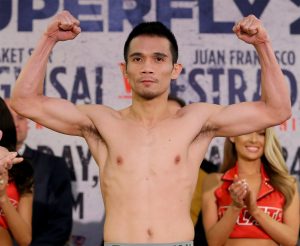
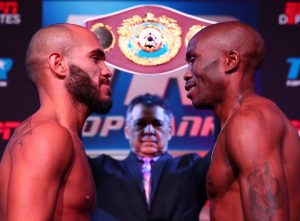
Saturday in Los Angeles, Thai super flyweight world champion Srisaket Sor Rungvisai majority-decisioned Mexican Juan Francisco Estrada in a fantastic prizefight HBO deserves much credit for enabling. It was the second installment of a SuperFly series that resides alongside the World Boxing Super Series cruiserweight tournament as the best things to happen to our beloved sport in some years.

Once again it was Sor Rungvisai’s composure that fascinated. Volume punchers are men of a composure begotten by great self-awareness; volume guys know their limitations much better than cocky defensive specialists or fragile psyche-ed powerpunchers. But Sor Rungvisai is no longer much of a volume puncher; he no longer wastes much motion with shifting his opponent’s footing or considering his opponent’s timing. He no longer wastes hardly a motion at all. He stands placidly at ringcenter and attacks when whim dictates and throws nearly no setup shots. Everything Sor Rungvisai throws intends, now, to devastate.

He wears the same obliviousness mask today with which he greeted the world’s best fighter about a year ago. His countenance betrays no emotion whatever. Not even his eyes seem to grow or slighten. He got angry a few times at Estrada, Saturday, and his body showed deep fatigue by the fight’s 35th minute, but his face remained wonderfully expressionless throughout.

One hesitates to project too much on a man who is determined to be unknowable, but watching Sor Rungvisai’s face in combat while considering his ledger brings to the imagination a man who achieved unattachment by first attaching himself to prizefighting and its myriad of cruelties then letting disgust with it all detach him from prizefighting and its systemic irregularities until he was sufficiently unattached to career or outcome to match himself with prizefighting debutants in his 44th and 45th and 46th career matches. That bears repetition: Sor Rungvisai passed the entire second half of 2016 feasting on three men who’d nary a prizefight between them.

That was how he prepared to swap fists with his profession’s master, Roman “Chocolatito” Gonzalez. That evinces some combination of otherworldly arrogance, noteworthy misfortune and perfect unattachment. Sor Rungvisai then brought the arrogance and unattachment to Chocolatito and delivered him noteworthy misfortune, breaking the master body and spirit – Chocolatito was resigned unto tranquility at the brutal end of his September match with Sor Rungvisai.

Until the final round little that happened Saturday surprised Sor Rungvisai, which was itself surprising because Juan Francisco Estrada is one hell of a creative counterpuncher. Estrada made Sor Rungvisai miss often, too. But Estrada appeared so relieved each time one of Sor Rungvisai’s weighty fists flew harmlessly past he took few retaliatory acts till he was certain the worst of Sor Rungvisai’s power was spent.

Notice how infrequently Estrada pursued Sor Rungvisai even when the Thai allowed aggression to imbalance himself. Compare that to the savagery with which Estrada’s inspiration, Juan Manuel Marquez, pursued Manny Pacquiao each time the Filipino’s aggression circuitbroke his footwork. Some of that was a difference of conscious choosing but much of it wasn’t; Estrada needed a lot of rounds to override what panicked signals his body disseminated across the nervous system each time Sor Rungvisai’s knuckles made definitive contact.

You cannot problemsolve in a panicked state or think creatively while your mind madly scrambles for refuge. Whatever plans Estrada and handlers made for Sor Rungvisai’s attack went largely ignored for rounds 2-9 while Estrada searched frantically for a means of avoiding Sor Rungvisai’s punches.

Sometime after that, though, Estrada’s experience and training and gradual adaptation to the pain wrought by Sor Rungvisai’s punches led the Mexican to throw a right uppercut, the one punch to which Sor Rungvisai’s aggression made him singularly vulnerable. That got both men’s attention, converting Sor Rungvisai from a machine to a man, emboldening Estrada for the championship rounds no matter how little import Sor Rungvisai initially showed Estrada’s emboldened spirit.

By the match’s penultimate minute it was Sor Rungvisai whose consciousness got overwhelmed by what panic fatigue visits on every fighter. Sor Rungvisai was the unthinking man in the fight’s final 90 seconds, not Estrada, but Estrada had only so much remaining impetus. Estrada absolutely did not win Saturday’s fight, whatever the Forum’s partisan-Latino crowd opined, but he verily did win the fight’s final round, which should make the Mexican hopeful for his chances in a rematch.

Now some words about the telecast.

HBO’s combination of Jim Lampley and Max Kellerman no longer works at all – they haven’t chemistry, and they step all over each other’s lines, either by embroidering them needlessly or negating them with dead air whose effect is most pronounced by a telecast featuring so little of it. This is mostly Kellerman’s fault, yes, but Lampley no longer helps things. Kellerman believes himself an extraordinary improviser, which would work better if he didn’t believe his audience too ordinary to hear his brilliance on first or second recital.

So much exhausting noise of every telecast now goes to Kellerman reiterating decent points till dullness, ostensibly for the audience’s benefit – for if not the audience’s benefit, whose? Occasionally Jim and Max must discipline Harold for a scorecard that deviates from the consensus narrative, and they do, but Kellerman cannot possibly believe Roy Jones or Andre Ward needs his help to understand the combat happening a yard or two from their eyes.

Kellerman and Lampley now disrupt one another’s rhythm in a way that is five parts irksome for every one part entertaining, and they talk far far too much. They don’t need to be fired, but they do need to be separated; either man might work just fine by himself with Ward, who’s much better than Jones, and nowhere is it written a four-man team needs to explain a two-man combat.

In its first two years the Peter Nelson era at HBO Sports has been marked by its marklessness, Top Rank’s departure and a gray detente with the PBC. HBO has become the official network of the super flyweight division, which is noble, while Showtime has cornered the exponentially more consequential heavyweight division (unless you count Andre the Giant). Nothing about HBO Sports today portends boldness. Separating Lampley and Kellerman is a subtle move, then, that might at least bring aficionados more enjoyment.

Bart Barry can be reached via Twitter @bartbarry


Canelo-GGG: Same address, better fight set for the rematch

By Norm Frauenheim-

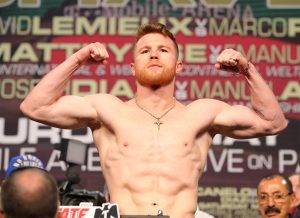
Location, location, location. It’s no surprise that the real estate won’t change for the Canelo Alvarez-Gennady Golovkin rematch. The middleweights will pick up where they left off at Las Vegas T-Mobile Arena on May 5, Cinco de Mayo. Canelo de Mayo, too.

Canelo always said he would re-claim the holiday for Mexicans. He has. Now that Floyd Mayweather Jr. has moved on and presumably won’t try to move in on the date like he did three weeks before the Sept. 16 bout late last August against Conor McGregor, Canelo will continue to reign as the NHL arena’s primary boxing resident. Tickets go on sale Tuesday.

“I am happy to return for the fourth time at T-Mobile Arena for this historic rematch against Golovkin,” Canelo said Thursday in a news release announcing that there will be no change of address. “I opened the doors of this place to the world of boxing, and it has become my favorite venue. This is where the fight started, and this is where I’ll end it by doing what I and my fans most desire: knocking him out.”

On the prediction scale, Canelo’s KO promise is boiler-plate. Still, a stoppage of GGG might be the only way for him to silence some boos from Mexican fans unhappy with his performance in the draw last September. Canelo fought in spurts. He’s going to change up his preparations this time around.

He’s headed to Colorado to train at altitude that might augment his conditioning. I’m not sure that will weaken GGG’s chin, however. Can Canelo win? Yeah, oh yeah. Above all, he’s proven to be a very good student, especially in the aftermath of an embarrassing loss to Mayweather in September, 2013. At 27, it’s safe to say we have yet to see the best of him.

Meanwhile, the theory is that GGG is a step beyond his prime. He’s 35. He’ll be 36 at opening bell. His birthday is April 8. More telling, perhaps, are the bruises and swelling apparent in his face after his last three fights – Kell Brook, Danny Jacobs and Canelo. Those optics are early signs of an aging fighter. But sometimes the younger man shows up, especially in fighters as good as Golovkin has been.

From this corner, the intersection of time and place appears to favor Canelo. But early betting odds say something else. They slightly favor GGG (minus 170) over Canelo (plus 140). In other words, it’s almost a pick-em fight. Surely, the rematch is intriguing on multiple levels, even more so than the first one. Canelo promises explosive drama by saying he’ll knock out GGG. Good enough. Knockouts sell. But adjustments fascinate. Look for plenty of the latter. Each fighter possesses a high-ring IQ. There’s some danger in that, of course. Their respective smarts set up a sequel that could go to the scorecards all over again. Judging proved to be a huge controversy in the first one. If there’s any surprise about the rematch’s site, it’s the state not the arena. GGG was angry at the draw delivered by the judges last September. Some of his fans urged him not to return to Vegas.

The first bout and post-fight news conference will be remembered for outrage over Adalaide Byrd’s 118-110 score for Canelo. For some at ringside, Dave Moretti had it right a 115-113 card for GGG. Lost amid all of the anger at Byrd, however, was Don Trella’s card. He scored it a draw, 114-114.

Like the fair-minded Moretti, he gave the final rounds to Canelo. But his score for the seventh is curious. Moretti, most in HBO television audience, the crowd at T-Mobile and the ringside press gave the middle rounds, including the seventh, to GGG. Even Byrd scored the seventh for Golovkin. In fact, it was one of only two rounds that Byrd gave to GGG.

But Trella gave the seventh to Canelo, 10-9. Had he scored it as most everyone else seemed to, GGG would have won a split decision.

GGG’s reunion with the Nevada State Athletic Commission figures to be the biggest story during the weeks before the rematch. There will be plenty of talk about the assignment of the judges. Safe to say, it won’t be Byrd. But that and the location, location, location of a possible trilogy are the only sure things.


Wondering at David Benavidez’s talent, weeping for his future

By Bart Barry-

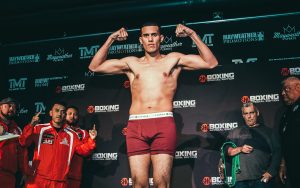
There were two very good title fights in the super middleweight division Saturday, but as the victor of the more widely watched one once got himself origamied by Carl Froch we’re going to treat the victor of the other one instead, and he is 21-year-old David Benavidez. And Benavidez looked sensational rematch-decisioning Ronald Gavril.

Benavidez’s body is syrupy runon oblivious (like this sentence) more than deflated ambitionless immature or unprofessional, like the scolds’ll say of it in their petty and anxious search for surface perfection, the weight of insecurities they project on everything belying the seriousness they tell themselves their scowls purport. His body is shaped to deliver a surprise precision to opponents who doubtlessly peplecture themselves on what deepdigging camp sacrifices they made and he didn’t the better to wilt him with their will the way their seconds and thirds promise them after the middle rounds of fights they know they can’t win unless Benavidez cedes them, and sometimes he almost does too.

Benavidez’s age and facility and shape may as yet prove liabilities – as he’s young enough and easy enough to get bored by the rigors of his craft, and his body says one thing that’s obvious and another that isn’t. What’s obvious is the size and shape to which his body’ll grow unless he brakestomps its homeostatic state hourly; a month of “just eating like everyone else” will weigh him 200 pounds. Easily. What’s less obvious is that, for all the wonders of his punching form, he’ll not have the pop he’d’ve had at 154 had he not once weighed so much more than 154 that 154 is chanceless.

That’s what the inflated middle knuckle of his right hand suspicioned Saturday: There’s no way I should’ve bounced off another man’s face and head so many times with so much force in one evening’s work. The knuckle was right, too; it wasn’t simply the chin of Gavril but the slightly less than atomic pop on the end of Benavidez’s otherwise perfect punches.

What inspires such thoughts are comparisons to a young Thomas Hearns that happened early Saturday, in one writer’s imagination anyway, and the 14 to 21 pounds of inefficiency Benavidez’ll never manage to flense, inefficiency Hearns never had for never having to flense a millimeter. Benavidez is necessarily punching men with more absorbent chins than Hearns did when Hearns became a contender, which means Benavidez’s knuckles’ll have to endure more earlier than Hearns’ did. That may serve to make Benavidez more compelling than he’d’ve otherwise been – for had he stopped Gavril in three rounds there’d’ve been no reason to doubt he could stride through the winner of the World Boxing Super Series and all its participants, and given Benavidez’s body and age such doubtlessness would be no boon.

Then there’s the troubling bit about his overbooked management company and its inability to match its fighters frequently or steer any of them greatness’ way. PBC intended create an alternate boxing ecosystem closed to every unsigned prospect and unbought media, and it worked partially for a couple years when other people’s money was plentiful. Once PBC returned to Showtime, though, head bowed hat-in-gloves, it found a less compliant host, one hardened by PBC’s previous treachery, however often Showtime denies it, and much more likely to do things Showtime’s way, not PBC’s (can you imagine a timebought commentary team listing a Top Rank titlist like Jeff Horn alongside PBC’s welterweights in 2015?), and that means frequent mention of every PBC fighter’s unfortunate inactivity and unfortunater opponent preferences.

Showtime interviewer Jim Gray is now nearer despicable than insufferable but by asking every premier boxing champion whom he wishes to fight next he highlights PBC’s fundamental weakness, in his signature snotty way. Gray was the perfect press vehicle for extracting from Keith Thurman a confession that looked like a boast he’d be fighting exactly no one the next time Thurman appears on Showtime.

What an extraordinary sense of entitlement PBC’s ecosystem has wrought: I’m going to show up at your event and tell you I neither intend to fight anyone you want me to fight nor performed the professional courtesy of curating a one-name-deep list of men I might consider rehabbing my shoulder against on your airwaves.

One hopes Showtime will tell PBC: Here’s the list of opponents we’ll pay Keith Thurman to fight on Showtime, here’s the list of opponents we’ll pay Keith Thurman to fight on our Twitter feed, and everyone else composes the list of opponents you’ll pay us to broadcast Keith Thurman fighting on Snapchat.

PBC may be the perfect management outfit for a Thurman or Deontay Wilder but it’s all wrong for someone with David Benavidez’s youth and ambition and propensity for weightgain. Benavidez needs to be defending his title or unifying other titles at least thrice annually. But now that he’s become a PBC a-side by doublebeating someone from The Money Team he’s about to see his activity and competition cut by a third or more, and if he’s unlucky enough to add another title at 168 he may be suspended from the PBC calendar entirely in 2019.

Just look what the PBC did to Danny Garcia, a once-sympathetic-if-never-beloved man who after upsetting Nate Campbell, Kendall Holt, Erik Morales (twice), Amir Khan, Zab Judah and Lucas Matthysse, in 29 months, needed nearly four years to make another meaningful fight in a weightclass too high, lose, and then celebrate his 11 1/2-month layoff by spearchiseling a retired lightweight to little amazement and a fair dollop of derision.

David Benavidez appears to be a special talent. The PBC has a special talent for mismanaging special talents.

Bart Barry can be reached via Twitter @bartbarry


FOLLOW GARCIA – RIOS; BENAVIDEZ – GAVRIL 2 LIVE!!!

Follow all the action from The Mandalay Bay in Las Vegas as former two-weight champion Danny Garcia takes on former lightweight champion Brandon Rios.  The exciting co-feature will be a rematch between WBC Super Middleweight champion David Benavidez defending against Ronald Gavril.  The card opens at 10 PM ET / 7 PM PT with a welterweight elimination bout between Yordenis Ugas and Ray Robinson

NO BROWSER REFRESH NEEDED.  THE PAGE WILL UPDATE AUTOMATICALLY 

12-ROUNDS–WELTERWEIGHTS–DANNY GARCIA (33-1, 19 KOS) vs BRANDON RIOS (34-3-1, 24 KOS) 
ROUND 1 2 3 4 5 6 7 8 9 10 11 12 TOTAL
 GARCIA*  10 10  10   10  10  9 10   10  TKO        79
 RIOS  9  9  9  9  9  10  9          73

Round 1: Garcia lands a jab..body shots..1-2..Combination..Double left

Round 2 Left hooks from Garcia..Combination..Jab from Rios..

Round 3 Double left hook to the body from Garcia..Counter..combination..Over hand right from Rios..Hard right from Garcia..Right from Rios..Double left hook from Garcia.

Round 4 Jab and right from Rios..Lead right from Garcia.Right..right uppercut from Rios…Ripping right from Garcia..and another..Big right and Rios smiles at Garcia

Round 5 Garcia lands a big right..Good left hook from Rios..2 right uppercuts..Right uppercut on inside..Check left hook and hard uppercut from Garcia,,,over hand right…Lead left uppercut..Combination..Right from Rios..Garcia comes back with a right

Round 6 Rios lands a short right and left..Counter right from Garcia..Right uppercut on inside from Rios..Short left..Garcia lands a jab

Round 7 Good exchange..Garcia lands a jab to the body..Hard right..lead right to the body..Good combination..Counter left hook..right..3 punch combination..Counter right..Body

Round 8 Rios lands 2 uppercuts on the inside..3 punch combination from Garcia..Right uppercut on inside by Rios..good body work..double jab from Garcia..right/left combination…Right from Rios..Body..Garcia lands a combination to the face..Counter left from Rios

Round 9 Garcia lands a combination to the body..right to head..double left hook..Garcia lands a short left to the body..Big Right..right cross..HUGE RIGHT AND DOWN GOES RIOS…RIOS STUMBLING TOWARDS REFEREE KENNY BAYLESS AND THE FIGHT IS STOPPED

12-ROUNDS–WBC SUPER MIDDLEWEIGHT TITLE–DAVID BENAVIDEZ (19-0, 17 KOS) VS RONALD GAVRIL (18-2, 14 KOS) 
ROUND 1 2 3 4 5 6 7 8 9 10 11 12 TOTAL
 BENAVIDEZ 10   10  10  10 10  10   10  10 10   10 10   119
 GAVRIL  9  9  9  9  10  9  9  9 10   110

Round 1 Benavidez backs up Gavril with a right.  Over hand right..Body work from Gavril..Benavidez lands a jab

Round 2 Gavril lands a jab to the body..Benavdiez lands a right and left hook..Jab..Double jab/right hand to the body..Right..Left uppercut..left hook..Piston-jab..Body from Gavril..Counter right from Benavidez..1-2..Hard combination..Body shot from Gavril

Round 3 Right from Benavidez..Combination from Gavril..Uppercut from Benavidez..Right to body from Gavril..Combination from Benavidez..lead left

Round 4 Huge right rocks Gavril..Flush right..Combination..double right..2 big uppercuts..4 punch combination..1-2..Gavril attacking the body..combination

Round 5 Uppercut from Benavidez..Jab from Gavril..Right on the ropes from Benavidez..Left uppercut..Jab..Right backs u Gavril..Jab..Blood from the nose of Gavril..Nice right from Gavril..

Round 6 Good right from Gavril..6 punch combination from Benavidez..hard right and left..Right to head from Gavril..left to body..right to head..Jab from Benavidez..

Round 7 Gavril lands a combination..Benavidez lands a combination

Round 8 Right from Gavril..Sweeping left hook from Benavidez..jab to the body..Left uppercut..Left hook to the bidy..Right to the body..flush shots

Round 9 Jab from Benavidez..triple jab..left hook..left ti the body..Ripping body punches..Gvaril lands a combination on the ropes..

Round 10 Combination from Benavidez..

Round 11 Doctor checking out Gavril..3 punch combination from Benavidez..

Round 12 Right from Gavril..Right..right..Benavidez jabbing

Benavidez landed 315-942 punches…Gavril 176-757

12-ROUNDS–WELTERWEIGHTS–YORDENIS UGAS (20-3, 9 KOS) VS RAY ROBINSON(24-2, 12 KOS) 
ROUND 1 2 3 4 5 6 7 8 9 10 11 12 TOTAL
 UGAS*  10 10   10  10  10 10   TKO            60
 ROBINSON  8  9  9  8  9              52

Round 1 Robinson lands a counter left..Counter right from Ugas…HARD RIGHT AND DOWN GOES ROBINSON..Nice combination from Robinson..counter from Ugas

Round 2 Ugas lands a right to the body..Straight right..Right uppercut..Right..Right hook from Robinson..Counter right from Ugas

Round 3 Nice combination from Ugas..Good left from Robinson..Sweeping right..Counter left..Right to body..Right from Robinson

Round 4 Trading jabs to the body..Good combination from Robinson..Counter right from Ugas..Check hook from Robinson..Right from Ugas and a body shot..Right..Counter right..Right behind the guard..Body..Straight backs up Robinson..Good exchange..Robinson lands a right that drops Ugas after the bell..ROBINSON DEDUCTED A POINT

Round 5 Right to body from Ugas..Right..right hook from Robinson..Right..Right to body and combination..Short left from Robinson..

Round 6 Counter right from Ugas…Right to body..Right to body

Round 7 BIG RIGHT AND DOWN GOES ROBINSON…UGAS ALL OVER ROBINSON..7 HARD RIGHTS IN THE CORNER AND THE FIGHT IS STOPPED


FOLLOW GROVES – EUBANK, JR. LIVE!!

Follow all the action as George Groves defends the WBA Super Middleweight title against Chris Eubank, Jr. in the semifinal of the World Boxing Super Series.  The action begins at 5 PM ET / 2 PM PT and 10 PM in the UK

NO BROWSER REFRESH NEEDED THE PAGE WILL UPDATE AUTOMATICALLY

12-ROUNDS–WBA SUPER MIDDLEWEIGHT TITLE–GEORGE GROVES (27-3, 20 KOS) VS CHRIS EUBANK, JR. (26-1, 20 KOS) 
ROUND 1 2 3 4 5 6 7 8 9 10 11 12 TOTAL
 GROVES  10 10   10  9  10 10   9  10  10  9  115
 EUBANK, JR.  9  9  9 10   10  9  9  10 10   9  9  10 113

Round 1: Groves land a jab…jab..Eubank lands a jab

Round 2 Jab from Eubank..Right from Groves..left..Good right from Eubank..Jab from Groves..

Round 3 Left and right from Groves..Hard left and right from Eubank..Eubank cut over the right eye..jab from Groves..Cut caused from an accidental head clash.

Round 4 Good right from Groves..Lead left and right from Eubank..Left hook

Round 5 Lead left hook from Eubank..Uppercut and left hook..Chopping right from Groves..Right on inside from Eubank

Round 6 Lots of rough housing..Right from Groves..Jab..

Round 7 Good right from Eubank..Jab..Right from Groves..Hard right

Round 8 Right from Groves..Right from Eubank..Long right..Guys swinging wild

Round 9 Eubank going after Groves..Lands an uppercut…Combination at the bell

Round 10 Lead left from Eubank..Jab..jab from Groves..1-2..Left to body from Eubank..Eubank lands good body shots on the ropes..

Round 11 Left hook from Eubank..Hard right from Groves..Jab..Eubank throwing desperation punches

Round 12 Good right from Eubank…Groves ducking punches on the ropes..Good right uppercut from Groves.Hard right from Eubank Huge shots by by both guys,,,Big right from Eubank..Uppercut from Groves

117-92 Punch advantage for Groves

117-112; 116-112; 115-113 FOR GEORGE GROVES


Next in Line: Bakhodir Jalolov looking to become next Heavyweight star from former Soviet Union


Over the past decade, fighters from Eastern Europe have infiltrated and have become dominant fighters in the world of professional boxing. Fighters like Gennady Golovkin, Sergey Kovalev, brothers Wladimir and Vitali Klitschko, and Vasyl Lomachenko, to name a few, have become prominent and must-see television in the United States.

Last week it was announced that Bakhodir Jalolov signed a promotional contract with New York based Fight Promotions Inc., and will now ply his trade in the United States to join that exclusive list of european imports to realize their American Dream.

Jalolov has an impressive amateur pedigree and is considered to be one of the top prospects in the heavyweight division. At just 22 years old, Jalolov represented his country of Uzbekistan in the 2016 Olympics. Jalolov was so highly respected that he was given the coveted position of being the flag bearer for the games.

Jalolov utilizes his height by using a strong jab to keep his opponents at bay. He likes to mix it up as he is confident in his defensive prowess. The few times that Jalolov has been hit, he has shown an impeccable chin, and he has never been knocked down.

Jalolov plans to start his professional career very shortly, and he is definitely one to watch as we enter the next decade. He will be training with highly accomplished trainer Pedro Diaz in Miami, Florida.

Fight Promotions, Inc. also promotes Sergey Derevyanchenko, Ivan Baranchyk, Ivan Golub and Elnur Abduraimov to name a few.


FOLLOW BELTRAN – MOSES LIVE!!!

Follow all the action as Ray Beltran and Paulus Moses vie for the vacant WBO Lightweight title.  The action kicks off at 9 PM ET / 6 PM PT with welterweight battle between Egidijus Kavaliauskas and former world champion David Avanesyan.  The show kicks off with Olympic Silver Medal winner Shakur Stevenson taking on Juan Tapia in a Featherweight bout.

NO BROWSER REFRESH NEEDED.  THE PAGE WILL UPDATE AUTOMATICALLY

12-ROUNDS–WBO LIGHTWEIGHT TITLE–RAY BELTRAN (34-7-1, 21 KOS) VS PAULUS MOSES (40-3, 25 KOS) 
ROUND 1 2 3 4 5 6 7 8 9 10 11 12 TOTAL
 BELTRAN  10  9  9  10  9  9  9 10  10   10 10  10   115
 MOSES  9  10  10  10  10  10  10  9  9  9 9 114

Round 1: Beltran lands a right..2 hard lefts..Jab from Moses…Right for Beltran

Round 2 Beltran lands a left to the body..Both land lefts..Beltran gets in a left..Moses lands 2 rights..Beltran cut over the left eye

Round 3 Good right from Moses..Jab and right..

Round 4 Good jab from Moses..Uppercut..Long right from Moses..Right and double left from Beltran..

Round 5 Right from Moses..Hard left from Beltran..jab from Moses..Beltran cut under his left eye

Round 6 Moses lands a right

Round 7 Good 1-2 from Moses..Short right from Beltran

Round 8 Beltran working on the inside..

Round 9  Hard right buckles Beltran..Left from Beltran..1-2..2 body shots…Moses lands a jab..Combination from Beltran

Round 10 Hard right and left from Beltran

Round 11 Beltran lands a left to the body..Right to body and another

Round 12  Beltran outlanding Moses

117-111, 117-111 and 116-112 FOR RAY BELTRAN

 10-ROUNDS-WELTERWEIGHTS–EGIDIJUS KAVALIAUSKAS (18-0, 15 KOS) VS DAVID AVANESYAN (23-2-1, 11 KOS)
ROUND 1 2 3 4 5 6 7 8 9 10 11 12 TOTAL
 KAVALIAUSKAS* 10   10 10  10  10   TKO              50
 AVANESYAN  10  9  9  9  9                46

Round 1 

Round 2 Kavaliauskas lands a right..Jab from Avanesyan..Right from Kavaliauskas

Round 3 Crisp right from Avanesyan…Kavaliauskas lands a combinations drives Avanesyan back..Left hook..

Round 4 Avanesyan switches southpaw..Lands a left..Right from Kavaliauskas..Jab..Rght,..

Round 5 Good body shot from Kavaliauskas

Round 6 Kavaliauskas lands a hard right…Avanesyan is hurt…HARD FLURRY OF UNANWERED PUNCHES AND THE FIGHT IS STOPPED

8 ROUNDS–FEATHERWEIGHTS–SHAKUR STEVENSON (4-0, 2 KOS) VS JUAN TAPIA (8-1, 3 KOS)
ROUND 1 2 3 4 5 6 7 8 9 10 11 12 TOTAL
STEVENSON  10  10  10  10  10 10   10  10          80
 TAPIA  9  9  9  9  9  9  9  9          72

Round 1 Stevenson lands a jab..Short right uppercut

Round 2 Stevenson lands a right hook..

Round 3 Stevenson lands a jab…Hard right hook..Good body work

Round 4 Hard lead left from Stevenson…

Round 5 Straight left from Stevenson.. Stevenson outlanding Tapia 73-15

Round 6 2 hard body shots and  a left hurt Tapia..Body work..right to body

Round 7  Body shot and 3 punch combination from Stevenson..Good right from Tapia..B;ood from mouth of Tapia..Jab from Stevenson..lead left

Round 8 Good combination from Stevenson


Beltran: A famed trainer introduced the fighter and he’s been fighting ever since

By Norm Frauenheim-

Emanuel Steward’s impact on boxing endures long after the famed trainer died. He’s been gone for more than five years now. Yet there are moments when echoes of his voice can still be heard and his influence still seen.

You’ll hear and see it Friday night (ESPN 9 p.m. ET) in Raymundo Beltran.

Steward brought Beltran to the United States, using his influence and celebrity to introduce him and his potential to American media in October 2002. I was there, a reporter for the biggest newspaper in Phoenix, when Steward asked me to say hello to the world’s next great fighter.

“They’re already calling him Sugar, Brown Sugar, in the Phoenix gyms I’ve taken him to,’’ Steward said with the gentle smile that always seemed to be there when he knew he had found somebody special. “Can’t be a Sugar if they don’t think you’re fighter.’’

Steward didn’t project multiple titles or even a legacy for Beltran. But Steward knew there was something there, something within the young man from Mexico that would last.

It has. Beltran has.

His long journey has taken him from a talked-about talent, to a forgotten prospect, to a sparring partner, to a club fighter, to a champion, an ex-champion and a good guy. I’m not sure the last element doesn’t matter the most. Above all, however, Beltran has become somebody a lot like his American mentor. In some capacity, he’ll always be a fighter.

At 36, he steps through the ropes in Reno, Nev., against Paulus Moses (40-3, 25 KOs) for the 43rd time in a bid for the World Boxing Organization’s lightweight title. It’s a fight he calls “the most important” in his career.

On a couple of different levels it probably is. For one, it puts him in line for what could be very good payday. If he wins, there’s talk about a title defense against Felix Verdejo or Vasiliy Lomachenko. Then, there’s the ongoing battle for a green card amid the rancorous immigration debate.

The stakes are huge, of course. They are all part of what motivates Beltran (37-7-1, 21 KOs). They are the components to what a fighter can use. From bell to opening bell, it’s the fuel that keeps him going to the gym, doing his roadwork. But it would just be spilled gas if not for the motor and mentality that keeps Beltran moving forward and in harm’s way.

At a defining level, his whole life is his most important fight. It never ends. In an era when the O is to be protected at all costs, Beltran fights on. There aren’t many fighters today with seven losses who are still active at 36. Name one who is near the top of the game? Beltran is just about the only answer. It’s a craft defined by adversity. Beltran hasn’t exactly embraced it. But he hasn’t run away from it either. Instead, he’s learned from it.

His adopted home continues to be Phoenix. That’s appropriate. The first four fights in his pro career were in Arizona — a debut in Tucson and then three bouts in Phoenix. His headline-grabbing battle to stay in the United States is in many ways a reflection of Ground Zero in the immigration debate. What is now an angry national confrontation began in Phoenix with demonstrations against state legislation, SB 1070. Beltran has seen it. Lives it. Continues to fight it.

In a noteworthy sidebar, his fight in Reno could lead to a noteworthy moment in Phoenix’s long and lively boxing history. If Beltran wins the WBO title Friday and David Benavidez (19-0, 17 KOs) retains the World Boxing Council’s super-middleweight title in Showtime-televised rematch against Ronald Gavril (18-2, 14 KOs) at Las Vegas’ Mandalay Bay Saturday night (7 p.m. PT/10 p.m. ET), it’ll be a first ever that two fighters from Phoenix will hold major belts at the same time.

It almost happened in 1990. Louie Espinoza, now a carpenter in the Phoenix suburb of Chandler, held the WBO’s featherweight title, but lost it to Jorge Paez in a controversial decision in April of that year. Just a few months later in late July eventual Hall of Famer Michael Carbajal won his first junior-flyweight title, the International Boxing Federation’s version, with a seventh-round stoppage of Thailand’s Muangchai Kittikasem.

Who knew that a simple handshake might introduce some Phoenix history some 16 years later? I’ve got a hunch that Emanuel Steward had a pretty good idea. I can hear that voice and see that smile now.


Enchiladas, cryptocurrency and Frank Bascombe

By Bart Barry-

SAN ANTONIO – An uncommon bout last week with a common cold and what distraction it brings, maybe this is what adults affected by attention deficit disorder constantly feel, brought me to a weekend without a subject fit for a Monday column, and so there’s no telling what might come next. But come along, nevertheless.

These are what columns I dreaded writing for years. There mightn’t be a thing to write about that was boxing but proximity enough to treatable events one feels a negligent stir for indulging his interests more than boxing’s. Such was about maintaining a readership in the sense of maintaining an editorship, a chance to write for men who already had readers or an appearance of them anyway. I’d find myself scraping away – like that throaty sound harddrives used to make – at uninteresting subjects like Roy Jones’ farewell match or George Groves’ upcoming tilt. Even mentioning those subjects today makes this gray today altogether grayer.

Recently I moved very close to La Fogata, a Mexican restaurant a few miles north of downtown. That name almost certainly rings no recollective bells for you but you may have read the name before if you’re into the best of contemporary American literature: It’s the restaurant where novelist Richard Ford’s invention, Frank Bascombe, planned to take his family for a Christmas feast a few years ago in “Let Me Be Frank with You” – part of a hypothetical holiday to include also the Pedernales River and Johnson City. I thought of making this column a conversation with Bascombe at La Fogata about the creation of a prizefighting cryptocurrency but stopped not because it felt too outlandish, we must rush at such sentiments, but because I suspect Ford would not approve anyone borrowing his character, and his disapproval is weighty.

Six or so years ago I bought charming stationery and began writing letters to writers whose works I admired, and forgive me if I’ve written about this before. Nothing particularly remarkable came of those 80 or so letters, no epiphanies about the creative process or major insights even about myself, and I stopped when I ran out of writers (and painters and lyricists and even a former Secretary of State) whose works I admired enough to find 300 words for. If there were any surprises about the exercise, it’s this: While very few people wrote back, those who did composed the top 10-percent of the talent I wrote to.

Richard Ford wrote back. He lamented the lack of esteem in which contemporary novelists get held by their publishers, and he expressed admiration for this craft of boxing writing (as I must’ve mentioned I did this sort of writing in my letter to him). He also gave the Spurs a real chance of winning the NBA Finals that year.

This has nothing to do with the recent cryptocurrency craze except that I thought about cryptocurrencies a few days ago while eating enchiladas de mole poblano from La Fogata and thought about them in the rotating relational context of how Ford might have Frank Bascombe treat them, if at all. He’d embrace their absurdity in some way but not an obvious way, and a month’s worth of reading about possible uses of blockchain technology – cryptocurrencies’ universal and decentralized general ledgers – convinces me counterarguments against the technology that underlies cryptocurrencies deal solely in obvious absurdity.

It’s the word “currency” that gets folks leaning wrongly right off. They immediately impose whatever they recall about fiat money from that macroecon class, freshman year, then barrel towards central authorities and GDPs and a variety of irrelevant accounting practices. They do this to assert an illusion of control, primarily, justifying whatever sum of youthful hours they once committed to regurgitating Adam Smith or Ludwig von Mises. It’s why tokens are a better metaphor for cryptocurrency than currency, since nobody’s about to use technical analysis on what goes in carousels or pinball machines.

There are details yet to emerge, but the general vision is the elimination of both accountants and arbitrage; as every transaction is public and stored on tiny pieces of hundreds of millions of computers round the world, there’s no pricing ignorance to exploit or later correct. Without this sort of drag to overcome, things can be sold for things without they hop through a labyrinth of exchanges:

This is how many 2018 Ford F-150s Gilberto Ramirez earned a couple Saturdays ago, instead of: This is how many dollars were in Ramirez’s purse minus income tax divided by the exchange rate into Mexican pesos minus the markup at Mazatlan’s number one Ford dealership minus taxes and registration plus the reduced commission for buying in bulk minus the delivery charge.

Why, but that’s just bartering! Actually, yes, that’s exactly what it is – bartering performed with absolute trust anywhere in the world with a single secure transaction log no company or government can own. Certainly it could help medical commissions enforce boxing suspensions, too, while improving the way medicine is practiced everywhere.

Nothing about this column knows quite whence it heads till it gets here, and so a little gratitude th’t what’s above didn’t find its way in a dialogue with Frank Bascombe between bits about punching men in the face and wearing suede shoes – Frank in Hush Puppies, me in a pair of green British Walkers. Now the circling back to find somewhere to fit boxing in all this.

Bart Barry can be reached via Twitter @bartbarry
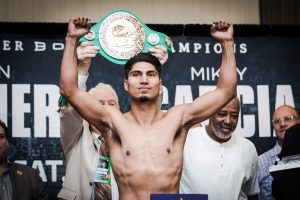


Roy Jones the Senior looks back and sees an all-time Junior

By Norm Frauenheim-

Roy Jones, a lot more of a Senior than a Junior these days, walks away and hopefully stays away after what he says was his final fight Thursday night in the same Pensacola arena where it all began nearly a decade before there was Google.

That’s a lot of hits.

He’s landed them.

And absorbed them.

Jones’ 75-fight career, including major titles in four weight classes over 29 years, amounts to a legacy that will lead to the Canastota Hall in upstate New York five years from now.

About that, there’s no debate. The only real question is whether he was an all-timer, a rival to the legends in any era. He says yeah, hell yeah.

“You can’t pretend there has ever been anyone come close to doing what I did,” Jones said in several rounds of media interviews this week. “Nobody you could name could touch me and I’m talking about nobody who’s around now, nobody who was around in my prime, and nobody who was around any time.’’

Muhammad Ali in the late 1960s and early 1970s? Sugar Ray Robinson in the late 1940s and throughout the 1950s? Not sure. It is tough, perhaps impossible, to compare great fighters from very different eras.

But there is a compelling element to Jones’ all-time claim. Within the ropes, he says, he was a better than Floyd Mayweather Jr, who has caps and T-shirts that boast the acronym TBE – The Best Ever.

Jones, who turned 49 on Jan. 16, has no argument with Mayweather’s business acumen. He is The Best Earner in history. Mayweather perfected the risk-for-reward ratio. He surpassed late heavyweight champ Rocky Marciano’s iconic 49-0 mark, going 50-0. But he did it by beating a Conor McGregor, a mixed-martial-arts star yet a novice boxer, in August.

The point to Jones’ argument, however, is that Mayweather was better at making money than he was at fighting. It’s hard to contest that one. On virtually every level other than financial, Jones proved to be resilient, coming back from repeated losses. He stayed busy, beginning with a middleweight title and reviving a dormant light-heavyweight division while also beating John Ruiz for a heavyweight title in 2003. He is the first middleweight to win a heavyweight belt since Bob Fitzsimmons did it 120 years ago. He also has a signature win, a 1994 dominant decision over James Toney, who at the time was a pound-for-pound frontrunner.

What undercuts Jones’ all-time claim was an early reluctance to travel, especially to Germany for a bout against Dariusz Michalczewski. At the time, Jones was at the peak of his physical powers. He was everywhere — in the ring and elsewhere.

In north Florida, he was the most versatile athlete since Florida State’s Deion Sanders, a cornerback who on one day in 1988 played in a spring football game, played baseball and ran in a track-and-field meet.

Eight years later, Jones played point guard for Jacksonville of the United States Basketball League in the afternoon and scored an 11th-round knockout of Eric Lucas in a super-middleweight title defense that night.

The guess here is that a Jones’ victory over Michalczewski would have been a slam-dunk in Germany or Antarctica. But an apparent reluctance lingered in Jones, perhaps from what happened to him at the 1988 Games in Seoul. It was a heist of Olympic proportions, a proven fix that gave the gold to a forgotten South Korean and left Jones with silver. Twenty years from now, that infamous moment might be how Jones is remembered.

From this corner, however, his pro career is at least worthy of some all-time consideration. Let’s just say he’s in the conversation. At the risk of contradicting myself on the difficulty of comparing different eras, I’ll make an exception: Four Kings.

That’s the title to the terrific book by the late George Kimball, who wrote about the Sugar Ray Leonard, Marvin Hagler, Thomas Hearns and Roberto Duran rivalry that defined the 1980s. It was boxing’s last great era. The guess here is that Jones in his prime could have held his own against those guys. There would have been Five Kings, each an all-timer.


Comfortably contemplating devastation in South Texas

By Bart Barry-

PORT ARANSAS, Texas – Directly across Corpus Christi Bay from American Bank Center, a 30-mile circle and ferry ride by car, this Gulf island town of 3,000 or so souls represents, five months later, one of many grounds zero for Hurricane Harvey, and it looks the part, too. There are seawalls now where there were busy restaurants a year ago, and the devastation is widely chronicled. But as one doesn’t often see a large edifice scattered to component parts in a neighborhood or a marooned 30-foot fishing boat resting sideways a mile from the ocean, there’s still something jarring about the sights here.

American Bank Center hosted Saturday promoter Top Rank’s Gilberto Ramirez versus Habib Ahmed mainevent and did so competently as Ramirez unbuttoned Ahmed in six rounds. In an exceedingly more consequential mainevent before that, on the other side of the world, Murat Gassiev unmanned Yunier Dorticos to advance to the finals of the simply fantastic World Boxing Super Series cruiserweight tournament.

What got best shown Saturday across the six or so hours stretching between the spectacles, Gassiev-Dorticos and Ramirez-Ahmed, is the fatuity of derivative evaluations, hypothetical appraisals, assessments of who would beat whom if ever they did fight. It’s a fanboy game that existed before but crystallized in the Money Era, when beating men in the press and imagination acquired an outsized import and ruined a generation of aspiring aficionados. No longer was the craft about picking a decisive moment in an actual confrontation, a hook-leaduppercut combo five rounds before the knockout, but the absurder imagining of a full, 36-minute tilt, a mixedmedia gargoyle of the left Money threw against Diego Corrales and the shoulder roll he used against Robert Guerrero and the trunks he wore against Zab Judah.

It was a period of such deep frustration some of us still write about it bitterly. Good riddance to that awful era.

It’s germane because its residual effect got to me a bit Saturday ringside at American Bank Center. The co-comain of an eight-fight card featured Philadelphia’s Jesse Hart slapdashing an illprepared Ghanaian named Thomas Awimbono with a masterful right uppercut in the fight’s opening minute or so. Again, as it is said Dominican beisbolistas do not walk off their island, having to hit every pitch and take very few, so too one might say no fighter runs out of Africa – you don’t get off that continent and onto ours lest you can take hellish abuse. To see what Hart did Saturday was to imagine instantly no 168-pounder the world over could want any of that.

And yet. Not even five months ago Gilberto Ramirez dropped and decisioned Hart in Arizona. That was difficult to imagine Saturday, no matter how well El Zurdo handled his own Ghanaian opponent. The matchmaking appeared to intend a rematch, Ramirez and Hart, and certainly a rematch is the only proximate possibility Hart wanted entertain afterwards.

Some hours before that in Russia’s Bolshoy Ice Dome undefeated Russian cruiserweight Murat Gassiev made a nearly perfect fight with undefeated Cuban Yunier Dorticos, ceding geometry to Dorticos for half the fight while putting multiple deposits in the account of Dorticos’ body, then changing the geometry subtly until it was Dorticos retreating, his punches nearly popless, and Gassiev smashing through Dorticos’ guard. This was a different sort of combat, more masculine than wiley, perpetrated by Gassiev on Dorticos; put your hands up, son, leave them there, now I’m going right at them.

It’s a sort of hyperaggression even within boxing’s hyperaggression, a way of sending unmistakable signals to the most vestigial and predatory part of the human mind: You can no longer dissuade me, you must attack me now or turn and flee. Dorticos played his role perfectly, fighting open and hard as possible, and Gassiev ripped his consciousness right out his skull.

There was a frightening dispassion to what Gassiev did to Dorticos, a fellow titlist, a fellow undefeated prizefighter, a man of extraordinary violence and talent and pride. There wasn’t an iota of contempt between the men before or during or after their 35 minutes together; Gassiev brained a fellow human being without displaying even a flinch of animosity towards him, then displayed immense affection and empathy for Dorticos afterwards. It was a bondmaking casual fans do not understand and cannot fathom – the depths of intimacy Dorticos and Gassiev shared, the passion they will feel for one another the rest of their days.

This is not hyperbolic. Watch Gassiev’s concern before he comforts his crestfallen opponent afterwards. Dorticos, wherever his career ambles from here, will have no more-committed fan than Gassiev.

Being in this leveled township puts an edge on you, admittedly, and some of it projects itself on what happened Saturday night. Longtime Phoenix boxing scribe Don Smith traveled here for undefeated Arizonan Jose Benavidez’s return from a gunshot wound suffered 20 months ago, and generously gave me an excellent line about the difference between the Brothers Benavidez: “David is the poster child for milk; Jose is the poster child for oil and vinegar.” Such vinegar got sprinkled on Friday’s weighin when Benavidez and consensus pound-for-pound best Terence Crawford exchanged threats.

Crawford sat one row before us, mostly alone, Saturday, occasionally forcing smiles for overfed doofuses requiring pictures with the champ. Crawford has the distinctive air of an unassuming Midwesterner about him, flashless, in an outfit with Jordans but otherwise doable for $25 at Target. Lots went on round him and the rest of us, and he doesn’t attract attention, but if he once expressed genuine mirth to anyone but ESPN commentator Timothy Bradley and Bradley’s wife, I missed it. Crawford’s not unapproachable and certainly not arrogant, but he has exactly no interest in most of his surroundings or the people that compose them – he tolerates others’ assumed intimacy but doesn’t wish to understand it or share it. He will remain unknowable.

Bart Barry can be reached via Twitter @bartbarry


FOLLOW RAMIREZ – AHMED; ANCAJAS – GONZALEZ LIVE

Follow all the actions as Gilberto Ramirez defends the WBO Super Middleweight title against Habib Ahmed.  The action kicks off at 10:15 PM ET as Jerwin Ancajas defends the IBF Junior Bantamweight title against Israel Gonzalez.

NO BROWSER REFRESH NEEDED, THE PAGE WILL UPDATE AUTOMATICALLY

12-ROUNDS–WBO SUPER MIDDLEWEIGHT TITLE–GILBETO RAMIREZ (36-0, 24 KOs) VS HABIB AHMED (22-0-1, 17 KOs) 
ROUND 1 2 3 4 5 6 7 8 9 10 11 12 TOTAL
 Ramirez*  10  10 10  10  10   TKO              50
 Ahmed  9  9               45

Round 1: Both guys trying to jab..Right hook from Ramirez..left..

Round 2 Right from Ahmed..Combination from Ramirez..Right uppercut..Right to the body..

Round 3 Ramirez cut over his left eye..Body shot from Ramirez..Cut ruled from an accidental headbutt..Doctor looking at the cut…Left hook from Ahmed..Straight left from Ramirez..

Round 4 Ramirez jabbing

Round 5  Right hook from Ramirez..another..Big left..Body shot..Big right hook..Left..Hard left

Round 6  Ramirez landing big uppercuts..body shots..Huge left,,,Ahmed taking a lot of punishment..Big head shots..CORNER THROWING THE TOWEL…RAMIREZ WINS BY TKO

12 ROUNDS–IBF JUNIOR BANTAMWEIGHT TITLE– JERWIN ANCAJAS (26-1-1, 18 KOs) vs ISRAEL GONZALEZ (20-1, 8 KOs)
ROUND 1 2 3 4 5 6 7 8 9 10 11 12 TOTAL
 Ancajas* 10   10  9 10   10 10   10  10  10 TKO      89
 Gonzalez  8  9 10   9  9  9        81

Round 1 HUGE LEFT AND DOWN GOES GONZALEZ…Gonzalez trying to jab..Straight left from Ancajas..Left from Gonzalez..

Round 2 Right from Gonzalez..Straight left from Ancajas..Right hook

Round 3 Combination from Gonzalez..Right..Left from Ancajas..left..

Round 4 Left from Ancajas..Straight left..

Round 5 Good exchange…Straight left from Ancajas..Right hook..Hard left…

Round 6 Ancajas lands straight left

Round 7 Left from Ancajas..Another left..Right hook…Sharp right..

Round 8 Jab from Ancajas

Round 9 Ancajas outlanding Gonzalez 110-38…Good left from Ancajas

Round 10  Right hurts Gonzalez..Combination AND DOWN GOES GONZALEZ..BIG RIGHT HOOK DOWN GOES GONZALEZ AND THE FIGHT IS STOPPED


The G.O.A.T: The original is still the only one

By Norm Frauenheim-

Amid all of the hyperventilating, over-eating and hyperbole preceding the annual Super Bowl spectacle, there’s now another reason for indigestion:

The G.O.A.T. debate.

The acronym — Greatest Of All Time — is often traced back to Muhammad Ali. In 1971, Ali began to call himself the greatest, often adding “of all time.’’ He never called himself the G.O.A.T. Who did? It was a loser’s label in those days

The four letters evolved later in pick-up games on asphalt courts and rap lyrics on street corners. In 1992, Lonnie Ali, whose husband died 20 months ago in Scottsdale, Ariz., incorporated Greatest of All Time, Inc. (G.O.A.T. Inc.), licensing it as her husband’s intellectual property.

Ali created it.

Owned it.

Yet, the original G.O.A.T. is not part of the argument in the hours before the Philadelphia Eagles and New England Patriots kick off Sunday in Minneapolis. At most, there’s a passing mention of Ali during the endless rounds of give, take and redundancy about who is better: Pats quarterback Tom Brady or retired NBA star Michael Jordan.

One number appears to be at the heart of the current debate. Actually, it’s one ring. Jordan has six NBA championship rings. Brady has five of the NFL’s version. If Brady wins his sixth Sunday, who’s the best? If it’s only about the respective resumes — Brady’s versus Jordan’s – fair enough. But don’t ever put ever next to best. And don’t ever talk about The Greatest without mentioning Ali. In 1971, that would be enough to make you the lower-case goat.

Depending on who is debating, Ali gets tossed out because he wasn’t involved in a team sport. In other words, he didn’t have a Scottie Pippen or Randy Moss. But how does that eliminate him? Yes, this is a column on a boxing website. Am I biased? Of course.

From a boxing perspective, an individual sport is a better test of how great an athlete really is than team sport ever could be. There was never a back-up quarterback in Ali’s corner. When he got hurt, he had to reach within and fight on or he was finished.

Jordan and Brady always have had a reserve waiting to come in long enough to shake off pain or some other trouble. In boxing, adversity of just about every strip is part of the contest. More than that, it helps explain what it means to be the G.O.A.T., which is what Ali was in coming back from a 1971 loss to Joe Frazier and enduring George Foreman’s massive power in 1974.

It’s also impossible to fully define G.O.A.T. by restricting it to what happens in the arena. Ali, named the Sports Illustrated Sportsman of the Century in 1999, had a personality and fearlessness that went far beyond the ropes. In fact, there are reasonable arguments within boxing circles that Sugar Ray Robinson and Joe Louis might have been better boxers. But nobody had Ali’s impact on culture and politics.

He is remembered for his controversial stand against Viet Nam. He’s also admired for paying a price that neither Jordan nor Brady ever had to pay. He was banned from the ring for three years. Ali’s history doesn’t need to be repeated here or anywhere else. At times, however, it seems to be forgotten in what really takes to be the G.O.A.T. Jordan and Brady will be remembered for rings, victories and money. They might be the greatest athletes of their time. But of all time? There’s still only one.


Bad men in lieu of B.A.D. broadcasting

By Bart Barry-

Saturday undefeated Ukrainian cruiserweight Oleksandr Usyk (14-0, 11 KOs) decisioned undefeated Latvian Mairis Briedis (23-1, 18 KOs) in the penultimate round of the World Boxing Super Series, in Latvia’s capital city of Riga. Their match graced no American airwaves. Saturday HBO’s “Boxing After Dark” program featured Argentine retread Lucas Matthysse avoiding his fifth career loss by jabbing to temporary unconsciousness a Thai fighter named, one second here, Tewa Kiram, in Los Angeles. These fights are juxtaposed for more than their common date.

What you had in Latvia were two undefeated titlists in a unification match that was the semifinal of a tournament to crown a unified cruiserweight champion of the world. And both hail from the former Eastern Bloc. Surely this was in HBO’s wheelhouse such that if HBO didn’t salivate at the bell Showtime should swoop in and spite-buy it, no?

No. Evidently, absolutely no. Dogged reporters might doggedly do reporting on this and uncover a sprawling, innocent mess of conflicting dates and logistics, a waterfall of prohibiting algorithms, that makes seamless sense of why none of this series is televised in the U.S., but here’s an unsolicited guess instead: Richard Schaefer.

The former CEO of Golden Boy Promotions is back in boxing and associated with the World Boxing Super Series, which seeks to do with the cruiserweight and super middleweight divisions what the Super Six World Boxing Classic started doing with the super middleweight division nine years ago. That tournament, excellent if snakebitten, sent aficionados to Showtime, who captured their allegiance from HBO and hasn’t yielded it much since. Back then boxing insiders confused Schaefer for a genius often as they confused him for an honest broker. But his eventual arch enemy, Bob Arum, had a true line of sight on him: Swiss banker.

Schaefer was an unscrupulous opportunist who brought contemporary accounting and marketing practices to boxing’s 18th-century way of doing both, which made him look brilliant, and a selfinterested operator who promoted an ethical approach to promoting while furtively selling his company out from under its namesake.

Schaefer, fired and barred from boxing three years ago, looks more like an Al Haymon toady, in retrospect, than a master of the universe. Whatever fellow World Boxing Super Series organizers had in mind when they hooked up with him, getting their tournament blacklisted from American television was doubtful it. That’s all conjecture, of course, but one needn’t be a fishnets-certified fanboy to see some irony in HBO’s broadcasting “Washed: The epic rebranding of Lucas Matthysse’s second comeback” in lieu of something at least five times better and more consequential.

With unfortunately few exceptions these days HBO’s Golden Boy Promotions cards are about ensuring biannual Canelo cash infusions and conceding that without access to Top Rank or PBC fighters it’s brutally hard to fill a boxing calendar. As the world moves acceleratingly away from both network television and America, the happy news for aficionados is our confinement to whatever American cable companies gift us now hurtles towards its proper end. Last weekend you didn’t need to blackpatch an eye to see Usyk-Briedis in gorgeous highdef well before Boxing After Dark lumbered along.

And what you saw in Usyk-Briedis was a very good prizefight that was oddly entertaining for a no-knockdowns affair. The gloves looked rightsized, in other words, to two 200-hundred-pound men, and both fighters, as the results got read, looked like they’d been punched oftenly. The right man won on scorecards that leaned expectedly Latvian in Riga; a forensic examination of results would find most points Briedis accumulated came via extralegal events and hometown support.

If Usyk is not a particularly large puncher he is a large man with excellent relative mobility, an Olympic gold medal that means an opponent’s style can hardly surprise him, and the sort of oblivious goofiness that supplies Tony Robbins’ charm. Usyk is a very good prizefighter but nothing like a prodigy.

Briedis, too, gave a professional accounting of himself – he was just the wrong the man against the wrong man. He wasn’t going to fight busier than Usyk and wasn’t likely to outbox him either; to get Usyk to settle down Briedis needed to worry him by concussing Usyk with every landed punch, and at the championship level Briedis does not hit hard enough to do that.

He does know some tricks, though. Howsoever inevitably and unintentionally came the early clash of heads between Usyk’s southpaw attack and Briedis’ forward-lean orthodox counterpunching, Usyk certainly got the worse of it. A Briedis baby-hiptoss in round 6, too, went someways toward destabilizing Usyk. Not enough is made generally of how much it affects a fighter to get dropped on the canvas via push or slip. The referee clears it of scoring consequence with a wave, and the felled man has no grogginess with which to contend, but his legs, trained for six weeks and a career precisely to stutterstep and twist in combat and spring upwards from a stool after respite, suddenly have to fold beneath their body and push upwards from a kneel. It’s surprisingly fatiguing. And Briedis followed Usyk’s rise from the canvas with more offensive enthusiasm and effectiveness than he’d shown to that moment.

Most every round before and after that was a copy of its predecessor, though only Usyk employed cruisecontrol and only for a little bit in the 12th round, at that.

This Saturday the second World Boxing Super Series semifinal happens with undefeated Russian Murat Gassiev (25-0, 18 KOs) and undefeated Cuban Yunier Dorticos (22-0, 21 KOs) trading fists in Russia. That one shan’t appear on American airwaves either.

Bart Barry can be reached via Twitter @bartbarry


FOLLOW MATTHYSSE – KIRAM & LINARES – GESTA LIVE!!!

Follow all the action as Lucas Matthysse and Tewa Kiram vie for the vacant WBA Welterweight title.  the action begins at 10:30 PM ET / 7 :30 PM PT/12:30 AM in Argentina and 10:30 AM in Thailand with the WBA Lightweight title bout between Jorge Linares and Mercito Gesta

THE PAGE WILL UPDATE AUTOMATICALLY.  NO BROWSER REFRESH NEEDED

12 Rounds–WBA Welterweight title–Lucas Matthysse (38-4, 35 KOs_ vs Tewa Kiram (37-0, 27 KOs) 
ROUND 1 2 3 4 5 6 7 8 9 10 11 12 TOTAL
 Matthysse  10 10  10  10   9 10  10             69
 Kiram  10  9  9  10  10  10           67

Round 1: 

Round 2 Right from Matthysse…Body shot..Kiram jabbing..Matthysse lands a right..Jab from Kiram..

Round 3 Matthysse lands a right..Kiram jabbing..Mouse under the left eye of Matthysse..Good body shot from Matthysse

Round 4

Round 5 Matthysse has an abrasion over his left eye

Round 6 

Round 7 Kiram holding..

Round 8 BIG LEFT AND DOWN GOES KIRAM….RIGHT AND DOWN GOES KIRAM AND THE FIGHT IS OVER

12 Rounds-WBA Lightweight Title–Jorge Linares (43-3, 27 KOs) vs Mercito Gesta (31-1-2, 17 KOs)
ROUND 1 2 3 4 5 6 7 8 9 10 11 12 TOTAL
 Linares  10  9 10  10   10  10  10  9  9 10  10   9  116
 Gesta 10   9  9  9  9  9  10  10  9 10  112

Round 1 Gesta lands a left..Lefts and right from Linares..Left from Gesta

Round 2 Linares lands 3 right hands..Right hook from Gesta..Right…

Round 3 Right and body from Linares..Good left hook

Round 4 Combination from Linares..

Round 5 Good straight right hand a combination to the body..

Round 6 Hard right from Linares..

Round 7 Great body shot..6 punch combination..

Round 8 Left from Gesta..Linares cut over his right eye…Good straight right

Round 9 Gesta lands a combination..Good left and right from Linares…

Round 10 Trading shots..Linares lands a right to the body and another right..Right hook from Gesta..

Round 11 Left hook from Linares..Good body shot

Round 12 Counter left from Gesta,..


Showtime announces schedule with lots of promise and one big question

By Norm Frauenheim-

It didn’t exactly resemble the NFL’s release of its annual schedule. Then again, nothing remotely resembles boxing.

Still, Showtime tried to put some order onto the sport’s trademark chaos Wednesday with an orderly news conference full of dates, hopes and fighters dressed like first-round draft picks.

On one level, it worked. It offered a plan and expectations with a calendar-like reliability about what should happen.

From this corner, the best of the promised dates is a featherweight rematch, Leo Santa Cruz against a re-energized Abner Mares on June 9 at Los Angeles’ Staples Center, the setting for the first one — a dramatic Santa Cruz victory by majority decision in 2015.

On another level, Showtime’s announcement was familiar. Remember, this is boxing, meaning the sort of intrigue that is an uncomfortable mix of anticipation and concern.

To wit: Deontay Wilder-Luis Ortiz on March 3 at Brooklyn’s Barclays Center. It’s a key test for Wilder’s heavyweight aspirations and a pivotal step toward a potential blockbuster – Wilder-Anthony Joshua. The worry is that it will never happen because of Ortiz’ PED history. Ortiz was forced to withdraw from a Nov. 4 bout because of a positive test. Instead, Wilder beat an out-of-shape stand-in, Bermane Stiverne. Wilder frets he’ll never see Ortiz in the ring because of another positive test. He should worry. Showtime should, too.

The network’s calendar of nine cards runs through June and opens on Feb. 17 with Phoenix super-middleweight champion David Benavidez in a rematch against Ronald Gavril on Feb. 17 in Las Vegas.

It’s something of a blueprint, something to build on. That means it’s incomplete, in part by design, yet also because of the chaos that is always there.

Despite anticipation for Santa Cruz-Mares and the unsettled intrigue surrounding Wilder-Ortiz, there are doubts about a potential fight that has had everybody buzzing in the days since welterweight Errol Spence Jr. put himself squarely in the middle of the pound-for-pound debate with a stoppage of Lamont Peterson.

There’s a lot of talk that Spence is already the world’s best. Not sure about that one. I’d still like to see him in another big bout before putting him ahead of Terence Crawford, Vasiliy Lomachenko and Mike Garcia. But after Saturday his name has to be included in any current pound-for-pound debate.

Forcing Peterson to quit after the seventh round was a display of Spence’s dynamic skillset, yet the victory was hard to judge because of everything Peterson lacked.

Spence, it seems, is one fight away from proving he should be No. 1 in the pound-for-pound debate. A fight against Keith Thurman.

For now, however, it looks as if he might denied that opportunity in a fight later this year. Thurman told reporters Wednesday at the Showtime news conference in New York that it wouldn’t happen in 2018.

On the Showtime schedule, Thurman is scheduled to fight May 19 in his first bout since undergoing elbow surgery last year. For now, there’s only TBA next to Thurman’s name for that date. To Be Announced is not on anybody’s list of contenders. For Thurman, however, it’s a reasonable way to test that elbow.

But then what? Another TBA? Thurman called 2018 “a get-back year’’ Wednesday. If he looks good on May 19, however, there figures to be calls for him to re-consider a late-year showdown with Spence, who has a June 16 date somewhere in hometown Dallas, perhaps in a mandatory title defense against Mexican Carlos Ocampo.

Spence said he is wiling to give Thurman “a pass” in his first bout this year. But it’s not clear if that pass will still be there 10 months from now.

Trouble is, Spence is on the fast-track to stardom. Already, there’s talk about opportunities for him at 154 pounds, which would allow to move up the scale and into a division that Floyd Mayweather Jr. also dominated.

Thurman is understandably careful. He’s been battling injuries. He hurt a shoulder while training in 2014. He hurt his neck in an auto accident in 2016. He will have been idle for more than a year when he finally returns in May.

He’s right. He needs time. If Thurman takes too much of it to get back, however, Spence might be long gone.


Spence rolls in the waiting game

By Jimmy Tobin-

Errol “The Truth” Spence made the first defense of his welterweight trinket at Barclays Center in Brooklyn Saturday night, comprehensively battering Lamont “Havoc” Peterson until Peterson’s trainer Barry Hunter could offer only what he has always offered his fighter: compassion. After seven rounds, with Peterson lost for answers and looking for the one opportunity he dare not request, Hunter waved responsibly his white towel.

So ended what was always going to be an easy first defense for a fighter who wanted anything but. Fights of the magnitude Spence desires (and is there any reason to doubt him?) require the type of opponents PBC practices have long discouraged such opponents from taking. Eight months have passed since Spence travelled to Sheffield and made a repeat capitulant of Kell Brook. That may be an acceptable amount of time to secure a unification fight, something at least with a whiff of intrigue, but it is months too long a wait for a conclusion both arbitrary and foregone. Peterson has a name, yes, is endearing in both style and character, but had done nothing in his career to suggest he might trouble if not the best welterweight on the planet, the best threat to the bearer of that distinction. One fight in two years is hardly sound preparation for such a challenge.

Dogged, fearless as he may be—and he is both in charming amount—Peterson was there to be run over by Spence and run over he was. A slow starter who acclimatizes to opponents behind a wide stance and a high guard is unlikely to prosper against Spence, who works without any consideration for his opponent’s pace. Peterson paid dearly for what he gleaned of Spence’s attack; there was no parsing, no rejoinder, just a man who crumpled further in the rounds he expected to compete in. When Peterson turned up his aggression Spence varied his assault. To his headlong abuse he added a more elusive, mobile, yet no less destructive attack, countering Peterson and cracking him at angles. This wrinkle served as testament to Spence’s versatility and willingness to listen to trainer, Derrick James. These are qualities that will serve Spence when something more daunting than the eye-test awaits.

If there was some solace in watching Peterson teeter ominously under even the punches he blocked it was that Hunter did not wait long to begin the conversation that would end the fight. It says very little about the matchup that that dialogue started as early as it did, but it speaks volumes about what Peterson means to Hunter. And if that is romanticizing the cruelest sport so be it. A sport that is propelled by what-ifs and glorifies sacrifice has room for such idealizing.

Idealizing extends also to who is next for Spence, though perhaps it is too early in the new year to issue loaded questions—especially in this column, which has resolved to gripe less about a sport that can be discarded easily for alternative entertainment, a sport that will always—if not quite frequently—deliver thrills however long the doldrums in between.

Besides, Spence, at least for now, resides in the unique position of being compelling regardless of opponent. Such an assessment is a criticism of his opposition, otherwise the emphasis would not be on what Spence does in the ring but who he does it to. That such a criticism can be issued one fight removed from his breaking Brook speaks to the penalty of inactivity, yes, but also to how very good Spence is. For any other welterweight a win over Brook would make a victory lap tolerable.

Such grace periods should be short-lived, of course, and it is hard to imagine Spence devouring a pablum diet remains compelling for more than another fight or two. But that soft stretch shouldn’t persist any longer than that. Keith Thurman, the object of Spence’s obsession for years, will return to the ring eventually, and Spence will be waiting, unlikely as he is to be unmade by anyone willing (or allowed) to fight him until then. The financial realities of the PBC are such that the Thurman fight should be delayed only as long as it takes for “One Time” to return. Despite his inactivity, Thurman has never shied from taking a stern challenge after a long layoff (so make what you will of any shuffling of his feet where Spence is concerned). If Thurman is more professional boxer than fighter, and there is some evidence that he is, Spence will show it, titles will change hands, and the what-if that really follows Spence will loom greater than before.

Because what it takes to diffuse Spence doesn’t appear to be a semi-active, uninspired pseudo-puncher with the unfortunate habits of both relying on his legs for defense and wilting from body punches. Rather, Spence’s nemesis is more likely to be a fighter who can fight him as a fellow southpaw, one whose power is predicated primarily on accuracy and timing, who can fight coming forward or backing up; a fighter with the intelligence to put himself in the position to win, and the malice to deliver a victory once poised for it. Incredibly, that fighter exists, and he too is running out of suitable opponents. There are significant obstacles between the two, of course, but this is the sport of what-ifs, right?

So fuck it, let’s make it explicit: Errol Spence-Terence Crawford. What if?


Predation, mercy, mercenariness: Spence melts Peterson in Brooklyn

By Bart Barry-

Saturday at Barclays Center welterweight titlist Errol Spence unmanned former junior welterweight titlist Lamont Peterson in a very good fight that was stopped by Peterson’s corner after the seventh round. Spence used well the physics and geometry of combat to attain his career’s first title-defense victory.

The inevitability of that victory happened in round 2 when Peterson jabbed to Spence’s body and Spence parryswatted that jab – a classic no no; you do thousands of reps of abwork so you don’t have to parry or block jabs to the body – then Peterson feinted the same punch about a minute later, watched Spence’s hand drop, blasted Spence with a lead hook, and absolutely nothing happened. When one fighter executes perfectly his tactic and the other fighter hardly notices, the match becomes obviously a mismatch. From there the larger, better, more predatory man beat to soft his challenger until mercy intervened.

One hesitates to celebrate the conclusion of the match much as one may wish. In the generally unoriginal and unabashedly imitative domain of contemporary boxing telecasts one fears the rippling consequences of a writer subsequently embracing a corner stoppage by a decent man – for fear it becomes a thing, as the kids like to put it, a shortcut for selfaggrandizing towelboys before television cameras – but with that preamble in place, let us celebrate it nonetheless.

Whatever popular consensus says, and it appears a universally positive consensus, Barry Hunter has the air of a cool cat, a man’s man, a proper gentleman. Even still, if you watch his jaw and the work it does on his chewing gum as he awaits the right moment to stop Saturday’s match, you see right manifested the internal conflict a man like Hunter prides himself on hiding. He knows what a corner stoppage says to a prizefighter about his corner’s confidence, and he knows what happens to a corner once its fighter knows he no longer has its confidence: Time to move on.

Was Hunter’s evident anxiety about getting fired?

No, of course not.

Such a petty concern appears beneath a man like Hunter. It was more an instant weighing of probabilities: This is the last time Lamont can have me in his corner, which means this is the last time I can protect him from himself, which means either this moment releases him into a harsher boxing world, or this moment retires him. Notice Hunter asked for the round number before he made his decision; one imagines if he’d heard, say, “tenth”, he’d have let Peterson out for another while – Lamont deserves to finish, Lamont finishes strong, Errol’s punches lose steam after nine. But the distance from eighth to twelfth, that quarterhour, was too great, so why attempt the leap partially?

What should not be understated in this dynamic, though, is the precedent of Hunter’s commitment to his man. This wasn’t a mercenary trainer doing a celebrity signon with a shot fighter to get himself a new car and recruiting video before hearing his conscience suddenly clang. This was a man proving in the decisive moment his fighter’s decision to give his faith to him, decades before made, was right and good.

None of that makes Peterson a candidate for the Hall of Fame, even had he decisioned Spence – an absurdity Saturday’s broadcast floated before the opening bell. Torn through in his prime by Timothy Bradley and Lucas Matthysse, neither of whom likely gets in the Hall, Peterson got caught with performance enhancers shortly after his one defining win, a desperately narrow decision over Amir Khan – a guy who’ll only get in Canastota by paying $13.50 at the door. And Peterson’s excuse for needing testosterone other than his own was a decided inanity, especially from the bearded mouth of a man covered in muscles. But something had to be manufactured to sell tickets Saturday, and the “Juvenile Brothers Peterson on the Streets of Washington D.C.” narrative was already dustybare from overuse.

All of this indeed takes from Spence’s victory, but one senses Spence won’t mind, honest as he is. Before the match Spence conceded his status as a prizefighter PBC stablemates avoid shamelessly is both evidence of his professionalism and a source of appropriate frustration. Here’s that concession’s flipside: No outfit in boxing history has consistently paid so generously for meaningless fights as the PBC, even while its fighters aren’t active enough against competition enough to achieve universal acclaim (PBC fighters rarely grace pound-for-pound lists, no matter their talent). Spence is the one redeeming part of Al Haymon’s aggressive Team-USA-signing initiative of 2012, an initiative that offered a first peek at Haymon’s generally woeful eye for talent, and aware of, if courteously silent about, the circumstances that got him his title shot on foreign soil in May.

During or immediately after which Spence sustained an injury that kept him from fighting for the rest of . . . no, that’s not what happened at all.

Immediately following one of the year’s most captivating performances nothing followed immediately for Spence. In fact nothing followed for the rest of 2017 except a halfassed announcement he’d be making a halfassed title defense in January.

While it’s possible Spence wouldn’t’ve gotten a chance to drawnbutter Kell Brook if Spence’d not been with PBC, it’s nigh impossible to imagine a worse outfit to direct the career of a new champion if that new champion wants anyone but an accountant to review his reign. “It’s called prizefighting, ya dummy!” – I know, I know. Maximum reward for minimal risk is the Money way, which became the PBC way, which now becomes the Showtime way. But in that case, let’s show a little solidarity, guys, and have the competent commentary crew at Showtime stop harping on how damn inactive PBC fighters are.

Bart Barry can be reached via Twitter @bartbarry



FOLLOW SPENCE – PETERSON LIVE!!

Follow all the action as Errol Spence, Jr. makes the 1st defense of his IBF Welterweight title when he takes on former two-division champion Lamont Peterson.  The action kicks off at 9 PM ET as Robert Easter, Jr defends the IBF Lightweight title against former junior lightweight champion Javier Fortuna.

NO BROWSER REFRESH NEEDED.  THE PAGE WILL UPDATE AUTOMATICALLY

12 ROUNDS -IBF WELTERWEIGHT TUTLE–ERROL SPENCE, JR (22-0, 19 KOS) VS LAMONT PETERSON (35-3-1, 17 KOS) 
ROUND 1 2 3 4 5 6 7 8 9 10 11 12 TOTAL
 SPENCE 10  10  10   10 10  10             69
 PETERSON  9  9  8 10   9            63

Round 1: Spence working the body…Jab

Round 2 Spence lands a left to the body..Counter right and left hook to the body from Peterson..Right..Right from Spence..Jab and uppercut..uppercut and right to the body..Peterson lands a left hook..Straight left to body from Spence..Jab

Round 3 Spence lands a left to the body..1-2..Flurry..Chopping left..Digging body shot

Round 4 Left from Spence..Left uppercut..Good left..Counter right from Peterson..Spence lands a left uppercut..Short right..2 lefts from Spence..

Round 5 Left hook to body from Peterson..1-2 From Spence..STRAIGHT LEFT AND DOWN GOES PETERSON….2 big lefts..Hard right from Peterson..Left upper and straight left from Peterson..Left from Peterson..Great Round

Round 6  Double jab and straight right from Peterson..Crisp combination from Spence..Left hook from Peterson..left to the body..

Round 7 Doctor checking swelling over Peterson left eye..FIGHT IS STOPPED IN THE CORNER..WINNER ERROL SPENCE JR

 12-ROUNDS–IBF LIGHTWEIGHT TITLE–ROBERT EASTER, JR. (20-0, 14 KOS) VS JAVIER FORTUNA (33-1-1, 23 KOS)
ROUND 1 2 3 4 5 6 7 8 9 10 11 12 TOTAL
 EASTER  9  9 10  10   10  10  10 113
 FORTUNA  10  9  10 10   9 10  10   9  9  10  10  10  116

Round 1 Right hook from Fortuna..Combination..Body

Round 2 Fortuna coming out fast..Warned for holding Easter’s head..FORTUNA GETS A POINT DEDUCTED FOR HITTING BEHIND THE HEAD..Good Exchange..left hook from Easter..Combination from Fortuna..

Round 3 Straight right from Easter..Left hand and right hook from Fortuna..right to Face from Easter..Counter left from Fortuna..

Round 4

Round 5 Easter working the body..Left hook to the body..Left uppercut by Fortuna

Round 6 Big right from Easter..Counter left from Fortuna hurts Easter

Round 7

Round 8 Straight right from Easter..

Round 9 Combination from Easter

Round 10 Good left from Fortuna..Good body work..Left..Fortuna tagging Easter

Round 11 Good body work from Fortuna..Body work and left hook from Easter..Left hook..Left from Fortuna and another..Right from Easter..Body work from Fortuna

Round 12 Counter right from Fortuna..Both guys landing wild punches..Right from Fortuna..Left..Left from Easter..

Easter landed 130-567…..Fortuna  120-487

114-113 for Easter…114-113 Fortuna….115-112 Easter…Easter win via Split Decision


Place and Possibilities: Spence hopes to win both with a big performance

By Norm Frauenheim-

It’s a fight about possibilities, one to measure where Errol Spence Jr. belongs and another about generating some real buzz for bigger business.

It’s all up to Spence (22-0, 19 KOs), an overwhelming favorite who will be judged more on how he wins than if he wins a Saturday night bout with Lamont Peterson (35-3-1, 17 KOs). Expectations have come with Spence’s dynamic rise through the welterweight ranks.

He’s expected to be great, a pound-for-pound contender alongside Terence Crawford, Vasiliy Lomachenko, Mikey Garcia, Gennady Golovkin and Canelo Alvarez.

A date with Peterson at Brooklyn’s Barclays Center is a test of what has been seen and said about him. Spence calls himself The Truth. A Showtime audience (6 p.m. PT/9 p.m. ET) will be looking for it in a fighter who just had a birthday. He turned 28 last Saturday.

“Everyone knows my style,’’ Spence told the media Wednesday at a public workout. “The outcome usually is a stoppage. I won’t be looking for it, but if it presents itself, I’ll be ready to take advantage.’’

Guess here: That opportunity will be there, early and often. There is much to like about Peterson. Growing up homeless makes him a compelling story. In the ring, he’s a mix of clever skill and inexhaustible will. He’s a survivor. But he hasn’t fought since his only bout in 2017, a scorecard victory over David Avanesyan last February in Cincinnati. He celebrates his own birthday a few days after Saturday. He turns 34 Wednesday. He is leaving his prime just as Spence is entering his.

What’s more, Peterson, a former junior-welterweight champion, has never been known for power. Against Spence, that’s problematic. Spence moves forward, ever forward, like water in a high-pressure hose. Without some sting in Peterson’s hands, it will be tough to keep the incoming Spence off him.

It all adds up to a fight that few think Peterson can win. The odds are overwhelming. Spence is favored anywhere from 10-to-1 to 15-to-1 on the various internet books. In Vegas, Spence is minus-2500, Peterson plus-1100. Forget the if. The only pick-em in this one is when. From this corner, Spence ends it within six rounds.

If the survivor in Peterson forces the bout to the scorecards, there are bound to be questions, especially if it is close. A narrow decision would erode Spence’s pound-for-pound credentials. It also would damage the business’ immediate prospects.

There’s already plenty of talk about Spence-versus-Keith Thurman for all the perceived marbles in the welterweight division. Thurman is still in rehab for surgery on an elbow injury sustained in a victory last March over Danny Garcia. He figures to test that elbow in at least one bout. Then, perhaps a showdown with Spence looms later this year.

There’s also mounting talk about Spence against Crawford, already No. 1 on several pound-for-pound lists. Crawford, who won pound-for-pound votes with his dominant stoppage of Julius Indongo in August, is moving up from 140 to welterweight, probably in April against Jeff Horn.

Now it’s up to Spence to deliver a performance that puts some punch into those possibilities.


Audio: Lamont Peterson on The Abrams Boxing Hour


How to be cool as Sergio

By Bart Barry-

We begin with a definition of cool, or don’t, because it’s something sensed, though generational difference might alter such sensations, and we do so not so much because it’s an essential topic but because it’s a possible topic to fulfill a personally essential task: Find an enjoyable weekly subject at least tangentially related to boxing.

There aren’t as many cool millenials as cool guys from previous generations, and that may be a symptom of transition or a product of technology or it may be a function of age. The older a man gets, the less cool young men appear or maybe, again, it’s generational. Cool is unaffected, unencumbered, unburdened, confident life’ll take care of you – cool is a man making his way easily in the world. Cool isn’t a pair of sneakers or jeans or a haircolor or beard or concerns about fashion.

Here’s a timely example: As I write this, in a coffeeshop in San Antonio’s Medical Center neighborhood, across the way is a handsome guy, midtwenties, 6-foot-4, trim, skinny jeans, hoody, perfect beard, white-on-black Nikes either brand new or kempt, probably in medschool, a guy women round the shop noticed when he entered. Cool. But he’s buried in his smartphone, swiping and jabbing, and his right heel is tapping frantically under the table. Uncool. As the minutes go by he’s rolling his eyes, shaking his head, smoothing his beard, alternately glaring and chomping on gum; for all his erudition and fashion choices he’s become affected, encumbered, burdened. He’s his reasons, certainly, good ones, too, he’s got a lot on his mind, but it all manifests as insecurity, anxiety about changing circumstances that may be both adverse and powerful, which might could turn out to be wisdom – rendering the few of us in the coffeeshop who are unaffected more oblivious than cool.

But experience says that’s not how things’ll play out, and experience is why men grow cooler as they age. Legend has it, a pitch like that is how Dos Equis picked a whitebeard for its most interesting man in the world; even the coolest 25-year-old lacks the experience to be cool as the coolest 50-year-old.

Which is part of the reason our beloved sport does not have nearly the quotient of cool characters one might expect. I know this because I spent much of the morning trying to name prizefighters I’ve met who struck me as cool.

Why do such a thing?

A few weeks ago I recounted complimenting a fellow boxing writer by likening him to Shock G, someone whose music informed much of my youth but about whom I’d not had a conscious thought in decades, and this week, in the anfractuous way life winds its way, I found myself listening to Digital Underground radio on Pandora and realizing anew what a remarkable artist Gregory Jacobs (a.k.a. Shock G, Icey Mike, Humpty Hump, MC Blowfish, et al.) was, which brought me to this interview about Tupac Shakur. Jacobs is the definition of cool – unaffected, unburdened, gracious, a raconteur, easy, quick to laugh.

We meet prizefighters, especially American prizefighters, before they get a chance to become cool, methinks, when they’re still edgy from fearsome upbringings. Then they achieve success and financial security, generally two prerequisites for becoming cool however their bearers define them, but seem often to shift from the automatic anxiety of rising amongst predators to the automatic anxiety of guarding against losing what status they now enjoy.

Floyd Mayweather, cool as he was in combat, was nervous when I met him, surrounded by mountainous guards and afraid he might be tricked into saying something damning. Manny Pacquiao was pretty cool but a little too eager to please. Marco Antonio Barrera was cool but with a surprisingly predatory vibe. Andre Ward was too distrustful to be cool. Jesus “El Martillo” Gonzales was really cool, but he was my first interview, so maybe it was situational (and quite possibly it wasn’t). Roberto Duran was damn cool. Julio Cesar Chavez Jr. got increasingly cool with his victories, and as a child of privilege started on a better footing, sure, but never entirely lost his whiff of fraudulence – insecure you or circumstances might expose him.

Which brings me to the coolest prizefighter I’ve met: Sergio Martinez.

A beneficiary of circumstance, perhaps, Sergio, the first time I met him, had a lot more edge than I expected from seeing him on television; he was taller and more imposing, too. We were in a postfight scrum in Houston after “Son of the Legend” retired Peter Manfredo. It was November and chilly, and there standing halfway back from the podium was the world middleweight champion in a sweater, maybe red, all alone (Rob Base: “I’m not a sucker so I don’t need a bodyguard” – another reminder from Digital Underground radio). He was there to build pressure on promoter Top Rank to risk their guy against him but would do nothing crass like storm the stage. He trusted his simple presence would indict Chavez’s titular reign.

We’d later speak on the phone a number of times, and his openness made him uniquely cool. He was unrushed and unworried. I liked him enough to chide him about his Rolling Stone-Argentina cover, Hector Camacho meets George Michael, and he laughed easily and replied in Spanish, “Look, if I were gay, I’d say, ‘I’m gay, so what?’”

Too there was the way he reacted to Julio Cesar Chavez Sr., the legend himself, at the prefight press conference for his defining fight with Chavez’s son: “Ay, Papa Chavez, you are animated today.”

Being cool is being authentic, ultimately, which summons one last irony: Trying to look cool is a sure path away from being cool.

Bart Barry can be reached via Twitter @bartbarry


David Benavidez promises to knock out the doubts

By Norm Frauenheim-

He’s a prospect and a champion. It’s hard to be both. Perhaps, impossible. But that’s the dilemma for David Benavidez as he begins a new year after winning a piece of the super-middleweight title.

As boxing’s youngest champion with a major belt, the 21-year-old Benavidez says he hopes to unify the 168-pound title. First, however, the fighter who looked like a prodigy 12 months ago has to prove he’s no longer a prospect.

“I have to make a statement,’’ Benavidez said last week in Los Angeles at a news conference for his rematch with Ronald Gavril on February 17 at Las Vegas’ Mandalay Bay “I have to get the knockout.’’

Has to knock out the doubt.

Questions linger since Benavidez won the WBC’s vacant version of the crown on Sept. 8 with a split decision over 31-year-old Ronald Gavril, who brought journeyman-like credentials into the ring, yet repeatedly tested a tiring Benavidez. Gavril, who scored a 12th-round knockdown, appeared to gain confidence. Gavril is nine-and-half years older. Late in the bout, however, it often looked as if pedestrian Gavril knew what he was doing while Benavidez was still trying to learn what to do.

“He’s a young fighter who still has a lot of things to learn,’’ Gavril said. “Right now he’s the champion, but he will have to be ready. This won’t be an easy fight for him. I’m going in there to hurt him.’’

Maybe, adversity in the later rounds last September were moments when Benavidez began to grow up and beyond the apprenticeship stage. Tougher challenges await him at super-middleweight. There’s Gilberto Ramirez, the WBO champion and perhaps the best in the division. There’s Jesse Hart, who lost a dramatic decision to Ramirez in Tucson a couple weeks after Benavidez’ narrow victory over Gavril

“It’s been my dream since I was a little kid to unify titles and that’s what I’m working towards now,’’ Benavidez said. “I want to be one of the best in the history of the weight class and I’m working very hard to accomplish that.

“I’m the youngest super middleweight world champion in history. I’m going to show Gavril why. I’m extremely motivated to look even better than last time and get the knockout.’’

Benavidez, brother of former WBA junior-welterweight belt-holder Jose Benavidez Jr., already is working like a young man with a point or two to prove. The Phoenix native has been sparring light-heavyweight contender Oleksandr Gvozdyk in Oxnard, Calif. He plans to spar with WBA light-heavyweight champion Dmitry Bivol. His father and trainer, Jose Benavidez Sr., has brought an often-controversial Alex Ariza into camp as a conditioning coach. It’s as if David Benavidez wants to be known more for his maturity than his youth. He wore a beard to last week’s news conference.

“The strategy of this fight will be a little bit different,’’ said Benavidez, whose rematch figures to be the best bout on a Showtime-televised card that includes welterweight Danny Garcia against Brandon Rios. “We have some things that we’re planning. But it’s still going to be a war, because I want to be a fan friendly fighter. I’m hoping to steal the show.

“I’m the champion so I feel like I’m in a position to make some great fights in the near future. I want the winner of the World Boxing Super Series 168-pound tournament. I’m honored to be in the same column as the other champions and I can’t wait to get in the ring with them.

“I didn’t overlook Gavril the first time. I knew he was a contender and he came in tough and ready to fight. I know his style now, so I’m going to go to work getting better.’’

It’s the only way to become a grown-up champ.


In lieu of a preview: Revisiting Israel Vazquez vs. Jhonny Gonzalez

By Bart Barry-

It’s the new year. Time for a preview.

Nope.

Some laziness and more wisdom say a preview of what’s to come in this new year in this new column won’t work well because its writer hasn’t a strong feeling about anything that is to come in 2018 and hasn’t even minimal interest in ingesting or digesting or egesting others’ opinions on it. Here’s a better idea.

Let’s revisit Israel Vazquez versus Jhonny Gonzalez as a reminder of just how special “El Magnifico” is.

There’s the longform preview, the bulletpoint preview – apparently how the leader of the free world takes his intelligence briefings – the panelist preview, even on special occasion the poetry preview. It’s what you have to do with a weekly column and no action on the horizon each January and many a June or July; it’s either that or make an agepoorly review of whatever slim fare happens at the top of the year, pretending some historically inconsequential fight or other is a worldbeater certain to be remembered 11 months later during award season but not actually memorable come even March or April.

Such is the chore of making a constant effort at a subject whose quality is inconstant at best. Which brings us more symmetrically than may appear to the subject of today’s nonpreview column.

Ringside at Vazquez-Gonzalez in 2006, the co-comain of my first Vegas fightcard, I never saw the HBO broadcast or heard its soundtrack, believing as I do there’s no replacement for an eyewitness experience and nothing in a video is accurate as being ringside because there’s an intuitive thing that happens when you’re in physical proximity to an event, there’s an intimate sense for the accumulation of moments that belongs to you, not the cameras of a selfinterested broadcaster, that makes what you feel more trustworthy. The trustworthiness of this intuition is doubly thwarted by sayings like “you’d better think twice” and television’s relentless revenuedriven drive to replace the personal experience with itself, culminating for me years ago in the crowning idiocy of television viewers telling ringside reporters to review fight tapes to see what they missed – like aspiring tourists telling residents to watch Netflix to see what their native country is really like.

What perception happened quite quickly in my review of the Vazquez-Gonzalez broadcast, then, was the sobriety of the HBO commentary: Jim, then as now, steered the narrative wherever his cohosts directed it, but Emanuel and Larry were simply quieter than Roy and Max. At match’s end, for instance, when Jim set his mind on setting a blaze of controversy, Emanuel simply said, no, the result would’ve been the same regardless, and the whole thing got extinguished. Even were Roy today cogent as Emanuel then, he’d never get a chance to stay the inertia of his partners’ babbling long enough, and Roy is nowhere near so cogent.

In 2006 it felt like reporting. By 2010 it felt like presenting. And today it feels like selling.

OK, back to what matters.

I don’t know why I waited till 2018 to revisit this match – not in the sense that I don’t know why I chose to watch Israel Vazquez on the second Sunday morning of the year but why, if I’m capable of such an impulse, I don’t do it much more frequently. Before I was enamored of Chocolatito I was enamored of El Magnifico. And his match with Jhonny Gonzalez comprises many of the reasons why.

What Vazquez had that I admire most was physical intelligence; Vazquez thought with his body and thought through his opponents’ bodies better than most, neutralizing other men’s superiority of speed and length by doing things more precisely than they did. Vazquez’s underappreciated technique, too: the way he L-stepped from Gonzalez’s righthand towards his own, calculating as he later did in his revered trilogy with Rafael Marquez that as a Mexican-bred prizefighter he could handle well any fellow Mexican’s lefthook as any fellow Mexican could handle his, and so why trade lefthooks when neither he nor his opponents would withstand a rightcross thrown as counter or combo or lead?

It was a calculation that nearly got him undone by Gonzalez, who dropped him with a lefthook lead twice in the match, first with a balance shot then later with something indeed flusher. Whatever lefthook power be his birthright Vazquez changed decisively Gonzalez’s calculus with his right, though, in a match Gonzalez led prohibitively, 60-52, at its midpoint.

Izzy may have won two minutes of the match’s first 18. Yet there he was at each round’s opening bell, bounding off his stool and hustling to ringcenter, eager to seize some initiative from Gonzalez.

Then Vazquez shortarmed his jabs until he knew they counted, bringing the much longer Gonzalez closer and closer, extending fully only when certain a landed punch might undermine Gonzalez’s fitness more than it improved his perception of what Vazquez was up to. And goodness, but Gonzalez was a proper challenger.

Twenty-four years old and 37 prizefights into a 75-prizefight (and ongoing) career Gonzalez dropped Vazquez with a pair of the lefthooks that later razed Abner Mares in a single round, and each time he did Gonzalez finished the round worse than he started it. And Gonzalez threw those lefthooks with abandon, several times imbalancing himself into pirouettes when they missed. Izzy made him miss oftener than posterity records, too.

When the time came for finishing Vazquez was ever more robotic than predatory, enthusiastically applying a template more than attacking another man. And gracious in victory, always.

Bart Barry can be reached via Twitter @bartbarry
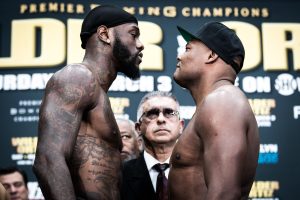


Twelve predictions for every page in a new calendar

By Norm Frauenheim-

Finally, a new calendar with all of the renewed optimism and good humor that goes with it. Twelve predictions, one for every month:

  • Opening bell for the New Year begins on Jan. 20 with an appropriate face. Errol Spence Jr. looks a lot like the future and he’ll provide an interesting preview on Showtime against Lamont Peterson at Barclays Center in a welterweight fight. Spence wins, impressively enough to ignite speculation about a bout with Keith Thurman and even Terence Crawford.
  • Roy Jones Jr. fights for what he says will be his farewell on Feb. 8 in hometown Pensacola. Six weeks later, he announces that he’ll fight one more time.
  • Deontay Wilder gets out-boxed early by Luis Ortiz. Ortiz tires late, drops his hands and gets knocked out by a Wilder right in the 10th. When Ortiz regains consciousness, he realizes he was leading on all three scorecards at the time of the stoppage.
  • Anthony Joshua blows away Joseph Parker in front of another UK soccer-like crowd. Talks for a heavyweight showdown between Joshua and Wilder begin, but stall. Wilder wants a 50-50 split. Joshua demands 60-40. Joshua agrees to fight Tyson Fury instead.
  • Oscar Valdez Jr., gets knocked down by Scott Quiqq on March 10 at StubHub Center, gets up and scores a late-round TKO in another crowd-pleaser from the Mexican featherweight, who gives fans more drama and trainer Manny Robles another gray hair.
  • A Russian tests positive.
  • Adrien Broner gets arrested.
  • Canelo Alvarez shows he doesn’t forget. He learned a lot from his 2013 loss to Floyd Mayweather Jr. He proves he’s still a good student, learning from his 2017 draw with Gennady Golovkin. This time, Canelo scores a unanimous decision over GGG.
  • After Mikey Garcia wins in a dominant performance over Sergey Lipinets on Feb. 10 in San Antonio for a 140-pound title, he goes back to 135 for a stoppage of skilled Jorge Linares. But a much-talked-about showdown with Vasyl Lomachenko looks to be as far away as ever, mostly because Top Rank is still angry with their former client. Top Rank decides to let the Lomachenko-Garcia possibility marinate for another year.
  • A restless Andre Ward decides to attempt a comeback. He is tempted by heavyweight wages. In a test run at cruiser (200 pounds), however, the 6-foot-1 former light-heavyweight champ learns he’s just too small for a division topped by the 6-6 Joshua and 6-7 Wilder. Srisaket Sor Rungvisai, who dethroned Roman Gonzalez in 2017, agrees to a 118-pound bout with Naoya Inoue, known as The Monster in Japan. In the history of the forgotten little guys, the fight ranks among the best ever. At the end of 2018, it’s also a leading contender for Fight of the Year.
  • UFC President Dana White continues to make inroads into boxing. All the while, his relationship with Bob Arum heats up and boils over into an entertaining exchange of one-liners and insults. It’s the best promotional rivalry since Arum-Don King throughout the 1980s and into the 1990s when the business was wildly successful


Mosaic of 2017’s most ambivalent fight, part 2

By Bart Barry-

Editor’s note: For part 1, please click here.

*

What a younger Roman “Chocolatito” Gonzalez might’ve done with a smaller version of Wisaksil “Srisaket Sor Rungvisai” Wangek, would’ve done, one writes with near certainty, is whack him low, block his early shots then begin spinning him dizzy, making him miss then pivotwalking him into whatever Chocolatito wished throw his way from whatever angle Chocolatito wished throw it, and after Sor Rungvisai collapsed from concussion and exhaustion Chocolatito’d’ve helped him off the canvas onto his stool.

A lesson Santa Monica teaches on a Sunday morning, festive and bright, and a Sunday evening, dark and unfriendlier and a touch despairing, is the atmosphere of a place – its energy or mood or spirit or vibrations or aura or nature or God or light or luck, synonyms likely all – colors reflexively its every inhabitant, no matter how decisively he draws his state of mind and emotion from within: The palpable sense of forward-regret I’ve felt every Sunday evening since grammar school, I realized on Santa Monica Pier, is not mine but a reflection of everyone else’s.

Sor Rungvisai showed no regard whatever for Chocolatito in round 1 and instead trusted the physics of championship prizefighting.

Doug Fischer happened over to say hello sometime during the undercard, and his headwear and demeanor reminded me of Digital Underground’s Shock G, and I told him so (and he replied immediately with a quip about StubHub Center’s generous tailgaters turning him into Humpty Hump) because I knew he’d get the reference and moreso because I was so happy to see him because Doug is one of the most genuine and decent men I’ve met anywhere, and seeing him ringside immediately returns me everytime to 2004 and my Max Boxing subscription and watching Doug and Steve Kim’s weekly show, wondering what it might be like to cover boxing.

For reasons of character (orgullo y ambición) and culture and luck Chocolatito hadn’t a choice but to fight often and ascend weightclasses steadily, and such an ascent, when done honestly, sans handicapping and cherrypicking, brings an inevitable reckoning with physics (their fists be larger than your chin) or time (you haven’t the proper reflexes anymore for hair’s breadth escapes) or both (damn it! this hurts and there’s nothing I can do about it), and while there’s a good chance such a reckoning was exactly what Chocolatito sought there’s also a chance Chocolatito did not quite believe such a reckoning possible.

My September, weighted by legal woes, caused me to keep a halfhourly tally of my thoughts and emotions (thoughts caused, as ever, by emotions), a tally that made me acutely aware of the Santa Monica Pier’s benevolent effect on what vigilance I applied the task of equanimity towards a situation that anyway resolved itself amicably by October.

There’s no such thing as a wholly objective scorecard unless its scorekeeper keeps his eyes ever fixed on the middle plane between the fighters, diverting his gaze to one fighter or the other only when following a punch that pierces that plane, which no scorekeeper does, but years of thinking about such a feat at least led me to an improved awareness of what fighter I favor by watching, and that fighter has been Chocolatito in every minute of his every fight (right up until Sor Rungvisai’s absurd victory somersault after Chocolatito was razed).

Sitting one row in front of me and kind enough to turn and introduce himself was the young and talented writer Sean Nam, and when our fun and winding conversation wound its way to his friend and mentor, Carlos Acevedo, I was pleased to hear myself saying something like this: In the hierarchy of this boxing-writing thing, there is Carlos and everyone else, and the distance between Carlos and everyone else is not small, which is another way of saying: While there are plenty of boxing writers whose work I admire, Carlos’ is the only writing I consistently read and think “I don’t believe I could do this”.

Once he regained his consciousness then his feet Chocolatito wanted to leave the StubHub Center’s ring rapidly as possible but the WBC, whose superflyweight title Sor Rungvisai took from Chocolatito in March and emphatically did not return in September, had to bestow on Chocolatito a finisher medal of some sort, a runner-up trophy for a twoman contest, and Chocolatito wanted no part of it, hanging the souvenir round his knuckles not his neck as he snapped through the ropes and the hell out of the ring.

As early Saturday afternoon included a trip to architect Frank Gehry’s Walt Disney Concert Hall (a familiar to his historic Guggenheim design in Bilbao, Spain, though in stainless steel skin, not titanium) and brunch at the fabulous Redbird, and Sunday afternoon included a trip to The Getty, whose grounds were far greater than their collection, it was not lost on me how much more time I spent on Santa Monica’s gaudy pier than among works of artistic or architectural grandeur, which marks either an inversion of maturity or its transcendence.

The atmosphere at ringside was subdued unto funereal after the main event, as nearly no one traveled from Thailand to see Sor Rungvisai, and the partisan-Nicaraguan crowd that filled the StubHub bowl was already mourning its experience collectively, which made it easy to miss the scale of Sor Rungvisai’s achievement, which later made end-of-year recollections like Jimmy Tobin’s so insightful and satisfying to read.

There was a time I thought often about experience and legacy and decorated a small office with ringside credentials and submitted my work to annual writing contests, but changing life conditions did away with all that three or four years ago, and a halfdozen annual boxing trips, too, and now I realize I was wrong to do away with the boxing trips.

Bart Barry can be reached via Twitter @bartbarry
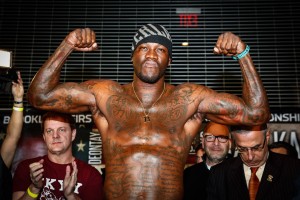


The Regicide: On Srisaket Sor Rungvisai

By Jimmy Tobin-

He was the opponent that night in March, if not quite in the derogatory sense, where matchmaking calculus eliminates a fighter’s prospects in advance, then at least in terms of billing. He was supposed to fall, by knockout ideally, to play his role in a narrative no less true for it being dressed in the bombast of a network’s company men. But he left the ring a champion.

When super flyweight Srisaket Sor Rungvisai won a majority decision over Roman Gonzalez at Madison Square Garden he did more than play an earnest part in a fight near perfect in its brutality. More? Remarkably, yes, though we should stay there with the sweat, the blood, the attrition for a minute, no?

Unlike any number of Gonzalez’ previous opponents, who found themselves trapped in the line of fire against the finest offensive fighter in the sport, Rungvisai stood irreverently at arms reach. Bolstered by a size advantage that thwarted Gonzalez time and again, and what seemed a fortifying concoction of ignorance and disregard for the man before him, Sor Rungvisai welcomed the fight Gonzalez promised like no opponent has. He brought foul after disruptive foul, drawing first blood via a headbutt and doggedly persisting in his rough work until the seemingly unflappable Gonzalez looked tellingly to the referee for order.

And we should thank him for his belligerence. Because what he demanded of Gonzalez that night was nothing short of self-immolation. And Gonzalez responded. To watch “Chocolatito” in those championship rounds, drained of his blood from headbutts, his zest leaking out with it, chopping his blade dull against a man he could not fell, was to witness the type of performance only great fighters can manage—and even then only once or twice. Sor Rungvisai’s appreciation for that assault, his finding even some joy in all that leather, was awe-inspiring. Gonzalez was his greatest that March night; Sor Rungvisai was the reason he had to be.

Not to be lost in the debate about who deserved to win is the reality that Sor Rungvisai fought a great fighter on near even terms, and that barring some absurd veneration of the undefeated record, what the fighters produced that night trumped easily any assessment of that action by the judges. We do not watch (and rewatch) fights simply to see who wins—we watch to marvel at the journey to that result. The outcome is always secondary to the violence that produced it.

He was the opponent that night in September too, if only until the man he defeated six months prior began his ring walk wearing an uncharacteristically grim visage; until the thirteenth round between them started with the irreverence of the first, and the sixteenth ended unforgettably.

When Srisaket Sor Rungvisai augered Roman Gonzalez into the canvas in the fourth round of their rematch at StubHub Center in Carson, California, he ratified not only his career but that too of Gonzalez, who ended up where his ambition would inevitably lead him—at a point absent of questions either unasked or unanswered. What more could be asked of Sor Rungvisai, for that matter? Come September, the sabers that rattled in protest of the decision in March were as silent as Gonzalez on the canvas. Sor Rungvisai was twice the underdog against Gonzalez and twice emerged with victories. Surely fighters have bucked the odds this way before, but how many of them did so against a fighter like Gonzalez? Were the two to fight again, Sor Rungvisai would be the clear favorite—and the reasons for those odds are why Gonzalez is unlikely to ever consummate the trilogy.

HBO was validated that night as well, if not in the way they intended. And they took note too. In a span of eleven months, Sor Rungvisai will go from twice facing Gonzalez to fighting Juan Francisco Estrada, who, until this year, had given Gonzalez his sternest test, with all three fights televised by HBO.

For too long the pattern has been in place: fighter X is maneuvered by various means into HBO’s interest, he wins a showcase fight or two on the network, is dramatized into a protagonist, and then matched according to the outcome of a script, one that mostly preserves his image lest HBO itself encourage the idea that anything but the best be invited on its airwaves. But that pattern never manifested with Gonzalez, and that is, in part, because what Gonzalez found in Sor Rungvisai was not an opponent, but a nemesis. Which is why it feels near impossible to write about Sor Rungvisai without not only referencing but praising, Gonzalez, ensuring that Sor Rungvisai will forever receive his due. The intimacy of their fights is reflected in how inextricably they are linked: it was Sor Rungvisai that showed Gonzalez where his ambition left his ability behind, and Gonzalez who demanded Sor Rungvisai’s arrival on the world stage be something remarkable. Remarkable, it was.

It is awards season in our sport, an undertaking that often seems more about those who bestow such honors than those who (in most cases, unknowingly) receive them. Admittedly, such a curation extends beyond the interest of this column, which is guilty of consuming rather selfishly (and only conveniently) what violent fare the sport may offer and forgetting much of it soon thereafter. But the year Sor Rungvisai had casts a shadow over the entire sport, it looms as the year’s benchmark for achievement, and more importantly, as a reason to keep watching. So gift him whatever awards you like, if only as a token of appreciation that falls so very short of what he gave us.


Happy New Year? Four reasons to hope for one

By Norm Frauenheim-

A promising year ends, but the promise will go as stale as cheap champagne if fights we talked about in 2017 don’t happen in 2018.

Here are just four on a wish list that will make the New Year one to celebrate or just another one to forget:

Terence Crawford versus Keith Thurman, or Errol Spence, or Shawn Porter, or Kell Brook.

Crawford, the vote here for the Boxing Writers Association Fighter of the Year, jumps from 140 to welterweight in the most intriguing move in a New Year.

After a likely shakedown cruise in his division debut against Australian Jeff Horn, Crawford becomes a threat to anybody at the top of the division.

Guess here: He’s better than anybody at 147 right now. That’s also a reason to be cautious about whether any welterweight fight on this wish list actually happens. Thurman, Porter and perhaps Brook will find ways to avoid the feared Crawford. The biggest bout at welterweight in a long time looks to be Crawford-Spence, but Spence, 27, appears to be a year from his prime. Check back 12 months from now. Crawford-Spence might at the top of the wish list for 2019.

Vasiliy Lomachenko versus Mikey Garcia

I keep hearing all of the reasons why this fight won’t happen. Please, if it doesn’t, it is just a further condemnation of a business still ruled more by ego and grudges than good sense.

Top Rank continues to express resistance to the fight, presumably because it is still angry at the way Garcia left the game’s promotional giant. But the good news – and Garcia’s best friend in all of this – is Lomachenko himself.

Throughout last year, Lomachenko has never backed away from his desire to fight Garcia. Invariably and repeatedly, the fight the forthright Ukrainian says he most wants is Garcia. In an ongoing effort to win over boxing’s key demographic, Lomachenko understands he needs to fight the Mexican-American.

But there’s something else, too. It’s also a fight that has been in the forefront of the public imagination for at least a year. It matches Lomachenko’s many-angled creativity against Garcia’s fundamental efficiency. Make the fight, please.

Anthony Joshua versus Deontay Wilder

If the heavyweight division comes back, it’s a sure sign that the business is back and healthy.

In one corner of the world, heavyweight boxing is rock concert-like show. Joshua and his dramatic victory over Wladimir Klitschko played out before 90,000 at Wembley Stadium in London last April. Can the UK enthusiasm go global? Yeah, it could with Joshua against American Deontay Wilder.

Pieces for Wilder-Joshua later in 2018 are falling into place with talks for Joshua-versus-Joseph Parker and Wilder-versus-Luis Ortiz, both in March. A reason for caution, however, lurks in Wilder-Ortiz. It could undo any chance at Joshua-Wilder.

The clever Ortiz is a threat to Wilder’s unbeaten record in a dangerous fight. Then again, they’re all dangerous for Wilder, who has flaws in his fundamental skillset. Yet, Wilder’s big right hand and overall athleticism are an equalizer that is as powerful as it is unpredictable. Entertaining, too.

Gennady Golovkin versus Canelo Alvarez

The rematch has to happen, right? It ended in a draw in May. It was controversial in some corners. Mostly, it was an unsatisfying end to a bout that had been preceded by a drumbeat of hype that promised definitive drama.

Maybe, there was drama. But there was nothing definitive about it. For Canelo, a rematch is another opportunity to correct mistakes from an uneven performance, one booed by many of his Mexican fans.

For GGG, it’s a chance at delivering some proof. He was angry after the scores to the May draw were announced. He said he won. In a rematch, he can do exactly that.

A reason for caution is that a deal has yet to be done. Neither middleweight has anywhere else to go. GGG and Canelo have unfinished business. Finish it in 2018, or the public just might be finished with them.


Mosaic of 2017’s most ambivalent fight, part 1

By Bart Barry-

We were in Carson, Calif., to celebrate Roman “Chocolatito” Gonzalez for the joy he brought us through a spectacular career predictably obscured in the United States by his tiny stature while properly celebrated in his homeland of Nicaragua, homeland of Alexis Arguello.

Santa Monica is not like Los Angeles, though it is such a joyful place, with its gaudy pier and mix of wealth and homelessness, so unlike my decades’ old and enduring dislike of Los Angeles, it made me reconsider entirely my thoughts of Los Angeles as shallow and stubborn, sunken in envy or frugality or unseemly selfseriousness.

Wisaksil “Srisaket Sor Rungvisai” Wangek, the Thai superfly imposter who stole Chocolatito’s belt in March after prepping for his match with the world’s greatest prizefighter by whupping three consecutive debutants in the second half of 2016, rounding off gently a year of five tussles with opponents whose aggregate record, 15-24 (9 KOs, 19 KOs-by), hardly fitted him for confrontation with Gonzalez (46-0, 38 KOs), actually was no imposter at all and actually didn’t steal from Gonzalez in March but rather took.

Access to prizefights remains this job’s only compensation, which makes 2016’s tack of writing a weekly column and getting credentialed for no fights simply daft, and if the end of 2017 doesn’t see a proper remedy or resolution to make 2018 better still, it reminds this much: There be no better form of compensation for writing about boxing than access to boxing and no better way to rekindle interest either.

Chocolatito got butted oftenly by Sor Rungvisai in their first match and complained about it, too, uncharacteristically, and some of us incorrectly saw it as an abiding fixation on sportsmanship, while more of us saw his complaining as tactical, and only a few of us – including, obviously, Sor Rungvisai – saw it correctly for what it was: an anxious concession to fragility.

It’s not often I converse the duration of a threehour flight with a rowmate but September’s mate was deeply attractive and comfortable, and she said something about Santa Monica reminiscent of something similar a rowmate said on a Peruvian train bound for Ollantaytambo in August: “The best places in the world to visit have a hippie-ish vibe.”

The Friday weighin was too far from LAX to justify what plane-to-gate-to-shuttle-to-rentalcar-to-freeway-to-brakelights stuttershuffle it required of someone flying from Texas on a latemorning fare, and a recollection of that selfsame stuttershuffle unrewardingly performed for Vazquez-Marquez 3’s weighin, nine years before, kept me from eyewitnessing Gonzalez’s unblinkered staredown with the unblinking Sor Rungvisai.

There’s another compensation for this job, come to think of it – the appreciation of one’s peers.

The ugliness and downtime of 2016, with its plethora of PBC matches worse than mere downtime (as Samuel Johnson once said of sailing, “being in a ship is being in a jail, with the chance of being drowned”, so were PBC broadcasts like downtime with a chance of feeling guilty for not watching), afforded, however, a chance to revisit and visit happily dozens of Chocolatito matches that didn’t happen on American airwaves but entertained beautifully on YouTube uploads from Managua, while writing howsoever many parts of an unplanned “Chocolatito City” series whose title borrowed gratefully if inexplicably from Big Daddy Kane’s 1993 medley (which itself borrows a punchline from Muhammad Ali, the man on whom Kane modeled his career).

I remember most fondly about the logistics of September’s trip upgrading my rental to a ridiculous Dodge Challenger, obnoxious American muscle made in the climactic throes of obnoxious American muscle, a car whose Sport mode made the car seemingly no quicker – as any quicker than default mode mightn’t be street legal – but significantly louder, and driving that car, with its surprisingly excellent handling and shockingly good fuel efficiency, all the way from Carson to Malibu to see the sunrise at El Matador State Beach, still marks the wisest thing I’ve yet done on a fight morning, in 12 years of trying.

We were there to see Chocolatito avenge his record’s first blemish, yes, but we were also there for the opportunity of it, if we were honest: it would be wondrous to be ringside for a great card that culminated with a prime Chocolatito wrecking the Thai interloper Sor Rungvisai, but it would be more essential still to be present for a reduced Chocolatito’s mainevent finale in the United States on HBO.

Cliff Rold, a writer I’d not met but whose knowledge I admire, happened over during the undercard and we affirmed for each other our belief Chocolatito’d prevail while addressing the possibility that if we were sure he’d prevail both of us mightn’t’ve made the trip crosscountry to see it – “I hope I’m wrong,” I think I said about the possibility of Sor Rungvisai simply having Chocolatito’s number, “but if I were sure I’m wrong, I’d probably not be here.”

Chocolatito, the gorgeous dervish who enchanted aficionados with his style and craft, a volume puncher with power, a boxer whose defense was his activity and footwork, carried his balance and power upwards to 112 pounds from 104 1/2, what he weighed the day before winning his first title at minimumweight, with what ease and grace only genius reliably shows.

So pleasant and layered were the sensations of Santa Monica I began googling from the pier “hippiest places in each state” and found, in a happy accident, Texas’ consensus choice is San Marcos, not Austin, both nearer San Antonio and more accessible.

What happened in Sor Rungvisai-Gonzalez 2, instantly, as I remember it, was Sor Rungvisai’s every punch moving Chocolatito, especially the ones Chocolatito blocked – the universal sign of a physical mismatch regardless of what the Friday weighin scale opined.

What I didn’t know when I began covering matches from ringside, when I foolishly interpreted my pressrow position as a commentary on my merits as a writer, when I thought credentialing reflected something different from clickcounts or a seat in auxiliary meant you were inadequate as a craftsman, I know now: Enjoy any seat removed from a power outlet – you experience the same fights without the artificial stress of a deadline.

Bart Barry can be reached via Twitter @bartbarry
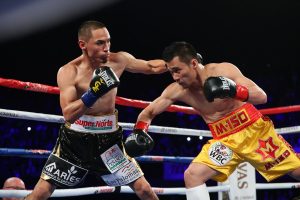


Forget The Rest: 2017 will be remembered for Joshua-Klitschko

By Norm Fruenheim-

It’s been a year full of lots of things.

Full of it, perhaps, if 2017 will be remembered for the spectacle-over-substance display of Floyd Mayweather Jr. entering the ring in a bandit’s mask for his money grab against Conor McGregor.

That single, most-watched event over the last 12 months was embarrassing for the obscene hype it generated and the gullibility it exposed in the four-plus million pay-per-view customers who paid for the show.

The guess here is that it will be forgotten and never be repeated, although the latter might be hoping for too much.

If it wasn’t exactly a great year, it was a promising one because of Terence Crawford, Vasiliy Lomachenko, Mikey Garcia, Errol Spence, Gennady Golovkin, Canelo Alvarez and the ongoing move away from the pay-per-view business model.

The promise was played out in one terrific fight — Anthony Joshua climbing off the deck for an 11th-round stoppage of Wladimir Klitschko on April 29 in London. It’s Fight of the Year, of course.

There are other nominees, but none are contenders in a 2017 that will forever be known for a fight significant on so many levels.

There was the crowd at London’s Wembley Stadium — 90,000, boxing’s biggest since World War II. It was a classic between heavyweights, a division that had begun to look as old as the newsreel footage of WW II battles.

But there it was, all over again and available on live stream, with the kind of drama that plays well in any era. It was timeless. Klitschko gets up from a fifth-round knockdown. Joshua gets up in the sixth, clearly hurt and yet survives. Klitschko is down again, twice in he eleventh and back on his feet after both before a succession of Joshua punches forces a stoppage.

It was a classic reminder of how good the heavyweights have been and can still be. As we await 2018’s opening bell, there is relevance and some of the aforementioned promise in all of that. Decades and a piece of Evander Holyfield’s ear have come and gone since anybody talked about the heavyweights.

But on the list of fights that fans want to see, Joshua-versus-American Deontay Wilder is right there, alongside Garcia-Lomachenko, a Golovkin-Canelo rematch and Crawford against any of the top-ranked welterweights.

Will it happen? Hard to say. At the negotiating table, Joshua’s popularity among UK fans is as powerful as Canelo’s ability to draw Mexican fans.

A sure sign of that came in a follow-up. In October, a crowd of 78,000 showed up in Cardiff, Wales, for Joshua’s victory over Carlos Takam, who had none of Klitschko’s name recognition.

Joshua has yet to create much of a following in the U.S. If an overrated Ricky Hatton proved anything, however, it’s that UK fans travel. In New York or Las Vegas, he’d be the crowd favorite against Wilder.

First, however, it looks as if a couple of things have to happen. There are ongoing negotiations for Joshua to fight Joseph Parker of New Zealand, perhaps in March. There are also talks for Wilder to finally face Cuban Luis Ortiz, also in March.

Of the two, Wilder faces the biggest danger. The clever Ortiz has enough skill to beat Wilder. It depends on which Ortiz shows up. Wilder’s fundamental skillset has always been questioned. But he has always won, mostly with a right as good as any in many years.

If Wilder’s right hand instead of Klitschko’s had knocked down Joshua in April, the guess here is that the Wembley fight would have ended then and there.

But it has to land, and there’s a question about whether Wilder can do that against Joshua, a 2012 Olympic gold medalist. It’s also a question that includes wilder’s right-handed power, a so-called equalizer as unpredictable as it is dynamic.

As a New Year begins, it’s a talking point, a reason for optimism that wouldn’t be there if not for Joshua-Klitschko, Fight of the Year and the best heavyweight fight in at least a generation.