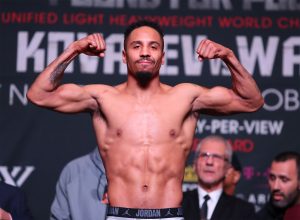
Ward-Kovalev2: Kovalev lets his black hat do all the talking

By Norm Frauenheim-

LAS VEGAS – There’s not much left to say, so Sergey Kovalev probably said it best by not saying much at all.

One word across the front of Kovalev’s cap might have summed it up best Thursday at a contentious news conference when promoters, managers and trainers exchanged insults the way Floyd Mayweather Jr. and Conor McGregor will for the next couple of months. More on them later.

WAR in white letters stood out boldly on a Kovalev cap that, appropriately enough, was black. The Russian picked the right color for the role he has in his rematch Saturday against Andre Ward in an HBO pay-per-view bout at Mandalay Bay. He’s the bad guy, perhaps by choice or maybe because he remembered the red cap with the same word stitched in gold that Marvin Hagler wore for his legendary victory over Thomas Hearns more than 32 years ago.

Whatever the motivation, Kovalev declared his intent with silence both ominous and perhaps deadly. He skipped a session with a handful or reporters before the formal news conference. His promoter, Kathy Duva of Main Events, and his manager, Egis Klimas spoke for him.

“He is stressed out,’’ Klimas said. “…He came here to fight, not talk.’’

Duva said Kovalev was like a tiger, pacing back and forth up in his hotel room. Klimas said Kovalev had grown restless at endless rounds of interviews conducted in English instead of his native Russian. It’s also no secret that he just doesn’t like Ward or anybody else around the light-heavyweight champion who took his titles in a hugely controversial decision last November. The tension between the two is evident and it adds an intriguing element to a rivalry as genuine as it unappreciated.

Kovalev appears to dislike Ward so much that he doesn’t even want to be in the same room with him for long. At least, the Russian didn’t hang around Thursday. He showed up for the news conference with a scowl that seemed to say that the message on his cap was dangerously real.

When it was his turn to speak, he thanked his promoters and Mandalay Bay. Then, he looked to his right and at Ward, who was appropriately dressed in good-guy white.

“I’ve already said enough,’’ Kovalev said as he then pointed at Ward. “And, you, be prepared.’’

Ward didn’t like what he heard. Or saw. His rhetorical counter was immediate.

“Don’t point your finger at me,’’ said Ward, who showed up for his session with reporters before the news conference.

Kovalev turned his back on him, walked off the stage and out of a room adjacent to the Mandalay Bay Events Center, site for Saturday night’s fight.
What happened next was predictable. The news conference turned into a Kovalev roast.

Kovalev calls himself Krusher. Ward manager James Prince had fun with that.

“Usher,’’ Prince said.

Prince also suggested Kovalev was rude.

“I don’t know how they act in Russia, but we don’t act that way in the USA,” he said.

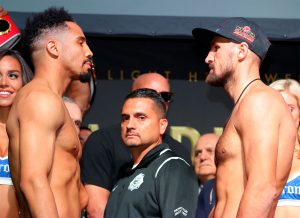
Without Kovalev at the end of the news conference, there was no ritual, nose-to-nose pose for the cameras. With the mounting tension, you can only wonder what might happen when the two are asked to face each other in a pose for the photographers after Friday’s weigh-in.

The bumpy news conference was just another chapter in in the overall tension between the Ward and Kovalev camps. Duva and Klimas say that Kovalev has been doing the lion’s share of promotional work.

“On this, Sergey does not think Ward is doing enough,’’ Klimas said. “Ward has a sugar daddy who pays him $7 million for this fight. Sergey is earning every single penny. He is promoting this fight as much as he can.’’

But Roc Nation, Ward’s promoter, argues that Main Events hasn’t done its share.

“I find it is odd that they comment about it,’’ Roc Nation’s Michael Yormark said. “They haven’t done anything to promote this fight.’’

The build-up this week for the rematch has also been lost amid all of the hype over the announcement Wednesday that Mayweather will fight Conor McGregor, a UFC star, in a Nevada-sanctioned boxing match on August 26 at Las Vegas’ T-Mobile Arena in a Showtime PPV spectacle.

“It is also a kick in the teeth, at least to me personally, in terms of the circus they announced yesterday. That’s been on the front page of
everything. That’s a little discouraging.’’

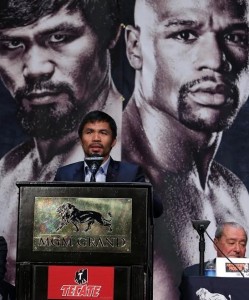
Meanwhile, Yormark opened the news conference by saying that Kovalev-Ward is “not the money-grabbing spectacle that will play out later this year.’’

No, it’s not. Ward-Kovalev 2 includes heightening tension and mounting stakes. It’s real as a fight can be. About that – and perhaps only that, there’s no disagreement.


Ward-Kovalev 2: Less interesting this time round

By Bart Barry-

Saturday brings a rematch of 2016’s most-anticipated match, Andre Ward versus Sergey Kovalev, in Las Vegas, on HBO pay-per-view, and it may be 2017’s most-anticipated rematch, but that’s the most to be said for it. Good as the first fight was it ended in a way that anticipates a predictable result the next time, no matter how many mean sentences the combatants now speak about one another.

As this fight nears interest dwindles. There are various reasons for this – neither guy is particularly likable or charismatic hence neither guy’s vindication feels particularly relevant to any of us – but that’s nothing good promotion should be unable to surmount. Except nothing like good promotion is anywhere near this fight, is it? The HBO “24/7” franchise is hollowed-out from exhaustion; the idea turned 10 years-old a few months ago, making it a three-year idea stretched to thrice its proper duration, and now it sputters leglessly along with cameos from a branding executive and a lawyer and whatever media still shows up for kickoff press conferences.

Remember when folks thought Jay-Z’s Roc Nation would change boxing because Jay-Z was a hustler and boxing had never seen one of those before? Whatever ingredients make a great promotional outfit Roc Nation has none of them.

Here’s Saturday’s promotion thus far:

Ward thinks Ward won. Kovalev thinks Kovalev won. HBO’s unofficial scorer thinks Kovalev won. HBO’s onair hypeman thinks Ward won or maybe Kovalev did but it really doesn’t matter because whoever won is a great fighter which means it really matters a lot or not at all or a whole lot!

By the fifth minute of the first HBO infomercial I started trying to remember who I thought won the first fight and arrived at the conclusion I cared deeply about the match in its first four rounds, when someone might be knocked unconscious, and substantially less with each round that followed. I vaguely recall surprise Harold Lederman’s scorecard was not tilted to Ward and vaguely recall not-disagreeing with it, which makes me think I thought Kovalev won, but that’s no reason to feel enthusiasm for this rematch. More telling: I traveled to Oakland years ago to watch Ward fight Chad Dawson but haven’t seriously considered attendance at either of his fights with Kovalev. This looks like evidence one can disembark the Ward bandwagon without he becomes a Kovalev fan – which I kind of imagine I was, too, a couple years back.

Ward is tired of Kovalev’s smiling-psychopath schtick, and evidently so am I (though I didn’t realize it till the moment I wrote it). It’s a generational thing. I was in highschool when the Cold War ended and in college when it became apparent the Soviet Union had rotted from within way back when I was in grammar school, hence Perestroika, and therefore a pivot to Japan as our new bogeyman was just the thing – business as an another form of warfare, etc. What was obvious to hockey fans even before Glasnost – Soviet athletes were disciplined and conditioned and creative but in no way evil – became increasingly obvious to the rest of my generation, even while our parents remained fixated on Russian nukes and domino theories and satellite states and the like.

Sergey Kovalev’s handlers have capitalized on Americans’ abiding suspicions of Russian malice, and a weak era in boxing history generally, to make of Kovalev a mythical creature many times more malevolent and less crafty than he actually is. According to HBO’s intrepid reporting, though, Satan got fatigued after round 5 of his November match in large part because a biased referee was letting Satan get held and clenched before biased judges stole Satan’s belts and . . . well, they don’t make evil quite like they used to.

Kovalev assures us he will end Ward’s career Saturday, Ward claims there’s nothing frightening about Kovalev, and reality is leaning Wardwards. Kovalev’s best chance of beating Ward happened 10 rounds ago, and every moment since then, to include the rest of their match and the months that preceded their rematch’s signing and their trainingcamps, has made a Kovalev victory less probable. Ward solved Kovalev, and if he didn’t deserve the decision in their first fight he would have had he not been dropped by a threequarter cross, and he won’t be dropped by that punch Saturday. If Kovalev intends to beat Ward he will have to make a messy attrition of it. There’s a good chance Kovalev doesn’t have the constitution or technique for that. More to the point: Kovalev’s promotion of this match is that he will visit an atrocity upon Ward and Ward knows it and fears it, and you can’t talk like that and then pout if judges don’t give you a decision again.

Ward’s wager is on Kovalev’s emotional fragility – the Russian is a frontrunner who folds when things start to feel unjust. Ward likely will begin the fight at distance, a touch disengaged, looking to run Kovalev into an accidental headbutt or two, while exaggeratedly endeavoring to steal rounds in their final 30 seconds. If this drives Kovalev to a paralytic froth of rage Ward will look to stop him in the championship rounds, otherwise Ward will continue adapting and hitting Kovalev’s body in clinches till Kovalev has another inexplicable onset of midfight fatigue. Other scenarios are possible but don’t feel probable.

I’ll take Ward, UD-12, more decisively this time.

Bart Barry can be reached via Twitter @bartbarry


Ward-Kovalev: Lots to like in a sequel between fighters who dislike each other

By Norm Frauenheim–

One is portrayed as scary and angry, yet Sergey Kovalev has a keen sense of humor with an engaging ability to deliver one-liners as though they were jabs.

The other is seen as stubborn and aloof, yet Andre Ward talks about home, controversy and maturity like a philosopher willing and ready to adjust his thoughts as though they were tactics.

Contradictions abound in a rivalry as fascinating as it is unappreciated. There is mutual respect for the dangerous skills that each possesses. There is mutual contempt for what one thinks he has heard and seen from the other.

All of that and so much more were abundantly evident in back-to-back conference calls this week, first with Kovalev on Tuesday and then Ward on Wednesday in the buildup for their light-heavyweight rematch on June 17 at Las Vegas’ Mandalay Bay.

They are picking up where they left off after Ward’s victory over Kovalev in November. The decision was unanimous in name only. It angered Kovalev.

Yet in one of the surprising twists to the rivalry, it also won the Russian some fans he might not have had if not for the outrage expressed by so many after scores — 115-113 on all three cards — were announced.

Mention Russia in the United States these days and a lot of people think collusion. Mention Kovalev and lot of people think People’s Champ.

“Even in America, boxing fans of Ward text me by Facebook, by Instagram, by social media that I won the fight,’’ Kovalev (31-1, 26 KOs) said Tuesday during a call when he cracked wise, saying Adonis Stevenson fights only Uber drivers and other guys he can beat. “They right now are going to support me in (the) next fight.’’

In the immediate wake of the November bout at Vegas T-Mobile Arena, social media became a noisy megaphone for those fans who thought the judges had colluded. It was surprising, even suspicious enough to wonder if both fighters got robbed.

Only 160,000 were reported to have bought HBO’s pay-per-view telecast. But the social-media reaction was huge, seemingly much bigger than the PPV number. It was as if everybody had watched. In a hackers’ world, there are many ways not to pay anymore. But that’s a story for another day, perhaps the day when HBO’s PVV results for the June 17 rematch are reported.

For now, the lingering outrage from November’s bout is a source of motivation for Ward, who might find himself in a curious position before opening bell next week. Ward is the last American to win an Olympic gold medal —at the 2004 Athens Games. Yet, he might not be the fans’ favorite in his home country in the rematch because of controversial scorecards in the first one.

“I enjoyed my victory just like I would any other victory,’’ said Ward, whose unbeaten record (31-0, 15 KOs) matches the playoff mark of his hometown Golden State Warriors as they go into Friday’s Game 4 of the NBA Finals against Cleveland. “People have to understand that anytime there’s a close decision, you’re going to have opinions either way. I’ve never refuted the fact that it was a close decision. But all those out there that say that it’s some home cooking, they’ve got to remember that I’m not, you know, from Las Vegas, Nevada.

“You can’t just highlight that side of it. You got to highlight the people that also felt I deserved the victory and (that it) was a tremendous comeback. It doesn’t take a close decision to get criticism. I’ve shut guys out for 12 rounds and got criticism. So you become immune to it after a certain period of time.’’

Philosophical about it, too


Star In The Making: Teofimo Lopez Shines Since Turning Pro

By Kyle Kinder-

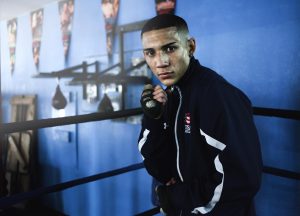
Four bouts prior to Terence Crawford’s thorough dissection of Felix Diaz on May 20th, Teofimo Lopez III performed a celebratory backflip inside the boxing ring at Madison Square Garden. His opponent that night, Ronald Rivas, lay ten feet his opposite, flat on his back, staring up at the rafters atop the “World’s Most Famous Arena.” It was Lopez’s fifth professional fight. His fifth victory. His fifth knockout.

For a 19 year old kid born just a few subway stops from Broadway, in Brooklyn, there
could be no bigger thrill. But the very sport that provided that stage hasn’t always been kind to the Top Rank prospect, who since the age of five has called Davie, FL home.

While preparing to compete at the US Olympic trials in Reno, NV, in an attempt to
qualify for the 2016 Rio games, Lopez received some unexpected news.

“USA boxing actually called me about two or three weeks prior to the Olympic trials,” Lopez, said. “They let me know that [Carlos] Balderas got the spot [at lightweight].”

Lopez, who is trained by his father, Teofimo Lopez, Jr., continued, “I got off the phone with Mike Martino (executive director of USA Boxing) and Matthew Johnson (director of high performance at USA Boxing) and they told me that Balderas qualified and earned an Olympic berth for the 2016 games and that there was nothing they could do.”

Shortly before Olympic trials, Balderas participated in the World Series of Boxing (WSB), a lengthy international competition run by the International Boxing Association (AIBA). AIBA, the governing body that oversees international amateur boxing, including the Olympics, awarded Balderas an Olympic slot based on his fourth place WSB finish. In doing so, Balderas became the first US boxer to qualify for the 2016 summer Olympics and the first in US history to qualify via this roundabout route. AIBA’s decision handcuffed all other American lightweight hopefuls.

Reflecting on that phone call with USA boxing, Lopez recalled, “I just felt like my soul…I was cold, I was dead.” Later adding, “All the hard work that you put in, they took it away.”

Determined to prove that he was the best American amateur at 132lbs., the 2015 National
Golden Gloves Champion and his father packed their bags and headed to Reno. When the tournament concluded, five days after it began, Lopez had accomplished what he set out to do: win the US Olympic Trials.

But because Balderas already occupied USA’s lightweight slot, Lopez sought and found an alternative route to Brazil, earning an opportunity to represent his parents’ birth country, Honduras.

Lopez’s dream of winning a gold medal was short-lived, however, when he found himself on the losing end of a controversial unanimous decision against France’s Sofiane Oumiha in the tournament’s opening round.

“I truly believe that I won that fight. All judges had it for my opponent,” Lopez said. “I don’t ever recall, and I had over 170 amateur fights, losing by unanimous decision. I felt that I would win that fight by split decision. I didn’t like the second round, but I felt that I still won the fight.”

Less than two months after the Olympics commenced, AIBA suspended all 36 judges and
referees that participated in the Rio games.

Eager to forego his amateur status and begin a new chapter in his pugilistic journey, Lopez linked up with manager David McWater of Split-T Management and signed a multiyear promotional contract with Top Rank in October 2016.

“Amateur style was never for me. I’ve always had a pro style since I was 13,” Lopez said. “I’m so happy, I’m so comfortable, there’s so much weight off my shoulders because I’m not an amateur fighter anymore.”

Lopez, who formerly sparred with the likes of Guillermo Rigondeaux and Shawn Porter, debuted last November on the Manny Pacquiao-Jesse Vargas undercard. In his first pro fight, the energetic Honduran-American sent Ishwar Siqueiros to the mat four times inside two rounds. The definitive blow came courtesy of a meaty left hook to the liver; a punch that forced Siqueiros to a knee, where he remained for a ten count and beyond.

Since then, Lopez has continued to mow down his opponents, stopping all four challengers inside the scheduled distance.

“I don’t look for the knockouts, they just come,” Lopez said. “With my placement, I break them down little by little and they feel it. Whether it’s a TKO or a knockout, it’s going to be a stoppage.”

When discussing what makes him so dangerous between the ropes, the energetic Brooklyn-born fighter said, “I’m accurate, I’m fast, I’m sharp, smart, defensive…I have the whole package, I have all the tools.”

And while he is not shy to tout his impressive skillset, Lopez is also aware that a fighter never knows all.

“I still have a lot more to learn, I’m only 19 years old and I’m just growing, getting older and maturing,” Lopez declared.

“I know I’m young, but I’m not dumb. I know at any moment a punch can change a
fight,” the former Golden Gloves champ said. He later added, “You’re going to get hit in this sport, but it’s about how you react when you do get it and how you adapt. A true champion can adapt to anything.”

Lopez is scheduled to be back in the ring on July 7 in Orlando, FL. No doubt his yet-to-be-determined opponent will be carefully selected by Top Rank’s veteran matchmakers, Brad Goodman and Bruce Trampler.
Well aware that as his career progresses, the level of fighting ability his opponents possess will steadily increase, Lopez is confident that he can be a chameleon inside the ring if necessary. He knows soon enough he’ll be pitted against a foe that presents stylistic obstacles that must be overcome in order earn to a victory.

“Styles make fights. If I have a sharp fighter in front of me I’m going to be sharp and you’ll see a whole different side of me,” Lopez said. “But every fighter is different and every fighter makes me different.”

So far, Lopez has dazzled in his first five fights, punching with purpose and delighting crowds with knockout victories. For a kid from Brooklyn, with an uncommon name, who’s had his ups and downs in the sport of boxing, it’s as good a start to a pro career as one could have hoped for.

“Teofimo Lopez is unique, nobody’s ever heard of that name,” Lopez remarked.

If there is any truth to that statement now — rest assured, if Lopez fulfills his fistic potential, it will only be a matter of time before that statement is rendered false.


Stevenson, Pascal, and Bullets Both Spare and Spent

By Jimmy Tobin-

There was an infomercial of sorts at the Bell Centre in Montreal, Quebec, Saturday night. In a rematch undesirable and undesired, Adonis Stevenson did away with Andrzej Fonfara in brutal fashion, requiring but twice the time a part-time construction worker needed one year ago. If ever you needed proof that Stevenson remains a bridge too far for Fonfara…ah, but you didn’t need such proof did you? Stevenson remains one of the best fighters in the division, your eyes can tell you that. Yet however successful, his has been a forgettable reign (which should sit just fine with a promoter who can keep Deontay Wilder belted).

If the broadcast was salvaged at all from relegation to the formality scrapheap (which is not to suggest it was) the co-main is to thank. There, Jean Pascal fought off yet again the creeping shadows of irrelevance in dropping a majority decision to Eleider Alvarez. True to form, Pascal left a little more of himself in the ring; and while what remains of him can barely be stretched effectively over three minutes let alone twelve rounds, it was enough to make a showboat, not a killer, of Alvarez. Pascal succeeded then, in making Alvarez look mediocre—which is audition enough for Alvarez to become the ninth successful defense of Stevenson’s title.

But a Stevenson hit piece this is not, at least not quite.

“Superman” made clear his intentions in 2015—after another two-hour infomercial—when an HBO microphone was put in his face with the expectation that he would utter a specific name and Stevenson swerved. Offer whatever apologies you wish, attribute blame wherever you like—that moment encapsulates Stevenson’s championship run, his conduct since then only reinforces the message, and no number of Fonfaras, Sukhotskys, and Karpencys, however savagely chilled, will convince people otherwise.

He is fighter enough to change all of that with a left hand on the right chin and to suggest he is anything less is to watch him with more than your eyes. The number of light heavyweights who can absorb Stevenson’s Sunday punch may not be exceeded by the number of fighters who can keep him from landing it. He knocked cold the only man to beat him, has gotten off the canvas to win, and responds to adversity as the fighter with greater firepower should, which means that Stevenson, if matched as a champion should be, will provide many a spectacle. He remains a nightmare proposition, but for the opponents that matter only ever a proposition.

That is something that cannot be said of Pascal. Nor was it ever really said of him, there being so few stretches in his career when he was not trying himself against men able to find him wanting. He faced another such opponent in Alvarez and watching Pascal lay on the ropes setting transparent traps, winging counter left hooks too slow to land, lunging with lead crosses carried on unsteady legs, provided the only compelling action on Saturday. Barring the lone scorecard meant to preserve him as a viable future opponent for Stevenson, Pascal’s efforts were more endearing than effective. That has been true for a few nights over his career, one that is marked more by high profile losses than victories.

It is easy to romanticize and recast aging fighters, to allow a more charitable view of them the more punishment they absorb; even the objectionable ones seem less so in their increasing absence. Pascal is as deserving as any of such a treatment, and should likely be treated to it the next time a younger, stronger man shortens his night. Yet that reimagining is unnecessary. There is almost always drama in a Pascal fight because he is an athlete above all else, which has resulted in a fighter who takes a goodly amount of punishment  and responds by trying to light up everyone in front of him. Nor do you get shorted on toughness with Pascal. Take a break from defending Kell Brook and revisit the night Pascal turned back a then-rampaging Adrian Diaconu while fighting nine rounds with a broken bone in his shoulder.

No, Pascal has never quite been elite, evidenced by his record against Bernard Hopkins and Sergey Kovalev (a meager 0-3-1 with two stoppage losses), but such are the consequences of flying too close to the sun. A sober appraisal of his time in the ring cannot be anything but complimentary, and of the two Haitian-Canadians on the broadcast Saturday, it is Pascal whose career is most endearing. It is also the one more difficult to replicate (an unfortunate reality considering that boxing would be better off for having dozens of Pascals). Again, this is not to romanticize his career, only to suggest to remember it accurately. Pascal has long suffered from mischaracterization.

Entertaining at something approaching the highest level, Pascal never shied from a challenge, never shied even, from a beating, and more and more those seem like fundamental criteria worth evaluating a fighter by. Where a fighter ranks in his division, how many titles he’s won, how often he has defended them, his standing with a major network or promoter, even how many tickets he sells—all of these details can mislead. And if there is anything to be learned from the proliferation of televised boxing in recent years it is that restricting your viewing to those fighters who are earnest and able in their violence, those who with some frequency place themselves in contests where the outcome is unclear at the opening and subsequent bells, deprives you of little.

Still, even if boxing is becoming more and more concerned with fabricating instead of cultivating excellence, it feels foolish to suggest that Pascal is the last of a dying breed. Such platitudes are out of place in a sport as resilient as ours—there will always be a need for men like Pascal, and those men will be found. This one feels right though: the spent bullet is preferable to the spare one.


The untrustworthy compass

By Bart Barry-

A large portion of my thoughts in the last few months has gone to the consequences of a psychological compass that does not point due north but instead a few or many degrees east or west of its magnetic calling and the events – disease and depression and addiction, specifically (and often kinfolk) – that can cause such untrustworthiness. I’ve been having many fewer relatable thoughts lately so nothing should be read into the outsized portion of this thinking; it’s more like a portion of a fraction than anything direr.

No subject more interesting than this happened in our sport Saturday, and as some of this might pertain to Andre Ward and Sergey Kovalev’s upcoming rematch, it feels appropriate as not a time to treat such things.

The metaphor to the compass feels aptest because there are few scenarios more dispiriting than finding oneself lost in the woods with a compass one doubts. But here’s one: Being lost in the woods with a faulty compass one trusts absolutely. Magnetism and electricity and polarity and the rest ensure this doesn’t happen, but all the more reason to use it as a metaphor. Blinded by rage, as an example of a competing metaphor, feels comparatively flimsy; the blind person is well aware he doesn’t have sight and compensates for his blindness in sundry ways. Depression and disease and addiction in general do not work quite that way; a diseased person is not blind at all but rather filled with vibrant sight of a world that is sideways or motioning backwards or colored otherwise.

This is why oldfashioned appeals to bootstrapping and willfulness bring exponents of satisfaction more to their speechmakers than their audiences: “I remember when I overcame blah blah blah by making a list of blah blah blah and doing blah blah blah, daily!”

Yes, but what if you can’t help misplacing your list, or finding your whiteboard routinely erased, or adhering to a calendar that mixes days with weeks and hours?

A lesser malady to all this and a nearly universal part of the human condition is anxiety. Back when I had many more relatable thoughts than I have lately I committed a disproportionate portion of these thoughts to anxiety’s eradication. Identifying one’s anxiety, though, becomes an exercise fulfilling as picking oneself up by his own hair: a robust and ceaseless search for anxiety’s every harbinger evinces nothing so much as anxiety, and what could be more anxious than an anxiety-hunt that causes anxiety? And around.

And around.

There are ways to begin in a better direction, yes – and if anyone relates painfully to any of this, at least try a meditation routine of some sort before arcing the white towel over toprope – but if there be an ultimate solution, however temporarily enjoyed, it resides, again and probably, in anxiety’s eradication, not its maintenance. And the irony of that riddle is here: Anxiety reduces in most cases to narcissism, and a partial remedy to that seems to be this: Endeavor to make others like the version of themselves they are in your presence. Inwards to outwards to inwards to outwards; the remedy to the first problem, faithfully applied, is nearly the opposite of the second problem’s remedy. #WelcomeToLife

This is a boxing column?

OK, OK.

The art of championship prizefighting – used in this case like a synonym for combat between two evenly matched men – is many times the art of discomfiting another man by repeatedly making him do something he does not wish to do till he is exhausted. Sluggers do this by giving their opponents pain with each blow; boxers do this by frustrating their opponents’ offense and punctuating that frustration with counters that sting; volume punchers do it by setting a pace that is at least a beat or two faster than their opponents’ natural fighting rhythms.

Being thus discomfited becomes an emotional or at least mental state from which the world’s best prizefighters must recover quickly. It’s a function of proper conditioning much as the physical elements are – who can return closest to full strength, however defined, in the 60 seconds between rounds (while the very best, like Floyd Mayweather, are able to do it midround).

Since this entire column is an aside of sorts, let’s have one more: Emotional states work like this, too, for all of us, and the folks we consider the stablest are at best marginally less prone to disequilibrium from life’s quotidian events but mark themselves exceptional via quicker recovery times.

Much of Andre Ward’s comportment since his questionable decisioning of Sergey Kovalev in November, one hopes, is attributable to some effort to discomfit Kovalev prefight by making Kovalev so angry his compass stops pointing due north. Some of this, too, could be a matter of good luck: Ward’s generally unlikable demeanor and his promoter’s generally accepted incompetence are events Kovalev mistakes for personal affronts, but beyond a certain talent threshold, we already know, the greatest professional accomplishments are leavened significantly by luck.

Trying to divine the arbitrary border where talent ends and luck begins (beginning with the luck of one’s genetic predispositions that begin with the luck of one’s parents) is an anxious fool’s errand that unduly courts what anxiety someday can court disease, depression and addiction. And we shan’t have that.

Bart Barry can be reached via Twitter @bartbarry


FOLLOW STEVENSON – FONFARA LIVE!!

Follow all the action as Adonis Stevenson defends the WBC Light Heavyweight championship in a rematch with Andrzej Fonfara.  The action begins at 9 PM ET / 6 PM with a light heavyweight battle between Eleider Alvarez and former world champion Jean Pascal.

No refresh needed.  The page will update automatically.

 12 rounds WBC Light Heavyweight Title–Adonis Stevenson (28-1, 23 KO’s) vs Andrzej Fonfara (29-4, 17 KO’s)
ROUND 1 2 3 4 5 6 7 8 9 10 11 12 TOTAL
 Stevenson* 10   TKO                      10
 Fonfara  8                        8

Round 1: Straight left from Stevenson…HARD LEFT AND DOWN GOES FONFARA..Straight left..Big left backs Stevenson up..Hard left hurts Fonfara..Hard left and Fonfara is in bad trouble

Round 2 3 lefts snaps the head back and FoNFARA’S CORNER STOPS THE FIGHT

12-Rounds–Light Heavyweights–Eleider Alvarez (22-0, 11 KO’s) vs Jean Pascal (31-4-1, 18 KO’s) 
ROUND 1 2 3 4 5 6 7 8 9 10 11 12 TOTAL
 Alvarez  10 10   10  10  9 10   9  10  10  115
 Pascal 10   9  10  9  9  9 10  10   9  10  9   113

Round 1 Alvarez lands a jab..Good counter right from Pascal..Left and right…Right from Alvarez

Round 2 Good over hand right from Alvarez…Hard jab..Pascal Holding on..2 uppercuts to body from Alvarez..Jab..Lead left from Pascal..Good combination from Alvarez..

Round 3 Alvarez lands a right over the top..Good counter right from Pascal..Right..Furious exchange

Round 4 Hard 1-2 from Alvarez..Jab…Left hook..3 jabs..

Round 5 Alvarez lands a combination..Hard jab..2 jabs and a right..double jab..Jab..

Round 6 Good right from Alvarez..Jab..

Round 7 Right from Alvarez..Pascal lands a body shot..Good right

Round 8 Alvarez lands 2 jabs and a left hook….Body and right to head from Pascal..Double left hook..Right and body work..Body..Short right from Alvarez

Round 9 Right from Alvarez..Huge uppercut..Flurry on the ropes..3 punch combo from Pascal..Body and head shot..Lead right..Hard left hook from Alvarez…Jab

Round 10 Counter right from Pascal..Double jab from Alvarez..Counter left from Pascal…Left from Alvarez..Right from Pascal..

Round 11 Hard right from Alvarez..Good combination..Jab

Round 12 Left from Alvarez…Jab..

114-114….117-111 and 116-112 for Eleider Alvarez


Mikey Garcia-Adrien Broner: Easy to make, tough to pick

By Norm Frauenheim-

They are dangerous men moving in opposite directions. It was inevitable perhaps that their paths would cross in a fight with no title at stake, yet everything else at risk.

“This was a very easy fight to make,’’ Showtime executive vice-president Stephen Espinoza said Thursday in announcing Mikey Garcia-versus-Adrien Broner on July 29 at a venue still undetermined.

It was easy for all kinds of reasons. In a bid to enhance his pound-for-pound credentials, Garcia was looking to unify his lightweight title, maybe against Jorge Linares or Terry Flanagan. But they had other ideas. There were no options. But there was Broner.

“I haven’t fought anybody else who has been champion in four divisions,” Garcia (36-0, 30 KOs) said during a conference call after the junior-welterweight bout was announced. “That’s a big accomplishment in itself there. That’s what I mean. There is no one else available who has that resume.’’

Broner was — is – at a point of no return in a quest to regain relevance. He has won titles at super featherweight, lightweight, super lightweight and welterweight, but his recent record includes criminal charges and jail time.

“I’ve gotten older and I’m getting more wise,” Broner said. “I’m more mature. This next half of my career, I’m just focusing more on doing everything the correct way. The first half, I tried to do everything my way. It worked, but I could have been better.

“So, I want to try to do everything correctly.”

That Broner will attempt to do that in the ring instead of the Department of Corrections is an acknowledgement that his career – his life — is at a crossroads.

Against Garcia, however, he has taken on a steep challenge. Broner’s identity as the self-proclaimed “Problem’’ began to come apart in the wake of a crushing loss to Marcos Maidana in 2013. Maidana’s relentless aggression and power fractured the noisy confidence in a fighter who liked to say that his initials, AB, meant About Billions. About Bail, too.

The bragging and insults are gone. At least, they were Thursday. A quiet Broner was quick to praise Garcia, whose star has been ascending ever since his scary knockout of Dejan Zlaticanin on Jan. 28 in Las Vegas.

“Everybody is a puncher,’’ Broner said. “It all hurts. I don’t want to be hit, and I don’t care if it’s Paulie Malignaggi or Marcos Maidana.’’

At his best, Broner figures to be a lot harder to hit than a Zlaticanin ever was. What’s more, Broner is bigger. He fought as a welterweight. Broner’s size and athleticism promise to be a challenge for Garcia, who will be fighting at 140 for the first time. Yet, there are questions about whether Broner can in fact make the weight.

Broner lost his junior-welterweight belt on the scale before facing Ashley Theophane 14 months ago. He failed to make weight and went on to win by TKO.

In his last fight, Broner a split-decision winner at welterweight against Adrian Granados on Feb. 18. The weight was increased to 147 pounds a couple of weeks before opening bell because Broner was having trouble cutting weight.

Espinoza said Thursday that the deal included penalties for not making weight. But he would not divulge details. Don’t worry, said Broner, who promised to make the contracted weight.

“This fight gives me a reason to make 140 pounds,’’ he said. “I’ll make the weight no problem, just like when I fought for the title. I’ll make the weight easy.”

Making weight, however, might be his only victory, said Garcia, whose chances at facing Vasyl Lomachenko in an eventual pound-for-pound showdown might be determined by how he does against Broner (33-2, 24 KOs).

“He loses,’’ the unbeaten Garcia said. “He has lost. I don’t lose. I don’t believe anyone around my division can beat me. I believe I’m the better fighter.”


Errol Spence bends then breaks Kell Brook

By Jimmy Tobin-

American welterweight Errol “The Truth” Spence beat England’s Kell “Special K” Brook into submission before 27,000 or so of Brook’s supporters at Bramall Lane Football Ground in Sheffield, Saturday. In the eleventh round, Brook, feeling himself sufficiently mauled, escaped Spence via the only avenue remaining and kneeled before what looks more and more like the next man to rule the welterweight division.

For no welterweight has the futurity of Spence. Manny Pacquiao remains the greatest 147-pound fighter, easily its most distinguished. Futurity for Pacquiao, however, is almost entirely restricted to his opponents, who do little in defeat to further establish the Filipino’s greatness, but in victory would define their careers. Nor have Top Rank or Pacquiao shown much interest in ratifying the future, even with Terence Crawford ready to become it. And while Keith Thurman, undefeated, with two belts about his waist, is more accomplished than Spence, his ceiling feels lower, a byproduct of facing better opposition perhaps, but also of how he’s fared against it. It is likely that all in the division would be underdogs against Spence, and that he would prove why if granted the opportunity.

Spence was the favorite against Brook too, despite Brook’s credentials and considerable home-canvas advantage. That the fight bore those odds out provided some an opportunity to gripe that Brook, bursting at his welterweight seams, had been undone by the scale; or that he suffered residuals from his ill-fated cash-grab against Gennady Golovkin last September, a fight where Brook’s flashes of success continue to overshadow the substantial punishment he took. Perhaps Brook indeed entered the ring Saturday a ghost of the version that went undefeated in his first 34 fights. But what joylessness there is in such excuses. And how little proof. Better to let Spence have his moment, one that showed ambition and ability, that validated the expectations and intrigue surrounding him. Revisionist history awaits all fighters, but who can be so cynical as to already start tearing down Spence?

Especially considering the quality of his win Saturday. Spence went overseas and won a title by knocking out the defending champion on his home turf in a test that was more fight than formality. Brook had faced grotesque pressure before, using strength, nerve, timing to hold his ground and turn back a raging Shawn Porter. But against Spence, who scrambled Brook’s timing with his jab and who hits with a force and accuracy that Porter cannot match, the Sheffield fighter was quickly drawn into the wrong kind of fight. When it was clear that countering would only leave him pulped (a realization he had before all those malignant knuckles to the gut depleted him) Brook brought the fight to Spence with some success. In doing so he improved his prospects for victory and knockout loss alike, though the longer he employed that strategy the more only one of those outcomes loomed.

It was in Brook’s defiant moments that Spence flashed rare emotion, curling a wry smile at the ends of exchanges, enjoying what he gleaned from Brook’s body. It was here too that Spence quieted the whispers about his chin, taking well a number of stern punches. In a moment reminiscent of Anthony Joshua’s coming of age against Wladimir Klitschko last month, Spence dropped Brook with a barrage in the tenth only to find himself hurt and pursued soon thereafter. But Spence survived, a testament to his toughness and to the dividends of his unrelenting body attack. A note on Spence’s body punching: his left to the body is telegraphed a bit, and yet he throws it with such conviction that it need land only a few times before opponents abandon any notion of countering it, and concern themselves instead with bracing for its impact. It is then, a punch that not only whittles men away, but controls them.

If the ending was anticlimactic that is on Brook, who needed to last but five minutes more, who was defending his title before his people, and who pawed at his damaged eye but suffered no punches in the seconds leading up to his capitulation. This is not a suggest Brook needed to fight on, the decision to continue or not was rightly his to make. There are examples aplenty of fighters risking more under similar circumstances, though, and the reverence they enjoy Brook is not welcome to. Still, there is something satisfying about such stoppages too, where the specter of what the other man might do forces a fighter into the realm of taboo and the fallout that follows.

While he proved much against Brook, whether Spence revealed anything new—beyond a decent chin—depends mostly on how you apprised him and Brook heading into the fight. He is hardly flawless, and that which troubles an earnest pressure fighter will trouble Spence. But like his power, his disposition, his ambition, any weakness in Spence’s game is welcome: it makes him intriguing in a way the last American welterweight to lay claim to the division was not. Like Terence Crawford, Spence is the type of fighter American boxing has been waiting for, except the latter has a more compelling pool of opponents (and Crawford should be encouraged to join those ranks).

The man who guides Spence’s career, long been maligned for squandering resources, may no longer be in the financial position to cradle such an asset. Which means Spence could soon be embarking on the type of run that leaves the last American fighter to lay claim to the division dying for attention.


Errol Spence makes a proper job of it

By Bart Barry-

Saturday in Sheffield undefeated Texas welterweight Errol Spence beat Sheffield’s own Kell Brook to a knee from which Brook did not rise halfway through round 11 and like that Spence became one of the world’s two best prizefighters at 147 pounds. What the conclusion wanted for suspense it enjoyed in decisiveness with Brook physically bowed and emotionally crumpled.

As an aficionado ages in the sport of boxing – a cynicism incubator, if you will – he becomes increasingly less interested in controversies because they never resolve, as little in life does, and folks pettifogging judges’ scorecards in the name of something like closure look increasingly undernourished. A roundabout way, that, of reporting this: In most cases if the final bell rings on a match, I don’t much care who wins anymore. If violent decisiveness is what attracted me to our beloved sport as a boy it’s what keeps me interested as a man in direct proportion to the number of world titles won by knockout.

Title defenses that end in knockouts are certainly better than title defenses that do not but cynicism’s incubator teaches you at some point about the craft of long-game matchmaking, setting up b-sides over a year or 18 months to make a-sides look all the more spectacular in victory (the reason a Canelo knockout of Golovkin would be so much more meaningful than any other outcome of their September fight). Maybe it’s the enduring rot of Money May’s effect, of handicapping each prospective match to within moments of expiration, that embellishes this desire for a conclusiveness that manifests itself in postfight silence: the vanquished being so vanquished nobody’s listening and the victor being so victorious no word can improve him.

Such was Saturday’s conclusion. Spence had nothing he might say to improve what he did, and Brook had nothing he could say to improve what he did either. Brook lost his title on one knee in a fight he was leading. All the publicist spin in the history of dictionaries cannot improve that. He spent not an instant of the match unconscious, and he resorted to that same squeamishly bad tactic of pointing to his eye for the benefit of fans and referee and commentators as he did in his previous match. Whatever sort of lion Brook may be when signing for fights he is not hardy enough to be a great prizefighter.

To listen to British broadcasters Brook was within a punch of losing his life when he took a knee the first time, in round 10, and only his irregularly large heart got him to the end of that round. Which makes good theater if Brook somehow blitzes Spence in round 11 to retain his title, or at least gets circuitbroken, but every moment of consciousness after the first knee invalidates the peril that brought that first knee and makes the second knee simply poor form.

Don’t see it that way? Watch Spence deflate in the moment before his brain processes he’s now welterweight champion; Spence is neither frightened of what he’s done to Brook nor particularly triumphant so much as disappointed in his rival’s comportment; he knows the best moment of his career thus far has become a question of Brook’s character much as a confirmation of his own prowess.

That’s not Spence’s fault, of course, so let’s move on from Kell Brook and not look back.

Errol Spence went to another man’s hometown, and after appearing outclassed in the opening third of the match beat a titlist to quitting. If Spence is not a special fighter, in other words, he’s yet to prove it. There were some subtle adjustments made by both men at various moments of the fight but the decisive adjustment Spence made was to go harder at his opponent’s body, and it was not subtle. Sometime after the match’s midpoint Spence sensed a bend in his opponent, a spot of give, a fragility he planned through training camp to exploit but hadn’t seen in 20 minutes of looking. No one farther from the apron than a trainer sees these things, and often the largest part of a trainer’s task is convincing his charge to trust his sense of it: What you saw that round, son, that fissure, was true, was right, trust yourself, he’s cracking.

Spence needs to reminders because he knows no differently; he breaks the men placed across from him and trusts unconditionally any intuitive flash that tells him another man is hairlined. Once Spence confirms the other’s weakness he accelerates. “Truth” is an apt nickname for Spence because what one gathered from the entirety of Saturday’s match was an abiding honesty in the combat Spence makes.

What remains to be seen in future championship fights – and let us be relatively greedy in hoping Keith Thurman remains serious about unification in 2017 – is how Spence reacts to a man he cannot break on schedule. Thurman may be that man, and he probably is not.

Finally, Spence is the first prizefighter to give one hope about PBC’s prospects for survival as a promotional outfit, not merely a venture-capitalist black hole. Spence is PBC born and PBC raised – the one part of Al Haymon’s 2012 Olympian-capture initiative that will work out. If Haymon’s outfit gives us a unified champion of our sport’s best division by the end of this year the PBC and its model will deserve a second look and maybe even a bit less cynicism.

Bart Barry can be reached via Twitter @bartbarry



GGG-Canelo: Where it goes could be a Texas-sized controversy

By Norm Frauenheim-

Then, there were two. Options for the Gennady Golovkin-Canelo Alvarez fight appear to be Las Vegas or Dallas. Sounds simple enough. Just follow the money.

But that old formula might get a little complicated because of politics. Like so much else during this polarized era, Dallas Cowboys owner Jerry Jones’ bid to stage the Sept. 16 fight at AT&T Stadium in Arlington, Tex., coincides with an increasingly contentious debate over immigration.

The day after the long-awaited fight was announced in the wake of Canelo’s beat-down of Julio Cesar Chavez Jr. at Vegas T-Mobile Arena on May 6, Texas Governor Greg Abbott signed SB 4 into law in a ceremony on Facebook Live.

Media reports refer to the bill as a “sanctuary cities ban.” Increasingly, however, it is being compared to another law, Arizona’s SB 1070, the 2010 legislation that required police to stop, question and, if necessary, detain people of being in the country illegally.

It was condemned for encouraging racial profiling. It was called the “Show Me Your Papers Law.’’ The same label has been applied to the Texas version, which mandates criminal and civil penalties for a failure to enforce SB 4, which goes into effect on Sept. 1.

It’s hard to know how the mounting controversy might affect negotiations for the fight. But the SB 1070 precedent indicates it will. Anger at the Arizona legislation resulted in direct hit on boxing in the state, where the sport has a long history. When the Arizona legislature passed the bill, the World Boxing Council’s (WBC) reaction was immediate.

The Mexico City-based WBC, then under late President Jose Sulaiman’s leadership, immediately condemned SB 1070. There were headlines in websites and newspapers that the WBC would ban boxing in Arizona for a law it compared to apartheid. For a while, Mexican fighters continued to cross the border and fight in the state, mostly at small casinos on Native American land near Tucson. No ban could really be enforced.

But damning publicity did real damage. It scared Mexican advertisers and television networks. At the height of the Arizona controversy, they stayed away from Hall of Famer Michael Carbajal’s home state. Oscar De La Hoya, Sugar Ray Leonard, Bernard Hopkins, Salvador Sanchez, Julio Cesar Chavez, George Foreman and Sonny Liston fought in Arizona, but the ring lights went dark for a couple of years because of SB 1070.

A month after Arizona passed the bill, Top Rank moved a card featuring then Phoenix prospect Jose Benavidez Jr., a former 140-pound champion, from Chandler, Ariz., to Chicago because Tecate and Azteca TV didn’t want to do business in the state.

For the next several months, boxers, media and promoters condemned SB 1070. Canelo promoter De La Hoya, of Golden Boy Promotions, called it racism.

“When that Arizona law went into effect, they weren’t really thinking about ‘This is meant for the European immigrants or this is meant for the Asian immigrants,'” De La Hoya told 15 Rounds before a Juan Manuel Marquez victory over Juan Diaz on July 31, 2010 at Vegas’ Mandalay Bay. “You know? And so, to a certain extent, I call it racism. I really do.”

De La Hoya, whose parents also came to the U.S. from Mexico, said he couldn’t do business in Arizona unless the law’s controversial elements were repealed.

In the seven years since its passage, the law has been amended. Arizona’s political climate has changed. Controversial Sheriff Joe Arpaio of Maricopa County (Phoenix) was voted out of office in a landslide. Just this week, they began tearing down Arpaio’s notorious jail, Tent City.

Meanwhile, boxing has returned to the state. Golden Boy staged an ESPN-televised card in Tucson on May 18. It plans to promote another one at Casino Del Sol on July 29. Top Rank featured Oscar Valdez Jr. in Tucson in 2015 and has talked about bringing him back for a defense of his WBO featherweight title. Valdez, a two-time Mexican Olympian, went to school in Tucson.

Arizona’s dormant boxing market is beginning to get beyond SB 1070. But the controversy is still there, loud and clear and perhaps magnified by the state that seems to make everything bigger. Dallas, the city that calls itself the Metroplex, is a finalist to stage GGG-Canelo. In a video bid for the bout, Jones said: “The idea of Canelo and GGG fighting before 100,000 screaming Hispanic Mexican fans is exciting.’’

A fight just 15 days after SB 4 goes into effect, however, makes it problematic. There are bound to be calls for a boycott of Texas by Latino leaders. The National Association of Latino Elected and Appointed Officials (NALEO) will meet in Dallas for three days next month, June 22-24. If the fight isn’t already on the agenda, it probably will be.

De La Hoya could make a statement and just decide to take his business to Vegas’ T-Mobile Arena. But there might be a statement in bringing Canelo-GGG to Dallas, too.

De La Hoya has already addressed opposition to President Donald Trump’s plans for a border wall with advertising for Canelo-Chavez Jr. that included video of both fighters crashing through an imaginary wall.

GGG-Canelo is more than just a big fight. It’s a big platform. If a crowd of 100,000 shows up for the bout, AT&T would be a city in its own right for one night. Maybe, a sanctuary city.


Brook, Sheffield, Await “The Truth”

By Jimmy Tobin-

Saturday night, undefeated American, Errol “The Truth’ Spence, meets the UK’s, Kell “Special K” Brook at the Bramall Lane Football Ground in Sheffield, England for Brook’s welterweight trinket. Should it meet expectations, the fight will be excellent, and should it reflect the stakes, will distinguish itself in what has been and should continue to be, a memorable year. Keith Thurman-Danny Garcia this is not.

Those expectations are born mostly of Spence, the undefeated southpaw and rarest of PBC fighters: one who is almost universally liked, and liked exclusively for what he does with his fists. He does not don an absurd mask, bark incoherent nonsense into the camera, post lewd videos on social media—there are none of the cheap tricks that make celebrities of the talentless or characters (caricatures?) of the dull about Spence. And the list of his PBC stablemates who, on more than a prayer, are willing to travel overseas to try and lift a title in a champion’s backyard begins and ends with him. In short, Spence does not have to be sold or made interesting; and it is perhaps indicative of the PBC’s struggles that they thought anything but fighters behaving as fighters would produce success.

If there are questions about Spence he owes them to matchmaking typical of his stable. None of his opponents will have prepared him for what awaits in Sheffield, but what he has done to that competition speaks to a potential that feels trustworthy. While too much was made of him being the first fighter to stop fighter/nutritionist, Chris Algieri—who should have been saved from Manny Pacquiao before the final bell—that five round wipeout was tantalizingly brutal. Algieri figured to have the legs and toughness to survive a little even if outclassed. He was battered to a heap. A similar fate awaited Leonard Bundu, who, like a growing number of his fraternity, was durable enough to go the distance with Keith Thurman, but who Spence left gasping, draped halfway out of the ring in the sixth round. So while his competition is unremarkable, Spence treats it as he should; and he has ruined his stiffest competition on the biggest stages he’s graced. There is this about Spence too, then: he understands his obligation to the moment.

It is fair to wonder what a more aggressive plan of development for Spence might have netted to this point, and just how accomplished he might be were he in the hands of a promoter who showed more interest in getting a quicker return on his investment, who cared to do more than showcase Showcase until a title shot materialized. Because the list of PBC welterweights who Spence scores the shine off of might well be exhaustive. If that is being too generous to a fighter whose best opponent is Algieri or Bundu, those would-be victims are partly responsible. For if real questions to determining Spence’s class haven’t been asked, nor have they been answered with the middling effect of his peers.

Whether he is fighter enough to beat Brook, thankfully, is a question that will hang in the air for only a few more days. Should he prove to be, Spence will validate the PBC in a way no other fighter has: responsible for his path to a title, Haymon & Co. will forever be able to point to Spence’s rise as proof—however dubious—that their model works (Deontay Wilder being proof of something else entirely). Brook is a world class fighter though, perhaps overlooked here if, like Julian Williams before him, Spence is benefitting from a sort of trendiness that exaggerates his abilities. Again, it is easy to like Spence, to see in him a fitting heir to the division, but he has yet to prove he belongs against anyone remotely as good as Brook.

Provided, of course, that Brook remains the fighter he was before his sideshow with Gennady Golovkin. It is not only the beating Brook took in that fight, one that left him with a broken orbital bone, but the consequences of his liberating venture beyond the 147-pound weight limit that could come into play. Recent photos of Brook show him to be in fighting shape, however, and if he has been medically cleared to resume his career, then there will be no time for excuses. Besides, while Brook fought like a man who expected neither to win nor to be allowed to suffer much for his daring, he showed his class against Golovkin, and before he was rescued by his corner managed to make the seemingly indestructible fighter look momentarily vulnerable. It will surely be comforting to know he won’t be standing across the ring from a middleweight monster next Saturday, and that Spence will not shake off the type of leather Brook slammed into Golovkin’s iron chin.

That trip up the middleweight gallows aside, Brook’s competition has been largely uninspiring, and yet he is more proven than Spence. His two two-fight history with hardscrabble journeyman Carson Jones showed that Brook not only has a fighter’s comportment but the ability to learn from and improve upon his mistakes, things you need not establish in finessing a fighter to a title. And his title winning effort against Shawn Porter—which Brook delivered on US soil—is aging well. There are stylistic considerations to make as well. Given his aggression, Spence is there to be hit; Brook not only has the size and nerve to stare down “The Truth” but his arsenal, traditional yet effectively employed, is well-suited to exploit aggression. The fight may simply come down to this: Who breaks first: Spence, under the penalty of his aggression, or Brook, from an attack he will suffer to dissuade?

The answer to that question has been compelling for as long as it’s been pondered. Very well, let’s have the answer.


Terence Crawford: The thrill is gone

By Bart Barry-

Saturday at Madison Square Garden, Nebraska junior welterweight champion Terence Crawford beat Dominican Felix Diaz by corner stoppage after 10 rounds in a fight enabled by HBO. If it wasn’t dreary neither was it masterful, and if shifting the onus of entertainment from punchers to writers was Crawford’s strategy he’ll find it an open failure in what follows: As Crawford was insufficiently inspired to entertain Saturday neither was his performance sufficiently inspirational to engender any imaginative explanations.

Terence Crawford is bored with boxing. And boredom leads to something like contempt, and I can relate because I’m bored with Terence Crawford and it’s leading me to watch Crawford and his fights with increasing contempt.

Why Saturday’s match had to be stopped is very hard to say; an Olympic gold medalist signs for a championship chance and without being dropped or even buckled needs his corner to rescue him before the championship rounds even commence, in Madison Square Garden? We might as well return to open scoring if we’re going to use this mercy rule, and stop broadcasting such tripe.

A number of times Saturday, in a championship fight, mind you, the combatants had to be instructed by referee Steve Willis to mill, as each scowled his opponent’s way and drew some sort of line with his glove and bade his opponent cross it. Neither man cared to make combat badly enough to forgo exact terms, and this led Crawford to show Diaz increasing contempt, something, once more, Crawford partisans outside Nebraska now begin to share.

Watching the contest with volume muted, as I do whenever possible, I set myself in the seat of an imaginary viewer who flipped to HBO, or was already there for some other reason, because somewhere he’d heard or read about this Crawford dude, son of Omaha’s meanest streets (boxing alone could find their intersection), and saw tentative tapping early and good footwork and something like a bitter countenance and quite a lot of confidence that did not manifest as action. Crawford engaged when threatened and did things technically and well enough, but there was no excitement, and these things, over and again, cannot be argued for; nobody had to talk himself into finding Crawford’s signature match against Yuriorkis Gamboa thrilling.

Saturday’s attendance number in Manhattan appears unavailable, or at least not included in any official reports, not unlike the way Crawford’s pay-per-view number against Viktor Postol went untallied for a good long time: no announcement is indeed an announcement.

Crawford remains in a sticky place with his promoter, Bob Arum – who was ornery as hell Saturday after his champion’s supposedly impressive knockout victory – not wishing to bid goodbye his one reliable revenue stream, Manny Pacquiao, till no hope remains of a last gigantic payday (not to be found in Australia or Nebraska), and Crawford entertaining evidently no pressing desire to move to welterweight till a unification is achieved, as if that were still meaningful to anyone. Part-time Pacquiao is still good enough to buzz Crawford if he catches him at 147 pounds, and there’s a good chance their match might be a good one – while Pacquiao’s days of entertaining fights ended with Juan Manuel Marquez’s right fist years ago, he’s fought better competition since the Shoulder Match with Money May than Crawford has – good enough even to resuscitate interest in Crawford.

Would anyone who watched Saturday’s match believe Crawford made the fight of the year in 2014, when he . . .

And like that, writing about Crawford, once more, has gotten dull (notice how short on words ringside accounts were for a championship match that lasted 30 minutes). Enough then.

Let’s address Gary Russell’s dominating win over hardhitting . . . just kidding. Let’s not.

That leaves this week’s noteworthy match, Englishman Kell Brook (1-1 in career defining fights) against American Olympian Errol Spence who might be genuinely special and is taking the sort of risk a genuinely special fighter takes (not unlike Crawford’s 2014 trip to Scotland to beat Ricky Burns) in a fight so good, so potentially exciting, experts can’t help but interpret it as a sign of PBC’s financial woes, even if this will be the second such welterweight fight PBC has made in the first half of 2017.

Brook has not punched professionally since his illadvised September vacation in the middleweight division, and some combination of Brook’s necessary weightloss and reconstructive facial surgery does raise some questions about his fitness for the Spence fight. Brook will enjoy British scoring, though, and a well-lubricated Yorkshire crowd when the bell rings on this match, and his experience is such Spence should be unable to unscrew him quickly as he’s done to most other men set across from him.

I was ringside for three of Spence’s first 12 prizefights and entirely skeptical of anyone off that 2012 U.S. Olympic team (by medal count, the worst in American history), but Spence appeared kinda special. He moved better and hit with more commitment than the rest of a team that, in yet another bit of eye-for-talent foreshadowing, Al Haymon signed and shepherded into the professional ranks.

What’s much more important than the likelihood of Brook-Spence being an excellent match is that it will open without a winner already established in the mind of every aficionado, unlike last weekend’s curdled fare. That’s a special occasion. And if the winner fights Keith Thurman, in a true welterweight unification match in the fall, PBC may well have turned a corner.

Bart Barry can be reached via Twitter @bartbarry


FOLLOW CRAWFORD – DIAZ LIVE FROM RINGSIDE

Follow all the action as Terence Crawford defends the WBC / WBO Super Lightweight world titles against former Olympic Gold Medal winner Felix Diaz from New York’s Madison Square Garden.  The action starts at 10:15 PM ET  with a Lightweight elimination bout between Ray Beltran and Jonathan Maicelo.

THE PAGE WILL UPDATE AUTOMATICALLY.  NO BROWSER REFRESH NEEDED

12 ROUNDS–WBC/WBO SUPER LIGHTWEIGHT TITLES–TERENCE CRAWFORD (30-0, 21 KO’S) VS FELIX DIAZ (19-1, 9 KO’S) 
ROUND 1 2 3 4 5 6 7 8 9 10 11 12 TOTAL
 CRAWFORD* 10  10  10  10   10  10  9 10  10   10     99
 DIAZ  9  9  9  10  9  9 10   9  9  9      92

Round 1: Body shot from Crawford..Right hook from Diaz..Left from Crawford..

Round 2 Right hook from Crawford..Counter right..uppercut..Big right hook from Diaz..

Round 3 Straight left from Diaz..Hard 1-2 from Crawford…Right hook..Left to body..uppercut..

Round 4 Right hook from Diaz..Straight left from Crawford…Crawford lands an uppercut..Straight left from Diaz..

Round 5 Good uppercut from Crawford..Combination..Straight left..Jab from Diaz..Jab from Crawford,,

Round 6 Jab from Crawford..Big right from Crawford..Hard uppercut.

Round 7 Crawford lands a hard right but Diaz lands a hard right hook..Hard combo from Crawford..2 good shots from Diaz…Crawford lands a hard right..Big right from Diaz..They are smiling at each other.

Round 8 3 punch combination from Crawford..2 right hooks..2 shots drive Diaz back…Jab..2 hard lefts..Big right hook at end of round

Round 9 Jab from Crawford..Good counter uppercut..left in corner..Right hook inside

Round 10 Doctors looking hard in the corner at Diaz right eye….Jab from Crawford..Hard combination…Crawford clowning Diaz..Left around the guard..2 big counter uppercuts and a right hook..THE FIGHT IS STOPPED IN THE CORNER–CRAWFORD WINS VIA TKO AFTER ROUND 10 

12 ROUNDS–LIGHTWEIGHTS–RAY BELTRAN (32-7-1, 20 KO’S) VS JONATHAN MAICELO (25-2, 12 KO’S) 
ROUND 1 2 3 4 5 6 7 8 9 10 11 12 TOTAL
 BELTRAN   8 KO                       8
 MAICELO  10                        10

Round 1 Body work from Maicelo and straight right..jab..RIGHT TO BODY AND DOWN GOES BELTRAN…Maicelo cut on his forehead…(Headbutt)..Beltran cut over the left eye..Left from Beltran..

Round 2 Right from Maicelo…2 lefts and a right back Beltran on the ropes..HUGE LEFT AND DOES MAICELO…HE IS COMPLETELY KNOCKED OUT,,,THE STRETCHER IS COMING IN 


The Fighting Pride Of Newark

By Kyle Kinder-

The seeds of boxing were planted in Newark in the 1880s. Roughly thirty years later they took root when blue-collar immigrants from Ireland and Germany, along with ethnic Jews, streamed into the city and fought for ethnic pride. To date, over fifty boxers from Newark have been inducted into the New Jersey Boxing Hall of Fame. One fighter born within city limits is forever enshrined in Canastota. Of course, that’s Marvin Hagler.

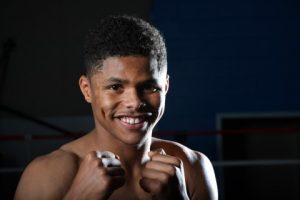
But no fighter to emerge from New Jersey’s largest city has had greater expectations levied upon his shoulders than Shakur Stevenson. Trained by his grandfather, Wali Moses, since age 5, Stevenson quickly rose to be one of the best amateur fighters in the US by the time he reached his teens. In 2013, Stevenson earned Gold at the Junior World Championships in Kiev, Ukraine and immediately followed that performance by caputring another Gold Medal in 2014 at the Youth Olympic Games in China. Stevenson then cruised through US Olympic qualifying and in August 2016 found himself in Rio de Janeiro fighting for his country.

In Brazil, Stevenson shutout his first two opponents. His semifinal foe, Russian Vladimir Nikitin, withdrew due to cuts, and Stevenson earned a free pass to the Gold Medal match against Cuban fighter, Robeisy Ramirez.

The table was set for Stevenson to be the first American boxer since Andre Ward to have the Star-Spangled Banner played over an Olympic sound system. The charming kid from Brick City was poised to win Gold.

The country expected it. Newark expected it. Stevenson expected it.

But it wasn’t meant to be. Stevenson lost a close split decision to Ramirez and left the ring in a heap of tears.

Upon return to American soil, Silver Medal in tow, Newark’s Olympic hero was honored by his city with an extravagant parade down Market Street, complete with a police escort, floats, and drumlines.

“Today is the proudest day in the city of Newark,” mayor Ras Baraka said on the steps of City Hall. “I just want to tell all these young people out here, if you all need somebody to look up to, Shakur Stevenson is somebody you should be focusing on.”

Stevenson is the role model and fighter that a city with such deep boxing tradition deserves. True, Hagler was born in Newark, but the city can’t lay claim to him. Hagler belonged to Brockton. Newark is Stevenson’s city. In his amateur career alone, Stevenson was able to captivate the hearts and minds of the people in his city. Stevenson loves his city, and his city loves him back.

On Saturday night at Madison Square Garden, thirteen miles east of Newark, Stevenson will step into the ring for his second professional bout. He scored a TKO victory over Edgar Brito in his debut in Los Angeles last month. But Saturday’s fight against Argentine Carlos Gaston Suarez will be his east coast debut and first professional fight in front of family and friends.

Presuming he sports the same gear worn in California, Stevenson will wear trunks that spell the name of his city in shiny silver letters across his waist: N-E-W-A-R-K. A constant reminder of where he came from, who he is, and who he fights for.

While Stevenson’s dreams of Olympic Gold were dashed in Rio, his goal to become a world champion and “revolutionize” the sport remains. The second step in a long journey ahead awaits him Saturday night.

A Poem For My Son
Think GOLD and Never FOLD!
Let It Be Told; Just 17 years old.
When it Comes To Your GOAL Firmly Believe in them…
He’s Living Proof and His Name Is Shakur Stevenson
– Shahid Guyton, Shakur Stevenson’s father


Patient Diego De La Hoya wins at a whirlwind pace

By Norm Frauenheim-

TUCSON – He has a famous name. He has fast feet. And faster hands. Patience isn’t the first thing anybody sees in Diego De La Hoya.

Erik Ruiz never saw it at all. Ruiz only saw incoming hands and agile feet, all traveling at an inexhaustible rate that De La Hoya sustained for 10 rounds Thursday night in winning a one-sided decision at Casino Del Sol in an ESPN televised bout.

It was the kind performance that seemed to eliminate the need for much talk about what might await De La Hoya (18-0, 9 KOs). A 122-pound title fight involving one of boxing’s best-known names would be easy to put together. Easy to sell. But Diego De La Hoya is in no rush.

“I’m 22,’’ he said after scoring a near shutout of Ruiz on a card staged by Golden Boy Promotions in association with Showdown. “I’m having fun.’’

While Diego De La Hoya had fun, Ruiz only got dizzy.

With cousin Oscar De La Hoya of Golden Boy watching from ringside, Diego darted in, darted out. His jabs flowed, one after another, like water out of a high-pressure hose. He circled tirelessly in an orbit that kept him out of range from Ruiz’ power.

Only midway through the fight did Ruiz strike with a big right that rocked De La Hoya. His reaction was a smile. Yeah, he was having fun. Lots of it.

“I also was smiling because I felt confident,’’ said the fighter who lives in Mexicali. “I knew I had done the work. I had sparred with bigger guys, guys with more power.’’

If there’s a question about Diego De La Hoya, it’s his power. At 22, however, he figures to get stronger, strong enough perhaps to have a lot more fun for a very long time.

In a co-main event, super-middleweight D’Mitrius Ballard avoided upset, but not controversy.

Ballard, a Golden Boy prospect from Temple Hills, MD, scored a second-round knockdown and then survived one right hand after another to escape with a close decision over a relentless Adrian Luna.

Luna, a late stand-in, was as surprising as he was unknown. In the end, a capacity crowd of 2,000 chanted his name as if the Mexican fighter was from Tucson. After it was over, those same fans booed the scorecards – 95-94 on two and 97-92 on the third.

In the end, however, the judges decided that Ballard (17-0, 12 KOs) had done enough – just enough – by flooring Luna (18-5-1, 11 KOs) with a counter left midway through the second.

Meanwhile, Luna might have done enough to ear a ticket back to Tucson. Golden Boy and Showdown announced that they would promote another ESPN card at Casino del Sol on July 29

BEST OF THE UNDERCARD

The card got an early start with a quick finish. Julio Franco (10-, 6 KOs), a Robert Garcia-trained super-flyweight from San Antonio, opened the show. It took him 40 seconds to end it with a left hook for a stoppage of Marco Sanchez (9-5-2, 4 KOs) of Mexico.

THE REST

Roberto Manzanarez (35-1, 28 KOs), a lanky lightweight born in Phoenix and now living in Mexico, used his reach and agile feet to score a unanimous decision over Erick Martinez (13-7-1, 7 KOs), also of Mexico.

Los Angeles junior-welterweight Jonathan Navarro (9-0, 5 KOs), another Garcia-trained fighter, had power that echoed through the Casino Del Sol ballroom and overwhelmed Ricardo Fernandez (3-5-4) of Mexico throughout a six-round decision as punishing as it was one-sided.


With Apologies to Felix Diaz

By Jimmy Tobin-

This Saturday, undefeated American, Terence Crawford, meets Dominican, Felix Diaz, in a fight that is likely to only confirm junior welterweight supremacy. There should be an impassioned crowd on hand in Madison Square Garden that night too, at least in the rows that fit in the frame of a television screen, close enough to the production tables to mask the empty silence sprawling toward the exits.

The question of whether Diaz is a worthy challenger feels almost as out of place as the question of whether he is a deserving one. His lone loss, a disputed majority decision to Lamont Peterson, is respectable enough; his best win, a decision over Sammy Vasquez, was utterly complete. Diaz seems very much to fit into the modern contender mold: there is nothing especially remarkable about the southpaw, but he is capable. And should that assessment prove insufficient to glorify Crawford’s unmaking of him, rest assured the talking heads ringside will reference Diaz’ Olympic gold medal to buttress his professional credentials. Crawford however, knows no threat at 140 pounds, and efforts to fashion those members of the herd he culls into anything but his next opponent feel, if not insincere, then tedious, the product of too much abstraction.

Diaz may pocket a round or two if Crawford lets him, his confidence bolstered by the pyrrhic victories that begin him down the path to his doom. Crawford will measure, switch southpaw both frivolously and with purpose, decide at some point it is time to establish his dominance, and then thoroughly, maliciously, strip Diaz of his illusions. Quietly or otherwise, on his feet or his back, Diaz will go the way of his thirty predecessors; a fact that reflects matchmaking, yes, but also Crawford’s peerlessness. Few—if any—are the Crawford fights where the victor and not the manner of victory is in question.

It should surprise no one then, that Top Rank boss, Bob Arum, has been speaking of his obligation to pit the past against the future, and finally set Manny Pacquiao across the ring from Crawford. And for those who see impatience in the use of “finally” here, ask yourself this: after Crawford defeated Viktor Postol, was there any real challenge to his throne? There will always be opponents—Arum can spit shine a John Molina or Felix Diaz to delay in perpetuity the obvious—but since beating Postol last July there has been only one opponent for Crawford. Arum knows this, which explains his current enthusiasm: dangling a future opponent to distract from the present one is a tactic he has long employed. The bait is set, now await the switch.

There is a catch, of course, which can only mean further delays. Before making Pacquiao-Crawford, Arum would first like to see Crawford unify the division against Namibia’s, Julius Indongo. (And what does it say of Crawford’s next two fights that Arum is making plans beyond them?). Indongo may be a fine fighter, but a fight with Crawford would present aficionados the same uninspiring challenge: discerning how, not whether, Crawford will win (and if that is selling Indongo short, let him prove it first against someone better than Ricky Burns). The unification route makes some sense for Arum in that multiple titles means multiple mandatory defenses. When Crawford unifies he could be hogtied by mandatory defenses, none of which would accomplish more than further establishing the obvious, but each would be financed by HBO (which has already endorsed one fighter’s fetish for titles). For Arum, that is probably justification enough.

And then there is Pacquiao, who might be the underdog against Crawford but who retains enough athleticism and guile to flummox every welterweight on the planet. He is certainly too good for Jeff Horn, who owes his July fight with Pacquiao to his being Australian and little else. If Arum can successfully package Pacquiao elsewhere (and he recently stated he expects the 55,000 seat Suncorp Stadium in Brisbane to sell out), he will do so for as long as he can. He is acting like the retiree who burns through what he could have left to his heirs, living indulgently at the expense of a future he could reasonably be expected to preserve.

That bodes poorly for the future—because Pacquiao can ratify Crawford in a way titles cannot—but also for the present in that Pacquiao is being squandered. Perhaps asking him to immolate himself—even in the name of exposing recency bias—after a career that leaves so few questions is being unfair to a fighter who has earned a relatively tranquil twilight to his career. But such considerations must be made in the context of the price tag attached to his non-events and the obvious ability he retains. Mind you, talk of Pacquiao being squandered might be overly generous to a 38-year-old with 67 professional fights, one who could run aground against a fighter like Kell Brook or Errol Spence or Terence Crawford. But his undoing—so long as it is violent—remains a spectacle to behold, and Pacquiao in something other than a foregone conclusion is an event that need not be transported to Australia. That explains part of the appeal of a Crawford fight: if Crawford is fighter enough to defeat Pacquiao, he will set upon the aged icon with a healthy disdain, ensuring more than a twelve round transaction.

The hope then, is that this time Arum is being genuine and that he indeed intends to make the best fight he can. Crawford has had recent legal troubles and his relationship with the media is fragile at best. He could certainly use the right kind of attention, the right kind of opponent, because he too is being squandered. And in a year that is delivering a number of quality fights, perhaps a little forgotten too.


Crawford & Russell vs. Chavez Jr.

By Bart Barry-

Saturday the world’s best junior welterweight, Nebraska’s Terence Crawford, will fight on HBO at Madison Square Garden against a 33-year-old Dominican named Felix Diaz. Saturday the world’s second best featherweight, Maryland’s Gary Russell Jr., will fight on Showtime against a Colombian named Oscar Escandon. These are important fights, one supposes, featuring very good fighters, one of whom may even prove great.

And yet Julio Cesar Chavez Jr. is more fun to write about than both of them, and maybe that’s the point of his popularity, a magnetism everyone wishes attribute to Canelo in his assignment of credit for what appears a post-Mayweather-Pacquiao pay-per-view record, but Canelo just sold more with Chavez than he vended in a combination of Amir Khan and Liam Smith, which indicates his opponent’s ethnicity and charisma make more of a difference than his opponent’s resume and Gennady “160,000 buys” Golovkin may not actually make any more dollars for Canelo come September than he makes sense.

Canelo was marketed better than this weekend’s main event fighters and marketed to a better demographic, too, and luck is luck, but as a prizefighter he appears to’ve been developed somewhere between the two men, with Crawford obviously in the front and Russell behind. Russell’s handlers knew from the moment they signed him he was the future of boxing, which, it turns out, is a problem when those handlers don’t know what they’re looking at and have much less an idea how to develop it. Crawford’s promoter, meanwhile, treated Crawford’s talent with the same skepticism Top Rank and its ace matchmakers treat every prospect they sign:

Can he sell tickets in his hometown? However fast his hands or feet, does he hit hard enough to keep world-class competitors off him? How pesky are his parents and manager? Is his childhood trainer a benefactor or beneficiary? How are his whiskers in a shootout? And most importantly, how does he comport himself afterwards – or in Bob Arum’s actual words, “Does he dissipate between fights?”

Whatever criteria PBC uses it is not that criteria and probably comes closer to a criterion like: How many people say he reminds them of Floyd Mayweather, or at least Sugar Ray Leonard?

Russell and Crawford are about the same age and have about the same number of fights, and yet Crawford is multiples more accomplished than Russell, and it wasn’t that way six years ago when HBO, as Al Haymon’s pre-PBC affiliate, began to shine Russell highlights and matches at its viewers. The details of what happened to Russell after that aren’t important, though surely there were contract issues and a dearth of opponents for a man of such otherworldly handspeed, the usual “nobody will fight him” gambit used by cheap or incompetent managers and promoters everywhere. Then Russell met Vasyl Lomachenko three years ago and got conclusively outclassed, which was not shameful but an indictment of all things said about him before that match.

Too, it was an indictment of what development happened to Russell before his match with Lomachenko: Russell’s two preceding opponents shared 20 losses in their 60-fight collective. It was the usual Haymon-managed concern with building an attraction rather than a fighter, and it went the way things with Haymon-managed prospects usually do when a return-on-investment alarm rings somewhere and their competition gets improved by a few hundred percent overnight. His unblemished record now blemished, a mortal sin in the Haymon stable, Russell went back to whupping guys who, for one reason or another, hadn’t much chance against him. One suspects the same ideal’ll be in play Saturday against Escandon; PBC’d not risk another Russell loss on Showtime when CBS and HBO are willing to pay substantially more to broadcast PBC superstars being beaten.

Terence Crawford, while more accomplished than Russell, now risks being considered a box office dud outside Nebraska if he doesn’t sell a respectable number of tickets at Madison Square Garden against Felix Diaz the same way he didn’t sell a respectable number of pay-per-views against Viktor Postol in July. According to Madison Square Garden’s website Diaz (19-1, 9 KOs) is a “hard hitting southpaw” with an Olympic gold medal, but when one sees a gold medal round the neck of a fighter with less than a 50-percent knockout ratio as a pro, well . . .

Know what? This is dull. Watch the fights or don’t, but nothing historic will happen Saturday, so let’s go back to Chavez Jr.

A video leaked online last week that besmirched Chavez’s spotless character by depicting the fallen champ enjoying his loss a bit too much. Someone, it seems, believed a wedge might be driven between Chavez and his fans. But no. Chavez is a circus act no one can stop from plying his craft to a ripe older age. He doesn’t appeal to slackers and potheads the way his detractors insist he must. Rather he appeals to anyone who’s ever been told to do something he didn’t want to do and then done it well enough to be mistaken for someone capable of doing it before ecstatically sabotaging the whole damn thing in a flurry of shrugs. Chavez neither called in sick nor told his boss to go pound sand; Chavez continued showing up at a job for which he was illsuited, played videogames on the clock, took extended breaks and giggled his way through quarterly evaluations; Chavez didn’t shout “I quit” but sat in his cube wondering “When are they going to fire me?”

If there are Mexicans actually enraged by Chavez, I’ve not found them. Mostly my interviews have gone like this.

Bart: “Did you see the Chavez fight?”
Mexican aficionado: (Laughing) “Yes.”
Bart: (Laughing harder)
Mexican Aficionado: (Laughing harder still)
Bart: “Think he’ll retire?”
Mexican aficionado: “No.”
Bart: (Laughing)
Mexican aficionado: (Laughing harder)

Remember this when the hyperbole reaches a boil on HBO and Showtime this weekend: To date Chavez has sold about 1.5 million more pay-per-views than Crawford and Russell combined. It is kind of funny.

Bart Barry can be reached via Twitter @bartbarry


GGG: Gennady Going Global in finally landing a shot at Canelo

By Norm Frauenheim-

Gennady Golovkin is landing endorsements at the rate he scores knockouts. Everything from the Apple Watch to Nike’s Jordan Brand is on a lengthening blue-chip list that says a lot more about his potential crossover appeal than a spot in any of the pound-for-pound rankings.

He is becoming an international brand. His familiar acronym identifies him, quickly and simply. But it could also say something about where he’s going. That’s GGG, Gennady Going Global.

His emergence has been marked by diligence, patience and some frustration. But now this son of a Kazakhstan coal miner is at the doorstep of his biggest moment on Sept. 16 fight against Canelo Alvarez.

He talked about it at Mandalay Bay, in a suite high above the runaways at Las Vegas McCarron Airport, to me and the Los Angeles Times Sunday on the morning after he joined Canelo in the ring to announce the bout in the wake – and we do mean wake – of Canelo’s blowout of Julio Cesar Chavez Jr. at T-Mobile Arena.

Golovkin looked out at the horizon. The view was unlimited, a little bit like what GGG could suddenly see in his own future.

“Wow,’’ he said. “This is my dream.’’

Boxing has a way of turning dreams into nightmares, of course. But Golovkin projects a quiet – call it understated – charisma that seems to say no moment is too big.

“This is boxing and business,’’ he said in a matter of fact tone.

The deal for the Canelo bout had been foremost on Golovkin’s mind for years. But there were always delays, loopholes, explanations and excuses. There were so many that GGG said, yeah, he was beginning to give up hope it would ever happen.

About 10 days ago, however, the deal was done.

“Finally — and I say that with an exclamation point,’’ said Tom Loeffler of K2, which promotes Golovkin.

The long, often exasperating trail to a deal might have been met with a couple of days of celebration in some corners. But not in Golovkin’s quiet corner. About 12 hours after the announcement, GGG was happy and impressed with Canelo’s dominance of Chavez Jr.

In a sport so known for trash talk, Golovkin is the polite kid next door. He’s 35 with the smile of a 10-year-old. The difference, of course, is that he can knock out just about any other kid in any other neighborhood in the world.

He spent much of last Sunday talking about Canelo and their similar styles, so alike that there is already talk about a rematch or two. It’s a little early to speculate on that. But it is an element, one of many, that makes the September bout so intriguing.

“I know his style, he knows my style,’’ Golovkin said. “I think he brings something new in September and I bring something new. It will be war. We both respect boxing.’’

There are already signs that the bout will do good business. According to media reports Thursday, HBO’s pay-per-view sales for Canelo-Chavez Jr. will do at least as well as Canelo’s victory over Miguel Cotto in November 2015. That one did 983,000 buys. HBO and Golden Boy Promotions are still counting. They are hopeful it hits the one million, a milestone.

Whatever the final tally, it’s a promising sign that GGG-Canelo will exceed one million and perhaps approach 1.5 million. Amid rampant theft of pay-per view telecasts and public exasperation with the PPV model, that’s big.

Expect a summer full of promises, rumors, changing odds and everything else that goes along with a hyperbolic sales pitch. Until then, however, Golovkin will be at home in Los Angeles, following his 8-year-old son in a youth hockey league.

He’ll begin training in July in Big Bear, the mountaintop camp east of Los Angeles. But, first, there’s a trip back to Kazakhstan in June for the 2017 World Expo in the city of Astana. He will be Kazakhstan’s spokesman.

“He’s become the most famous citizen of Kazakhstan, erasing the image of Borat,’’ Loeffler said in a reference to a 2006 film, a so-called mockumentary.

Borat was a laugher. But nobody is laughing much about Kazakhstan anymore, at least not since GGG became a well-known trademark and a feared fighter.


Canelo crushes infomercial but Junior retains chavezweight title

By Bart Barry-

Saturday in Las Vegas, in boxing’s must daring exploitation of Cinco De Mayo loyalties yet, Jalisco’s Saul “Canelo” Alvarez won every round, minute and second of his match with Sinaloa’s “Son of the Legend” Julio Cesar Chavez Jr. while clearing his throat for a scripted callout of Gennady “GGG” Golovkin, Canelo’s next opponent. Chavez, too, saved himself for postfight festivities, wherever they were.

What suspicions some Mexicans will harbor after Saturday’s postfight announcement, the postcharade charade – a $70 staredown, as it were – reduce to this statement: Chavez Jr. fought exactly like a guy who knew his opponent’s next contract was signed before the opening bell and got paid generously to participate in the promotion. Chavez, twitchy with embarrassment or concussion or the lingering effects of whatever copious stimulants he ingested to hollow himself for Friday’s weighin, stood in the ring after Saturday’s defeat and should’ve found it curious as the rest of us he was being interviewed first but appeared untroubled by it because, let’s be honest, as part of the promotion and broadcast he knew Canelo’d be calling out “Globekeen” and had a contractual need to don his sponsor’s headwear. Or did you think Chavez was otherwise hankering for a chance to explain the worst performance of his farcical career?

Some personal notes about that career, now that it’s unofficially through: Luck and geography put me ringside for a disproportionate number of Chavez matches while promoter Top Rank was inventing him, including Chavez’s dominations of Ireland’s John Duddy and “Irish” Andy Lee, and there was ever a wide chasm between the way Chavez expected to be treated in interviews and the way he prepared himself for fights. He was a haughty prick in his native language, un fresa, an unlikable combination of awkward and arrogant, ever casting impatient glares at his handlers to get things moving while he mixed cliches evasively and said absolutely nothing. You waste enough time on a subject, though, and some sense of selfpreservation or efficiency helps you begin to imagine admirable qualities, and when you can’t, you settle on redeeming qualities, and Chavez did have one in particular. He truly made others funnier.

Saturday I sat in a roomful of aficionados representing nearly every ethnicity on this green earth and each one was funnier in his expressions of disgust for Chavez than he was on any other subject. Sunday morning I scrolled through Twitter, too, and found myself manifesting an uncommonest form of mirth: Laughing aloud alone. This backhanded celebration of Chavez is not a gratuitous lunge at fulfilling wordcount, either; what I will miss about Chavez is a chance to write humorously about something in our beloved sport.

That almost never happens. Through his indifference to preparation and tacit acknowledgements a fortune was being made by charging persons for hoping to see him beaten to death Chavez gave writers a waiver of sorts to make fun of him in a playfully amoral way. Anyone who’s tried to do this with any other fighter has quickly found himself a target of moralists’ umbrage: “How dare you – he’s risking his life in there!” Which means what humor we’re allowed is either artless stock (“his chin is an insult to fine China everywhere”) or bitterly facetious: “I suppose if I were a recovering addict who wanted his legacy stolen out from under him and sold to a faceless charlatan, I probably couldn’t do better than hire Richard Schaefer, either.”

You could make fun of Son of the Legend while smiling, in other words, not scowling. I’ll miss that.

While we’re on the subject of selling talent, a quick thought about an occasionally overlooked detail of the Chavez legacy: How well he predicted PBC’s eye for talent. Recall that Al Haymon and friends got themselves sued by Top Rank three years ago when they poached Son of the Legend. As a Haymon-managed practitioner Junior went 2-2 (1 KO-by) in a disgraceful fourmatch march that fell somewhere between plain ingratitude and corporate sabotage. Bless Junior’s ungrateful heart for that.

And so we come to Canelo, the man Chavez now concedes is the best Mexican prizefighter of their generation, a selfmade marketeer, Jalisco horseman and entrepreneurial son of a Mexican icecream vendor, all that, and a redhead too. Canelo looked genuinely fantastic against Chavez but did not stop him. Or even hurt him. Which means there’s very little chance of his winning the 2017 Fight HBO Most Wants Seen. (As an aside, how richly absurd was that segue to Golovkin in the broadcast’s second match? Orbital bone, orbital bone, why, that reminds viewers of GGG’s September victory!)

Golovkin and Canelo are basically the same fighter, and Golovkin is bigger, and without squandering others’ chances at 100,000 words of handicapping, there’s no reason to think their match will be any more complicated than that. Fine, I take that back: Canelo is better defensively, and Golovkin hits harder, but Canelo hits pretty hard too, and Golovkin’s defense is actually underrated. There you go, peers, I left the last 99,980 words for y’all.

We end with a correction to a point above. There was one other fighter I’ve covered who was fun to make fun of as Junior, and he was another junior: Hector Camacho Jr. Difference being, Machito was a great storyteller and amusing conversationalist. But he did say to me one thing germane to Chavez’s situation today: “I’ve disrespected the sport of boxing so many times I’m surprised they let me put gloves on.”

Bart Barry can be reached via Twitter @bartbarry


FOLLOW CANELO – CHAVEZ, JR. LIVE

Follow all the action as Mexican Warriors, Canelo Alvarez takes on Julio Cesar Chavez in super middleweight catchweight bout.  The action begins at 9 PM ET / 6 PM PT with 3 fight undercard.  Former middleweight champion Dabid Lemieux battles Marco Reyes.  Former junior welterweight champion Lucas Matthysse takes on Emanuel Taylor.  Joseph Diaz, Jr. fights Manuel Avila in a battle of undefeated featherweights.

NO BROWSER REFRESH NEEDED.  THE PAGE WILL UPDATE AUTOMATICALLY

12-ROUNDS SUPER MIDDLEWEIGHTS–CANELO ALVAREZ (48-1-1, 34 KO’S) VS JULIO CESAR CHAVEZ, JR. (50-2-1, 32 KO’S) 
ROUND 1 2 3 4 5 6 7 8 9 10 11 12 TOTAL
 ALVAREZ  10  10  10 10   10  10  10 10   10 10  10   119
 CHAVEZ  9  9  9  10  9  10  9  9  9 110

Round 1: Canelo lands a right to the body..Left lands..Jab..Chavez lands an uppercut..hook to body..Right from Alvarez..Jab..Right over top..

Round 2 Combination from Alvarez..Left hook from Chavez..straight right..3 punch combo and uppercut from Alvarez..Right uppercut..2 more uppercuts and a jab..

Round 3 Right from Alvarez..Welt over the right eye of Chavez..2 hard shots from Chavez..3 good shots from Alvarez..Chavez bleeding from the nose..ALVAREZ OUTLANDING CHAVEZ 57-18

Round 4 Left hook from Alvarez..3 punch combination..Hard uppercut..Good body shot

Round 5 Hard counter right from Chavez..ripping body shot..big right,,very one sided fight..Canelo dominating

Round 6 Chavez lands a combo on the ropes..Combination from Alvarez…

Round 7 Chavez lands on the ropes..Alvarez fights off by 2 landing about 8 punches..Good combination from Chavez..

Round 8 Chavez landing on the ropes..Jab from Canelo..

Round 9 Uppercut from Alvarez..Jab,..

Round 10 Uppercut from Alvarez..Combination..Counter right…

Round 11 Right from Alvarez..Right..Right..Left..

Round 12 Alvarez lands a right and a uppercut..

120-108 on all cards for CANELO ALVAREZ

PUNNCHES –ALAVREZ 228-696     CHAVEZ 71 -302

 10-ROUNDS-SUPER MIDDLEWEIGHTS–DAVID LEMIEUX (37-3, 33 KO’S) VS MARCO REYES (35-4, 26 KO’S)
ROUND 1 2 3 4 5 6 7 8 9 10 11 12 TOTAL
 LEMIEUX 10   10  10  9 10   10  10  10     97
 REYES  9  9  9  10  10  9  9 10   9     93

Round 1 Staright raightfrom Lemeiux …Left hook

Round 2 Right from reyes….Reyes cut over right eye from a left hook..

Round 3 Left and hard right from Lemieux..Big uppercut and Reyes s hurt..Huge left hook staggers Reyes..Reyes lands a body shot..Straightt right…2 body shots..Huge right and a body shot,,

Round 4 2 hard left hooks from Lemieux..Body shot from Reyes..Huge right knockouts out mouthpiece,,2 good rights and a body shot from Reyes.

Round 5 Right and left from Reyes..Left from Lemieux

Round 6 Good counter from Lemieux

Round 7 Jab from Lemeiux..Good right..Left and an uppercut..Big left hook..Reyes bleeding and taking a lot of hard shots..Left hook

Round 8 Reyes trying to flurry..Left hook..

Round 9 Right from Reyes..Hard right from Lemieux,,Body shot

Round 10 Vicious 3 punch combination from Lemieux..Reyes trying to land on the ropes..

99-90 TWICE AND 98-91 DAVID LEMIEUX

10 ROUNDS–WELTERWEIGHTS–LUCAS MATTHYSSE (37-4, 34 KO’S) VS EMANUEL TAYLOR (20-4, 14 KO’S) 
ROUND 1 2 3 4 5 6 7 8 9 10 11 12 TOTAL
 MATTHYSSE 10  10  10  10   TKO               40
 TAYLOR   9  9  8  9                  35

Round 1 Hard right from Matthysse

Round 2 Right from Matthysse…2 rights over the top..Right..Hard combination on ropes..body shot

Round 3 Matthysee cut over right eye…BIG RIGHT AND DOWN GOES TAYLOR

Round 4 Left from Taylor..Right and left from Taylor..Jab from Matthysse..Hard left drives Taylor back

Round 5 Good right from Taylor..Good left uppercut and left hook...BIG RIGHT AND DOWN GOES TAYLOR AND THE FIGHT IS STOPPED

 10 ROUNDS-FEATHERWEIGHTS–JOSEPH DIAZ, JR. (23-0, 13 KO’S) VS MANUEL AVILA (22-0, 8 KO’S)
ROUND 1 2 3 4 5 6 7 8 9 10 11 12 TOTAL
 DIAZ  10  10  10  9  10  9 10   10 10   10      98
 AVILA  9  9  9  10  9  10  9  9  9      92

Round 1 Diaz lands a left to the body

Round 2 Avila lands a right…Left from Diaz…Jab from Avila..Left from Diaz..

Round 3 Good Jab from Diaz..Straight left..Right from Avila..

Round 4 Right from Avila..Left from Diaz..Good left hook from Avila..Straight right..Left to body from Diaz..

Round 5 Body shot from Diaz..Straight left..Avila cut over his right eye

Round 6 Counter right from Avila..Uppercut on inside…

Round 7 Left from Diaz…Left to body..Combination..Good right hook..another hook..

Round 8 Body shot from Diaz..combination..Counter right hook..Left to body..Hard right from Avila…Right uppercut fromDiaz..Straight left

Round 9 Uppercut Diaz…Left Staggers Avila..Good straight left…4 punch combination

Round 10 Good right hook from Diaz..

WINNER BY UNANIMOUS DECISION —JOSEPH DIAZ JR.


Canelo-Chavez Jr.: Chavez Jr. loses pounds, saves money

By Norm Frauenheim-

LAS VEGAS – There were no upsets on the scale. No penalties, either.

Julio Cesar Chavez Jr. lost the pounds and saved himself a lot of money Friday on the eve of his 164.5-pound fight against Canelo Alvarez Saturday at T-Mobile Arena.

The fighter known for his failures on the scale made it with half-a-pound to spare. Both were at 164 even.

“I’m happy he made weight,’’ Canelo said.

Probably not as happy as Chavez Jr. He would have been $1 million lighter if he had even come in at 164.51 pounds, according to a penalty clause in the contract. That’s a lot of dough for a fraction of excess flesh. But this is boxing, prize fighting. The idea is to keep the wallet fat.

According to purses filed with the Nevada State Athletic Commission, Canelo is guaranteed $5 million. Chavez Jr.’s guarantee is $3 million. But the guess is that both will collect much more by the time undisclosed percentages of the pay-per-view television money. There are also deals with Mexican TV that were not included in the numbers filed with the Commission. According to a variety of sources with camps, Canelo could wind up with $20 million. For Chavez Jr., the final take could be as much as $8 million.

It depends on the number of paying customers for HBO’s pay-per-view telecast (6p.m. PT/9 pm ET).

It’s hard to guess, especially amid today’s technology and all the ways there are to steal a telecast. But within the MGM Grand, the bout’s host casino, there was a growing buzz for a fight between the redheaded Canelo (48-1-1, 34 KOs) and the son of a fighter with a name as iconic as any in Mexico.

Odds favoring Canelo have stayed at about 5-to-1 throughout the last week at books up and down the Vegas Strip.

They are based in part on Canelo’s stubborn consistency and record, which includes bouts against some of the elites in the game. Canelo appears to be getting better. When the fight with Chavez Jr. (50-2-1, 32 KOs) was announced, it was seen as a way for Canelo to finally make the jump from junior-middleweight to middleweight (160) for an anticipated showdown with Gennady Golovkin.

That’s still the Golden Boy Promotions’ plan, perhaps for September, although there’s some talk that Canelo might fight Canadian David Lemieux before he takes on GGG. It’s no coincidence, perhaps, that Lemieux is on the undercard against Mexican Marco Reyes.

With the stakes as big as they are and a Mexican fan base divided just about down the middle between Canelo and Chavez Jr., every word and move has been analyzed and over-analyzed, interpreted and misinterpreted. At Friday’s weigh-in, it was all about body language.

Chavez Jr.’s thin upper body looked like it could be a very big target for Canelo punishing array of combinations. Then again, there was some talk that Canelo came into the weigh-in too heavy. He has been most effective in his career when he tips the scale at 155. He was heavier at this weigh-in than ever. The guess is that he will be heavier, anywhere from 170 to 180, at opening bell. Will the added weight make him slower? Could the extra pounds result in fatigue if the bout goes into the later rounds?

Meanwhile, Chavez Jr. wouldn’t say how much heavier he expects to be at opening bell. The best guess was that he would be between 175 and 180 pounds.

“I want to push him, impose my size on him,’’ said the 6-foot-1 Chavez Jr., who is four inches taller than the 5-9 Canelo. “That’s my strategy.’’

Maybe, it’ll work. On one scale of expectations, he’s already ahead of the game.


Canelo-Chavez: Can Beristain in the corner help Chavez’ chances

By Norm Frauenheim-

LAS VEGAS – A Mexican Boxing Hall of Fame should be named after Nacho Beristain. If Julio Cesar Chavez is the national face of the game, Beristain is its architect.

From Ricardo Lopez to Juan Manuel Marquez, Beristain has been in a Mexican corner for about half a century. He’s strategist and tactician, disciplinarian and father figure.

But can he make a difference for the son of a father whose scarred face and intense eyes are a defining part of the Mexican legend?

In the build-up for the son’s 164.5-pound bout against Canelo Alvarez Saturday night at T-Mobile Arena, here’s been a lot of talk about a different, more mature Julio Cesar Chavez Jr. He’s taken on more responsibility. He’s a dad with a 3-year-old daughter. He’s given up the slacker ways that so exasperated anyone who thought he would have some of dad’s trademark toughness.

The story about Chavez Jr., the changed man, inescapably leads to Beristain. The trainer’s stubborn adherence to a Spartan regimen was thought to be a true test of whether Chavez Jr., would finally rise to a role he presumably inherited from his famous father. With Beristain, the world and Mexico would finally learn whether Junior was born to be a fighter.

“Beristain has the character to train me,’’ Chavez Jr. said after arriving in Las Vegas for the HBO pay-per-view bout.

The suggestion is that Freddie Roach was the wrong trainer for Chavez Jr., who came and went on his own accord in a regimen with roadwork that might have included a few late-night laps around a couch in a Vegas condo before a loss to Sergio Martinez.

But there’s more to it than that. Beristain’s name, international reputation and fierce pride were also a way to prevent his father from interfering. It was Bersitain’s camp, high in the mountains near Mexico City.

Midway through training, Chavez Jr. told Beristain that he wanted to leave the mountains a little earlier than planned and move his training to Vegas. Beristain reportedly looked at him and said: Go ahead, but you’ll go without me.

Chavez stayed on the mountaintop, far from curious media and a meddling dad.

“I’ve learned a lot from my father, but he’s not the trainer,’’ Chavez Jr. said.

The best guess is that Chavez Sr. won’t be anywhere near his son’s corner Saturday night. Instead, Chavez Sr. said this week, he’ll be working as a television commentator. That could prove to be a tough gig if the 5.5-to-1 odds favoring Canelo are accurate.

Then again, Chavez Jr. might have a better shot without his father’s demanding voice in his ear between rounds. But even one of the most respected voices in the world might not be enough. Beristain is a great trainer, but that doesn’t make him a miracle worker.

“Beristain will not make any difference,’’ said Rafael Mendoza, a former Mexican journalist and Hall of Fame manager who was Canelo’s first pro advisor.

In the end, Mendoza, of Guadalajara, said it’s all up to how hard Chavez trained and how hard he is willing to fight.

At 31, it’s hard to break old habits. Chavez Jr. has 53 bouts on his pro resume. But Canelo has a big advantage in world-class experience, including a loss to Floyd Mayweather Jr. What more, Canelo had a long and varied amateur career. Chavez Jr. fought as an amateur only twice, bout against Jorge Paez Jr.

There’s an argument that Beristain’s smarts and world class experience in the corner can make up for what Chavez never learned as a teenager.

“This is very different,’’ Beristain said Thursday. “I’m training a fighter for the first time against the guy everybody says is Mexico’s best fighter.

“But, yes, I’m confident we can win.’’

Then, Beristain went on to say: “For us, this is going to be the night of the witches.’’

He didn’t explain what he meant. But there were plenty of interpretations up and down press row. To wit: Chavez Jr. is cursed, or else he’ll need a witch to beat Canelo.


Chavez Jr.-Canelo: If not for a father and a son, there might not be a fight

By Norm Frauenheim

LAS VEGAS – The sunglasses could have used a couple windshield wipers. They were that big. Julio Cesar Chavez Jr. hid behind them, a little bit like a guy trying to shield himself from the sight of an imminent collision.

Chavez Jr., foresees something else, of course. Otherwise, he wouldn’t be here talking about how and why he expects to upset Canelo Alvarez Saturday in a HBO pay-per-view fight about Mexico, history, tradition, a father and a son.

“I came here to win, not just fight,’’ Chavez Jr. said before a formal news conference Wednesday.

The betting odds suggest there might be some rose-colored lenses in those glasses. Canelo was a 5-to-1 favorite late Wednesday to win the 164.5-pound bout at T-Mobile Arena

It’s impossible not to see how big a role the father and the son have in the event. This fight might not have happened at all without their name. Chavez Sr. stirs up memories and passions of a nation that identifies with his stubborn toughness. They see the son and remember the father against Meldrick Taylor, Hector Camacho and Edwin Rosario. He was a hard man, an undisputed tough guy. Next to Hugo Sanchez, a soccer star in the 1980s, there is no bigger sports name in Mexican history.

Canelo recalls meeting the famous dad when he was a 16-year-old kid in Guadalajara. Julio Sr. encouraged him to work hard. Did Canelo get his autograph?

“No,’’ Canelo said with a smile Wednesday.

Ten years later, the 26-year-old Canelo intends to get something a lot more significant. He intends to claim the Chavez legacy as a Mexican icon. He intends to put it in his name. Make it his own.

Only the son can stop him.

There’s huge pressure in that, especially for a son who exasperated his father’s fans with haphazard training, an inability to make weight and disappointing performances. For the son, the Canelo bout represents a last stand of sorts. He doesn’t think so. At least, he doesn’t during the final days before opening bell. After all, there’s pressure enough in trying to deal with Canelo’s punishing combinations.

“Both of us have a lot of pressure,’’ said Chavez Jr., who said he was at 168 pounds Wednesday.

His dad’s legacy, he said, would stand alone, no matter what happens Saturday. But it’s hard to separate the legacy from this fight. Subtract it, and you lose the drama that is inherent to a bout that has become an event. The bout at catch-weight doesn’t need a title belt. It’s got a legacy that is almost like a family heirloom for the father who created it and passed it on to his son.

“His fans, I think, are his father’s fans,’’ Canelo said during a conference call 10 days ago.

The fans were there Wednesday, chanting “Julio, Julio.’’ It was hard to tell whether the chants were for Junior or Senior. Still, there were moments at the news conference when it looked as if the father was feeling more pressure than the son.

“A very, very tough fight,’’ Julio Sr. said with unblinking eyes that flashed like flint off coal.

Maybe, he was just acting like a nervous little-league parent. But some of that old edginess was evident in the father. Throughout the formal news conference, he chewed on his lower lip. He pulled on his eyebrows as if he were about to pull them off. He looked as if he wanted to fight. Almost as if he were ready to fight.

After all, it’s his legacy, one with a fate that now rests in his son’s unproven hands.


Joshua Delivers on Heavyweight Expectations

By Jimmy Tobin-

Heavyweights Anthony “AJ” Joshua and Wladimir “Dr. Steelhammer” Klitschko met before 90,000 or so strong at Wembley Stadium in London Saturday night and put forth a spectacle deserving of what national pride and expectations surged each man through the crowd and into the ring. It was Joshua who emerged victorious, ending Klitschko in the eleventh courtesy of a barrage born of a right uppercut likely to attend each man’s glory as a compliment from that moment forth. A proper heavyweight prizefight, delivered on the grandest stage—it is okay to feel good about that.

A word on what could have been. Joshua could have quickly cut down the 41-year-old former champion. There was proof enough in Klitschko’s recent performances to think he would go quietly. His unimpressive decision over debunked contender, Bryant Jennings, was evidence enough of slippage, though at the time that evidence was outweighed by a career of boring decisions against opponents with the audacity to strike back. Then there was Klitschko’s embarrassing effort against Tyson Fury, who lifted all of Klitschko’s hardware and much of his pride in 2015 and who has been an embarrassment in his own right ever since, reminding all that titles are made by the men who carry them.

Of course, there was nothing in Joshua’s résumé to indicate he was ready for Klitschko; the calculus for his victory drew primarily on his gaudy eye test scores and Klitschko’s deterioration. The aged Klitschko might’ve drawn Joshua into the type of fight the younger man had yet to experience, clutching and grabbing between right hands, waltzing dully the future of the division into limbo.

Instead, what transpired was drama the heavyweight division hasn’t offered in years, the type of fight that produces the rarest and often most painful of feelings in aficionados: hope.

As no such spectacle can be achieved without two willing participants it bears repeating that one of them was Klitschko; a man whose near decade reign was marked by dominance, yes, but also by the irreconcilable image of a 6’7”, 240-pound, chiseled specimen clinging desperately to men who would go willingly to their end should he only show the nerve to send them there. Yet in what might be his last performance, and almost certainly will be the last performance he could give of such quality, Klitschko was his most daring and inspired self, earning what his history never hinted at: a dignified defeat. For Klitschko to fight as he did required he suppress his strongest instincts and a decade of programming. He did not discover a more aggressive spirit or remove the patina of self-preservation—rather, he fought in spite of himself, fought remarkably, admirably, for as long as he could.

Yet did Klitschko momentarily heed the voices pleading retreat? Was it their warning that saw him squander a sixth-round knockdown and 100 seconds at arm’s length of an opponent dazed and temporarily exhausted? Perhaps. Perhaps it was timid old Klitschko getting the best of himself; but then, who is to say what the fifth round—a round likely to develop its own identity—took from him? Perhaps surviving a knockdown thirty seconds into that round and eventually turning the tide, battering Joshua as the round drew to a close took what fire Klitschko would have used to finish Joshua minutes later.

Either way, Klitschko pressed on to his own and Joshua’s glory. And that is for the better, not simply because of the quality of the fight—which was very good—but because those eleven rounds served to ratify the future, something Manny Pacquiao has yet to do, something Floyd Mayweather could not. The future, be it of the division, of boxing, of athlete earnings, looks like Joshua. And that can be said with greater confidence because of the quality of the challenge he faced. Had Klitschko folded at the first left hook it would be easier to still dismiss Joshua because it would be easy to dismiss Klitschko’s effort. But Joshua had to prove himself Saturday, and while he proved that there is some work to be done you cannot say he is a fabrication. Or perhaps you still can, because you are joyless, or committed to being contrarian, or have lost your love for boxing if not your obsession with hearing yourself speak about it.

Because Joshua is a reason to be excited. He crumpled from a perfect right hand delivered by a proven puncher, yet weathered not only that punch but all of the unknown awaiting him that night, and with the fight very much in the balance, stormed through his opponent to in the championship rounds. His chin is better than assumed, though his stamina is not, and his defense has holes, but he is a fast learner, evidenced by how few right hands Klitschko landed once Joshua figured out when to slip them. There is work to be done with Joshua, but it is not unreasonable to think that he will learn his craft turning back the best fighters in the division, which is almost all that can be asked of him. He will do so before crowds that would make American promoters, were they capable of embarrassment, blush.

There was his conduct in the aftermath of the stoppage, too. When referee, David Fields, wedged himself between the two fighters Joshua simply turned and walked away, no more than a brewing smile on his face even as his team mobbed him in jubilation; he is the anti-Wilder in that regard (and many important others). Joshua carries himself like a man who believes he is entitled to a success he cannot doubt is coming; the biggest win of his career merely confirmed what he believes of himself, which is why he responded to it as he did—without a hint of surprise. A champion constituted for his calling—it’s okay to feel good about that too.


Anthony Joshua did it the right way

By Bart Barry-

Saturday at Wembley Stadium in London, before a crowd of 90,000 or so, British heavyweight Anthony Joshua defeated by 11th-round technical knockout Ukrainian Wladimir Klitschko to become the undefeated, undisputed heavyweight champion of the world – in an excellent and valorous four-knockdown brawl anticipated by nothing on Klitschko’s resume. Any impulses to lead a treatment of Joshua’s victory with Klitschko’s age or previous knockout losses to men unremarkable as Ross Purity or Corrie Sanders should be stayed by a paragraph or two, even if they weren’t just now.

What belongs at the top of any consideration of Joshua from this moment till the end of his career is that he became recognized as heavyweight champion the right way.

Perhaps Klitschko was no longer what we considered him in his 30s but he was still the best prizefighter above 200 pounds in the world – as there is nearly no doubt he’d’ve beaten Tyson Fury in a rematch the Gypsy King avoided shamelessly. Klitschko’s reign was, again, unremarkable as any in the modern era, a string of mostly mediocre performances against mostly mediocre opponents with occasionally some emphatic violence against an occasional, emphatically bad opponent. He left Saturday’s ring entirely diminished in physical stature if not legacy. Klitschko’s legacy was to remain the same, win or lose; he got dropped and stopped by, let’s see if it’s possible to get this right, A YOUNG HUNGRY LION and therefore will not rise in historians’ esteem anytime soon; but if Klitschko’d’ve won Saturday historians’d’ve moved him no higher in historic ranking because no one would yet know if it were feat or farce till Joshua revealed his true self in the decade that followed, sort of the way aficionados’ esteem for Fury underwent a nineminute revisionist fever after Klitschko dropped Joshua in round 6.

When Joshua tore out his corner to open the championship rounds, comporting himself like nothing so much as a champion, and Wlad’s legs got somehow stiffer in flight than they were in pursuit, my spirits lifted a touch. The hyperbole was en route, desperate as British fightfans are for a man who justifies their passions, but it was not going to be misplaced as other recent happenings like the Fury coronation. When Joshua’s right uppercut took Klitschko from Go-Go-Gadget neck to legless jitterbug and you knew there was no way a 41-year-old was getting to round’s end my spirits crested then fell then rose anew: It’s hard for a disinterested viewer to escape some sense of sympathy when a man enormous as Klitschko shrinks to a bony quivering thing, his physique transformed from ripples to lumps; that sight dropped my emotions and their descent got further weighted by what faux expertise was then sure to awaken and now does awaken – when every toughguy with a microphone or pen who abandoned boxing after Lennox Lewis tenderized Mike Tyson 15 years ago comes roaring back, old hungry lions they be, to tell us how much the new champion reminds them of their favorite old champion who reminded them of themselves and that time in the bar or backalley when they brought extreme justice in a bareknuckle violence orgy for whose storied perpetrator local authorities today continue their search.

A couple seconds of those thoughts, though, happily yielded to a sense of relief and gratitude; relief for the Brits in our legion, as no one save the Mexicans has done so much to keep our beloved sport afloat this last decade, and gratitude that our new face of boxing is so preferable to our last face of boxing. In the deafening cheers of 90,000 spirited Brits one heard many things among which was a crashing halt to the Money May era. Anthony Joshua is already better at every facet of prizefighting than Floyd Mayweather, with the exception of fighting itself – and Joshua’ll never be more than half as good at that as Mayweather, so it hardly matters.

(No, a 147-pound version of Joshua would not win a round against Mayweather, the same way a 130-pound version of Klitschko would not survive a round with 2005 Manny Pacquiao.)

One now halfway hopes Klitschko retires while splitting the other half of his hopes between an immediate rematch and a pasting of Deontay Wilder in PBC’s consolation league. Dancing Wlad lacked the movement and energy to dissuade Joshua for more than a halfhour and will fare still worse on the next go, but he’s still way too young and active to lose to “Wilder &” Wilder, which would make Joshua-Klitschko II an even bigger spectacle than Saturday’s was. Joshua, meanwhile, has no earthly reason to fight anywhere but London for the foreseeable future; in all of boxing only Canelo in Mexico City or Pacquiao in Manila could hope to sell half as many tickets as Joshua just did. There’s absolutely no reason for him to do Las Vegas or Madison Square Garden; he’s already larger than both those venues, and there’s not currently an American heavyweight who belongs in the same arena as him.

There’s much room for Joshua to improve as a prizefighter, but here’s to hoping he doesn’t; he’s good enough to ice any man in the world but not good enough to jab-jab-hold smaller men to decision victories. Joshua is perfect as he is right now. May he remain that way for a good long time.

Bart Barry can be reached via Twitter @bartbarry


FOLLOW JOSHUA – KLITSCHKO LIVE

Follow all the action as Anthony Joshua defends the IBF Heavyweight champion Wladimir Klitschko in front of over 90,000 fans at Wembley Stadium in London.  The action starts at 4:30 PM ET / 1:30 PM PT / 9:30 PM in London and 11:30 PM in Kiev.

NO NEED TO REFRESH BROWSER.  THE PAGE WILL UPDATE AUTOMATICALLY

12 ROUNDS–IBF HEAVYWEIGHT TITLE–ANTHONY JOSHUA (18-0, 18 KO’S) VS WLADIMIR KLITSCHKO (64-4, 53 KO’S) 
ROUND 1 2 3 4 5 6 7 8 9 10 11 12 TOTAL
 Joshua  10  10 10   10 10   8  10 9  10 10      97
 Klitschko  9  9  9  8  10  9 10   9      91

Round 1: Joshua lands a right..Jab..left to the body..right to body..Right..Jab from Klitschko

Round 2:  Right from Klitschko..Jab from Joshua..Right

Round 3:  Uppercut from Joshua..Right..

Round 4:  Hard 1-2 from Klitschko..Right from Joshua..Jab from Klitschko..Right to body from Joshua…Right..Jab

Round 5:  Jshua lands a booming left KLITSCHKO IS HURT..BLEEDING OVER HIS LEFT EYE..HARD LEFT AND DOWN GOES KLITSCHKO…Hard left from Klitschko..Hard left..Big left..Joshua is hurt..Huge uppercut from Klitschko

Round 6: Big right from Klitschko…HARD RIGHT AND DOWN GOES JOSHUA…Huge left hurts Joshua..

Round 7 Jab from Klitschko..Right to body and left to head from Joshua..

Round 8 Jab to body from Joshua..Jab from Klitschko..another jab..hard jab..Jab from Joshua..Jab from Joshua

Round 9:  Jab from Klitschko..Good right from Joshua…left hook to the body..Nice right..Swelling under left eye of Klitschko..Shoe-shine body work from Joshua..

Round 10 1-2 from Joshua.Counter right..left-right..left hook..Big right from Klitschko..

Round 11:  Big right from Klitschko..Huge right from Joshua..Klitschko holding on..Short left hook..Huge uppercut..BIG RIGHT AND LEFT AND DOWN GIES KLITSCHKO..STRAIGHT RIGHT AND HUGE LEFT HOOK …KLITSCHKO IS DOWN AGAIN…LEFT AND RIGHT ON THE ROPES AND THE FIGHT IS STOPPED…WINNER BY TKO —ANTHONY JOSHUA


Heavyweight Rebirth? Wembley crowd of 90,000 hopes to witness one

By Norm Frauenheim-

The looming spectacle of 90,000 people at London’s Wembley Stadium Saturday for Anthony Joshua against Wladimir Klitschko is a sure sign that heavyweight boxing hasn’t gone the way of Tyrannosaurus Rex.

Heavyweight power frightens and fascinates. Always has. Always will. Yet, I still wonder whether it will ever capture worldwide attention the way it did for so long. From Jack Johnson to Joe Louis to Muhammad Ali to Mike Tyson, there was always a heavyweight who dominated an era with power or personality or controversy or all of the above.

In part, Joshua-Klitschko is being sold as the genesis of a new era, The Joshua Era. Maybe. I’m a little skeptical on that one. It’s still hard to judge the 2012 Olympic gold medalist. He’s powerful, but has yet to display the fluid delivery of punches and the agile footwork that identified so many of the great names in heavyweight history.

Klitschko has done enough to have his signature on his own era. The numbers are astonishing. He held a world heavyweight title for nine years, seven months and seven days, second only to the aforementioned Louis.

But mention the Klitschko era to just about anybody and – fair or not — they’ll tell you it was forgettable. It was, I think, because Klitschko simply couldn’t find an American rival. He tried, but that business partner just wasn’t there. No rival simply meant there was no reason to watch. Klitschko couldn’t draw in the U.S. He began to fight primarily in Europe. In the U.S., he became a footnote. The American focus was on Floyd Mayweather Jr. and Manny Pacquiao.

The closer we get to Saturday’s opening bell, the less certain I am that Joshua wins. He’s favored. I’m still picking him, picking youth to prevail over age. Joshua (18-0, 18 KOs) is 27 and Klitschko (64-4, 54 KOs) is 41. Enough said.

But I’ve seen old heavyweights rediscover a younger self in big fights. In terms of the Wembley crowd and worldwide attention, none is bigger than Saturday. Klitschko, who looked finished in losing to Tyson Fury 17 months ago, has never lost successive fights. He’s very capable of springing a surprise over the untested Joshua

Even if Joshua loses, however, he wins a rematch – and there are 90,000 reasons to do one. If not Saturday, Joshua will be the face of the heavyweight division sometime in 2017. Then what?

In a conference call Wednesday, Joshua talked about fighting in the U.S.

“I’ve made sure I fought some Americans on my way up, so we could get a buzz out there,’’ he said from London. “But I think I have to come out there for a fight for sure. That’s important.

“America is the mecca of boxing. If we can cross over into the States and keep the fan base in the UK, I think we’ve cracked it. That’s mega stuff. That’s global boxing. You’ve got a big guy, heavyweight with a name that’s easy to pronounce and speaks English well.

“I can relate to the U.S. market. All I have to do is get out there, show them what my trade is and hopefully they’ll appreciate it and hopefully we can start talking about setting up major fights and bringing the same attention in the UK to the U.S. That would be phenomenal.”

Deontay Wilder is the big guy he mentioned. It’s no coincidence that Wilder will be at ringside, doing Sky Sports commentary for a fight that can been seen live on Showtime (4:15 p.m. ET/1:15 p.m. PT). Wilder has a title (WBC). He’s a good talker. He has great power. He’s likable. But there are persistent doubts about his overall skill. Maybe, he gets better. If he doesn’t, however, there just aren’t many other American heavyweights in line behind him. Name one.

As I write this, I’m listening to the first day of the NFL Draft. It occurs to me that if Joshua had been born in the U.S. instead of the UK, he would have gone in Thursday’s first round, probably as a defensive end. All of America’s potential great heavyweights are in the NFL these days. Wilder had dreams about playing for his hometown Alabama Crimson Tide before he turned to boxing because he just didn’t have the athletic skill to play for college football’s perennial powerhouse.

I’m not sure the heavyweight division can ever be what it once was without a viable American in the business equation. Maybe, I’m wrong. Maybe, Joshua will prove me wrong. But he needs an American to help him do that. There’s only one and that’s Deontay Wilder. Otherwise, The Joshua Era could be about as forgettable as the Klitschko era.


Two fun Saturdays

By Bart Barry-

Saturday at England’s Wembley Stadium British heavyweight Anthony Joshua will fight Ukraine’s Wladimir Klitschko. One week later at Las Vegas’ T-Mobile Arena Mexican Saul “Canelo” Alvarez will fight Mexican “Son of the Legend” Julio Cesar Chavez Jr. Both matches have their charms.

But one undefeated man to be found in the fourman bunch, too. Aficionados didn’t care much about undefeated marks before Money May – the fixation on Rocky Marciano’s record never felt like a product of aficionados so much as what casuals necessarily predominated a sport that dominated American culture in that time (like nonmusicians harping on albumsales because they have to have an opinion on what’s current and can’t very well muse about chord progressions) – and evidently don’t care much in our wasteland of a post-Money sport.

Look how quickly Mexicans forgave Canelo’s moneymaker of a whitewash against Money May. Too they forgave Son of the Legend’s loss to Maravilla Martinez; there was no dishonor in being wholly outclassed by a superior athlete and nothing but honor in that final round – which, for whatever we opined of Chavez every day before and every day since, nevertheless yielded the most suspenseful 90 seconds of prizefighting anyone has seen in a generation at least.

Hating Canelo or Chavez has never enchanted anyone the way he hoped it might. Canelo exudes professionalism, shows up ontime and ripped for every weighin, fights with reliable intensity, and stiffens lesser opponents with a quickness (and count me among those who verily do not hold it against Canelo he’s yet to move up in weight to fight a man who’s never moved up in weight). Son of the Legend, meanwhile, is nearly a legend in his own right – a different sort of legend, granted, but, well. For all his tries at channeling Dad’s pride and intensity Junior will ever be a raspberry-briefed cereal-scarfing goofball to the rest of us, and bless his heart, he knows it. You glare contemptuously at Junior for squandering his birthright, and he looks back at you through puffy bloodshot eyes and says, “Dude, what’s your problem?” – and if that doesn’t disarm you giggling, you’re wound too tight, and that’s not Junior’s problem either.

Both guys can fight a bit too. Canelo is a b-level novelty act in any good era, as Juan Manuel Marquez bitterly exclaimed years ago, and Chavez is a backup accordion player lipsynching on Televisa for Banda Ensalada de Fruta in that same era, but chance has put them together in this unserious era and they’re here to party and have some fun – which is about all the hundreds of thousands of Mexican fans who’ll buy their pay-per-view want anyway. There’s no sense scolding los mexicanos; they know better, obviously, but why not buy the fight – it’ll be fun!

Less fun but indeed more serious is Saturday’s spectacle between a perfectly untested British heavyweight and Wlad Klitschko, whom a panel of experts just rated the 16th greatest heavyweight of all time for “The Ring” – which means, conceivably, the future ratings of James Jefferies (15), John L. Sullivan (14) and Gene Tunney (13) could be at stake if Klitschko upsets Joshua, though Lennox Lewis (T-11) and Evander Holyfield (T-11) are right to rest easy. Truthfully, Klitschko might’ve jab-jab-held his way to a decision victory against at least a few of the top-10 guys on that list, but what is most clearly reflected in Klitschko’s lowly seeding is: Wlad has brought to sport a larger ratio of size-to-risktaking than any fighter, nay professional athlete, before him. Even in Klitschko’s greatest wins, whatever those were, one got the sense the physical advantage Klitschko enjoyed was preposterous – and yet there was nervous Wlad, chin 40 inches behind his lead foot, rippling quadriceps primed for a balletic leap backwards at an opponent’s first twitch.

In Joshua, though, Wlad faces a second consecutive opponent over whom he enjoys less than his career-standard sixinch height advantage, and worse yet for Wlad’s chances, a man whose physique looks every bit enhanced as Wlad’s always has. It’s improper to note this, of course, but with 70,000 attending Super Bowl LI and 90,000 about to attend Joshua-Klitschko, it doesn’t look like 2017’ll be the Year of the Antidoping Crusader, does it?

Maybe Joshua-Klitschko will deliver in a way Klitschko-Haye disastrously did not, maybe Klitschko, stripped of his physical advantages and sympathetic officiating and hometown scorekeepers, will reveal a sinister ferocity that makes all gasp as he chops down the Joshua tree then steelhammers a dozen drunken Brits at ringside in a rage only brother Vitali (17) can extinguish.

No probably not. It’ll be incumbent on Joshua to supply all the meaningful aggression Saturday, and across from a man roughly 50-times accomplished as anyone he’s faced heretofore, chances are good, Joshua’s going to need to warm to the task. If the final bell rings on this fight stamp an L in the column of public perception for Joshua; if Klitschko stays upright for 36 minutes nobody will leave Wembley Stadium satisfied. Drunk, yes, but not satisfied.

The same cannot be said quite of how Mexican fans will perceive Canelo if he fails to circuitbreak Chavez a week later. Chavez hasn’t the defense to make a fight boring, and if Canelo is dumb enough to retreat for long Chavez will catch him and cream him. What’s far more likely is a far better fight than Joshua-Klitschko.

All this haggling is ungrateful. Both fights promise suspenseful moments because both fights’ outcomes are unknowable. Let’s take it, say thank you, and walk away smiling.

Bart Barry can be reached via Twitter @bartbarry
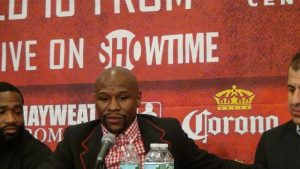


Burden of Proof: Valdez wants to win more respect in title defense

By Norm Frauenehim-

CARSON, Calif. – Oscar Valdez Jr. has a belt, but that’s just a fraction of what he is seeking. He wants to be acknowledged as the best, both by rivals and fans.

A second defense of the WBO’s featherweight title Saturday night on a Top Rank pay-per-view card (6 p.m. PT/9 p.m. ET) against Miguel Marriaga at StubHub Center represents a timely chance for Valdez to prove a point.

Despite his title, Valdez has yet to win the kind of respect given Leo Santa Cruz, Carl Frampton, Gary Russell Jr. and Abner Mares.

“I want to make it clear that I’m the best featherweight in the world,’’ said Valdez (21-0, 19 KOs), who made weight at 125.6 pounds Friday. “I want that belt to mean something. Other featherweights call themselves world champions. That bugs me.”

Valdez, a Mexican Olympian who went to school in Tucson, faces perhaps his toughest test against Marriaga (25-1, 21 KOs), a Colombian who was at 125.4 pounds Friday. Marriaga’s lone loss was to Nicholas Walters. Among featherweights without belts, Marriaga is the best contender, says Valdez trainer Manny Robles.

“He’s the consensus No. 1,’’ said Robles, who worked Marriaga’s corner in a TKO victory over Chris Martin in Santa Monica three years ago. “But Oscar is too quick for him. Oscar wants to unify the titles. He’s ready for the big fights.’’

The Top Rank card also includes 122-pound champion Jessie Maldonado (24-0, 17 KOs) against Adeilson Dos Santos (18-2, 14 KOs) of Brazil and super-middleweight champ Gilberto Ramirez (34-0, 24 KOs) against Maxim Bursak (33-4-1, 15 KOs) of the Ukraine in title fights. Maldonado tipped the scales at 121.8 pounds; Dos Santos was at 121.2. Ramirez weighed in at 167.8 pounds; Bursak was at 167.4.

Shakur Stevenson, a 2016 Olympic silver medalist, will also make his pro debut at featherweight. He weighed in at 124.8 pounds. Opponent, Edgar Brito (3-2-1, 2 KOs) of Phoenix, was at 125.0.