Pontiac Redux, Part 1


This week brings an ignominious anniversary for our beloved sport. Sunday will mark a year since “The Super Fight” – Timothy Bradley versus Devon Alexander – happened in Pontiac, Mich. The fight itself was inconsequential; neither man has done anything in the junior welterweight division since. But the consequences for HBO Sports were noteworthy, and perhaps more importantly, it still feels as though there is more to impart about the event, its city and arena, and Detroit.

A week or so before “The Super Fight,” sources learned Showtime would broadcast Manny Pacquiao’s next match. HBO had lost Pacquiao. The brass at HBO, who’d ignored the toy department for much of the preceding half-decade, suddenly went on notice. Their antennae went up. And with those antennae erect and tingling, “The Super Fight” went off in an abandoned airport hangar of a building in a depressed city.

What follows is a brief memoir of snow, dilapidated edifices, hidden service elevators, endless concrete expanses, a hopped chainlink fence, more snow, and an encounter in the Southwest terminal of Metro Airport. It will include some boxing.

*

About 10 days before “The Super Fight,” circumstances converged to make my trip possible. I procured a weird tangle of crisscrossed flights and rental car accommodations and wrote a preview of Bradley-Alexander that included a first-person conclusion assuring readers I would be there to see it. In the two days that followed, a goodish number of persons whose minds I admire called or wrote to ask me what the hell I was doing. I had two reasons for my trip to Pontiac in January: To honor Timothy Bradley – who was and remains one of my favorite active fighters – and to see if Detroit could be bad as accounts said it was.

My rental car was a Kia that when loaded with my laptop case and travel bag weighed perhaps a hundred pounds more than I did. The Kia and I set off for Pontiac in quickly accumulating snow. I had learned to drive in snow as a native New Englander, but in the 18 years since my departure for the Southwest I had not improved at the craft. The car slid all over the road, occasionally even working the oncoming side of where the yellow line would be found in April.

Friday morning I arrived on the outskirts of what my phone’s GPS said was Pontiac and surveyed the local FM dial in search of local flavor. One Motown station featured The Supremes followed by a familiar cackle and faux interview in which promoter Don King rattled off a handful of other Detroit-founded groups and invited locals to come to Silverdome tomorrow night for a super fight.

There was King, later that afternoon, in a private club on the end of Silverdome opposite where the ring would be constructed for Saturday’s fight. Or was the ring already constructed? A few of us gathered at the enormous glass wall where the weigh-in was held, and we peered and squinted at what could have been a black pocket square floating in a gray blazer. That was the curtain that both hid Saturday’s ring and marked the nearest point of Saturday’s converted arena – across hundreds of yards of empty concrete. Boxing’s chutzpah is at times extraordinary; who else would prod a hibernating venue to life then cordon off 90 percent of it?

King was alive if tired. When you speak with him he violates personal space till you realize how enormous a man he is. Your ears fit between his eyebrows, and his voice shakes your hair and scarf. He knew you would be there because you appreciate what is great in this sport, nay this land, and it thrills him the love he has for you, my brother, because as Shakespeare said, in his grandiloquence of verbositous garrulity, “If she say I am not fourteen pence on the score for sheer fisticuffs, score me up for the lyingest knave in Michigan!”

Promoter Gary Shaw, shorter and paler and rounder, was there too. A study of contrasts, King and Shaw. King is twice himself in person as he is on television, while Shaw is half. Shaw is softspoken and reasonable and willing to explain his talent lies in logistics more than spectacle. In his prime, King would have treated Shaw as an employee – Alan Hopper as publicist, Shaw as matchmaker – but King was by then far from his prime as he could be and still renew a promoter’s license.

Friday night brought an ill-advised drive to Detroit proper, a few bars, a rave, and an early morning Coney dog at the second-best Coney dog eatery in the city because the very best was being used that night as a set for some cop show starring Tony Soprano’s tequila-sipping protégé. The night is a not a blur for the reasons you think. It is a blur because of what followed: Somewhere just north of 8 Mile Road on I-75, when my phone’s battery died with its GPS and the falling snow became a white wall seen from the driver’s side window as my Kia went sideways toward Pontiac, I became suddenly aware of how easy it would be to get lost, run out of gas and not be found till springtime.

And like that I was lost. Snow was accumulated on the freeway signs. The sky was a dark pillow gently shaking one feather-like flake after the next. I had been driving 30 miles per hour for an hour but knew I had not gone 30 miles. The entire episode was not frightful in its actuality – I located the Marriott village in Pontiac before the gas light went out – but frightful in its manufacturing. A terrible time to have an imagination.

Saturday morning I went looking for downtown Pontiac.

***

Editor’s note: Part 2 will be published on Wednesday, Feb. 1.


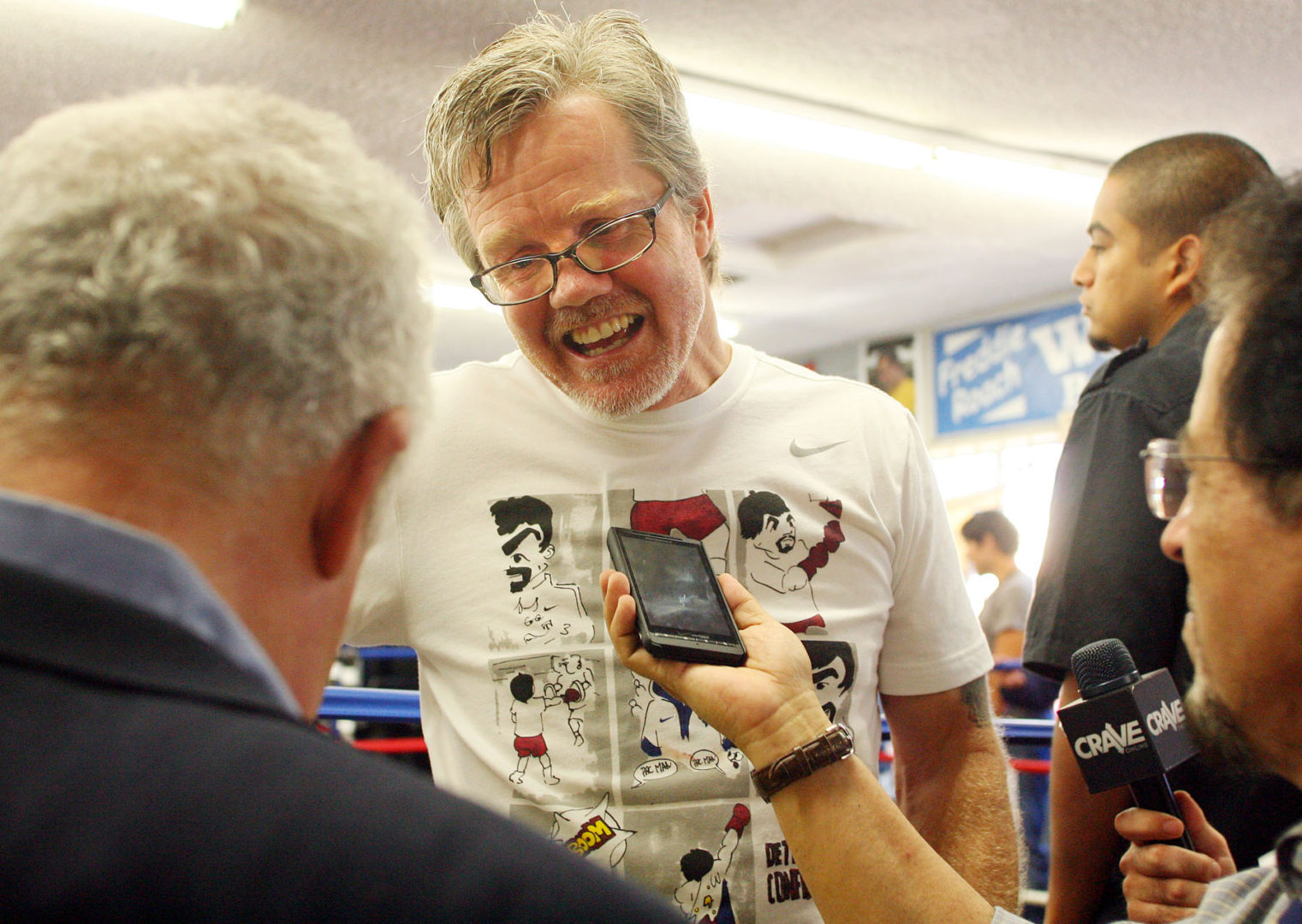
Looking for hope and seeing some in HBO’s film: On Freddie Roach


Optimism is hard to find these days. Dumpster-diving is easier. From embarrassing talks about a fight still in never-never land to cancellations and hollow controversies, there’s just a lot of garbage beneath the headlines. But there is some good news. Really, there is.

Just when it looks as if the rot will finally bury the business, along comes a film that reminds us of its resiliency. It is about surviving and that’s what Freddie Roach does, day-to-day, in a compelling mix of grit and common decency in HBO’s six-part portrayal, On Freddie Roach, which begins Friday (9:30 p.m. ET/PT).

It starts with Roach training Amir Khan for his victory over Zab Judah. There is none of the hyper-active hyperbole that has become the tone of HBO’s 24/7. Instead, it’s is about an ordinary guy confronted by extraordinary challenges. If you ever wonder why boxing survives, there it is. Much has been said and written about Roach’s advancing struggle with Parkinson’s.

With shots of Roach’s shaking hands and arms, however, filmmaker Peter Berg’s documentary reminds

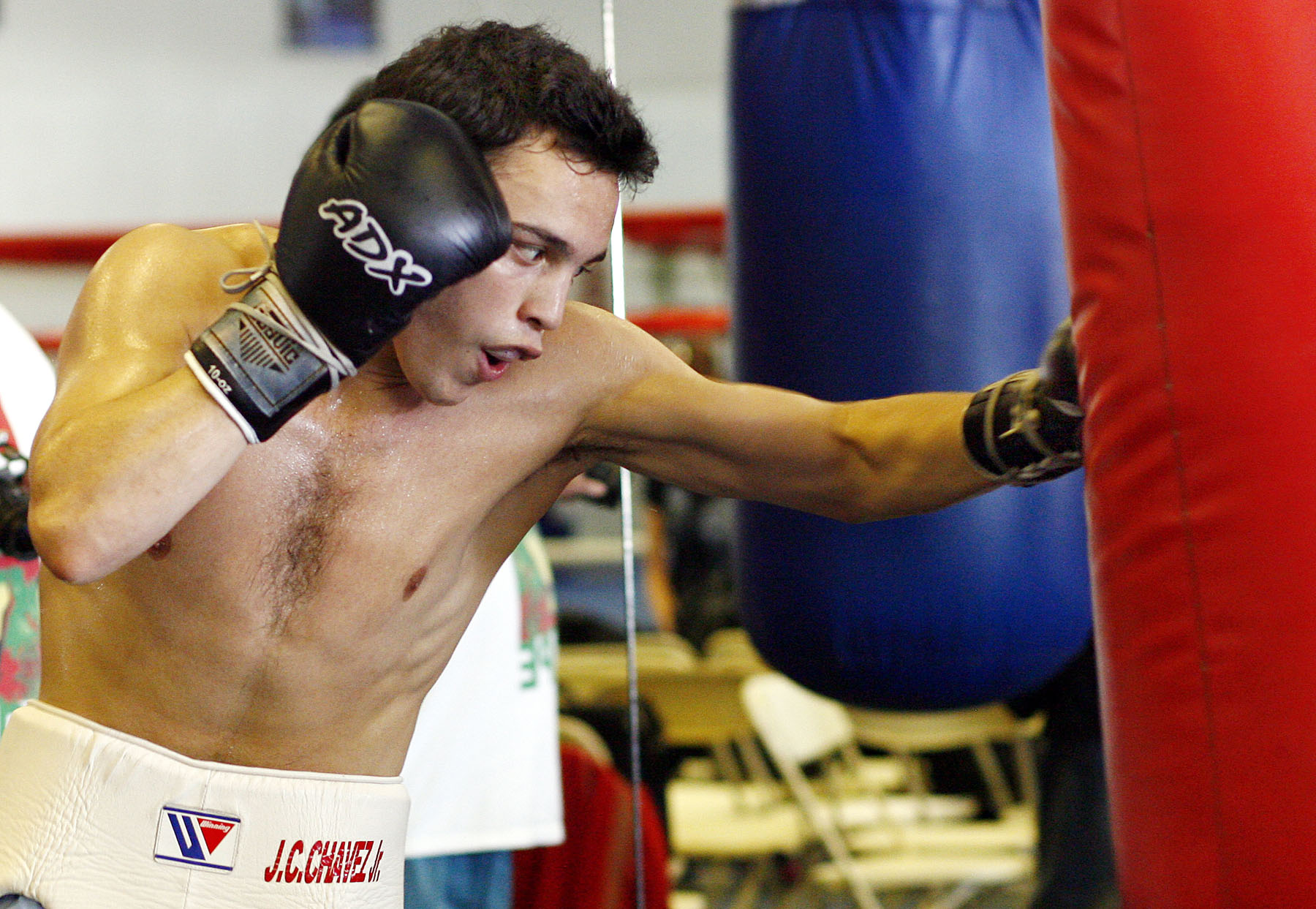
us that it is more than a good story. It’s every day. Roach has often said he wouldn’t know what to do without his work at his Wild Card Gym, without a schedule that takes him from Manny Pacquiao’s corner, to Julio Cesar Chavez Jr., to the 2012 U.S. Olympic team, to Khan and so many others. In the hard work, Roach defines himself and forgets about the terrible disease.

Roach’s unflinching honesty is there for Berg’s cameras, seemingly from dawn to dusk and even when Roach falls asleep. It’s been called reality television, whatever that is. It’s not. It’s a lesson about life. Watch it, and you’ll see why the business fights on.

Headlines & Counters
News item: Sergio Martinez at a catch weight has emerged as an opponent for Floyd Mayweather Jr. if talks (insert your own joke here) for a fight in May with Pacquiao continue to fail. Reaction: Martinez at 150 pounds is a tougher opponent for Mayweather than Pacquiao.

News item: The so-called mystery man, Mustafa Ameen, tells the BBC that, yes, he did tell WBA supervisor Michael Welsh to correct his scorecard in the controversial decision that went against Khan in his loss to Lamont Peterson in Washington, D.C. Reaction: How and why was Ameen allowed to approach the judge? Welsh should be banned from judging, Ameen should be banned from ringside and the D.C. Boxing & Wrestling Commission should be subjected to a federal investigation.

AZ NOTES
Sergei Liakhovich’s anger at Eddie Chambers for his late withdrawal from Saturday’s NBC debut of a boxing series because of fractured ribs is fair and understandable. Chambers wasted everybody’s time and money. For Liakhovich, it was just the latest in an unending string of misfortune that started with his 2006 knockout loss to Shannon Briggs in a ring above the infield at the Arizona Diamondbacks home park in Phoenix.

In an interview a few days before Chambers abruptly forced the cancellation of their bout, Liakhovich, a Scottsdale resident, talked about renewed hopes.

Retirement was never a consideration, said the one time heavyweight champ, who said a fractured nose in a loss to Robert Helenius in August left him choking on his own blood.

He refused to look past Chambers. Now, he has to. He says he wants to fight Chris Arreola. Here’s hoping he gets a shot.


Writing about Chavez Jr. while thinking about Donaire


SAN ANTONIO – Another deadline comes and goes in the silly saga of whether the two best fighters in our sport in 2009 will fight one another in 2012. It’s all bad faith now. A promoter goes to the Philippines to present his fighter four options no fan asked for. A fighter gets on Twitter to make a faux demand he didn’t make years ago, when it might have mattered.

If there is solace to be found in the tired spectacle this time round, it’s how comparatively little folks care. The truth of the Great Recession now touches every American. Quibbles between millionaires about purse splits don’t have the traction they did years ago. The parties are no closer to making this fight than last time, but at least there was no midnight conference call.

Casual fans have given up on the Fight That Would Have Saved Boxing. When they ask about it these days, it’s to change the subject rather than make an honest inquiry. They hear you talking about Andre Ward or Sergio Martinez, men they wouldn’t recognize if watching a Ward-Martinez fight, and interrupt you to say: “What I want to know is when are Mayweather and Pacquiao gonna fight!” You start to explain the latest cramp in negotiations. Then you find no one listens; hey, what do you think of Tebow Mania?

Promoter Bob Arum appears, now, to be the party who does not want the fight to happen while he wrestles with lesser evils: Do I dislike Golden Boy Promotions enough to guarantee Mayweather a gargantuan purse and make the fight without them, or do I dislike Mayweather enough to deny him the fight his resume needs? The likely answer is: Arum dislikes more whomever he just spoke to.

People round boxing no longer believe Floyd Mayweather is afraid to lose to the guy they saw fight Juan Manuel Marquez in November. In a better world for Mayweather, that would be enough; he won the fight without having to make it. One senses, though, Mayweather’s financial situation is precarious enough he’ll soon need the Pacquiao purse.

Boycott both of them, then, and to hell with it!

No, not so fast. There is an interesting balance that must be struck, especially as it pertains to Arum. His company, Top Rank, is the country’s preeminent promoter. It is an excellent outfit that makes its fighters and employees available. Top Rank does the best kick-off press conference in the business.

That’s what went through my head a couple Tuesdays ago at Alamodome. We were gathered before a very large stage and sound system for an otherwise intimate affair. The field behind us was being transformed from Alamo Bowl host to All-American Bowl host. If you looked far enough northwards and used your imagination, you could see where the black curtain would hang for February’s HBO “World Championship Boxing” fight card.

Arum was there. Hall of fame matchmaker Bruce Trampler was there. Trainer Freddie Roach was there. HBO’s Peter Nelson was there. Puerto Rican great Wilfredo Vazquez Sr. was there. Future great Nonito Donaire was there. And yet, we all waited for Julio Cesar Chavez Jr. – still known as “Son of the Legend.”

Chavez was the reason for our gathering, whatever we might opine of him. In three Saturdays, Chavez will headline 2012’s first big fight card, in this city. Unbeknownst to him, probably, he’ll begin quite a stretch for Texas boxing, one that will see a Showtime card 150 miles southeast of here, in Corpus Christi, a couple weeks later, and then an even bigger HBO card 200 miles east of here, in Houston, a few weeks after that. But it all starts with Chavez.

That is a sentence difficult to write as it is to read.

Chavez’s fanbase is gaining some authenticity, though. Chavez is fighting bigger, better, darker men, little by little, while projecting more of the spoiled-rich-kid resentment ridiculed by those who do not understand it despite its historical ferocity and effectiveness.

It’s a funny thing, ticket sales. Nobody I’ve ever spoken to – in what is becoming a tradition of covering Chavez Jr. fights – ever names him as a favorite fighter. Most Mexicans pay homage to the patronym while humoring the epigone. And yet.

Sitting on the same side of the podium as Chavez was Nonito Donaire, who appears to have every tool. Donaire will make an exciting fight with Wilfredo Vazquez Jr. on the same night Chavez fights fellow Mexican Marco Antonio Rubio. Donaire is enormous even for his new weight class. He is well-spoken. He gives every appearance of sincerity. He’s not classically handsome, but he has a great sense of style. He’s an incredibly talented prizefighter. And yet.

Chavez is the main event here on Feb. 4, not Donaire. They will fight in Lone Star State because Chavez sells more tickets here than Donaire would in the Bay Area (and because Texas is a right-to-work state, with all that implies).

Which brings us to the mystery of ticket selling. It’s easier, at times, to celebrate those who sell tickets than to explain those who do not. Donaire is an offensive force of the first rate who’s made a habit of winning his biggest fights by knockout. He also has the best promoter in the United States. And yet.

If it were tenable, one might suggest, the premium networks, HBO and Showtime, ought to offer licensing fees that are a percentage – whatever percentage – of a fight’s paid gate. This wouldn’t change the networks’ rosters of fighters, necessarily; it would change the compensation systems they use.

Where would that leave Nonito Donaire? Hard to say. But it’s also a good yellow light for aficionados looking to cure boxing. Ridding ourselves of corrupt sanctioning bodies, alone, won’t do it. But it may also not be simple as rewarding ticket sellers.

Bart Barry can be reached at bart.barrys.email (at) gmail.com


Mayweather’s tweet just another silly punch line in silly talk


The ever-unpredictable Floyd Mayweather Jr. has given Manny Pacquiao promoter Bob Arum another reason not to use his Twitter account.

There might be some unreported negotiations going on somehow, on some planet, for the fight always under discussion, yet still in never-never land Thursday. But I’ll believe that Mayweather is fighting Manny Pacquiao only at the very moment they answer an opening bell. Everything else about this process without end is sad comedy.

Anybody laughing? Actually, I did the other day when Mayweather resorted to Twitter in an attempt to say he’s serious about fighting Pacquiao on May 5. “Step up, punk,’’ Mayweather tweeted. He might as well have broadcast his message on a back-alley wall with a spray-can full of paint. Mayweather’s tweet was digital graffiti.

If negotiations for the richest fight in history can be conducted via Twitter, President Tweet will move into the White House next January. Come on Floyd, be serious. As social media, Twitter is fun. It’s also a good way to see what’s trending, which the Pacquiao-Mayweather won’t be if negotiations are limited to 140 characters.

QUOTES, ANECDOTES & COUNTERS
The Mayweather-Pacquiao mess and ad nauseam qualify as a redundancy. Blame everybody, including the media.

It’s hard to believe Arum’s latest warning that Pacquiao’s can’t fight until early June instead of early May because of a cut above an eye suffered against Juan Manuel Marquez in November. The bigger wound might have been to Pacquiao’s confidence after he escaped with a controversial decision over Marquez. Pacquiao might need a tune-up to recover from that one.

In saying a fight with Mayweather would be better in late May instead of early May, Pacquiao advisor Michael Koncz says he want to maximize financial opportunities by holding the fight in a temporary, 40,000-seat arena on the Las Vegas Strip. Apparently, it’ll take more time to build the outdoor arena. Okay, but there’s a college football venue, Sam Boyd Stadium and Nevada-Las Vegas’ home field, available right now. The stadium’s record crowd is 44,165. After all, major fights already have been staged at Thomas & Mack Center, where UNLV plays basketball.

AZ NOTES
The bad news is Phoenix junior-welterweight prospect Jose Benavidez Jr. was forced to cancel a scheduled fight on Feb. 3 because of a troublesome injury to his right wrist. The good news is that he is only 19 years old. He might have to deal with hands vulnerable to injury throughout his career. It’s not uncommon. Whether he needs to wear different gloves or have his hands taped differently, Benavidez has time to find a solution that could save a promising career.


In celebration of thinkers, skepticism and 10-10 rounds

There is no such thing as an objective scorecard in boxing. Using that assumption, let’s take a look at – wait, what’s that? No consensus on the point above. Shucks. Let’s work it over a bit, then, break it in and see if we can use it later.

Where do you look while scoring a fight? “In the neutral plane exactly between the combatants, following each punch from its entry into the unoccupied space to its conclusion.” In that case, maybe you are capable of rendering an objective scorecard. It’s not too practical, though, is it?

Official scorekeepers are just about the only people situated at a prizefight in a place that allows them perfectly neutral eyes and minds. If a person is on press row, he is already too far from the fight and necessarily watching a panorama of sorts that features both fighters in a shifting focus that depends on whatever narrative steers it. If a person is watching on television, he is subjected to a number of narratives, both his own and others’, that affect the very texture of what his mind does with the images his eyes send it.

Do official scorekeepers unfailingly employ their unique position to render perfectly objective tallies? Well. These are people with opinions and narratives of their own, and considerations more than the rest of us. That is, if a Clark County Justice of the Peace can be persuaded by economic considerations to delay a prizefighter’s sentence, as Melissa Saragosa did in the case of Floyd Mayweather Jr., Friday, do believe an athletic commission official is more persuadable still.

This is not written to or about official scorekeepers, though. This is for a more important observer: the boxing aficionado. Our beloved sport needs this person to be a thinker, not a knower, and a constant skeptic, checking his own objectivity as often and vigorously as he checks others’.

American boxing fans, like Americans in general, can be well-divided into thinkers and knowers, with an unseemly majority being knowers – folks who pursue consensus more than discovery. You are familiar with such people; every argument comprises an obscure anecdote recently heard and devolves into personal challenges. Most conversations are Shakespearean in nature, as the parties talk past one another, speechifying more than inquiring. Rarely is a phrase like “I’m not sure” or “That might change my mind” or “I hadn’t considered it” uttered.

Thinkers tend to make better company. They have postmodern moments when the very gears of language grind and consensus on something slight as the word “apple” might seem impossible, but they serve the valuable function of undermining others’ certainty. And if there is a lesson to be mined from the Great Recession it is likely that certainty benefits very few of us.

More pertinent to the boxing aficionado’s experience, though, is this: Most of what you know about boxing is probably wrong anyway. There is consensus, of course, lots of it. There are opinion shapers. But those of us in that racket are often as unwitting a group of pawns as can be found in any field. Boxing is a stew of dissembling free agents, seasoned by short-sighted greed. The truth is not out there, Agent Mulder; the only trustworthy place in boxing is between its ropes.

How we look at what happens between the ropes, then, is probably the most important skill we can cultivate as interested observers. We bring filters galore to the act, yes. (Who among us isn’t predisposed to cheering for a fighter who looks like we do?) We should be skeptical of those filters, going in.

There may be no better act of skepticism in the observation of boxing than scoring a round even, 10-10. It is a way of saying you did not know who would win the round when it began, you approached your task of observation innocent of narrative, and neither combatant did enough to convince you someone won the round by its end. That’s not indecisive; it’s skeptical. It’s also a heck of a sight better than knowing who won the round, before reviewing the round a week later and knowing the other guy won the round, and then reviewing the round a year later and knowing that either guy may have won the round.

Maybe your peers on press row will call you irresolute. Maybe your friends gathered round the television will think you inept at the manly art of deciding. But you may also find the stress of awaiting discovery is not bad as the stress of contorting yourself into consensus.

What the hell does that mean?

Round 1 of Pacquiao-Marquez III should suffice as an example. The thinker began the round saying, “Neither guy will win this round unless someone decisively wins this round.” And he marked the round even, 10-10, when he found himself entirely unconvinced by the fight’s opening three minutes.

The knower, his mind already rent with the pressure of having to pick a winner, came to his seat under the spell of a narrative that likely went: Manny Pacquiao will win this fight, maybe by knockout, and most every act Pacquiao takes will bring him closer to this outcome. Did the knower score round 1 for Pacquiao? Not necessarily. He may well have seen his narrative confirmed; Pacquiao’s lack of aggressiveness evincing a calculated measurement of Juan Manuel Marquez. Or he may have found his narrative disproved and decided Marquez’s remaining upright and unmarked was reason to give Marquez the round.

Point is, no aficionado should watch the first round of any fight burdened by a need to score it for either fighter. Most opening rounds in most championship prizefights are uneventful, even affairs.

I believe this to be true, but I might be wrong.

Greater authority returns next week.

Bart Barry can be reached at bart.barrys.email (at) gmail.com


Give Mayweather a chance to win the biggest fight of his life


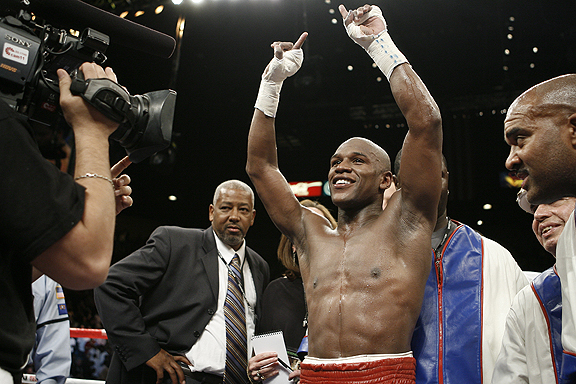
Floyd Mayweather Jr. is scheduled Friday to begin a 90-day jail sentence that represents a term of uncomfortable uncertainty for a part of the business that dislikes him, yet needs him.

Like it or not, Mayweather’s pay-per-view revenue adds up to proof he has created an audience and anticipation for more from a gifted fighter who controls everything within the ropes, yet seemingly very little outside of them.

It’s the contrast that makes the next three months impossible to predict. Who will step inside the walls and bars of Las Vegas’ Clark County jail? The calculating fighter always able to dictate timing, placement and style in the ring? Or the mercurial personality charged with losing control in a confrontation with an ex-girlfriend?

He’s been reserved a room without a view in a place without personal choice. Mayweather will be told when to eat, what to eat, when to shower, what to wear and when to sleep. One of the few things anybody knows for sure about Mayweather is that he hates being told what to do. He rebels at what he can’t control.

I’m guessing that terse comments and no comments about him from Top Rank’s Bob Arum, Mayweather’s estranged promoter, and Golden Boy’s Richard Schaefer, his recent representative, are guided by that realization. But there’s more to it than that. Both know how the public, blow-by-blow accounts of talks for Mayweather-Manny Pacquiao drove the futile negotiations into the ditch. Any kind of speculation from either promoter might further endanger Mayweather’s chances at winning the biggest fight of his life.

I applaud them for saying as little as possible. Let Mayweather do his time without it becoming what I fear could become another chapter of HBO’s 24/7, which became one of television’s most popular reality shows because of its portrayal of his dysfunctional family. Unfortunately, Mayweather’s celebrity probably means he won’t be left alone, inside and out. How long before TMZ gets a collect-call from an unidentified inmate offering a salacious anecdote? Chances of that call getting made and reported are a lot better than a Mayweather-Pacquiao fight.

If Mayweather is allowed to come to terms with what he has done and why, he can walk out of jail with newfound maturity and a much better chance at achieving the potential he has always possessed. He would prosper. Pacquiao, Arum and Schaefer would prosper. But if he surrenders to the demons that put him there, he loses. Everybody does. Let him win. Hope that he does.

A COUPLE OF COUNTERS
· Arum says he will discuss four possible opponents – Lamont Peterson, Tim Bradley, Miguel Cotto and Juan Manuel Marquez — for Pacquiao during a visit next week to the Philippines. Leg cramps also figure to be a talking point. Cramps in his last two fights, first over Shane Mosley and then over Juan Manuel Marquez, were the one opponent he couldn’t beat.

· New Year’s resolutions are like fighters’ nose. They’re there to be broken. But here’s one resolution I wish could be kept. At a San Antonio news conference for the Julio Cesar Chavez Jr.-Marco Antonio Rubio news conference, Chavez was quoted as saying he’d be willing to die in the ring. Please, no more talk of dying. We only want to see a willingness to win.

AZ NOTES
· Top Rank and Showdown Promotions are planning a March 23 card for Showtime’s “ShoBox” at Tucson’s Casino del Sol featuring super-bantamweight prospect Roberto Marroquin of Dallas in the main event and 19-year-old junior-welterweight Jose Benavidez Jr. on the undercard. The initial date had been March 9, a month and a few days after Benavidez fights on Feb. 3 for only the second time in front of a hometown audience at Wild Horse Pass Resort & Casino in Chandler, a Phoenix suburb. Benavidez has been given final medical clearance for the Feb. 3 bout. He had been bothered by pain from a strained right wrist suffered in November during a victory before Pacquiao’s controversial decision over Marquez at Las Vegas MGM Grand.

· And Phoenix super-middleweight Jesus Gonzales, who has been searching for a fight since an impressive victory on July 8, is staying busy by sparring with Canadian junior-middleweight Janks Trotter. In the biggest Canadian showdown not on NHL ice, Trotter (7-0, 7 KOs) faces Adam Trupish (9-0, 6 KOs) on Jan. 13 in Calgary. On the July night that Gonzales got off the canvas to beat Francisco Sierra at US Airways Centre in downtown Phoenix, Trotter scored one of the knockouts of the year with a second-round punch that lifted Arturo Crespin high enough and long enough for some real hang time in the NBA arena.


Frustrated Chavez Jr. announces February title defense at Alamodome


SAN ANTONIO – Mexican middleweight titlist Julio Cesar Chavez Jr., known as much for his father’s exploits as his own, is fully aware of what made him famous. He knows he is known for his father’s achievements in boxing more than his own, and he knows he’s known it for a long time too.

Difference is, he no longer accepts, with a frown and a shrug, others’ pointing it out.

Tuesday at Alamodome, Chavez (44-0-1, 31 KOs), in town to announce his Feb. 4 title defense against fellow Mexican Marco Antonio Rubio (53-5-1, 46 KOs) – as part of an HBO “Boxing After Dark” card that will also feature “Filipino Flash” Nonito Donaire (27-1, 18 KOs) and Puerto Rico’s Wilfredo Vazquez Jr. (21-1-1, 18 KOs) in a super bantamweight title match – was at times nonchalant and at times animated, and a little frustrated throughout.

“First they told me that I have to fight Rubio because he is the (WBC) mandatory (challenger),” Chavez said in his native Spanish, in response to a question about his rumored reluctance to fight recognized middleweight world champion Sergio Martinez. “And Rubio says that I will never make that fight because I fear him. I agree to that fight, and now they say that I fear Martinez.

“I fear no one!”

The increased aggressiveness in Chavez’s tone Tuesday marked a frustration born of his last visit to this city in June 2010, a visit that saw him decision John Duddy at Alamodome in an excellent fight Chavez considered a gateway of sorts.

“The night against Duddy was the best of my career,” Chavez said. “I proved that I can be known for more than just the name of my father.”

A title-winning effort, and HBO debut, followed 12 months later, with a match against Sebastian Zbik. Five months after that, Chavez returned to Texas and stopped Peter Manfredo in Houston. Immediately following Chavez’s November win over Manfredo, though, Sergio Martinez stood silently at the postfight press conference, asking lots of questions by his presence alone.

“They want to make money with my name and my fame,” Chavez said of those fighters who have called for a match with him. “Of course I am frustrated.”

For his part, Marco Antonio Rubio was more anxious to right previous wrongs than take Chavez’s name or celebrity.

“We are going to try to correct many errors that we have made in this career,” Rubio said in Spanish, from the press-conference podium.

Rubio’s promoter, Mexican Osvaldo Kuchle, went a few steps further.

“I’ve heard fans say, ‘Maybe Rubio is just here for a payday. Maybe Rubio’s going to take a dive,’” Kuchle said from a press-conference stage overlooking the Alamodome football field that on Saturday will host the 2012 U.S. Army All-American Bowl. “No, this is a fight that is cultural.”

If super bantamweights Nonito Donaire and Wilfredo Vazquez Jr., who both preceded Chavez and Rubio to the podium, were not animated or frustrated as their co-headliners, they were decidedly more charismatic and respectful to one another.

“You become an elite by fighting elite fighters,” Vazquez said in Spanish, before turning to face his February opponent. “Men like Mr. Nonito Donaire.”

“He’s a good person, a great guy, but I know that he comes to fight,” Donaire said about Vazquez, when Donaire’s turn at the dais came. “This is what makes boxing great: Two guys that respect each other but go out there to tear each other’s heads off.”

Bart Barry can be reached at bart.barrys.email (at) gmail.com


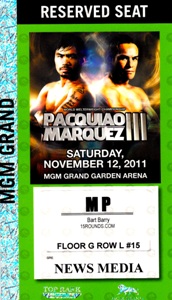
Portrait of a credential to 2011’s biggest fight, Part 2


Editor’s note: For Part 1, please click here.

***

The day Manny Pacquiao and Juan Manuel Marquez fought their rubber match in November 2011, Las Vegas gazed upon its empty MGM Grand Garden Arena for most of the undercard matches because that is what it does. Friday weigh-ins are for serious fans. Saturday nights sadly are not.

Pacquiao fought Marquez a third time for several reasons. Marquez had traversed the Philippines immediately after their second match, one whose official decision went to Pacquiao and unofficial decision went mostly to Marquez, chiding the Filipino hero, and Pacquiao wanted to end that for posterity’s sake. The other idea was that Marquez, an all-time great featherweight-cum-lightweight, would, at welterweight, make an excellent scalp to toss on the table when negotiations for Pacquiao-Mayweather returned: Not only is Manny a bigger pay-per-view draw, but he obliterated Marquez the way Mayweather could not.

Marquez’s class and pride were such that nobody would blow through him. Not at 126 pounds, not at 143. Pacquiao was a whirligig of oddly canted aggressiveness, one that loudly struck opponents from angles that surprised other prizefighters and made commentators ecstatic. Marquez had no such flair but greater audacity. Where Pacquiao threw jab, jab, leaping cross, Marquez threw uppercut leads, moving forward, in world championship prizefights – just about the ballsiest thing a man can do.

Marquez’s greatness as a counterpuncher, the quality that made his violent defeat essential to the Pacquiao résumé, was too large, finally, and cast shadows on the subject it was there to brighten.

*

The day Manny Pacquiao and Juan Manuel Marquez fought their rubber match in November 2011, Las Vegas shined and sparkled with its usual charm and timeless (clock-less) efficiency. Put everyone off schedule, the city plotted, then charge them to catch up.

Pacquiao had not improved a fraction so much as his publicists declared. A coming documentary about his trainer put a burden on Pacquiao’s technical improvement. If, after all, Pacquiao were but a hyperagressive southpaw who won with activity more than class, any monuments erected to his and his trainer’s greatness would come under scrutiny. Deeply interested parties, then, declared Pacquiao’s technical imperfections innovative, rather than call them what they were: a regression to form.

By the ninth round of his rubber match with Marquez, Pacquiao was aware of his technical inadequacy. He fooled Marquez less this time than the previous two because Marquez promised his trainer he would not look for a knockout and wander into what maniacal exchanges Pacquiao always won. If Pacquiao won his third fight with Marquez, he did it the brute’s way and was simply busier.

A compliant and unimaginative print media paused for a moment at what it saw in rounds 7-11, got the judges’ confirmation all was actually well, and went back to his its prefight narrative. Maybe Marquez did better than expected, perhaps the fight could be called a draw, but, ah, for not closing the show, Marquez did not deserve to win.

No one was fooled, but deadlines were not missed either.

*

The day Manny Pacquiao and Juan Manuel Marquez fought their rubber match in November 2011, Las Vegas assured the country it was not in hard a place as Detroit or New Orleans, the country’s other two depressed cities. Vegas was back, baby! Look at the room prices.

The American economy was rebounding, too. Perhaps growth was illusory, maybe underemployment was nearing record levels, but the job creators were getting some of their wealth back, and that would trickle down to the rest of America eventually. Yes, idiot, it would; didn’t you know anything about economics?

The media area at MGM Grand Garden Arena had the usual dynamic. The first five rows of tables were a cutthroat assembly of the names everyone knew, with most working on deadlines, their laptop monitors guarded closely as poker hands. Then came the girlfriends of Spanish- and Tagalog-language network executives. In the back were the online and magazine writers whose names you didn’t know. They were the most convivial bunch – happy to help one another with the result of the fourth undercard bout or a recollection of that time, somewhere in Mexico, the press had to stand and hold their seats overhead because cups of beer and urine rained on them.

Some of the guys in the back had scored the second half of the fight a whitewash for Marquez and were happy for the Mexican great, happy he might finally have his due, whatever the consequences. Those guys wore stunned, betrayed looks as they shuffled off to the postfight press conference where Pacquiao would have time for only two questions because it was getting late.

*

The day Manny Pacquiao and Juan Manuel Marquez fought their rubber match in November 2011, Las Vegas did the existential dance entrepreneurs often do, promising things were good as they’d ever been, might even be better, sales were up – while expecting others to cheer its fortune-seeking with the same enthusiasm it did.

Nacho Beristain told Marquez he had the fight won during the championship rounds for a couple reasons. As a sculptor of 16 world champions Beristain knew what his eyes told him and hadn’t a doubt his man was winning. And Beristain knew with mathematical certainty Marquez would have been 2-0 against Pacquiao were it not for those four knockdowns in their first two tilts, and then there would have been no reason for a rubber match, or the Pacquiao legend.

After the initial disgust of the 116-112 card wore off and we settled into writing our fight reports, the photocopied scorecard tallies got handed out. When it was revealed Judge Glenn Trowbridge saw Marquez win the 12th round but not the eighth, ninth, 10th or 11th, a secondary, harder-to-dismiss disgust set in.

*

The day Manny Pacquiao and Juan Manuel Marquez fought their rubber match in November 2011, Las Vegas marched on. “See you in May!” it said, with a big grin.

The umbrage passed. Pacquiao lost a few fans. His myth lost genuine and serious-minded advocates, the sort of men who write history. Marquez gained a few fans and returned to Mexico, assured in his greatness. The umbrage passed.

I was in Houston the following week to cover Julio Cesar Chavez’s son and had already forgotten a large part of what happened at 2011’s biggest fight.

Bart Barry can be reached at bart.barrys.email (at) gmail.com


One look back and a few picks for a New Year


A year ends with memories of those who are gone, optimism for those who are emerging and hope for those who are back. There are lessons from unresolved controversies and controversy that never ends. Farewell Joe Frazier, Genaro Hernandez, Ron Lyle, Henry Cooper, George Benton, Nick Charles and George Kimball. It won’t be the same without you. Hello Andre Ward, Nonito Donaire, Julio Cesar Chavez Jr., Saul “Canelo” Alvarez, Seth Mitchell, James Kirkland, Gary Russell Jr. and Jose Benavidez Jr. You’re the future.

Those new calendars in the mail are an empty canvas. Opinions and predictions are as irresistible as they are frivolous and about as forgettable as graffiti. Here are a few – the good, the bad and the tongue-in-cheek. But, first, a warning. For anybody who takes any of them seriously, remember that I picked Alfredo Angulo to beat Kirkland, who got up from a first-round knockdown and made the prediction game look foolish with a sixth-round stoppage.

Now, a look at what might – and might not — unfold:

Opinion: There’s a better chance of Manny Pacquiao-Floyd Mayweather in 2012 than there is of a fourth fight between Pacquiao and Juan Manuel Marquez. Pacquiao-Marquez IV would look a lot like II and III. What’s the point? It would end in just another noisy controversy about who won. Fair or not, Marquez’ legacy rests on the brilliant way he made Pacquiao look beatable. In subtle adjustments from round-to-round last November, he forced Pacquiao to hesitate and think. It was enough to prevent Pacquiao, an instinctive fighter, from establishing a rhythm. Allow Pacquiao to get on a roll, and there’s no stopping him.

Prediction: Marquez, who keeps his promises, retires

Opinion: Somebody needs to convince Mayweather that his 90-day jail sentence on reduced charges for his role in domestic abuse is a chance to think about a legacy he has put in jeopardy. If he stays out of trouble and vows to devote the next few years to his evident talent, he still can achieve the respect he always believes has been denied him. That respect isn’t an entitlement. It’s won by fighting through adversity. For the first time in his career, he is facing some that he can’t trash-talk or side step. It’s the biggest fight of his life.

Prediction: Mayweather beats Lamont Peterson three months after his release.

Opinion: Mayweather advisor Al Haymon is the elusive powerbroker, whose influence is there, yet hard to quantify. There is power, perhaps, in the mystery. Mayweather has called the publicity-shy Haymon “The Ghost.’’

Prediction: Ghosts will get quoted more often than Haymon.

Opinion: Pacquiao will have to restore some lost confidence after getting a majority decision over Marquez in fight he halting called “not so happy.’’ He also has to find a way to solve troublesome leg cramps, which he says affected him in victories over Shane Mosley and Marquez. The fractured confidence should be easy enough to repair for the Filipino Congressman and lieutenant colonel. But the cramping is another issue. It might be a sign, an early symptom, of a fighter one step past his prime.

Prediction: Pacquiao beats Tim Bradley, then Miguel Cotto in a rematch and gets promoted to major general.

Opinion: World Boxing Council chief Jose Sulaiman is issuing statements and clarifications faster than interim titles. This time, he’s trying to say he didn’t really mean to tell the Filipino media that “beating a lady … it is not a major sin or crime.” In a subsequent statement, he said that he “developed female boxing.’’ Memo to women who hold one of the WBC’s lime-green belts: Do what Riddick Bowe did in 1992 and dump it in the nearest garbage can.

Prediction: Sulaiman will say something stupid.

Opinion: We’re just beginning to see how good Ward can be. With news that he beat a Carl Froch with a left hand fractured in two places, we’re also beginning to see how tough he is. A reported audience of fewer than 500,000 watched his victory on Dec. 17 over Froch in Showtime’s final of the Super Six Tournament. That was disappointing.

Prediction: After the hand heals, he’ll win two in 2012, pushing his record to 27-0. This time, more than 500,000 will watch his patient, yet sure path to pound-for-pound contention.

Opinion: Questions loom as to whether Canelo-Chavez Jr., will ever happen because Chavez Jr. a junior-middleweight, is said to be at about 180 pounds at opening bell. If Chavez Jr. is too heavy for Canelo, he’s too heavy for Miguel Cotto. The weight issue might force Chavez Jr. into a fight with Sergio Martinez late in 2012.

Prediction: Martinez wins a late-round stoppage.

Opinion: People close to Antonio Margarito have urged him to retire. Even if his surgically-repaired eye can withstand further punches, the tissue around it cannot. After years of sustained punishment, it doesn’t take much for it to lacerate and swell. That was evident early in his loss on Dec. 3 to Cotto.

Prediction: A defiant Margarito continues to fight, bleed and lose in Mexico.

Opinion: Referees struggled throughout 2011 to get it right. Russell Mora missed 11 low blows in Abner Mares’ first victory over Joseph Agbeko. Joe Cortez was looking away, toward the timekeeper, when Mayweather dropped Victor Ortiz, whose hands were down and his eyes on Cortez. Joe Cooper took two points from Amir Khan for pushing off Peterson. If Cooper warned Khan, it was only evident after careful review of the tape long after Khan’s loss on the scorecards was announced. Cooper’s penalties were the difference.

Prediction: More instant replay. It works in the NFL. Nobody has a tougher job than boxing’s lone ref. Let technology be his ally.

Opinion: Top Rank and Golden Boy, Bob Arum and Oscar De La Hoya, will continue to exchange insults instead of letting their respective fighters exchange punches.

Prediction: A year from now, we’ll be talking about whether Pacquiao-Mayweather will happen in 2013.


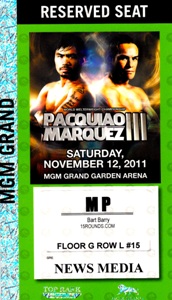
Portrait of a credential to 2011’s biggest fight, Part 1


The day Manny Pacquiao and Juan Manuel Marquez fought their rubber match in November 2011, Las Vegas was in recovery. The city tried to pull itself from the depressed conditions every cabbie was willing to describe during trips to McCarran Airport, in 2009 and 2010. Vegas’ new line was taxi traffic; record-setting or record-tying or something.

Pacquiao-Marquez III was about money and “Money.” The first governs everything in prizefighting, as the second, Floyd “Money” Mayweather, once explained to Shane Mosley. Pacquiao, always quick with his fist when signing contracts as punching, was a market unto himself, hawking defunct tablet computers, imported veggies and iTunes singles. And Pacquiao-Mayweather (whose promotion Pacquiao-Marquez III would help) would be the most important fight in a century or two when it happened.

The media was in a frenzy of Pacquiao celebration, spurred and lashed by promoter Bob Arum, for whom Pacquiao was the final masterpiece of a historic sales career.

The masterpiece underwent a withering inspection, though, and came out lusterless and resented.

Or so I remember it.

*

The day Manny Pacquiao and Juan Manuel Marquez fought their rubber match in November 2011, Las Vegas readied to host an event with the reflexive trickery it has patented: Big events go to Las Vegas because Las Vegas hosts only big events.

With the world economy still receding, prizefighting watched its pay-per-view receipts plummet. There were two or three major events every year that yielded considerably less revenue than the 10 smaller events that happened five years before. It meant even the sport’s two biggest promotional outfits were now humbled in their wares if not their oratory.

Pacquiao would blow through Marquez, the older, smaller, slower opponent whom he’d already officially beaten and drawn with, and after stopping Marquez violently and abruptly – something Money May did not do while dominating Marquez in 2009 – Pacquiao would redeem the sport and his handlers’ coffers, with The Fight to Save Boxing, then approaching its third year of marination.

The print media picked Pacquiao overwhelmingly enough to wonder not if Marquez could win or even remain conscious but if Marquez could escape Pacquiao’s ferocity with any remnants of his health intact. And by night’s end, when the ring announcer read “and still champion!” and Pacquiao raised his hands, we all felt a little sheepish and disgusted.

*

The day Manny Pacquiao and Juan Manuel Marquez fought their rubber match in November 2011, Las Vegas said it was coming back, of course, but was it really? Strolls through the basement mall of MGM Grand substantiated none of the rosy reports one heard in the restaurants above.

There were dark tones beneath the rubber match, and they began to glow. Manny Pacquiao, accused of using performance-enhancing drugs, agreed unconditionally to prefight testing if Money May demanded it for their match, the one to come after Pacquiao blew through Marquez. Or Pacquiao didn’t agree. No one was clear about this. The facts changed hourly. Obfuscating insiders fed reports to websites that copied, pasted and published anything emailed their way. Then Juan Manuel Marquez revealed a theretofore-concealed sense of irony and hired a former PED distributor as his strength coach. And he sure wasn’t smaller when he hit the scale at the weigh-in, that tired prefight event used to promote the next day’s match to those unable to afford a pre-sold/post-scalped ticket for Saturday. There, the only memorable thing was a line from a fellow scribe who treated the week’s PED controversy and concluded: “Hell, they’re all probably on something, so I say, ‘Smoke’em if you got’em!’”

So many questions. How would Pacquiao fare against Mayweather when they fought after Pacquiao ruined Marquez? Would Mayweather, frightened by the way Pacquiao blitzed Marquez, find a new reason not to make the fight? Would Pacquiao retire from boxing before becoming president of the Philippines?

And then in the hour after the fight: Did any knowledgeable spectator still think Pacquiao could win more than a round against Money May, if The Fight that Might Have Saved Boxing ever did happen?

Thanks a bunch, Juan Manuel.

*

The day Manny Pacquiao and Juan Manuel Marquez fought their rubber match in November 2011, Las Vegas felt a little tired. Such straining had been done so hopelessly for so many months, a churning through so many new valets and carving-station chefs. Was it still any use?

Pacquiao approached his third fight with an unusual savageness. He wanted to stop Marquez and all the witless banter about Marquez winning one if not both of their previous matches. Pacquiao went to work on the handpads and heavybags at Freddie Roach’s Wild Card Boxing Club in a way that left Roach and others taken aback. This one was personal for Manny.

Many kilometers south, in Mexico City, Marquez mostly did what he always did. It was a system that worked fine. His trainer, Nacho Beristain, prophesied that this new, refined Pacquiao, this two-handed puncher with improved footwork and a right hook perilous as his left cross, was, if anything, an easier mark for Marquez – for being predictable. If Beristain was fearful, or even aware, of the ferociousness Pacquiao planned for his charge, Beristain did an excellent imitation of a trainer who was not.

In round 6 of their third match, Marquez began to undress Pacquiao before a full MGM Grand Garden Arena. He revealed the masterful job Pacquiao’s promoter had done of building the Pacquiao brand against increasingly bigger and more shop-worn opponents. Pacquiao had seen no one with Marquez’s understanding of another man in combat since the last time he fought Marquez. That was no accident. Making a third fight with Marquez sure as hell was.

We were assembled at our press tables to help lift Pacquiao-Mayweather from longshot to inevitability in the days after Pacquiao leveled Marquez. But after what Marquez did to Pacquiao, we quietly awaited justice, however unpalatable. When the 116-112 scorecard came in, we accepted Marquez’s victory and spent five or so seconds plotting our sport’s next step.

When “and still champion” followed the 116-112 scorecard, most of us shook our heads, and the rest muttered “bullshit.”

***

Editor’s note: Part 2 will be published on Jan. 2.


Mayweather’s sentence sums up a forgettable 2011


Floyd Mayweather’s Jr.’s 90-day sentence on reduced charges was the battered game’s last significant headline in 2011 and sadly an appropriate wrap –a plain, brown paper bag, please — for a year best forgotten.

Speculation in twitter time already is making the rounds about whether a Mayweather fight with Manny Pacquiao is in jeopardy or possible in late 2012. Who knows? In frustration, I’m tempted to say: Who cares? But that would be dishonest. It’s still a fight I’d like to see.

But it all hinges on what nobody has ever been able to predict and that’s Mayweather, himself. Barring a successful appeal, there’s just no way to know what jail time will do to him.

In reading Las Vegas Justice of the Peace Melissa Saragosa’s sentence in a plea deal that allowed Mayweather to avoid a felony trial for his role in a 2010 case of domestic abuse, there was a warning that jumps out of the legalese. Mayweather has to avoid trouble for one year. I hope he can, but I have my doubts.

Behind bars, he’s a target for taunts and worse from wannabes of every stripe. From rent-a-cops to Larry Merchant, Mayweather reacts badly to anything he interprets as a lack of proper respect. He won’t be getting any of that from jailhouse guards.

Once out, there will be more of the same on the street. There have been times when Mayweather has shown composure. It was there when the corners indulged in a ring riot during his 2006 victory over Zab Judah. A cool Mayweather stayed out of it. He’s going to have to stay out of a lot more during the next year.

QUOTES, ANECDOTES AND COUNTERS
· You know what they say about karma. Can’t help but guess that Victor Ortiz thinks it was at play in Mayweather’s sentencing. Ortiz was knocked out by a combination in September when his hands were down and his eyes on referee Joe Cortez instead of Mayweather. The combo was called a “legal cheap shot.” In striking a plea agreement and reserving Las Vegas’ MGM Grand for a May 5 fight, Mayweather behaved as though he believed he would never go to jail. Mayweather must feel as if he has been hit by another kind of “legal cheap shot.”

· Questions about a vanishing scorecard and an altered card in Amir Khan’s controversial loss to Lamont Peterson should be enough to get Washington D.C.’s attention about the need for a federal commission. After all, it happened there. Golden Boy Promotions CEO Richard Schaefer said Tuesday in a conference call that the International Boxing Federation’s master sheet vanished. About 10 days later, according to Schaefer, it suddenly re-appeared like a suspicious ballot cast in south Florida during the 2000 presidential campaign. There must be some hanging chads on the original.

· Controversy about Mayweather, Khan-Peterson, referees and judges take away from the good in 2011. There’s Andre Ward, this corner’s pick for Fighter of the Year after a brilliant decision over Carl Froch. There’s Ward’s cornerman, Virgil Hunter, choice for Trainer of the Year. There are also Miguel Cotto and Juan Manuel Marquez. Neither figure to be included in year-end awards. Yet, both were the working definition of class — poise under pressure. On Dec. 3, Cotto displayed it throughout his disciplined attack in avenging a 2008 loss to Antonio Margarito. On Nov. 12, a composed and reasonable Marquez disputed the decision that went against him in another loss to Pacquiao. Marquez did so without rancor after proving all over again that Pacquiao is beatable. It’s hard to believe Marquez has never been voted Fighter of the Year, either by The Ring or the Boxing Writers Association of America. Someday, that will be seen as a terrible oversight.

AZ NOTES

· Top Rank plans a busy 2012 for junior-welterweight prospect Jose Benavidez, Jr., an unbeaten 19-year-old who begins the year on Feb. 3 at Wild Horse Pass & Casino in Chandler, a suburb of his hometown, Phoenix. “Eight, maybe nine fights,’’ Benavidez’ dad and trainer, Jose Sr., said.

· And what would have been a nasty trial in civil court has been averted. Phoenix Hall of Fame junior-flyweight Michael Carbajal and his estranged brother Danny reached an out-of-court settlement. Michael was suing Danny for 12 parcels of real estate that Michael said Danny, his former manager and trainer, bought with ring earnings stolen from him in a fraudulent scheme. Danny was released from prison last summer. Under terms of the agreement, Michael gains ownership of the property surrounding his boyhood home in downtown Phoenix. The trial had been scheduled to begin in early January.


Marroquin decisions Valcarcel


Featherweight prospect Roberto Marroquin scored a ten round unanimous decision over Carlos Valcarcel at the Winstar World Casino in Thackerville, Oklahoma.

Scores were 100-90 on all cards for Marroquin, 124 lbs of Dallas, TX and is now 21-1. Valcarcel, 124 1/4 lbs of San Juan, PR is now 12-4-4.

Jose Roman scored a eight round unanimous decision over Alejandro Rodriguez in a Lightweight bout.

Scores were 799-74; 79-74 and 78-74 for Roman, 134 1/2 lbs of Garden Grove, CA and is now 13-0. Rodriguez, 133 1/2 of Guadalajara, MX and is now 12-5.

Andy Ruiz Jr. remained perfect by scoring a six round unanimous decision over Theron Johnson in a Heavyweight bout.

Ruiz Jr. in round one and battered Johnson over the next five rounds. He had Johnson in trouble several times but Johnson was able to make it to the final bell.

Ruiz, 262 1/2 lbs of Mexicali, MX won by scores of 60-53 on all cards and is now 13-0. Johnson, 231 lbs of Chicago, IL is now 5-7-1.


Ward and Froch, and the anfractuous path to greatness


On a perfect evening in the ring, a night when American Andre Ward and Englishman Carl Froch both were able to make their very best fight, Ward would win. The only circumstance under which Froch could prevail, then, is an off-night for Ward. Froch realized this Saturday, and it razed his spirit. It meant no matter his willfulness or tenacity, he was not the world’s best super middleweight.

Such broken-spiritedness tempered by stubborn professionalism is what Froch showed the waning moments of his match with Ward at Boardwalk Hall in Atlantic City, Saturday, in the championship of the Super Six World Boxing Classic. Ward prevailed, of course, by unanimous scores of 118-110, 115-113 and 115-113.

My card concurred with the judges’: 117-113. I scored rounds 1, 2, 3, 4, 6, 7 and 12 for Ward. I scored rounds 5, 9 and 11 for Froch. And I had rounds 7 and 10 even.

Ward won the fight. Nothing said this more eloquently than Froch’s face when the final bell sounded. Froch was a beaten, disappointed, proud man who had been given the opportunity he’d awaited his entire career and learned he was not great as he’d hoped. That two judges had the fight decided by a single round was just, insofar as the round went Ward’s way. Three scores of 115-113 for Ward would have been no problem; a draw or decision for Froch would have been unfortunate.

“I was actually surprised by how slow Froch was,” Ward said after the fight.

There are lots of old sayings in boxing, clichés we call “sayings” to spare their speakers, and one is that you cannot teach speed. But you can teach a fighter to offset another’s speed – as Juan Manuel Marquez thrice proved against Manny Pacquiao – with practice, timing and introspection. Yes, introspection. You cannot teach a fighter to offset another’s speed till he admits the other man is faster.

Such an admission Froch’s camp never drew from their man in training camp. Froch, who calls himself “The Cobra,” did not believe Ward, with his shorter frame, could get his left fist to Froch’s face quickly as Froch could do the same to Ward. It was a miscalculation born of Froch’s hubris, hubris that has taken him much farther in prizefighting than any but his familiars predicted.

That Ward realized he was faster than Froch for every instant of the match’s opening nine minutes cannot be disputed. What Ward chose to do with that advantage, though, is what makes him unique among undefeated American fighters. Ward went inside. Leading 3-0 after the first quarter, Ward went for Froch’s heart. He put himself on Froch’s chest and tried to break the larger man’s body the way he’d already cracked his spirit. It didn’t work – Froch was still there with three rounds to go, and gaining speed too – but it was a hell of a noble idea on Ward’s part.

Did Ward tire late because he lacked conditioning? No. Ward tired in the closing rounds because Steve Smoger did a job that should be shown at referee clinics round the world. Referee Smoger watched Ward and Froch tangle their limbs in the match’s opening seconds and didn’t break them. He stood well back and said resolve your differences like men and prizefighters.

There was something splendid about Smoger’s inactivity. His silence told Ward and Froch that if they were to lunge at one another gracelessly and tie themselves in a knot, he would not be the one to work their ways out of it. The choice then became: Expend energy pulling your arms from between the opponent’s elbow and ribcage, or catch his head and shoulder and free fist in your face.

In the fight’s opening half, Froch was discomfited by Smoger’s inactivity, drooping his arms behind Ward’s back, looking frantically over and round Ward’s bobbing head. In the later rounds, it was Ward, unable to retreat or set traps behind a late-arriving southpaw stance, who wanted Smoger’s help. But Smoger did not intervene, and Ward had to earn his victory by winning the final round. As it should be.

“He was too close,” Froch said about Ward’s attack. “Or he was too far out of range.”

If Froch’s countenance in the moment of the final bell was the fight’s most eloquent commentary, that line above is a close runner-up. It is the very definition of championship prizefighting. Ward made Froch uncomfortable by doing nothing how Froch wanted him to, for 36 minutes, on the largest stage of his career.

Perhaps Ward is not inspiring to an impoverished nation the way Pacquiao is. Certainly Ward is not provocative as Floyd Mayweather. But if the path to greatness is a long and anfractuous one, Ward has yet to step off it. In a moment of quiet contemplation, that is, can you think of a fighter who is likely to have a greater body of work in the next decade than Andre Ward?

Ah, but Boardwalk Hall was damn quiet while your future legend practiced on Froch! Yes, how unfortunate. It allowed cynics to look at Ward-Froch, a consequential fight between highly regarded tacticians in an empty American arena, and see an ironical bookend to a year that began in Pontiac Silverdome. If Ward-Froch deserves a pass, it is because the match was a made-by-television event.

But the Super Six is over, and Showtime, as the super middleweight division’s de facto sanctioning body, needs to set a new course. A venue for Andre Ward versus Canada’s Lucian Bute, a fight the network is now obliged to make, should be chosen thusly: Whoever bids the lowest licensing-fee-to-live-gate ratio. Tie promoters’ compensation to their ability to make live crowds, and see what happens.

Prizefighting is not the Super Bowl. The idea of neutral venues has proved asinine. Ward-Bute must happen in Oakland or Montreal, not Atlantic City or Las Vegas.

Bart Barry can be reached at bart.barrys.email (at) gmail.com


Sanchez Remains Unbeatable at Home


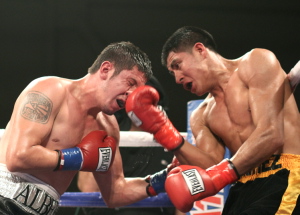
WOODLAND, CALIFORNIA — Rising prospect and local draw Alan Sanchez thrilled his vocal following yet again with a hard-fought eight-round unanimous decision over Alberto Herrera in the Telefutura Solo Boxeo main event at the Woodland Community & Senior Center on Friday night.

Sanchez (9-2-1, 3 KOs) of Fairfield, California entered the ring four times in 2011, three times in Fairfield and once in nearby Woodland. All four times Sanchez emerged victorious in fairly one-sided, but action-packed bouts.

On Friday, Herrera (8-4-1, 5 KOs) of Riverside, California fought the type of fight he needed to in order to be successful. Sanchez just made certain he was not. The shorter and shorter-armed Herrera, 146, took the fight to Sanchez’ chest, but was still outfought nonetheless. When Sanchez, 149, did get at range and keep Herrera on the end of his punches, the Riverside resident was even less successful.

Sanchez utilized a lead right from the early going. It was a punch that Herrera rarely had a remedy for from a defensive standpoint. After maintaining his distance for the first two rounds, Sanchez decided to exchange with Herrera at close range to end the third. Herrera managed to land his first few clean blows, but it was still a Sanchez round.


The fourth was perhaps the only round that Herrera won outright. Herrera, the younger brother of world ranked light welterweight contender Mauricio Herrera, briefly forced Sanchez to the ropes and kept the fight at close range for much of the round. Though he faded late in the stanza, Herrera did well early and got the best of a heated exchange late.

As the fight progressed, Sanchez would fight toe-to-toe in stretches, but eventually find a way to utilize his edge in reach. Sensing he was behind in the fight, Herrera came forward non-stop in round seven. However, Sanchez picked his shots well and landed clean whenever he let go with his hands. To his credit, Herrera fought hard until the end, but just did not have an answer for Sanchez’ size and reach.

All three official scorers, Dan Collins, Marty Sammon and Michael Tate, had the fight for Sanchez by the score of 79-73.


Guy Robb (7-0, 3 KOs) of Sacramento, California sent his large contingent of supporters on hand home happy with a dominant fifth-round stoppage over durable Hugo Ramos (3-11-2, 1 KO) of Palm Springs, California.

Heading into the bout, Ramos, 127, had been stopped only once, having gone the distance with prospects Randy Caballero, Jonathan Arrellano, Joel Diaz and Gabriel Tolmajyan. Robb, 127, predicted a knockout and decided early on a concentrated body attack was his best hope to make his prediction come true.

Ramos was fleet of foot early, but Robb began to land his right to the body by late in the first. It would be Robb’s go to punch throughout the fight, as Ramos continually covered up, leaving his body exposed. Though he clearly had the better boxing skills, Robb was quite comfortable mixing it up at close quarters as well.

By the fourth, Ramos was really feeling the effects of every right to his ribs. While he continued to swing away, the sting had really left Ramos’ punches as Robb relentlessly pursued him around the ring. Sensing his man was in trouble in the fifth, Robb upped his attack even more, eventually catching Ramos with against the ropes. Finally protected his body, Ramos left himself open for a series of clean blows to his head, which prompted referee Ed Collantes to stop the bout at 2:18 of the fifth.


Unbeaten light welterweight Jonathan Chicas (4-0, 3 KOs) of San Francisco, California looked impressive in spoiling the debut of heralded former amateur standout Paul Cano (0-1) of Clovis, California via second-round kayo.

Cano, 144, pressed the action early, but could not avoid Chicas’ counter right hands. Late in the opening round Chicas, 144, caught Cano with a right in an exchange. Two more overhand rights followed, the last one forced Cano to the mat for a knockdown. Cano appeared to have clear eyes as referee Ray Balewicz gave him a standing eight-count with seconds to go in the round. After one more Chicas overhand right, the round ended with Cano a bit shaky going to his corner.

Cano came out pressing again in the second, but again found himself on the end of a series of overhand rights in an exchange. After six straight overhand rights, Cano legs came out from under him as he fell back into the blue corner. Though he popped up quickly, Balewicz opted to stop the fight without a count. Time of the stoppage was 31 seconds of the second round.


In a battle between former sparring partners, Nicolas Balestra (2-1, 1 KO) of Sacramento outlasted Will Walters (0-3) of Sacramento en route to a third-round stoppage. Balestra, 146, and Walters, 146, came out at each other with no feeling out process from the opening bell. Walters boxed well early, but it appeared Balestra’s edge in power began to take over early in the third. Balestra’s right began to find a home without an answer coming from Walters. After a succession of rights by Balestra snapped Walters’ head back, referee Ed Collantes stopped the contest at 1:13 of the third.

In the opener, Oscar Godoy (4-1, 2 KOs) of Watsonville, California dominated journeyman Juan Carlos Diaz (7-16, 6 KOs) of Lakeside, California by way of Ciudad Nezahualcoyotl, Estado de Mexico, Mexico en route to a third-round stoppage.

After two one-sided rounds, Godoy, 150, really pressed the issue in the third. With Diaz, 152, covering up against the ropes, Godoy unleashed in combination and landed a damaging right that forced the Mexican to wilt against the third strand. With Diaz prone, Godoy continued to throw before referee Ray Balewicz waved off the bout at 2:44 of round three.


In the walkout bout, Dmitry Chudinov (6-0, 3 KOs) of Los Angeles, California by way of Serpukhov, Russia turned back the challenge of short notice opponent Tony Hirsch (12-5-2, 6 KOs) of Oakland, California via six-round majority decision.

Hirsch, who took the fight on a day’s notice and at his holiday weight, 180, was successful in spots in a bout that featured some hard to score rounds. Chudinov, 178, likely got credit for coming forward and for some clean punching on the inside. Hirsch fought off his back foot looking to counter the naturally larger Chudinov. Judges Dan Collins and Marty Sammon saw the fight 59-55 and 58-56 respectively for Chudinov. Judge Michael Tate had the fight even, 57-57.

Photos by Stephanie Trapp/trappfotos@gmail.com

Mario Ortega Jr. can be reached at ortega15rds@lycos.com.


Ward poised for a fight that might make him a leading candidate for the new face of the next generation


Reasons for the many controversies of 2011 are plentiful. Pick one. Pick a handful. In part, however, it appears to be symptomatic of a passing generation. Manny Pacquiao and Floyd Mayweather Jr. have only each other to fight and nobody seems to know today anything more than they did two years ago about whether that will ever happen. The bad blood of the last few years is getting old and tired. Maybe, it’s time to just move on to another name, a fresh face for the sagging game.

Andre Ward has the look of somebody who could fill that frame, although his chances of doing so hinge in large part on his Super Six finale Saturday night against dangerous Carl Froch in the climax of Showtime’s super-middleweight tournament.

Ward has been hanging around the fringes of the pound-for-pound debate for at least a year. Depending on the ranking, Ward is in the second five, poised to make a real claim on a spot that Pacquiao and Mayweather have exchanged, argued over, yet never fought for. Maybe, they will fight in 2012. Yeah, maybe Donald Trump and Barack Obama will be running mates.

No matter what does or doesn’t transpire, Ward figures to do what he has always done: Stay busy in the proud, workmanlike fashion of a personality that often sounds aloof, yet remains thoroughly intriguing for a consistency defined by 14 years without a loss, amateur and pro.

Luck? Maybe But everybody gets blindsided once, twice or thrice over the course of nearly a decade-and-a-half. There are cheap shots, head butts, unseen punches and judges who see what they want to see. Ward has managed to beat them all. If you’re seeking luck, buy a lotto ticket. Ward seeks victory with an unerring eye for detail.

There have been questions about whether he will be able to deal with Froch’s strength, especially on the inside where the Brit is lethal. But Ward trainer Virgil Hunter counters that the 2004 Olympic gold medalist knows how to fighht in the physical, head-banging style he might encounter Saturday in Atlantic City.
“Before Andre was a boxer he was a fighter,” said Hunter, who predicts Ward will win by knockout. “He would fight his way to victory. If you’re going to win a gold medal in the Olympics, you’re going to have to adapt to the amateur and point system and learn to win that way. He’s had to adapt through training and repetition. But the fighting never left him. And I think that is one thing that surprises people about his fighting ability.

“Carl has said Andre hasn’t fought in any exciting fights. Well, it takes two to make an exciting fight. When one guy is dominating, it’s not going to be exciting. When you’ve got two guys busting each other up beside the head, yes, from the fans’ perspective and the media’s perspective, that’s exciting. His fighting ability has always been there. The power of that fighting ability is that he knows when to use that strength against you and he knows when to use his opponents’ strength against him. That’s what makes up Andre.’’

Translation: There’s a lot more to Ward than anybody, even Froch, knows. At the Athens Olympics, few saw him on the Games’ final day when he won America’s only gold. Media and fans already were gathered at the Stadium for closing ceremonies when he stood on the victory stand’s top pedestal. Britain’s Amir Khan, the Game’s designated star, had already won silver. The international media had moved on or gone home. Even promoters didn’t seem to care much. Ward signed for a reported $100,000. Twelve years earlier, gold medalist Oscar De La Hoya signed for seven figures.

Ward’s patient emergence since then might help restore value to Olympic gold. Ward has never said so, but the absence of big offers in 2004 was valuable for the motivation. Repeatedly, Ward talks about how he fights to prove people wrong. He personalizes it without demonizing his critics.

“You don’t just win these types of fights; you’ve got to take them,’’ Ward says in a tone that includes a lesson about respect.

Mayweather cries about getting enough of it; Ward commands it.

But Ward’s search for it starts with the fighter he sees every day, staring back at him from the mirror, while he shadow-boxes. Respect is just a meaningless golden oldie if not preceded by self.

“I’ve set out from day one to do things that I’ve been raised to do,’’ Ward said. “I’m not going to change for anybody. I’m going to be myself. You’d be surprised how many people outside of boxing have come up to me and said, ‘Hey, I appreciate the way you carry yourself. I’m going to have my son or daughter look to you as an example.’ That kind of stuff right there means a lot more to mean than gaining a few more fans or writers saying, ‘Hey, this guy is crazy and we love him.’

“If you look at a guy like Ricardo Mayorga, for example, he was a shooting star. He came in and made some noise. Then, he was gone. People take shots at him and say he’s ignorant. Then when you have a fighter who comes in and tries to carry himself the right way — not as a front or an act but just has a clean lifestyle, then that’s not accepted either.’’

Years from now, Ward says he wants his family to remember a fighter who makes them proud.

“When it’s all said and done, my children are going to look back on my career and I want to be able to point to my career and say, ‘Follow your dad. Do it the way he did it,’ ‘’ Ward said. “Once this is all done and I hang them up, the legacy that is there will be there forever. So that more important to me than a few pats on the back or for people to say you’re exciting outside of the ring.

“When you tell people you’re a fighter, they expect you to be ignorant and to act a certain way.’’

But not Ward, who has his own expectations and perhaps his own way at a pound-for-pound shuffle.

AZ Notes
The last fighter to beat Ward was Phoenix super-middleweight Jesus Gonzales. They were both 14-years-old then. Gonzales, who was known then as Ernie, was considered a better prospect than Ward, who once said he’s like to avenge the loss. The once-beaten Gonzales, who struggles to find fights, would love to give him that chance.

Phoenix junior-welterweight prospect Jose Benavidez Jr. continues to feel some pain in his right wrist, which was strained on Nov. 12 in a victory on the undercard of Pacquiao’s controversial victory over Juan Manuel Marquez. But the lingering pain is not expected to keep from the main event on Feb. 3 at Wild Horse Pass Resort & Casino in Chandler. The card was formally announced Wednesday at a news conference in downtown Phoenix.

And Showdown Promotions and Top Rank are planning a ShoBox card on March 9 for Casino del Sol in Tucson. The card promises to be one of several in an Arizona market that is on the rebound since the immigration controversy over proposed state legislation, SB1070, subsides.


Sanchez Back on Solo Boxeo

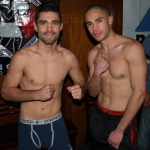
WOODLAND, CALIFORNIA — In the season finale of Telefutura Solo Boxeo tomorrow night, welterweight prospect Alan Sanchez will appear on the network for the third time this year as he takes on late fill-in opponent Alberto Herrera in the eight-round main event emanating from the Woodland Community & Senior Center. Fighters weighed in this afternoon at Paco’s Authentic Mexican Restaurant in downtown Woodland.

After taking his entire early career on the road, Sanchez (8-2-1, 3 KOs) of Fairfield, California will be fighting near home for the fourth consecutive time as he takes on Herrera (8-3-1, 5 KOs) of Riverside, California.

Sanchez comes in off of a dominate performance in June, as he battered durable Clint Coronel before forcing a cut-induced seventh-round stoppage in Fairfield. Sanchez is currently riding a three-fight win streak which began after a controversial draw against Luis Grajeda in September of last year. Sanchez had Grajeda down twice, but left San Diego, California with the draw in a fight he clearly deserved.

Herrera, the brother of world ranked contender Mauricio Herrera, ended a three-fight skid this past October with a six-round unanimous decision over previously unbeaten Marcus Robinson. Herrera took the fight with Sanchez on short notice, after originally scheduled KeAndre Gibson was forced to withdraw with a training injury. Herrera scaled 146, while Sanchez came in at 149-pounds at today’s weigh-in.

In the televised co-feature, Guy Robb (6-0, 2 KOs) of Sacramento, California will take on tough Hugo Ramos (3-10-2, 1 KO) of Palm Springs, California in a six-round super featherweight bout. Robb comes in off of his career-best win to date, a dominate six-round decision over heralded prospect Pablo Armenta this past September. Ramos has been in with many of the top featherweight prospects in the state and always held his own. Robb and Ramos both weighed in at 127-pounds.

In an intriguing match-up, unbeaten Jonathan Chicas (3-0, 2 KOs) of San Francisco, California will take on debuting former amateur standout Paul Cano of Clovis, California in a four-round welterweight bout. Chicas, who holds a win over former accomplished amateur and frequent Cano sparring partner Michael Islas, weighed in at 144-pounds. Cano, who has been one of the top amateurs in the nation at his weight class over the last two years, also weighed in at 144.

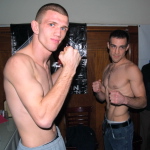
Nicolas Balestra (1-1) of Sacramento will take on former gym mate Will Walters (0-2) of Sacramento in a four-round welterweight bout. Balestra, a former MMA competitor, got into the win column with a four-round decision over Alex Vlas in November. Walters, who used to spar Balestra on a daily basis, is still in search of his first pro win after two hard-fought battles with Bret De La Torre in April and November. Walters and Balestra both scaled 146-pounds.

Dmitry Chudinov (5-0, 3 KOs) of Los Angeles, California by way of Serpukhov, Russia will take on rugged Tony Hirsch (12-4-2, 6 KOs) of Oakland, California in a four-round super middleweight bout. Chudinov, a 2008 World Cup Championships bronze medalist, weighed in at 169-pounds at today’s weigh-in. Hirsch, who took the fight on very short notice, will weigh in tomorrow.

Oscar Godoy (3-1, 1 KO) of Watsonville, California will take on journeyman Juan Carlos Diaz (7-15, 6 KOs) of Lakeside, California by way of Ciudad Nezahualcoyotl, Estado de Mexico, Mexico in a four-round light middleweight bout. Godoy, originally scheduled to take on Luis Sanchez, weighed in at 150-pounds. Diaz, who has dropped his last ten bouts, including nine to undefeated opponents, weighed in at 152-pounds.

Tickets for tonight’s event, promoted by Golden Boy Promotions, Don Chargin Productions, Paco Presents and Jorge Marron Productions, are available by calling Paco’s Authentic Mexican Restaurant in Woodland at 530-669-7946, Taqueria Guadalajara #1 in Woodland at 530-668-0628 or Travis Credit Union in Woodland at 530-668-0573.

Quick Weigh-in Results:

Welterweights, 8 Rounds
Sanchez 149
Herrera 146

Featherweights, 6 Rounds
Robb 127
Ramos 127

Welterweights, 4 Rounds
Chicas 144
Cano 144

Welterweights, 4 Rounds
Balestra 146
Walters 146

Light Middleweights, 4 Rounds
Godoy 150
Diaz 152

Super Middleweights, 4 Rounds
Chudinov 169
Hirsch*

*will weigh-in tomorrow

Mario Ortega Jr. can be contacted at ortega15rds@lycos.com.


Introducing Paul Cano


Troubled youth finds his way into a boxing gym and turns his life around. Yes, that is a story that has been told before, but there are reasons why it never gets old. There is something captivating about what boxing has done and can do to so drastically change lives for the better. Former amateur standout Paul Cano, who turns pro this Friday at the Woodland Community & Senior Center in Woodland, California, is yet another example of the positive impact the sport can have.

Before he found boxing at the age of fifteen, Cano, who grew up and resides in Clovis, California, was headed down a dangerous path. “I was a troubled kid,” recalls Cano. “I was getting in a lot of trouble in school and with my parents. I was stealing, gangbanging, doing a lot of drugs.”

First it was Cano’s brother Roman that took to boxing, at the behest of his parents. “They were getting into some trouble, and their dad kind of showed up at my PAL center,” recalls Pete Lopes, who ran the boxing program for the Clovis Police Athletic League and would go on to train both Cano brothers. “Me and Roman started working, and things started going well with him. Paul kind of figured it was working for his brother, so he decided to check out this Coach Pete guy and see what could happen.”

Almost right away Lopes could recognize qualities in Paul Cano that gave him the idea he had a fighter with potential on his hands. “At first I didn’t know what to make of him, because he was really quiet and didn’t say much,” remembers Lopes. “But I knew his brother had a lot of moxy, so I just kind of figured he was not too far off from his brother. And him being the youngest, he’s probably learned a lot from them. The minute we put him in the ring, he was really tough. He was raw and chunky and out of breath, but he was a tough, tough kid.”

When Cano first came to the boxing gym, he was a troubled kid that played lineman at about 220-pounds. Soon everything would change. “What boxing did for me was teach me a lot of discipline and also made a lot of my energy go from doing all those bad things to spending all my energy at the gym. So by the time I got home from the gym, I didn’t have time or energy to sneak out or do those other things. The whole change in my life was huge, everything from my relationship with my parents getting better, to me going back to church.”

With his new found discipline, Cano quickly got into shape and started to have success in the ring. “Within a couple months, he was sparring everyone in the gym and I noticed he was real addictive as far as the training was concerned,” says Lopes. “He worked really hard and lost a lot of weight quick. His first amateur fight was at 178-pounds and he stopped the guy.” By his eighth fight, Cano had won the California state tournament to advance to the 2008 Junior Olympics in Michigan, where he advanced to the quarterfinals at 138-pounds.

In 2010, Cano would take trips to Little Rock, Arkansas for the National Golden Gloves and Colorado Springs, Colorado for the USA Boxing National Championships, where he made it to the quarterfinals, losing to USA Boxing #1 ranked 141-pounder Pedro Sosa. “It was big for me, to see that boxing could take me not just around Fresno County, but to where I could go on a plane to another state where I had never been before,” says Cano. “It was huge for me to be over there and get that experience and to represent California. That was another big eye opener to be blessed to do something like that.”

Despite his success as an amateur, Cano and his team have always felt his style was much better suited for the pros. In addition, as Cano carved out his reputation in the amateurs, it became increasingly difficult to find willing opponents, so over the course of the last year especially Cano’s focus shifted more towards preparing himself for his debut and becoming a more experienced and technically sound fighter.

“We’ve definitely been in the gym for a long time,” says Cano. “We haven’t been traveling for competition as much, but we have been traveling to get good sparring and for training. We have had our minds set on the pros and becoming the best pro. We’ve been going up and down California getting the best sparring with champs.” In the last year Cano has shared the ring with world ranked contenders Eloy Perez and John Molina Jr. among others.

For his first pro bout, a four-rounder contested at 145-pounds, Cano is doing something most former national level amateur fighters never do and that is fight a 3-0 fighter, in this case Jonathan Chicas of San Francisco, California. The move is just one step in a larger plan for Cano and his team.

“We want to change the way boxing is a little bit,” explains Lopes. “We want to be the ones that will step up and say we will come to your backyard and fight you. I know who I have as a fighter. I know his reputation and I appreciate Jonathan Chicas in taking the fight, for stepping up, because it is a risk on his part. We really have nothing to lose. He has a 3-0 record and it would be really hard to find a 0-1 guy or a 1-0 guy that would be willing to fight Cano. We would literally have to get someone from another country, because everyone else knows him. We feel like we are between a rock and a hard place, but we also feel like we can win this fight and win this fight in convincing fashion.”

Cano is very much onboard with Lopes’ plan. “We are ready for anything,” says Cano. “My team and I, we’ve been training so hard. We know who we can beat and we know that we can beat Chicas. It was a surprise to us that he took the fight, but now that we know he is going to take the fight, we want to show boxing and the world that I am coming out. I am not ducking anybody. We are here to fight anybody at any time. We are here to come up and let everyone know we are the best. We are here to do the quick. We don’t want to fight any bums. We want to fight the best and let everybody know that we are the best.”

While success in the ring may be expected of Cano as he ventures into the pros, nothing in this sport is ever guaranteed. However, Cano has already succeeded in transforming his life, no matter how many wins or losses he amasses. “I am very proud of him and the professionalism he’s shown in his work ethic,” says his trainer Lopes. “He is just a quality individual and it makes me happy. It makes me hopeful that he is going to be a great example for other kids who have a life just like him, or have a life worse than him. That they can fall in love with something and people will help them, and help them evolve to be a good person and a professional. And that’s the most important thing, a professional.”

Tickets for Friday’s event, promoted by Don Chargin Productions, Paco Presents, Jorge Marron Productions and Golden Boy Promotions, are available by calling Paco’s Mexican Restaurant in Woodland at 530-669-7946, Taqueria Guadalajara #1 in Woodland at 530-668-0628 or Travis Credit Union in Woodland at 530-668-0573.

Mario Ortega Jr. can be reached at ortega15rds@lycos.com.


Ward-Froch to determine Fighter of the Last Two Years


There is a conditional clause still in place on the Boxing Writers Association of America’s 2011 ballot for Fighter of the Year. It reads: “Winner Ward-Froch.” That box already has my checkmark. If Andre Ward beats Carl Froch Saturday, he will be the 2011 Fighter of the Year. If Froch prevails, he will win the honor. If there’s a draw, I’ll vote for both of them.

The BWAA does not have a Fighter of the Last Two Years category, but if it did, the winner of Froch-Ward would deserve that honor too.

Whichever man wins Saturday at Boardwalk Hall in Atlantic City – to claim Showtime’s inaugural Super Six World Boxing Classic championship – will have done something unprecedented among modern prizefighters at the championship level. He will have spent two years in the same weight class with five equals and outlasted each of them. The winner of Ward-Froch will have accomplished more in the years 2009-2011 than Manny Pacquiao and Floyd Mayweather combined.

That is something to consider when the eulogistic throat-clearing grows this week. As every treatment of Saturday’s final begins with “After two years of cancellations and postponements and withdrawals, when the ill-conceived Super Six finally, finally, finally crowns a winner . . .” you’ll be well advised to ignore it. Anyone who watches Saturday already knows the Super Six’s history and is familiar with the misfortunes that visited the tournament. He also knows the two men fighting for its title are original members who’ve outlasted all comers.

It demeans what Froch and Ward have done to dwell on those who made questionable withdrawals from the Super Six. Those three men – the Americans Jermain Taylor and Andre Dirrell, and the Dane Mikkel Kessler – are all either back in the prizefighting ring or planning a return. Their withdrawals, then, should be treated as simple eliminations.

Since neither of the replacement fighters brought in on short notice made his way to the finals, we needn’t dwell either on Jamaican Glen Johnson or American Allan Green.

That leaves Armenian Arthur Abraham, whose legacy as an indestructible force suffered mightily in his matches with Froch and Ward. For having made it to every match he was assigned, though, Abraham retains the respect of aficionados who appreciate what durability he showed.

Durability, after all, proved to be the tournament’s most important quality. At the beginning of the Super Six, who thought England’s Carl “The Cobra” Froch would be a finalist? And whatever handful of Brits that was got halved after Froch’s odd victory over Dirrell. Yet, here he is – unbowed if still unheralded.

While the more heralded Brit Amir Khan, to choose a timely example, was beating up light-hitting Paulie Malignaggi and running from Marcos Maidana, Froch chased the reluctant Dirrell and made one of the best fights of 2010 with Kessler – a scrap brutal enough to eliminate Kessler from the Super Six. While Khan was blowing through someone named Paul McCloskey and a spent Zab Judah, Froch outboxed Abraham and outworked Johnson. And while Khan was making his tangle-footed retreat from an 8-1 underdog named Lamont Peterson on Saturday, Froch was readying to go chest-to-chest with a fighter every bit special as he is.

For American Andre “S.O.G. (Son of God)” Ward is now a proven-to-be-special entity. Or as Ward recently put it, “I won an Olympic gold medal and am undefeated in 23 fights as a professional, so we must be doing something right.”

Compare that dignity to the brashness young Floyd Mayweather, an Olympic bronze medalist, exhibited in 2000, when he was 23-0. Within that delta, actually, lies part of the charm of Saturday’s fight: It does not play to stereotypes.

Froch, the light-skinned European, is the flamboyant one in Saturday’s match. He is the man likely to drop his hands and show-up an opponent. Froch is the one who does not hesitate to discuss his hypothetical greatness.

Ward, meanwhile, the black American from Oakland, is the soft-spoken, serious man in Saturday’s finals. He cares little how he looks while winning. Ward is the one who employs measured language, comporting himself as a picture of accountability.

This was clearest in Showtime’s recent “Staredown” program. Though unoriginal in a copyright-infringement kind of way, “Staredown” nevertheless proved much better than the recent HBO spectacle of a Puerto Rican speaking English to a Mexican. For being in their native language at least, Froch and Ward offered revelatory tidbits and were much better than cliché-tossing avatars.

Ward surprised Froch by candidly saying he was hurt in his seventh professional fight by Darnell Boone, a man whose name Froch could not recall but Ward quickly did. Froch then surprised Ward by agreeing that having one’s chin compared to granite – as Froch’s now is – is often the result of poor choices.

Then Froch inadvertently predicted the likely outcome of Saturday’s match.

“I’m telling you now, categorically, you cannot render me unconscious,” Froch said. “I can knock you out with either hand.”

Both men believe that. Ward is quite certain Froch can knock him out. He also knows a knockout of Froch is improbable. And that is why Ward will probably win the Super Six championship.

Ward will not relent. He will not come off Froch’s chest. He will not rely on a punch to change the fight’s path but hundreds of punches. He will not be prone to mental lapses – like what Froch suffered after staggering Kessler – and he will not wonder if his attire befits the world’s best super middleweight, the way such considerations seem occasionally to wrap gauze round Froch’s otherwise clear thinking.

There’s no telling how this match will end. Everything everyone has predicted about this tournament has been wrong often enough for every prognosticator to be humbled.

That written, I’ll take Ward, SD-12, and be certain Saturday’s winner is Fighter of the Last Two Years.

Bart Barry can be reached at bart.barrys.email (at) gmail.com


Khan is in a town where everybody fights and nobody gets a decision


Amir Khan is in a city where it is very hard to get any kind of a decision. Some would say it’s impossible. Washington D.C. is only a fight town if you’re a Republican, or a Democrat, or Barack Obama.

That said, I’m thinking Khan will get what no American politician can, even those who were anointed to sit on some budget committee that was called super. Or was that stupor? It’s a risk, of course. Allowing the junior-welterweight fight to go to the scorecards Saturday night for a decision in Lamont Peterson’s hometown is the kind of gamble that could go terribly wrong.

But there’s much to admire in Khan’s bold willingness to take on risk and then manage its dangerous dynamics. His desperate stand in the 10th round of a vicious assault from Marcos Maidana a year ago in Las Vegas is a sure sign that he knows how to prevail. It’s instinctive. It had to be then, because instinct was all he had after Maidana’s punches nearly separated him from consciousness.

Bernard Hopkins, in his role as a Golden Boy Promotions vice president, has warned Khan he has to pursue a stoppage. Khan will, of course. That almost goes without saying. But Peterson is nothing if not a survivor. He learned the survival arts on D.C. streets where he grew up with his brother, homeless without a dad and seemingly without a chance. Peterson has survived before at home. It’s hard to believe he won’t survive 12 rounds this time.

But Peterson’s inexhaustible resiliency and hometown support don’t figure to score enough points against the emerging collection of speed, skill and smarts possessed by Khan, who at 25 appears to be nearing his prime.

“I can’t afford to lose and get beat,’’ Khan has said in conference calls and at news conferences. “It’s going to take me from being a good fighter to be being a superstar. Hopefully, Lamont Peterson will make me one of the best fighters in the world.’’

Khan might still be a Tim Bradley and another weight class, welter, from super-stardom. But the stakes are as high as the risk in what could be his most dangerous fight since Maidana.

In an unexpected twist, Khan trainer Freddie Roach got an object lesson, up close and personal, in the danger posed by Peterson. Roach, an advisor to America’s 2012 Olympic team, was with Peterson, who sparred as designated training partners for the Olympic boxers.

For two rounds, Roach held mitts that Peterson pounded with punches that revealed their power. If there’s a weakness in Khan, it is a fragile chin. Despite his desperate stand in the victory over Maidana, it’s been there ever since Breidis Prescott stopped him in the first round of a stunner.

Since then, Khan has learned to employ his evident quickness and long jab to stay away from the inside brawling that opponents are sure to employ in an attempt to test that chin.

Intrigue rests in how Khan uses and mixes the elements in his versatile array of skill. The guess here is that he will have to do exactly that and perhaps more in a story on scorecards that will say a lot about him.

QUOTES, ANECDOTES
Congratulations to the 2012 Hall of Fame class of Thomas Hearns, Mark Johnson, Freddie Roach, Al Bernstein and especially retired boxing writer Michael Katz, whose words from ringside always said it better than anyone.

Life imitates art: Max Kellerman and Larry Merchant will do in fact for the HBO telecast of Khan-Peterson what they did in film a few years ago as a fictional broadcast team in the Rocky Balboa movie.

Lieutenant Colonel Manny Pacquiao has rank enough to command a Filipino battalion, yet still has no command of what Juan Manuel Marquez does to him.

AZ NOTES
Hall of Fame junior-flyweight Michael Carbajal of Phoenix applauds Johnson for getting into the Hall.

“I’m happy for him,’’ Carbajal said.

Johnson, of Washington D.C., and Carbajal were once mentioned as potential opponents.

“I would have fought him, but I lost to Jake Matlala,’’ said Carbajal, who lost a ninth-round stoppage to the South African in 1997. “If I’d beaten Matlala, that was the plan. We were talking about Mark Johnson. But I got beat.

“Johnson was a great boxer, really quick. But I would have put the pressure on and kept that pressure on him.’’


The Curious Case of Brian Viloria

Brian Viloria grabbed the eyes of boxing fans in September 10, 2005 as he shocked the world by knocking out Eric Ortiz in the first round to win the WBC world light flyweight title. That very same night Viloria left the fans an impression of being a speedy light flyweight with monstrous power.

His first defence of the newly owned title will feature Viloria beating an experienced Jose Antonio Aguirre of Mexico. From there on, the expectations on Brian’s future were high.

His second title defence told a different story as Viloria didn’t look like his former self when he fought against Omar Nino Romero. The fight went the full twelve rounds with Romero being awarded a unanimous decision as he dominated the fight and on the scorecards.

Viloria had a rematch against Romero on his very next fight, a highly controversial bout where Viloria displayed the power he had in the Ortiz fight dropping his opponent twice but wasn’t able to finish. The night ended in a majority draw but since Romero has failed the post fight tests, he was yet again to box for the vacant world title next.

On April 14, 2007 Viloria fought Edgar Sosa losing the fight by Majority Decision. The fans were disappointed given all the hype and expectations, Viloria didn’t look very impressive in his last three fights. Viloria would then move on with his career abandoned by some of his fans.

Brian Viloria was not given a title shot until two years later when he fought Ulises Solis for the IBF light flyweight world title in the co-main event of Donaire-Martinez card at the Araneta Coliseum Philippines. Solis came in as favourite, being able to successfully defend his world title for a total of eight times, beating three Filipino fighters (Rodel Mayol, Bert Batawang, Glenn Donaire) along the way earning him the Filipino Executioner moniker.

To the surprise of many, Viloria was in perfect shape for the fight. Viloria looked sharp as he boxed, moved and countered landing clean effective punches. Viloria stopped Solis with a perfectly timed right hand in the 11th round knocking out the IBF champion on a Sunday morning. The win was named by some experts as the comeback of the year. Finally, the Brian Viloria of old has returned.

He would first defend his IBF world title against Jesus Iribe in Hawaii. Iribe came in the fight with a record of 15(10KO)-5L-5D, an opponent he was expected not to struggle with. Viloria boxed beautifully in the early rounds as he unleashed combinations and showed good defence. Looking at it early in the fight, it would only make sense to say that Viloria is in for an easy night.

But Brian gassed yet again in the fight. He got dominated in the later rounds in a fight he was not supposed to be troubled with. By the end, he was awarded a unanimous decision win, a verdict a few fans didn’t seem to agree.

Next, Viloria took home his IBF light flyweight belt in the Philippines to defend it against Carlos Tamara of Colombia on January 23, 2010. Viloria started strong easily outboxing and outworking the challenger. As the fight progressed, Brian was easily ahead on the scorecards but eventually gassed out yet again in the championship rounds, to the point where it looked like he can barely walk at all. The referee called a halt to the fight in 12th round for Viloria was getting hit at will. A decision he didn’t protest during or after the fight.

He would later comeback to win a close fight with Omar Soto and a stoppage against Liempetch Sor Veerapol in the 7th round.

July 16, 2011, just like the Solis fight, seemed to be another now or never day for Viloria as he challenged Julio Cesar Miranda for the WBO flyweight title. Viloria did well in the early rounds boxing beautifully and knocking down Miranda in the first round. As the fight progressed he would then again look tired, something I did not expect since he moved up in weight. Brian will survive the fight to win by unanimous decision.

So what is the deal with Brian Viloria? While there can be a lack of stamina even as he moves up in weight, I also believe he displayed in the past to have the speed, power, combinations, chin, footwork, head movement and unappreciated defence. Tools that make a good fighter. If there is one word that describes him best it’s “inconsistent”.

Viloria has shown too many good and bad days in his career to the point where fans don’t know what Brian Viloria will show up in a fight. One thing is for sure, he can’t afford to have a bad day this coming December 11, 2011 as he will face the biggest challenge in his boxing career in Giovanni Segura.

The hard hitting southpaw from Mexico hits like a featherweight and goes to the body, something Viloria should be wary of being known to tire in fights. I see Segura stopping Brian in 8-10rounds, but given all Viloria’s tendencies, I only hope he surprises us again.

for comments, suggestions and feedbacks you can email jm1boxing@ymail.com


Cotto and Margarito, and a treatment of semi-satisfaction


The narrative of Cotto-Margarito II will say Miguel Cotto, inspired by tens of thousands of his countrymen within Madison Square Garden, gained a richly satisfying vengeance on Mexican Antonio Margarito in 2011, confirming everything he believed about Margarito’s criminality in their 2008 match and restoring Puerto Rican pride across the land. Ah, sweet revenge.

That narrative will have plenty of technical accuracies but will be, in its general fabric, something quite different from what happened. It will extirpate the anxious moments fans, and Cotto, endured through the match and sue posterity to change its semi-satisfying conclusion for what great imagery is conjured by: Cotto, TKO-10.

That was the official mark Saturday. After Margarito’s surgically repaired right eye swelled shut in the middle part of the fight, a ringside physician could abide no more of its closure before round 10 and waved the match off, one Cotto was winning by wide margins on all three official scorecards. Cotto was relieved and content. Margarito was defiant. It was a result whose satisfaction will grow with the years, one imagines, because right now it’s less than Cotto’s fans hoped for.

Before anyone rebuts that assertion, straining his voice to declare full satisfaction, he should ask himself: On Friday afternoon, if someone told me Margarito would be smiling and whooping at Cotto in Saturday’s final round, before giving an obstinate postfight interview and leaving the ring under his own power, would I have told that person “Completely satisfied in every way, thank you”?

How this fight is remembered, though, does tell us something about the way a known result affects subsequent reviews. For three years, knowing Cotto ultimately succumbed to Margarito in the 11th round of their first meeting, we have watched the precise combinations Cotto landed in that fight’s opening 15 minutes and told ourselves they were not effective as they appeared. Margarito walked through them; look, he’s nodding and smiling the whole way! And knowing the probability Margarito had hardening pads over his middle knuckles, we have also imagined Margarito’s every awkward right cross as ruinous to Cotto’s head and heart.

When we revisit Saturday’s rematch, we’ll play a similar trick on ourselves, admiring Cotto’s precise combinations, and forgetting the tension we felt as Cotto opened his eyes and bleeding mouth, wide, in the sixth round and hurriedly retreated the length of the canvas, post to post.

If the absence of a plaster-like substance on Margarito’s knuckles made a difference, its difference was not large as Cotto’s change in tactics. Though he never did manage to show Margarito a well-leveraged left hook to the body, not once in their 20 rounds together really, Cotto did do one thing much better in the rematch: He got on Margarito’s chest.

Margarito is a wild-swinging confusion of long limbs when he is comfortable and significantly less than that when he is not. Cotto’s trainer, Pedro Diaz, caught this while studying tapes of Margarito’s match with Shane Mosley and told Cotto to put his forehead under Margarito’s chin and push him backwards to the ropes – off of which Margarito fights worse than a novice. Cotto was able to lean on Margarito and endure the Mexican’s cuffing right hands, because without a running start Margarito doesn’t hit very hard at all.

Or maybe the knuckle pads were the difference. Ask someone who was at ringside.

At the risk of offending egalitarian sensibilities, sensibilities that tell an American his perspective is usually better than anyone else’s, it’s worth mentioning that a guy at ringside always has a better bead on a fight than a guy at home. There are elements to home viewing that are superior, yes – sometimes you’re even able to hear between-rounds corner instructions over network sales pitches – but you do not have the same feel for a fight that you would at ringside.

The punches sound different, with television microphones somehow flattening their acoustics and making them all equal. The crowd is an altered entity. From ringside, you are able to see the arena and all its moving parts in a panorama that, while noisy, lends you a deeper perspective on the event’s mood. The benefits of being in a press box are often overstated, but the benefits of being within 75 feet of gloved combat cannot be.

Does this mean every ringside scorecard is correct? No. There’s a herding element to ringside scoring – the way consensus-seekers fan out among press-row tables, telling you others’ scores before asking your own – that compromises what is later published. But when a ringside writer tells you his general sense of a result or crowd, give him the benefit of every doubt, no matter what you saw through television’s narrowing eye.

The ringside consensus seems to be that Saturday night was a joy for Puerto Rican fans who turned out to see Cotto gain vengeance. Is it possible a deep sense of relief is being misinterpreted as euphoria? It is. If Miguel Cotto didn’t think Antonio Margarito’s punches were nearly so hard this time as they were in their first fight, he did a hell of an impersonation of a guy who did.

But then, there is something about a larger man with a maniacal grin on his face and cornrows chasing after you that will always be unsettling – Margarito racingracngracing after Cotto, whooping, his feet a messwards back, his overright hand throwing, his heading bob a target, his up leftercut sailing.

There is something equally undoing, though, in Cotto’s cold precision, left hands followed by rights, all landing flush till victory.

So goes the seasoning of memories that shape a narrative hardening into fact.

Bart Barry can be reached at bart.barrys.email (at) gmail.com


Mares Proves to be Elite

Abner MaresANAHEIM, CALIFORNIA — In the biggest fight of his career, Abner Mares fought the best fight of his career and perhaps validated some of his prior accomplishments with a comprehensive twelve-round unanimous decision in his rematch with former champion Joseph Agbeko at the Honda Center on Saturday night.

Mares (23-0-1, 13 KOs) of Hawaiian Gardens, California fought a smart fight and proved to have more dimensions than did Agbeko (28-4, 22 KOs) of Bronx, New York by way of Accra, Ghana.

Mares opened up in the second and got the crowd into the fight, as he forced Agbeko, the WBC #4/IBF #3/WBO #12 ranked bantamweight, to the ropes and landed well to the body. Despite holding a clear edge in the round, one Agbeko left appeared to be responsible for a small cut near Mares’ right eye. The small cut eventually became a big cut as the fight would progress, but Mares appeared to keep it out of his mind.

While Mares was balanced in his attack, Agbeko turned into a headhunter in the early going much to his detriment. More often than not, when Agbeko broke through and landed clean, such as he did with his left in the sixth, it only inspired Mares to turn up his offense. Closing the round, Mares landed the better shot in an exchange and follow with a solid right and a left hook shortly after.

Throughout the fight, Mares would continue to throw when most fighters would be satisfied holding on. With Agbeko leaning over or holding on, Mares would hit anything he could until referee Lou Moret would call a break or Agbeko would do something about it himself.

If there was a hope for Agbeko as the fight moved into its final third, it was Mares’ badly swollen and cut right eye. “King Kong” would catch Mares in the spot he needed to with one or two, but Mares defended it enough that it did not endanger his stronghold in the bout.

Rounds eleven and twelve featured some frantic action. Agbeko caught Mares with a clean right uppercut as the champion moved inside early in the eleventh. Mares seemed invigorated by the shot, and got the best of a two-way exchange, as he landed clean head shots to close out the round. Mares came out strong in the twelfth, and disappointingly Agbeko seemed to have no sense of urgency. Both fighters took the fight home in the final seconds, as they exchanged until the final bell.

All three judges scored the bout for Mares, 118-110, who retained his IBF and WBC Silver Bantamweight titles. “I’m happy my fans finally saw my true boxing skills,” said Mares after the fight. Due to the controversial rulings of referee Russell Mora in their first fight, Mares clearly had a desire to leave no bout who the better fighter was. “I proved I beat him the first time and I beat him again,” said Mares.
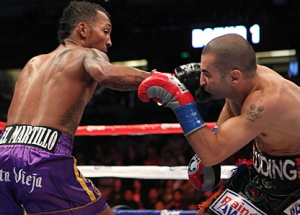

In the co-feature, Anselmo Moreno (32-1-1, 11 KOs) of Panama City, Panama retained his WBA Bantamweight title with a wide unanimous twelve-round decision over Vic Darchinyan (37-4-1, 27 KOs) of Sydney, New South Wales, Australia by way of Vanadzor, Armenia.

Moreno, 118, had some trouble getting off in the early going as he figured out the awkward style of Darchinyan, 117 ¾, but the Panamanian eventually settled into combination of boxing on the outside while holding his own on the inside.

Moreno opened the second with a straight left, but Darchinyan, the WBA #1/WBO #4 ranked bantamweight, came right back and forced Moreno into a corner. Moreno wisely moved out and returned to center ring. By the third, Darchinyan was clearly getting frustrated that he could not find Moreno with any consistency, as was evidenced when the challenger received a warning for hitting Moreno behind the head at the end of the round.

Darchinyan’s frustration boiled over again at the end of the next round, as he was deducted a point for throwing Moreno to the canvas. The champion had been holding Darchinyan’s right arm excessively before the throw.

Darchinyan appeared to be hoping to land one big shot that would change the fight, but it had to be disheartening that when he landed clean Moreno took his punch well. More importantly, Moreno knew how not to get caught by more than one in row. Midway through the fight, Darchinyan utilized an unorthodox technique of running into range and then firing his left. For the most part, the hard lefts flew over Moreno’s head.

After a couple of close rounds, Moreno landed in combination to start the eighth. With Darchinyan in a brief moment of retreat, Moreno hurt the challenger with two body shots. Darchinyan stemmed some of Moreno’s momentum late in the round, lastly landing a stiff left at the end of the round.

Moreno landed another solid combination in round nine that seemed to briefly stagger Darchinyan. To his credit, the former champion fought back may have deserved the round. The action was tense in rounds ten and eleven, as Darchinyan managed to keep Moreno off balance, but failed to land anything that could change the direction of the fight.

Moreno opted to box at range to open the twelfth as if he was protecting a big lead, which actually created an opening for Darchinyan. Midway through the round, Moreno went down from what looked like a punch from ringside, but was waved off as a slip by referee Raul Caiz Jr. Moreno was slow to get up from the fall, and was more stationary in the moments after returning to his feet. Still Darchinyan failed to land one of his wild lefts and Moreno moved around the ring to close the fight.

“I was going for big punches, but couldn’t find a home for my left,” admitted Darchinyan, after the bout. With the win, Moreno, who took the cards by the scores of 120-107, 117-110 and 116-111, successfully introduced himself to the U.S. television audience and added a recognizable name to his three-and-a-half year resume as a belt holder.

Eyeing the winner of one of tonight’s featured bouts, former titleholder Eric Morel (45-2, 23 KOs) of Madison, Wisconsin by way of San Juan, Puerto Rico did little to get any of the Showtime brass seated ringside excited about that prospect with a lackluster ten-round decision over Jose Silveira (12-5, 4 KOs) of Merida, Yucatán, Mexico.

After boxing and counter-punching his way through much of the first four rounds, Morel, 119 ½, opened up late in the fourth and through much of the fifth. Silveira, 119 ¾, held up well to Morel’s punches and offered back to little success. By the seventh, Morel went back to his jab-and-move style, much to the displeasure of the crowd. Though Silveira was game, he failed to force Morel to fight a fight that the Puerto Rican could lose. Two judges had it 98-92, while the third scored it 97-93 all for Morel.

Currently ranked WBA #6/WBC #9 at bantamweight and promoted by Golden Boy Promotions (the promoter of both Abner Mares and Anselmo Moreno), Morel has hopes his next fight is for a world title.

Former amateur star Frankie Gomez (12-0, 9 KOs) of East Los Angeles, California kept busy with a third-round knockout of an awkward James Hope (6-9-1, 4 KOs) of Rock Hill, South Carolina.

Hope, 137 ¾, looked to tie up Gomez, 138 ¾, as much as possible, which made for an ugly fight early. After two frustrating rounds, Gomez made room to land a devastating right that had Hope out before he hit the mat early in the third round. With no need to count, referee Tony Crebs immediately called a halt to the bout. Official time of the stoppage came at 53 seconds of the third.

In a bout fought forehead-to-forehead, Carlos Molina (15-0-1, 7 KOs) of Norwalk, California pounded out a hard-fought unanimous ten-round decision over Manuel Leyva (18-4, 10 KOs) of Downey, California. Though the scoring was justly wide for Molina, 137 ¾, the promising prospect met a willing adversary in Leyva, 139 ½.

After carefully picking his shots in the first, Molina staggered the southpaw Leyva with an overhand left at the bell to end round two. From that moment on, Molina was freer with his punches. As the fight progressed, Molina seemed comfortable standing on the inside, even if he had to take one from Leyva in order to land his own. Throughout the middle rounds, both fighters stood their ground and took turns taking their shots. Molina clearly held the edge in punching power, which gave him the edge round after round.

By the seventh, Leyva was finally giving up ground. Late in the round, Molina opened up and had Leyva in trouble in a corner. Molina uncorked a right hook at the bell that staggered Leyva, who looked lucky that time ran out when it did. Leyva managed to clear his head in between rounds and continued to take his shots until the end. The tenth featured one last two-way exchange to delight of the crowd. As far as “opponents” go, Leyva did his job of providing rounds and making Molina earn the decision, which came by scores of 100-90 and 99-91 twice.

Former title challenger Sakio Bika (29-5-2, 20 KOs) of Sydney, Australia ended a year-long layoff with a third-round stoppage of Alfredo Contreras (11-13-2, 5 KOs) of Los Mochis, Sinaloa, Mexico.

Fighting for the first time since being undressed by Andre Ward late last year, Bika, 168, forced a referee’s stoppage after opening up cuts over both of Contreras’ eyes. Bika, who held a clear edge in physical strength, threw wildly for much of the fight. In the third, Contreras forced some spirited exchanges, which Bika was happy to oblige. Unfortunately for the fans and Contreras, he came away with the two cuts that would ultimately cause the bout to be stopped, which referee Tony Crebs ruled came from legal blows. After the ringside physician looked over Contreras in the corner at the end of the third, Crebs waved off the bout.

A bout between middleweight prospect Omar Henry (11-0-1, 9 KOs) of Houston, Texas and Lester Gonzalez (12-5-3, 6 KOs) of San Diego, California ended before it ever really started.

After a nondescript opening stanza, Henry, 165 ¾, and Gonzalez, 163 ½, came together with their heads early in the second round. The result was a nasty gash opened up above Gonzalez’ right eyelid. After consulting with the ringside physician, referee David Mendoza called a halt to the bout. Official time of the stoppage was 57 seconds of round two. It will go down in the books as a technical draw.

Touted super bantamweight prospect Richard Contreras (9-0, 8 KOs) of Riverside, California battered Juan Sandoval (5-8-1, 3 KOs) of San Bernardino, California en route to a fourth-round referee’s stoppage in the night’s opening bout.

Contreras, 123 ½, pummeled Sandoval, 124, late in round three after rocking the journeyman with an overhand right. The bell saved Sandoval from a likely knockdown, but all that did was delay the inevitable. With Contreras swinging away at Sandoval in a corner early in the fourth, referee Tony Crebs elected to stop the mismatch. Time off the stoppage was 38 seconds of round four.

Photos by Tom Casino/Showtime

Mario Ortega Jr. can be reached at ortega15rds@lycos.com.



Dirrell in Line with Stoppage of St. Juste


SANTA YNEZ, CALIFORNIA — With an injury-induced fourth-round stoppage over Renan St. Juste in the Showtime-televised main event at the Chumash Resort Casino on Friday night, Anthony Dirrell became the mandatory challenger for the WBC Super Middleweight title currently held by Carl Froch.

The bout started tentatively for both fighters in the first before Dirrell (24-0, 21 KOs) of Flint, Michigan started to find a home for his straight right hand. The much-shorter St. Juste (23-3-1, 15 KOs) of Repentigny, Quebec, Canada found it hard to find his range or a way around Dirrell’s right in the early going.

The difference in power was evident in the second round, when Dirrell, 167, and St. Juste, 166 ½, exchanged hard left hooks. While Dirrell looked unfazed by the one he received, St. Juste was jolted back. St. Juste, who entered the bout as the WBC #2/WBO #4/WBA #13/IBF #15 ranked super middleweight, broke out of his shell a bit in the third. Unfortunately for the Canadian, he was still kept at a distance and could only wing wild shots at Dirrell, who patiently waited for such openings and usually made St. Juste pay for his poor judgment.

St. Juste found a home for a swinging left early in the fourth, but was soon stopped in his tracks when Dirrell found his body. Just as the fight started to get going, the top of St. Juste’s head crashed into Dirrell’s forehead. The accidental butt forced Dirrell to take a knee on the mat while referee Jack Reiss called for a timeout. The headbutt seemed to light a fire under Dirrell who went after St. Juste when action resumed, rocking him with a right hook.

With his opponent in trouble, Dirrell looked to unload. On unsteady legs and hoping to force a clinch, St. Juste reached to hold on to Dirrell. With St. Juste stumbling over, Dirrell opted to spin away, perhaps angling for the referee to call the fall a knockdown. When St. Juste got up from his awkward tumble, he emerged with an injured left shoulder. The wincing St. Juste, bent over with his left arm dangling, pointed out the injury to the referee who stopped the bout. The official time was 2:54 of round four.

While it may not have been the most satisfying way to win, Dirrell, who entered the bout as the WBC #1/WBA #2/IBF #14 ranked super middleweight, has to be happy with the end result. With the victory, Dirrell is now the mandatory challenger for the WBC title, which will be up for grabs in the Super Six World Boxing Classic tournament final between Carl Froch and Andre Ward on December 17th.


In the co-feature, IBF #14/WBO #14 ranked Jhonatan Romero (20-0, 12 KOs) of Cali, Colombia pulled off a minor upset against WBO #4/WBA #8/IBF #10 ranked 122-pounder Chris Avalos (19-2, 15 KOs) of Lancaster, California with a less than warmly received ten-round split decision.

Avalos, 121 ¾, was the aggressor throughout the contest while Romero, 121, consistently looked for one shot at a time. Avalos pressed early, but Romero had control for most of the first round. Romero backed Avalos up with a solid right and caught the Lancaster native with two more soon after. Just when Romero seemed to have the round, Avalos caught the Colombian with a head-snapping combination. Avalos followed his stunned opponent from one side of the ring to the other and dropped Romero with a two-fisted flurry at the bell to end the round.

Avalos seemed to carry the next two rounds with his higher output, while Romero looked to hold on the inside and wing wild shots at a distance. Occasionally Romero did land when he threw, most notably with a right uppercut from way outside in the second round.

Both fighters had their moments in the fourth. Romero found some success countering with hard shots of the ropes, and again found a home for his right uppercut. However, Avalos seemed to take all the shots well and was still the much busier fighter.

After some close middle rounds, Avalos stormed out in the eighth and rocked Romero against the ropes with a left hand. Much like late in the first round, Avalos followed-up with both hands as Romero tried to cover-up against the ropes. Though his head was snapped back a time or two, Romero withstood the flurry and remained on his feet.

After one of his worse rounds, Romero had one of his better rounds in the ninth. A one-two combination out of nowhere landed for Romero, who took advantage of a tiring Avalos and upped his offense. With the fight apparently on the table, Avalos and Romero exchange solid rights early in the tenth. Avalos still imposed himself as he had done for much of the fight, but when Romero would land they were often the harder shots.

In the end two judges favored Romero, 96-93 and 96-94 respectively, with one judge favoring Avalos, 96-94. Despite the close fight, the decision was loudly booed by the crowd.

In another closely-contested battle between a fighter from Colombian and a California resident, featherweight prospect Gabriel Tolmajyan (12-1-1, 3 KOs) of Glendale, California by way of Yerevan, Armenia scored the biggest win of his career over WBA #5/IBF #7 ranked 126-pounder Daulis Prescott (23-1, 17 KOs) of Barranquilla, Colombia via eight-round split decision.

A right-left combination which dropped Prescott, 127, in the fifth proved to be the difference in the scoring. Tolmajyan, 127, did not fully capitalize on the knockdown and allowed Prescott back into the fight, but banked enough rounds with the official scorers to take two cards, 76-75. The lone dissenting judge had the fight for Prescott, who was making his U.S. debut, 76-75.

2008 Colombian Olympian Darley Perez (24-0, 18 KOs) of San Pedro de Uraba, Colombia consistently pressured an outgunned Fernando Trejo (33-17-6, 19 KOs) of Jarrell, Texas by way of Mexico City, Distrito Federal, Mexico en route to a one-sided eight-round unanimous decision.

Trejo, 135, began the fight in an offensive mindset, but was quickly picked apart by Perez, 134, whenever he decided to throw. Perez, the WBA #4/IBF#9/WBO #10/WBC #13 ranked lightweight, was clearly the stronger fighter and did not appear too concerned by Trejo’s punches.

Perez had Trejo in the most trouble in the fourth as he landed a right uppercut that began a series of unanswered shots late in the round. Trejo managed to withstand the onslaught and battled his way off the ropes. If there was a knock to be made on Perez, it was that he seemed satisfied to take the decision, as Trejo continued to backpedal as the fight concluded. Perez simply walked down Trejo, but never really attempted to close the show. In the end, all three judges had the fight for Perez, 80-72.

Super bantamweight prospect Roman Morales (8-0, 5 KOs) of San Ardo, California continued to roll through his early career competition with a dominant six-round unanimous decision over Alejandro Castillo (4-2, 1 KO) of Denver, Colorado by way of Ciudad Cuauhtemoc, Chihuahua, Mexico.

After a cautious opening round, Morales, 120, settled in and began to punish Castillo, 119, in round two. Morales staggered Castillo with his right hand on three separate occasions in the round. With Castillo in retreat, Morales unloaded in combination as the round closed. With Castillo still feeling the effects of the previous round, Morales dropped the Denver resident with a right-left combination in a corner early in round three. When Castillo returned to his feet, Morales worked him to the body and head in an attempt to end the fight. Castillo caught a break when a double left hand that seemed to score a second knockdown was ruled a slip by referee Jack Reiss.

In rounds four and five, Castillo found his bicycle and managed to limit the damage Morales was able to cause. The occasional punch Castillo seemed to land just seemed to irritate Morales. In the sixth, Morales managed to pin Castillo in a corner, but Castillo stood up to the combination and lasted until the end. Scores read 59-54 and 60-53 twice for Morales.

Roy Tapia (2-0, 1 KO) of East Los Angeles, California scored a four-round unanimous decision over Jose Garcia (0-5) of Bakersfield, California. Outside of a sold round two for Garcia, 122 ¾, it was the clean punches of Tapia, 123, that carried the fight. Tapia was effective with well-placed counters throughout. Scores read 39-37 and 40-36 twice for Tapia.

Super bantamweight prospect Jonathan Arrellano (11-0-1, 2 KOs) of Ontario, California remained unbeaten with a six-round unanimous decision over always game Jonathan Alcantara (4-6-2) of Novato, California. In a fight that featured many two-way exchanges, Arrellano, 122, won over the judges with his higher work rate. Per usual, Alcantara, 122, made his opponent earn the victory, but in the end came up short against a touted opponent. Scores read 59- 55 and 58-56 twice for Arrellano.

In the walkout bout, Glenn Porras (27-3, 17 KOs) of M’lang, Cotabato, Philippines scored an eight-round unanimous decision over journeyman Adolfo Landeros (21-23-2, 10 KOs) of Hidalgo, Hidalgo, Mexico.

Porras, 120 ½, loaded up on wide left hooks to great effect all night against stationary Landeros, 122. Porras nearly scored a knocked with his left in the third as he wobbled Landeros against the ropes. When it looked as though the Mexican would go down, Porras backed away, which allowed Landeros the seconds he needed to survive.

To Landeros’ credit, he kept throwing back down the stretch of the fight and gave Porras trouble in spots in the final rounds. In the end it was a wide decision for Porras, 80-72 and 79-73 twice.

Photos by Tom Casino/Showtime

Mario Ortega Jr. can be reached at ortega15rds@lycos.com.
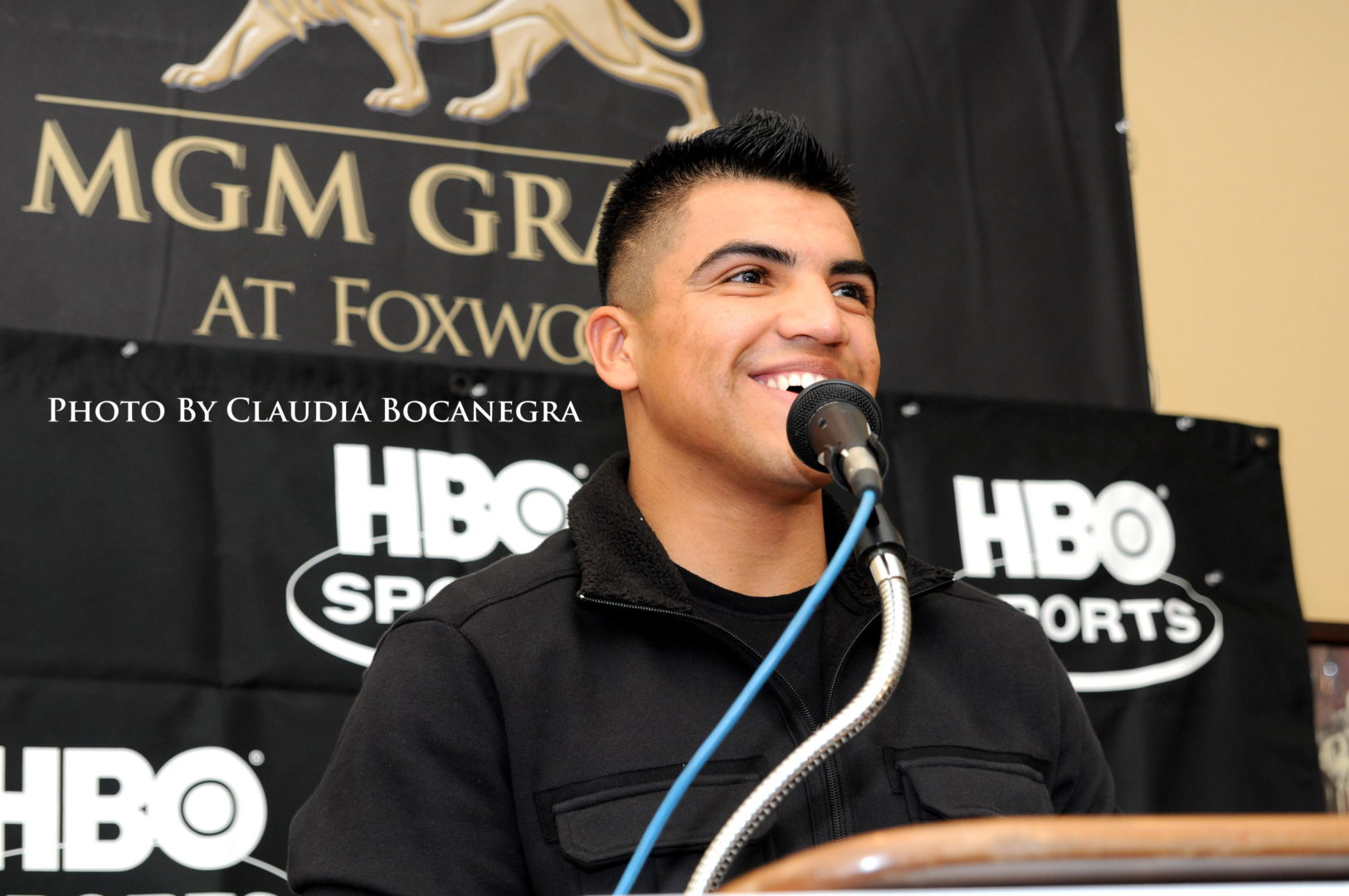


Dirrell-St. Juste Headlines Shobox


Having lost two years of his career while battling cancer, Anthony Dirrell hopes to make up for some lost time beginning tonight against world ranked Renan St. Juste in the Showtime-televised main event emanating from the Chumash Casino Resort in Santa Ynez, California. The twelve-round bout is sanctioned by the WBC as an eliminator, which means the victor will be put in line to eventually challenge the winner of the upcoming Carl Froch-Andre Ward unification fight.

Shortly after scoring a knockout in December 2006, Dirrell was diagnosed with non-Hodgkin’s lymphoma. Dirrell’s treatment and recovery kept him from training until September of 2008. In the three years since, Dirrell has reeled off eleven consecutive victories, most by stoppage and mostly against modest opposition. In his last bout, Dirrell (23-0, 20 KOs) of Flint, Michigan disposed of Kevin Engel inside of two rounds in July. Dirrell, the WBC #1/WBA #2/IBF #14 ranked super middleweight, weighed in at 167-pounds.

“It’s going to be a big fight,” said Dirrell on Thursday. “I’m ready mentally and physically. I’ve been training hard, working with my brother [Andre] and the team, Team Dirrell. I’m ready.”

WBC #2/WBO #4/WBA #13/IBF #15 ranked St. Juste (23-2-1, 15 KOs) of Repentigny, Quebec, Canada has only been campaigning at 168-pounds since last December when he scored the biggest win of his career: a second-round stoppage of Sebastien Demers. The victory completely turned around St. Juste’s career after an upset loss in his previous bout to Marcus Upshaw at middleweight.

“Being at 168 is better for me,” explains St. Juste, who weighed-in at 166 1/2-pounds. “It was difficult for me to make 160. I walk around in the 180s. At 168, I can keep my muscle and not worry about the weigh-in.”

The winner of tonight’s bout would be in line to eventually cash in on a money fight against the winner of the Carl Froch-Andre Ward WBC/WBA unification bout, which takes place later this month.

In the co-main event, WBO #4/WBA #8/IBF #10 ranked 122-pounder Chris Avalos (19-1, 15 KOs) of Lancaster, California takes on IBF #14/WBO #14 ranked Jhonatan Romero (19-0, 12 KOs) of Cali, Colombia in a ten-round super bantamweight bout.

Avalos moved up in the rankings with a ten-round unanimous decision over previously unbeaten prospect Khabir Suleymanov in June. The win marked Avalos’ third straight victory at 122-pounds after a weight-drained defeat at bantamweight against Christopher Martin in August of last year. Avalos scaled 121 ¾-pounds on Thursday.

Romero, a multiple-time former Colombian National champion, will be fighting outside of his home country for just the second time in his career. Avalos also represents a major step-up in class. The only notable name on the pro ledger of Romero came in his last bout on American soil, when he rose from a knockdown and scored a six-round decision over faded former super flyweight and bantamweight title challenger Cecilio Santos in June. Romero came in at 121-pounds Thursday.

2008 Colombian Olympian Darley Perez (23-0, 18 KOs) of San Pedro de Uraba, Colombia will take on veteran gatekeeper Fernando Trejo (33-16-6, 19 KOs) of Jarrell, Texas by way of Mexico City, Distrito Federal, Mexico in an eight-round lightweight bout.

Perez, the WBA #4/IBF#9/WBO #10/WBC #13 ranked lightweight, is coming off of a Showtime-televised win over Oscar Meza in September. Trejo, whose most notable victory came in 2005 over then-unbeaten Jose Armando Santa Cruz, was in the ring just a month ago. Trejo went the distance but lost a wide decision to lightweight prospect Jose Gonzalez in Puerto Rico. Perez weighed in at 134, while Trejo scaled 135-pounds.

Fighting for the first time outside of Colombia, WBA #5/IBF #7 ranked featherweight Daulis Prescott (23-0, 17 KOs) of Barranquilla, Colombia will take on once-beaten Gabriel Tolmajyan (11-1-1, 3 KOs) of Glendale, California by way of Yerevan, Armenia in an eight-round bout.

Prescott, the brother of Amir Khan-conqueror Breidis Prescott, would appear to be taking a step up in class. Despite his lofty rankings, Prescott has really yet to be even moderately tested as a pro. Tolmajyan has not exactly fought a who’s who, but has been impressive since dropping a four-round majority decision to still unbeaten Efrain Esquivas back in 2008. Prescott and Tolmajyan both scaled 127-pounds Thursday.

Glenn Porras (26-3, 17 KOs) of M’lang, Cotabato, Philippines will make his U.S. debut against journeyman Adolfo Landeros (21-22-2, 10 KOs) of Hidalgo, Hidalgo, Mexico in an eight-round super bantamweight bout. Porras, who came out to San Leandro, California to work with Nonito Donaire Sr. for this fight, weighed in at 120 ½-pounds Thursday. Landeros, 0-4-1 in his last five, scaled 122.

Super bantamweight prospect Roman Morales (7-0, 5 KOs) of San Ardo, California returns to the Chumash Casino Resort for the fourth time this year against Alejandro Castillo (4-1, 1 KO) of Denver, Colorado by way of Ciudad Cuauhtemoc, Chihuahua, Mexico in an eight-round bout. Despite having turned pro just this past February, Morales has quickly become one of the hottest prospects in the state. In his last ring appearance, Morales quickly dismantled Cain Garcia inside of two rounds in September. Castillo has yet to fight outside of Denver and enters tonight’s bout coming off of his lone defeat, a fourth-round stoppage suffered at the hands of Shawn Nichol in March of last year. Morales came in at 120-pounds to 119 for Castillo.

Super bantamweight prospect Jonathan Arrellano (10-0-1, 2 KOs) of Ontario, California will take on the always tough Jonathan Alcantara (4-5-2) of Novato, California in a six-round bout. Arrellano is fresh off the biggest win of his career, an eight-round decision over previously unbeaten Michael Ruiz Jr. to claim a minor title in September. Alcantara has consistently tested up-and-comers, including a draw with the aforementioned Ruiz. Arrellano and Alcantara both came in at the 122-pound super bantamweight limit at Thursday’s weigh-in.

In the opener, Roy Tapia (1-0, 1 KO) of East Los Angeles, California takes on Jose Garcia (0-4) of Bakersfield, California. Tapia, the 2007 National PAL Champion at 125-pounds, scaled 123 for his second pro bout on Thursday. Garcia, who has been matched incredibly tough in his career, weighed in at 122 ¾-pounds.

Tickets for tonight’s event, promoted by Gary Shaw Productions, are available online at StarTickets.com.

Quick Weigh-in Results:

WBC Super Middleweight Championship Eliminator, 12 Rounds
Dirrell 167
St. Juste 166 ½

Super Bantamweights, 10 Rounds
Avalos 121 ¾
Romero 121

Featherweights, 8 Rounds
Prescott 127
Tolmajyan 127

Lightweights, 8 Rounds
Perez 134
Trejo 135

Super Bantamweights, 6 Rounds
Morales 120
Castillo 119

Super Bantamweights, 6 Rounds
Arrellano 122
Alcantara 122

Super Bantamweights, 8 Rounds
Porras 120 ½
Landeros 122

Super Bantamweights, 4 Rounds
Tapia 123
Garcia 122 ¾

Photos by Tom Casino/Showtime

Mario Ortega Jr. can be reached at ortega15rds@lycos.com.
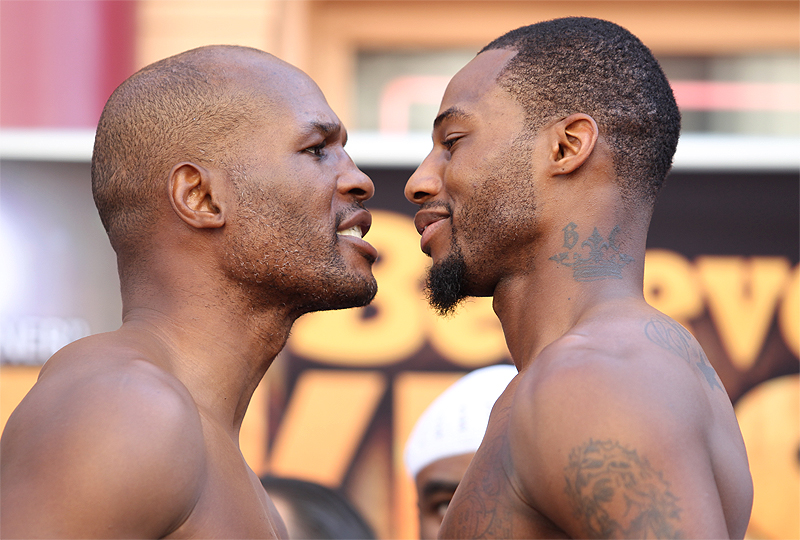


A good Saturday could save 2011 by turning into the Year of the Rematch

A 2011, seemingly forgettable because of controversial refereeing, has a chance to get off the mat this Saturday and be remembered as the Year of the Rematch.

There’s a buzz on both coasts, impossible to ignore for the rest of us in fly-over country.

At Madison Square Garden in New York, there are super-welterweights Miguel Cotto and Antonio Margarito in a blood feud ancient Rome would have liked. At the Honda Center in Anaheim, there is Abner Mares and Joseph Agbeko in a chance to resolve the low-blow controversy that has haunted Mares in the months since referee Russell Mora didn’t penalize him.

Take your pick. I’ll take both.

It’s no surprise that Cotto-Margarito is getting most of the attention on an HBO pay-per-view card that includes another intriguing encore, middleweights Pavel Wolak and Delvin Rodriquez in a rematch of their wild draw.

Bad blood since Margarito’s 2008 victory in 2009 has been boiling, because of Cotto’s belief that Margarito used the same altered hand wraps that were found before the Mexican’s next fight, a 2009 loss to Shane Mosley.

Cotto calls Margarito a criminal. Almost as if he enjoys the role, Margarito smiles beneath eyes hidden behind ever-present dark glasses and long hair that create a menacing mask. Then, there was the licensing mess in New York, where the state’s athletic commission worried about the condition of Margarito’s surgically-repaired right eye before finally saying OK.

Add a potentially vulnerable target to an evident quest for vengeance in what looks to be a last-stand between fighters past their prime, and there’s unmistakable danger. For some, that transforms the bout into irresistible drama. For others, it’s just obscene. Hide the kids.

For the articulate Mares, there is none of the intense anger or hand-wrap suspicions that are worthy of a new television series. Call it CSI Boxing. But the bantamweight bout is every bit as significant for a young fighter on the cusp of attaining real stardom. Put simply, he has to prove he isn’t a dirty fighter. Only he can.

“I hope to win the right way so people will give me the credit I deserve,’’ Mares said at a workout a few days before the Showtime-televised fight.

Mares is smart enough to know that credit for his majority decision in August over Agbeko has eluded him no matter what is said by him or his Golden Boy promoters.

“It was more than robbery, it was Brinks,’’ said Agbeko promoter Don King, who didn’t specifically blame Mares for what Mora did or didn’t do, but also left no doubt about who he thought escaped.

The winners: Boxing in a December comeback with Cotto in a mid-to-late round stoppage after sustained blows to Margarito’s right eye and Mares in a unanimous decision with a versatile array of punches, all above Agbeko’s belt.

A COUPLE OF COUNTERS
Two words for sports editors whose newspapers have cut back on boxing coverage because they’re offended by the sport: Penn State. One more word for those same editors: Syracuse.

In an interview with RingTV’s Lem Satterfield, Bob Arum talked about how he finally convinced Cotto to agree to a fight with Margarito, a business partner whom he calls criminal. “Ultimately, money talks,’’ Arum told Satterfield. “I couldn’t have made this fight on normal terms. Just money. That’s enough.” For Manny Pacquiao-Floyd Mayweather Jr., there’s much more than enough to believe it finally will happen in 2012.

ROACH AT THE MIKE
Freddie Roach’s honesty will get some air time Saturday as an analyst for the EPIX/EpixHD.com broadcast of the WBA belt-holder bout in Helsinki between heavyweights Alexander Povetkin of Russia and Cedric Boswell of Atlanta. I’m not sure about the fight. At 42, Boswell appears to be overmatched against the emerging and unbeaten Povetkin. But the tireless Roach makes it worth a look, or at least a listen.

Roach’s favorite ringside broadcaster?

“Jim Lampley, he’s a genius,’’ Roach said.

AZ NOTES
In a postponement, junior-welterweight prospect Jose Benavidez is scheduled for a bout on Feb 3 at Wild Horse Pass Resort & Casino in Chandler, a suburb of Phoenix, Benavidez’ hometown. The card, promoted by Showdown and Top Rank, had been scheduled for Jan. 7. Benavidez’ appearance on the card is still subject to how his right wrist recovers from an injury suffered in a victory on the undercard Nov. 12 of Manny Pacquiao’s controversial decision over Juan Manuel Marquez at Las Vegas’ MGM Grand. Benavidez, considered Top Rank’s brightest prospect, was scheduled to see the doctor on Saturday.

Once-beaten Phoenix super-middleweight Jesus Gonzales has taken to social media in an attempt to lure Kelly Pavlik into a fight. Gonzales has called out Pavlik on his Facebook page. But it’s still not clear what Pavlik’s plans are. He is expected to resume training in Oxnard, Calif., after Christmas. There’s talk about him fighting Julio Cesar Chavez, Jr. But it’s not clear whether he would fight a tune-up before then. If so, Gonzales hopes for a shot at him. Pavlik’s manager is Cameron Dunkin, Gonzales’ former manager. That could be a complication.


Morales Aims to Close First Year as a Pro in Style

At this time a year ago, super bantamweight prospect Roman Morales was basking in the glow of the gold medal he had just claimed at the prestigious Four Nations Tournament in France and contemplating leaving behind the amateurs for the paid ranks. Fast forward a year, and Morales’ first year as a professional should be considered a success. The blossoming fighting pride of San Ardo, California looks to put an exclamation point on his year tomorrow night in a six-round bout against Alejandro Castillo at the Chumash Casino Resort in Santa Ynez, California.

The Gary Shaw-promoted and Repo Ric-managed Morales (7-0, 5 KOs) was last in the ring on September 2nd, as he completely destroyed Cain Garcia inside of two rounds in Salinas, California. Morales would likely be looking for his ninth win tomorrow had a late October bout not been scuttled. The cancellation only means that Morales is even more prepared for Friday’s bout. “We just kept going, kept training,” says Morales’ trainer Rodolfo Tapia. “We didn’t stop at all, just kept going, waiting for the next fight.”

The next fight comes against Castillo (4-1, 1 KO) of Denver, Colorado by way of Ciudad Cuauhtemoc, Chihuahua, Mexico. Castillo could provide a stern test, as his only defeat came via fifth-round stoppage against former amateur standout Shawn Nichol in a bout he was leading on all three official scorecards. Castillo had put the first blemish on Nichol’s ledger via decision in their first meeting.

“We saw he fought Shawn Nichol a couple times,” says Tapia. “We know he is aggressive and comes forward. We have prepared for his style. [I had] Roman spar aggressive guys that come forward, throwing punches, body shots. He’s ready. He’s been doing pretty good.”

One of the aggressive guys Morales sparred in preparation for Friday’s bout was super bantamweight contender Glenn Porras (26-3, 17 KOs). All told Morales logged 16 rounds with Porras, who makes his U.S. debut in Santa Ynez. Tapia also took Morales down to Oxnard, California for another 16 rounds in two days. “We’ve had pretty good training,” says Tapia simply.

Looking back at the year, Tapia is happy with his charge’s progress. “He’s getting pretty good,” reports Tapia. “He’s had better fights every time. He trains hard. We think he is ready for the next step: eight rounds. It has been pretty good progress. He’s doing a lot better at everything. He has picked up little things from the guys he has been sparring. Like this time with Glenn Porras, and before with Nonito [Donaire]. He’s learned a lot from them.”

Morales aims to put everything he has learned in the gym on display tomorrow and finish his first year as a professional strong.

Tickets for the event, promoted by Gary Shaw Productions, are available online at StarTickets.com.

Photo by Stephanie Trapp


Margarito-Cotto II: Revenge served cold


Saturday’s rematch between Mexican Antonio Margarito and Puerto Rican Miguel Cotto is about revenge. It is not about establishing primacy at the kooky catchweight of 153 pounds or resolving some residual doubt from their first encounter. It is about satisfying the bloodlust Puerto Ricans feel because of the ruin Margarito brought to their guy’s career in 2008.

Once you admit this fight appeals to nothing but a sense of vengeance, you can suspend other moral considerations. And once that’s done, all the Margarito-Cotto II pieces fall happily into place.

Tuesday afternoon the New York State Athletic Commission tossed a fig leaf of plausible deniability over a few of the other moral considerations that might otherwise flash us from Madison Square Garden during Saturday night’s pay-per-view event. After a sympathetic doctor was finally located to underwrite the condition of Margarito’s surgically repaired right eye and/or orbital bone, deniability was established: If Margarito is blinded by Cotto, why, it will be an accident like any other – the very sort of thing every fighter risks whenever he dons gloves.

At this moment (as opposed to the heartfelt recriminations sure to come if tragedy strikes), does anyone besides Margarito’s wife care if the worst happens to Margarito? No. Not even Margarito cares. Frankly, he’s about to make a pretty rational decision; he’s risking the sight in one eye to make millions of dollars. Who among us wouldn’t do the same in this economy?

Margarito should not be in this fight. After a plaster-like substance was found on pads placed over his knuckles before a 2009 match with Shane Mosley, Margarito was stretched by Mosley and banned from the sport. He earned a pay-per-view fight with Manny Pacquiao 22 months later by acquiring a phony light middleweight title and being a Mexican expected to draw countrymen to Cowboys Stadium, where he was summarily undone by a man structurally not 2/3 his size. He earned Saturday’s fight by having two surgeries.

Margarito’s only real qualification for facing Cotto is the ire he now causes Puerto Ricans. That ire comes from the universally held suspicion Margarito used the very same pads against Cotto he was about to use against Mosley. If you were in MGM Grand Garden Arena on July 26, 2008 and happened to look at the screen above the ring and see Cotto’s misshapen face, it was probably the first image that came in your mind when, five months later, you learned what happened in Margarito’s dressing room before his fight with Mosley.

If that is conjecture, it is conjecture of the most damning sort, something no amount of pettifogging by Margarito’s lawyers can undo. Witnesses to Margarito-Cotto I know what they saw, know how much it meant to them at the time, pro or con, and know what Margarito did to their memories is unforgivable.

Cotto has not been the same since his match with Margarito. He says he was criminally assaulted in their first fight. Whatever else Cotto might be, he is decidedly not a salesman; he would rather see Margarito in jail than across a boxing ring from him.

Because this fight is about Puerto Rican vengeance, it could not logically happen anywhere but Madison Square Garden, Cotto’s home field. When the NYSAC began its bluster routine a couple weeks back, there was talk about other venues in other states. But this fight was destined for New York or bust.

How do we know that? Miguel Cotto told us.

In an ill-advised Tuesday conference call, an event to have Cotto tell us only that he felt strong, Cotto was asked about the still-festering controversy concerning his fight’s venue. Cotto knew of no controversy; if the NYSAC didn’t license Margarito, Cotto would not fight him. Promoter Bob Arum then declared his own conference call “really not appropriate” and told his publicist to end it.

Which brings us to a note about media access: Beware of promoters bearing scoops.

Two weeks ago, during Julio Cesar Chavez Jr. fightweek festivities in Houston, a reporter from a prominent magazine misunderstood the access Arum granted him. He wrote about alternate Margarito-Cotto II venues in states far-flung as Colorado and Mississippi. He was aflutter with possible venue changes and proud to breakfast with Arum. But his only real role was to be Arum’s megaphone as the wily old promoter applied pressure to the politically appointed folks hovering round the NYSAC’s licensing decision.

One of the ironies of Margarito’s post-Mosley career is that Arum has been more comfortable playing villain than Margarito has. Margarito wears the dark glasses and makes fun of Cotto’s whining, sure, but it’s obvious to anyone who knows Margarito that he desperately wants to be liked, not hated. Margarito’s transformation from the beloved figure he was after beating Cotto to the infamous character he now plays makes as much sense to him as those agility drills he does on HBO’s “24/7” program, and twice as much sense as whatever he’s supposed to be accomplishing with that slip rope they keep stringing across the ring posts.

Margarito’s role Saturday is to be easy for Cotto to hit. Sans hardening agent on his middle knuckles, it is unlikely Margarito will punch with force enough to stop Cotto a second time. Cotto would certainly like to beat Margarito or even stop him – it would confirm everything Cotto believes happened to his career – but it is not what is most important to him.

What is most important to Cotto is not being stopped by Margarito a second time. Do not expect, then, some frenzied and grudge-induced attack in the center of the ring. Expect Cotto to move and box like a man who does not want to find his legs gone in round 9, would very much like to win, and hopes he might do to Margarito what Mosley did.

Expect, in other words, revenge served cold: Cotto, UD-12.

Bart Barry can be reached at bart.barrys.email (at) gmail.com


Q & A with Seanie Monaghan


Undefeated Light Heavyweight Seanie Monaghan returns to action on December 3rd as part of the big Miguel Cotto – Antonio Margarito rematch undercard. Monaghan (10-0, 7 KO’s) has become one of the most popular prospects in New York and will be stepping up the competition.

Seanie, tell the fans out there a little about yourself.
Where did you grow up? What was your family upbringing like? Who are your main influences in your life? How did you get into boxing and how was your Amateur experience?

My mother and father are from Ireland. My mother was pregnant with me when they moved here to NY where i was born. I’ve lived my whole life in Long Beach NY. I was surrounded by a very big Irish family, my Grandmother was one of 17 children so my family was huge. My dad and all my uncles we’re huge boxing fans, they loved Marvin Hagler, Mike Tyson and Barry McGuigen. They would let me stay up late when I was a little kid and watch all the big fights. I always loved boxing but I never stepped into a gym until I was 21 years old. I was getting into a lot of street fights and my friend Bobby Calabrese brought me to a Boxing gym in Freeport Long Island. Bobby got to see my first fight (which i won) but he was murdered shortly after. I fight in his memory. I didn’t have a very long amateur career. I made it to the finals of the Golden Gloves and lost a controversial decision, the next year I lost another close one in the semi finals and decided to go pro. My amateur record was 10 and 4.

What kind of style do you bring into the ring?
When I step in the ring its strictly business, I’m a power puncher with both hands and my goal is to get my guy outta there as soon as possible without being reckless. As a boxing fan, I appreciate the skill of defense but I’m always hoping to see a big Knockout, so that’s what I try to give my fans.

Tell us about your team.
I’m trained by Joe Higgins out of the Freeport Boxing Club, the same trainer I’ve had since my first amateur fight. He’s a former Marine/Fireman and he’s really making a name for himself as a coach on the pro and amateur scene. Joe was a coach on this years Pan America games and he gets me all the best sparring available in NY with all of his connections. My manager is a personal friend of mine named PJ Kavanagh, a business man/ bar owner. He’s doing an unbelievable job with my career. I’ve been on all the biggest undercards and had experiences guys wait a lifetime for. I’m 100% confident in my team. We’re all on the same page and all very excited about our future in boxing.

You are one of the most popular fighters in New York, what does that mean to have so much fan support?
Its an unbelievable boost to have the support that i have. My home town of Long Beach has showed me unbelievable support from day one. I had 300+ people come to my pro debut. Now its more than doubled and its not just long beach anymore. My last fight at MSG a woman from Canada asked me to sign an autograph for her son because she said i was his favorite figher! That was crazy.

December 3rd is one of the biggest events of the year and Madison Square Garden will be rocking that night. How excited are you to participate on such a big stage?
Not only is Dec 3rd the most anticipated fight of the year, but it’s the 7 year anniversary that my friend Bobby Calabrese was murdered. So for me its a Huge event. I’ve never been in better shape. I’m fighting in the big house at MSG and it’s going to be a great night. Its sold out at almost 20,000 people! I’m really excited to see the main event, my wife is from Puerto Rico so we’ll be there rooting for Cotto. I’m also dying to see that Pawel Wolack/ Delvin Rodriguez rematch.

Do you know who your opponent is? What is your strategy for this fight?

My opponent is a guy named Santos Martinez from Michigan, i saw him get KOd by an amateur rival of mine so i would like to KO him faster and better to prove a point, but I’m gonna go in there cool headed and do what I always do. Box smart and if the opportunity comes, get him outta there.

There is a great tradition of Irish fighters in New York, how much of the history of that do you follow?
My family is right off the boat, we’re as Irish as it gets. My family talks about boxing at our holiday dinners. I’ve got the chance to meet and become friendly with Andy Lee, James Moore, John Duddy and Kevin McBride. Just to say i’m friends with those guys is cool enough in my neighborhood but to make my own name and be mentioned alongside guys like that would be great. I’m getting there.

You just became a father for the first time. Does that inspire you to work even harder?
My son Absolutely inspires me. I love him more than i can even describe and i want to be able to provide for him and help everyone else in my family and my close friends. I have an opportunity to make it big in this sport, i just have to stay focused one fight at a time, one training camp at a time and its mine.

What do you think about the Marquez/ Pacquiao decision?
Everyone’s making it seem like such a scandal with the Pacquiao/Marquez thing. I watched the fight and thought Pacquiao won by a round or two. I would have been alright with a draw. Marquez boxed very well but I thought he was a little too defensive. Pacquiao looked ackward at times but he did out land Marquez and he was forcing the pace all night. Marquez knew how to avoid Mannys left hand so he fight was a chess match. It was very close, I wanna watch it again because everyone seems to disagree with me on this one.

Where do you see your career going in 2012?
2012 is going to be another busy and exciting year for me. I had a late start in boxing so i’m catching up. I had 8 fights in 2011, I learned a lot and I’ve progressed with my boxing skills each fight. There’s negotiations going on now for a shot at the Irish Light Heavyweight Tile against Irish Champ Ciaran Healy on St Paddy’s Day. They contacted us about the fight and that would be a dream come true for me and my big Irish family. We’d be bragging about that forever! But first things first I gotta handle my business Dec 3rd.

Anything you want to say to your fans in closing?
I would just like to thank everyone for the support and attention we’ve been getting. I’m very proud and satisfied with the work we put in for this fight and the results will be evident on Dec 3rd.


Spreading the news: All the right moves sell Cotto-Margarito II in a New York second


Brinksmanship equaled salesmanship in Bob Arum’s extraordinary fight to keep the Miguel Cotto-Antonio Margarito rematch on Dec. 3 in New York. Arum pushed all the right buttons, created all of the available leverage, in moves that figure to multiply the pay-per-view rewards in a way that traditional promoting could not have.

Even a conference call, usually ho-hum, now looks like an ingenious piece of marketing a few days after Cotto said Tuesday he would fight only in New York, a comment that led to Arum’s abrupt end to the call. Cotto surprised Arum, yet helped him put further pressure on the New York State Athletic Commission in a battle that kept the Madison Square Garden fight from being moved. Denver and Phoenix were the alternate sites, a couple of options that added up to leverage at the box office. New York didn’t want to lose the business to another city.

None of this is to say that Arum, who had plenty of his own business at risk, had a blueprint for each step in the fast-moving chain of events.

Nobody could have, especially in the contentious wake of Manny Pacquiao’s majority decision over Juan Manuel Marquez on Nov. 12 and then promotional work the following week before Julio Cesar Chavez Jr.’s victory over Peter Manfredo in Houston. For conspiracy fans who believe Arum plots every move, please go back to your home on the grassy knoll.

In the end, Arum simply reacted shrewdly, countered when he had to, with money and smarts that left the New York commission with no choice but to license Margarito after reviewing medical recommendations, which were unanimous that Margarito’s surgically-repaired right eye was in no danger of permanent damage. It’s anybody’s guess as to what the messy process will do to the fight itself.

At the first sight of injury near an eye so terribly battered by Pacquiao more than a year ago, and it could be over. Expect heightened vigilance from the referee, ringside physician, New York commissioners and Margarito’s corner, especially in a fight that already includes an element of revenge.

Cotto continues to believe he was beaten by Margarito in 2008 by loaded hand-wraps discovered before Margarito’s loss to Shane Mosley in 2009.

In both HBO’s 24/7 and aforementioned conference call, Cotto used the word “criminal” in talking about Margarito.

“If you have another way to explain that, please, tell me what words to use,’’ he said.

When asked if he would target the eye, Cotto said:

“I’m going to use any advantage I think I have. I’m going to fight like always. I’m going to do my work.’’

Leave it to somebody else to argue whether Margarito should be allowed to fight at all after the hand-wrap scandal. The rematch comes with an edge that Cotto is seeking his own kind of justice. I can’t say I’m comfortable with the vigilante tone or the potential for another injury to Margarito’s eye. But I’ll be watching nonetheless, like so many others who won’t admit it, yet won’t be able to resist a drama that is part guilty-pleasure part blood-lust, unmistakably dangerous and thoroughly compelling.

AZ NOTES
· If New York said no, the Arizona State Boxing & MMA Commission planned to license Margarito. “We were prepared to, but it wasn’t 100 percent certain,’’ said Arizona commission executive Dennis O’Connell, who received Top Rank’s medical documents on Margarito’s eye on Friday, Nov. 18, the same day that Top Rank contacted US Airways Center about the possible move. O’Connell had a Phoenix ophthalmologist review the documentation. If the NYAC-appointed doctor had found problems in his examination, Arizona would have had to conduct its own exam.

· Phoenix as an option for Cotto-Margarito II is another sign of the re-awakening of a market gone dormant during the immigration controversy involving SB1070, state legislation that turned the Arizona desert into no-man’s land for Mexican fighters and sponsors for a couple of years.


Chavez, Martinez, and the importance of layers


HOUSTON – And there was Sergio Martinez lurking stage left, both taller and thinner than he appears on television. He was at the postfight press conference on the second floor of Reliant Center to supervise, not make trouble. Martinez’s class prohibited him from upstaging Julio Cesar Chavez Jr., calling him out or demanding his garish WBC belt back.

Martinez did not have an entourage, certainly no one stunning as the phalanx of tight-dressed chicas that followed Chavez in the converted media center. What Martinez did have, though, was presence and a star’s piercing confidence. “I would knock him out,” Martinez said quietly in his native Spanish, when asked what would happen in a match with Chavez. “Yes, he’s improved, I see a little difference in his speed, but I would knock him out, don’t you think?”

So it tends to go for Julio Cesar Chavez Jr. Even after a fight Chavez’s promoter called “the best performance by Julio that I’ve seen,” Chavez struggled for respect when his turn at the microphone came. Two seats to the left was his father, Mexico prizefighting’s greatest living practitioner. Twenty feet from Dad was the world’s middleweight champion. About all Chavez could muster in the moment was a “¡soy muy contento!” he repeated so often even his sycophantic advisor Fernando Beltran teased him.

Chavez is not ready for Martinez – the one thing everyone agreed on after Chavez’s fantastic stoppage of Rhode Islander Peter Manfredo Jr. at 1:52 of round 5, Saturday – but he’s a hell of a lot closer to being ready for elite middleweights than anyone predicted he might be eight, or even three, years ago.

After fewer than 15 minutes in a ring with Chavez, Manfredo, who announced his retirement after Saturday’s match, sounded a whole lot like John Duddy 17 months ago in a postfight press conference at Alamodome, exactly 200 miles west of here.

“You never got me down, Ray!” Manfredo said in a passable homage to Robert De Niro’s Jake LaMotta in “Raging Bull.” Then he said, “I’m happy for (Chavez), proud of him. And you should be proud of him, too.”

Everything about Chavez was better than the last time he fought. Everything about Chavez was better, then, than the time before that. And the time before that marked Chavez’s first camp with trainer Freddie Roach. If Roach’s ever-improving-Pacquiao narrative suffered some exposure by Juan Manuel Marquez two Saturdays ago, his ever-improving-Chavez narrative held up just fine in East Texas.

Chavez now has a man’s body. Nowhere was this clearer than on the Reliant Arena media credential, a laminated green card that featured a goofy-bearded Chavez wearing the small shoulders and bird’s breast of an adolescent. Saturday’s version, conversely, was clean-shaven and muscular.

Chavez throws his jab with greater meaning and effect now than he did in 2009. His right guard flies off his cheek, yes, but that just opens him to counter crosses. And what follows each time Chavez gets tagged by a right hand makes excellent theater.

Chavez is more introspective than you think. He knows you have snickered about him for eight years. He senses that American writers have glanced at his resume and joked about the war he made on the Big Ten.

He has taken all this in what sporting good spirit the world’s privileged class shows the rest of us. In public, Chavez is self-deprecating and respectful.

And then you hit him. He takes that sort of thing far more personally than an average prizefighter. It verily pisses him off, and he goes after you with a special fury members of his class reserve for aspiring usurpers. These days, too, Chavez’s right hand is wicked enough to put down an uprising.

That right hand, and the wholly improved footwork that sets it up, represent layers Chavez has added to his self-portrait. And great portraits are all about layers.

Nowhere is that clearer in this ever-muggy city than at The Museum of Fine Arts, Houston – a couple miles northeast of Reliant Arena, beside the campus of Rice University. Through February, MFAH is running a Dutch and Flemish Masterworks exhibition that features, among other acts of genius, Rembrandt’s “Portrait of Aechje Claesdr” – a well-preserved work that first showed 17th century connoisseurs young Rembrandt Van Rijn’s singular talent.

The Flemish Master approach to painting that Rembrandt learned, perfected and improved relies on the use of seven layers. Each layer – from ink cartooning to umber underlayer to finishing palette – is applied to enhance what follows. The miracle of this approach – for if miracles exist, a miracle it surely is – comes in time’s thinning effect on oil paint. Over centuries, the oils used by the Flemish Masters have lost some of their body, allowing each painting’s underlayers to shine through. Rembrandt’s paintings, then, glow with colors more brilliantly now than when he applied them almost 500 years ago. Go ahead and think of anything we’re doing today about which that will be said in the year 2650.

One imagines Sergio Martinez would be fascinated by this approach more readily than Chavez. Martinez is closer to a master prizefighter, and more cerebral. His brilliance of motion and physical self-awareness, too, dwarf Chavez’s.

But Chavez’s apprenticeship in this brutal game has been striking. As his trainer hastens to note, Chavez understands the shape and nature of a boxing ring better than his resume predicts. Chavez has neither his father’s nor Martinez’s economy of motion, but he has confidence complemented by a willingness to engage those who offend him.

“This game has taught me how to be a strong-minded individual,” said a retiring Peter Manfredo, after Chavez stopped him Saturday. “But my kids won’t even look at (boxing). I won’t even order the pay-per-view for them.”

Chavez’s dad chose differently. Boxing continues to be entertained by that choice.

Bart Barry can be reached at bart.barrys.email (at) gmail.com