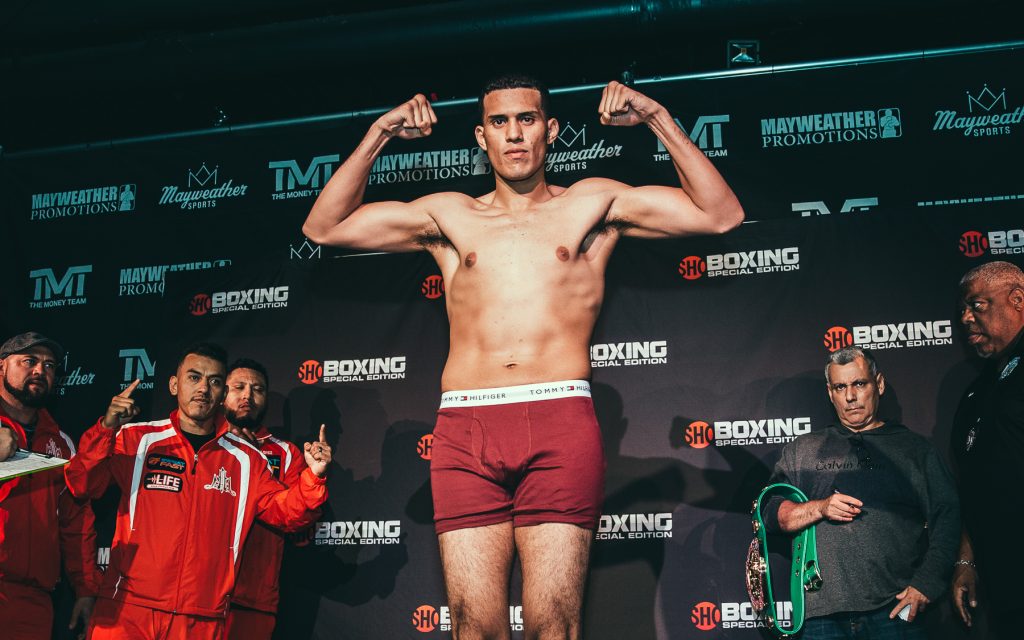
Big audience the biggest winner in Lopez’ upset of Lomachenko

By Norm Frauenheim

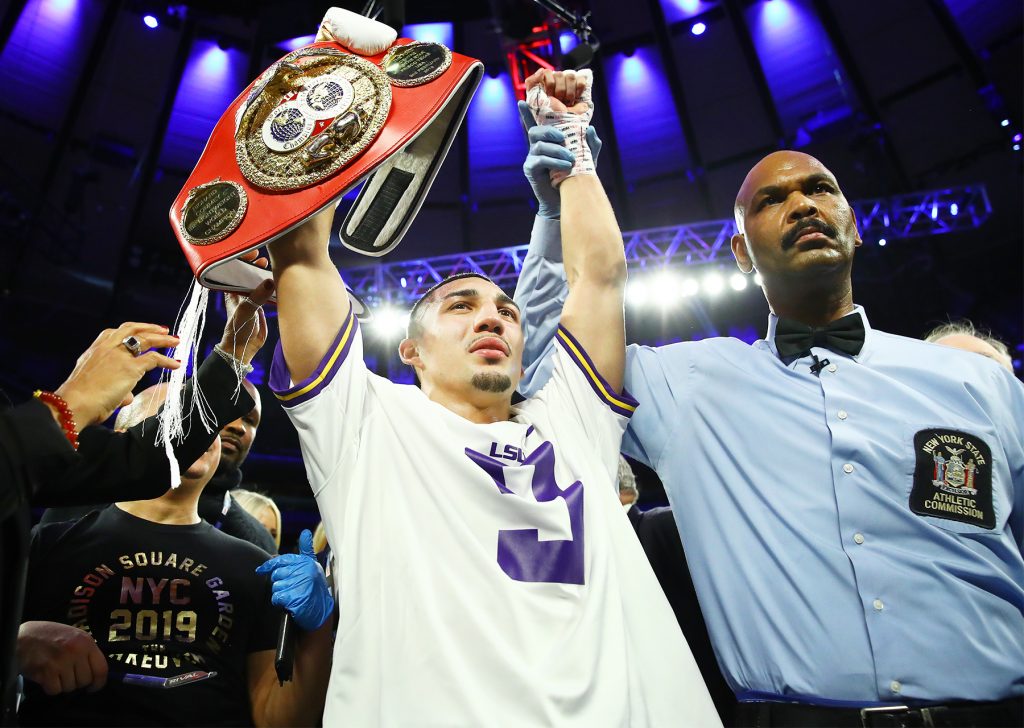
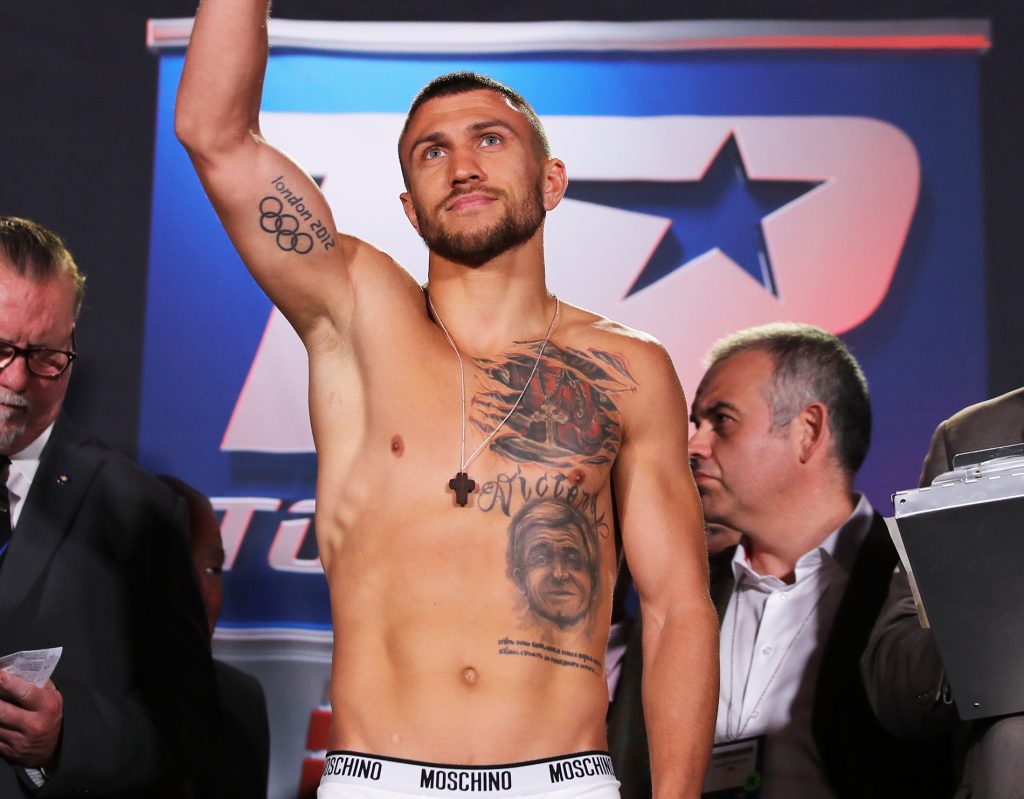
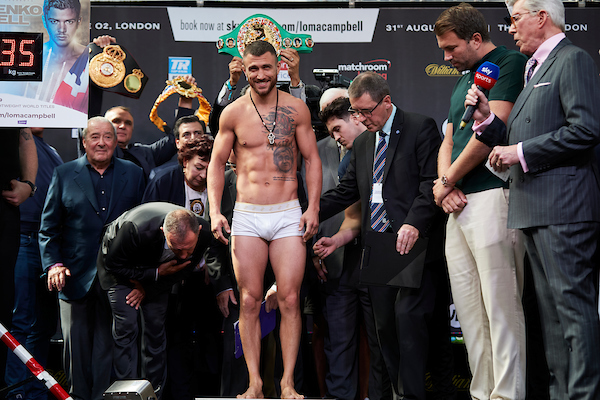
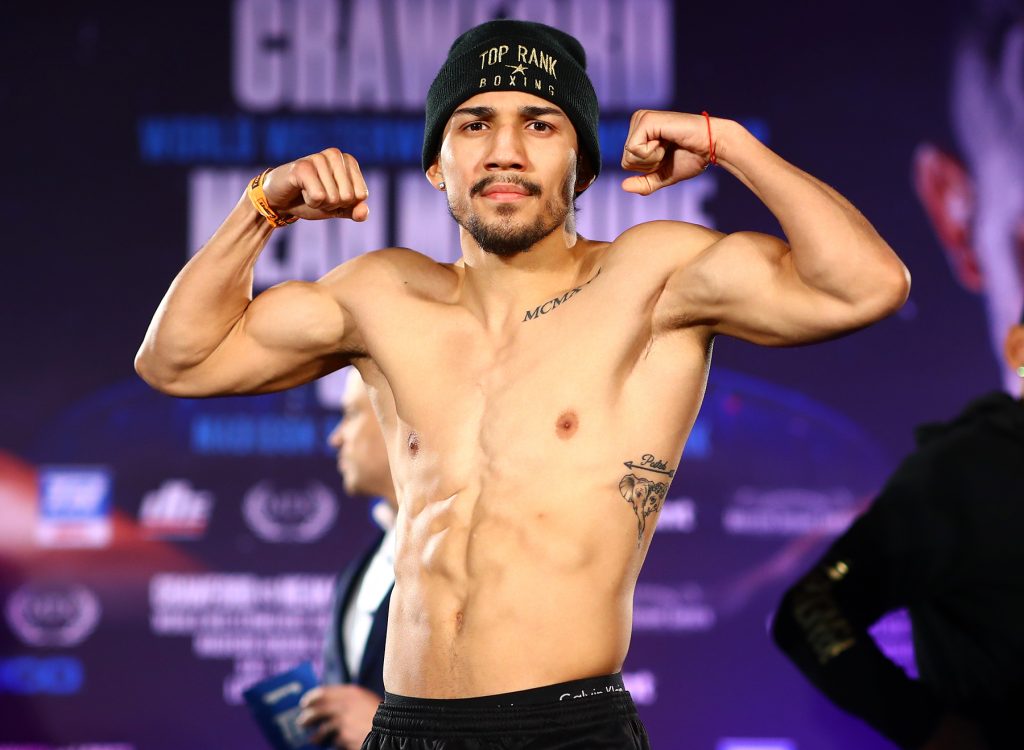
There wasn’t a knockout. There wasn’t even a knockdown. The classic expected in this corner and few others did not happen. But Teofimo Lopez-Vasiliy Lomachenko was a winner for the audience it attracted and interest it continues to generate.

Boxing, forever pushed to the edge of an imagined grave by critics and abolitionists, is alive and well. Not even a pandemic can kill it.

The numbers and noise are proof. First, the numbers. Ratings for the ESPN telecast were at a three-year high for boxing. Viewership for Lopez’ upset of Lomachenko averaged 2.729 million. The audience peaked at 2.898 million. Two-million was the reported goal. But who knew? In effect, the lightweight bout was a check-up, a moment to take a long look at what has happened since COVID crashed the party.

Turns out, the patient has a heartbeat.

Post-fight, I got a call from a friend, who is as spot-on insightful as he is fearless in what he thinks about an ever-scarred game. The best thing about the fight, he said, was that it wasn’t on pay-per-view. True, true and true on so many levels.

The decision not to attach a PPV tag onto the bout was the right thing to do. It’s hard enough to pay for groceries these days. But it was also the wise thing to do. If it had been PPV, maybe the audience would have been about 100,000. Fighters, managers, promoter and network would have split meager receipts, moved on and muddled on, still clueless about the state of the game.
Now, they know there’s still a market, an audience still hungry for the right fight. With its mind-numbing preponderance of titles, acronyms and the usual cast of suspects, boxing will never be exactly healthy. That’s part of the charm. But never doubt its resiliency. Lopez-Lomachenko showed it’s still there, vibrant as ever.

In part, the public appetite for a great fight created expectations. What happened in Lopez’ unanimous decision over Lomachenko, however, won’t ever be compared to Diego Corrales’ 2005 stoppage of Jose Luis Castillo or Robert Duran’s lightweight reign. It wasn’t even a Fight of the Year.

But nothing about it diminished that appetite for more. Nearly a week after the bout, people are still talking about the 119-109 scorecard (Really?), Lopez’ arrival (A Star Is Born), Lomachenko’s slow start (Why?) and news of Lomachenko’s subsequent shoulder surgery (That’s why).

A lot of the talk is familiar, including an argument that Lomachenko’s surgery is only an excuse. If it was really an excuse, you’d think he would have mentioned it in post-fight interviews.  He didn’t. His injured right shoulder is simply the result of fighting above his natural weight. Lomachenko, a true featherweight, began to suffer injuries when he moved to 135 pounds. He first injured his right shoulder in 2018 when he won a lightweight title against Jorge Linares.

Guess here: Lopez knew that Lomachenko was vulnerable at any weight above 130. For two years, he lobbied for the fight. Then, Lopez, a lightweight about to move up to 140, looked like the bigger fighter in a dominant 12th round, a convincing finale to what had been a close bout.

Lopez won the argument. Won the future, too, with a big audience that is still talking.


Teofimo Lopez takes over

By Bart Barry-

Saturday in The Bubble in the long-anticipated mainevent of a long ESPN card Brooklyn’s Teofimo Lopez conclusively decisioned Ukrainian Vasyl Lomachenko to become The Ring’s lightweight champion.  The fight went nearly opposite most forecasts, with Lopez, the better boxer, building an insurmountable points lead, and Lomachenko, the dirty desperado, trying for a knockout with almost every punch he threw – all 10 of them.

More Taylor-Hopkins than Pavlik-Taylor, Saturday’s fight was a tale of auto-overestimation that began with Lomachenko’s overestimating his defense in rounds 1-6 then his power in rounds 7-11 then his conditioning in round 12.  Not till after the match did Lomachenko flash some of his trademark contempt, replacing with scorn for the result what looks of concern for himself, confusion, discomfort and unpleasant surprise he’d worn for the preceding hour.

How much did Lopez do to create those looks?  Lots and lots.  He had Lomachenko’s number from the opening bell and knew it.  Lomachenko knew, too, even if he didn’t believe it.

There were moments in the fifth and sixth rounds when it became obvious Lomachenko expected judges to score his reputation, and it set one to thinking: He’s only got 15 prizefights, not 150, so what reputation does he expect them to score?  Judge Julie Lederman saw Lomachenko’s resume as balderdash and scored only what she saw, 109-119, in a refreshing manifestation of beginner’s mind; if you didn’t know Lomachenko’s skills are otherworldly and born of traditional Ukrainian dance, etcetera and etcetera, what you scored was a smaller man feinting and twitching and leaping away, for 15 minutes of what had been billed as a superfight, not fighting at all, in other words, and somehow expecting the two punches he landed every other round to even things up.

Whatever Papachenko’s grand strategy be, his son fought like they lost track of the round count, like they didn’t realize they were outside the math of the match till they were way outside it.  There were moments in rounds 10 and 11 when it appeared Lomachenko’s strategy hadn’t been to win a decision at all but stop the youngster, which mightn’t have been a bad strategy had Lomachenko done anything more than interrupt his opening 28-minute dance recital with occasional headbutting. 

No, Lopez hadn’t any idea how far out his depth he was when he signed the fight, and Lomachenko did nothing to show him in the match’s opening half, either, allowing Lopez’s youthful cocksureness to grow and grow.  By the time Lomachenko began to begin scoring points Lopez knew nothing but his being knocked-out should keep the belts round Lomachenko’s waist, and Lopez had long since mitigated what otherworldly angles Lomachenko flashes at smaller men.

It was all in Lopez’s leftfoot backward step.  Howsoever much Lomachenko valued his career’s 15 fights more than Lopez’s 14 what Lomachenko saw Lopez do to Richard Commey in December made a hell of an impression and Lomachenko wanted sample none of Lopez’s power, which meant Lopez, not Lomachenko, applied the pressure when no one was punching.  Fear of Lopez’s power stripped Lomachenko of his creativity, ensuring Lopez might only be hit by a punch he saw coming, and the quick backwards step Lopez made over and over with his lead foot, choosing to move with Lomachenko, not against him, reduced Lomachenko’s offensive arsenal to its square root.

There were flashes of Juan Manuel Marquez in Lopez’s choice; everyone who ever stepped at Manny Pacquiao got spun round and wacked, including Marquez in his first three minutes with the Filipino.  After getting felled thrice Marquez eventually solved the riddle by mirroring Pacquiao and spinning out his lead foot every time Pacquiao readied to attack; Marquez was willing to be hit and hurt by Pacquiao’s 1-2, but he’d be damned if he was going to get spun into Pacquiao’s third and fourth punches.

Lopez’s footwork, although not born in the ballrooms of Kiev, neutralized Lomachenko completely.  There were issues of Lopez’s simple width, too, and Lomachenko’s wariness, but it was most telling Lomachenko’s very few rallies happened when Lopez found himself on the ropes and hadn’t access to the one-step retreat he’d obviously practiced and practiced.

Then there was the decisive round, the reason this match will be remembered as Lopez’s coronation and not for its scorecards.  After imposing himself in round 11 Lomachenko prepared for Lopez to wilt in the 12th.  Wilt he didn’t.  Lopez snatched the initiative from Lomachenko and had his best moments in the match’s most important moments.  This was where Lomachenko’s auto-overestimation shone through.  Lomachenko put his foot down in the final minutes of the fight and found he didn’t have the power he expected – because his defense hadn’t been great as he believed in the opening half, and he’d been hit plenty – he didn’t have the target he expected – because his offense hadn’t been great as he believed, and Lopez was still strong – and he didn’t have the advantage in conditioning he expected because thinking you can apply psychological pressure to a fearless opponent is futile and dumb.

Lomachenko did just enough in rounds 8-11 for aficionados to content ourselves Lopez won, Lomachenko didn’t lose, and embrace the 23-year-old as our new savior, even if the most-feared puncher since Roberto Duran never so much as wobbled the computer nerd across from him.  OK, so maybe some of this was overhyped.  Welcome to boxing.

Here’s what wasn’t: Both guys subjected themselves to the crucible of highest competition much earlier than they had to, much earlier than their promoter even wanted them to, much earlier than their peers have done.  Lopez is right to revel in his accomplishment and publicly ridicule the gradually exiting generation of businessmen whose fears of loss and humiliation ever hid behind promotional conflicts and network loyalties.  That ruse held up only so long as everyone went along with it.  Lopez put paid to all that Saturday – even if Bud and The Truth don’t know it yet.

Bart Barry can be reached via Twitter @bartbarry


FOLLOW LOMACHENKO – LOPEZ LIVE!!!

Follow live as Vasiliy Lomachenko and Teofimo Lopez get it on for FOUR Lightweight titles in the most anticipated fight of 2020.  The action begins at 7:30 PM ET with undercard bouts featuring Edgar Berlanga as well as Arnold Barboza Jr. taking on Alex Saucedo.

NO BROWSER REFRESH NEEDED.  THE PAGE WILL UPDATE AUTOMATICALLY

12 ROUNDS–WBC FRANCHISE/WBO/IBF/WBA LIGHTWEIGHT TITLES–VASILIY LOMACHENKO (14-1, 10 KOS) VS TEOFIMO LOPEZ (15-0, 12 KOS)
ROUND 1 2 3 4 5 6 7 8 9 10 11 12 TOTAL
LOMACHENKO 9 9 9 9 9 9 9 10 10 9 10 9 111
LOPEZ 10 10 10 10 10 10 10 9 9 10 9 10 117

Round 1 Combination from Lopez..Right to body..Jab

Round 2 Right to body from Lopez..2 body shots..Right..Left from Lomachenko..Good exchanhe

Round 3 Left from Lopez..Body shot..Left..Combination..Left from Lomachenko..

Round 4 Jab from Lomachenko..Right from Lopez

Round 5 Right from Lopez..Body shot..More body work

Round 6 1-2 from Lopez..Left from Lomachenko….Short left..Hook from Lopez..Right to body…Right

Round 7 Left from Lopez…Right to body..

Round 8 Headbutt…Right from Lopez..Straight right..Left from Lomachenko..Left..Jab..Right from Lopez..

Round 9 Combination from Lomachenko…Lead uppercut from Lopez

Round 10 3 punch combination from Lopez..Left from Lomachenko..Jab..Left..right to body from Lopez,,Low blow committed by Lopez…

Round 11 Great exchange with Lomachenko getting the better..Body shot..Short left and over hand right..right..Left to body..Body shot by Lopez..

Round 12 Good right from Lopez..Left from Lomachenko..Good body shot from Lopez..Left…left hook..Letf from Lopez..Hard right and left..Accidental headbutt opens a cut around right eye of Lopez…

116–112; 119-109; 117-111 FOR LOPEZ

10 Rounds–Jr, Welterweights–Arnold Barboza Jr. (24-0, 10 KOs) vs Alex Saucedo (30-1, 19 KOs)
ROUND 1 2 3 4 5 6 7 8 9 10 11 12 TOTAL
Barboza Jr.* 10 10 10 9 10 10 8 10 10 10 97
Saucedo 9 9 9 10 9 9 10 9 9 9 92

Round 1 Saucedo lands a right..Left hook..Blood from nose of Saucedo..Left from Barboza..Right

Round 2 Left hook from Saucedo…3 punch combo from Barboza..Right uppercut..Right from Saucedo…

Round 3 Saucedo lands a left hook to the body..Barboza lands a right..short right..Body shot

Round 4 Barboza landing body shots…Good combination from Saucedo..

Round 5 Barboza being active

Round 6 Left from Barboza..Body from Saucedo..Barboza lands a right

Round 7 Barboza slips…Jab from Saucedo…AFTER REPLAY, THE SLIP WAS RULED A KNOCKDOWN FOR SAUCEDO

Round 8  3 punch combo for Barboza

Round 9 Right from Barboza…

Round 10 Snapping jab from Barboza..Trading rights..

96-93, 97-92 TWICE FOR BARBOZA

8 Rounds–Super Middleweights–Lanell Bellows (20-5-3, 13 KOs) vs Edgar Berlanga (14-0, 14 KOs)
ROUND 1 2 3 4 5 6 7 8 9 10 11 12 TOTAL
Bellows
Berlanga* TKO

Round 1: Left hook from Berlanga…HARD LEFT HOOK AND BELLOWS IS BLEEDING TWO MORE HARD SHOTS AND THE FIGHT OVER

10 Rounds–Jr. Welterweights–Josue Vargas (17-1, 9 KOs) vs Kendo Casteneda (17-2, 8 KOs)
ROUND 1 2 3 4 5 6 7 8 9 10 11 12 TOTAL
Vargas* 10 10 10 10 10 9 10 10 10 10 99
Casteneda 9 8 9 9 9 10 10 9 9 9 91

Round 1 Vargas lands a combination…Left to the body..3 Punch combination..
Round 2 Straight LEFT AND DOWN GOES CASTENEDA..combination from Vargas
Round 3 Straight from Casteneda…Body shot from Vargas…Blood from nose of Casteneda
Round 4  Hard combination from Vargas…Right Hook..Counter right from Casteneda…Good right hook from Vargas…Body work..Good combination..3 punch combination…Vargas outlanding Casteneda 98-40
Round 5 3 punch combination from Vargas..Right to body and head..Jab from Casteneda…Double right from Casteneda..Good body work
Round 6 Good right from Casteneda..Right..Bllod from Mouth of Cateneda..Nice right from Casteneda
Round 7 Good exchangetwo body s
Round 8 Left to body from Vargas..Straight left to the head…Jab..2 body shots..Good combination
Round 9 Right from Vargas…Good left..Combination..Body shot
Round 10 Body shot from Vargas

Vargas outlanded Casteneda 226-112

98-91, 100-89 and 99-90 FOR VARGAS

8 Rounds–Featherweights–John Vincent Moralde (23-3, 13 KOs) vs Jose Enrique Vivas (19-1, 10 KOs)
ROUND 1 2 3 4 5 6 7 8 9 10 11 12 TOTAL
Moralde
Vivas* KO

Round 1: BODY SHOT AND DOWN GOES MORALDE….HARD COMBINATION AND BODY SHOT AND DOWN GOES MORALDE AGAIN AND FIGHT IS STOPPED

6 Rounds—Welterweights–Quinton Randall (6-0, 2 KOs) vs Jan Carlos Rivera (4-0, 4 KOs)
ROUND 1 2 3 4 5 6 7 8 9 10 11 12 TOTAL
Randall* 10 10 9 10 9 10 58
Rivera 9 9 10 10 10 9 57

Round 1 Jab from Randall..
Round 2 Right from Randall
Round 3 Rivera lands a left
Round 4
Round 5
Jab from Randall…Combination from Randall
Round 6 
Right from Randall

59-55, 58-56 TWICE FOR RANDALL

4 Rounds–Welterweights–Jahi Tucker (1-0, 1 KO) vs Charles Garner (1-0)
ROUND 1 2 3 4 5 6 7 8 9 10 11 12 TOTAL
Tucker* 10 10 10 9 39
Garner 9 9 9 10 37

Round 1: Hook from Tucker..Tucker working on the inside..Body shots from Garner
Round 2 Nice uppercut from Tucker…1-2..Garner bleeding from the nose..Nice right from Tucker..Body from Garner…Nice right from Tucker..Garner’s mouthpiece falls out..Body from Garner..
Round 3 Nice hook from Tucker…Body work from Garner..Double left from Tucker..
Round 4 Right from Garmer..Body work..Uppercuts from Tucker..

40-36 on ALL CARDS FOR TUCKER


Lomachenko-Lopez: Forget all the uncertainty, this one could be a real classic

By Norm Frauenheim

It’s a fight for the times, or at least one that for a while has a chance to knock out all of the garbage that has left yesterday, today and tomorrow feeling like a precarious walk on a sharpening edge of uncertainty.

We live amid a virus that nobody wants to fight or knows how to fight. We hear politicians, separated by philosophies and plexiglass, exchanging trash talk that sends pundits reaching for blow-by-blow metaphors. The words, they say, are punches. If only they were.

Finally, the punches will be real in an expected delivery of an old craft — as true as it is dangerous — from lightweights who want to fight and know how to. Teofimo Lopez-Vasiliy Lomachenko is no metaphor. It’s figures to be as real as it gets in any era.

That’s not to say there hasn’t been some trash talk. Tension is there. But the words will in fact be settled by punches sometime after 7:30 pm ET/4:30 p.m. PT Saturday on a Top Rank card televised by ESPN from the so-called bubble, the Conference Center at Las Vegas’ MGM Grand.

The bubble means masks, social distancing and the uncomfortable hope that the cough you just heard doesn’t mean that a positive test is imminent. It’ll be a relief when that bubble bursts, giving way to a time when a Lopez-Lomachenko can return to the familiar sights, sounds and ticket sales generated by a live crowd. Two-hundred-and-fifty people will be allowed inside the bubble. First-responders, friends and family will be in the socially-distanced seats for a fight that had been scheduled for May at New York’s Madison Square Garden.

It was re-scheduled and moved for the same reason that bars and restaurants have been shut down. During the Pandemic, last call has taken on new meaning that doesn’t promise much of a tomorrow. But, at least, Lopez-Lomachenko is still happening for what is expected to be a big audience. There is no pay-per-view price tag. It’s the right thing to do during days when it’s hard to pay the rent. It’s also a rare chance to attract the casual fans who don’t watch PPV boxing but might watch Lopez-Lomachenko without having to invest another $80.

It’s a fight loaded with all of the elements that can define boxing at its singular best. There’s the young Lopez, a 23-year old with Honduran roots and a cocky accent from his Brooklyn upbringing. There’s the older Lomachenko, a taciturn 32-year old Ukrainian who casts disapproving looks at Lopez like a demanding master offended by a restless apprentice.

Lopez promises a Takeover. The decorated Lomachenko, nicknamed Hi-Tech, promises a lesson. The best promise is a classic.

Put it this way: Promoter Bob Arum says Lomachenko’s versatile skillset is the best he has seen since Muhammad Ali. In a Zoom session with media this week, World Boxing Council President Mauricio Sulaiman said Lopez had “all the elements of Roberto Duran.’’

Ali and Duran, legends from different weight classes. Ali was – is — an iconic heavyweight; Duran arguably the greatest lightweight ever. They could never have met in the ring. Only in the imagination or in a video game.

On real canvas, however, Lomachenko (14-1, 10 KOs) and Lopez (15-0, 12 KOs) might play out that pound-for-pound dream. Who wins? Who know? The guess from this corner is Lomachenko, a two-time gold-medalist and probably the greatest boxer in Olympic history. Lomachenko will throw punches from angles that Lopez has never seen.

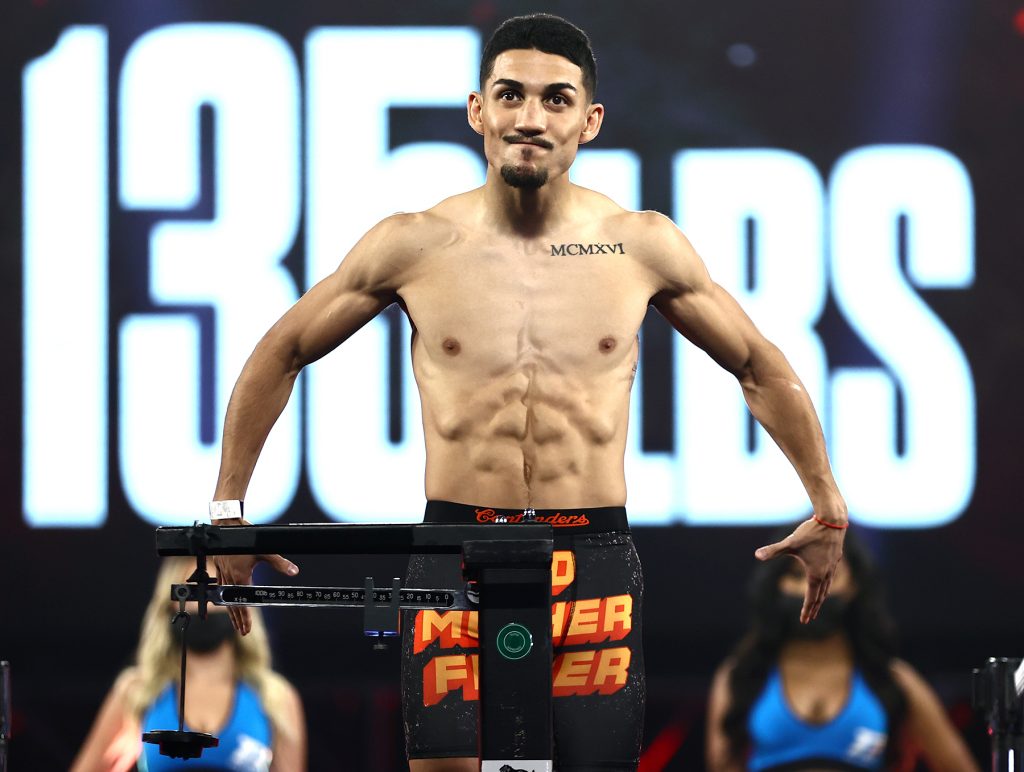
But danger rests in Lopez evident power and size. He’s a big lightweight. He’s at least one inch taller than Lomachenko, listed at 5-7. Across his shoulders, he looks bigger than the Ukrainian. It also looks and sounds as if Lopez won’t be at 135 pounds much longer. On Zoom with international media a couple of weeks ago, he talked about a jump to 140 for a possible date with either of the junior-welterweight champions, Jose Ramirez and/or Josh Taylor.

“Josh Taylor in the morning and Jose Ramirez at night,’’ said Lopez, who is known for celebrating victories with a head-over-heels back flip.

He’s talking about taking his career to some dizzy heights.

But there’s plenty of reasonable doubt about whether he’ll be doing a backflip Saturday night. Despite only 15 pro fights, Lomachenko’s amateur record is reported to be an astonishing 396-1. He has seen it all, most as the winner. His key is to elude, perhaps survive, an early assault from Lopez. The guess is that Lopez can – perhaps will – hurt Lomachenko somewhere between the first and sixth rounds.

For Lomachenko, there’s no talk of a move to junior-welterweight. He as heavy as he can be. There’s speculation he would be better off at 130 pounds or 126. There’s a lesser chance of injury. Lomachenko has undergone shoulder surgery and suffered hand injuries. He has the physical frame of true featherweight. But there’s bigger money and a more enduring legacy at lightweight, one of boxing’s original divisions.

But it’s a risk, one that was evident when Jorge Linares knocked him down in the sixth round of a bout in May 2018. Lopez has seen the knockdown. He has more power than Linares. He figures Lomachenko won’t get up if he lands the same kind of a shot. Maybe.

What’s lost amid all of the attention on Lomachenko’s brilliant tactical skill, however, is his toughness.

Lomachenko, 4-0 as a lightweight, got up and scored a 10th-round stoppage of Linares. The guess here is that Lopez will hurt Lomachenko early. Guess here: Lopez will knock him down early. Guess here: Lomachenko gets up.

The question here is whether Lopez will have the skillset to deal with Lomachenko’s many-sided attack over the final six rounds.

The pick here: Lomachenko wins on all three scorecards, by two to three points, in a classic, a real one. 


The most-anticipated prizefight on our calendar

By Bart Barry-

Saturday on ESPN in The Bubble Ukrainian lightweight world champion Vasyl “Hi-Tech” Lomachenko makes a title-unification match with Teofimo “El Brooklyn” Lopez from, well, you guessed it, a match anticipated to be the finest our sport produces during the pandemic no matter how long COVID-19 lasts.  That this match will happen on basic cable is a wonderful thing.

Lopez is not ready for Lomachenko.  That is the betting consensus, and as usual, it is a good one. 

COVID realities being what they are this match likely happens two years too soon for Lopez and at a fine time for Lomachenko.  How propitious the timing be for aficionados remains to be seen, but ask yourself how propitious anything has been for you this year.  No, not very.

Lopez and his father talked their ways into this fight, a mainevent spectacular, with one of the world’s two best prizefighters, in Lopez’s very first mainevent.  Until his ringwalk Saturday, that is, Lopez won’t have been a mainevent fighter.  That’s surely part of what Lomachenko finds irksome.  Lomachenko has asked whom Lopez beat to deserve even consideration for this fight, and that’s a fair question, even if its questioner remembers quite selectively his own qualifications for fighting Orlando Salido in Lomachenko’s second prizefight, which Hi-Tech lost.

In a deeper division and a different time this fight wouldn’t be ready.  Lopez is currently the best challenger in the division.  If Lomachenko’s stature transcends lightweights, though, his belts do not, and if Lopez is the best the division has to offer the time is right for Lomachenko-Lopez.  Of course, the time has been right for Crawford-Spence for three years, and that hasn’t made anyone jump, so what is right has nothing on what’s promotionally convenient.

Saturday’s fight is nothing if not convenient for promoter Top Rank.  Were Lomachenko a few years older this match mightn’t happen because you’d not want to lose a young marquee talent to a veteran with few fights left.  Lomachenko is only 32 years-old, though, which means if he undresses Lopez and remands him to Brooklyn, tail buried deep in his hindquarters, Top Rank burnishes Lomachenko’s resume for another four-year run, while rehabilitating Lopez with the usual recipe: orphan him, send him to Hollywood, Wild Card him.

Fact is, Top Rank does not like or trust paternal trainers and tolerates them only until a highprofile loss then jettisons them when it can.  With both guys trained by their dads Saturday’s loser, especially if it’s Lopez, can look forward to a greater dose than usual of family drama Sunday morning.

Comparisons of this fight to Mayweather-Alvarez aren’t inapt.  The betting odds are about the same, but that probably underestimates Lopez’s chances a bit.  Bookmakers caren’t who wins or even who’s favored; they want a balanced ledger, and there’s no way Honduras is betting on Lopez the way Mexico bet on Canelo.

What Lopez must do early to justify those odds is hurt Lomachenko.  It can be done; Lomachenko’s been dropped by Jorge Linares and roughed-up by Siri Salido.  Lomachenko is an extraordinarily arrogant prizefighter, and if he feels this entire spectacle is below him, and rest assured he does, he may be willing to forego a bit of his ballroom dancing and seek the initiative earlier in the match than is otherwise prudent.

Lopez is a better counterpuncher than most 23-year-olds with 12 knockouts in 15 fights.  He is not prepared for Lomachenko, no one can prepare him for a guy who did his 10,000 hours to mastery then got bored and began inventing a new kind of boxing, but if Lopez commits to hitting Lomachenko everywhere, he might change the fight’s dynamic early.  Or he might get denuded.  That’s the gamble.

What’s not a gamble is what’ll happen if Lopez decides he can outbox Lomachenko and begins to wait.  Whatever magic Lopez thinks his trainer and father has, there’s exactly zero chance an Olympic also-ran from Team Honduras is going to show Lomachenko – a twotime Olympic gold medalist – skills he didn’t see during his collective 21 rounds across from Gary Russell and Guillermo Rigondeaux.

Lopez’s best chance lies in exploiting Lomachenko’s arrogance, gainsaying it till rage overwhelms the Ukrainian’s ample professionalism.  Lopez’s dad talks openly about being in Lomachenko’s head.  Whether that’s true it does in fact represent Lopez’s best chance of catching early Lomachenko with something decisive.

But here we return to Floyd Mayweather, whom Canelo never caught with more than a breeze, and what happened when a boxer who took conditioning very seriously got clipped in round 2 by Shane Mosley.  Sugar Shane, you’ll recall, buckled Money May good and proper in the opening five minutes of their 2010 match.  How did Mayweather respond?  Hands-up, feet spread, 1-2, 1-2.  A couple minutes of that and Mosley was left behind to imagine what might’ve been.  Mayweather, ever wary of his brittle hands, didn’t try to snatch Mosley’s consciousness, because while Money was nearly arrogant as Lomachenko he was a controlfreak, not a gambler, in the ring.

That was a different time altogether and a pay-per-view event.  Lomachenko knows he must entertain in the ring in a way Mayweather did not, as there will be no 24/7, no pay-per-view, no absurd cable contracts; if Lomachenko makes a match dull as Mayweather-Canelo he can expect less money for his next mandatory defense, whatever pound-for-pound ratings say about it.

As you read this we’re all grateful one thing good, this fight on ESPN – the most meaningful event on basic cable in decades – came out our woeful pandemic.  If this fight goes the way it probably will you’ll wake up disappointed Sunday morning, yes, but at least it won’t be a disappointment compounded by the regret of wasting another $80.

I’ll take Lomachenko, UD-12.

Bart Barry can be reached via Twitter @bartbarry


The Comeback: Lopez-Lomachenko might be the beginning of one

By Norm Frauenheim-

Teofimo Lopez calls it The Takeover. Promoter Bob Arum might have another description for it.

Call it The Comeback, or at the least the beginning of one.

The Lopez-Vasiliy Lomachenko fight is a biggie in any time. It includes all of the elements necessary to create a classic. There’s Lopez’ power. There’s Lomachenko’s off-the-chart skillset. There’s just the right amount of tension between the two for some essential drama.  The stakes include pound-for-pound bragging rights. Even what’s missing is an addition. There’s no pay-per-view price tag attached to the ESPN telecast.

It’s all there, a buzz in the bubble, in a fight for a unified lightweight title next week Saturday (October 17) at Las Vegas’ MGM Grand.

But there’s something else, too.

Lopez-Lomachenko takes on some added significance because of when it’s happening. It’s a milestone fight, perhaps historical for what it will say about how boxing can fight its way out of a Pandemic from hell.

“This is the biggest fight of the year,’’ Arum said this week during back-to-back Zoom sessions, first with Lopez and then Lomachenko.

We might have already witnessed the Fight of the Year – junior-welterweight Jose Zepeda’s stoppage of Ivan Baranchyk over five furious rounds and eight knockdowns last Saturday.

Zepeda-Baranchyk was spontaneous combustion. Who knew? Lopez-Lomachenko has been in the forefront of fans’ collective imagination for a while. It also been at the top of the business agenda. It offers a way back. A big part of the promotion includes 250 of those fans who will be allowed into the so-called bubble.

They will include first-responders, as well as friends and family of each fighter, in socially-distanced seats. No tickets are for sale. All COVID protocols will be enforced, Arum said.

In effect, it’s a test run, a hope and a look at how to take the next step. Boxing will only survive with live gates, paying customers instead of cardboard cutouts.

“Two-hundred-and-fifty people are better than no people at all,’’ says Lopez, who understands his COVID math.

A small crowd without infection on Saturday can lead to bigger crowds, bigger purses and the big fights that looked to be inevitable, pre-Pandemic.

“Absolutely, this is a trial run,’’ said Arum, who has been working closely with Nevada and the state’s Athletic Commission. “We hope this will lead to when we can have paying customers.’’

Specifically, Arum mentioned Las Vegas’ Allegiant Stadium, the Raiders’ brand new NFL address. Arum has hoped to stage Tyson Fury-Deontay Wilder 3 at Allegiant. Like so much else during the Pandemic, however, the proposed second rematch has bounced around the calendar more often than Zepeda and Baranchyk were on the canvas.

Sometime in December appears to be the best hope for a fight that had been scheduled for July and then October. Put it this way: It’s a fight searching for a live gate big enough to pay the heavyweight purses. Fifteen-to-20,000 paying customers in socially-distanced seats might do it.

Much depends, however, on what Arum can’t control. The virus moves at its own unpredictable pace. It appears to be spiking all over again in some places.

But the pragmatic Arum promises to be ready. He’s not expecting a miracle, a day when COVID just disappears.

“Who the hell knows when we’ll get a vaccine,’’ he said. “One step at a time.’’

Lopez-Lomachenko is as good a step as any. 


Proper matchmaking on a proper platform

By Bart Barry-

Saturday on ESPN+ California’s Jose Zepeda and Belarus’ Ivan Baranchyk made a junior welterweight nontitle fight that should prove the year’s best.  Each man got knocked-down four times in fewer than five rounds, yet there was nothing comical about the action.  There was nothing lighthearted about the finale, either, when Zepeda dangled Baranchyk over the abyss at 2:50 of round 5.

The most-telling bit of forecasting happened before the match, when ESPN flashed its junior welterweight ratings and showed its main event fighters in sixth and seventh place.  It wouldn’t have mattered if the graphic’d had them one and two or 15th and 16th, frankly, because what mattered is what matters first in any contest: evenness.  Zepeda and Baranchyk over their cumulative 55 prizefights had proved themselves equals in a consensus that emerged messily, as reliable consensuses usually do, as they plied their crafts first in Mexico and Belarus then on the West and East Coasts of the U.S., having few opponents in common.

There’s the matter of styles, too, of course, but that’s a predictor of entertainment more than excellence; any sadist can be entertained by an overmatched slugger mauling a weakling volume-puncher, but such spectacles never make memorable fights.  What makes a fight memorable is when both combatants make choices that make the other man transcend himself, and both did Saturday.

Baranchyk’s strength discomfited Zepeda, but Zepeda’s precision snatched Baranchyk’s consciousness, rendering him bluemat origami.  However many knockdowns there were, or should have been, they didn’t predict the knockout well as other events did.  Credit as ever to commentator Timothy Bradley, who noticed Baranchyk’s stiffened leg while everyone else kept watch on his head and fists.

Zepeda got Baranchyk in trouble early, even in a round Zepeda lost 10-7, by striking the onrushing Belarusian in full rush.  This was not the Zepeda who tried to play keepaway from opponents behind good boxing in the past but instead a pupil of what former opponents outwilled him and used their volition to overcome his class.  As both an athlete and entertainer, Zepeda learned, he must plant his feet and fight.  Whenever he did, Saturday, things improved for him.  When he retreated and gave Baranchyk’s punches room to unfurl, Zepeda got undone.

Commentator Bernardo Osuna made a great observation as to why: Zepeda’s retreats from Baranchyk’s wild lunges became wild themselves, so as to keep time and distance, and wild retreats ever bring a fighter to the ropes and their elasticity.  Baranchyk, who has only one plan but knows that plan intimately, timed elasticity’s effect and doubled the force of his punches by catching Zepeda being rebounded at him.

Zepeda, a prizefighter who prefers a controlled setting, surrendered all control of space and pace each time he got returned to Baranchyk, hurtling, by the ropes.  So long as the match happened at ringcenter, no matter how many times Baranchyk felled him with balanceshot hooks, Zepeda knew he’d be OK if his conditioning held up.  That must’ve been a thought in Zepeda’s mind or his corner’s.  Baranchyk is just about the last man you’d want to show a sign of fatigue, feasting as he does on oppponents’ fear for its rejuvenating effect.

If Baranchyk is not quite chinny it’s still his chin that represents his weakest spot.  In any other test of fortitude, one imagines, Baranchyk might best Zepeda, but not chin.  Zepeda got hit by fully leveraged shots and dropped quarce and barely deflected a halfdozen nearmisses but never lost his wits and stood square to Baranchyk’s attack and looked for what holes he might exploit.

Baranchyk cannot be dissuaded, and Zepeda was right not to try.  So long as Baranchyk was conscious he would rush forward – not unlike Vassiliy Jirov’s stomping towards James Toney even as his legs gave out – as it is his pedigree.  If Baranchyk’s just barely too young to remember the Soviet Union he sure isn’t too young to have been raised by folks who endured the deprivation of its final days, collapse and aftermath, scholars of cruelty and what it does to employers and victims, both.

Hence the immediate sympathy for Baranchyk as he lay motionless; he had followed orders directly to unconsciousness.  There was an air of betrayal to it.  A noble man who finds a purpose and devotes himself to it slavishly, we’re told in everything from fairy tales to epic poems, emerges a hero.  There was Baranchyk following his uncompromising strategy of melting another man’s rubbery will, and prevailing too, and then he wasn’t.  The end came in an instant.  A professional athlete contorted in a wrongful shape by a body severed from its command center, Baranchyk looked desperate for medical attention one second later.

Bradley and Osuna’s class, too, came through on the broadcast; Baranchyk’s ordeal didn’t create Osuna and Bradley’s strong character but revealed it – two men who were pitchperfect in their coverage of a fighter’s injury not because they rehearsed it but because they had experiences and trust enough to go with their intuition and not miss.  How refreshing.  Men who knew how to quiet down, who had more than one speed.  You can watch boxing for decades and never see a broadcast handle what happened Saturday with the grace ESPN+’s booth did.

Rare that a fight be so excellent and require no rematch, but that’s how Zepeda-Baranchyk felt; both men did exactly as they planned to do and one man had to be driven to the hospital afterwards.  Neither man will be the same.  Baranchyk’s chin will be a target and source of doubt henceforth.  Zepeda’s power and force will compose a wildcard that complements his class.

Bart Barry can be reached via Twitter @bartbarry


Hearn’s positive COVID test spreads more uncertainty during a Pandemic with no end

By Norm Frauenheim-

In the bubble, out of the bubble.

It doesn’t matter where you are these days. There’s not much protection from anything. If it’s not COVID, it’s uncertainty. It’s the uncertainty that infects everyone, everything. It’s the symptom for which there is no treatment. No quarantine.

A dispiriting reminder of that came with news that UK promoter Eddie Hearn has tested positive. He announced it on his twitter account Thursday.

“Gutted to just find out I tested positive for Covid-19 today and have to leave the bubble immediately. Thankfully all other tests were negative. Heading home to rest – catch up tomorrow,’’ Hearn tweeted.

Then, he tweeted a photo of himself at work on a speed bag.

Godspeed, get well soon, Eddie.  

Hearn was at work, promoting a card Sunday featuring light-heavyweights Joshua Buatsi (12-0, 10 KOs) and Croatia’s Marko Calic (11-0, 6KOs) at Stadium MK in Milton Keynes, England.

All 12 fighters on the card, the fourth in Hearn’s Fight Camp series, tested negative. The show goes on. So, too, will the Pandemic, random and tenacious. Exhausting and seemingly endless.

There are moments when you wonder when it will end and what will be left. Boxing survives. It always does, in large part because of the energy and over-the-top confidence that Hearn and his rival promoters have for the timeless game.  Their promotional hype is annoying. But in the here and now, I miss it.  I can laugh at the hype. I can argue with it. But there’s no fighting the Pandemic. Hide and hope are the only combo in a futile fight with no good counter.

The hope is for a game that comes back as it was about seven months ago. Through Tyson Fury’s stoppage of Deontay Wilder in a heavyweight rematch on Feb. 22, boxing was in a comfortable rhythm. The trash talk was loud. The lies were outrageous. All of the usual suspects were there. The scripted chaos was comforting, or at least it looks that way now when only uncomfortable uncertainty is real.

October looms with reasons to be hopeful. Above all, there is Vasiliy Lomachenko versus Teofimo Lopez on Oct 17 in a lightweight bout loaded with pound-for-pound significance. There’s also Naoya Inoue, a three-division champion and bantamweight whirlwind last seen in a November victory over Nonito Donaire in a Fight of the Year – just about any year. A year later, Inoue is back on Oct. 31 against Jason Moloney. The Monster on Halloween. It’s a comeback party.

But Hearn’s positive test is a reminder that nobody can count on much of anything amid a Pandemic that looks to be mounting a comeback of its own this fall. Lomachenko-Lopez, Inoue-Moloney and a projected third fight between Fury and Wilder, perhaps in December, are three legs toward a recovery. But the Hearn news is reason to be wary.

It’s also reason for frustration, which Fury has begun to express at further news that the second rematch with Wilder will probably be moved from its targeted date, Dec. 19. The trilogy bout has skipped across the calendar like a flat stone on a pond. Excuse Fury if he’s lost count. Everybody has. Now, Fury, who has been training since March, says he intends to fight before the year ends. Pandemic-Slamdemic, Fury has had it.

“I’m very ready to fight right now, but the problem is I keep hearing different stories,’’ Fury told Talk Sport. “I’m supposed to be fighting against Deontay Wilder on December 19 in Las Vegas. Recently I read they’re trying to move it forward a week or back a week, but the one thing I want to announce to the world is I will be fighting in December.

“Whether it is Deontay Wilder in Las Vegas or Joe Bloggs in England, I want to fight. We are just waiting for the fight to be announced. If they put it back to next year, I want to fight now.

“I made it very, very clear that if we can’t fight in America, then I want to come back to England and have a homecoming. I’m about an hour from going AWOL. I need to know what’s happening because the dates keep getting moved. Now they’re saying December might not happen. BT Sport, if you’re listening, get your hand in your pocket and get me back home. I’m on the verge of going AWOL again.’’

Absent Without Leave is something of a euphemism, Fury’s way of saying the Pandemic’s uncertainty is about to send him back around the bend, back into the depression he has fought and still fights.

These days, there’s no escape. If the COVID doesn’t get you, the uncertainty will.   


Well-rested writing

By Bart Barry-

Saturday afternoon, Central Time, Scotland’s Josh “The Tartan Tornado” Taylor broke in half undefeated Thai super lightweight Apinun Khongsong with a round 1 lefthand, on ESPN+, sometime shortly before or after Latvia’s Mairis Briedis narrowly decisioned Cuban cruiserweight Yuniel Dorticos to win the WBSS tournament on DAZN.  Sunday morning Houston’s Jermell Charlo stopped Dominican junior middleweight Jeison Rosario on Showtime PPV.

An advantage of apps like DAZN and ESPN+ is that nothing must any longer be seen live.  So long as one abstains from social media, never a bad idea, he needn’t watch boxing at any moment but his most convenient.  In a pandemic live sports resemble YouTube uploads, in any event, and whosoever imagines a YouTube channel successfully forcing viewers into appointments?

I enjoy reading fight tweets much more than doing them, I’ve learned; the consensus I gather from eight or 10 opinionated lads watching a match often entertains more, and much more efficiently, than watching live action does.  I sit in a large La-Z-Boy chair upon which I now log more weekly hours than any mattress, read contemporary fiction and poetry, and check Twitter sporadically to see how things get on.

My regular survey of boxing tweets is how I know pandemic purchases of the Brothers Charlo were light and actual viewers of the 1 AM mainevent were nighnil.  No, of course I wasn’t awake at that hour.  Sunday morning I scrolled my timeline and saw my 10 regular commentators were down to three by the time Sunday’s result happened.  I did not regret foregoing the pay-per-view, as I never do.  I felt a quick twinge of elation for Jermell Charlo when I read he’d won by knockout; it’s great to have a unified champion, and Jermell is worthy as any.  When I did the math on what time the mainevent happened, I felt relief, honestly, I’d not lashed myself to that mast.

I am already way too old to watch sports at that hour.  I can’t fathom who the target demographic for these schedules is, though I assume some sort of market research informs network decisions else they’d not keep making them.  I fear the market research might only be something like: Well, no one ever purchases a pay-per-view just before the mainevent, even if that’s all he watches, so we’ve already got all the money we’re going to get by, say, 10 PM ET, and who cares?  That would be too fine a fit for boxing’s brutally shortsighted self.

This is fairly well on everyone, including Jermell, who has to be told logistical things like what time he ringwalks, in order to plan his day, days in advance, and evidently doesn’t pipe-up with something decisive like: “That’s after midnight in Houston, and the people who really care about boxing aren’t staying up that late.”

I don’t know what time Josh Taylor’s match went off in London nor what time Briedis-Dorticos happened in Munich.  I didn’t watch either of those live either.

The pandemic has removed much of the weight from much of my life this last halfyear.  Without a fraction the events and obligations that once filled my calendar I began the pandemic believing I should hold to a schedule, just the same, or else.  By the first week of April I’d contemplated else quite a lot and recognized it held no meaningful consequences for me.  With nothing on the calendar I was loosed to do whatever I wished from Friday at 5 PM till Monday at 8 AM.  By May I realized I wished to read – more than I wished to do anything else.

Read promiscuously.  It came as a surprise.  Decades of using the television mostly as a device for falling asleep built a suspicion I was only just keeping 30-hour binges at bay.  I worried I might give the entire pandemic to episodic television and action movies.  Nope.  By June I was no longer worrying I might sound priggish if I told coworkers I liked reading books better than watching comicbook movies. 

One such book I’ve been reading occasionally all through the pandemic, Behave: The Biology of Humans at Our Best and Worst by Robert Sapolsky, a neuroendocrinologist and excellent writer, mightn’t be surprised as I was by this turn towards the written word.  Everything to Sapolsky is an amplification system; genes lead us to select environments that amplify those genes that amplify previous selections that amplify those genes.  The pandemic has merely amplified who I was before the pandemic.  If that’s true it’s both a relief and a disappointment, a result Sapolsky might enjoy.

I wish Taylor’s match with Khongsong had gone much, much longer.  That was the match that, judging by its opening minute, held the most potential delight and a chance to deliver something stunning as Gonzalez-Sor Rungvisai 1, wherein a world champion finds himself against a man’s power he cannot solve-for.  Instead Taylor felt his left fist “go in” Khongsong’s liver.  That was that. 

Briedis-Dorticos was neither suspenseful nor decisive as its predecessor WBSS cruiserweight final had been a few years back.  Neither man has a sixth gear but only Briedis knows it and plans accordingly; at the elite level Dorticos has warning-track power but fights like his next righthand ends things, and it doesn’t; both guys’ gloves were too big, ultimately, and there’s no such thing as a great fight in which neither man bleeds or loses consciousness.

You don’t need ratings to know professional sports are not back and will not be till there are spectators.  Networks should continue to budget accordingly.

Bart Barry can be reached via Twitter @bartbarry


FOLLOW CHARLO DOUBLEHEADER LIVE

Follow all the action from one of the biggest cards of the year as FIVE World title fights will be contested that will be co-headlined by Jermell Charlo and Jeison Rosario meeting in a Super Welterweight Unifications Bout and Jermall Charlo taking on Sergiy Derevyanchenko for the WBC Middleweight Title.  Also defending their titles will be Brandon Figueroa; John Riel Casimero and a vacant title clash between Luis Nery and Aaron Alameda

NO BROWSER REFERESH NEEDED; THE PAGE WILL UPDATE AUTOMATICALLY

12 ROUNDS–IBF/WBA/WBC SUPER WELTERWEIGHT TITLE–JERMELL CHARLO (33-1, 17 KOS) VS JEISON ROSARIO (20-1-1., 14 KOS)
ROUND 1 2 3 4 5 6 7 8 9 10 11 12 TOTAL
CHARLO* 10 9 10 10 10 10 10 KO         69
ROSARIO 8 10 9 9 9 8 9           62

Round 1:LEFT HAND AND DOWN GOES ROSARIO..Rosario lands a left to the body

Round 2 Body shot from Rosario

Round 3 Right from Charlo…

Round 4 Right from Charlo

Round 5 Uppercut from Charlo..

Round 6 Jab from Rosario…Counter left from Charlo…Body from Rosario..Another body shot…Right from Charlo…LEFT AND DOWN GOES ROASRIO 

Round 7 Charlo seizing control landing jabs and left hooks

Round 8 BIG LEFT HOOK DOWN GOES ROSARIO HE DOESNT BEAT THE COUNT

12 ROUNDS–WBC SUPER BANTAMWEIGHT TITLE–LUIS NERY (30-0, 24 KOS) VS AARON ALAMEDA (25-0, 12 KOS)
ROUND 1 2 3 4 5 6 7 8 9 10 11 12 TOTAL
NERY 10 10 10 10 9 9 10 10 10 9 10 9 116
ALAMEDA 9 9 9 9 10 10 9 10 9 10 9 10 113

Round 1 Counter left fron Nery…Double jab…Jab from Alameda

Round 2  Left from Nery

Round 3  Nery being active

Round 4 Jab from Alameda..4 punch combination from Nery..Left from Alameda

Round 5 Left from Alameda…triple jab..Combination from Nery

Round 6 Jab from Alameda

 Round 7 Body work from Nery

Round 8

Round 9 Good exchange with Nery getting the better

Round 10 Good combination from Alameda..Body shot..Good exchange on the inside..Cupping right hook from Alameda..Uppercut..Good uppercut

Round 11 Alameda counters with the jab…Jab..Combination from Nery..Left to the body

Round 12 Right hook from Alameda..Nery lands a left..Right hook from Alameda..Another right hook

12 Rounds–Super Bantamweights–Danny Roman (26-3-1, 10 KOs) vs Juan Carlos Payano (21-2, 9 KOs)
ROUND 1 2 3 4 5 6 7 8 9 10 11 12 TOTAL
Roman 10 10 10 10 10 9 9 9 10 10 10 10 117
Payano 10 9 9 9 9 10 10 10 9 9 9 9 112

Round 1 

Round 2 Combination from Roman..

Round 3 Roman lands a right

Round 4 Left from Roman

Round 5  Right from Roman…Body…

Round 6 3 punch combo from Payano…Left uppercut from Roman…

Round 7 Left from Payano…

Round 8  Flurry from Payano

Round 9   Roman lands a right..Right to the body…right and left to the body…Combination by Payano

Round 10  Payano cut over right eye from a headbutt..Payano lands a combination..Left from Roman..Payano cut over left eye.

Round 11

Round 12 Sharp jab from Roman..Hard left drops Payano but it was after the bell

12 ROUNDS–WBC MIDDLEWEIGHT TITLE–JERMALL CHARLO (30-0, 22 KOS) VS SERGIY DEREVYANCHENKO (13-2, 10 KOS)
ROUND 1 2 3 4 5 6 7 8 9 10 11 12 TOTAL
CHARLO* 10 9 10 10 10 9 10 10 10 9 9 10 116
DEREVYANCHENKO 9 10 9 9 9 10 9 9 9 10 10 9 112

Round 1 Charlo landing the jab..Right..Counter..Double jab..Good right from Dereyanchenko

Round 2 1-2 from Charlo..Nice right from Derevyanchenko..Body..Jab..Left hook

Round 3 Right from Derevyanchenko..Left from Charlo..Left hook to body..Left hook..Hard left hurts Derevyanchenko at the bell

Round 4 Derevyanchenko lands a right..Combnation..2 lefts from Charlo..Body..right over top from Derevyanchenko…Uppercut hurts Derevyanchenko..double left..Left hook to body by Derevyanchenko ..Lead right..jab to body from Charlo..Left uppercut

Round 5 

Round 6 Good right from Derevyanchenko..Charlo lands a right..Right uppercut from Derevnyanchenko

Round 7 Charlo scoring on the inside…Left hook from Derevyanchenko..Uppercut from Charlo..Blood from around the left eye of Derevyanchenko

Round 8 Right from Charlo…Jab..Jab..Counter left hook from Derevyanchenko..Body punch hurts Charlo..Body shot…Double left hook..Body shot from Charlo..Jab..Lead right uppercut..Double Jab..Right cross buckles Derevyanchenko

Round 9  Straight right from Charlo..Uppercut..Left uppercut…right…Uppercut

Round 10 Counter right from Derevyanchenko..Double left hook..right

Round 11 Body shot by Derevyanchenko..Left hook to the body..Short right..Jab from Charlo..Left to the head..shoe shine to body from Derevyanchenko

Round 12 Left uppercut from Charlo..Body shot

118-110, 117-111 AND 116-112 FOR CHARLO

12 ROUNDS–WBA SUPER BANTAMWEIGHT TITLE–BRANDON FIGUEROA (20-0-1, 15 KOS) VS DAMIEN VAZQUEZ (15-1-1, 8 KOS)
ROUND 1 2 3 4 5 6 7 8 9 10 11 12 TOTAL
FIGUEROA* 9 10 10 10 10 10 9 10 10 TKO     88
VAZQUEZ 10 9 9 9 9 9 10 9 9       83

Round 1: Left from Vazquez…Jab..Hard left fro, Figueroa

Round 2 Body work from Figueroa…Good combination…Left..Nice left from Vazquez..Exchange of uppercuts on the inside

Round 3 Chopping left from Figueroa..Body work..Upjab from Vazquez..Figueroa lands a left hook to the liver and uppercut

Round 4 Exchanging jabs..Uppercut from Vazquez….Head combo from Figueroa..Vazquez being backed up..Right hook from Vazquez

Round 5 Figueroa attacking the body..Jab…Left

Round 6 Triple jab from Vazquez..Right from Figueroa..Mouse under the right eye of Vazquez..Double jab from Figueroa

Round 7 Straight left from Vazquez..Figueroa digging to the body..Body shot from Vazquez

Round 8  Figueroa hurts Vazquez with a left to the body…Body shot..

Round 9 Vazquez starting to get beat up…Body shot from Figueroa

Round 10 BODY SHOTS BY FIGUEROA AND THE FIGHT IS STOPPED

12 ROUNDS–WBO BANTAMWEIGHT TITLE–JOHN RIEL CASIMERO (29-4, 20 KOS) VS DUKE MICHAH (24-0, 19 KOS)
ROUND 1 2 3 4 5 6 7 8 9 10 11 12 TOTAL
CASIMERO* 10 10                     20
MICHAH 10 8                     18

Round 1 Jab from Micah..Body shot from Casimero..Sharp Jab..Hard Right from Micah

Round 2 Left hook…right and uppercut from Micah…UPPERCUT AND DOWN GOES MICAH..Micah is hurt, but trying to fight back

Roun3 Doctor checking Micah out..God body shot from Micah..Body and left from Casimero..Hard COMBINATION AND FIGHT IS STOPPED..TKO FOR CASIMERO


FOLLOW TAYLOR – KHONGSONG LIVE!!

Follow all the action as Josh Taylor defends the IBF/WBA Junior Welterweight titles against Apinun Khongsong in London.

THE PAGE WILL UPDATE AUTOMATICALLY–NO BROWSER REFRESH NEEDED

12 ROUNDS–IBF/WBA JR. WELTERWEIGHT WORLD TITLES–JOSH TAYLOR (16-0, 12 KOS) VS APINUN KHONGSONG (16-0, 13 KOS)
ROUND 1 2 3 4 5 6 7 8 9 10 11 12 TOTAL
TAYLOR* KO
KHONGSONG

Round 1: BODY SHOT AND DOWN GOES KHONGSONG….FIGHT OVER


Pay-Per-View in the Bubble? A Tough Sell

By Norm Frauenheim

It’s an intriguing weekend. Jermell and Jermall Charlo, maybe the most interesting brothers since the Klitschkos, are on one card, each in title fights.

Yuniel Dorticos and Mairis Briedis fight in a cruiserweight final of a concept, the World Boxing Super Series (WBSS), that somehow is back during a Pandemic that has made so much else oh-so forgettable. Josh Taylor is back for the first time in 11 months in a mandatory defense against challenger Apinun Khongsong in a London bout that could set up a long-awaited junior-welterweight showdown with Jose Ramirez.

It’s a loaded Saturday that tempts those of us – most of us – outside of the bubble to take a look. Maybe this is it, the moment when boxing begins to show it is ready to come out from behind closed doors and back under the marquee lights.

Hope springs eternal these days.

Then again, feints do, too.

Start with the Charlos, twins separated by only a vowel and six pounds. Jermell (33-1, 17 KOs) hopes to add Jeison Rosario’s (20-1-1, 14 KOs) two belts to his own, the World Council’s 154-pound belt. Jermall (30-0, 22 KOs) defends his WBC 160-pound belt against Sergiy Derevyanchenko (13-2, 10 KOs).

The Charlos are a good story. But they’re not a pay-per-view story. Not during a Pandemic or before one. Post-Pandemic, maybe.  Even before Covid, their evolving careers were short of a major bout and name recognition. Nevertheless, a PPV tag, $74.95, has been attached to their featured bouts on a Showtime card (7 p.m. ET/ 4 p.m. PT) from the Mohegan Sun in Uncasville, Conn.

Will anybody pay to watch? Put it this way: Not many have been watching bubble bouts without the PPV price tag. Blame the economy. There’s not much disposable income. No stimulus from a deadlocked Congress, either. Fan interest has declined as much as the household budget. Fewer and fewer fans are watching.

There wasn’t much marketing momentum last Saturday in Showtime’s telecast of Erickson Lubin’s dull victory over Terrell Gausha. According to Nelsen, ratings for the Lubin-Gausha-featured card averaged 116,000 viewers. It peaked at 122,000, the smallest since Showtime resumed its boxing schedule August 1.

The trend seems to say — make that scream — for a couple of terrific bouts without the PPV investment. Boxing is in desperate need of some good advertising.  The Charlo twins could do exactly that. They could retain an audience and perhaps bring back a few of those who have already left the building. But a PPV price tag threatens to keep them away, leaving the game wrapped in a buzz-less bubble.

Maybe, that changes on Oct. 17 when Vasiliy Lomachenko and Teofimo Lopez meet on ESPN in a lightweight bout loaded with pound-for-pound significance. It’s a fight still in the bubble, yet without a PPV tag.

Maybe, it only changes with what would be a surprising return of Canelo Alvarez, the leading PPV star over the last couple of years., The Athletic reported Thursday that Canelo is talking to DAZN, which he had sued along with his promoter, Oscar De La Hoya. The suit was dismissed for a technicality. A simple rewrite would restore it.  An amended lawsuit is due Monday.  According to The Athletic, DAZN is offering Canelo $20 million, about $15 million less than the per-fight purse included in his original contract with the streaming service.

Maybe, maybe. Maybe, Terence Crawford is close to a deal to fight Kell Brook on Nov. 14. Maybe, fans will be allowed to sit in socially-distanced seats for Tyson Fury-Deontay Wilder 3, targeted for Dec. 19 at the brand new Allegiant Stadium, the Raiders new home in Las Vegas.

The bubble is full of more maybes than real fights. Don’t make the fans pay for the little that is real. They can’t afford it. Neither can boxing.


Saturday on Showtime in a super welterweight match

By Bart Barry-

Florida’s Erickson Lubin decisioned Cleveland’s Terrell Gausha by unanimous scores nobody cared to contest.  The prizefight’s quality, and the year’s economic developments, loosened tongues during the broadcast, with all Showtime’s employees expressing record levels of empathy with Saturday’s viewers.  Afterwards Lubin likened the match to chess.

This allusion to chess by boring prizefighters and their enablers has lost its effect.  Chess is invigorating to its players.  On extremely rare occasions it is captivating to spectators who are themselves masters of the game.  Watching chess is never not-awful for casual observers.
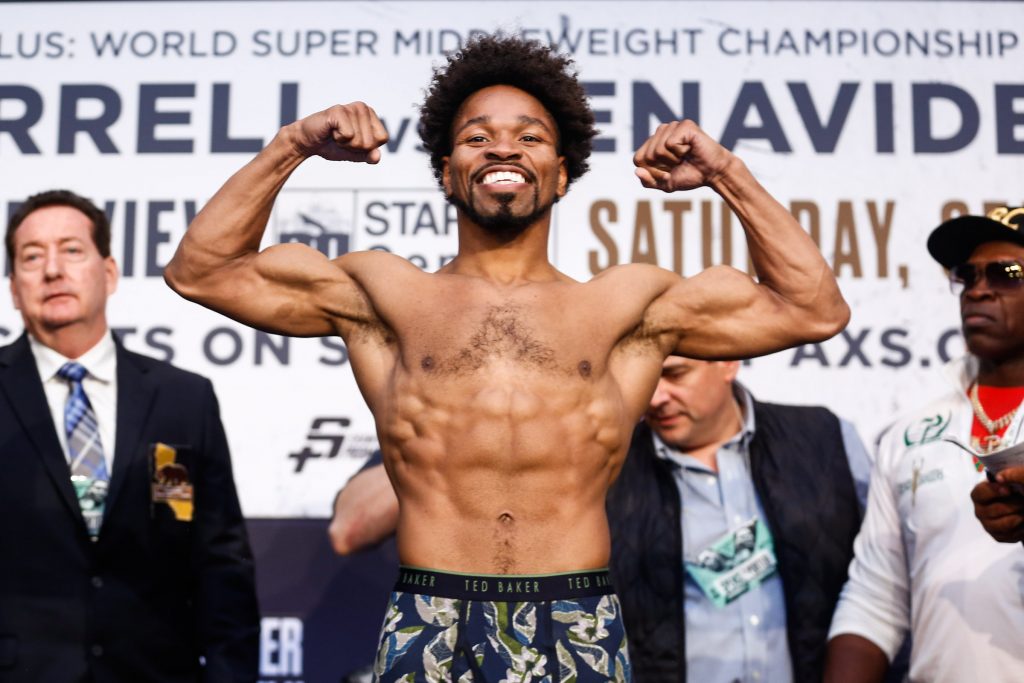
What happened Saturday in Showtime’s mainevent was not chess in the Kasparov-Topalov sense either.  It was, to a casual fan’s eyes, Lubin tentatively moving his horse in an L shape, followed by Gausha tentatively doing the same, followed by Lubin tentatively returning his horse to its previous position using the same L shape, followed by Gausha tentatively doing the same, for about a halfhour, until Lubin’s eyes overglazed and he tipped accidentally forward and knocked a few of the pieces across the board, whereupon Gausha, his horse in its 137th tentative retreat of the match, leaped forward with every pawn he had while Lubin tried to get the board reset.  The board quickly reset, Gausha got most of his pawns back to their starting position, Lubin moved both his horses in L shapes, and the final bell clanged.

Halfway through this spectacle, I removed myself from the action, went to the kitchen and began eating something, I don’t recall what, more from boredom than hunger.  My pace was leisurely.  I returned in time to see the Gausha balance shot that breathed life in the evening for a round.  What surprised me about this trip to the kitchen, upon review, was not that I walked away from live prizefighting without pause or that I ate without a sense of urgency but that I didn’t notice either thing.

A few minutes before the match concluded my wife came in the room and said, “It’s still on?  I thought it was over.”

“Oh?”

“You were in the kitchen.”

“Yup.”

Such was the chess match.  It cleansed the home of meaningfulness and made even courteous communication feel futile.  More minutes deeper in this pastoral of minimalist repose, came like a bolt of lightning Erickson Lubin’s maniacal selfassessment.  A branding exercise, of course, Lubin’s words about himself and the fight he’d just made were from a different time – San Jose, 2001? Bogota, 2031? – that led to a startling thought: Someone watching this might be doubting his own memory, right now, as Lubin tells him what he saw was somehow tactical, planned, a product of Lubin’s mastermind trainer.

That’s not the worst of it.  What Saturday’s mainevent did more potently than bore its viewers was cast doubt on this weekend’s product.  I now doubt I will purchase the Charlo doubleheader.  The price is too high for one Charlo, and the price is too high for two Charlos.  That’s not new; boxing pay-per-views are generally priced by asking what any reasonable adult might pay then multiplying it by three, assuming the whole mess gets offset by parties of 12 or more viewers crammed in friends’ livingrooms (in a bygone era).

What frightens me away from Saturday’s pay-per-view, then, is the prospect of being stuck in a series of chess matches and stapled to my seat by the guilt of having spent a week’s groceries on a purchase I regret before, during and after.

Credit where it’s due: The Showtime commentating crew’s honest assessment of the dreariness of Saturday’s mainevent brings hope.  For once a boxing booth didn’t bother selling us our own suffering.  One wonders if this is about the way PBC treated Showtime these last few years, as an off-Broadway farmleague for future Fox stars, as what former Showtime commentator Paulie Malignaggi would call a “side piece”.

Without a pandemic and the disappearance of half the American economy and its advertisers, how likely is it there’d even be boxing on Showtime these days?  Review Showtime’s 2019 boxing calendar before you answer incredulously.

Welcome back.  You didn’t have to go do that.  It’s instructive, though, isn’t it?

It reminds you of a time when all this felt essential, when serious writers did serious work about things like shoulder programming and terrestrial-v-cable broadcasters.  DAZN and ESPN and Fox blew all that to pieces then got blown to pieces by COVID-19.

The recent bubblewrapping of club-level prizefighters has put local promoters on an endangered list.  Major promoters, Top Rank and PBC, at least, have sought to educate their fighters about what economic realities arrived over the summer.  Top Rank appears to have told its marquee names they can fight for smaller purses or stay iced.  PBC is using the more traditional and ultimately harsher freemarket model, whereby you give fighters a percentage of their pay-per-view receipts and wish them Godspeed.  That should prove humbling.

Perhaps it was that, ultimately, that turned me against the Brothers Charlo event – the lack of humility to its promotion, the pathology of promoting this pay-per-view like nothing’s changed, like this is the twins’ just due for all they’ve given us.  I watched some of The Journey after Saturday’s mainevent and waited to hear something like: “Look, we know a lot of y’all have lost your jobs and this is a lot of money we’re charging, but we promise to give you the best show you’ve ever seen!”

Instead it was the usual brand idiocy about lions and dens and jungles.  Jermell’s match with Jeison Rosario is a legitimate unification fight worthy of a mainevent on Showtime.  Jermall’s match with Sergiy Derevyanchenko is not.  I still might buy the show.

If I don’t it will be a function of competition.  WBSS has its finals on DAZN and its last winner on ESPN+.  Lions Only, survival of the fittest, etc.

Bart Barry can be reached via Twitter @bartbarry


Pandemic knocks out boxing’s box-office dates

By Norm Frauenheim

Being a sports fan during the pandemic from hell isn’t easy. It’s more about what’s missing than what’s really there, somewhere in the empty bubble amid seats filled with cutouts and annoying noise generated to sound like cheers.

Some things, of course, never change. I give you the Los Angeles Clippers, who were among the missing all over again this week in a vanishing act against the Denver Nuggets that was almost a nostalgic trip back to the old Clip Joint, basketball futility gone yet still not forgotten.

The Clipper fold in blowing a 3-1 lead in a best-of-seven series during the Pandemic Playoffs wasn’t pretty. For the Clippers, consolation probably rests in the circumstances of a trying time that everybody hopes to soon forget. It’ll come with an asterisk, a symbol that will mean it really doesn’t count. Yet in the here-and-now, it was almost comforting. During a time when it feels as if everything has changed, the Clippers didn’t.

They were familiar when little else is.

I mention this because it’s mid-September, a time when boxing would dominate the week. Wednesday, Sept. 16, was Mexican Independence Day. The familiar fireworks had become an annual ritual, an expectation of a major bout that began with Julio Cesar Chavez and continued with Oscar De La Hoya. It and Cinco de Mayo had become the game’s double date, a stage that belonged to the sport’s biggest stars, even if they weren’t Mexican or Mexican-American.

Floyd Mayweather Jr.’s last 10 fights, and 11 of his last 12, were on Saturdays tied to May 5 and Sept. 16. Since 2007, it’s no coincidence that two of the four top pay-per-view bouts were held on these dates, including the record setter – Mayweather’s decision over Manny Pacquiao on May 2, 2015 at Las Vegas’ MGM Grand.

It was a time to do business. A time, also, to prove that boxing could still stop the world, hold center stage.

But that’s missing this week. I had almost forgotten about it until I glanced at the calendar and realized that last Saturday or this Saturday was supposed to belong to Mexican middleweight champion Canelo Alvarez, who about five years ago had promised to take back the May and September dates from Mayweather.

Alvarez has fought in May and/or September seven times since his loss to Mayweather on Sept. 14, 2013 to Mayweather, also at the MGM Grand. His last fight in either month was in a victory over Danny Jacobs on May 4, 2019 at Las Vegas’ T-Mobile Arena.

But the traditional dates have gone dark since then. First, there was the pandemic, which eliminated any chance of Canelo facing UK super-middleweight champion Callum Smith in May or September. Now a lawsuit, filed last week, against promoter Oscar De La Hoya and streaming-service network DAZN leaves Canelo and the business without a date.

Boxing needs Cinco de Mayo and Mexican Independence on Sept. 16 as much as college basketball needs March Madness. On the calendar, those were days to circle. Days to make money. Days that define.

Without them, Canelo and the business are just a couple of guys hoping for a blind date. Not much future in that.


Proper $5.99/month fare

By Bart Barry-

Saturday on ESPN+ oncedefeated Lithuanian welterweight Egidijus Kavaliauskas made a decisive and violent recovery of his mainevent match with Canada’s oncedefeated Mikael Zewski, stopping the Québécois with a fabulous round 7 uppercut from which Zewski still hadn’t recovered at the opening of round 8, when Kenny Bayless prudently stopped their match.  How much better Kavaliauskas looked across from Zewski than Bud Crawford last December was a function of how much better Crawford is than Zewski.

It was an honest effort and an honest broadcast, the very thing a $5.99 monthly subscription should purchase.  It hadn’t the nauseating hyperbole that chases our sport most everywhere it goes.  There were guys who’d each had a shot of some sort and lost to better men.  It was good middlebrow fare, boxing that sticks to your ribs, resonates very little and exacts even less.  The commentary was given by two guys who like one another and do their jobs well.  Even if neither liked the other nor was very good at commentary, fact remains a two-man booth is better than a three-.

Bernardo Osuna is something of a litmus test for aficionados; your familiarity with him is about how familiar you are with our beloved sport.  Before he joined ESPN he ran a two-man booth for Telefutura’s fantastic “Solo Boxeo” program, on which promoters Top Rank and Golden Boy built many if not most future titlists, mostly in the Southwest.

I recall sitting a few feet from him in a makeshift boxing venue, the parking lot of a Tucson nightclub, 14 or 15 years ago – an empty ambulance abandoned on a nearby sidestreet to check some regulatory box or other – while Osuna and his cohost recorded their evening’s leadin.  With only a wrinkled index card scotchtaped to the bottom of a camera for notes, Osuna nailed his first take, nonchalant, then started conversing with someone in a different language.  I remember thinking he might have the most talent on the evening’s card.  Later that night, if memory serves, Jesus Soto-Karass beat “Cool” Vince Phillips into retirement.

Osuna has an uncommon facility in two languages, as viewers might’ve heard and marveled-at, Saturday, with his calling play-by-play in English then doing on-the-fly Spanish translation between rounds.  He’s too talented for conventional broadcasting roles and woefully underutilized as a postfight interviewer.  That’s hardly his employers’ faults.  What, after all, do you do with a guy capable of national-broadcast-quality work in two languages simultaneously – lend him to the United Nations?

Then there’s Timothy Bradley, who’s still learning his craft but vulnerable and unpredictable and likable – one of not even a handful of professional athletes who might make a good friend, and the only man or woman or child Terence Crawford approaches at ringside.  Osuna and Bradley call a card like college roommates; maybe it’s not polished enough for whatever prepositionally historic thing ESPN usually broadcasts – Saturday night, apparently, the Lakers became the first NBA team, ever, to win two consecutive series, in five games, after losing the first game of each, and good God, but you bore witness to it! – but it’s exactly right for Kavaliauskas TKO-8 Zewski, a mainevent that would warrant an 11-hour undercard were it in the U.K. and a handful of Lennox Lewis comparisons to Lennox Lewis by Lennox Lewis if it were on Fox Sports.

I spent some of Saturday’s mainevent doing an examination of conscience, as it were, concerning my tolerance for Kavaliauskas-Zewski.  Would I have watched it if there weren’t a column to write the next morning?  No.  Did I remember anything about either guy before the opening bell?  No.  Did I enjoy the fight for being evenly matched?  Yes.  Did I enjoy the match because both fighters were white?  Hmm.

That’s the very part of my conscience I wished to examine (and how thrilling could the fight have been, honestly, if I used it as a barometer for my own racial bias?).  This isn’t a question of racism, as I see it; cheering for someone because he looks like you is acceptable in most cases – and the more specific, the more acceptable; “Paddy O’Sullivan is my favorite because he’s an Irish Catholic from Boston!” is more acceptable than “Bill Smith is the best because he’s white” – while cheering against someone because he doesn’t look like you is unacceptable in most cases, though, again, specificity probably matters.  There are power dynamics and a majority/minority distinction, here, too, which is why a white president of the United States stoking white grievance is reflexively more offensive than Joe Frazier saying he was taught always to cheer for Black fighters.

The purpose of this, all of this, every last molecule of this, if there’s any purpose whatever, is to know oneself better.  It’s necessary to suspend moral judgement of oneself to get very far in the exercise.  That’s what the cheer-for-someone permission slip above is about; if I’m more drawn to Kavaliauskas-Zewski than Broner-Theophane, I want to be able to acknowledge it, not in the name of eradicating the preference or reforming myself so much as having a better inventory at hand.

The deeper I thought this question through the better I felt about boxing; it’s a tangle enough of ethnic and national interests that most racist white Americans long since migrated away from our sport.  Boxing gyms, too, are some of the last diverse places in America where race can be discussed in good-faith, because as a local fighter once put it: “If you don’t like Puerto Ricans, just be honest and tell me – I’m going to punch you in the face anyway.”

Bart Barry can be reached via Twitter @bartbarry


Big lawsuit, bigger questions in Canelo’s suit against De La Hoya and DAZN

By Norm Frauenheim

The lawsuit isn’t a surprise. It’s been looming, brewing for at least a year in the contempt Canelo Alvarez has for Oscar De La Hoya and in mounting impatience he has for DAZN.

It finally landed, all 24 pages of it, in federal court this week in Los Angeles. From money to broken promises, it’s full of all the usual grievances and suspects.

Canelo is suing for $280 million. He wants out of his DAZN contract, a $365-million over 11 fights a couple of years ago. Then, it looked like a titanic deal and it still does, at least in terms of what seems to be happening to DAZN. It never foresaw the pandemic. Who did? But it appears to have blown a huge hole in what the streaming service had hoped to do.

DAZN looks to be sinking. In negotiations for a September fight, it’s alleged that it could no longer afford Canelo’s contracted minimum, $35-million a fight.  Canelo was reportedly offered a smaller purse and some stock in the company. It didn’t take Canelo long to figure out that the stock might soon be worth about as much as the contents of a spit bucket.

He decided to get what he could in court.  Nobody knows how long the pandemic will last and what the impact on simple households and billionaire budgets will be. Long, drawn-out legal proceedings – is there any other kind? – could end with a judgment and no payoff. In boxing terms, just another paper champion.

But Canelo has the time and the money to risk it. He’s 30, which means there are three, four, maybe as many as five more years left in his prime. Plus, he’s already wealthy, thanks in large part to DAZN. He grossed $105 million for three fights — Rocky Fielding, Danny Jacobs and Sergey Kovalev. There was no Gennadiy Golovkin, which figures to be an issue in court. DAZN invested plenty on the bet that it would happen. Fans have wanted it. But the lawsuit says a third GGG-Canelo fight is past its due date.

Time to move on. But to where? And to whom?

The guess is that Canelo has plenty in the bank, perhaps enough for him to promote himself. According to Forbes, he made $94 million in 2019, including victories over Fielding and Jacobs. Add $35 million for his victory over Kovalev in his last fight, and he earned $129 million over the last couple of years.

He’s got deep pockets. But is it enough for him to follow De La Hoya and Floyd Mayweather Jr. into independent entrepreneurship? Impossible to say. De La Hoya and Mayweather split with established promoters and during eras when there was no COVID. Each found a network partnership. But it’s hard to say what happens during a time rocked only by uncertainty

Even if the money is there, it’s not clear that anybody would partner with Canelo. He has the pay-per-view numbers to say he is the biggest draw in boxing. But there’s a debate about whether he’s the world’s best fighter, pound-for-pound. There are lingering questions about whether he could in fact become the face of the game in the defining way De La Hoya and Mayweather were.

De La Hoya had good looks and fast hands. People liked him. Mayweather’s dazzling elusiveness frustrated foes and his cocky claim on being The Best Ever exasperated fans. People hated him.

In marketing terms, both De La Hoya and Mayweather knew their roles and played them, each with their own kind of genius. But Canelo’s identity has never been quite so evident. He doesn’t have De La Hoya’s smile. Unlike Mayweather, he appears to be uncomfortable with criticism from fans, who didn’t like Mayweather, yet paid for just a chance to see him get beat.

His unpopularity, even among Mexican fans, was mentioned by Julio Cesar Chavez during an interview during the before his stoppage of Kovalev. Chavez, who could do no wrong in a different Mexican era, said that not everybody likes Canelo during a new Mexican era.

Symptoms of that have been evident. Fans left Las Vegas’ T-Mobile Arena amid scattered boos after his draw with GGG in their first fight in 2017. Mayweather would have heard the boos and turned them into business. De La Hoya would have smiled.

Canelo doesn’t seem to know what to do.

Who to be.

It’s hard to be the face of any game if the fans aren’t sure who you are. Canelo may go his own way after the lawsuit is resolved and COVID is gone.

But will anybody follow?


“Real eyes real-ize”

By Bart Barry-

SAN ANTONIO – Friday evening at quittin’ time came the first COVID-19 emergency notification in more than a month, and this time, blessedly enough, it came in the form of a mere reminder to stay vigilant, as this town has been in taking our daily average-new-infections rate from 1,300 to 150, a triumph of local civil obedience done much to spite state officials as obey them.  Parks are reclosed for the holiday weekend, too, as selfless discipline can carry a populace only so far when thwarted regularly by its governor and president.

Writing of blessings, for once in this pandemic era the dateline above, and the sentences that succeed it, relate to the material of their column; two local fighters shone Saturday on ESPN+, and characteristically excellent local reporting happened to treat the lasting effects of what maladies subverted in part Saturday’s defending super featherweight titlist.  Let’s start with him.

In Saturday’s mainevent at The Bubble in Las Vegas Cincinnati’s Jamel Herring survived a disqualification victory over Puerto Rico’s Jonathan Oquendo in an ugly match that asked interesting questions about what to do with a fighter who says he is unable to continue.  For make nary a mistake about it: Herring told anyone who would listen, from doctor to cornermen to ref to doctor, he was unable to continue.  He squeezed his right eye tight and heard his chief second say it was swelled shut.  He was unable to continue, he said, and his corner and corner’s doctor informed the ref.

Tony Weeks probably should have waived his hand and walked away at that instant; it’s a binary thing, isn’t it, or shouldn’t it be?  If a fighter cannot continue, consequences be damned.  What Weeks sensed and was in small part a party to was not binary.  Better put: Had someone indicated Herring’s title would be lost if the fight were stopped, does anyone doubt Herring might have been able to continue?

Before Herring or his corner wanted to declare an end to Herring’s fight, instead, Herring and his handlers wanted assurances he would be the winner.  That surely puts a bit of the “can” back in cannot continue.  On the broadcast Timothy Bradley got this immediately and found himself revulsed by it.  He wanted to say as much, in realtime, but got overruled by his host and ringside reporter.  “It’s OK, Tim!” said Joe Tessitore; the house fighter’s record, and his upcoming unification bout on ESPN, would not be jeopardized by the fight’s early stoppage.

That wasn’t at all what bothered Bradley, and he had character and conviction enough to say so a few minutes later, preceding it with some novel word play: “Real eyes real-ize.”  To his credit Andre Ward, more of a company man than Bradley, agreed with Bradley when he didn’t have to; Herring had not comported himself as a champion should, and neither former champion would say he had. 

Here’s one word to describe Herring from opening bell to closing: Fragile.  When did you ever see a defending titlist slip and fall in the opening five seconds of a prizefight?  Slick logo, new shoes, jitters, whatever – it doesn’t happen, it’s not in the game.  Even had ESPN not led with a cinematic treatment of Herring’s misfortunes and recent battle with COVID-19, any proper aficionado should’ve noticed something not-right about Herring immediately.

Oquendo, giving-up a half-foot in height, did everything he possibly could to reduce Herring’s obvious physical advantages, including leading with his head (anyone who’s sparred with one foot in a tire knows there are certain geometrical arrangements that verily favor a shorter man), but c’mon, this is Jonathan Oquendo, a guy whose lights Juanma Lopez cut in five minutes, not a Rubik’s Cube.  You call yourself a world champion, you solve Oquendo without a referee’s help.

It was that constant pleading for a referee’s help that most of all made Herring appear fragile.  Oquendo, or rather a fight in the form of Oquendo, was in Herring’s head 30 seconds after the opening bell; Herring wanted no part of punching or being punched.  Is this attributable to a wanting character on Herring’s part?  No, we can probably cross that off the list directly.  Herring has comported himself heroically enough often enough in his past to take the character-flaw option off our menu.

One only has so much defiance and will in him, though, supplies are not infinite in any man, and some of what Herring has endured in war and fatherhood have undoubtedly weakened him.  Then we introduce his recent bout with COVID-19, whose enduring physical effects we cannot yet know.  One thing we are learning about is the virus’s probable effect on the vestibular system.  As Chara Rodriguez, physical therapist and professor at the University of the Incarnate Word, puts it in the SanAntonioReport.org piece cited above:

“When people have problems with that system, vertigo, dizziness, being off-balance, falling, and a lot of fatigue are very common.”

It’s another reason why fixations on COVID-19’s mortality rates alone are so terribly shortsighted.  The taxes this virus will levy on America’s healthcare system are likely to be enduring as they are currently unknowable.

Let us not close on a note so dour, this Labor Day, but rather a note about a couple sons of this bluecollar town: Jesse “Bam” Rodriguez, an undefeated 20-year-old sensation who went through flyweight Janiel Rivera in less than a round, Saturday, and Benjamin Whitaker, who snatched junior middleweight D’Andre Smith’s 0 in a quite conclusive boxing lesson.  Rodriguez is a prodigy about whom you’ll be reading for years.  Whitaker, on the other hand, is a 36-year-old who is puro San Antonio, a hardworker who takes life as it comes at him without fury or complaint.

In what feels like a couple lifetimes ago I would see BJ every weeknight at San Fernando Gym, downtown, a couple years before he turned pro, and when he learned I lived in a highrise a few blocks away he’d say he would come stay on my couch, and I’d shout, “Only future champions stay rent-free!”  He’d smile and say that was no problem.

Bart Barry can be reached via Twitter @bartbarry


An Empty Bubble: Missing fans are a growing factor in a socially-distanced season

By Norm Frauenheim-

It was a moment that summed up a pandemic. There was Jimmy Butler, a defining face of social-distancing as he stood all alone at the free throw line. The lane was empty. So were the seats. Butler sank the free throws. Game over.

It ended like that proverbial tree falling in the forest. Does it really make a sound if nobody hears it? It’s dutifully noted in the NBA record book. In NBA history, too. Miami’s 116-114 victory over Milwaukee Wednesday night was only the third playoff game to end at the line.

But who knew? More to the point, who cares? It’s nobody’s fault, really. The pandemic rolls on and on with no apparent end in sight. The NBA should be applauded for rigorous, responsible procedures that include regular testing and everything else that protects players, coaches and officials from COVID.

When the league resumed, it looked like a fast-break into disaster. But it hasn’t been. It’s been a disciplined model on how to deal with a health threat. The NBA is proving to be a more reliable guide than The Centers for Disease Control (CDC), a federal agency with more conflicting directives these days than Donald Trump has bleach.

But there’s an inherent problem with the NBA’s pandemic response. The league isn’t in the health business. Show biz is the NBA game. That means a close relationship with fans. But that’s hard to sustain in a so-called bubble in Orlando. The fans are represented by cardboard cut-outs. But, increasingly, fans are being cut out of the game, any game.

It’s just hard to be a fan these days. That was evident, more so than ever, in Butler’s singular moment at the line. In terms of proximity. In basketball, fans are never too far away. In normal times, Butler’s focus might have been interrupted by a raucous crowd in the baseline seats.

But they weren’t there. Cardboard doesn’t cheer. There’s only silence, which is what we’re getting from a fandom that might be losing interest.

According to reports this week, television ratings for the NBA were down 20 percent. There was an immediate reaction, a predictable knee-jerk from the crowd that blames the NBA for its walkout last week in protest of the shooting of Jacob Blake in Kenosha, Wisc.

Politics are an easy target, especially during these turbulent times. Too easy. I’m not buying it. The real reason is a rupture in the fundamental relationship that the NBA and any other sport has with fans.

It’s no secret that ratings have been down in boxing. The fights have been hard to watch. Sustaining fans’ interest is almost impossible. A reason is the absence of a loud ringside crowd. The connection between a live crowd and the fighters is as integral to boxing as it to basketball.

Fans, fair or not, can influence the judging. More important, perhaps, is their impact on the fighters. From this socially-distanced seat, that helped explain the uneven performance from Jose Ramirez last Saturday in a decision over Viktor Postol in a key junior-welterweight fight.

In his first fight under pandemic rules, Ramirez missed the loyal fans who follow him. He supports them with water projects and money for the farm workers in Fresno, his hometown. Their allegiance and loud support for him, an intangible combination, has been hard to evaluate. But they were missing Saturday and part of him was missing, too.

Watching Ramirez made me think of something Tiger Woods said a couple of weeks ago. Woods shot a sensational 66 in the final round of The Northern in Norton, Mass.

“Obviously the energy is not anywhere near the same,” Woods told ESPN. “There isn’t the same amount of anxiety and pressure and people yelling at you and trying to grab your shirt, a hat off you. This is a very different world we live in.

“You hit good shots and you get on nice little runs, we don’t have the same energy, the same fan energy.’’

Jimmy Butler and Jose Ramirez know the feeling.


Trying to care: Ramirez decisions Postol on ESPN+

By Bart Barry-

Saturday on ESPN+ in Las Vegas undefeated American junior welterweight titlist Jose Ramirez went 12 successful rounds with Ukrainian technician Viktor Postol in Ramirez’s tryout to become champion Josh Taylor’s next mandatory challenger.  The scores were split.  One judge saw the match a 6-6 affair, another saw it 7-5 and a third saw it 8-4.  Ramirez did enough to win, and Postol did enough to have others complain on his behalf.

I tried to remember if I cared about Postol during his ringwalk.  It’s an important inventory, I find, now that a pandemic has turned everything upsidedown.  Promoters, after all, lie to us constantly, boldly and badly.

This gimmick about wanting to crown the first-ever unified champion, of Latin descent, in the four-belt era – the dream of every immigrant’s son in California’s Central Valley – is threadnaked, even by boxing standards, even in a pandemic.  Suffering through it began my Postol inventory.  I made no progress.  I was excited by Ramirez’s beating Maurice Hooker last year, I recalled when the highlights rolled, and promoter Top Rank is the best at making competitive matches when it wishes to be, and I’ll watch most anyone who might make a future match with a WBSS winner – so complete is my fealty to DAZN’s roundrobin concept.  I was engrossed enough in the fight a few rounds later to cease my inventory; I recalled Postol making a yawner with Bud Crawford, the first time Top Rank tried to market Bud like a pay-per-view attraction, and reminded often Postol lost a decision to WBSS winner and division champion Josh Taylor.  That was enough.

The next morning I discovered Lucas Matthysse was the reason I cared about Postol.  Six months after Matthysse executed his MAD-pact with Ruslan Provodnikov he got himself dissuaded emphatically by Postol, who just isn’t my kind of fighter.  Postol has natural gifts of size and skill and uses them to lose narrowly to his division’s best men.  He’s a light favorite of our beloved sport’s malcontents, though Saturday, blessedly enough, those guys were busy on the other end of the dial, where their patron saint, Erislandy Lara, played keepaway with a 15-1 underdog from Wakefield, Mass., where there’s plenty of fighting and very little of it good. 

Top Rank has done a fine job with Ramirez.  Spotting his limitations early Top Rank made Ramirez about biography and the genuine need his neighbors feel for a champion, fighting Ramirez in Fresno over and over and showing the promotional outfit’s adaptability.  Ramirez has done his part, too, tying himself to his community and offering the sort of autobiographical vulnerability ESPN types adore.

Obviously the network has a rooting interest in Ramirez it doesn’t have in Postol, though I caught myself wondering why there wasn’t something that might be done with Postol’s life in Ukraine, something headier than glib graphics about how many miles Postol’s flown for cancelled matches.  Disclaimer: Maybe there was a 45-minute segment on Postol’s grandfather running potato-mash moonshine out Kiev in a lowered Tatra 603 and how his scofflaw bearing subverted the relationship his grandson, Viktor, would someday have with his father, the moonshine runner’s son, before the Ramirez biopic aired on ESPN+, which apparently the poshest among us now call The Plus, but if it happened while Alfredo “Perro” Angulo made his match down the dial, I missed it.

I thought of Angulo halfway through The Plus’ mainevent, wondering how much different Ramirez was from Angulo, really, as a fighter (all indications are that, far as character goes, they’re quite different, though I spent an hour on the phone with Angulo once and found him a fragile sort with a highpitched giggle and not the psychopath American immigration officials claimed he be); both were Olympians, both are heavyhanded pressure guys, both believe in their chins’ durability much more than their opponents’.  How likely is it I’d’ve made this association were Angulo and Ramirez not fighting a few minutes apart?  Way unlikely.  This is a pandemic, though, and everyone is upsidedown right now, especially those trying hardest to pretend nothing is changed, which might be read as further cover for what a dull mainevent Saturday’s much-anticipated tilt was.

I didn’t anticipate it at all.  I included much-anticipated because Tess and Dre told me to, being, as it was, part of the road to a unification ESPN and Top Rank and Ramirez need far more than Josh Taylor does.  Taylor’s the unified champion, after all, for having unbuttoned the undefeated Russian Ivan Baranchyk in May 2019 and then unstrapped the undefeated American Regis Prograis five months later.

Taylor is the world’s best 140-pound prizefighter until someone proves otherwise.  There’s no controversy.  Would Ramirez be the world’s best 140-pound prizefighter had his handlers allowed him participate in WBSS?  Maybe.  Probably not.  Nothing Ramirez showed Saturday indicated he’d have undone Prograis, much less Taylor, and Top Rank’s evident concern about losing a ticketseller to a roundrobin format, last year, speaks to the promoter’s handicapping savvy.  The risk did not justify the reward.  At least not when there were tickets to sell, eh guys?

I don’t think I know much more about Josh Taylor than: He is from Scotland, and he won his championship the right way.  That’s plenty.

Bart Barry can be reached via Twitter @bartbarry


Ali’s Lesson: Sports and politics do mix

By Norm Frauenheim-

Games don’t matter much, at least they haven’t throughout about a relentless pandemic. Only the platform does. The NBA took its game off the floor and out of the bubble this week to protest the police shooting of Jacob Blake in Kenosha, Wisconsin.

It was the right thing to do.

It would have been too easy to just move on through playoffs in a season that has felt artificial. Fans are missing. So is much of the fun. There was a title at stake and still will be if the playoffs resume. But will anybody remember the eventual winner? Probably not.

What will be remembered is the way the NBA used its so-called platform to take a stand against a summer full of racial unrest. What was forgettable became memorable, thanks to the Milwaukee Bucks-led walkout Wednesday.  Not everybody agrees, of course. That’s what also makes the NBA’s fast-break move from diversion to relevance so controversial.

Politics and sports aren’t supposed to mix, or so goes the argument from those who think anyone with athletic talent surrenders their right to speak out. But tell that one to generations of athletes.

Tell it to Olympic sprinters Tommie Smith and John Carlos, who flashed the black-power slate while standing on the 1968 Mexico City medal stand as though it were a bully pulpit.

Tell it to Jackie Robinson.

Tell it to Jack Johnson

Tell it to Muhammad Ali.

Of all of them, Ali has become the historical face of protest. He’s the loud voice that sums up the reasons athletes sometimes have to use their sport and stardom as a megaphone. Ali’s sport, boxing, is an appropriate setting. As a symbol, there’s nothing quite like the ring, which is something that politicians use all the time. They talk about heavyweights and lightweights. They love to talk about in-fighting and how they fight off-the-ropes. They’ll also tell you not to confuse sports and politics.

It’s good to hear LeBron James and Los Angeles Clippers coach Doc Rivers say otherwise. Rivers attacked Donald Trump and his bucket guy, Mike Pence. The President and Vice-President talk about violence in the cities and fear in the suburbs.

“All you hear is Donald Trump and all of them talking about fear,’’ Rivers said Tuesday after a Clippers victory over Dallas. “We’re the ones getting killed.’’

Rivers’ comment made me think of Ali.

“You’re my opposer when I want freedom, you’re my opposer when I want justice,’’ he said when he changed his name from Cassius Clay to Ali and had his heavyweight title stripped for refusing to be drafted during the Vietnam War “You’re my opposer when I want equality.

“You won’t even stand up for me in America for my religious beliefs and you want me to go somewhere and fight, but you won’t even stand up for me here at home.”

During the turbulent 1960s, it was a powerful statement for a fighter who could be as cruel as he was cocky. But there was never much doubt about his timing on either side of the ropes in a battered craft that is and always will be what Mike Tyson has called it: The hurt business.

Ali knew when to jab. Knew when to counter.

Mostly, he knew when to take a stand. There’s always been an argument about where he stands among the all-time fighters. Even among the heavyweights, there’s a fair enough debate over who was the GOAT. Some say Joe Louis. Some say Ali.

But there’s never been much debate about who has had the greatest overall impact. George Foreman, stopped by Ali in 1974’s legendary Rumble In The Jungle, once told me that Louis was a better heavyweight, but that Ali was the better man.

The best ever.


Porter, Povetkin, Smith, Roomba

By Bart Barry-

Saturday in three mainevents that miraculously did not conflict and more miraculously concluded before midnight ESPN’s Joe Smith beat the fight out light heavyweight former titlist Eleider Alvarez, former titlist “Showtime” Shawn Porter won each of his 2,160 seconds with a German welterweight named Sebastian Formella on Fox, and Russian former heavyweight contender Alexander Povetkin put the cuss in concussion against British hopeful Dillian “The Body Snatcher” Whyte on DAZN.

Smith was the evening’s best winner, even while Povetkin was its biggest and Porter its least-surprising, at least so far as mainevents went, and whosoever has time or desire anymore to endure much more than those?  (Actually, that’s a touch disingenuous; bantamweight southpaw Robert Rodriguez has emerged as something of a bubble phenom, needing fewer than seven minutes to ice fighters with an aggregate record of 19-0-1.)  Saturday favored men who work hard without needing inspiration from without.

Pressure guys, volume guys, the undissuadable.  While Smith fetches all the bluecollared clichés Porter fights no less doggedly, even while trying to sparkle.  Povetkin doesn’t seem to care one way or the other.

He’s chinnier than publicists colored him as a young Soviet, and at 6-foot-2 almost prohibitively short for a contemporary heavyweight, but he can crack and crack proper.  I recall a local trainer telling me about Povetkin’s power, wildeyed, while standing in a tent at Camp Verde, Ariz.,13 years ago, an hour before Tommy Morrison’s MMA debut, many years before Povetkin began flunking IQ tests administered by various sanctioning-body-approved drug examiners.

I know, I know, the two guys who beat Povetkin and looked ready for a Mr. Olympia posedown were clean as whistles, of course, and you can’t possibly judge an athlete’s substance regimen by something unreliable as your own eyes and experience, but whatever put Povetkin in position for a perfect left uppercut Saturday was no more likely a banned substance than what put him on the bluemat twice a few minutes before.

Aside from the knockdowns, at 40 Povetkin didn’t look any worse – slow, robotic, predictable – than his heavyweight peers do and hardly worse than Whyte did at 32.  He looked chinny and uninspired to Whyte’s merely uninspired.

There’s a counterintuitive element of cardiovascular fitness required simply to stand across from a heavyweight, it’s damn taxing even when nothing happens, and it makes a decent argument for busyness: You’re going to be heaving for breath after three minutes of trying not to get whirligigged, anyway, so why not move round a bit and give folks a show?  Heavyweights used to do this, really, before all became lumbering headhunters.

Povetkin, for being the shorter man in his career’s biggest fights, knew better, somehow, to snatch Whyte’s body than did the Body Snatcher, and while the previous round’s crumplings on the bluemat weren’t premeditated to make Whyte overconfident they had that effect, and Povetkin’s telegraphed hook to Whyte’s body was indeed premeditated.  Whyte’s eyes followed Povetkin’s head and Whyte’s mind followed the pattern Povetkin’s earlier hooks set.  Then suddenly Povetkin’s fist was through Whyte’s chin, not after his liver, and if Whyte tells you he remembers any of the 10 minutes that followed he’s fibbing.

If Eleider Alvarez tells you he still enjoys prizefighting he’s fibbing too.  Alvarez hadn’t the tools nor will to dissuade Smith in Saturday’s best match, and Smith gobbled him up.

A few months ago I purchased a Roomba and have spent hours, fully unpredicted hours, mind you, diverting myself with its observation.  I didn’t envision writing about Carlota – that’s her name – but then I didn’t either expect to think of her while watching Joe Smith.  It’s the undiscouraged relentlessness they share.  About halfway between Carlota coming in my consciousness and Smith snatching Alvarez’s, too, I read a book by Melanie Mitchell, Complexity: A guided tour, that explores genetic algorithms, first explored by the irreplaceable John Henry Holland, and how they might be used in a self-learning program to teach a digital robot to collect cans on a virtual grid.

The simple strategy – go in a straight line till you hit a wall then pause and look around – succeeds in a way much more complicated strategies do not.  It succeeds with machines for the reason it fails with most humans: Without a need to find meaning in their universe, machines suffer never from discouragement or boredom and do not mind repeating work.  It’s how a Roomba like Carlota, who “cares” not a whit whether surfaces are sparkling or filmed with dust, outperforms humans who care deeply.  Carlota’s job is to go in straight lines till she hits a wall then turn slightly and go in another straight line and keep doing so till her power is cut; if she’s not entirely oblivious of feedback from her environment neither is she staking her identity on it.

Similarly volume punchers like Joe Smith find satisfaction in the doing much more than the effecting.  They begin with a wisely limiting strategy of doing the same thing over and over in a faith that looks nigh machine-like: If I simply hit something with my fists 30 times next round I succeed.  They are constants who rely on other men’s variability, other men’s reliance on feedback, other men’s proneness to discouragement.

Alvarez exhibited all these things, Saturday, and eventually got knocked out the ring for them.  Showtime Shawn exhibited none of these things and went 36-0 on official scorecards against a German who didn’t have a chance at a thing more than moral victory even before making his trip from Hamburg.  Porter is a pro.  He takes every opponent seriously and goes hard.  He’s the PBC fighter for whom I most often catch myself cheering.

I like him the way I liked Juan Diaz and loved Timothy Bradley; they beat over 12 rounds flashier guys who undress them in three-round sparring sessions; they don’t have off nights because they haven’t a plan B.  That makes them vulnerable to their sport’s alpha predators, yes, but they reward their supporters disproportionately to their talent.

Bart Barry can be reached via Twitter @bartbarry


Weight or Wait: David Benavidez confronts one of boxing’s inevitable combos

By Norm Frauenheim

Wait?

Or weight?

For David Benavidez, they are two options that sound alike and are linked by what he does after losing his super-middleweight title on the scale before his stoppage of Roamer Alexis Angulo last week.

He can wait, get back in line, fight his way back into a mandatory shot for his old title or a different one. The guess here: That wait wouldn’t be a long one. If he isn’t the world’s best 168-pound fighter right now, he soon will be.

But soon is a relative term, defined by a clock he can’t always control. Benavidez is 23. He’s growing, faster perhaps than he knows. His maturing body and metabolism will have the final say-so, no matter what he eats or how long he sits in a sauna.

For now, he’s gambling he can forestall the inevitable with a strict diet and Spartan-like discipline. He said after forcing Angulo to quit after the 10th round that he’ll stay at super-middleweight.

In part, he blamed his weight – 2.8 pounds over the 168-pound maximum – on pre-fight changes forced by the COVID pandemic. I hear him. I’m dragging around a lot more than an extra 2.8 pounds since gyms and pools shut down. It’s hard to mask the quarantine fifteen.

“When I usually lose weight, I follow a system,’’ Benavidez said after he beat Angulo into submission at the Mohegan Sun in Uncasville, Conn. “Two gallons of water, you know, on Sunday, then two on Monday. Then, you know, but I cut all that off. You know what I mean? Because I wasn’t really sure how this bubble was going to work. We were only able to work out one hour a day, for an hour.

“And I didn’t have a sauna, and really the stuff I need to cut my weight. You know what I mean? But at the end of the day, I’m a man. You know, I missed weight, so you know, I’m not making any excuses. But I’m very disappointed about that. You know, stripped of my belt, paid a huge fine. You know what I mean? But at the end of the day, I’m still undefeated.”

He protected his record (23-0, 20 KOs). That was a wise move from a young fighter smart enough to know that Angulo was heavy-handed enough to be dangerous, especially if he had entered the ring weakened by a futile attempt to make weight. Benavidez could have returned to the scale two hours later. But he said no, knowing he couldn’t shed the extra pounds. He probably won’t remain unbeaten forever. Meanwhile, there are plenty of belts.

There are reasons to think his old belt, the World Boxing Council’s version, will be available to him after a relatively short wait. Canelo Alvarez got himself in line for it in a bout against Turk Avni Yildirim, who was set for a mandatory shot at Benavidez before the scale fail.

By a 36-1 vote this week, the WBC Board of Governors granted Canelo’s request for a shot at the vacated title. I’m not sure who cast the lone dissenting vote, but I wouldn’t be surprised if it was somebody who has an investment in DAZN. Canelo-versus-Yildirim? Yildirim has two losses, including one to Anthony Dirrell, who Benavidez stopped a year ago. Safe to say, DAZN wants more for its money. The streaming service has been paying Canelo $33 million a fight. Now, there are reports that he is due $40 million for his next fight.

In a third fight against Gennadiy Golovkin, may be. Against somebody named Yildirim, no way.

In large part, Benavidez hopes to stay at 168-pounds long enough for a showdown against Caleb Plant, who holds the International Boxing Federation’s super-middleweight belt. Trash-talk escalation between Benavidez and Plant fueled hopes for a fight later this year. But COVID-19 changed expectations. Now, Benavidez-Plant doesn’t figure to happen until next year. It’s also not clear whether Plant would want to fight a Benavidez without a title.

For now, at least, Benavidez needs to test to determine whether he can still make 168. That means a bout under today’s COVID-dictated protocol with a 168-pound somebody. Maybe a somebody like Avni Yildirim.

Another scale fail would dictate a move up in weight to light-heavy.

Then, Benavidez would have to wait on Plant to make the move.

Wait and weight, it’s one of boxing’s inevitable combos.


David Benavidez: The thrill is going

By Bart Barry-

Saturday on Showtime undefeated former super middleweight titlist David “El Bandera Roja” Benavidez stopped Colombian ironchin Roamer Alexis Angulo with 10 rounds of abuse sustained enough to make Angulo’s corner wave the match’s completion six minutes early.  Friday afternoon Benavidez missed weight widely enough not to try making weight, losing his title yet again without losing a match.

Still it’s a joy to get back to writing about a prizefighter who thrills, howsoever baggy and loose be the circumstances and his skin.

Making weight might be a great deal more difficult for Benavidez than he lets on.  Theories of weightloss and -gain, fat and muscle, change hourly in this country, of course, and we’ll not confuse what follows for science any more than the last halfcentury of “science” on the matter should be confused for science, but rather let us entertain ourselves with a metaphor of containers.

Say you have 10 containers that at all times wish themselves full with water and have access to an abundance of water.  Now say you have 100 containers with the same access and wishes.  Now imagine that 10 full cups of water is your ideal weight.  You have but 10 cups and all are full?  Easy enough.  Just don’t add any more cups and homeostasis wins out.

Now imagine you have 100 cups and 10 full cups is still your ideal weight.  Every cup must be kept at or below 10-percent capacity, and all the cups have a wish to be full.  Allowing homeostasis its course and merely precluding a 101st cup be added is not a fraction your task, is it?  No, at every moment of every day you must find a means of thwarting 100 thirsty cups with access to an abundance of water.

This metaphor, cups as fat cells, is good an explanation as any why people who lose massive amounts of weight, as Benavidez once did, nearly always gain it back with interest.  What simpletons crow about “discipline” miss the point entirely; Benavidez once was disciplined enough to lose nearly 100 pounds, a feat well beyond the homeostasis crowd’s average member, but precluding every bite he puts in his mouth from replenishing what fat cells he accumulated years ago requires much more than skipping desserts during training camp.

This is why you hear the wonder in Benavidez’s voice as he talks about “something went wrong” in camp; he can’t believe that one dietary indiscretion three or four weeks ago had such an outsized and lasting effect; the math of his metabolism is not at all linear.

What Benavidez said after Saturday’s match is what you believe, not what he believes.  Smart kid.  He does the (linear) math of a lousy metabolism and incredible fast-twitch muscles and reads the script every varsity-level athlete with a fast metabolism would pen: I didn’t try hard enough, Coach, but I will next time.  He knows the curse of his metabolism is offset, for now, by the blessing of his athleticism, and he knows no one who hasn’t lost 100 pounds has any idea the impossibility of keeping those pounds from returning, and he’s a rich 23-year-old professional athlete, too, so he steers well away from anything like self-indulgence.  In public at least.

Trouble is, this weighty issue for Benavidez will grow only weightier as he ages.  If he’s still fighting under 200 pounds on his 30th birthday it’ll be a greater feat than anything he’s done in a prizefighting ring thus far.  He probably hasn’t the defensive chops to take his show to cruiserweight, either, and offensively gifted as he is he hasn’t power that’ll migrate successfully to 200.  He knows this, too.  It’s why he isn’t following in the footsteps of Gilberto “Zurdo” Ramirez – the other guy who shut-out Angulo – and skedaddling to light heavyweight without having fought the best men at super middleweight.  How much does anyone talk about Zurdo (40-0, 26 KOs) anymore?

Another bandera roja from Saturday’s postfight interview was just how eager Benavidez is to start over reclaiming his old place in the 168-pound division.

Benavidez: I missed weight, and I’m sorry.

Aficionados: You’re forgiven if you fight Callum Smith.

Benavidez: I know I have a long road ahead and your forgiveness will only come with time.

Aficionados: Kid, everyone makes mistakes – just make weight for your fight with Smith.

Benavidez: I’m willing to work hard to earn back your trust.

Aficionados: No need to do that if you fight Smith.

Benavidez: I’m going to start over and fight only medium-level contenders until you trust me again.

Aficionados: We trust you’ll make a great fight with Smith.

Benavidez: No immediate title shots for me until I deserve them again.

Who wins a match between The Ring’s champion and its top contender?  Hard to say.  Since winning the WBSS, Smith has been alternately inactive and unimpressive.  You’d have to favor the guy who knocked the stuffing out George Groves, though, in a match with Benavidez, if only slightly.

Benavidez didn’t learn anything in his Saturday heavybag session with Angulo but at least he got to do lots of rounds and punching.  Smith, meanwhile, spent his quarantine negotiating a fight with Canelo that didn’t come off because two geezer celebrities pulled a date-and-switch with Mexican Independence Day weekend, or because Smith priced himself out.

Good God, but there are so many eligible contenders, paydays and titlists at or around 168 pounds right now it’s awful to see the division’s two best fight but annually against the likes of John Ryder and Alexis Angulo!  Smith, as the recognized champion, no longer wishes to fight somebodies for less than millions, and Benavidez surely figures that, at age 23, he’s in no hurry.  Both may be squandering what get remembered as their physical primes.

Bart Barry can be reached via Twitter @bartbarry


Back In Business: David Benavidez re-enters the work place for first time in about a year

By Norm Frauenheim-

From college football to gyms, it often seems as if the world is going out of business these days. It’s the shutdown era. But David Benavidez hasn’t seen the signs. He’s back in business, or at least he will be Saturday night.

Benavidez will resume his career, fighting for the first time in nearly a year in a super-middleweight title defense against a dangerous Colombian, Roamer Alexis Angulo on Showtime in Uncasville, N.Y.

It was a fight that was supposed to happen in mid-April in Phoenix. But the pandemic forced it to a later date and out of Benavidez’ hometown. Without any hometown fans allowed to be in the seats, it would have been hard to sell it as a homecoming anyway.

For now, at least, home is wherever and whenever Benavidez can finally answer another opening bell, this time in a fight to reignite the momentum he had after a stoppage of Anthony Dirrell last September at Staples Center in Los Angeles.

“Right now, I just want to get back into it,’’ said Benavidez, who at 23 is among the brightest young stars in an emerging generation expected to lead boxing into whatever awaits us in the post-pandemic era.

Without COVID and its crippling tentacles, Benavidez would probably have one, perhaps two, more victories on the left side of his unbeaten resume. He’d be further down his projected career path than he is now. But the boxing shutdown also was an opportunity, a moment to reflect on who he is. Who he wants to be.

Above all, he realized how much he missed the ring. And, above all, it sounds as if he deepened his commitment to a craft as uncompromising as it is brutal.

Amid uncertain times, Benavidez is more certain than ever.

“I feel like it’s a new chapter in my life,’’ Benavidez said during a call with reporters this week from Mohegan Sun Arena.

It is, in large part because Benavidez has more to fight for than ever. He’s about to be a father.

“In three weeks, I’m going to be a dad,’’ he said.

He’ll be a dad with lots of ambition, lots of skill to get what he wants and an evident willingness to fight. It’s that undisguised willingness that makes him so interesting. In terms of skill, he’s an unfinished fighter.

That was evident against Dirrell, who walked him into traps and punches before Benavidez simply wore him down and out. 

But that willingness, complemented by an abundance of energy, are traits of a fighter anxious to learn. Translation. There’s a lot of upside. He can get better. A lot better.

So much so that he believes he can be the world’s undisputed super-middleweight champ.

“There can’t be four champions at super-middleweight,” he said. “We can’t all be unbeaten. All of us need to take a risk. We need to fight each other. There’s Caleb Plant, Billy Joe Saunders, Callum Smith and hopefully, king of the boxing world, Canelo Alvarez.”

In Benavidez’ new life, he envisions fighting all of them. That would be more than one chapter. More like a book. But there won’t even be a forward without a victory over Angulo, who last January upset Anthony Sims in a pre-Super Bowl card in Miami.

“Angulo is very heavy-handed and he wants to win. He’s coming off of an upset win and I think that has him motivated to believe he can beat me,’’ Benavidez said. “…”I’ve just been working on every aspect of my game. My defense, the jab, body shots and keeping the distance especially. I think Angulo is the perfect opponent to display everything I have. This is going to be a rugged and tough fight but that’s what I expect for every fight from now on. As long as I prepare myself correctly, I think I’ll be fine.’’

Preparation is a sure sign of emerging maturity in Benavidez, who will be defending a World Boxing Council belt that he regained after it was taken from him for a positive cocaine test.

Benavidez is predicting a one-sided victory, but not necessarily a knockout.

“I want to win clearly,’’ Benavidez said of Showtime’s main event on a card scheduled to begin at 9 pm. ET/6 p.m. PT. “I don’t want there to be any doubt in anyone’s mind.’’

If he gets the decisive win, he wants to fight again in December or January. Benavidez hopes for an immediate title-unification shot at rival Celeb Plant. First, however, he might have to take care of a mandatory date against Avni Yildirim. Benavidez was supposed to Yildirim in April, but the Turk withdrew with an injury. That led to Angulo, but Yildirim is still ranked as the WBC’s mandatory challenger.

Whatever happens, a date with Plant appears to be more when than if. A long-running trash-talk exchange seems to make it inevitable.

“I want to fight Caleb Plant next.’’ Benavidez said “…I want those other belts. I want to take the chances now and show everybody, including myself, that I’m the best.

“There are lots of great fighters out there, great fights to be made for me. I want to take all of them.’’


One aficionado’s return to Showtime Boxing

By Bart Barry-

He fumbles on his cell, trying to recall why he deleted the ESPN+ app, or if he did, or at least when he did if he did.  No evidence on his cell ESPN ever lived there, but it must’ve back when because Google charged him for an account and so did Roku, and he’d meant to shut both off but was certain he’d left one on because getting the subscription deleted was engineered to be difficult, but why did he sign-up twice?

He returns to the PGA Championship’s official homepage, or an official-looking one anyway, who could tell or had the inclination to try, anymore, with the affiliate bullshit that felt porous and dumb in roaring times and now so much less in despairing ones.  There’s a muddled suite of ways and venues for watching professional golf’s first major of 2020.  Looks like ESPN+ is in indeed the pathway, especially if the comments below can be trusted, where middleaged men bemoan a pay service for the year’s first major championship.

Resigned to $6 a month less in his life he starts to reenable his ESPN account then recalls the headache that got him two accounts years ago and meanders in the other room where his television sits.  Roku wants him to enable ESPN+ through a code it posts on a screen that directs him to use a mobile device to reenable his account.  ESPN still has some account active, the emails from Disney come rushing in his inbox before even he gets fully reenabled, but there it is, the PGA Championship from San Francisco on a Friday afternoon looks glorious in high definition.  Which must be why the commentators must ever crow about the courses’ beauty in every telecast for hours, another manifestation of that delicious new addition to America’s vernacular: Toxic positivity.

He solely wants to see Brooks Koepka defend his title, but the tariff for access to one excellent player is, as ever, documentaries, both cinematic and realtime, of Tiger Woods’ latest whatever.  He checks the teetimes and sees Koepka scheduled to go in a half hour.

He mutes the television and replies to a work email.  Morning’s interview for a new coaching position went well.  The possibility of a maneuver, even a sideways one, makes the spirits lift and the workaday anxieties feel worth their suffering another week or two.  Sees a tweet from City of San Antonio: average COVID new cases is back below 300-per-day for the first time in a month at least, and it makes him wonder if he got ahead of himself canceling a trip to Virginia for his father’s internment at Arlington.

Koepka should be teeing-off soon, and as the defending champ he should get the largest part of the – Tiger’s on the range.  That invokes broetry recited by some halfassed method actor conjuring all that’s solemn in our national suffering and Tiger’s extraordinary selflessness and public service in playing golf to remind us what’s sacred in life.  And what’s this?

They’re wrapping the ESPN+ broadcast and inviting viewers to ESPN.  No.  No!

He’s not had cable basic enough to have ESPN for at least six months and longer than that if he’d his druthers.  He went years without a television and years after that without cable.  Now he’s returned to PGA Championship’s official page to see if he can use his digital antenna to watch the telecast on CBS.  Of course not.  ESPN has weekday rights or something.  He googles “cheapest way to watch ESPN” and sure enough Sling pops-up, Orange package.

He closes the browser on his cell and opens YouTube app and scrolls his history for a super slowmo video of Koepka’s swing:

John Salley on COVID-19, Chinese Meat Markets, Socialism, Dr. Sebi, Kobe, Jordan

Low Housing Inventory Will Change

NHL: Knockouts

Jon Favreau & Vince Vaughn 2001 interview

Spittin’ Chiclets Interviews Keith, Matthew, and Brady Tkachuk

Bill Russell and Wilt Chamberlain Interview (1997)

The Return Of The Muhle R41 by Kevy Shaves

Gentleman’s Nod Zaharoff – Wolf Whiskers Brush – Rex Ambassador

Hal Gill Told Us How Chugging A Beer Is The Only Way To Cheer Ryan Whitney Up

Brooks Koepka – Slow motion driver swing analysis

At last.  Koepka lays the club off a little more at the top when you see his swing slowed down, that’s a bit unexpected, and it’s worth it to reenable Sling because Sling is the only online communications company that gets it.  When someone wants a break from your service don’t harass him with surveys and promotions and reminder emails and affiliatemarketing horseshit.  Let him be.  Make reenabling his service a cinch.  Nobody does this better than Sling, he knows, because he’s cancelled and reenabled his service at least four times and felt welcomed each return.  His last confirmation email, in fact, told him Sling understood, in March, why he’d be canceling his service, what with all sports cancelled, and hoped only he’d consider a reunion if ever sports returned.  Here he is.

Now he’s spending $46 or so in one day to see Koepka defend his title.  Still cheaper than boxing, he thinks, long past balancing the money he saves on boxing, whether pay-per-views or subscription apps or travel, with what money he spends on shaving soaps and books about the science of complexity.  Just one more click before Sling puts him on ESPN for the live telecast and Koepka’s gorgeous power fade.  Premium channels – that’s right Sling offers those, too, else how did he cancel HBO a couple years ago (before AT&T began including free HBO with any purchase of Wally’s Songbird Super Buffet birdseed)?  He remembers Showtime announced a new lineup of boxing a couple weeks ago, David Benavidez headlining.

“Fine,” he says to the empty room, “take my $10.”

Bart Barry can be reached via Twitter @bartbarry


COVID to Comeback, Phase 2, offers some main-event anticipation

By Norm Frauenheim

The path from COVID to comeback isn’t exactly clear. During an era defined by masks and mixed messages, it can go just about anywhere. Only a new stage, the next step, is certain. Top Rank is preparing to take it.

Call it Phase Two, a succession of nine cards from August 15 through October 13, according to a report in The Ring.

It’s still a life dictated by social distancing, but it’s also one full of hopes for the bigger fights that were there in the initial phase, 13 ESPN-televised cards from June through July at Las Vegas’ MGM Grand.

That series of shows often felt like a collection of undercard bouts always in search of a main event. But there were reasons for that. The necessary exercise was all about learning how to stage an event amid the wildly-unpredictable swings of a dangerous virus. It was more about establishing protective procedures and protocol.

There was some drama, but not much. At times, it was a little bit like watching major-league baseball’s Miami Marlins take the field after their roster was gutted by a widespread COVID infection.

Who are those guys?

In Phase 2, the promise and anticipation of major fights will be included, even if fans in seats are not. The biggest might be a lightweight bout with pound-for-pound implications between Vasiliy Lomachenko and Teofimo Lopez. A week ago, there were reports that the fight, scheduled for Oct. 3, was in jeopardy because Lopez wants too much money.

On Thursday, however, The Athletic reported that Lomachenko has agreed to a $3.25-million purse for a pay-per-view appearance. Whether the bout ever gets to an opening bell still depends on the pandemic, which has already forced boxing through a mind-numbing cascade of cancellations and postponements. Nobody is safe. Examples abound, happening almost daily. UConn canceled its football season Wednesday. Eight UCLA football players tested positive Thursday.

There’s no bunker deep enough, no bubble secure enough to hide from it. It could still deliver another disruption to plans for Lomachenko-Lopez. Nevertheless, there’s hope in reports of a looming deal. For a while, at least, half-empty looks half-full. Maybe, this one will in fact happen. 

It’s significant, one that suggests boxing’s comeback from COVID is progressing.

I’m not sure it will ever completely be the same, even with a vaccine that medical professionals say could be available late this year or early next. The most significant fight these days is being waged in labs. But a Lopez-Lomachenko agreement represents a badly needed injection of confidence for a sport beginning to wonder whether there will ever be a third Tyson Fury-Deontay Wilder fight.

There are other signs, too. Danny Garcia and Errol Spence Jr. have a reported agreement for a PBC-promoted welterweight fight on Nov. 21 on Fox pay-per-view. It would be Spence’s first fight since he was thrown from his car in a scary crash last October, just a few weeks after he fought his way into the pound-for-pound debate with a victory over Shawn Porter.

On Top Rank’s Phase 2 schedule, the promotional company goes back to a time when the pandemic was still an epidemic. Jose Ramirez-Viktor Postol was scheduled for Feb. 1 in China, where the virus started. It was canceled. Then, rescheduled.

Another cancellation and rescheduling later, here we are, Ramirez-Postol on August 29 in what is seen as a stepping stone for a 140-pound unification bout between Ramirez and Josh Taylor.

It’s too uncertain for a complete comeback. But it’s a beginning, all the way back to the beginning of the kind of fights that sustained the business and still can.


A tepid celebration for what’s competitive

By Bart Barry-

Saturday on DAZN in the main event of a card from England’s Fight Camp, and therefore blessedly broadcast early afternoon here in the United States, London’s Ted “The Big Cheese” Cheeseman decisioned Worcestershire’s Sam “The Savage” Eggington to win a 154-pound title of some sort and set himself up for a future leap from British competition to European.  The fight was entertaining.

Twas Big Cheese night at the Camp in what was a fun, competitive, and fun-for-being-competitive spectacle of evenly matched pugilists who won’t be world-class at super welter but make for decent pageantry in this absurd time.

A confession: I watched Saturday’s match – no, heavens no, not the whole card – with an eye to comedy.  I saw it a prospect for satire, anonymous Brits doing mediocre things under a light rain of hyperbolic modifiers in the Queen’s accent.  There was some of that – Brits, to their credit, try even less to hide commercial entanglements betwixt promoters and broadcasters, making few feints at objectivity – but otherwise the mainevent was a watchable thing that reminded us how very very far we remain from normal, round the world.

This was the U.S. debut of Fight Camp, a Playboy-mansion-looking venue in a place called Brentwood, 30 miles northeast of London, where fighters ply their wares outdoors in a covered ring on the spot Hef’s pool should be.  There’s pipedin rustling sounds from a crowded restaurant or modest tavern, mainly a thing for broadcasters to talk over, a stab at texture, a nod toward pizazz long since gone from American sporting events – the opiate of our masses for a blessed few decades before actual opioids won the role.

British prizefighting has long lingered in American minds like a minorleagues affair from which a few super talented lads, Carl Froch and Ricky Hatton spring to mind here though in a better world Callum Smith might too, manage to escape to the majors, wherein they inevitably get outclassed by America’s superior athletes.  Nothing happened Saturday to rewire that.  There was an unplanned moment when the broadcast acknowledged as much.  It was the geometrical middle of the 12-rounder, and one of the two commentators began a swan dive off the three-meter board without first noticing his pool was dry:

“Both (men) want this so much!  This could lead to big things!  A high ranking in the IBF could lead to . . . 

“You know . . . 

“Some sort of . . .

“Opportunity with that prominent body.”

That was beside the point, much less this critique of that, as Eggington and Cheeseman were in their own conflict bubble; whatever inconsequence their struggle represented for bored Yanks watching a DAZN broadcast hours and hours too long, these two men were taxing their talents fully.  Big Cheese had more class and little pop though seemingly more pop than Eggington, who once had pop enough to fasten a final KO-by on Paulie Malignaggi.  Eggington is a scrapper who’s not scrapped outside Europe and likely’d not stay conscious the full 36 minutes if he did.  He looks the part and wants the contact but makes one questionable and obviously questionable decision every round and never quite brings what menace his bodyart and moniker intend to convey (aficionados know fragility has no more legible billboard than post-loss tats on a prizefighter’s body, even if society at large still doesn’t).

Since promoters no longer have tickets to sell they have fewer occasions for what bold lies pepper their rote exaggerations, and that does make things more tolerable, somehow.  Realtime exaggerations by the commentary crew feel somewhat less filthy when they’re spontaneous and not restatements of whatever the promoter said at the weighin.  But a little viewer resentment lingers, apparently, for this subscriber: I already paid for my subscription, you have nothing to vend, so if you’re going to talk because you are contractually obligated to talk, at least stop selling me what I’m seeing.

Alas, commentators are not selling fights to subscribers, are they?  No, they’re selling themselves to promoters.

Another reason a subscriber should have the opportunity to opt-out a commentary track.  Since the commentators are singing for their supper, and since as a subscriber I’m not even in the house much less at that dinner table, why should I have to listen to it?  And no, I shouldn’t have to mute my television, either.  I enjoy the sound of a fight; audible punch volume is the greatest factor in determining scorecard discrepancies between those who are ringside and those who are trying to hear punches between babbling voices.  An ability to hear punches is the exact reason ringside reporters scoring fights do not care about television viewers’ dissenting cards: While I was having my eyes confirmed by my ears, you were having your eyes distracted by some meandering narrative written a month ago.

We are reimagining everything right now, or should be, and so it’s a time to make wishlists – asking questions about the inane start times for boxing broadcasts, their inexplicable lengths, the American practice of making mismatches to build local ticketsellers when there’s no more local and no more tickets, and yes, once more, a commentary-free option.

The cynic in every boxing fan assumes nothing will change for the better, and that is wisdom hardwon, admittedly, but if not now, when?  Never in the tortured history of loving our sport has there been a better chance for reform of the obvious things none of us likes.  OK, as you were.

Bart Barry can be reached via Twitter @bartbarry


FOLLOW LEO – WILLIAMS LIVE!!

Follow all the action as Angelo Leo takes on Tramaine Williams for the vacant WBO Super Bantamweight title.  The action begins at 9 PM ET/ 6 PM PT with two rematches.  Joseph George takes on Marcos Escudero in a light heavyweight fight.  Raeese Aleem fights Marcus Bates in a super bantamweight tussle.

NO BROWSER REFRESH NEEDED.  THE PAGE WILL UPDATE AUTOMATICALLY

12 ROUNDS–WBO SUPER BANTAMWEIGHT TITLE–ANGELO LEO (19-0, 9 KOS) VS TRAMAINE WILLIAMS (19-0, 6 KOS)
ROUND 1 2 3 4 5 6 7 8 9 10 11 12 TOTAL
LEO 9 9 9 10 10 9 10 10 10 10 10 10 116
WILLIAMS 10 10 10 9 10 10 9 9 9 9 9 9 113

Round 1:  Straight left from Williams

Round 2 Counter from Williams..Counter left

Round 3 Straight left from Williams..Straight left

Round 4 Jab from Williams…Hook from Leo..Shoe-Shine from Leo…Right

Round 5

Round 6 Body shots from Williams..Left and right to body from Leo..Right hook from Williams

Round 7 2 left hooks to body from Leo..Left hook to the head…Fights on the inside..Body shots from Leo

Round 8 Counter left from Williams..Good body…Hard body shot from Leo..Body shot..Right uppercut

Round 9 Straight right from Leo,..Counter left from Williams…Body shots from Leo

Round 10 Leo lands a right to the head..Body/Head combination

Round 11 Leo working on the inside..Counter left from Williams

Round 12 Leo continues to come forward..Double left hook

117-111; 118-110 TWICE FOR ANGELO LEO

12 Rounds–Super Bantamweights–Raeese Aleem (16-0, 10 KOs) vs Marcus Bates (11-1-1, 8 KOs)
ROUND 1 2 3 4 5 6 7 8 9 10 11 12 TOTAL
Aleem 10 10 10 10 10 10 10 10 10 90
Bates 9 9 9 9 9 9 9 9 9 81

Round 1 Bates lands an uppercut..Left hook from Aleem

Round 2 Left gook to body and head from Aleem

Round 3 Jab from Aleem..Left from Bates…Left to body from Aleem..Counter right from Bates..Jab from Aleem

Round 4 Right from Aleem..2 lefts…Jab..Right to body…3 left hooks

Round 5  Aleem Jabbing

Round 6 Bates Jabbing..Right from Aleem..Counter right..Right to body

Round 7 Head combination from Aleem..Body shots

Round 8  Right…Body from Aleem..Right to body..Counter right

Round 9 Aleem Jabbing..Combination..Lead right

Round 10  Bates right hand is hurt…Jab from Aleem..Right..2 BIG LEFTS..BATES TURNS AWAY AND THE FIGHT IS STOPPED

10 Rounds–Light Heavyweights–Joseph George (10-0, 6 KOs) vs Marcos Escudero (10-1, 9 KOs)
ROUND 1 2 3 4 5 6 7 8 9 10 11 12 TOTAL
George 10 10 10 9 9 9 9 10 76
Escudero 9 9 9 10 10 10 10 10 77

Round 1:  Left hook from George..Right..Jab..Body..Jab from Escudero..Jab..Counter left from George..right from Escudero

Round 2 Body and head from Escudero..Combination from George..Left hook..Body shot..Uppercut from Escudero..Good jab from George..Counter..

Round 3 Right from Escudero..Jab..Left hook from George..Right from Escudero..Jab from George..Combination

Round 4 Body work from Escudero..George jab to body..Uppercut and left hook from Escudero..Counter right from George

Round 5  3 punch combination from George..Escudero lands a right..Body shot..Left hook…Body work

Round 6 Right from George…Escudero lands a right..Escudero lands a combination

Round 7 Escudero lands a left hook to the body…

Round 8 Right from Escudero…Hard right from George to the head puts Escudero down but ruled a slip

Round 9 Left from George..Counter left…HUGE LEFT AND DOWN GOES ESCUDERO AND THE FIGHT IS OVER


Maturing David Benavidez ready for return, ready to stay busy and ready for a career that might lead to Canelo

By Norm Frauenheim

From height to reach, a tale of the tape is a reliable enough scale. But it doesn’t measure maturity. Growing up is a lot different than growing bigger. It’s an intangible, making it hard to quantify, but it’s there in tone and temperament.

You know it when you hear it.

It’s there in David Benavidez, a 23-year-old super-middleweight champion and wise beyond his years. An ongoing pandemic has already altered behavior and is about to change the marketplace, especially for prizefighters who grew accustomed to unprecedented wages during pre-COVID days.

Those days are gone. So, too, is a lot of the money, although it’s becoming clear that not everybody has awoken to the sobering news.

There are increasing reports of fighters at or near the top of the pay scale balking at projected fights because of money. Dollar-for-inflated dollar, Canelo Alvarez stands alone. But there are increasing reports that DAZN is asking him to take a cut in pay.

The streaming service, which signed Canelo to a contract worth $33 million-a-fight, is trying to cut costs. According to a Bloomberg story, DAZN wants out of its soccer deal with UEFA Champions League in Asia.

That report coincides with news that DAZN wants to re-negotiate with Canelo for a fight that has been proposed for Sept. 12. During the COVID era, there are no guarantees. There are no crowds either, which means Canelo will either have to wait for a later date – perhaps November — or a virus-killing vaccine, whichever comes first.

Then, maybe – just maybe – the eight-figure paycheck will be back in the market place. But don’t bet on it.  Only masks and social distancing are guaranteed these days. Benavidez seems to understand that.

“It’s understandable to think that taking a pay cut isn’t fair,” Benavidez said during a conference call introducing a Showtime schedule that begins Saturday with junior-featherweight Andy Leo against late stand-in Tramaine Williams and continues on Aug. 15 with Benavidez in a World Boxing Council title defense against Roamer Angulo in Uncasville, Conn.  “My contract states that my deal stays the same for this fight and the next fight.

“If I have to take a pay cut, I will take a pay cut. That’s up to my promoter and my manager, you know. We can definitely come to an agreement.’’

It looked as if Benavidez was poised to take big step up the pay scale last September after he scored a ninth-round stoppage of Anthony Dirrell and became only the second Arizona fighter to collect a $1-million purse since junior-flyweight legend Michael Carbajal scored the seven-figure feat against Humberto Gonzalez in a 1994 rematch.

But then there was COVID, which altered budgets if not mindsets. Amid reports of stalled negotiations with Canelo, Terence Crawford said he wouldn’t take a pay cut. Ryan Garcia said he wanted big money. Thursday, The Athletic reported Teofoimo Lopez was balking at offers to fight Vasiliy Lomachenko. Lower your masks, gentlemen. It’s only supposed to cover your nose and mouth. Not your eyes. That marketplace is changing. There’s no Floyd Mayweather Jr.-like payday in anybody’s post-COVID future.

Benavidez gets it.

“As for my fights, I give the best fights that I can possibly can give and deserve the pay that I get. But if we have to come to an agreement, we can come to an agreement.”

Dollars are the devils in the details, of course. But it sounds as if Benavidez has an unspoken awareness of what he has to do. To wit:  Keep himself in the mix and in the public eye.  His immediate goal is still a fight with Caleb Plant, who holds the International Boxing Federation’s version of the 168-pound belt.

But his name continues to be dropped as a possibility for Canelo, the reigning middleweight champion who won a secondary 168-pound title over Rocky Fielding and relinquished the 175-pound belt he won in a stoppage of Sergey Kovalev.

Callum Smith appears to be the leading candidate for whenever and where ever Canelo fights next.  If not Smith, maybe David Lemieux. Or maybe Benavidez.

Benavidez knows he is on Canelo’s short list. That awareness was evident this week when he appeared on the WBC’s internet production, Tuesday Coffee.

“I have a title that Canelo wants, the WBC,’’ said Benavidez, who had been scheduled to fight Angulo in Phoenix on April 18 in his first hometown appearance in five years. “If he gives me the fight it will be an honor for me. And if he gives me the opportunity I will be ready. I think I have what it takes to beat him: Youth, strength, speed.  I think I can beat him.”

“It is a fight that I want and, if he gives me the fight, it is going to be a war for people and it is a fight that people want to see. Boxing wins with that fight.” 

For now, however, Canelo-Benavidez has only been talk.

“Never an offer,’’ Benavidez said during the Showtime call.

 Also, never a doubt about a maturing fighter’s foresight to know that one day there’ll be one.


Self-organization: Vergil, Samuel and Sergio

By Bart Barry –

Friday DAZN returned to boxing broadcasting with a good mainevent from Indio, Calif., in which undefeated Texas welterweight Vergil Ortiz manhandled Colombian veteran Samuel Vargas in an empty casino ballroom.  Ortiz threw every punch correctly and concussively and wore Vargas away till the end of round 7 brought a merciful technical stoppage.

Too early to say with Ortiz.  He does everything right and well and says the right things, too, but questions galore remain about his handlers, his promoter and his trainer, and their aptitude for developing a young prospect like Ortiz.  There’s a pink flag in there, as it were, about his weight, as well.

Ortiz turned pro four years ago as a junior welterweight and began campaigning round 147 a year ago without first winning a world title at his born-on weight.  Much as Golden Boy Promotions needs promising prospects and many as the world titles are in the world it’s a touch concerning Ortiz outgrew junior welter before his promoter got him a title shot.  And while many prospects have been funneled to Robert Garcia’s Oxnard these last 10 years, since Garcia steered Brandon Rios to an unlikely championship and nearly got Antonio Margarito blinded by Manny Pacquiao, there are a few questions about Garcia’s versatility as a trainer and teacher.

Samuel Vargas was an interesting choice of opponent for Friday’s match and DAZN’s return to boxing.  Vargas is a welterweight ratings board unto himself.  How you did against Vargas sets your status: Errol Spence (KO 4), Danny Garcia (KO 7, 2:17), Ortiz (KO 7, 2:58), Amir Khan (UD 12), Luis Collazo (SD 10): Collazo gets decisioned by Khan who gets stiffened by Ortiz who gets decisioned narrowly by Garcia who gets decisioned widely by Spence.  Would that all things were so symmetrical.

Vargas showed more than merely heart in Indio.  He showed veteran savvy when hurt; once he realized he couldn’t attrite Ortiz he retreated to the ropes and boxed pretty effectively, taking away Ortiz’s firstchoice weaponry and stinging him with accurate if anemic counters; he made Ortiz make decisions Ortiz had yet to make in his prizefighting career but will have to make whenever his promoter tries to make real money with him.

Vargas was a low-intermediate challenge for Ortiz but unfortunately the best sort of test Ortiz will see before being the b-side against bigger promoters’ titlists.  PBC owns every welterweight a-side but one, and Ortiz sure ain’t ready for Bud Crawford.  Thus the pink flag allusion above.  There’s no substitute for the experience of a 12-round title fight, for exhausting oneself in 36 minutes of combat with a man who expects to beat you – either because it’s his belt and you’re the usurper, or because the title is vacant and he resents your quick ascent – but Ortiz isn’t going to have any of those at welterweight, and it’s unfortunate he didn’t have any at 140 first.  You have to get seven deep in The Ring’s current 147-pound ratings before you consider making Ortiz a favorite, and even then it’s not much of a consideration.

Who, then, will Ortiz perfect his craft against in the weird silence of a pandemic?  Don’t answer that.  Let’s treat that weird silence instead.

There was an interesting moment in between one of the rounds of Ortiz-Vargas on Friday.  DAZN showed an instant replay without commentary, ostensibly to allow viewers to hear the concussiveness of Ortiz’s punches, but what you heard nearly as much were DAZN’s commentators yelling about the punches in realtime.  I don’t think I’ve ever heard commentators so clearly in an instant replay.  Then there was veteran referee Jack Reiss’s trip to Ortiz’s corner to explain his reason for admonishing Ortiz to stop spinning Vargas a round after DAZN’s Sergio Mora talked loudly about how much he disagreed with his own misinterpretation of Reiss’s officiousness.

Lots of strange new ingredients, there.  The referee hearing so clearly what was being broadcasted about his performance, the twoman commentary crew – seated 20 feet apart and invariably yelling to one another without realizing it – seeing the referee influenced by its commentary, the fighters’ conversations with one another and the referee being casually audible, and the absence of thousands of their fellow men communicating in yells and whispers and cheers and beer orders reducing the number of words the twoman crew spoke during the action.  It was a more intimate spectacle, a purist’s view, but nothing to attract casual fans, who delight in celebrity and sadism much more than craft or tactical nuance.

Variables affecting variables at variable rates – the quintessence of selforganization.  The promoters and networks, who play a centralizing role, surely don’t enjoy all these new variables (except for Bob Arum who’s old enough to find it amusing), but the fighters don’t seem to mind it too much.  They’d rather have what initial adrenaline a crowd supplies, but their ability to summon adrenaline from nearly any source is why they’re professional fighters; so long as paychecks clear and bank accounts stabilize prizefighters mightn’t mind the intimacy of their new arrangement.

Viewers are certainly privy to more than we were before.  Again, the cameras and commentators and promoters and commissioners and pressrow media, all, were existentially invested in having a monopoly on the information given aficionados.  In most cases these monopolies were naturally erected; Max and Jim and Larry were able to tell you things you didn’t know because they had a truckful of guys with headsets hearing all the things you couldn’t hear, and their commentary was essential in marketing to you a product intended to grow subscribers – just like Sergio’s commentary and Tim and Dre’s commentary and Paulie and Al’s commentary.

But as subscribers go wanting and advertisers go with them, we draw closer to a day, perhaps, when aficionados can have all we’ve ever wanted: a commentary-free audio track.  For an educated viewer, after all, there’s never been anything so poetic as the sounds of punches, in their sundry rhythms and rhymes, and how blissful might it be to listen finally without impediment?

Bart Barry can be reached via Twitter @bartbarry