Mike Tyson-Roy Jones? Exhibition announced, but it is still a long way to an opening bell

By Norm Frauenheim-

Go ahead, wear a mask, stay away from crowds, stay at home and maintain social distancing. That might be enough to keep the COVID away. But the craziness? There’s no protection from that.

Example:

Mike Tyson versus Roy Jones Jr.

Apparently, it’s going to happen. I say apparently, because it looks as if a lot of things still have to happen after Thursday’s headlines about the planned event subside. Here’s what we do know:

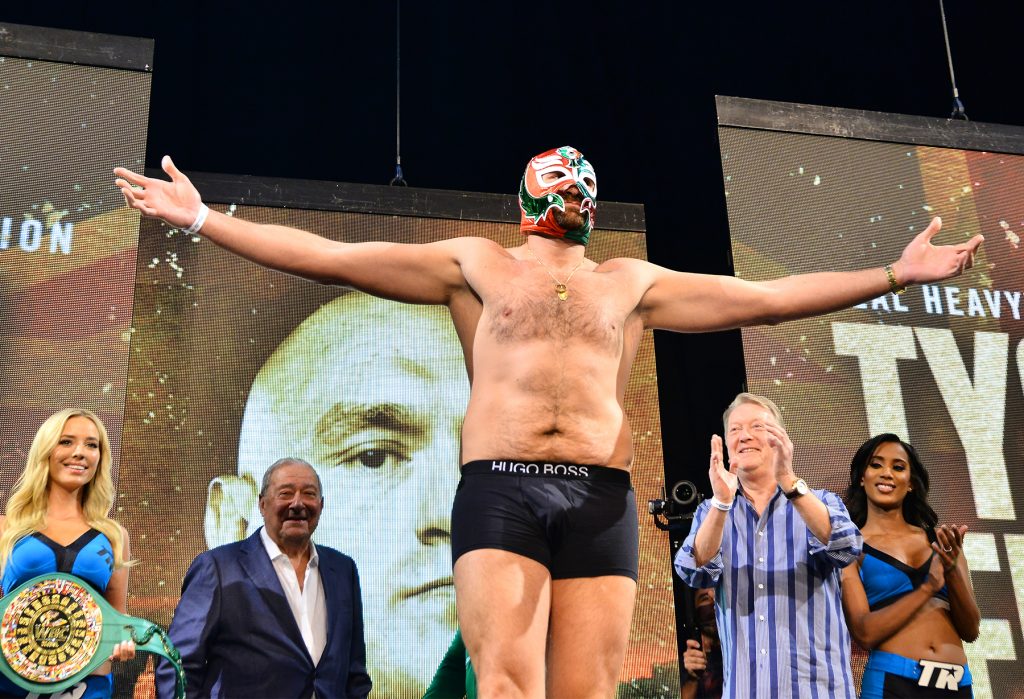
The Dignity Heath Sports Park in Carson, Calif., has been reserved for Sept. 12, according to a story first reported by Yahoo. Tyson, 54, and Jones, 51, will wear 12-ounce gloves. The three-hour show is set to be distributed on pay-per-view on a new entertainment platform called Triller

Andy Foster, executive director of the California State Athletic Commission, told Yahoo that Tyson has put a hold on the date. Foster also said he spoke to Tyson and Jones via Zoom.

But details about financial backing and other significant details weren’t included. It’s being called an eight-round exhibition. As of Thursday, however, it was only an exhibition in how to generate headlines. Nobody better at that than Tyson. 

From pre-pandemic to pandemic, his power to generate publicity remains undiminished.

But buyer beware. I’m not sure this gets past the first drug test. That of course, presumes that there will be testing at all. That issue wasn’t addressed Thursday. But, safe to say, it will be for a bout between two legends already eligible for their AARP cards.

Tyson, of course, has been marketing himself and his ring resurrection for months through videos that display his punching power. Yeah, it’s still scary. It’ll be scary 10 years from now. Punching power is the last thing to go. George Foreman still had it when he regained a heavyweight title in a comeback at age 45 in 1994. Foreman, now 71, could probably still rattle the heavy bag with enough impact to light up message boards.

The surprise in Thursday’s news was that Tyson approached Jones about the exhibition. All of the speculation had been about a Tyson-versus-Evander Holyfield exhibition, a nostalgic look back on their infamous 1997 Bite Fight. Holyfield has posted his own videos, all of which showed that the retired heavyweight champ is in as good shape as any 57-year-old man could expect to be.

Instead, Tyson reached out to Jones, who had an almost mythic hold on the pound-for-pound crown during his middleweight, super-middleweight and light-heavyweight reign. Jones did win a heavyweight belt, scoring a unanimous decision over John Ruiz in 2003. Jones was the much smaller man, but Ruiz was no match for his blend of footwork and hand speech.

That blend is long gone, a fact that proved to be Jones’ undoing late in his career and now a potential danger against Tyson if the power in those videos is indeed real.

“I’m looking to be 100% of Mike Tyson in the ring,’’ Tyson said on ESPN’s First Take after plans for the exhibition were announced Thursday. “ … I’m a neophyte in taking it easy. I don’t know how to do it that way.

“I am one speed — forward. I don’t know, Roy is just going to have to deal with that.”

There’s still power in Tyson’s sales pitch, too.  He says he is launching a Legends Only League for retired athletes in all sports. Maybe, his planned exhibition with Jones is a beginning.

For Jones’ part, however, it was not clear that the exhibition was a done deal.  In a video posted on Twitter with Dr. Beau Hightower before a workout, however, Jones confirmed he had been contacted.  He’s interested.

“I still want to see these hands go,’’ Jones said. “I mean, I don’t know how to say no. So, don’t make me do it.  

“Mike is still a hell of a specimen.

“Still a problem to deal with.’’

A problem he might never face if a litany of other problematic details aren’t dealt with. 


Chaucer, Brown, The Marquez and a lil’ Yori Boy

By Bart Barry-

SAN ANTONIO – No reprieve.  The grim numbers grow grimmer each evening as a fine local publication, RivardReport, sends its weeknightly communique detailing this city’s latest COVID-19 stats.  The mortality rate, across Texas, remains suspiciously low.  Attempts to attribute deaths to pneumonia and influenza, successful in the late winter and early spring, now look craven in summertime – and so the numbers of dead grow no matter efforts to suppress them.

If we never knew the economic might of local schoolboards it was a failure of our collective imagination.  As small schoolboards vote to keep classes virtual till round Thanksgiving, employers’ return-to-office plans get suspended.  In its tragic way there’s something charming about five-person independent schoolboards effectively telling multinational corporations what they can’t do with 200,000 employees.  There’s a messy vitality to it; decentralization breeding quirky consequences.

None of this helps our beloved sport’s hibernation.  Last week brought more postponements and cancelations in boxing, while Canada forbade American baseball players from migrating, and the inevitable day Americans will have to begin sneaking across Mexico’s northern border drew a bit closer.  In a few weeks’ time DAZN will begin broadcasting anonymous British prizefighters the way ESPN has broadcasted anonymous North and South Americans, in an effort to prove that boxing-mad Brits aren’t yet mad enough to tune-in for unattended smokers.

There’s nowhere to go, then, and nothing to watch, so we recede deeper in literature or depressants, or both, and that brings us an idea for this week’s column.  Some of our language’s greatest poetry must be read aloud to be understood, reading it aloud makes it not only accessible but many times more entertaining, and so, perhaps, acting-out our favorite combinations might help us be better entertained by prizefighting if it returns.  Geoffrey Chaucer and Sterling A. Brown, poets separated by an ocean and about 700 years, specifically are two men whose seminal works I’ve been enjoying for a while and thought to write about.

Most of us, probably, are familiar with Chaucer’s Canterbury Tales, at least a couple of them, for enduring them in highschool literature classes.  I remember the Pardoner and the Wife of Bath and none others from a week of 11th-grade English.  Years later I returned to Chaucer and got an abridged copy with Chaucer’s original text on the right page and a modern-English translation on the left and had trouble believing how much more fun they were than I remembered.  There were no affordable copies of the unabridged text, alas, and so I read what 300 pages were available and put Chaucer away.  A couple years later, unbeknownst to me, Penguin Classics published all 800 pages of Chaucer’s Tales in their original prose, an English that preceded Samuel Johnson’s dictionary by 350 years.  Read silently, they are mostly nonsensical, and read aloud they are fabulous (here Chaucer describes a monk):

 And for to festne his hood under his chin

He hadde of gold ywroght a curious pin;

A love-knotte in the gretter ende ther was.

His heed was balled, that shoon as any glas,

And eek his face, as he hadde been enoint;

He was a lord ful fat and in good point.

His bootes souple, his hors in greet estat.

Now certeinly he was a fair prelat;

He was nat pale as a forpined goost.

A fat swan loved he best of any roost;

Sterling A. Browne came out a tradition very different Chaucer’s and sought to capture a different form of the same language, one of still greater vitality and messiness (from “Sister Lou”):

Then, when you gits de chance,

Always rememberin’ yo’ raisin’,

Let ‘em know youse tired

Jest a mite tired.

Jesus will find yo’ bed fo’ you

Won’t no servant evah bother wid yo’ room.

Jesus will lead you

To a room wid windows

Openin’ on cherry trees an’ plum trees

Bloomin’ everlastin’.

An’ dat will be yours

Fo’ keeps.

Den take yo’ time. . . .

Honey, take yo’ bressed time.

Reading these poems aloud summons their flavor like coffee and hot chocolate do Mexican pastries (which otherwise taste heavy and flat), and since we’re mixing and mashing metaphors up and down this column, let’s go another step:

Not till the lads at San Fernando Gym began rehearsing The Marquez in 2010 – left uppercut, right cross – did the combination make nearly so much sense to us.  We’d seen Juan Manuel employ the combination to surprising effect.  (Hell, a few of us saw him snatch the fighting spirit right out Rocky Juarez in 2007 with a preposterous right-uppercut lead, being hit by which sent Juarez slumpshouldered back to his corner wondering why he even bothered.)

Throwing The Marquez on a bag, heavy or uppercut or double-end, taught you instantly its wisdom – just how far off centerline the uppercut took your head, just how fullcocked it made your lead shoulder, just how symmetrically it set your guard, just how fully it let you put your right shoulder to the cross.  None of us got any of its defensive virtue, though, till we began throwing it to imitate our sport’s finest finisher.  Till we began reading it aloud, as it were.

Something different happened a few years earlier in Phoenix when Donnie Orr, a Canadian middleweight, taught me how to read Yori Boy Campas aloud.  He showed that many of Campas’ lefthooks to the body were actually double hooks, the first to knock the opponent’s right elbow out the way, the second to attack the liver, and not until I’d spent years trying to get the timing and balance right on the heavybag – if you unload with the first, there’s nothing on the second – did I appreciate how much more than a shortarmed attrition fighter Campas was (along with being a delightful and gracious interview).

Reading Chaucer and Brown then shadowboxing your favorite fighters’ greatest hits – what else have you got to do?

Bart Barry can be reached via Twitter @bartbarry


No Opening Ceremonies during an Olympic year when masks mean more than medals

By Norm Frauenheim-

The Olympics were supposed to start a week from now. On July 23, Opening Ceremonies were scheduled for the 2020 Games. Like so much else, the Tokyo Olympics are just another postponement in a year that will only be remembered for a pandemic.

Maybe it doesn’t matter much during a time when diversions have been supplanted by infections and death counts. Masks are a lot more important than medals these days.

Still, it was a chance to see if there’s another Michael Phelps, or another Usain Bolt, or another Claressa Shields, or more of Simone Biles and Katie Ledecky. That’s the beauty of the Olympics. Amid its parade of pageantry and history, there’s always the promise of something new.

From Mark Spitz to Phelps, from Jessie Owens to Bolt, from Muhammad Ali to Joe Frazier and George Foreman, the Games recreate themselves. They remind us we’re getting faster and perhaps better. They’re overdone and way too expensive. But optimism isn’t cheap, which is something that becomes increasingly evident with every postponement forced by multiplying numbers that suffocate hope.

The Olympics will be back in some way, in some form. For now, the 2020 version has been rescheduled for 2021, still in Tokyo next year starting on July 24. In times ruled only by chaos, however, it’s fair to wonder if the Games will in fact go off as planned. Postponement is today’s only certainty.

Even if there are Opening Ceremonies next July, some of the key athletes might have already moved on. There’s no paycheck in waiting, especially when a pandemic is the boss. That’s especially true for boxing, which has pushed itself to the Olympic fringe over the last three-plus decades. Fact is, boxing has almost eliminated itself as an Olympic entity with successive scandals that date back to judging that robbed Roy Jones Jr. of a gold medal at the 1988 Seoul Games.

For every scandal, however, there are also fighters who come out of the Olympics and become the stars that are the pro game’s lifeblood and profit margin.

American Oscar De La Hoya won a gold medal in 1992. Floyd Mayweather Jr. won a bronze medal for the US in 1996.  American Andre Ward won gold at the 2004 Olympics in Athens. Gennadiy Golovkin (Kazakhstan) and Amir Khan (UK) won silver medals in Athens. Ukrainian Vasiliy Lomachenko won gold medals in two Olympics – 2008 and 2012. American heavyweight Deontay Wilder won bronze at Beijing in 2008. UK heavyweight Anthony Joshua won gold London in 2012. American Shakur Stevenson, an emerging star, won silver at Rio de Janeiro in 2016.

Without them, the pro game of the last 28 years would have been much poorer.

That creates a problematic future for today’s version of pro boxing. Although Olympic boxing has receded in terms of media attention, history says it is still an important resource. The best Olympic boxers arrive in the pro ranks already known to most of the customers. They have experience with the media, they know how to fight away from home and they know their way around the ring.

To wit: The business still needs them.

But no Olympic boxing in 2020 could strip the promoters and networks of the personalities and performers they will always need. Already, there is uncertainty about one of America’s best prospects, Keyshawn Davis.

Davis, the world’s No 1-ranked amateur lightweight and a silver medalist at the 2019 World Championships, did not report to Colorado Springs this week for training toward the re-scheduled Tokyo Games, according to a report in Boxing Scene. It’s not clear why he didn’t show up in camp Monday.

Davis, of Norfolk, Va., and a Stevenson friend, has sent out mixed messages about his plans. When the Tokyo Games were postponed in late March, he told some media outlets that he still wanted to go for Olympic gold. He would not turn pro until after the Olympics a year from now, he said. But he also said there was “a 70 percent” chance he’d go pro.

Who knows?

That’s about all anybody can say during days dominated by only questions instead of the Olympic motto: Citius – Altius – Fortius. The three Latin words means Higher-Faster-Stronger in most years. But they could mean anything, anything at all in 2020.


Observing the glow

By Bart Barry-

Last week while reading The Wind in the Reeds by Wendell Pierce, I reflected on what it was about Pierce’s character, The Wire’s Bunk Moreland, that enchanted me enough, 12 years later, to read Pierce’s delightful memoir.  Then on Saturday afternoon YouTube recommended clips of a Chuck D interview by djvlad.  And a pattern emerged.  What a Juilliard-trained actor and the leader of Public Enemy had in common was radiance.

There are men who glow.  One needn’t dig very deep in anyone’s account of meeting Muhammad Ali before encountering an allusion of some sort to this glow.  Skin tone and face shape no doubt help some performers glow more than their inner lives might predict, but these are oftentimes illusions more than real gold.  Ali had real gold.  He had an ugly side, too, doubt not, but expressing that ugly side so vigorously so often sweated much of it out of him, and what remained inside kept itself insulated by canceling his mobility, his expressiveness, and finally his very voice.

I was unprepared for Chuck D’s glow.  That unpreparedness, what it says about glow’s audience, the role of others’ perceptions and vistas, is something to treat during this, another eventless week in our pandemic slog.

Chuck D has glowed for who knows how long without my perceiving it.  He has been a speechmaker for decades and a worldclass performer for decades longer than that.  As a very angry teen I saw Public Enemy at Boston’s Orpheum Theater in 1991.  The group was touring with metalband Anthrax, with whom they’d redone “Bring the Noise”, shortly after Apocalypse 91 got released with its remarkable “Can’t Truss It” – a song still fresh and audacious and militant 30 years later.

As a less-angry college freshman I saw Public Enemy in 1992 at Sun Devil Stadium in Tempe, Ariz., when they opened for U2 and performed only one song, “By the Time I Get to Arizona”, a protest anthem.  A stadium concert can be heard for blocks, and I recall more fondly than the show the reaction of two African-American dormmates, Uumoiya and Jimmy, when they recounted their pride at Chuck D’s shutting the show down after only one song and saying his band would play no more in Arizona till the state recognized Martin Luther King Jr. Day as a national holiday.

“We knew PE wouldn’t sell out,” said Uumoiya.

By 1993 I’d lost interest in hiphop; if “Welcome to the Terrordome” is your anthem, “Nuthin’ but a ‘G’ Thang” holds few delights.  In 2012 I wrote Chuck D a letter, addressed to Carlton Ridenhour, thanking him for the example he’d set.  During that time I wrote regularly for The Ring magazine and wondered if there were a way I might make “Burn Hollywood Burn” enough about boxing, in some finagled way, to interview Chuck D and Big Daddy Kane – never getting more than a minute in the thought before realizing it was boyhood fantasy masquerading as literary pursuit.  Honestly, I didn’t want to interview either man – for fear of making them touchable.

It was with that same sense of Chuck D’s untouchableness I spent Saturday watching his recent interview, admiring his greatness from afar and marveling at his glow.  It began an inventory of prizefighters I’ve met who exude something similar (fail as I might, I do try to make this column about boxing).  The inventory had me looking at my favorite fighters, naturally, and finding few of them glow, as they remain too close to combat’s requisite edge.

Among current practitioners, probably Roman “Chocolatito” Gonzalez is the closest I’ve seen to glowing, and that may be an artifact of this persistent optical illusion: To me, Chocolatito’s countenance often resembles young Cassius Clay’s.  Chocolatito, too, has one of the apparent requirements for the glow, which is a set of deeply held spiritual beliefs for which he makes sacrifices.

Maybe this is a commentary on spirituality, and maybe it isn’t.  Having more responsibilities than needs, that universal pathway to contentment, is a thing religions gift their flocks, an outward gaze that quiets minds’ ceaseless chatter.

Then it came to me, in that mix of exuberance and relief that marks every week’s discovery of some topic, any topic, about which I can fashion 1,000 words – there was a prizefighter who glowed like no other I’ve interviewed: Roberto “Manos de Piedra” Duran.

Recently, to commemorate Duran’s release from his coronavirus-related hospitalization, colleague and friend Norm Frauenheim tweeted about Duran, recollecting Duran as Norm’s favorite interview in more than 40 years of such things.  I was there, that day in 2006, beside Norm, in the conference room of a Phoenix hotel, as Duran regaled us with wondrous absurdities for 40 minutes; Norm was the interviewer, I the interpreter, and Duran the raconteur nonpareil.

He weighed at least 100 pounds more than his lightweight prime.  He was rounded and glowing.  There were no sharp edges to him; he bore no resemblance whatever to the bearded madman who took Sugar Ray Leonard’s ‘0’ at welterweight.  He was gregarious, generous, warm, beautiful.  He had the quality of a man accustomed to being observed, admired, and unwilted by others’ unbroken attention.

If he’d not been through a spiritual transformation – and perhaps he had – he’d been through the sort of existential crisis that gives birth to one.  Five months after he outfought Leonard in 1980 began Duran’s bout with bottomless ignominy during the eighth round of their rematch.  Exasperated, Duran waved the fight off, turned his back on the battle, and sauntered to his corner.  “No mas” became a hashtag half a lifetime before Twitter.  Contempt’s contemptuous revenge; Duran’s disgust with what he misperceived as Leonard’s cowardice birthed a phrase that got misperceived round the world as an ultimate act of cowardice.

Twoscore years and 45 prizefights and four weightclasses and a car accident and a battle with COVID-19 later, though, Duran glows.

Bart Barry can be reached via Twitter @bartbarry


Ivy League: Cancellation might have been the smart move

By Norm Frauenheim-

Ivy League football has more followers today than it has in years. Nobody is exactly happy to be among that newfound crowd.

But the Ivy League is No. 1 this week for taking a step that might be an early-warning sign of what – or what not – to expect for the rest of the year.

There’ll be no Harvard-Yale game this fall. There’ll be no kickoffs at all. The conference, known more for Nobel Prizes than Heisman Trophies, canceled autumn sports this week because of the pandemic-from-hell. Don’t expect the Southeastern Conference to fall in line anytime soon, if ever.

It’ll be a lot harder to cancel or postpone SEC football than it will to take down another statue of a Confederate soldier. A Saturday afternoon in autumn without the Crimson Tide and Lynyrd Skynyrd’s Sweet Home Alabama is harder to imagine than a Southern breakfast without grits. Football is more than a game. It is today’s version of Southern rock-and-roll. Rest in peace Charlie Daniels and Roll Tide.

Then again, I would never have imagined a May without a major Cinco de Mayo fight, a June without the NBA Finals and a July 4th without baseball. Maybe, the NBA and baseball are about to happen in some way and some abbreviated form. But I’ll believe it when I see it. The Diamondbacks are scheduled to open at San Diego on July 24. The Suns and Wizards are scheduled for a July 31 opener in the so-called bubble in central Florida

But it’s hard to get excited, mostly because of a pandemic that is a game only for mask-less fools. There are plenty of them. At least, there are in Arizona, which might explain why the state is No. 1 in desperation. AZ leads the infection rate, world-wide.  As of Thursday, infections were found in 28 percent of COVID-19 tests. That’s one in every four people. I stood in a line of eight shoppers in the grocery store Thursday. If the stats are right, two were infected. I tightened my mask and stepped outside into 113 degrees.

It’s hot.

It’s scary.

It’s Ground Zero.

I’m not sure any kind sport will provide much refuge from that. At least, not in the here-and-now.

Amid the mind-numbing heat and fear, there was finally some sense from the smart guys in the Ivy League. They decided to quit playing around with the annoying succession of cancellations and postponements.

Let’s hear an opening bell when there’s a vaccine.

It’s hard to guess where boxing is headed amid it all. There may not be another wave of the pandemic this fall. But there already has been one wave of uncertainty after another. Top Rank has been staging regular cards for ESPN in Las Vegas for a month now. I like what they’re doing. They’re keeping the game alive and keeping some young fighters busy.

I also applaud Bob Arum for taking the lead in staging cards limited by social distancing, testing and all the rest, including some of the usual stupidity. To wit: Heavyweight Jarrell Miller, Big Baby All Over Again, tested for a PED in what was his second positive test since he was disqualified for a shot at Anthony Joshua, who went to lose to stand-in Andy Ruiz Jr. more than a year ago. Some things never change. It’s almost comforting. Almost.

But Arum is caught in the same uncertainty that has paralyzed the sports business. He had been working toward a September 19 date for Teofimo Lopez-Vasiliy Lomachenko fight. It is an intriguing bout, loaded with pound-for-pound potential. More significant, it looms as a fight that could be the beginning of business, post-pandemic. It’s hard to know whether that means business-as-usual. But it’s a date that was seen as a way to restore the profit margin.

Now, however, Lopez-Lomachenko has been moved to Oct. 3, according to Boxing Scene. The pandemic forced the move. At the rate it’s spreading, it’ll force some more, leaving Ivy League football with more followers than anybody could have imagined a few months ago.


The lost immersion

By Bart Barry-

SAN ANTONIO – Friday the emergency alert came on everyone’s cell round noon local time and read “punishable by a fine of $250” for those Texans caught in public maskless.  To get ahead of what petulant witlings compose his base, too, the governor went so far as to say one’s nose and mouth must be covered by his mask.  A timid, halting ascent from madness this has been; first mayors were forbidden from requiring masks then private companies were required to enforce masks then finally, after trying every other thing, the governor started to do the right thing.

Often wrong but never uncertain, Texas officials now indicate their new plan will suffice with much the confidence they brought to their premature-opening plan.  The townspeople, spooked, again, ain’t likely to sustain an economic recovery any time soon, howsoever desperate they are for it.

Boxing brings no respite to their anxieties.  Given an open platform on America’s largest sports network prizefighting has shoveled refuse at us, reminding aficionados if not network execs why giving promoters exclusive contracts is such a terrible idea.  Thus far it’s only ESPN that looks rolled, but soon it will be DAZN’s turn.  Everyone will tell you he’s doing the best he can in extraordinary circumstances – the fighters just want to make meaningful fights; the promoters are hustling everywhere to bring you high quality whatevers – and everyone is lying.  The fighters, finally freed from an obligation to look hungry, are, with nary an exception, fine with a sabbatical.  The promoters, given a choice between taking a financial loss to keep their best men busy or waiting them out, fill their cards with an ever dwindling demographic: Men who need money enough to risk their lives for it, and are COVID-19 negative.

This portends nothing so much as tuneups far as the eye can see; excepting only Tyson Fury and Canelo Alvarez every other a-side fighter intends a couple tuneups before reimmersion, which means a probable end to competitive prizefighting till at least March.

And they’re right.  This period of lost immersion will be ruinous to many prizefighters.  They’ve lost the language of the thing.  Few are the men who’ve suffered a professional fighter’s trainingcamp and would endure it again freely.  If a man is already in the masochistic rhythm of prefight rituals and some shortmoney opportunity arises he takes it because it may be his rare shot.  But when he knows no momentum lurks, win or lose, better to find a job doing something else.  Hell, not even the oftcited ecstasy of a crowd is on offer till 2021.

This lost immersion affects every performer, every audiencemember.  Last week I was reading Based on a True Story by Norm MacDonald, the Canadian comedian, and considering how this idea of immersion explains much of what is lost by such a performer if there is no audience.  To watch MacDonald on YouTube clips is to laugh a goodish amount though nowhere near so much as do those oncamera with him; something about the man’s simple presence is funny, that be his unconscious competence, and often as not you find yourself laughing at laughter’s contagion more than his jokes.  And he knows this and has spent decades observing it in others and cultivating it, immersing himself in what is funny till he glows with it, tastes like it, stinks with it.

MacDonald has found a way to make others laugh without being funny, the way some men – accounts of Sonny Liston spring to mind, here – needn’t do a single menacing thing to frighten a room.  Some of this is repetitions, certainly no one ever achieved unconscious competence without a stint in conscious incompetence, but more of it is lifestyle.  Regardless of talent MacDonald never would’ve become automatically funny without immersion in other comics – not watching them on YouTube but being in the same room with them for thousands of hours, laughing with them and being laughed-at by them, capturing the essence of what is funny then distilling it and distilling it till he knew it by scent and flavor.

Boxing works the same way, though at a rate faster as it is corrosive, because being unconsciously funny is a hell of a better life than being unconsciously violent.  The common metaphor we use for boxing’s unconscious competence is edge or something similarly dangerous.  It is a full being; a man who is in fighting trim and reflexively belligerent and unblemished by mercy; a man so complete in his commitment to sanctioned violence th’t he enters a confrontation with a clear mind and reacts; a man who no longer has to think how to hurt another man but be given the opportunity.  It is not a pleasant state, whatever its rewards of status, and who that might escape it wouldn’t?  And most every prizefighter you can name and more certainly those you cannot are now on a forced sabbatical from this, starting 100 days ago.

Bart Barry can be reached via Twitter @bartbarry


Lots of hope invested in December date for Fury-Wilder 3

By Norm Frauenheim-

The third Tyson Fury-Deontay Wilder fight was supposed to happen this month.

Early in the pandemic, the July 18 date at Las Vegas MGM Grand was viewed as something of a benchmark, a hopeful sign that business – the world – would be back as we’ve known it. Lived it.

But hope, known to spring eternal in better times, is futile these days. First, Fury-Wilder 3 was postponed to Oct. 3. Now, it has moved, pushed to Dec.19 at Vegas’ new Allegiant Stadium amid promoter Bob Arum’s hopes that a live crowd of about 20,000 will be allowed to sit in seats separated by today’s social-distancing dimensions.

“That is the date that we all want,” Arum told Las Vegas’ Review Journal. “That’s the date that both sides are happy with. Whether we’ll be able to do it in the stadium with limited seating, that’s in the hands of the gods.’’

Four months ago, few would have imagined that December would be a possible target date for the resumption of business as usual.

Then again, COVID-19 sounded like science fiction in those days. Who knew that masks would become a fashion statement?

Nobody, despite the mix of fairy tales and fake news from a White House collection of Baghdad Bobs, who keep saying the virus is going to disappear like a miracle. If only that miracle would make them vanish, too.

There are no miracles. But there is some hope, albeit frayed. And there is a potential vaccine, albeit delayed.

A vaccine might be the only realistic hope. The mounting fear of COVID-19 is summed up in the rising number of infections, especially in Arizona, Florida, Texas and California.

Just a couple of months ago, Arizona was thought to be the place where baseball would make its comeback. MLB talked about an abbreviated season in the desert at the spring-training sites in Phoenix. But that was before the virus hit Arizona like a haboob. It’s spreading faster than summer temperatures are rising.

Arizona, baseball’s epicenter in February, is a very different kind of epicenter now.

What has happened in Arizona, my home state, is just another example of what still figures to happen. No telling when the rate of infections will subside. Then, there’s the possibility of a second wave in November, the month before the projected third leg in the Fury-Wilder trilogy.

There are already widespread doubts about whether there will be a college football season this fall.

The NFL, perhaps, has a better shot at some sort of season, yet even it is talking about fans and even players signing some sort of waiver, an acknowledgement that even pro football fears that the pandemic will continue.

From boxing to baseball, money is a motivation for the attempt to get back in the game. Fighters and players still want to get paid. Networks are begging for live content. But the attempted return is as expensive as it is risky.

The NBA is planning to gather in Orlando where it will go into the so-called bubble, which is where boxing has been for nearly a month with weekly Top Rank shows in Las Vegas.

The players, like the fighters, will test, train, eat, sleep and play, all away from fans.  But life in the bubble isn’t cheap. It’s expensive to maintain and sustain. Yet, it’s an investment in keeping fans interested and around for the days when social distancing is a forgotten dimension.

But it’s beginning to look as if only a vaccine can ease public fears and bring the fans back into the arena for a first bell or an opening tip. I’m still hoping to hear that bell for Fury-Wilder 3. But, mostly, I’m hoping for a lab to produce a vaccine.

A vaccine might be the best investment. Long-term, it’s the only way to bet.


Silly boxing / Serious events

By Bart Barry-

SAN ANTONIO – Saturday the emergency alert came on everyone’s cell at 7:00 PM local time and read STAY HOME, a first of its kind.  This county, Bexar, has become one of the most fecund places in the world for COVID-19 less than a month after our mayor’s effort to slow his city’s reopening got gutted by a governor whose party presumes to be about small government and local rule.  Unless local rule should thwart plans to keep people from collecting unemployment insurance.

A premature reopening driven by business interests now becomes a tardy rollback driven by mortality projections, and whatsoever does a governor say to restaurants and bars that closed and lost inventory and staff then reopened and rehired and repurchased and now, weeks later, reclose and lose inventory and staff anew?  He’s floated the idea of saying he never said to do any of it, one more cock crowing at the sun, and maybe he’s right.  Maybe all these flags and uniforms and offices and guns belie the fact no one is in charge, whatever their hardwon titles and salaries imagine, and maybe this American experiment never could’ve gone another way.

Too many hours after Saturday’s emergency alert came another weak boxing card on ESPN, this time from TV Azteca’s Mexico studio, not Top Rank’s in Las Vegas, and Mexican super featherweight titlist Miguel Berchelt hunted hopeless Mexican journeyman Eleazar Valenzuela to a round 6 stoppage that BoxRec says goes on the ledger like an NC because Mexico City refuses to sanction combat sports during a pandemic.

Immediately after referee Cesar Castanon stopped the match Berchelt sprinted to a nearby corner and leaped on a ringpost to salute his fans.  Nobody was there.  He lowered his gloves and self pretty quickly, realizing there was, appropriately enough, no one to celebrate his stamping a 13th loss on Valenzuela’s ledger.  Earlier that afternoon, unbeknownst to Berchelt, professional golfer Phil Mickelson had made some of the same futile gestures in Connecticut, giving his so-humbled-by-your-devotion smiles and nods to empty stretches of sod where habit told him fans should congregate.  It’s a quibble, really, but it sort of marks these insincere acts for the selfaggrandizing things they ever were; when you robotically acknowledge your fans whether they’re present or not, it’s a matter of muscle memory, not connection.

But what about Berchelt’s activity and pop!  Sure, I guess, but who cares at this point?  It has been so long since a meaningful fight and so many more-meaningful things have happened meanwhile, it’s a disservice to y’all to feign excitement.

There was no drama and only a sadist’s suspense.  The match was a disservice to Berchelt, too, as five rounds with Eleazar Valenzuela made him less competent for a fight with Vasiliy Lomachenko, against whom he has truly little chance regardless of layoffs.  Timmy and Dre were bored from bell to wave and it was good to hear them husbanding passions for another day.

I know the media cycle has moved-on from racist police violence and all, but I want to return for a spell to something Timothy Bradley spoke about (4:00) a few weeks ago.  He described being pulled-over with his four-year-old son on their way to school, pulled-over because of the color of their skin.

“My heart was pumping a hundred miles per hour,” said Bradley, and that’s the part I wish to treat. 

No less a hero than Bradley, someone who spent 144 minutes in pitched fistic combat with Manny Pacquiao and Juan Manuel Marquez, the man who fought Ruslan Provodnikov unconsciously for 11 rounds, that guy, was struck by a fear so visceral he eschewed a career of hiding all selfdoubt to tell a national television audience how afraid he was, a year later.

What does that say about the way our system tortures millions of Americans as they do things so mundane?  That Tim Bradley felt more afraid for his life driving his son to school than fighting his generation’s most dangerous men is an indictment that should strike aficionados in a place most anecdotes do not.

Recently Barack Obama recommended for aspiring antiracists a 1963 collection of essays, The Fire Next Time by James Baldwin, and I found nothing so striking as Baldwin’s imparting that African Americans do not seek acceptance from white Americans; they just wish to be left in peace.  Here in Texas the right to be left alone is embraced, at least publicly, with religious fervor, and yet for millions this lowliest expectation goes routinely unmet.  People in this state, whether black or brown, have been on this land or in this country full centuries longer than their uniformed oppressors – uneducated folks who, a couple or three generations removed from Europe, risibly call themselves “real Americans” in front of people who, through hundreds of years of crimes against them by the American system, have incredibly, irrationally, not given up on their country.

Bart Barry can be reached via Twitter @bartbarry
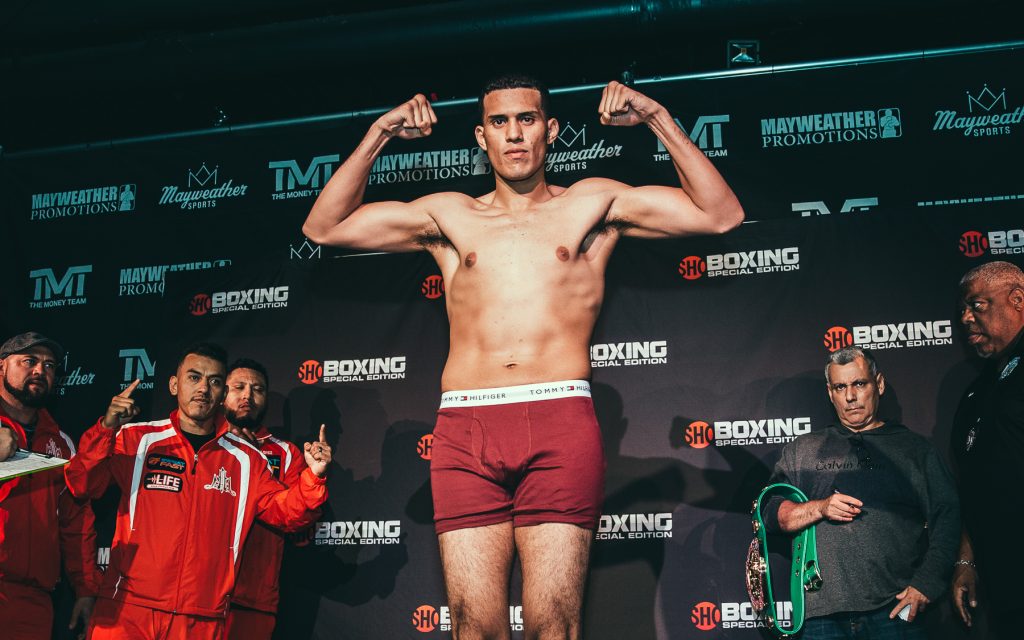


More Pandemonium? COVID-19 infections continue to haunt old routines

By Norm Frauenheim-

It’s a pandemic. Pandemonium, too.

Chaos is everywhere, a symptom seemingly suffered by many who apparently have not been infected by a virus that appears and re-appears like some mutant ghost.

Don’t believe in ghosts? Well, this one is real. It’s named COVID-19 and it’s got everybody scrambled, left with only a few ideas and yet no clue as to how to make any of them happen.

Sports are about routine. Go to the gym, do the roadwork, take batting practice, swim the laps, lift weights, spar, spar and spar some more. There’s a lot more comfort in the routines than there is in wearing a mask.

But that mask – day after day after day — is about the only thing anybody can be sure of any more. Of course, there are the exceptions, the fools who think a mask is a symbol or a statement. They won’t wear one, which is little bit like a skydiver taking the jump without a parachute.

All of this is a long-winded way of getting around to the point. Sorry for that. But these are days when you fill in the blanks while practicing social distancing. Maybe, that’s why Oscar De La Hoya said he’s still thinking about a comeback. What else has he got to do?

The routines are a framework for what’s possible. They represent realistic limits. Maybe, that’s why I miss them. I never thought I would, which in retrospect makes me think I was as foolish as that skydiver without the chute.

But, increasingly, I miss exactly what I had come to think was mundane, if not boring.  

In late June, I miss checking the major-league baseball standings. In May, I missed the NBA playoffs, the Kentucky Derby and Canelo Alvarez. In April, I missed the Masters. In March, I missed the opening rounds of the NCAA Basketball Tournament.

Mostly, I miss hearing an opening bell from a ringside seat.

All of the familiar moments and sounds are supposed to return. Baseball plans a 60-game season, scheduled to begin in late July. The NBA plans a play-off-like format in the so-called bubble. There’s talk of Vasyl Lomachenko-versus Teofimo Lopez in September. The signs are welcome, but suddenly other signs are disconcerting enough to think that I’ll have only the mask for the next few months.

Arizona, my home state, is suddenly in a race with Texas and Florida to be Ground Zero in the COVID-19 resurgence. It depends on the day and the percentage of infections per tests. I’d rather read the box scores.

It’s nerve-wracking and it raises troublesome questions over just how MLB plans to pull off a 60-game schedule built on teams playing within their region. The Diamondbacks, Rangers and Astros are supposed to play each other regularly, home and away. The Dodgers, Angels, Padres and Giants are in the region, too.

No fans are expected to be there. In cities confronted with rates exploding at a scary rate, however, how will they play in Phoenix, Dallas, Houston, Los Angeles, Anaheim, San Diego and San Francisco without somebody getting infected? One infection is enough to suspect a much bigger problem.

Infections are suddenly happening everywhere. Golf, considered an essential business in Arizona when the pandemic first hit, is dealing with them this week.

Four-time PGA Tour champion Brooks Koeppa withdrew from the Travelers Championship Wednesday because his caddie, Ricky Elliot, tested positive. Koeppa’s brother Chase, also withdrew. He had qualified for a spot in the Travelers field.

Golf prospect Cameron Champ tested positive and withdrew as well. Former U.S. Open champ Graeme McDowell, a former U.S. Open champion, withdrew because his caddie, Ken Comboy, tested positive.

Golf is ominous proof that no game is immune. The golf course, almost pastoral.  is perfect for social distancing. The game is played outdoors, where physicians say it’s harder to transmit than indoors. Golfers often stand close to their caddies, but it looked as if the 6-foot distance could be maintained without sacrificing communication or the way in which clubs are exchanged. Just wipe the clubs down in each and every exchange.

But the infections happened anyway. From clubs to bats, more look to be likely.

No way to mask the pandemonium. No way to trash that mask either. Anybody got a working parachute?


FOLLOW MOLONEY – FRANCO LIVE

Follow all the action as Andrew Moloney defends the WBA Super Flyweight title against Joshua Franco.  The three-fight undercard begins at 8 PM ET / 5 PM PT / 10 AM Wednesday in Australia

NO BROWSER REFRESH NEEDED.  THE PAGE WILL UPDATE AUTOMATICALLY 

12 ROUNDS–WBA SUPER FLYWEIGHT TITLE–ANDREW MOLONEY (21-0, 14 KOS) VS JOSHUA FRANCO (16-1-2, 8 KOS)
ROUND 1 2 3 4 5 6 7 8 9 10 11 12 TOTAL
MOLONEY 10 10 10 10 9 10 9 9 9 9 8 10 113
FRANCO 9 9 9 9 10 9 10 10 10 10 10 9 114

Round 1: Right and left to body from Moloney..

Round 2 combination from Moloney..Left to the body..Franco lands a left to the body..Counter from Franco..

Round 3 Right from Moloney..Right..Nice hook..

Round 4 Good left to body from Moloney..Jab/right followed by left to body..Left to body from Franco..

Round 5  Combination from Franco..Right

Round 6 Good exchange..Right from Moloney

Round 7  Combination from Franco

Round 8 Left to body from Moloney..Good jab/Right hand from Franco

Round 9 Good combination from Franco

Round 10 Right from Franco..Blood from Left eye of Moloney,,Hard body shots from Franco..Cut caused by a punch

Round 11 FRANCO LANDS A LEFT HOOK AND DOWN GOES FRANCO..Hard right from Franco..3 punch combination..

Round 12 Good right from Franco..Nice combination from Moloney

115-112; 114-114 TWICE FOR JOSHUA FRANCO

10 Rounds–Featherweights–Christopher Diaz (25-2, 16 KOs) vs Jason Sanchez (15-1, 8 KOs)
ROUND 1 2 3 4 5 6 7 8 9 10 11 12 TOTAL
Diaz* 10 10 9 9 10 10 9 9 10 10 96
Sanchez 9 9 10 10 9 9 10 10 9 9 94

Round 1 Right from Diaz
Round 2
Right from Diaz..Right to body from Sanchez..Jab from Diaz..Counter..combination
Round 3 Jab from Sanchez…
Round 4 Jab from Sanchez
Round 5 Left from Diaz…Counter left..Right..Right..
Round 6 Left from Diaz..Combination..
Round 7 Uppercut from Sanchez
Round 8 Right from Sanchez..
Round 9 Left from Diaz..Sanchez lands a combination..Good right from Diaz..Good combination from Diaz…Jab
Round 10 Right from Diaz…Right

98-92 Twice, and  97-93 FOR DIAZ

6 Rounds–Super Lightweights–Miguel Contreras (10-0, 6 KOs) vs Rolando Vargas (5-0, 5 KOs)
ROUND 1 2 3 4 5 6 7 8 9 10 11 12 TOTAL
Contreras* 10 10 9 9 10 9 57
Vargas 9 9 10 10 9 10 57

Round 1: Body work from Contreras..Body..Double jab..Vargas jabs to the body..Good exchanges on the inside..Body shot from Contreras..
Round 2: Blood coming from nose of Vargas (Clash of Heads)
Round 3 Right from Vargas
Round 4 Right from Vargas
Round 5: Right from Vargas.  Another Right..Double right from Contreras..Good Jab..
Round 6:  Vargas lands a wide-left hook..Good exchange

58-56 on all cards for Contreras

6 Rounds–Heavyweights–Helamin Olguin (7-0, 3 KOs) vs Adam Stewart (8-0-1, 5 KOs)
ROUND 1 2 3 4 5 6 7 8 9 10 11 12 TOTAL
Olguin* 10 10 10 9 10 9 58
Stewart 9 9 9 10 9 10 56

Round 1: Stewart cut around right eye due to clash of heads
Round 2: Olguin lands on the inside…Right from Stewart
Round 3: Right from Olguin
Round 4 Left from Stewart
Round 5: Left to body from Olguin
Round 6 Left from Olguin..Left from Stewart…Right

57-57; 58-56 TWICE FOR OLGUIN


Joy in a book well-constructed

By Bart Barry-

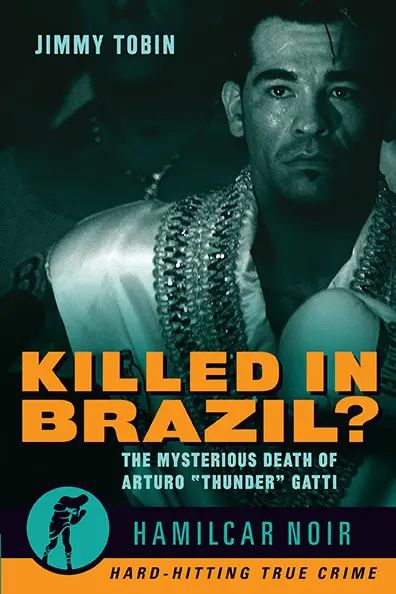
Tuesday marked the publication date of Toronto writer Jimmy Tobin’s Killed in Brazil? The mysterious death of Arturo “Thunder” Gatti (Hamilcar Publications, $10.99), the latest in a series of boxing-themed true-crime books under the Hamilcar Noir imprint.  The book is excellent for the questions it asks.

I realized somewhere in the first 20 pages I care more about Jimmy’s writing than Gatti’s legacy.  Maybe I knew that before I began reading Killed in Brazil? but I was not conscious of it.  I revert to the first-person earlier than appropriate, here, because it affords an insight about Jimmy’s writing; he makes a reader conscious of his thoughts more and more often than most writers.  

Where I find myself lost in other gifted writers’ words or stories, or simply skimming lesser writers, I find myself more aware when reading Jimmy, I find myself guessing why he made certain choices, asking how much of what I’m thinking he intended.  Oftentimes I pause and answer a question he poses then decipher his reason for asking it, but when he is at his best, I find, I can’t decipher why he asked a question, and I like that discovery.  I like that he’s gone in a direction I can’t explain because I know he is an intelligent writer and a thoughtful person, tender even, who writes with authority, and so, if he’s gone somewhere without leaving breadcrumbs, I know he’s invited me to a place I’d not have accessed without him.

This is not a long book but a dense one.  I read it in three sittings, but I’m not a fast reader, particularly, and the more I enjoy a book the more slowly I read it.  Killed in Brazil? is 71 pages long – fewer than 25,000 words – but one finishes it without a sense it needed to be any longer, and a further sense that in hands less capable than Tobin’s, in fact, it might have been shorter.

The dispassion with which Arturo Gatti gets treated is a unique appeal of this book.  When has anyone treated anything about Gatti dispassionately?  Ever since his first fight with Mickey Ward most of us have found ourselves effectively bullied into attributing to Gatti magical powers he often didn’t possess.  For fear of getting browbeaten by his vocal champions most of us either didn’t dare or didn’t bother to write his fights with Oscar De La Hoya and Floyd Mayweather were such mismatches they evinced no courage from any of their three participants.

Tobin gives Gatti’s vocal champions, those given to browbeating, plenty of space on his pages.  After affording their implications lots of credit in the book’s opening third, “Fracture”, Tobin spends the book’s middle third, “Preternatural”, doing pure boxing writing, the hooks and uppercuts and willfulness of Gatti’s career, before finishing with “Confrontation” – the book’s final third.  The third third is the book’s best, as it shows us more of its author, what he values, than its two predecessor parts.

Tobin begins Part III with a commemorative mass in Jersey City, N.J., and gives the opening quote to promoter Lou DiBella as he attains an applause line about Gatti never quitting in his life and definitely not in Brazil, where Gatti’s people believed Gatti’s small Brazilian wife incapacitated, strangled and hanged her husband.  Then Tobin gives the stage to television investigators and Gatti familiars and their attorneys, many American, some Canadian, and one can read their rage and certainty in every quote. 

Then Tobin quietly dismisses them and just sort of wanders away to material that is much more interesting; like a man cornered in a bar by drunken fans – their chests painted in the team’s colors, their hatred for the other side distorting – who spots a noted intellectual having a quiet beer in an opposite corner, Tobin gracefully shares the actual findings of actual courts of law then begins contemplating what drove Gatti to do the thing Brazilian authorities concluded he did do, and the effect of its denial:

“When a family loses one of its own to suicide, a panic descends.  This panic is rooted in the need to understand, to quarantine this act of destruction, to make it intelligible before the suffering borne of mystery spreads.  This process can be quick: if the family recognized the person as capable of suicide, a clear chain of causality, of logic, can be established between the episodes of a traumatic life and its cessation. And identifying this chain brings solace. At that point of death, the dead no longer suffer. And just as important, the living don’t suffer for them. There is no more bearing witness, no more helplessness, no more hope, no more living tied to the mast in the tempest of another’s turmoil. Yes, a suicide like Gatti’s can rend a family’s chronology, forcing parents to live the nightmare of burying their child, but it is beautiful in its power to liberate. It can be heroic.”

That is a remarkable paragraph.  I’ve now read it, re-read it and transcribed it, and I still don’t know if I agree with it, but it enchants me.  It’s a daring turn and one Tobin makes deftly.  It represents a talented writer’s choice: What it is about prizefighting that causes what brain damage might make a father and husband an addict and suicide is a worthier direction than appeasing readers who just want reassurances their favorite fighter never took his own life.

Killed in Brazil? concludes with a loving treatment of Gatti’s son and Gatti’s legacy, completing for its author a circle begun with the book’s dedication.

Bart Barry can be reached via Twitter @bartbarry
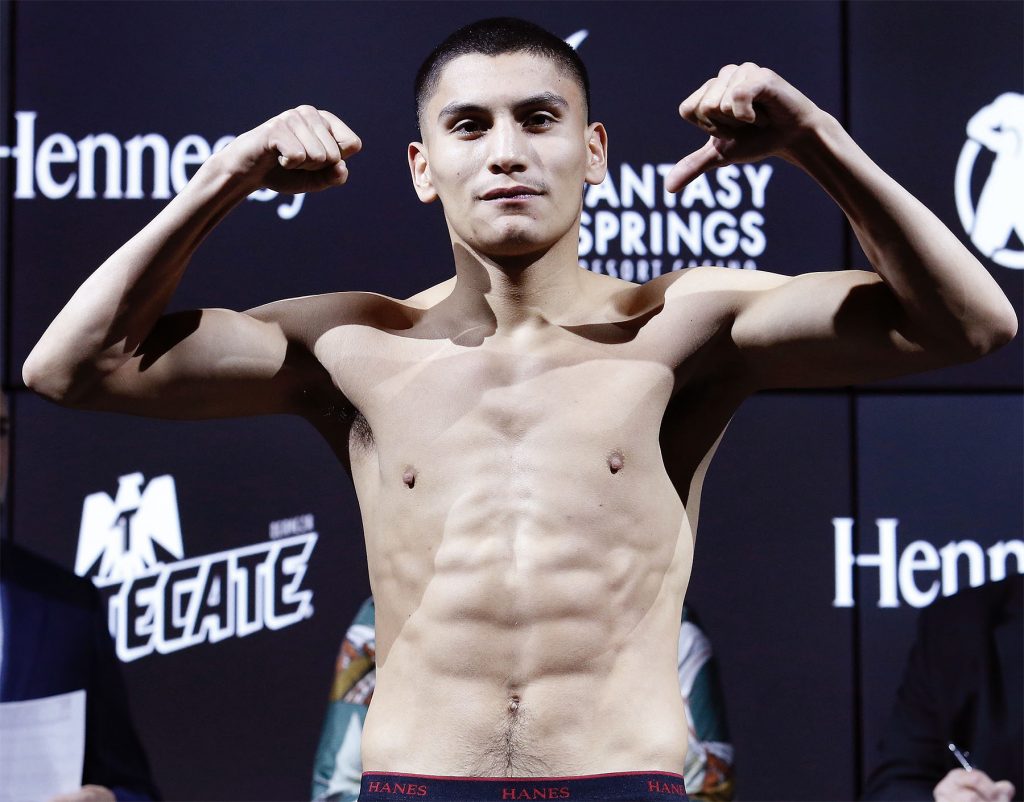


September Comeback? A possibility instead of the same old futility

By Norm Frauenheim-

On the traditional calendar, September means change, summer turning into fall. But it means something more these days, at least it does for a sport hoping to break out of a lonely bubble and back into crowded arenas.

There’s really no telling when the ongoing pandemic will subside long enough for the return of fans and the live gates that might restore a zero or two to purses. For now, however, September appears to be a potential window for the return of some of the game’s biggest stars.

At the top of the list, there’s a projected bout between lightweight Teofimo Lopez and Vasyl Lomachenko, who was No. 1 in most pound-for-pound ratings, pre-pandemic. It’s an intriguing fight in any month. Any year. September in Las Vegas is the hope in what would be an appropriate welcome back for boxing at its highest level.

Bob Arum, Lomachenko’s promoter, is also looking to bring back unbeaten welterweight Terence Crawford in September or perhaps October. Arum told ESPN that Manny Pacquiao is a possibility. Like Lopez-Lomachenko, Crawford-Pacquiao is a biggie any time.

“We’re going to have Terence fight in September, or October, period,” said Arum, who also mentioned Kell Brook, Shawn Porter, Keith Thurman and Yordenis Ugas.

Then, there are photos of Canelo Alvarez, in training for a projected fight in mid-September, presumably on the Saturday before or after Mexico’s Independence Day, which falls on Wednesday, Sept. 16. Canelo, the reigning middleweight champion, is the game’s leading pay-per-view attraction. It’s tough to underwrite a fight featuring Canelo without a live audience. Same for Lomachenko, Crawford and Pacquiao.

But uncertainty – more like chaos – still reigns because of COVID-19. The virus is spiking in Texas and Arizona, both key boxing markets. All bets are off, at least in term of anything other than tentative. Still, September is a possibility, albeit temporary. Medical experts are saying it could subside during late summer.

It’s no coincidence that September is considered the best month for baseball to wrap up an abbreviated season. That’s only if and when owners and players can reach an agreement over – what else? – money.

In a terrific story, Dr. Anthony Fauci, director of the National Institute of Allergy and Infectious Diseases, told the Los Angeles Times that baseball would be wise to confine its season to the summer months.

“I would try to keep it in the core summer months and end it not with the way we play the World Series, until the end of October when it’s cold,” Fauci said in a story published Tuesday.

“I would avoid that.”

There’s concern of a second wave in the fall. The infamous Spanish Flu more than a century ago killed millions worldwide, most of the deaths happening in a second wave that hit in October of 1918.

“Even in warm weather, like in Arizona and California, we’re starting to see resurgences as we open up,” Fauci said. “But I think the chances of there being less of an issue in the end of July and all of August and September are much, much better than if you go into October.”

If and when boxing can return with some sort of fan presence, Arum’s Top Rank will be better prepared than any other promotional venture. Top Rank’s ESPN shows in the so-called bubble are ongoing, including a card featuring lightweight Gabriel Flores Jr. against Josec Ruiz, Thursday in a ballroom at Las Vegas’ MGM Grand.

The shows have not been without some hitches. Thursday’s card was supposed to feature junior-welterweight Jose Pedraza vs. Mikkel LesPierre. But the bout was cancelled when LesPierre’s manager tested positive for COVID-19. It forced a shuffle. But expect the unexpected. Top Rank is doing exactly that, in the lead – in the bubble, too – in re-learning how to stage cards in a new and cruel world.

Work in the bubble will prepare Top Rank for the moment when the bigger cards can happen.

“You would want to do it at a time when there isn’t the overlap between influenza and the possibility of a fall second wave,” said Fauci, who could have been talking about any sport.

Fauci also cautioned that there were no guarantees.

But there is September, a possibility instead of futility.  


And a lunatic shall lead us

By Bart Barry-

SAN ANTONIO – Saturday I went for a drive in a random direction and learned a bit more about the spread of COVID-19 in this community (though nothing science hasn’t been trying to tell us in its now-hoarse voice).  If this turns out to relate to Tyson Fury, like the rest of the column, I’ll be surprised and overjoyed, and if it doesn’t, I’ll probably revise a clumsy * break somewhere below, but follow along if for no other reason than the guy writing this hasn’t an inkling where it might go and little more of an inclination to tidy-up when he’s done.

How did randomness get achieved on a Saturday drive during the withers of a pandemic lockdown?  The mailman delivered a hand-addressed letter days ago to the wrong address, this one, and days of flagging the letter in the box did nothing to get him remove it.  Finally I put the address in Google maps and headed wherever the voice directed.  The southeast neighborhood where I landed is workingclass like this: Most everyone in the neighborhood works fulltime, and per-capita annual income is less than $23,000.

The stripmall was bursting and traffic was congested as anywhere I’ve seen it since March.  If you don’t have access to a creditcard you haven’t access to Amazon, and do your shopping locally; and if you give 50 weekly hours to work (jobs in that neighborhood ain’t virtual, and if the pandemic has taught the rest of us something about work, one hopes, it is to include, henceforth, one’s commute in hourly wage calculations) and you get paid weekly you have only Saturdays for shopping, like everyone round you.

The neighborhood was spared the first COVID-19 wave, like most of this city’s neighborhoods, but now that state government has sacrificed its citizenry to the market god – the governor last week refusing our county judge’s pleas to make masks mandatory, citing available hospital beds and freedom – this neighborhood will suffer an outbreak in wave 2 the way the rest of our city’s neighborhoods now do, and that outbreak will be exacerbated by what unmasked congestion marked Saturday’s stripmall.

Then all is hopeless?  No, no it isn’t.  The social order convulses right now, and that will bring a change that has nearly good a chance of being for the longterm better as being for the longterm worse.  Young protesters have made a calculation of their own: The chances of my catching a deadly virus while marching outside, now, are less than the chances of a loved one being killed by police.

That’s a quite extraordinary thought and perhaps a rational one.  It’s the perhaps-an-irrational part that is changed.  In bygone days a community’s elders would read the youngsters a scroll of benefits and historical sacrifices and tell them it’s their turn; sacrifice your vigor right now for improved fortunes later.  Except today’s youths can’t see a damn thing these elders sacrificed for anyone and see no coming fortunes either.  If protesting what violence might kill their peers now causes them to spread among their grandparents a deadly disease, well, sacrifices must be made, no?

God help us – get to the hopeful part!  Tyson Fury brought aficionados hope last week (you now find yourself in the middle of a transitional sentence so graceful only a bald, obese gypsy might attempt it) when he agreed to the terms of a fight series with his division’s last remaining titlist in 2021.

After Fury dispatches Deontay Wilder later this year, or doesn’t, he says he’ll make two matches with Anthony Joshua then leave our beloved sport much better than he found it, which is remarkable.  All it ever took, Fury now proves, is selfbelief – or lunacy.  Fury took an illadvised match with Wilder a couple years back because he believed in his talents, or was fully out of his mind, and did enough and made enough of it to make an enormous rematch and whalebone Wilder in February.

Three years ago the idea of Deontay Wilder being the best heavyweight in the world was absurd, sure, but the idea of Fury being the clear favorite in a rubbermatch with Wilder and a pair of matches with AJ was absurder still.  Then the Gypsy King went Lazarus on Wilder and Tysoned him, while AJ got emasculated by El Gordito and stayed that way in the rematch.

Wilder’s got about 90 seconds later this year to snatch Fury’s initiative with an overhand right, and if he doesn’t, if Fury makes it to round 2 without a concussion, what’s going to stop him?  ’Twon’t be Wilder’s newfound fragility.  Or if AJ goes robot destroyer Fury undresses him – Joshua is both less powerful and more predictable than Wilder – or if Joshua shows us that guy we saw last time Fury upstages Willie Pep by winning 12 rounds without throwing a punch.

Of course with Fury there ever be nemeses lurking, the Furies, as it were, whatever agents Fury might summon for his autodestruction next time, if there’s a next time; Fury might well undo himself, but probably neither Wilder nor Joshua will.  Fury’s selfbelief forced Top Rank to work with PBC and forced Eddie Hearn to work with an alleged Irish weapons smuggler in the Emirates, which ought be a lesson to aficionados if not their favorite fighters.

Next time Bud Crawford and Errol Spence sign opponents you must BoxRec or a middleweight titlist tells you everyone above 147 pounds is afraid of him, remember the Gypsy King and know what’s lacking actually is simple selfbelief.

Bart Barry can be reached via Twitter @bartbarry
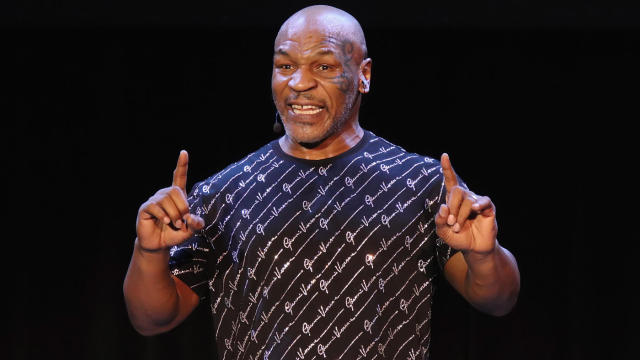


Joshua-Fury: Fury already favored, but what are the odds of it ever happening?

By Norm Frauenheim-

News of an agreement for two Anthony Joshua-Tyson Fury fights next year was quickly followed by bookies installing Fury as a slight favorite.

Maybe the headlines generated some business at the books. But the real odds are on whether these two fights will ever happen. Agreements are like a glass jaw. They get broken all the time.

Of course, Joshua and Fury agree that they would like to fight a couple of times.  Of course, Fury co-manager Frank Warren reportedly said Fury would be happy at a 50-50 split.

It’s easy to agree on half-a-share of nothing.

In effect, that’s what the Joshua-Fury news was this week. It was a tease, a diversion from all of the uncertainty that has boxing and virtually every other sport seeking to hit the restart button amid the ongoing pandemic.

There’s no way to predict when COVID-19 will vanish. And there’s no way to know what the world will look like after it does. If it’s business-as-usual in the post-pandemic era, then Joshua-Fury will move on to the astonishing money that appeared to be inevitable before anyone had ever heard of coronavirus.

But don’t bet on it.

The unemployment figures are too high and the lines at community food banks are too long to think there will be much pay-per-view money in anybody’s pocket for a while. The best bet is that they’ll be negotiating for a total purse that’s a lot smaller than anybody would have imagined just six months ago.

Besides, there’s a minefield full of things confronting each heavyweight before they could even re-visit their reported agreement in an effort to sign a contract, a real deal.

First, Fury, a 7-4 to 2-1 favorite over Joshua, is mandated to fight Deontay Wilder in a third bout, which has been postponed multiple times. There are reports of the second rematch going to Macao or Australia. Maybe, an option is the Raiders’ new stadium in Las Vegas with fans in seats configured by today’s social-distancing limits.

Then, there’s Joshua, who has a date with Bulgarian Kubrat Pulev. Like everything else, it’s been postponed repeatedly. Then, there’s talk of Joshua in another mandatory title defense against Ukrainian Oleksandr Usyk. No idea of when or where or even if. There are no plans these days. Just quarantines and curfews.

Even if Wilder-Fury 3 happens and Joshua faces Pulev, there is only more of the uncertainty that defines a pandemic thus far known only for deadly chaos. The singular power in Wilder’s right hand could score an upset.

Meanwhile, Pulev has little to lose and is tough, which means he’s dangerous for a Joshua who just hasn’t been the same fighter he was in a dramatic stoppage of Wladimir Klitschko in April 2017.

Joshua was curiously cautious in winning a decision over Andy Ruiz Jr. last December, about six months after Ruiz stunned him, scoring a seventh-round stoppage in New York.

Now, we see Joshua on crutches, his left knee in a brace for an injury he says he suffered while running in the woods.

He looks vulnerable.

Maybe that, too, is an illusion, another wager during a time when all bets are off.  


Tuesday’s tentative Return

By Bart Barry-

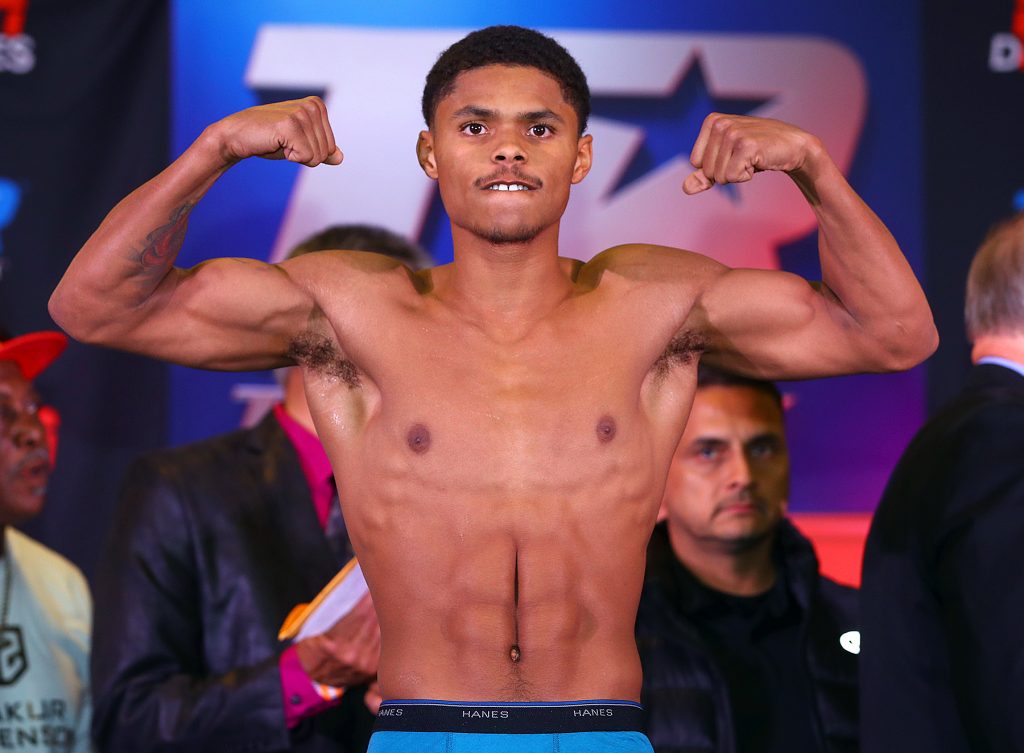
Tuesday evening on ESPN undefeated American featherweight titlist “Fearless” Shakur Stevenson will make a 10-round match with Puerto Rico’s oncedefeated Felix Caraballo in the first major boxing broadcast since COVID-19 lockdowns began in March.

And so we return, limping and heavy and rusty, to the confines of the familiar, a column that treats, for the first time in 13 weeks, a contemporary boxing event.  It’s an honest relief to pivot away from stakes-so-high subjects like global pandemics and national racism to a low-stakes happening like Tuesday’s ESPN fare.

In a recent interview Stevenson conceded he knew next to nothing about his opponent, and that, too, brought a helping of relief.  Me either, Shakur.  Tuesday’s broadcast is not about Caraballo or even so much about Stevenson, even if the unlikely happens and Caraballo upsets Fearless, but about boxing’s tentative return to a changed world.  In this sense it is reminiscent of Pacquaio-Clottey in 2010, when the venue was at least important as its participants and much more important than Joshua Clottey.

What will boxing look like in a sealed Las Vegas ballroom?  Not to empty ESPN’s telecast of suspense or anything, but it will bear a striking resemblance to every Friday-night appetizer card on fight weekends and the first six matches of every Saturday undercard in Las Vegas for the last 15 years, though with more-flattering acoustics.

Unsurprisingly promoter Top Rank has in Stevenson an apt protagonist for its return broadcast.  Stevenson is young and new enough to settle for a contender’s purse while bringing pedigree and charisma enough to convince what sports generalists believe whatever ESPN shoves in their gaping maw he is the second coming of [insert name here].  In Stevenson’s last match, an October unanimous-decision victory for a vacant featherweight title, one ESPN commentator said aloud that, in order for Joet Gonzalez to win the match he would need, in the championship rounds, a Chavez-Taylor turn of events, a tablesetter comparison asinine as it was typical.

Former HBO commentator Max Kellerman was the champion of such affiliate-marketing schemes.  He would liken some barely proven titlist to Rocky Marciano or Sugar Ray Leonard and then immediately walk it back with a clumsy “that’s not to say, Jim, that Triple G is in fact Muhammad Ali!” – knowing the associative sauce was ladled and would congeal on the minds of HBO viewers.  Last week it was a similar game of Stevenson stating he doesn’t like to compare himself to Floyd Mayweather, much the same way this column doesn’t like comparing itself to Don Quijote.

Wait, did Bart just compare himself to Cervantes?

No, of course not, he would never do so and can’t be blamed if you accidentally did.

Stevenson is right not to compare himself to Mayweather.  When he says he is better than Floyd was after 13 prizefights what he means is that he fights more like Money May than Floyd did.  True enough.  Stevenson is featherfisted when set beside Pretty Boy Floyd, who was more often compared to Mike Tyson than any shoulder-rolling ring general in the early days of his career, which is the largest reason Stevenson’s non-comparison to Floyd doesn’t bode particularly well for the lad.  Nobody was exclaiming about Floyd’s ring IQ or footwork that early in Mayweather’s career because he was knocking opponents stiff.  The defensive mastery Mayweather is now known for was a product of adjustments he made four weightclasses and many broken handbones later.

Top Rank knows all of this the same way it knew what it had in Mayweather after 13 prizefights.  One assumes Felix Caraballo is a proper fit for Stevenson’s style and will make both an entertaining match and a showcase victory for Stevenson.

But that’s not really of the moment, is it?  How many sports-deprived folks want Tuesday-night boxing and how feasible is something comparatively simple as a fightcard broadcast during a pandemic and how much financial sense does any of this make right now and what athletic-commission protocols feel heavyhanded – those are of the moment.  It’s already something we’re thinking, so let’s go ahead and state it: After more than a week of watching nationwide gatherings tens of thousands of citizens strong, how current to us do the COVID-19 protocols arranged and agreed-to a month ago now seem?

Top Rank apparently spent upwards of $25,000 on testing for Tuesday’s card, to ensure its antivirus venue is airtight.  Meanwhile, in just about every city from which Tuesday’s fighters hail, thousands of protesters gather in close quarters for hours at a time, shouting and singing and jostling and sweating and sneezing and coughing.  There is the matter of comparative viral load in open air, yes, and the larger matter of legal liability – there’s nobody to sue if you get sick demanding an end to the legal system – but Tuesday’s protocols feel already outdated.

The question is whether they feel outdated because citizens have ended quarantines and lockdowns with a fistraised fury, or because sport itself feels so frivolous at this moment.

There is a chance the United States of America is unraveling right now, completing its arc as an empire in record time, and if that’s the case, if that’s even a possibility, there can be no wonder why Walt Disney Company, owner of ESPN and an institution that has benefitted from American hegemony disproportionately more than most, would be so invested in a return to the old normal of sports-as-opiate.  The irony is lost on no one, no one in the world, the athletes Disney now needs to restore its old normal come almost exclusively from communities that have played the role of exploited far more often than beneficiary.

Bart Barry can be reached via Twitter @bartbarry


FOLLOW UFC 250 LIVE

Follow all the action as it happens as Amanda Nunes defends the UFC Featherweight title against Felicia Spencer.  Two big bantamweights featuring former champion Cody Garbrandt fights Raphael Assuncao and Aljamain Sterling battles Cory Sandhagen

The page will update automatically every 60 seconds…NO BROWSER REFRESH NEEDED

5 ROUNDS–UFC FEATHERWEIGHT TITLE–AMANDA NUNES (19-4) VS FELICIA SPENCER (8-1)
ROUND 1 2 3 4 5 TOTAL
NUNES* 10 10 10 10 10 50
SPENCER 9 9 9 9 9 45

Round 1 Right from Nunes..Right..Spencer swelling around right eye..Nunes takes Spencer down…Nunes lands a knee to the body..Elbow..Spencer cut on her forehead..Hard elbow by Nunes..Nunes outlanded Spencer 20-1.

Round 2 Right from Nunes…Jab from Spencer..Low kick from Nunes..Right from Spencer..Nunes takes down Spencer..Big elbows by Nunes..Spinning elbow..High kick from Spencer

Round 3 Knee from Spencer..Right From Nunes…good elbow…hard rights knocks Spencer’s mouthpiece out…Hard right to the body..Head kick..Right hand and uppercut..Front Kick..Low kick..jab ..right hand

Round 4 Hard right from Nunes..Takedown..Lead elbow..Spinningback kick to the body..Leg Kick..2 hard rights..Right hand gets Spencer down..Choke attempt…Spencer with a hematoma on forehead…108-31 strikes for Nunes

Round 5 Left from Nunes

50-44; 50-44 AND 50-45 FOR NUNES

3 ROUNDS–Bantamweights–Rapahel Assuncao (27-7) vs Cody Garbrandt (11-3)
ROUND 1 2 3 4 5 TOTAL
Assuncao 9 9
Garbrandt 10 10

Round 1 Redness on left leg of Assuncao..Straight right from Garbrandt..Counter from Assuncao..Left from Garbrandt

Round 2 Kick to head by Garbrandt..Right from Assuncao..Clean right from Garbrandt

3 Rounds–Bantamweights–Aljamain Sterling (18-3) vs Cory Sandhagen (12-1)
ROUND 1 2 3 4 5 TOTAL
Sterling
Sandhagen

3 Rounds–Welterweights–Neil Magny (22-7) vs Anthony Rocco Martin (17-5)
ROUND 1 2 3 4 5 TOTAL
Magny* 10 9 10 29
Martin 9 10 9 28

Round 1 Martin gets the back of Magny..Right from Martin..Good low kick by Magny..Jab..Magney outlanded Martin 20-9
Round 2 Good right from Martin..Magny seems a little shaken…Martin takes Magny down..Magny lands a right..Exchanging low kicks…Magney up 47-22 in Strikes
Round 3 Right from Magny..Nice right..Good right..Big right from Martin…87-39 in Strikes for Magny

30-27 twice and 29-28 for Neil Magny

3 Rounds–Bantamweights–Eddie Wineland (24-13-1) vs Sean O’Malley (11-0)
ROUND 1 2 3 4 5 TOTAL
Wineland
O’Malley* KO

Round 1 O MALLEY LANDS A BOOMING RIGHT TO THE JAW AND WINELAND IS KNOCKED OUT


First Round: Top Rank launches its post-pandemic plan

By Norm Frauenheim-

Top Rank is poised to hit the re-set button next week, mid-week, with live telecasts, the first in about three months, which is only a short season on a calendar that has been stripped of its ordinary reliability by the extraordinary.

Spring turns to summer no matter what, but it’s hard to know whether a long-awaited succession of opening bells continues to ring into autumn and winter with something that sounds like business-as-usual.

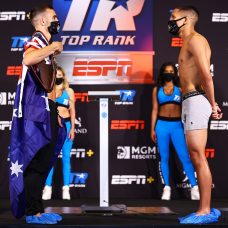
We’ll begin to find out, first Tuesday with featherweight champion Shakur Stevenson (13-0, 7 KOs) in a 130-pound bout against Puerto Rican Felix Caraballo (13-1-2, 9 KOs) and again Thursday with former 122-pound champion Jessie Magdaleno (27-1, 18 KOs) against Dominican Yenifel Vicente (36-4-2, 28 KOs in a featherweight bout, both on ESPN and both in a ballroom at Las Vegas’ MGM Grand Convention Center.

They are ordinary fights anytime other than now. The pandemic makes them extraordinary for what is known and unknown. Empty seats are the only sure thing.

Fans won’t be there.

Media won’t be.

Maybe, COVID-19 won’t be, either. That’s the idea, yet that’s all it is in what is essentially a couple of test runs in boxing’s first concerted attempt since the ring lights went dark in late March.

“This is something that nobody, at least from our end, has experience with,’’ Top Rank’s Bob Arum said Thursday during a conference call that included Stevenson and Caraballo. “It’s really been a work in progress, and it continues to be a work in progress.

“Imagine, as guys come into Vegas, they got to go into what is a bubble.

They’ve got to be escorted to a place where they can shake out, train. There’s a place to eat. We have a special dining room set up in the convention center. All of this is something we’re not used to. We’re not starting out with title fights. But maybe in a few weeks, we’ll start doing some title fights.

“There are issues with the organization. So, it’s not easy. We’re doing it one step at a time.’’

Arum has divided the comeback into phases, much like state governments are doing with the plan to re-open restaurants and businesses. This week, Phase One, is just an attempt to see what works. What doesn’t.

Phase Two would include a mix of second-tier title fights and perhaps a measured return of ringside media. Along the way, fans would be brought back, first in limited seating and then until all the seats can be filled without fear of a widespread infection of the dangerous virus.

Underlining it all is testing. Test before training. Before dinner. Test, test, test at all times. Arum estimated testing for each card costs more than $25,000.

“Just for testing,’’ Arum said. “Plus, the rooms, special security, the meals. This is a very, very large undertaking. But, obviously, we’ve get to get it done. We’ll probably be doing this for three months – June, then July and probably August.

“Hopefully by September, we’ll get back to doing events with spectators in a limited capacity.

“Then, hopefully by the end of the year, we’ll be doing events with virtually full capacity.’’

If it all works, then maybe – just maybe – boxing will be back to what it was by year’s end or early 2021. That would mean Tyson Fury-Deontay Wilder 3 and perhaps a third fight between Canelo Alvarez and Gennadiy Golovkin. All kinds of intriguing fights have been speculated. Terence Crawford-Manny Pacquiao has even been mentioned.

But it all depends on what begins to happen next Tuesday and Thursday. It is the logistical origin of a potential template that could guide a sport as old as any back to its future or send it down a path to its place in a post-pandemic era.


An inexpert column by someone who didn’t even wish to write it

By Bart Barry-

SAN ANTONIO – Onto the kindling of this city’s massive unemployment and bursting foodbank lines and COVID-19 fear and socialdistancing alienation dropped last week the match of yet more racist police violence, making a conflagration inevitable.  Except it wasn’t.  It didn’t happen.  Saturday evening 5,000 or so residents marched civilly to SAPD Headquarters in a legal reminder to those who police us they do so only with our permission.

Many hours later a tiny fraction of this city’s hopeless and misdirected smashed some windows and threatened a mall and shouted insults at a coterie of overarmed loons protecting the Alamo – hallowed grounds so sacred they’re shared by Ripley’s Haunted Adventure, Tomb Rider 3D and The Amazing Mirror Maze – and frightened lawenforcement officials responded as they do, with projectiles, though thankfully projectiles of impermanent effect.

This column will feign no expertise about any subject below this line.  At age 46 I’m too young to be ideological as a boomer and too old to be ideological as a millennial.  I’m part of the comparatively tiny and robustly pragmatic generation sandwiched betwixt the ideologues.  Part of a generation that, at least last Friday, best autoidentified as Killer Mike’s – for who came close to giving a better speech?

I don’t want to be here, either, this week, writing about a subject I’ve avoided best as I can since the last L.A. riots happened a month before my highschool graduation.  It felt genuine historic then and moreso that November when George H. W. Bush became the only incumbent American president to lose an election in the last 40 years.  Then as now politicians promised reforms and pleaded for their donors’ financial interests by telling us that anything but peaceful and preferably silent acts of protest undermined whatever it was they thought we were trying to tell them.

The system prevailed; those who’d given voice to the rage that happened 28 years ago got repurposed – Ice Cube starred in Are We There Yet? and Dr. Dre covered his debut album with a cannabis leaf and Ice-T began his career as a television cop and one half of Public Enemy made Flavor of Love – and things got quieter and sillier but decidedly not better.

This all feels insincere sanitized, so let’s stop it.

I am not friends with any cops or politicians.  Not one peer I admired in highschool or college went on to be a cop or a politician.  Frankly the people who populate both ranks feel weird to me.  Cops my age feel like lonewolf losers, socially awkward cowards who fantasized of being soldiers but lacked some essential quality, tangible or otherwise; politicians my age, of which there are comparatively and blessedly few, feel like failed salespeople who hadn’t the chops to play in the free market, and stoke grievances for votes instead.

Most days I look at millennials and envy their ideological bent, wondering what it must feel like to care so much about so many different things, but not last week, not this week.  It’s simply too raw and painful to feel that much.

Last week I thought of the kids who in 2010 hit heavybags at San Fernando Gym, a mile up Santa Rosa from SAPD Headquarters, where they are now, as legal adults, and if life kept them safer here than in another city like Minneapolis, an 18-hour drive up I-35, a city my blissful ignorance used to equate with only icehockey players and Lake Superior, certainly not a racist police force and buildings aflame.

One reason I have hope our kids are safer here than other American cities is our police force’s demographics.  We are a majority-Latinx city with a majority-Latinx police force.  Whites occupy a disproportionate share of our sworn officers, yes, 42-percent the police force while 25-percent the citizenship, but they are still the minority of police here.  And one thing that seems essential in all this is a populace policed by its own, not by an occupying army that commutes daily from a suburban fortress, dons anonymizing equipment, collects weapons of war and patrols our streets in attack vehicles.

Now is the place, I know, one is supposed to walk half this back in the name of balance, talking about all the good cops – but as mentioned above, I don’t know any.  Among my friends over the years I’ve counted project managers and a porn star, a meth dealer and prizefighters, golf pros and guitarists, a Mexican machinist and a Puerto Rican barber, Catholic nuns and Linux DBAs, a coke addict and firefighters, prostitutes and Marines, a Lebanese restauranteur and an immigration lawyer, and as many corporate VPs as writers and painters – but no, not one cop.

None has yet been cool enough.  I feel uneasy round them.  They feel like a dangerous combination of barely competent and violence-prone, dull knives, the sort of men who do things badly and blame others – the worse they do the more they project their selfdisgust on bystanders.  Too, I aspire to be an antiracist, though I’m no angel, and I doubt police work, as currently taught, can be compatible with antiracism.

As I sat about procrastinating and dreading this column I kept returning Saturday to a piece written by Joel Garreau in September 2005, a couple weeks after Hurricane Katrina destroyed parts of Louisiana.  Ten days was time enough for politicians to come out of hiding and start their orgy of promisemaking.  They would shower money and resources and strength and pride and, well, you know the spiel, until all was better than ever.

But Garreau knew it was nonsense and began his Washington Post piece thusly: “The city of New Orleans is not going to be rebuilt.”  He went on to explain why: “Sentiment won’t guide the insurance industry. When it looks at the devastation here, it will evaluate the risk from toxicity that has leached into the soil, and has penetrated the frames of the buildings, before it decides to write new insurance – without which nothing can be rebuilt.”

Mixing this idea with Killer Mike’s, I wonder if robust, insurance-mandated citizen-review boards aren’t a way for cities to find their ways partially out of this morass; commercial realestate insurers have long looked at climate science before underwriting construction projects and after what just happened in Minneapolis they’ll have to consider police forces unaccountable to their communities dangerous as natural disasters.  More predictable too.  I lack Killer Mike’s decency and optimism, truthfully, but if there’s a freemarket solution to this problem – and probably there is not – it may be found, oddly enough, in insurance underwriting.

Bart Barry can be reached via Twitter @bartbarry


Forbes 100: It’s a different list with an expensive warning

By Norm Frauenheim

The Forbes list used to belong to Floyd Mayweather Jr., who became better known for dominating the money ranks than the pound-for-pound ratings.

Dollars buy crossover fans and Mayweather seemed to have an endless supply. The cash filled his suitcases and the minds of young fighters, who wanted to spend like him even if they couldn’t fight like him.

The biggest reward for the smallest risk, a ratio and a role model, became as important as any combination of punches. No matter what the sport, Mayweather employed it as effectively as anyone ever has.

But the ratio is vanishing in a pandemic for which there has been no apparent immunity. The risk is still there. Boxing without risk is aerobics. Have a nice workout. But the reward is eroding at a rate that will soon force fighters to think twice about that inherent risk.

The latest Forbes list of the world’s highest-paid athletes was released about a week ago. It includes four boxers – Tyson Fury at No. 11 with $57 million, Anthony Joshua at No. 19 with $47 million, Deontay Wilder at No. 20 with $46.5 million and Canelo Alvarez at No. 30 with $37 million.

At the top, Roger Federer, who is the first tennis player to ever be ranked No. 1 with $106.3 million in earnings and endorsements for the period between June 1, 2019 and June 1, 2020. He won’t be standing in line at any food banks before his next match.

Nevertheless, the list is a red flag, an early earning sign of financial trouble awaiting all sports and especially boxing, which includes few guarantees, other than stitches and scars.

Start at the top. Federer is there with income less than half of what Mayweather earned during days when he was No. 1 often enough to be named for the list. In 2018, Forbes Mayweather led the way with $285 million, most of it from his all-reward and no-risk dance with Conor McGregor, a mixed-martial arts performer then posing as a boxer.

Two to three years later, the money looks to be vanishing faster than a full-time job. Top-to-bottom, the pay-for-play list for the top 100 is down nine percent from what it was a year ago. Cancellations started in late February and never stopped until the entire sports landscape went dark in April.  Forbes predicts a steeper decline in its next list. No play, no pay.

https://www.forbes.com/athletes/#696328ea55ae

There are signs that some sports will return this summer in an abbreviated format. The NBA and NHL are talking about schedules at single sites in a format that would essentially be a payoff schedule. For now, baseball is locked into talks about money. Thus far, players are balking at proposed pay cuts.

Boxers aren’t that lucky. During the pandemic, they aren’t collecting any pay anyway. They are independent entrepreneurs. They have to fight to get paid, contract-to-contract. Boxing is set to hit the re-start button on June 9 in a bout featuring emerging featherweight champion Shakur Stevenson against Felix Caraballo in Las Vegas. Further bouts are scheduled throughout June and July.

But, essentially, they will be studio shows. In an effort to safeguard fighters and officials from catching the lethal coronavirus, there will be no fans. No ringside media. The bouts will be televised by ESPN, which is desperate for live content.

Yet, the absence of a live crowd limits the purse. That might be OK for young boxers still fighting to make their name. But for the established star, there’s no chance at earning the big money that was a hallmark of the Mayweather era and its immediate aftermath during pre-pandemic days.

Without a live gate, it’s hard to foresee Fury-Wilder 3 or a third Canelo Alvarez-Gennadiy Golovkin fight any time soon. How about Terence Crawford-versus-Errol Spence Jr.? Not this year, if ever.

No live gate also looms as a potential complication for Manny Pacquiao, the Filipino Senator who had been hoping to fight sometime this summer.

Pacquiao had been fighting for about $20-million. That’s a big number. He’ll be 42 on Dec. 17. That’s a short window for a fighter near retirement.

A solution? There might not be one during a stretch when the money will be short and Forbes forgettable.


Two rounds on the heavybag hearing Barry White, May 2011

By Bart Barry-

beeenk … beeenk … beeenk

Get it swinging stiff it arm it bring the hook hard sand unsoftened heaviness heaviness dig the hook “Carve you up” pat the jab pat the left put the right out touch it get the back heel up touch it bring the left shoulder slam the back heel no no time it slam the back heel put the right hand out there slowmotion if you have to just tap it ignore them ignore them now swing the left round swing the

Slam the back heel

Slam the back heel

snap

there it is there there time it time it now touch put the right out to cock the shoulder bring the front hip round only a touch tap the bag move the elbow move his elbow now bring the hook no recock all hip dig it dig it in “Give it up, giving it up – mmmmhmm” front foot out slide round slide round again victory lap no one cares right foot left toe left foot jab it out jab jab knock with the jab move him back stiffarm knockknock looks like punches, Iceman Adams, stiff arm knockknock hook low clumsy bad knockknock down uncocked have to fix the right the upsnap have to fix fucking Reyes gloves get closer smell paint sweat ignore the black go to the red nobody up in the black dig in the red dig in the red the heavy sand unchastened “What do you want now, girl?” snap the head round the left follow the head spin another lap where’s the timer hot hot idiot heater second round no bullshit, kid, first round slap it out put the bag back with the jab use the archer try it two-step back shortstep leave the lead fist move with the shortstep

snap

Better again again

Better better body it

beeenk …

shoulder it make it swing keep steady don’t flurry better than that shoulder it swinging case anyone sees it make it swing body it tire it “Put your weight on it” dig the hook dig it again knucklescuffer don’t drag stab stab the hook spin out don’t pander don’t flash same rate pace pace cruise a little heat keep the legs be aware beware reminder re-mind-er jab out finish jabbing jab jab

beeenk … beeenk … beeenk

dent admire the dent, yes.

“Safe Hands, man, what’s up!”

“Just over here on my beautification grind, eh.”

“Your what?”

“You see Benjamín on the uppercut bag?”

“He didn’t hit himself, did he?”

“He was showing those two Haitian kids – the brothers? – how to rip the right uppercut as a lead –”

“You’re bullshitting –”

“I’m kidding –”

“I was going to say –”

“He looks much better, man, I’m not kidding.”

“What did you tell him?”

“He asked how to get a guy to throw the cross so he could impale him on that new uppercut –”

“Oh I gotta hear this –”

“Told him to hang the jab to draw the cross.”

“You’re gonna get him killed –”

“Not in here, not with eighteen-ounce gloves.”

“You find the eighteen-ouncers?”

“Bought a new pair.”

“Safest hands in the gym.”

“Working on The Margarito today –”

“Not The Marquez?”

 beeenk … beeenk … beeenk

“A la chamba, ya.”

Stiffarm it make it swing damn heat is an envelope tastes salty good good use the jab move the back foot cmon over mon over follow the jab synchronize the back foot righthandrightfoot one move together one now the left

Everything the left everything everything the left everything everything

bump

dance away spin reset light reset jab jab take a lap jabbing ignore them ignore them nobody knows “This is ours, all ours, nobody’s but ours” again again follow the jab follow the right with the right one now dig dig dig

bump

slap it right palm reset back foot jab jab who’s in the ring who jumps rope in the ring? damn this heat damn this heat laces loosening front shoe laces loosening they’ll hold no excuse no permission slip, dude, onetwothree get that back heel up higher bring the hook bring the hip not the hook hit the bag with it hipbone to bag it now the left now

snap

proper rest the forehead on the bag add some weight to it put some weight on heavybag adds weight to punches make it heavier “You’re going to get it now, no more games, no more playing” left left Foreman left left make a grapefruit dig it out left right just cocks right shoulder just cock it left left break your hand break the sand let the bitches hit waterbags sand makes the man dig dig nobody hits this hard pretty bitches nobody dents this bag my bag nobody “Who else does this to you, puts it on you?” step out push the jab knockknock no laps throw the cross back hip comes first hit the one-iron upsnap damnit upsnap anemic

beeenk …

dig the hook rather hook hook circle breathe take a lap breathe shut your mouth nosebreathe do what you do body it weight it shoulder forearm shimmy shimmy let it swing past circle it take a lap now catch it left

snap

proper again “You’re not satisfied till I am” nothing else be done spin slap spin playful playful watch it swing past now catch it square right “Who else, tell me, who else?” get lighter get lighter never see a man this heavy so light back foot tap the toe resettle but light light front toe barely touches barely “Not the best; the only” finish lefthook finish better off finish stride off.

beeenk … beeenk … beeenk

Bart Barry can be reached via Twitter @bartbarry


Money or History: Pandemic pushes Canelo to the edge of a potential dilemma

By Norm Frauenheim-

Canelo Alvarez is fighting for history. At least, he was, pre-pandemic, last November in his light-heavyweight stoppage of Sergey Kovalev. But history, like profit, has been suspended for who-knows-how-long because of COVID-19.

Alvarez is lucky. He was a wealthy man before the virus appeared and spread its deadly appendages like a weapon of mass destruction. Over just three fights in his rich DAZN deal, he earned $97.5 million, more than enough to pay for a lifetime of bills and a few Ferraris.

Canelo doesn’t have to fight, unlike most in the prize-fighting profession who are praying for some sort of paycheck in studio shows that figure to begin next month. But if money isn’t a motivation anymore, Canelo’s immense pride is. That’s why the reigning middleweight champion talked – and talked — about history before an 11th-round knockout of Kovalev Nov. 2 at Las Vegas’ MGM Grand in his first and only fight at 175 pounds.

For Alvarez, history isn’t complicated. It’s simple. Singular. Julio Cesar Chavez is the defining face of Mexico’s fabled boxing history. He was when Canelo was born in 1990. He has been ever since.

In winning a title in a fourth weight class, Canelo had begun his monumental pursuit of supplanting Chavez. His run at history was underway. Now, a pandemic-altered landscape includes a potential dilemma for Canelo and DAZN.

History or profit?

Money or legacy?

Canelo’s claim on legacy is hard to make, much less sustain, when he’s not fighting. Inactivity opens the way to a skepticism that’s hard to counter. Think of LeBron James in his great debate over who’s The GOAT: James or Jordan?  James’ only argument is to play, just play. Yet just as the pandemic shuts down the NBA, the ESPN documentary, The Last Dance, reminds us just how good Michael Jordan was. Without another season and another title run, James has no way to further his claim on being basketball’s best ever.

James has to play.

Canelo has to fight.

Until then, it’s hard to argue with legendary trainer Nacho Beristain, who questions whether Canelo will be remembered as Mexico’s best ever.

“I think it is going to be a little difficult for him to end up being one of the best fighters to come out of Mexico,’’ Beristain told El Boxcast. “He is a good fighter, no doubt about that. I particularly feel how he boxes is attractive. But for him to be the best pound-for-pound, he’s not and he’s not going to be.

“I think they are intelligently evading some middleweight fighters who may harm him and are taking care of his career because they are making a lot of money. To a certain extent he is good, but I think he is not the best.”

The money is a staggering complication, the proverbial devil in the looming dilemma.

It’s easy to say that making history is the goal when you’re making $32.5 million-a-fight. That has been Canelo’s guarantee for each fight in the landmark, $365-million contract he signed with DAZN in 2018. He beat Rocky Fielding, Danny Jacobs and Kovalev in the first three bouts of an 11-fight deal. They were solid victories, but forgettable on a historical scale. Canelo, a former junior-middleweight champion, won a fringe 168-pound title against Fielding, retained his middleweight supremacy against Jacobs and won a fourth division title against a fading fighter, yet a known name in Kovalev.

Short-term, it did not answer questions still lingering in the wake of two fights with Gennadiy Golovkin. There was a draw and then a narrow scorecard victory for Canelo, who won a majority decision in the rematch. History and DAZN demand something definitive. But the world is operating on a different a timetable these days. Tick-tock, we’re all on the pandemic clock. There was talk about a third GGG-Canelo fight in September. Then, there was talk of interim bouts — Canelo-versus-Billy Joe Saunders and GGG-versus-Kamil Szeremeta before the final leg in a trilogy.

“We realistically want two fights this year,” Canelo trainer Eddy Reynoso told Box Azteca. “We couldn’t fight in May, so we are looking at September and December. We’re talking about [opponents] like Billy Joe Saunders.

“There’s also Caleb Plant and the WBC world titleholder at 168 pounds [David Benavidez]. There are several [options] … Golovkin could be the fight for December. His people have already said that he doesn’t want to fight Canelo until after the [Kamil Szeremeta] fight.”

When fights were cancelled, DAZN lost subscribers. Can the streaming network even afford to pay Canelo his minimum anymore? Will former subscribers renew after months of lost wages? Would Canelo be willing to make less money while he tries to make history?

Only the virus knows.


Highschool fourballers, German vampires and vanishing defiance

By Bart Barry-

SAN ANTONIO – A curious scenario now plays in this city re COVID-19.  Told they can come out their residences and resume consumption at the previous pace, told they simply must resume consumership to save Texas business interests, er, liberty, residents are noticeably less inclined to do so than they were a month ago when it was verboten.

As I sit at the same window I’ve now sat every week at the same time since March, I’m able to report traffic isn’t 50-percent what it was during lockdown.  This be the fruit of unintended consequences.  When there was an authority remanding South Texans to their homes there was an object for their natural, childlike defiance; now that Lone Star government has gone proudly missing South Texans realize they’ve been abandoned to their proper fates, the cavalry ain’t coming for or against them, and much of April’s animating bravery has vanished.

Most thinking folks have spent this pandemic imagining the sundry ways life might be worse when it resumes, officially or otherwise, but few of us have considered how it might be better.  We’ll not get the full resetting many have wanted for a decade or two, life never is so symmetrical, but we’re already getting a partial resetting.

Airfare prices, for one, are undergoing a resetting not seen before.  No, they’re not going down the way every experience informed you they should, are they?  That’s because there’s no demand to compete for; most of us wouldn’t board a Southwest flight for free right now, so why drop the fare from $105 to $5?

A similar thing is about to play-out in malls across the fruited plain: Businesses expect loyal Americans to be so thrilled to have their inalienable rights to inessential and conspicuous consumption restored they’ll gladly pay a 30-percent markup for what heroic decisions retail CEOs have made on their employees’ behalves; meanwhile every American risking her health and familiars’ lives to go shopping expects Black Friday.  What happens, in other words, when supply and demand disappear together?

That question underlies much of the hesitancy you see in professional sports’ reluctance to return.  Oh sure, there are all the concerns they express publicly and often.  But there’s one longerterm concern they don’t express.  What happens if they turn the cameras back on and there’s not the pent-up interest they assumed in their budget?  The longer we adapt to a life without sports the fuller the resetting when they come back.  Sports gamblers, we learned last week from John Cassidy, have moved zealously to the stock market, a place where the Federal Reserve now backstops their wagers effectively as David Stern used to do with NBA Playoff games.

Ten years ago there were 100,000 boxing junkies who purchased every pay-per-view no matter how rank.  Are there still?  It sure wouldn’t be hard to find out if any promoter wanted to.

This week MUBI dropped in its curated queue the 1922 German silent film Nosferatu, and I watched it on a lark, the way you wouldn’t seek-out a history of Ecuadorian cacao cultivation but if one happened to be on the shelf of your Airbnb in Quito, why . . . I didn’t not-enjoy the “Symphony of Horror” in part because of the way I found myself preprepared as an audience member.  I didn’t expect action or explosions or color or dialogue; on its own terms it was fine once I got past an expectation Chaplin’s tramp would appear in each next scene.

Sunday I watched 30 minutes of TaylorMade Driving Relief on NBC and didn’t enjoy it.  Stripped of their accoutrements the best golfers in the world look like highschool fourball players on a Wednesday afternoon.  Much of the reason we believed what they did was essential and special was because thousands of our fellow men were behind them in every shot jostling for a chance to be close to them.  That conferred an authority no amount of commentary can – and no, none of the commentators considered shutting up long enough to allow the players’ undoubtedly insipid banter be heard.  Even money, that oldest authority-conferring trick in America, failed to land: When each month brings news of another $1 trillion in government relief that does little to relieve, how much of a fuck does anyone give if Rory or Rickie putts for $50,000?

If you’re going to look like TikTok you need teenage spontaneity, not fiftysomething Mike Tirico laughing over Bill Murray’s jokes before they’re told.  And yet, it dawns on me as I peruse YouTube today’s kids mightn’t be so good at improvisation as their predecessors, and there’s an element of improvisation required in broadcasting even something monochrome predictable as professional golf.

But the ongoing resetting requires much reimagining.  Every single item in the value stream of professional sports, right down to something insignificant as this column, must be reevaluated.  While the networks and teams and promoters and agents fumble about doing this, iterating their ways to a new normal, they need to start giving their product away and keep giving it away long after brave fans consider returning to their arenas.  If that means men in costumes playing children’s games no longer get 2,000 times the salary of a U.S. soldier, why, that’s an adaptation we’ll all have to stomach.

Bart Barry can be reached via Twitter @bartbarry
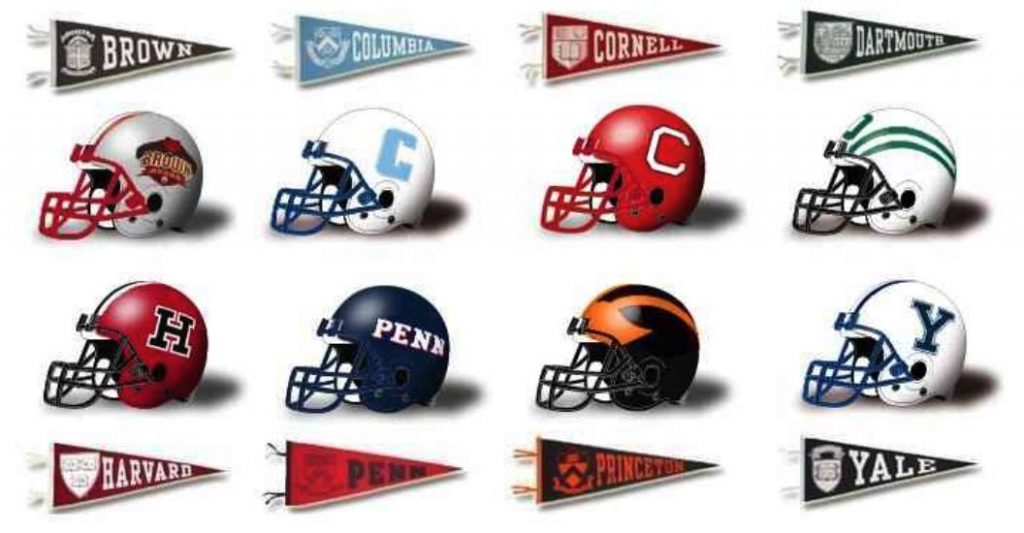


What Comeback? Mike Tyson has never left the stage

By Norm Frauenheim

In case you haven’t heard or seen, Mike Tyson is coming back. That’s news, of course. But it’s strange to call his plans a comeback. When did he ever leave? He’s always in the public imagination. In deed. In name. In words. And now in video.

Video of Tyson in the gym went viral during a time when a real virus has kept so many at home with nothing much to do other than fantasize. Yeah, It’s Mike all right, waking up the past with echoes of his crazy power.

It’s fun to watch. It’s even fun to wonder.

Still, I’m not sure Tyson can still fight at 53 years old. Precedent and caution say no. But Tyson is nothing if not unprecedented.

Above all, the power in his ability to fascinate and entertain remains undiminished. Forgettable he’ll never be. At one level, it’s astonishing how much attention he can still generate. The internet is on fire with talk of him fighting Evander Holyfield.

Forget that it’s supposed to be a four-rounder for charity. Headlines, driven by runaway imaginations, frame it as the third fight in a rivalry with more imagined sequels than just another trilogy.

The hunt for the last piece of Holyfield’s ear from the 1997 Bite Fight might already be underway. In perhaps an apocryphal story, it was found on the canvas by maintenance, placed on a cocktail napkin and then lost in a cab during a wild ride from the MGM Grand to a Las Vegas emergency room after Tyson bit it off in the third round.  Maybe, the National Geographic Channel can find it preserved in gold at a pawn store or buried in liquid nitrogen in a cryonics coffin beneath the Welcome to Fabulous Las Vegas sign.

It’s a story that will never go away. Then again, neither will Tyson. In a twist on an old line, you just can’t make him up. His craziness is a jagged collection of contradictions, yet genuinely compelling.

To this day, I’ll always remember him from a moment a couple of decades ago when he was living and training at the old Central Boxing Gym in downtown Phoenix. It was July. In the Arizona desert, only hell is hotter and not by much. Tyson was in the gym. The doors were wide open. A few box fans provided the only AC. Tyson was happy. I was sweating.

Turns out, it was a day when Tyson just wanted to talk. There were pigeons and food and philosophy and history and music. He talked and talked some more. Finally, I told him I had to leave. He follows me out of the gym and to my truck. I open the truck’s door and put my right foot inside the cab. Suddenly, I feel a hand as heavy as an anvil land on my left elbow.

Whoa.

Remember, Mike wanted to talk.

So, I listened.

I’ll never forget the power, running from his hand through my arm, like a force of nature. With one yank, he could have ripped my arm from my shoulder. I stood there, right foot in the truck and left foot on the street, planted by that one hand.

He was frightening.

He was fascinating.

He was everything then that he is today.

Even on video, that compelling mix is evident. People watch, still watch, in part because Tyson’s extremes can’t be faked. Genuine is an increasingly rare commodity in our fake-news world. In Tyson, it’s still there, abundant as it is vulnerable

Truth is, I’d rather Tyson not fight at all. There’s too much risk for him and the 57-year old Holyfield. I’m not convinced either will ever answer another opening bell anyway. Mind and name recognition might withstand the cumulative damage from blows over more than half a century. But the body will not.

Injuries in training are a real risk, perhaps one that will be enough to cancel plans to fight again. We don’t need to see a Tyson comeback. He’s not going anywhere anyway.   


An interview with the quarantined boxing writer by the quarantined boxing writer

By Bart Barry-

Editor’s note: Since 2016 we’ve allowed Bart Barry to interview himself about the state of the craft once annually when he is particularly bereft of ideas for his weekly column.  Each week since March 23 we’ve expected him to request a self-interview opportunity (yes, he uses a proper hyphen when he emails).  This week it came.

BB: We only get to go to this well once every –

BB: Let’s not begin with a cliché, kid.

BB: Surprised it took this long to revert to form?

BB: A little, yes, but you do realize, right, there’s no need to use prepositions when we interview ourselves?

BB: Surprised it took long revert form?

BB: Much better.  The prepositions are for others’ clarity; when we picture a glass of TexaCola we never need of in the picture.

BB: Frankly –

BB: It’s a glass with TexaCola, obviously, not a glass constructed of cola.

BB: Be neither tedious nor insipid, lad.

BB: I loved last week’s column.  I love Kevin Barry.  He’s the writer who comes nearest the ideal of writing in the mind’s proper code.

BB: An Irishman, naturally.

BB:  Land of James Joyce, but oh so much more enjoyable.

BB: Twas a legendary matchmaker who set the hands on the Joyce clock for us –

BB: Denver weighin –

BB: Sweatbox firehazard –

BB: “You know anyone who’s ever enjoyed Ulysses?”

BB: Literature for people who enjoy feeling smart more than reading.

BB: What’s this, then?

BB: Easy to write.

BB: Does that inoculate it?

BB: One hopes.  Anything th’t can be written fastly and funlike can’t be too Joycean.

BB: How’s quarantine, son?

BB: Lovely, if I’m honest.  Haven’t read so much in 20 years.

BB: Tell me about American energy.

BB: I love that we can use italics here instead of quotes because I can’t make myself put the punctuation mark inside the quotation marks.  It looks all wrong to me.  Looks fine in dialogue; looks awful elsewhere.  I assume it’s a vestigial ask from some 18th-century typesetter.

BB: Tell me about “American energy”.

BB: Peggy Noonan used that term recently in a column, or quoted someone who did, and it struck me like a perfect euphemism for desperate anxiety.  Even in its context – a man whose wife won’t let him quarantine peacefully on his La-Z-Boy but instead remands him to Home Depot – it reads like desperate anxiety.

BB: One man’s desperate anxiety be another man’s entrepreneurial zeal.

BB: Lockdowns have shown us what’s what.  Revenge of the unenergetic, as it were.  Good to see the hyperactive boys, be they 15 or 75, trying to sit still, and they can’t.  All that hyperbolic bullshit about “hustle” we’ve been hearing from them for centuries –

BB: Turns out it wasn’t ever the choice they credited themselves with making.

BB: Monkeys moving wood.

BB: “You don’t think I’d like to just sit around all day on my couch doing nothing?”

BB: Turns out, dude, you can’t sit on your couch in your own home in the presence of your own spouse and offspring for a full hour, can you?

BB: Sounds like someone’s dad yelled at him for not sprinting from the dugout each inning.

BB: You miss him?

BB: Nope.

BB: What about her?

BB: This is the second Mother’s Day since her passing – though there’s not been the void we were raised to expect.  I miss none of the zaniness, and all her best qualities are somewhere in her daughters already, so . . .

BB: Whither our beloved sport?

BB: I credit it with staying for the most part quiet, with recognizing there’s no optimization right now, and thus no reason for selfimprovement or willful change.

BB: Boxing ain’t been on its grind.

BB: All the better.

BB: Tis a bit of a surprise.  One’d’ve thought callouts and socialmedia threats’d’ve been at record highs, right?

BB: Bullied into silence, a little, methinks.  When they show us Ali marathons or Tyson clips or items from the Pacquiao and Mayweather vaults, it quiets them, even the dummies.

BB: What does the return look like?

BB: Ask someone knowledgeable.

BB: Right.

BB: I’m not sure I’ve the imagination for that even if I thought about it in selfinterested terms for a month, and I damn sure have not.

BB: Empty arenas?

BB: We’re well-practiced at that.  Even our best ideas –

BB: The DAZN tournament, the one with the –

BB: The one Usyk won –

BB: And Callum Smith and Inoue –

BB: World Boxing Super Series!

BB: There you go.

BB: Even that had its prelims go off in what were effectively cavernous television studios.  Just bring them inside the studio.  Surprised Top Rank hasn’t built that yet.

BB: Or PBC.  It’s what they’ve been after for years.

BB: Do you miss traveling?

BB: Not nearly so much as previous years’ expenses predicted.

BB: I don’t miss any of it.  I didn’t prepare for this, but I’m well-prepared somehow.  The music stopped, and I like the chair I find myself in.

BB: Tell them a secret.

BB: We didn’t expect to be doing this, still, in 2020.  There was a final interview with the boxing writer by the boxing writer tacitly planned for last December then the new job fell through and with it the relocation and a justification to end all this, and here we are, sans regret.

BB: And still kicking long enough to write a review of Carlos’ book and Jimmy’s.

BB: I’ve not had a regret since puberty, but in November I felt a twinge of disappointment I’d not have the column when those guys’ books got published.

BB: Reading takes care of its own.

BB: Every experience in every life is equal parts impossible and inevitable.

Bart Barry can be reached via Twitter @bartbarry
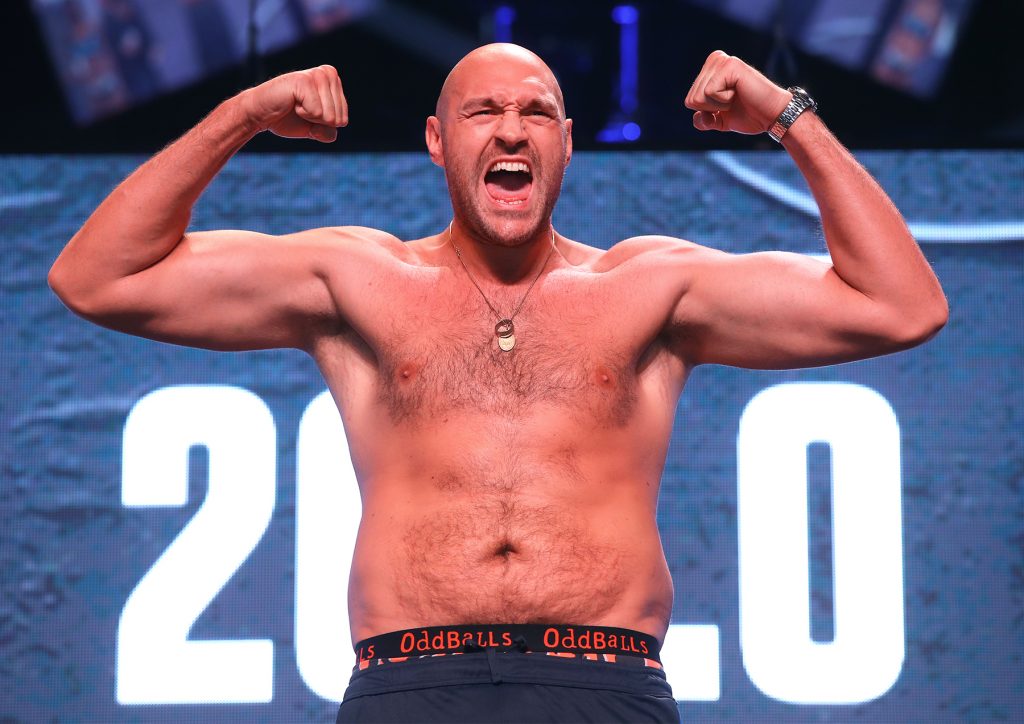


FOLLOW UFC 249 LIVE

Follow all the action as it happens as Tony Ferguson and Justin Gaethje battle for the UFC Interim Lightweight title.  The Prelims kick off at 6 PM ET with main card beginning at 10 PM and the main card will also have Henry Cejudo defending the Bantamweight title against former champion Dominick Cruz

The page will update automatically every 60 seconds…NO BROWSER REFRESH NEEDED

5 ROUNDS–INTERIM LIGHTWEIGHT TITLE–TONY FERGUSON (26-3) VS JUSTIN GAETHJE (21-2)
ROUND 1 2 3 4 5 TOTAL
FERGUSON 9 9 9 9 36
GAETHJE* 10 10 10 10 TKO 40

Round 1 Nice right from Gaethje…Leg kick from Ferguson..Left hook from Gaethje..Leg Kick..High kick and jab from Ferguson..Kick to body..Right from Gaethje..Good right..Right..2 left hooks

Round 2 Sharp right from Gaethje..Big left..Stinging left..Right over the top..1-2 from Ferguson..Hard left hook from Gaethje..Hard left..Gaethje landing heavy blows..Leg kicks from Ferguson…Big right from Gaethje..Huge Uppercut that rocks Gaethje at the bell

Round 3 Good right from Gaethje..Ferguson cut around the left eye…Right from gaethje..Ferguson right eye is very swollen..Counter right from Gaethje..Massie=ve right rocks Ferguson…another Huge right…Right from Gaethje..Left from Ferguson..Nice leg sweep..Hard right from Gaethje..Left hook

Round 4 Left hook from Gaethje…left…Good front kick to body from Ferguson..Both land big shots…Hard right hurts Ferguson..Body shot..Jab..Left hook..Leg kick from Gaethje

Round 5 Right over top from Gaethje..Hard combination..Ferguson hurt…Ferguson is limping from kicks..Hard 1-2 Jab..Leg kick from Ferguson..More hard shots..Ferguson is getting beat up..Big right and left..Ferguson limping bad…FIGHT OVER…GAETHJE SCORES THE WIN

5 ROUNDS–BANTAMWEIGHT TITLE–HENRY CEJUDO (15-2) VS DOMINICK CRUZ (22-2)
ROUND 1 2 3 4 5 TOTAL
CEJUDO* 10 KO 10
CRUZ 9 9

 Round 1 Leg kick by Cejudo..another..another and another..Knee from Cruz, but Cejudo takes him down..Left from Cejudo..Leg kick..Kick from Cruz..Lg kick from Cejudo

Round 2 Leg kick from Cejudo..Right from Cruz…Right from Cejudo..another right..Right from Cruz..left..HEADBUTT AND CEJUDO IS BLEEDING FROM THE FOREHEAD..HARD KNEE KNOCKS CRUZ DOWN..CRUZ LOOKS HURT…CEJUDO JUMPS ON CRUZ..SEVERAL PUNCHES AND THE FIGHT IS STOPPED

CEJUDO RETIRES IN THE OCTAGON AFTER THE FIGHT

3 Rounds–Heavyweights–Francis Ngannou (14-3) vs Jairzhino Rozenstruik (10-0)
ROUND 1 2 3 4 5 TOTAL
Ngannou* KO
Rozenstruik

Round 1 HUGE WILD LEFT HOOK AND DOWN GOES ROZENSTRUIK…FIGHT OVER

3 Rounds–Lightweights–Calvin Kattar (20-4) vs Jeremy Stephens (28-17)
ROUND 1 2 3 4 5 TOTAL
Kattar* 9 KO 9
Stephens 10 10

Round 1 Stevens lands a low kick and 2 punches..Nice Right..Body shot from Kattar..Nice low kick..Good low kick..Stevens lands a good low kick..Inside leg kick..Trading leg kicks…Good right from Stevens..left hook and body shot..Nice jab by Kattar…combination,,Huge right by Kattar..Big Body shot by Stevens

Round 2 Right from Kattar..Good low kick…Nice Combination..Hard uppercut..Good low kick…HUGE RIGHT DROPS STEVENS..2 FOLLOW UP ON THE GROUND AND THE FIGHT IS STOPPED…STEVENS LOOKS WOOZY AND IS BLEEDING FROM FOREHEAD

3 Rounds–Heavyweights–Greg Hardy (5-2) vs Yorgan De Castro (6-0)
ROUND 1 2 3 4 5 TOTAL
Hardy* 9 10 10 29
De Castro 10 9 9 28

Round 1 Low kick by De Castro…Left hook..Low Kick…Hardy lands a low kick..Right from De Castro stings Hardy..Low Kick..Hardy stings De Castro with a right…Nice Kick

Round 2 Powerful leg kick by Hardy…

Round 3 Leg kick from Hardy..Hard leg kick..Right kick

30-27 on ALL CARDS FOR HARDY

3 Rounds–Welterweights–Anthony Pettis (22-10) vs Donald Cerrone (36-14)
ROUND 1 2 3 4 5 TOTAL
Pettis* 10 9 10 29
Cerrone 9 10 9 28

Round 1 Pettis gets a good right to the body…Nice right..Leg kick from Cerrone..Right hand..Cerrone takes Pettis down after a Pettis kick…Combination from Cerrone..Good left by Pettis…Spinning back kick to the body..Good counter right..Left from Cerrone…Swelling from Cerrone Left eye

Round 2 Left from Cerrone..Stinging left from Pettis..Good low kick from Cerrone..Good right counter..Good combination from Pettis..Cerrone lands a kick to the body..Nice takedown..Knee to body….Short right from Pettis

Round 3  Cerrone lands a flush body kick..Nice combination..Pettis kicks to body, Cerrone catches it and then lands a knee to the body of his own…Low Kick..hard left from Pettis stuns Cerrone…Big high kick from Cerrone…Petts lands a left and a jab..

29-28 Pettis on all Cards

3 Rounds–Heavyweights–Fabricio Wedrum (23-8-1) vs Aleksei Oleinik (58-13-1)
ROUND 1 2 3 4 5 TOTAL
Werdum 9 10 10 29
Oleinik* 10 9 9 28

Round 1 Right from Oleinik..Leg kick from Werdum..Big right from Oleinik..Nice right from Werdum..Nice knee..Huge uppercuts from Oleinik..Werdum face is bleeding

Round 2 Spinning back-fist from Oleinik…Kick..Nice leg kick..Kick to head by Werdum..Big Knee..Right from Oleinik..Big right

Round 3 Take down by Werdum..Armbar..Punches by Olienik..

29-28 Werdum   29-28 Oleinik Twice

3-Rounds–Flyweights–Michelle Waterson (17-7) vs Carla Esparza (16-6)
ROUND 1 2 3 4 5 TOTAL
Waterson 10 10 9 29
Esparza* 9 9 10 28

Round 1 Good right from Esparza..Kick by Waterson..Good right from Esparza..Kick to body from Waterson….Kick..

Round 2 Knee to the body from Waterson..Another..Flurry from Esparza..Knee from Waterson

Round 3 Good right from Esparza..Kick from Waterson..2 rights from Esparza,,Good knee..Good low kick..Big Right..Good knee to body from Waterson..Good flurry Esparza

30-27 Waterson  29-29 Esparza..30-27 Esparza

3 Rounds–Welterweights–Niko Price (17-3)  – Vicente Luque (17-7-1)
ROUND 1 2 3 4 5 TOTAL
Price 9 10 19
Luque* 10 9 19

Round 1 Right from Price..Good right from Luque..Price swelling on right side of face..Counter right..Nice counter from Price….hard right,,..Submission attempt..Jab from Luque..good left hook..Hard right rocks Price at the bell

Round 2 Right and left from Price.Jab…Knee to the body..Right from Luque..Uppercut from Price..Price is cut under his right..left..Nice combination..Jab from Luque..Kick to body from Price..Nice body shot….Right to head

Round 3 Uppercut from Price..Lead kick…Huge left hook drops Price..Doctor looking at Price as he is cut very bad..FIGHT IS STOPPED

3 Rounds–Featherweights–Charles Rosa (12-3) vs Bryce Mitchell (12-1)
ROUND 1 2 3 4 5 TOTAL
Rosa 9 9 9 27
Mitchell* 10 10 10 30

Round 1   Mitchell applies 2 Arm Triangles and Rosa was close to tapping both times

Round 2 Arm Triangle….Another by Mitchell…Hard elbows to the body and head

Round 3 Mitchell takes Rosa down again..

30-25 TWICE AND 30-24 FOR MITCHELL

3 Rounds–Light Heavyweights–Ryan Spann (17-5) vs Sam Alvey (33-13)
ROUND 1 2 3 4 5 TOTAL
Spann* 10 10 9 29
Alvey 9 9 10 28

Round 1 Spann takes down Alvey…Alvey gets back to his feet..Spann applies an arm triangle..Alvey stays calm and gets out of it..Alvey lands a lefr hand..Right and left..Leg kick..Good right hand from Spann..Nice right and follow up knee..Alvey lands a knee to the body

Round 2 Counter right hand from Spann..Big right from Alver..Spann lands a right and left hook…Alvey lands a Good left and right..Spann lands a nice front kick to the body…Left..Nice combination

Round 3 Front kick from Spann..Left from Alvey..Big leg kick to head from Spann..Left From Alvey..Combination from Spann..High kick from Alvey..Right hook hurts Spann..Alvey trying to choke out Spann..Left..Right hook hurts Spann

30-27 SPANN ON ALL CARDS


Jimmy Glenn, Rest In Peace

By Norm Frauenheim-

Mike Tyson wants to fight four-rounders. So, does Evander Holyfield.  I’ll let you figure out where that leads. The public imagination is capable of just about any fantasy these days. There’s not much else to do.

The imagination is an escape, a refuge from the tragedy of a pandemic that kills those we love, those we admire and those we wish we had known. There are no baseball standings. No NBA box scores. No opening bell. There’s only the obit page. It’s endless, columns of names, some celebrity and some anonymous, yet all gone.

There’s been a lot of talk about business-as-usual this week. That would be nice. Something to hope for. Pray for. But, for now, it’s another fantasy, just like Tyson-Holyfield 3. The obit page says that intensive care and funeral homes will be doing most of the nation’s business for a while.  

Jimmy Glenn’s name is on that page today. Glenn, 89, died early Thursday after a long battle with coronavirus. He was an amateur boxer, trainer, a cut man, manager and bartender. It was his bar, Jimmy’s Corner near New York’s Times Square, that has become a defining piece of real estate for a sport that has seen it all.

Glenn had seen it all. Or at least most of it. He used to talk about fighting former heavyweight champion Floyd Patterson as an amateur. Patterson won.

“But I went the distance,’’ Glenn told The Sweet Science in 2005.

He could have been a contender, too.

For 50 years, his bar became a gathering place for the contender in all of us.

The walls are covered with the posters and memorabilia that decorate scarred gyms everywhere. History fills the place like a shot glass. Tourists step in to gawk. Fight fans gather to debate or celebrate what they’ve just seen at Madison Square Garden. Writers are there to drink in the history and any other potent spirit.

Like so much else about boxing, the place is a mix of fact and fable. Among all of the photos, there’s one of Muhammad Ali, overlooking the bar. Then there’s a still from Raging Bull, the classic film starring Robert De Niro in his role as Jake LaMotta. The movie’s closing scene was filmed at Jimmy’s Corner.

Jimmy is gone.

His Corner is still there, a heartbeat for a sport and world in desperate need of one.


Ghostwriting for Kevin Barry in West Texas

By Bart Barry-

Hotel Viejoyhermoso, San Jacinto Plaza, El Paso, Texas, on a Friday evening in June 2012

Worst scorecard I’ve seen, you, Bruce?

What were you thinking and are you embarrassed by it?

Stocky writer standing presenting performing for three salts, old, nervous the lad, wee in his presentation, stocky to quickshrunk, iffy – though not quite.

Gorgeous old bar here, he says.  Read somewhere there are more free museums here per capita than another city.  Any American city.  Isn’t that something?

Timmy told us he knows he lost.  Went back and rewatched it, knows he didn’t win it.

But your scorecard.  Just the damndest thing.

Dastardly.

Who paid you post such shite?

I’m at The Courtyard across the way, he says.  Pool on floor seven.  Can see Juarez.  Warning words or pleas for help on a mountain.  Y’all see it?

You and two other jokers.

There were three of you scored it blindfolded.

Six if you count the officials, he says, annoyed finally.

Make sure Bob doesn’t catch you.

Do you one better, he says.  Lee’s got me writing for AP tomorrow night.

Old salts cackle.  Just don’t –

They ask you to score it?

Don’t score it.

If you score it run her past me first so I can fix it.

Will do, he says.

___

Sun Bowl field, UTEP, on Saturday afternoon

Spicy hot midday midfield no shade till outside sidelines hot like picosa hot till your mouth burns or hot like caliente blisterbubbles your tongue? Yes.  Deranged hot.  Texas sun showing out for its bowl.  Print media, no meal, sippy bottles warm water runny cooler a sixty dasher off tables.  McCarson’s got a hat on, only Irish with half a wit.  Barry bareheaded like an ass, stocky writer.

Juan Carlos, good to meet you.

Barry – what time you get here?

Hours ago.  Nobody told me.  What time the fight is?

Hell if anyone must be nine or ten Eastern, no?  Su acento no es mexicano.

Soy hondureño.

The crime reporter!

Supposed to be trouble tonight else they don’t call me.  Hope so.  Mexican kid, what’s his name?

Chavez Jr.  Failson dated someone’s deceased son’s wife.

Laughing.  Givesn’t a quarterfuck.  Bluemat reads America’s Safest City.

___

Courtyard, North Santa Fe Street, El Paso, Texas, on Thursday night

I like your shape, muy nalgona, extraordinary.

I told you, she says.  But you didn’t believe me now you believe me see it’s for real.

Surreal, he says, so real.  What do you want to order?

I’m nervous.

Don’t be.

Tell me more about the boxing thing.

Filibuster it, he thinks, warms up, goes in, script reading from flight home from Vegas from flight away to El Paso, many hours thinking.

Do you know who Pacquiao is?

Duh.

He lost by decision a few days ago.  A few of us scored it for the other guy, Bradley, good man.  Institution’s pissed.  No dissent be brooked.

You use fancy words like you’re trying to impress me but you don’t have to you know?

C’mon let me show you the best view here.

On the roof?

No my room.

___

Sun Bowl field, UTEP, on Saturday evening

Did you get the time?

Right here, says McCarson.  It was a right hand.  Two fights to go.

Or a left.  Doing double duty.  AP expects five hundred a few minutes after the bell.  Trying to write for Abrams too.  Got a crime reporter check me out.

Judges: Filipino, Texan, Brit.  Referee: Failson Texas.  Mayor John Cook please remove your hats and take your feet dim the lights and I sing for you, a cappella, just a guitfiddle for the anthem and a key to America’s Safest City for Mr. Bob.

Freddie’s giving Junior a shoulder rub.  Pulled up in a stretch Humvee.

See the snipers on the roof, says Juan Carlos, make sure you mention them, Barry, and scare the angrydolt gringos back in New York.

Good idea.

Who wins?

The shootout or the fight?

You funny – I gave up on the shootout hours ago.

Cannot imagine we’d be all the way out here next to Juarez if they planned to nod at the Irishman.

Ut’s his name?

Irish Andy Lee.

Who’s the guy with him looks familiar?

Steward.  Kronk Gym.  Trained Hearns.

Motor City Cobra!

Every Latino calls him that every American calls him Hitman.

No heroes in Honduras are hitmen, güero.

___

Hotel Viejoyhermoso, San Jacinto Plaza, El Paso, Texas, on Friday evening

Look who it is.

Who’s this kid?

One of the dummies scored it gainst Manny.

I was in good company, he says.

You guys sit next to one another like penpals?

Nope.

HBO guys told me the scores fore it got announced.  Ducked out.  Didn’t want the reaction.

They know the scores before they’re announced? he says.

Salts chuckle one looks askance the other two, two of the three irate a rube happened their huddle.

Who’s this, Bruce?

Barry.

Never heard of him.

___

Courtyard, North Santa Fe Street, El Paso, Texas, on Thursday night

That was a helluva round three.

Me hechaste al plato, cabrón.

What time your kids expect you home?

They’re with their dad this week.

Let’s go eat.  You must be hungry.

Then we make a little güerito with green eyes mmm.

God no please.

___

Sun Bowl field, UTEP, on Saturday evening

Junior didn’t punch for a couple minutes stomped slowly about hoping to make up what he lost making weight and drained.  Irish Andy much smaller defter too moved more better more schooled.  Freddie looking weird between rounds Manny looking confident.  Fifteen minutes in gears shift with a snap.  Irish Andy fading fading bleached white redfaced white paled; Manny proper nervous cornerways.  Junior pounds his balls out.

Shit that was fast.

I get you quotes, says Juan Carlos.  Just write, Barry, I come back.

Honduran madman over one table under another comes up middle of HBO screen cuts in the interview like he’s Larry or Max comes back to write half the five hundred with quotes.  Pro’s pro.

___

Tamaulipas Tacos, Rojas Drive, El Paso, Texas, on Sunday morning

I’m not from the Eleven Families or nothing.

But raised affluent.

Juan Carlos shrugs sated looks the yellow posted menu more food.

Good food, fair prices, says Juan Carlos.

On me.

What I want to do is build up great credit get a huge cash advance move the hell out of here, straight abscond, can it be done?

Nah by the time you get that far you believe in the system and never leave, makes whores of us all.

This was fun for my first boxing fight.

Yeah they’re not all like this, eh?

___

Bart Barry can be reached via Twitter @bartbarry
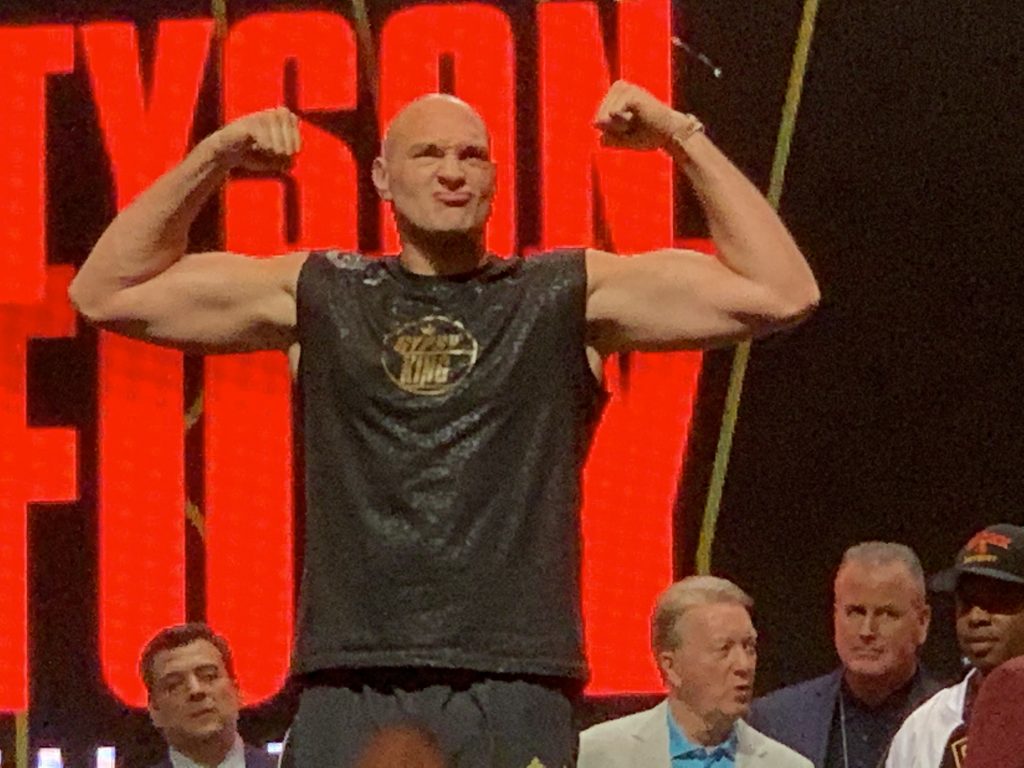


History is repeating itself, maybe boxing will too

By Norm Frauenheim-

Nostalgia will survive the pandemic. So, too, will boxing, the world’s second-oldest profession.

A sure sign of boxing’s resiliency, its heartbeat, is in the interest for the video about the good old days that the networks are playing during coronavirus shutdown.

From Ali and Frazier, to Sugar Ray Leonard, Roberto Duran, Hagler, Hearns and all the rest, the legends are as current as they’ve ever been. They live on while the world has stopped, anxiously awaiting an end to a virus as dangerous as any since 1918.

The Spanish Flu was around then.

 So, too, was Jack Dempsey.

I’m not sure there’s another Dempsey, who won his first heavyweight title on July 4, 1919 and went on to be one of history’s iconic champions during the 1920s. Film on ESPN and Showtime of the greats over the last 50 years is a library full of evidence that confirms how much better the fighters of yesterday were than they are today. Above all, there were just more of them.

But the coronavirus tragedy is a painful lesson about history, good and bad. It does repeat itself.  Boxing’s history is as rich as it is long. There’s plenty to repeat.

It’s anybody’s guess as to whether it will. Or even can. The economics, post-pandemic, are problematic, at best. But the attempt is already under way.

Last Saturday, there was a card in Nicaragua at a Managua arena named for another legend, Alexis Arguello. Fighters went into the ring wearing masks. Former pound-for-pound No. 1 Roman Gonzalez was there, doing interviews with his mask in place. Fans were scattered throughout the arena, separated by at least two empty seats between them.  It was awkward, but it was a first bell after a couple months of a sobering silence.

Expect more.

More of the awkward.

A card is scheduled for May 23 in Patzcuaro, Mexico. It’s a joint promotion – Roy Jones Jr. and Carlos Molina’s King Carlos Promotions. Fans won’t be there. The card will be available, live-streamed with Molina (31-11-2, 10 KOs), a former junior-middleweight champion, in the main event against Michi Munoz (27-10-1 8 KOs).

Then, there are plans for junior-bantamweight champion Emanuel Navarrete to fight in an Azteca TV studio in Mexico City on June 6, according to The Athletic. The bout is subject to approval from Mexican health officials, who presumably would try to protect the fighters from the virus before they endanger each other.

Meanwhile, there are plans in the UK for a possible return to the ring in July. The British Boxing Board of Control (BBBofC) announced it was ready to work with UK health officials, if and when restrictions are lifted sometime this summer.

“Depending upon Government decisions it is hopeful that professional Boxing will commence in July 2020 and we will continue to use our best endeavours to do so and are working closely with our Promoters,’’ the BBBofC said in a statement this week.

The initial plan is to stage the cards without a live audience. Only fighters, a referee, judges, regulator, cameras and health officials will be there. Given fears about crowds these days, there’s a chance that few fans would show up, even if allowed.

According to a poll from National Public Radio (NPR)/PBS News Hour/Marist this week, 91 percent said it was a bad idea for large groups of people to attend sporting events.

The other nine percent might have been boxing fans, a small number, yet maybe as historically resilient as ever.


Sans boxing Saturdays: Atocha, Velazquez and Petruchio

By Bart Barry-

SAN ANTONIO – Nothing is returned to normal, not even our last catastrophe’s new normal, and it becomes more obvious the few times you catch someone trying to act like normal.  Thursday’s first trip to a supermarket in 10 days found everyone’s adapted to these bizarre circumstances except the employees.

While customers’ habits have changed enough to have the marketplace nearly empty of shoppers the marketplace’s wellmeaning attempt to keep a full staff in place works against itself as more employees than customers makes the employees frantic in their habits of busylooking, the product of 200 years of post-industrial-revolution habitry – “time to lean, time to clean!” – so the only ones constantly breaking sixfoot radii are the workers everyone wears equipment to protect.  They swerve round you and dash before you in a futile attempt to burn a surplus of energy that makes you batty if you retain it – for what else is anxiety, ultimately?

A better boxing writer would be playing along with his peers, livetweeting decades-old matches because they happen to be broadcasted as if live on Disney’s sports property, but I can’t bring myself to it.  These fights are available on YouTube forever and watching them with commercials to support multinational revenues doesn’t feel patriotic as it did when we used to drive to the mall with Old Glory flying.

Saturday, which has become lovely in its timelessness, found me bouncing between The New Yorker and Shakespeare.  In the 35 or so years since I watched my grandmother read The New Yorker I’ve often marveled at the quantity of sparetime one might need to justify a subscription.  Piles and piles of them I’ve accumulated over and over, refusing to dispose of them till I’ve surveyed every page, while never surveying more than a third the pages before peeling off their labels and walking them to a nearby lobby, coffeeshop or laundromat.

All that’s changed.  On the one end I have, on average, 16 perfectly empty hours every Saturday, and on the other end I have an evolving surfeit of self-forgiveness for not-reading whatever I once believed I must read.  It’s not nihilistic as all that, though I have noticed for six years now a creeping nihilism (blame meditation?); it’s an honest accounting of how much I’ve read and how microscopically little I retain of it.

Saturday I began reading new short fiction by Ben Lerner, which isn’t great, and wondering why his name was enticingly familiar to me.  The Contributors page didn’t help.  Google did: Lerner’s first novel, Leaving the Atocha Station, was marvelous, and I enjoyed it in 2011 and thought of it often while using said station in 2014.  That trip to Madrid was about nothing so much as standing before Velazquez’s masterpiece, Las Meninas, at El Prado, a 10-minute northwards hike from Atocha Station.

A couple Saturdays ago I came on a short piece in The New Yorker that treated, in part, that very painting, as its author, believing himself terminally ill before coronavirus, chose as his dying wish of sorts to spend many hours looking at the painting again with new eyes.  He made a wonderful comment: Velazquez could not have been painting himself via a mirror positioned where you, an observer, stand, set between the canvas and the royal couple, unless he and everyone else were lefthanded.  Touché!  There is quite a bit of chromatic aberration edging the shadow at the centerpiece’s feet, though, so lenses were employed even if Velazquez put himself in freehand.

It came to me Saturday morning Petruchio might be Shakespeare’s most enjoyably masculine character, and a couple hours got gobbled up a couple hours later by The Taming of the Shrew.  The play hasn’t aged badly as its critics.  Shakespeare, as critic Harold Bloom wrote quite a few times, buries his undertakers.  Reading the play with a father’s eyes – my sixyearold daughter is nearer Kate than my fiveyearold son is Petruchio – I found some essential wisdom in the play’s courtship, particularly as Petruchio treats so directly the subject with his future father-in-law, Baptista:

Though little fire grows great with little wind,

Yet extreme gusts will blow out fire and all.

So I to her, and so she yields to me,

For I am rough and woo not like a babe.

Far from dashing for his rifle or assuming a postfeminist fetal position (practical redundancies, those), Baptista sincerely wishes Petruchio luck.  Many of the comedic elements are still funny, despite 430 years and thousands of renditions, and the language is gaudy rich: “You peasant swain, you whoreson malt-horse drudge!”  Petruchio’s ultimate motivation – “I come to wive it wealthily in Padua – / If wealthily, then happily in Padua” – doesn’t feel congruous today as it likely felt in 1592, being that Petruchio is already wealthy and today’s ruling class, ironically, better insulated from what economic calamities now befall the rest of us decennially.

Petruchio laughs at himself and circumstances, embraces absurdity, acts as a dutiful wingman, knows his purpose, speaks to his elders respectfully if directly, and woos not like a babe – would that young American men were reliably given such an example.  By the end of Taming of the Shrew you can envision Petruchio sharing an ale with Jack Falstaff while laughing merrily at a Julio Cesar Chavez Jr. match, something one cannot say for Hamlet or Othello or Romeo (or even Henry V unfortunately).

Bart Barry can be reached via Twitter @bartbarry
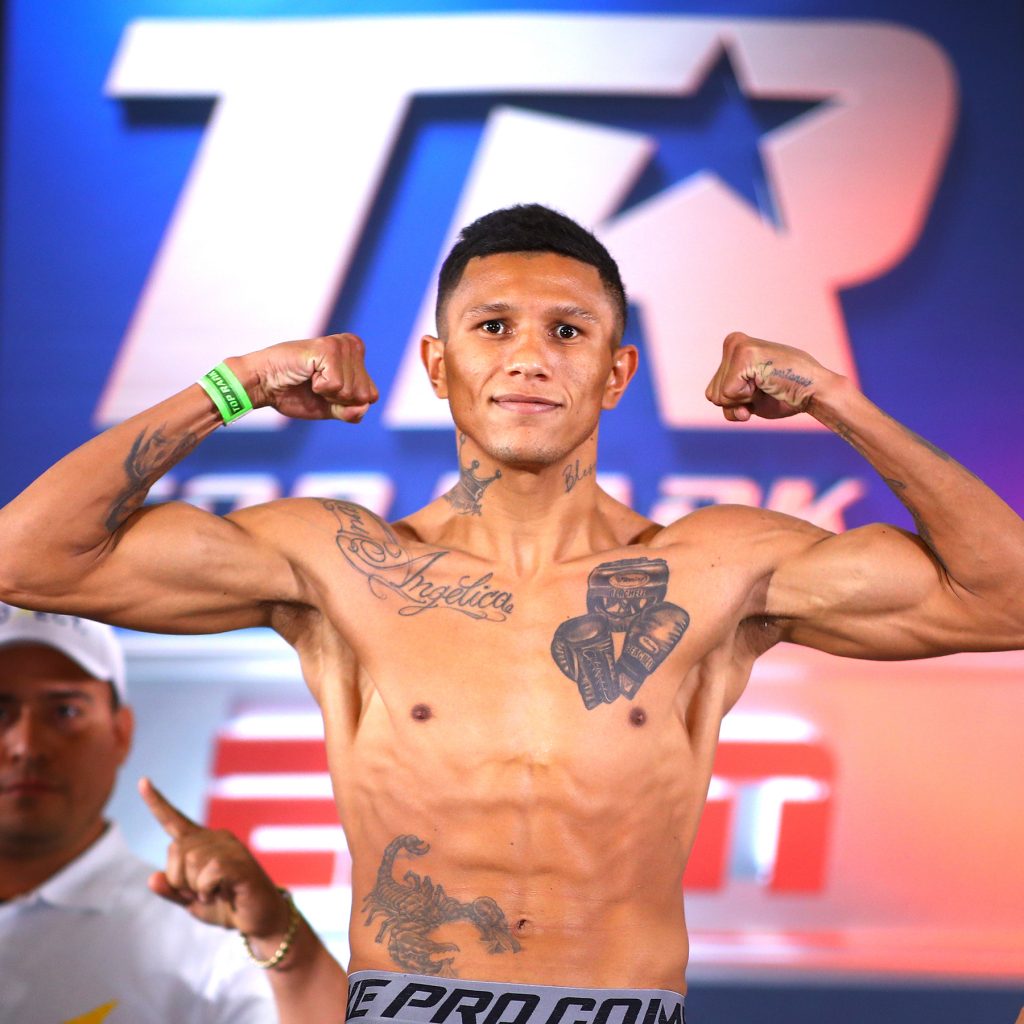


One way to create layers in writing

By Bart Barry-

SAN ANTONIO – Ten years ago I moved here and
promptly failed an eye test for my Texas drivers license so badly the examiner
and I both thought the other was joking about its results: I thought she was
kidding when she said there were letters on the left side, and she thought I
was kidding when I began reading from the middle. I’d lived most of my adult life
in Arizona, whose licenses have extended durations, and hadn’t taken an eye
test in 15 years or so.

In a few weeks I had my first pair of glasses, and
suddenly the world was in such high-def I immediately ceased my lifelong
indifference to visual arts. Soon, as longtime readers and friends know, I was
deep in a survey of painting that would last and last. By 2011 my survey had taken
me to the 17th-century Dutch masters and their seven-layer practice, and since
layers were all I was after in writing I eventually hatched an inside-out writing
process.

Now seems good a time as any to share it:

I. Cartoon Layer: Create a precise structure of
borders between areas of highlight and light, light and halftone, halftone and
shadow, and reflections – the lines are all there, and they might even be a
mess, but they are there; this sets the hard outline of what is to come.

“After his third match with Rafael Marquez, a
classic that happened in the bowl of Home Depot Center’s tennis stadium in
Carson, Calif., Israel Vazquez sat on a makeshift dais in the bowels of the
structure and listened to Marquez’s promoter and manager threaten pointless
protests and journalists. Izzy’s face was a mess. He gently mumbled when his
time to speak came, complimenting his opponent and thanking everyone.”

*

II. Imprimatura Layer: The degree of darkness or
lightness of imprimatura should be chosen in relation to the largest light area,
defining the absolute middle tone, determining the mood of the portrait – to
enable a newfound clarity in the next layer.

El Magnifico deserved
better than what postfight shenanigans he endured in the moments that followed
his career’s greatest feat, one that would someday claim half his eyesight but
none of his goodwill.
After his third match with Rafael Marquez, a classic
that happened in the bowl of Home Depot Center’s tennis stadium in Carson,
Calif., Israel Vazquez sat on a makeshift dais in the bowels of the structure
and listened to Marquez’s promoter and manager threaten pointless protests and
journalists. Izzy’s face was a mess. He tenderly rose and gently mumbled
when his time to speak came, complimenting his opponent and thanking everyone.”

*

III. Umber Layer: For defining values between lights
and darks by presenting them near one another, setting characters’ most positive
and negative traits – this is where absurdity must be injected if at all.

“El Magnifico, ever humble
in victory as he was vicious in its pursuit,
deserved better than what
postfight shenanigans he endured in the moments that followed his career’s
greatest feat, one that would someday claim half his eyesight but none of his
goodwill. After his third match with Rafael Marquez, a classic that happened in
the bowl of Home Depot Center’s tennis stadium in Carson, Calif., Israel
Vazquez sat on a makeshift dais in the cold bowels of the structure and
listened to Marquez’s obnoxious promoter and more obnoxious
manager threaten pointless protests and accuse journalists of cheapening the
event for asking why a protest needed filing
. Izzy’s face was a mess at
rest and worse when he smiled
. He tenderly rose and gently mumbled when his
time to speak came, complimenting his sullen opponent and thanking
everyone.

*

IV. Dead Layer: For creating space and distance by
making the largest quality too large, embellishing it till it casts a shadow on
its characters, this may also be where mystery is introduced – this is where
dialogue may be added if at all.

“El Magnifico, ever humble in victory as he was
vicious in its pursuit, deserved better than what postfight shenanigans he
endured in the moments that followed his career’s greatest feat, one that would
someday claim half his eyesight but none of his goodwill. After his third match
with Rafael Marquez, a classic that happened in the bowl of Home Depot Center’s
tennis stadium in Carson, Calif., Israel Vazquez sat on a makeshift dais in the
cold bowels of the structure and listened to Marquez’s obnoxious promoter and
more obnoxious manager threaten pointless protests and accuse journalists of
cheapening the event for asking why a protest needed filing.

‘That you would ask such a question,’ crowed
Gary Shaw, ‘after what these men just did, after the bravery they just showed,
is disgusting!’

Izzy’s face was a mess at rest and worse when he
smiled. He tenderly rose and gently mumbled when his time to speak came, complimenting
his sullen opponent – Rafa, after all, had just volunteered to die in the
ring rather than be subjected to a standing eight count –
and thanking
everyone with a sincerity both pained and painful.”

*

V. Color Layer (Dark): Make shadow areas darker
and more colorful by placing them near positive qualities – challenging questionable
verbs and modifiers.

“El Magnifico, ever humble in victory as he was
vicious in its pursuit, rated higher than what postfight shenanigans he
endured after his career’s greatest feat, the fight that one day
claimed half his eyesight but none of his goodwill. Thirty minutes after
his third match with Rafael Marquez, a classic that happened in the bowl of
Home Depot Center’s tennis stadium in Carson, Calif., Israel Vazquez sat on a
makeshift dais in the cold bowels of the structure while Marquez’s
obnoxious promoter and more obnoxious manager threatened pointless
protests and accused journalists of ruining their event.

‘That you would ask such a question,’ crowed Gary
Shaw, ‘after what these men just did, after the bravery they just showed, is disgusting!’

Izzy’s face was a mess at rest and worse when he attempted
a
smile. He tenderly rose and gently mumbled when his time to speak came,
complimenting his sullen opponent – Rafa, after all, had just volunteered to
die in the ring rather than lose a point to a standing eight count – and
thanking everyone with a sincerity both pained and painful.”

*

VI. Color Layer (Bright): Lighted areas should be
made lighter and more colorful, using paste-like mixtures applied rather
thickly, in a hard break from its predecessor layer – and inserting actual
colors.

“El Magnifico, ever humble in victory as he was
vicious in its pursuit, rated higher than what postfight shenanigans he endured
after his career’s greatest feat, the fight that one day claimed half his
eyesight but none of his goodwill. Thirty minutes after his third match with
Rafael Marquez, a classic that happened in the cement gray bowl of Home
Depot Center’s tennis stadium in bluecollar Carson, Calif., Israel
Vazquez sat on a makeshift dais in the cold bowels of the structure while
Marquez’s obnoxious promoter, stretching an emerald track suit, and more
obnoxious manager, scowling in funereal black, threatened pointless
protests and accused journalists of ruining their event.

‘That you would ask such a question,’ crowed a
redfaced
Gary Shaw, ‘after what these men just did, after the bravery they
just showed, is disgusting!’

Izzy’s face was a mess at rest and worse when he
attempted a smile round his lipstick-red eyes and swollen mouth. He
tenderly rose and gently mumbled when his time to speak came, complimenting his
sullen opponent – Rafa, after all, had just volunteered to die in the ring
rather than lose a point to a standing eight count – and thanking everyone with
a sincerity both pained and painful.”

*

VII. Finishing Miksture Palette: Details of
textures, thickly applied highlights and bright reflections, this is the place
for impasto – doing audio revision and looking for places to lighten.

“El Magnifico, ever humble in victory as he was
vicious in its pursuit, rated higher than what postfight shenanigans he endured
after his career’s greatest feat, the fight that one day claimed half his
eyesight but none of his goodwill. Thirty minutes after his third match with
Rafael Marquez, a classic that happened in the cement gray bowl of Home Depot
Center’s tennis stadium in bluecollar Carson, Calif., Israel Vazquez sat on a
makeshift dais in its cold bowels while Marquez’s obnoxious promoter,
stretching an emerald track suit, and more obnoxious manager, scowling in
funereal black, threatened pointless protests and accused journalists of
ruining their event.

‘That you would ask such a question,’ crowed
redfaced Gary Shaw, ‘after what these men just did, after the bravery they just
showed, is disgusting!’

Izzy’s face was a mess at rest and worse when he
attempted smiles round lipstick-red eyes and a swollen mouth. He
tenderly rose and gently mumbled kind words when his time to speak came,
complimenting his sullen opponent – Rafa, after all, had just volunteered to
die in the ring rather than lose a point to a standing eight count – before
thanking everyone with a sincerity both pained and painful.”

*

Bart Barry can be reached via Twitter @bartbarry