The disappointment of BJ Flores

By Bart Barry-
bj20flores
“Potential remains potent if unused.” – James Wood, “Late Bloom”

Saturday in a small theater at Palms Casino in Las Vegas, in a PBC main event televised by NBCSN, 31-year-old Kazakh cruiserweight Beibut Shumenov decisioned 36-year-old American BJ Flores by three scores of 116-112. The match was made under a single expectation: Flores will decimate Shumenov, persuading the PBC’s naive viewership he is a power-punching terror we can soon anoint PBC cruiserweight champion. That expectation was disappointed.

The fight was not a fun one to watch, though no frequent purveyor of PBC events will derive any more insight from that statement than he derived joy from Saturday’s broadcast. The telecast was poor, the commentary banal, the interviews borrowed from the pages of American Cheerleader, and the violence slight. The hardest punches by far missed by far, as the preanointed winner found a prey nothing like what he’d been promised, and the fleetfooted prey found exactly the complacent predator of his quiet preparations.

Beibut Shumenov also found the best way for an underdog to win a PBC main event: Move up so far in weight – 25 pounds in this case – you are promised to be knocked cold, and then don’t get knocked cold.

Did Shumenov get the benefit of most doubts from Saturday’s judges? Sure did. Confident as the outfit was in a Flores knockout, the PBC neither bothered flying its fighters to business-friendly locales nor imported sympathetic judges to Las Vegas. Hell, they didn’t even script their commentators’ post-introduction thoughts, resulting in Sugar Ray Leonard waving the wrong pom-poms and ratifying Steve Farhood’s unofficial scorecard, one that concurred with the official cards.

After the match, Flores rightly insisted his countenance was incredibly unmarked for a man who’d been beaten for the majority of a 36-minute confrontation. That insistence betrayed the entirety of Flores’ strategy for Shumenov: We will both stand more or less still and slug one another, and since I’ve fought as high as 218 pounds, and you’ve fought as low as 174, physics will be our judge long before those three folks at ringside. Though Flores is much more of a boxer-puncher than a purebred slugger – a major reason for his youthful conversion from heavyweight to cruiserweight – he expected to stand immediately across from a much smaller man and blast him to unconsciousness.

Flores expected to undo Shumenov very much the way Shumenov undid Tamas Kovacs in 2013, a Shumenov performance at Alamodome that was simply belligerent, one in which Shumenov’s punches were spiteful as they were fast or accurate. Bernard Hopkins, who was ringside that night in San Antonio, saw an immobile man with disproportionate confidence in his power, and wagered instantly the man’s psyche was fragile: sluggers, as men who believe deeply in their natural abilities to bring instant order to a boxing ring, no flirtation, no foreplay, no reciprocity, are boxing’s least-secure souls; their universes unravel with an acceleration unknown to the universes of volume punchers or boxers. Hopkins razed Shumenov’s identity quickly in their 2014 match, disarming him then practicing on him, and sent Shumenov right out of sluggership and the light heavyweight division.

Shumenov deserves immense credit for making that relocation; the move from flyweight to bantamweight can be done by having dessert with dinner next week, while the distance from light heavyweight to cruiserweight is vast. Though it is obviously unfair for a 201-pound man to toe the line against a Klitschko, it is nearly as hopeless for a light heavyweight to move to cruiser. Today’s heavyweights are generally gargantuan and plodding; you’d hate to be hit by one and probably shouldn’t be. Cruiserweight, though, is where the fantastic athletes who wash-out of other contact sports tend to gather. At heavyweight, you meet the former collegiate linebacker who’d rather eat his way to 250 than starve his way to 199; at cruiserweight, you meet that guy’s more-disciplined teammate – just as strong, just as athletic, and a lot faster.

That was, is, BJ Flores. But things haven’t gone according to plan.

However much I prefer other fighters’ styles, BJ is my favorite person I’ve met in 11 years of covering our beloved sport (Israel Vazquez is a close second). There is a self-deprecating streak in BJ that does not translate to television, where he appears too assured, too fidgety, and sometimes too glib. He has it all figured out and is not reticent about saying so. When that sort of self-assurance pits itself against the best prizefighters in the world and wins more often than it loses, you get Carl Froch. When it goes 31-1 without once challenging for a world title, you get more resentment from fans and pundits than you deserve.

Whatever his fighting spirit, BJ is too smart to be a great prizefighter, too filled with the sort of curiosity that seeks sympathetic angles, elegant solutions to the ugly problem of swapping blows for income; if he can get things organized properly, BJ seems to believe, he’ll be recognized as a world champion without having to beat any world champions. This mentality manifests itself in various ways and did so, Saturday: so long as he was way out of Shumenov’s range, Flores hurled rights with abandon, but a single counter from Shumenov set BJ’s quick mind to calculating risks and probabilities, in an untimely search for an elegant solution to the problem of rendering Shumenov unconscious without a proportionate amount of peril.

Flores has every tangible quality needed to be a great prizefighter. The fact he will come to his 37th birthday without once challenging a world champion, though, subverts most of it. That was not a fun sentence to write.

Bart Barry can be reached via Twitter @bartbarry


A Kovalev smile means the Russian is ready to fight

By Norm Frauenheim-
Sergey Kovalev
LAS VEGAS – It starts with a smile. It’s there because Sergey Kovalev genuinely enjoys what he does. Then again, so does a crocodile.

That smile was perhaps a hint at what many expect Saturday. Kovalev turned his head away from Nadjib Mohammadi during the ritual stare-down after a formal weigh-in Friday at Mandalay Bay.

After tipping the scales at 174.5 pounds, Kovalev (27-0-1, 24 KOs) looked at the crowd, flashing that grin with teeth that could make a Great White blink. It’s hard to know what Nadjib Mohammedi (37-3, 23 KOs) thought during a moment when he looked a little bit like prey.

Mohammedi, who was at 173 pounds, is given no chance in a light-heavyweight bout televised by HBO (10 pm ET/PT). That’s probably not fair to a tough fighter who might have a significant advantage in his corner. Abel Sanchez, Kovalev’s ex-trainer, is Mohammedi’s current trainer. But will that, or anything else, make a difference? Few believe it will go the full 12 rounds.

Consider this: On a wagering sheet at the Mandalay Bay’s sports book, there’s a proposition that has Kovalev at minus-2200 to win by knockout. In other words, you’ve got to put up $2,200 to win $100.

“Where’s the closest ATM?’’ a wise guy in the media room said. “That sounds like an easy way to pick up a quick $100.’’

Maybe.

But all of that could change at opening bell. Above all, Mohammedi has absolutely nothing to lose. Sanchez is quick to remind everybody that Mike Tyson was a lopsided favorite to beat Buster Douglas in Tokyo. Huge upsets happen, all right

On Friday, however, all of the talk was about Kovalev and what was next for the Russian with the predatory smile. One scenario has him fighting Jean Pascal next in a rematch if Pascal gets past Yuniesky Gonzalez, a tough-looking Cuban, who escaped Cuba on small boat crowded with refugees in 2009.

Then, there’s the projected showdown that has already begun to capture the public’s imagination: Kovalev-versus-Andre Ward. It sounds as if it’s inevitable. Kovalev promoter Kathy Duva of Main Events says talks are ongoing.

“In fact, those talks have been better than most,’’ she said this week.

There’s speculation that it might happen next year, perhaps after there’s some clarity about when Floyd Mayweather Jr. will in fact retire. Kovalev-Ward could be sold as the fight that will determine Mayweather’s successor at the top of the pound-for-pound debate.

All of the talk has made Kovalev-Mohammedi look like a steppingstone for a legend in the making. That, the lopsided odds and a rival PBC promotion featuring BJ Flores-versus Beibut Shumenov in Vegas The Palms are probably having a lousy impact on ticket sales, although Duva said there has been an uptick during the last couple of days.

But ticket sales, talk about who’s next and speculation about what’s next didn’t seem to matter much to Kovalev. Only an imminent opening bell does. That’s always a reason to smile.


Opposite corner: Kovalev’s former trainer looks for ways to score an upset

By Norm Frauenheim-
Serhey Kovalev
LAS VEGAS – Imagine trying to demolish what you once designed. It sounds awkward and it probably is if you’re an architect suddenly hired to bring down a building you constructed.

But boxing isn’t architecture. It’s about changing roles and changing sides. One day, you’re drawing up the blueprint. The next day, you’re swinging the wrecking ball.

So it is for Abel Sanchez, who finds himself in the opposite corner Saturday night at the Mandalay Bay Events Center in an attempt to bring down a feared fighter he helped create.

Sergey Kovalev was just another Russian in 2010 when Sanchez became his trainer.

Then, Sanchez didn’t exactly foresee himself in Nadjib Mohammedi’s corner as the mastermind in an attempted plot to derail Kovalev’s swift emergence as a potential successor to the pound-for-pound throne soon to be vacated by Floyd Mayweather Jr.

He was only certain that Kovalev would become a star.

“I told him, I told him he would be where he is right now,’’ Sanchez said Thursday after a news conference for the light-heavyweight bout (HB0, 10 p.m. ET/PT).

For eight fights between October, 2010 and December, 2011, Sanchez trained Kovalev. Kovalev won all eight by stoppage. Only in hindsight is it evident that Kovalev was then beginning to discover an identity now summed by his nickname, Krusher. He’s been the real wrecking ball. Everybody, even Bernard Hopkins, has been crushed by lethal power complemented by unshakable poise.

Sanchez knew he had a future champion in his gym. But he also knew he had to make tough choice. Middleweight champ Gennady Golovkin was there, too.

“Sometimes, we make choices that maybe we are forced to make,’’ Sanchez said.

What happened after that decision, however, is a matter of some debate. It also appears to be at the heart of a simmering rivalry.

Stories about sparring sessions between Golovkin and Kovalev began to circulate. Sanchez told the media that GGG once knocked down Kovalev. He also was quoted as saying that he thought Golovkin had a higher ring IQ than Kovalev.

The comments had to get back to Kovalev, who is getting to know English as well as he knows his way around the ring. Translation: Very little escapes him.

When asked about Sanchez during an international conference call, Kovalev said:

“Who is this Abel? I don’t know any Abel.’’

Kovalev didn’t have to say anything more. It’s clear he intends to show that Sanchez made the wrong choice in 2011.

“I want to show in this fight just who I really am,’’ said Kovalev (27-0-1, 24 KOs), who sounds as if he is motivated by what he believes was a sub-par performance in an eighth-round round stoppage of Jean Pascal in March.

Betting odds indicate that Mohammedi (37-3, 23 KOs), a Frenchman of Algerian descent, has no chance no matter what motivates Kovalev or who is in his corner

Mohammedi is a 33-to-1 underdog, according to odds posted on a sheet at the Mandalay Sports book late Thursday. The line is surprisingly lopsided, so much so that Mohammedi has nothing to lose. If it goes the distance, he probably earns another good payday.

“When I’m told we have no chance, that means we have every chance,’’ Mohammedi co-manager Vince Caruso said.

Best guess: Mohammedi’s best chance rests in what Sanchez knows about Kovalev. Sanchez was giving no hints Thursday as to what Mohammedi’s game plan might be. No surprise there. Instead, he praised Kovalev for the progress he’s made under trainer John David Jackson.

“He evolved,’’ Sanchez said. “He’s a world champion now. I think guys, when they become world champions, get better anyway. They have something to protect. They have something they don’t want to lose. They work harder.

“He’s a much better fighter because of all of those things and because he’s got a very good coach in John David.’’

A personal rivalry is an expected element, said Sanchez, who has been working corners long enough to know that emotion can turn an ordinary fight into great one.

“He has a very competitive nature,’’ Sanchez said. “He knows that one day he might fight another one of my guys. He might fight Golovkin, if it ever gets to that point.

“It’s professional competitiveness that sometimes gets mistaken for animosity. During the news conference, he looked over at me and I winked at him. He kind of acknowledged me.

“But you know what? It’s not personal. This is business, just business.’’

A business full of unexpected corners.


Greatness willed: A farewell to Carl Froch

By Bart Barry-
Carl Froch
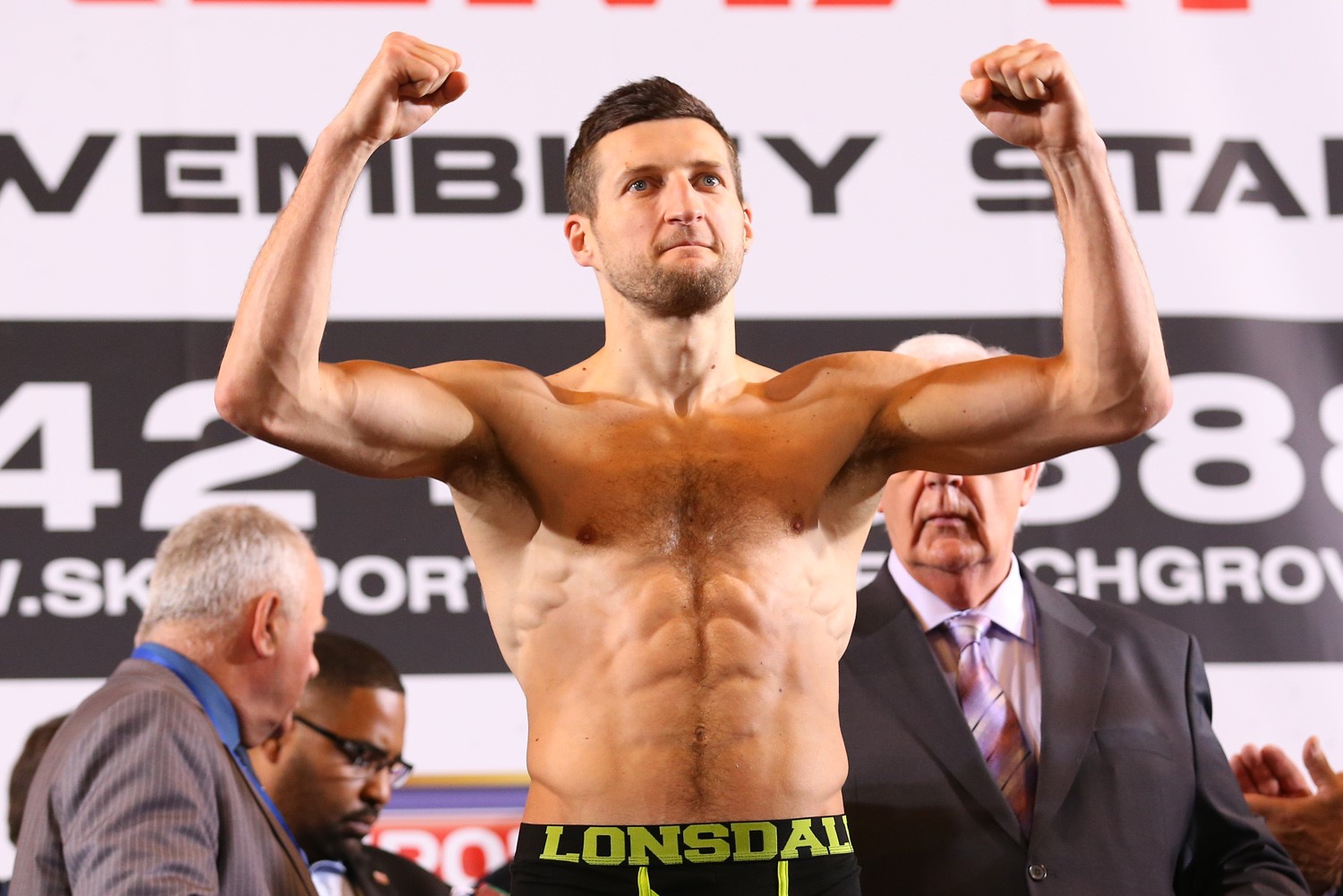
Last week British super middleweight Carl “The Cobra” Froch announced his retirement, ending an unusually fine contemporary prizefighting career on an unusually high note. Froch’s final instant in a prizefight was his best – spearchiseling George Groves in a full Wembley Stadium on May 31, 2014 – and if Froch needed 14 months to be certain that was so, it’s altogether forgivable.

We like best the athletes to whom we relate best, superficially, profoundly, however – those men who exhibit qualities we like in ourselves but more so. To love Froch, one didn’t have to be an arrogant bastard reveling in expressions of masculinity, no. But it sure did help.

My favorite moment of Carl Froch’s career came not in a fight but a chat with fellow Brit George Groves, whom Froch stopped twice, and came in the leadup to their aforementioned, and in Froch’s case aforereiterated and aforereiterated, rematch. It wasn’t any one word or phrase or look or gesture, the second half of their chat was rich with too many, but rather the way Froch looked inside at himself, a posture he adopts often – for no one is as enchanted by the thought of Carl Froch as Carl Froch – and followed a process like: Perhaps this guy does know something about me that eludes me, maybe I am not everything I believe I am. No, wait, what could I believe – not imagine, but actually believe – I am that I am not? I stand by my belief, I am as I say I am, and I’ll hear no more dissent.

Froch bent where Groves was rigid, Froch examined himself from Groves’ seat, considered himself in an unfamiliar light, then invested his conclusion – he’s wrong about me, and I’m right – with even greater force. Then Froch imposed himself on George Groves, and before 80,000 of his countrymen, a lamplike number summoning its genie no matter how often Froch rubs it, Froch struck Groves with the best punch of his career, reducing Groves from petulant rival to beginner origami.

In an instant Froch had a chance to end his career at its highest moment, something nearly no boxer has done in our sport’s deep history, and one feared he mighn’t – that what he calls the “fighting machine” he makes himself into might cause a sloppy thing with Julio Cesar Chavez Jr., ever a sloppy thing, or a decision loss to Gennady Golovkin (if Golovkin could take Froch’s power in the later rounds, something Golovkin’s resume does nothing to assure). Instead, Froch looked inside at himself once more, projecting the relentlessness and brutality and boredom and doubt of a championship-caliber training camp, and realized there was little in life he desired less than another experience like that.

Boxing has so very few happy endings it should fill aficionados with gratitude much as any other emotion th’t Froch left our sport with wealth and wits, accomplishment and vindication.

The third time I saw Froch fight, his painfully forgettable tilt with PBC prototype Andre Dirrell – 10 parts athlete for every one part fighter – I wrote, “(Froch) really wants to fight even if he often seems not to know how.” That desire to fight, to lower his head and swim forward winging wide punches at a rate proportionate to his fatigue, was what made Froch unique, in large part because it actually worked.

Men who have never fought, who’ve not clenched their hands in fists and punched men square in the face, often beseech others in a fight to race forward with lunatic aggression, consequences to the wind. For reasons psychology understands well as biology, though, a man in a fair fight is more frightened of having his reputation harmed than his person; embarrassment concerns him more than pain. Only fighters who’ve planned to race forward wildly, and prepared themselves for the feat, can turn the trick in hot blood. All the rest of us stall, our frustration steering us towards paralysis, to a point where we approach targethood and view another man’s aggression, another man’s attempt at our unconsciousness, that is, favorably, almost thankfully – like Oscar De La Hoya silently beseeching Manny Pacquiao to knock him out because such an end would be multiples more honorable than quitting in full consciousness like De La Hoya did in his final instant as a prizefighter.

Froch was one man who did what the inexperienced ask every prizefighter to do: No matter how tired he was, Froch pressed forward wildly, not hopelessly, in a bid to take confrontations wholly out of the organized athletic realm and into something more primal. Subsequently, even Froch’s losses ended nobly. Review his 11th round with Andre Ward, when the eventual winner of the Super Six tournament – on a once-excellent network that no longer fears embarrassment – and one of this generation’s great fighters, Ward, desperately clinches, his mouth wide open, his knees softened. The final three minutes of Froch’s only other career loss, when he got decisioned narrowly in 2010 by Mikkel Kessler during the same Super Six, a loss Froch avenged just as narrowly in 2013, are a symphony of blood and violence and will, both men leaking from deep cuts over their eyes, neither man appearing to care who gets rendered unconscious so long as someone does.

During the 3 1/2-year prime of his prizefighting career, Froch went 7-2 (2 KOs) against Jean Pascal, Jermain Taylor, Andre Dirrell, Mikkel Kessler, Arthur Abraham, Glen Johnson, Andre Ward and Lucian Bute. No man with Carl Froch’s talent did more great fighting, no contemporary prizefighter, in other words, wrung more from his natural ability. The Nottinghamshire Cobra will be missed sorely.

Bart Barry can be reached via Twitter @bartbarry


International Language: Kovalev speaks one that everybody understands

By Norm Frauenheim-
Sergey Kovalev
Sergey Kovalev is new to English. It’s a second language for the light-heavyweight who grew up speaking Russian.
Occasionally he’ll ask manager Egis Klimas to translate. Sometimes, a phrase or cliché will confuse him. But don’t let that fool you. He’s learning English grammar and some of its common slurs as thoroughly as he once learned his way around a ring. Kovalev is already more fluent in English than Vladimir Putin.

A new language is an acquired skill, mastered by work and study. By now, it is evident Kovalev isn’t afraid of either. But there’s more to this process than just diligence. Like his dangerous complement of heavy hands and unnerving poise, he possesses an instinctive ability to communicate. No matter the language or how it’s delivered, his words connect like his punches.

No translation was necessary during an hour-long conference call this week for his title defense against Nadjib Mohammedi on July 25 at Las Vegas’ Mandalay Bay in an HBO-televised bout. There was no BS. Amend that. Subtract the bull and leave the remaining four letters for Kovalev’s ongoing description of Adonis Stevenson, who has the WBC-version of the title.

Stevenson is a piece of bleep, Kovalev — sounding very American — said of the Canadian, who he says continues to duck him.

About everything else, however, he was simple and direct in a way increasingly foreign in a business so prone to euphemistic double-speak.

“A lot of fighters are making business, but not making boxing,’’ said Kovalev, an emerging pound-for-pound contender and a prohibitive favorite over Mohammedi, Frenchman of Algerian descent. “On my left hand, I can count who are the real fighters in boxing: Gennady Golovkin, Miguel Cotto and Keith Thurman and I don’t remember more. Maybe me.’’

During a tiresome few weeks full of guessing about what Floyd Mayweather Jr. will or won’t do on Sept. 12, Kovalev’s pointed comment stood in contrast — as stark as it was a relief.

There have been mounting reports that Mayweather might fight Andre Berto in the sixth and final bout on his Showtime contract. Speculation is that it’ll be offered on free-TV, Showtime’s CBS flagship, instead of pay-per-view. According to some of the reports, a Mayweather bout on free-TV will be sold as a remedy to public anger still there from many in a record audience who spent $100 for the dull PPV telecast of Mayweather-Manny Pacquiao.

Berto a remedy? Please. Berto is 3-3 over his last six bouts. If that’s a remedy, give me shot a hemlock, Mayweather against anybody other than Thurman or Amir Khan only threatens to further alienate fans. They already believe they were played for suckers throughout the Mayweather-Pacquiao hype.

Before Berto’s name emerged, Mayweather advisor Leonard Ellerbe dismissed Thurman as a possibility. Ellerbe said Thurman wasn’t at Mayweather’s level. Berto isn’t at Thurman’s level. Who knows if Berto and Mayweather will fight? But if they do, it is just one more reason to suspect another shakedown is in the works, perhaps for Mayweather’s free-agent finale in a 50th bout.

In Kovalev, at least, there’s a sense he’s building his career patiently, all in a big-money attempt to fight Andre Ward. Kovalev-Ward looms as a fight that could be everything Mayweather-Pacquiao wasn’t. Early talk about it indicates real interest instead of the cynicism so prevalent in the wake of the Mayweather-Pacquiao money grab on May 2.

“We have been talking to Andrew Ward’s people all week,’’ said Kovalev promoter Kathy Duva, who expects the fight sometime next year. “We all agree the fight is going to happen.’’
In any language, that sounds good.


Luis Collazo: PBC Employee of the Month

By Bart Barry-
Collazo Cut
Saturday at a local coffee shop I watched the PBC main event I’d already covered five days before it happened (I was off by about 3 1/2 rounds in my report). I watched on my phone as Florida welterweight Keith Thurman “knocked-out” Luis Collazo with an accidental headbutt of slow-developing effect. For the record, and since some writers are enkindled by the thought a single dollar mightn’t go to the corporations it belongs to, I did not watch a pirated stream of the PBC broadcast: I used my mother’s username and password on the WatchESPN app.

Thurman’s reaction was indeed more surprising than his victory. Thurman was going to win, regardless, and so, even if his postfight celebration was charged by relief, it also should have been tempered by a question even smartphone viewers had to ask: What the hell did Keith Thurman do to win?

Collazo, a victim of questionable decisions in previous title bouts, with Ricky Hatton and Andre Berto, took things entirely out of the judges’ unsteady hands, Saturday. Having jeopardized the scripted outcome with a body shot in round 5, after 14 minutes of skittish jousting with Thurman from a safe distance – even had they fencing foils – Collazo chose soberly his words for the ringside physician and got himself awarded a knockout loss after round 6. A loss is a loss except when it’s a partial victory, which is exactly what Saturday’s antics will become in three weeks when Luis Collazo wins the PBC’s July Employee of the Month award for his competent if not creative Saturday delivery.

My interest in this bout was minimal, knowing as we all did its preordained outcome. The enterprising and imaginative among us will tell ourselves the entire canonization of boxing’s next really really big and huge star, Keith Thurman – a telegenic man who cries on command in barbershops while his girlish locks are hardened into warrior braids – got jeopardized towards the end of the otherwise unwatchable fifth round, Saturday, when Thurman got jackknifed by a Collazo left cross to the body, but the whole enterprise of imagining how the predetermined winner might lose is quixotic, we should admit.

In this sense, boxing is no longer entertaining as professional wrestling – wherein the winner is predetermined but at least unknown to the audience. In this sense, boxing is more noble than wrestling: the PBC broadcast tells you who will win the main event in a prefight Sesame Street feature and does not deviate by subjecting its docile viewers to steel-chair hijinx or implausible disqualifications that allow the champ to retain his title.

Well, OK, point taken, but there are no steel chairs.

Let us now pause to consider the feat boxing’s next supernova incredible star performed by getting bent in half by a lefthand thrown from a southpaw. Ever ask yourself why nearly every body-shot stoppage you’ve seen comes from an orthodox puncher’s left hook (including the crossover lefthand with which southpaw Gerry Penalosa stopped Jhonny Gonzalez eight years ago)? It’s because the angle of delivery for a left cross is all wrong; the punch is too straight to find the magical, quartersize spot between the right rib and hipbone where the liver – a vital organ – peeks through a window known as “the button.” There’s an upwards twist of the left knuckles required to hit the button, too, and a southpaw’s left cross, like all crosses, finds the knuckles descending, not ascending, upon impact.

However, then, did Collazo, a man who has knocked-out considerably fewer than half his opponents, knock boxing’s next solarsystem supergiant across the visiblepain threshold? With Thurman’s help, mostly. Thurman landed his liver on Collazo’s fist about much as Collazo landed the middle knuckle of his left hand on Thurman’s liver.

But wait, you may be thinking, I thought Thurman’s defensive liabilities found their limit in the way he floats his chin whenever he throws!

First of all, dearest PBC viewer, you weren’t supposed to notice that. And second of all, what are you talking about? Keith Thurman proved he has a champion’s heart, Saturday, like the PBC broadcast told you.

A note, then, about PBC broadcasting crews: Universally they have the journalistic integrity of Billy Mays pitching GatorBlade bug bazookas at 3 AM. Their commentary works more like a celebrity endorsement of a related product – Tiger Woods swinging a Nike driver, say – than even an approximate description of what happens in the boxing ring. They each have their cultivated schtick – Sugar Ray Leonard’s smooth vacuousness; Teddy Atlas’ metaphor-strangling outrage – but none of them offers commentary to invite even the softest inference of disloyalty by their owner, Al Haymon, if ever he should watch a PBC telecast.

Writers make the increasingly necessary if enduringly ignoble transition from reporters to publicists, yes, but rarely on the pages where their journalism resides. No sooner does a writer imply his endorsement of a commercial product than his readers barnstorm the comments section with reprimanding words about conflicted interests. That boxing television, conversely, has made the transition so frictionlessly from broadcaster to publicist should help aficionados retrofit their views of the entire medium.

Here, let me get you started: When the HBO crew assured me Manny Pacquiao won nearly every minute of his 2012 fight with Timothy Bradley, supplementing its commentary with creatively chosen between-rounds-replay clips and a wildly inaccurate unofficial scorecard, did I consider as fully as perhaps I should the network’s disproportionate interest in the very outcome it described? Here’s a little more help: No, you probably didn’t.

The kicker, as it were, is that today HBO, whatever its adorable crush on Eastern Bloc fighters, stands as the last column of journalistic integrity in boxing television: It is the only American network to treat Al Haymon as an executive instead of an owner.

Over and again, the PBC concept will not end well. If it succeeds, within three years it will have used monopolistic powers to craft a rigged-outcomes product that is neither violent as MMA nor well-scripted as professional wrestling (or the NBA playoffs). If it fails, it already will have decimated the ranks of aficionados and the writers who serve them.

Ridicule Luis Collazo all you want, but he’ll always have his PBC Employee of the Month certificate. What will you have?

Bart Barry can be reached via Twitter @bartbarry


Benavidez still hoping for Crawford fight

By Norm Frauenheim
jose_benavidez_signing_100114_001
Jose Benavidez Jr. would welcome a chance to fight emerging star Terence Crawford, who is expected to make his second appearance at junior welterweight in the fall.

“We want that fight,’’ Benavidez’ father and trainer, Jose Benavidez Sr., said Thursday while planning for his son’s return to the gym next week..

Benavidez’ dad echoed comments made by his son, who talked about his hopes for a Crawford bout before a 12th-round stoppage of Jorge Paez Jr. in Phoenix on May 15.

That’s when Top Rank told 15 Rounds that Benavidez had been a possibility for Crawford’s debut at 140 pounds last spring. In the end, however, Puerto Rican Thomas Dulorme, instead of Benavidez, fought Crawford, who scored three knockdowns in winning a sixth-round TKO for the WBO’s version of the title on April 18 in his only bout this year.

Benavidez, an unbeaten 23-year-old from Phoenix, holds the WBA’s interim belt, which he won in a controversial decision over Mauricio Herrera in December and retained in a first defense against Paez Jr.

Benavidez’ chances at a bout with Crawford appear more likely now than they did April, because Top Rank wants to keep the Boxing Writers reigning Fighter of the Year busy while waiting to hear how Manny Pacquiao’s rehab from shoulder surgery is – or isn’t — progressing.

The unbeaten Crawford is a leading contender to succeed Floyd Mayweather Jr. as the game’s biggest star. He’s a nominee for 2014 Fighter of the Year Wednesday night at the ESPYs.

“Time will tell,’’ Crawford said Monday during a video chat with fans and media. “Right now, I’m just being patient with my career.’’

Against Benavidez (23-0, 16 KOs), Crawford (26-0, 18 KOs) would likely be a big favorite.

“That’s okay,’’ Benavidez Sr. said. “Herrera was a big favorite, too. Junior is going to be a big underdog for now, because he hasn’t really convinced people.’’

Herrera, his Southern California fans and many in the media remain convinced that the 116-112, 117-111, 116-112 scorecards in favor of Benavidez on Dec. 13 at Las Vegas’ Cosmopolitan were a rip-off, perhaps the biggest in 2014.

In the bout’s immediate aftermath, Herrera said he wanted a rematch. Benavidez said he’d give him one. But talk of a rematch quickly died. Instead, Herrera fights Hank Lundy Saturday in a final bell for the historic Sports Arena in Los Angeles.

Then, there was Jessie Vargas. Over the last 12 months, Benavidez has said repeatedly that he wanted Vargas. After a controversial finish to a one-sided loss to Timothy Bradley on June 27 in Carson, Calif., it’s not clear where Vargas goes next.

The bout was stopped seven seconds before the closing bell, just seconds after Vargas rocked Bradley with an overhand right. But the stoppage was a mistake. Referee Pat Russell thought he had heard the bell. The fight went to the cards.

Vargas is asking the California commission to declare the bout a no-contest. That might be one step in pursuing a rematch

“It just kind of looks like our only fight is Crawford,’’ Benavidez said. “It’s what we’re we’re hoping for. We’re excited about the chance.’’


Bad, yes, but probably not bad enough: Thurman stops Collazo in 11

By Bart Barry
Keith Thurman
TAMPA, Fla. – Saturday in University of South Florida’s acclaimed Sundome, Florida welterweight Keith “One Time” Thurman stopped Brooklyn’s Luis Collazo in the 11th round of PBC’s insipid ESPN debut. Official attendance in the hauntingly quiet arena was announced at: “A lot, I mean, look around.”

Thurman’s victory was not without controversy. After failing to land a clean punch on Collazo through several, 90-second durations of their fight, Thurman came alive at the midway point of the penultimate round, striking Collazo flush with a number of punches at the very instant late-sub referee Laurence Cole, caught texting on his phone in a neutral corner several times in round 5, offered the fight his undivided attention. Thurman was ahead 100-90 on all three official scorecards at the time, as expected.

The purpose of this fight was twofold: 1. Build the Thurman brand, and 1. Fill a reserved ESPN television date, and 2. Drop a Thurman ball in the Mayweather Opponent Draft Lottery, and 2. Preclude future lawsuits against the event’s advisor and hedge fund from alleging University of South Florida fell prey to a venue-squatting saltern to keep its coveted Sundome from being reserved by a regional California promoter who once used rumors of his own intention to fight in September to preclude a rival promotional outfit from using a Mexican Independence Day weekend he later filled with Marco Antonio Barrera and Robbie Peden (this column should not be used in the text of any future lawsuits that allege the Florida State Boxing Commission was complicit in a plot to bump Bengali songbird Shreya Ghoshal from her Saturday date to a performance on July 25).

As stated by the promoter of record, who, frankly, could be any one of four or five nameless entities that rent their licenses to advisor Al Haymon – who, it should be noted, deftly navigates the unenforced Ali Act by calling himself neither a manager nor a promoter: “Keith (Thurman) does not hate Shreya Ghoshal. That’s patently ridiculous. I wouldn’t rent my promoter’s license to his advisor if he did! Without getting into the specifics of ethnicities, I could basically be a Bengali – all other things being equal.”

To bring further clarity, and with any luck an end to the manufacture of this particular controversy, immediately after stopping the hapless Collazo, Thurman declared: “Dude, I love the Bengals. Some of my buddies are from Cincy. I’m gonna even get tiger trunks for my next fight.”

Collazo did his job smartly, Saturday, committed wholly to giving a one-time exciting young prospect his third dull decision since December, but Collazo’s effort to stretch Thurman into what “tepid, Gulf bathwater, coming all the way up to your shoulders” he promised before Saturday’s match was thwarted much by Thurman and the silent Sundome crowd as by the third man in the ring. Collazo, once boldly informed by a veteran San Antonio Express-News boxing scribe his 2013 victory over Alan Sanchez was “honestly, the dullest fight I think I’ve ever seen,” was circumspect about Saturday’s early stoppage.

“I’ll be back,” Collazo said. “Set your alarms and wake-up calls. I’ll be back.”

Before any more social-media outrage attends Saturday’s stoppage, #ColeAgainAgain, with citations of video evidence that shows Thurman landing merely four unanswered punches on Collazo before the match was called-off, one must consider the wording in the PBC’s recently leaked hedge-fund prospectus: “A fight can be stopped at the onset of any punch combination that sees the designated opponent (subsequently called B-SIDE) struck by any number of punches disproportionate to the mean of punches previously established in no more than three (3) rounds.”

Keith “One Time” Thurman, to the halfway point of Saturday’s 11th round, justified his cognomen, averaging about one punch landed per combination thrown in rounds 8 and 9 and 10, making his jab-jab-hook-cross combination at 1:27 of round 11 a 400-percent increase in violent activity over the established mean, validating Cole’s hurling of himself between the combatants. That Collazo did not show any outward signs of peril is both interesting and entirely beside the point, as boxing’s wounds often occur internally, long, long before they show outward manifestations.

At Friday’s weighin, Collazo trainer Willie Vargas promised: “We’re going to to hit Thurman ‘one time’ for every tattoo on Luis’ body.” Asked about his giddy forecast at Saturday’s postfight presser, Vargas replied, “I don’t know. Maybe we did. Who was counting?”

Postfight talk both inside and outside Sundome returned to a familiar question, one that sank in Tampa’s oppressively heavy air all week: Did Thurman look bad enough to get a September fight with Floyd Mayweather?

“Oh man, Keith, you looked terrible!” shouted a Haymon hypeman at the ESPN cameras just before Saturday’s official time was read. “Man, you looked awful!”

Mayweather pal Leonard Ellerbe, attending the match in behalf of his sponsor, showed customary sobriety in his assessment of any future Mayweather opponent.

“It was boring, and nobody knows why the ref stopped it,” said Ellerbe. “(But) terrible enough to fight ‘Money’ in the final match before his next retirement after he breaks that record? I really don’t know about that. Even with the competition he’s been fed, Keith’s skills are not eroded like we’d hoped.

“He can still punch a bit, can’t he?”

Bart Barry can be reached via Twitter @bartbarry


The Real Fight of the Century: Lawsuits multiply as Haymon and the game enter the legal ring

By Norm Frauenheim–
Al-Haymon
Lawsuits against Al Haymon aren’t surprising. More like inevitable. Haymon had to know they were coming. They’re just part of doing business. The last two suits, however, are different and perhaps more dangerous to Haymon’s PBC plans because of who and what they target.

The Oscar De La Hoya anti-trust suit filed in May and Bob Arum’s follow-up this week put Haymon’s financial backing, the Waddell & Reed investment firm, in the legal crosshairs.

Haymon, an economics major at Harvard, must know that controversy makes investors nervous. Two anti-trust suits that name Waddell & Reed of Overland, Kan., as a co-defendant has to make Haymon just as nervous.

Here’s why: On June 10, the Wall Street Journal reported that investors were bailing out of Waddell & Reed mutual funds. They’re called “go anywhere” funds, according to the newspaper, which reported that they act a lot like hedge funds. Instead of insurance and other places thought to be safe, dollars go into stocks, precious metals and other volatile instruments. Over the last 12 months, many of those investors withdrew $12.5 billion from Waddell & Reed, according to the Journal.

Reports are that Haymon got $425 million from Waddell & Reed for his PBC venture, which includes buying television slots for cards on NBC, CBS, Spike, ESPN and Fox. In a Los Angeles filing for Arum’s Top Rank, Daniel Petrocelli called it a scheme.

”Al Haymon and Waddell & Reed are engaged in a sophisticated scheme to gain control of the boxing industry,” said Petrocelli, a high-profile attorney who won a wrongful death suit against O.J. Simpson in 1997. ”As the lawsuit explains in detail, they are violating federal law, defying state regulators and absorbing significant short-term losses to drive legitimate operators out of the business.”

Haymon is as publicity shy as a hedge-fund operator. He doesn’t speak to the media. Nevertheless, there was a response from his attorneys. It was prompt, a signal that the lawsuits are serious.

Kramer, Levin, Naftalis and Frankel, a New York firm, countered Top Rank’s lawsuit Wednesday with a statement:

“The lawsuit filed today (Wednesday) by Bob Arum and Top Rank is entirely without merit and is a cynical attempt by boxing’s old guard to use the courts to undermine the accessibility, credibility and exposure of boxing that the sport so desperately needs.

“The Premier Boxing Champions series makes boxing free again, by bringing championship boxing to free TV, with a fighter-first promise and a commitment to the fans to restore boxing to the luster of its heyday. The continued success of this effort will far outlast this baseless lawsuit.”

There’s plenty of hypocrisy on all sides in the looming court battle. That might just be another way of saying it’s boxing all over again. In both suits, violations of the Muhammad Ali Act are alleged. The biggest involves a prohibition of a law prohibiting managers from acting as promoters. The allegation is that Haymon, often called an advisor, has been both manager and promoter for his roster of about 200 fighters.

Let the court decide whether there is, in fact, anything to the allegation. But a jury, politicians and law enforcement might be confused as to why there’s never been a conviction – bupkus, nada – in the history of the Ali Act. Promoters, managers and sanctioning bodies have ignored it since Arizona Senator John McCain managed to get it passed in 2000.

For 15 years, it hasn’t been enforced. It’s been virtually forgotten. Mention the Ali Act in a Las Vegas media work room before a big fight these days and you’re bound to hear someone say: “Oh yeah, who’s playing The Champ?’’

When it was passed, major promoters basically told the feds to butt out. Then, they went back to business as usual. Now, they’ve dusted off the dormant legislation in an attempt to bring down a new and dangerous rival. Maybe, De La Hoya and Arum will succeed.

If they do, however, they might want to be careful about what they wish for. In their respective suits, they accuse Haymon of trying to interfere with their right to conduct business.

They allege that Lucas Matthysse’s decision over Ruslan Provodnikov on April 18 in a potential Fight of the Year was moved out of Los Angeles to Verona, N.Y., casino because PBC reserved the bigger LA venues for the same date. After PBC forced the move, it canceled the bookings.

It’s an allegation that says Haymon is capable of retaliation. If the lawsuits scare off even more Waddell & Reed investors, it might be all he has at the end of a dangerous game with few winners and a steep price to be paid by everyone.


Delayed meritocracy: Kings of the Mic and Timothy Bradley

By Bart Barry-
Timothy Bradley
DALLAS – Four miles southeast of this city’s downtown center stands Gexa Energy Pavilion, a 20,000-seat outdoor amphitheater whose stage Friday hosted a deep roster of pioneers in a musical genre then-known as rap – as in Sugarhill Gang’s “Rapper’s Delight” – and now known as hip-hop. For those enchanted by the seedling genre in its great years, 1985-1992, Friday was an ecstasy of nostalgia and enduring craftsmanship.

Would that welterweight Timothy Bradley’s decision victory over Jessie Vargas Saturday night in Carson, Calif., kindled such praise, but when a referee marks the first interview conducted after a sporting event of any kind, one can safely assume that event disappointed spectators. So it went with Bradley-Vargas 1, a middling affair until the final moments, when Bradley ran himself into a Vargas righthand, got buckled, staggered a bit, held on, and made it to referee Pat Russell’s chosen stopping place, which as everyone now has been told a dozen times and as many different ways, was not on the 3:00 mark.

The idea Bradley – who pedaled himself unconsciously through about 11 rounds with Ruslan Provodnikov, and managed to remain conscious, too, for a combined 36 rounds across from Manny Pacquiao and Juan Manuel Marquez – was but one blow from being stopped by a career junior welterweight with nine knockouts in 26 prizefights, in his debut at 147 pounds, is quite nearly absurd. But as neither HBO nor promoter Top Rank has an idea what to do with Bradley, still, a rematch birthed by a controversy inspired by true events is the best idea currently in the offing. One no longer pities Bradley quite deeply as he did in the aftermath of the Provodnikov match, when Bradley dutifully shortened his own life with a heroic apology for decisioning Pacquiao and thereby sabotaging in 2012 (until Marquez did it perfectly six months later, and Top Rank subsequently and effortfully resurrected Pacquiao) the Fight to Save Boxing, which did quite the opposite this May.

Bradley is not a welterweight, whatever says the thickening of his physique, and his lack of welterweight power manifests itself in two obvious ways. Firstly, in seven matches, Bradley has yet to knock-out, or even knock-down, anyone as a welterweight – despite hurling himself awkwardly enough at every opponent to ruin feet and ankles, and perform what could only be called a contortionist feat on the blue mat against Provodnikov th’t yogis, to this day, cannot replicate. And secondly, that Bradley loses his balance so often, and badly, by overcommitting to punches that barely dent or mark the men he strikes flush with them.

The move that causes Bradley the most trouble is his orphan-the-children righthand that, when it misses, finds him fully crossed-over and pointedly aware of how precariously he’s mispositioned himself. Generally, after the righthand misses, Bradley sets his eyes on the tops of his own shoes, hopes not to get hit, returns his weight to his left foot (now his back foot), and quickly uncrosses his legs. He’s an elite athlete, even among what elite athletes make their livings in prizefighting, and that athleticism, once a fundamental hindrance, most likely, a hindrance to his adoption of boxing fundamentals, is now what allows him to do well as he does.

Jessie Vargas, too, exceeded expectations, Saturday, offering a competitive opponent to Bradley, and making the final minute of the fight more interesting than its 35 predecessors. Vargas certainly did not win, and were there a feasible or even novel opponent for Bradley, victory over Vargas would be declared and boxing would move on without a rematch at the end of the year, but as there is not, Unfinished will become Business’s modifier, and a more-tentative Timothy Bradley will outbox Vargas by wide margins whenever the rematch happens.

There was a two-year stretch in which I attended three-of-four Bradley matches, in Las Vegas, and yet it didn’t cross my mind to attend Saturday’s tilt. Why not? Two reasons, again: Firstly, Timothy Bradley, while remaining a model citizen and fighter boxing would be well-advised to replicate a few hundred times, is not always enthralling to watch, and the higher his weight climbs, the more apparent this becomes. And secondly, there was Big Daddy Kane and Melle Mel and Sugarhill Gang and Doug E. Fresh and Whodini and LL Cool J – “Kings of the Mic” – to see in this city, Friday.

The term “classic hip-hop” appears now to encompass the genuinely talented part of Friday’s show, while the less-talented part of Friday’s show, Bone Thugs-n-Harmony, is from a later era discovered by trailblazers who, despite their collective greatness as performers, proved no better at spotting talent than Shane Mosley during his brief time as a Golden Boy Promotions partner. There was not a single oath spoken, sung or rapped in the opening four hours of Friday’s show, and then Bone Thugs-n-Harmony began its sloppy, pointless set, and one couldn’t escape from vulgarity – the word motherf**ker fairly creaking under the weight of a performance it now had to shoulder.

That is not some priggish commentary about family values, either; it’s an aesthetic criticism.

Today, consumers of hip-hop expect, proudly demand even, lyrics written between and a first- and third-grade reading level. It was not that way in the beginning. Big Daddy Kane’s lyrics resonate almost 30 years after one first hears them, and so do LL Cool J’s. The songs Public Enemy released before 1992 are more relevant to current events, 25 years later, than 90-percent of the garbage hip-hop has become since the fateful year Dr. Dre released “The Chronic.”

“Oh, but you don’t understand ‘the industry’ and ‘the branding’ and ‘what’s hot’ and . . .” – just stop it; no man wants to hear another man talk like a teenage girl.

In the short run, little in life finds its governance in a meritocracy, and the long run, by its very nature, rarely gets survived by what artists it promotes. May some sense of that continue to bring solace to both Timothy Bradley and Big Daddy Kane.

Bart Barry can be reached via Twitter @bartbarry
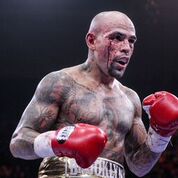


Kovalev deflects talk about Ward, calls Stevenson a piece of bleep

By Norm Frauenheim-
Sergey Kovalev
CARSON, Calif. – Light-heavyweight champion Sergey Kovalev said he didn’t watch Andre Ward’s comeback victory over Paul Smith and instead concentrated on his July 25 title defense against Nadjib Mohammedi.

“Empty talk right now,’’ Kovalev said Saturday during an hour-long session with reporters before a card featuring Timothy Bradley-Jessie Vargas at StubHub Center.

The internet is on fire with speculation about a Ward-Kovalev fight in the wake of Ward’s ninth-round stoppage of Smith on June 20 in Oakland, Calif.

The unbeaten Ward, a ringside analyst for HBO Saturday night, is still deliberating about whether he’ll move to light-heavy or stay at super-middleweight. He fought Smith at a catch-weight, 172 pounds. The guessing game is that Ward is moving toward a big-money showdown against either Kovalev or middleweight champion Gennady Golovkin.

Kovalev manager Egis Klimas said he did watch Ward’s comeback, his first bout in about 19 months.

“He’s interesting,’’ Klimas said. “He’s a different kind of fighter. A very good fighter.’’

Klimas also foresees a Ward-Kovalev showdown, which he says would be “the biggest fight for Sergey.’’

Meanwhile, Kovalev, who faces Mohammedi in a mandatory defense at Las Vegas Mandalay Bay, had plenty to say about Adonis Stevenson, who holds the WBC’s version of the light-heavyweight title.

Kovalev, who is training in nearby Big Bear, continued to call Stevenson a piece of excrement.

“Because he’s running from me,’’ Kovalev said.


Bradley back at StubHub and recalls “a war grounds”

By Norm Frauenheim-
Pacquiao_Bradley_finalPC_140409_005a
CARSON, Calif. – Timothy Bradley returns to a place that gave him headache. A career-defining victory, too.

This time, he plans to leave without the headache and only a victory over Jessie Vargas Saturday night (6:45 pm PST/9:45 pm EST on HBO) in a welterweight bout he hopes will hit the-re-set button for bigger things in his resilient career.

Still, Bradley can’t help but look around at the SubHub Center and wince at what he remembers of March 16, 2013 against Ruslan Provodnikov.

“Horrific,’’ Bradley said.

That was the night Bradley suffered a concussion, yet somehow survived to win a decision over Provodnikov in the 2013 Fight of the Year.

Ever since, Bradley has called the outdoor ring at StubHub “the War-Grounds.’’ Calling it a Center just doesn’t do justice to the battle that transpired more than two years ago.

Bradley isn’t seeking an encore. Who would? A solid decision over Vargas, a newcomer to the welterweight division’s elite ranks, would be enough and perhaps lead to bigger fights for bigger money at even a bigger weight. Bradley has even talked about middleweight champion Gennady Golovkin.

“I was small 140-pounder,’’ said Bradley, who was 146.4 pounds Friday at the weigh-in for the 147-pound bout. “I’m a small 147-pounder. I’d be a small 154-pounder. But, like I’ve been saying all along, I’ll fight anybody.’’

For now, that somebody is Vargas, who is finally getting the big fight he’s been seeking. Vargas, who has a four-inch advantage in reach, also was 146.4 pounds Friday.

The card, HBO’s Boxing 1000th telecast, will also feature super-featherweight prospect Oscar Valdez in his first appearance on the premium network. Valdez (15-0, 14 KOs), a two-time Mexican Olympian who went to school in Tucson, was 127.4 pounds Friday. He faces fellow Mexican Ruben Tamayo (25-5-4, 17 KOs). In his first trip to the scale Tamayo was 129, a pound over the contracted weight, 128. An hour later, Tamayo weighed 128.


Timothy Bradley flushes the anger

By Norm Frauenheim
Pacquiao_Bradley_weighin_140411_007a
Timothy Bradley doesn’t stay angry for too long. Maybe that’s because he’s a nice guy. Or maybe he just doesn’t have time for it. But he doesn’t let it metastasize into a career-killing grudge. That’s for a long line of angry young men in a business full of more grudges than catch-weight clauses.

So it wasn’t exactly a surprise Thursday when Bradley let his rant Tuesday at Jesse Vargas and trainer Erik Morales pass like a summer storm. The good guy in Bradley is impossible to suppress and it was there at a news conference for his Saturday bout with Vargas at the Stub Hub Center in Carson, Calif.

“I have nothing against this team,’’ Bradley (29-1-1, 11 KOs) said as he looked at Vargas and Morales a couple days before HBO Boxing reaches a milestone with its 1000th telecast. “What happened two days ago on that rant – I was just getting out of my car.

“I’m hungry. I’m tired. I gotta take a piss, and I hear someone is saying some negative things about my name. When I went on that rant, I was angry at the time.

“But there’s no disrespect. There’s no bad blood. I respect everybody on the dais – Jessie Vargas and Erik Morales, the great Hall of Fame fighter, Erik Morales.’’

Those are the kind of comments that have come to define Bradley, a promising ringside analyst. He’s a people person with common problems, including a bad day. He’s different only because he fights for a living.

Yet, he’s still approachable in a way that allows they pubic to identify with him. You almost feel as if you could knock on his door to ask if you could borrow his lawn mower. Try that with Floyd Mayweather Jr, who probably doesn’t have a mower, at least not one made by Ferrari.

Bradley went into his rant when he arrived at the fight’s hotel. It quickly exploded on the net, mostly because it was so out of character. It was also hard to figure. What precipitated it?

After promising to whip Vargas’ bleeping posterior, he threatened to do the same to Morales, the former featherweight great and Vargas new trainer. Morales, a former champion at four different weights, replaced Roy Jones Jr.

“I’ll come back and beat his behind if he comes out of retirement,’’ said Bradley, a favorite in his first bout since sustaining a debatable draw in December against Diego Chaves. “Whatever weight. We could fight at a catch-weight. It don’t matter. You want to fight at 200? It doesn’t matter. I’m going to whip your ass next. If you want to talk, you can say whatever you want to say.’’

Huh?

It was never clear what, if anything, Morales said. There was some suspicion that maybe it was just a ploy to sell a fight between two good guys. And, sure enough, Top Rank don’t waste any time sending out video of the rant, far and wide. The other suspicion was that Bradley was grasping for motivation against Vargas (26-0, (KOs), who is unbeaten yet a newcomer to the welterweight division’s elite.

Nope, nope and nope.

Turns out, Bradley only had to go to the men’s room.


The talented, the untalented, and the Nipsey Hussle

By Bart Barry
Andre Ward Post Fight
Saturday on BET, American super middleweight world champion Andre Ward made his much-needed return to boxing, stopping in the ninth round a hapless but stubborn Brit named Paul Smith, right about the time NBC served its viewers a terrible main event called “The Battle for Ohio”, from Las Vegas, that ended with welterweight Shawn Porter decisioning Adrien Broner by refreshingly wide scores. Before his match with Ward, Smith baldly missed weight and got himself beaten bloody for the indiscretion. Before their opening bell, Broner and Porter verbally antagonized one another, then spent 35 of 36 minutes hugging it out.

Adrien Broner’s defense is an atrocity. It took Marcos Maidana to indicate this a ways back, but Shawn Porter offered its definitive proof in round 1 of their Saturday scrum. After feinting Broner into a retreat – one doesn’t say Broner was feinted out of position, since, defensively, he’s never in position – Porter pursued Broner in a sort of relenting-wildman style Porter employed the entire match, and Broner, whose hands and feet obey autonomous, often-competing masters, leaped backwards and threw his arms directly upwards. When Porter’s punch landed and nearly touched the back of Broner’s head to his C1 vertebra, Broner had both white gloves overhead – in a feat of contorted defenselessness not seen in televised fighting since Marco Antonio Barrera slammed Naseem Hamed’s face on a Las Vegas turnbuckle 14 years ago.

Sensing his stick-em-up pose would not disarm Porter so much as a lackadaisical mugger, Broner immediately, and relentlessly, employed his backup plan: Unrepentant hugging. There’s a reason this worked, sapping Porter of what energy a formless volume puncher like him needs to be effective: Broner has disproportionate upperbody strength even for a welterweight (or whatever weight he now campaigns at). Porter badly wanted to punch Broner, but he was generally unable to, both because Porter is nearer to being bad at boxing than good, and because when Broner got his head and arms in a variety of grappling holds, Porter stopped churning his feet and merely tried to outwrestle Broner.

Before one criticizes Porter’s dad for not telling his son to free his hands with his feet, one pauses, in observance of both Fathers’ Day and regression to the mean, to impart: Andre Ward is just about the only athlete left in prizefighting who knows how to do this. Mediocre as his work may be with most everyone else he’s touched, trainer Virgil Hunter deserves much credit for what fantastic work he did teaching Ward how to fight.

How good it was to see Ward back in a prizefighting ring!

Rusty? Yup. Older? Sure. Less effective punching a cruiserweight than a super-middle? Of course. Likely to lose more than three rounds to Gennady Golovkin in a 12-round fight? No way.

Ward is a serious professional. It was a relief, in this sense at least, to see a man in an exhibition match who wouldn’t foul it up with hotdoggery, sloppiness or boredom. Ward punished Paul Smith for coming in at Chavezweight in his BET debut, also BET’s boxing debut; it was indeed cathartic, however cruel and misplaced the catharsis, to watch Ward make Smith repent for the ordeal of a prefight Nipsey Hussle concert.

Saturday, Nipsey stretched the boundaries of imitative talentlessness to a point at which they’d have snapped even 20 years ago; Nipsey Hussles have always existed, but hip-hop’s natural selection – or, heavens, any selection – did not accommodate them until recently. The nature of the hip-hop business is such that new acts must be discovered for each Tuesday release, and there are not, nor have there ever been, that many talented lyricists in America. (Friday evening in Dallas, LL Cool J will headline a show that features Big Daddy Kane and Doug E. Fresh and Whodini and Sugarhill Gang, and it’s instructive to ask, before the first Nipsey apologist draws breath: Is there another iteration of the known universe in which even a creative record-label executive imagines Nipsey Hussle headlining a concert in 2045?)

If these days I read like a curmudgeon, I’ve made my peace with it. The same element, time, that led a once-sprightly optimist to curmudgeonhood, anyway, is what, in part, PBC relied on to draw ratings for its godawful Saturday show. I watched the fights with a couple Puerto Rican friends from the boxing gym, and after fast-forwarding through much of the undercard offerings – NBC helpfully juxtaposed an excellent U.S. Olympian, Errol Spence, with a dreadful one, Terrell Gausha – we all kept reminding ourselves how wonderful it was this unwatchable bore of a main event was on free television, in an unthinking application of a childhood metric. In the digital era, network television mostly means more ads and scripts written round selling things, but for a certain, later portion of the demographic PBC aims at there is still nostalgic meaning in hearing an event will be broadcasted by NBC or CBS or ABC.

Take the pros with the cons, then, say the cons, because if they’re talking about us, they’re promoting us. True that. It’s one of only two things Broner did well Saturday – along with applying a left-hooked tag to Porter’s floating chin at the top of round 12: Respect the brand. Having lost widely to a competitor who lacks most every one of his gifts, Broner was reliably, and durably, self-aggrandizing in defeat. While intellectually incapable of aping anything else Floyd Mayweather tried to teach him, Broner unwaveringly applies one idea that enriched Money May: Tariffs exacted from men who wish to see my bitch ass beat to death look the same on a spreadsheet as fees gratefully paid by admirers.

Bart Barry can be reached via Twitter @bartbarry
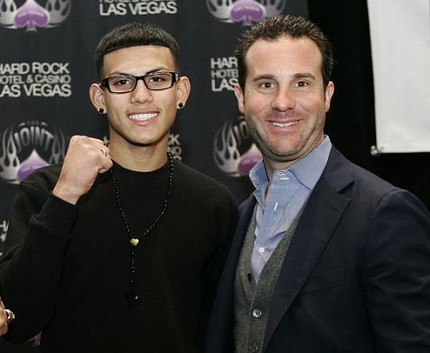


The Axe Man goeth

By Bart Barry–
Nicholas Walters
Saturday in Madison Square Garden Theater, the very place Filipino Nonito Donaire’s candidacy for HBO Fighter of the New Century was subverted 3 1/2 years back by a pesky South American, Jamaican featherweight+1 Nicholas “Axe Man” Walters was unable to stretch Colombian featherweight Miguel Marriaga, much to the theater’s icy chagrin. Walters won a unanimous decision, and neither man stopped fighting or so much as clinched for nearly the full 36-minute duration, but it was not enough action, coming in the form of a 127-pound Jamaican and a Colombian featherweight, evidently, to prod New Yorkers to sustained applause.

Here’s how it went Nov. 9, 2013: Corpus Christi, Texas, was balmy and surprisingly humid for the season, American Bank Center was a dump – there was no WiFi, and the crowd lacked spirit – press row was the sort of discombobulated jumble a publicity outfit alone could conjure, and my marriage was in freefall. There were reasons aplenty for distraction, if not outright anxiety, and yet.

One begins as a boxing writer squinting at every fight, interrogating every match for its historical import and metaphorical capacity for yielding capacious metaphors – every four-rounder comprising a tiny chance at an immortality-manifesting phrase like “I saw him when he was fighting nobodies in empty arenas.” The more one sits ringside, the more his attention wanes, and something like guilt replaces the will to examine fighters’ footwork from yesteryear’s fights. Somewhere round one’s 60th fight card, though, a nearly enlightened state happens: I’m going to enjoy the undercard however I wish – watching the scorekeeper in the silly striped shirt, fantasizing about a ringcard girl, chatting with a pal I’ve not seen since last year, texting with my mother, googling the attendance record of the venue; whatever brings joy – and if something sensational happens, it will hit me with concussive force enough I’ll not be able to miss it even if I so wish.

That was Nicholas Walters. On a card that boasted Alex Saucedo, Vic Darchinyan, Mikey Garcia, Nonito Donaire and other less-talented but more-touted participants, the Jamaican featherweight happened with a concussive force too great to miss; in his U.S. debut, against Mexican Alberto Garza, Walters radiated with a violence of intention and act uncommon even among prizefighters. His form was rough, his punches were wild, but for simple force and desire, Walters was unmatchable that night.

I’m biased about Walters, then, and I could not care less if it offends.

He missed weight Friday, and it hurt. Part of the appeal of a Walters, like an Antonio Margarito before him, is the size advantage he brings to confrontations – and that appeal is immediately nullified by unfairness if he does not find a way, whatever way, to touch the contracted weight for at least a moment or two before bounding three or four weight classes upwards in 24 hours. Saturday Walters stood across from a career featherweight in Marriaga, a man who has fought nothing but 126 pounders for six years, and Walters looked enormous.

Walters is too big to be a featherweight, unless he returns to fighting thrice annually, and chews solely ice chips four weeks every year, and that is a real problem because Walters’ technique is a passport-snatching type, one that will not allow his power to travel to other weightclasses, and without the power to terrorize his opponents, Walters has very, very little.

His reflexes are about average, which might not be an issue except for his reliance on them; Walters thinks he is much quicker than he actually is, and a lot of this autoöverestimation comes from amateur experiences enough to anticipate the nature of others’ attacks, his parries triggered by anticipation more than reaction – particularly evident and perilous in round 1 Saturday, when Walters repeatedly sent his right guard out to defend Marriaga’s jab even before the Colombian knew he would throw it.

Walters straightens noticeably when he throws, making the target of his head blink and rise like a cartoon thought bubble with an idea, and despite his physical disadvantages Marriaga saw this and exploited it several times in the opening half of the fight. Walters’ defense is quite poor, too. He regularly employs the shell tactic of lowering his lead hand, and almost as regularly neglects to tuck his chin fully behind his lead shoulder; Walters’ defense is not so much a shell as an invitation.

What makes all this work, though, is the Axe Man righthand Walter wields. It is offense-as-defense in the very best sense: Before an opponent commits to a combination, he asks – and in Marriaga’s case, noticeably asks – “What if this does not knock that guy stiff?” The force of Walters’ overhand right is enough to alter others’ offensive calculations, which very nearly fits a workable definition for great defense.

No featherweight should be hit with Walters’ righthand, not Marriaga, not Vasyl Lomachenko, not God shrunken in a 126-pound form. The consequence of Walters’ righthand removed Marriaga’s desire to throw punches Saturday; yes, Walters’ body blows reduced the force of Marriaga’s punches, but it was the possibility of getting spearchiseled by that righthand that kept Marriaga from even wanting to bother.

No prizefight is gentle, but Saturday’s affair – while conclusively better than the New York crowd opined – was not withering enough to entitle Walters another 2/3-year rest. If he takes a couple weeks off, but not a month, then heads into camp for a Lomachenko match, there’s reason to think he can distill himself to 126 one last time. Walters-Lomachenko is the sort of palate-cleansing affair our beloved sport sorely needs in 2015.

Bart Barry can be reached via Twitter @bartbarry


Memo to Mayweather: LeBron James is the true definition of TBE

By Norm Frauenheim-
Labron
There’s a lot of talk about TBE this spring. It started with Floyd Mayweather Jr. It continues with LeBron James. But there’s a difference, one that becomes increasingly evident as the drama unfolds in the ongoing NBA Finals.

For Mayweather, TBE is a fashion statement, an acronym he wears on caps, T-shirts and anything else for sale. For James, it’s a personal statement, a challenge he took on in his return to Cleveland.

TBE stands for The Best Ever, of course. But that can mean just about anything. It’s an acronym, after all. Define it with your own values and these days that’s money. Money, money, money. Welcome to the wealth gap. There’s the one percent and the 99 percent who wish we were.

That’s Mayweather’s world and it is re-confirmed every time he looks at Forbes. He’s the magazine’s No. 1-earning athlete all over again, the best ever, better even than Tiger Woods.

Mayweather’s $300 million in Forbes latest edition of its annual list of jockdom’s filthy rich breaks Woods record of $115 million for the 12-month period between 2007 and 2008. Woods, by the way, is still ranked No. 9 by Forbes. But that’s about the only leaderboard he makes any more. Woods is shooting in the 80s and forever shooting himself out of golf’s TBE debate.

Point is, it’s easy and misleading to equate TBE with Forbes. But, I suspect, Mayweather does. If there’s a moment when Mayweather isn’t talking about money or flaunting all it buys, I’ve missed it. He loves to show it off. I’d prefer to see him show off a knockout punch once in a while. But, as a member of the 99 percent, what do I know?

Then, there’s James, who has his own definition of TBE in the month after Mayweather and Pacquiao generated $600 million in an event that was a Gross Domestic Product in more ways than one.

James doesn’t talk about TBE. He’s never been quoted as saying he’s better than Michael Jordan or Magic Johnson, unlike Mayweather, who has said he’s better than Muhammad Ali and Sugar Ray Robinson. Yet, the NBA debate is more lively and forceful than ever with James’ powerful show of talent and will in leading the injury-ridden Cavaliers in a bid to upset the Golden State Warriors.

Increasingly, James’ performance is generating a fan-based debate about why he might be better. With Mayweather, it has been more about him saying he is and the public saying he’s not. Real proof is hard to find in Mayweather’s claim, despite a 48-0 record that is one victory short of Rocky Marciano’s mark.

But it’s there with James, whose return to Cleveland from Miami was a a huge gamble. Yet, he embraced the risk, encountered the adversity and has followed up with one great performance after another in a body of work that says legacy is more than an acronym.

Or an income.


Remember the Cinnamon: Alvarez wrecks Cotto in Alamo City

By Bart Barry–
Canelo_Alvarez
“It is a laborious madness and an impoverishing one, the madness of composing vast books – setting out in five hundred pages an idea that can be perfectly related orally in five minutes. The better way to go about it is to pretend those books already exist, and offer a summary, a commentary on them.” – Jorge Luis Borges

SAN ANTONIO – The Alamodome, just east of this downtown area’s center, has hosted prizefights both great and consequential since its grand opening in 1993. Unfortunately its most recent event will be remembered only in the latter tally.

Saturday, before a partisan-Mexican crowd of 63,392, one which publicists insist smashed seven unique attendance records, Mexican Saul “Canelo” Alvarez laid ruin to Puerto Rican middleweight champion Miguel Cotto, thrashing Cotto, who weighed in on the contracted dot of 154 1/4 pounds, for 9 1/2 of their 11 rounds together before Texas referee Laurence Cole, in an uncharacteristic and unappreciated (by Alamodome attendees), act of insight and empathy, waved a stop to the match at 1:00 of round 11, making Alvarez the first man to contest and win both the WBC’s world junior middleweight and middleweight championships in the same match. Stubbornly scheduled to coincide with Cinco De Mayo weekend, even if the calendar rendered it impossible, Saturday’s Siete De Mayo fiesta was more a cynical ethnic cashout than a party.

“I fight for the people,” Alvarez said immediately afterwards. “Because without the people, there are no people.”

“Miguel Cotto tried to win,” said Cotto.

The miracle was not so much in the fight’s happening, although that was unusual in a year already bad enough to divide two into prizefighting’s committed fanbase yet again, but that it was competitive for long as it lasted. Cotto, effectively retired since battering marvelously the crippled Argentine formally known as Maravilla almost two years ago – and the ‘almost’ is essential, we know, since Cotto employed his now infamous “Point Per Day from Puerto Rican Parade” clause, insisting Alvarez pay a significant penalty for scheduling the superfight in Mayo, not Junio – made a better showing than many forecasters feared when the fight’s contract finally was published during the weighin.

Cotto promoter Roc Nation, a still-novice outfit captained by Big Daddy Kane’s longtime hypeman, has brought none of the innovation promised its semifull Barclay’s Center houses, proving with rapper Jay-Z’s tepid success th’t rapper 50 Cent’s abject failure in the very same gambit was not an anomaly but a trendsetter: Hip-hop artists, evidently, are multiples better at selling hustler epics to suburban teens than combative mismatches to urban adults. Or perhaps that’s a touch unfair to Roc Nation: It did, after all, invent for its Canelo-Cotto weighin a contract-unveiling gamechanger in which the terms of a fight – weightclass, purse, trunk colors, trim, glove size, referee, drugtesting policy, and even permitted punch combinations – remained variables unknown to ticketbuyers until DJ Truth 1 revealed them Friday while Alvarez and Cotto loitered near the scale.

Oddsmakers, themselves doubleblinded as ticketbuyers till Friday’s afternoon announcement, quickly installed Alvarez a 4-1 favorite, upon learning last-minute negotiations by promoter Oscar De La Hoya and cable broadcaster HBO restored Canelo’s left hook to the permitted-use column from which it was struck deliberately by Miguel Cotto’s own pink pen Thursday evening. Writing of HBO, the network’s palpable relief was felt from New York to Lone Star State when the match’s opening line came in well below the unwritten threshold (5-1) determining a match’s fitness for pay-per-view.

“It’s not complicated,” explained an HBO programmer who requested anonymity: “If there’s less than five times the chance our favorite will beat his opponent, take out your wallet. ‘Championship Boxing,’ our flagship program, is for less-competitive matches, obviously, though our 10-1 sweetspot is considerably lower, still, than Showtime’s. Once a fight goes off at 15- or 20-1, we’re going to lean ‘Boxing After Dark’ unless it’s (Gennady) Golovkin.”

Cotto trainer Freddie Roach, ubiquitous as a popup ad since the fight was signed, whenever it was signed, prepared his charge for a seemingly slower version of Alvarez, as Alvarez had little issue finding the Puerto Rican from about the second round to the match’s merciful end in the 11th. Alvarez, the naturally larger man, succeeded where others failed before him, successfully hooking with the hooker in a way 2015 Cotto victim Daniel Geale did not, starting a left hook to the head each time Cotto started a left hook to the body, and twice topspinning Cotto in a way not seen since Manny Pacquiao cleaned the Puerto Rican’s clock in 2009.

There are no sixth chapters in prizefighting, and Cotto’s inability to imperil Canelo even once in their 34 minutes together Saturday portended the end of a career marked by popularity more than greatness. Had Cotto retired immediately after Pacquiao stopped him, or Floyd Mayweather or Austin Trout outclassed him, his legacy might have included as much goodwill as it lacked decisive victories over great fighters in their primes, but the rapacity of Cotto’s cashgrab since 2012 – excepting only his match with Sergio Martinez, since Martinez and his handlers and New York’s athletic commission and HBO are more culpable for a one-legged man’s assault than its perpetrator – has cooled what warm feelings aficionados long reserved for the Puerto Rican.

Cotto’s surly disposition and spartan interview style conclusively wore better on a doomed warrior than a finicky diva.

Bart Barry can be reached via Twitter @bartbarry


FOLLOW COTTO – GEALE LIVE FROM RINGSIDE

Miguel Cotto and Daniel Geale Weigh-in
Follow all the action Live from Barclays Center as Miguel Cotto defends the WBC Middleweight title against former two-time champion Daniel Geale. The action begins at 10:30 PM ET.

12 ROUNDS–WBC MIDDLEWEIGHT CHAMPIONSHIP–MIGUEL COTTO (39-4, 32 KO’S) VS DANIEL GEALE (31-3, 16 KO’S)

Round 1 Cotto lands to the body..left to body..jab..jab..Geale lands a right…10-9 Cotto

Round 2 Cotto lands a right..quick jab..body combo…Geale lands a jab…quick combination…20-18 Cotto

Round 3 Jab snaps Geales head back..jab..left to body…Right from geale…Hard right from Cotto drives Geale into the ropes….30-27 Cotto

Round 4 HUGE LEFT HOOK AND DOWN GEALE..Huge FLURRY AND DOWN GOES GEALE AGAIN…FIGHT STOPPED


Race To Be Next: Contenders battle to grab A-side power

By Norm Frauenheim-
Gennady Golovkin
A shuffle the top of the marquee begins to unfold, almost like a political campaign, in an inevitable transition put into motion by Floyd Mayweather Jr.-Manny Pacquiao. Despite record-setting revenue, the fight was an artistic flop, yet a sign that the business is moving on in search of new stars.

They’re there, on a list topped by Gennady Golovkin, Canelo Alvarez, Terence Crawford and Roman Gonzalez. A preliminary, yet intriguing move takes place Saturday in the Miguel Cotto-Daniel Geale fight at Brooklyn’s Barclays Center. The HBO-televised bout sets the table.

If Cotto – a prominent face in the Mayweather-Pacquiao generation — wins, it looks as if he’ll face Alvarez for perhaps his last big payday in another chapter in the rich Puerto Rican–Mexican tradition. If Cotto loses, then maybe Golovkin bypasses Carl Froch and goes straight to an anticipated date with Canelo in a bout sure to include Fight-of-the-Year hype.

It’s no coincidence, perhaps, that Golovkin plans to be at ringside for Cotto-Geale. He knocked out Geale. He wants Cotto’s version of the middleweight belt. Of all the potential contenders for the pound-for-pound office about to be vacated by Mayweather, Golovkin looks like the front-runner, both in ring skill and popular appeal.

If there were an election among Mexican fans in Los Angeles, Golovkin, a Kazak, would get a lot of votes. In his last two bouts in LA, the crowd has been filled with people wearing T-shirts and campaign-style button that said: Mexicans for GGG.

There’s A-side leverage in that kind of popularity. At some point, it’s bound to bring GGG out the most-feared category and into a powerful bargaining position. Ducking GGG will soon become a bad business move, especially with the Mayweather-Pacquiao generation at the brink of retirement.

Andre Ward looms as another potential candidate in the race to succeed Mayweather. He’s not as likable as Golovkin. But he might be skilled enough to beat him. We’ll begin to see soon enough. In his first fight since November 16, 2013, Ward faces Paul Smith on June 20 in hometown Oakland.

Meanwhile, don’t be surprised if this race gets as crowded as the one with Republicans running for president. There’s talk that master-tactician Mikey Garcia, an unbeaten super-featherweight at 34-0, is preparing to come back. He hasn’t fought since January 25, 2014.

There’s also Deontay Wilder, the first American with a heavyweight belt since Shannon Briggs, who knocked out Sergei Liakhovich for the WBO title in 2006 and stalking Wladimir Klitschko ever since.

Wilder, likable and probably a couple fights away from seriously challenging Klitschko, has boldly declared his candidacy. Wilder likes to talk and he said a lot in a conference call Wednesday for his first title defense June 13 against unknown Eric Molina in Birmingham, Ala. Wilder said he can be a bigger star than Mayweather.

“Most definitely, and I say that with high confidence because the heavyweight division is the cream of the crop in the first place,’’ said Wilder, the WBC champion. “The things that I bring, the charisma, the excitement, the personality that I have, everything about me is all me. It’s totally me.

“Some guys, when they have cameras in their face, they presume to be a certain type of person or the persona about them changes. When the camera is off, they’re a totally different person. I don’t have split personalities. I’m not a fake person. Everything about me is real. Everything you see on (Showtime) All-Access is me. Nothing is scripted, nothing is planned up, nothing.’’

Nothing, other than being next.


Column without end, part 9

By Bart Barry
unnamed
Editor’s note: For part eight, please click here.

*

CARLSBAD, NM – This town is an overpriced outpost on the border of two western states, a dilapidated homebase of sorts for those who might venture to Guadalupe Peak, 8,000 feet in the air, or Carlsbad Caverns, 1,000 feet below ground. It is the nature of adventures they should feature the unknown, and if the unknown were but a roster of pleasant surprises, why, it would be the already-known.

Portrait of a column that nearly was not written:

A half hour lost to suffering through Amir Khan’s latest match, Friday, a glance at HBO’s upcoming fight schedule, Saturday, and Sunday a six-hour drive across terrain unchanging as it is forbidding, a particularly unappealing hotel in a particularly unappealing town, and nothing to do but eat poor barbecue or survey the Wal-Mart parking lot – not the best of Sundays but possibly the worst of them. It brings a sensation like nostalgia’s bullying twin, a reminder what hopelessness Sunday afternoons can hold if you’re not careful with them, if you’re not in a place where forward lamentations are forbidden or gnawing past-tense conditionals do not know to look.

There are oranges and yellows and reds everywhere here, and a washedout blue sky, too, but these are colors, one ought remember, one enjoys in shade or from shade. Blazing-on-blazing, instead, are what the colors of New Mexico are and portend in June.

Hopelessness in the sense of being without hope, being near enough to a moment to caren’t a whit for the future, where hope resides, is a very good thing; hopelessness in the sense of being through a checklist of reasons to go on drawing breath, to be past experiences and disappointments enough to think it probable the future will be worse than this, however bad this is, is a very bad thing. This city has a hopelessness to it in the worse sense of the word. Maybe that changes as you read this (for it certainly does not change as I write it); if you’re reading this on Monday, there’s a good chance I am somewhere near the top of Texas, the peak of Guadalupe Mountains National Park, 55 miles southwest of here, hiking alone in the wilderness, part of an act of faith that goes: Hiking may not get better, but life gets better because of solitude and nature.

It’s an ongoing embrace of the unknown, the necessary ingredient in adventure – what justifies a man’s life. Adventure is duly celebrated in every culture, but a caveat exists that explains the upwards spiral adventuring catalyzes: The more one converts the unknown to the known, markedly, the more one’s tolerance for the known diminishes. It’s another quirk that argues modestly against any perceivable universal order whatever; it’s the reason “mysterious ways” retains such a philosophically seductive sheen.

The 450-mile westwards drive from San Antonio is blessedly open and devoid of the petty competitiveness one finds on most interstates across the fruited plain, the way motorists cluster tightly, surrounded by miles of open space, angling to deny strangers the satisfaction of a spot in the imaginary future area they plan to occupy. Texas has lots of guns and lots of road-rage, and blossoming billboards about road-rage, and if one were to think arming the populace would decrease the likelihood of strangers confronting one another, well, he would be wrong. Arming the populace invariably grows the self in self-protection more than the protection, expanding the perimeter of offense and probably the perception of offense, too.

Writing of which, some might be offended to have come all this way to a boxing column only to encounter a pining-away about flat western spaces and traffic patterns and Sundays. Very well.

Friday British welterweight Amir Khan decisioned American Chris Algieri in a match that was, like most things PBC, somewhat better than feared. British fans are loyal fans – frankly, they are like Mexicans without a fraction the talent pool – and their loyalty is continually tested and occasionally rewarded by Khan, good a representative of this era as any. Khan does not win his career’s biggest fights, or perhaps the fights he loses that he is supposed to win retroactively gain in stature, but he provides suspense because his chin is so poor that it distracts from his footwork, which otherwise would be glaringly awful.

However many trainers he’s had, Khan has never had stricken from his repertoire a sideways-skipping escape that looks frightened no matter the juncture of a fight in which it appears. It is incredible that Algieri, a man who barely survived Ruslan Provodnikov at 140 pounds and lost every minute to little Manny Pacquiao in November, at times looked aggressive and imposing as Antonio Margarito against Khan. Algieri thinks and listens in a way Khan never does, and when he goes in the hard way he emerges from it much better than Khan, too.

“So little from so much” – that ought to be the tagline in September if it turns out Khan looked badly enough Friday to win the Floyd Mayweather retirement-match lottery. Since Algieri couldn’t miss Khan with wildman rights in the opening five rounds, it stands to reason Mayweather might possibly, conditionally, conceivably, tentatively, haltingly go for a knockout to close his career. The Brits would have to acquire from scalpers 15,000 of the MGM Grand’s tickets, with the remaining 1,000 split between celebrity comps and Mayweather fans, but why not?

Enough of this. I’d rather be in Barcelona . . .

*

Editor’s Note: For part 10, please click here.

Bart Barry can be reached via Twitter @bartbarry


Another title with another catch-weight is no title at all

By Norm Frauenheim
cotto_foreman_100605_001a
Amid the clutter of 17 weight classes and more acronyms than letters in the alphabet, there’s something else to hang in that chaotic closest full of belts not worth a decent sanctioning fee at the corner pawnshop.

Catch-weights are just another part of the mess. Like a lot of junk, the catch-weight clause is many things. Sometimes a loophole and always an annoyance, it it’s also part gamesmanship. It’s an opportunity for the guy with A-side power to dictate.

In the end, however, it just represents further confusion in a business screaming for a little clarity, if not order.

It further buries all titles beneath insignificance so deep that few care anymore. Another shovel full of it is about to be dumped on the middleweight title, or whatever piece of it is at stake in the Miguel Cotto-Daniel Geale fight at Brooklyn’s Barclays Centre on June 6 in a HBO-televised bout.

They have agreed not to exceed 157 pounds for a 160-pound title. Does that make any sense? No, says Geale.

“”If it’s not a title fight, then a catch-weight is not a problem,’’ the Australian said Thursday during a conference call for Jay Z’s Roc Nation-promoted bout. “But if you’re fighting for a middleweight title, the weight limit is 160. I find it funny. It should be at 160, but I’m not going to complain.’’

He can’t complain. He agreed to the catch-weight, after all, simply because it was the only way he could secure a chance to challenge Cotto on HBO. Cotto, the A-side on a New York weekend that celebrates his Puerto Rican heritage, has all the leverage in a bout seen as a steppingstone to big money with Mexico’s Canelo Alvarez later this year.

That Cotto would demand it at all, however, might be a sign of some concern about Geale, who is taller and has about a five-inch advantage in reach. Austin Trout had about a four-inch edge in reach in his 2012 upset of Cotto. What’s more, Geale, knocked out in July within three rounds by Gennady Golovkin, is a natural middleweight. Cotto, Puerto Rico’s first champion at four weights, is not. He said so Thursday.

“Everybody knows I’m not a 160-pound fighter,’’ said Cotto, who will be fighting in the division for only the second time since he beat a hobbled Sergio Martinez a year ago.

Against Martinez, Cotto was able to leverage his proven drawing power into negotiating a 159-pound catch-weight. At opening bell, Cotto was at 155. Against an even lesser known Geale, Cotto was able to demand and get a couple of more pounds of flesh. It’s gamesmanship. It’s the way business is done these days, says Coto trainer Freddie Roach. To wit: Force the other guy to sweat. But that’s more of gotcha clause than catch-weight.

“They’re trying to weaken me by making me go down a few more pounds,’’ said Geale, who was born on the island of Tasmania, south of the Aussie continent.

They are, yet in the process they further weaken a title in a division with a fabled history. Mavin Hagler fought for the middleweight championship. Cotto and Geale are fighting for the 157-pound title, what ever that is.

Geale promoter Gary Shaw has an interesting idea. Any title fight at a catch-weight should come with an asterisk. But where would you put it? Between the bauble and the bangle on the belt’s brass plate? Between the interim and the emeritus in the record book? These days, it’d just be more meaningless clutter.


Column without end, part 8

By Bart Barry–
unnamed (768x1024)
Editor’s note: For part seven, please click here.

*

San Antonio Museum of Art currently features a retrospective exhibition of works by American painter Jamie Wyeth, son of Andrew. There is real talent in his paintings. Innovation, too. In a series of works that has seagulls depicting the seven deadly sins, Wyeth uses watercolor paint thickened with honey – a trick Wyeth attributes to his time working in Andy Warhol’s Factory – painted on cardboard. The gulls are ravenous, wild, and terrifying if one imagines himself prey. Wyeth also uses every part of a brush, his fingers, and even his tongue to make a large, gulls-and-waste-disposal piece called “Inferno” for its fire and hellish air.

Innovation without talent produces little but anxiety, and fortunately Wyeth has plenty of talent, even if not so plentifully as his dad did. Would that boxing had fractionally so much talent as innovation, lately.

This sport is increasingly difficult to write about. Last week’s performance by Nicaraguan Roman “Chocolatito” Gonzalez, unfortunately, served like nothing so much as a reminder how much better and easier it was to write about prizefighting a decade ago. About a decade before that, of course, the newspapers abandoned the sport shortly after the larger American public did, another marvelous example of the free market’s creative destruction, but part of the reason writers let it happen – and writers did have some control over the matter – was because there was less to write well about.

The writer is not yet born who can write compellingly about a subject for which he feels no passion, and fleshings-out of box scores and television ratings and polls fool only undiscerning readers, and boxing now accelerates its descent into a place about which no smart being can feel passion. There’s habit, of course, but last week’s end of ESPN’s relentlessly mediocre “Friday Night Fights” stamps an epitaph on that. ESPN always had the budget to outbid HBO and Showtime put together – look what it pays for “Monday Night Football” and “Sunday Night Baseball” – but chose, instead, to treat boxing as a shamefilled filler between collegiate softball games, doing less than Telefutura, much less than Telefutura, to advance interest in our beloved sport.

Manager Al Haymon saw an incredible resource being resolutely squandered and moved on it. Bless him for that. Al Haymon will now fill ESPN, over time, with Just For Men-quality matchmaking. Damn him for this.

One has to care exponentially more about Olympic medals and British boxing than I do to watch garbage like James DeGale versus Andre Dirrell, regardless of whichever network televised it Saturday. Dirrell, whom writer Steve Kim nicknamed “Dirreadful” back when boxing was fun to cover, has been unwatchable for years, and Saturday was by no means his opus – he did get floored a couple times, after all. No, Dirrell’s opus was the opening act of his agent-provocateur role in Showtime’s “Super Six” tournament way back when. Before he refused to fight Andre Ward because Ward would beat him, before he “Matrix-ed” his way into defenselessness and then unconsciousness with Arthur Abraham, Dirrell set a precedent for insipidness against Carl Froch. It will be a long time before a muscular, 168-pound man shows a greater commitment to conflict avoidance than Dirrell showed against Froch in 2009.

Dirrell was the blueprint for an Al Haymon fighter, even before most knew who Haymon was: Telegenic, athletic, a lion in a mismatch – look at that handspeed! – and a pussycat in a fair fight.

Haymon now uses venture capital to corner boxing on American public airwaves, a strategy that, if successful, will end boxing writing, but his approach has one oft-overlooked flaw: Haymon does not appear to like seeing men fight even a little. Never mind the existential resistance to Haymon’s plot from an outfit like Golden Boy Promotions (and never ever mind the token rebuttals from Haymon’s puppet promoters), the meaningful resistance to Haymon’s plot is right here: People who like to watch boxing don’t enjoy the fights Haymon makes.

Aficionados, a romantic and tragically flawed bunch, play an imaginative game with ourselves, perhaps the best escape: We dismiss the most obvious explanation for each happening in our sport and replace it with ideas that are daft. We dismiss what is obvious – Haymon hoodwinked a number of cable guys then moved on to hedgefund managers, without attracting one new fan to boxing – and replace it with a savvy plot to attract with bad fighting Americans who don’t even like good fighting. “Better than feared” is not a growth strategy in a market so tiny that fewer than one-percent of American households even know to have fear.

There is no faking inspiration, regardless of special effects and dramatic lighting, and there is nothing inspiring about Haymon’s stable of fighters feinting at one another, especially if matches continue to happen at an hour not even boxing fans are yet drunk. Haymon’s personal finances will do fine – he’s now the patron saint of every entrepreneur who salivated simultaneously at combat sports and Wall Street but couldn’t think how to marry them – but his brand is no more likely to endure than writers’ collective interest in boxing . . .

*

Editor’s note: For part nine, please click here.

*

Bart Barry can be reached via Twitter @bartbarry
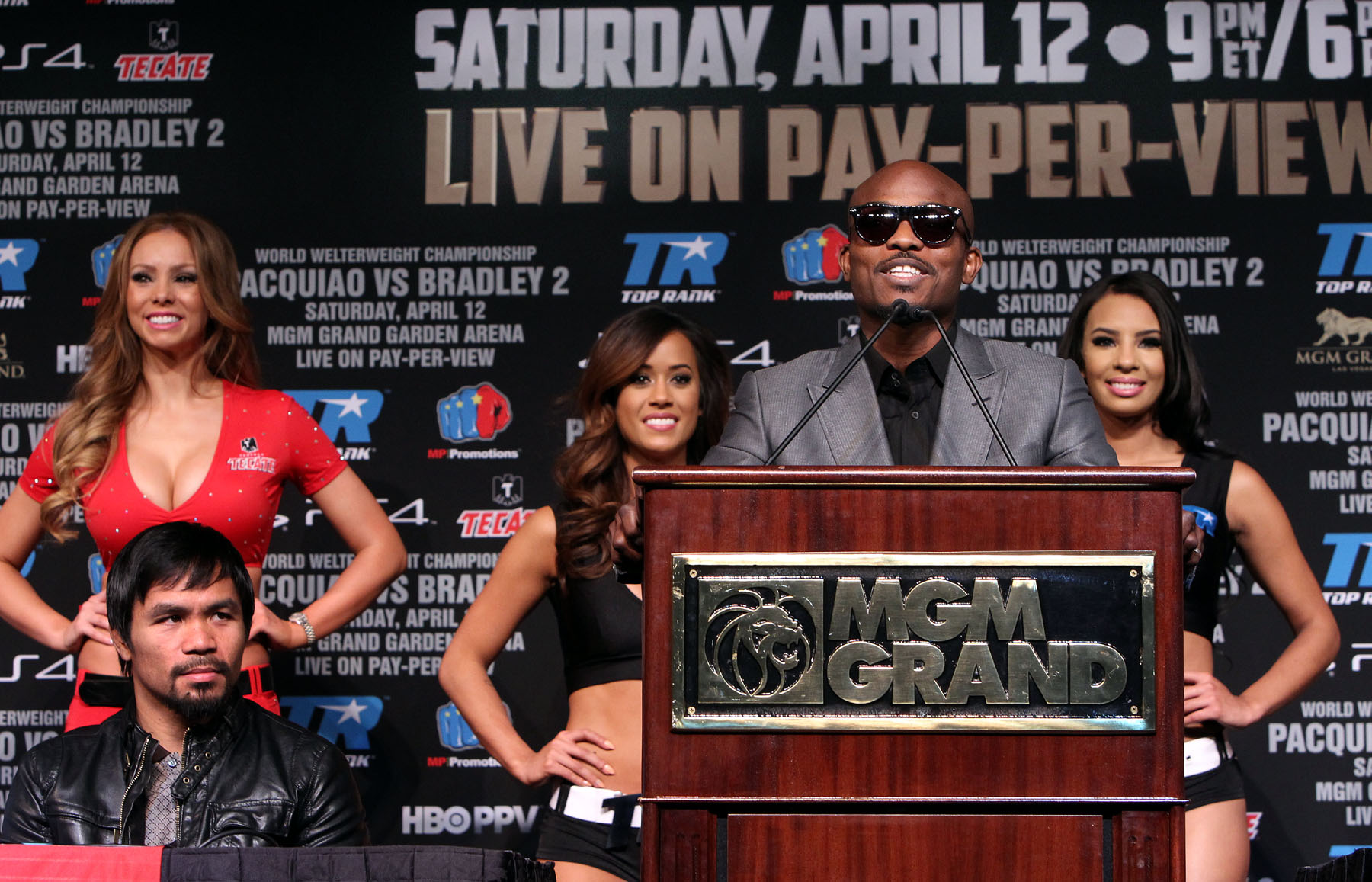
.


Fans move on while Mayweather, Pacquiao sift through the cash and the remains

By Norm Frauenheim-
Pacquiao_Mayweather_150502_003a
Nearly three weeks have passed since Floyd Mayweather Jr.’s decision over Manny Pacquiao in the Letdown of the Century and there’s been no backlash.

Canelo Alvarez’ knockout of James Kirkland on May 9 drew HBO’s biggest audience for non-pay-per-view bout since 2006. A week later, there was a capacity crowd at the rebuilt Forum for Gennady Golovkin’s stoppage of Willie Monroe Jr. and Roman Gonzalez’ celebrated return to the U.S. market.

Perhaps, damage from Mayweather-Pacquiao was contained. Maybe, that’s because it was a fight that boxing’s traditional demographic couldn’t afford. It was an event for the one percent, which yawned throughout 12 rounds and then piled into Bugattis, Ferraris and private jets for a holiday aboard Mediterranean yachts.

Truth is, the one percent was probably never coming back anyway. Meanwhile, the game’s loyal customers had already moved on to the leading names in an emerging generation that has supplanted Mayweather and Pacquiao, who were old news before opening bell. Just plain old, too.

Controversy will linger over the Pacquiao-Mayweather money grab, and that’s all it ever was. Conspiracy theories about the severity of Pacquiao’s shoulder injury will circulate and re-circulate.

Mayweather will continue to blame the Filipino for the lousy fight, yet there was never one second when Mayweather ever showed any inclination at taking matters into his own hands. Pacquiao wasn’t throwing punches at his usual rate. There were moments when he appeared to be wide-open for a fight-ending uppercut. But it was never attempted. Mayweather was content to remain in a defensive posture, even backing away on his heels in later rounds when it was clear Pacquiao had no chance. In a Showtime replay, his father and trainer, Floyd Sr., exhorts his son to get more aggressive.

“You fighting like you scared, man,’’ Floyd Sr. said.

In the post-fight news conference, Mayweather repeatedly demanded an apology from pundits who had said the fight didn’t happen five years ago because he was scared of Pacquao.

Did his father apologize for saying it during the fight? Just wondering.

But there’s been no immediate backlash evident at the box office or in the television ratings. Traditional fans had a pretty good idea about what would happen anyway. Mayweather fought as he always has. He took no chances, fighting for another day – or more to the point—another paycheck.

The guess in this corner is that we have seen the last of Pacquaio, at least in the U.S. He was in decline before he underwent surgery for a reported tear in his right shoulder four days after the fight. It’s expected to heal in six to nine months. Maybe he could fight in 2016. But will he be any better then than he has been the last three-to four years? Doubtful.

Then, issues at how and when he disclosed the injury linger. Why at the post-fight news conference and not in documentation before the weigh-in? The Nevada State Athletic Commission has talked about an investigation, saying Pacquiao could be fined or suspended. Meanwhile, more than 30 civil lawsuits have been filed, many listing him as a defendant. The suits appear to be frivolous. If deflated fans can sue Pacquiao, can New England Patriots quarterback Tom Brady be next?

But they’re there and they’re a headache. If Pacquiao fights again, maybe it will be in a farewell bout at home in the Philippines or in tax-friendly China. Another fight in the U.S. would probably mean lawyers and legal fees.

Then, there’s Mayweather. If there’s a backlash, he might feel it. Mayweather says he intends to fight in September in what would be the final bout in his six-fight deal with Showtime. It figures to be another PPV telecast, perhaps against Amir Khan. But anecdotal evidence indicates there won’t be many return customers. At least 4.4 million bought the Pacquiao-Mayweather telecast at about $100 for high-def. Those lawsuits, no matter how frivolous, represent a groundswell of anger directed at both Pacquiao and Mayweather.

If there’s a September bout, history will be a big part of the sales pitch. It represents a chance for Mayweather to equal Rocky Marciano’s 49-0 record. With a victory, Mayweather could further his claim on the TBE brand, The Best Ever. But even that is problematic. The devil is in the numbers. Mayweather’s caution, never more evident than it was against a vulnerable Pacquiao, has stopped 54.11 percent of his 48 opponents. Marciano scored KOs in 87.76 percent of his bouts. Advantage: Marciano.

Mayweather says he’ll retire after his next fight. But he also says he changes his mind. His pursuit of an unbeaten legacy is reason to think he’ll try to go 50-0 with the 50th bout as the inaugural event at a Las Vegas arena currently under construction.

Mayweather, then a free agent and ever the businessman, could sell No. 50 to the network that offers the most money. But how much would it really be worth? Sift through the remains of Mayweather-Pacquiao, and there’s evidence that it’ll only be a tiny fraction of what looks like a last chance to cash in.


Dung beetles and Chocolatito: Small, extraordinary creatures

By Bart Barry-
20150516_133426-1-1
SAN ANTONIO – While hiking Saturday morning I came across my first in-action dung beetle, a needly faced creature pushing a smooth cylinder of cow excrement along a path beside the Medina River. If you do not think a dung beetle is among nature’s most extraordinary creatures, keep reading. Saturday evening, a nearly as remarkable Nicaraguan flyweight named Roman “Chocolatito” Gonzalez made his debut on American premium cable. These occurrences are only connected by coincidence, and diminutive stature, perhaps loosely, but as both are interesting in their way, please be indulgent.

The male dung beetle pushes his ball, one that can weigh 250 times what he does, backwards, with his hind legs, while walking on his front legs. He pushes extraordinary distances in search of both a mate and a final resting place. Perspective: To match the physicality of the dung beetle’s feat, a man would have to push an M31 tank with his feet while walking on his hands from here to El Paso, only to have every female he encounters ignore him entirely to inspect his tank and calculate the likelihood her offspring could survive in it. There’s good reason ancient peoples deified the dung beetle.

Roman Gonzalez (43-0, 37 KOs), meanwhile, is the real thing, and it is good to see him embraced by HBO – a network with nothing to gain, really, by exposing its subscribers to a man with championships at minimumweight, light flyweight and flyweight, a man who is yet to fight within 40 pounds of what the average American woman weighed in 2014. At 5-foot-3, Gonzalez won his first world title weighing 104 1/2 pounds; he is tiny. Too, he is perfect in form as anyone currently plying the craft of prizefighting.

He’ll never capture America’s imagination the way Floyd Mayweather has, in part because Gonzalez is nearly impossible to dislike. Watch his opponents’ treatment of him after each knockout: They feel sincere affection for him, and he feels sincere affection for them, hugging and bowing and smiling graciously in a way heavyweights never do. Part of that, also coincidentally, returns to a counterintuitive boxing ratio in which the possible consequences of a fight are inversely proportionate to the possible consequences of each punch.

Gonzalez strikes with disproportionate force for a man who weighs 111 pounds, yes, but Wladimir Klitschko strikes with disproportionately more consequence even than his disparity in size with Gonzalez anticipates: A punch from Klitschko is much more than three times as likely to render you unconscious. Which, ironically, makes a fight with Klitschko much safer, in a survivability sense, than a fight with Gonzalez. A single blow whose concussion renders you instantly unconscious is not healthy, of course, but you’d rather that than 150 punches from Gonzalez.

There’s one other incredible advantage the heavyweight champion of the world has over any minimumweight champion: His punches travel distances enough that any member of the laity can observe them at full-speed. Not so with a Gonzalez fight. Gonzalez and Edgar Sosa, Saturday night, were so very much closer, and their motions so very much quicker, in part for traveling shorter distances, in part for having to propel so much less mass at one another, that even a knowledgeable observer could hardly hope not to lose something with peripheral vision.

One needs the fovea to watch Gonzalez, and as the fovea’s scope is notoriously small, one must choose, when television does not choose for him, whether to observe the feet or the hands. The hands are where the consequences are, and Gonzalez pronates masterfully at the ends of his punches, but if you’ve never watched Gonzalez’s footwork, or had the privilege of watching Lee Wylie’s explanation of it, treat yourself to a replay of Saturday with your eyes set on the canvas.

Gonzalez has now replaced Mexican Juan Manuel Marquez as the fighter whose style every trainer in the world should instill in every child he teaches to box. Gonzalez is offensively minded, technically precise, and defensively responsible. Of the three best fighters in the world today – Floyd Mayweather, Gonzalez and Guillermo Rigondeaux – Gonzalez is the one who looks for the knockout every time every bell rings. His attacks are fundamentally correct to a point of being nearly impersonal; where Mayweather seeks to solve an opponent and Rigondeaux gets bored enough to rehearse combinations flagrantly before throwing them, Gonzalez applies a template. Mayweather and Rigondeaux query their massive databases for opponent patterns, finding matches for neutralization, first, before applying offensive templates. Gonzalez, conversely, applies his offensive template in the faith it instantly will make every opponent almost the same.

One other enormous aesthetic difference between Gonzalez and Mayweather: The referee rarely enters the broadcaster’s frame during a Gonzalez fight, while he is ubiquitous whenever Money is in the ring. Half of Gonzalez’s rare clinches do not even require the referee to break them: “We came too close together just now, brother, but no worries, let’s take a step back and resume the milling.”

There was harmony in Saturday’s HBO broadcast, pairing Gonzalez and Kazakh middleweight titlist Gennady Golovkin, even if the order was backwards. Boxing is never a meritocracy till a bell rings, and one hopes Golovkin was impressed enough by Saturday’s opening act to glance through Gonzalez’s record: world championships in three different weight classes, a man fighting larger men rather than calling for littler ones, a prizefighter seeking new challenges in a quest to improve. Gonzalez is six years younger than Golovkin and has seven more knockouts, and somehow, no one is ever “afraid” to fight Gonzalez.

When Willie Monroe Jr. becomes your last fearless man, it’s time to fashion a new marketing slogan.

Bart Barry can be reached via Twitter @bartbarry
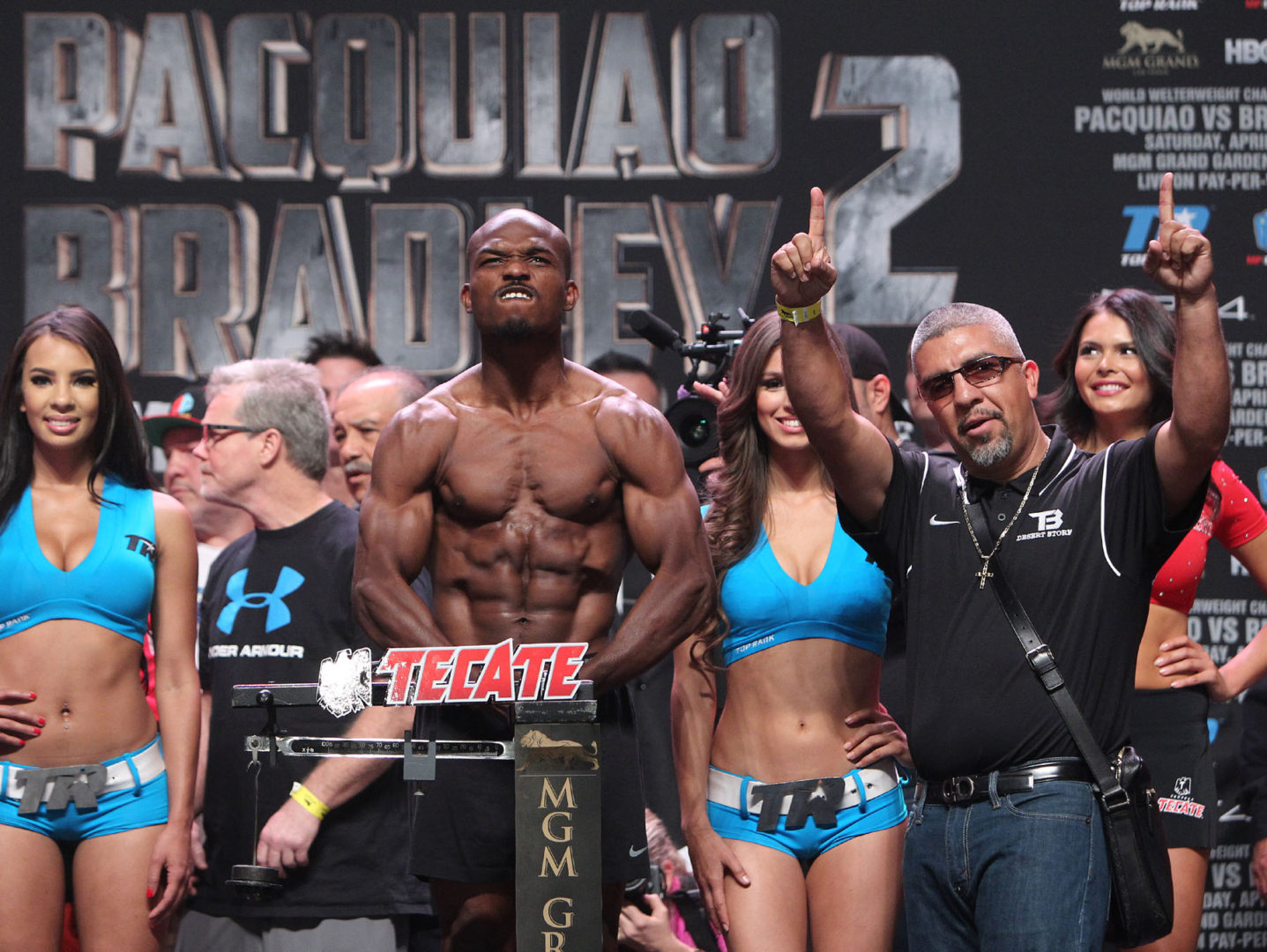


Benavidez, Paez make weight for a bout with some AZ history at stake

By Norm Frauenheim-
Benavidez_Jr_Miranda_121013_001a
PHOENIX, Ariz. – Jose Benavidez Jr. and Jorge Paez Jr. made weight Thursday for a truTV super-lightweight title fight Friday night in a bout that is critical to Benavidez’ future and represents a step in a larger battle to resurrect boxing in Arizona.

Benavidez, (22-0, 15 KOs), Arizona’s first champion with a major championship since Hall of Fame junior-flyweight Michael Carbajal, was at 139 pounds, one under the mandatory for his first defense of the WBA’s interim version of the super-lightweight crown.

Paez (38-5-2-1, 23 KOs) was at 140, although he looked drawn and weary after what appeared to be a struggle to shed pounds.

In another intriguing bout scheduled for 10 rounds, Antonio Orozco (21-0, 15 KOs) of San Diego faces Baltimore’s Emmanuel Taylor (18-3, 12 KOs), who is coming off a loss to Adrien Broner. Both tipped the scale at 141 pounds

Benavidez, who is five inches taller and has at least an inch advantage in reach, appears to be the favorite on his birthday. He turns 23 Friday. The Phoenix native also will be fighting in front of a hometown crowd at US Airways Center. The truTV telecast of the Top Rank promotion is scheduled to begin at 7 p.m. PST (10 p.m. EST). The non-televised portion of the card, which was put together by Iron Boy Promotions of Phoenix, is scheduled to begin at 5 p.m. PST (8 p.m. EST).

There hasn’t been a major fight in the arena, home for the NBA’s Phoenix Suns, since Julio Cesar Chavez’ singular career ended there on Sept. 17, 2005 in a loss to Grover Wiley, a car salesman from Omaha.

Carbajal sold out the arena twice, once in a 1992 TKO of Robinson Cuesta and again in 1993 with stoppage of Domingo Sosa. Then, the place was new, Carbajal was in his prime and the Suns were in the playoffs. Now, there’s talk of building a new arena, Carbajal is 47 and the Suns haven’t been in the playoffs for five successive years. In other words, it’s been a while.

A chance at restoring some of the boxing heritage rests in Benavidez’ accurate hands, which were precise enough to score a controversial decision over Mauricio Herrera for his first title last December in Las Vegas.

Paez, who is known for his toughness, is the son of a legendary Mexican featherweight who also has place in Arizona boxing history. Jorge Paez Sr., also a clown in the Mexican circus, fought six times in Arizona, winning five and battling to a draw with Louie Espinoza in a memorable bout for the IBF’s featherweight title at the old Veterans Memorial Coliseum in 1989. Espinoza, who held the WBA’s super-bantamweight title for about two years, lost a split decision to Paez in a 1990 rematch in Las Vegas.

Today, Espinoza is a carpenter in Chandler, Ariz. Paez Sr, is living in Vegas, according to his son. Meanwhile, Arizona boxing went dormant, in large part because of immigration legislation, SB 1070, so controversial that the late Jose Sulaiman of the World Boxing Council told Mexican boxers to boycott the state.

Some did. Some didn’t. But the real impact came with Mexican-based advertisers, which decided to withdraw sponsorship of bouts scheduled in the state. One was in Phoenix, featuring Benavidez. It got canceled.

The furor over 1070 has subsided. It’s a chance for boxing to recover. But can it? For now, that’s up to Benavidez.


Benavidez hopes to celebrate 23rd birthday with 23rd victory

By Norm Frauenheim
jose_benavidez_signing_100114_001
PHOENIX, Ariz. – He turns 23 on Friday. Jose Benavidez Jr. approaches his birthday unbeaten, yet not unchallenged. His record is the product of a jab, an exclamation point that is at the cutting edge of his natural talent. He was born with it. Lots of it.

The challenges are a little different. Some are self-imposed. Some unwanted. All are collected over time. With every birthday, there always seem to be a few more. How to celebrate a birthday, perhaps, rests in how they are encountered. How they’re conquered.

Coincidental or not, Benavidez plans to celebrate with a 23rd victory to match his 23 years against Jorge Paez Jr. in the first defense of a major title, the World Boxing Association’s interim 140-pound championship, in a truTV bout at US Airways Center.

The interim suggests that some titles are forever. Nothing could be more misleading. Or foolish. Benavidez, a junior no more and probably a full-fledged welterweight before long, seems to understand as much.

The kid, a professional fighter at 17, is gone. There’s a chiseled face and intense eyes as dark as coal. If you’re looking for the wide-eyed teenager, you’ll have to find his photo in a high-school yearbook. The maturing Benavidez (22-0, 15 KOs) talks with newfound self-assurance. The title might be interim. The fighter who has it, however, doesn’t sound like a disposable champion. He said at a news conference Wednesday that the belt would not leave Phoenix, his hometown.

“I guarantee that,’’ he said.

It was a bold comment, especially against a Paez who grew up in boxing. The soft-spoken Paez (38-5-2, 23 KOs) doesn’t appear to have any of the big-top flamboyance his dad had as a clown in the Mexican circus. Yet, the 27-year-old son has shown some of the toughness that Jorge Sr. possessed as a featherweight champion.

Benavidez is fighting more than just Paez Jr. Skepticism lingers. His unanimous decision for the WBA belt over Mauricio Herrera last December in Las Vegas was controversial. HBO’s commentators and most of the writers thought he got a gift from the judges. Against Paez Jr., they’ll be watching to see if they were right. Benavidez’ challenge is to prove them wrong.

“We have to score a stoppage, win convincingly, for my son to take a significant step in his career,’’ his father and trainer Jose Benavidez Sr. said Wednesday during a news conference for a card that includes Antonio Orozco-versus-Emmanuel Taylor and is scheduled to begin at 5 p.m. (PST).

Benavidez, Jr. and Sr., hoped for a rematch with Herrera. Only a convincing victory in a second fight could knock out every doubt. Even if he beats Paez Jr, there will still be controversy about the scorecards against Herrera, a Golden Boy Promotions fighter

“I told him I’d fight him,’’ Benavidez said. “I said so right after the fight and ever since. But he wants bigger names, I guess.’’

Benavidez is probably five years away from his prime. He figures to get better as he matures. It doesn’t always work that way, of course. But an older Benavidez sounds as if he is determined to prove that all of the promise surrounding him as a hyped prospect five years ago was more than just baby fat. He says he is willing to fight anyone.

His Top Rank promoters have confirmed he was a possibility for Terence Crawford last April in the former lightweight champion’s first bout at 140 pounds. Instead, Crawford, the Boxing Writers’ 2014 Fighter of the Year, fought and stopped Puerto Rican Thomas Dulorme on April 18 for a WBO title that was vacant and not tagged with the interim garbage.

Crawford, ticketed for stardom, would have been interpreted as step too far for Benavidez. But he and his father were prepared for it.

“We signed off on it,’’ the senior Benavidez said. “Then, Top Rank got back to us and told us they had decided to go with Dulorme. Hey, Crawford would have been very tough, no doubt. But no matter what happened, my son would have learned a lot.’’

The son says he would have done more than that.

“I’d have beat him,’’ Benavidez Jr. said. “I’m bigger than he is. But that’s OK. It’ll happen someday. There’s still plenty of time.’’
Still plenty of birthdays.


Hit by the Cinnamon stick

By Bart Barry
Canelo Alvarez
HOUSTON – Minute Maid Park, home of the Astros, made a fine fight venue, even, or perhaps especially, when its retractable roof winked at its anxious media section, water dropping from the sky, papers rising from the table, before shutting once more just before the main event. Mexican Saul “Canelo” Alvarez then knocked Texan James Kirkland stiff in the last minute of round 3. And fans who’d been fed, by that late hour, 10 hours of inedible slop, left overjoyed by the spectacle because, whatever Floyd and Manny may opine, positively nothing beats a knockout.

The end came in slow motion at ringside, the better for savoring it. Alvarez set his eyes and head exaggeratedly low, fixing them on Kirkland’s chest – because, as the old timers know, it’s one head’s length from the breastbone to the chin – and then he took his time cocking the righthand. Kirkland, reflexes impaired, already nigh drunk from blows to his skull, picked-up the punch an instant late, exactly as Alvarez intended. Kirkland dropped his hands to the very spot Alvarez’s eyes set. Then Kirkland realized he’d fallen for a feint and hoped without hope he might chasten Alvarez’s aggression with a lunatic lefthook counter. But Kirkland had time only to get the punch started and complement the aesthetics of Alvarez’s perfectly structured right by flailspinning over Alvarez’s properly lowered head, winning for Alvarez Knockout of the Year even if we’re not yet to the ides of May.

It was a right remedy for the disaster of May 2, and it was right th’t a Mexican brought it to us. It was a right remedy, too, for Alvarez’s own terrible showing against Mayweather some time ago.

It brightens the spirit to think Mexicans might have a genuine article, finally, in Alvarez, a man who, if he’s never quite the world’s best prizefighter, is now Mexico’s best prizefighter, not merely its most popular. Popularity, as Edward Norton’s accomplished character in “Birdman” so aptly puts it, is the slutty little cousin of prestige, and while Alvarez has never wanted for popularity, a debt owed more to Mexican daytime television and haircolor than fistic accomplishments, he now has prestige, an order of merit greater because it’s how the meritocracy of boxing would order it.

Alvarez may not yet deserve 30,000 fans in Houston or 40,000 in San Antonio, not when Mayweather and Pacquiao gather half that many at MGM Grand, but the Mexicans gathered in Houston on Saturday absolutely deserved the fight, and ending, Alvarez gave them. Beleaguered as they have been with Son of the Legend, the Legend’s disaster of a son – and the Legend, self-oblivious a sporting legend as you’ll find, was in lock-Tio-Julio-in-the-basement broadcaster mode from ringside Saturday – the Mexicans, boxing’s one reliable demographic in sickness and in health, finally can embrace Alvarez with a clean collective conscience, setting aside Juan Manuel Marquez’s enduring and caustic criticism of Alvarez: one more resentful riff from Mexico’s best prizefighter of the last generation, and best resenter too.

Alvarez does not yet show a spot of resentment, nor should he, and that is a fine thing. Son of the Legend, setter of an entitlement-to-accomplishment ratio that may never be surpassed, came into the sport already resenting every interview his duties caused him to suffer ungladly. In this respect, Alvarez, when compared to Son of the Legend, is a consummate professional. But again, that phrase, “when compared to Son of the Legend, is a consummate professional”, is now elastic enough to accommodate everything from the housekeeping staff at Sheraton Four Points to the waistband of Junior’s next pair of raspberry-pink cotton briefs.

I have interviewed Canelo on the phone twice, and both times were marked by their courtesy and professionalism. Of a culture that values time differently than ours does, Alvarez was the exception to Mexican prizefighters: He called at the appointed time, to the minute, and was entirely cheerful and unassuming. His answers were unremarkable, since child stars in any culture come deprived of what challenging experiences make many adults at least initially captivating, but as that is a thing he cannot control, and as it is ungracious, after all, to blame dullards for their condition, I recall him fondly for his punctuality. And for one other reason: Asked in Spanish if he sees nostalgia, a cognate that works equally well in both languages, in the eyes of his expatriated countrymen when he attends publicity events in, say, Texas, Canelo’s voice rose, and his sincerity gleamed off the edges of a rare, unrehearsed answer:

“Those men, to see them after they work, those men, those . . . If solely you knew how hard they work. Those men are heroic to me.”

Dullard or otherwise, Alvarez has character, and he fights with character. Every other Money Team retread misuses the word “fearless” – attrition hunters who gambol away from opponents till they’ve reduced them, via boredom or exhaustion, to targets, and then roar their imitation of bravery – but Canelo’s selection of opponents has shown no fear whatever. Glance through the rankings of his division and find someone you think could beat him whom he’s avoided.

Austin’s James Kirkland may not have been in top condition, and may not have sold a fraction the tickets in Houston he’d have sold in San Antonio, either, but he brought real violence from a real junior middleweight, Saturday, and Alvarez did not wilt even slightly. Alvarez treated Kirkland like a heavybag for practicing creative combinations on, even while Kirkland bulled and leaned and whacked, in rounds 1 and 2, and Alvarez had the balls to throw a dozen right-uppercut counters, too, exposing his head fully to Kirkland’s left hand.

Alvarez gave a fitting performance to our sport’s fittest fans.

Bart Barry can be reached via Twitter @bartbarry
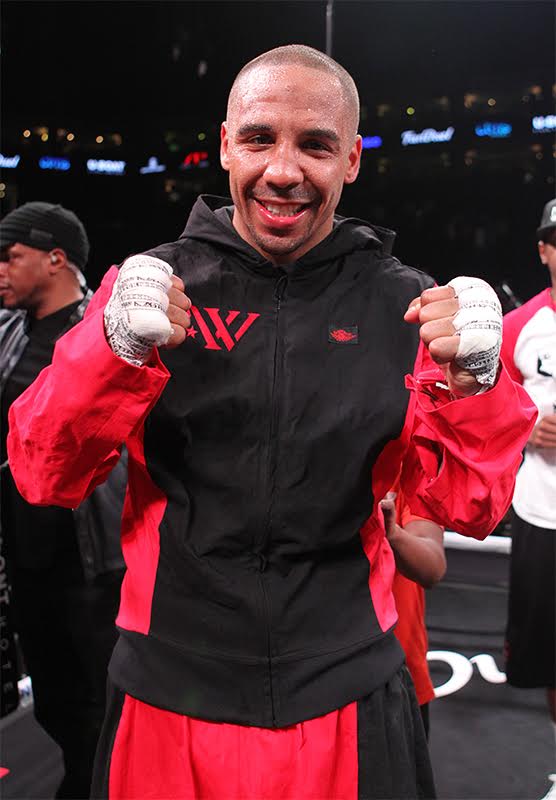


Mayweather Speaks: Changes mind about a Pacquiao rematch

By Norm Frauenheim-
May Pac PC 5
There are more tired excuses than reasonable explanations for what happened May 2 in the colossal failure to fulfill even a fraction of the expectations for the Floyd Mayweather Jr.-Manny Pacquiao fight.

Still, everybody attached to the pay-per-view affair will try. They have to. Believe it or not, there’s even more money to be made. There are still contracts to fulfill.

Hence, we’ll hear form Mayweather all over again Saturday night (9 p.m. ET/PT) in a Showtime exclusive with Jim Gray in a production titled “Inside MAYWEATHER vs. PACQUIAO Epilogue.”

After all the outrage throughout the week following the welterweight bout, it sounds more like autopsy than epilogue. Still, it should be interesting to hear Mayweather address a laundry list of issues and allegations that has emerged since his unanimous decision over Pacquiao at Las Vegas’ MGM Grand.

According to a Showtime release, Mayweather talks about mid-week news that he’d be willing to do a rematch. He confirms he sent a text to ESPN’s Stephen A. Smith, saying he would be interested in a second fight. In what sounds like good news, however, he’s changed his mind.

“Did I text Stephen A. Smith and say I will fight him again? Yeah, but I change my mind,” Mayweather says. “At this particular time, no, because he’s a sore loser and he’s a coward… If you lost, accept the loss and say, ‘Mayweather, you were the better fighter.’ ”

After all the ridicule and criticism of the first fight, wouldn’t a rematch be a working definition of insanity? You know the one about doing the same dumb thing over and over again. Of course, Mayweather might change his mind again. Besides, this is boxing. Oh boy, a trilogy.

According to the release, Mayweather also addresses the post-fight disclosure from Pacquaio that he fought with an injury to his right shoulder. He underwent surgery for a tear on Wednesday in Los Angeles.

“Excuses, excuses, excuses,” says Mayweather, who is 48-0 with one fight left on his Showtime contract. “I’m not going to buy into the bull—… and I don’t want the public to buy into the bull—-. He lost. He knows he lost. I lost a lot of respect for him after all of this.”

According to the release, Mayweather also says he did not know of Pacquiao’s injury, which is believed to have happened in early April while sparring at the Wild Card Gym in Hollywood, Calif.

In an interview with Filipino media on the Sunday after the fight, Pacquiao alleged sabotage. He said that
Mayweather knew about the shoulder. He alleged that somebody, perhaps a Mayweather plant at the Wild Card, leaked the news.

Pacquiao said Mayweather repeatedly pulled on his right arm in an attempt to aggravate the injury. Pacquiao said he re-injured the shoulder in the fourth, ironically his best round in the 12-round bout.

“Absolutely not,” Mayweather says when asked if he was aware of the injury. “He was fast. His left hand was fast. His right hand was fast and he was throwing them both fast and strong.’’


The prestidigitation

By Bart Barry–
Floyd Mayweather 2
Saturday at MGM Grand Garden Arena, in the best fight of May 2015, so far, American Floyd “Money” Mayweather easily decisioned Filipino Manny “Pacman” Pacquiao, and more importantly, he made $100 million. Official scores went: 116-112, 116-112 and 118-110. Only one judge got right a match in which Pacquiao won two rounds, Mayweather possibly lost two rounds, and the rest were not close.

If there is a happy take-away from Saturday for our beloved sport, it is no better than this: Realizing, for once, the average pay-per-viewer drunkenly echolocates boxing telecasts like a bat – forming a picture in his mind as much from what he hears as what fills his eyes – the cocommentating crew from cable networks HBO and Showtime checked-and-balanced itself to an objective broadcast that presented the fight in its lopsided lack of glory, engendering no claims of scandal.

If historians return to Mayweather-Pacquiao someday, though its ultimate irrelevance is probable, it will be to mark a very talented athlete’s final vengeance on a sport he’d grown to hate deeply. There will be a montage of essential moments in this marking: Mayweather gloomily glancing down on Pacquiao’s forehead at the Friday weighin, Mayweather standing directly in front of Pacquiao with his gloves at his waist, Mayweather skipping frantically away in round 12, and Mayweather standing on a ringpost to yell at a large assemblage of people who realized they’d been had again – and this time, worst of all, by five years of their own imaginings.

Manny Pacquiao deserves no praise for his Saturday effort. He made no adjustments. He took entire rounds off. And he gracelessly claimed he won the fight afterwards and further subverted what esteem aficionados held for him, hours later, by attributing his listlessness to a shoulder injury – as if he’d not used that same shoulder to raise his arms jubilantly overhead at the Friday weighin. Coach Freddie, whose termination is likely in promoter Top Rank’s third Manny remake (since already it’s apparent the injured-shoulder gambit smells too desperate), deserves even less praise than Pacquiao does; he trained his charge for a fighter with no more dimensions than Antonio Margarito showed. Sure, Mayweather was much faster at evading counters than Roach was on the handpads, and for an injured fighter Pacquiao certainly hurled that counter right hook, didn’t he, but ultimately Mayweather used the playbook Juan Manuel Marquez wrote in 42 rounds against Pacquiao to expose exactly how little Roach actually taught Pacquiao in their vaunted educational sessions together.

Commentator Jim Lampley was right in his midfight allusion to Marquez-Pacquiao 3, the match whose second half saw Pacquiao hopelessly swim at Marquez, taking five steps where Marquez needed two, and thoughts of Marquez returned, too, in round 9 when Mayweather caught Pacquiao pure with a right cross the much larger man did not plant on, and it was a reminder why, whoever will be recalled as the greater fighter, Marquez will remain the more beloved one for showing a form of courage with which Mayweather is yet to familiarize himself.

How enormous must Mayweather have looked to Pacquiao in that opening round? Seven-feet and about 250 pounds, probably, as Mayweather’s chin was farther from Pacquiao’s anxious fists as any chin ever has been. Unsurprisingly, Paulie Malignaggi, already our generation’s best commentator, seated beside Lennox Lewis, easily its worst, was the one to distill the fight to its quintessence: Mayweather fought at his desired time and distance, and Pacquiao did not.

In round 4 Pacquiao finally caught Mayweather with a punch, countering him with a left cross the same way Marcos Maidana countered him with a right hand in September, and Mayweather put his hands up, retreated and felt what Manny had for him. Which was not much. Pacquiao fought “intelligently” and retreated himself, back to the middle of the ring, so as not to expend energy carelessly. Imagine that: Pacquiao calculated he had a better chance of outsmarting Mayweather than outworking him. It was a reminder, along with Mayweather’s considerable size advantage, of the second part that made this fight a mismatch the day it was signed: Pacquiao, since his 2010 fight with Margarito, is fractionally active as laymen think he is. Pacquiao lost a 2012 decision to Timothy Bradley because he was inactive and inaccurate. He opted for frantic activity in his fourth match with Marquez and got iced. Mismatches with punching bags got split by a rematch with Bradley in which Pacquiao, promised the benefit of every scoring doubt, fought no more than 90 seconds of each round. A kinder and wiser Pacquiao is what aficionados have been served for 4 1/2 years now.

The only chance Pacquiao had or would ever have against Mayweather is if science somehow took the wildcat demon who shredded Erik Morales nine years ago and added 20 pounds of muscle to his frame without slowing him a wink. An impossible thing, in other words, Pacquiao ever had a chance against Mayweather, and every single reader of this column knew it the night Marquez left Pacquiao in a heap, and then we chose to suspend our disbelief because a boxing promoter is good at nothing so much as legerdemain, waving crazily a Chris Algieri doll in his right hand while palming the two-headed Marquez coin in his left.

Those who surround Floyd Mayweather know he cannot imagine boxing in his absence; for Mayweather, the sport of boxing ends the day he retires. Because of Mayweather, few of us will have the presence or means to argue with him when that day comes. Against the future of boxing, then, I’ll take Mayweather: UD-49.

Bart Barry can be reached via Twitter @bartbarry


FOLLOW MAYWEATHER – PACQUIAO LIVE FROM LAS VEGAS

May Pac PC 4
Follow all the action live from the MGM Grand in Las Vegas as the long awaited super fight between Floyd Mayweather and Maanny Pacquiao is a finally here. All the action begins at 9 PM with a 2 fight undercard featuring world champion Vasyl Lomachenko defending his Featherweight title against Gamalier Rodriguez as well as Leo Santa Cruz battling Jose Cayetano

12 ROUNDS–WBA, WBC, WBO WELTERWEIGHT TITLE–FLOYD MAYWEATHER (47-0, 26 KO’S) VS MANNY PACQUIAO (57-5-2, 38 KO’S)

ROUND 1 Good right from Mayweather..hard right..10-9 Mayweather

Round 2 Pacquiao lands a left to the body…Mayweather lands a right…Pacquiao lands a left..19-19

Round 3 Mayweather lands a lead right..Pacquiao gets in a body shot..Lead right from Mayweather..Hard right…29-28 Mayweather

Round 4 Pacquiao landing combinations on the ropes..Big left stuns Mayweather..Pacquiao lands a flurry on the ropes..Big right hook..Mayweather lands a right..Pacquiao gets a left and a body shot..38-38

Round 5 2 hard rights from Mayweather..Jab..48-47 Mayweather

Round 6 Straight left from Pacquiao…straight left to body..Pacqui landimg combos on the ropes..57-57

Round 7 Good right from Mayweather..Left from Pacquiao..67-67

Round 8 Pacquiao lands a left..body shot..Hard right from Mayweather..and another..77-76 Mayweather

Round 9 Hard left from Pacquiao…86-86

Round 10 left to body from Pacquiao..Mayweather lands a jab..Good counter right from Mayweather..96-95 Mayweather..

Round 11right from Mayweather..Bidy shot from Pacquiao..right from Mayweather…hook..106-104 Mayweather

Round 12 Mayweather getting away from Pacquiao…116-113 Mayweather

118-110, 116-112 2 times for Floyd Mayweather

10 ROUND FEATHERWEIGHTS–LEO SANTA CRUZ (29-0-1, 17 KO’S) VS JOSE CAYETANO (17-3, 8 KO’S)

ROUND 1 Big right from Santa Cruz…2 rights..Left from cayetano,,,10-9 Santa Cruz

Round 2 2 rights from Santa Cruz…hard right…Cayetano lands a left..20-18 Santa Cruz

Round 3 Santa Cruz lands a right..Hard right to the head..2 more rights…30-27 Santa Cruz

Round 4 Santa Cruz lands a body shot…40-36 Santa Cruz

Round 5 Hard right from Santa Cruz…50-45 Santa Cruz

Round 6 Santa Cruz lands 2 lefts to the body...60-54 Santa Cruz

Round 7 2 hard shots on the ropes…70-63 Santa Cruz

Round 8 Santa Cruz has a knot on his forehead…79-73 Santa Cruz

Round 9 santa Cruz continue to dominate ...89-82 Santa Cruz

Round 10 99-91 Santa Cruz

100-90 on all cards for Leo Santa Cruz

12 ROUNDS WBO FEATHERWEIGHT TITLE–VASYL LOMACHENKO (3-1, 1 KO) VS GAMALIER RODRIGUEZ (25-2-3, 17 KO’S)

Round 1 Straight left from Lomachenko..combination..10-9 Lomachenko

Round 2 20-19 Lomachenko

Round 3 Lomachenko lands a combination…30-28 Lomacohenk

Round 4 Rodriguez is cut over his right eye..Hard left from Loamchenko..Body shots..Hard right hook…40-37 Lomachenko

Round 5 Rodriguez docked a point for a low blow..Fast combination from Lomachenko….50-45 Lomachenko

Round 6 Lomachenko landing alot more…60-54 Lomachenko

Round 7 Hard body shot from Lomachenko….COMBINATION AND DOWN GOES RODRIGUEZ..70-62 Lomachenko

Round 8 Uppercut, right and uppercut from Lomachenko..Rodriguez gets another point deducted for a low blow..3 punch combination…80-70 Lomachenko

Round 9 BIG RIGHT HOOK AND DOWN GOES RODRIGUEZ AND HE TAKES REFEREE ROBERT BYRD’S 10 COUNT AND THE FIGHT IS OVER