Enthusiasm off the scale for Mayweather-Pacquiao

By Norm Frauenheim
Pacquiao_Mayweather_weighin_150501_001a
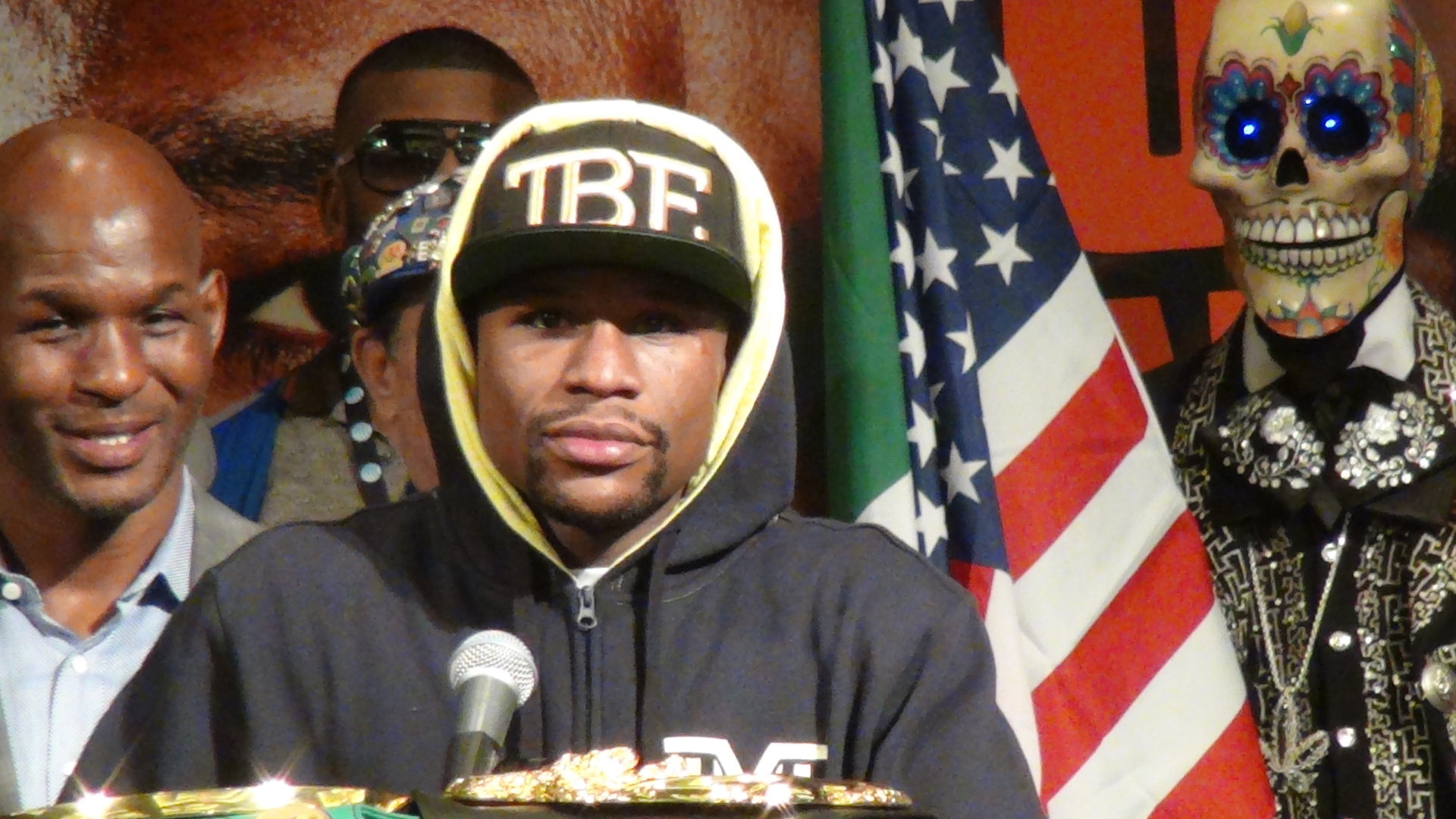
LAS VEGAS – It was a carnival and a concert. It was chaotic. Demonstrators protesting domestic violence stood on one street corner. A preacher stood on another. Seek God, he told a passing crowd full of people seeking a ticket that not even God could afford. They spoke Tagalog, English, Spanish, Russian, politics and Hip-Hop. They waved flags of every stripe.

It was a weigh-in. But the scales were incidental.

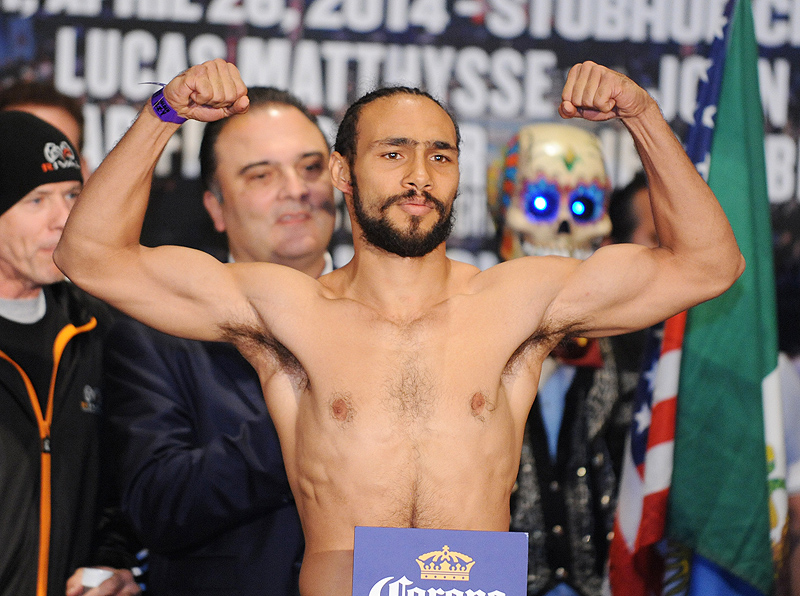
Crowds, chaos and cops gathered in and around the MGM Grand Arena for an event Friday that was scripted in every way, yet off the scale for the kind of attention it has generated. Ordinary weigh-ins are about as exciting as watching somebody brush their teeth. But nothing about Manny Pacquiao and Floyd Mayweather Jr. has been ordinary.

Only extraordinary.

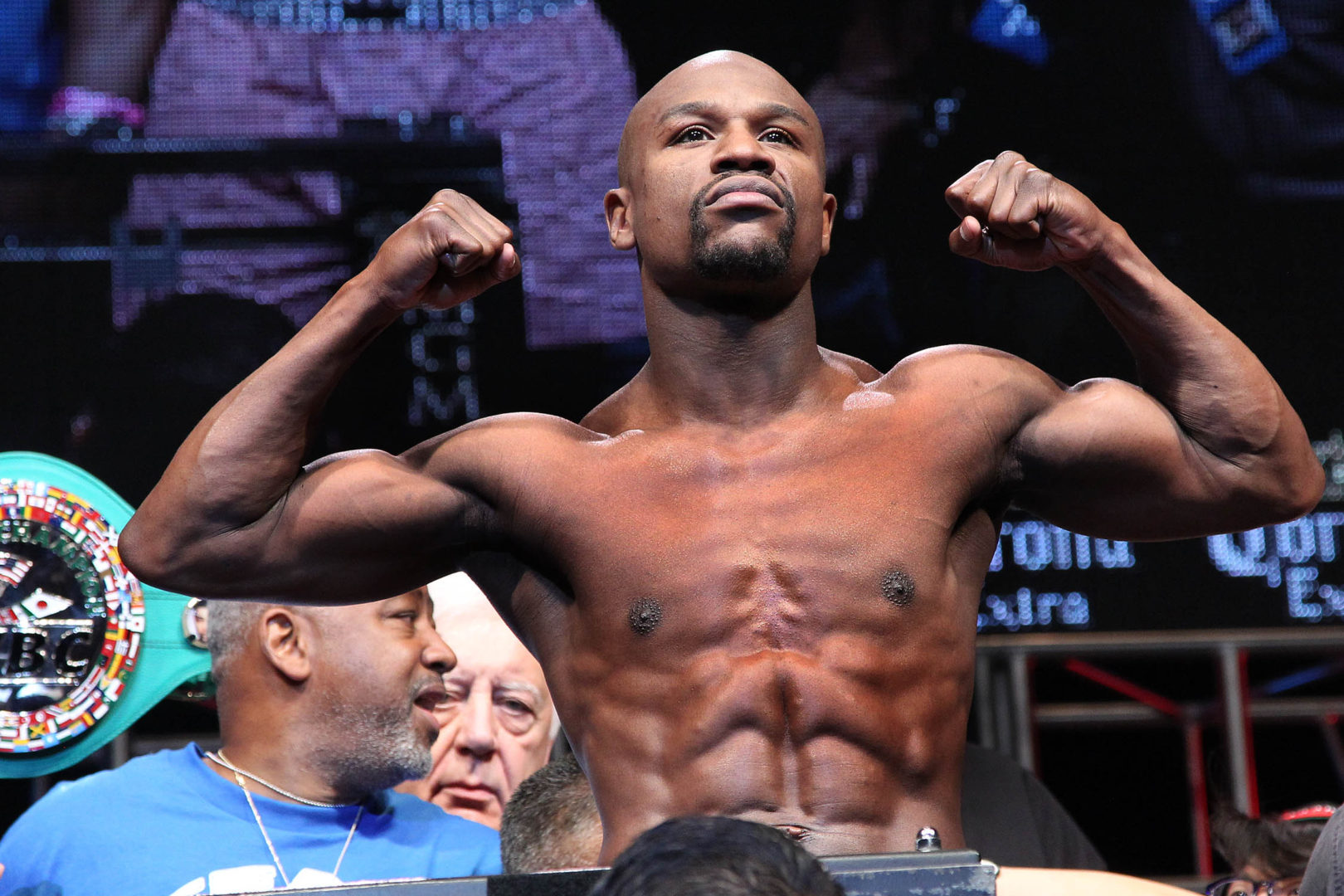
Many among the 11,500 in the Grand Garden Arena for the weigh-in formality paid from $170 to $500 for tickets initially priced at $10 apiece just for the chance to see a couple of welterweights step on and off a digital scale. For the record, Mayweather was 146 pounds; Pacquiao 145.

Most of those same fans and virtually everyone out on those sidewalks won’t be there Saturday night for an opening bell to an exclusive event. Boxing is a sport defined by The People’s Champ. But most of the people can’t get into this one. It’s for the one percent, even at prices that have begun to decline during the last 48 hours. There’s plenty of argument about who wins, Mayweather (47-0, 26 KOs) or Pacquiao (57-5-2, 38 KOs). But there’s no debate about the scalpers. Everybody hopes they take a beating.

Yet even inflated prices have not extinguished the enthusiasm for a bout that has been in the public imagination for at least five years. Mayweather, 38, and Pacquiao, 36, are closer to the end than they are their primes. Even they concede as much. Both talked about retirement throughout the buildup for the bout, a joint pay-per-view telecast by HBO and Showtime (6 p.m. PST/9 p.m. EST).

A reason, perhaps, rests in the respective personalities. Mayweather is easy to dislike. Pacquiao is thoroughly likable. That difference was evident before and after the weigh-in. On the applause meter, it was no contest. It was unanimous for Pacquiao, the Filipino Congressman who smiled and raised his hands above his head like a triumphant American politician at his party’s national convention.

For Mayweather, there were mostly boos. For the last couple of weeks, national pundits have ripped him. His record of domestic abuse was the target of those protesters Friday. Mike Tyson, who was at the weigh-in, joined the critical chorus, calling him “a scared little man.” Laila Ali said he pitied him, calling him “a little boy.’’

Mayweather, subdued and polite throughout the hypoed-filled build-up, has repeatedly said the bout is not good-versus-evil. But try telling that to the crowd that gathered in and around the weigh-in.

Their roles have been cast.

Go ahead and argue about whether that’s fair. But there’s no debate about whether it’s profitable. Record revenue is expected. According to some projections, Mayweather could earn as much as $180 million. Pacquiao purse could hit the $100 million mark. There’s talk that the pay-per-view numbers will reach 4 million, almost twice the record.

The soaring expectations will be hard to fulfill, if not impossible. Mayweather goes into the bout favored by about 2-to-1 odds. He’s the bigger man and might be much bigger after a couple of meals before Saturday night’s opening bell. He’s also a calculating fighter, who at some point might capitalize on mistake the most expected from the more instinctive Pacquiao.

Yet Pacquiao’s calm and energy have been evident throughout one interview after another during the last couple of weeks. He’s been the happy warrior. To wit: When he stepped off the scale Friday, he ate a cookie. Then, he thanked Mayweather after the, posed for the cameras in the stare-down ritual.

“I said thanks, yes,’’ Pacquiao said. “Thank you for making the fight happen.’’

Mayweather said he never heard him. But he did glance over his shoulder at the Filipino after they broke the pose. There was a foreboding look in his eyes. Maybe there was anger. Maybe, fear. Maybe both. Maybe, he knows something nobody else does.


Some perspective on Mayweather – Pacquiao 

By Joseph Davey
May Pac PC 5
For me and I’m sure many boxing fans, Saturday’s superfight between Floyd Mayweather and Manny Pacquiao brings with it equal parts excitement for the bout itself and disdain for it’s coverage. For years at a time, mainstream sports media avoids boxing as if it were a plague that could infect the  very image of America’s most “wholesome” sports. If baseball, basketball and the NFL were an all American backyard barbecue, boxing would be the drunk uncle everyone tries to forget is there. Sure he has some good stories, but they’re the same few you’ve heard a million times.  
When a super fight does come along that’s worthy of public consideration, the talking heads of sports TV respond by dredging up the “I remember whens” and inevitably talking about the same three fighters (Ali, Leonard and Tyson) and how they relate to the upcoming fight. For men and women  who can break down and analyze the 1983 Super Bowl and the 72 World Series like it happened yesterday  and possess a near encyclopedic knowledge of every stat ever collected, their lack of insight into boxing is almost cringe inducing.  It’s as if boxing is constantly happening in the past. The current crop of fighters just never seems to measure up to the greats of yesteryear.   
Even boxing’s own fan base is often guilty of focusing on how much better those bygone fighters are than our current ones. But like all things in life, the past has a way of smoothing out the rough edges and leaving us with a rosy and nostalgic memory of what once was. Case in point is the seemingly constant comparison between Floyd Mayweather and Sugar Ray Leonard that the media is so fond of making. 
 
A common refrain is “yeah Mayweather is good, maybe even great, but Leonard is a legend”. After such comments we hear things like “Leonard fought fighters in their prime!” and “Leonard always fought the best there was! He wan’t afraid to take risks!”  All of which are mostly true. But Leonard’s career, looked at objectively, suffers from the same criticisms now being leveled a Mayweather. Early in his career, Leonard did fight fighters in their prime. His wins over Wilfred Benitez, Roberto Duran and Tommy Hearns were all career defining wins over equally great fighters in their prime. And all of them were the best available fighters at the time Leonard fought them. But Mayweather had a very similar run early in his career with victories over Genaro Hernandez, Diego Corrales and Jose Luis Castillo; all of whom were in their primes.  

No one criticizes Mayweather for this stretch of his career because like Leonard, these wins were over the best in the division and represented fighters who were at the peak of their careers. But after those wins, Mayweather has been criticized for hand picking opponents who are past their prime, making them come up in weight to fight him and in the case of the impending Pacquiao fight, waiting until Pacquiao looked vulnerable to make the fight. This is the point where most media members bring up Leonard as an anti-Mayweather example; a man who never took the easy route and only fought the best at the peak of their powers. But the passage of time has seemingly erased the reality that it was Leonard who championed the tactics employed by Floyd to gain an edge over his opponents. In his bid to win the light heavyweight title, Leonard made titleist  Don Lalonde weigh in at 168 for the bout;  7 pounds under the light heavy limit. The same 7 pounds Mayweather had Juan Manuel Marquez come up in weight to challenge him for the welterweight title. And as incomprehensible as it is, many writers and analysts use Leonard’s win over Marvin Hagler as THE example of Leonard going out of his comfort zone to fight the best.  

They all seem to forget that the Hagler fight was first proposed in 1982, a full 5 years before the two fought. Of the 8 fights Hagler had in those 5 years, one was a close decision win over Roberto Duran and two were legendarily brutal wars against Tommy Hearns and John Mugabi. It was only after Hagler took massive punishment against Mugabi and looked past his best that Leonard came out of retirement and signed to fight him.  

People cite ongoing eye issues as the reason Leonard took so long to make the fight, but it rings about as hollow as Floyd’s drug testing issues holding up the Pacquiao fight. It may have been an issue for a short time, but neither was the reason the bouts were held up for 5 years. Whether Leonard is a better fighter is certainly a legitimate debate, but the way in which people forget that Leonard employed many of the same tactics as Floyd has as much to do with nostalgia as it does with the personas of each fighter. Leonard was universally loved by the public at large and Mayweather is almost as universally reviled. 

 It’s another favorite topic of discussion among the mainstream sporting press: Mayweather the domestic abuser. On the surface it’s a just criticism. What Floyd does outside the ring is over the top, obnoxious and in the case of his domestic violence issues, down right abhorrent. He at times is almost equal parts villainous persona and actual villain. There are no excuses for anyone, let alone a major sports figure, to commit such horrible acts against women. Yet, the way in which these sportscasters talk of his crimes as if they were synonymous with the problems that plague boxing and only boxing is laughable.  

Floyd is an incredibly easy target for this because of his refusal, in many cases, to even answer questions about the abuse. When he does, it’s done with such lack of remorse that he paints the worst possible picture: a man who is the face of a violent sport and has no remorse for using his trade on defenseless women. It is at the least a fairly accurate portrayal. For a man whose job is to render trained men unconscious to put his hands on a woman is a display of the worst qualities in human beings. The conclusion that is often made though, is that boxing is the wild west. It tolerates the worst acts of man so long as the millions of dollars at stake aren’t put in jeopardy. And it’s true.  

Things like steroid use, criminal behavior and underhanded politics are the norm for boxing. With multiple belts in each weight division and “title fights” that take place between fighters no one, including  boxing fans have ever heard of, it’s easy for the average sports fan to sit back and agree that “man, boxing messed up.” Yet for all of it’s flaws (and there are many), boxing is the most honest sport out there. Don’t believe me? Look at the NFL. 

 Few people batted an eye when Ray Rice was suspended for a paltry 2 games following his “alleged” domestic abuse allegations. It was only after the disgusting video of him knocking his wife unconscious that the NFL took real action against him. Anyone who thinks Rice would have sat out more than his 2 game suspension had the video not leaked is dreaming. Players routinely fail drug tests and get into “altercations” outside of the NFL, yet next to nothing is done.  

Kobe Bryant, still revered in the U.S. as well as around the world, settled out of court on civil charges that he raped a 19 year old hotel employee. He then publicly apologized to the fans and the woman who accused him of rape; yet in the same breath contended he did not rape her. A year later, he signed a multi-year, $136 million dollar contract with the Lakers. His sponsors returned. People swept it under the rug and comedians joked about it on late night TV.  
In a way, Floyd Mayweather asking “where’s the video” in response to his domestic violence incidents is his way of saying “why do they get away with it and not me?” Because in the mainstream sports world, it seems all America wants is a half baked apology and promise not to do it again. Sports fans want to see their “heroes” back on the field. And by swallowing their righteous indignation in order to see players return to action, boxing serves as the perfect scapegoat to relieve the American conscience. “Yes, what (sports star) did was bad, but did you see Mayweather?!” He didn’t even apologize!”  The same holds true with money.  

College football fans are more than happy to watch every meaningless bowl game despite the fact that they’re nothing more than hyped up cash grabs. And cash grabs off of the backs of athletes that are literally earning nothing for their effort. Boxing’s multiple belts are such thinly veiled attempts to squeeze money out of the fighters that they stand as a reminder of the greed inherent in the sport.  But for some reason bowl games and the relentless sponsorship ads that run through every major sporting event are passed off by the general public as legitimate forms of sports revenue. The bottom line is all sports are about money. The difference between boxing and the mainstream sports is simply that of appearance.  

Major League Baseball and the NFL hide their greed in boardrooms and closed door meetings. Boxing simply removes the veil and lets the public see the truth. The squabbles between promoters and networks that has been at the forefront of the run up to Mayweather – Pacquiao is merely a peek into the sordid world that is professional sports. In boxing, the fighters, trainers and promoters have always worn their hearts on their sleeve. The sport has always represented the best and worst in human nature. For those of us who love it, the raw honesty of the fighters in and out of the ring is why we keep turning in after the bright lights of a super fight have gone dark. it’s why we buy premium cable packages and shell out 99.95 to watch our “Superbowl”. It’s life in microcosm without the pretense of false appearances. 

 Boxing is the good, bad and ugly of the sporting world. On Saturday, Floyd Mayweather will be fighting for money. More money than any athlete has ever earned in one night of sports. He’s totally unapologetic about his reprehensible actions outside the ring. And yes, he’s fighting for his place in sports history. The question we should all be asking is whether we value the sport over the man. To claim boxing is everything wrong with sports is to gloss over the more difficult issues at play every time an athlete doesn’t live up to the ideals society has expected of them. When the fake apologies are removed and the money is on the table for everyone to see, we should all be asking ourselves whether we care more about the larger issues or just want to see a contest played out at it’s highest level. On May 2nd, maybe we should be asking ourselves whether  sometimes, it may be worth our money to see if the bad guy gets what’s coming. At the very least, all sports fans should have boxing to thank for that.  


What Rivalry? A common fight links Roach and Mayweather Sr.

By Norm Frauenheim
Freddie Roach
LAS VEGAS – There’s not a day, or even a few hours, when there isn’t a volley of insults between Floyd Mayweather Sr. and Freddie Roach. They sound like natural antagonists, separated by a lifetime of irreparable slights. You could assume that they share only mutual contempt. But you’d be wrong.

Roach and the senior Mayweather are an odd couple, alike in the biggest fight of all, bigger than even Manny Pacquiao-Floyd Mayweather Jr.

It’s an alliance they didn’t choose and didn’t want. But life is like that. Cheap shots happen. For Roach, it’s been Parkinson’s, which attacks the central nervous system. For Mayweather Sr, it’s sarcoidosis, a lung disease.

Their response has been almost identical. The fight game is in their DNA. In their blood. It’s what they’ve always done. There was always another dangerous opponent to fight when they were younger. On Saturday night, they’re in opposite corners, Roach for Pacquiao and Mayweather Sr. for his son at the MGM Grand in the biggest fight in decades.

No matter who wins, however, their own personal fights will still be there, a daily battle and similar in a way that transforms lifelong enemies into comrades no matter what they continue to say to and about each other.

Both have gone about the battle the same way everyday.

“I work my ass off,’’ Roach said Thursday.

Mayweather Sr., 62 and a former welterweight, said he has whipped his disease.

“I don’t have sarcoidosis any more,’’ he said

A furious work rate, he said, whipped sarcoidosis, which can affect organs throughout the body. He works at it, sunrise to sunset, in old gyms surrounded by weathered bags, discarded hand wraps and fighters.

For Roach, the fight continues. It always will. Parkinson’s is a progressive disorder. But Roach is stubborn. He battles in a daily fight to keep the symptoms at a standstill.

Daily workouts with fighters at his Wild Card Gym in Hollywood, Calif., have slowed the symptoms.

“Haven’t shaken in 10 months,’’ said Roach, 54, a featherweight and lightweight from 1978 through 1986 who believes he got Parkinson’s because he fought too long.

Roach takes 15 pills a day to relieve rigidity and control the shaking. He also undergoes epidural injections to alleviate pain from a couple of bulging discs.

“Rigidity is the key,’’ said Roach, a seven-time Trainer of the Year. “People slow down and let it take over. Sometimes, I wake up in the morning and don’t feel so good. But once I get to the gym, everything is okay.’’

It’s within the gym that Roach and Mayweather Sr. feel like they can beat just about anybody. And anything.

On Saturday, each vowed that he would beat the other.

“This fight has already been won,’’ said Mayweather’s dad, who continued to call his rival Coach Roach. “We can beat Manny any day, any time, any year, any moment. “…Manny’s best performance was when he got stretched by Juan Manuel Marquez.’’

He even had one of his poems.

“I must confess, I am the best,’’ said Mayweather Sr., still fighting in a way that has kept him and his rival alive.


Pacquiao back at the bully-pulpit

By Norm Frauenheim
May Pac PC 3
LAS VEGAS – Manny Pacquiao is back at the bully pulpit like a saint among sinners. Boxing has never been much of a congregation, at least not in traditional terms. Pass the plate here, and you’re liable to lose it and its proceeds.

But Pacquiao is here, talking about his faith and looking as if he knows something no one else does. His convictions are religious in an arena where that usually means a felony.

Pacquiao believes. So does Floyd Mayweather Jr. But the only belief they have in common is that each is convinced he’ll beat the other Saturday night at the MGM Grand. What they hope to accomplish, however, tells just you how different they really are.

Pacquiao wants converts.

Mayweather wants cash.

No wonder Mayweather is favored. Records amount of cash are expected to come out of a pay-per-view fight that could turn a hedge fund into a religious order.

The task is a little tougher for Pacquiao. But don’t disbelieve him. His faith is no feint. He has repeatedly said he hopes world-wide attention on the fight will be a vehicle for his born-again message. His missionary zeal even includes Mayweather.

“I want him to know God,’’ Pacquiao told a roomful of reporters Wednesday before the two welterweights took to the stage for a formal news conference at the ornate KA Theatre.

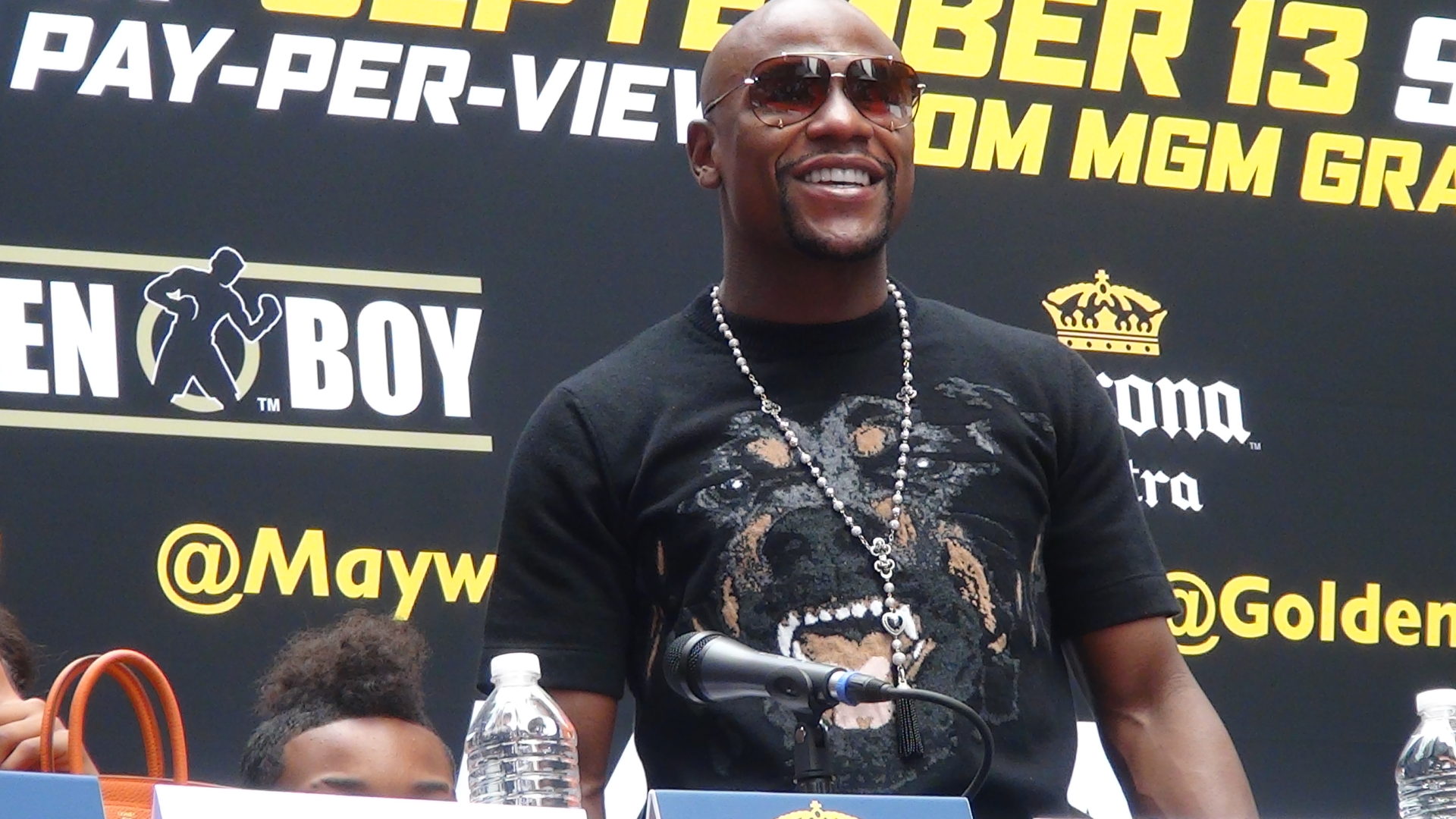
Mayweather doesn’t talk about his faith as much as Pacquiao. But it’s no secret that Mayweather, who again wore The Money Team acronym on his cap and shirt Wednesday, is well-acquainted with the God whose name is on the dollar bill. In that God, he trusts.

Since the fight was announced on Feb. 20, Mayweather has been strictly business.

“This fight is not good-versus-evil,’’ Mayweather said to reporters after Wednesday’s news conference. “This is about one fighter at the top against another fighter at the top.’’

According to the market place of odds, Mayweather is the best of the two. He’s narrowly favored to beat
Pacquiao. His understated manner and tone throughout the weeks of hype preceding opening bell have been the subject of speculation and interpretation. Is it a sign of confidence? Or uncertainty?

At the first news conference in Los Angeles, Roach noticed what everybody else has seen ever since. Roach sees Mayweather’s subdued manner it as a sign of somebody who really didn’t want the fight in the first place It makes him wonder what kind of Mayweather will be there.

“I wonder if he’s going to show up,’’ said Roach, who says speed will win the fight. “I really do.’’

In the opposite corner, there is no doubt. For a couple of years, there have been questions about whether Pacquiao’s born-again faith softened his aggressiveness, knocked out a so-called killer instinct.

For Roach, that question is gone. He says he has the bruises to show for it from holding the mitts while Pacquiao pounded away at them and often through them, with a powerful impact throughout training at the Wild Card Gym in Hollywood, Calif.

For Pacquiao, it is back, perhaps like a faith he says he abandoned for a few years.

“The killer instinct, it’s back,’’ said the Filipino, who hasn’t scored a stoppage since Miguel Cotto in 2009. “It’s a good feeling.’’

Maybe an old-time feeling.


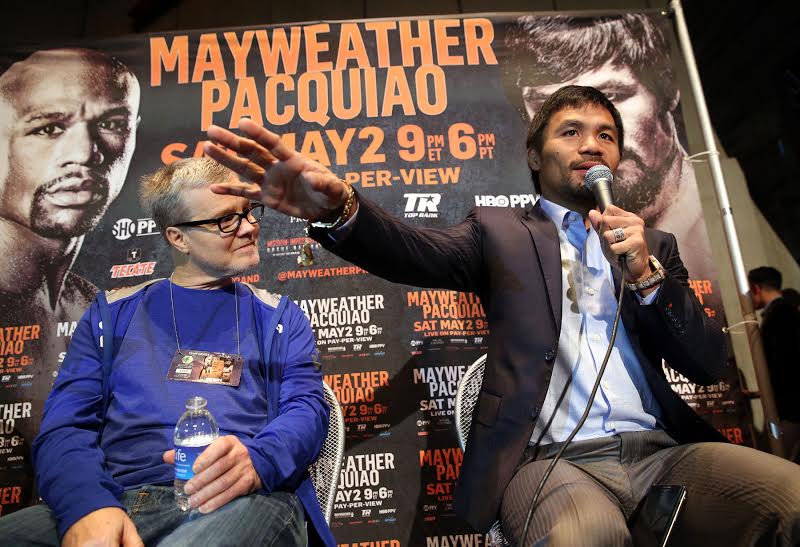
FLOYD MAYWEATHER AND MANNY PACQUIAO FINAL PRESS CONFERENCE QUOTES

May Pac PC 5
LAS VEGAS (April 29, 2015) – Floyd “Money” Mayweather and Manny “Pacman” Pacquiao faced off for only the third time Wednesday during the final press conference for their long-awaited welterweight world championship unification fight this Saturday, May 2, at the MGM Grand Garden Arena, live on pay-per-view.

The last time the boxing superstars met face-to-face was at the Los Angeles press conference to formally announce the mega-fight on March 11. The first time they were photographed up close and personal came at a Miami Heat basketball game in January.

In the most eagerly awaited showdown in years – and the richest fight in boxing history — the undefeated and universally recognized No. 1 pound-for-pound boxer Mayweather (47-0, 26 KOs), an 11-time world champion in five weight divisions, will take on the fighting pride of the Philippines, Pacquiao (57-5-2, 38 KOs), the only boxer to capture world titles in eight weight classes.

Here is what the fighters and executives said Wednesday at the KÀ Theatre at the MGM Grand:

FLOYD MAYWEATHER
“The only thing I can do is take it one day at a time. When the fight gets here I will go out there and do what I do best and that’s go out and fight.

“From the beginning of my career, I’ve always had a game plan. It’s just like chess. We make calculated moves in the ring and outside the ring. I got with the right team and surrounded myself with the right chess pieces.

“I’m a lot wiser than I once was. This fight sells itself. Our ultimate goal was to get to this point, whether it was Manny or another fighter.

“I don’t take anything away from Manny Pacquiao. He’s a solid fighter; a solid competitor and it will be an intriguing matchup come Saturday.

“Everything takes time, it’s all about timing. I’m glad that we had patience and didn’t rush. The time is now, this is the right time for this fight.

“I want to thank all the writers for being here. Some have been around since I was 10-years-old, some have been here for my 19 years in this sport. I’m thankful for all the writers, whether the stories were good stories or bad, you guys kept me relevant for 19 years.

“This fight is about one fighter who is at the top fighting another fighter who is at the top. It’s about giving you guys excitement. We don’t know how this fight is going to play out, but I believe in my skills. I believe I am going to be victorious.

“When I went to training camp I worked extremely hard to win this fight and I’m pretty sure Manny did the same. That’s why this is an intriguing matchup.”

MANNY PACQUIAO
“I don’t have a prediction, but I’m excited. I’m confident and I feel for the first time that I’m ready for the fight.

“I’m so happy because that feeling and that focus that I had many years ago, is back. I’m confident and relaxed.

“My love and eagerness for this fight has made me especially interested.

“I would like to invite everyone to witness the great fight between Floyd and I this Saturday.

“I want to be an example and inspiration to people.

“Before I became a boxer, I used to sleep on the street. I can’t believe that I am in this position. The boy who didn’t have food and slept on the street can have this life.

“On Saturday our goal is to make the fans happy with our performance. Both of us will work very hard to entertain the fans and give a good fight.

“I hope that both Floyd and I do our best on Saturday and to put our name in boxing history.

“The most important thing I hope for is that after the fight I can talk with Floyd about being an inspiration to people all around the world.”

FLOYD MAYWEATHER SR., Mayweather’s Father & Trainer

“Whatever happens on Saturday, it’s going to be one-sided. Pacquiao is going to sleep.

“I’m a trainer, I know what’s going on with fighters. Pacquiao doesn’t have it.

“Everybody can say what they want to say. I’ve said it before, Pacquiao can’t punch. I’m not worried about it. I’m going to have Floyd walk him down.”

FREDDIE ROACH, Pacquiao’s Trainer
“When this fight was announced, Manny’s training level went way up. He’s really excited about this fight.

“I think we will win a decision and outpoint this guy. If the knockout comes then that will be a bonus.

“I think Manny likes to be the underdog. We like pulling upsets and doing things we’re not supposed to do. Manny is going to be that guy.

“We will put a lot of pressure on Floyd. Manny likes to exchange and with his hand speed, this fight will go in our favor.

“Manny is reckless, but that’s his style. He tries to win fights and people enjoy his fights. He gives it his all and sometimes you get knocked out, that’s part of boxing.”

LEONARD ELLERBE, CEO of Mayweather Promotions

“The worldwide attention and interest in this event has been unbelievable and Floyd and Manny deserve it.

“Las Vegas has a rich history of hosting the biggest and best fights in the sport. Over the years Floyd Mayweather has made the MGM his home. This will be his 11th consecutive fight at MGM Grand and the 14th in his career.

“There are two great fighters that will be fighting on Saturday night and the focus needs to be on the fighters, no one else. The focus is on the fighters on Saturday night.

“On May 2, Floyd faces another huge challenge in fellow world champion Manny Pacquiao, in a fight that the whole world is waiting to see. Once again Floyd is out to prove that he is The Best Ever and I know he will on Saturday night.”

BOB ARUM, Hall of Fame Promoter, Top Rank

“This is a great promotion with two great fighters. I hope that this fight will help elevate the rest of boxing. I think based on the interest in this fight, there has been increased interest in boxing as well, and that’s great.

“People have spent a lot of time during this event watching Manny train, but more importantly, watching Freddie teach. It’s great to see two guys on the same wavelength, working on the strategy and then working it out in the ring.”

KEN HERSHMAN, President, HBO Sports

“The journey to this fight has been a remarkable one. In addition to the great writing and reporting that all the media has been doing, HBO has been putting on terrific programs for fight fans to enjoy and bring them closer to the sport.

“One important note for everyone, please order the pay-per-view Saturday night early, or if possible today or tomorrow. We expect that the ordering systems will be overwhelmed. Also, there will be two undercard events starting at 9 p.m. ET/6 p.m. PT and those events can end at any time. We want to make sure that no one misses any of the main event. Tune-in and tune-in early.”

STEPHEN ESPINOZA, Executive Vice President and General Manager, SHOWTIME Sports

“This event is about two world-class athletes, Floyd Mayweather and Manny Pacquiao, who have been working for weeks and weeks, all of their lives really, to get to this precise moment.

“These two fighters have worked their entire lives to get to this moment.

“Floyd and Manny have great teams. Floyd will be the first one to tell you that his team deserves a lot of the credit for his success and I’ve heard Manny say very similar things.

“What makes this event so special and so historic, is that we have two once-in-a-generation athletes who will be meeting in the ring in about 72 hours. We are so proud to have been given the opportunity to be a part of such a highly anticipated event.”

RICHARD STURM, President of Entertainment & Sports for MGM Resorts International

“It is an honor for the MGM Resorts to house this highly anticipated event. Sports fans around the world will have the unique opportunity to watch two of boxing’s top champions, Floyd Mayweather and Manny Pacquiao, as they go toe-to-toe at the MGM Grand Garden Arena.

“Excitement for this event has resonated throughout our MGM Resorts properties and the entire Las Vegas community.

“We have created additional programming at the resorts including closed circuit viewing that gives fans the chance to experience MGM’s great championship fights.

“We just want to thank everybody involved in this great event. We’re excited, we’re proud and we can’t wait for Saturday night.”

* * *

Mayweather vs. Pacquiao is a 12-round welterweight world championship unification bout promoted by Mayweather Promotions and Top Rank Inc., and is sponsored by Tecate con caracter, Paramount Pictures and Skydance Productions –Terminator Genisys, in theaters July 1st, Paramount Pictures & Skydance Productions present MISSION IMPOSSIBLE: ROGUE NATION, in theaters & IMAX July 31st, The Weinstein Company and the new movie Southpaw, starring Jake Gyllenhaal, in theaters everywhere July 24 and Mexico, Live it to Believe it. The three-fight pay-per-view telecast is co-produced and co-distributed by SHOWTIME PPV® and HBO Pay-Per-View® beginning at 9 p.m. ET/ 6 p.m. PT.

For more information visit www.mayweatherpromotions.com, www.toprank.com, www.SHO.com/Sports,www.hbo.com/boxing and www.mgmgrand.com and follow on Twitter at @floydmayweather, @MannyPacquiao @mayweatherpromo, @TRBoxing, @SHOSports, @HBOboxing and @Swanson_Comm, and become a fan on Facebook at www.facebook.com/FloydMayweather, www.facebook.com/TopRankMannyPacquiao www.facebook.com/MayweatherPromotions, www.facebook.com/TRBoxing, www.facebook.com/SHOsports andwww.facebook.com/HBOBoxing.

$: It’s the symbol that means more to Mayweather than the 0

By Norm Frauenheim
floyd-mayweather2

LAS VEGAS – Look into the 0 and you’re supposed to get a look into Floyd Mayweather Jr.’s soul.

But the zero on the right side of his unbeaten record, Mayweather says, is the wrong place to search for hints at what motivates him.

Only one symbol really matters. It’s in his wallet.

“Absolutely, because at the end of the day my daughter can’t eat the zero,’’ Mayweather told reporters Tuesday after his formal arrival at the MGM Grand Garden Arena where he faces Manny Pacquiao Saturday night in one of the biggest fights in years.’’

There always been a debate about whether legacy or money is the reason Mayweather fights. On Tuesday, at least, money ruled. He wore his TMT logo in black on white. At his own arrival at the Mandalay Bay earlier in the day, Pacquiao said that the acronym stood for The Manny Team.

It was a good quip. But money, piled higher than it ever has, was the only sure bet five days before opening bell. First, foremost and forever, this one is about finances and Mayweather wanted to remind everyone that there wouldn’t be record revenues if it weren’t for his keen business sense.

“If all my kids get, say, $50 million apiece, I can say I did my job,’’ he said.

Four kids equal $200 million, which would surpass even the most optimistic projections for the pay-per-view bout. Depending on the source, the number has jumped around, all the way from $80 million at the low end to $180 million at the high end.

“A lot of people criticize me for being a defensive fighter,’’ said Mayweather, who again called Pacquiao reckless, saying it was a gift and a curse. “Last night, I was sitting at home with my mother and daughter. I thought to myself:

‘You know what, I’m proud of myself that I can be in a sport for 19 years and that I’m able to get out of that sport and still be sharp. Be sharp and have all my faculties. That’s remarkable

“The money is about my children and their children.’’

Yeah, it’s also about a so-called Big Boy mansion in Vegas, homes in South Beach and Miami, a private jet and a garage that would make the Ferrari family jealous.

On Tuesday, at least, it sounded as if Mayweather wanted to make sure that he would to be remembered for all of his wealth. He repeatedly said one fight would not define him. Presumably, that meant Saturday night’s fight.

If he prevails over Pacquiao, the guessing game is that the 0 in Mayweather’s resume would drive him to fight at least two more times, once in September in the final fight of a six-bout deal with Showtime and then a 50th fight in a bid to surpass Rocky Marciano’s 49-0 record.

Surely, he wants to go 50-0. Right?

“No,’’ he said.

Instead, he talked about retirement. His dad and trainer, Floyd Sr., has hinted that it’s time to quit or risk permanent injury.

“My father was right,’’ he said. “It’s about time for me to walk away.’’

But the pursuit of money could always draw him back through the ropes. He said Tuesday he had earned an $11 million dollars over the last 48 hours from an investment. He wouldn’t describe the investment, other than to again say “remarkable.’’ At 38, that’s a word he uses as much as he once used profanities.

Yes, he contradicts himself as much as anybody.

“I try to be perfect, but I might have said me and Manny Pacquiao would never fight,’’’ he said. “Now, we fight.

“I’m not perfect.’’

Only the 0 is.


The big payout

By Bart Barry–
mayweather2
Saturday at MGM Grand Garden Arena, before a crowd likely to comprise not one person reading this column, American Floyd Mayweather finally will fight Filipino Manny Pacquiao. The time for manufactured enthusiasm is upon us, for tossing oneself wholly into the futility of shouting in print towards a volume to rival the industrial din of Time Warner and CBS and Walt Disney Company. To wit:

MAYWEATHER WILL WIN THIS FIGHT!!!

At long last, the event anticipated to break revenue records we’re told we care so deeply about arrives on our video-display devices – so order live today! Boxing promoters or managers or advisors, or whichever new euphemism they next hide beneath, are the direct descendants of yestercentury’s circus barker; they believe in an inexhaustible supply of nitwits to whom they can provide the tricky service of relieving one of his wallet, and they fail disproportionately more often than they succeed. But they will not fail Saturday, provided Saturday’s one-off cashgrab is the end of their tabulations.

There’s no way to calculate, immediately, the sum of resentment to be felt among boxing’s comparatively tiny band of loyal supporters – the ones who wasted money on Mayweather-Baldomir, or paid to be in Cowboys Stadium for Pacquiao-Clottey and its egregiously priced parking – but it will be an increasingly easy number to derive in the next five years, as local gyms continue to shutter and ticketsales at local shows continue to follow. Attendance for Saturday represents a proper perspective from which to consider the coming resentment; priced to ensure no rightminded aficionado attends, tickets that, bizarrely even for boxing, were not available till a few days ago betray the organizers’ organizing vision: the biggest boxing matches, made-by-television spectacles, someday soon will happen in broadcasters’ very studios.

Logistics are the reason the largest American boxing outlets cite when asked why they couldn’t broadcast live from, say, Wembley Stadium, where 80,000 Brits gathered to watch Carl Froch in 2014. Putting fights directly in studios should solve that problem. Promoters do not promote any longer in any event; they organize and book and contract vendors of every kind to do all the jobs promoters once did, though boxing was admittedly a touch late to the outsourcing trend, and the inaccessibility of Pacquiao-Mayweather would be collectively maddening if boxing fans did not, as one clever wag on Twitter put it, have Stockholm Syndrome.

That does little, however, to explain MGM Grand’s tolerance for the consequences of a rivalry between promoter Bob Arum and adviser Al Haymon in something so great and complicated as the historic gouging of sportsfans; why the hell is MGM Grand overpaying for this spectacle if not to bring folks to its slot machines? And because of the boxoffice delay, rest assured there will be fewer handles pulled along the Strip this week. Whatever inflated earnings reports crash down on aficionados’ bowed heads in the next month – the pay-per-view number has already been set over 3 million, and anyone who’s been interested in boxing for more than the last month, no more than 500,000 Americans in a nation of 300 million, knows no match has ever officially missed its predicted number; missed numbers do not get announced – rest assured total revenue should have been more.

A week after Pacquiao-Mayweather, Mexican Saul “Canelo” Alvarez will fight Texan James Kirkland at Minute Maid Park in Houston, and will do so before a crowd that should be about three times MGM Grand’s crowd.

“But oh,” cries a passel of aspiring businessmen from their parents’ couches, “they won’t make as much money!”

First of all, why the hell are you so excited about strangers making money?

Second of all, three times as many aficionados and potential aficionados will have a chance to see a major event in a sport you care about, which is better for your sport in every single way.

Third of all, when you cheer against your own self-interests, you don’t look wise or even pragmatic – no matter how expertly you cock the brim of your TMT hat – you look like a damn sucker.

Writing of which, there is a good chance Floyd Mayweather will win 10 or 11 rounds Saturday night. He is much larger than Manny Pacquiao, he has the back of a middleweight, however noble his perfectly ineffective 2010 crusade against PEDs proved, and Pacquiao has not been anywhere near the storm at 147 pounds he was at 130. Pacquiao is better than every opponent Mayweather has dared to fight, yes, and Pacquiao will hit Mayweather with more left hands than the sum of Mayweather opponents since Oscar De La Hoya, but there is a very good chance they will not affect Mayweather very much at all. The recent appointment of Kenny Bayless as Saturday’s referee, too, ensures Mayweather will be allowed to hold to a point of tackling Pacquiao if he’s so compelled, and Pacquiao has never been mistaken for Roberto Duran on the inside, anyway.

Is there a chance Pacquiao’s extraordinary conditioning and unique punching angles will cause fatigue enough to bring the bitch out of Mayweather? Actually, no, not really; whatever Mayweather supporters and everyone else may think, Floyd Mayweather is all fighter when he has to be. Much like Pacquiao’s match with De La Hoya 6 1/2 years ago, this fight will be incredibly intriguing for a round or two – though not $100 worth of intriguing. Much unlike Pacquiao’s 2008 match with De La Hoya, the things Pacquiao will need to do to cause an opponent’s slumpshouldered retreat to his own corner will not be things Pacquiao can do.

I’ll take Mayweather, UD-12.

Bart Barry can be reached via Twitter @bartbarry


Bet On History: Mayweather ups ante and pressure by saying he’s better than Ali

By Norm Frauenheim
Floyd Mayweather
Floyd Mayweather Jr. has been more CEO than TBE from the moment he took the initiative and approached Manny Pacquiao at a Miami Heat game in the move that led to the deal for their May 2 fight at Las Vegas’ MGM Grand.

He’s effective in the CEO role. Likable, too. His exchanges with the media are crisp, forthright and polite. The understated manner is a hint at the calculated, precise tactician he will be at opening bell for what is sure to be the richest fight ever.

He has repeatedly referred to the long-awaited showdown with Pacquiao as just another fight. A job, he calls it.

“I know it’s the biggest fight in boxing history, but I can’t approach it like that,” Mayweather said Wednesday during a conference call. “I’m never going to put any unnecessary pressure on myself.’’

Cool, that makes sense.

Simplicity is an art necessary to any successful battle plan. But here’s the question: Why TBE? Why now?

Mayweather has called himself The Best Ever for a long time, but the claim has been restricted to the TBE acronym seen so often on caps and T-shirts. But now he has decided to re-exert his claim on being history’s best, first in an interview with ESPN’s Stephen A Smith and again Wednesday in a call with reporters from across world.

His comments Wednesday weren’t quite as strong as they were to ESPN. He told Smith he was better than Ali and Sugar Ray Robinson, who is No. 1 in most all-time pound-for-pound ratings. On Wednesday he was asked only about Ali and he talked only about Ali.

“He called himself The Greatest and I call myself TBE,” Mayweather said. “I’m pretty sure I’ll get criticized for what I said, but I could care less. I could care less about the backlash.”

The mystery is why Mayweather would invite the inevitable backlash within a couple of weeks of a fight that, more than any other, will define his place alongside Ali, Robinson and those he didn’t mention. With apologies to all of the legends not mentioned, Sugar Ray Leonard, Roberto Duran, Joe Louis and Julio Cesar Chavez belong in the argument, too.

History didn’t have to be part of the job description, at least not in the way the CEO in Mayweather defined it. But the TBE in him put it there without apology. It also put him at risk of the unnecessary pressure he seeks to avoid.

Perhaps, Mayweather will prove he is as good at making history as he is at making money. Maybe, he knocks out Pacquiao. Maybe, he gets up from a knockdown to score a dramatic victory. Maybe, maybe. But maybe it goes the other way. Maybe, TBE will come to mean Pacquiao.

Most of the pressure is already on Mayweather. He’ll get 60 percent of record-setting revenue, which for him figures to be anywhere from $80 million to a $180 million. He’s also undefeated, which over the years has generated a lot of amateur psychoanalysis. The 0 in that 47-0 record has become a symbol of what motivates Mayweather. The theory is that he protects it at all costs. It’s become his identity.

A loss, former heavyweight champ George Foreman said Thursday in a conference call, “could devastate him as a boxer — not as a man, but as a boxer. He might have to go out in the country somewhere if he lost.’’

Foreman suffered his first loss to Ali in Zaire. He was 40-0 before Ali beat him in The Rumble In The Jungle in 1974. It was a loss that altered the way Foreman looked at himself. It was 15 months before he could step through the ropes again.

“I’m the one guy who knows what it’s like to be undefeated going into a fight like that and to be knocked off that pedestal,” said Foreman, who will appear Saturday night in HBO’s “Mayweather/Pacquiao: The Legends Speak.’’

Ali had already endured defeat. He understood it. Learned from it. Came back from it. In a sport defined by adversity, defeat can forge newfound strength. At 57-5, Pacquiao has experienced it. Mayweather has not.

“Pacquiao has it a little better,’’ said Foreman, who picks the Filipino to win a narrow decision. “He is already picked as the underdog. There’s not a whole lot of pressure on him.

“But when you have never lost before in a fight of this magnitude, there’s so much pressure on you, more pressure than you have ever had before, more pressure than on any other athlete right now.’’

Too much pressure? The CEO says no. But TBE? Proof of Mayweather’s bold claim is still waiting To Be Evaluated on May 2.


Truth and Beauty: Crawford, Piano, Khan, Provodnikov and Matthysse

By Bart Barry-
hdr_00029_1 (1024x767)
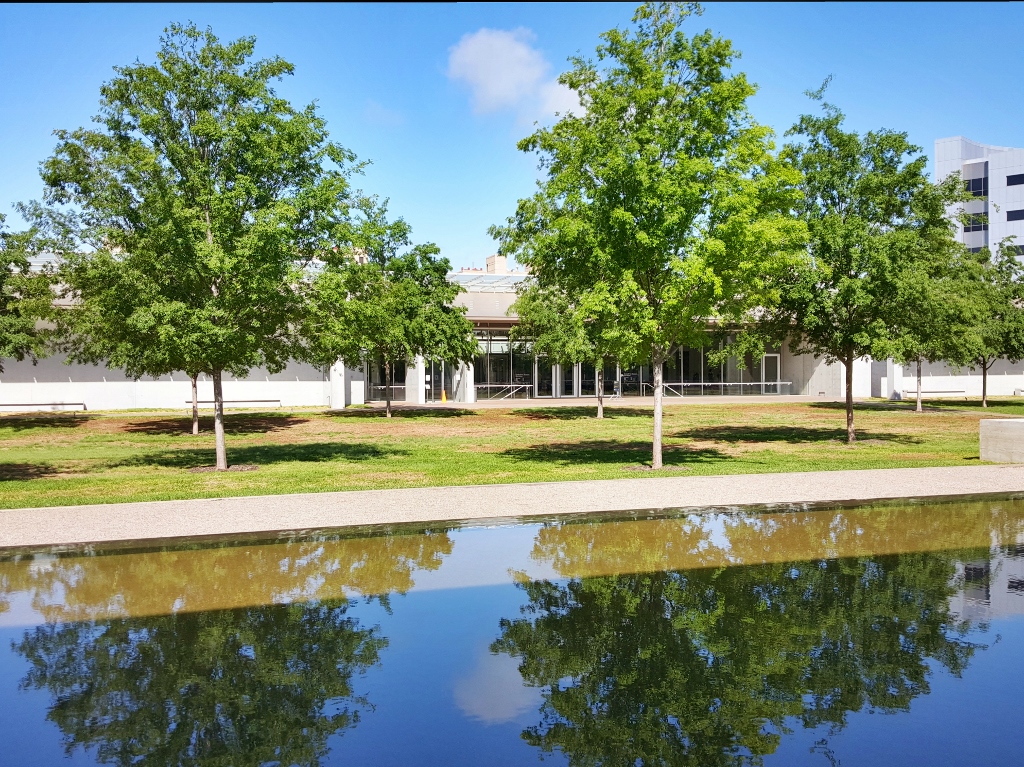
FORT WORTH, Texas – This is not the city where Terence Crawford fought Saturday. But it is part of an enormous thing called Metroplex, a collection of cities that comprises Dallas and Arlington, where Crawford did fight, a 50-mile expanse whose population, if counted as one, would tally 6.5 million souls, sitting just behind New York City and well ahead of Los Angeles among the nation’s largest. I stay at the western end whenever I visit Metroplex because it affords more culture-per-square foot than anywhere I’ve found.

There is a symbiotic relationship shared by truth and beauty; beautiful lies are gaudy by comparison, and an ugly truth is at best tolerated, not celebrated, by a person of any aesthetic taste. Terence Crawford has a beautiful way for being truthful, and Lucas Matthysse and Ruslan Provodnikov have truthful ways for being beautiful, and The Kimbell Art Museum, located 17 miles west of Arlington, the city on whose University of Texas campus Crawford untied Puerto Rican Thomas Dulorme on Saturday before Matthysse decisioned Provodnikov on HBO, has such truth and beauty in its architecture and collection one quickly forgives himself for stretching a metaphor that mayn’t even exist.

For years the front of architect Louis I. Kahn’s masterwork went unseen, as construction equipment obscured everything in pursuit of contemporary Italian master Renzo Piano’s pursuit of a Kahn tribute – the second time Piano has made such a thing, and as the first time, Houston’s Menil Collection, succeeded so completely it established Piano as a modern master, the Italian did it again – but with last year’s opening of the Piano Pavilion, across a plaza from The Kimbell, the lovely waterfalls and marble-lined treeways of Kahn’s entrance are available now to the public at every moment of every day, and the nearly priceless collection that resides beneath The Kimbell’s signature half-circles, topping concrete tops that treat water as light, spilling it from narrow grooves, are available to the public during business hours without a penny’s charge.

In all the great state of Texas, The Kimbell comes closest to duplicating Europe’s genius for gorgeous public spaces. That word above, priceless, is pricey anymore – overused as it is by salesmen on every used-up lot. But it is nearer to fitting than cliche when it modifies what The Kimbell comprises; works by Leonardo and Michelangelo and Caravaggio and most every Renaissance master whose name you begrudgingly memorized for that enormous art-history class in the assembly hall where the dullard professor dimmed the lights for her terrible cave-paintings slideshow that dimmed your lights instants later.

Cut the lights, indeed, Terence.

The only word that bubbles to the top for a careful observer of Crawford is composure. Crawford gives entire rounds to his studious ideal. He sees no occasion for studying tape of his opponents, one assumes, because he reads them and calibrates so well in the moment. Crawford has now fought top professionals and found no scenario among them for which he cannot improvise. He is much more like a prime Andre Ward, lately, than Andre Ward is.

Crawford does everything well, and he does everything well in an assured way any opponent must find sapping if not spiritually crippling. Crawford missed Dulorme wide in the opening rounds with his hard punches and found him only with touches, even when spanking the impetuous Puerto Rican with a righthand lead. A left hook to Dulorme’s body towards the end of round 3 changed the match, and Crawford and Dulorme each sensed it, and especially Crawford did.

Crawford, like Floyd Mayweather and Manny Pacquiao before him, is a natural jewel excavated and polished by promoter Top Rank and its singular capacity for cultivating prizefighters as attractions and achievers. (If you doubt that, ask the lads at Premier Boxing Champions how their Son of the Legend investment looks right now.)

Crawford waited till Dulorme, whose chin is much more reliable when wagging than absorbing – “Sugar Chin” as Crawford’s most colorful trainer, Brian McIntyre, called the Puerto Rican – got too close or too confident or simply forgetful, and Crawford jab-feinted Dulorme’s guard out of position then snapped his head leftwards with a hook and rightwards with a cross, the same elegant 3-2 combo with which Carl Froch cut the lights at Wembley last year, and everything after that was but a chance to inspect Crawford’s poise like he inspected Dulorme’s vulnerabilities, until KO-6.

Nobody who was ringside in this city got to watch what followed in New York on the HBO broadcast, though trust every one of us found the replay on our hotels’ dials Sunday morning. Such sanity in the violence Matthysse and Provodnikov subjected one another to; despite the real damage they did to one another’s bodies and brains in 36 minutes of combat, they embraced like once-separated brothers before the 12th round, and if it were a 15-round fight, there’s plenty of chance the victor would have been the Russian rather than the Argentine. But Matthysse has more class than Provodnikov, if just a wee bit less relentlessness, and Matthysse won Saturday’s tilt the way a prizefighter, a professional combatant, should do it.

If Crawford and Matthysse should fight next, and of course they should, HBO’s junior welterweight champion will be a much better one than PBC’s.

Bart Barry can be reached via Twitter @bartbarry


The Real Story: It’s in what Mayweather and Pacquiao aren’t saying

By Norm Frauenheim–
Floyd Mayweather 2
The curtain has come down on media day, a big-fight ritual that like so much in boxing is an interpretative art.

Floyd Mayweather Jr., Manny Pacquiao and the people surrounding them said a whole lot at their respective camps in Las Vegas and Los Angeles.

But it was what they didn’t say that mattered.

To wit: Mayweather continued to call Pacquiao reckless. Mayweather, of course, is not, which he says is the biggest reason for his longevity as the world’s highest-earning athlete.

What Mayweather didn’t say Tuesday in Las Vegas is that Pacquiao’s recklessness represents the biggest threat to his unbeaten legacy on May 2 at the MGM Grand.

Pacquiao has been at his best when reckless. He was a reckless whirlwind in rematches against Erik Morales and again against Oscar De La Hoya, Ricky Hatton and Antonio Margarito.

He could pull it off then, simply because he had the energy and power to sustain a blinding rate of punches from countless angles created by feet that moved tirelessly and in concert with what his hands were doing.

But is that energy and power still there? The right hand that Juan Manuel Marquez timed so perfectly on Dec. 8, 2012 in a crushing stoppage of the Filipino is a sure sign that they are diminished, or at least not in the abundance that one made him so dangerous.

Recklessness is a powerful weapon with the right complements. Without them, it’s just a weakness bound to appear as it did in a fight Pacquiao was winning until the sixth round when the recklessness was suddenly there.

Unlike his memorable victories over De La Hoya, Pacquiao was left standing, almost flat-footed, with his hands down and chin exposed. Marquez capitalized with a perfectly placed right.

At Pacquiao’s media day in Los Angeles Wednesday, there was talk that he had learned from that one moment. The repeated promise: It would not happen again.

“He’ll attack, but not be careless,’’ Pacquiao advisor Michael Koncz said during live-stream coverage from trainer Freddie Roach’s Wild Card Gym in Hollywood.

Here’s what Koncz didn’t say: Can Pacquiao really attack without being careless?

The guess here is no, he can’t. The younger Pacquiao was inexhaustible and able to turn his streak of recklessness into an unstoppable force. There was simply no counter.

Mayweather never said that much during his session with media in a tent in a strip-mall parking lot outside of his gym. He would only call Pacquiao a future Hall of Famer.

But, he said, “I don’t know if he can make adjustments like I can.’’

Here’s what he didn’t say: At some point, he expects the Pacquiao attack to subside. Relentless will give way to only the reckless.

Maybe, Mayweather will drain some of Pacquiao’s energy with straight right hands. Or, maybe, the bigger Mayweather will lean on him, tie him up, tire him out.

But Mayweather’s quiet confidence throughout the build-up for the much-hyped fight seems to say he expects the moment to be there. That’s when he’ll adjust and perhaps land a perfectly- timed right that will say it all.


Without Premier: Bud, Rocky and Machine

By Bart Barry–
Terence Crawford
Saturday brings a cleansing of the palate, doesn’t it, a reminder of a painfully missed time when you watched boxing because you couldn’t imagine a better use of your energy – not because you felt obligated, as a longtime fan, to support your sport’s return to public airwaves because, apparently, leaving public airwaves was what doomed our sport, even while its return to public airwaves appears far more damning now than its absence did even five years ago.

The word is relief. That is what this weekend brings, a chance to return to the dated ideal of a promoter making real fights because he is accountable to scribe critics. There’s redundancy there, yes, redundancy worth visiting for a spell. Criticism does not exist on television, only in print. The ephemeral, emotional, silly nature of television lends itself directly to promotion, to publicity, to fads, to effects that draw the eye, distract the eye, capitalize on the plague of man’s anxiety: television’s energy, like a teenage girl’s, derives its potency from a fear something better is happening in her absence. Television attracts its audience with a promise that its absence assures regret, and then, its audience drawn, television busies itself with imparting the essential nature of the spectacle, this very moment, the most or greatest of its kind, however absurd the statistics it needs cite, until the apogee of its program’s arc passes, and then it returns to promising the next spectacle cannot stand to be missed by anyone who does not want the crunching anxiety of its absence, and so on.

Elders called it the “boob tube” and did not miss. What now happens to our sport on network television is both potent and inevitable, and every print journalist that covers it cannibalizes what remains of our craft – in a bent more concessionary than saboteur.

Saturday, blessedly, brings no more slickly produced mediocrity from the imagination of an otherworldly figure, a manager advisor who, it may well turn out, hates the sport of boxing to his very marrow, like we’ve grown accustomed to treating in what serious tones we once reserved for actual championship contests conducted by actual champions, and that is not a criticism of Danny Garcia who, for all the middlingness that has attended his last 13 months in the game, a series of spectacles gaudy as his trunks, did things the right, hard way, way back when his promoter wanted him to lose every time he laced up gloves to stretch a fat old legend and a virginal amateur prodigy representing some coveted demographic or other.

Saturday’s co-main event from Arlington, Texas, may not be much of a fight, ultimately, but it will feature 2014’s best fighter plying his wares away from his beloved Nebraska. It is a return of sorts for Terence Crawford to the place he first asserted himself on the undercard of an ill-conceived crowning ceremony for Mikey Garcia, if you remember him, a 2013 Dallas spectacle for which Garcia did not bother acknowledging the weight limit, iced Juan Manuel Lopez, and looked decidedly second-rate when set against the warmup act: Crawford doing everything right. Saturday’s telecast will follow Crawford, the world’s best lightweight, with the world’s most entertaining junior welterweights, Argentine Lucas Matthysse and Russian Ruslan Provodnikov, in the sort of fight that will meet even exalted expectations for violence while being shorter than anticipated, very much the way Brandon Rios’ first tilt with Mike Alvarado did.

Good as Matthysse is, there is a real likelihood he’s not sturdy as Provodnikov; Matthysse has shown greater fragility in his best fights than Provodnikov has. The Russian will go directly at Matthysse, who will return fists with what rage and resentment he can still muster, and each man will endeavor to break his opponent’s spirit without a consideration for his own well-being, exactly the sort of contest the word “fight” still connotes to anyone not associated with the business of shiny-packaged prizefighting, nothing sanitized or Premier about it, serving the primal purpose boxing fulfills if it is worth considering, and no, generally it is not worth considering anymore, not with fractionally the frequency its consideration merited even a few years back, whatever television tells you.

The contemporary sportsfan, hoodwinked by men with MBAs and laptops, believes he should play manager, himself, to express best his affection for what athletes please him best: It’s OK my favorite athlete is not very good at his chosen profession, see, because he’s the best today, and television tells me the best today is the best of all time, and never mind that, cretin, because my athlete is much richer than yesterday’s best athlete who, regardless of what readily available video may suggest, could never beat my favorite athlete because he didn’t have swagger. This is a welcomed infantilization of American sportsfans, or perhaps it’s an international trend – heaven knows soccer fans are no beacons of adulthood – to distract potential customers with what’s sparkly, and it’s enjoying an excellent run.

Terence Crawford should be watched and enjoyed Saturday because he is legitimate talent properly cultivated by promoter Top Rank who builds fighters very much better than anyone else, and Provodnikov and Matthysse should be watched because of the honesty they represent and the perspective such honesty lends the poverty of its peers’ performances. From Siberia and Patagonia, respectively, Provodnikov and Matthysse exhibit a sort of strength that must be bred in men over millennia of sober struggle against a vicious and arbitrary world that endeavors at every turn to eliminate them. Neither man expects another man can hurt him – not uncommon among males in their physical primes. That neither Provodnikov nor Matthysse cares for the probability another man can hurt him, though, that neither man – even unto unconsciousness – has an algorithm for processing instant evidence to the contrary, that, is what makes them special.

Their match, too, will be special. I’ll take Provodnikov, KO-9.

Bart Barry can be reached via Twitter @bartbarry


FOLLOW GARCIA – PETERSON; LEE-QUILLIN LIVE FROM RINGSIDE

Danny Garcia
Follow all the action live as it happens from Barclays Center as world champions Danny Garcia and Lamont Peterson square off in a welterweight contest. The action begins with a middlweight fight between WBO champion Andy Lee and Peter Quillin. The action begins at 8:30 PM ET / 5:30 PT.

12 ROUNDS–WELTERWEIGHTS–DANNY GARCIA (29-0, 17 KO’S) VS LAMONT PETERSON (33-2-1, 17 KO’S)

Round 1 Good straight from Garcia..right..counter right..10-9 Garcia

Round 2 Garcia lands a combination..left..20-18 Garcia..

Round 3 Garcia forcing action..30-27 Garcia

Round 4 Garcia lands a right…40-36 Garcia.

Round 5 Garcia lands a right..Good right..Peterson gets in a right..50-45 Garcia

Round 6 Garcia lands a left to the body..3 punch combo..straight right..Counter left from Peterson..60-54 Garcia

Round 7 Garcia lands a right to the body…2 more hard shots…Peterson lands a combination on the inside..70-63 Garcia

Round 8 Good right from Garcia..Hard body shots from Peterson..hard right…79-73 Garcia

Round 9 Garcia lands a right..Good right from Peterson..4 punch combo from Garcia..Big right..Good right from Peterson and another…Hard right from garcia at the bell….89-82 Garcia

Round 10 Peterson sneaks in a right hand..left hook..98-92 Garcia

Round 11 Garcia lands a right to the body and head..jab from peterson..wicked right..2 hard rights..107-102 Garcia

Round 12 Big right from Peterson..big left…great action down the stretch…116-112 Garcia

114-114…..115-113 twice Garcia

12 ROUNDS MIDDLEWEIGHTS–ANDY LEE (34-2, 24 KO’S) VS PETER QUILLIN (31-0, 22 KO’S)

ROUND 1 Counter right from Lee…Qullin landed a right..HUGE RIGHT AND DOWN GOES LEE…Big Left hook…10-8 Quillin

Round 2 Qullin lands a right..great exchange…20-17 Quillin

Round 3 They are trading hard shots..Quillin lands a big right…BIG RIGHT AND DOWN GOES LEE..Straight left from Lee. Lee bleeding from the left eye..Left from Lee…30-25 Quillin

Round 4 Lee lands a jab..39-35 Quillin

Round 5 Hard left hook by Quilin sets off a furious exchange..49-44 Quillin

Round 6 Lee lands a coundter right hook…58-54 Quillin

Round 7 Sneaky left from Lee..Left from Quillin..BIG RIGHT HOOK AND DOWN GOES QUILLIN..66-64 Quillin

Round 8 Quillin lands a hard right..76-73 Quillin

Round 9 Left from Quillin..Right hook from Lee..straight left..Jab from Quillin..85-83 Quillin

Round 10 2 hard rights from Quillin..Straight left from Lee..Straight left..left from Quillin..95-92 Quillin

Round 11 Right from Quillin..105-101 Quillin

Round 12 Quillin lands a right..straight left from Lee…Solid right from Quillin..115-110 Quillin

113-112 Quillin…..113-112 Lee…113-113 A SPLIT DRAW


Forget Redemption: Garcia-Peterson is about recognition

By Norm Frauenheim-
Danny Garcia
Danny Garcia and Lamont Peterson are quick to say they aren’t fighting for redemption Saturday night at Barclays in Brooklyn.

Fair enough. It’s called prize fighting. Going into the ring for redemption is little bit like going to the bank to pray. There’s a pretty good chance you’ll leave broke.

“I don’t see this as redemption,’’ Garcia (29-0, 17 KOs) said of the first bout after a forgettable year for both fighters. “This is a great match-up.’’

Potentially, it is in a 143-pound fight that will also provide an early, yet significant, look at whether Al Haymon’s PBC (Premier Boxing Champions) can sustain its initial success in its second appearance on NBC (8:30 pm ET/ 5:30 pm PST).

“For me, there’s no redemption, either,’’ Peterson (33-2-1, 17 KOs) said. “No redemption for me. What’s in the past is in the past.’’

But the problem is what lurks in that immediate past. In 2014, both fought. Both won. But the buzz was gone.

Garcia, an emerging star in 2013, escaped with a split decision over Mauricio Herrera and a stopped an over-matched Rod Salka. Peterson, coming off a scary knockout loss to Lucas Matthysse in 2013, beat Dierry Jean and Edgar Santana.

Go ahead and trash the redemption angle, but the task Saturday night is to re-awaken interest in each and perhaps re-introduce them as potential players for whatever happens post-Floyd Mayweather Jr.-Manny Pacquiao on May 2.

Neither would – or even could – talk much about whether they might be fighting for a chance at the winner.

“I’m not worried about fighting Floyd Mayweather at all,’’ said Peterson, who has a full beard and some wisdom to go with it. “That’s a long shot from here. He maybe has one more fight after this. So, I won’t hold my breath on that. Not worried about it.’’

For the most part, Garcia said the same thing, although he it was clear that the Mayweather-Pacquiao possibility interested him a lot more than redemption.

“At the end of the day, it’s always a fighter’s dream to fight Manny Pacquiao or Floyd Mayweather,’’ Garcia said. “Everybody wants to fight the best fight. So maybe in the future, of course.’’

The 143-pound catch weight is a clear sign that they’re positioning themselves for a shot at the 147-pound winner between Mayweather and Pacquiao.

But catch-weights are boxing’s version of a catch-22. It’s a dilemma without an escape clause. It was done at the urging of Garcia, who at 27 is having a tougher time getting to the junior-welterweight limit of 140.

The catch-weight means neither Garcia nor Peterson will risk their titles. Garcia has the WBC and WBA belts. Peterson has the IBF version. It also means they won’t have to pay a sanctioning fee to any of the acronyms, which show up with a Mardi Gras-like belt in one hand and bill in the other.

But it also means criticism. Ruslan Provodnikov promoter Artie Pelullo took a shot at the catch-weight. In another fight with Mayweather-Pacquiao implications, Provodnikov meets Lucas Matthysse on April 18 in Verona, N.Y., on HBO in a junior-welterweight bout with no title at stake and no catch-weight in the contract.

“They don’t want to have anything at risk,’’ Pelullo said of Garcia-Peterson. “It’s a dangerous fight for both guys, but not like Provodnikov and Matthysse.

“They’re putting it all on the line, because they’re still fighting 12 rounds. It’s 140 pounds. There is no title, because we don’t have one. I’m telling you both kids would put there title out (there) if they had (to).’’

But Garcia and Peterson don’t have to. Their task is to re-build their public profile. If nobody knows them, those titles are beyond redemption anyway.


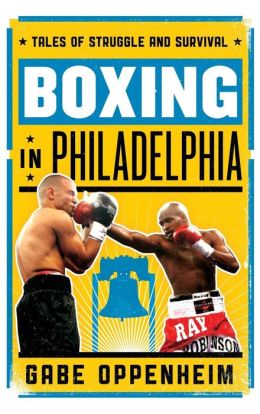
Gabe Oppenheim, and one of the last good books about boxing

By Bart Barry–
Philly Book
“If you’re gonna write about boxing, you need facts and grittiness and maybe even some awkward bad writing. It can’t be perfect. It can’t be ethereal. It can’t be self-contained. It can’t be its own art. It has to be bled into by the fighting itself.

“But only the defeat is permanent in boxing. And I guess the point of the book is to ask, could it really ever be any other way?

“Again and again and again and again and again and again and again.

“Until you can’t ask it anymore because you’re fucking tired of it.”

So states Gabe Oppenheim in the introduction of his book “Boxing in Philadelphia” (Rowman & Littlefield; $45.00), and if he fails to meet that standard it is only for a lack of awkwardness in his “bad writing” – an element his book noticeably lacks. Oppenheim treats boxing often as a metaphor, as writers often do with boxing, but Oppenheim does it on boxing’s terms, more fairly, more roughly, than most writers who treat boxing – as opposed to boxers who later try their bruised hands with sentences – in an effective way that feels like he wrote the first drafts too smoothly then went back and scuffed them with truth.

Oppenheim alludes to something like this, as well, in his introduction:

“It’s not just that boxers grows suspicious when a clearly out-of-place white college student tries to enter their gym to talk to them; it’s that I, too, grow suspicious of myself, not wanting to take advantage of anyone, to exploit people’s real lives.”

There’s wisdom in that sentence, written well about a form of suspicion that confronts anyone empathetic enough to write well and arrogant enough to choose boxing for a subject. We all go through it initially – in the olden days, many were assigned a boxing beat by an editor at a newspaper that no longer exists (replaced by Associated Press stories, and slideshows), and had that as an exculpating reason for wandering in a gym where they clearly did not belong – because anyone who does not go through it does not write well about our sport, regardless of readership size or class.

My pathway through suspicion was headgear and gloves, being just athletic and large enough to prevent permanent damage, and a shortcut like this: Once a man has put his knuckles on you, he trusts you because he knows you’re available for him to do it again if need be, and he knows he didn’t give you more than 2/3 of his power, whatever your closed eye and bleeding mouth say of it.

Oppenheim’s pathway through suspicion was an aged former trainer, Mr. Pat, and many, many hours. After the quality of the prose and the depth of admiration the author feels for his subjects, commitment is what resonates most about this book. To write a book like this about lesser-known figures in a lesser city requires much, much more than would a book about Joe Frazier and Bernard Hopkins’ favorite Philly cheesesteak spot or Oscar De La Hoya’s escape from East Los Angeles; those men’s stories are well-trod and research material is ample, and researching – now known as googling – is far easier than confronting the rejection of a fighter’s suspicion or a trainer’s unreturned phone calls or a possemember’s idiotic snickering.

Oppenheim faced these discomfiting forms of rejection and wrote about them, most clearly in his treatment of Meldrick Taylor, the Olympic gold medalist who came a fabled two seconds from beating Mexican Julio Cesar Chavez in his prime – something no man officially did (though of course we know how that Pernell Whitaker fight actually went, three years after Chavez broke Taylor). Taylor’s sorry condition is well known today, and both he and those close to him are understandably reticent about it, a matter Oppenheim writes creatively round, drawing instead connective tissue between Taylor and the then-decaying city that raised him.

“‘Awtheysaynottoomanykidouttometheywrotebadthingsaboutme –
‘theamanamesaidIwaswashedup,’ Taylor slurs and mumbles without pause,” writes Oppenheim, in an innovative attempt at drawing a literary map of punch-drunkenness.

Oppenheim also follows closely the careers of two contemporary Philadelphia prospects, Teon Kennedy and Mike Jones, both of whose careers effectively ended on a Manny Pacquiao undercard, June 9, 2012, when Guillermo Rigondeaux dropped Kennedy five times in as many rounds, and Randall Bailey brought 15,000 spectators to a collective start by stretching Jones with a chastening right uppercut.

“It’s an inevitable fact about most jobs that increased success leads to increased stability,” Oppenheim writes about the trajectories Kennedy’s and Jones’ careers followed. “In boxing, on the other hand, success breeds irregularity.”

Oppenheim notes with a touch of irony the fighting city of Philadelphia’s two celebrated prospects, Jones and Kennedy, did not emerge as champions the way Danny Garcia – not exactly Puerto Rican, not quite Philly – somehow managed to do. There’s something touchingly Philadelphian about that development, too; as anyone who’s attended a sporting contest of any kind in Philly can tell you, those folks love to make a lot of noise when they’re completely wrong.

“Boxing in Philadelphia” ends on a slightly false note of optimism about both the city and the fight game. While Philadelphia tries to replicate other cities’ purported urban renaissances – think: hipster lofts in abandoned warehouses – boxing now accelerates towards a day, arriving before 2020, when its sole promoter owns the media that covers his events; if boxing thrives again, it will be as professional wrestling in gloves. And on that day, Oppenheim’s book will be deservedly considered one of the last good books written about our sport.

Bart Barry can be reached via Twitter @bartbarry


Provodnikov-Matthysse: A Corrales-Castillo sequel?

By Norm Frauenheim
Provodnikov Arrives
It’s a fight that really doesn’t need much in the way of explanation or analysis. Strip away all of the subtlety and finesse, and you’re left with Ruslan Provodnikov-Lucas Matthysse, a collision waiting to happen. Maybe an accident, too.

But that’s the attraction. Power, the ability to deliver it and a willingness to risk it, exerts it own kind of drama.

It’s why we watch. An irresistible mix of fear, brinkmanship, inexhaustible persistence and even some foolish courage are among the intoxicating possibilities that will be there when the junior-welterweights clash on April 18 at the Turning Stone Resort & Casino in Verona, N.Y., in an HBO-televised bout.

“I believe it’s going to be Corrales-Castillo I,’’ said Provodnikov promoter Artie Pelullo, who during a conference call Monday foresaw potential for a fight the equal of Diego Corrales’ wild 10th-round TKO of Jose Luis Castillo in 2005.

From this corner, Castillo-Corrales I still ranks as the best fight in this century and one of the best in any. But a price was paid.

Castillo was never quite the same, although his career continued with a loss to Ricky Hatton 2007 and even a TKO loss Provodnikov last November.

Corrales fought three more times, losing all three, including a fourth-round KO in a rematch with Castillo. Corrales died on a motorcycle on May 7, 2007, exactly two years to the day after that first Castillo fight nearly a decade ago.

I’m not convinced that either Provodnikov or Matthysse has the varied skill set that made Corrales and Castillo such dangerous lightweights.

They might surprise me. They might change my mind. If they do, however, Provodnikov-Matthysse won’t fulfill explosive expectations. The buzz isn’t there because they’re known for a defensive feint or the shoulder roll. It’s all about the power. Who has more of it? Who can land it? Who can withstand it?

Castillo was 0-2 against Floyd Mayweather, Jr., but Castillo challenged the pound-for-pound king as much as anybody, especially in the first fight, a 2002 decision.

Castillo and Corrales could do many things. In the end, however, they did what Provodnikov and Matthysse are expected to. They tested each other’s will with unadulterated power that made their confrontation more about surviving than winning.

There will be some new opportunities for the Provodnikov-Matthysse winner. Don’t be surprised if there’s talk about a fight with the Manny Pacquiao-Mayweather winner on May 2. Amend that: Be very surprised if there isn’t talk about that possibility.

But this one isn’t about talk. It isn’t even about victory. Not really. It’s about survival. It’s why we’ll watch.


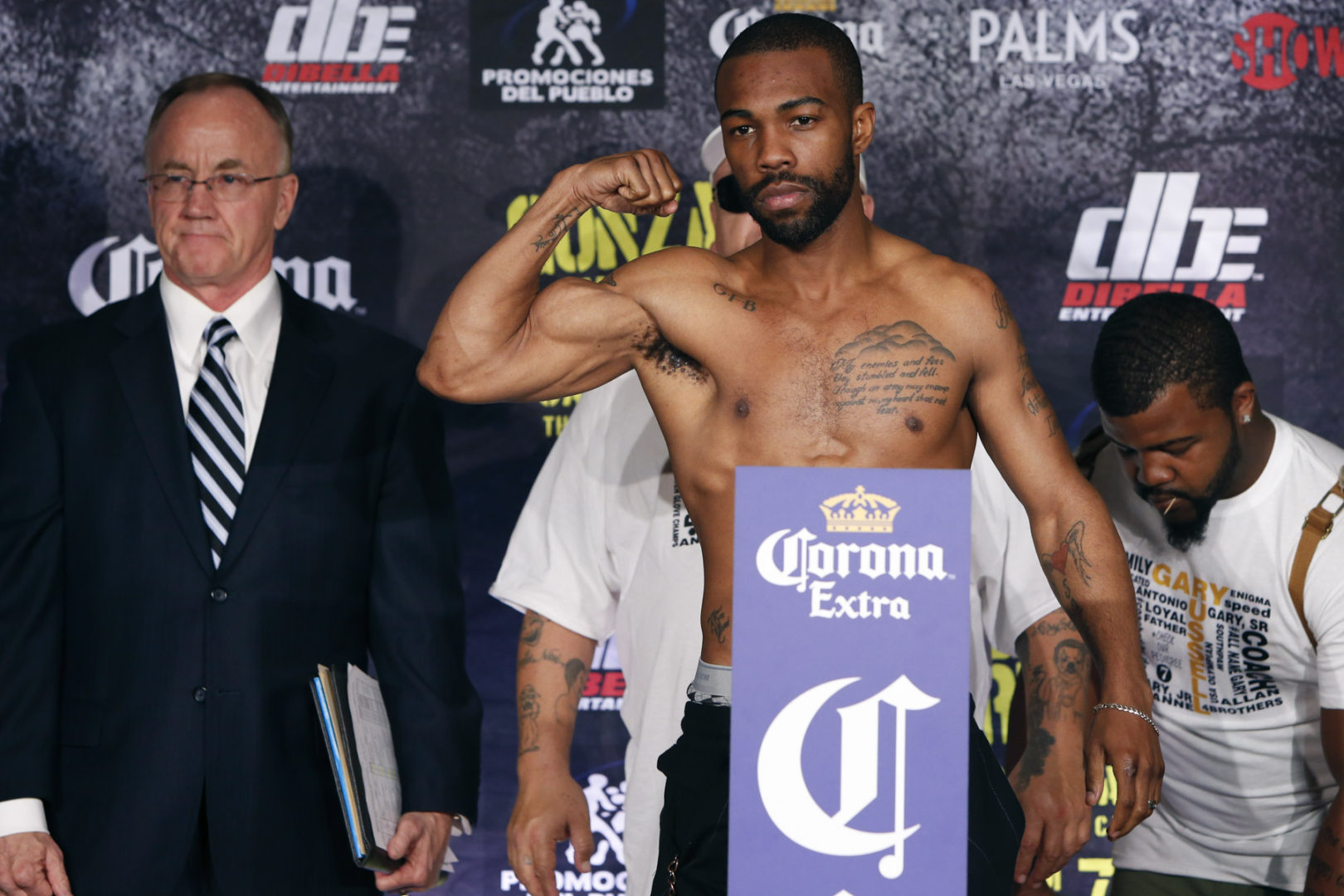
Gary Russell Jr, and the end of cable sports journalism

By Bart Barry–
Gary Russell Jr
Saturday, Showtime’s preternaturally gifted Gary Russell Jr., an Al Haymon fighter, knocked-out the hardest puncher in Mexican history, Jhonny Gonzalez, on Showtime, a Haymon-affiliated network, to seize from Gonzalez the Showtime featherweight title Gonzalez took from Showtime’s Abner Mares a few years back. Whatever the depth of boxing’s featherweight division, and whatever Russell’s postfight protestations, Showtime’s featherweight division now finds itself bereft of fitting challengers for Russell’s crown – and Showtime viewers are admonished, therefore, to raise Russell’s fragile left hand against every hypothetical opponent from here to Nicholas Walters.

Unfortunately there is nothing new or more hyperbolic to say of Showtime’s Gary Russell Jr. than was already said by HBO’s crew 4 1/2 years and nine fights ago. Back then Russell’s membership on USA Boxing’s woeful 2008 Olympic team was viewed with greater skepticism than it is today; time and Deontay Wilder’s semisuccess, and the still-worse showing by USA Boxing in 2012, all, made shouting “2008 Olympian” somehow more positive Saturday on Showtime than it did when Russell began underachieving on HBO, who honored what remained, then, of its journalistic integrity by noting Russell did not even compete in the 2008 Olympic Games.

While it would be impossible to mark the day on which HBO completed its transition from broadcaster to promoter, historians might find riches worth mining in a review of a Boxing After Dark telecast on Sept. 3, 2011, one that featured an Andre Berto-rehab assignment in its main event and Gary Russell Jr.’s HBO debut in an eight-rounder on its undercard:

“Gary Russell Jr. is an ex-cep-tional talent!” cheered Max Kellerman before the opening bell even rang. “I think, Roy (Jones), he’s a gold-medal-caliber talent.”

“I hear his hands are almost as fast as mine used to be,” Jones answered, rhetorically, with what autobiographical modesty marked his every broadcast. “He’s got to be a gold-medal talent.”

In round 2 Kellerman strayed dangerously close to insubordination when, in an attempt to define Russell as both a supreme offensive force and a supreme defensive one, he ran afoul of Jones’ definition of a “boxer” – which Jones promptly made indistinguishable from other styles, specifically the difference between a “boxer” and a “boxer!”

“Signs of a great fighter, son,” added Jones in round 4. “Great hand-speed. Great power. Great defense. (Russell) has the total package.”

Comically, Kellerman then explained the hardest challenge to come for Russell’s people would be resisting temptations to move Russell too fast – since he was so outclassing the guys a lesser prospect would face at this point in his career. Caught under the spell of his own salesmanship, then, Kellerman asked Jones if room even remained for Russell to improve.

As the end of the fight neared, and Russell had failed even marginally to imperil someone named Leonilo Miranda, Kellerman looked ahead rosily:

“It’s not so much of a stretch to imagine (Russell) and Nonito Donaire in the winners bracket of a super fight at 130 pounds – two, three years down the line.”

Almost.

Four and a half years down the line, Russell finally won a title from an ancient Jhonny Gonzalez on the same day Donaire steamrolled someone named William Prado, off-television, somewhere in the Philippines.

While Russell seems like a good guy with talent, and certainly his managerial shop has produced lesser items in recent years, the fact remains no one should be excited about Russell, and excepting only those who are paid to act excited about Russell, no one genuinely is. Russell landed one great punch Saturday, a counter whose power derived mostly from Gonzalez’s sloppy aggression in the closing instants of round 3, and the rest of the stoppage came via Russell’s venomous flailing in round 4, Gonzalez’s despondency, and referee Tony Weeks’ mercy.

When Russell lacks power, generally, it is because he is afflicted with something like front-foot-itis, a condition that plagued the 2008 U.S. Olympic Team. Russell often loads weight on his front foot as an anxious habit more than a strategic consideration, in a vestigial tick from his time in USA Boxing, when all the sweet science was reduced to reflexes and conditioning. Trained by men who idolized Roy Jones Jr., in 2008 Team USA believed in leaning forward, triggering an opponent’s jab, and then yanking back on one’s chin and weight while snapping a counter hook at one’s trapped opponent. Of course, when these counter hooks did not land, or got simply blocked, there was nothing for the American Olympian to do but retreat, bounce, and reset his weight over his front foot.

The medal count that year confirmed the approach’s sagacity.

Saturday’s most interesting revelation, though, came in the celebration of Jhonny Gonzalez’s now-extraordinary power, a concussive force he did not have until his first-round elimination of Showtime’s Abner Mares in 2013. Before then, Gonzalez was another sturdy Mexican, whose career and life, likely, were shortened by Israel Vazquez in 2006.

I was ringside for five Gonzalez fights, in Jhonny’s actual prime, and not once do I recall anyone talking about his historic power. He had good technique and made entertaining fights, and had a great nickname, “Jhonny”, but if anyone had said at the time Gonzalez packed more relative power than, say, Rafael Marquez – an assertion Showtime implied by implying trainer Nacho Beristain labeled Gonzalez as Beristain’s hardest-hitting champion ever – he’d have been laughed right off the writers’ table at Desert Diamond Casino.

The game certainly has changed. Back then, a cable network like Showtime would call an advisor like Al Haymon a “power broker.” Today, they call him “Boss.”

Bart Barry can be reached via Twitter @bartbarry


Adonis Answer: Stevenson fights to ignore the Kovalev question

By Norm Frauenheim–
Adonis Stevenson
It’s the question Adonis Stevenson can’t shake. It’s there when he wakes up and sits down for breakfast. It’s there when he goes to the corner store. When he looks in the rear view mirror, there it is:

What about Sergey Kovalev?

It was asked again, again and ad nauseam Wednesday during a conference call that included Sakio Bika. At least, I think it included Bika.

Stevenson fights Bika in Quebec City on April 4 in Al Haymon’s first PBC card on CBS, yet Bika was little more than a mere prop during the telephone Q-and-A.

In fact, the Kovalev question ended the call. An exasperated Kevin Cunningham, Bika’s trainer, had heard enough.

“You guys have done it for me,’’ Cunningham said. “This is getting my fighter fired up. This call has been about Stevenson fighting Kovalev. I don’t even know if Sakio is on the call.

“Everyone keeps asking about Kovalev-Stevenson.

“What the bleep are we even doing here? Why are we here? This call is over for us.’’

Bika (32-6-3, 21 KOs) figures to be a lot tougher then a dial tone. Stevenson’s maturity will be tested in part by his ability to ignore the Kovalev buzz and focus on the challenge in front of him.

He promised to do exactly that. But, remember, this was a conference call.

“There’s so much talk about that,’’ Stevenson (25-1, 21 KOs) said. “But I’m very focused on Bika. He’s the one in my face now.’’

A grown-up evaluation of the Bika fight and its potential significance for Stevenson came from his trainer, Javan Hill, a student of the late Emanuel Steward.

“For the growth of Adonis, this very important,’’ Hill said. “It’s an opportunity for Adonis to go maybe 12 rounds or into the later rounds. This is a test, a chance for him to grow and become a superstar.’’

Hill’s comment is little bit surprising because of Stevenson’s age. He’s 37. But he’s late to the game because of a troubled youth. The light-heavyweight spent four years in prison. He didn’t make his pro debut until 2006. He might lack some of the instinct acquired by fighters who grow up within the ropes. Nevertheless, his power is almost scary. It’s what Steward noticed right away.

“Emanuel always used to say: ‘Knockouts sell, knockouts sell,’ ‘’ he said of Steward, who began to turn Stevenson into a star before he died in 2012. “I always go into the ring thinking knockout first.’’

That aggressiveness, a natural byproduct of his power, leads straight back to the question that – with apologies to Cunningham – has been around ever since it looked as if Kovalev and Stevenson would fight on HBO late last year.

Didn’t happen, of course. Stevenson jumped to Haymon and Showtime. But Kovalev continued on his relentless path, beating Bernard Hopkins in a victory that earned him pound-for pound-credentials.

All the while, Stevenson languished, scoring forgettable victories over Dmitry Sukhotsky and Andrzej Fonfara. But he and Kovalev remained on their collision course, mostly because Kovalev looks unstoppable and Stevenson has Haymon’s influence.

But is Stevenson a mature enough fighter to handle Kovalev, who is as poised as he is dangerous. Kovalev thinks through adversity, which was evident in his eighth-round TKO of Jean Pascal on March 14.

There are questions about what, if anything, Stevenson will do if somebody takes away his power. He’s gone 12 rounds twice and 10 rounds once, but not against anybody with Kovalev’s smarts.

In the tough, forward-charging Bika, Hill hopes to see some of those smarts in Stevenson. If he doesn’t, don’t be surprised if there’s another conference call a lot like the last one.


Column without end, part 7

By Bart Barry–
unnamed (787x1024)
Editor’s note: For part 6, please click here.

*

BURNET, Texas – We begin here, again, with a thought experiment of sorts, before hiking to a roadside memorial in the state Terence Crawford will visit next month, honoring Catalan masterpieces the whole way:

A tiger bursts through your door in the next instant. You react, in less than a second, far less than a second, the identical way I react, your father reacts, your worst enemy reacts. Ponder for a moment the miracle of that: Your mind takes whatever binary-like signals your eyes send it, unscrambles them in an image, queries its database – not equal to a purple balloon, not equal to a canister of whipped cream, not equal to a passenger train, not equal to an overfed chipmunk – identifies imminent peril, as opposed to banal inconvenience or pending ecstasy, and sends a non-negotiable signal to your central nervous system. In merely thousandths of a second.

Is it any wonder an entity so preternaturally capable as your mind will find tedious whatever repetitive tasks you feed it for 40 hours this week?

It wasn’t till the last fifth of my Saturday hike I came upon the sign above. What strikes hardest is its longing for connection, for touching a person who no longer exists, for having a tiny but permanent portal into the excruciating immediacy of one’s loss – to oblige one to visit what likely is a death site, beside, as it is, a winding rural highway with both a 55 mph speed limit and orange cautionary signs spaced unevenly, every half mile or so, advising of turns and bends in a plethora of alternately squiggly lines, and counseling motorists to reduce their speed by as much as 25 mph from the limit. Consider that: a roadway with a speed limit of 55 th’t one shouldn’t drive faster than 30.

There was unexpected innovation at the makeshift memorial, too; the plastic-crystal crucifix back-left of the altar had a small solar panel to collect sunrays during daylight and illuminate a cross-shaped skeleton within its structure at night. It speaks to the care that birthed the creation, the surrender its keeper gave to it: “I have lost my son. I shall take as much time as this requires. It may not be perfect, but what remained of me will be emptied in this when it is finished.”

I came upon the memorial in the fourth hour of a seven-mile hike through Inks Lake State Park’s enchanting stretch of pink granite, dark water and gnarly pecan trees, a hike that, as is its purpose, was an exploration of presence, acceleration and something that attempts to approximate the ancient Greek concept of kairos – a time, in the sense of a decisive moment, that brings a sensation of timelessness. The Greeks were no closer to understanding the phenomenon of the human mind than we are today, but they were wise enough to confess, through their juxtaposition of kronos and kairos, measurable time and something effectively infinite, th’t there was something they could paw-at and stumble upon and sense, or imagine, but never master for being unmeasurable and uncontrollable.

There are few serious belief systems that do not include the existence of something the human mind cannot measure consciously – in the sense of being able to report upon – and the factions of this belief, factions that rarely make war on one another (wars happen between people of same factions, ironically), appear to reduce to: Those who believe timelessness resides outside the human mind, in a deified form, and those who believe the mind invents it. Both are forms of faith, if we’re being honest, and the non-believer is often flummoxed by an inventory of all he perceives followed by something like “meaningless and chaotic, really?” as the believer is confounded by an assertion, Bishop Berkeley’s practically, you never awoke last night and everything you are perceiving at this moment, to include a “boxing” column telling you about timelessness and hiking in Texas, written by a person who never existed outside your imagination, is but a dream.

Oh where were we? Terrance “Bud” Crawford, that’s right.

As some of you may already know, and I am happy to confess I did not until Sunday morning, last year’s BWAA Fighter of the Year is coming to Texas in a month’s time, fighting on a University of Texas campus in Arlington on April 18. Crawford is one of the few fighters plying the craft today who merits travel – which distinguishes him completely from the man who will share headlines on the digital continuum that same evening, “Son of the Legend” Julio Cesar Chavez Jr. It is not enough to impart I will drive more than four hours northwards to honor Crawford’s spirit and achievement; I would not watch Chavez’s next fight if it were being push-streamed by 15rounds.com to a phone cradled in the cleavage of my favorite porn actress.

What does any of this have to do with the Catalan master Antoni Gaudi? A pursuit of beauty in the form of spires, columns if you will, leavened by an ecstatic willingness to fail so long as one gets it true – not right, no, not right: True. What art does that makes it functional as meditation or prayer or alpine skiing or fighting or even hiking in Inks Lake State Park is allow its participants a brief interaction with their sense of timelessness, a blessed respite from our learned accountancy of the seconds-hand on Life’s clock . . .

*

Editor’s note: For part eight, please click here.

*

Bart Barry can be reached via Twitter @bartbarry


Junior to Senior: Only a grown-up Chavez can win this fight

By Norm Frauenheim–
Chavez_Lee_120612_001A
Boxing was never meant to be the family business. Fathers fight so their sons don’t have to. That sounds like a sensible plan, or at least a good way to avoid scars, concussions and everything else that comes from a livelihood in the ring.

But it’s never been one that could be applied to Julio Cesar Chavez and the son known simply as Junior.

It seems as if Junior just can’t escape his given name or the legend it means to Mexico. There have been times when it looked as if he might just walk away from his role as the heir-apparent.

But he hasn’t, not even amid boos for his two performances against Bryan Vera, or his country-club training camp for Sergio Martinez, or his late-night meals, or fondness for the substance that leads to the munchies.

Through it all, he always seems to follow that path up the steps, through the ropes and onto the unforgiving canvas that defined his dad. Julio Cesar Chavez Jr. will be back there again on April 18 at the StubHub Center in Carson Calif., at a 172-pound catch-weight against a top 10 light-heavyweight, Andzrej Fonfara.

“It feels great to get back,’’ Junior said during a conference call Wednesday.

Great, yet never more problematic than now.

There’s the dangerous Fonfara, who has enough skill and power to make him regret his return. It’s his first fight in 13 months. Since losing a piece of the middleweight title to Martrinez in a bout one-sided for 11 rounds and wild in the 12th, Junior has fought only twice, both against Vera, in 2013 and 2014. He has changed management, signing with advisor Al Haymon. Promoter Bob Arum is suing, alleging that he still owes him fight.

He’s also got a new trainer in Joe Goossen and will make his debut on Showtime after years on HBO. Changes abound. Question is: Has he?

His comeback against Fonfara is intriguing because it’s a chance to see if boxing’s Peter Pan has finally grown up. Throughout his career, enablers have surrounded him. Then, there were the fans, always there with an excuse for every misstep.

If he couldn’t make weight, a new one was negotiated. If he decided he wanted to train at his Las Vegas condo at 2 a.m. and do his road work around the couch instead of on the street, his former trainer, Freddie Roach, would be there.

But Arum and Roach are gone. So, too, are many of the Mexican fans. They have either given up on him in exasperation or moved on and into the Canelo Alvarez’ camp.

Against Fonfara, there will be none of the usual excuses or loopholes that have always been there like a silver spoon. Junior will have to behave and perhaps fight like Senior more then he ever has.

As always, dad will be there. He was even on the conference call.

“I did not want this fight for my son,’’ Julio Cesar Chavez said. “Fonfara is very strong. But Julio wants to show how good he is.”

How mature he is too.


Of Soviets and athletes

By Bart Barry–
Kovalev & Pascal Weigh-InCasino de Montreal
SAN ANTONIO – If you’re reading this column, it is highly probable you watched on HBO Russian Sergey “Krusher” Kovalev’s Saturday reduction of Jean Pascal from a ferocious spectacle of athleticism to a man stumbling across the canvas like an enthusiastic toddler determined to crawl no longer. There’s also a fair chance you watched Thursday’s HBO Latino undercard, one that featured Ukrainian Vyacheslav Shabranskyy violently dismantling Fabiano Pena, in this city’s Freeman Coliseum.

The matches had a symmetry that was unmissable: The fighter initially taught by men raised in the Soviet system threw with better precision and more proper conviction every punch in the boxing lexicon than the more-athletic man across from him. Both Pascal and Pena were undone methodically – right cross to the head, left hook to the body, right uppercut to the head, right hook to the body, left hook to the head, left jab to the head, left jab to the body, right cross to the head – with attacks that predicted their targets’ movements in a way the targets could not hope to predict their attackers’, and both Pascal and Pena reacted the same way: launching blind haymakers that did little but intensify the luridity of the beatings they were to receive.

Shabranskyy caused Pena to quit on his stool after five rounds. Kovalev made decent men ask how Pascal was allowed from his stool for the eighth.

There is a stiff-leggedness to the attack of fighters taught by men raised in the Soviet system, and it makes them temporarily vulnerable when attacking more-athletic prizefighters. It is why former-Soviet fighters pulverize opponents, grinding their wills like pepper across the ring’s blue leaf, rather than blitzing them and bringing unconsciousness in a lone punch.

For all the hyperbole that attends Kazakh Gennady Golovkin’s knockout ratio – one part quality of opposition for every two parts quality of punching – Golovkin is nothing like Mike Tyson was. Golovkin’s knockouts are pulverizations, not detonations. Sergey Kovalev’s knockouts come the same way, and if the day ever comes Golovkin confronts an opponent even half as good as a 49-year-old Bernard Hopkins, one like Andre Ward, expect no knockout victories for GGG.

The Soviet system, though created for amateur events, relies on deriving power nearly as much from the motion of another man’s body as the torque from one’s own punches. What is now noted with increased frequency is that Kovalev punches on-time more than hard; he runs you into punches and sets his knuckles on you at the very moment they will devastate most. Almost nothing like this is taught in American boxing.

The American style is one that hopes to reduce an opponent to a heavybag, somehow, on which combinations may be exhibited. It is a style with fewer dimensions than the Soviet system’s, in part because it is a style that relies more heavily on athleticism. What makes Americans like Bernard Hopkins or Floyd Mayweather or Andre Ward great as they are is not their athleticism but a transitional capacity, defense to offense, that is a product of diverting themselves for thousands of hours across from men they were able to solve and create upon, and that they had creative impulses, much more than a product of great teaching (the reason their teachers never manage to build, from scratch, similar successes – at least with nothing like the frequency of, say, Mexican Nacho Beristain).

There is an excellent ESPN documentary, “30 for 30: Of Miracles and Men,” recently released to Netflix and treating the Soviet hockey team that lost to Team USA in 1980, and the extraordinary approach to hockey the Soviets created in an incredibly short time. Just as the Soviet boxing approach relied on an opponent’s improvement of one’s punches, the Soviet hockey system fixated on the activities of the four men who did not have the puck, not the one who did. The Soviets took hockey, most selfless of North American professional sports, and without even knowing quite how North Americans played the game, created a transcendent form of selflessness – with an obvious assist from communism – in which every man on the ice felt as much euphoria at the scoring of a goal as the man from whose stick the puck was shot.

Such a holistic approach is not possible in a contract system that pays every player according to his individual contributions – it’s why your eyes roll when an athlete sets a career mark for points or home runs or touchdowns and then risibly tells the camera getting a win in game 9 of the nearly endless season was more important to him – because, to borrow from Vince Lombardi, if individual achievement isn’t everything in professional sports, why keep stats? With players signed to non-negotiable 25-year contracts in a system that would banish a sports agent to the gulag, the Soviets were able to create a system in which the team organism provided not just sustenance to its components but also identity.

This system, of course, suffocated its participants, too, and appears more romantic to a Western individual today, probably, than any survivor of the Soviet system in Eastern Europe – but it remains nevertheless instructive as an alternate approach to a somewhat calcified system. Certainly the NHL game, once a forum that emphasized the imposition of one’s will, with slapshots and physicality, more than finesse, with crisp passing and offensive intricacy, looks considerably more Soviet in 2015, a quarter-century after the Soviet Union’s collapse, than it did in 1975.

It is worth pondering, then, if the recent success of former-Soviet fighters – and its brazen promotion by HBO – will not help American boxing improve from its current emphasis on conditioning and athleticism to a more-holistic emphasis on melding enough with one’s opponent to make him a co-conspirator in his own demise – in a way better captured by the verb to swirl than to disrupt.

Bart Barry can be reached via Twitter @bartbarry


On The Stage: Mayweather-Pacquiao a fight between different personalities

By Norm Frauenheim–
Floyd Mayweather
Floyd Mayweather Jr. and Manny Pacquiao stood side-by-side in what was the third time they have ever been seen within a few feet of each other. They looked uncomfortable, almost awkward.

Mayweather raised his right hand and pointed his index finger toward the ceiling as if to remind anyone in the theatre and the heavens that he – and only he – is No. 1.

Pacquiao raised a left hand that was clenched into a fist that seemed to say he intends to pound some humility into Mayweather and his lofty claim.

Their fight on May 2 at Las Vegas’ MGM Grand is about a lot of things, of course. There’s legacy and celebrity, business and bragging rights. All of it is attached to an unprecedented bottom line.

But there’s something else. In watching the HBO/Showtime live feed Wednesday of a news conference- turned-show biz, two very different personalities stood on that stage at the Nokia Theatre in downtown Los Angeles. It set ups an intriguing collision, one that promises personal drama in a fight past its physical prime.

It’s a modern version of The Prince-versus-The Pauper. They have been rehearsing their respective roles for as long as they have been answering an opening bell. For each, it’s as much of an identity as a role.

There’s The Prince, the ostentatious Mayweather, who likes to flash his money and brag about his A-side power.

“When you get to this level, making nine figures for 36 minutes of work, you have to be a winner,” Mayweather told reporters in a Q-and-A session before he lived onto the Nokia’s stage.

Then, there’s The Pauper, the born-again Pacquiao, who is known to give away his money to fellow Filipinos still trapped in the third-world squalor that was once his home.

“God,’’ Pacquiao said in an interview with HBO. “I want people to know that he can raise someone from nothing to something. That’s me.’’

Those are comments that say Mayweather and Pacquiao believe in different things.

Maybe, that difference will mean nothing in the welterweight fight.

Maybe, it’s just as simple as Mayweather’s five-inch advantage in reach, which was so apparent Wednesday when they stood warily next to each other at center stage and in front of the world’s cameras.

Still, it’s part of the pre-fight psychology. Pacquiao says he’s very comfortable as the underdog. He’s at the sort end of 2-to-1 betting odds. The underdog has been is best role since he arrived at the Freddie Roach’s Wild Card Gym from the Philippines. It was a key to his motivation beating Erik Morales after losing to him in their first fight.

He understands loss and how to deal with it, although Mayweather suggested Wednesday that defeat will be a weakness for Pacquaio.

“One thing I do know about in any sport is that if you lose, it’s in your mind,’’ Mayweather told Showtime. “If you lose twice, it’s in your mind. All my life, I’ve fought be winner.’’

It’s no coincidence that Mayweather is unbeaten at 47-0. Staying that way has been a key motivation and defines one of his nicknames, TBE, The Best Ever. There’s even a theory that a loss would destroy his confidence. A masterful defensive tactician, he fights not to lose.

Flip the coin and you’ve got Pacquaio, whose 64-fight record includes five defeats — two over his last five. He understands defeat, which can be a component in knowing how to win.

It depends on the personality, which in the end might be remembered long after all that money gets spent.


Premieres

By Bart Barry–
Canelo_Alvarez
SAN ANTONIO – Tuesday at Aztec Theater, the oldest theater in this old city, Saul “Canelo” Alvarez and James Kirkland announced their May 9 fight in Houston. Saturday at MGM Grand in Las Vegas, Keith Thurman decisioned Robert Guerrero. In between those two middling affairs, Showtime announced plans to honor its televised trilogy of Israel Vazquez and Rafael Marquez – a trilogy unlikely to be matched in quality or ferocity even by a 2025 highlight reel called “Premier Boxing Champions: The First 10 Years.”

What Alvarez and Thurman have in common is above-average talent and a poor era; they are b-level fighters elevated to millions-dollar purses through some balance of mediocre opposition and needy fans. Alvarez is better tested and more beloved and unlikely to improve, while Thurman is more athletic, even while his power has moved with inverse proportionality to his opposition. What Vazquez and Marquez were, and made together, is another thing entirely.

There’s an inauthenticity to the televised experience, today, that wasn’t nearly so pronounced a part of our sport in previous decades. Boxing writers’ lamentations about television are well-noted and quite old, of course, and this isn’t intended to be so much another tired protest of the inevitable as a commentary on what’s worsened.

Boxing long preserved a griminess, a degree of filth, other sports lost generations before; boxing retained a sense of the unexpected in a way that made other sports appear overwrought and scripted. There was ever a touch of irony to this – with spectators accusing boxing results of being fixed, which they often were, even while phantom rules violations in the NBA and NFL influenced just as dramatically who became those sports’ champions. Television was a guest at boxing events, or at least telecasts felt like they were conducted by guests; proper boxing matches had a sense of inevitability to them, an implication this grievance would be settled, regardless of witness, at this time, on this evening, and television cameras just happened to be there.

Saturday’s NBC debut, instead, had other sports’ feel: We are here because television invited us, and do you know how great is the reach of public airwaves? and have you seen our incredible commentating team? and would you please have a listen to our soundtrack? If it did not feel quite scripted, it neither felt like a collection of brawls that were going to happen even if television cameras went dark. Aficionados are noticeably insecure about public acceptance of our sport, too, and that marked social-media depictions of a few good rounds in an otherwise poor night of NBC boxing with the usual trimming: Don’t you see, everybody, this is why you should love boxing as much as we do!

Tuesday’s press conference, or media event, as they’re now called since “press” – derived from printing press – no longer has any meaningful place at these clubland mashups where seats labeled Deadline Media get occupied early by women with enormous promotional posters and boys with eager black sharpies, and the deejay stands both closer to fighters and with a better chance of interrogating them than anyone carrying something antiquated as a notebook or pen, had promoters beseeching the partisan-Mexican South Texas crowd to show the world Texans were the very best fans by driving 200 miles to Houston in May to purchase the promoters’ product. Oscar De La Hoya was there, looking jittery as he’s appeared since warming up to fire Richard Schaefer (who must’ve watched Saturday’s NBC telecast and realized, much like HBO’s Kery Davis before him, he was disposable to Al Haymon as print media is), and of course Saul Alvarez and James Kirkland were there too.

Evermore, De La Hoya appears a refreshingly outdated model; he likes or appreciates the press and adheres to the olden-day rules of being unbothered by gliding through 20 minutes of frictionless inquiries so long as his inquisitors are equally unbothered by 20 minutes of countlessly refried cliches. There was a time De La Hoya was unique in the sport for his lack of sincerity. De La Hoya is no more sincere today than he was then, but our beloved sport now plumbs such depths of insincerity a De La Hoya sighting has all the charm of a throwback jersey; at least Oscar cares enough to smile and wave and remind us he was a great fighter who did fight other great fighters.

As an antidote to all that, last week Showtime announced it would commemorate the best trilogy to improve is airwaves, when it replayed Israel Vazquez versus Rafael Marquez. There appears nowhere on our horizon the likelihood of another such trilogy. The quality and violence of the combat shared between those two Mexican prizefighters, their willingness to avenge both defeats and victories, at a withering pace – they fought three times in 363 days (just after Vazquez stopped Jhonny Gonzalez in a particularly brutal affair) – is so far from what we have now it is barely believable Vazquez-Marquez 3 happened only seven years ago.

Then, as now, many in our ranks were discontent with boxing’s trajectory. Try not to imagine how bad things will need to go for us someday to look back longingly at Thurman-Guerrero.

Bart Barry can be reached via Twitter @bartbarry


Follow Thurman – Guerrero; Broner – Molina LIVE

Keith Thurman
Follow all the action as Keith Thurman defends the WBA Welterweight title against Robert Guerrero. The action kicks off at 8:30 PM / 5:30 PM PT as Adrien Broner battles John Molina in a Jr. Welterweight bout.

12 Rounds–WBA Welterweight Title–Keith Thurman (24-0, 21 KO’s) vs Robert Guerrero (31-2-1, 18 KO’s)

Round 1 Thurman lands a combination..Right from Guerrero…Right to body from Thurman..right..right to body..10-9 Thurman

Round 2 Thurman lands a uppercut..Hard body shot…Hard right…20-18 Thurman

Round 3 Guerrero lands a left..Right from Thurman..Right from Guerrero…29-28 Thurman

Round 4 Thurman has a bumo over his left eye from an accidental headbutt..Combination from Thurman…right hand//another right..39-37 Thurman

Round 5 Right from Thurman..counter right..Guerrero lands a body punch and a right..49-47 Thurman

Round 6 Left from Guerrero…right and left from Thurman…right…Right from Thurman..left..Big right..Left…59-56 Thurman

Round 7 Thurmna lands a right…body shot..69-65 Thurman

Round 8 Guerrero lands a combination..Right from Thurman..right..right..79-74 Thurman

Round 9 BIG RIGHT AND DOWN GOES GUERRERO…GUERRERO IS CUT VERY BADLY AROUND THE LEFT EYE,,,Thurman unloading in the corner…89-82 Thurman

Round 10 Thurman lands a right…Guerrero lands a left,…Strong right from Thurman…Body shots from Guerrero…Hard combo from Thurman on the ropes…Great action on the ropes..99-91 Thurman

Round 11 Combination from Guerrero on the ropes..Big right from Thurman..108-101 Thurman

Round 12 Hard combination from Guerrero..Big right from Thurman…left from a charging Guerrero..Right from Thurman..117-111 Thurman

120-107, 118-109, 118-108 for Keith Thurman

12 Rounds–Super Lightweights–Adrien Broner (29-1, 22 KO’s) vs John Molina Jr. (27-5, 22 KO’s)

Round 1 Left from Broner..left..10-9 Broner

Round 2 Molina lands a right..Nice combo from Broner..left..20-18 Broner

Round 3 Right from Broner..jab..jab..Right from Molina to the side of the head..Good right..Jab and right from Broner..Molina lands a hard right.Right from Broner…30-27 Broner

Round 4 Broner lands a left..Jab..40-36 Broner

Round 5 Molina lands a right..left hook from Broner..50-46 Broner

Round 6 Combination and uppercut from Broner..2 jabs…combination..good right..60-55 Broner

Round 7 Broner lands a combonation..70-64 Broner

Round 8 Good combination from Broner…80-73 Broner

Round 9 Ref Robert Byrd admonishing both fighters..Body shot from Broner…90-82 Broner

Round 10 Left from Molina..Body shot..Good right from Broner..combination..left from Molina..100-92 Broner

Round 11 110-102 Broner

Round 12 Right from Broner..uppercut…120-111 Broner

120-108 twice and 118-110 for Broner

219-54 for Punches by Broner


Bet on the Future: Haymon, NBC go back to an old model in search of some new stars

By Norm Frauenheim–
keith_thurman
Al Haymon’s Premier Boxing Champions (PBC) begins Saturday on NBC in prime time amid anticipation and some skepticism. It’s risky. It’s gutsy. It’s a lot of things. Above all, it’s necessary.

It’s the first step in an attempt to re-create the game after Manny Pacquiao-Floyd Mayweather Jr. on May 2. Pacquiao has already hinted at retirement. With two fights left on his Showtime contract, Mayweather has also talked about the possibility.

It’s only a question of when. Haymon’s PBC series is a business plan, a path for beyond that imminent inevitability. Without one, boxing is left with fighters who have little, if any, name recognition among casual fans.

“There’s been a lot of buzz about this,’’ Al Michaels, the studio host for Saturday night’s telecast, said Wednesday during a conference call with analyst Sugar Ray Leonard, blow-by-blow announcer Marv Albert and executive producer Sam Flood. “…I’m as curious as anybody to see if this provides a resurrection of sorts for a sport that became a pay-per-view sport and didn’t enable a lot of guys to become particularly well known.

“It’s an opportunity for a lot of these fighters to get in the mainstream, and perhaps help to resurrect the sport.’’

Over the last year, the so-called casual fans have been exiting the pay-per-view audience faster than the PPV inflationary rate.

They know two names and two names only: Pacquaio and Mayweather. Ask them if they know Keith Thurman or Robert Guerrero, and you’ll probably get a blank look. The PBC’s introduction is an opportunity to introduce the compelling Thurman and the blue-collar Guerrero to that audience in a welterweight bout on an NBC telecast (8:30 p.m. ET/5:30 p.m. PT) without the PPV price tag.

Thurman and Guerrero might have been buried on a PPV card or premium network if not for a Haymon plan that showcases them, along with Adrien Broner-versus-John Molina Jr. at Las Vegas’ MGM Grand.

Put Thurman-Guerrero on the Mayweather-Pacquaio PPV card and who would really watch? All the attention — all the air in the room — will be consumed by the Mayweather-Pacquiao anticipation.

If you’ve ever been in the arena for a big PPV event, two guys could be engaged in a Fight of the Year. If the main-event stars are entering the arena at the time, however, all eyes are on them, focused on the video-screen that shows their every step from the limo, down the hallway and into the dressing room.

The ongoing drama within the ropes at that moment is overshadowed and quickly forgotten. It’s not fair, but boxing has never been confused with fairness. It’s theater, which means the undercard is little bit like the supporting cast. Nobody pays to see it.

The PBC series is about making stars, successors to Mayweather and Pacquaio. Without them, the game gets pushed even further from the mainstream. Haymon is making a huge investment on the bet that he can. In addition to NBC, he’s got deals with CBS, Spike TV and Bounce TV. There are plenty of platforms, many stages, for his fighters to test their aspirations and for Haymon to turn a profit.

“Without question these young boxers, these future champions, they are totally aware that more eyes will see them than they receive on pay-per-view,’’ said Leonard, the Hall of Famer and the defining face of the welterweight/middleweight heyday of the late 1970s and ‘80s. “The fact of the matter is that they know it’s all about showing up. This is a huge audition for these boxers. ‘’

The NBC card Saturday night has been called a debut. But it’s not. Not really. It’s more of back-to-the future, back to a business model that was a key component in the creation of Leonard. Leonard became a household name because of the 1976 Montreal Olympics, televised by ABC with Howard Cosell at ringside.

“One of the reasons Ray Leonard became an American icon, was because they could see him,’’ Michaels said. “Turn on Channel 7, Channel 4, whatever it was in those years. That’s what I think boxing was then. Obviously, it’s in a different place right now.

“But if it’s going to be resurrected this is one giant step for doing that.’’

The guess here is that Leonard would have become a major star anyway. He was at the right weight. Welter and middle have rich histories. It was also the right time. From 147 to 160 pounds, there were great rivals in Roberto Duran, Thomas Hearns, Marvin Hagler and Wilfredo Benitez.

Free TV’s power to create stars was never more evident than in some of the lightest divisions. Michael Carbajal might be the best example. The Mexican-American from Phoenix fought at a weight, 108 pounds, that had always been ignored. But NBC paid attention to him in 1988, where he was robbed of gold in the second worst theft of the infamous Seoul Olympics. For outrage, nothing rivals the gold robbed from Roy Jones, Jr.

Carbajal emerged from those Olympics with a compelling story, which was a lot more valuable to him and boxing than a silver medal. He was the first from that U.S. Olympic team to win a major title in an afternoon bout televised by NBC, which also signed him to a 3-fight deal in 1990.

Despite being lighter than a lot of jockeys, those NBC cameras made him look much bigger. Imagine what they could do with flyweight Roman Gonzalez, the Nicaraguan who has been fighting in Japan and is an American star only on YouTube.

There’s never been a bigger star at 108 pounds than Carbajal. Without NBC, would the Hall of Famer been known as a major, pound-for-pound star? Dumb question.

Then again, there’s never been a long-term commitment to boxing on traditional, free-TV networks since then. For Haymon’s PBC, NBC is a beginning, complemented by social media, state-of-the-art technology and big-name broadcasters. But it’s an old model — proven, updated and maybe back at ringside just in time.


Column without end, part 6

By Bart Barry–
unnamed (1024x768)

Editor’s note: For part five, please click here.

*

But how will this influence resolve itself?

Three of the most influential artists of the 20th century – Pablo Picasso and Joan Miro and Salvador Dali – grew up in Catalonia, wandering through Barcelona looking upwards at the architectural masterpieces of Antoni Gaudi, edifices that, in their sublime eccentricities, gave the artists permission. That is perhaps what is most essential in any consideration of influence: Good artists encourage imitation, but the greatest give permission.

Find an aspiring American writer who has read Ernest Hemingway and not endeavored, at once, to ape his style. It rarely succeeds but presents a valuable exercise of sorts for long as it is tried. To read the last 100 or so pages of Leo Tolstoy’s “War and Peace” or Herman Melville’s “Moby Dick”, though, is to attain a permission slip; in his closing philosophical treatise on world history and its actors, an awkward and fully unpredictable turn at the end of a work of fiction, Tolstoy permits his successors to intervene in the course of their narratives wherever creative impulse dictates; in the unorthodox arc of Melville’s whalechase, its steady acceleration till very nearly the last sentence, Melville permits his successors to toy with the shape of what stories they recount, breaking with the linearity young novelists now infer from cinema.

A visit to Museu Picasso de Barcelona shows the importance of influence, of Picasso’s journey as a young artist from wishing to imitate Francisco Goya to interpreting Bartolome Esteban Murillo to his frequent returns, through 50 years, to Diego Velazquez, returns that culminated in his many renditions of Velazquez’s “Las Meninas” – probably the greatest masterpiece of Spain, a country that measures its masterpieces in kilometers. But everywhere within Picasso’s work, finally, is the first influence, Gaudi, and the permission Picasso gathered from wandering among the unpredictable and impractical masterworks of Gaudi – the way Barcelona’s celebration of Gaudi influences, via what permission it gives, any artist who wanders its streets. It is a permission one might interpret like: Pursue beauty, however construed, and worry not where the pursuit takes you.

There is an important influence that happens now in boxing, and it may be better than expected for fighters, while it lasts, and much worse for aficionados. Floyd Mayweather, when he encourages stylistic imitation, leads nowhere friendly for his successors, exactly as Roy Jones and Muhammad Ali did before him, and Mayweather’s influence is large: Spend a year asking young fighters whom their favorite active fighter is, and regardless of your phrasing, those fighters invariably will answer a question like “what contemporary prizefighter who shares your ethnicity or physical attributes have you heard made the most money last year?”

As Ali launched a generation of fighters shuffling sideways with their hands senselessly low, Mayweather now encourages a generation of fighters – most lacking his reflexes, many lacking his chin, all lacking his foundational footwork – to make an ‘L’ with their right elbows and left forearms while tilting sideways. However well it worked as a career extender for Mayweather, once his navigating to higher classes voided what substantial power he showed at lightweight, it is a terrible way to teach a youngster to box on his first day.

Stylistically, then, Mayweather’s influence has not benefitted his successors. Philosophically, though, Mayweather’s influence may be a better one than usually considered. In creating an odious character popular culture alternately finds repugnant and wonderful, in being nimble enough to piss-off Americans with means, anew and afresh every six months, Mayweather has made sums of money disproportionate to what peril attends his prizefights. That a professional fighter found a way to become exceedingly rich for what he does outside the ring more than what he does within it, in a way spectators find perverse as retired fighters find it envious, ensures Mayweather’s influence for many years to come.

No fighter in history has finagled a reward-to-risk ratio like Mayweather’s, and when one considers the age of our sport, that is a feat. Even May 2, the toughest match of Mayweather’s career, is more hypothetical risk, as usual, than real: Whatever miracles mark the career of Manny Pacquiao, this fact remains: In 5 1/2 years as a welterweight, Pacquiao has never knocked-out a 147-pound man (Miguel Cotto was 145 when Pacquiao stopped him in their 12th round together).

The peril that adorns May 2, then, is not physical so much as reputational; is there some way Pacquiao can give Mayweather his first professional loss? That’s something, sure, but it’s disproportionately less than Mayweather’s projected purse should require. Disappointed as most aficionados will be the morning of May 3, when, hungover, they realize they were duped again, this time, more painfully still, duped by a fight they wasted years demanding, there is a small part within most of us that feels sympathy, ugliness really, for the hundreds of fighters we’ve watched sacrifice their wits for $200 a round.

Setting aside empty rhetorical devices like “honor” or “legacy” or “pride” – political words whose employment routinely precedes a sinister manipulation of some sort – what Mayweather has done for himself, and thus far himself alone, is reset the price-to-entertainment balance dramatically in a fighter’s favor. If this were to become a sustainable thing, it would not be the worst development in our sport’s generally sordid history. It will not be a sustainable thing, most likely, regardless of whatever May 2 ends up meaning in the year 2025 (probably very, very little), but it’s a fun exercise, nevertheless, and a doorway to the nature of influence, a thing boxing shares with all arts.

No, Mayweather is not Gaudi – though the late Andy Warhol surely would have delighted himself with portraits of “Money May” – but then, neither was Picasso or Miro or Dali . . .

*

Editor’s note: For part seven, please click here.

*

Bart Barry can be reached via Twitter @bartbarry


Clueless: Kovalev has heard from the best, yet Pascal still talks trash

By Norm Frauenheim–
Sergey Kovalev
Jean Pascal is called quick for hands that can put punches together in rapid succession. He’s called quick for graceful feet that are a human version of rapid transit. But a quick thinker? Not so much.

At least, Pascal’s sudden-strike agility in hands and feet was not evident in anything he said Tuesday during a conference call with Sergey Kovalev for a HBO-televised bout on March 14 in Montreal.

Maybe Pascal didn’t get the memo. But if Kovalev is vulnerable, this might the time. He’s coming off the November 9th demolition of Bernard Hopkins in a fight significant because it represents a changing of the guard at the top of the light-heavyweight division, if not the sport itself. He is The Ring’s Fighter of the Year. He’s first-time father.

If there’s a chance at upsetting Kovalev, this is the time. Maybe, the unbeaten Russian is distracted or content. That’s doubtful, but it’s a possible hedge, and Pascal needs every one he can find if he hopes to beat Kovalev. Instead, he only managed to eliminate that possibility with cheap trash talk during a conference call last week that was mostly a disagreement about drug testing.

Pascal rattled the lion’s cage.

Pascal, Kovalev promoter Kathy Duva of Main Events said, “is clueless, quite clueless.’’

Duva was expressing her exasperation at Pascal for the reasons he said no to more stringent testing by the Voluntary Anti-Doping Association.

VADA has no credibility because it tests only boxers, Pascal said repeatedly during a call gone free-for-all.

“We had been approached by the Pascal camp about doing drug testing,’’ said Duva, who argued that Kovalev had the right to dictate the protocol because Kovalev is the defending 175-pound champion. “We agreed to go to the people at VADA. Jean Pascal said he did not agree to VADA. He originally offered to pay for it. He wasn’t going to pay for VADA. We decided that since he didn’t want to pay the lower fee for the much more credible organization, then he must not have been serious about that, so there will be no drug testing.”

Greg Leon, CEO of Jean Pascal Promotions, then stepped into the rhetorical scrum.

“VADA didn’t come into the game until the 11th hour,” Leon said. “I was negotiating with Main Events attorney Patrick English, and we were trying to land in a place that Pascal originally planned on with the protocol he’s had in place since 2013. Out of the two athletes fighting on March 14, only one of them has been tested randomly over 10 times, and that’s Jean Pascal. It’s unfortunate we could not land on a mutual organization, but it is what it is. Main Events shouldn’t be caring what Pascal is spending on a test if he’s willing to pay for all of it.”

According to Leon, Pascal has been tested by the World Anti-Doping Association (WADA) for the last two years.

It’s an argument the figures to go on – and on – until opening bell, mostly because Angel “Memo” Heredia is Pascal’s strength-and-conditioning coach. Heredia, who was involved with disgraced track-and-field Olympian Marion Jones, also works for Juan Manuel Marquez, who has never tested positive, yet has been suspected of PED use ever since he knocked out Manny Pacquiao in the fourth fight.

It would have been interesting to see what would have happened if Main Events had in fact said okay to WADA. Maybe, they should have. Heredia in Pascal’s corner, however, guarantees that he’ll have to deal with the suspicions no matter what happens against Kovalev. He could have eliminated them had he said okay to VADA.

Then again, Duva was right. Pascal has been clueless. Pascal, of Montreal, said a victory would make him TBE in Canada. No world on how much rent he had to pay Floyd Mayweather Jr. for the right to use that acronym. Then, Pascal suggested that the fight against Kovalev would play out like the Rocky sequel that takes Balboa to Russia for a fight against Drago. He referred to a 2011 bout in Russia when Roman Simakov lost a seventh-round TKO to Kovalev. Simakov lapsed into a coma. Three days later, he died.

“This fight reminds me of Rocky IV and I think it’s going to be like a remake,” Pascal said. “You have the North American guy versus the Russian. You’ve got the East versus the West. You’ve got Drago, who killed Apollo Creed in the ring. Sergey Kovalev did the same thing, maybe a couple of years ago.

“I am a huge underdog like Rocky was in the movie. The odds I think are about 4-1, but in this movie I’m not going to be Apollo Creed. I’m going to be the Black Balboa.”

Yo, Jean. Wake up. Kovalev has already faced the best trash-talker in the business. Word-for-word, nobody rivals Hopkins. Kovalev never blinked. There’s a lesson there, but Pascal missed it, because he was too busy with talk that has turned him into a target.


Mayweather-Pacquiao: It’s OK to be happy

By Bart Barry–
Floyd Mayweather
The announcement came sometime Thursday, or maybe Tuesday, the announcement there would be an announcement coming soon from a professional athlete about a future sporting event. It was a reminder how unserious our time is that adults awaited such silliness, but there we were, men who are otherwise grandfathers, fathers, professionals, role models, even, collectively saying, “Whatever the petulant demands, just satisfy them, please, so we can have our event, finally.”

Now we will, May 2 at MGM Grand, when American welterweight Floyd Mayweather fights Filipino Manny Pacquiao.

It’s OK to be happy about this development. Boxing, like perhaps no other sport in the world, makes curmudgeons of its fanbase. All begin by reading bitter men unimpressed by any development in the sport, and all promise themselves they will not become like those men; I’ll stop following it long before I become cynical as those guys, one thinks.

But shortsighted greed – to which boxing’s failures universally reduce – eventually affects in some profound and detrimental way a fighter who enchants a new follower of our sport, and his innocence and hopefulness gradually gives way to distrust and an unseemly pride in knowing things. None of us is immune to this; some of us express more loudly our distaste with what machinations subvert generally our sport and specifically its fighters and fans, but all of us experience it.

Winston Churchill accurately reported about those of us in the States: “You can always count on Americans to do the right thing – after they’ve tried everything else.” Floyd Mayweather, in announcing he will fight Manny Pacquiao five years and two Pacquiao losses after he was supposed to, has satisfied Churchill’s report once more, agreeing to do the right thing, finally, because he is, quite frankly, out of palatable options – after he’s tried everything else.

One imagines CBS CEO Leslie Moonves, who is wealthy where Mayweather is rich, said he was done seeing his child network, Showtime, embarrassed by Mayweather. With each new fight in the Mayweather contract bringing less money than his 2013 match with Mexican Saul Alvarez, the onus on Mayweather to make a larger prefight spectacle grew, until in September Mayweather produced his way to a potsmoking harem and human dogfighting circuit, captured by Moonves’ cameras, then went before a government commission and said it was all fake, edited to inaccuracy by Moonves’ staff.

Whatever it might have cost CBS to break its ill-advised Showtime contract with Mayweather, CBS’ revenues in 2014 were $13.81 billion – that’s 13, followed by 81, followed by seven zeros – which is enough to pay Mayweather $120 million, every fight, for 115 fights, and precluding Mayweather from accelerating the erosion of CBS’ journalistic brand would have been worth whatever pennies it cost the corporation.

For a chuckle, though, do imagine the conversation promoter Bob Arum, age 83, and Moonves, 65, had about what nonfinancial terms of the contract were most important to Mayweather: That he, and no one else, be allowed to announce the fight, via crappy digital image on a social network. Like adults patiently watching a child open birthday presents before they head back to work, Moonves and Arum must have marveled at the euphoria such a trinket brought the little tyke.

Immediately after Mayweather’s historic announcement, the heads of the sports departments at Showtime and HBO held a joint call and bubbled with what enthusiasm generally attends the salvaging of one’s job. “This is the biggest boxing event of all time,” said the president of HBO Sports, in an ahistorical attempt, one hopes, to target the same teenage demographic Mayweather’s announcement did. Or maybe Mayweather insisted on scripting HBO’s announcement, too – he is an executive producer at Showtime, after all – and desperate to return its status from official network of the Soviet Bloc farm leagues to “Heart and Soul of Boxing”, HBO had little choice but do as it was told.

The hyperbole above will be justified in one way, though: Mayweather-Pacquiao will feature prognostications from more and more-uninformed sportsfans than any fight in history. And here’s why: Every time biggest boxing events of all time happened in the past, be they Lewis-Tyson or Frazier-Ali 1 or Louis-Schmeling 2, boxing had at least a small place in America’s consciousness. Persons accidentally saw a fight on “Wide World of Sports” or read about a local kid in the newspaper, at least, before sallying forth with an opinion.

There’s a fair chance last weekend 10 million Americans hatched fully formed opinions, opinions they are now eager to share, having watched no boxing since Lewis beat-down Tyson 13 years ago.

“Money is the best ever, like his hat says . . .”

“Manny fights with a mandate from God . . .”

“It’s like that time at Wrestlemania when Hogan and Savage . . .”

Fact is, this is the second-best time for this fight to happen, from an aficionado’s perspective. The best time, of course, was immediately after Pacquiao dashed through Miguel Cotto, the man Mayweather retired to avoid in 2008, when Mayweather-Pacquiao might have happened in Cowboys Stadium and launched a historic trilogy our grandchildren would talk about. After 2009, Mayweather took six fights intended not to imperil him in the slightest, and he was right five times, until Argentine Marcos Maidana repeatedly hit him with skyhook rights in 2014 and revealed Mayweather is either badly overtraining himself or much older in the legs than his string of sponsored sparring sessions anticipated.

Pacquiao took the opposite route, coincidentally, being chased in 2010 by the monstrous Antonio Margarito – whom Mayweather bought-out a contract to avoid in 2006 – being decisioned by Timothy Bradley and being iced by Juan Manuel Marquez, before making farcical matches in remote places with hopeless underdogs in 2013 and 2014. In other words, Pacquiao might be recuperated enough, and Mayweather might be worn enough, now, to make their May match a good one.

Or maybe not. Vegas knows boxing much better than America at large, and Vegas has Mayweather a comfortable favorite – watching, as Vegas did, the absurd size disparity between Mayweather and Marquez in their 2009 sparring session, and knowing, as Vegas does, Pacquiao is much closer in physical stature to his nemesis Marquez than he is to Mayweather.

Pacquiao will land left crosses on Mayweather, just as Marquez landed right crosses, but will they have any memorable effect? That is a question worth answering that will be answered in May. Rejoice.

Bart Barry can be reached via Twitter @bartbarry


Mayweather-Pacquiao: Negotiations have been the biggest show

By Norm Frauenheim–
Floyd Mayweather
A nervous rash escalated to full-blown panic on social media Thursday when speculation about the Floyd Mayweather Jr.- Manny Pacquaio negotiations reached a new high. Or is that a low?

Whatever it was, the monster got fed, leaving the world atwitter with anxious expectations that at any minute, any second, Mayweather would announce the May 2 fight is a done deal.

As I write this late Thursday, I’m still waiting and wondering why I am. It’s a fool’s errand. But the endless speculation has become a show unto itself. It’s enough to wonder what will happen when it ends with either a real fight or just more futility. If the fight is on, opening bell might not be preceded by as much attention as the talks were.

The fight is five or six years too late. Still, it’s intriguing, still worth a look, although maybe not at a rumored pay-per-view price of $100. But the bout can’t ever live up to the negotiations. Mayweather played it for every tweet and mistaken headline it was worth. The bet here is that the fight would be a letdown.

Mayweather’s feet don’t move at the blinding rate they used to. Marcos Maidana, a wild puncher without precision, got to him repeatedly.

Those same punches from a better tactician would have hurt Mayweather more than they did throughout 24 rounds against Maidana. It’s just one sign that Mayweather would hold, clinch and shoulder-roll as often as possible against Pacquaio.

Then, there’s Pacquaio, whose punches from countless angles overwhelmed Oscar De La Hoya. Pacquiao’s power lifted Ricky Hatton into midair and dropped the Brit onto the canvas like a guy falling off a diving board.

But that fear factor and much of the power are gone. Pacquiao knocked down Chris Algieri six times. But he couldn’t knock him out. Brandon Rios is a sturdy brawler, but he’s no De La Hoya. Rios is hittable. Yet, Pacquiao couldn’t stop him, either. Without a resurrection of that old power, Pacquaio figures to practice caution against Mayweather.

It’s become increasingly evident that neither Mayweather nor Pacquiao is the fighter of five, six years ago. Nevertheless, social media has been ablaze, motivated by their celebrity and the memory of who they were instead who they are. In large part, that’s a pretty good reason to believe that the deal is done and that they’ll fight in May instead of a later date, say September.

If they chose to fight in the interim, there are a lot of emerging faces in a younger generation who might beat them. Against a Keith Thurman or an Amir Khan, they might lose a fight and their share of a total purse reported to be $250 million. If they don’t do it now, they risk throwing away a fortune.

Follow the money. It says the fight is likely, but it’s hard to imagine how it could ever be more exciting than the talks were.


Column without end, part 5

By Bart Barry–
2014-12-09 21.28.22 (768x1024)
Editor’s note: For part 4, please click here.

*

It is a question of competence much as intent.

That is where boxing now stumbles in an exaggerated way that defies expectations more than most things in America do anymore. Whether the larger part of this country was ever competent is a question for fantasy, not history, but it is not uncommon now for the world to accept American incompetence, raising awareness of it till the printing press rolls and the dollars fan out. Today, payoffs are what we do better than we do anything: We shower problems with money till they resolve themselves or drown in our largesse.

Do not mistake that, either, for a form of contemporary competence. It is not. We own the world’s reserve currency because of what the Europeans, Russians and Japanese did to one another in the last century, and what we helped do to them once we finally participated in their carnage. Whatever autohagiographies America’s private sector pens to itself about itself, there is nothing essential being done here, and there hasn’t in 50 years. Most of the technology required to read this column, whether on your phone or laptop or PC, came from the Department of Defense, or at least financing from the Department of Defense – whose primary purpose is to kill others, or threaten to kill others, before others can kill Americans.

Your technology came from the public sector. The shiny, white-plastic cover with a glowing piece of fruit in its middle? That’s the private sector.

Probably this system is unsustainable, but that hardly passes for an indictment. Whenever it ends, our system has already proved more resilient than expected. There’s solace in that.

Most people are bad at most things, and Americans are no different, whatever exceptionalism we attribute to ourselves. We are outfitted with extraordinarily overgrown minds that conjure up 10,000 inane patterns for every workable one, and if you doubt that, and you have a biological impulse to do so, of course, ask yourself what activity in your day might impress another species on Earth. There’s efficient acquisition of food, and reproduction. After that, the list thins.

We invent goals and reward ourselves for their accomplishment, in a way all other creatures must regard with something between amusement and fright. If an announcement were made tomorrow Homo sapiens is a virus devouring its host, not a predator, would it surprise you?

There’s precedent for being bad at most things: The human mind does not abide repetitive tasks. No sooner is the mind asked to concentrate on the same thought more than five or so times, and it wanders elsewhere, pulling any one of the six or seven fully developed cinematic storylines playing at all times on its edges to center stage, and the repetitive task immediately begins to suffer in its execution. It’s a large reason computers fascinate us; even more than their speed, their competence at repetitive tasks strikes us as supernatural. Computers do not have our creativity, and will not, but they have a sort of concentrated presence we struggle to fathom even while watching it.

A moment after we successfully complete some task a half-dozen times, we declare mastery in a quietly triumphant way, fold our hands behind our heads, and begin rummaging about for a new task. Mastery, meanwhile, requires thousands of repetitions, hundreds of hours of aching boredom, and finally informed risk-taking that brings some new efficiency. But who wants to dedicate his life to something trite as all that when he can do badly a thousand trite things every year?

What has happened with Mayweather and Pacquiao negotiations, playing vacuum to the oxygen of interest in our sport, reduces, once more, to competence. The fighters themselves, whatever leverage they fancy they have, are both destined for what punchy bankruptcy awaits men who make a career doing what they do. The heads of participating television networks, whose compensation is, in the contemporary corporate tradition, proportionate to the amount of culpability they will accept in a case of failure – a failure American corporations now dedicate more resources to obfuscating than research or development – have been plainly hoodwinked by the fighters’ handlers and now dodder about, having serious conversations about infomercials and announcing crews.

Realize this, if you realize nothing else: These are the concerns of a cabal looking to trick consumers one time.

Nobody involved in any of this expects a good fight that births a three-part franchise, a historic trilogy that brings a billion dollars to be split four or five ways, for if they did, all of this could have been resolved with a profit-sharing agreement years ago. No, these enervating, incompetent negotiations are about wringing all that can be got from the desiccated towel of American interest in prizefighting. “History repeats itself!” will sing philistines in a chorus that implies this has all happened before and boxing survived it. But history only repeats itself until it doesn’t, and it doesn’t-repeat itself far more frequently than it repeats itself.

There is no reason, then, to be assured boxing will survive the final consequences of 2010-2015. And so, we bear witness . . .

*

Editor’s note: For part six, please click here.

*

Bart Barry can be reached via Twitter @bartbarry


Back To The Future: Douglas-Tyson an escape from today

By Norm Frauenheim-
miketyson
A week-long celebration of the 25-year anniversary of Buster Douglas’ upset of Mike Tyson is a revealing look at where boxing has been and where it is, or perhaps isn’t these days. Nostalgia is a good thing. It’s a personal attachment to dramatic moments in a rich history that the UFC will never have.

But nostalgia is also a refuge and I suspect that’s why there’s been so much of it in the days before Wednesday’s anniversary of a stunner that rivals hockey’s Miracle on Ice and New York Jets quarterback Joe Namath’s upset of the Baltimore Colts in Super Bowl III.

Douglas-Tyson comes with that inevitable question: Where were you? Anywhere is better than the ongoing uncertainty of the Manny Pacquiao-Floyd Mayweather Jr. talks. A trip into the past is as good an escape as any.

For the record, I was in Miami at a silly Slam Dunk Contest that precedes the NBA All-Star Game. I didn’t see a single dunk and I’m sure my newspaper story reflected that. Douglas-Tyson was a pretty good escape on the night it happened, too.

There have been other great upsets, of course. Other fights are remembered with that defining, where-were-you question. My late dad would always tell me about Joe Louis’ first-round knockout of Germany’s Max Schmeling in a 1938 rematch of Schmeling’s 1936 victory. He was in the barracks, in basic training for a much bigger fight.

Louis-Schmeling was the fight that captured the collective imagination of my dad’s generation. It represented his attachment to boxing. For my generation, it’s been Muhammad Ali-Joe Frazier and increasingly, Ali-George Foreman. The 40-year anniversary of Ali’s upset of Foreman in Zaire on Oct. 30, 1974 was celebrated just a few months ago in a wave of nostalgia that, by the way, was also an early escape from a resumption of the Pacquiao-Mayweather talk.

For younger generations, it’s Douglas-Tyson. Douglas’ upset, a 10th stoppage in Tokyo, was so unscripted — so unthinkable — that has become unforgettable. There’s a great anecdote this week in an Associated Press story about Douglas. Legendary AP boxing writer Ed Schuyler landed in Tokyo and was asked at customs how long he would be working in Japan.

“About 90 seconds,’’ Schuyler said.

Schuyler summed it up as only he could. Tyson was the most feared fighter since Sonny Liston. Over time, the magnitude of Douglas’ upset has multiplied simply because Douglas never did anything else. Douglas’ triumph on the night of Feb. 11, 1990 stands alone. In his next fight, he surrendered to Evander Holyfield in a bout that was preceded by reports that Douglas had pizza delivered to him while he sat in a sauna trying to sweat off excess pounds.

Then, it began to look as if Douglas’ victory was an aberration. Tyson was as feared as ever. Even after three-and-a-half years of lousy food and no sparring during three-plus years in prison, Tyson scared the fight out of just about anyone who dared step in the ring with him. Everybody, that is, but Holyfield.

On this list of great upsets over the last 25 years, Holyfield’s 11th-round TKO of Tyson in 1996 before their Infamous Bite Fight in 1997 ranks as a close second to Douglas-Tyson. It was thought that Holyfield was shot. There was even fear for his life.

He had suffered a reported heart condition in a 1994 loss to Michael Moorer. He opened as a 25-to-1 underdog at some of the Las Vegas books. Holyfield wasn’t as big a long shot as Douglas, whose fight with Tyson was off the board at every book but The Mirage. But the opening odds added up to the same conclusion: No chance.

Holyfield did what Douglas had done before him. He didn’t let Tyson bully him. Douglas showed Holyfield that Tyson couldn’t think through adversity. The rest is history, which is a lot more interesting than anything we’ve heard – or not heard – in the here and now.