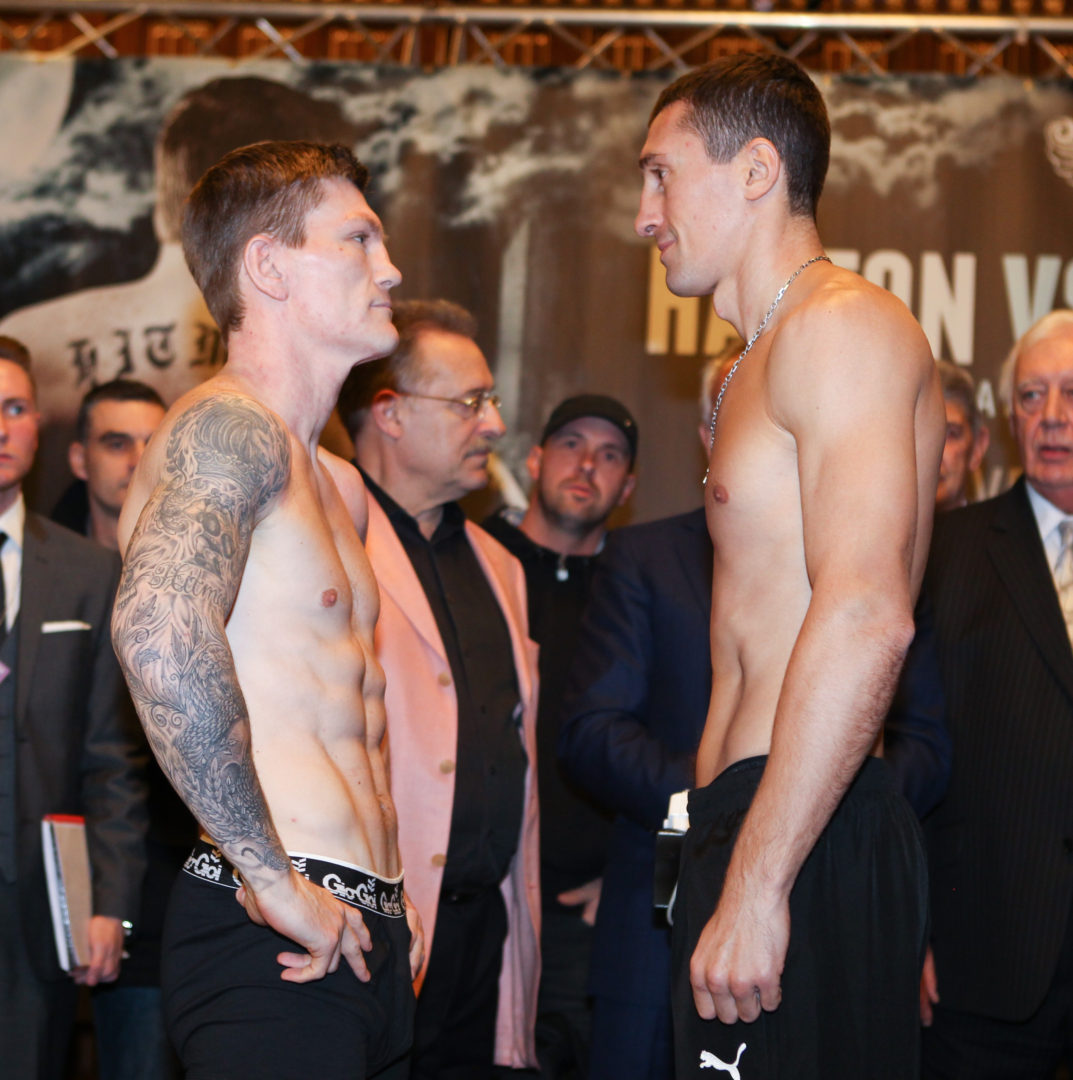
Portrait of 2012’s most interesting week, part 2
MostInteresting
Editor’s note: For part 1, please click here.

***

The night American Timothy Bradley decisioned Manny Pacquiao to become only the second man to beat the Filipino in 13 years, Bradley offered a review of Pacquiao’s recent stamina needs and a preview, truthfully, of what would have befallen him against Marquez had Pacquiao remained conscious after the sixth round of their fourth match. Pacquiao’d deteriorated steadily, not greatly, since stopping Miguel Cotto at the end of 2009, and while Bradley, a junior welterweight champion, did not do well as expected in his career’s second fight at 147 pounds, he was not imperiled by the first three or four punches in any combination Pacquiao threw. Only in the congressman’s maniacal and red-gloved flurries, regressions as well to an earlier form, did Bradley sometimes wither.

Accustomed as they were to Pacquiao’s stunning men considerably larger, consenting ringside observers missed in November what poor footwork accompanied Pacquiao’s fatigue against Marquez – how many more steps he took to make late rounds close – and did not notice, subsequently, how few of Pacquiao’s punches, acrobatic things thrown by a man overshooting his target in a wraparound compromise between power and agility, affected Bradley, once felled in the opening round of a 140-pound title defense.

Next Saturday all the hallmarks of Chavez Jr.’s character deficiencies were on display when, sluggish and cramped from acute weightloss before his middleweight title match with Lee, Junior played punchingbag to the light-hitting Irishman till regaining his mobility in round 3, a mobility Sergio Martinez would not let him find till the 34th minute of their middleweight championship match three months later.

That Chavez Jr. wanted character was unknown to no one. That Chavez Jr. moved from mascot to contender was unsurprising to no one. Anyone later jolted by footage of Chavez’s unconventional roadwork, in pink, or uncovered choice of supplements, in green, was not previously attentive to Chavez, and was not to blame for that choice either.

*

The night American Timothy Bradley decisioned Manny Pacquiao to become only the second man to beat the Filipino in 13 years, both men said decent things about the other afterwards. Whatever their differences of opinion about the judges’ verdict, Bradley was appreciative of the opportunity Pacquiao afforded him and Pacquiao was unbothered by the honest if not particularly ferocious match Bradley gave him – along with another payday, four parts reward for each part risk. Pacquiao did not stomp from the ring to conduct a naked interview in his dressing room the way Marquez did after their third fight, he did not call for an investigation, he did not ask his promoter to petition local politicians or pester them haplessly about the outcome. (He didn’t need to.) Instead Pacquiao smiled gently, took questions generously and said pleasant things about his host city in a way that reminded some media-center habitués how differently, sheepishly, he’d behaved after his official victory over Marquez in November.

Writing a report for the AP is a feat of organization more than creativity: 250 words five minutes after the close, 500 words 10 minutes after that, 700-800 words within a half hour of the event’s conclusion. The very promotional outfit that joined a loud chorus of those who’d like to know what three credentialed idiots scored Bradley-Pacquiao for the winner, Saturday at ringside, then passed my name to an AP editor on Tuesday – in case anyone wonders why writers have a preference for Top Rank.

Chavez-Lee was nothing historic, but it led to 2012’s most suspenseful 90 seconds, 89 days and 11 rounds later.

*

The night American Timothy Bradley decisioned Manny Pacquiao to become only the second man to beat the Filipino in 13 years tore from our discourse its diaphanous veil of civility. Emboldened by the very consensus they rabidly sought, persons gathered ostensibly for a sporting event turned into boisterous misanthropes, people who got along with no one who had not seen things exactly as they did. Businesses, too, said someone had to be sacrificed to ensure the drawing power of boxing’s best prizefighter was not lost, and that someone was Timothy Bradley. If Bradley and his people did not realize it at the moment, they surely won a fair inkling when the following week’s replay was accompanied by a talkshow feature called “The Smoking Gun” that introduced viewers to the delightful spectacle of a televised fight sans vocal track, while proving none of its conspiratorial implications.

What Chavez showed shortly after that spectacle was chin and a willingness to prove it against the onslaught of a lesser puncher’s blows. It was, again, a preview: Chavez for all his want of character would not hesitate to rise from his stool after 11 hopeless rounds in which he was struck by more than 300 of the world middleweight champion’s punches. He was a spoiled brat and a flake, in June as in September, but not a punk.

*

The night American Timothy Bradley decisioned Manny Pacquiao to become only the second man to beat the Filipino in 13 years was the last time Bradley fought in 2012. Pacquiao would forsake the rematch Bradley promised him because, again, everyone knew he’d won, and choose instead a higher-paying match with a nemesis that put him on ice.

Chavez fought Lee as no one in Kronk’s yellow and red accoutrement had, gladly conceding skill and reflex to the Irishman if it meant a chance to hit often as he was hit-by. Lee did not fight again in 2012, and instead, four months later, helped bury Manny Steward, a man who in their time together was much more than a trainer crushed by what happened in Sun Bowl Stadium.

From the result of Bradley-Pacquiao to its subsequent fallout and what charms El Paso held as host of Chavez-Lee, I remember the week that began the night of June 9 as 2012’s most interesting.

Bart Barry can be reached at bart.barrys.email (at) gmail.com


Portrait of 2012’s most interesting week, part 1

MostInteresting
The night American Timothy Bradley decisioned Manny Pacquiao to become only the second man to beat the Filipino in 13 years concluded a week of diminished electricity at MGM Grand, one with considerably less voltage in Las Vegas than previous Pacquiao fight weeks. Bradley fans didn’t travel from Palm Springs, Calif., or if they did composed such a small band their presence was less noticeable in Nevada than Michigan 16 months before. The disappointment of another Pacquiao fight that didn’t include Mayweather, this one a month after another Mayweather fight that didn’t include Pacquiao, and a malaise born of testing requests and accusations and midnight conference calls, draped itself soggily over a fight no one requested.

The reevaluation of Pacquiao’s two-year run had yet to begin, too many and too much invested in calling Pacquiao undiminished, but may examine someday the explanatory narratives of four fights – “Calf cramps”; “Marquez ever a stylistic problem”; “Everyone knows he beat Bradley”; “Lucky punch in a fight he was winning” – and see them for what they are: crestfallen pitches in lieu of sober analyses.

What startled in the week that began with Pacquiao’s loss to Bradley on June 9 was a public need for consensus, insecure as it was intense. No doubt was brooked. When a search for conspiracy uncovered nothing – calculus itself couldn’t conduct three crooked judges disagreeing on six rounds of a championship fight they meant to fix for an unpopular underdog – the volume got raised: Those with dissenting tallies for Bradley-Pacquiao probably never watched a fight in their lives! Except that what three credentialed media sat ringside and joined two official judges in scoring the fight for Bradley had been ringside for at least 1,000 fights between us.

Then it was time to ignore the result. Postfight promises of an immediate rematch, the timeworn remedy for any championship lost in controversy, were undone by the following Thursday in hot, dusty El Paso: Even Bradley knew he lost, and so why rematch?

Two days later Mexican Julio Cesar Chavez Jr. beat up Irish Andy Lee in Sun Bowl Stadium, and a September match with Sergio Martinez got announced. El Paso surprised and impressed its visitors.

*

The night American Timothy Bradley decisioned Manny Pacquiao to become only the second man to beat the Filipino in 13 years, there was reflexive disbelief in the MGM Grand media center afterwards, disbelief that fed on itself and colored its reporting. Maybe Pacquiao did lose to Juan Manuel Marquez in November, the concessions went, but if that decision was Pacquiao’s and the congressman looked better tonight, why, this was a robbery.

Bradley, in a black hat with teal lettering, afterwards took questions from a wheelchair, one or both feet and ankles rendering him gimpy early and late in a fight whose championship rounds he won officially 5-1. It was a point lost on most, distractedly searching as they were by then for any unobvious explanation, that Bradley, hobbled by bad feet and ankles, had not merely survived a 15-minute onslaught from the world’s best prizefighter but unanimously beaten him in their final three minutes together.

Weeks before, El Paso, a west Texas city that tried to lure tourists with museums instead of golf courses, was declared too dangerous by an operator in Austin to host a prizefight with alcohol vending so near Ciudad Juarez, Chihuahua. There were snipers on the roof at University of Texas El Paso’s football stadium when Chavez Jr. made his ringwalk, after Mayor John Cook sang the national anthem.

The Associated Press did not have a boxing writer in the vicinity. I wrote the Chavez-Lee story for them, with lots of help from a local crime reporter on hand to cover sightings of Joaquin “El Chapo” Guzman Loera’s familiars or misbehaving soldiers. There was none of either, and our crime reporter instead collected vulgar and masculine quotes from Julio Cesar Chavez Sr. about his son’s next opponent, quotes the AP did not use.

*

The night American Timothy Bradley decisioned Manny Pacquiao to become only the second man to beat the Filipino in 13 years, Bradley was a 28 year-old prizefighter with a record of 29-0, a winner with a spectacular obsidian physique who beat every man he was matched against, occasionally rising from the blue mat to do it. He was an excellent ambassador for the sport, politely asserting he did not feel he robbed Pacquiao or was party to a robbery of Pacquiao, and in so doing committed a sin as yet unpardonable to most: He did not declare Pacquiao the match’s victor and apologize in behalf of the judges.

A fight, the winner of whose rounds three professional scorers did not agree about 50 percent of the time, was declared the clearest victory, for its official loser, by folks universally quick to cite a conclusion reached by the groupthinking employees of a cable network whose fortunes rose and fell with what revenue Pacquiao could generate in a match against Mayweather. For those previously inexperienced with it, the onslaught of drunken outrage that happened across the internet, multiples larger than anything expressed by writers at ringside, was jarring – herd animals risen on their hind legs and hoarse with boasts of objectivity.

El Paso, with a free art museum empty of visitors but full of masterworks – Canaletto, Ribera, Murillo, Zuburan and Van Dyck – was such a pleasant and quiet departure from what Las Vegas had been, underpromising and overdelivering in a manner the Strip could never understand, that answering what few polite emails floated like lovely debris atop a flood of digital spite was an apropos way to pass time in the comfortable lobby of Double Tree El Paso Downtown.

In the opening round of his fight with Chavez Jr. at Sun Bowl that Saturday, Irishman Andy Lee outboxed the Mexican so very easily, following the late Manny Steward’s blueprint so exactly, it was indeed a surprise to see Chavez, who in a preview of his September match with Sergio Martinez did not land a meaningful punch in four minutes, suddenly taunt Lee, plow through his punches, and arrogantly stalk him.

***

Editor’s note: Part 2 will be posted Wednesday.

***

Bart Barry can be reached at bart.barrys.email (at) gmail.com



Adamek Earns Split Decision in rematch with Cunningham

It was a historic afternoon of fights at the Sands Casino Resort in Bethlem, PA. Steve Cunningham (25-4, 12 KO’s 203.5lbs) and Tomasz Adamek (47-2, 29 KO’s, 223lbs) fought in a hotly anticipated rematch of their 2008 fight of the year candidate. This event was televised by NBC and the entire card was put together by Main Events and Ziggy Promotions in association with Peltz Boxing, DiBella Entertainment and Pushka.

Both fighters began the bout tentatively; trying to establish range with their jabs. Cunningham utilized the entire ring with his movement and fought behind his jab to keep the distance between the two of them even further. Adamak, a notorious slow starter, stalked Cunningham and poked away with his jab. Hoping to force his opponent into the ropes or a corner. By the third, Cunningham felt the desire to engage, and landed a big right hand that sent sweat flying off of his opponent’s head. Adamek responded with a flurry while pinning Cunningham against the ropes, but it was Cunningham that seemed in control early on by a slight margin. The third saw more back and forth action. Cunningham was again able to land some flush blows with his rangy punches, and Adamak continued to press Cunningham into the ropes.

The fifth round saw a bit more action, as Adamek turned up his punch volume, and Cunningham seemed happy to oblige. In the few exchanges they encountered in that round, Adamek had the the cleaner punches landed. However, in the sixth, it was Cunningham who got the better of Adamek in exchanges. He was able to land a massive right hand flush on Adamek’s chin with an overhand right as Adamek worked his way in. The iron chinned Adamek took the punch well, but Cunningham seemed to find his groove. That groove continued into the seventh, with Cunningham continuing to land his right. Adamek Resorted to rushing in on Cunningham in order to pin him against the ropes and immobilize him for a short while. When Adamek was successful in doing this, Cunningham snuck in a check right hook that knocked Adamek off balance. Entering the tenth round of what appeared to be a close fight by our scorecards, Cunningham opened up with two big right hands that drew wows from the crowd. Adamek continued to work forward, always knowing that his will and power will carry him late in fights. He was able to land a blow of his own, keeping Cunningham in check. Cunningham followed with a left hook that stopped Adamek in his tracks.

As they entered the championship rounds, Adamek became much more aggressive, but that left him open to counter right hands from Cunningham. About halfway through the round, Adamek finally landed clean with a right hand that shook Cunningham up. The end of the tenth round saw both fighters land clean, reminiscent of their first encounter which featured non-stop action. The final round saw both fighters give it their all. Adamek was poised, with his right hand cocked, hoping to land a big one, while Cunningham continued pumping out his longer punches. Both fighters landed huge right hands, and Adamek’s blows seemed to slightly shake Cunningham’s knees. Adamek wanted a brawl, and he was finally getting it. The final bell rang with both exhausted fighters throwing punches.

At first, Michael Buffer read the scores wrong; declaring it 115-115 even, 115-113 for Cunningham, and 116-112 for Adamak, making the fight a split draw. But after being informed of his error, Buffer announced 115-112 for Adamek, 115-113 for Cunningham, and 116-112 for Adamek, giving Adamek a split decision victory. Later, it was announced that there was another error and the one scorecard read 115-113 for Adamek.

15rounds scored the fight 117-111 for Cunningham.

Vyacheslav Glazkov (13-0, 9 KO’s, 2215) and Tor Hamer (19-1, 12 KO’s 221lbs) opened up the televised portion of the night. After a tentative start, Hamer was the first to get off after landing some straight rights to Glazkov’s mid section. Those punches seemed to allow Hamer an opportunity to land a solid left hook to end the round. Glazkov opened up the second working in some left hands of his own, alternating between his jab and hook. By the fourth round, Glazkov took command behind his left hook from the outside. After his second helping of Glazkov’s right hand, Hamer walked away shaking his head as if he knew he was in over his head. Glazkov landed the blow repeatedly throughout the round and often followed up with a straight right. Hamer provided absolutely nothing in response. As the round ended, Hamer sulked back towards his corner. In between rounds, Hamer and his corner were forced to retire from the match. In other words, Hamer quit. Glazkov, who was on his way to a breakout performance, was credited with a technical knockout at 3:00 of the fourth round. In what was supposed to be an exciting first fight on a historic night on NBC, Hamer instantly left a stain on the event.

In a swing bout that took place after the Adamek-Cunningham main event, Julio Angel De jesus (6-3-2, 3 KO’s, 144lbs) took on Korey Sloane (2-5-1, 0 KO’s, 141.5lbs) in a bout scheduled for four rounds. De Jesus opened up strong, landing an overhand right against his much taller opponent. Sloane eventually settled into the fight and began throwing his jab at an effective rate. The bout continued in that fashion for the entirety of the four rounds. The final scores read 39-37, 38-38, 38-38 with the fight being a majority draw. The one other scorecard was in De Jesus’favor.

Jerome Rodriguez (1-0, 1 KO, 139lbs) took to the ring against Edwardo Stith (Debut, 139lbs) in a bout scheduled for four rounds. Both fighters came out in southpaw stances, and Stith moved more and shot out occasional punches from a distance, while Rodriguez stalked behind his high guard and fast counter punching. Midway through the first round, a straight left staggered Stith into the ropes, and Rodriguez unloaded dozens of unanswered punches that left Stith reeling all across the ropes. To his credit, Stith stayed on his feet, and was able to bring the fight back into the center of the ring and eventually out of the round.

Stith was more hesitant to exchange from that point on, which left Rodriguez to opening his opponent up with hard body punching and stiff jabs. That worked to perfection later in the round when two body blows, followed by an uppercut, and then a hard straight staggered Stith into the corner. Stith barely remained on his feet, and Rodriguez came in with more viscous blows. The referee was forced to stop the match at the 2:56 point in the second round, giving Rodriguez a TKO victory.

Naim Nelson (8-0, 1 KO, 132.5lbs) squared off against Osnel Charles (9-4-1, 1 KO, 134.5lbs) in a bout scheduled for eight rounds. Nelson was the more well polished of the two, working behind a stiff jab and straight right. Charles used the ring well, and often barged his way inside with hard hooks. Charles’ workrate gave him a lead in the early goings of the match, but Nelson did not seem phased by Charles’ aggression, and would often unleash hard combinations of his own. Nelson’s punches were much more accurate and was able to stagger Charles twice in the middle rounds. In the seventh round, with Nelson in command, Charles crumpled onto the canvas after a body blow that landed on Charles’ belt line. Referee, Steve Smoger addressed it as a low blow. The eighth round saw Nelson sit back on his big lead, but still maintain control of the round behind his jab and solid defense. The scorecards were announced as 78-74, 78-74, and 77-75 in favor of Nelson, giving him a unanimous decision victory.

David Williams (6-6-1, 2 KO’s, 212.5lbs) and William Miranda (6-5-1, 242lbs) fought to a draw to open the night. Both fighters exchanged hard blows throughout, but neither maintained a significan edge in the fight.


2012: Ten reasons to remember it

Pacquiao_Marquez_111112_007a
How will 2012 be remembered? For a single punch from Juan Manuel Marquez that ended the Manny Pacquiao era? For questions about performance-enhancing drugs? For controversial scorecards? For Emanuel Steward’s death?

Yes, yes, yes and yes.

In the end, however, the year is most noteworthy for a changing of the guard. Pacquiao, Marquez and Miguel Cotto are moving off center stage and toward retirement. Nonito Donaire, Andre Ward, Canelo Alvarez, Brandon Rios, Abner Mares and Danny Garcia are poised to succeed them. The Pacquiao era was a rich one, even without a fight against Floyd Mayweather Jr. It might be hard to duplicate, but that’s up to an emerging generation which is bound to spring its own surprises and create its own drama.

A look back with a 10-count:

Fighter of the Year: Donaire. He’s doing it the right way by staying busy and showing leadership in the face of mounting questions about PEDs. Donaire undergoes rigorous testing, 24/7, beyond the outdated procedure mandated by state commissions. Marquez is a deserving candidate. Without undergoing the same tests, however, he loses votes. Fair? Not really. But that’s the state of the game these days. Donaire understands that. More important, he addresses it

Knockout of the Year: Marquez. Pacquiao may never recover from the right hand that Marquez threw at the end of the sixth round with the tactical brilliance he employed throughout the four-fight rivalry. Despite all the suspicions, Marquez’ test with the Nevada State Athletic Commission was clean. He didn’t need PEDS to knock out Pacquiao anyway. Marquez set it up and Pacquiao set himself up for it.

Promoter of the Year: Bob Arum. At 81, he continues to put together fights that surprise and dominate. Pacquiao’s crushing loss to Marquez on Dec. 8 seemed to sadden him on the night his birthday. But for drama it was a huge hit. He promoted Rios’ seventh-round stoppage of Mike Alvarado in October in a bout that looked as if it was a lock for a Fight of the Year. Just when it looked as if nothing could surpass Rios-Alvarado, Arum pulled off a show-stopper in Marquez-Pacquiao.

Comeback of the Year: Mike Tyson. No kidding. He’s taking his one-man, Broadway show on the road early next year. He was on stage for the Pacquiao-Marquez weigh-in at the MGM Grand in early December. He looked happy and, above all, beyond all the demons that nearly destroyed him a decade ago. Who would have ever predicted that? Not even he would have.

The Rodney Dangerfield Award: Timothy Bradley. Okay, maybe we’re kidding a little bit here. But what does Bradley have to do to get some respect? He didn’t judge the fight that gave him the controversial decision over Pacquiao in June. If anything, he exposed a decline in Pacquiao that perhaps had something to do with the Filipino’s loss in December to Marquez. Whatever you believe, Bradley didn’t deserve to be almost exiled by the business and fans.

The Karl Rove Award: Duane Ford and C.J. Ross. The two Nevada judges favored Bradley over Pacquiao on scorecards that are the equivalent of a Fox News poll, which still has Mitt Romney beating Barack Obama.

Most Bizarre Post-Fight News Conference: Bradley-Pacquiao. Bradley, with injuries to both feet, showed up in a wheelchair. In a sport that has seen it all, it had to be the first time that the guy in the wheelchair was the winner.

Most Intriguing Newcomer of the Year: Fifty Cent. The rapper, otherwise known as Curtis Jackson, displayed some real smarts and likability in his emerging role as a promoter. He’s more visible and willing to deal with the media than Al Haymon, the elusive advisor. He has a better chance to awaken the dormant African-American audience more than anyone.

Most Inspiring Story of the Year: Paul Williams. The former welterweight and middleweight showed up in Las Vegas a day before the dueling cards featuring Sergio Martinez-Julio Cesar Chavez Jr. and Canelo Alvarez-Josesito Lopez on Sept. 15 and a few months after a motorcycle accident left him paralyzed from the waist down. Williams was upbeat and even said he hoped to fight again one day. His body was broken. Nothing about his spirit was.

Slacker of the Year: Julio Cesar Chavez Jr. He nearly scored a knockout in the final round of a one-sided fight dominated by Martinez. Imagine what Chavez, who tested positive for marijuana, might have done if he hadn’t trained haphazardly with workouts that started at 1 a.m., or 2 a.m., or whenever he decided. We know that traces of cannabis showed up in that post-fight drug test. We’re sure that no trace of maturity did.


Rosinsky decisions Griffin in New York

dbe_logo
NEW YORK–Lou Diebella’s Dibella Entertainment put together another massive Broadway Boxing card at the Roseland Ballroom in the Theater District of New York City. The headline featured New York’s own Will “Power” Rosinsky (16-2, 9 KO’s, 174lbs) in a light heavyweight showdown against Otis “Triple OG” Griffin (24-10-2, 10 KO’s, 174lbs) for the New York State Light Heavyweight title.

Rosinsky, a volume puncher, started off by ripping hard shots to Griffin’s body. Griffin allowed Rosinsky to get on the inside, hoping to get in some shots around Rosinsky’s arms and point of view. At the end of the first, Rosinsky was showing a cut on the side of his left eye. By the second, Rosinsky seemed a bit more comfortable and was shooting his straight right from a distance. While in the corner, Griffin was able to turn and counter one of Roskinsky’s punches with a hook. The blow staggered Rosinsky, forcing him to steady himself by holding onto the ropes. After that exchange, swelling started to form around Rosinsky’s left eye.

As the bout progressed into the middle rounds, Rosinsky maintained his offensive output, while Griffin still did some good work countering while against the ropes. This quickly became one of those fights where one wouldn’t want to be a judge. By the sixth, it was Rosinsky who was moving around more, hoping to goad Griffin into initiating the action and opening himself up for a counter punch. Both fighters were extremely savvy and did not often fall into eacho others traps.

Griffin came out of his corner for the eighth round like a bull, rushing Rosinsky into the ropes and landing hard punches in the process. The swelling over Rosinsky’s left eye grew worse, and now there was blood coming out of his mouth. Rosinsky managed to weather the storm and looked good when he brought the fight back into the middle of the ring.

The final round of the fight saw Griffin work Rosinsky into the ropes. With a flurry of his own, Rosinsky came back to take over the second half of the round.

The final bell rang, and the judges scored it 97-93, 96-94, and 96-94 all in favor of Will Rosinsky for the unanimous decision victory and the New York state Light Heavyweight title.

Gabriel Bracero (20-1, 3 KO’s, 141lbs) continued his comebacking ways against Johnnie Edwards (15-5-1, 8 KO’s, 142lbs). Despite not possessing hard one punch power, Bracero is a bit of a brawler and opened up the fight taking it right to Edwards. After some hard in-fighting, Edwards fell on a slip, but got up on shaky legs. Bracero pounced and immediately scored a left hook that sent Edwards crashing into the ropes and onto the canvas. Edwards beat the count and was saved by the bell, but the next three rounds saw Bracero beat Edwards from pillar to post. In the fourth round, Bracero continued the beat-down. After a combination that backed Edwards into the ropes, Edwards took a knee and complained of an eye injury. The referee counted and then took a closer look to observe the injury and then was forced to call the bout over. Bracero won by technical knockout at the 2:48 point in the fourth round.

The up and coming sensation, Ivan Redkach (12-0, 11 KO’s, 134lbs) faced Edward Valdez (11-8-2, 8 KO’s, 134lbs). Redkach is known for his sensational knockouts, and he started the fight by taking it right to Valdez, landing two hard right hands. Valdez, to his credit was able to land long looping right hands over the top of Redkach’s straight left hands. This continued throughout the fight. Redkasch stalking Valdez with the left hand, landing it often, with Valdez countering with his right hand and landing every so often.

Valdez’counters definitely earned Redkach’s respect. Redkach wasn’t nearly as aggressive as he usually is. Redkasch landed more consistent blows, but Valdez’ shots wowed his hometown crowd. Entering the seventh round, Redkach seemed intent to put Valdez away, landing dozens and dozens of hard blows with Valdez in the corner. Finally, a little over halfway through the round, Valdez landed a hook that stopped Redkach in his tracks. Redkasch didn’t seem too phased, but it did stop him from continuing his high work rate from earlier in the round. The final round saw both fighters exhausted, but still throw punches until the final bell rang. The final scorecards were announced as 79-73, 78-74, and 78-74 for Redkach and a unanimous decision.

In an eight round feature, Ionut Ion Dan (29-3, 16 KO’s, 150lbs) squared off against Franklin Gonzalez (15-11, 11 KO’s, 150lbs). Ion Dan began the fight working behind his jab and keeping his southpaw left cocked for a counter. He was much taller than Gonzalez, so he maintained a safe distance to throw from, never allowing Gonzalez to be in his optimal range. That caused for Gonzalez (also a southpaw) to reach fairly often with his left hand. By the fourth round, it was all Ion Dan, still applying all the pressure and throwing all the meaningful punches. He worked Gonzalez into the ropes and unleashed multiple blows that had Gonzalez reeling, only to be saved by the bell. As the fifth round went underway, Ion Dan feinted a shot upstairs and landed a hard left hook to the body, dropping Gonzalez. The referee immediately waved the fight off after seeing Gonzalez writhe in pain. Ion Dan was credited with a technical knockout victory at the :11 point in the fifth round.

Travis Peterkin (5-0, 3 KO’s 175lbs) looked huge compared to his opponent, Edward Tigs (1-4-2, 0 KO, 169lbs). The entire bout from start to finish saw Peterkin utilize his size and strength to overwhelm Tigs. It was as one-sides as you can get. Tigs was not particularly bad; he used the ring well and was able to counter somewhat well. Peterkin simply out-matched him. In the third round, a right hand stunned Tigs, and Tigs wisely took a knee to prevent any more damage. The rest of that round and the fourth saw Peterkin continue his onslaught. The final scorecards read 40-35, 40-35, and 40-35, a unanimous decision for Peterkin.

Mikkel LesPierre (1-0, 1 KO, 143lbs) came out to a roaring ovation when he took on Cornelius Whitlock (Debut) in a bout scheduled for four rounds. Both fighters looked talented from the outset; utilizing skilled defense and ring usage. LesPierre was much more calm, fighting behind the shoulder roll in a southpaw stance. Whitlock fought off his back foot for those first two rounds, using every square inch of the canvas. In the second, LesPierre was able to walk Whitlock into the ropes and land multiple blows that had Whitlock reeling.

By the third, LesPierre smelled blood and went in for the kill. That proved to be a mistake as he walked right into a big right From Whitlock hand that buckled his knees and had him reach down to the canvas to stay on his feet. The referee called it a knockdown and when both fighters were allowed to continue, Whitlock was now on the hunt. He landed two more big right hands and then backed towards the corner. LesPierre walked right into another huge right hand bomb and was on his back. He beat the count, and Whitlock tried getting him out of there, but LesPierre survived the round. By most unofficial scorecards, Whitlock still needed the fourth and final round to win the fight. Instead of keeping his hands moving, Whitlock went back to the same backing away style that lost him the first two rounds. The bout ended and the final scorecards read 37-37, 37-37, and 37-37 scoring the fight a draw. Promoter Lou Dibella reached an agreement with both fighters that they would fight in a rematch at the next Broadway Boxing event.

The women took to the ring in a bout scheduled for four rounds. Akima Stocks (4-0, 3 KO’s, 154lbs) took on Marva Dash (0-1, 156lbs). Stocks started the bout very aggressive from her southpaw stance. The bout remained that way, with Stocks consistently working Dash into the ropes. The bout was a little sloppy because of the fact that both combatants were left-handed, but Stocks maintained her composure and alway skept her hands moving. In the fourth and final round, Dash finally began to throw her jab, and it was landing. Soon afterwards, she appeared to score a knockdown, but the referee ruled it off as a slip. The final bell rang, and all three judges saw it the same way, scoring it 40-36 on their cards, giving Stocks a unanimous decision victory.

Jarrell Miller scored a second round stoppage over Tyrone Gibson in a four round Heavyweight bout.

Miller rocked Gibson in round one from a right hand. Later in the round Miller opened up with a four punch combination on the ropes. Miller rocked Gibson with a huge right hand that he followed up with a barrage and the fight was stopped at 1:25 of round two.

Miller, 278 lbs of Brooklyn, NY is now 4-0 with four knockouts. Gibbing, 230 lbs of Hibbing, MN is now 1-4.

Allan Benitez (7-1, 1 KO, 136lbs) and Daniel Calzada (4-6-2, 1 KO, 135lbs) fought in a back and forth bout. Both fighters threw aggressive punches, but it was Calzada who kept the pressure throughout the first half of the fight. He was basic in that he stuck to the jab followed by a straight right, but he threw constantly and landed regularly Benitez resorted to counter hooks, which landed at a good rate, but they seemed to come few and far between.

By the second half of the fight, Calzada seemed to tire just a bit, and Benitez took advantage by upping his work rate. He seemed to try making up for the fact that he might have given up early rounds. The final round saw both fighters give it their all, exchanging huge hooks for the entire three minutes. At the end, the close scorecards of 60-54, 59-55, and 59-55 in favor of Daniel Calzada, giving him the upset victory.

The opening bout of the evening saw Maurice Hooker (6-0-1, 5 KO’s, 141lbs) square off against Cameron Kreale (2-3-2, 0 KO’s, 139lbs) in a bout scheduled for four rounds. Kreale was no pushover, showcasing an aggressive stance, but he was no match for Hooker, who was simply more talented. A right hook dropped Kreale in the opening stanza, and Hooker continued to apply the pressure throughout the fight. A second knockdown came in the second with another right hook. From then on, Hooker coasted to a UD victory, counting on his superior talent and resilience. The final scorecards read 40-34, 40-34, and 39-35 in favor of Hooker.


Praising continuity, recognizing achievement, bidding farewell

MenilCollection
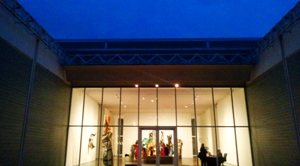
HOUSTON – Three miles southwest of Toyota Center, where junior featherweight world champion Nonito Donaire took Mexican Jorge Arce’s consciousness with a third-round left hook Saturday, there stands a complex of interesting buildings that collectively house the works of the Menil Collection, a free-admission museum comprising the lifetimes’ worth of collecting done by John and Dominique de Menil. The works are modern or tribal, and the main building itself, a masterpiece by Italian architect Renzo Piano, treats natural light like liquid poured gently from above, not wind for blocking.

What is most gratifying about the Menil Collection is its continuity. Nearby stands this city’s more famous collection – Museum of Fine Arts, Houston – an enormous labyrinth of periods and painters complemented by a wonderful sculpture garden, but a collection that, when contrasted with what the De Menils did, shows itself a product of committee collecting, board approvals and consensus. It lacks, that is, private collectors’ blessed tyrannies of vision. We return to this below.

But first “Filipino Flash” Nonito Donaire. He met informed expectations, Saturday, earning his fourth title defense of 2012, fighting at roughly twice the rate of what other nine prizefighters compose Chuck Giampa’s List, and making a sturdy case for himself as fighter of the year. Donaire, though, as yet inspires few strong feelings. He is exceptionally good at what he does, and now does an important thing by voluntarily subjecting himself to year-round PED testing, and he is a gracious ambassador for our sport, and he provided the Philippines a wee bit of solace by knocking out a Mexican a week after a Mexican disconnected Manny Pacquiao from his senses, but to write more than that is trying too hard.

Because victories come so easily to Donaire, aficionados wonder at his authenticity. But he continues to make deposits of goodwill in an escrow account for the day when a competitive challenger – an Abner Mares or Guillermo Rigondeaux – roughs him up and makes him climb off the mat. On that day, when aficionados can be sure he is more than a product of great matchmaking, there will be a flood of good things written and said about the run he’s had since driving Vic Darchinyan to Judah Street in 2007.

Darchinyan’s name, actually, was in the air last week, as it was what kept folks from climbing aboard the Nonito train and bringing it in full to Houston Station. After the way Darchinyan outclassed a 29-year-old Arce almost four years ago, it was hard to take Arce seriously as an opponent for one of the world’s five best prizefighters at the end of 2012. But good for Arce anyway, earning a last paycheck in the nearest way our sport comes to a pension plan. Arce retired immediately after Donaire knocked him flat, and let us hope retired is how Arce remains.

That’s a doubtful proposition. Arce cited a promise to his children, which means that in 18 months, when he’s bored with life and a calendar that is blank for the next 45 or so years, he might just go hang out at the gym and bring one of his children along. A week of that, and a fight on televisión in Los Mochis, and that child will invariably say, “Dad, why don’t you fight any more?” Promise revoked, Arce will return in a new weight class with a new trainer and a new focus and determination and freshness and strength and whatever the Spanish word is for “cliché,” and unpleasant spectacles will ensue.

In the meantime, we owe him a debt of gratitude for being entertaining without being boorish, for laughing at his own special effects – black cowboy hat, red lollipop, dancing horse – and for somehow finding a way to make a body that does not look at all fat at 150 pounds shrink, for an hour or two, into one that weighs 108 or 112 or 115 or 118 or 122. Arce won world titles in each of those five divisions.

His younger brother Francisco, not as talented but just as desirous of blood, fought in Phoenix 7 1/2 years ago, and Arce was there to show support, and almost no one knew it. Even dressed in black jeans, Arce, who was then between flyweight bloodlettings with Hussein Hussein, looked to be about five weight classes above 112 pounds, and not puffy at all. No one was sure it was him till his craggy front teeth pushed out a smile and it could be no one but “El Travieso (The Naughty One)” – a born showman at the precipice of celebrity. Twenty-one months later Cristian Mijares, a fellow Mexican, undressed Arce in San Antonio, and Arce’s decline was begun. Bless Arce, though, for being engaging and inventive enough still to finagle himself on an HBO main event 5 1/2 years later.

HBO is good a place as any to end this. Saturday night it bade farewell to Larry Merchant, its masterful commentator and voice of reason. Merchant has offered a good meter for at least a decade: With few exceptions, a boxing fan’s intelligence, maturity and sobriety can be measured in proportion to his appreciation for Merchant. The kids and circus barkers never did like Larry much; he didn’t go in for their fashion-conscious hype (a redundancy, that). Because he came out of the written word, ever a more sacred place than television, he understood the meaning of his and others’ utterances. He felt no need to end sentences with unwarranted exclamation marks. He took righteous and rightful umbrage with pacifistic athletes who gouged his employer for millions.

Merchant’s tastes and eloquence are a continuity now out of place at HBO, where on-air consensus-building, often to a point of hectoring, has replaced thoughtful dialogue and meaningful dissent. Farewell, then, Mr. Merchant. You were too good for them anyway.

Bart Barry can be reached at bart.barrys.email (at) gmail.com


FOLLOW KHAN – MOLINA LIVE

Amir Khan
Follow all the action LIVE from the Los Angeles Sports Arena when former world champion Amir Khan takes on undefeated Carlos Molina in a Jr. Welterweight bout. The action begins at 9pm when undefeated Shawn Porter battles Julio Diaz and then Jr. Middleweight Afredo Angulo battling Jorge Silva and former Olympian Deontay Wilder taking on Kelvin Price in a battle of undefeated Heavyweights

10 ROUNDS WELTERWEIGHTS–SHAWN PORTER (20-0, 14 KO’S) VS JULIO DIAZ (40-7, 29 KO’S)

ROUND 1 Porter lands a counter combination..Diaz lands a left counter...10-9 Porter

Round 2 Diaz lands a right and eats 2 shots in return…Porter lands a combination..uppercut and double left..Counter right..Diaz lands a left to the body..2 more body…Porter lands a right…20-18 Porter

Round 3 Porter lands a quick right..Diaz gets in a quick right..Porter lands a right…Diaz lands a right…Porter lands a right at the bell…30-27 Porter

Round 4 Diaz lands 2 good rights..Porter cut over the right eye..Right…Good left and right..Porter lands a good right..Big right from Porter…39-37 Porter

Round 5 Diaz lands 2 body shots…Diaz lands a right…48-47 Porter

Round 6 Diaz lands a right…Porter with a right..Uppercut…Diaz gets in a left..combination..Blood from the nose of Diaz..57-57

Round 7 Diaz lands a body shot…right from Porter…good right…67-66 porter

Round 8 Diaz lands a right and 3 punch combination..Diaz lands a big right…76-76

Round 9


EARLY RESULTS FROM HOUSTON

HOUSTON – The Toyota Center undercard ended on a decisive note with impressive Oklahoma City welterweight prospect Alex “El Cholo” Saucedo beating down Utah opponent Eddie Cordova, assaulting him repeatedly with a left uppercut-right cross combination made famous by Mexican Juan Manuel Marquez. Saucedo (7-0, 5 KOs) whacked the outmatched Cordova (3-4-1, 1 KO) to the corner early in round 3 and stopped him at 2:14 of the same, remaining among promoter Top Rank’s very best prospects.

Victor Terrazas, a well-regarded Mexican featherweight contender, ended up in a tougher scrap than anticipated in the penultimate match of Saturday’s undercard, decisioning Californian Juan Ruiz by split-decision scores of 74-78, 78-74 and 79-73. Terrazas (35-2-20 KOs) had Ruiz (23-12, 7 KOs) outclassed but not outhustled, as Ruiz continually lowered his head and charged into Terrazas who at times seemed confounded by the task of keeping Ruiz off him, while boxing well at others.

Saturday’s last undercard match before the international television broadcast began featured Mexican welterweight Daniel Sandoval (30-2, 29 KOs) and awkward, buffoonish Texan Larry Smith (10-14, 6 KOs) in a six-round match that saw one man punch and the other clown around. Sandoval was the puncher and prevailed by unanimous decision scores of 60-54, 59-55 and 60-54, despite showing far less power than his record anticipated.

Lightweight Jose Felix Jr. did his Mexican hometown of Los Mochis proud in the fifth fight of Saturday’s undercard at Toyota Center. After spending a few rounds measuring his opponent, Bahamian Meachor Major (20-6-1, 17 KOs), Felix Jr. timed the slippery boxer leaning too far forward on the way in, clipped him with a left-hook lead, and hurt him badly enough to win by TKO at 2:23 of round 3.

Saul Rodriguez, a California super featherweight trained by Robert Garcia, had no trouble with Mexican Pablo Brates, in their four-round match. Rodriguez (8-0-1, 5 KOs) found Brates (2-5-1, 1 KO) with most every punch he threw, and despite being hit hard a few times himself, won each round by wide margins.

Saturday’s third fight, a six-round match between undefeated Houstonian Cedric Agnew (25-0, 13 KOs) and oft-defeated Mexican Alfredo Contreras (11-15-3, 4 KOs), a match that saw Agnew land numerous flush shots – and eat a few as well – ended with a wide decision for Agnew: 58-56, 60-54, and 59-55. Contreras, who hails from main-event fighter Jorge Arce’s hometown of Los Mochis, was entirely outclassed but managed to entertain throughout, raising questions about Agnew’s power.

Before that, in a four-round fight between Connecticut super bantamweight Tremaine Williams (5-0, 2 KOs) and Texas’ Rafael Casias (4-6), Williams held on to win a unanimous decision, 39-36 and 39-36 and 40-37, despite fading slightly in the final round.

Saturday’s card began with a four-round super welterweight match between California’s Sukhrab Shidaev (4-0, 2 KOs) and Texan Jose Trevino (1-7-1, 1 KO), a match that Shidaev won by knockout at 1:39 of round 3.

Opening bell rang on an empty Toyota Center at 5:15 PM local time.


Santa Cruz retains Bantam crown with decision over Guevara

leo-santa-cruz
Leo Santa Cruz retained the IBF Bantamweight title with a twelve round unanimous decision over Alberto Guevara at the Los Angeles Sports Arena.

It was an entertaining fight and both guys bled, Santa Cruz from the nose and Guevara from the right eye. It was Santa Cruz work rate that prevaied over the shiftiness of Guevara which worked well at the outset.

Santa Cruz, 117 3/4 lbs of Rosemond, CA won by scores of 119-109. 118-110 and 116-112 and is now 23-0-1. Guevara, 117 1/2 lbs of Mazalton. MX is niw 16-1.

“I want to thank Al Haymon, Golden Boy and all of my supporters because otherwise I wouldn’t have been able to fight on CBS,” Santa Cruz said. “I’m sorry I didn’t give as good of a show today. I felt a little different. I couldn’t breathe after the third round, so I had to breathe through my mouth. I messed up my right hand in sparring — that’s why I moved to southpaw.

“I usually throw more body shots, but he was running too much. I have been fighting a lot in the last several months and didn’t give my body enough time to rest.”

“I think I did great. I was very tough for him,” Guevara, a virtual unknown coming in, said. “Leo is very good, very tough and very strong. I know I hurt him in the 12th round, but he hurt me in the fifth.

“I said that I was going to be in there and not run around. I had to stay with my style and box. I felt like I trained for one and a half men. They called us for the fight three weeks ago.”

Errol Spence Jr. scored a third round stoppage over Richard Andrews. Spence is now 2-0 with two knockouts


Donaire’s personal accountability offers a way out of the PED swamp


Personal accountability is the only way out of the deepening PED swamp. Nonito Donaire understands that. Few do.

Donaire was proactive in addressing suspicions he knew would be there when he hired Victor Conte, the BALCO founder who spent four years in prison for his role in the scheme to distribute performance enhancers to Olympic medalists and major leaguers who rewrote baseball’s home-run records. Donaire took the test, takes the test, whenever and wherever.

It’s unfortunate that Juan Manuel Marquez didn’t follow Donaire’s lead. If Marquez had, there wouldn’t be all of those messy questions attached to his dramatic victory last Saturday over Manny Pacquiao at Las Vegas’ MGM Grand. Marquez’ home-run shot in the sixth round knocked out Pacquiao, but none of the PED garbage.

Not taking an Olympic-style test these days is the equivalent of taking the fifth. It’s just another way of saying you don’t want to incriminate yourself.

Marquez likes to call himself an intelligent fighter. But he didn’t think things through when he first hired Angel Heredia, a former Conte associate, and then added muscle to a middle-aged body that Heredia christened “The Hulk.” Heredia and Conte will be in opposite corners Saturday night at Houston’s Toyota Center. Heredia works for Jorge Arce, who fights Donaire for the super-bantamweight title.

Heredia, like Conte, is bound to stir up suspicions. Before his upset of Pacquiao, Marquez said he was willing to undergo testing considered more thorough and rigorous than the procedure administered by the Nevada State Athletic Commission.

Saying it, however, isn’t doing it.

Marquez didn’t.

Instead, he underwent Nevada tests that many believe are easy to circumvent. The Nevada tests will come up clean, Marquez said. It would be a huge upset if they didn’t. In the court of public opinion, however, the negative result won’t allay the suspicions.

During the last year, we have heard testimony and watched news reports of how Lance Armstrong beat the system in international cycling for years. Armstrong always denied doping. He still does. But few believe him. That public skepticism has spread to every fighter who won’t step up and undergo state-of-the-art testing not required by state regulators.

Heredia’s well-documented role with BALCO includes grand-jury testimony in which he says he supplied Olympic track-and-field medalist Marion Jones with performance enhancers. Jones, a woman and the only athlete sentenced to jail in the BALCO scandal, never tested positive. She always denied the allegations. In the end, she was convicted on a perjury charge.

I want to believe Marquez and so do many of my friends. I respect him, his poise and ability to think through a tough fight. Marquez’ physical transformation, Heredia says, is about “science.’’ Maybe so. But wasn’t Frankenstein science fiction?

It’s the fiction part that bothers me. Only updated testing can make it real and that’s a process that starts with the kind of accountability practiced by Donaire.


“Mas vale tarde que nunca”


LAS VEGAS – The keyboard of this laptop is covered in papery brown pistachio skins and shell dust. There’s a black plastic bag of Wonderful Pistachios just to the left, one of hundreds placed along press row before Saturday’s card, in what passes for swag in this eroding business. Wonderful Pistachios were Filipino congressman Manny Pacquiao’s latest marketing hustle, the tasty green nuts he whacked from a speedbag swivel hook in countless loops on the screen above Saturday’s ring.

There’s no occasion for reading creatively yet, the metaphor is right here: After what Juan Manuel Marquez did to him in the final second of the sixth round of their fourth fight, Pacquiao’s career is now in as many pieces, and filled with as much promise, as the pistachios that coat this keyboard. “Marquez KO 6” – their fight’s official line – hardly approaches it. Pacquiao will fight on, partially out of pride, partially out of financial necessity, but mostly because he’s the one person who was in MGM Grand Garden Arena that holds no recollection of what was done to him Saturday.

It was Juan Manuel Marquez’s night, the crowning act of vindication in a late career marked by its spiteful pursuit, but the entire spectacle felt more like a treatment of Manny Pacquiao. The comatose posture on the apron, his head under the bottom rope, his body perfectly still, his hands folded passively and unnaturally beneath him – testifying to a brain’s communication severed well before it could recognize, much less send notification, his face was in a freefall to cover each of the 66 inches between his metallic blue boots and raven hair.

Folded is how Pacquiao looked, tidied up and put away, resting peacefully in an oblivious place that might be sweet were it not for the vehicle that transported him there, and were it not for the masses of instantly aghast witnesses – some soon appalled, others quickly euphoric, but all initially aghast because it is nigh impossible for a person not to start at the sight of his own put temporarily in a place so like death.

There was not a seat on press row from which anything but Pacquiao’s back could be seen. One heard the clapper signal 10 seconds and began the countdown to round’s end. Surely a few scribes, and cornermen, lowered their heads to begin all the thoughts and activities that happen in the in-between minutes of championship prizefights. Pacquiao had won the round and was about to be up two points on all three judges’ scorecards – identical after five – at the midway point of a fight already featuring two knockdowns and more brutality than its trilogy of predecessors, as neither man desired judges’ opining this time, each stating plainly beforehand he preferred exactly the unconsciousness Pacquiao got to another official decision.

The very maneuver Pacquiao used to fell Marquez three times in the first round of their first match in 2004 – feinted left-hand lead, backwards hop, forwards leap, committed left hand – brought the violent end of their tetralogy. For Marquez made an adjustment that betrayed his newfound confidence in a right hand that was ever accurate but is now prodigious. Marquez used a leftwards spin to thwart Pacquiao’s signature combo in the concluding 11 rounds of their first match, a left-hook lead to Pacquiao’s right shoulder to thwart it in their second match, and a feint of his own in their rubber match; but Saturday brought a seeing-eye right hand Marquez threw because for the first time in his career’s 125 minutes and 59 seconds of fighting Pacquiao, Marquez, boxing’s best gambler, a natural-born predator, calculated the risk ratio favored him.

Pacquiao did not sense it at all; he leaped in with the left-hand lead because he knew the worst that would come was a trip over Marquez’s front shoulder, and the best that might come was a definitive end to their rivalry – shutting “Dinamita’s” crybaby mouth for the rest of their days. Pacquiao did not walk into Marquez’s right hand or even run into it. Pacquiao bounded at it, got his upper vertebrae contracted by it, his chin forced backwards while the rest of him surged forwards, and ruined by it.

There was something different about Marquez’s right hand Saturday. What made Saturday’s first knockdown so stunning in round 3, when a looping right hand from Marquez, one that traveled in an arc enough for Pacquiao to track it, knocked Pacquiao straight backwards, was that everyone watched it arrive, including Pacquiao. The punch disrupted the competitors’ pattern; it arrived either quicker or harder than anything Pacquaio’d been hit with in 13 years. And before Saturday, was Marquez known for wearing one-punch chloroform on his right glove at welterweight?

There will be allegations aplenty this week about Marquez’s historic transformation from balletic 125-pound counterpuncher to 143-pound powerpunching freak, delts bulged and lats shredded and biceps pronouncedly vascular, a transformation that came, absurdly and audaciously, after his 38th birthday, and so, two thoughts: Juan Manuel Marquez did not cheat – his negative drug test will confirm that – but the recipe for his strength and conditioning coach’s cocktail of supplements should be confiscated under a clause that reads: “Whatever chemistry transforms a professional athlete’s body the way yours did must not be tolerated henceforth.”

This too: If Marquez knew next week would bring a positive PED test but not erase from memory his moment of vindication, his instant of euphoria at seeing dissolved the man he believes delayed his proper coronation for almost a decade, a recorded sensation of Pacquiao’s head giving way like a pillow to the middle knuckle of his right fist, followed by a snapshot of Pacquiao’s limp motionless body folded on the blue apron right beside the white ‘k’ in Top Rank, Marquez would take it, so help him God, he would.

Bart Barry can be reached at bart.barrys.email (at) gmail.com


Pacquiao talks about a fifth fight with Marquez after a sure sign that he should move into the political ring fulltime

LAS VEGAS – An era came crashing down, face first. Jinkee Pacquiao cried. Her husband couldn’t. Manny Pacquiao was unconscious. After the smelling salts were applied and he awakened, he smiled. He might have been the only Filipino in the world to smile then, now and perhaps for a very long time. The Philippines could only weep.

But there might have been some relief in the Pacquiao smile.

Finally, he can move on.

Finally, he can get on with his political career.

Finally, he doesn’t have to answer any more questions about Floyd Mayweather, Jr., and the media doesn’t have to ask them.

Time to turn the page.

But it’s up to him.

After his collision with Juan Manuel Marquez’ right hand Saturday night in the final second of the sixth round of the fourth chapter of their rivalry at the MGM Grand, Pacquiao wasn’t ready to step out of the ropes for good and into a full time career in the political ring.

“I’m going to take a rest and come back,’’ Pacquiao said after Marquez beat for the first time.

He might re-think that tomorrow or next week or next year. A review of the stunning stoppage on video might do a lot to convince him that a fifth fight with Marquez isn’t worth the risk. While the predominately Mexican crowd danced and sang in celebration of Marquez decisive victory, Pacquiao talked about a fifth fight.

“Why not, if the promoters can make it?’’ he said.

Pacquiao promoter Bob Arum echoed the why-not. A live gate of more than $10 million is a pretty good reason to do some more business.

But Pacquiao wore a T-shirt that, unwittingly perhaps, summed it up. Finished Business, it said. It was supposed to be a message about a rivalry that he finished. Instead, it could have said it all for his brilliant career.

Marquez, who had a knockdown scored against him when his left hand hit the canvas from a jarring left in the fifth, foresaw a chance to knock out Pacquiao.

“He was coming in and I felt that I could hit him with a perfect punch,’’ said Marquez, who also knocked down Pacquiao in the third.

That punch landed at a moment when Pacquiao never saw it. His trainer, Freddie Roach, said he got careless, which is another way of saying it time to think about retirement.

Before the bout, Pacquiao got a visit in his dressing room from Mitt Romney, who wanted to be president and failed in U.S. elections last month. Roach, Arum and others in Pacquiao’s entourage have often said the Filipino Congressman has aspirations to be president of his own country.

He might have better chance that than at winning a fifth over Marquez.


Thunderstruck: Marquez knocks Pacquiao cold in round 6

LAS VEGAS – The definitive end of the Manny Pacquiao Era came Saturday. It came in an act of sudden, precise violence. And it came from the right fist of Pacquiao’s nemesis, Mexican Juan Manuel Marquez.

In the sixth round of their fourth fight, in the closing second of it in fact, Marquez used Pacquiao’s feint as his trigger, planted his weight, and threw a short right hand with years of frustration behind it. The punch landed purely, forced Pacquiao’s chin to his right collarbone, and rendered the Filipino entirely unconscious before he landed face-first on the apron. No 10-count was necessary.

The official time of Marquez’s victory and vindication was 2:59 of round 6.

Everything about Saturday’s match was different from its predecessor conducted 13 months ago. This time, Marquez (55-6-1, 40 KOs) was the larger, stronger, more powerful man. Pacquiao (54-5-2, 38 KOs) was still the match’s quicker and busier fighter, but he was no longer its hunter.

After a pair of very even opening rounds, the third saw Marquez lean leftwards and catch Pacquiao with a looping right hand Pacquiao appeared to see but was surprised by nonetheless. Pacquiao dropped directly to the mat, in a stunning moment entirely unanticipated by anything seen from him in a decade of superfights. Pacquiao rose, however, and fought the still-cautious Marquez off him.

Marquez was still cautious for a reason. After another even round in the fourth, Pacquiao blitzed Marquez in the fifth, dropping him with a straight left, thrown from Pacquiao’s southpaw stance, that stunned Marquez but did not truly hurt him. It affected Pacquiao more than Marquez, actually, emboldening him towards recklessness. After nearly three minutes of attacking Marquez in the sixth, on his way to a two-point lead on all three judges’ scorecards, Pacquiao showed Marquez his signature move one time too many.

Pacquiao feinted the left cross, took a hop back, and then leaped at Marquez, hands-down. Marquez, his back on the ropes, dropped his head underneath Pacquiao’s left hand, and threw his right at Pacquiao’s chin. And in an instant, the Manny Pacquiao Era was ended.

YURIORKIS GAMBOA VS. MICHAEL FARENAS
The plan was this: His promoter, rapper 50 Cent, would drop from the ceiling, and then Yuriokoris Gamboa would drop his opponent directly on the canvas. “Fiddy” did his part.

Saturday’s co-main event, a far more competitive affair than anticipated, or perhaps desired, saw Cuban Yuriorkis Gamboa (22-0, 16 KOs) win a wide unanimous decision over Filipino Michael Farenas (33-4-4, 26 KOs) in a match that was not without suspense. Scores went 117-109, 118-108 and 117-108, all for Gamboa, who despite landing more than 550 punches was unable to stop Farenas and had to rise from the mat in round 9 to prevail.

After a first stanza that saw Gamboa’s superior reflexes and movement dominate, the second found Gamboa staggered by a pair of left crosses from the southpaw Farenas. Those punches from the Filipino, though, did little more than incite Gamboa – who felled Farenas in the final seconds of the stanza.

Round 3 found more aggression from Gamboa, but also some unexpected fortitude and defiance from Farenas, who both weathered Gamboa’s attack and staggered Gamboa again in the fourth with looped left hands, for which Gamboa seemed to have no comprehensive plan. Gamboa, whose attention span is short as his talent is long, often got himself struck by punches a lesser talented man – one who relied more on fundamentals than reflex – might have ducked or blocked.

After a sixth round that saw cuts over Farenas’ eyes deepen and bleed enough for a ringside doctor to give him a full examination before the seventh, Gamboa tore out his corner and tried to end the fight sensationally. After 45 second of ferocious combat, though, when a weakened Farenas was nevertheless still standing and trading, Gamboa’s activity dropped considerably, and while he did enough to win subsequent rounds, his willingness to chase a knockout more or less disappeared.

When it returned in the ninth, it nearly cost Gamboa the ‘0’ on his record, as the Cuban, sensing a knockout was near, walked himself directly into a counter left hand that dropped him on the blue mat. Gamboa rose on wobbly legs and held on tight for much of the next two minutes.

After an uneventful 10th and 11th, both men exchanged occasionally in the 12th but otherwise shuffled to the finish line, satisfied with not being felled again – even if it meant not felling the other man.

MIGUEL VAZQUEZ VS. MERCITO GESTA
It was a title match between an experienced but dull champion and an exciting but inexperienced challenger, and the champion owned it. Most every minute of it.

In the penultimate fight of Saturday’s undercard, Mexican Miguel Vazquez (25-3, 19 KOs) easily defended his IBF lightweight title, decisioning Filipino Mercito Gesta (26-1-1, 14 KOs) by unanimous scores of 117-111, 119-109 and 118-110. It may not have been that close.

After an opening round that saw Vazquez look characteristically slippery while Gesta did little to press an attack, the second and third saw Vazquez too quick, busy and awkward for Gesta. Vazquez would attack Gesta, and have certain success, and then Gesta, after patiently waiting, would decide it was his turn. By the time Gesta began his attack, though, Vazquez would be gone.

The next four rounds saw more of the same, as Gesta, for all his vaunted explosiveness against lesser opponents, simply did not have a solution for the problems an experienced champion like Vazquez proposed to him. Gesta threw ominous left hooks aplenty from his southpaw stance, but Vazquez picked them up scientifically, staying at the end of his quite long reach, and ensured he was either spinning away or ducking well beneath their plane by the time they went whipping past.

In round 8, Vazquez added a dull new wrinkle to his attack, staying at range till Gesta dropped his guard, and then rushing in with both hands, landing a clean punch or two, and tying Gesta up. Gesta appeared not to have the wherewithal or desire to fight his way out of the awkward Mexican’s awkward clinches, and the next three rounds passed without incident or emotion.

The final round passed exactly as its 11 predecessors had, with Vazquez, a professional counterpuncher and winner, if not entertainer, boxing, moving, clinching and confusing his way to another successful title defense.

JAVIER FORTUNA VS. PATRICK HYLAND
It was a battle of undefeated fighters, and while neither guy wanted to lose, neither guy wanted to win much either. The partisan-Mexican crowd that half-filled the arena did not appreciate it.

In the first televised match of Saturday’s pay-per-view telecast, Dominican featherweight Javier Fortuna (21-0, 15 KOs) decisioned limited Irishman Patrick Hyland (27-1, 12 KOs) by unanimous scores of 118-110, 116-112 and 115-113. Fortuna, who appeared a little unstable both at Friday’s weighin and points of Saturday’s fight, fell on his back in celebration upon hearing the decision.

The fight began badly, and after two dreadful rounds that saw neither man engage and Fortuna in hands-down retreat, a lowblow made things briefly interesting and Fortuna briefly more offensive in the third. That brief display of offense by Fortuna was more than enough for Hyland to put his own fists away and spend two rounds focused on defense, blocking and ducking, and generally not punching.

In round 7, after 18 minutes of routine booing from the Garden Arena crowd, Hyland appeared to close space slightly and land a few decent right hands on the southpaw Dominican. The eighth brought increased fatigue to both men, which brought actual infighting and enough action for the crowd to cease its hectoring, if not increase its cheers.

The ninth saw a pair of unintentional fouls send Fortuna reeling to a neutral corner, followed by the entire fight’s best minute of sustained combat, as each man briefly took the other’s punches personally before returning to less-belligerent form. The 10th had the less-talented Hyland appearing to want to fight, and the more-talented Fortuna demonstratively displeased with anything that wasn’t clean punching.

The championship rounds passed uneventfully, with neither man daring to do anything daring, as the championship being contested was only the WBA interim featherweight title after all.

UNDERCARD
Saturday’s swing bout, a four-round scrap between local featherweight Alexis Hernandez (3-1, 1 KO) and New Mexican Jazzma Hogue (2-4-1) did not last long and did not look pretty, with Hernandez prevailing by TKO at 2:20 of round 1.

Before that, U.S. Olympian Jose Ramirez (1-0, 1 KO), a lightweight from California, made his professional debut against designated victim Corey Siegwarth (2-2, 1 KO) of Colorado. Charging out his corner and swarming Siegwarth from the opening bell, Ramirez moved well and threw punches in combination while showing good defense, stopping Siegwarth at 2:05 of round 1. As many clean punches as Ramirez needed to finish Siegwarth, time will tell how much power he has brought with him to the pro ranks.

Saturday’s second match saw Filipino featherweight Dodie Boy Penalosa (10-0, 10 KOs) stop Floridian Jesus Lule-Raya (2-2) suddenly and violently at 1:12 of round 2. Undefeated as he is, and with his victories coming the way they do, it will be interesting to see how Penalosa’s coming improvement in competition goes.

The evening began with a surprisingly two-sided affair between Filipino super featherweight Ernie Sanchez (14-3, 5 KOs) and Philadelphian Coy Evans (10-2-1, 2 KOs). Both men were hurt early in the fight, with Evans being sent to the mat by a right hand from Sanchez, but neither succumbed to the other’s numerous but light punches, and Sanchez prevailed by unanimous decision: 78-73, 78-73 and 77-74.

Opening bell rang on an empty MGM Grand Garden Arena at 4:06 PM local time.


No Worries: Pacquiao says he already has felt the kind of power Marquez might have

LAS VEGAS – Evidence of Juan Manuel Marquez’ new found power is circulating like an ominous preview in video of his brutal stoppage of a sparring partner. But Manny Pacquiao hasn’t seen it. Won’t lose any sleep thinking about it.

“I’m not worried about it,’’ Pacquiao said Friday after the formal weigh-in for his fourth fight Saturday night with Marquez at the MGM Grand. “I took Antonio Margarito’s best punch.’’

In the sixth round of a 2010 victory over Margarito at Cowboys Stadium in Arlington, Tex., Pacquiao was rocked by left hook to the body. It was one of the punches Margarito had used with devastating efficiency throughout his career as a brawler.

“I was lucky to survive that round,’’ Pacquiao said then.

In a lesson delivered by Margarito’s left hand, Pacquiao might have experience and confidence to go along with the luck he’ll need against Marquez.

Sellout equals heavyweight standard
Top Rank announced Friday that it had sold out the MGM’s Grand Garden Arena’s 16,000-plus seats for Marquez-Pacquiao. Promoter Bob Arum said the gate would generate more than $10.6 million. More than $10 million in tickets were sold for the third Marquez-Pacquiao fight, also at the MGM Grand.

It’s the first time rematches have done more than $10 million at the gate for each bout since Evander Holyfield beat Mike Tyson in 1996 and beat him again in 1997 at the cost of an ear lobe, also at the MGM Grand.

Notes, quotes
· Tyson was introduced to a noisy, cheering crowd at the weigh-in. The former heavyweight champ asked fans to support his charitable foundation, Mike Tyson Cares. Meanwhile, he’s getting ready to take his Broadway show on a national tour of 36 cities. “I’m like Frankenstein,’’ Tyson said. “A lot of people have put me together.’’

· After stepping off the scale, Pacquiao, a Filipino Congressman and Lieutenant Colonel in the Army Reserve, dedicated Saturday night’s fight on HBO’s pay-per-view television to fellow Filipinos hit by Typhoon Bopha. There were reports Friday of than 500 dead and 400 missing. There 310,000 left homeless.

· Former welterweight rivals Tommy Hearns and Sugar Ray Leonard are in Las Vegas for Chapter IV in the Pacquiao-Marquez rivalry. Hearns picks Pacquiao to win. Leonard played it safe. He didn’t pick anybody.


Pacquiao weighs more, Friday, but Marquez looks bigger

LAS VEGAS – It was not particularly eventful, far as these things go – two muscular men stripped to their underwear, stepped on a scale, had their weights read, dismounted, and posed shirtless for photographers beneath the stage – but it was not entirely without event. Mike Tyson saw to that.

Friday afternoon at MGM Grand Garden Arena, Filipino welterweight Manny Pacquiao and his career nemesis, Mexican Juan Manuel Marquez, each made weight for their Saturday fight, a match that will complete a storied tetralogy in the very venue where it began.

Pacquiao made the welterweight limit of 147 pounds. Marquez came in three pounds below at 143.

“It’s going to be a war,” Marquez said immediately afterwards. “It’s going to be a war.”

If the fight will be the battle Marquez promised, he is the man who appears to have the heavier artillery this time. As part of a controversial strength and conditioning regimen conducted in Mexico with a controversial strength and conditioning coach, Marquez has added a significant quotient of muscle in his recent training camps and removed fat while doing it – a feat once believed nigh impossible for a man approaching his 40th birthday, as Marquez now does.

It is an edge Marquez, 0-2-1 in his three matches with Pacquiao, believes will mark the necessary “grain” of difference he needs.

“I would like to pray for all the families affected by the storm in the Philippines,” said Pacquiao, after making weight, replying to a question about a natural disaster that struck his native land this month. “I am dedicating this fight to them.”

Pacquiao, who looked very good, if not muscular as Marquez, Friday, has downplayed his opponent’s noteworthy growth in the last 15 months, answering questions about Marquez’s size with appeals to larger men Pacquiao has fought, and bigger punchers, too.

That may be, but did any of them have a history of hitting Pacquiao often or accurately as Marquez does?

“Not the biggest fight, possibly,” Marquez said of Saturday’s fourth match with Pacquiao and its place in his career. “The most important.”

Asked if, as a congressman in the Philippines, he still had the “fire in his belly” required to beat up a prizefighter gifted, dedicated and fixated on victory as Marquez is, Pacquiao was terse but adamant.

“Yes, sir,” he said.

Friday’s weighin, while not the fire-marshal-bar-the-doors affair previous Pacquiao weighins have been, was well-attended by what sounded like a partisan-Mexican crowd. Also in attendance was world middleweight champion Sergio Martinez, who kept a characteristically low profile.

Keeping a characteristically higher profile was former world heavyweight champion Mike Tyson, in town, and in MGM Grand, to promote and perform “Mike Tyson Cares: Giving Kids a Fighting Chance,” a show Tyson will host at MGM Grand’s Tabu Ultra Lounge, Friday night.

Tyson, whose euphoria at being on stage for a superfight weighin was pronounced, as evidenced by his constant smile and interaction with undercard fighters throughout, spent only a moment center-stage, waving and bowing to loud applause, then saying: “And make sure you come out!”

Doors for “Pacquiao-Marquez 4,” an eight-match card, will open at 3:00 PM local time, with opening bell scheduled to ring at 3:45. The four-fight pay-per-view televised portion of the card will begin at 6:00 PM. 15rounds.com will have full ringside coverage.


Hear The Buzz: Lawsuit threat gets things rolling in build-up for Pacquiao-Marquez


LAS VEGAS – Threat of a lawsuit is little bit like opening bell. Hear one and you can be sure the fight is about to begin.

Opening bell for the fourth chapter Saturday in the Manny Pacquiao-Juan Manuel Marquez rivalry was still a couple of days away, but the lawsuit threat echoed Thursday through the MGM Grand’s press room with a buzz that said only fury will settle the differences that divide the opposing camps.

Marquez’ controversial strength coach Angel Heredia promised to sue Pacquiao trainer Freddie Roach for comments in USA Today that implied the heavily-muscled Marquez had been using performance enhancers. Roach didn’t need to consult an attorney for his response.

“He’s a piece of bleep,’’ said Roach, who also called Heredia “a rat” during roundtable sessions with the trainer.

Flush the legalese.

It’s hard to know whether Heredia is just posturing or has been caught up in the hyperbole that always intensifies during the countdown for a major bout. He’s a relative newcomer to boxing’s outhouse. But Heredia’s notorious resume is accented with inevitable questions. During the Balco scandal, he testified he had a role in giving PEDS to Olympic track-and-field medalists, including Marion Jones and Tim Montgomery.

Roach reads the testimony, looks at the bulked-up Marquez and says what many fans are thinking. No surprise there. Roach, a Hall of Fame veteran of fight-week hype, might be using the moment to play some mind games. That’s as fundamental as a feint. Whatever he was doing, Heredia’s anger is enough to wonder if it has entered into his conversation with Marquez and trainer Nacho Beristain.

“We’re going to meet up with my lawyers,’’ Heredia told the media Wednesday after a formal news conference.

If there is a meeting about anything other than how to beat Pacquiao for the first time, then Roach will have succeeded in throwing the first feint.

Notes, Quotes, Anecdotes
The intensity of the Pacquiao-Marquez rivalry makes it impossible to predict how their relationship will be after the final bell. “My relationship with him is one of respect,’’ Marquez said. “It will always be inside the ring. But outside of the ring?’’ Marquez left some doubt about whether they could be friends. “That’s his problem,’’ Pacquiao said.

Purses: According to contracts filed with the Nevada State Athletic Commission, Marquez is guaranteed $3 million and Pacquiao $8.595 million. That doesn’t count the international money. Bob Arum says Pacquiao will collect at least $26 million after it’s all counted. “We haven’t knocked out anybody lately and we got a loss in our last fight,’’ Roach said of Pacquiao’s controversial loss by decision to Tim Bradley in June. “So we’re taking a cut in pay.’’


Roach smiling at Pacquiao’s chances for a decisive win over Marquez


LAS VEGAS – Distractions and Manny Pacquiao have been inseparable for at least a year. But it’s beginning to look as if he has discarded that piece of troublesome baggage.

The distracted Pacquiao was gone Thursday. In his place, there was the engaging personality remembered for entering the ring with the smile of a kid headed to a few rounds on the playground.

“He’s having fun,’’ Pacquiao trainer Freddie Roach said before a formal news conference at the MGM Grand. “When he’s having fun, he’s hard to beat.’’

Little about a rivalry just a few days from a fourth fight, also at the MGM Grand, looks like much fun. Through 36 rounds, Pacquiao has the edge with two controversial decisions and a draw. But instead of celebration, there’s been controversy. Marquez argues the ledger should read 3-0 in his favor.

“He claims he won,’’ Pacquiao said. “He needs to prove something. I wanted to give him that chance. Maybe he can prove something.’’

The momentum, at least, seems to be on Marquez’ side, especially if the rivalry stretches to 48 rounds in an HBO pay-per-view bout. Much of the public agrees with Marquez, enough perhaps to finally swing the scorecards in his favor.

“My motivation is that I want them to raise my hand in the ring,’’ said Marquez, who showed up at the interview session in a crowded lounge off the casino floor looking edgy in a down jacket that was zipped all the way up to his scarred chin. “I don’t want people to just say, ‘You really beat him.’

“I want them to know that I beat him.’’

For Pacquiao, there might be only one way to do that:

By knockout.

But can he? In 2004, Pacquiao knocked Marquez down three times in the first round. Yet, Marquez managed to recover, rally and fight to a draw. Both have moved up the scale, from featherweight to lightweight for the first rematch and 144 pounds for the third fight. Along the way, there’s speculation that Pacquiao lost some power, or at least enough of it to cut his chances at stopping Marquez from good to negligible.

But Roach says Pacquiao was still an evolving fighter in 2004, meaning he didn’t possess the right hand he developed against David Diaz in 2008. Before their third fight in November, 2011, there were Pacquiao’s well-documented distractions, including marital problems and political campaigns.

“I still say Marquez hasn’t seen the best Manny,’’ Roach said. “This time he will.’’

Evidence of that, Roach said, came in training at the Wild Card Gym in Hollywood, Calif. Pacquiao knocked down sparring partners four times. There were zero knockdowns in training for Pacquaio’s controversial loss to Tim Bradley. There were none in camp for his majority decision over Pacquiao about 13 months ago. Pacquiao hasn’t knocked down a sparring partner since training for his 12th-round stoppage of Miguel Cotto in 2009.

“Manny said he wanted to go back to the Manny of 2004,’’ Roach said. “I wasn’t sure that was possible. But he’s had four knockdowns in training. He’s on fire right now.’’

But Marquez has found a way to cool that fire with counter-punching that interrupts pace and prevents the instinctive Pacquiao from getting into a rhythm, an unstoppable roll. There’s also the simple issue of Marquez’ muscle-bound upper-body, thanks to controversial strength coach Angel Heredia.

Heredia, who joined Marquez for the third fight, testified in the Balco case that he provided performance-enhancers to Olympic track-and-field medalists. Heredia’s presence raises inevitable questions. They were there in 2011 and they are back a year later. Marquez, annoyed at all of the questioning, has told the media he is prepared to undergo testing. In the PED swamp, however, there are always rumors and suspicions. Ask Lance Armstrong.

Mexican promoter Fernando Beltran introduced Marquez in a way that only makes you wonder about the relationship with Heredia.

“Built like Hulk,’’ Beltran said.

It might be hard to knock down Hulk. It’ll be harder to knock him out.

But Roach has his own theory.

“You put on a lot of muscle for a reason,’’ Roach said. “If he wants to exchange, that’ll be better for us.’’


Benavidez withdraws from ESPN2 card


LAS VEGAS — Jose Benavidez Jr., unbeaten at junior-welterweight, withdrew from a scheduled bout Thursday night at The Mirage, because of concerns about further injury to his right hand, according to Jose Benavidez Sr., his father and trainer.

“When we come back, I just want us to be back at 100 percent,’’ his dad said.

Benavidez (17-0, 13 KOs) was nearly knocked out in the final seconds of an eight-round bout by Pavel Miranda (17-8-1, 5 KOs) on Oct. 13 at Home Depot Center in Carson, Calif., on a card featuring Brandon Rios’ dramatic stoppage of Mike Alvarado in the likely Fight of the Year.

Benavidez, a Phoenix prospect, escaped with a unanimous decision, scoring almost exclusively with his accurate jab. He also appeared to tire in the seventh round, perhaps because he struggled to make weight, 140 pounds.

“Then, I think we were looking ahead to the next fight,’’ Jose Sr. said. “We didn’t work the right hand in that one, because I think we were thinking about that fight in December. Things have happened so fast since that last fight.’’

Initially, the 20-year-old Benavidez had hoped to fight on the undercard Saturday of the fourth bout between Manny Pacquiao and Juan Manuel Marquez in an HBO pay-per-view event at the MGM Grand. Instead, Top Rank announced a few weeks ago that Benavidez would face Jesus Selig (15-1-1, 9 KOs) on a Dec. 6 card televised by ESPN2. Top Rank was surprised by Benavidez’s withdrawal.

Benavidez, who signed with Top Rank as a 17-year-old, underwent surgery in January on his right hand and wrist after aggravating an injury during a victory over Sammy Santana in November, 2011 on the undercard of Pacquiao’s controversial decision over Marquez in their third fight.

An MRI revealed an extra bone in the wrist, according to physicians. It was causing Benavidez pain. According to reports, a laser procedure removed the source of that pain. A damaged tendon also was repaired.

After a five-month layoff, Benavidez returned to the ring, fighting three times — a six-round unanimous decision over Josh Sosa (10-4, 5 KOs) in May, a fourth-round stoppage of Javier Loya (7-1, 6 KOs) in August and then Miranda.

Plans are now for him to fight again early next year, perhaps in February, his dad and manager Steven Feder said.

“I just told him to enjoy the Holidays, rest and get ready for next year,’’ Jose Sr. said.


Tyson gets ready for a road show with talk about who he was and who he is


Mike Tyson talked Monday about life in the ring, life on the stage and about how surprised he is to be alive at all.

“Hey, I didn’t think I’d make it to 25,’’ Tyson, now 46, said during a conference call for a national tour of his Broadway show, “Mike Tyson: Undisputed Truth.”

It will stop in 36 cities, starting on Feb. 12 in Indianapolis where Tyson was convicted on a rape charge and including Feb. 24 in Phoenix where his daughter died.

In a wide-ranging interview with fight writers and the entertainment press, Tyson was relaxed and philosophical. The Spike-Lee directed show, he said, allows him to talk about circumstances and pressures that led to crazy headlines generated throughout his heavyweight reign. Through the years, he said, he has matured, finding fulfillment through acting and charity work that he never had in boxing.

“I really learned a lot about myself,’’ he said. “I learned I’m an interesting guy. I’m a guy who wants to fit in. I’m not sure where that came from.’’

Boxing is like acting in one way.

“The doubt and the fear of being a failure is there,’’ Tyson said.

But there is a difference.

“You don’t have to go to the hospital afterwards,’’ he said.

True to the show’s title, Tyson says little is out-of-bounds. The 80-minute script includes the pain of losing 4-year-old Exodus, who died in 2009 after a freak accident on a tread mill in Phoenix where Tyson had lived and trained for a few years following his release from prison in 1995.

“I talk about my daughter at the end of the show,’’ said Tyson, whose stop in Phoenix is scheduled for Comerica Theatre, just a few blocks of roadwork from where he trained at Central Boxing. “That’s not a pretty sight.’’

Tyson’s time in Arizona was a snapshot of who he was and how he is remembered.

In 1999, he was handcuffed by law enforcement authorities at Central and returned to jail for a road-rage incident in Maryland.

In 2001, he underwent a polygraph in Phoenix. He has always said he was not guilty of rape in Indianapolis. According to results acquired by The Arizona Republic, Tyson was truthful when he said he did not rape Desiree Washington.

A few years later, he was questioned about his relationship with Dale Hausner, who is currently sitting on death row for a series of murders committed between 2005 and 2006. Tyson said law enforcement came into the gym. They said they asked about Hausner, who had worked as a ringside photographer at Phoenix bouts.

“I was in a picture on his website,’’ Tyson said. “Turns out, the guy was going out and sniping people.’’

Today, Tyson says, he thinks of himself when he hears about the deaths of Hector Camacho, Johnny Tapia and Arturo Gatti.

“All the time, my friend, all the time,’’ he said. “They weren’t as reckless as I was. Reckless out in the open, if you know what I mean. I thought it could be me if I hadn’t made these changes in my life.’’


From theater, the unexpected


I did not expect to look forward to this week’s fourth match between Filipino Manny Pacquiao and Mexican Juan Manuel Marquez. I submitted my credential request, booked my flight to Las Vegas and reserved my hotel room for Dec. 8 under a spell of grim determination, not euphoria; this would make a tetralogy of the rivalry for which this era of prizefighting will be remembered, and I should witness it if I am able. I am now excited, though, because of an unlikely source – the third episode of HBO’s “24/7” program – and its subversion of a usually reliable imperviousness to hype. We’ll return.

What is likeliest to happen Saturday is another close fight, but one Pacquiao rightfully wins with hustle, followed by a set of scorecards that give Marquez a comfortable decision. Pacquiao has lost his novelty in Las Vegas, and while Marquez ever had little, the Mexican has at least gone to the trouble of reengineering his body in a Vegas-like way, erecting in just 15 months a breathtaking spectacle nature will raze in five years (or at least by the time Marquez arrrives in Canastota). That and previous scoring shenanigans make Marquez, for once, a more appealing figure in Las Vegas than Pacquiao.

In his exhaustive reevaluation of art history, British writer Paul Johnson opines of this week’s host city: “Nothing in Las Vegas is built to last except the roulette wheels. It is a city which, architecturally, is always in the immediate present, never in the past or future. It is Ephemeropolis.” In Johnson’s sense, neither Pacquiao nor Marquez is very much an Ephemeropolis fighter. Both have, in their ways, endeavored to be more permanent figures than Las Vegas generally appreciates; their careers cannot be divided in chapters named after trainers the way Oscar De La Hoya’s can be, they haven’t the shamelessness or salesmanship of American heavyweights, and they both lack Floyd Mayweather’s capacity for reinvention. Both are for the most part beneficiaries of a meritocracy, and while each now comes to the logical ends of his meriting millions of dollars to fight, both have, with very few exceptions, deserved the fortunes they’ve amassed as entertainers who combat honestly the men put in front of them.

If you did not see Saturday’s episode of HBO’s “24/7” program, if after the preceding week’s absurd Filipino donut-vending and Mexican jumpy-jump partying, you vowed never to watch another moment of the “24/7” franchise, you are, of course, forgiven, though also surprisingly unfortunate. Saturday’s episode was an unpredicted return to what camp footage made the series’ 2007 introduction compelling. It wasn’t choreographed handpad tricks and portentous stretching, either, but actual punching in combination, with the camera acting more as reporter than novelist.

Saturday’s episode did an uncharacteristically good job of examining the relationships between the fighters and their monkish trainers, with Freddie Roach admitting and then recanting that Pacquiao has become the boss of his camps, a degree of control, one can extrapolate, inversely proportionate to the quality of Pacquiao’s fighting since his 2009 stoppage of Miguel Cotto. More interesting still was a very short clip of Nacho Beristain giving Marquez, whom Beristain has trained for more than 20 years and made this generation’s master of efficient motion, a direct instruction:

“Throw right uppercut, hook, straight right,” Beristain said, and then he raised his finger as an instructor. “But parallel, Juan, the shoulders, principally (when throwing) the hook.”

There was no question who was the boss so long as Marquez wore gloves, a supplicant position in which Marquez voluntarily and fully places himself and Pacquiao once did more than he does today. Roach, by episode’s end, committed to restoring balance in his gym, but one could see Pacquiao’s annoyance with interruptions of his private rhythm and strategizing. Roach, in an enthusiastic pursuit of wealth and celebrity, has seen his relationship with Pacquiao revised while taking on charges like Julio Cesar Chavez Jr., unwilling to submit long to privation, and Amir Khan, unable to succeed with any punch-to-hurt curriculum, such that aficionados, and Roach himself, now openly question Roach’s primacy among trainers.

While there is little doubt Roach understands what Pacquiao must do to beat Marquez well as Beristain does, there does not appear a same technical fluency between Roach and Pacquiao as between Beristain and Marquez. Some of that is inevitable, with Roach and Pacquiao not sharing a native language like Beristain and Marquez do, but much of it is this: Roach did not teach Pacquiao how to box; he took a physical prodigy and improved him. Beristain, conversely, can query from his mind’s database the exact image of a teenage Marquez learning where to put his feet on the blue mat, and phrase precisely a problem whose solving will have Marquez position Marquez how Beristain wishes him.

Expect little new from either man Saturday. Though Pacquiao’s reflexes and conditioning will not be what they were in 2009 they will remain superior enough to outbusy Marquez if he so chooses, and that is Pacquiao’s best way of winning a third decision, on an objective scorecard. Marquez will be exactly what he was in fights I, II and III, and if he repeats his performance from 13 months ago, it says here, he’ll win comfortably on official scorecards. The only possibility for novelty this match holds is if Marquez, now physically enhanced enough to redden all faces at the Nevada State Athletic Commission, hurts Pacquiao. There is no better closer in boxing than Marquez – and a tetralogy that ended with Pacquiao felled thrice would be historic in its symmetry first of all.

That is too unlikely. So I’ll take Pacquiao, this time, in a fight the judges score for Marquez.

Bart Barry can be reached at bart.barrys.email (at) gmail.com.


Trout wins Unanimous Decision over Cotto


NEW YORK– Austin Trout remained the WBA Super Welterweight championship with a twelve round unanimous decision at Madison Square Garden

Trout got it going early as he rocked Cotto with a hard left hand in the first frame. The two continued to box at Trout’s preferred distance for much of the first three rounds. The action started to heat up in round four as there was more in fighting which started to suit the challenger. Cotto had a good round six as he landed a flush right hand and a nice flurry at the bell.

The second half of the fight had more intensity. with both guys loading up with power shots. Trout favored the left hand with both hooks and uppercuts. Trout had a big round ten as he moved and continued to pop Cotto with lefts to start the round and three nice rights in the closing moments. Trout had a big round eleven as he continued to bust up the face of Cotto, by at this time was swelled and the left eye was beginning to close. the final round saw some furious exchanges down the stretch

Trout won by scores of 119-109, 117-111 and 117-111 (15rounds.com had it 116-112 for Trout) and is now 26-0. Cotto is 38-4

“Miguel Cotto is a great champion,” said Trout. “He’s a great fighter and it was an honor to be in the same ring as him. It’s even more of an honor to be the man to beat him. To have my hand raised against a kingpin like Miguel Cotto is a dream come true.

“Those shots that Cotto hit me with were strong and I knew he’d be strong, but it reconfirmed that take those shots. It was definitely the hardest fight of my career and when you fight someone as big as Miguel Cotto, it motivated me.

“Give me Canelo – it’s time to unify this division” Trout said. “There are a lot of good fighters out there and I want to be the best.”

When asked by Gray what he thought went wrong in the fight and if he agreed with the scorecards, Cotto simply replied, “Ask the public.”

“I’m satisfied with the job I did tonight,” Cotto said. “I’ll go back to Puerto Rico and think. He came at me with both hands and it was a great fight. He fought until the end. I’m really thankful for all of my fans who were here to supported me tonight. There’s nothing like fighting at Madison Square Garden.”

“It was easier than I thought,” Velez said. “I thought it would be a little more difficult. I was connecting so easily. This is a very exciting moment for me. I’ve been waiting for this my whole life.”

Jayson Velez remained perfect with a third round destruction of Salvador Sanchez II in a scheduled ten round Featherweight bout. Velez began his aasault in round two when he landed a big right hand just before the bell that sent Sanchez to the canvas. Seconds into round three, another booming right that was followed by a left sent Sanchez down for a second time. Velez landed a couple more hard rights that buckled Sanchez and referee Harvey Dock stopped the bout at thirty-eight seconds of round three

Velez, 125.8 lbs of Juncos, PR is now 20-0 with fifteen knockouts. Sanchez II is now 30-5-3.

Daniel Jacobs made it two in a row since his return from cancer as he took out Chris Fitzpatrick at the end of round five in a scheduled ten round Middleweight bout.

Jacobs was in control from the opening bell. In round three, Jacobs landed a big right and left that drove Fitzpatrick to the ropes. Jacobs began to open up. A clash of heads opened up a cut on the forehead of Fitzpatrick. In round four a couple more hard shots to the head shots put Fitzpatrick in more distress. In round five, Jacobs unloaded a barrage of punches that chased Fitzpatrick all over the ring. Jacobs battered Fitzpatrick until the bell rang to signal the end of the round. Fitzpatrick wisely called it a night on his stool

Jacobs, 161.2 lbs of Brooklyn is now 24-1 with twenty-one knockouts. Fitzpatrick, 163.3 lbs of Cleveland, OH is now 15-3.

“I felt pretty good today. I wanted to take my time. I heard a few boos, but I hope the crowd appreciates it. I’m satisfied. I let my hands go. I’m just glad that I got five rounds to get the rust out. I’m back as a contender. We don’t want to jump the gun, but I think I’m back.

Jorge Melendez scored a fourth round stoppage over James Winchester in a scheduled eight round Super Welterweight bout.

Melendez battered Winchester in round one and dropped the twenty-two fight veteran for the first time in round two and again in round three. Melendez opened up the fourth by waling away on Winchester and the bout was stopped at fifty-four seconds

Melendez, 155 lbs of Manati, PR is now 25-2-1 with twenty-four knockouts. Winchester, 155 lbs of Greensboro, NC is now 15-7

Jorge Diaz scored a first round knockdown en route to a six round unanimous decision over Victor Salazar in a Featherweight bout.

Diaz battered Salazar at different parts of the fight and cruised home to a 60-53 victory on all cards.

Diaz, 122.4 lbs of New Brunswick, NJ is now 17-1. Salazar, 126 lbs of Houston, TX is now 3-5-1.

In an entertaining battle of undefeated Jr. Middleweights, Eddie Gomez took a six round unanimous decision over Luis Hernandez.

Both guts landed good shots but Gomez was more active and won despite being deducted a point in round five for a low blow

Gomez, 150 lbs of Bronx, NY won by scores of 58-55, 59-54 and 59-54 and is now 12-0. Hernandez., 152 lbs of Rio Piedras, PR is now 9-1.

John Thompson scored a six round unanimous decision over Eli Augustama in a Middleweight bout.

Thompson boxed well for the first four rounds but got caught with some power punches over the last two rounds but Thompson built up enough of an advantage early to hold on for the victory.

Thompson, 156.4 lbs of Newark, NJ won by scores of 60-54, 59-55 and 59-55 and is now 9-0. Augustama, 158 lbs of Port Au Prince, Haiti is now 6-6.


Cotto’s role is a model for an end to the promotional feud


Just when there seems to be no solution for the Top Rank-Golden Boy feud that has sent boxing past the fistic cliff and into an abyss with no bottom in sight, I think about Miguel Cotto.

He’s not a talker, at least not in the noisy way things are done from the promotional stage. He’s been criticized for that in his dual role as a promoter for his Showtime-televised bout Saturday night against Austin Trout at Madison Square Garden.

But verbiage at high volume has never been what Cotto is all about. Blame him only if you like all the screaming. I applaud him. The Puerto Rican’s quiet, thoughtful nature stands alone, an island amid all the chaos.

It’s anybody’s guess as to whether that will work for him in his evolving role as a promoter.

“There is a balance of being a fighter and a promoter,’’ Cotto said during the final news conference for a bout his company is promoting in association with Golden Boy. “This was an idea my father had and I am happy we are doing a good job of making the company as successful as it is. My father picked three excellent people to run the company. I don’t have to occupy too much of my time to help them with the day to day.’’

With the right people in place, Cotto only has to be the person he has always been.

In a business fractured by petty rivalries and grudges, everybody respects Cotto. Who else can say that? He’s been called tough. But it’s more than just that. Antonio Margarito was tough, but not respected because of suspicions he beat Cotto in 2008 with altered hand-wraps discovered in early 2009 before a loss to Shane Mosley. Cotto’s response to the Margarito loss and subsequent controversy revealed a personal trait everybody admires. He’s accountable.

When questions were raised about whether Margarito wore the disputed wraps on the night of Cotto’s first loss, Cotto said he couldn’t complain. He blamed his camp’s lack of vigilance. He said his corner failed to have anybody in the opposing dressing room when Margarito’s hands were wrapped. There has since been an argument about that. Margarito’s management has said there was a Cotto representative there.

Whoever was or wasn’t there, it is Cotto’s character that stands the test of time. He didn’t whine. Instead, he got the rematch he long sought and resolved his own doubts a year ago by beating Margarito with a stoppage as old-school as the first testament.

Not long after Margarito, Cotto’s contract with Top Rank ended. In May, he fought and lost a unanimous decision to Floyd Mayweather Jr., at Las Vegas’ MGM Grand on a card promoted by Mayweather in association with Golden Boy. Cotto trained during the week before opening bell in Vegas at Top Rank’s gym. He fought on HBO then. He fights on Showtime Saturday night. He has maintained a working relationship with all of the feuding parties in boxing’s great divide.

Why? Because they respect him.

In Cotto, they trust.

I don’t know if that trust is a way to mend fences. I don’t know if it could lead to, say, Nonito Donaire-versus-Abner Mares.

But if Top Rank and Golden Boy are looking for an example, Cotto is a pretty good beginning.

AZ Notes
Top Rank prospect Jose Benavidez Jr. (17-0, 13 KOs) of Phoenix is scheduled to fight Mexican Jesus Selig (15-1-1, 9 KOs) next Thursday night on an ESPN2-televised card at The Mirage in Las Vegas. Benavidez will be fighting as a welterweight, seven pounds heavier than his usual 140. He appeared to tire in his last fight on Oct. 13 when he was nearly knocked out by Pavel Miranda in a junior-welterweight bout in Carson, Calif. He might have struggled to make weight.

Iron Boy Promotions of Scottsdale stages another card Friday night at Celebrity Theatre in Phoenix. Opening bell is scheduled for 5:30 p.m. Eight bouts are scheduled, including a six-round main event between bantamweights Alexis “Beaver” Santiago (11-3-1, 5 KOs) of Phoenix and Jensen Ramirez (2-1-2) of Tucson.


Trout Fighting for Respect


Austin “No Doubt” Trout might not be a name commonly heard at the dinner table. Sure he is not the most popular boxer out there, but he certainly possesses the qualities of a boxing star. On Saturday night, at Madison Square Garden in New York City, Trout expects to showcase those qualities when he steps into the ring to defend his WBA Jr. Middleweight title against the great Miguel Cotto.

Like so many great boxers, Trout began his career at the young age of ten. Not long afterwards, he progressed competitively and eventually one of the nation’s best amateur boxers, winning a national championship in 2004. One thing he didn’t expect when turning professional was the hardships he would endure as a talented yet low profile boxer. Nobody wanted to fight him. He fights out of the southpaw stance, and possesses the ability to either box from the outside or brawl his way to a victory; a very dangerous combination of skills.

Trout’s response to those hardships was to train even harder. His theory was that if he continued to work hard and win, he would be recognized by the sanctioning organizations and high profile fights would come his way. That happened in 2011 when he was able to win the WBA interim title which was subsequently elevated to the “regular” champion.

“I don’t want to be anonymous anymore,” stated Trout while on a conference call with the media. “I feel like the powers that be don’t necessarily want me in the boxing game, because I feel like I’m a thorn to everybody’s side that have to fight me.”

Come Saturday, he will stand across the ring from his toughest test yet. While Trout was winning his aforementioned amateur title, Cotto was already an established world class fighter being featured on television. Cotto’s record features the top fighters of his generation such as Floyd Mayweather Jr., Manny Pacquiao, Antonio Margarito, Shane Mosley, Zab Judah, and Paul Malignaggi amongst others.

Asked about his reaction when he heard that he would be facing Cotto, Trout exclaimed, “I was shocked that he chose a fighter like me, because a lot of times I’ve been known as high risk, low reward, even with the belt.”

He is actually a fan of Cotto’s abilities, even going so far as to request an autograph which was televised on Showtime’s “Cotto vs. Trout: All Access;” a program where viewers are given an inside look into the lives of both boxers as they prepare for their bout. “Cotto is a very powerful and explosive fighter,” said trout, “and I’ve not necessarily faced anybody as explosive as him, but I think I’ve faced people that have been as strong as him.”

And just as he has always been, Trout’s response to the challenges awaiting him is to hit the gym and work harder than ever. “I haven’t changed anything; it’s just a more intense camp,”

“Showdown: Cotto vs. Trout” is a 12-round battle between Four-Time and Three-Division World Champion Miguel Cotto and undefeated WBA Super Welterweight World Champion Austin Trout taking place on Saturday, December 1 at Madison Square Garden in New York City. The co-featured fights will see Jayson Velez take on Salvador Sanchez in a 10-round fight for the vacant WBC Silver Featherweight title and Danny “Miracle Man” Jacobs battle Chris “The Irish Ghost” Fitzpatrick in an eight-round middleweight fight. The event is promoted by Miguel Cotto Promotions and Golden Boy Promotions in association with Greg Cohen Promotions, sponsored by The Puerto Rican Tourism Board and Corona and will be televised live on SHOWTIME at 9:00 p.m. ET/PT (delayed on the west coast).

Tickets priced at $500, $300, $200, $100 and $50, not including applicable service charges and taxes, are available for purchase at the Madison Square Garden Box Office, all Ticketmaster outlets, Ticketmaster charge by phone (866-858-0008) and online at www.ticketmaster.com or www.thegarden.com


Cotto – Trout Final Press Conference Photo Gallery

Claudia Bocanegra was front and Center at Madison Square Garden to get the images of Wednesday’s final press conference before Austin Trout defends the WBA Super Welterweight title against Miguel Cotto this Saturday at Madison Square Garden
CLICK TO ENLARGE PHOTOS


Miguel Cotto workout Photo Gallery

15rounds.com Claudia Bocanegra was on hand at Gleason’s Gym in Brooklyn to capture three-division world champion Miguel Cotto working put in advance of his Saturday showdown with WBA Super Welterweight champion Austin Trout this Saturday at Madison Square Garden
CLICK TO ENLARGE PHOTOS


As the pendulum swings: Reappraising Robert Guerrero


Television, a medium silly as it is ubiquitous, tells very few truths and perhaps none disinterestedly. In keeping with its current place in sports, boxing, as a gathering of only free agents, is, on television, a less-disinterested place than most. Praise any bubble of truth, then, that somehow rises through television’s thick, shifting filters and brings a spectacle honest as Oscar De La Hoya’s face. Whatever he is as a promoter, De La Hoya very apparently loves to see men punch one another, and his face, 25 feet back from the ring, visible between the ropes, center of the screen for most Golden Boy Promotions telecasts, is, anymore, the most honest television commentator boxing has.

De La Hoya’s face on Saturday, while Robert Guerrero was beating Andre Berto 116-110 and 116-110 and 116-110 in Ontario, Calif., in an interim title match on HBO, was often a picture of euphoria. De La Hoya’s face spoke to a couple happenings: His fighter, Guerrero, was not genuinely imperiled for a moment of the match (doubters should find contrasting footage of De La Hoya’s face during Johnathon Banks’ Nov. 17 dismantling of Seth Mitchell), and the fight itself was a spectacle of punching performed by two men who knew how – which anyone reading this ought love as much as De La Hoya helplessly does.

The most important discovery Saturday brought was that Andre Berto, a career welterweight, was unable to hurt Robert Guerrero, who, recently as last year a lightweight and recently as 2009 a super featherweight, took Berto’s flush right uppercuts, thrown with what appeared to be perfect leverage and ferocious intent, much better than he took Selcuk Aydin’s same punches in July. Is Guerrero that much tougher than he looked just four months ago, or is Berto, after a suspension for PED use, not the force, or not capable of summoning the force, he was or once did?

If Saturday’s excellent fight lacked suspense at times, and it did no matter the assiduous sales pitch tossed HBO viewers’ ways, it was because Guerrero never once appeared out of control or discomfited by Berto. Guerrero’s lead eye closed, as did both of Berto’s, but that wasn’t the ordeal it might have been if either guy had space enough to throw a full combination from proper range in the fight’s final nine minutes. One detected genuine panic in Guerrero’s bearing during his July match with Aydin, whom Guerrero held for desperation more than strategy, but that panicked bearing never materialized against Berto, regardless of how many Berto uppercuts put the top of Guerrero’s head nearly between his shoulder blades.

Saturday Guerrero settled accounts with aficionados who long ago tired of his promoter and publicists. Guerrero won a fight much more than a boxing match. And for that referee Lou Moret deserves a spot of praise. That he had limited control of the fighters from the opening bell to well past the match’s closing is much the reason Saturday’s fight was much better than anticipated; Moret appeared to be from a very old school, with a founding text that instructs if a man wishes to make a million dollars fighting another man, he should not be protected from that other man if it can be helped.

An officious referee would have broken the fighters each time they locked arms, likely precluding one, if not both, Berto’s slumps to the blue canvas, and issuing another round of invitations to future athletes-cum-prizefighters to believe, as Berto does, every event of pugilism is a showcase of his athleticism in which a superior athlete’s personal injury can be attributed only to governance gone missing. After beginning the match in a crisis of identity crisis – “My Mayweather is better than Broner’s!” – Berto occasionally bodied Guerrero in rounds 3 and 4 to create separation enough to pull his right fist back towards his own chest and strike Guerrero behind the ear several times along the way, a trick that brought few complaints from Guerrero and not much of a warning from Moret. But Guerrero adjusted to it, kept his chin pressed to Berto’s collarbone while marching him backwards, and in round 5 those punches behind Guerrero’s left ear became punches to the center of Guerrero’s brainstem, a patently illegal place to put them – as Berto, Guerrero, Moret, and everyone else knew.

This gave Berto his desired opening: the referee was against him! – an inanity championed by Berto’s cheering squad on the HBO broadcast team and voiced by Berto in a postfight interview Guerrero gracelessly but gratefully interrupted to remind viewers they’d just seen neither the fight of the century nor a very even match but actually one unanimously scored 116-110 in which Robert Guerrero beat Andre Berto’s ass.

If you came to Saturday’s fight without a rooting interest, because neither guy is fractionally compelling as the heroic images force-fed to boxing fans about both – hurricane relief worker, cancer survivor spouse, victim of chemistry – you left the fight thinking much more highly of Guerrero than Berto, since Guerrero, from the very first minute, wanted to fight a hell of a lot more than Berto did, which, as Lou Moret’s inaction reminded us, is what the men signed up for, an obligation no less meaningful for the numerous instances lesser entertainers find ways round it.

Maybe it marks a change. When one considers the way Miguel Cotto was allowed to pin Floyd Mayweather to the ropes in May, the way Andre Ward was able to brutalize Chad Dawson in and out of clinches in September, the way Abner Mares obstinately purpled Anselmo Moreno’s beltline three weeks ago, and the way Guerrero was able to hold and hit Berto Saturday, one detects a possible pattern wherein the aggressor of a match is given more leeway than its superior athlete appreciates. If this is the pendulum reversing course and beginning its descent, let it swing, friends, let it swing.

Bart Barry can be reached at bart.barrys.email (at) gmail.com


Guerrero mauls Berto to unanimous decision


Robert Guerrero may have parlayed himself into a mega payday with a twelve round unanimous decision over Andre Berto in a WBC Interim Title bout at the Citizens Business Bank Arena in Ontario, California.

In round one, Guerrero jumped on top of Berto and landed a left to the body and another left the wobbled Berto. One more left while being held up and Berto fell to the canvas for the first time in the fight. It was repeated in round two as Berto’s eye was swelling another left dropped Berto yet again. The fight then turned into phone booth fight with both fighters being warned for roughhousing on the inside. The two would stand inches from each other for most of the fight as Guerrero would not let Berto use his speed advantage at distance.

Berto started gettung it going in the middle rounds as he landed some nice double lefts that culminated with some powerful uppercuts. In round eight, both showed the effects of the hard fought contest as there was blood from both noses and the right eye of Guerrero began to swell shut. Berto made a great effort with his power punching but was too far down on the cards and needed something special down the stretch.

The two went at it tooth and nail in the twelfth but it was Guerrero who closed the show with flying colors as he landed about eight hard shots with at least half of them coming after the final bell rang.

Guerrero of Gilroy. CA won by scores of 116-111 on all cards and now looks for a possible bout with Floyd Mayweather with a record of 31-1-1. Berto of Winter Haven, FL is now 28-2.

Upstart Jr. Middleweight prospect Keith Thurman scored the most impressive win of his career as he stopped former Welterweight titlist Carlos Quintana at 2:19 of round four of their scheduled ten round bout.

Thurman was able to land a little left to the body in round one that sent Quintana to his knees for a knockdown. Thurman continued to dominate when in round four he landed a crunching left hook that buckled Quintana that set off a plethora of nasty punches that was culminated with a hard right to the head and referee Jack Reiss stopped the contest.

Thurman of Clearwater, FL is now 19-0 with eighteen knockouts. Quintana of Moca, PR is now 29-4.


FOLLOW GUERRERO – BERTO LIVE!!!


Follow all the action LIVE from the Citizens Business Bank Arena in Ontario, California as WBC Interim Welterweight champion Robert Guerrero defends his crown against former two-time Welterweight champion Andre Berto. The action begins at 10pm est / 7 pm Pacific with an intriguing ten round Jr. Middleweight clash between undefeated fKeith Thurman and former world champion Carlos Quintana.

REFRESH TO GET UPDATES

12 ROUNDS–WBC INTERIM WELTERWEIGHT TITLE–ROBERT GUERRERO (30-1-1, 18 KO’S) VS ANDRE BERTO (28-1, 22 KO’S)

ROUND 1 Clubbing left by Berto..Right to the body..good right..Guerrero lands a body shot..left…BERTO IS HURT AND DOWN HE GOES…Straight left..10-8 Guerrero

Round 2 Straiht left…his eye is swelling…LEFT AND DOWN GOES BERTO…Good left…body shots..Right from Berto…20-16 Guerrero

Round 3 Guerrero working the body..lots of mugging on the ropes..Hard right from Berto…Guerrero lands a left over the top..30-25 Guerrero

Round 4 Berto lands a uppercut..39-35 Guerrero

Round 5 Good left from Berto..Good left to the body from Guerrero…Good body shot and uppercut from Berto..48-45 Guerrero

Round 6 Sharp right from Berto…another right…good body shot…Hard right from Berto…another right..57-55 Guerrero

Round 7 Good uppercut hurt Berto..3 good shots…Berto lands a good shot inside..2 right uppercuts..Guerrero lands a combo at the bell…Berto wobbles back to the corner..67-64 Guerrero

Round 8 Berto lands a good jab..good body shot..Both bleeding from the nose..Good body shot from Berto..76-74 Guerrero

Round 9 2 rights from Berto…left to the body and uppercut..big uppercut buckles Guerrero..85-84 Guerrero

Round 10 Guerrero’s right eye is swollen shut…Both of Berto’s eyes are swollen..Guys trading shots in close…95-94 Guerrero

Round 11 Berto lands a big right..Good body shot…hard left from Guerrero…104-104

Round 12 They are going at it in the ropes..3 hard lefts from Guerrero and 4 or 5 more after the bell…114-113 Guerrero

116-110 on all 3 cards for Robert Guerrero

10 Rounds–Jr. Middleweights–Keith Thurman (18-0, 17 KO’s) vs Carlos Quintana (29-3, 23 KO’s)

Round 1 Quintana lands a right hook…THURMAN LANDS A LEFT TO THE BODY AND DOWN GOES QUINTANA…UP AT 9…10-8 Thurman

Round 2 Thurman lands 2 hard body shots..2 straight rights20-17 Thurman

Round 3 Thurman lands a left to the body and a sharp hook inside..30-26 Thurman

Round 4Thurman lands a hard right..Vicious left hook sets off an awesome display of power punches and A CRUSHING RIGHT HAND TO THE HEAD FORCES REFEREE JACK REISS TO STOP THE FIGHT


Senchenko shocks Hatton with one punch body shot stoppage in ninth


Vyacheslav Senchenko ended the comeback of former two division world champion Ricky Hatton with a ninth round body punch stoppage in a scheduled ten round Welterweight bout In front of 20,000 adoring Hatton fans at the Manchester Arena in Manchester, England.

Hatton came out in his familiar stalking style which made Senchenko a bit uncomfortable. Senchenko used lateral movement in an effort to offset the on-charging Hatton. Hatton mixed up the assault with the body and head with lefts to the body and the right’s upstairs. Senchenko got going with straight right hands in the second. Hatton continued the pressure and was getting through with solid shots but never had Senchenko in any type of distress.

The crowd continued to urge their man on and it was working to an extent but Hatton got sloppy and started eating some right hands and body shots. In round seven, a cut formed under the left eye of Senchenko and some bad swelling started to be visible around Hatton’s right eye. The two fought a spirited eighth and Hatton started out well in round nine until a perfect left to the flank of Hatton sent him down on all fours and the referee counted ten as Hatton gasped in pain.

The bout’s sudden end came at 2:52 of round nine.

Senchenko of Ukraine is now 33-1 with twenty-two knockouts. Hatton of Manchester, UK who was making his first ring appearance in forty-two month since being flattened by Manny Pacquiao will most likely go into a second retirement with a record of 45-3

The scores at the time of the stoppage were 78-74, 77-76 and 77-76 (15rounds.com had it 77-75 for Hatton off of the television viewing)
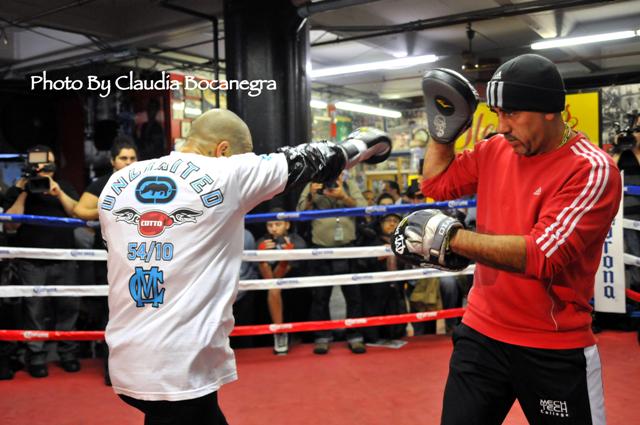


FOLLOW HATTON – SENCHENKO LIVE


Follow all the action live as former Jr. Welterweight and Welterweight champion Ricku Hatton returns to the ring for the first time in three years in front of his adoring fans in Manchester, England when he takes on former Welterweight titlist Vyachslav Senchenko in a ten round Welterweight bout beginning at 5pm eastern/10pm Manchester Time/Midnite Sunday in Kiev

10 ROUNDS–WELTERWEIGHTS–RICKY HATTON (45-2, 32 KO’S) VS. VYACHESLAV SENCHENKO (32-1, 21 KO’S)-

Round 1 Senchenko lands a jab..Hatton lands a right and left…Left hook..Senchenko lands a jab…trading jabs..Hatton pressuring…Hatton lands a jab.. left to the body..counter right...10-9 Hatton

Round 2 Hatton lands a right…Senchenko lands a body shot…Lead left from Hatton..nice right from Senchenko..left to body from Hatton..good counter uppercut..Lead right from Senchenko..body shot…1-2…Hatton lands a combo..Left to body from Senchenko..Body from Hatton..19-19
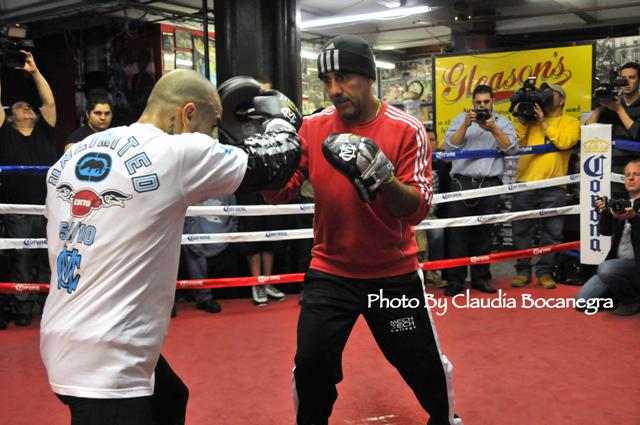
Round 3 Left hook to body from Hatton..jab…overhand right..big left hook..3 punch combo..Good left hook from Senchenko…Hatton lands a right…left to the body..hard left..Nice right from Senchenko..another good right...29-28 Hatton

Round 4 Hatton lands a 1-2…left hook..Senchenko lands a right…Hatton walks through it..big left hook from Hatton…right..39-37 Hatton

Round 5 Double jab from Senchenko..Right from Hatton..Straight right from Senchenko..lead left..body and left hook from Hatton..left…Senchenko lands a jab…49-46 Hatton

Round 6 Good right from Senchenko…1-2..Hatton lands a left..Left from Senchenko…jab..right..left to the bodt..left hook..Hatton lands a jab…right from Senchenko..58-56 Hatton

Round 7 Good right from Senchenko…jab…big left..left to body back up Hatton..Hatton works the body with the left…right counter from Senchenko…Both guys starting to swell under the left eye…right from Senchecnko..both get in uppercuts..Hatton lands a double left..67-66 Hatton

Round 8 Hatton working the body…right to the head..Nice combo..Senchenko lands a counter left and Straight right..right…Hatton lands a double left and jab..straight right from Senchenko..left to the body from Hatton…Right from Senchenko…body..Hatton lands a right…Senchenko lands a 1-2 at the bell…77-75 Hatton

Round 9 The two tangle up and fall to the canvas..Left from Senchenko..Straight right..Straight left from Hatton..right..left…body..LEFT TO THE BODY AND DOWN GOES HATTON AND HE IS COUNTED OUT THE FIGHT IS OVER