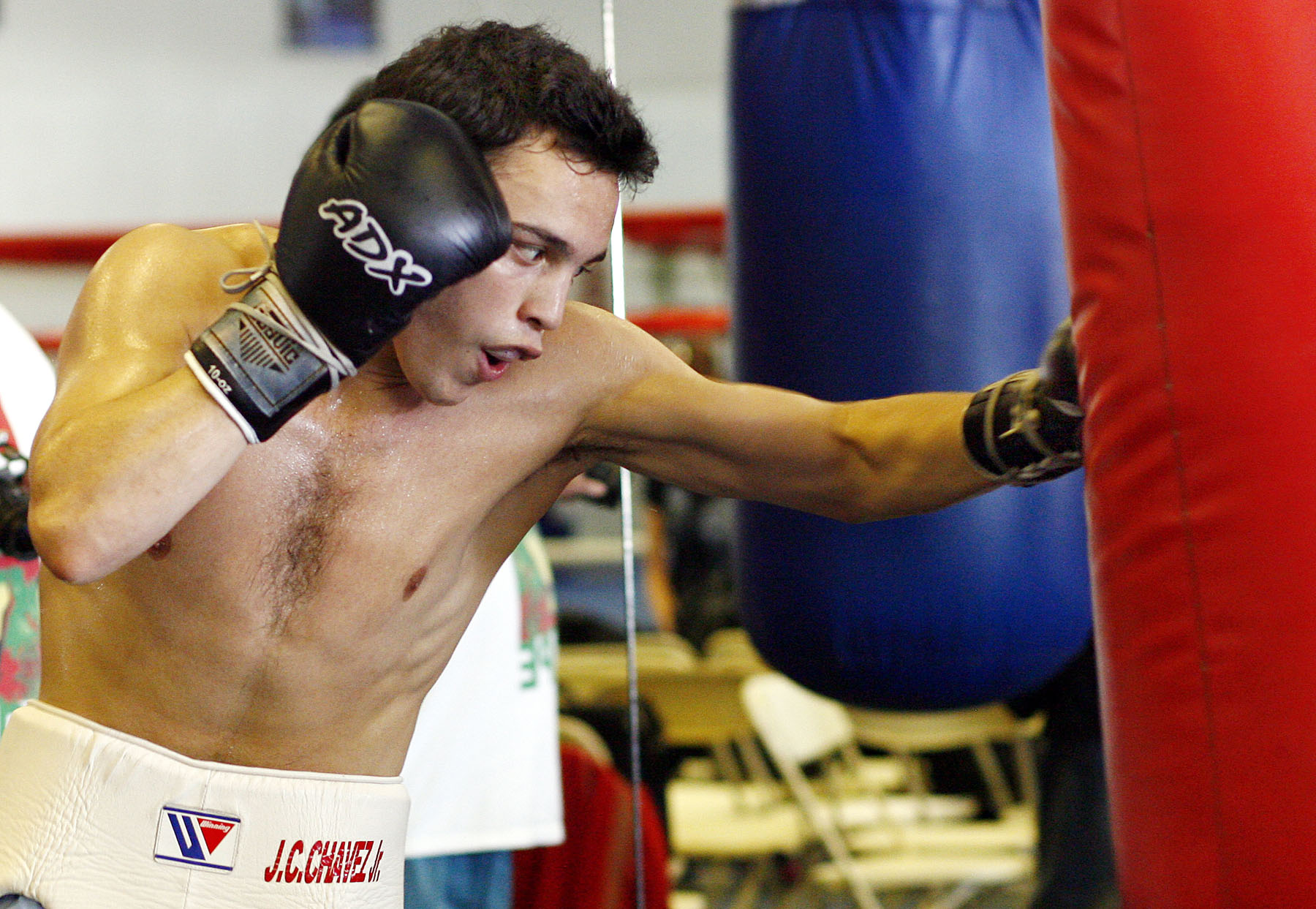
No Obit Here: Dueling cards throw a combo that the doomsayers can’t counter

LAS VEGAS – Two major cards separated by a short ride looked like an accident about to happen. Look again. Sergio Martinez-Julio Cesar Chavez Jr. at Thomas & Mack Center and Canelo Alvarez-Josesito Lopez at the MGM Grand were a lot of things. It was a good night to wear a sombrero. It was a long night in line for a cab and a longer line at the bar.

It was one shot of Pancho Villa, a shot of Peron, another shot of soccer and endless shots of tequila. Above all, it was thoroughly Vegas, at least Vegas before the recession. It was also boxing at its best, which also means some of its worst. Nothing can be so irresistible and so distasteful at the same time.

But there it was Saturday night, a double shot and 180 proof of what is so compelling about a sport that just won’t die no matter how hard it tries to kill itself.

It was impossible to see the depth of its unique resiliency Saturday. I tried. But there was just too much to see. My night started at the MGM Grand. It ended at Thomas & Mack with a brilliant victory by Sergio Martinez, who survived a wild 12th-round comeback from Julio Cesar Chavez, Jr.

My cab driver predicted the winner. But not the drama.

“Martinez by knockout,’’ the driver said beneath an old cowboy hat that he had to have been wearing 25 years ago when he collected fares from fans who watched Sugar Ray Leonard, Marvin, Hagler, Robert Duran and Thomas Hearns.

But it was Chavez who almost won by knockout. Chavez sent Martinez spinning down and onto the canvas in the 12th round, immediately conjuring up memories of how his dad, Julio Cesar Legend, beat Meldrick Taylor with two seconds left so long ago.

An encore for the Chavez family didn’t happen, not even on a weekend celebrating Mexican Independence. Chavez blamed himself after losing a unanimous decision. He said he started his stubborn assault too late. Martinez, a proud Argentine, also put himself in harm’s way when he didn’t have to. In the end, however, Martinez wouldn’t let Chavez steal a victory or the middleweight title he had ensured himself on the scorecards. Argue with Chavez’ early rounds. Argue with Martinez’ last round.

But don’t argue with the climactic finish. A record crowd of 19,187 at Thomas & Mack loved it. Mexicans and Argentines, alike, cheered loudly, filling the old basketball arena with chants that echoed down the aisles and through time.

Boxing isn’t back. It never left.

Not long after leaving the MGM Grand, super-middleweight champion Canelo Alvarez scored a fifth-round KO of Josesito Lopez in a bout that was probably more significant for the number of people in the seats than it was for the victory. The undersized Lopez was overmatched. Canelo had been favored by odds as big as 14-1. Yet, a capacity crowd of 14,275 at the MGM Grand Garden Arena showed up. There’s been a nasty debate between Golden Boy Promotions and rival Top Rank about how many tickets were sold and at what price. Yet on a night when Canelo was a laughable favorite in a Golden Boy promotion up against Top Rank’s intriguing Martinez-Chavez Jr. showdown, Canelo filled the seats.

“That underlines just how big an attraction Canelo is,’’ Golden Boy CEO Richard Schaefer said.

It underlines much more than that. Two cards within a couple of miles of each other drew a total of 33,462 fans. That’s no accident.


Martinez decisions Chavez widely after a pair of incredibly close minutes


LAS VEGAS – And in an instant, Martinez-Chavez went from Pacquiao-De La Hoya to Chavez-Taylor.

Not since Manny Pacquiao retired Oscar De La Hoya had a small southpaw looked so profoundly dominant against a larger titlist as Sergio Martinez looked against Julio Cesar Chavez Jr. for 11 rounds. And not since Chavez Sr. came back to stop Meldrick Taylor in the final seconds of a fight he was losing lopsidedly had such a profound change of fortunes been brought to a world champion the way Chavez brought it to Martinez in the 12th.

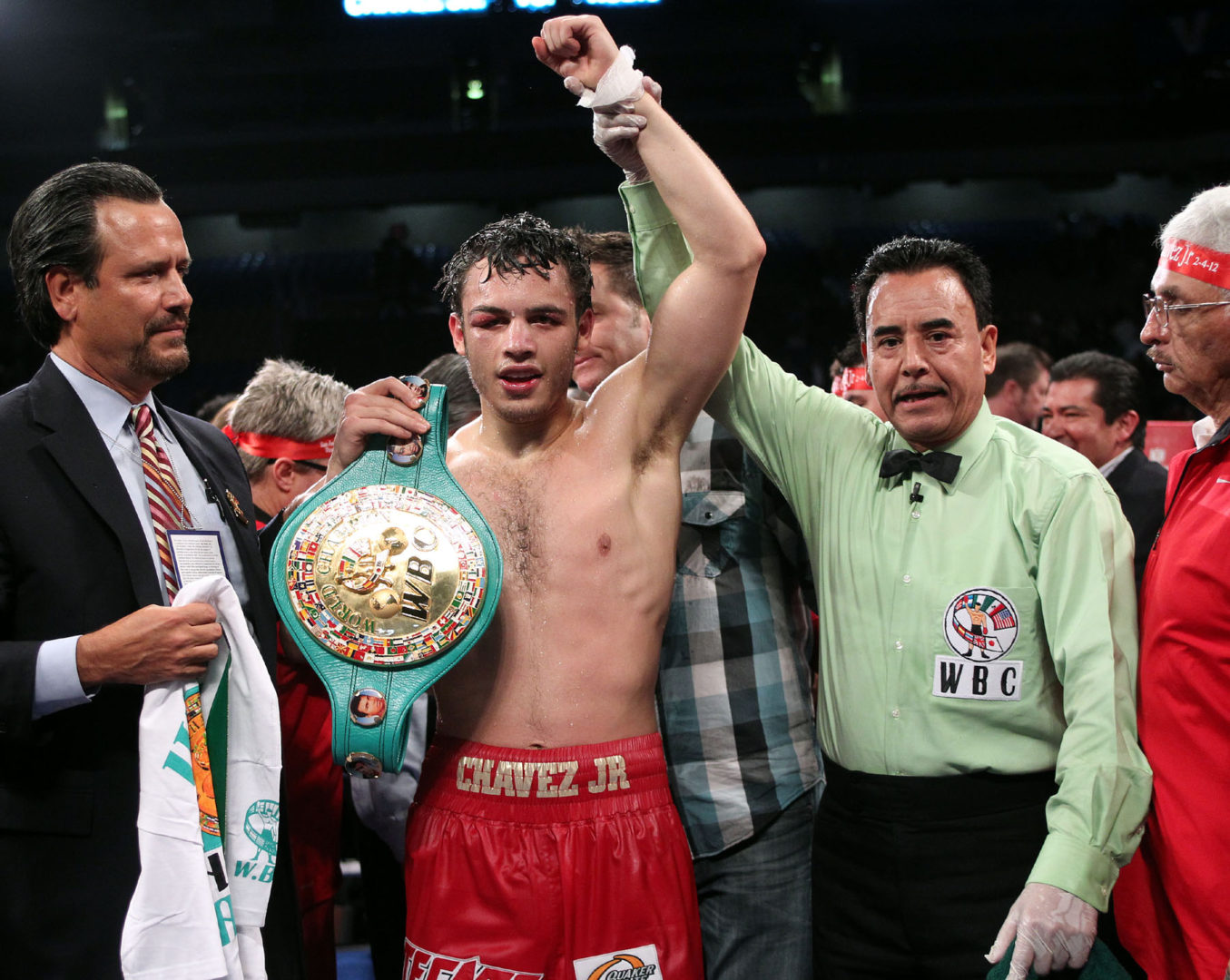
Saturday night, in a match at Thomas & Mack Arena that disappointed all expectations of suspense for 33 minutes before becoming an unforgettable thing in its final three, Argentine middleweight champion Sergio “Maravilla” Martinez (50-2-2, 28 KOs) rose from the canvas in the final round to survive and decision Mexican Julio Cesar Chavez Jr. (46-1-1-1, 32 KOs) by unanimous scores of 117-110, 118-109 and 118-109. The 15rounds.com ringside scorecard concurred, marking 117-110 for Martinez – while marking the final round 10-7 for Chavez.

“We are two professionals,” Martinez said afterwards. “And we comported ourselves as professionals.”

The fight began the way all prognosticators believed it would. Martinez’s class was too much for Chavez in the first round and each of its successors. What little sense of geometry Chavez showed in the opening round, extending Martinez’s circles to the perimeter somewhat, was gone by the third.

“I began slowly,” Chavez said in the ring after the judges’ cards were read. “But I will not do that in the rematch.”

In fact, not till the sixth round did Chavez land anything consequential. Though Chavez was the much larger man, Martinez was the far more balletic, polished, athletic and accurate, hitting Chavez with nifty left uppercut leads and other inventive combinations. Chavez, sporting a knee brace and suffering abrasions and swelling round both eyes, was not dissuaded, however.

“This confirms me in boxing,” said Martinez, to an outnumbered but surprisingly vocal Argentinean group of fans. “Long live Argentina!”

More fatigued than he knew as the bell for the 12th rang, Martinez walked into a short Chavez left hook that wobbled and shocked him in the final two minutes. Martinez’s eyes bulged and he collapsed in the ropes. A pair of rights and lefts from Chavez then tossed him limply to the canvas. But Martinez rose, ran, held, slipped, and ultimately punched his way to the final bell, as suddenly enchanted Mexican fans rabidly urged their man on.

“Of course,” Martinez said when asked if he would grant Chavez a rematch.

“Long live Mexico!” cried Chavez at the end of his postfight interview.

ROMAN MARTINEZ VS. MIGUEL BELTRAN JR.
In an attempt at prophecy, or at least wishful thinking, Saturday’s excellent Top Rank co-main event featured a hard-pressing Mexican slugger named “Junior” against a foreigner named Martinez. Unfortunately for the emotional Mexican crowd, the Mexican did not prevail.

Fighting for a vacant WBO super featherweight title, Puerto Rican Roman Martinez (26-1-1, 16 KOs) sneaked past Mexican Miguel Beltran Jr. (27-2-0-1, 17 KOs), besting him by split-decision scores of 116-111, 113-114 and 113-114. The fight would have been a majority draw, were it not for a penalty assessed to Beltran in the championship rounds.

Each round of Martinez-Beltran featured punches both well leveraged and well landed by both fighters, but in each of the opening six rounds, regardless of what Martinez did, Beltran appeared to do a little more. In the sixth, Beltran landed the match’s most-devastating punch, a right cross that snapped Martinez’s head back between his own shoulder blades.

The seventh round, though, saw Martinez begin to establish a more effective attack, catching Beltran on the way in, with oddly placed punches. But by the middle of the eighth, Beltran again appeared the stronger man. By the end of the 10th, Martinez, game as he was, did not appear to want much more.

The 11th brought a point deduction to Beltran’s tally from overly officious Nevada referee Russell Mora, though, tightening ringside scorecards somewhat. Martinez also flurried in the 12th, appearing to steal that stanza as well. Ultimately, the fight was a close one that might have gone either way and probably should have gone the way of a majority draw.

MATTHEW MACKLIN VS. JOACHIM ALCINE
Matthew Macklin makes his ring entrance to a hybrid song of “Mack the Knife” and “Rocky Road to Dublin,” in a two-part nod to his nickname and heritage. But Saturday, he didn’t have to take his opponent very far down a rocky road before knifing him.

In the penultimate match of the evening’s undercard, Macklin (29-4, 20 KOs) caught Canadian middleweight Joachim Alcine (33-3-1, 19 KOs) with a flush right cross in the opening moments of the fight then marched him down, dropped him a second time and brought the match to an exciting knockout conclusion at 2:36 of round 1.

Despite a record with four losses on it, Macklin again proved that he can rally a crowd and make an exciting, satisfying match whomever he is given for an opponent.

GUILLERMO RIGONDEAUX VS. ROBERTO MARROQUIN
After a 2010 showing in Cowboys Stadium that brought loud boos from those fans not yawning, Cuban super bantamweight Guillermo Rigondeaux needed two years of exciting knockouts to make fans forget how displeasing his defense-first style can be. Saturday in Thomas & Mack Arena, though, they were reminded once more.

Rigondeaux (11-0, 8 KOs) successfully, and rather easily, defended his WBA super bantamweight title against tough if limited Texan Roberto Marroquin (22-2, 15 KOs) by unanimous scores of 118-108, 118-108 and 118-109. And if there is a prizefighter today who fights like Floyd Mayweather as well as Mayweather does, he is Rigondeaux, right down to the cautiousness.

Rigondeaux established a superiority of reflex over Marroquin – a superiority of reflex Rigondeaux enjoys over most every opponent he faces – and then put the match on a form of cruise control that did little to entice fans. Possessed of every punch and step in the boxing lexicon, Rigondeaux does not appear to enjoy physical matches with larger men, and he certainly did not look for one with Marroquin, who appeared a weight class or two larger than Rigondeaux on Saturday.

Twice in the match Marroquin managed to land a pulled left hook that temporarily destabilized the Cuban southpaw’s otherwise flawless footing, but from each of those faux scares, Rigondeaux quickly recovered and returned to mastering Marroquin technically if not combatively.

In round 10, bored by Rigondeaux-Marroquin, the crowd – partisan Mexican though with an Argentinean contingent – began to sing futbol songs at one another till the match was over, despite Rigondeaux’s scoring the match’s one knockdown in its final two minutes.

MIKE LEE VS. PAUL HARNESS
Mike Lee is undoubtedly the best light heavyweight on the Notre Dame campus, but he is decidedly not the best light heavyweight in the world. Further evidence of this came at the midway point of Saturday’s undercard when Lee (11-0, 6 KOs) whacked away at Kansas City opponent Paul Harness (4-4-1, 3 KOs) for four rounds and ultimately prevailed by unanmious scores of 40-36, 40-36 and 40-36.

Questions about Lee’s power – he landed at least four clean right hands in every round without once felling Harness – and his defense, though, remain, and grow, with every showing. Despite leading comfortably in the fourth round, Lee nevertheless was tagged by several knee-buckling shots by Harness.

UNDERCARD
Highly regarded super welterweight John Jackson brought his undefeated record in the Thomas & Mack Center ring for Saturday’s third bout, against Cleveland’s Willie Nelson, and Jackson’s ‘0’ left the ring before Jackson did. In a close fight that might have been scored either way, Nelson (19-1-1, 11
KOs) decisioned Nelson (13-1, 12 KOs) by unanimous scores of 96-94, 96-94 and 98-92.

Before that, in an eight-round super welterweight match, Mexican Michael Medina (26-3-2, 19 KOs) scored a lopsided decision victory over North Carolinian James Winchester (15-5, 5 KOs). All three judges had the match 80-70 for Medina.

The evening began with an eight-round, unanimous-decision victory for California welterweight Wale Omotoso (23-0, 19 KOs) over Puerto Rican Daniel Sostre (11-7-1, 4 KOs).

Opening bell rang on a sparsely populated Thomas & Mack Center at 3:17 PM local time.


FOLLOW CHAVEZ JR. – MARTINEZ LIVE


Follow all the action from the Thomas & Mack Center in Las Vegas as the long awaited Middleweight championship showdown with take place featuring recognized world xhampion Sergio Martinez and WBC champion Julio Cesar Chavez Jr. The action kicks off with a five fight undercard at 8pm eastern/ 5 pm Pacific featuring two world title bouts as WBA Super Bantamweight champion Guillermo Rigondeaux defends against Robert Marroquin. The WBO Super Featherweight title will be contested by Rocky Martinez and Miguel Beltran Jr. Also Joachim Alcine battles Matthew Macklin an and appearance by Notre Dame favorite Mike Lee.

12 ROUNDS–WBC MIDDLEWEIGHT TITLE–SERGIO MARTINEZ (49-2-2, 28 KO’S) VS JULIO CESAR CHAVEZ JR. (46-0-1, 32 KO’S)

Round 1 Martinez lands a left..Chavez lands a right to the body…Sergio more active…10-9 Martinez

Round 2 Hard left from Martinez…Body shot from Chavez…Combination and body shot from Martinez..Body shot and a jab..right hook from Martinez..Good body work on the ropes...20-18 Martinez

Round 3 Hard left from Martinez..Hard left from Chavez..Good body shot..Martinez landing to the body..Left hook from Martinez..straight left…Blood from the mouth of Chavez…30-27 Martinez

Round 4 Martinez lands a left..short right hook..Hard right from Chavez…hard right…Left/body from Martinez..Chavez landing left to the body..Big left from Martinez at the bell…40-36 Martinez

Round 5 Martinez lands 2 lefts to the body…50-45 Martinez

Round 6 Chavez lands a couple little shots in the corner..2 good rights…Good body shot..big rally from Martinez…Martinez picking Chavez apart…60-54 Martinez

Round 7 Straight left..Counter left…4 hard lefts on the ropes…Chavez landing and eating shots in return..70-63 Martinez

Round 8 Wide right from Chavez..Martinez going to the body..2 good left hooks from Chavez..Blood from Martinez left eye…79-73 Martinez

Round 9 Martinez lands a combination…89-82 Martinez

Round 10 2 good rights and 2 more from Martinez…body..Jab…99-91 Martinez

Round 11Great action with Chavez landing hard shots…Martinez landing in return…Martinez favce bloody…108-101 Martinez

Round 12 Big right hurts Martinez..WOW…CHAVEZ ALL OVER MARTINEZ AND DROPS HIM….MARTINEZ IS BLEEDING AND HURT…ITS A WAR…MARTINEZ LOOKS LIKE HE WILL GET OUT OF THE ROUND….116-111 Martinez

12 Rounds–WBO Super Featherweight Title–Ramon Martinez (25-1-1, 16 KO”s) vs Miguel Beltran Jr. (27-1, 17 KO’s)

Round 1 Hard right from Beltran…2 more rights…10-9 Beltran

Round 2 Good left hook from Martinez…19-19

Round 3 Trading shots …29-29

Round 4 Beltran pounding Martinez in the corner…Hard right from Martinez..Good left hook..Martinez lands a good right…39-38 Beltran

Round 5 Beltran lands a hard right…Big left and right from Martinez…Beltran lands a right…Blood from the left eye of Beltran…48-48

Round 6 Beltran lands a counter uppercut..Good right from Beltran..58-57 Beltran

Round 7 Good body shot from Beltran…Hard body shot…Good combo from Martinez…Good body shot from Beltran…68-66 Beltran

Round 8 Good uppercut and body shot from Beltran…left hook to the body..78-75 Beltran

Round 9 Hard right from Beltran...88-84 Beltran

Round 10 Beltran lands a left and right..Body shot..98-93 Beltran

Round 11 Good right from Beltran..Martinez 4 punch combination…Hard right from Beltran…POINT DEDUCTED FROM BELTRAN FOR HITTING BEHIND THE HEAD…Good right from Beltran…106-103 Beltran

Round 12 Martinez lands a right…115-113 Beltran

116-111 Beltran; 114-113 Martinez; 114-113 Martinez

10 Rounds–Middleweight–Matthew Macklin (28-4, 19 KO’s) vs. Joachim Alcine (33-2-1, 19 KO’s)

Round 1 HUGE RIGHT AND DOWN GOES ALCINE….Macklin ALL OVER ALCINE AND DOWN GOES ALCINE FROM A LEFT HOOK…2 HUGE BODY SHOTS AND A FLURRY AND REFEREE JAY NADY STOPS THE FIGHT

MACKLIN TOK 1 AT 2:36

12 Rounds–WBA Super Bantamweight Title–Guillermo Rigondeaux (10-0, 8 KO’s) vs Robert Marroquin (22-1, 15 KO’s)

Round 1 not mucj…10-10

Round 2 Rigondeuax lands a counter left…20-19 Rigondeuax

Round 3 Marroquin lands a hard left hook…Straight right…29-29

Round 4 Right from Rigondeuax..Marroquin landsa left hook..39-39

Round 5 PERFECT LEFT DOWNS GOES MARROQUIN..49-47 Rigondeaux

Round 6 Rigondeuax lands a left to the body..59-56

Round 7 69-66

Round 8 Rigondeaux lands a big left..Good body…Marroquin lands a left hook to the body…79-75 Rigondeaux

Round 9: Left from Marroquin drives Rigo into the corner…Right hand..88-85 Rigondeaux

Round 10 Rigondeuax lands a uppercut to the body..leaping uppercut and another..98-94 Rigondeaux

Round 11 Good straight left from Rigondeaux..Good right from Marroquin…Body shots from Rigondeuax..108-103 Rigondeaux

Round 12 HUGE RIGHT AND DOWN GOES MARROQUIN…118-111 Rigondeaux

118-108, 118-108, 118-109…RIGONDEAUX

10 Rounds–Jr. Middleweights–Willie Nelson (18-1-1, 11 KO’s) vs John Jackson (13-0, 12 KO’s)

Round 3 Jackson going to the body…

Round 4Nelson lands a hard right and left hook..Right down the middle

Round 5 Nelson Active

Round 6

Round 7


Paul Williams feels good, remains confident


LAS VEGAS – A motorcycle accident took away Paul Williams’ legs, but not his confidence.

It was there, as evident as ever Friday when he came out of an elevator at the MGM Grand before the weigh-in for the Showtime-televised junior-welterweight fight between Canelo Alvarez and Josesito Lopez Saturday night.

Williams was in a wheelchair. But he made it sound as if that chair was a temporary vehicle until that day when he believes he will recover, perhaps enough to even fight again.

“I feel good,’’ Williams said. “This is a small thing for a giant.’’

Williams is in Las Vegas for a fight that was supposed to include him against Canelo before the accident in Atlanta left him paralyzed. In his brief comments to 15 Rounds and Lance Pugmire of the Los Angeles Times, it wasn’t clear what his condition was.

But his confidence was unmistakable. Williams has faith that he will walk again in a path that might even take him up those steps, through the ropes and into the ring for another opening bell.

“I think I can come back,’’ Williams said. “Give it two or three years. I’ll come back.’’

If Williams had been Canelo’s opponent instead of the undersized Lopez in a Golden Boy-promoted bout, there’s speculation that rival Top Rank would have moved Saturday night’s other fight, Sergio Martinez-versus-Julio Cesar Chavez Jr. for the middleweight at Thomas & Mack Center, to a different date, possibly Oct. 6.

The consensus is that Williams-Canelo would have been more competitive and marketable than Canelo-Lopez.

Weights from the MGM

About 90 minutes before the Martinez-Chavez weigh-in, Canelo and Lopez stepped on the scales. Canelo looked solid at 154 pounds, the junior-middleweight limit. Lopez looked a little soft at 153, his heaviest ever.

“I’m not as weak as I look,’’ Lopez joked a day before the weigh-in. “I just look skinny.’’

At opening bell, Lopez expects Canelo to be at 170, which would mean about a 10-pound advantage for the favored Mexican, who holds the World Boxing Council’s version of the title.

Notes, Quotes

· Golden Boy announced a sellout Friday for the Canelo-Lopez featured card. Within minutes of the announcement, tickets were still available on Ticketmaster.

· Jose Benavidez Jr., an unbeaten junior-welterweight prospect from Phoenix, has been added to the Top Rank card featuring Nonito Donaire versus Toshiaki Nishioka at Carson, Calif., on Oct. 13. Benavidez is expected to fight Raul Tovar.


Chavez upsets Martinez on the scale


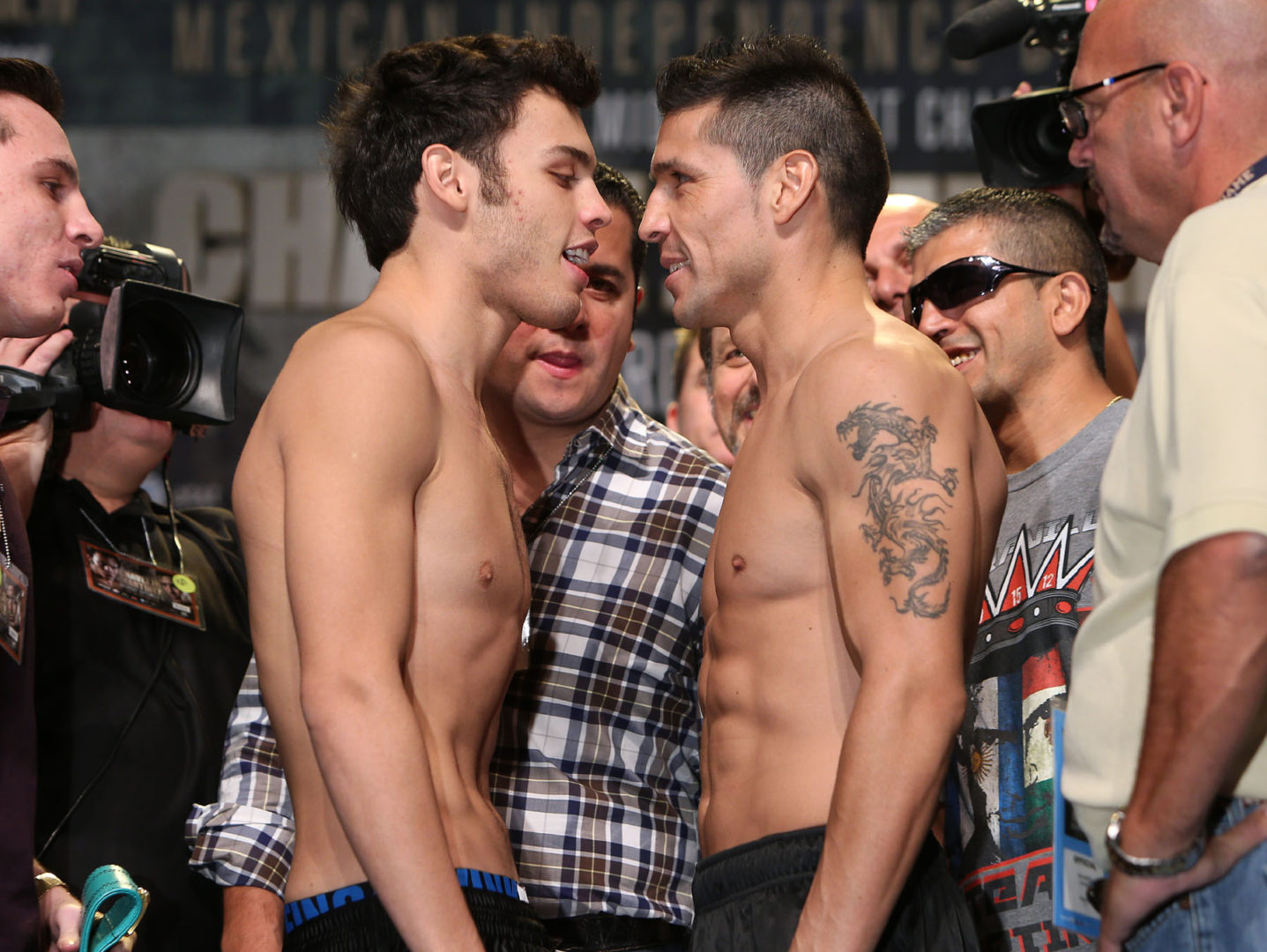
LAS VEGAS – The weekend’s first upset happened Friday, and it wasn’t by way of a punch at Thomas & Mack Center. In what may turn out to be the greatest surprise of Martinez-Chavez, barring of course an early stoppage, Argentine Sergio Martinez outweighed Mexican Julio Cesar Chavez Jr. Friday afternoon at Wynn Las Vegas’ Encore Theater. But if either man was surprised, neither showed it.

Martinez, considered by most to be a small middleweight champion, and Chavez, considered by all to be an enormous middleweight titlist, shared a one-pound disparity on the scale: Martinez made 159, and Chavez made 158.

“He said it’s going to be a war,” Martinez said immediately after a talkative stare-down with Chavez that followed both making weight for their middleweight world championship match. “I want a war.”

Martinez, known as much for his cool demeanor and handsome countenance as his jazzy southpaw style, appeared uncharacteristically anxious Friday afternoon. Dressed in a black sweatsuit and dark shades, Martinez preceded Chavez to the stage and the scale and made a show of rallying a small Argentinean contingent waiving robin’s-egg-blue and white flags, stage left.

“He said that he is going to rip my head off,” said Chavez, when asked what words Martinez spoke to him after he climbed off the scale. Then Chavez, easily the cooler character Friday, laughed and shrugged.

While Saturday’s match for the lineal middleweight championship of the world – along with belts from The Ring, WBC and surely a few others – will be the biggest fight of both men’s careers, Chavez shows the demeanor of a man who knows other superfights will inevitably follow. Martinez, about whom the same cannot be said, appears to be channeling some of his handlers’ nervousness.

Part of what led to onlookers’ general surprise at Friday’s weighin, and specifically Chavez’s coming-in two pounds under the middleweight limit, were reports of undertraining by the Mexican champion. Numerous sources reported Chavez had skipped scheduled sessions with trainer Freddie Roach during his camp, preferring to work-out at home instead.

But Chavez’s promoter, Top Rank, expressed no concern. Chavez made weight easily, and apparently needs little instruction in how to cut-off a prizefighting ring, as he is expected to have to do against Martinez on Saturday.

Early Friday afternoon, one last thread of controversy was stitched in the Martinez-Chavez tapestry: Trainer Nazim Richardson will attend the wrapping of Chavez’s hands in behalf of the Martinez camp, Saturday. Richardson, of course, was the man who caught a hardening substance on the wraps of Antonio Margarito before the Mexican champion’s 2009 match with Shane Mosley.

Nevada State Athletic Commission executive director Keith Kizer said on Friday that while he’ll be at both of Saturday’s fight cards – Martinez-Chavez, and Saul Alvarez vs. Josesito Lopez a few blocks away at MGM Grand Garden Arena – the main event he’ll be attending is Chavez-Martinez, as Kizer anticipates potential prefight controversy at Thomas & Mack Center.

Photo by Chris Farina / Top Rank


Bad Business? Martinez-Chavez, Canelo-Lopez might add up to something good


LAS VEGAS – News conferences came like a one-two punch Wednesday and Thursday for dueling promotions Saturday night featuring Sergio Martinez-versus-Julio Cesar Chavez Jr. at Thomas & Mack Center and Canelo Alvarez-Josesito Lopez at the MGM Grand.

It’s been a rhetorical food fight, boxing’s version of Republicans and Democrats after back-to-back conventions. First, it’s Top Rank to the bully pulpit. Then, it’s Golden Boy’s turn. It’s Home Box Office- versus-Showtime. Ego-against-ego. An insult-fest. But should it be?

After widespread criticism for scheduling two major cards on the same night and amid all the ongoing negativity, there’s a chance at some numbers that might put a surprising spin on the business. Attendance at each could provide a powerful counter to an epitaph so often repeated, yet never proven.

If boxing is really dying, then a lot of people – maybe more than 30,000 at two venues within a couple miles of each other – have yet to hear the news.

There’s plenty of debate about box-office numbers promised by Golden Boy for Alvarez-Lopez in a 154-pound bout televised by Showtime. Golden Boy President Oscar De La Hoya said Thursday at the Canelo-Lopez news conference that 13,000 tickets had been sold.

“We are expecting a sellout,’’ De La Hoya said of a weekend celebrating Mexican Independence.

Top Rank doesn’t believe it. On the surprise meter, that ranks somewhere between zero and yawn. If the situation was reversed – and it will be one day, Golden Boy wouldn’t believe it either. Remember, Republicans and Democrats trust each other more than Top Rank and Golden Boy do.

For Martinez-Chavez, Jr., in a HBO pay-per-view bout for the middleweight title, Top Rank already has a sellout, 19,186, a boxing record at Thomas & Mack. Even if a sellout is announced for Alvarez-Lopez, there will be suggestions that Golden Boy gave away tickets to get there.

As of Thursday, it wasn’t clear what number Golden Boy needed for a sellout. Seating capacity at The MGM Grand Garden Arena has been 14,800. But Golden Boy CEO Richard Schaefer said 2,000 seats can be added before Saturday’s opening bell. If there’s time to construct the addition and the seats are filled, the crowd would be announced at 16,800. Add the Thomas & Mack sellout, and the total would be 35,186.

“That would tell you a lot about the sport,’’ Schaefer said.

With apologies to Mark Twain, t would tell you that all those dire warnings of imminent death are greatly exaggerated.

It might also tell you what could happen if Golden Boy and Top Rank made peace and did business together. But that’s another story, if not a miracle. It didn’t sound as if peace were even a remote possibility Thursday. The irony is that the fighters were the diplomats. Canelo and Lopez praised each other. The only real trash talk came from Keith Kizer, the Nevada State Athletic Commission’s executive.

In an apparent reference to the controversy over the judging of Tim Bradley’s decision over Manny Pacquiao in June at the MGM Grand, Kizer seemed to take exception at HBO’s criticism of judges Duane Ford, CJ Ross and Jerry Roth.

“There was another fight here in June, but some of the veterans at ringside that felt badly that night won’t feel so bad this time, because HBO, (Jim) Lampley and (Harold) Lederman won’t be there,’’ Kizer said. “I like the Showtime announcers much better.’’

Kizer’s shot followed one at Showtime from Top Rank’s Bob Arum.

“Half the people who’ve got Showtime don’t know they have it,’’ Arum said.

Shot, counter-shot. The beat goes on.

But if predictions are fulfilled and the numbers add up Saturday night, there won’t be an argument about whether the business still has a heartbeat.


Vargas remains perfect with decision over Martinez

Jesse Vargas christened a big fight weekend with a ten round unanimous decision over Aaron Martinez in a Welterweight bout at the Joint at The Hard Rock in Las Vegas.

Vargas was very solid throughout as he boxed well and the two engaged at times with Vargas getting the better of the action.

Vargas, 148 lbs of Las Vegas was making his debut under the Top Rank banner won by scores of 99-91, 98-92 ans 96-94 and is still perfect at 20-0. Martinez, 147 lbs of Los Angeles 18-2-1.

Jose Felix Jr. remained undefeated by scoring a ten round unanimous decision over Luis Cruz in a Lightweight bout.

Felix got off to a good start as he twice rocked Cruz in the first round. Felix was doing well until eating a straight left hand that sent him to the canvas. He shook that off well as mixed things up by boxing and coming forward and he controlled the ring over the last third of the fight and won by scores of 97-92, 96-94 and 99-94.

Felix Jr., 132 lbs of Los Mochis, MX is now 21-1-1. Cruz, 132 lbs of Las Piedras, PR is now 20-2.


Silva steps in to save UFC 153, will face Bonnar at light heavy!


UFC middleweight kingpin and pound-for-pound best, Anderson Silva,will headline UFC 153 against long time veteran Stephan Bonnar in Riode Janeiro, Brazil on October 13th according to USA Today.

Bonnar (14-7), currently riding on a three fight win streak, is well known for his epic battle against Forrest Griffin on the UltimateFighter 1 finale. He has also been a regular on ESPN’s MMA Livebroadcast as an expert analyst.

Silva (32-4) is coming off arguably the most satisfying win of his career against Chael Sonnen in July and has yet to have been bested inside the UFC Octagon.

The card, which was expected to showcase an anticipated featherweight title bout between Jose Aldo and Frankie Edgar, abruptly came to a halt when Aldo was forced to pull out after suffering a foot injury.

Making matters worse, former champion Quinton Jackson, who was supposed to challenge the prominent Glover Teixeira, has also pulled out citing injuries, putting an additional dent to the previously stacked card in Brazil. Countryman Fabio Maldonado is now slated to fill in to face Teixeira in a light heavyweight contest.

In other notable fights, former heavyweight champion Antonio Rodrigo Nogueira returns against Dave Herman while rising welterweight sensation Erick Silva takes on the toughest challenge of his career against Jon Fitch.


Father Legend has some lessons for Julio Cesar Chavez Jr.


LAS VEGAS – There was a time when the son couldn’t mention his father’s name. It was too painful. Legends don’t die. But dads do.

It was 2010. Julio Cesar Chavez Jr. watched substance-abuse wash away the immortality that Mexicans have attached to his famous dad, Julio Cesar Chavez Jr.

“I kept thinking this guy is going to die,’’ Chavez Jr. said Wednesday to handful of reporters after a formal news conference for his middleweight title fight Saturday night against Sergio Martinez at Thomas & Mack Center. “He’s going to die. I got used to thinking about it.’’

Dad changed his son’s mind, but only after the end so feared by his son ominously appeared one day in Tijuana. Julio Sr. said he didn’t feel well. His son recalls that he sought medical help. His father was sedated and then rushed to rehab.

Twenty-six months later, Julio Cesar Chavez Sr. sat Wednesday – clean, sober and proud — near his son just days before the family business continues against Martinez in an HBO pay-per-view bout.

“Right now, our relationship is good,’’ said Chavez Jr., about a 2-to-1 underdog in betting odds posted late Wednesday. “It can withstand the disagreements we have.’’

The relationship has healed so much that the son can now often joke about a dad who doesn’t often like to be the intended target of any sort of mockery. Julio Chavez Sr. has been in gym with his son and trainer Freddie Roach. But Chavez says he listens only to Roach. The son is a smart guy. He knows that old lesson about dads, even Hall of Fame Fathers. They don’t belong in their son’s corners.

“Freddie is the last word,’’ Chavez Jr. said. “Sometimes, my dad will run to my corner and say something. I’ll tell him: ‘Work the corner or get the hell out.’ ‘’

Dad always gets the message, Julio Jr. said.

At least, he does now.

A couple of years ago, he wasn’t certain. His father, he says, would come home early in the morning after a night of drinking.

“He would come home, sometimes at 5 a.m. and sometimes on the day I’d fight, sit down and start talking, while I was trying to sleep’’ he said. “He’d just talk and talk, talk for three and four hours.’’

About what?

“Not sure,’’ Chavez said. “About everything.’’

In the couple of years since his dad underwent rehab, Julio Jr., once dismissed as a lazy rich kid, began to mature as a fighter under Roach’s steady guidance. His training schedule might be quirky. Roach said he often trains in the early morning hours. Workouts can start at 1 a.m. and end 4 a.m. But the work is serious, Roach said.

In part, Julio Jr. appears to have inherited some his dad’s toughness. There’s the durable chin. There are also the body punches. Both made a Hall of Famer out of his stubborn dad.

“That’s why I feel sorry for Sergio Martinez,’’ Bob Arum, Julio Jr.’s promoter, said Wednesday during the news conference. “He’s going to take body shots like he’s never felt before.’’

But there can also be dangers in what a son inherits from his dad. For Julio Jr., it is a lifestyle that put his dad in rehab. A warning sign was there in January when The Ring’s Lem Satterfield reported that Julio Jr. was charged with DUI within a couple of weeks of his victory over Marco Antonio Rubio.

It was a lesson then.

It’s a lesson now, especially for a family business that needs to remember them if it hopes to fight on.


Andre Ward’s hometown: Pleasant surprises and a mean streak


OAKLAND, Calif. – Last week’s fight headquarters were at Marriott City Center in the middle of this recovering town. Friday night Andre Ward sat in its lobby area, his back to the window, a white baseball cap pulled over his eyes. His face was darker than it appears on television, and meaner too. It was the first glimpse of a Ward that any unknowing stranger would avoid out of instinct. Ward wasn’t that playful chap taking his kids to school for HBO’s camera; he was a man concentrated on the manifestation of another’s pain.

In that lobby, with his dark and oblivious scowl, Ward was severed entirely from the dot-com millionaires who once made Porsches more ubiquitous than Hondas, 50 miles south of here. Ward was not, either, a delicate San Francisco artisan returned from complementing an hour in the SFMOMA collection with a crabmeat salad at Fisherman’s Wharf. He was not Silicon Valley or Bay Area. He wasn’t even East Bay. Ward was Oakland.

That portended the very worst for Connecticut’s “Bad” Chad Dawson, a unified light heavyweight world champion who fought Ward for his unified super middleweight championship Saturday at Oracle Arena. Whatever violence Dawson saw as a youth in New Haven, Conn., it was qualitatively different from the Oakland brand Ward showed him Saturday. Dawson, discomfited from the moment Ward’s short left hook dropped him in round 3, succumbed entirely at 2:45 of round 10 – when he rose from a spot on the mat Ward’s left hand put him, and gave referee Steve Smoger tacit approval for a TKO stoppage.

Ward and Smoger were and are a lovely combination, the one most likely to lead Ward, with his mauling and grappling and pressuring, into pleasing aesthetic spectacles. Another ref would have broken Ward and Dawson endlessly, Saturday, and it would have set a precedent that ruined everything – for when a fighter knows every clinch brings an officious ref leaping to the rescue, he does more of it, because even for a prizefighter not-fighting is easier than fighting. And this brings obvious choices whose consequences do not get tabulated till the next morning when that fighter reads about what a dullard he was, in Sunday’s paper.

Ward churns his feet in a clinch. That is his secret. He does not merely push and pull with his upper body, content only to throw a completely open punch at a completely open chin, as so many fighters today do. Ward continues to dig and bend, pivot and tilt, certain that waxed human flesh licked with perspiration is too slippery to hold still for long. He frees his hands with his legs. He sincerely wishes to sink knuckles in flesh, too, making the volume-puncher’s compact: I will hit you anywhere you let me, and let the art critics go to hell.

Writing of which, and continuing a theme of this city’s pleasant surprises – including a number-five placing on The New York Times’ “45 Places to Go in 2012” list – downtown Oakland plays host to the Bay Area’s most surprising art collection: Oakland Museum of California (OMCA). Located atop a history floor and another dedicated to science, OCMA’s paint collection features works by or about Californians. It is exhaustive and fantastic. It is not quite the de Young Fine Art Museum but is at least good, and in every way more accessible, as San Francisco Museum of Modern Art.

The less-artful compact Ward made with Dawson Saturday saw Ward follow every landed right cross with a chopping left hand. It was an ugly, barely legal punch that offended Dawson’s sense of decorum. It also took his balance and ruined him in the 10th round.

Poor Chad Dawson; he simply has no mean streak. He’s a superb athlete. But were he in the NFL, he’d play wide receiver, not tight end; in the NBA he’d swish gorgeous fall-away jumpers but never drive the lane; if hockey were his game, he’d be a perennial contender for the Lady Byng. There were numerous exchanges Saturday that told this tale: Dawson is an athlete who makes money fighting, but Ward is a prizefighter. Dawson was longer, taller, and ostensibly the harder puncher. And yet, when he hit Ward he got lunged at, and when he got hit by Ward he took a step backwards and showed Oracle Arena a look that said: “It’s cool, guys, I know he hit me, but we quashed all that and things are good between us now.”

Nobody in Oakland respected Dawson’s nonbelligerent stand. Frankly, they wanted to see him beaten for it. Attendance was announced at 8,500 but felt like more – with some local newspaper scribes estimating 10,000 or even 12,000. Imagine, an announced boxing gate that felt underestimated! Knockouts are louder, though, because they bring persons leaping upwards at once. Standing, shouting, high-fiving, fist-pumping men bring a force of feeling disproportionate to their number. There were plenty such men, and women too, Saturday, and the audience was darker-complected than most major boxing crowds. A splendid thing, that, and one that speaks to the authentic, and therefore sustainable, fanbase Ward is building in his hometown.

Andre Ward is becoming a professional sports franchise in Oakland, this pleasantly surprising place with a mean streak. Nobody has trod a fairer path to local acclaim than Ward. No prizefighter deserves acclaim more. And so, on nights like Saturday, in the roiling bodies and noise, for an hour at least boxing can feel like a meritocracy.

Bart Barry can be reached at bart.barrys.email (at) gmail.com


Adamek survives scare. Stops Walker in 5


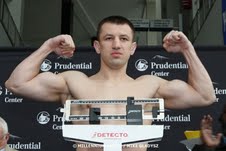
NEWARK– The Polish faithful were on hand at the Prudential Center in Newark, NJ to see their hero, Tomasz Adamek (46-2, 28 KOs, 222.5lbs), take on Travis Walker (39-7-1, 31 KOs, 235lbs). The show was put together by Main Events and aired on WealthTV.

The bout started as expected, with both fighters aggressively moving towards each other looking to find an opening. The second round is where things got interesting. A straight right hand from Walker landed flush on Adamek’s chin, sending him down. Everyone at ringside was in disbelief. Adamek beat the count, but did not look 100%. Walker came on, landing more right hooks that had Adamek reeling all over the ring. After about a minute of this, Adamek tried fighting back, and began regaining the strength in his legs. Then both fighters threw right hands at the same time. Adamek’s landed first, and now it was Walkers turn to be on the canvas. When Walker got to his feet, Adamek pounced. The bell for the end of the round rang, but referee Eddie Cotton could not hear it and allowed the assault to continue for about fifteen seconds after the round was supposed to end.

Adamek controlled the next two rounds with his straight right hand, repeatedly stopping Walker in his tracks. It was in the fifth when Adamek opened up again. Another right hand badly stunned Walker. Adamek followed that up with over twenty unanswered flush punches onto a badly damaged Walker. Eddie Cotton was forced to call a halt to the fight at the 1:08 point of the fifth round, giving Adamek a TKO victory.

Steve Cunningham (24-4, 12 KO’s, 207lbs) took his first plunge into the heavyweight division when he took on Jason Gavern (21-10-4, 10KO’s, 239lbs) in a bout scheduled for ten rounds. Many in attendance were interested in seeing how Cunningham would fare against a much heavier opponent. Things were difficult for Cunningham when seconds into the bout, an accidental clash of heads cut Cunningham just over his left eye.

That didn’t seem to phase Cunningham much, as he completely outclassed Gavern over the course of the fight. Any time Gavern tried to mount any momentum, he was thwarted by Cunningham’s movement and volume punching. To make matters worse, in the middle rounds, Gavern managed to land a shot on the top of Cunningham’s head which broke his hand.

Cunningham continued his assault on Gavern for the rest of the fight, occasionally stunning him. The final scorecards read 99-91, 100-90, and 100-90 giving Cunningham a unanimous decision victory and his first win as a heavyweight.

Rising heavyweight sensation, Bryant Jennings (14-0, 6 KO’s, 230lbs) wowed the crowd when he took on Chris Koval (25-9, 18 KO’s, 226lbs). One of the first punches thrown was a left-right combination from Jennings, and it crushed Koval, sending him down hard. Koval somehow managed to beat the count, but was on very unsteady legs. Another righ-left combination sent him down again, and the referee waved the fight off before Koval even hit the canvas. Jennings won with a first round TKO at the :35 second mark. Jennings continues to impress.

The opening bout of the WealthTV broadcast featured an exciting matchup between Jerry Belmontes (16-0, 5 KO’s, 129lbs) and Joselito Collado (13-1, 3 KO’s, 129lbs). Neither fighter is known for their punching prowess, but they came out swinging early. Collado was the aggressor, pressuring his opponent with looping left hooks. That backfired when both fighters clashed heads, opening up a cut high on Collado’s forehead. Throughout the eight round bout, neither fighter let up. Collado continued to make use of his left hook, while Belmontes consistently took advantage of the opening by landing flush straight right hands. The early rounds were very back and forth, but by the sixth, Belmontes was the fresher fighter. It was a testament to his highly regarded attention to training.

At the end of the fight, the judges scored it 78-74, 78-74, and 77-75 in favor of Belmontes, giving him a unanimous decision victory.

The opening bout of the evening featured an interesting matchup between Karl Dargan (10-0, 5 KO’s, 136lbs) and Jesse Carradine (8-1-1, 4 KO’s, 130lbs). Despite the difference in weight, Dargan looked to be the faster fighter. In a weird moment towards the end of the fight, an exchange tripped up Carradine, forcing him to hold himself up with his gloves. The referee ruled it a knockdown, but went over and started counting at Dargan. Spectators at ringside shouted to him that he was giving an eight count to the wrong fighter, and he turned around and counted the correct fighter. Only in boxing.

The next two rounds were competitive between both fighters, but Dargan was in control with with his superior all around talents. As the third round opened up, Dargan began opening up with power punches and landing very effectively. It was all to set up one huge straight right hand that buckled Carradine and sent him crashing onto the canvas. He managed to beat the count, but was on very rubbery legs. Dargan went in for the kill, but Carradine held on and didn’t let go. The referee had to pry Carradine off of Dargan. This happened two more times, and the referee finally had enough of Carradine’s antics and waved the fight off. Due to his unwillingness to fight, Dargan was credited with a TKO victory at 1:04 of the fourth round.

Jose Peralta (9-1, 5 KO’s, 141lbs) took to the ring against Christian Steele (3-4, 1 KO, 140lbs) in a bout scheduled for six rounds. Peralta started early with a viscious body attack that had Steele on the defensive. Steele, to his credit, is better than his record shows and was able to land some short counter hooks to slow down Peralta’s onslaught. Peralta didn’t waver and continued to work into his opponent. In the second round, while Steele was trying to side step his way out of danger, Peralta landed a picturesque left hook that sent Steele down. Steele beat the count and seemed steady on his feet, but it was evident that he was concerned with Peralta’s power and he went into survival mode. In the third round, a right hand landed on Steele’s temple and sent him down again. Steele beat the count again, but the referee saw that he was out of it and waved the fight off. Peralta scored an impressive TKO victory at :40 of the third round.


Fight For The Future: With Ward-Dawson, Martinez-Chavez and Canelo-Lopez, it’s underway

It’s hard to know whether September’s promise is a new dawn or just a familiar set of oncoming headlights in another head-on collision with a demise predicted and heightened by August’s doom and gloom.

No matter how you look at Andre Ward-versus-Chad Dawson Saturday in Oakland, Calif., and a dueling Las Vegas’ twin bill on Sept. 15 featuring Sergio Martinez-Julio Cesar Chavez Jr. at Thomas & Mack Center and Canelo Alvarez-Josesito Lopez at the MGM Grand, however, it is hard not to see potential for a comeback that is a boxing specialty. No business does it better.


Reliable resiliency is there in a shifting alignment that offers a way out of the never-never land of talk and only talk about Floyd Mayweather and Manny Pacquiao. Yeah-yeah, it could still happen. But a generation of lost fans doesn’t care anymore. The good news is that there is always a new one. In part, chances at winning over generation-next rest in what happens with fighters poised to succeed Pacquiao and Mayweather.

For now, the intriguing battle is for No. 2 spot in the pound-for-pound debate. The fading Pacquiao, second on most lists behind Mayweather, is in jeopardy of falling to third or even fourth after evidence of decline in his last two fights, controversial decisions over Juan Manuel Marquez and Timothy Bradley.

“Me, I believe I’m No. 2 at this moment,’’ Martinez said Wednesday in a conference call for his showdown with Chavez Jr. in a HBO pay-per-view bout for the middleweight title.

A better argument might come from Ward, if he remains unbeaten (25-0, 13 KOs) Saturday in a HBO-televised bout against light-heavy champion Dawson (30-1 17 KOs), who agreed to come down in weight for a 168-pound fight in Ward’s hometown. Mayweather stays at No. 1 because of his perfect record (43-0, 26 KOs). Martinez can’t make that claim. Even if he beats Chavez Jr., there are still losses to Antonio Margarito and Paul Williams and two draws on his resume (49-2-2, 28 KOs).

Predictably perhaps, the more circumspect Ward isn’t as bold about his place in the pound-for-pound debate as Martinez, who has become more outspoken in an escalating exchange of trash talk with Chavez Jr.

For the most part, Ward’s attention isn’t easily diverted by anything beyond the challenge immediately in front of him. That means the dangerous Dawson. Everything else is just talk that would take him away from the task at becoming an equal of fighters he admires, including Mayweather and Sugar Ray Leonard.

“They’re masters,’’ Ward said. “I’m trying to be a master.’’

The guess is that Ward will never quit trying. The goal will be there for as long as he is fighting. It’s a motivational piece to a Ward persona that in a couple of years could put him at the top of the pound-for-pound crowd.

Even in the build-up for Dawson, he seemed to look for something that would drive him to knock out slights, imagined or real. Dawson’s camp praises him. But the skeptical Ward deflects it.

“I think they’re giving us some superficial credit because they have to,’’ he said. “…To listen to them tell it, they have every advantage in the book. I think they’ll discover that isn’t the case.’’

Ward’s insightful trainer, Virgil Hunter, had his own spin.

“Our advantage is being at a disadvantage in their eyes,’’ Hunter said.

If there’s a disadvantage during the next nine days, it is expected to be in betting odds against Chavez Jr. and Dawson. But even those are slim. Spring an upset, and one or both will suddenly leap to the front of a line in the fight for spots at the pay window long occupied by Pacquiao and Mayweather.

Bob Arum, Chavez Jr.’s promoter, said an earlier opportunity for big money against Martinez was resisted precisely for the moment that will transpire on Sept. 15.

“We could have taken a chance against Martinez a year ago,’’ Arum said. “If he wins – and we believe he will, he will become an attraction on the level of Pacquiao, Mayweather.’’

Meanwhile, a hint at Mayweather’s immediate future could unfold at the Canelo-Lopez fight at the MGM Grand. Canelo keeps talking about how he wants to fight Mayweather. His representatives at Golden Boy Promotions have advised caution. At least, Golden Boy President Oscar De La Hoya did on May 5 in the wake of Canelo’s victory over Shane Mosley. But an impressive victory over a smaller Lopez on Showtime might sweep aside concern that Canelo is getting ahead of himself.

If Mayweather decides he wants to fight the popular Mexican redhead now instead of later, there’ll be no waiting.

Another future will have arrived.


Why I’ll be in Oakland this weekend


Saturday evening in Oakland, Calif.’s Oracle Arena super middleweight world champion Andre Ward will defend his title against light heavyweight world champion Chad Dawson. I will be there, I’m happy to report, and eager to make the trip. What follows is an opinion-laden exploration of why.

Ward-Dawson will be a match between the world’s two very best prizefighters between 161 and 175 pounds. That is enough for the purist in me to make the trip from South Texas. It is a rarity anymore the best fight the best, regardless of popular demand, or its absence, and when that happens, it merits a celebration oblivious of subjective or aesthetic concerns.

Oakland’s Andre Ward is a chance to see a better version of a young Bernard Hopkins. Ward does nothing spectacularly but everything quite well. He hasn’t chloroform on either fist but keeps stronger men the hell off him. His footwork is steady, not inventive. He is confident more than stylish. He is self-conscious in the best sense of the term; thousands of concentrated hours have taught him how to keep comfortable in a fight, and the man who can discomfit him has yet to be found (a boy in his 12th year, Jesus Gonzales, was the last to do it, in 1996). And Ward likes to smoke where another man lives, as Joe Frazier put it, to fight on an opponent’s chest – a singularly endearing quality.

Today’s Bernard Hopkins apologists, kids who were usually too young to know or care about Hopkins when he stopped Segundo Mercado 17 years ago and began his middleweight title reign, have little interest in Ward. He is not confrontational enough. He is a careful father rather than a reformed crook. He does not fill a three-minute answer with five minutes of self-aggrandizement. He conforms to the system rigidly, and the system takes care of him. Nothing dangerous there. He is a professional who, by his own estimation, took boxing training too seriously in his youth and now, as he matures, has learned to remand it to a less dominating place – consider for a second how different from the average prizefighter’s career trajectory that is. Ward is not particularly charismatic, and there is little to discover about him outside the ring: Loving dad, religious devotee, proud man, disciplined citizen. Yawn.

Connecticut’s Chad Dawson is less knowable still. Surely there are a few dangerous corners in New Haven, Conn., and Dawson was right to avoid them as a teenager, but there is an element to the Dawson biography, as told by HBO anyway, that feels effortful. Not Victor-Ortiz effortful, of course, but effortful just the same.

Dawson is not a bad guy. Ward is not a bad guy. Both are excellent fighters, the very best in their divisions, and that is not enough? For me it is. I did not believe Ward was at all special when the Super Six tournament began. I expected Mikkel Kessler to prove how meaningless an Olympic gold medal is these days – meaningless as the advisors of each member of our last two Olympic teams did, and will, tell us. But the very opposite was true, wasn’t it? There is a reason Andre Ward is both our country’s last gold medalist and very best prizefighter over 154 pounds.

Ward is a winner. He has a sense of exactly where he stands in relation to another man and where their performances stand in relation to one other. The day a man bests him, Ward will know it and likely concede it, publicly. Chad Dawson does not have this sense. Dawson is talented enough to beat anyone put in front of him, and beat him convincingly, but Dawson does not know how good he is. He does not trust himself or the roster of trainers hired over the years, and how could he? They tried to make him what he is not, he laments. It is hard to imagine Andre Ward mouthing those words.

I am going to the Bay Area, in part, for the same reason I went to Michigan 20 months ago for Bradley-Alexander: as a silent challenge to the black community to support its fighters. In conversations with black boxers and trainers, there is a confidence, or conceit, that relies on a belief that, at any time in the last century, one of their own was the best prizefighter in the world, recognized or not. That’s a conceit I share. But if black men, as a community, are not supporting boxing’s ecosystem, will it always be so? Timothy Bradley does not touch your souls, OK; I do not understand that but accept it. If a community turns away from Bradley, Ward and Dawson to celebrate Floyd Mayweather’s comic-book id or Adrien Broner’s hairbrush, though, that’s another thing entirely, one that raises a question of perspective.

I am also going to the Bay Area because, culturally, it is one of our country’s richest places. I spent two years there as a young, overpaid, Silicon Valley software developer during the dot-com boom and haven’t been back since 2001. There’s a nostalgia for those lovely, hopeful times.

No, this is not a full-throated or objective endorsement of Ward-Dawson, which is why I chose to write it in the first person. I do not expect a great fight. I expect each man to employ his very best technique, and for those techniques to offset each other. I expect Ward to win by using his head – make of that what you will – but think Dawson is uniquely qualified to upset him. Yet I am nearly as excited about seeing Oracle Arena, Saturday, as Thomas & Mack Center seven days after. Call it wanderlust.

Bart Barry can be reached at bart.barrys.email (at) gmail.com


Golovkin attempts the next step in an American adventure started by Jirov


What’s known about Kazakhstan by a U.S. audience that gets most of its news from late-night comedians probably comes from the film, Borat, a so-called mock-u-mentary. If Gennady Golovkin has his way however, his homeland will be remembered for its boxing more than jokes about potassium and clean prostitutes. It won’t be easy. Perceptions are as durable as a memorable punch line. But maybe — just maybe — Golovkin has a chance. The journey from a Central Asian nation as faraway as a remote planet for geographically-challenged Americans has already been attempted. Vassiliy Jirov did it a decade before Borat landed in American theaters..

Jirov arrived in the U.S., upset Antonio Tarver at the 1996 Olympics, won a gold medal for Kazakhstan, was awarded the Val Barker trophy for being the best boxer at the Atlanta Games, learned English, got an Arizona driver’s license and lost in 2003 to James Toney in one of the best fights during the last decade. Jirov never got a rematch with Toney. He never got a shot at the money that might have been there in a bout with Roy Jones Jr. Big dollars eluded him. So, too, did many of the dollars owed him for fights he won and contracts he signed.

No, the American dream wasn’t there for Jirov, who is the first of what has become a Kazakhstan tradition for great Olympic boxers. But he served as a pathfinder, a guide perhaps for Golovkin (23-0, 20 KOs), who introduces himself to the U.S. Saturday night against Poland’s Grzegorz Proksa (28-1, 21 KOs) in Verona, N.Y., at Turning Stone Casino in a middleweight title fight televised by HBO’s Boxing After Dark.

“They’ve talked,” said trainer Abel Sanchez, who once worked Terry Norris’ corner, yet says Golovkin is the best he has ever trained. “Gennady says Vassiliy just told him to be himself. Every fighter is different. He told Gennady to use his own strengths.”

Jirov, who lives in Phoenix and works as a trainer in the city’s many gyms, said he didn’t try to advise Golovkin on what and what not to do during their first meeting about two years ago.

“My experience is not anybody else’s,” said Jirov, whose Barker Award in 1996 was followed by two more for Kazakhstan with welterweight Bakhtiyar Arkyev in 2004 and Serik Sapiyev, also a welterweight, at the London Games a couple of weeks ago. “My experience was a good one. I’m happy with what happened. I’m happy that Gennady is trying. I like anybody who tries something new. That’s what creates opportunities.

“From talking to him, I really think he has very good chance of being very good as a pro in this country. With his power and skill, his potential in this country is great. He’s smart, very smart.”

He also has at least a couple of advantages that Jirov did not.

One is the weight class.

“A key difference, I think, is that Gennady is a middleweight and Vassiliy fought mostly as a cruiserweight,” Sanchez said.

Jirov was at his best in a lost division. There’s a reason fighters like David Haye are quick to to move up and out. No matter what the passport says, nobody pays much attention to the snoozerweights. For Jirov, that meant an even more difficult task at becoming known in the American market. He was always most comfortable at 190 pounds. A move to heavyweight, a business decision, led to mixed results with a TKO loss to Michael Moorer and a strange fight in 2004 with Joe Mesi, who won a decision, yet suffered a dangerous head injury — reported bleeding on the brain. The Mesi bout cemented Jirov’s fate. He wasn’t known by many fans, yet was feared by every potential rival. On the reward scale, Jirov wasn’t worth the risk.

Golovkin, the World Boxing Association’s 160-pound champion, is employed at a much more marketable weight. He also is working in a world-wired era. Although he lacks the name recognition of the known Americans, Mexicans and at least one Filipino, he fights for the first time in the U.S. with the internet and social media as an introduction. Digital hype has preceded him. Jirov didn’t have that advantage. Of course, Golovkin has to fulfill the promise.

“Gennady understands that the American public wants knockouts,” Sanchez says. “Whichever round it is, they want to see a knockout.”

Intriguing knockout power is evident both in anecdotes from Golovkin’s training camp and his record. Twenty knockouts in 23 victories add up to a hint of power that is hard to resist for even a casual fan. Golovkin is worth a look. But Jirov had plenty of marketable power himself. A missing element in Jirov’s marketing plan was an interim step. Golovkin has taken it. Instead of jumping straight into the American market in the transition from amateur to pro, the 30-year-old silver medalist from the 2004 Olympics first created a European market for himself. He moved to Germany and pounded out an unbeaten record impossible to ignore in any language and on any continent.

Can Golovkin take that next step with an entertaining style that will make him known, feared and worth the risk for familiar names always seeking the biggest reward?

“I really hope so,” said Jirov, who deserves a thank-you if Golovkin completes what he began 16 years ago.


Portrait of a barroom tough’s first visit to a boxing gym

Javier pulls open the matte-gray door and sees the fresh black and yellow paint and so much heat. The gym’s heat is palpable, visible even. The heater’s flat hum leans on the beeping timer as three sounds pierce the haze of summer South Texas humidity. There is a deep stench of old perspiration and new latex sealant.

“He wanted it bad the other night,” Javier says to himself, “now we’ll see what the little bitch’s got.”

He snickers at the formality of gloving-up, headgear, vaseline. His first three overhand rights push Enrique backwards, landing: shoulder, shoulder, collarbone. But the little guy straightens and raises his gloves, white mouthpiece protruding.

Javier’s hands weigh 40 pounds each now.

The timer beeps thrice, someone calls “Tiempo!” and Javier spits his bloody mouthpiece out the ring and bites down on the top of his left glove, gnawing and tugging.

“C’mon, dude,” Enrique says, “we’re just starting to move around.”

*

Javier starts at how full the gym is inside. There must be 10 guys for every car in the lot out back. He recognizes no one but everyone looks familiar. No one talks. A few take terse instructions – “yab, gancho; no upper” – from a round coach with thick, prickly black hair. He squirts water in their mouths.

There is little sound except smacking, rope on rubber, wet leather on wet leather.

Soon as both gloves are tied tight round Javier’s wrists, his left palm starts to itch. The little brown guy who puts one strip of tape over his laces smiles and shrugs. Then he theatrically slaps the knuckles of each glove and says, “Listo!”

The bleeding parade down the four steps from the ring is embarrassment tempered by exhaustion, and shaking legs underneath a forehead enveloped by unnatural heat, the veins in his temples throbbing hundreds of times that minute.

*

Javier pauses at the top of the ramp to reminisce on the smacking sound it made when he cuffed Enrique behind the ear outside Bar Cielo last Thursday morning round two. One of Enrique’s crew, tatted on the neck with a sleeve to his left wrist, stepped between Javier and the putito.

“Vamos al gimnasio, mejor,” he said.

“Que sea, cabrón,” said Javier. “Tuesday, don’t be late.”

Javier feels stung and even a little concussed by Enrique’s left hook. Those gloves looked so round and soft, shapeless and dumb, till Enrique put the center of the left one on Javier’s right nostril.

Yup, that’s what blood tastes like. Warmer’n you’d think.

Mostly Javier feels fatigue. His hip bones hollow-out and everything below, clear to his heels, starts to shake.

*

Javier strides down the ramp, eyes fixed on the table with piles of headgear and 16-ounce gloves. So old, used and putrid, that gear, smack-faded red and sweat-yellowed white. The leather spokes atop the headgear were gone years ago, and got replaced with elastic bands that say “why bother?”

Get in quick. That’s how you do at Bar Cielo. Then go all maníaco on him. Hit him till the bouncers pull you off. Make him take the steps back. Just beat him down, it don’t matter where, but go for the head. It ain’t gonna last but five minutes. Hold and smack. Make him bleed, take a souvenir of shirt collar or something. Shake it at las pollitas, show’em what you did to their man.

*

Javier likes that nobody stirs when he gets to the table. Nobody shows him his respect. You’re just making it worse for your bitch, he thinks. Enrique and his boy are there, but neither does more than tip his forehead slightly upwards. Settle this like men?

“You are ready, or you want the warm-up?” says a little brown guy in a white t-shirt, worn green sweatpants and scuffed oxblood penny loafers. “I hit you the pads, yes?”

“Just put the gloves on,” Javier says. “Nice shoes.”

“I go to the work after,” the little brown guy says, and he shrugs.

Javier doesn’t bother to touch gloves when the bell rings. He flies at Enrique. First three rights land somewhere. Easy work.

*

Javier climbs the blue-painted steps on the opposite corner of the ring. It’s elevated a little. He pushes through the narrow space between the third and top ropes. He sees Enrique use the space between the second and third. Use my height, he thinks.

Wherever he puts his head, now, Enrique smacks it. Javier points his face at the gray mat and pulls his palms against the headgear. Just make myself tiny, he thinks. So Enrique smacks Javier’s gloves.

Javier comes out his crouch and lashes at Enrique with a right haymaker. But Enrique is evasive, now, without moving. There is no available air. Javier’s eyes bulge. Enrique nearly fits three knuckles of his left glove in Javier’s mouth.

The little brown guy in the penny loafers smiles, shakes his head and waves at Enrique’s friend in the other corner.

“Basta, ya,” he says, and he pulls the strip of blood speckled medical tape from round Javier’s left wrist. “Ya.”

*

Javier notes how rough-taped the ropes are, like shaking strings with full rolls of shiny white and red wrapped their lengths. Give him a burn when I mash him against them, he thinks.

He is sure they extended the round on him. He was so strong that first minute. Chasing Enrique, smacking him. They extended the round, los cabrones!

There had to have been five minutes, then, before that single beep made the little brown guy yell “30 segundos!”

Everyone looks at Javier, shaking and scuffing up the ramp to the matte-gray door. None of them says a thing.

Bart Barry can be reached at bart.barrys.email (at) gmail.com
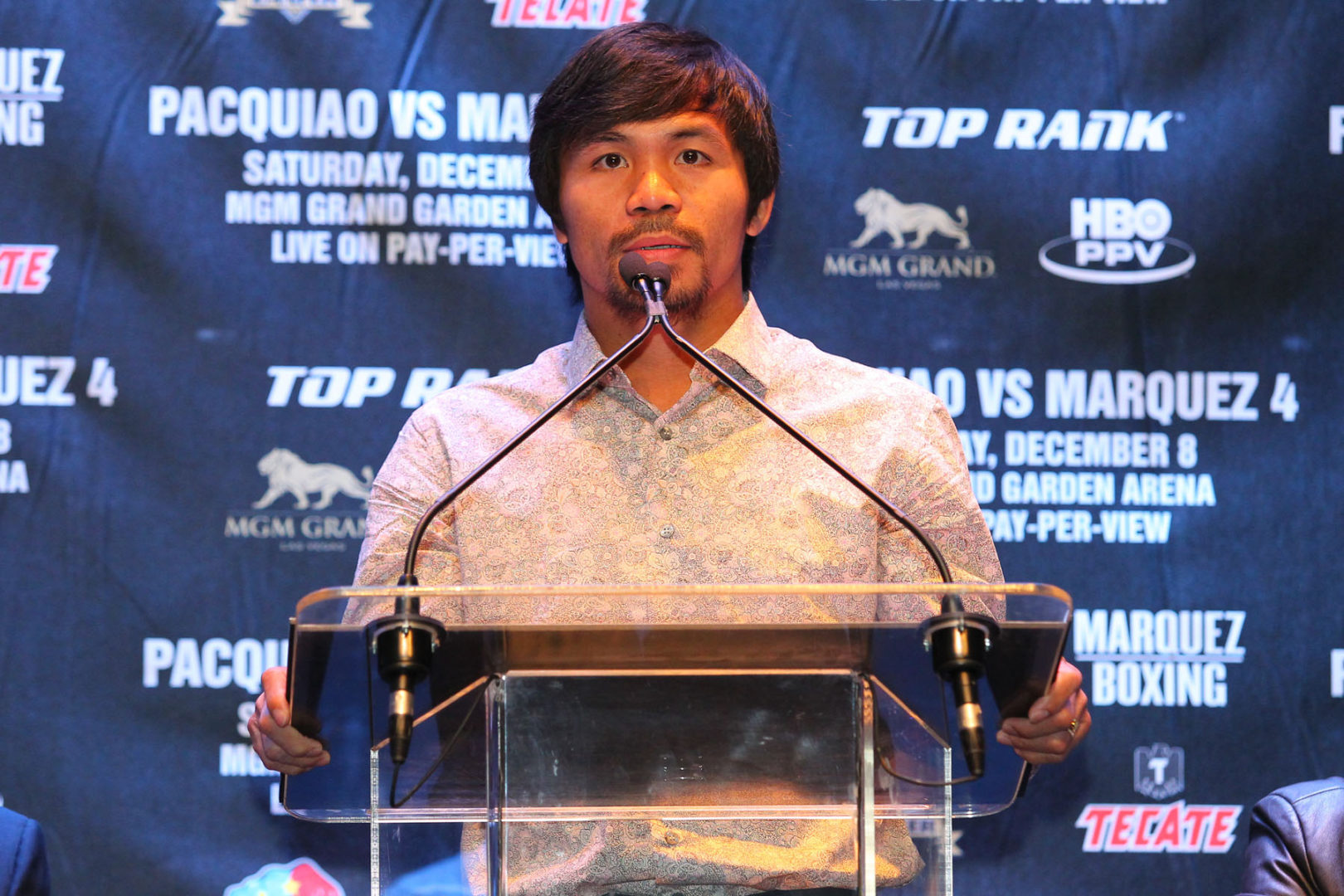


Ortiz takes out Castellanos in Two

Roberto Ortiz scored a second round stoppage over Florencio Castellanos in round two of aq scheduled ten round Super Lightweight bout in Tellum, Mexico.

Ortiz dropped Castellanos twice in the second round. The first knockdown was from a right to the top of the head. Castellanos got to his feet but was dropped from a flurry of punches and his corner stopped the bout.

Ortiz, 138 1/2 lbs of Torreon, MX is now 26-0-1 with twenty-two knockouts. Castellanos, 135 1/2 lbs of La Boquilla, Colombia is now 16-7

Tall southpaw Gilberto Ramirez remained undefeated by scoring a ten round unanimous decision over veteran Richard Gutierrez in a Middleweight bout.

Scores were 100-90 on all cards for Ramirez, 160 lbs of Mazatlan, MX and is now 23-0. Gutierrez, 158 lbs of Miami is now 26-10-1.

Former world title challenger Raul Martinez scored a devastating knockout over Jose Jimenez in round three of a scheduled eight round Bantamweight bout.

Martinez landed a crunching right to the nose that sent Jimenez down face first with blood dripping out his nose and the fight was stopped.

Martinez, 117 1/2 lbs of San Antonio,TX is now 29-2 with seventeen knockouts. Jimenez, 116 1/2 lbs of Chihuahua, MX is now 9-4.


A few entries for August’s empty scorecard


The dog days of August, an unexpected offseason, is full of more idle speculation than medal winners among the American men at the London Olympics. There’s little to celebrate and much to anticipate before it starts all over again next month. A busy September includes one night — the 15th — with two good cards: HBO’s telecast of Sergio Martinez-Julio Cesar Chavez Jr. at Las Vegas’ Thomas & Mack Center and the Showtime telecast of Canelo Alvarez-Josesito Lopez down the street at the MGM Grand. A couple of miles of Vegas neon will separate the two. After a barren August, an embarrassment of riches awaits. Or maybe just embarrassment. Until then, it’s just a guessing game.

A few more guesses:

Manny Pacquiao. Further uncertainty is about the only way to interpret his latest decision. Reports about him moving his next bout from Nov. 10 to Dec. 1 seem to say he doesn’t really know what he wants. Advisor Michael Koncz says the new date is a political necessity. It eliminates a potential interruption of training by allowing Pacquiao time in October to refile his candidacy for re-election to the Filipino Congress, according to Koncz, who was quoted as saying he has to be in the Philippines to file the documents. But Filipino media reports that he does not have to be there. He can mail in the documentation, according to the reports. The contradictions only muddy uncertain waters. Just who does he plan to fight? Reported options are Juan Manuel Marquez, Miguel Cotto and Timothy Bradley. There would be a lot less uncertainty about Pacquiao if he had announced the opponent along with the new date. As it is, there are questions about whether retirement is another option.

Floyd Mayweather Jr. It’s been three weeks since he walked out of a Las Vegas jail after serving about two months for domestic violence. There’s still no word on what his plans are. Pacquiao doesn’t seem to be among them, at least not during the final months in 2012. Keep an eye on Twitter, Mayweather’s favorite way to communicate. Also keep an eye on Canelo-Lopez. It’s not the biggest fight on Sept 15. Martinez-Chavez is. But Golden Boy Promotions has dropped hints that Canelo might be Mayweather’s next opponent if Lopez doesn’t score an encore of his upset of Victor Ortiz.

50 Cent. Keep another eye on the rapper whose birth name, Curtis Jackson, is included on the promotional license that sets him up as a potential rival to Golden Boy and Top Rank. He might have some very different ideas about who Mayweather, his friend and confidante, should fight next.

Juan Manuel Marquez. He plans to write a book. At least three of the chapters figure to be about how he says he got
robbed against Pacquiao, who won two disputed decisions after a draw against the tactically-skilled Mexican. A fourth chapter looks doubtful, if only because the proven risk isn’t worth an iffy reward for Pacquiao

Ricky Hatton. Yeah-yeah, we read the rumors about a Hatton comeback, possibly against Paulie Malignaggi. Can another Oscar De La Hoya rumor be far behind?

Andre Ward and Chad Dawson. It looks like the best of September. Martinez-Chavez Jr. is getting most of the attention, which also means all of the expectations. Those might be very hard to fulfill. Ward-Dawson on Sept. 8 in Oakland, Calif., isn’t surrounded by all of the hype, in part because neither fighter engages in much braggadocio. But the fight, an All-American bout, might introduce a new argument to a pound-for-pound debate grown stale by the unresolved blather about when or whether Pacquiao and Mayweather will fight. Ward-Dawson “sells itself,” Ward told the media Thursday in hometown Oakland. It does.

Gennady Golovkin. Never heard of him? That’s a question Golovkin, an unbeaten middleweight and Olympic silver medalist from Kazakhstan, hopes to quit hearing in the U.S. sometime after he fights for the first time in America on Sept. 1 when he kicks off next month’s schedule on HBO After Dark against Grsegorz Proksa at Turning Stone Resort in Verona, N.Y. “We’ve made it clear we’ll fight anybody in the middleweight division,” Tom Loeffler of K2-Promotions said of Golovkin. In a month that includes middleweight Chavez Jr. and Martinez, Golovkin needs to make his American debut a memorable one.

Devon Alexander and Randall Bailey. Showtime and HBO will stage a preliminary Sept. 8 to their Sept. 15th duel for viewers. That’s when Showtime will televise the Bailey-Alexander welterweight at Las Vegas’ Hard Rock Hotel and Casino on the same night as HBO’s telecast of Ward-Dawson. Alexander-Bailey has the makings of a classic boxer-puncher confrontation. Bailey already is making it fun. Bailey, who says his one-punch KO power makes him the last of a kind, has little patience for Alexander’s speed and boxing skill. “Everybody gets hit with that right hand,” Bailey said during a conference call. “Question is, when you get hit with that right, what are you gonna do?”

In September, at least, we’ll get the chance to find out.


UFC 151 Update: Henderson out with injury, Jones will face Machida on September 22nd!

A partial rupture of the MCL has forced former Strikeforce light
heavyweight champ Dan Henderson to pull out in his anticipated
showdown against the UFC light heavyweight champ Jon Jones originally
scheduled for September 1st at Mandalay Bay Center in Las Vegas. The
entire card has now been canceled and Jones is now slated to take on
Lyoto Machida in Toronto on the 22nd.

UFC president Dana White held a press conference today with the
disappointing news. It’s been revealed that recent middleweight title
challenger Chael Sonnen has offered to step in as a replacement, but
Jones and his trainer Greg Jackson did not accept.

White, furious at the fact that Jones was unwilling to put his title
on the line against a late replacement had no choice but to cancel the
entire card.

Sonnen, who twice unsuccessfully challenged Anderson Silva for the
middleweight crown was to face old rival Forrest Griffin later in the
year, but already had his sights on a showdown against Jones. The war
of words had begun through tweets, but it looks like Sonnen will have
to wait his turn.

Jones beat Machida in their initial encounter in last December,
coincidentally, in Toronto where the rematch will take place.


Walking among masterpieces, thinking about failure


FORT WORTH, Texas – Our beloved sport continues its mid-year recess, a deserted time before the mania of September. There were no fights here Friday or Saturday. There will be none here next weekend. What is here, though, are collections – those of The Modern, Kimbell Art Museum, and Amon Carter Museum of American Art – so detailed, well-presented and complete, only an ambitious, energetic fool would traverse them in seven hours’ time.

But indulge anyway, why not, because you must attend works of art the same way you must attend fights. A piece of fruit tastes nothing like a picture of a piece of fruit. There are art books and exhibition catalogues galore, works of careful photography and prose, but they encourage what literary critic Harold Bloom termed “misprision” – a sort of fundamental misreading that, if imitated, will cause an original interpretation. Original interpretations by dilettantes are mostly rubbish.

How many trainers in how many American gyms have seen dilettantes’ original interpretations of Floyd Mayweather, recently, and of Roy Jones before him, and of Muhammad Ali before him? These are the artistic equivalents of one who sees the works of a single artist in a book, goes to a supply store, and begins hurling paint that same afternoon.

Much contemporary American art, like much contemporary American prizefighting, looks haphazard and improvised, when seen upclose, like the work of people trained by people who watch videos but never put themselves in the loneliness of a ring with another man then consign themselves to a week alone on a heavybag to solve technical problems. It is a derivative of a derivative; a shallow misreading of another’s shallow misreading of an original style.

These are what thoughts happened as I walked through a different collection – Dallas Museum of Art’s abstract expressionism – Saturday. Works by people more concerned with being artists than making art; persons who sought the straightest possible line to acclaim, men who suffered from a want of solitude, seeking companionship and affirmation at every turn – with a work by their patron saint, Andy Warhol, supervising the entrance.

There was a Warhol self-portrait, too, at The Modern, thirty miles west of Dallas. It was neon, lineless, loud and famous but suffered a genuine misfortune: It hung outside this city’s astounding new exhibition of Lucian Freud’s portraits. Warhol and his t-shirt-ready screen prints of Marilyn and Jackie look insubstantial set beside a contemporary like Freud’s works (if perhaps not Freud’s early, is-that-a-Modigliani efforts).

Walking round Saturday, I thought of Marco Antonio Barrera, as I often do. I thought of the rarity of what he did to “The Prince” Naseem Hamed in 2001 and the three years and seven fights that separated Barrera’s second loss to Junior Jones and only loss to Erik Morales – the solitude of those matches in Caesars Tahoe and Fantasy Springs. I thought of his stylistic overhaul in the three fights between Morales and Hamed, the solitude of New Orleans Arena or an opponent like Jesus Salud. Then I thought of how, after undressing the astonishingly overrated Hamed for a half hour, Barrera summoned the fury of those years in the woods to ram The Prince’s goofy face in a turnbuckle, risking disqualification, caring not a whit.

The careless chance-taking of a master craftsman; that is what one sees in Freud’s 1997 work “Sunny Morning – Eight Legs,” hung expertly at The Modern adjacent to 1993’s “And the Bridegroom.” In both paintings, a dressing screen stands in the background, and when one looks at the way the middle of the piece is protuberant while its floor and ceiling distend, one sees what Freud was after: He is behind the screen, painting what is reflected by a large, convex mirror. In Freud’s work one sees a thing most rare in contemporary paint: a direct link to Van Gogh and his collapsed space between foreground and back; the Spanish master, Velazquez, and his use of mirrors; the Italian master Caravaggio and his genius for human form; and the German master, Durer, and his compulsion for movement. The grandson of another and more famous genius, Freud had the influences and resources and talent to absorb masterworks then retreat to solitude, puzzle them out, and repeat their techniques. Only then, his toolbox complete, did Freud set about going where the daemon took him.

Great artists fail. One sees dreadful works by Cezanne and worse by Picasso. Failure in boxing is different from losing, just as artistic failure is sometimes subjective. There are informed critics who see genius in Pollock’s works like “Cathedral,” which hangs at Dallas Museum of Art; but if one has been to Museum of Fine Art, Houston, and seen young Pollock’s attempts at more academic painting, he can be forgiven for saying “That’s why he evolved to drizzles and splatters.”

Barrera’s failures were not his knockout loss to Jones in 1996 or Manny Pacquiao in 2003 or unofficial loss to Rocky Juarez in 2006. Barrera’s failures were his too-cautious performance with Juan Manuel Marquez in 2007 and his cash-on-delivery, rematch showing against Pacquiao seven months later.

But indulge anyway. Attend the fights; attend the canvases. You can see a prizefighting masterpiece on television no better than a Rembrandt in a book, after all. Plan trips. Do not worry about outcomes. A master’s failure is ever more informative than a dilettante’s triumph.

Bart Barry can be reached at bart.barrys.email (at) gmail.com


Breidis Prescott outpoints Francisco Figueroa in Miami, Barthelemy remains unbeaten.

Warriors Boxing Promotions presented Miami Warfare II at the Miami Airport Convention Center in Miami tonight and the crowd was treated to a delight of a card which was headlined by a very entertaining bout between hard hitting Colombian Breidis Prescott 26-4(18KO)and Bronx native Gato Figueroa 20-5-1(13KO).

Prescott is often noted for handing Amir Khan his first shocking knockout loss and has been since dubbed as the Khanqueror. However, the tall and lean Prescott had not followed up strong; he was 5-4 in his last 9 fights. Figueroa the former NABF Welterweight champion, recently faced tall and very tough opposition in dynamite fisted Randall Bailey and rangy brawler undefeated Alex Perez. The slick southpaw found himself with another taller strong fighter tonight.

Prescott started strong in the first round and was firing heavy shots where he knocked an off balanced Figueroa down twice. Gato returned the favor in round five with a straight left hand that deposited the Colombian to the canvas. Where the much taller rangier Prescott set the pace winning the early rounds it was a hard charging Figueroa who came on strong late to keep it competitive and interesting. The two tangled often with the bigger Colombian fighter leaning on and holding the Puerto Rican, Figueroa pushing him down trying to work his legs. A deep cut was caused to the back of Gatos head by some sort of an elbow while engaging the typical entanglement often seen in a southpaw orthodox skirmish. Figueroa came on strong at the end of the fight, he was catching the tiring taller fighter with straight lefts however Prescott used his feet to stay out of reach for follow up punches. The final judges’ cards were 79-71, 77-73, 78-71 all for Prescott.

In the Co-main event prospecting slowly turning contender super featherweight Rances Barthelemy 17-0(11KO) knocked Mexican Alejandro Rodriguez 14-7(7KO) down in the first round in what appeared to be an easy and quick night for the Cuban fighter. In turn, the iron chinned Rodriguez made him work for it over hard fought 8 rounds where Barthelemy earned a unanimous decision. Rodriguez showed a ton of heart as he was hit with everything often and kept coming with true Mexican pride. In the final two rounds Barthelemy toyed with Rodriguez with his hands down slipping punches, more impressively would have appreciated a stoppage. With his perfect record now growing I would assume Barthelemy will start stepping up the competition to get closer to the titles.

In the opening bout of the night Cuban fighter Leosvy Mayedo 3-0(2KO) made easy work of Altantas’ Joseph Benjamin 3-22-2(3KO). Mayedo dropped the over-matched Benjamin in the first and last round however was unable finish off his opponent. Mayedo was clearly looking for a knockout as he was reaching with big punched rarely throwing more than one or two and usually all power punches. More boxing to set up the power punches could have yielded the KO in this fight.

Malcom Stimthil 1-0 dissected Tampa based Cassius Clay throughout a four round entertaining welterweight bout and looked very composed for a debuting fighter. Stimthil rocked Clay often and cut him over his left eye in the second stanza. Stimthil who had 28 amateur bouts, fights out of Palm Beach Boxing in West Palm Beach and is trained by Adam Bram. All three cards read 40-36

Light Heavyweight Radivoje Kalajdzic 7-0(6KO) from Zenica Bosnia went right to work on Jerrod Caldwell 2-1-1(1KO) from Gainesville Florida and scored a blistering first round TKO. Kalajdzic landed a pair of laser fast straight right hands followed by an unanswered flurry that prompted Sam Burgeos to step in and call it a night at 1:49 of the first round.

Middleweight Roberto Acevedo from Puerto Rico improved to 6-0(4KO) with a convincing unanimous decision win over Pnesacolas’ Donald Clark who fell to 2-3(1KO). The card read 60-54 twice and 59-54.

Cuban Super Bantamweight Hairon Socarras, fighting out of Miami, scored a four round unanimous decision win over southpaw Socarras DeWane “The Pain” Wisdon from Indianapolis, IN. The Pain kept it competitive and was caught in the third round in which the tide turned slightly, however not overly impressive and Wisdom did a great job defensively to avoid the big punches from the Cuban fighter, who seemed to be loading up on hopeful punches one at a time, never really putting a meaningful combination together. The cards read 39-37 and 40-36 twice.

In the final bout of the night, Light heavyweight Yunieski Gonazlez improved to 9-0(5KO) with a long and hard fought ten round unanimous decision win over tough, tested and iron willed, Jermaine Mackey 18-6(14KO) fighting out of Nassau Bahamas. Gonzalez threw his heaviest punches at the feisty southpaw Mackey who refused to go away. The two brawled to the fans delight at the end of the fight, leaving this animated Miami crowd begging for more. All three judges saw the fight 100-89.


A Few Good Men: The nominees for a tough American job

USA Boxing’s search for a national coach might be as futile as winning an Olympic medal. After the American men came home from the London Games without even a bronze and about as much respect, the proposed job hunt looks like mission impossible. Then again, it can’t get any worse. If the sell-high-and-buy-low strategy applies, there might be an opportunity lurking in the mess.

Anybody who dares take the job, however, faces a big challenge in trying to convince young Americans that Olympic boxing is even worth it anymore. For the last couple of decades, the best have been moving away in an exodus that kept the American men off the medal stand for the first time ever. The 15-year-old who watched the 2012 debacle could not have seen a reason to try in 2016.

Only a competent cornerman with the right name has a chance at rebuilding an American franchise. By the right name, we’re talking about a resume that includes professional champions, some celebrity and credibility that comes with being a teacher. If Olympic boxing trashes computer scoring for pro-style cards and the international ruling body (AIBA) doesn’t become another pro acronym, there’s much to gain for somebody willing to assume the risk.

Three nominations:
Freddie Roach. Can we try this again? Please. Roach was never given much of a chance at helping the 2012 team as a consultant because of American coaches jealous of their turf. Then, there was turmoil that led to a staff shuffle just months before opening ceremonies. Roach’s busy schedule with Manny Pacquiao and Julio Cesar Chavez, Jr., looms as a problem. But give him the funds to hire a staff this year, and he could have time to develop medalists four years from now. As the best trainer of his generation, he’s known to emerging prospects who hope to forge pro careers. Roach’s name recognition and clout could go a long way in re-establishing an Olympic medal as a steppingstone to the pros. After all the confusion over his role with the 2012 team, Roach also knows what’s wrong. Only a real boxing guy can fix it.

Emanuel Steward. Steward was the American choice to coach the 2004 team at the Athens Games until politics knocked him out of the job. Turns out, it was a sign of what would happen eight years later in London. Steward wanted the 2004 Americans to re-emphasize KO power. HIs old-school idea was to take the judging out of the equation. Given the bizarre decisions made by key-punch operators posing as judges at every Olympics since 1992, what could make more sense? Even if computer scoring is trashed in favor of a 10-point-must system, decisive power is the answer. Power also retains the element demanded by young Americans, who want to learn how to deliver it as they prepare to go pro. Like Roach, Steward has a busy schedule, including ringside analysis for Home Box Office and corner work with Ukrainian Wladimir Klitschko and Irishman Andy Lee. He has become something of an ambassador for boxing. Steward in the job would mean the Americans are serious, which they were not in London. Subjective judges, whether punching a computer pad or writing on a scorecard, notice those kind of things

Teddy Atlas. He’s a lot less diplomatic in his talk and opinions than either Roach or Steward. But maybe that hard-nosed approach is what’s needed. Atlas’ uncompromising commentary for NBC in London left no doubt about what he thinks of USA Boxing, AIBA and international judging. All of those bureaucrats and officials heard it the way Michael Moorer heard it from Atlas, then Moorer’s trainer, during a 1994 loss to George Foreman for a heavyweight title. Atlas couldn’t stand what he was witnessing.

It’s time to hire somebody who won’t stand for what happened to American boxers in London.

Notes, Quotes
Timothy Bradley chose the wrong word, but had the right idea when he told The Desert Sun that “a lot of people on that side are scared” about Pacquiao fighting him on Nov. 10 at Las Vegas MGM Grand in what would be an immediate rematch of his controversial victory by split decision on June 9. A better word than scared? How about worried? Juan Manuel Marquez and Miguel Cotto are Pacquiao’s other options. Pacquiao’s corner should be worried about any of the three. Unless there’s a reversal in the evident erosion of hand speed, Pacquiao is vulnerable.

And Chavez Jr. weighed 176 pounds 30 days before his middleweight showdown against Sergio Martinez on Sept. 15 at Las Vegas’ Thomas & Mack Center, according to news reports from Chavez’ training camp. Reaction: What do you want to bet that Chavez is 180-plus at opening bell, 24 hours after the formal weigh-in?


VINNY LaMANNA: BOXING MANAGER

He didn’t start out as most in the boxing business but Vinny LaManna has accomplished a lot in his twenty-plus years in boxing.

LaManna, who now resides in Toms River, New Jersey wasn’t even particularly a sports fan until he walked into a bar in Northern New Jersey and was captivated by what he saw what was playing on the television.
“It was the 1988 Seoul Olympics and they were showing a fight involving (eventual Gold Medalist) Ray Mercer and thought to myself wow what an exciting athlete and from there my love and passion for the sport was born”, said the forty-eight year old father of three.

LaManna then became friends with Greg Pessolano who was an agent with Triple Threat boxing who just happened to be the management company of Mercer.

Through the mutual friends, LaManna was introduced to Mercer and that sparked LaManna’s interest in getting into the business.

“Any fool with $20 can get a managers license” and then LaManna preceded to manage a Light Heavyweight named Anthony Sutton.

“Sutton lost his first fight with me and he never fought again”

That didn’t deter LaManna as he has gone on to manage over forty-plus fighters that included His only world champion, IBF Cruiserweight champion Imanu Mayfield, Leo Loiacano, Michael Covington, Derrick Graham, and his influence into boxing Ray Mercer.

“I have done shows with the biggest names. We have been involved with fights with Don King, Bob Arum, Goossen, you name it”

Mayfield, who was LaManna’s only champion was actually brought to him after his manager Curtis Ford had a brain aneurysm.

Loiacano was big ticket seller in North Jersey so that brought LaManna a name in his home area.
Graham was the one that LaManna could have been great as he said that he had all the talent but never took the sport serious.

“Mercer and Mayfield were able to make handsome livings”

LaManna has had his battles and detractors over the years but has mostly good things to say about the business.

On the present New Jersey Boxing Commission “Larry Hazzard knew the sport and currant Aaron Davis is a fair man and because of his regulating we have seen an increase in live events”

LaManna has been at the championship level but now he is involved in his most personal project in managing his own son, Twenty-year old undefeated Jr. Middleweight Thomas “Cornflake” LaManna.

“I don’t have to be as careful and he is learning more and more. All of my decisions are business and the fights we make, I have to take the mindset that he was any other fighter that I have managed”

The younger LaManna will be back in the ring this Saturday night at Ballys in Atlantic City (www.gfl.tv -$9.99 at 7:30 pm) when he takes on Yolexcy Leiva in a bout scheduled for six rounds.

LaManna has seen some distract changing in the game in his two decades in the business.

“There are some bad people and the sport needs to be regulated. There are too many people running around the business who don’t understand it and that leads to lots of fighters getting screwed”

Like everyone else, LaManna has his own opinion of the continued failed negotiations between Floyd Mayweather and Manny Pacquiao.

“They should just be able to come to some kind of fair split when you are talking hundreds of millions of dollars. To me it just looks like two guys making excuses not to fight each other”

“Being from New Jersey, I am big proponent of the State Title. I think it’s a great way to promote and give fighters on the way up an opportunity to fight for a title”

LaManna took matters into his own hands when he and longtime Philadelphia cutman/promoter Joey “Eye” Intreri formed the BAM (Boxing Association of Machismo )

“It’s a title for kids to fight for something, it’s more of a trophy but the winners of these fights get belts and there are no sanction fees. When we feel two guys want to step up in an era when nobody wants to fight each other, we try to reward those fighters”

LaManna, also runs and operates Starwaste Service, which is a large sanitation company in New Jersey


Observations about local fight promotion from behind black cocktail dresses

SAN ANTONIO – Saturday saw the return of national figures and national Spanish-language television, Telefutura this time, to the northernmost fraction of Alamodome, a pastel-highlighted and becurtained area called Illusions Theater. Seven undercard matches whose blowouts were either unexpected or presented local prizefighters doing the blowing-out rallied an enthusiastic Alamo City crowd for what was an entertaining main event.

Rugged Texan Brian Vera decisioned crafty Sergio Mora, a national figure who won the first “Contender” program and briefly held the WBC’s light middleweight title in 2008. The judges’ decision was correct, if unfairly wide in two cases, and Mora stormed to his dressing room and had a conniption. As neither Vera nor Mora, nor their rematch, provided new insights about prizefighting, it should prove more constructive to examine local shows and the promoters who host them.

One needn’t cover the sport of prizefighting for a decade to see his first dozen promoters fail. The pattern becomes familiar: A man successful in some other venture decides his hometown’s consumers have not been adequately tapped. He has an angle of some kind, often an assumed familiarity with his city, a familiarity whose supposed lack caused other promoters’ previous failures. Occasionally his angle is a direct line to a stable of talented local prospects, and in the best scenarios it is access to a prizefighting grandee.

The new promoter sets out to make his first card a conquest. He leases the talent and services of a national outfit or at least a well-regarded matchmaker. He rents a noteworthy venue. He begins to employ what salesmanship made his other venture a success. Everything runs crisply. Press releases get released. Open workouts open on time. Promotional events promote relentlessly. Advance ticket sales advance. The local promoter loses between $20,000 and $40,000.

But the debut gets good reviews. He has already promised to do a minimum of five shows or more because he understands the importance and finickiness of momentum – even if his burn rate has already trebled startup estimates. His second card goes much like the first. The local promoter approaches a crisis stage and thinks maybe conjuring a reliable audience for prizefights is not as his initial calculus concluded.

Boxing is filled with local freelancing operatives who haven’t succeeded at previous business ventures but believe, on the strength of their betrothing common observations and uncommon vocal cords, boxing is where a fortune, their fortune, can be made. If it’s not an impossible scenario, it’s neither a probable one. The promoter turns to these freelancers for enthusiasm if not advice because optimism is at least infectious.

For his third card, the new promoter decides he’s learned much about the business from national outfits as he’s likely to. He cuts PR costs dramatically, though keeps the matchmaker and venue. Reviews are not raved as before, but of course expenses are lower. He stocks the card with local talent – the national guys, after all, sell television licensing (which their national promoters keep), not tickets – and maybe attempts affiliation with his city’s thriving amateur scene. Keep things homegrown and intimate.

But even small events are more expensive than they feel to attendees. Members of the local media, wary of a diminishing infrastructure they’ve seen before, lose some interest. They’ll be there fightnight, perhaps, but no longer have an impetus to act as tools in the promotional apparatus. This brings a capitulation stage, wherein the local promoter leaves boxing, feeling in no small part bamboozled, and tries his luck with amateur MMA or writes-off entirely his errant undertaking.

Leija-Battah Promotions, by all appearances, approached a crisis stage after its second show, a small Cinco de Mayo event that drew a reasonable crowd to the bullring of a large San Antonio dancehall but nevertheless featured talent more national in price than notoriety. Then came a kickoff press conference in June for its third show, Mora-Vera II, a press conference made complete by an appearance from the Golden Boy himself, Oscar De La Hoya, beside his one-time rival and new promotional partner Jesse James Leija. Locals reasonably anticipated future Golden Boy sightings. But the June press conference – despite promises of a Thursday “meet & greet” and Friday weighin at 1 PM – was the last De La Hoya was seen in South Texas. His June affair was about selling the event to Leija-Battah Promotions.

Friday’s weighin was inexplicably moved to 3 PM, Thursday night, which did not correspond to blue-collar dads’ lunch breaks. Saturday’s card featured a media section nothing like the first Illusions Theater configuration Top Rank’s Lee Samuels arranged in March. Rather than two consecutive rows of tables, there was one row, restricted mostly to television personalities who never materialized, and a second table well back of it. Between the two tables were five or six rows of “media seating” that featured black cocktail dresses in lieu of notebooks – which was good because had these credentialed writers brought so much as a pen with them, they’d have had to balance the reports they scribbled on their spectacular, shapely knees.

The card itself left one hopeful, nonetheless. It showcased local talent like Adam Lopez, Javier Rodriguez, Steve Hall and Benjamin Whitaker. The main event was excellent too. There were 17 amateur bouts before the professional show, and each of those amateurs was tasked with selling 25 tickets. Attendance was estimated above 3,000, and while it is not likely so many tickets were sold, seeing more than 1,500 people gathered for boxing in a local venue is always edifying.

What comes next for the promotional partnership between local businessman Mike Battah and local hero Jesse James Leija is unknowable. Being a prizefighting promoter, a profitable one, is unlike any other venture.

Bart Barry can be reached at bart.barrys.email (at) gmail.com


Vera decisions Mora by questionably wide scores in South Texas

SAN ANTONIO – If you come to Texas and fight a Texan you have to beat that Texan down. Californian Sergio Mora returned to Texas and did not beat Austin’s Brian Vera down (though he probably outboxed him), and again the result went Vera’s way.

Saturday in the main event of a “Solo Boxeo” card promoted by local outfit Leija-Battah Promotions within Alamodome’s Illusions Theater, in an excellent rematch of their 2011 fight Vera (21-6, 12 KOs) decisioned Mora (23-3-2, 7 KOs) by split scores of 114-114, 118-110 and 117-111. The first score was accurate, the others were likely too wide by half.

Afterwards, a furious Mora, who goes by the moniker “Latin Snake,” had venomous things to say about the decision and the state of Texas.

From the opening bell, insiders knew the fight would be determined by Mora’s accuracy or Vera’s activity. Vera’s activity won. Though Mora landed a multitude of right crosses from his shifting stance, and often had Vera outclassed, Vera’s relentlessness impressed the local judges more.

After an opening three rounds that saw Vera busier and Mora significantly more accurate, Vera’s busyness began to tell. Mora, who’d successfully set up shop in both neutral corners and snapped Vera’s head back with counter uppercuts, found his mouth open and his activity diminished as the middle rounds came and went.

But as the championship rounds approached in a match for a vacant NABO middleweight title, and as Vera’s pace slowed slightly, Mora appeared to become the aggressor, landing with hard combinations in the fight’s closing six minutes. Ultimately, though, it was an effort by Mora ineffective as it was tardy, and Vera had his second victory over Mora in as many fights.

ANTONIO ESCALANTE VS. LEONILO MIRANDA
An old saw goes: The man is most dangerous when he is hurt.

That old saw proved itself true once more Saturday when El Paso featherweight Antonio Escalante, retreating on buckling knees, stopped, planted and connected with a short right cross from which Mexican Leonilo Miranda could not rise.

The official end came at 1:19 of round 2, after an uneventful first round saw neither Escalante (27-4, 19 KOs) not Miranda (26-5, 25 KOs) land anything meaningful. Early in the second, though, Miranda connected with a left hand that affected Escalante, putting him on stiff legs.

Then Miranda leaped in, emboldened by Escalante’s retreat, and Escalante snapped a perfect right hand. The 10-count was unnecessary.

BENJAMIN WHITAKER VS. GERMAIN CARSON
Saturday’s first match featured a professional debut by Benjamin Whitaker, a local welterweight, against an awkward fellow Texan named Germain Carson – an entirely successful debut by Whitaker that saw him win by stoppage at 2:33 of round 2.

After a first round that found Whitaker (1-0, 1 KO) leaning with right-hand leads on the southpaw Carson (0-2), leads Carson picked up and evaded for the most part, Whitaker began to move forward and look for openings. With Carson’s high chin, Whitaker found a big opening quickly enough.

“I felt better, actually,” Whitaker said of using lighter gloves and fighting without headgear for the first time. “My hands felt lighter. I liked it.”

A left hook from Whitaker caught Carson late in the second round and dropped him for the full count of 10. It was an excellent debut for a likable local prospect before a lively crowd.

DAQUAN ARNETT VS. ISHWAR AMADOR
The evening’s second bout, a junior middleweight match between undefeated Floridian Daquan Arnett (6-0, 4 KOs) and many-times-defeated Mexican Ishwar Amador (11-11, 7 Kos) did not last long. In fact, it lasted only so long as it took Arnett, an Al Haymon-advised fighter with a Floyd Mayweather style, to land his first right hand.

That right hand was a crisp cross that found its home on Amador’s chin and resulted in a no-count-needed knockout for Arnett at 0:36 of round 1. Arnett, who has both talent and proper management, is a fighter to keep an eye on.

ADAM LOPEZ VS. MARIO DELGADO
The evening’s third match found former local amateur standout Adam Lopez (4-0, 2 KOs) making quick work of fellow Texas bantamweight Mario Delgado (0-3) of Brownsville, stopping him with a left hook to the belly at 1:21 of round 1. Lopez, who suffered a flash knockdown in the first round of his last appearance at Illusions Theater, fought more effectively Saturday, though his competition has diminished considerably lately.

STEVE HALL VS. MILTON RAMOS
In the undercard’s most entertaining match, a battle between Texas welterweights, local fan favorite Steve Hall (5-3, 5 KOs), an Englishman who wears a sombrero and serape to the ring, went through six hellish rounds with Milton “Bad Boy” Ramos (8-3-2, 2 KOs) of Waco, in a match Ramos won by unanimous scores of 60-54, 59-55 and 58-56.

From the opening minute, when a balance shot stunned Hall, Ramos found his San Antonio opponent with most every right hand he threw. Hall was game, though, wading into whatever Ramos served, and tasting three or four of them at a time, in the hopes of landing a right of his own or a left hook behind Ramos’ right elbow.

The match was closer than six-rounds-to-one, but the right man was victorious, much to local fans’ dismay.

UNDERCARD
Saturday’s fifth match saw local junior featherweight Javier “Pitbull” Rodriguez (3-0-1) decision fellow San Antonian Kermit Hendricks (1-3) by three scores of 39-37.

The penultimate match of the evening, a swing bout between Texas featherweights Jerren Cochran (5-0, 3 KOs) and Jesus Rocha (3-3), began on a very entertaining note and ended in a unanimous decision for Cochran – scores of 40-35, 40-35 and 39-36 – who got hit with a surprising number of punches for a man who fights out of a shell.

Opening bell rang on the card’s professional bouts at 7:10 PM local time. Attendance was estimated by someone associated with the promotion at about 3,000.


Staying Home: Jose Benavidez Jr. is happy he went to the pros instead of London


It’s hard not to think about Jose Benavidez Jr. while watching the sad and inevitable demise of American boxing at the London Olympics. In another time, Benavidez would have been there. But today that time looks lost in the collapse of an American tradition. For nearly a century, the American men dominated the medal count. In London, they couldn’t count one. They were shut out for the first time ever.

Some of the best Americans just don’t go anymore. Pick the reason: Disarray in USA Boxing or computer-based scoring system, or coaching, or 24 years of controversy since Roy Jones Jr. and Michael Carbajal were robbed of gold at the infamous 1988 Games, or all of the above.

“It’s just not the way it used to be anymore,’’ said Benavidez, 20, an unbeaten junior-welterweight prospect from Phoenix who was projected to be a star for the 2012 U.S. team before he signed with Top Rank as a 17-year-old. “A lot of guys just go pro. That gold medal isn’t worth what it used to be.’’

The computer-scoring, Benavidez says, is the biggest reason he went pro.

“I decided I didn’t want to continue boxing as an amateur because of that system,’’ said Benavidez (16-0, 13 KOs), who on Nov. 4 fought in Las Vegas instead of London, winning a fourth-round stoppage over Javier Loya. “It’s just throw- throw-throw, throw as many punches as fast as you can. But sometimes, you might land two shots and they won’t score them. It was just frustrating, real hard to understand.

“All along, I’d been taught to fight like a pro. I like to take more time, set up my shots. It just made more sense to go straight to the pros when Top Rank made me that offer. I don’t have any regrets. None at all.’’

Benavidez knows all about the long run of Olympic controversy, which continued in London with a referee who was expelled from the Games after he failed to rule a single knockdown in a round when the same fighter was on the canvas six times. But the controversies are older than he is. Benavidez wasn’t even born when Jones and Carabjal, also of Phoenix, lost at the Seoul Games in controversial scoring by judges who were linked to suspected bribes in the subsequent disclosure of old East German secret police files.

Still, the uninterrupted controversies have devalued the gold medal once so important in launching a pro career. For the best American amateurs, it also has created a culture in which the Olympics are no longer a priority.

Before the 2004 Olympics, I recall an interview with Rafael Valenzuela, then a terrific amateur with the kind of hand speed that might have been able to score with keypad punchers posing as judges. Valenzuela, a Phoenix featherweight, represented the U.S. in the 2003 World Championships in Thailand. In the ready room before a preliminary bout, Valenzuela said a Cuban looked at him and told him:

“You’re an American. Why did you Americans even come here? You’re going to get screwed.’’

Valenzuela came home and quickly went pro.

USA Boxing has a lot of work to do and perhaps a few good ideas about how to rebuild its Olympic fortunes. One plan includes a permanent national coach, instead of the patchwork collection of coaches. The revolving door continued to cripple American chances in London with the April dismissal of Joe Zanders and the late hiring of his replacement, 2004 coach Basheer Abdullah, who wasn’t allowed to work any American corner in London reportedly because he worked with a pro.

Lost in the shuffle was Freddie Roach, the Hall of Fame trainer who amid much fanfare had offered to work as a consultant, yet ultimately was rebuffed. Roach worked with a few of the Americans. Yet, Roach never made it to London.

No wonder the Americans looked confused. From day-to-day and perhaps from round-to-round, they didn’t know who would be in their corner. A permanent national coach might be a good step. But that coach will have to change a culture in which an Olympic medal has mattered less and less. After London, it doesn’t matter at all.

QUOTES, ANECDOTES

· There’s been a lot of talk about sending pros in a bid to re-assert American dominance in the same way USA basketball did in 1992 with the Dream Team. Even a roster including America’s best pros, however, might have had a tough time in London. “Most of our pros would lose, because they don’t understand that scoring system,’’ Roach said. Muhammad Ali, now an Olympic icon and a light-heavyweight gold medalist in 1960, might have had a tough time winning if the computer had been at ringside for the Rome Games.

· In terms of media perception, America’s failure to medal is devastating. But mainstream media in the U.S. doesn’t care about boxing anyway. No American medal figures to have no impact on the pro game. Here’s why: Mexico didn’t win a medal either. Medal hopeful Oscar Valdez, a bantamweight from Nogales on the other side of the border from Arizona, was eliminated, 19-13, by Ireland’s John Joe Nevin. Mexico is the world’s best boxing country. Without Mexican fighters and fans, the pro game wouldn’t be the same. For boxing’s most important audience, the medal count doesn’t count.

Photo by Stephanie Trapp


A call for military intervention

For a brief time Friday, the hours between the elimination of Team USA’s last male boxer and his reinstatement on appeal, the 2012 Men’s Boxing team was, by record, the worst in American history. If welterweight Errol Spence is able to win Tuesday and Friday, assuring himself at least a silver medal, the 2012 Men’s Boxing team will be redeemed: By medal count, it will be the second-worst in American history.

This team is not the aesthetic disaster that 2008 brought. Kids like Spence, Joseph Diaz, Jose Ramirez, Jamel Herring and Terrell Gausha fight in a physical, forward-pressing, ineffective-aggressiveness-is-better-than-inactivity style that makes them easier to cheer than our last Olympiad’s counter-hook specialists were. If that’s a comfort, though, it’s a frigid one.

Americans were furious enough Friday to demand substantive change. Begin the housecleaning Saturday, not Monday! Oscar De La Hoya, in a fit of sincerity CNBC reported without irony, recruited himself and Mark Breland and Sugar Ray Leonard to coach the 2016 squad, on Twitter. The usual calls for professional trainers went out. A call for existing American pros – Dream Team style – got dusted off. None of these is a solution, of course, but they at least represented Americans’ readiness for radical reform.

Put the military in charge, then. An answer to each riddle insiders pose about how to reform USA Boxing lies in Department of Defense’s Armed Forces Sports Council (AFSC), whose directors are culled from the Army, Marine Corps, Navy, Air Force and Coast Guard. Soldiers, airmen and marines already clean-up at many regional Golden Gloves tourneys round the country, and if they are not our sport’s very best athletes, they’re close enough. The AFSC can then set about resolving reform riddles like:

“There are too many warring factions in USA Boxing.” Anyone who’s ever asked any authority what is wrong with our Olympic team hears this sort of thing early and often. The cited factions usually organize round ethnic and geographic loyalties. The Armed Forces has a pretty good record of razing such loyalties in the name of a cohesive fighting unit.

“USA Boxing does not have enough money.” Setting aside the economic realities of those countries whose boxers routinely best ours and going along with this canard for a second, Americans can now sigh with relief, for once, after a glance at the annual budget over at DoD.

“Our kids do not get enough international experience.” A child to the funding explanation, this point is actually an essential one and worthier than its predecessors. International experience, after all, was the difference in Friday’s match between Team USA’s Errol Spence and Indian welterweight Vikas Krishan – a match Krishan had won until Americans, made rabid by the decision, browbeat the International Amateur Boxing Association into reversing itself on confounding hypothetical grounds. Good for Errol, though; he’s one of ours, and physical too.

How did he lose the initial decision? By corruption! No, actually, Spence lost by driving Krishan to dead spots on the mat – places where few of the five judges, perhaps not even three, could see his punches land cleanly. Once there, Spence taught the judges to see his punches as non-scoring blows, repeatedly assaulting Krishan’s raised guard with all manner of ferocity, such that when an occasional scoring blow did sneak through for Spence the judges were desensitized to it. Behind after two rounds, Spence allowed himself to be held in the third, and then, in the moments after the ref broke the fighters – the very moments the judges’ eyes were best focused – he allowed Krishan to leap in with single, looped blows that were easy to detect. Spence absolutely outfought Krishan, yes, but he did not understand international scoring the way Krishan did, and neither did his coaches.

The next time you’re in a gym that is part of USA Boxing’s network – you do go to the gym, right? – ask any of the kids where the judges were positioned for his last fight. Ask him where the dead spots on the canvas were, where the judges’ viewing was likely obstructed. Ask his coaches. Count the blank looks you get.

That’s because they’re not preparing for international competition! But why not? Every Cuban is. Why don’t we have an American boxing system crafted to please international judges’ eyes the way successful countries do? Because for the last 20 years we’ve been busy teaching “fundamentals” and “preparing them for the pro game”? Well.

American civilians do not like to learn new systems that do not promise quick and vast riches. We’re all ferocious individualists, often in a way inversely proportionate to our talents, and we pass that along to American children. Much of what ails Team USA ails USA in general.

Put AFSC in charge of boxing, then. For the next three Olympiads at least, make only boxers who are on active duty in the Armed Forces eligible for international competition. These kids will represent us proudly; they already box full-time, they pass drug tests, they successfully adjust to what excellent coaches like USMC’s Jesse Revelo teach them, they are uniform in every way – which Team USA, during its Las Vegas appearances in June, was not – they do not bat their lashes at professional promoters, and it is a metaphysical impossibility the Pentagon will run out of money.

For everyone else, here’s an even better option: Promoter-run farm systems. Like they do in baseball and hockey, kids who think they’ve got a chance at making a living in boxing can join a new Golden Boy league or qualify to fight at Top Rank’s Double- or Triple-Gloves levels. These kids will gain valuable experience and insight from knowledgeable professional trainers and matchmakers. They will learn a pro fighting style and skip the inconvenience of international-scoring clinics. They can make professional debuts on their 18th birthdays, enriching their families and managers and advisors.

You were mad enough Friday to demand something radical. There it is.

Bart Barry can be reached at bart.barrys.email (at) gmail.com


Rua stops Vera in four round War


Former Pride Middleweight and UFC Light Heavyweight champion Mauricio “Shogun” Rua scored a fourth round stoppage over Brandon Vera in a Light Heavyweight bout that headlined a UFC card at Staples Center in Los Angeles.

It was a back and forth battle that saw Vera attempt to choke Rua out in round one. Round two saw Rua rock Vera with some hard shots that caused a cut from the left eye of Vera. The two went back and forth landing hard shots on each other and the fight was setting up to be a war of attrition. Rua landed a huge right hand in round four that sent Vera wobbling back towards the cage. Rua quickly followed up with with punches to head while Vera was trying to cover up on the ground. Referee Herb Dean stopped the bout at 4:09 of round four.

Rua, 205 lbs of Cuntigua, Brazil is now 21-6. Vera, 203.8 lbs of San Diego is now 12-6-1.

Former Light Heavyweight champion Lyoto Machida scored a chilling second round stoppage over Ryan Bader.

Machida dominated the first round with kicks to Bader, not offering Bader any opportunity to get inside. When Bader attempted to do that in round two, he got got with a huge right on the chin that had him down and out. Machida landed two needless punches before the fight was called.

After the show UFC head Dana White was to decide which of between Rua and Machida would get a crack at the winner of the upcoming UFC Light Heavyweight battle between Jon Jones and Dan Henderson

Machida, 201 lbs of Belem, Brazil is now 18-3. Bader, 205 lbs of Tempe, AZ is now 15-3.

Joe Lauzon scored a third round choke out of Jamie Varner in a thrilling Lightweight bout.

Varner came out strong as he landed some fast combinations. Lauzon had a strong round two as he had Varner in several near submissions. In round three, Lauzon was successful in locking in a triangle choke and Varner tapped at 2:44 of round three.

Lauzon, 155.8 lbsof Bridgewater, MA is now 21-7. Varner, 156 lbs of Dobson Shores, AZ is now 20-7-1-2

Mike Swick made a triumphant return after a lengthy illness as he knocked out DaMarques Johnson in round two of their Welterweight bout.

The two traded heavy blows in round one with Swick getting the better. In round Two, Johnson fell short with a right kick and Swick seized the counter opportunity and landed a booing right hand that sent Johnson to the canvas and two flush follow up right hands to the defenseless face of Johnson had the fight stopped at 1:20 of round two.

Swick, 170 lbs of San Jose, CA is 15-4. Johnson, 171 lbs of Salt Lake City, UT is now 18-11


What resurrection? Robbery still the story of Olympic boxing

We were hoping for a rebirth. Instead, we got another robbery.

On a day when I had hoped to write that three-time heavyweight gold medalist Teofilo Stevenson was a greater Olympian than swimmer Michael Phelps, boxing continued to trash its own legends and any chance at credibility with a referee and judges who didn’t even bother to wear ski masks in the attempted heist Wednesday of Japan’s Satoshi Shimizu at the London Games.

No reason to hide. The undisguised spree has gone on, without interruption and without an apology, since 1988. That’s when judges in Seoul robbed Roy Jones Jr. of a gold medal that went to South Korea’s Park Si Hun. The theft was subsequently proven when the judges’ fingerprints were found throughout files kept by East Germany’s old secret police.

Yet, the Seoul scandal was allowed to stand. Jones never got the medal he rightfully won and Olympic boxing never got the message that it was time to clean up its act. Instead of gold, the International Olympic Committee gave Jones a conciliatory trinket. The IOC awarded him something called an Olympic Order, which didn’t include an order for the judges to pose for mug shots.

It was outrageous 24 years ago, yet as current as Twitter Wednesday while watching Shimizu knock down Magomed Abdulhamidov of Azerbaijan six times in the third round. Somehow, referee Ishanguly Meretnyyazov of Turkmenistan missed all six. It was as if Meretnyyazov thought that Abdulhamidov had slipped on a wet London sidewalk. The bout should have ended there, a stoppage as clear cut as any.

But no, oh-no.

Not only did Meretnyyazov fail. The scorecards, compiled by computer operators posing as judges, did too. Abdulhamidov won a 20-17 decision. The Japanese protested. The decision was reversed. Meretnyyazov was banned from working the rest of the 2012 Games. Boxing’s ruling cartel, AIBA, fired an international technical official.

Yet, no action was reported against the judges. For all we know, they are still there for the next round of outrage between now and the gold-medal bouts on August 11 and 12. With some of the usual suspects still in place, a BBC story about money for medals has re-emerged. In September, the BBC reported that Azerbaijan, host for the World Championships last fall, loaned AIBA $10 million. The payback was reported to be two gold medals for Azerbaijan.

There was an investigation, conducted by AIBA. Surprise, surprise, the cartel dismissed the BBC report. At this point, it’s hard to know where the IOC is in all of this. Then again, it’s hard to know where the acronym was more than two decades ago in the aftermath of a Seoul scandal that still makes Olympic boxing look as if the ring is surrounded by yellow crime tape instead of those traditional ropes. If history is a guide, the IOC is MIA.

There’s an argument that it’s time to just drop boxing from the Olympic program. On the politically-incorrect scale, however, the 2012 introduction of the women makes elimination unlikely. Major endorsement money and media attention for American Marlen Esparza might make it impossible.

The real problem might come from the boxers themselves. The London controversy is fueled by suspicions that the referee and judges acted together in an attempt to fulfill a reported loan that, if accurate, will surely mean that good boxers, like fans, will stay away. In an interview with Jones for the August issue of The Ring, I asked him if he would have fought in the Olympics today.

“If I saw what I went through, I’d say: ‘Hell no, I won’t go,’ ’’ the former pound-for-pound champ said. “No way. You invest too much of your time and yourself to take that chance. I mean not only can they cheat you. They’ll stick to it if they do.’’

Before long, they might have only themselves to stick it to.


Oosthuizen outlasts Bryant at Broadway Boxing


Dibella Entertainment’s Broadway Boxing was back with a bang at the Roseland Ballroom in New York City as Thomas Oosthuizen (19-0-1, 11 KO’s, 167lbs) put his IBO title on the line against Rowland Bryant (16-1, 11 KO’s, 168lbs) in a very high profile bout. It is thought that either fighter could see a showdown with Carl Froch in the near future. Both fighters fought a measured pace in the first three rounds, but it was clear that they both possessed some serious firepower as a few of their exchanges drew “oohs” and “aahs” from the crowd.

Oosthuizen tried utilizing his 6”4’ height to his advantage, by fighting from the outside and dropping long blows. Bryant worked to counter Oosthuizen’s attack by coming over the top. That worked in the second round, as Bryant was able to land some hard shots upstairs. By the fourth, Oosthuizen had established his jab, which was working on keeping Bryant at bay. Bryant’s only response was to throw wild haymakers that smacked loudly against Oosthuizen’s gloves, but did no damage.

The fifth round saw Bryant try and work Oosthuizen into the ropes, but Oosthuizen was more than happy to allow Bryant to smother his own punches while allowing himself to chip away with small blows on the inside. The sixth saw a change of pace as Bryant was able to land a hard looping right hand that rocked Oosthuizen. He followed that up with multiple hooks with Oosthuizen against the ropes. Halfway through the round, things calmed down and Oosthuizen was back on the offensive throwing hard shots of his own. In the seventh and eighth rounds, things were back in Oosthuizen’s favor as he worked behind his jab and was able to back Bryant into the ropes on different occasions.

Throughout the bout, Oosthuizen incorporated body blows between his long punches from the outside. That might have taken a toll on Bryant because his punch output slowed to a near halt by the eighth round. He saw a glimmer of success in the ninth, where he landed three hard right hands against Oosthuizen, but provided little else. Oosthuizen came into the tenth landing some serious blows of his own, stunning Bryant with a hard combination.

The twelfth and final round saw Bryant come out swinging wildly for a Hail Mary style knockout, but that didn’t come. The final scores read 118-110, 117-111, and 117-111 in favor of Oosthuizen, giving him a unanimous decision victory.

Despite being the fight of lesser profile, Sean Monaghan (14-0, 9 KO’s, 176lbs) was actually the last bout of the evening when he took on George Armenta (14-9, 11 KO’s, 174lbs). Monaghan has a large and very boisterous following in the New York City area.

The ever improving Monaghan began the fight patiently, waiting for Armenta to open up with a wide punch. The opportunity came for Monaghan, and that was when he unleashed his hard blows. Armenta continued to be aggressive early on, but it was Monaghan who was landing the more telling blows; picking the right moments to make the most of his strength. Then, as the bell for the second round rang, Monaghan landed a powerful hook that sent Armenta crashing down to the canvas. Armenta’s corner was already in the corner with their stool out, but the referee was still required to count. Monaghan came out at the start of the third round throwing hard punches that rocked Armenta, but Armenta had already regained his composure by this point. But Monaghan remained aggressive and as the round was about to close, another hook sent Armenta down flat on his back. Armenta barely beat the count, but was completely dazed. The referee called a halt to the action at the 2:25 point of the third round, giving Monaghan a TKO victory.

The popular Boyd Melson (7-1, 3 KO’s, 154lbs) and his opponent, Khalik Memminger (6-8-3, 3 KO’s), created fireworks in their six round bout. Melson dominated early on; utilizing his superior ring generalship alongside his aggressive stance. Melson has a unique style where he often points his elbows outward while staying in a low crouch. What sets Melson apart from his opponents is that he is able to always be in range for his own attacks, while staying out of his opponent’s range.

The first five rounds of the bout saw Melson in total control. He landed multiple combinations from his southpaw stance, and Memminger found it difficult to move away from Melson’s right hook. The sixth round is what bought a gasp from the crowd. Memminger timed a straight right hand perfectly as Melson came forward. Melson was on shaky legs, and Memminger stormed in hoping to score a dramatic come from behind KO. He was able to land numerous hard punches flush against Melson’s head, but Melson stayed on his feet. After some time, Melson was able to regain his senses and mount an offensive of his own. As the final bell sounded, it was Melson who had his opponent backing up. The final scores all went for Melson as the judges had it the same with scores of 59-53, giving Melson the unanimous decision victory.

Heather Hardy (119lbs) made her much anticipated professional debut against Mikayla Nebel (0-2, 117lbs). Things did not start well for her as Nebel was able to score a hard right hand early in the first round that sent Hardy down. After the knockdown, Hardy came back strong, landing multiple punches while Nebel was back against the ropes. Nebel was only able to respond with her right hand…a powerful one. The second round saw Hardy maintain control with her high work rate. Nebel still used her right as a weapon, but Hardy’s output was a difference maker in that round. The third and fourth saw Hardy stun Nebel multiple times with her constant barrage. The final scores read 38-37 on all judges’ scorecards in favor of Hardy, giving her a unanimous decision victory.

Floriano Pagliara (13-4-1, 6 KO’s, 130½lbs) faced off against Willie Villanueva (10-4-2, 2 KO’s, 130½lbs) in a bout scheduled for six rounds. Both fighters hoped to establish themselves in the first two rounds, but neither was comfortably in control. By the third round, Villanueva was the one backing away from Pagliara due to higher punch volume. Villanueva’s only response was to occasionally counter with a hard hook. It would occasionally land, but Pagliara’s chin stayed strong. Pagliara remained in control in the fourth round, working Villanueva into the ropes time and time again. At this point in the fight, Villanueva’s looping counterpunches were not able to land, as Pagliara had timed the counter attacks from his tiring foe. The fifth round saw better action out of Villanueva, but there was a whole lot of running en between any bursts of action. Pagliara responded in the sixth round by coming out aggressive, strafing Villanueva against the ropes and bloodying his nose. The bout ended to cheers and the final scores read 58-56 for Villanueva, 58-56 for Pagliara, and 57-57, ruling the fight a split draw.

Zachary Ochoa (1-0, 1 KO, 139lbs) disposed of Cody Osbourne (0-2, 139lbs) in quick fashion. All it took was one short left hook, and Osbourne was on the canvas. He beat the count, but seemed visibly shaken in the corner, and the referee stopped the bout at the: 42 second point of the first round.

Jonathan Cepeda (11-0, 10 KO’s, 161lbs) made short work of his opponent, Orphius Waite (7-4-2, 5 KO’s). Cepeda came out and landed a huge blow early that sent Waite crashing to the canvas. Waite was able to beat the count, but was on very shaky legs. Cepeda saw this and pounced on Waite. The referee was forced to stop the bout, giving Cepeda a TKO victory in the first round.

The opening bout of the evening featured Allan Benitez (6-1-0, 1KO, 136lbs) in the ring against Osnel Charles (9-3-1, 1 KO, 133lbs). Benitez was in control throughout the six round bout, utilizing his superior footwork and hand speed. Charles remained competitive, but Benitez was too much, taking a unanimous decision victory of 59-57, 59-57, and 58-56.


A Big Apple Dream


As a child born and raised in South Africa, Thomas Oosthuizen, dreamed of fighting in New York City. Even at a young age, it was not difficult for him to understand what that meant. His father was Charles Oosthuizen; the pride of South African boxing, and their middleweight champion. Thomas idolized his father, and it wasn’t long before he laced up the gloves himself to continue in his father’s footsteps.

Despite being the son of a hero, Oosthuizen did not take the easy road up the rankings. Since turning professional in 2008, he has compiled a 19-0-1 record against some stiff opposition. Observers of the sport have grown accustomed to fighters facing off against poor opposition in their early years. Oosthuizen did not take this route. Instead, his opponent’s record in his first twenty fights was 197-46-7, which is a 78.8% win percentage. To put that into perspective, former Olympic gold medalist and current #1 super middleweight in the world, Andre Ward, faced opponents with a 79.9% winning percentage in his first twenty fights.

Oosthuizen faces a very tough test on Thursday night when he defends his IBO super middleweight title against Rowland Bryant (16-1, 11 KO’s). Bryant is coming off of a shocking third round TKO victory over Librado Andrade. Thursday night’s showdown is the best Broadway Boxing event New York has seen in some time.

“It’s the heart of Boxing in the world,” stated Oosthuizen on Tuesday afternoon at a press conference. “Before coming here, I told my sponsor that I couldn’t imagine that I would be here.”

Oosthuizen credits his success to his training. He is trained by Harold Volbrecht, another South African hero who is no stranger to guiding a fighter to the United States. “The easy work comes on [fight night],” stated Oosthuizen at a press conference on Tuesday. Train hard enough and the fights will be the easiest part.

The co-feature of the evening features the ever-improving Sean Monaghan (14-0, 9 KO’s) against George Armenta (14-9, 11 KO’s). If Mr. Armenta happens to be reading this, don’t point out any flaws. “It insults me and then it motivates me,” stated Monaghan on Tuesday. What does he do when motivated? “He trains three times a day half the week, and twice a day the other half,” stated Monaghan’s trainer.

Monaghan had a short amateur career of fewer than twenty fights before turning professional. Many pundits have been quick to make judgments on Monaghan’s style without realizing that he is still an extremely young boxer. With only about fifteen amateur fights and fourteen professional fights, Monaghan is as inexperienced as they come. The improvements that Monaghan has made in his technique and approach to boxing are amazing when things are put into perspective. He expects to showcase new improvements to his arsenal on Thursday against Armenta, who has long experience against young and undefeated fighters.

Managhan’s last statement at Tuesday’s press conference was a confident, “I got more to show you.”

Also on the card will be a number of the New York area’s most exciting and popular fighters, including Boyd Melson (8-1, 4KO’s), Floriano “L’ Italiano” Pagliara (13-4-1, 7KO’s), former amateur standout Zach Ochoa (1-0, 1KO), and Heather Hardy in her professional debut.

Tickets are priced at $125, $85, $65, and $45, and are on sale now. Tickets can be purchased through any Ticketmaster outlet, visiting Ticketmaster.com, or calling (800) 745-3000.