When the sun arose on the morning of September 26, 2009, Cristobal “Nightmare” Arreola was an undefeated prospect, sporting an unblemished record of 27-0, and about to fight for a world heavyweight title against Vitali Klitschko. He was continually built up by and showcased on HBO and was arguably the best American-born heavyweight. By the time the clock struck midnight at the end of that autumn day, Arreola hoped to be the first world heavyweight champion of Mexican descent.
Fast forward just ten months to present day and Arreola is somewhere in southern California, walking around in his 256 pound body with two injured hands, two losses on his record, and no significant titles.
Presumably before then — but ever since the night of September 26, 2009, Arreola has not taken his career seriously.
From the opening bell against Vitali Klitschko, it was clear that Arreola would struggle against the experienced champion. Although pouring his heart out in the ring, Arreola was never able to penetrate the elder Klitschko’s jab-built wall and was continually pummeled with the 6’7” Ukranian’s pulverizing lead left hooks.
After ten rounds of boxing for the WBC heavyweight title, Henry Ramirez, Arreola’s trainer, told referee Jon Schorle ‘no mas.’ There would be no eleventh round and subsequently, no WBC title for Arreola.
During an expletive-laden post-fight interview with HBO’s Larry Merchant, Arreola burst into tears, assuring his fans and viewers that he never wanted to give up and that he “trained his a** off” for the fight.
At the time, nobody had the right to question Arreola’s words. Sure, his stomach was soft and 251 pounds was too much for his 6’4” frame, but up until that point, he had been successful in every professional bout of his career.
It wasn’t until his next fight in December of that year that it became clear Arreola was less than fully committed to his career as a boxer.
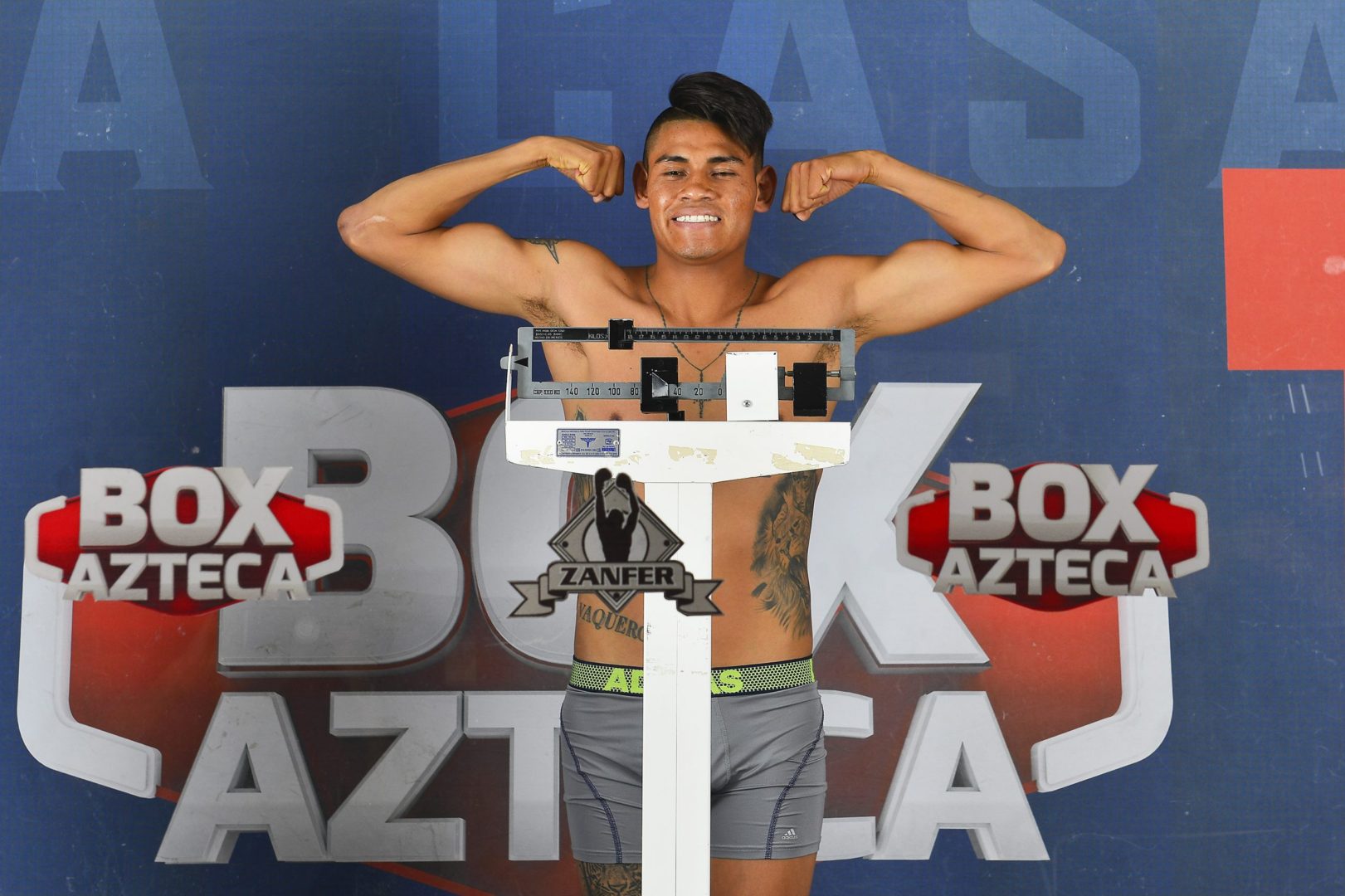
Picking up its fallen warrior, HBO came calling for Arreola, putting his bout between he and Cruiserweight-bound, Brian Minto on the Sergio Martinez-Paul Williams undercard in Atlantic City, New Jersey. Embarrassingly, the man who trained his a** off in preparation for his title fight against Klitschko weighed in for his ‘rebound’ fight at a whopping 263 pounds. In two years, during the time between his fight against Chazz “The Gentleman” Witherspoon to the bout against Minto, Arreola ballooned from 239 to 263 pounds.
His fight against the undersized Minto may have actually been the one fight where Arreola needed the extra weight to keep him grounded after Minto continually landed his strongest punches on Arreola’s chin.
After three-plus rounds of barroom brawling, the considerably bigger Arreola dropped Minto for the final time, prompting referee Eddie Cotton to step in and call a halt to the bout.
After the Minto fight, HBO tapped Arreola once again, this time pitting him against the Polish-born, Jersey-based former world champion, Tomasz Adamek. Even though a fight in Newark, New Jersey, Adamek’s home arena, would have drawn about eight thousand or so more fans than Arreola’s home arena in Ontario, California, HBO sent its crew & cameramen to the west coast to watch its fighter take on the aspiring heavyweight.
In advance of his fight with Adamek, Ramirez told the media that he hoped his fighter would weigh in at about 240 pounds — what Ramirez claimed was Arreola’s best fighting weight.
Fat chance, Henry.
Arreola weighed in at a heavy 253 pounds. Having dropped a majority decision to Adamek in front of his hometown fans, Arreola was now clinging to a number ten ranking in Ring Magazine’s top ten heavyweights in the world.
After the Adamek fight, Ramirez informed the media that Arreola had missed multiple days of camp at a time. It showed.
This past Friday night, on ESPN’s Friday Night Fights, Arreola (29-2, 25 KO) bested Manuel Quezada (29-6, 18 KO) by unanimous decision.
Coming into the fight, Arreola gave us his same old speech about how hard he worked in prepping for his upcoming bout. This time, Arreola claimed, he only missed two days of training and one of them was because his house almost caught on fire. Further, Arreola stated that Ramirez has had him “boxing” more this camp — working on his skill set.
But just because one is physically at camp does not necessarily translate into a fighter giving everything he has day in and day out during ‘practice.’ At the end of the day, Arreola gained weight during his camp, tipping the scales at 256 pounds for the Quezada fight.
Although Arreola canvassed his opponent on three separate occasions, the “Nightmare” wasn’t able to deliver the finishing blow that people have become accustomed to in Arreola victories. Unable to get Quezada out of there, Arreola had to settle for the unanimous decision in a fight that failed to showcase either Arreola’s power or boxing ability. If possible, while Arreola’s win tally rose, his stock fell.
The choices Arreola have made outside of the ring — whether it be from a dietary or a training standpoint — have not been to his benefit.
But moreso than anything written above, Arreola may have best summed up his attitude toward his career when he said, “If Michael Phelps can smoke pot, why can’t I have a beer?”
When the sun goes down on August 18, 2010, the twice- defeated Arreola will be nursing his broken hand and hopefully be thinking of ways to repair his career.
PHOTO BY Claudia Bocanegra
CLINICAL LAB QUALITY:MARK SOUDER
Congressional Testimony June 27, 2006
Congressional Testimony 06-27-2006 Opening Statement of Mark Souder Chairman Subcommittee on Criminal Justice, Drug Policy, and Human Resources Committee on House Government Reform Subcommittee on Criminal Justice, Drug Policy, and Human Resources June 27, 2006 Good afternoon and thank you all for being here. We are here today to discuss the findings and recommendations of a GAO report requested by Mr. Cummings, the Ranking Member of this Committee, Senator Grassley, and myself. We asked the GAO to investigate oversight of clinical labs and implementation of quality requirements imposed through CLIA, the Clinical Laboratory Improvement Amendments of 1988. In particular, we requested that GAO assess the quality of lab testing and the adequacy of CLIA oversight. Lab testing is a vital link in our nation`s healthcare system. Lab tests affect an estimated 70 percent of medical decisions, and are one of the most frequently billed Medicare procedures. Accurate results are necessary for determining proper treatment of patients, while erroneous results can lead to the wrong treatment decisions with potentially detrimental effects for the patients, and quite possibly unnecessary mental anguish. The resulting report by the GAO, Clinical Lab Quality: CMS and Survey Organization Oversight Should be Strengthened, is a sobering evaluation of the current state of clinical labs oversight, and the quality assessment deficiencies that exist across the country for monitoring the nation`s 193,000 labs. Our request to the GAO was prompted by problems at Maryland General Hospital that came to light in 2004. Maryland General Hospital`s lab issued more than 450 questionable HIV and hepatitis test results. College of American Pathologists, or CAP, inspected and accredited Maryland General Hospital during the 14- month period that the lab was issuing the questionable results; CAP`s inspections failed to identify the ongoing deficiencies in lab testing at the Maryland General facility.
The Maryland General situation was compounded by numerous problems and deficiencies in reporting and evaluation of the lab, prompting this Subcommittee, at the request of Mr. Cummings, to hold two hearings to investigate the issues that led to the deficiencies at Maryland General Hospital, and how these problems went undetected and un-addressed for such a long period of time. The Subcommittee was concerned then, as it is now, that a similar situation might repeat itself at other hospitals or labs in other parts of the country. Today`s release of the GAO report demonstrates that there are several areas where clinical lab quality oversight by the Centers for Medicare and Medicaid Service is deficient. The problems flagged by the GAO show quite clearly that despite CMS`s responsibility for overseeing the quality of our nation`s labs, there is insufficient data for measuring the seriousness or extent of problems. While the responsibility for ensuring lab quality ultimately lies with CMS, lab survey and accreditation is handled largely by independent, national accrediting organizations; 97% of all accredited labs are surveyed by three accrediting organizations, each of which has representatives here to testify today: the College of American Pathologists (CAP), COLA, formerly known as the Commission on Office Laboratory Accreditation, and the Joint Commission on Accreditation of Healthcare Organizations, or JCAHO. Two states, New York and Washington, are CLIA-exempt, but have state survey programs. Each of the survey organizations measure labs using standards that CMS has determined are at least equivalent to CLIA standards; and the survey organizations are required to conduct complaint investigations and monitor proficiency test results. In theory, this arrangement should ensure that accredited labs have been inspected on a reasonable, periodic basis, and found to meet CLIA standards. Nonetheless, GAO found that in contemporary practice, it is impossible to get a true picture of lab quality standards. Among the problems flagged by the GAO and which we`ll explore today are: – survey organization standards are not standardized with CLIA requirements, making it impossible to measure lab quality nationwide in a standardized manner; – lab quality deficiencies may not be reported due to accrediting agencies` emphasis on education over enforcement; – whistle-blower protections don`t exist for all survey organizations, including COLA, which does not have a formal whistle-blower policy; – lab sanctions are rarely imposed – in fact, out of more than 9000 labs that had sanctions proposed, only 501 labs were actually sanctioned by CMS from 1998-2004. website maryland general hospitalsite maryland general hospital
Despite the fact that there is a solid framework for what I believe should be a workable system to ensure lab quality, GAO has found that in current practice, the oversight by CMS is deficient, making it impossible to accurately measure the effectiveness of independent survey organizations. Today`s hearing will explore GAOs findings and recommendations, and give CMS and survey organizations an opportunity to present ways to improve the current situation so that what happened at Maryland General Hospital does not repeat itself anywhere else in the country. Our first witness is Leslie Aronovitz, Director of the Health Division, U.S. Government Accountability Office;
We`ll then hear from Mr. Thomas Hamilton, Director of the Survey and Certification Group at the Centers for Medicare and Medicaid Services. Our second panel will include Dennis S. O’Leary, M.D., President of the Joint Commission on Accreditations of Healthcare Organizations; Doug Beigel, Chief Executive Officer of COLA, and Thomas Sodeman, M.D., President of the College of American Pathologists. Thank you all for being here today. We look forward to your testimony and insights.
NO PORTION OF THIS TRANSCRIPTION MAY BE COPIED, SOLD OR RETRANSMITTED WITHOUT THE EXPRESS WRITTEN AUTHORITY OF FEDERAL DOCUMENT CLEARING HOUSE, INC.