



By Norm Frauenheim–
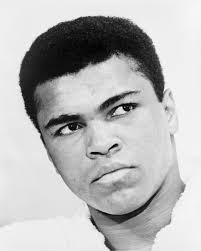
Muhammad Ali’s journey, 74 years long, ends Friday where it started. The world that worshipped him will gather in the city where he was born. Heads of state, old rivals, actors, rappers, preachers, priests, promoters, poets and punchers are in Louisville for the Funeral of the Century.
Ali, who lost to Joe Frazier in the Fight of the Century 45 years ago, planned it. He’d give the eulogy if he could, but not even The Greatest could manage that. He’ll have to let former President Bill Clinton speak for him. He’ll have to let the crowd cry, cheer and chant his name.
Ali Bomaye! Ali Bomaye!
That was the African chant before, during and after his 1974 stoppage of George Foreman in what was then Zaire. Listen for that and for the butterfly, the bee and everything else on the sound track that helped define the young Ali, who once said he was so mean he’d make medicine sick.
He’ll be remembered for all the crazy words. For Foreman, Frazier and Sonny Liston, too. For Malcolm X. For refusing to serve in the U.S. Army because of his opposition to the Viet Nam War. For changing his own name, too. Born Jan 17, 1942 as Cassius Marcellus Clay in Louisville, he returns to the Kentucky city with the Muslim name that will never be forgotten.
He might not have been history’s greatest fighter, a spot that belongs to Sugar Ray Robinson. He might not even have been the greatest heavyweight. Joe Louis probably hit a little harder and didn’t let his hands drop in a way that left Ali perilously open, leaving only his durable chin as a defense.
Only Ali would take punches from the powerful Foreman and label the tactic as rope-a-dope. It was risky and unexpected. But Ali did it, exhausting Foreman in a bout that makes you wonder whether it was factor in the terrible disease that would befall him a decade later. Ali couldn’t exhaust Parkinson’s, but he fought it – day-to-day, hour-to-hour – with quiet dignity for 32 years before he died in Scottsdale, Ariz., last Friday at 9:10 p.m. (PST).
I’m not sure how I’ll remember him. As an Army beat living in faraway bases, I had my ear pressed against my dad’s radio to hear what ever I could above the static of the blow-by blow accounts of his victories over Liston.
As a young sportswriter in Florida, I watched the back-and-white telecasts of his 1971 loss to Frazier at a closed circuit venue. I went to a crowded movie theater to see him beat Frazier in their first rematch. Then, I saw him beat Foreman and Frazier again in Manila, all in grainy-and-gritty black-and-white.
It wasn’t long before I moved to Phoenix. My interest in boxing was still there and had peaked with eventual Hall of Famer Michael Carbajal, whom I began to cover at the 1988 Olympics.
Then one day in 2005, I looked up and saw Ali standing in front of me at halftime of a Phoenix Suns game. We shook hands, yet said very little. I wasn’t sure whether Parkinson’s had yet robbed Ali of his speech. I soon found out that it had not. He grabbed me from behind and whispered in my ear.
“You sure are uglyyyyyy,’’ he said.
Surprised, I turned and looked into dancing eyes full of playful mischief. On other encounters, there were the familiar magic tricks.
Then, there was an afternoon in downtown Phoenix about eight years ago. I sat next to him at a Diamondbacks game. He grabbed my notebook and pen. Fifteen minutes later, he gave them back.
On a page in the notebook, there’s a sketch, a stick figure walking toward a leafless tree that seems to be on the edge of a faraway canyon. I wasn’t sure what to think of it then. But I looked at it again this week while thinking of Ali’s death and his funeral Friday. Ali was looking at the uncertainty of the end he knew was coming.
He did the only thing he could do. He got ready.